
Music is the universal language
“Glory to God in the highest heaven, and on earth peace to those on whom his favor rests.” - Luke 2:14
Norse Guitar Feeds
A Simple Way to Convert an 8 String Classical Guitar Tuning into a Brahms Guitar Tuning!
For those of you who don’t know what a Brahms guitar is, it is a classical guitar with eight strings, a cello end pin and the guitarist holds the guitar like a cello. Please visit my page on the Brahms guitar, Paul Galbraith’s website or Redmond O’Toole’s Instagram account for more details of this wonderful style of guitar.
About twice a year I receive emails from guitarists asking me if I will make them a Brahms, I tell them “yes, I can” and then they ask what I charge to make one for them. I tell them that the base price for my classical guitars is $8,000 and a Brahms guitar starts at $8,500 - that is when they lose interest. A lot of work goes into making a Brahms guitar: I triple laminate the sides; I hand cut all the fret slots, the fretboard is fanned, this guitar actually has eight different string lengths(!); the neck is wider than a standard classical; I have to make a special bridge, which is angled to matched the different string lengths; installing the cello endpin; etc., etc.
Recently, a guitarist asked me if I could make a Brahms guitar for them, and if I could send one to them to try out, just to make sure they would want one. I do not have a Brahms guitar on hand. I told them that a client of mine has one for sale, they should contact that client to discuss the playing technique used for playing a Brahms guitar and the possibility of buying the guitar.
The next week I contacted the guitarist and asked them why they wanted to play a Brahms guitar. Their answer was what I expected, the Brahms guitar offers more musical possibilities than a six string classical guitar. Then I suggested to them what a guitarist can do to experience a Brahms guitar without having to buy one.
WARNING! What I am about to suggest is to be done at your own risk! This is just a suggestion! I am not responsible for any damage done to any guitar! This suggestion is a way to try out the tuning of a Brahms guitar! DO NOT drill a hole in the guitar for a cello end pin! Hold the guitar as you would a standard classical guitar! If you do change strings, protect the guitar while you do the work! Please read this ENTIRE post before attempting!
If you really are interested in trying a Brahms guitar without a cello endpin, find someone who is willing to loan you a standard eight string classical guitar, or better yet, find someone with an eight string guitar that is interested in trying out the Brahms tuning. I also suggest that you read about the history of the development of the Brahms guitar before you attempt changing strings.
A Brahms guitar is usually tuned B1 E2 A2 D3 G3 B3 E4 A4. A standard eight string guitar is usually tuned A1 B1 E2 A2 D3 G3 B3 E4. All you need to do to convert that eight string guitar tuning over to a Brahms tuning is to remove the eighth string completely from the guitar. Once you do that, shift the remaining strings over towards the bass side, so that the seventh string now becomes the eighth string, the sixth string becomes the seventh string, the fifth string becomes the sixth string, so on and so forth until there is no longer a first string on the guitar. Then you need to find a first string that can be tuned to A4 without breaking.
I suggest buying a set of Aquila Bionylon High A Tuning Classical Guitar Strings.
Here is Aquila Strings description of the set:
High A tuning: A D G c e a, regular guitar intervals, but the 1st string is an above normal e.
We are proud to introduce the Bionylon® the first eco-friendly synthetic string in the world. These special sets also offered in Low A, High G and Low E tuning all designed for a guitar of 64-66 cm scale can give a guitar quartet, all using normal 6 string classical guitars, the range of an orchestra.
These strings get good reviews at the various on line guitar string dealers.
I suggest that you take that high “a” string and use it as the first string on the guitar. Eight string classical guitars are usually built to withstand the add tension of two extra strings, if in doubt about this you should contact your local luthier or qualified repair person. If you are uncomfortable in changing these strings take the guitar to your local luthier or qualified repair person and pay them to do the work!
Once you add that high “a” string, slowly tune all the strings, perhaps you should start with A435 to see how the guitar will react. To try out the tuning, hold the guitar as you normally would, DO NOT DRILL THE GUITAR FOR A CELLO ENDPIN! If you like the tuning and want a custom Brahms guitar, contact me or any luthier about making one for you!
Again, I must state that this procedure is just a suggestion, do not proceed with this if you are uncomfortable with the idea.
I first learned about the Brahms guitar in 1994, shortly after it was premiered by Paul Galbraith, I was immediately impressed by expanded range of the guitar. I shared the article with a fellow guitarist and he said, “Now, that’s best idea I’ve seen in a long time! Every guitarist should have one!

”
If you have any questions or comments about this idea, please email them to me at
highcountrylutherie@gmail.com
I will not answer any comments posted to this post.
Vintage Vault: 1966 Gretsch 6122 Country Gentleman
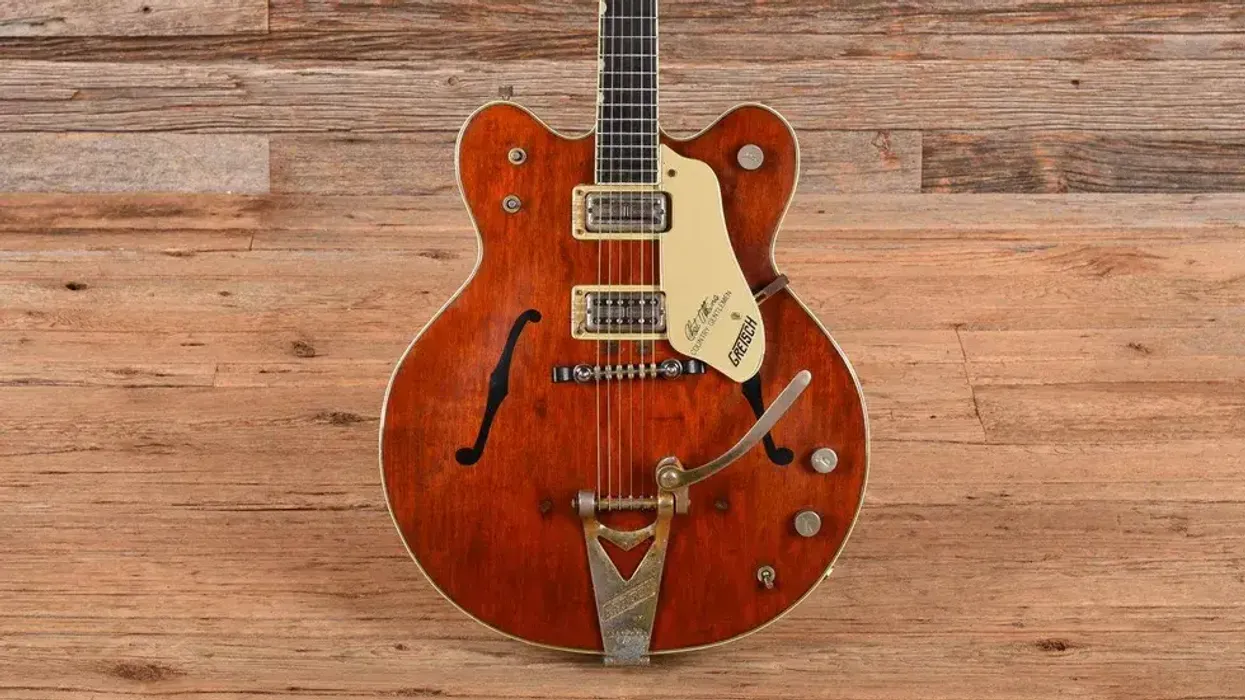
What if I told you that you could get a vintage guitar model from the original Big Bang of rock for less than a new U.S.-made Fender or Gibson? With the Gretsch 6122 Country Gentleman, you can.
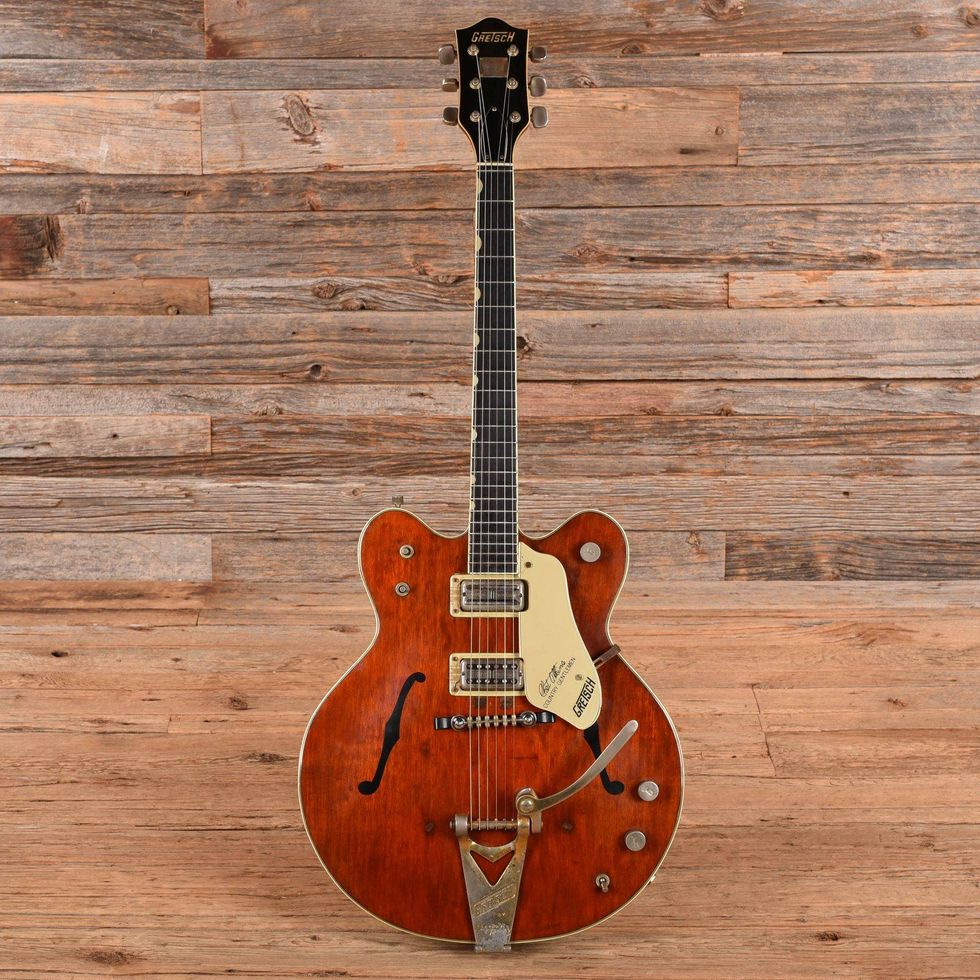
The double-cutaway Country Gents of the 1960s were ostensibly Chet Atkins signature models. But it was a young man named George Harrison who sent demand for these guitars through the roof, when he played one in living rooms across the United States during the Beatles’ first televised performance on The Ed Sullivan Show in February 1964.
Thanks to Harrison’s unofficial endorsement, Gretsch went from building a comfortable 2,000 models a year to struggling to keep up with demand, reportedly making 100 a day following the explosive Sullivan set.
While Harrison’s was a 1963, the production run of Country Gents he inspired from ’64-’70 brought about a few changes: the standard walnut brown finish was lighter than Harrison’s mahogany-colored, the Grover tuners had a more streamlined “kidney” shape, the mute pads changed from red to black, and, over time, some other minor changes were instituted (for example, the “Country Gentleman” branding was made more prominent on pickguards circa 1966).
However, the basic idea that Chet Atkins worked out with Gretsch had remained largely intact since ’61. These were high-end guitars, built for peak performance, without too many distracting frills: hollowbody, 17" wide and about 2" deep, with a laminated maple top, back, and sides. The f-holes were painted on, per Atkins’ orders, so that there were no real holes introducing feedback.
They had ebony fingerboards with a 12" radius, and a 24.5" scale length, a gold-plated Bigsby vibrato tailpiece, a Filter’Tron pickup in the bridge and Super’Tron at the neck, and three volume knobs—that’s right, count ’em, three—for neck, bridge, and master.
There’s not a single tone knob on the whole guitar, but there are three switches: a 3-way tone switch (to choose between bass, standard, and treble), a 3-way pickup selector, and a kill switch.
Add it all up, and you’ve got a certified guitar for a certified guitar player. (There’s even a felt pad snapped onto the back so you can stay comfortable while Travis picking for hours on end.)
“You could get a vintage guitar model from the original Big Bang of rock for less than a new U.S.-made Fender or Gibson.”
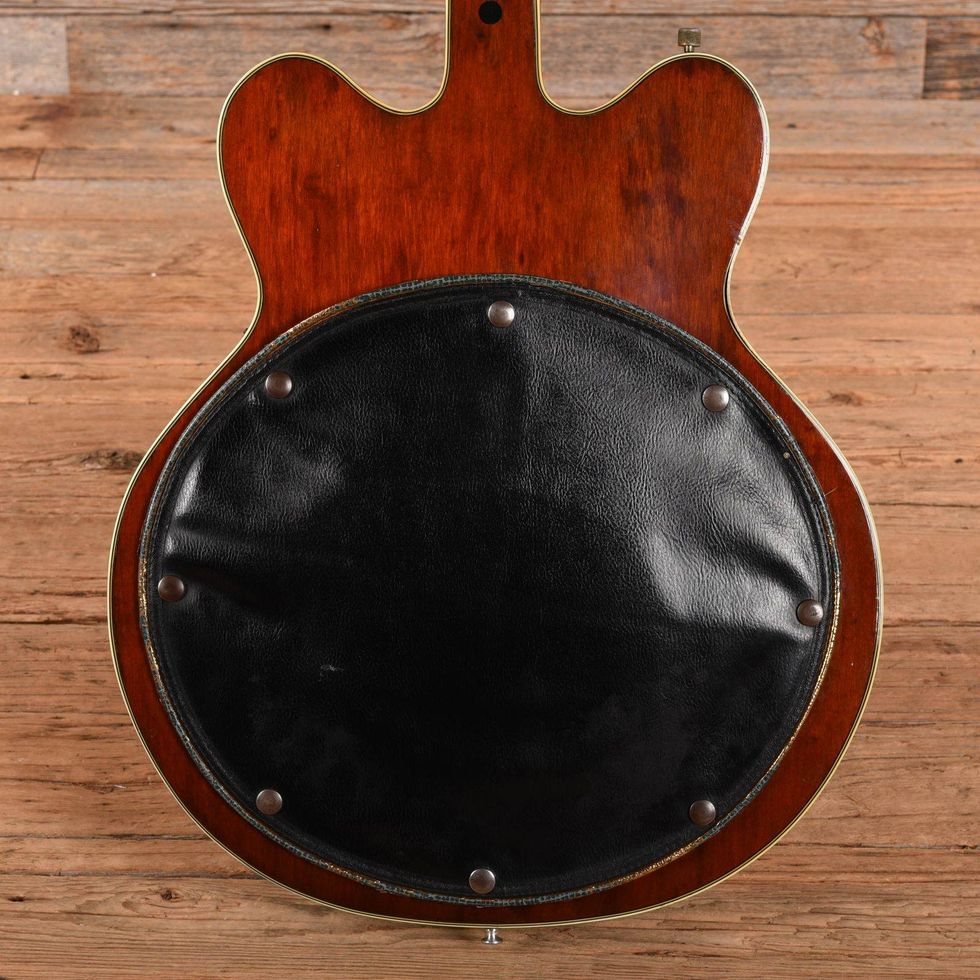
Back in the mid-’60s, a retailer would have asked for a whopping $595 for a new Country Gentleman—and that’s if they even had it in stock. Adjusted for inflation, that’s over $6,000 in 2026 money, a testament to the top-notch quality Gretsch and Chet targeted.
That figure puts into stark relief what a great buy these are on the vintage market right now. The 1966 Gretsch 6122 Country Gentleman selected for this Vintage Vault column is listed in good condition from Reverb seller Chicago Music Exchange for just $2,650. (Like Harrison’s, at some point a previous owner removed the string mutes and filled in the holes.)
A price tag of $2,650 is still a good deal less than the $3,799 Gretsch asks currently for the closest reissue, the G6122T-62GE Vintage Select. And even that is on the higher-end of average vintage prices at the moment. In 2026 so far, the average final sale price on Reverb for ’64-’70 Country Gents is $1,900, a big drop from the 2021 peak of $3,400.
Country Gent pricing follows a trend in the vintage guitar world that some people—particularly a lot of sellers of vintage guitars—seem to have missed: the vintage guitar market has cooled. Not by a ton, and certainly not uniformly. The overall market is down 10-15% compared to its 2021/2022 peak, with values on the whole remaining above what they had been pre-pandemic.
That said, a lot of once-offbeat models—like the Gretsches of the world, CBS-era Fender offsets, and others—gained a ton of value during the pandemic, only to have slipped further since. Final prices can be 20% to even 40% lower than their peaks. This Country Gentleman is just one example, with plenty more to be found.
It’s a good reminder to all of us vintage guitar nerds out there: These days, it’s a great time to be a buyer. So if you see a guitar you like, go ahead and throw out an offer. Refer to the actual final sale prices you can always find in the Reverb Price Guide, and don’t take asking prices at face value. You just might score a real-deal vintage gem, for way less a current reissue.
Get up to 20% off Fender this October at Guitar Center!

Guitar Center are currently offering big savings across the Big F catalogue, with a wide range of electric models, amplifiers and other gear from Fender reduced throughout October.
A number of its Player II models are reduced, and many are Guitar Center exclusives boasting unique finishes. Offers end on the 28 October.
- READ MORE: The best picks for electric guitar and acoustic guitar, from Jim Dunlop, Fender, Ibanez and more
From Stratocasters and Jazzmasters, to Teles and P-Basses – which are currently celebrating their 75th birthday this year – there is a wide range of deals to choose from, so we’ve rounded up some of the best. Take a look below.
Fender Player II Stratocaster HSS Plus Top in Blue Burst
This limited-edition Player II Stratocaster HSS Plus Top model has a maple fingerboard, an alder body, and of course, a striking flame maple top that gives it its “Plus Top” status. The HSS pickup configuration consists of a Player Series humbucker and Alnico V single-coils, for a versatile range of tones. Now $799.99, you can save $130 on this guitar.
 Credit: Guitar Center
Fender Player II Advanced HSS HT Stratocaster in Surf Green Pearl
Save $260 on this mean looking Strat. Fitted with upgraded Seymour Duncan electronics and featuring “fast-playing appointments and the direct feel of a hardtail bridge”, the Fender Player II Advanced HSS HT Stratocaster is a performance-oriented model. It has an alder body, matte black hardware and an exclusive Surf Pearl finish.
 Credit: Guitar Center
Fender Player II Precision Maple Fingerboard Limited-Edition Bass in Ocean Turquoise
This limited-edition P-Bass is now $799.99. It offers a punchy split-coil Precision Bass pickup, an alder body and maple neck, a 4-saddle bridge, synthetic bone nut and vintage-style tuners. It also has a Modern C-shaped neck and chrome hardware to complete its contemporary look.
 Credit: Guitar Center
Fender Player II Jazzmaster Electric Guitar in British Racing Green
Save $80 on this exclusive Jazzmaster. It has a classic alder body, a maple neck with a rosewood fingerboard, and a pair of Player Series Alnico 5 Jazzmaster single-coil pickups for a wide tonal palette.
 Credit: Guitar Center
To view these deals and more, visit Guitar Center.
The post Get up to 20% off Fender this October at Guitar Center! appeared first on Guitar.com | All Things Guitar.
Are you better off building your own fuzz pedal?

Ad Feature with StewMac
Fuzz pedals! Those gloriously angry little boxes that bring the sweetest kind of tonal devastation to your rig. They’re the first effect to be condensed down into a little stompbox, and their wonderfully fuzzy sounds have inspired generations of guitarists ever since Satisfaction blew everyone’s minds.
And the best fuzz sounds out there don’t have to come from $500 boutique boxes – they can come from projects that you make yourself, either out of a kit or from the ground up. There’s an unmistakable joy that comes from playing something you’ve created yourself –are you always better off building your own fuzz?
Getting building
You might have seen a lot of buzz around DIY fuzzes, and been curious as to how to enter this world. You will need a bit of kit if you don’t have it already. First off is a good soldering iron, which is essential for all but the most basic of DIY pedal kits. You’ll also want a good set of flush cutters for trimming component legs and cutting wire to length, as well as wire strippers, wrenches to tighten things. And finally an often overlooked part of the assembly process is a PCB holder – these are absolutely worth the investment, as they make populating a PCB or veroboard a breeze! If all that kit seems a bit overwhelming, StewMac luckily offers a pedal building tool kit, as well as the individual parts if you just need to top up your workbench to be pedal-ready.
So, why build a fuzz? There are a lot of reasons – let’s dive into a few.
A teachable moment
 Image: Cillian Breathnach
You can read up on electronic circuits all day – but, when it comes to musical equipment, there’s perhaps no better way to learn than getting practical and hearing the results right away. Fuzz pedals are an awesome way into the world of pedal building, mainly because they’ve generally got a low parts count, which makes them pretty approachable to actually put together. But their simpler design also means that small adjustments go a long way – there’s more immediacy between your design decisions and the resulting sound.
If you’re just starting out, I’d say that getting a simple one-knob fuzz under your belt first is a far better idea than trying to start with a multi-mode dual-PT2399 modulated delay. And, of course, the resulting sound of a fuzz is one of the most glorious aspects of playing guitar – few experiences on this instrument are quite as gratifying as a really good fuzz pedal into a loud amp.
So, where to start? Using veroboard, also known as stripboard, is a great way to get into ground-up builds, mainly because it’s a flexible base for whatever layout you want to throw at it. Buy a chunk of veroboard and the right components, and you can get a good few practice builds under your belt fairly quickly, building essential soldering skills and a good understanding of signal-path basics. There are lots of community-sourced tagboard layouts out there for different effects – if you’re building low numbers of pedals for your own enjoyment, it’s just as good as a PCB, even if it requires just a little more patience.
Kits are, of course, more one-and-done – you don’t need to worry about sourcing any part of the build, as the enclosure and all on- and off-board parts are included. To get started, check out StewMac’s selection of kits here.
Whatever substrate you’re using, basic fuzz circuits are very moddable. Fuzz Face- and Tone Bender-inspired builds will let you quickly make big adjustments with only minor tweaks, and even in more parts-heavy builds, there are often common modifications that the community on places like Reddit and freestompboxes.org will recommend and guide you through. And while you can start out by messing about and swapping out the odd part here and there, you’ll likely soon be calculating filter roll-offs and sourcing obscure germanium transistors off eBay – which brings us to customisability.
Truly your own
 Image: Cristian Storto / Getty
We’re not just talking aesthetics here, although that does come into it. Off-the-shelf fuzz options will generally have a pretty broad appeal, tonally. But once you’ve got the basics down, making your own fuzzes lets you get really specific in chasing that ideal tone, in some cases much more so than modding a pre-built fuzz would. Plus, that’s less and less possible these days, with modern surface-mount builds making it far harder to perform circuit tweaks.
For example – clipping diodes. Not all fuzzes use them, but for ones that do – like the Big Muff – they can have a huge impact on the sound. You’ll likely find out your preferred combination, and it may well be that you find a sound that’s not otherwise obtainable. For example my personal favourite clipping combination is a germanium diode going one way, and a red LED going the other way – these have drastically different forward voltages, and so the resultant signal is very asymmetrically-clipped. As a sound it combines the louder, sharper edge of LED clipping with the more squishy, compressed character of germanium, and is pretty much always a cool addition to a build like a Big Muff.
Other simple tweaks are also much easier to do when you’re building the circuit from the ground up. Frequency response can often drastically adjusted with tweaks to just a few values in the tone stack if there is one, or the in-line filtering stages if there isn’t. The Big Muff is again a good example – don’t like the infamous midrange scoop? Change the values of a couple of resistors and capacitors, and you can flatten it out or give it a boost instead.
With all of these minor tweaks, it’s easy to put extra circuit controls on a switch for extra flexibility – I’ve built a couple of FZ-2 circuits, and found that I don’t always want an upper-octave sound – putting a switch that breaks the signal on one side of the rectification lets you toggle it, giving a whole new set of sounds to an already multi-mode circuit. The same goes for clipping diodes, tone stacks and extra circuits. For example, you can experiment with adding in a boost circuit before, after or even during the main effect signal path for extra punch and saturation.
And, of course, you have the all-important transistors – these are the beating heart of the fuzz sound – more often than not, all of the distortion in a fuzz comes from overloading a series of transistors far beyond their usual sonic limits. This means that finding unique, weird ones can lead to a totally unique and incredible sound. There is absolutely nothing wrong with the humble 2N5088, but the unpredictable, unstable nature of germanium is hard to replicate. And, for multi-transistor circuits, you can always take the hybrid approach to get the best of both worlds!
Should you never buy a fuzz again?
 Image: Cristian Storto / Getty
Obviously, building your own fuzz pedals is great fun. But isn’t always the best option. The parts of the DIY world that are the most accessible tend to focus on what’s already been done, and at some point, it’s good to see what new ideas other builders bring to the table – maybe just to inspire your own playing, or maybe to give you a few ideas about your next fuzz pedal build.
Of course, there’s also the rabbit hole aspect of it all – like any hobby, building fuzzes can draw you in whirlpool deep alarmingly quickly – before you know it, you’ll have setup a search alert for an array of new-old-stock germanium transistors, your desk will be overwhelmed by half-populated PCBs and you’ll be dreaming about ideal bias voltages for your next build…
So, you may be just fine with accepting the sounds of an off-the-shelf pedal. But, guitarists have never really been able to be normal about effects, especially not fuzzes – why not join the ranks of many builders before you, and get tinkering?
See StewMac’s pedal-building resources here.
The post Are you better off building your own fuzz pedal? appeared first on Guitar.com | All Things Guitar.
Seward Park Electric Maravilla Review
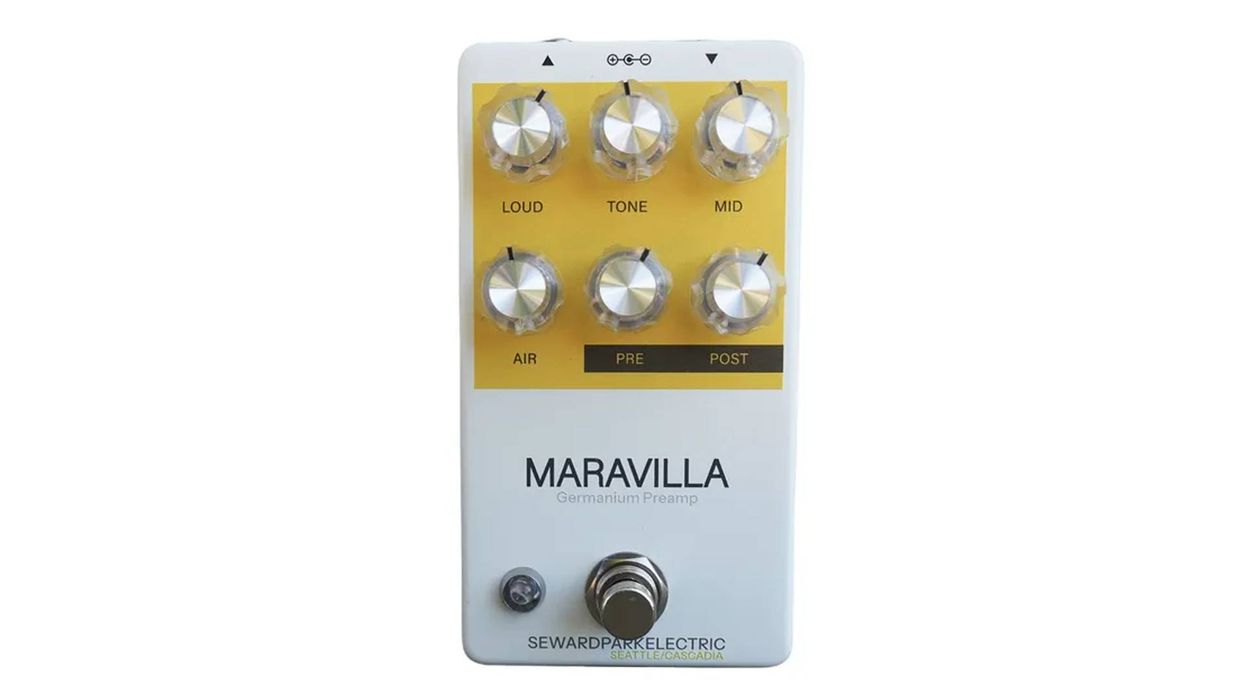
Preamp pedals can be a lot of things. They tend to get lumped in with overdrives and boosts, and, in a sense, that’s fair. Preamps, ODs, and boosts are all plugged in before an amplifier’s power section, after all—usually employed to add body, grit, or a measure of distortion.
So, what’s the difference? Well, in the absence of a definitive answer about clipping and EQ circuitry differences—and certainly these can be factors—it can be just as helpful to imagine the preamp/overdrive divide in terms of personalities. An overdrive can be charming but brusque—all full of easy answers to life’s problems and, sometimes, a bit of loudmouth. A good preamp, meanwhile, can be the life of the party—an extrovert even! But it can also be an empathetic, responsive listener and conversationalist.
OK, maybe that isn’t the most watertight metaphor, but Seward Park Electric's Maravilla preamp is one pedal that makes it look particularly apt. Compared to many overdrives, the Maravilla has a huge tone vocabulary—one that spans civilized, sparkling, and venomous. It tends to feel exceptionally well integrated with your amp and guitar. And at the right settings, the Maravilla adds color and energy to a signal without hoovering up the oxygen that makes a guitar feel alive in your hands. Whatever you call it, it has more to offer as a tactile link to your guitar and as a tone scalpel than most overdrives I know.
Maximized Multifactedness
The essence of what makes the Maravilla tick is not terribly complex. Gain is generated via germanium transistors, which are less common in overdrives but make the pedal more dynamically responsive and lend the drive a smoother, less aggro voice. But it’s how the Maravilla builds upon this simple architecture that makes a difference. There is no single drive control on the Maravilla. But a pre-gain control enables you to smash the germanium transistors with input gain, while the post-gain control enables you to take the output from the germanium transistor section and pound the transformer for even more saturation. Transformers are not unheard of in effects pedals, but they aren’t commonplace either. Functionally they can take the place of buffers. But here, as in other excellent preamp-inspired pedals like Hudson’s Broadcast, the Maravilla also uses a transformer to lend extra richness to the distortion.
This simple, if slightly unorthodox, gain chain conjures many complex drive shades by itself. But the Maravilla’s powerful, fluid EQ section also transforms the distortion. The pedal even offers a post-gain presence control, called “air” here, that changes the gain and compression characteristics, along with how the pedal responds to touch and picking dynamics.
“Just as with single coils, the germanium bits of the Maravilla’s beating heart are responsive to touch, tone, and volume dynamics in ways that expand the PAF vocabulary.”
The Punch Spectrum
Uncovering Maravilla’s treasures can feel like fumbling in the dark at first—such are the interactive sensitivities of the six controls. Having all six knobs at noon positions is not a bad place to begin, and you can usually find a baseline not too far from your guitar and amp’s natural voice in these regions. But it pays to be bold as you venture forth from there. And getting a feel for how the post- and pre-gain controls shift the feel of your rig is an ideal launch pad for these experiments.
Slightly advanced pre-gain levels tend to generate sounds and attack most like a conventional overdrive. And depending on where I set the pedal’s EQ, I find sounds similar to those from the Klon and Tube Screamer clones I use as overdrive reference. High post-gain settings in isolation introduce a lean, clean, muscular edge to an amplifier’s input. Any setting that favors heavy pre- or post-gain levels can yield creative results. But it’s when the two are used together in generous servings that the Maravilla comes alive.
As organic amp-style drive goes, the sound and feel of both gain controls at 3 o’clock is hard to top. With a Telecaster and a Vibrolux on either side of the Maravilla, I heard a meaty, rambunctious version of this combination that suffers little from compression or unflattering midrange spikes. You can dial in plenty of compression and odd EQ peaks with the air and EQ controls if you want. But in terms of creating burly, blossoming, naturalistic variations on your natural guitar/amp voice, the two gain controls working together with smooth EQ combos yields the goods. Maximum pre- and post-gain settings sound fantastic too and made the Telecaster and Vibrolux sound positively Marshall-like. But any of these combinations of high pre- and post-gain distortion can be tamed and made near-clean with guitar volume attenuation, and I tended to keep them at higher levels for that reason.
Humbuckers, predictably, have a different relationship with Maravilla. I found the sweetest drive sounds by favoring the pre-gain, using a less dynamic air setting and more conservative tone levels. But just as with single-coils, the germanium bits of the Maravilla’s beating heart are responsive to touch, tone, and volume dynamics in ways that expand the PAF vocabulary. The Maravilla dazzles with Vox- and Marshall-style amps too. It can make an EL84-based rig sound sizzly. But dialing back the pedal’s rangy treble control and adding a scoop of preamp gain can give the combination a buzzy ’60s-practice-amp-set-to-blast essence that, with a little guitar volume and tone attenuation, recalls the crunchy/fuzzy tones David Hidalgo and Tchad Blake cooked up for Latin Playboys’ records. If you’re strictly into the maximum rock ‘n’ roll potentialities of a British amp and the Maravilla, though, fear not. It’s just as easy to dial up monster sounds as it is to find off-kilter ones.
The Verdict
Using the Maravailla in performance can be tricky business if you don’t do your homework. And paradoxically, this means its wonderful versatility may be its only drawback. But this is a drawback in very relative terms. The homework Maravilla demands of you is 101-level stuff. Yes, small adjustments to any of the Maravilla’s controls can profoundly affect the whole, and you might create something ghastly before you happen upon the magic recipe that matches your aims. But the Maravilla is forgiving, and you get used to the sweeps and range in its controls fast. It’s fantastic for awakening lifeless, one-dimensional signals that are missing energy or a certain EQ emphasis. It can add aggression through unique shades of saturation that can span smooth and fuzzy. And as you get to know its core strengths, you may find that some of the strangest sounds it produces might just become the most essential. Indeed, if the most obvious tone sweeteners here don’t convince you of Maravilla’s ability to outperform your average overdrive, the unexpected surprises most certainly will.
Susan Tedeschi and Derek Trucks' "The Art of Music" Debuts October 1st on Public Television

- YouTube
October 1st marks the premiere of The Art of Music’s third episode, featuring GRAMMY © Award winning blues rock combo and Tedeschi Trucks Band co-founders, Susan Tedeschi and Derek Trucks filmed live from The Metropolitan Museum of Art’s Petrie Sculpture Court. It features intimate performances and a wide-ranging interview with legendary music journalist David Fricke. Corporate funding for the series is provided by Chase. The series is distributed by NETA.
Presented by United MileagePlus Cards from Chase. *
PREVIEW at youtube.com/watch
“What a beautiful and unique setting for a concert and interview,” said Derek Trucks. “Sitting in a room full of masterpieces from all over the world was inspiring - watching Susan hold and play Mississippi John Hurt’s guitar is something I won’t forget.”
The episode reveals details of the Tedeschi and Trucks musical journey, inspirations, family influences, and their personal connection to Derek and the Dominos’ “Bell Bottom Blues.” A performance with Sippie Wallace's “Women Be Wise” on Mississippi John Hurt's Gibson guitar, drawn from the Met's collection and a breakdown of “Who Am I” and “What in the World” highlight music from their sixth studio album release Future Soul.
Check local listings for more information at listings.tracmedia.com/artOfMusic.
“The Art of Music” format keeps pulling extraordinary moments like this out of artists,” said Don Maggi, founder and president of iMaggination. “Susan and Derek didn't just talk about their influences — they played them, on an instrument from the Met's own collection. That's what this series is built to do.”
This special interview and performance featuring Susan Tedeschi and Derek Trucks presented by United MileagePlus Cards from Chase was an unforgettable occasion for Chase United Cardmembers who were invited to attend the intimate live taping. TheUnited MileagePlus Cards from Chase provide Cardmembers with access to exclusive events and experiences in addition to many reward and travel benefits with United Airlines.
Other episodes of The Art of Music include Sheryl Crow with Jason Isbell and
Peter Frampton with Warren Haynes, available at www.theartofmusic.co.
Are PRS Guitars priced so highly that only “dentists and doctors” can afford them? Paul Reed Smith responds: “We’ve done everything in our power to make the SEs affordable”

Paul Reed Smith of PRS Guitars has responded to comments about the brand’s prices, and the ongoing joke that their models are only affordable for those in medicine or dentistry.
Reed Smith was asked directly by a viewer during a Q&A with Andertons why PRS only makes guitars for dentists, and while he laughs it off, he also provides an explanation behind some of their more high-end model price points, and brings one of their more affordable models into the conversation.
The question is asked right at the start of the Q&A, with Reed Smith responding (via Guitar World), “I didn’t know Carlos Santana and John Mayer were dentists,” pointing to two of the brand’s signature artists. “The question implies that only dentists and doctors buy the guitars. It’s just not true anymore.”
Reed Smith goes on to make reference to the SE Silver Sky to back up his point. The guitar, launched in 2022, sits around the £800 price point. It scored a 9/10 in our review at launch, and was even the best-selling guitar on Reverb from its release until 2024, when it was dethroned by the Fender Player Telecaster.
“I mean, there was a time in the late ’80s [when] maybe that was true, but Sweetwater did a thing: the most expensive guitars. We weren’t in the first 10. We’ve done everything in our power to make the SEs affordable,” he adds.
“These S2s are really affordable. Look, you can say that to some people, a Private Stock’s not affordable [priced at $8,000 – $14,000], but that’s an awful lot of time and energy and skill level for what we charge for them. So I’m okay with it.”
To watch the full Q&A, including discussions around the never-ending tonewood debate, you can check out the video below:
And speaking of tone, Reed Smith has even explored how hardware impacts a guitar’s overall sound. In a 2025 YouTube video for PRS’ Rules Of Tone series, he said: “In a lot of the past videos, I’ve stated that whatever the guitar string touches is God.
“To exaggerate that, if the bridge is made of rubber, the nut is made of rubber, and the tuning peg is made of rubber, the guitar is not going to have the kind of high-end that it would have if these things were made out of metal.”
Learn more about PRS Guitars.
The post Are PRS Guitars priced so highly that only “dentists and doctors” can afford them? Paul Reed Smith responds: “We’ve done everything in our power to make the SEs affordable” appeared first on Guitar.com | All Things Guitar.
“They were round the back sniffing and snorting”: The time Tony Iommi’s mother-in-law-to-be became suspicious after seeing his friends disappear during his wedding day
![[L-R] Tony Iommi and Ozzy Osbourne](https://guitar.com/wp-content/uploads/2026/10/Tony-Iommi-new-hero@2000x1500.jpg)
The 1970s saw serious rock and roll excess, with many of the top bands at the time indulging heavily in alcohol and hard drugs. One of these bands was Black Sabbath…
But they weren’t the only ones. Apparently, when Sabbath and Eagles were recording their respective albums, Technical Ecstasy and Hotel California at adjacent studios at Miami’s Criteria in 1976, Sabbath entered the Eagles recording room to find the faders “so clogged with cocaine they wouldn’t move”.
And in a recent interview with Classic Rock, Tony Iommi explains how the drug habit of those around him didn’t cease even on certain special days…
Sabbath’s drug habits reportedly escalated when they headed to America in the early ‘70s. The band reportedly racked up a £55,000 cocaine bill while recording their fourth album, Vol. 4 in 1972.
But those habits came home with them, and were evident when Tony Iommi married his first wife, Susan, in November 1973.
As the story goes, his mother-in-law-to-be began to wonder why Iommi’s friends kept disappearing from the church during the wedding day.
“They were round the back sniffing and snorting!” Iommi laughs. “America changed us.”
In other news, Tony Iommi recently revealed the gruesome truth of what happens if he plays guitar without his prosthetic fingertips, which he wears after an accident decades ago which saw him lose the tops of two of his fingers.
“One time, years ago, when it did come off, I fretted a string and it sliced right through my finger. There was blood all over the place!” he recalled.
Tony Iommi is set to release his first solo album in 21 years, From the Dark, later this month. Check out its lead single, World Alone, below:
The post “They were round the back sniffing and snorting”: The time Tony Iommi’s mother-in-law-to-be became suspicious after seeing his friends disappear during his wedding day appeared first on Guitar.com | All Things Guitar.
Boss EX-4 Effects Expander review – a force multiplier for compact pedalboards

$329/£289, boss.info
You don’t see a lot of occasional tables these days, do you? You know the type, the nest of side tables that would sit unmolested at the corner of an elderly relative’s living room until such a time as they had company over and required a wobbly edifice to place extraneous drinks and biscuits onto.
Correlation doesn’t mean causation, of course, but there can be no doubt that the decline in occasional tables is inversely proportional to the rise of the occasional effects pedal. Back in the dark mists of the 2010s, Line 6 came out with the M5, and it was in many ways the original occasional pedal. Inside its relatively compact package, the M9 and then smaller M5 offered a whole bunch of effects that you might only need now and then in one package designed to sit in the middle of your pedalboard ready to be anything you needed it to be at a moment’s notice.
Despite being a verifiably great idea, in the following years we saw relatively few competitors to the M9, but that has changed recently. Now the likes of TC Electronic and Zoom offer compact multi-effects units, while at the other end of the market the likes of Eventide and Hologram Electronics bring a boutique sheen to proceedings. Even Line 6 itself got back into the party with the impressive HX One a few years back.
 Image: Adam Gasson for Guitar.com
Now it’s Boss’s turn. Though the company already has the PX-1 Plugout FX as a compact multi-effects unit, its unique approach to being a literal stompbox library (not to mention its microtransaction-based library) means it doesn’t really fit the bill. The EX-4, on the other hand, offers a whole smorgasbord of sounds in a compact chassis, for a very reasonable price.
What is it?
In essence, the EX-4 crams 120 onboard effects, mainly from Boss’s own enviable back catalogue, crammed into the rugged and compact (but not that compact) form factor of Boss’s 200 series enclosure.
You can run up to four of these effects simultaneously, so if you’ve ever fancied running four shimmer reverbs into each other just to see what happens, you’re in luck here. You can also control the routing options of said four effects, so you can run them either in old-fashioned serial, as two separate serial chains made up of one, two or three pedals each, or using three different types of parallel routing.
The sounds here are mainly focused on guitar, but there are a handy helping of bass options too, and the effects on board run the gamut from the standard to the downright weird. So yes you’ll find the usual suspects of overdrive, distortion, reverb, et al in various common Boss and non-Boss flavours, but that’s not all. Delve into the menu and you’ll find the likes of the Slow Gear, Super Feedbacker and Slicer pedals recreated here, but also some really esoteric flavours like the Defretter (for guitar and bass), the Humaniser and the guitar synth.
As you would well expect for a pedal with this much going on, there are 128 user presets to go with the 128 factory ones. All of this is controlled by a pair of footswitches that can either be used to switch up and down through the presets or, in manual mode, the two switches can be used to turn two of the effects in the bank on and off by default. They can also be configured to control master bypass, tap tempo and even individual parameter control. Coloured lights around each switch also make it easy to see at a glance what the switch is currently up to.
 Image: Adam Gasson for Guitar.com
There’s plenty of onboard control for the pedal courtesy of five rotary controls, plus a 2.4-inch full-colour screen that shows you your current preset plus the four effects you have in that chain. You can turn these effects on using four FX buttons on the edges of the control panel, all of which handily light up in the colour of the effect that is currently in its bank. Editing the effect in question is a job for the rotary knobs, with the large knobs up top controlling the bank and the effect type, while the three smaller knobs tweak parameters contextually based on what’s above them. All the knobs also have a secondary click function that is represented on the second line of context-dependent info on the screen.
But that’s not all – in addition to tweaking all the effect types manually, the EX-4 also has a new feature called ‘Gear Suite’ that’s accessed by a dedicated small button on the top left. For each effect type that you select, if you hit the Gear Suite button, you’ll be presented with 10 factory and user presets for each individual effect type, meaning that you can not only streamline your auditioning process by zeroing in on some classic sounds, but it also means you can then save those presets and use them in any of your global presets. It’s presets within presets, basically – Preset-ception?
All these sounds come complete with a useful amount of IO to go with it – you get stereo ins and outs (half of which can double as effects send and return) plus a control for an external footswitch or effects pedal. There’s also a USB-C for software updates and – mercifully given the breadth and depth of tweakability at play here – full MIDI control, should that be your particular kink.
Power comes courtesy of an included Boss PSU, but should you be living in 2026 and want to power this off your own pedalboard power supply, you’ll need to make sure you have at least 300mA of juice on tap.
 Image: Adam Gasson for Guitar.com
Usability and build quality
When AI goes full Skynet and wipes humanity out sometime in the near future, there’s a fair bet that alongside Keith Richards and cockroaches, Boss pedals will be the effect du jour of whatever guitar-playing ghouls occupy the wasteland in our absence. Now, the 200 series might not have the same indestructible reassurance of the trusty Compact Pedal, but that doesn’t mean this isn’t a serious bit of hardware – all bent powder-coated steel and sharp angles.
The footswitches are rugged, soft-click affairs – they’re nicely spaced out but rather small compared to the norm. Plenty will naturally lean towards footswitch toppers here, but be aware that this is likely to obscure the contextual LEDs around the switches themselves… that’s presumably what Boss’s own transparent toppers are meant to get around.
The rotary switches are plastic rather than metal, but they are stepped rather than smooth travelling. This feels rather satisfying, and it definitely makes it easier to be precise with your tweaking, but there is a flipside. Because each click represents a single notch on the scale, given that many of the parameter values are out of 100, making a significant adjustment to that takes many more twists of a knob than is wholly enjoyable. I can understand the rationale for why Boss did it this way, however; the alternative would be to have a knob that wasn’t sensitive enough for precise adjustment.
The colour LCD screen is bright, crisp and clear – 2.4 inches doesn’t look great on paper, but all the text is rendered clearly – it’s certainly an improvement on the HX One’s tiny little screen.
 Image: Adam Gasson for Guitar.com
That text is still pretty small, mind you – you’re definitely going to want to get your presets sorted before a show because you’ll need the reading glasses/a pair of binoculars to make out the text on a dark stage in the heat of battle. This is unquestionably the nature of the beast with compact multi-effects units, however, and the preset name and number itself is rendered in large, legible type, while the various contextual coloured LEDs also make things much easier to navigate on the fly.
The problem that you often encounter with compact multi-effects units is how you include as much tweakability and deep-editing as the user will want without making the top of the pedal look like the control console at Abbey Road. Too often with compact pedal makers, especially those on the boutique side of things, they try to squeeze too much into too few controls, making any kind of editing a chore, and leaving you with the suspicion that the designers assume most people will be using MIDI to control the thing anyway.
Boss has sensibly opted for a middle ground in all this – the controls are relatively spartan and clearly labelled, but the contextual nature of those three central knobs means that you can do a huge amount of tone sculpting right there on the pedal.
I am very much a Guy Who Does Not Like Menus, so it really does say a lot that within a few minutes, without even looking at the quick start guide, I worked out how to do pretty much everything I wanted to do – from preset saving to parameter tweaking to signal path adjustment. For a pedal with a whole lot going on, it really is very easy to use.
 Image: Adam Gasson for Guitar.com
Sounds
The reason that you’ll find a Boss pedal or two on practically every guitar player’s ’board is that for nearly 50 years now the company has been a byword for great effects sounds, and that’s very much in evidence across the broad span of tones on offer here.
It is a little frustrating that some classic Boss stompboxes are included here by name – the Metal Zone, the Turbo Overdrive, the Slow Gear, the Space Echo – while others are broken up into various generic modes that, while perhaps making sense on a bigger workstation like the GT-1000, feel a bit overly granular for a pedal of this type. Perhaps this is done to not tread too heavily on the toes of the polarising PX-1 Plugout FX pedal, which offers dedicated replications of individual Boss stompboxes, several of which have to be purchased separately.
This is a very different beast to the PX-1, and I get that, but it’s still annoying to me that I can’t simply select the DM-2 when I want a DM-2 sound, though, y’know?
 Image: Adam Gasson for Guitar.com
The sounds themselves are ace, however – especially the ones that are directly derived from Boss pedals. Indeed, A/Bing them alongside their original pedal-based equivalents, it’s hard to find much difference – my Super Overdrive, DS-1 and CE-2 were pretty much indistinguishable with the EX-4 appropriately dialled in, and running the Slow Gear emulation on the PX-1 proved similarly indistinguishable.
What you are sacrificing in the quest for this cornucopia of sonic variety is the sheer sonic quality you might find in high-end separate effects or the very top end of the modelling world. You’re not going to get the same ethereal bliss you’ll find in a Strymon BigSky from the shimmer reverb mode here, nor will the glitch delay offer the sort of juddery brilliance of a Chase Bliss pedal.
But as Yngwie likes to remind anyone in earshot – less isn’t more: more is more. And in that regard, you cannot really fault the offering here – the ability to run four effects simultaneously, combined with the myriad routing and external and internal switching options, really is pretty compelling. It elevates this pedal above the utility Swiss Army Knife pedal into something that you can legitimately build your rig around.
Forget replacing one pedal on your ’board; I could easily see a world where a lot of guitar players could scale down to a mini pedalboard containing an EX-4 with maybe a tuner and a few choice dirt boxes, and still be able to cover pretty much any base in a cover band or function gig.
As with any multi-effects pedal, the question of where it goes on a larger board is a more philosophical one. The send and return sockets do increase your flexibility there for sure, but there are still likely to be signal chain compromises, especially if you’re using all for sound banks.
 Image: Adam Gasson for Guitar.com
Should I buy one?
There are pedals out there that offer more sounds in a similarly-sized package – the HX One, for example – and you can definitely argue that using a sound engine from an eight-year-old pedal is not exactly that exciting.
But with respect to the good folk at Boss, they haven’t sold tens of millions of pedals because they sound way better than everyone else. Some Boss pedals are unimpeachable, sure, but mainly people love Boss because they are affordable, they sound good, and they don’t let you down. In all three senses, the EX-4 ticks those boxes, and it would be a really keen ear who would notice the lack of premium sonic fidelity in a live environment.
The ability to run four sounds at once in such a small format is also a pretty compelling offering, especially if you’re a guitarist who likes to run fast and light when it comes to pedalboards – far more than just a one-shot occasional pedal, it could be the inspiration for downsizers to finally ditch their two-row ’boards.
At just over $300, the Ex-4 is also an impressive value proposition, and its straightforward and sensible control layout also means it shouldn’t scare off those of us who get queasy at the thought of menu diving. The impressive I/O (including the internal routing options) make the issue of where it sits on your board more straightforward too – and if you’re hooking it up to a MIDI switcher, those options are only further enhanced.
In many ways, this is the pedal that I think a lot of people perhaps imagined or assumed the rather polarising Boss PX-1 would be when it was launched. And I do wonder if the EX-4 had come out first, would people have been a lot less hostile to the Plugout FX’s stated goal as an expandable library of classic and rare Boss effects? We’ll never know now, but it’s very easy to see the Effects Expander reaching a much wider audience – as a multi-function utility pedal on bigger ’boards, or as a force multiplier for compact builds, this is a really compelling proposition.
 Image: Adam Gasson for Guitar.com
Alternatives
If you want more of an all-in-one solution, the Boss GT-1000CORE ($659/£649) offers more sounds and AIRD-powered amp simulation. The obvious elephant in the room is of course Line 6’s HX One ($299/£229), which offers more effects to choose from, but with the limit of just being able to use one at a time.
The affordable and even more compact TC Electronic Plethora X1 ($155/£119) offers a choice of seven different effects, but with the ability to use two at once, and the flexibility to load TonePrint presets onto there as well as your own. The sounds might not be up to the standards of Boss or Line 6, but the Valeton GP-50 ($119/£99) offers a huge array of effects and amps in a tiny package for very little cash.
The post Boss EX-4 Effects Expander review – a force multiplier for compact pedalboards appeared first on Guitar.com | All Things Guitar.
“Come to the show and f**king tell me how many bots you see”: Geese clap back at claims their popularity is a “psyop”

You’ve heard of industry plants… but who exactly is planting these curated artists? While overnight success stories once masqueraded as calculated record label marketing, the notion of an ‘industry plant’ has recently become far more sinister. Because what if the CIA are manipulating the charts in an attempt to psychologically control audiences en masse? What if a one-hit wonder is infused with political propaganda, designed to infect our minds and dull our senses?
… is what someone crazy might believe. Unfortunately, plenty of innocent up-and-coming bands have been sucked into the whirlwind of such conspiracies – with potentially the biggest name to come under fire being Geese.
Back in April, the indie rock unit were labelled a ‘psyop’ (shorthand for a ‘psychological operation’ used in the military when referring to psychological warfare) in an article by Wired. The piece was inspired by an original Substack article written by singer-songwriter Eliza McLamb, entitled Fake Fans, which looked into Geese’s marketing agency, Chaotic Good. In it, McLamb critiqued how the company used manipulative marketing strategies, like posting ‘fan edits’ across TikTok to curate a ‘Fake Fandom’ before any real fandom had formed.
Now, Geese have finally addressed the entire fiasco. In a new interview with Rolling Stone, bassist Dominic Digesu has one thing to say to anyone genuinely believing they’re a ‘psyop’: “Just come to the show, and fucking tell me how many bots you see!”
If you’re wondering, Geese are regularly selling out pretty big shows. In September, they sold out two nights at Queens’ 13,000 capacity Forest Hills Stadium. So it does without saying that there are plenty of flesh-and-blood Geese fans out there.
Nonetheless, the band seem pretty worn down by the discourse. However, they’re keen to clear the air and assert their genuine appeal. Frontman Cameron Winter even chimes in, acknowledging how people might believe the band were an industry plant; when he saw all the praise rolling in, he started to doubt whether the attention was genuine or not.
For a moment, he believed that the band’s record label was paying for bots to stream their music and post about them. “I thought the same thing, I really did,” he admits. “That seemed like a reasonable explanation. We were just like, ‘Oh my god the whole fucking thing is fake’. We were having a meltdown.”
It got so bad that the band even chased down their label to find out what was the truth. “We marched up to our label over email, the relevant team members, like ‘how long have all our fuckin’ fans been fake, you sons of bitches?’” Winter says.
In the end, it turns out that no bots were being used – just a really dodgy, “shitty” marketing technique which involved Chaotic Good flooding TikTok with videos every day. “We learned that we should shot up to Zoom meetings about how our record’s going to be advertised,” the frontman admits. “It wasn’t comments or fake fans or bots or anything. It was low-effort TikTok posts that were used to boost the algorithm.”
In spite of the bad press, Geese are a very real band from Brooklyn. If you’ve got a second, you can give their last album, Getting Killed, a listen – because, if their fans are all robots, it’d be nice for them to win over a few human listeners.
The post “Come to the show and f**king tell me how many bots you see”: Geese clap back at claims their popularity is a “psyop” appeared first on Guitar.com | All Things Guitar.
Slash Honored with 2026 Les Paul Spirit Award During Hollywood Celebration
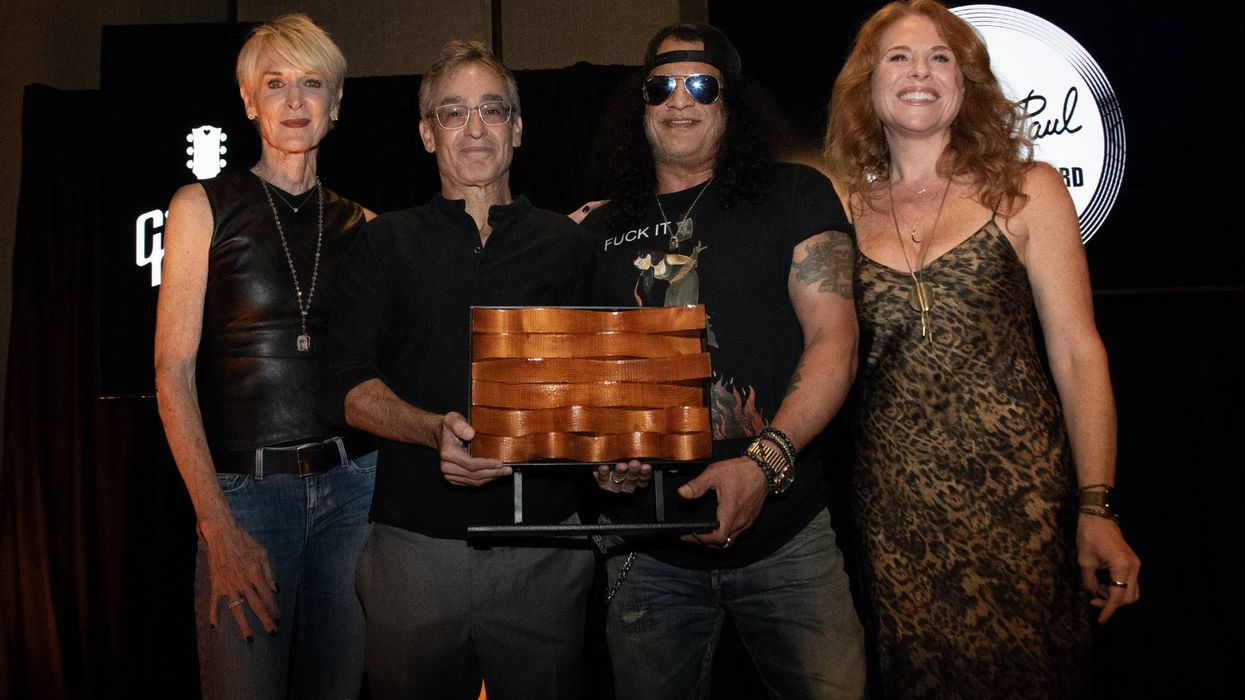
Rock icon Slash received the 2026 Les Paul Spirit Award last night, Monday, October 5, during an intimate celebration at The Les Paul Recording Studio at Universal Master Recordings in Hollywood.
Presented by the Les Paul Foundation in partnership with Gibson Gives, the philanthropic arm of Gibson, the private event brought together a room filled with music-industry luminaries, artists, media, friends and special guests to honor Slash’s extraordinary creative legacy, pioneering musicianship and enduring influence on generations of artists and fans.
The evening centered on the presentation of the one-of-a-kind Les Paul Spirit Award, recognizing Slash as an artist who embodies Les Paul’s pioneering spirit through innovation, creativity, technology and music. The celebration also included a reception and a tour of the historic recording studio, offering guests a closer look at the remarkable legacy of Les Paul and the continuing impact of his work on modern music and recording.
Slash and Les Paul shared a special friendship during Les Paul’s lifetime and often played music together. That personal connection brought added meaning to the evening as guests celebrated not only two of the most recognizable guitarists in music history, but also two artists united by an enduring curiosity, an instinct for innovation and a lifelong commitment to expanding the expressive possibilities of the electric guitar.
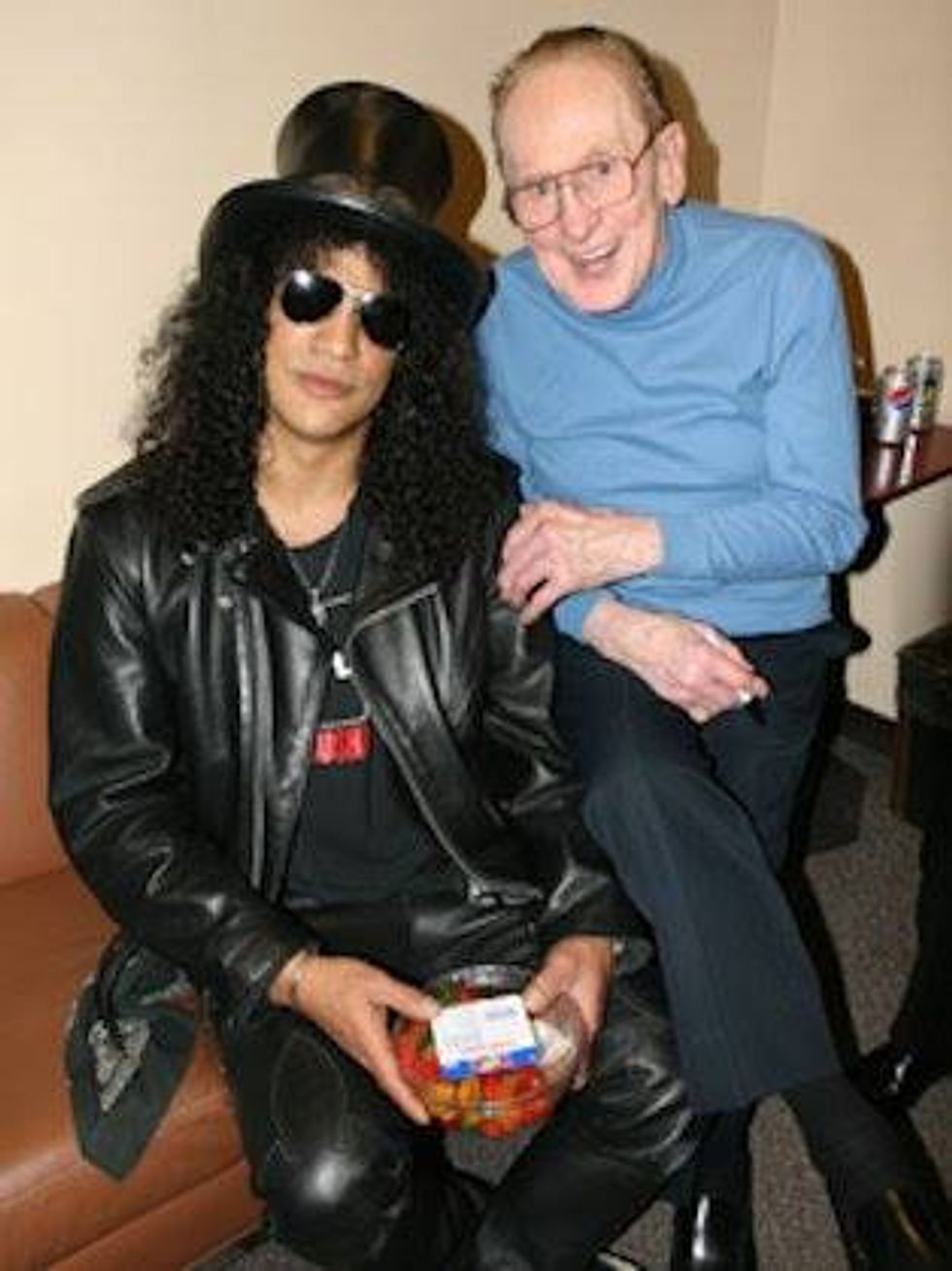
“Les was so much more than a great guitarist and innovator. He was an actual inventor who changed the instrument itself, built groundbreaking recording equipment and completely reimagined how artists could record music. I feel incredibly lucky that I got to know him, hang out with him and play music with him. I cherish the relationship we had, and receiving an award that carries his name and spirit is a tremendous honor.” --Slash
“We are honored to present the Les Paul Spirit Award to Slash this year. He and Les shared a special friendship and often jammed together when they could,” said Michael Braunstein, Executive Director of the Les Paul Foundation. “Not only does Slash exemplify the creativity and curiosity Les had during his life, but he is also an extraordinary talent and a wonderful supporter of the Les Paul Foundation. If Les were still alive today, Slash and he would be jamming onstage together somewhere regularly.”
The annual Les Paul Spirit Award is presented to an individual who exemplifies the spirit of the late Les Paul through innovation, engineering, technology and music. The physical award presented to Slash was created from actual hand-carved acoustic boards that Les Paul built and used in his home recording studio. Because each award is fashioned from authentic studio materials personally created by Les Paul, no two Les Paul Spirit Awards are exactly alike.
Previous recipients of the Les Paul Spirit Award include Bob Weir, Nile Rodgers, the Edge, Peter Frampton and Steve Miller. Slash now joins that distinguished group of artists whose creativity, originality and contributions to music reflect the trailblazing spirit that defined Les Paul’s life and career.
A GRAMMY Award-winning guitarist, songwriter and Rock and Roll Hall of Fame inductee, Slash has helped define generations of rock music through his work with Guns N’ Roses, Velvet Revolver, Slash’s Snakepit, Slash Ft. Myles Kennedy & The Conspirators and Slash’s Blues Ball Band. With more than 100 million albums sold worldwide, he has created some of the most iconic guitar performances in rock history while continuing to push his artistry into new territory.
His most recent solo album, Orgy of the Damned, was released by Gibson Records in 2024 and topped the Billboard Blues Albums chart for 13 weeks. Whether exploring the blues or recording rock albums with Slash FT. MYLES KENNEDY & THE CONSPIRATORS, Slash remains driven by the same instinctive, collaborative approach that has defined his career.
Prior to the award presentation, select members of the media were invited inside the Les Paul Recording Studio for an exclusive advance listening session featuring four songs from Slash FT. MYLES KENNEDY & THE CONSPIRATORS’ forthcoming album, Flying Blind. Guests heard “Good Time Girl,” “One of Your Kind,” “Flying Blind” and “Looking for a Miracle,” offering an early glimpse at the band’s next creative chapter.
Set for release on February 26, 2027, via Gibson Records, Flying Blind was recorded largely live with producer Michael “Elvis” Baskette and captures the raw chemistry and unfiltered energy that have become hallmarks of the band’s sound. The preview underscored that, even after decades at the forefront of rock music, Slash continues to create with the same passion, spontaneity and commitment to collaboration that have defined his extraordinary career.
The Flying Blind WORLD TOUR 2027 will take Slash FT. MYLES KENNEDY & THE CONSPIRATORS across Latin America, North America, the United Kingdom and Europe, with stops at iconic venues including The Wiltern, Beacon Theatre and Ryman Auditorium. Tickets are on sale now: home.slashonline.com/tour.
Jackson’s Jon Romanowski: The Halo Effect
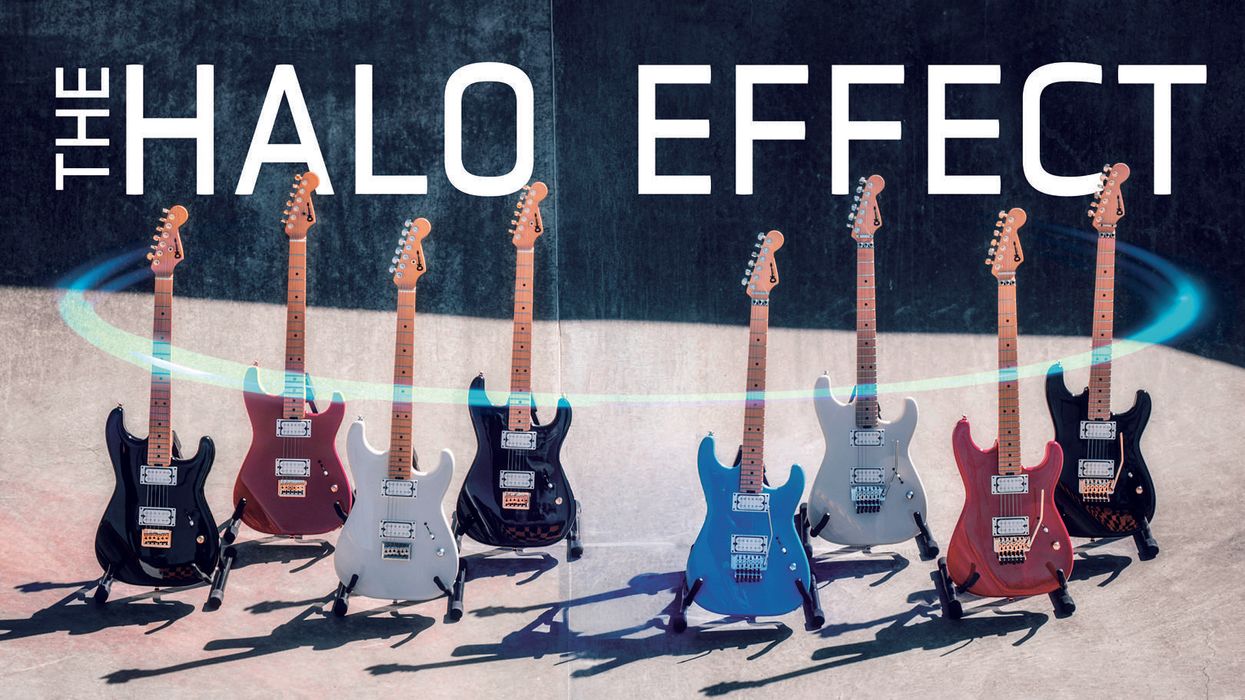
The superstrat was not born in a design studio. It was not shaped by a focus group, nor was it conceived as part of a grand plan to reinvent the electric guitar. It evolved because one player demanded more from the instrument than it had ever delivered before. When Eddie Van Halen assembled his now-legendary Frankenstrat, he wasn’t trying to create a new category of guitar. He was solving problems. He wanted an instrument that could survive aggressive tremolo abuse, deliver more power and thickness, and respond to the speed and articulation of the music he heard in his head. Every modification—hotter pickups, a flatter fingerboard radius, larger frets, a locking tremolo—brought the guitar closer to that vision.
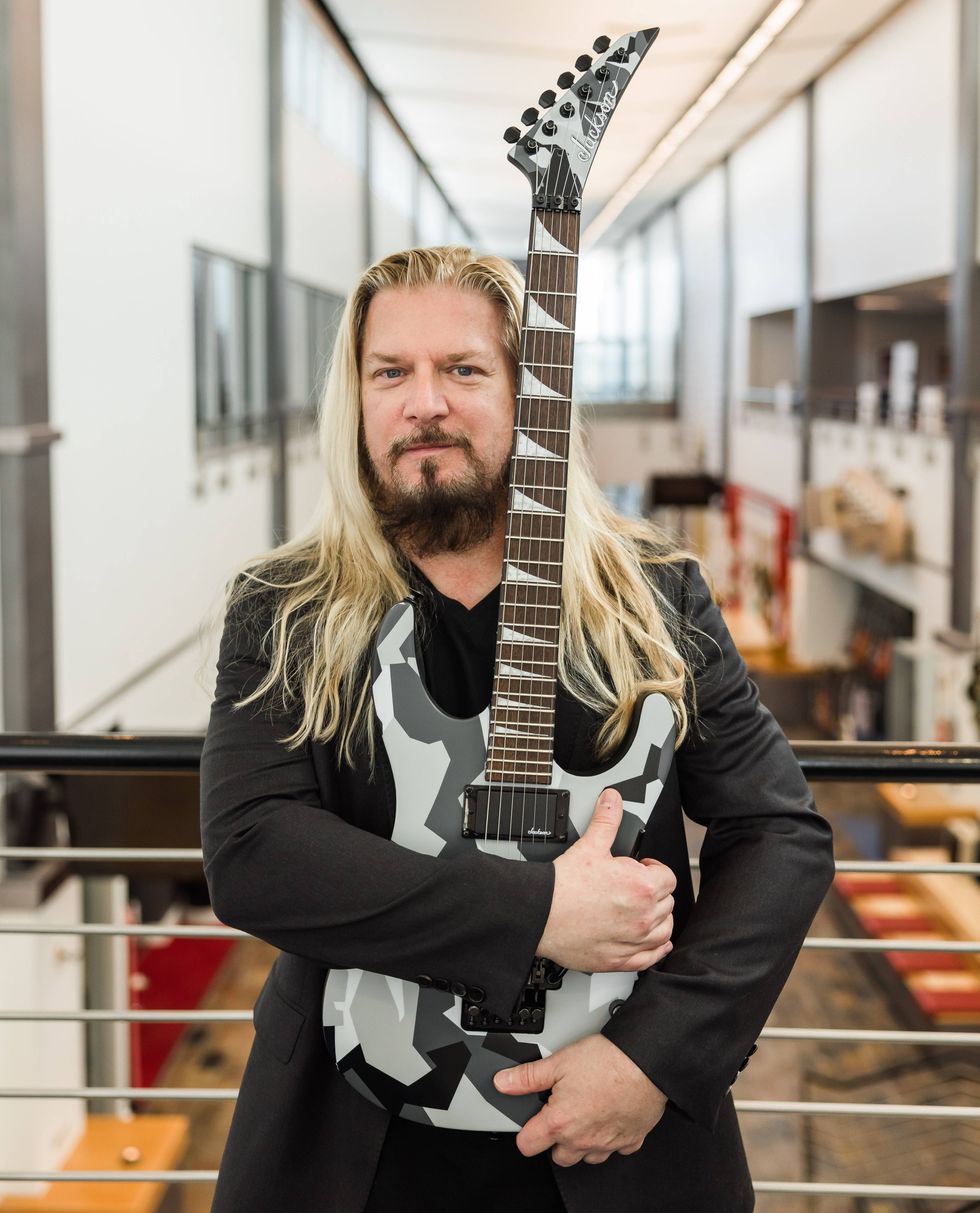
What began as one player’s search for a more appropriate tool evolved into an entire philosophy of instrument design. The Frankenstrat became one of the defining blueprints for the superstrat, influencing everyone from boutique builders to major manufacturers. It also changed what players expected from an electric guitar and created a platform that continues to evolve nearly half a century later. Few people have had a better understanding of that evolution than Jon Romanowski.
As Vice President of Product for Fender Musical Instruments Corporation’s high-performance brands—Jackson, Charvel, and EVH—Romanowski occupies a unique position in the guitar world. He doesn’t build guitars in the traditional sense. He doesn’t carve necks, wind pickups, or spray finishes. Instead, his craft is something less visible but equally important: understanding what innovations guitarists seek and translating those insights into instruments they genuinely want to play.
“There’s a huge, undulating current of artists and bands having a major impact, so we’re watching those trends.”
Romanowski describes product management as the hub of a wheel, with each “spoke”—engineering, manufacturing, artist relations, marketing, sales, and finance—contributing a different kind of expertise. “Successful products,” he says, “are created at the point where those perspectives intersect.” Throughout a conversation that repeatedly emphasizes the value of teamwork, Romanowski’s focus always returns to the most important voice in the room: the guitarist.
To Romanowski, innovation doesn’t begin in a factory or a boardroom. It begins with a player trying to solve a problem. A player pushes boundaries, other musicians take notice, manufacturers respond, and new technologies eventually filter through product lines and out into the broader guitar community. He calls this phenomenon the “halo effect.” Eddie Van Halen’s Frankenstrat was one of those ideas. Romanowski has spent much of his career shepherding similar ideas into existence—not by imposing himself on the product, but by listening to what players need.
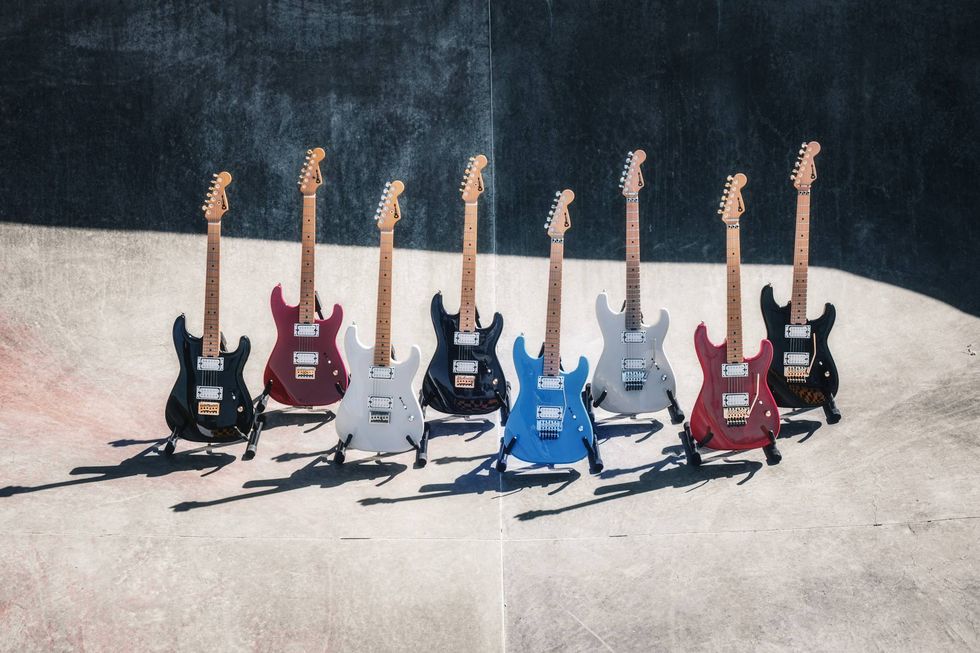
Long before he reached the upper levels of the guitar industry, Romanowski grew up in Rochester, New York, raised with two distinct perspectives: His father, an engineer, emphasized discipline, academics, and analytical thinking, while his mother encouraged creativity and artistic exploration. That combination proved formative. His father’s mindset would eventually serve him well in product development, while his mother kept music at the center of his life.
Like many teenagers of his generation, Romanowski’s path changed after seeing the possibilities of rock music explode on MTV in the early ’80s. Watching Def Leppard’s “Photograph” video, he knew he wanted to play guitar. “My mom was always trying to get me involved in the arts,” he recalls. “But after seeing Def Leppard, I thought, ‘Man, I want to do that.’”
Playing eventually led to a job at Rochester’s legendary House of Guitars, where he says his real education began. The store became a classroom unlike any traditional academic environment. He saw firsthand how players interacted with instruments, watched local musicians chase opportunities, witnessed artists develop their identities, and began to understand that the music business extended far beyond playing guitar. “Don’t let school get in the way of a good education,” he says with a laugh.
That experience eventually led to positions with ART (Applied Research and Technology, founded by MXR alumni) and later Ibanez, where Romanowski learned one of the most important lessons of his career: successful product development isn’t necessarily about inventing something completely new. Often, it’s about paying attention.
“You’re looking for holes in the marketplace,” he explains. “You say, ‘We have these types of guitars for these kinds of players, but they’re looking for this other type of sound, so maybe we should do that.' You pair them up and bring it to market.” That philosophy would become the foundation of his approach. The goal isn’t to predict the future. It’s to listen closely enough that the future reveals itself.
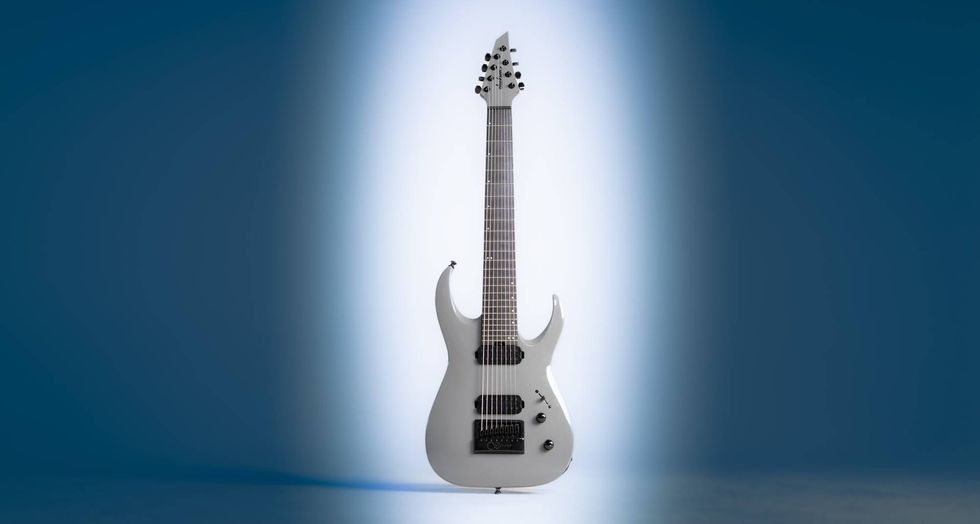
By the time Van Halen’s debut album arrived in 1978, the electric guitar had already undergone several major transformations, yet Fender and Gibson still largely dominated the market. Romanowski acknowledges players like Les Paul were already pushing technical boundaries. “He was playing very fast and quick; he just didn’t do it with distortion,” he says. “And you had the undulating fusion thing going on with Al Di Meola and Allan Holdsworth, so there was already that virtuosity—except those players were highly-schooled and rooted in jazz. Then here comes a guy with those chops, applying them in a pop context. It was accessible and digestible, yet it also sounded like nothing anyone had heard before.”
“Eruption” was more than a great guitar solo; it was a moment when players realized the instrument could do things they had never imagined. “‘Eruption’ sounded like Beethoven meets E.T.,” Romanowski says with a chuckle. “People had never heard a guitar sound like that before. That was the appeal.”
But Van Halen’s influence extended beyond technique. Romanowski describes the Frankenstrat as “patient zero” in the superstrat lineage. “He completely changed the engineering demands of the electric guitar,” Romanowski says. “To play that way, you needed a guitar with a flatter radius, bigger frets, hotter pickups—and it had to look the part.”
Van Halen didn’t build the superstrat to create a market category, but rather because existing instruments didn’t meet his needs. “And people glommed onto that. They were like, ‘I want to be like that guy, so I need that kind of guitar.’” For Romanowski, that insight is essential: defining moments in the guitar industry are often driven by musicians pushing instruments beyond their present limitations.
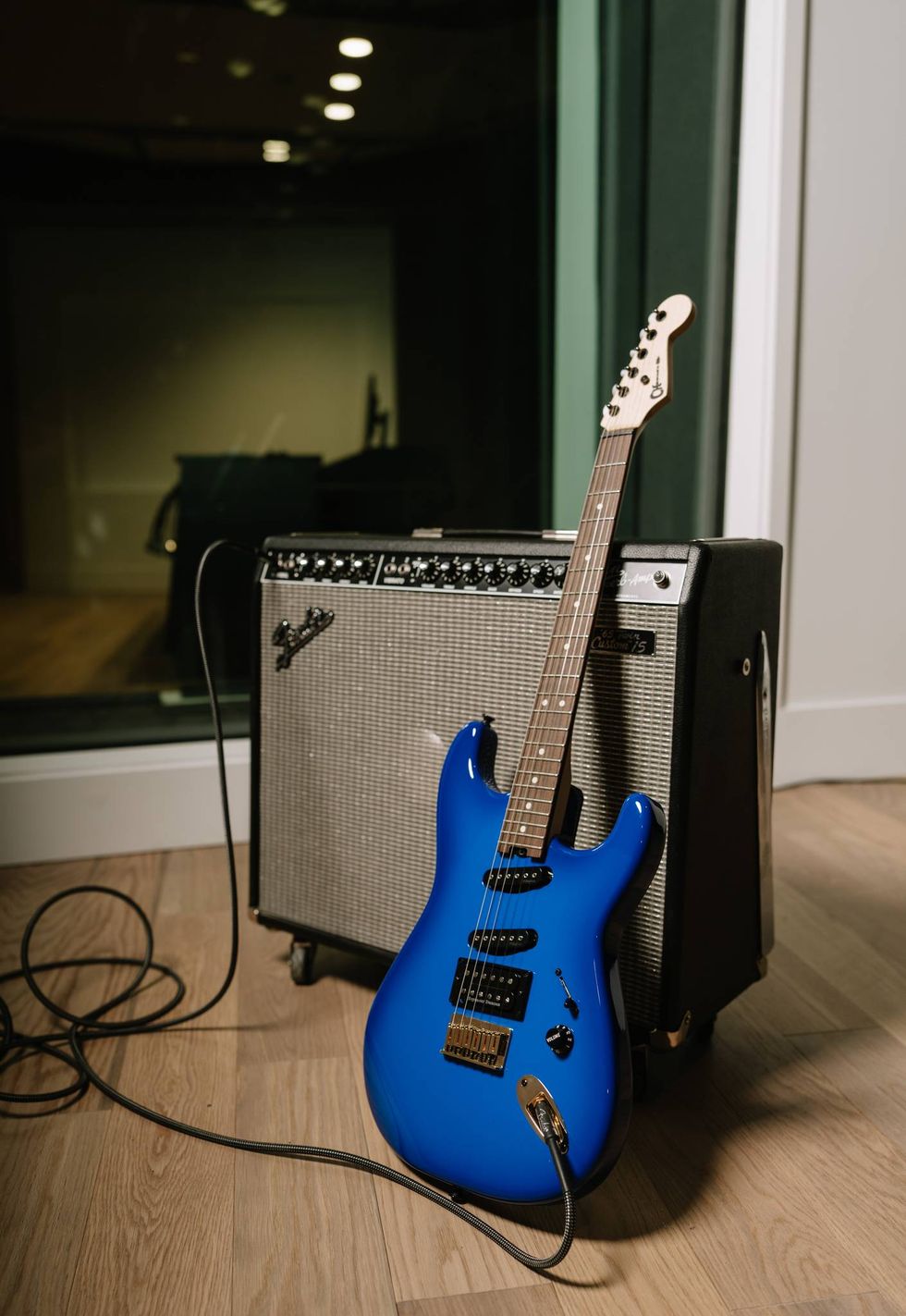
Romanowski believes the halo effect is earned through meaningful innovation, not novelty for novelty’s sake. The goal is not to change an instrument simply to make it different, but to understand why players need something different in the first place. It’s a philosophy that shapes his view of signature models. In some corners of the guitar world, artist models are dismissed as marketing exercises—familiar designs dressed up with a famous name. Romanowski sees them differently. At their best, signature instruments give artists opportunities to push manufacturers toward ideas that may eventually benefit everyone.
He points to Misha Mansoor of Periphery as an example of an artist whose influence extends beyond his own instruments: he introduced ideas through his Jackson Juggernaut signature guitar that filtered through the rest of the product line. “Artists like Misha help push us in terms of design and technologies,” Romanowski explains. “They’re the ones that lead the charge, internally. We do stumble upon some things, but in my experience, we’ve always been more successful when we listen to what the artist needs, or the market telegraphs us some stuff. The halo effect drives the overall business.”
For Romanowski, the artist is not simply endorsing a product—they’re a part of the development process. He compares that influence to the way Michael Jordan changed perceptions of basketball shoes. A player at the highest level can transform how an audience views a product—not because everyone will perform at that level, but because the product represents possibility. The same idea applies to high-performance guitars. “With heavy metal and hard rock, you can’t just casually play it,” Romanowski says. “You must spend some time on it, which means you did that at the expense of something else. You sacrificed something to be able to play like this. And for those players, there’s an expectation there.”
Though Romanowski was initially hired by Fender to jumpstart its high-performance brands, he and his team understand that their role isn’t to recreate the revolutionary moments of the past. “Those moments already happened,” he admits. “Classic brands don’t need a whole lot. They’ve got a great history. They just need a little tweaking here and there.” The groundwork laid by the players and builders who reshaped the instrument—Eddie Van Halen, Randy Rhoads, Grover Jackson, and Wayne Charvel—has endured. “That group in the ’80s hit pay dirt,” Romanowski says. “So [at Jackson] we already have extraordinary platforms—the Rhoads, the Soloist, the Dinky.”

Today, the challenge is to keep evolving those platforms. That means adapting classic designs for modern players with seven- and eight-string models, new pickup configurations, varied scale lengths, updated finishes, and a broader range of price points. Romanowski jokingly compares the process to “Mr. Potato Head”—rearranging familiar pieces to create something new. Beneath the humor is a sophisticated philosophy of iterative design: great designs endure because they are flexible. The superstrat can absorb new influences without losing its identity.
“A young player can stream Pantera, Bring Me the Horizon, Allan Holdsworth, Brad Paisley, and Kurt Cobain within the same afternoon.”
The next stage of the superstrat is already underway, according to Romanowski. While technical ability will always matter, he sees younger players increasingly emphasizing heavier riffs, lower tunings, and songwriting chops, rather than pure displays of speed. He believes the superstrat is well positioned for that future because it has always adapted to the musicians using it.
“The last guitar revolution, in my opinion, was back in 2008/2009, with Periphery and Animals as Leaders,” he says. “To me, that was like the late ’70s/early ’80s Van Halen and Randy Rhoads kind of thing.” For Romanowski, those moments are connected. Both represent players asking for more from the instrument, and manufacturers responding.
Now he sees two generations helping shape what comes next. “Boomers are starting to age out,” he says. “And Gen Xers are becoming more prominent. They were the ones that got exposed to all this stuff in the ’80s and ’90s, and that’s helped give us a tailwind. They remember it and want to get back in touch with it. There’s also a large group of very young people getting into guitar for the first time, so you’ve got these two cohorts coming together that can help chart a course.”
Beyond guitar-centric revolutions, Romanowski believes another major shift has helped shape the modern guitar landscape: the way people consume music.
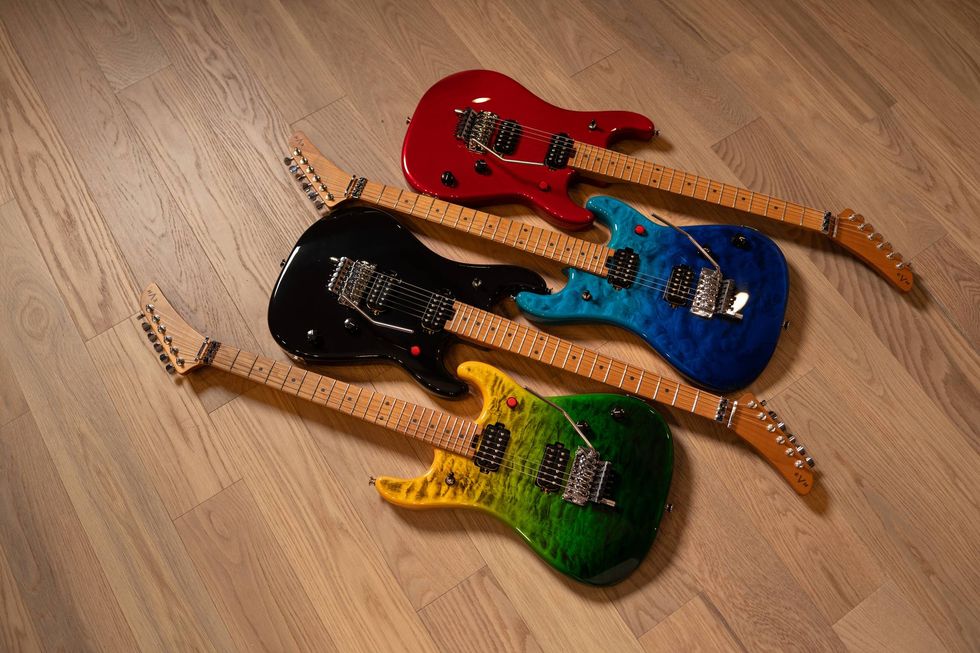
“In the 1980s, MTV helped determine which artists reached millions of listeners,” he says. “In the 1990s, grunge changed the priorities of many guitarists seemingly overnight. Today, because of the internet and social media, those divisions have largely disappeared. A young player can stream Pantera, Bring Me the Horizon, Allan Holdsworth, Brad Paisley, and Kurt Cobain within the same afternoon.”
The result is a guitar culture where multiple generations and styles exist simultaneously. The superstrat no longer belongs only to virtuosos chasing technical perfection. It has simply become another electric guitar to choose from, regardless of what style of music one plays.
Ultimately, Romanowski defines his leadership role simply: “to take the beatings and celebrate the wins.” Nearly 50 years after Eddie Van Halen painted stripes on a modified Stratocaster and changed guitarists’ expectations of the instrument, the superstrat now comfortably coexists with standard-bearers like the Stratocaster, Les Paul, and SG.
“Technology evolves, players change, music moves forward,” Romanowski says. “Yet the conversation between musician and instrument continues. There’s a huge, undulating current of artists and bands having a major impact, so we’re watching those trends.”
He may not be able to predict the next guitar revolution, but Romanowski knows the future belongs to those willing to listen for it. “There continues to be a path forward, and there continue to be even more growth opportunities,” he says. For Romanowski, perhaps that is the real halo effect—not simply creating something new, but making an instrument that helps move the conversation forward.
State of the Stomp: Picking the Right Buffer for Your Rig
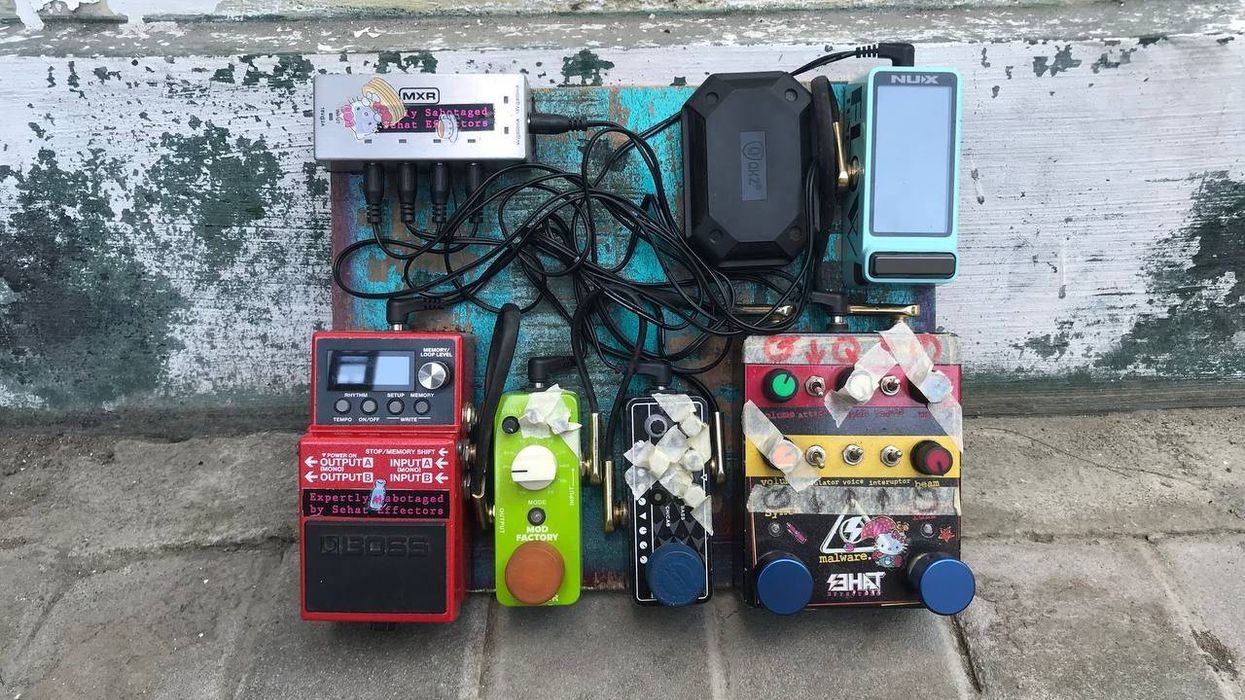
In Helmet front man Page Hamilton’s 2014 Rig Rundown, he highlighted the 12AX7-driven Fryette Valvulator Tube Buffer, stating, “That is a key piece of gear in my sound, always on my pedalboard.” For a precision-minded musician like Hamilton, a quality buffer can be a foundational part of the rig.
Every foot of instrument cable you run has inherent capacitance. When you daisy-chain a 15-foot cable into a pedalboard packed with true-bypass switches, and then run another 15-foot cable to your amp, you’ve essentially built a massive low-pass (RC) filter. The result? Your signal bleeds high-end frequencies and loses its transient lifeblood before it even hits your preamp tubes. This is where choosing the right buffer transcends being a mere option and becomes an absolute necessity.
A buffer doesn’t just convert Hi-Z (impedance) to Low-Z; its components also add their own “color” and character.
Op-Amp (Operational Amplifier):
This topology is the modern industry standard. It is known to be exceptionally clean, transparent, and linear, and possesses an incredibly low noise floor (dead quiet). An IC Op-Amp-based buffer reproduces your signal exactly as it is, without any meaningful harmonic coloration.
JFET (Junction Field Effect Transistor):
JFET transistors offer the ability to natively accept exceptionally high-impedance loads (up to the megaohm scale). The operational characteristics of a JFET are frequently compared to vacuum tubes because of how they operate in a voltage-controlled manner. This fundamental trait renders JFETs highly musical, incredibly responsive to picking dynamics, and perfectly suited as an instrument-level signal buffer.
BJT (Bipolar Junction Transistor):
Unlike the JFET, BJT transistors are current-controlled and naturally lack the massive high-input-impedance capability required to reach the megaohm scale without employing specialized design tricks (such as bootstrapping). However, BJT-type buffers are often selected due to their highly efficient and economical design, and most importantly, they deliver a uniquely vintage interaction.
Discrete:
In terms of structural architecture, this is fundamentally an Op-Amp; however, instead of utilizing a factory-molded, micro-sized IC chip, this topology is constructed using an array of many full-sized individual (discrete) transistors. This approach allows designers to strictly regulate component tolerances to an extreme degree, yielding gargantuan headroom and a highly specific Total Harmonic Distortion (THD) profile. Frequently deployed in studio-grade buffers or mixing consoles, this topology is exceptionally rare to find in a stompbox format due to its space-consuming footprint.
Tube:
This employs classic vacuum tubes (such as the 12AX7) operating at actual high voltage. A vacuum tube is capable of handling high input impedance natively, just like a JFET, but with a voltage headroom that is far more massive. As a bonus, tubes deliver a pleasing (second-order) harmonic distortion that injects warmth and a 3D dimension into the signal, along with an exceptionally wide dynamic range.
Hybrid:
A clever topology that blends two worlds. It typically employs a JFET at the input stage to capture the high impedance from the guitar without degrading the tone, and then utilizes a BJT or Op-Amp at the output stage to forcefully spew a robust low impedance through long cable runs. This is the steadfast default buffer embedded within almost the entire Boss pedal line.
Active Pickups:
A technical fact that is frequently forgotten: if you are using active pickups, you already possess a built-in buffer located at the closest possible distance to the sound source. Hiding stealthily beneath the pickup cover and powered by a 9V battery, this circuit—which predominantly uses micro Op-Amps—instantly converts the signal to low impedance right at the guitar’s output jack. (Examples: EMG 81/85, Fishman Fluence).
Do you actually need two buffers?
Yes. Professional rig builders often quietly employ a “Buffer Sandwich.” One high-quality buffer sits first-in-chain to “catch” the fragile high-impedance signal. A second buffer sits at the absolute end, aggressively pushing your signal through 50 feet of stage cable to your backline or FOH without bleeding top-end sparkle.
The unaffected sound is the feature. It’s exactly this transparency that leads amateur tone-chasers to write off buffers as worthless gear. But when the stages get wider, when you demand wireless freedom, or when your cable lengths cross into the realm of the absurd, the buffer will be right there. It will silently save the life of your tone while you’re too busy praising the sheer magic of your boutique true-bypass overdrive.
Fender and Joe Bonamassa Introduce the Tone Master '59 Twin-Amp JB Edition
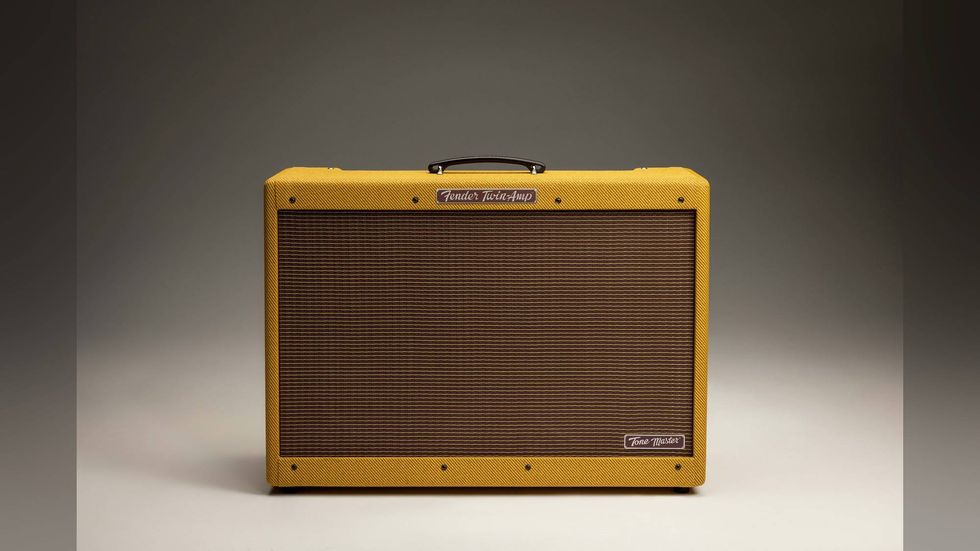
Fender has unveiled the Tone Master ’59 Twin-Amp JB Edition, the first signature amplifier in Fender’s Tone Master series, created in close collaboration with blues-rock guitarist and longtime Fender artist Joe Bonamassa. Inspired by Bonamassa’s prized late-’50s high-powered tweed Twin amps — a mainstay of his touring and studio rig — the new model brings the sound and response of his vintage originals together with the versatility and functionality of Fender’s modern Tone Master platform.
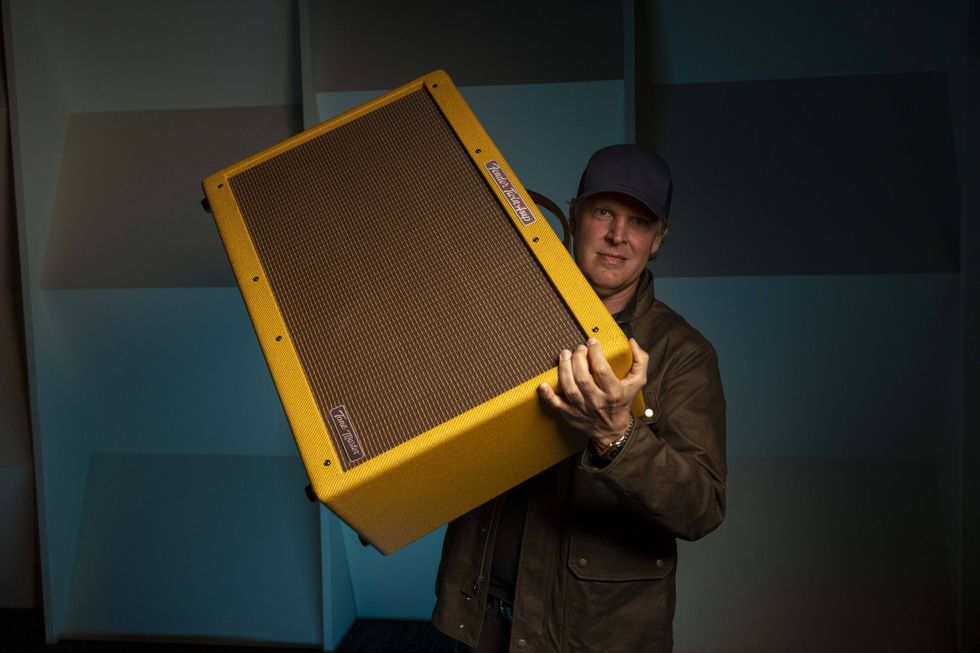
“I wanted to hate it,” said Joe Bonamassa. “We’re all in agreement that this amp was tighter, punchier, and better. I never thought I’d see in my lifetime the fact that I’d be sitting next to a digital amp. Sound makes you play. Sound inspires you to play. You just need to know how to unlock the sound you hear in your head and get it out.”
Powered by Fender’s Tone Master modeling technology, this signature amplifier combines the character of Bonamassa’s beloved vintage tube amps with the convenience and versatility of modern engineering. The 2x12” ‘59 Twin delivers crystalline cleans that transform into aggressive, distinctive overdrive when pushed into its sweet spot. A six-way power attenuator makes those tones accessible at bedroom-friendly volumes, while the amp can reach up to 85W for the stage. Celestion JB Neodymium Speakers deliver an expansive frequency range, and onboard controls including a vintage/tight switch, line output with level control, ground lift and three-way cabinet simulator let players further shape their tone.
Key Features Include:
- Joe Bonamassa Signature Tone: Based on the legendary Fender 5F8-A "high-powered" tweed Twin circuit and voiced after Joe Bonamassa's own prized late-'50s amps, delivering bold cleans and rich, dynamic overdrive.
- Dual Celestion JB Neodymium Speakers: Custom-designed lightweight 12" speakers capture the punch, warmth and articulation of Joe's touring rig while reducing overall weight.
- Stage-to-Home Power Control: A rear-panel output selector provides full power plus five attenuated settings, making the iconic high-power tweed Twin tone accessible at any volume.
- Premium Modern Performance: Features top-panel convolution spring reverb, an effects loop for time-based effects and a rear-panel "Vintage-Tight" switch for enhanced low-end response.
- Studio-Ready Connectivity: Balanced XLR line out with three onboard cabinet impulse responses, plus fully customizable speaker IRs via the Tone Master IR Manager app for seamless recording and live performance.
Designed in collaboration with Joe Bonamassa. Full technical specifications are listed below.
With a career that began at 12 opening for B.B. King, Joe Bonamassa was destined for guitar greatness. Known affectionately as JoBo, he has since released 17 LPs and holds the world record for the most No. 1 blues albums. Beyond his storied career as a performer and collaborator, Bonamassa is also renowned for his extensive gear collection. Across his Los Angeles, Nashville and New York City headquarters, he has amassed a rare and sought-after assortment of vintage amplifiers, instruments and effects.
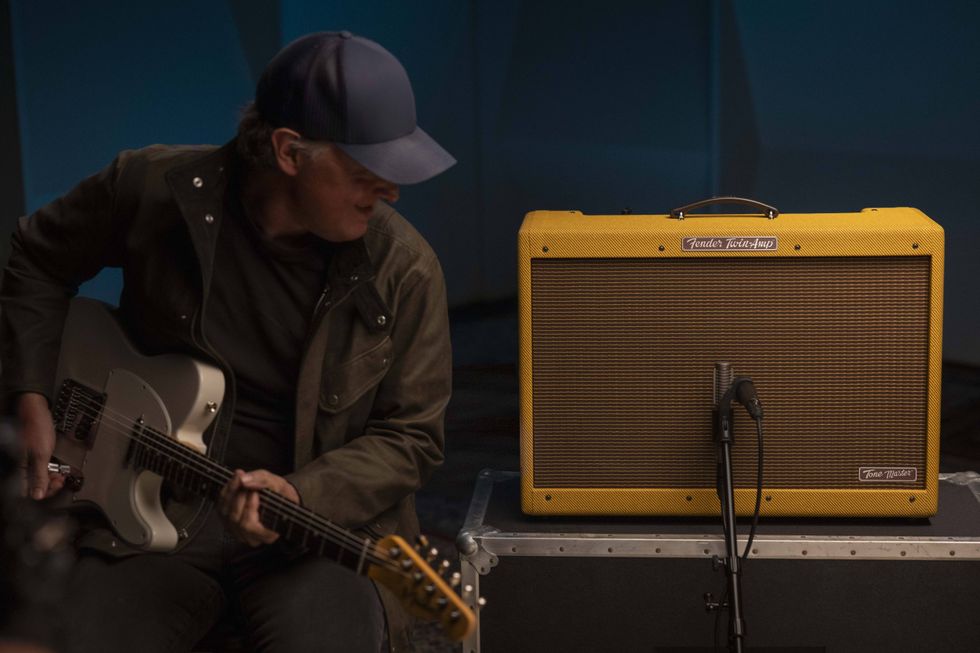
“Joe Bonamassa is one of the world’s foremost authorities on vintage amplifiers, and he knows these original Twins as well as anyone,” said Max Gutnik, Chief Product Officer, Fender Electronics & Digital. “For someone with Joe’s ears, experience and deep commitment to vintage tube amps to choose a digital Fender, and say it sounds even better than the original, is a real inflection point for our industry. It demonstrates just how far this technology has come and, more importantly, the extraordinary accuracy with which Fender can now recreate the sound, feel and response of our most iconic amplifiers. That’s what Tone Master is all about: preserving everything players love about these legendary amps while making them more useful for the way musicians play today.”
Fender’s Tone Master ’59 Twin-Amp JB Edition brings one of Bonamassa’s most relied-upon vintage Fender sounds to players in a format designed for the stage, studio and home. It carries a street price of $1,999.99 USD, £1,789 GBP, €2,099 EUR, $2,999 AUD, ¥308,000 JPY. For more information visit fender.com.
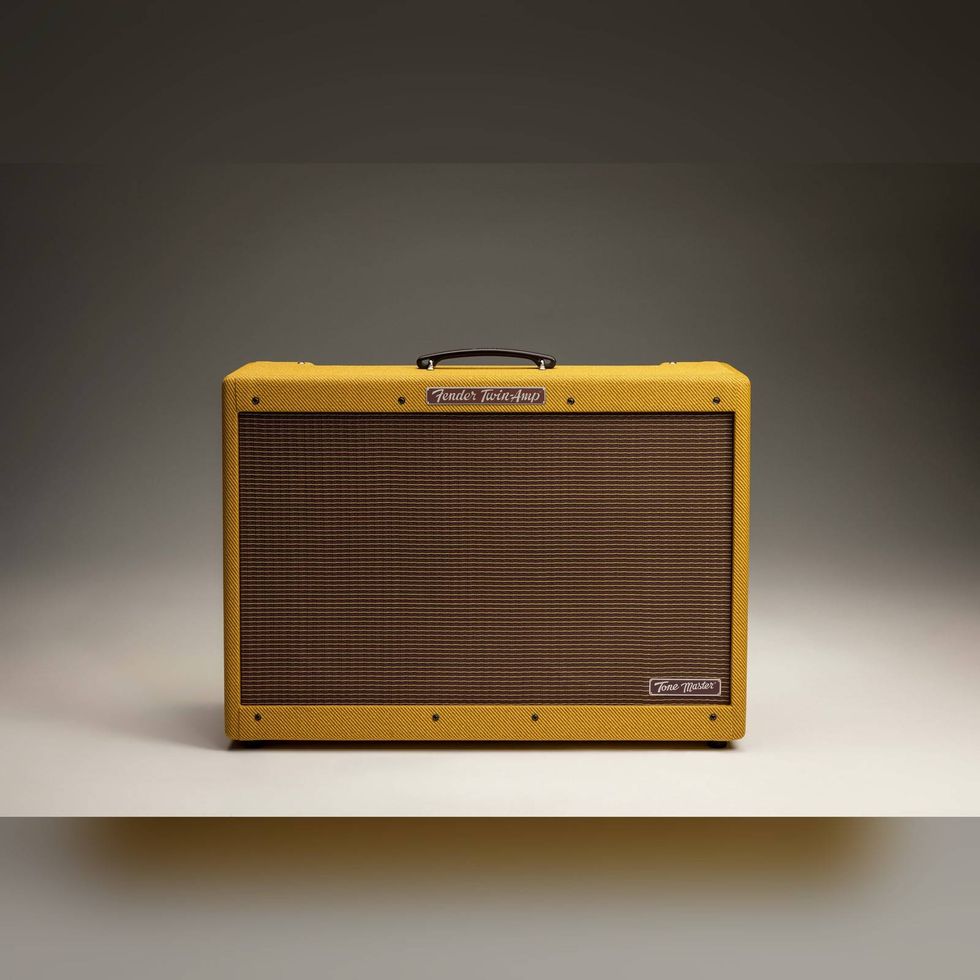
Tone Master ’59 Twin-Amp JB Edition
Fender has unveiled the Tone Master ’59 Twin-Amp JB Edition, the first signature amplifier in Fender’s Tone Master series, created in close collaboration with blues-rock guitarist and longtime Fender artist Joe Bonamassa. Inspired by Bonamassa’s prized late-’50s high-powered tweed Twin amps — a mainstay of his touring and studio rig — the new model brings the sound and response of his vintage originals together with the versatility and functionality of Fender’s modern Tone Master platform.
Ernie Ball Music Man Launches New Albert Lee Models
Ernie Ball Music Man has introduced two new takes on the Albert Lee guitar: the Albert Lee HSS, which pairs the model's distinctive body shape with a versatile HSS pickup configuration, and the Ball Family Reserve Albert Lee in Malibu Burst, limited to 75 instruments worldwide.
The Albert Lee HSS combines the distinctive Albert Lee body shape with a DiMarzio custom humbucker, first developed for the Music Man Axis, and Albert Lee's signature Seymour Duncan custom single-coil pickups. A Silent Circuit preamp reduces the 60-cycle hum associated with traditional single coils, while a 5-way selector with master volume and tone controls delivers everything from articulate, chiming cleans to full-bodied humbucker drive. An ash body in a high-gloss finish is paired with a roasted figured maple neck finished in gunstock oil and hand-rubbed wax, with 22 high-profile stainless steel frets on a 25-1/2" scale. White face dots and glow-in-the-dark side markers, a Music Man vintage tremolo, compensated nut, and Schaller M6-IND locking tuners round out a guitar built for players who need one instrument to cover it all. The Albert Lee HSS comes in three striking finishes: Firemist Silver, Honey Burst, and Cosmos Sparkle.
Albert Lee HSS Features:
- DiMarzio custom humbucker + Albert Lee signature Seymour Duncan custom single coils
- Silent Circuit preamp
- Ash body with roasted figured maple neck
- 22 stainless steel frets
- Music Man vintage tremolo and Schaller locking tuners
- Strung with Custom RPS Slinkys (10–46)
The Albert Lee HSS is available for a street price of $3,299.
The Ball Family Reserve Albert Lee in Malibu Burst brings premium tonewoods and refined details to the Albert Lee platform. A figured maple top over an okoume body is finished in high-gloss Malibu Burst, paired with a roasted figured maple neck and fretboard in a hand-rubbed oil and wax finish. White pearl Atlante block inlays and glow-in-the-dark side dots give the fretboard a distinctive look, while custom-wound DiMarzio humbuckers—the same pickups found in the Axis—deliver rich, articulate tone through a 5-way selector and 500k volume and tone controls. A Music Man vintage tremolo, compensated nut, locking Schaller tuners, and 22 stainless steel frets on a 10" radius complete the package. Limited to just 75 instruments worldwide.
Ball Family Reserve Albert Lee Features:
- Figured maple top on an okoume body in Malibu Burst
- Roasted figured maple neck and fretboard
- White pearl Atlante block inlays with glow-in-the-dark side dots
- Custom-wound DiMarzio humbuckers
- Music Man vintage tremolo and locking Schaller tuners
- Limited to 75 instruments worldwide
The Ball Family Reserve Albert Lee is available for a street price of $3,799.
Albert Lee HSS
Ernie Ball Music Man has introduced two new takes on the Albert Lee guitar: the Albert Lee HSS, which pairs the model's distinctive body shape with a versatile HSS pickup configuration, and the Ball Family Reserve Albert Lee in Malibu Burst, limited to 75 instruments worldwide.
Joe Bonamassa Signature Fender Tone Master ’59 Twin

A new Fender Tone Master model isn’t generally all that notable these days, but I think today’s new release is notable. This is because Joe Bonamassa is putting his name on the new Joe Bonamassa Fender Tone Master ’59 Twin model.
Joe made some waves a few months ago when he stated that he was using the Tone Master Twins in his touring rig. He is very well known for being a purist when it comes to vintage equipment, but he also has to face the realities of touring all year long. He now seems to be going all in with digital, at least as far as the Tweed Twin models he uses in his amp rig.
In the amp introduction video below he talks about how with the original tube models, the amp can start sagging by the end of a gig. The Tone Master amps don’t do that. He say the attack remains quick even after a few hours of use.
I’m not sure I’m quite ready to make the leap to an all digital rig, but I think this is testament to the fact that whether we like or not, digital gear is getting ever so closer to the sounds we loved growing up.
Greg Freeman’s favourite guitar was in a house fire: “it was burned to a crisp”

While the issue of artificially ageing a guitar is one that still bitterly divides guitar players, even the most dedicated home-relicer would probably draw the line at throwing a guitar on the fire to give it an authentically battered patina.
Thankfully for rising indie-rock guitarist Greg Freeman, that work had inadvertently been done for him by the time he came to snag his favourite Gibson SG off Craigslist for a bargain price – the guitar had been “burned to a crisp” in a house fire, and it still wears the scars today.
“My friend Garrett, who plays bass in my band, found it on Craigslist in Maine for like, $400 or something,” he told us in the latest episode of My Guitars & Me. “It was in a house fire: that’s why it looks way older than it is, I guess. It kind of immediately relic’d the whole thing. The pickguard is literally melted, and that wear looks about 70 years old.
Despite its heavy battle scars, the guitar has become Freeman’s number one as he wrote and recorded sensational new album, All Set The Bone. “It plays really great and has big thick neck and just feels like a proper SG,” he explains. “Some of them don’t really feel right to me, but this one is just great.”
Elsewhere in the episode, Freeman shares his love of an 80s Tokai Breezysound that he thinks is as good as any Fender equivalent, and also explains why he stopped buying and using vintage guitars: “I just play too hard to be able to play a vintage Mustang or something,” he explains. “Like it’s just not going to be in tune. So, I think that’s why I like guitars from the 90s and 2000s. It’s has the age, but can kind of put up with a lot.”
Get up close and personal with the guitars that have guided the musical journey of some of the guitar world’s biggest names by watching every episode of the Guitar.com Originals series, My Guitars & Me.
Greg Freeman’s new album, All Set The Bone, is out now.
The post Greg Freeman’s favourite guitar was in a house fire: “it was burned to a crisp” appeared first on Guitar.com | All Things Guitar.
Trivium Announce New Album Crown in the Grave, Share Video for the Title Track

GRAMMY-nominated heavyweights Trivium—vocalist/guitarist Matthew K. Heafy; guitarist Corey Beaulieu; bassist Paolo Gregoletto; and drummer ALEX RÜDINGER—are thrilled to announce their new album Crown in the Grave. It arrives November 20 through Roadrunner Records. Pre-order it here.

Trivium today share the title track, which builds from a gradual progression of layered riffs into an explosive wall of metal, pairing crushing heaviness with the precision, melody, and technical firepower that have defined the band for more than two decades. The song is vintage Trivium—galloping riffs, robust solos, and battering ram percussion, seamlessly sewn together with three-tiered vocals. But like the rest of the album, it stays true to the band's signature sound, all the while pushing it further into new sonic terrain.
The accompanying, Japanese Noh theater-inspired, post-apocalyptic music video brings the album's artwork and themes into a smoke-filled dojo, where the main characters prepare for an impending showdown through a series of tense, atmospheric sequences. Drawing on the band's longtime passion for classic Japanese theater and martial arts, the visual captures the discipline, drama, and focused physicality at the heart of the song's storytelling.
Watch the video, directed by Pavel Trebukhin, here .
"Crown In The Grave is our eleventh record, and when you get this far into a career, it’s easy to rest on what you've already done—or to reinvent yourself just for the sake of it," says Gregoletto. "With this record, we wanted to find the space between those two things: Take everything we've learned and everything that makes Trivium what it is, but present it in ways we hadn't before."
He continues, "We also wanted the record to exist within its own world. That began with the title track, inspired by Akira Kurosawa's Throne of Blood, and led us deeper into Japanese horror and cinema from the '50s, '60s, and '70s. That influence grew into this darker, ghostly atmosphere that became a set of guardrails for the music, lyrics, artwork, and overall identity of the record."
The bassist finishes, "We built our studio so we could give ourselves the time and space to figure out exactly what an eleventh Trivium record should be, and Crown In The Grave is the answer we arrived at. It honors where we’ve been without living in the past, and pushes into new territory without abandoning what makes us Trivium. I think when you hear it, it'll somehow feel both new and like a return."
After over two decades in the spotlight, Trivium have realized their collective potential like never before. They have absorbed the wisdom gained through writing hundreds of songs, the experience derived from playing thousands of shows, and the fire maintained by never giving up and perfected their signature sound at the highest level. The riffs crunch and crack bones, solos burst into flames upon impact, screams bleed truth without filter, and towering hooks break through the clouds. This is Trivium confidently reborn as the beast they were meant to be.
"Facing yourself is the final quest," Heafy observes. "We had to do it as a band, and I had to do it in my personal life. I freed my mind from the constraints of being worried. I made a decision to just sing."
A perfect storm of mental health struggles, physical injuries, and intense anxiety brought him to a crossroads. Bravely, he chose to embrace therapy, found an appropriate medication regimen, and reframed his mindset. "I cleared the plate," the frontman admits. "I stopped trying to be safe and perfect at every show. Instead, I was actually enjoying the experience and living. If I messed up, it was okay because I'm human. With all of the changes Trivium went through, it's like a brand new band."
For the first time, the group crafted Crown In The Grave in their own creative hub and de facto clubhouse—The Hangar—in Orlando. Plus, they officially welcomed drummer Alex Rüdinger (Rüdi) in the studio. During 2015, the drummer nearly joined Trivium, but opted to focus on other endeavors. A decade later, he heeded the call. "It happened when it was meant to," Heafy declares. "Rüdi didn't just kill it on the drums; his contributions as a writer made a huge difference."
Reteaming with longtime producer Josh Wilbur [Korn, Lamb of God] and working with mixer Jacob Hansen [Volbeat, Amon Amarth] for the first time, the musicians rallied around a shared vision. "We took all of the elements of Trivium, honed in on them, and focused on writing songs with big riffs and big hooks,” notes Beaulieu. "We made the record we'd been dying to make. The late great Shaun Glass [Soil] was a big Trivium fan. He'd always say, "You guys don't cook the same meal.' Even though we use the same ingredients, we always make a new dish."
"Any band who has been around this long starts to ask: Where do we go from here?" says Gregoletto. "We decided to challenge ourselves to top everything we've done. We referenced a lot of '90s albums. If you look at The Black Album by Metallica, Countdown To Extinction by Megadeth, or Superunknown by Soundgarden, the choruses are so important, and the songs are relatable. That's what we strived for."
Thematically, Akira Kurosawa's Throne of Blood served as a north star. Gregoletto brought the film to the group’s attention. "Kurosawa took Macbeth and set it in a feudal Japan," the bassist elaborates. "There's minimal dialogue, yet the storyline is powerful. There are these haunting elements of being tempted by fate and this man's downfall."
Crown in the Grave TRACK LISTING:
- "Jorōgumo"
- "Crown in the Grave"
- "Dead Inside of Me "
- "The Terror"
- "The Haunting Never Ends"
- "Lie Of It All"
- "Blackout The Dawn"
- "Paradise Of Sinners"
- "Death Throes"
- "The Agony"
- "Devour Your Dreams"
- "Serpent in the Flame"
Trivium will hit the road on November 5 in St. Petersburg, Florida and run through December 19 in Charlotte, North Carolina for a North American headline run with In Flames, Orbit Culture, Fit for an Autopsy, and Frozen Soul in tow. It is a truly stacked lineup that cannot and should not be missed. Get tickets here .
"This fall's Trivium tour is a huge one for us," the band declared upon announcing the tour earlier this year. "The lineup is stacked from top to bottom, and we're honored to have special guests In Flames, who not only influenced our early years but continue to prove time and again why they're one of the greatest metal bands of all time. With Orbit Culture, Fit For An Autopsy, and Frozen Soul rounding out the bill, we can't wait to get out there, kick off this next era of Trivium with Rudi behind the kit, and give you a taste of the new music we've been working on. We'll see you soon!"
Trivium ON TOUR: WITH IN FLAMES, ORBIT CULTURE, FIT FOR AN AUTOPSY, AND FROZEN SOUL:
- 11/5 — St. Petersburg, FL — Jannus Live
- 11/6 — Atlanta, GA — The Eastern
- 11/7 — Louisville, KY — Old Forester’s Paristown Hall
- 11/8 — Grand Rapids, MI — GLC Live at 20 Monroe
- 11/10 — Silver Spring, MD — The Fillmore
- 11/11 — New Haven, CT — College Street Music Hall
- 11/12 — New York, NY — Terminal 5
- 11/14 — Philadelphia, PA — Franklin Music Hall
- 11/15 — Worcester, MA — The Palladium
- 11/17 — Laval, QC — Place Bell
- 11/18 — Toronto, ON — GCT Theatre
- 11/20 — Royal Oak, MI — Royal Oak Music Theatre
- 11/21 — Chicago, IL — Aragon Ballroom
- 11/22 — Madison, WI — The Sylvee
- 11/24 — Nashville, TN — The Pinnacle
- 11/25 — Chesterfield, MO — The Factory at The District
- 11/27 — San Antonio, TX — Boeing Center at Tech Port
- 11/28 — Houston, TX — Bayou Music Center
- 11/29 — Dallas, TX — South Side Ballroom
- 12/2 — Phoenix, AZ — Arizona Financial Theatre
- 12/3 — Las Vegas, NV — The Pearl
- 12/4 — Inglewood, CA — YouTube Theater
- 12/5 — San Francisco, CA — The Masonic
- 12/7 — Penticton, BC — Penticton Trade & Convention Centre
- 12/8 — Vancouver, BC — Doug Mitchell Thunderbird Sports Centre
- 12/9 — Seattle, WA — Paramount Theatre
- 12/11 — Reno, NV — Grand Sierra Resort — Grand Theatre
- 12/13 — Denver, CO — Mission Ballroom
- 12/15 — Tulsa, OK — Tulsa Theatre
- 12/16 — Omaha, NE — Steelhouse
- 12/18 — Pittsburgh, PA — Citizen's Live at The Wylie
- 12/19 — Charlotte, NC — The Fillmore
Guitar’s tectonic plates have shifted: self-professed tube purist Joe Bonamassa has released a Tone Master amp with Fender

Digital amp modelling has come a long way – especially for vintage gear head Joe Bonamassa to count himself a convert. Earlier this year, the bluesman made the surprise announcement that he’d been “beta testing” a Fender Tone Master in his live rig.
He’s so convinced by the technology, in fact, that he’s just become the first person ever to attach his name to Fender’s much-loved line of digital modelling amps.
Yep, the Tone Master ’59 Twin-Amp JB Edition has officially arrived, and it faithfully – digitally – recreates the tone of Fender’s 5F8-A tweed Twin circuit, and is voiced after Bonamassa’s own prized late-’50s amps.
At the core of the amp are a pair of custom-designed lightweight 12” Celestion JB Neodymium speakers, which are said to “capture the warmth, punch and articulation of Joe’s touring rig while reducing overall weight”.
As any tube amp aficionado will know, the best tone often comes at ever-so-slightly antisocial volumes. Fortunately, Joe Bonamassa’s new Tone Master comes equipped with a Stage-to-Home power control, which offers players six settings: full power, plus five attenuated settings. This makes the classic tweed Twin tone accessible at any volume.
 Credit: Fender
Elsewhere, the top panel features a convolution spring reverb and an effects loop for time-based effects, while the rear panel sports a “Vintage Tight” switch for “enhanced low end response”.
In terms of connectivity, the amp features a balanced XLR line output with three onboard cabinet impulse responses, as well as full customisable speaker IRs via the Tone Master IR Manager app.
The guitarist acknowledges that he’s done a U-turn over the last few years in terms of his attitude to digital gear. It’s good to be open-minded, we say!
“I wanted to hate it,” says Joe Bonamassa. “We’re all in agreement that this amp was tighter, punchier, and better. I never thought I’d see in my lifetime the fact that I’d be sitting next to a digital amp. Sound makes you play. Sound inspires you to play. You just need to know how to unlock the sound you hear in your head and get it out.”
“Joe Bonamassa is one of the world’s foremost authorities on vintage amplifiers, and he knows these original Twins as well as anyone,” adds Max Gutnik, Chief Product Officer at Fender Electronics & Digital.
 Credit: Fender
“For someone with Joe’s ears, experience and deep commitment to vintage tube amps to choose a digital Fender, and say it sounds even better than the original, is a real inflection point for our industry. It demonstrates just how far this technology has come and, more importantly, the extraordinary accuracy with which Fender can now recreate the sound, feel and response of our most iconic amplifiers. That’s what Tone Master is all about: preserving everything players love about these legendary amps while making them more useful for the way musicians play today.”
The Tone Master ‘59 Twin Amp JB Edition is available now, priced at $1,999.99 / £1,789 / €2,099.
Head to Fender to learn more.
The post Guitar’s tectonic plates have shifted: self-professed tube purist Joe Bonamassa has released a Tone Master amp with Fender appeared first on Guitar.com | All Things Guitar.
These limited 10th anniversary Boss Katanas look so cool they might make me switch back from in-the-box amp sims

Has it been 10 years already since Boss launched the Katana series?
First unveiled in 2016, the Katana range is equipped with Boss’s Tube Logic sound design, which recreates the sound and responsiveness of classic tube amps in a digital solid-state design. Their pro-quality sound and power combined with ultra-affordable price tags are to thank for the fact the series has sold over 1.5 million units in the past 10 years. The lineup is currently in its third generation, which arrived in 2024.
And now, a decade after the series first landed, Boss is celebrating in style with a limited-edition drop of 10th Anniversary Katanas – outfitted in stunning blue flame maple cabinetry.
Available exclusively at Roland’s flagship stores in New York City, London and Tokyo, the lineup comprises special anniversary versions of the Katana Artist Gen 3, Katana Artist Head Gen 3, and Katana Cabinet 212 Waza, all trading their distinctive all-black colourways for a luxurious high-gloss blue.
 Credit: Boss
They command slightly higher price tags than their regular-line counterparts with the Artist Gen 3 clocking in at £1,100, the Artist Head Gen 3 at £846, and the Cabinet 212 Waza also at £846.
The changes on these limited 10th Anniversary amps are purely aesthetic, and they otherwise feature the same spec sheets as the regular-line Katanas, including tube-like responsiveness, multiple onboard amp models, a suite of onboard effects, the ability to recall tone settings and loads more.
You can learn more about the 10th Anniversary Katanas at Boss.
 Credit: Boss
The post These limited 10th anniversary Boss Katanas look so cool they might make me switch back from in-the-box amp sims appeared first on Guitar.com | All Things Guitar.
Pages
