
Music is the universal language
“Glory to God in the highest heaven, and on earth peace to those on whom his favor rests.” - Luke 2:14
Premier Guitar


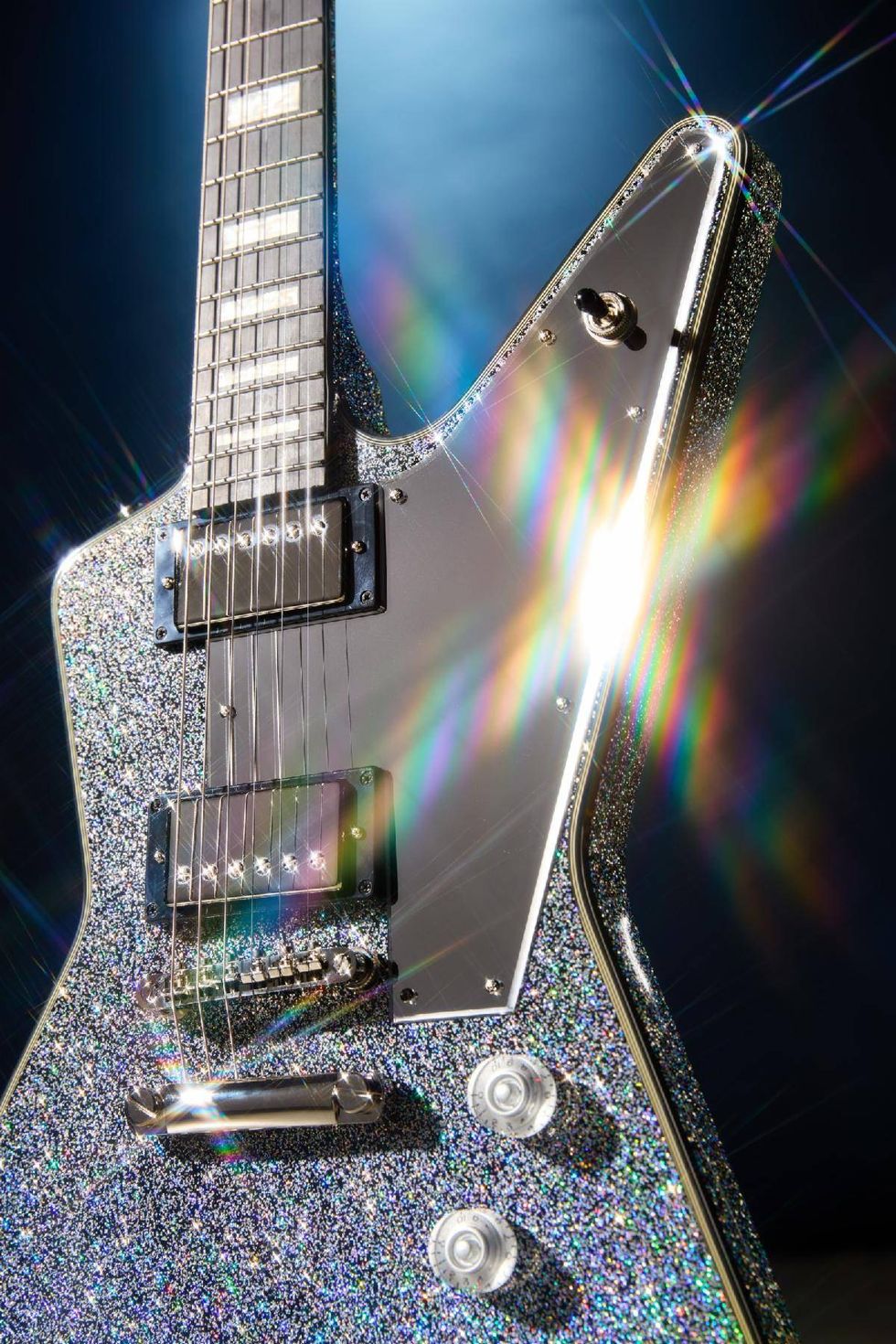
Epiphone And Lzzy Hale Unveil The Explorer Custom In Black Diamond Holographic Sparkle
Epiphone , the innovative, high-quality instrument brand built for every stage, proudly announces the launch of the Lzzy Hale Explorer™ Custom in a striking Black Diamond Holographic Sparkle finish. A bold new artist model created in collaboration with GRAMMY® Award-winning Halestorm frontwoman, rhythm guitarist, primary songwriter, and Gibson’s first female Brand Ambassador, Lzzy Hale. The new model continues Hale’s celebrated run of Epiphone signature guitars, a series that has produced sold-out and highly collectible instruments embraced by fans, players and collectors. The Epiphone Lzzy Hale Explorer Custom, Black Diamond Holographic Sparkle is available worldwide now at authorized Epiphone dealers, the Gibson Garage in Nashville and London , and on www.epiphone.com.

A commanding new addition to Lzzy Hale’s celebrated series of Epiphone signature guitars, the Lzzy Hale Explorer Custom is designed to match the force of her performances: powerful, unapologetic, visually striking, and built to deliver night after night. Purpose-built for heavy music and unmistakable style, this new Explorer Custom raises the volume with a dazzling Black Diamond Holographic Sparkle finish, premium appointments, and a high-output voice made for heavy riffs, soaring leads, and arena-sized presence. More than a signature guitar, it is a true statement piece: a hard-hitting, high-impact instrument built for players who want standout style, powerful tone, and performance-ready dependability.
“Lzzy has always brought a rare combination of power, precision, and unmistakable style to the stage,” says Aljon Go, Product Manager, Epiphone. “The Lzzy Hale Explorer Custom captures that same energy in an instrument that looks unforgettable, plays fast, and delivers the clarity and punch players need to own the moment.”

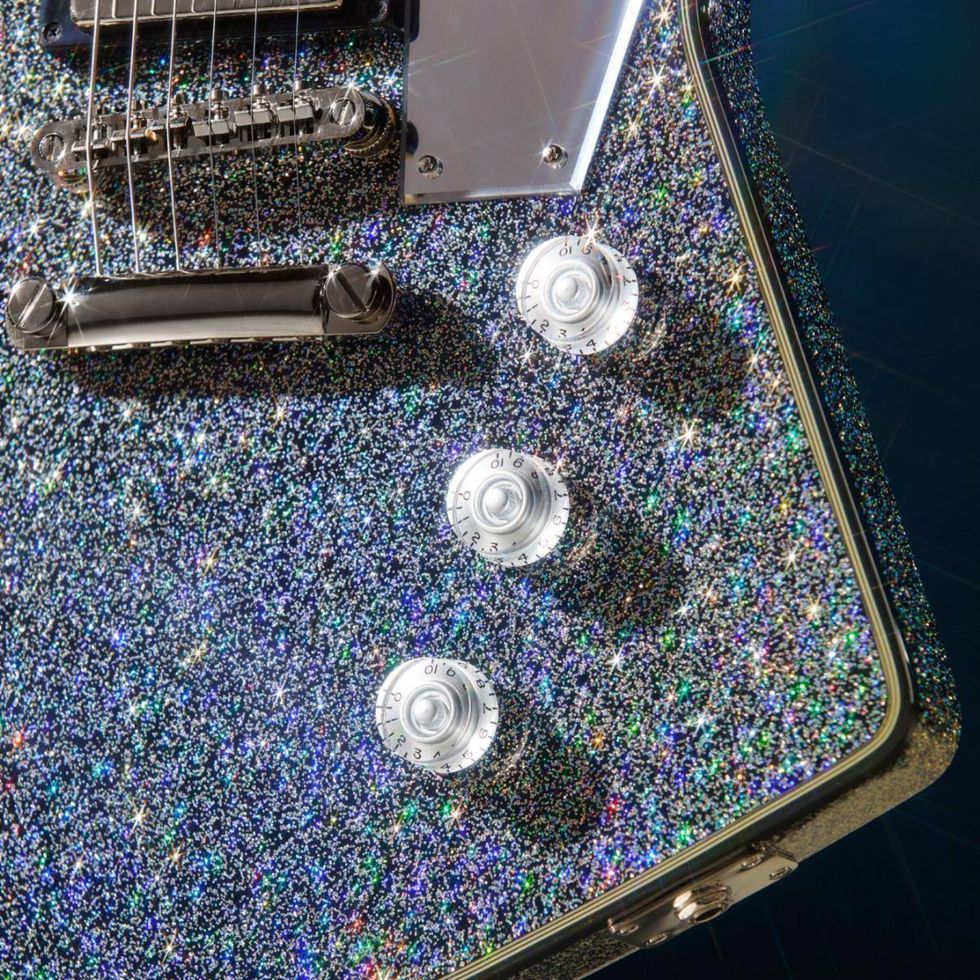
Built around a classic mahogany Explorer body, the Lzzy Hale Explorer Custom features elegant 7-ply top binding and a single-ply mirror pickguard for maximum visual impact under stage lighting. The gloss Black Diamond Holographic Sparkle finish gives the guitar a bold, dimensional look that reflects Lzzy’s fearless stage presence and makes the model stand out immediately in any collection.
Coinciding with the new guitar’s launch, Lzzy Hale is offering fans on Halestorm’s Fall 2026 North American tour the rare opportunity to own an Explorer Custom played live on stage and personally autographed by Lzzy. The VIP upgrade also includes an exclusive pre-show meet and greet, individual photo opportunity, VIP merchandise, and additional on-site perks. For all package details, availability, and more information, visit Superfan.live/artist/halestorm.
The mahogany neck is shaped to Epiphone’s comfortable and fast SlimTaper™ 60s C profile, paired with an ebony fretboard, 22 medium jumbo frets, and pearloid block inlays. The signature Explorer “hockey stick” headstock features a raised Epiphone 3D nickel logo, a Graph Tech® nut, and Grover® Mini Rotomatic® tuners for dependable tuning stability. Custom artist details include a black two-ply truss rod cover engraved with Lzzy Hale’s signature and a sleek black stinger on the rear of the headstock.
For players seeking crushing tone with definition and control, the Lzzy Hale Explorer Custom is powered by a matched set of Epiphone ProBucker™ Ignite pickups, engineered for power, clarity, and dynamic response. Each pickup is wired to its own volume control, with a shared master tone control topped by a silver Speed knob for precise shaping. A three-way pickup selector provides easy access to either pickup or both together, making the guitar equally suited for massive rhythm tones, articulate leads, and everything in between.
At the opposite end, the guitar is equipped with a LockTone™ Tune-O-Matic™ bridge and LockTone Stop Bar tailpiece, delivering accurate intonation, long-lasting sustain, and road-ready reliability. A hardshell case is included to protect the instrument at home, in the studio, and on tour.
Lzzy Hale is the GRAMMY® Award-winning lead vocalist, rhythm guitarist, primary songwriter, and co-founder of Halestorm, one of modern hard rock’s most powerful and enduring bands. Known for her electrifying performances, commanding guitar work, and unmistakable voice, Hale has helped lead Halestorm to seven #1 hits at rock radio, more than three billion streams worldwide, over three million albums sold in the U.S., two GRAMMY® Award nominations, and a 2012 GRAMMY® Award win for “Love Bites (So Do I)” in the Best Hard Rock/Metal Performance category. In July 2026, Hale was honored by the Rock & Roll Hall of Fame as part of its “Women in Metal: You Will Know My Name” exhibit, where she spoke and performed with Halestorm guitarist Joe Hottinger in celebration of the women who have shaped heavy music. Her latest chapter with Halestorm includes the band’s album Everest and the fierce anthem “Rain Your Blood On Me,” which Hale has called “our ode to women” and “our war cry.” As Gibson’s first female Brand Ambassador and a longtime Epiphone signature artist, Hale has helped create a celebrated run of bold, sold-out, and highly collectible signature instruments. With the new Epiphone Lzzy Hale Explorer Custom in Black Diamond Holographic Sparkle, Hale continues to inspire players everywhere to stand out, turn up, and make their presence impossible to ignore.
Catch Lzzy on tour with Halestorm across North America this fall. For more info and tickets, visit halestormrocks.com.
Halestorm North American Fall Tour
Sep 2 Denver, CO Ball Arena
Sep 4 Chicago, IL Huntington Bank Pavilion at Northerly Island
Sep 5 Noblesville, IN Ruoff Music Center
Sep 7 Toronto, ON RBC Amphitheatre
Sep 9 Holmdel, NJ PNC Bank Arts Center
Sep 10 Mansfield, MA Xfinity Center
Sep 12 Bristow, VA Jiffy Lube Live
Sep 13 Raleigh, NC Coastal Credit Union Music Park at Walnut Creek
Sep 15 Charlotte, NC Truliant Amphitheater
Sep 16 Alpharetta, GA Ameris Bank Amphitheatre
Sep 18 Clarkston, MI Pine Knob Music Theatre
Sep 19 Louisville, KY Louder Than Life*
Sep 21 Maryland Heights, MO Hollywood Casino Amphitheatre - St. Louis
Sep 23 Dallas, TX Dos Equis Pavilion
Sep 25 The Woodlands, TX The Cynthia Woods Mitchell Pavilion
Sep 26 Del Valle, TX Germania Insurance Amphitheater
Sep 29 Albuquerque, NM First Financial Credit Union Amphitheater
Oct 1 Phoenix, AZ Talking Stick Resort Amphitheatre
Oct 2 Rancho Mirage, CA Agua Caliente Resort Casino*
All dates except * are with BABYMETAL
Rig Rundown: Pavement
Pavement’s 2026 reunion run brought them to Nashville’s Ryman Auditorium for a two-night stand, and PG’s Chris Kies caught up with Stephen Malkmus, Mark Ibold, and Scott “Spiral Stairs” Kannberg before the second show to look over the road rigs. Have a look at some quick highlights below, and tune into the new Rig Rundown for all the details.
Brought to you by D’Addario.
Knobody’s Business
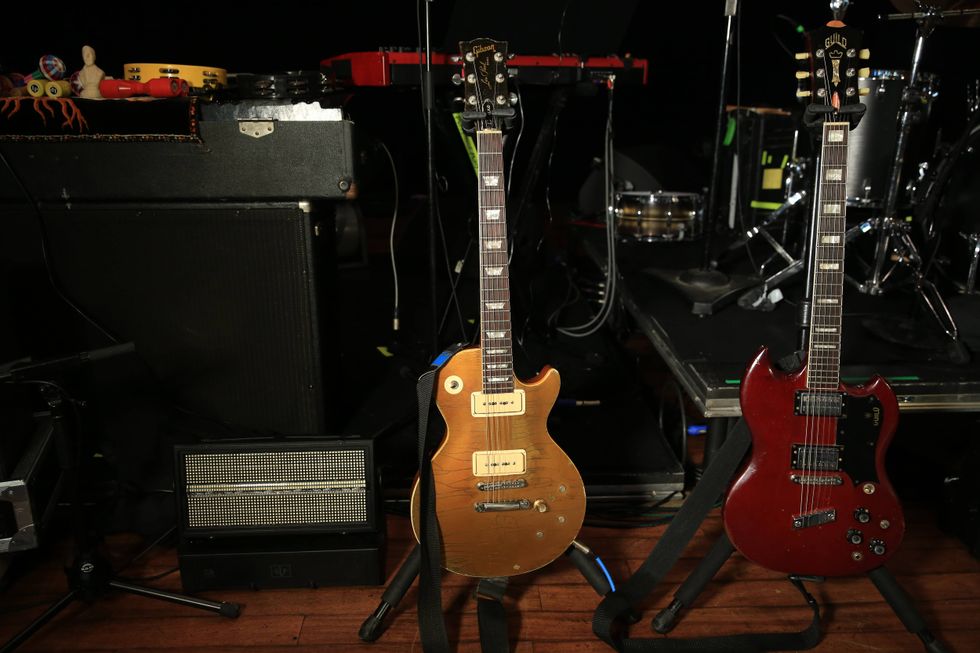
A friend pointed Malkmus toward this Les Paul Gold Top in the mid ‘90s, and the volume and tone knobs have been pulled out of it ever since—he’d rather think about singing. The finish checking came from a night in a van in Wyoming at 10 below, which he doesn’t recommend.
High-Voltage Riffing
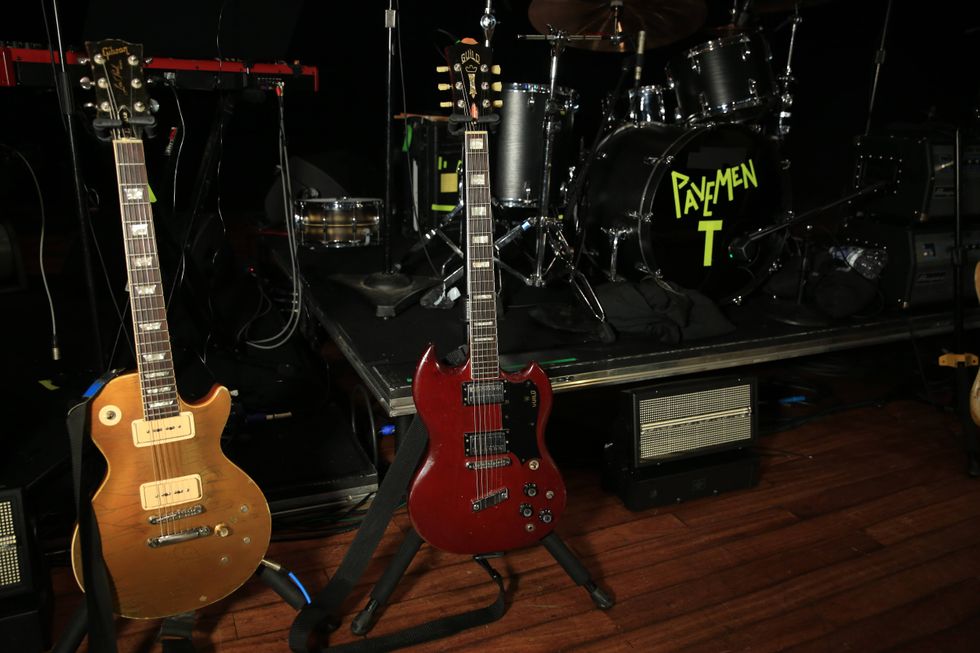
Malkmus also carries this Guild S-100, which he notes looks a lot like an Angus Young SG. He bought it beat up for a grand, which he considers the right way to buy a guitar since he’ll wreck anything nice.
Carry-On Crunch
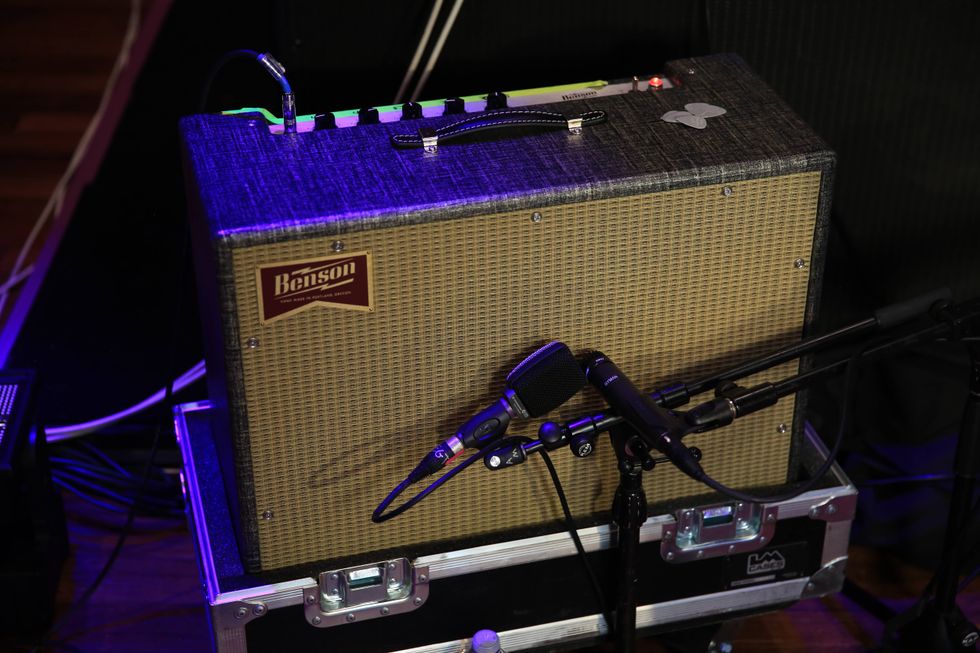
Malkmus’ sound is powered by a Benson amp, built in Portland, where he used to live. He likes the switchable wattage, the onboard reverb, and that it fits in an overhead bin.
Stephen Malkmus’ Pedalboard
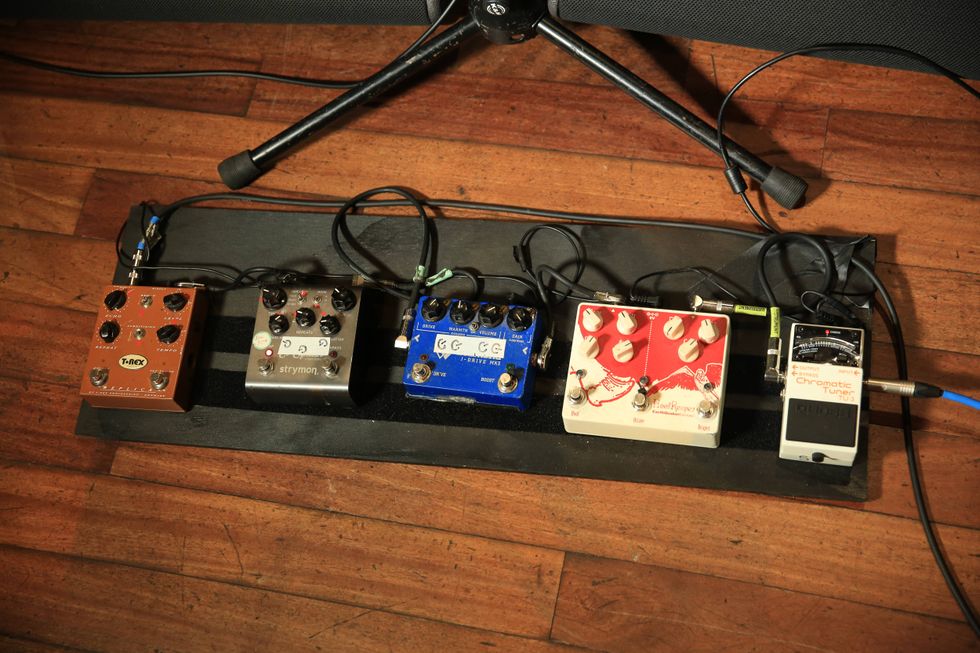
Malkmus keeps it to a Boss TU-2, an EarthQuaker Devices Hoof Reaper, a Diamond J-Drive MK3, a Strymon El Capistan, and a T-Rex Replica. He’s fitted plastic guards over the Hoof Reaper’s footswitches so he can’t kick one on by accident mid-song.
Classified Information
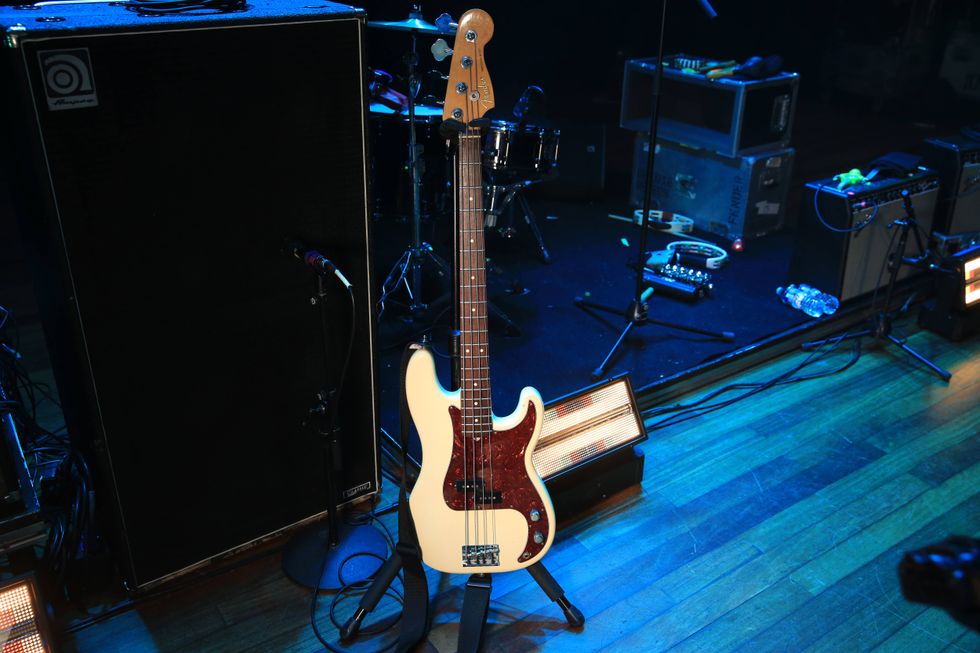
Ibold found this Precision in a free classifieds paper in the ‘90s and bought it in the seller’s kitchen out on Long Island. It’s the only bass he’s ever really played, it’s very light, and the finish cracked in that same Wyoming freeze. He uses Ernie Ball mediums (.050–.105). A backup P sits nearby, kept in a raised tuning for a couple of numbers.
Mark Ibold’s Pedalboard
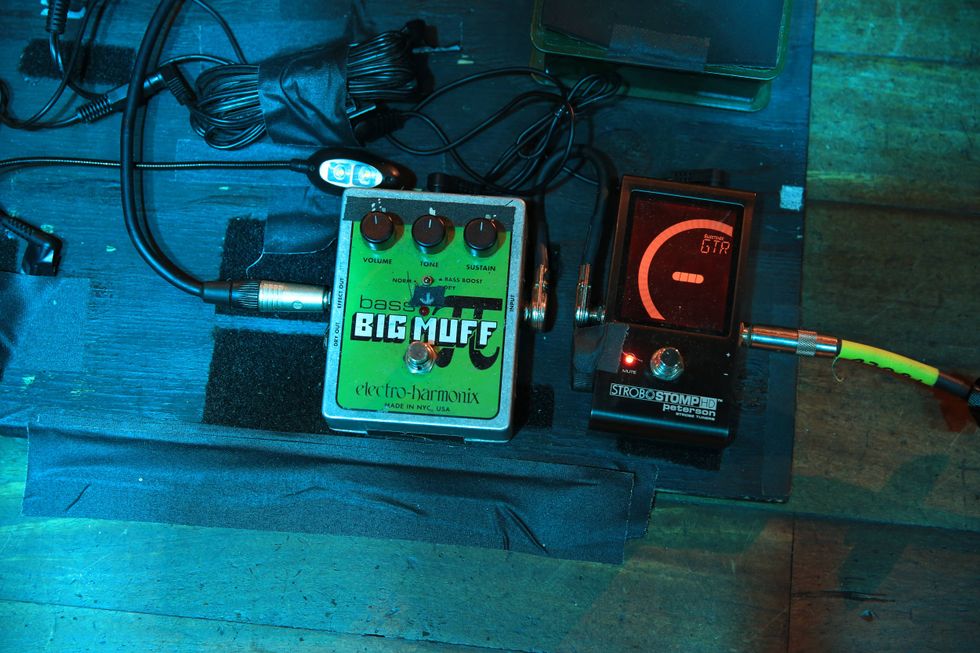
A Peterson StroboStomp HD and an Electro-Harmonix Bass Big Muff Pi, and that’s it. The part Ibold is proudest of is the little gooseneck lamp the band’s tech, Chopper, mounted on the board.
Deluxe Accommodations
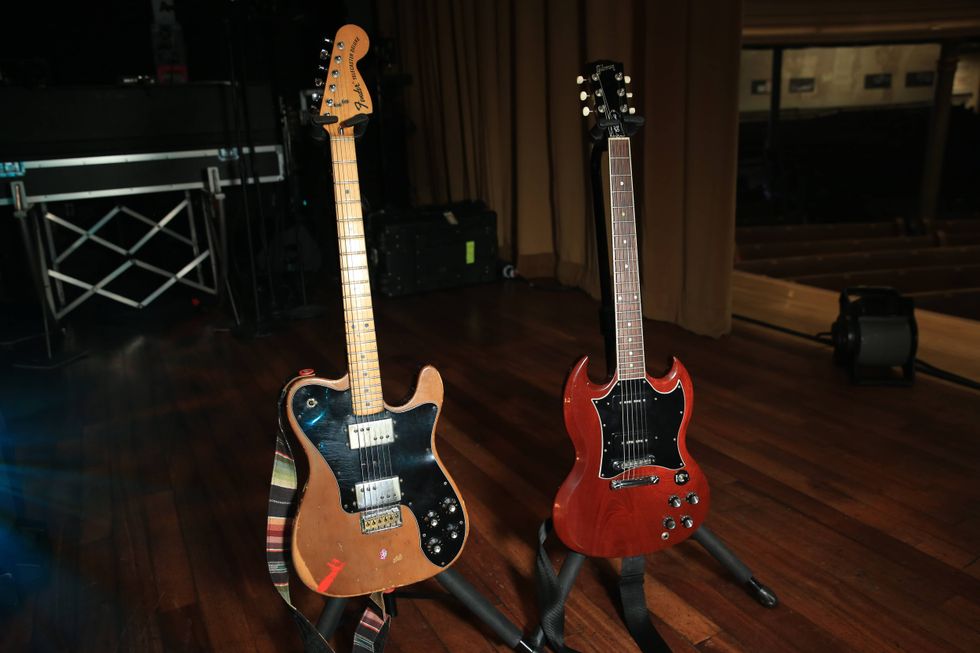
Kannberg found this 1974 Fender Telecaster Deluxe in Berkeley in 1995, and it’s been his companion since—the first “good guitar” he owned. He wanted one because Sonic Youth’s Lee Ranaldo had one. Strings are .010s.
Double Deluxe
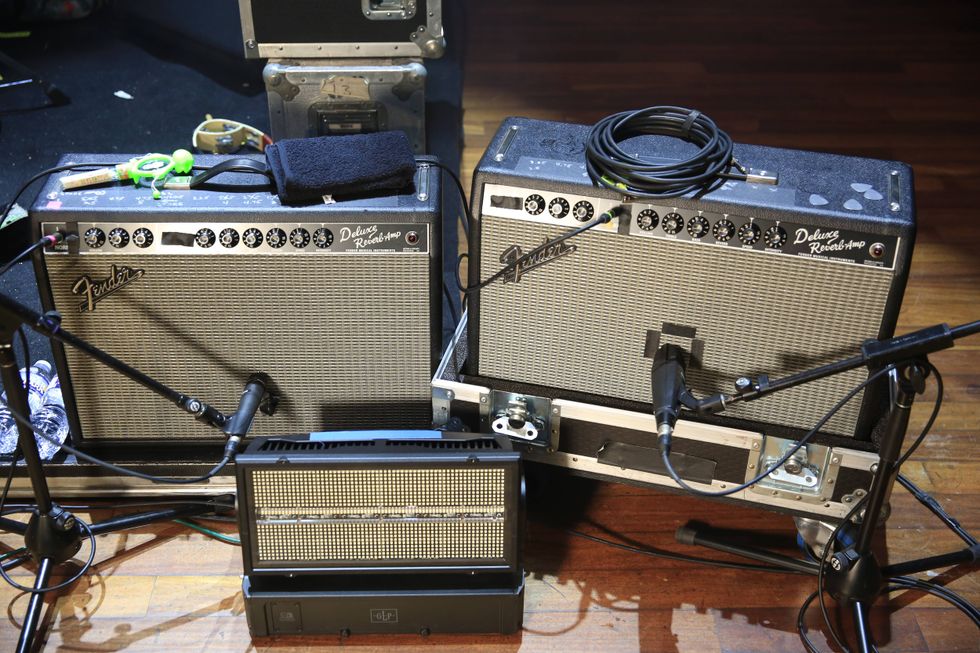
Kannberg carries two Fender Deluxe Reverbs, run dual mono, on a suggestion from his L.A. studio collaborator, Dan Long. One of them came free from Fender.
Scott Kannberg’s Pedalboard
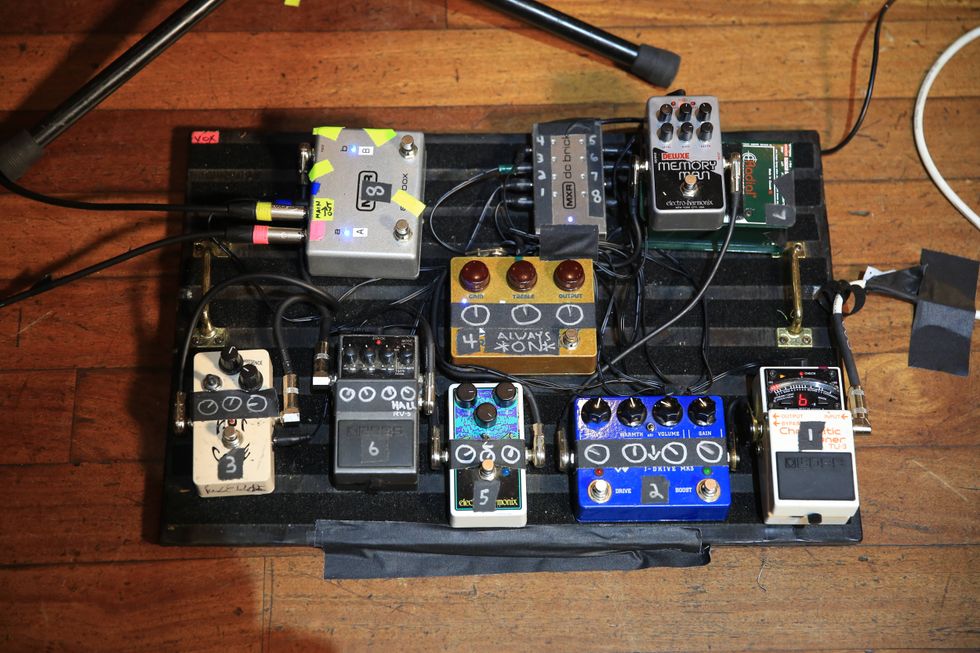
The Crowther Audio Hot Cake is what Kannberg calls the band’s secret weapon. Alongside it: a Boss TU-2, a Diamond J-Drive MK3, an EHX Octavix, a Boss RV-5, a “Klone” pedal that stays on to brighten the amps, and an EHX Deluxe Memory Man that Chopper handed him to make a mess with. An MXR A/B box switches amps, an MXR DC Brick supplies power, and a Radial box handles utility duties.
Casio Dimension Shifter Review
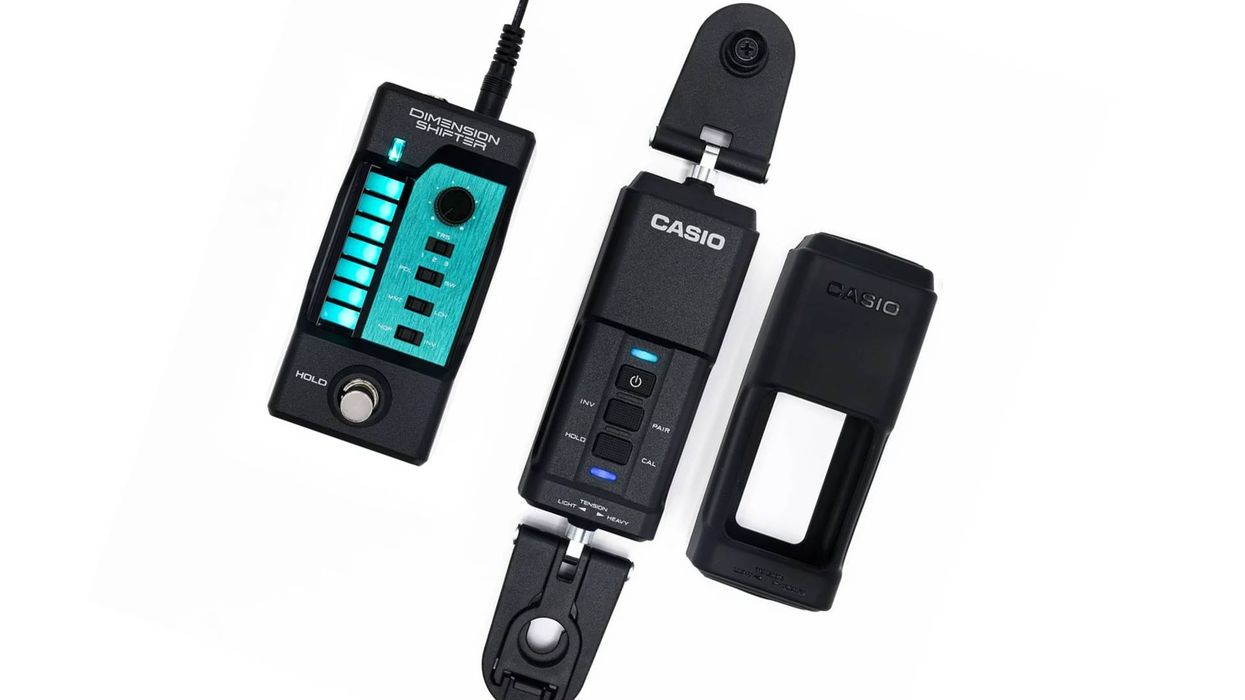
Casio’s Dimension Shifter is a beautiful and thoughtful idea. It reveals an understanding about how electric guitar players tend to move as they play, and the lyrical, maybe even balletic and poetic, manner in which motion can transform the music they make. The fundamental notions behind the Dimension Shifter are not new—essentially, it combines the basic mechanical concepts behind the expression foot pedal and the B-Bender into a wireless digital expression tool. But where an expression pedal weds the player to a single location, and the B-Bender (and its cousin, the Palm Pedal) can only alter the pitch of one or two strings, the Dimension Shifter enables a player to change effect parameters using the pull-and-release, strap-tension-based mechanical action of a B-Bender—all as they meander about a performance space. Depending on your average state of animation on a stage, this might not seem like a big deal. But for any player that tends to get lost in their musical reveries or likes to interact more intimately with bandmates while they sweep a filter, tweak their delay feedback, or increase the modulation rate of flange, it’s a very liberating technology.
Motion Stirs the Potion
I experienced a few hiccups setting up the Dimension Shifter. The problems were resolved quickly, but the user manual wasn’t a big help in solving the issues I did encounter. In general, though, the Dimension Shifter is pretty easy to set up and operate. The pairing between the strap transmitter and the receiver is automatic. You can easily adjust the strap-pull tension. And once you’ve got your connections in place and understand the basic functions of each button clearly (the labels on the receiver and transmitter themselves are a bit cryptic) using the unit becomes fairly natural.
To Casio’s credit, they kept the controls to a minimum. In terms of what you’d potentially use in performance, there are just a few essentials. There’s an inverse switch that reverses polarity, and therefore the direction of expression sweep—so if a modulation speed is at its slowest before you pull on the strap and at its fastest at the end of the range, you change that order by hitting a button on the transmitter. You can also freeze a setting in the sweep using the hold switch, quite like you would use a fixed wah. Which, with delays, reverbs, and modulation effects, enables very fluid movement—ramping, if you will—between radical effects settings. Both of these functions can be activated via switches on the transmitter or receiver. You can also use the knob on the receiver to establish a minimum and maximum range for an effect sweep, just as you would set the heel position on an expression pedal.
Even if you use the Dimension Shifter with just a single effect, it can have a profound impact on the way you play. Again, the function of the Dimension Shifter is fundamentally the same as an expression pedal, but it definitely feels different—and this leads to different results. The way I might use a delay feedback swell with bends or vibrato arm manipulation often felt more cohesively connected to the instrument, and you can experience a sort of unified, glued-together sense of playing when you pair the Dimension Shifter with certain techniques and effects.
I suspect, though, that multi-effects users—or those who use a single effect with multiple presets—will have the most fun with the Dimension Shifter. When you can quickly switch between presets to establish radically different baselines for the Dimension Shifter to work from, the possibilities multiply—and so, quite literally, do the dimensions
The Verdict
Though the Dimension Shifter is ultimately fun, inspiring, and, for certain kinds of kinetic performers, a tool that frees them from foot pedal constraints, there is room for refinement. The transmitter is still a bit clunky. And you have to wonder if a smaller, slimmer, rechargeable apparatus that loses the two AAA batteries is possible without sacrificing the unit’s mechanical functionality. It probably goes without saying, too, that a lot of aesthetic purists will not love the idea of the Dimension Shifter dangling from their strap (perhaps there is a way to cover the unit in vintage Ace strap material?) There’s also the issue of the 20-hour battery lifespan. And the fact that, for those of us who don’t use multi-effect units or digital effects with multiple preset options, the Dimension Shifter is an expensive way to manipulate the expression functionality on a single effect.
But it was very easy to feel and imagine how the Dimension Shifter could be transformative for many players onstage. I could manipulate echo feedback all day long with the unit and be happy. And the action of tugging on the guitar to shift my flanger’s modulation speed felt much more natural and tied to the instrument than a foot treadle does.
I hope that the Dimension Shifter succeeds, and gains enough traction with players that it can continue to evolve. It may not be a totally seamless solution now, but it’s easy to imagine how ongoing development, streamlining, weight shedding, and miniaturization could make the Dimension Shifter into a really magical, even essential, part of many players methodology. It’s off to a super-intriguing start.
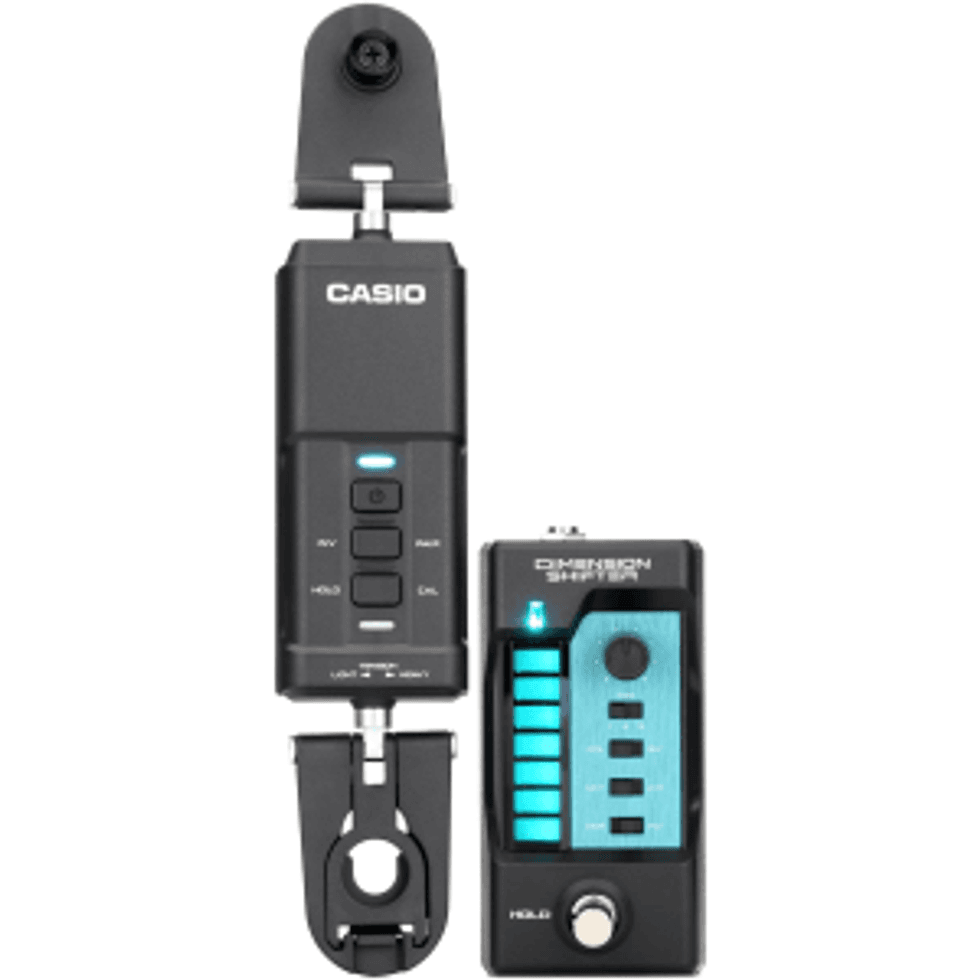
Dimension Shifter Wireless Expression Controller
Wireless Expression Controller with Adjustable Tension, Bluetooth, and Calibration Controls
Gear Radar: Stage-Ready Mini Combos, Multiscale Basses & Modern Acoustics

From stage-tested mini combos and upgraded bass amps to versatile multiscale basses and modern acoustic designs, check out the latest gear hitting the market in this month's Gear Radar.
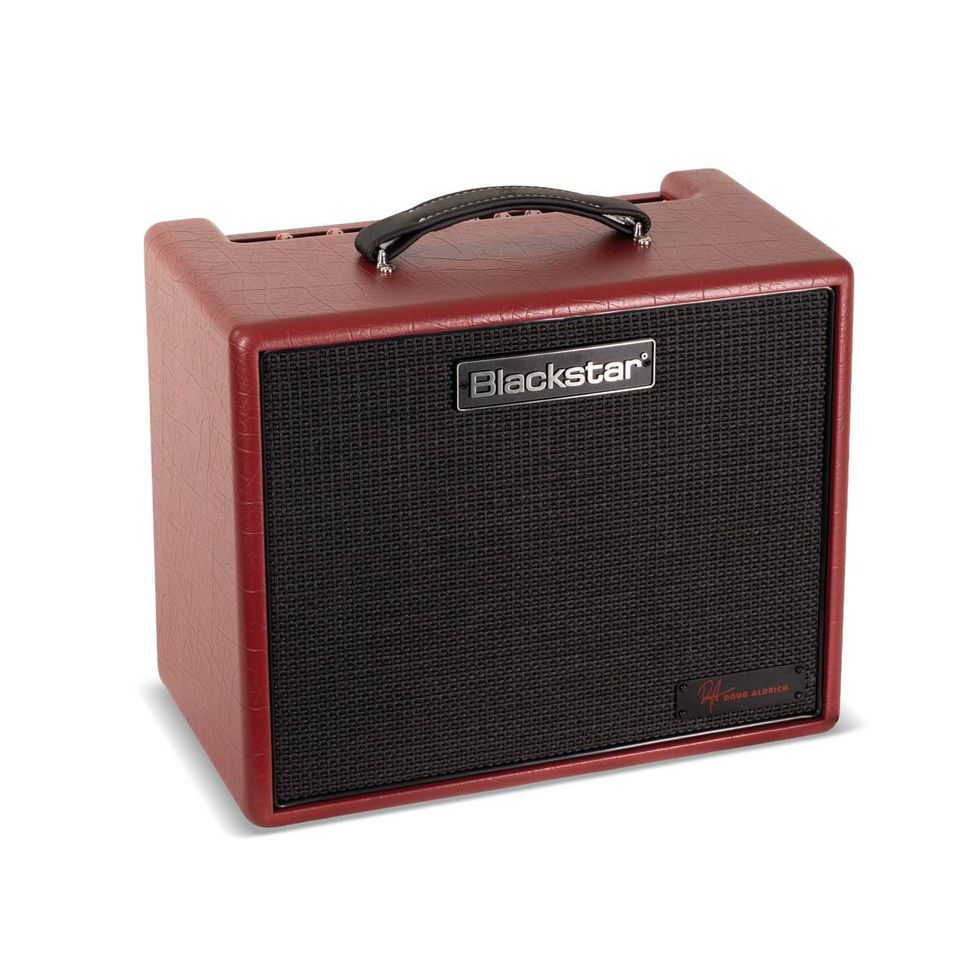
DA5 Ruby - Doug Aldrich Signature Combo
The DA100 Ruby won awards across the world. Developed in close collaboration with Doug Aldrich, it delivered a stage-ready tone that players everywhere wanted. The DA5 Ruby gives you exactly that. Same DNA. Same Ruby finish. Same legendary Aldrich character. Now in a form that fits your home and studio.
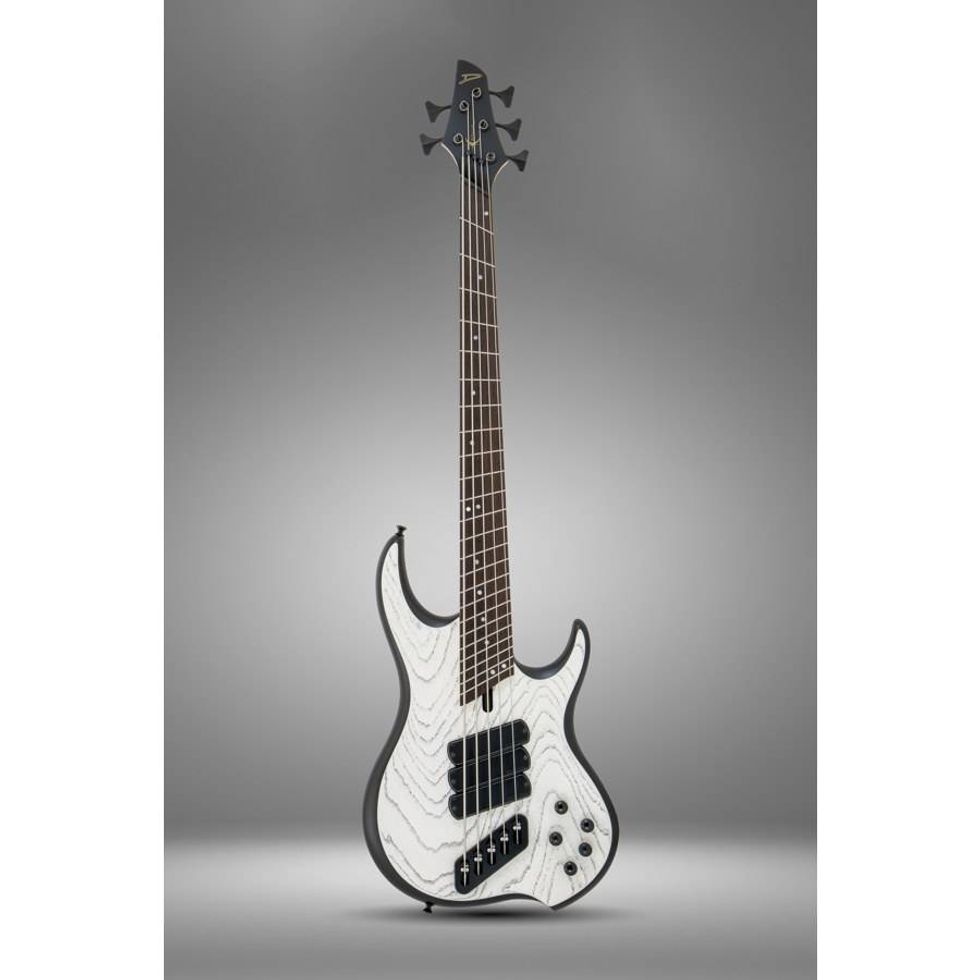
Jacob Umansky ‘Sol’ Signature Model
INCLUDE 5-string: $3,145 USD 6-string: $3,245 USD
Designed as a more affordable take on Jacob Umansky’s Custom Shop Dingwall Z3, the Sol retains many of the Canadian bass brand’s premium features. Player-focused ergonomics and a powerful Darkglass electronics package deliver huge tonal versatility, making it equally at home with intricate slap bass and crushing modern metal.
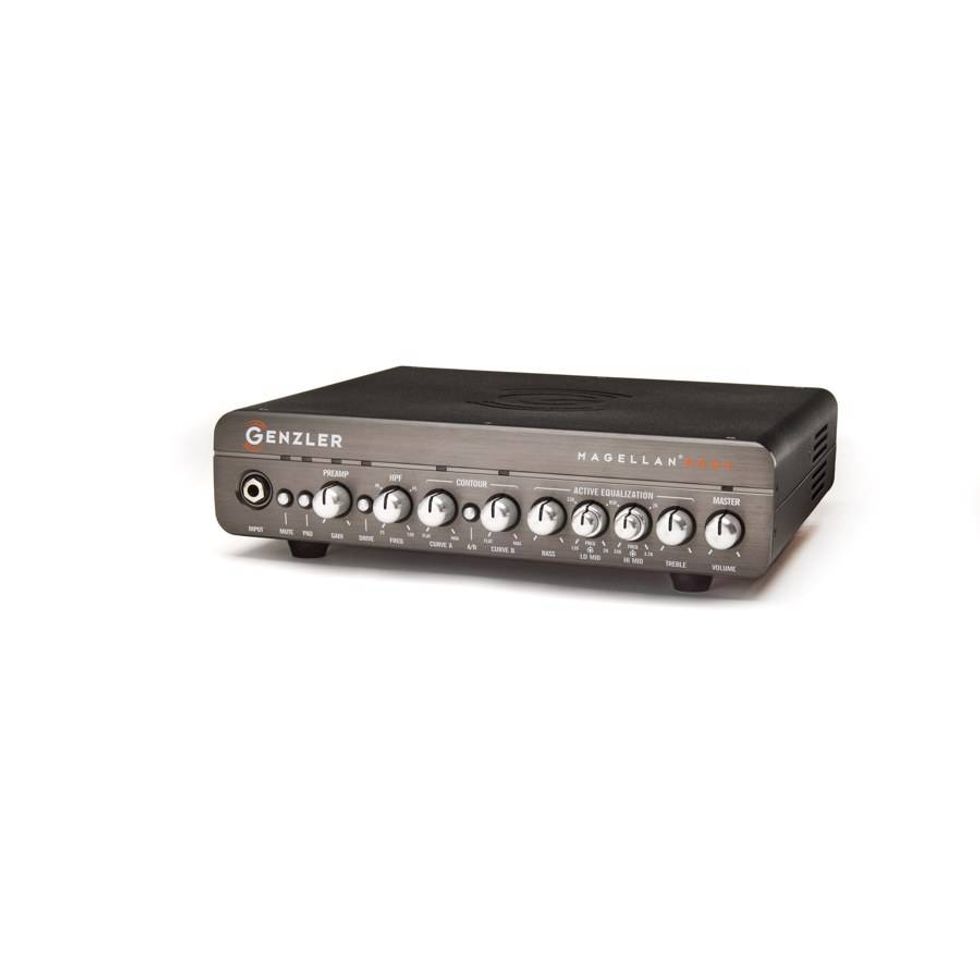
MAGELLAN 800+
WE'VE UPGRADED A LEGEND! Explore the next generation Magellan amplifier design. With a 10-year legacy of night-after-night performances and exceptional tone, we now introduce the Magellan 800 PLUS, with all new preamp features---while continuing the same musical tone, quality and durability that players expect from GENZLER AMPLIFICATION.
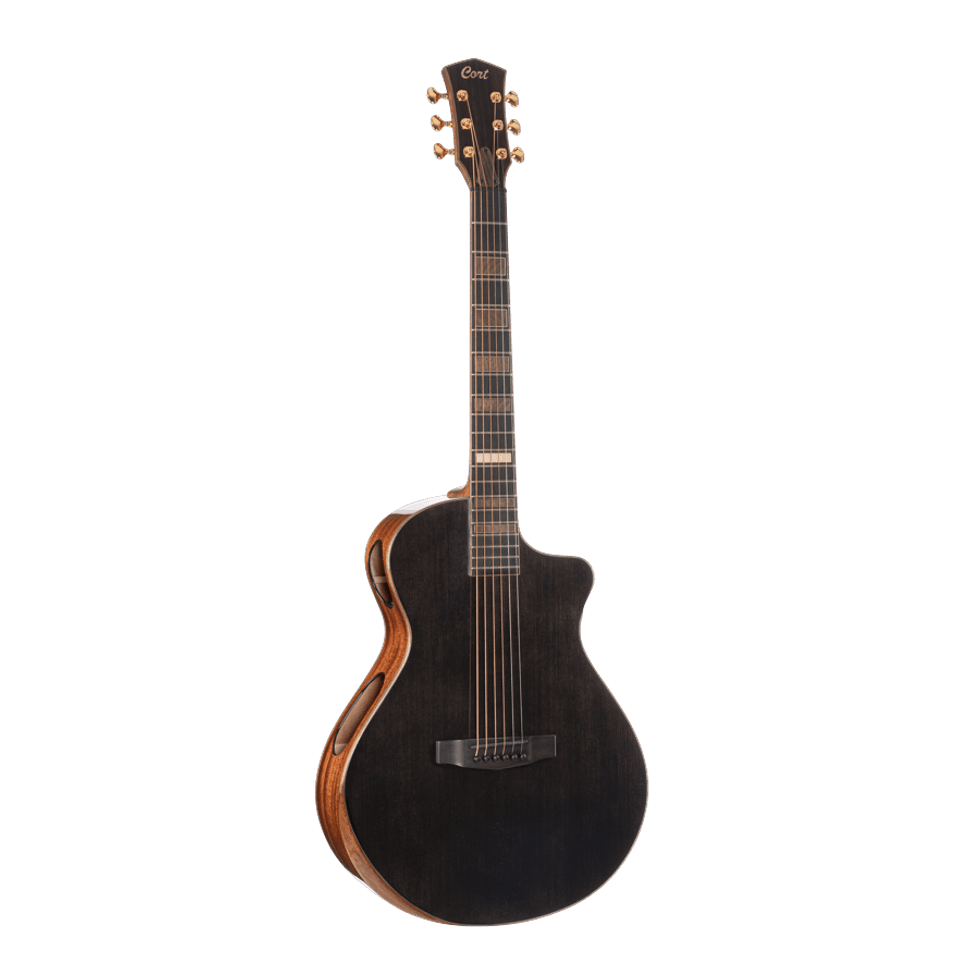
Modern Black
The Cort Modern Black reimagines acoustic design with its Modern Concert body shape, delivering rich, full sound from a compact instrument. Featuring dual side sound ports, a solid European spruce top, and solid mahogany back and sides, it combines player-focused innovation, contemporary design, premium tone, and exceptional playability.
Last Call: Verifying the Vintage
When I first got into guitars, “vintage” wasn’t really a thing. A ’59
Burst was special because our heroes played one. But everything else was just a used guitar. You could score a 1952 Les Paul Gold Top in that greenish gold hue, covered in checking, for a hundred bucks in pawnshops, classifieds, or at garage sales. A buddy of mine had one and was embarrassed every time he pulled it out of its brown case. They just weren’t cool.
Luckily, because these old planks were considered second-tier back then, I managed to buy and hold onto a few I couldn’t touch today. As vintage guitars became serious business, authentication usually came down to some old-timer with a good eye and strong opinions. Counterfeiters are getting terrifyingly good. It’s forensics now, not gut feel.
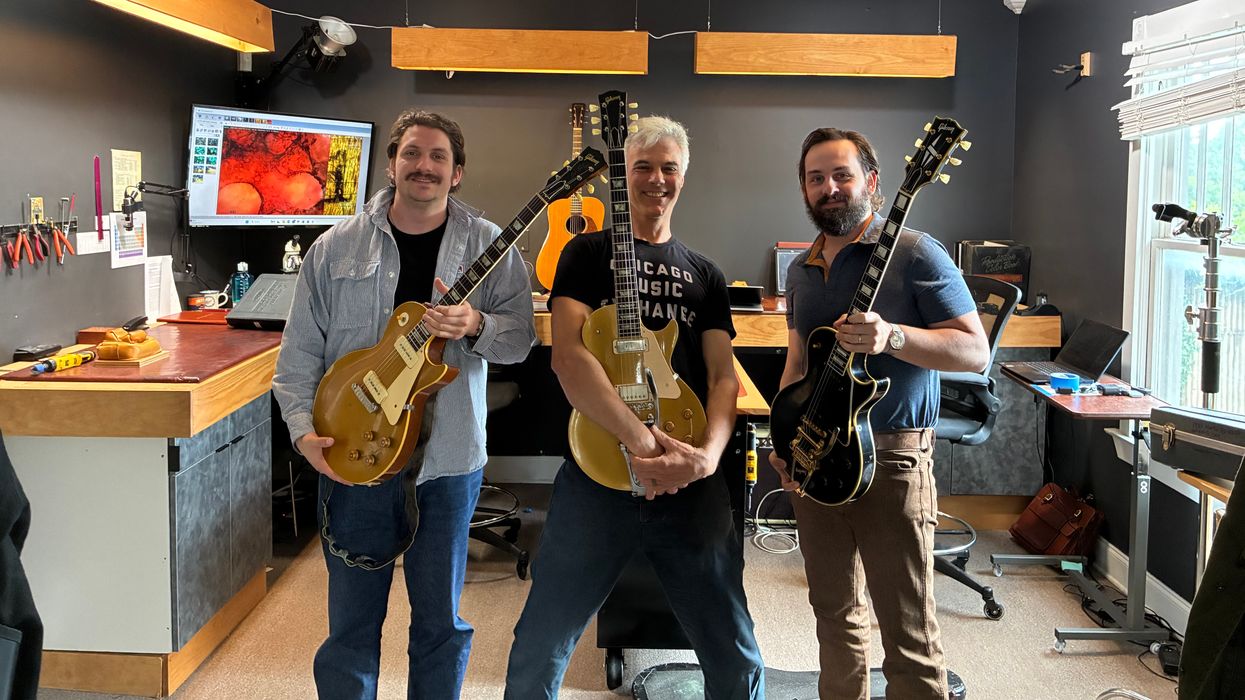
So I turned to the pros at Vintage Verified, a third-party guitar analysis lab run by Jon Roncolato and Zach Ziemer, two talented, respected members of Nashville’s guitar community that I’ve known for years. They built out a state-of-the-art lab and hired some of the top chemists in the world, like Dr. Tom Tague Jr., to perform non-destructive scientific testing—spectrometers, analytical chemistry, 3D scanning, the works—to check if a vintage instrument's parts and finish match its claimed era and maker. They examine finish, plastics, hardware, pickups, electronics, body and neck structure, inlays, logos, everything, and compare it against their massive database of known-good and known-suspect examples, and also of period-correct and modern materials alike.
I brought them what I believed to be my 1952 Les Paul Standard (refinished with new electronics), my seemingly stock 1954 Les Paul Standard, and my 1956 Les Paul Custom (partially refinished with a neck repair from its misspent ’70s youth). If they’re genuine, the trio could fetch serious money—think north of $80K combined in today’s crazy market. If they’re clever fakes or heavy rebuilds? Maybe $6K–$10K for the lot.
"As vintage guitars became serious business, authentication usually came down to some old-timer with a good eye and strong opinions."
The anxiety was real. What if I’d been lying to myself all these years? What if my retirement plan was actually worth five percent of what I imagined?
I was most concerned about how they could accurately date my 1952 Les Paul. Gibson did not start using the ink-stamped five-digit serial numbers on the back of the headstock until well into 1953. That makes dating a bit of a challenge. On top of that, my ‘52 came to me as a hacked-up husk, having been repeatedly stripped, routed, and repainted over its very rough 72 years on this planet. The Vintage Verified guys told me that if the guitar is a legit 1952, the instrument will likely have at least traces of original paint in the pickup cavities, as it’s very uncommon for someone to strip the concealed guts completely.
Cavity remnants in combination with 3D scanning provides a high degree of certainty as to whether a husk is legit or not. The 1952 Gibson Gold Top finish is unique because it used a bronze powder mixed into clear nitrocellulose lacquer instead of modern gold metallic flake or mica. As with most period-correct materials, a period-correct Gibson finish from the 1950s is virtually impossible to recreate. As Vintage Verified put it, the complexity of the chemistry involved in these coatings is far beyond the grasp of many people.
But I wonder—when the Boomers finish unloading their collections, will Gen X, Millennials, Gen Z, Alpha, or the incoming Beta crowd even blink? These younger players think nothing of dropping $7 on coffee or $800 on a modeler, but a 70-year-old plank with checking and a questionable neck reset?
I’m betting that as the chasm between the Haves, the Have Nots, and the Have Jets grows increasingly larger, the mega rich will run out of things to buy, so they will chase what is rare. You can build as many custom shop reproductions as you want, but unless you have a Delorian and a flux capacitor, you can not build a true ’50s-era Les Paul.
I don’t know if I’ll ever sell mine, but at least now I know what I actually own. When I’m gone, there’s objective evidence for my daughter. Maybe she’ll drag them to gigs and bang on them just like she watched me do her whole life. Or maybe she’ll sell them and buy a house. Either way, the guesswork is gone.
The process isn’t cheap, but the confidence it gives any future buyer (or inheritor) more than pays for itself. Plus, it just feels good to stop wondering.
A Guitar With a 20-Watt Speaker Built In? | Inspire Pro Demo
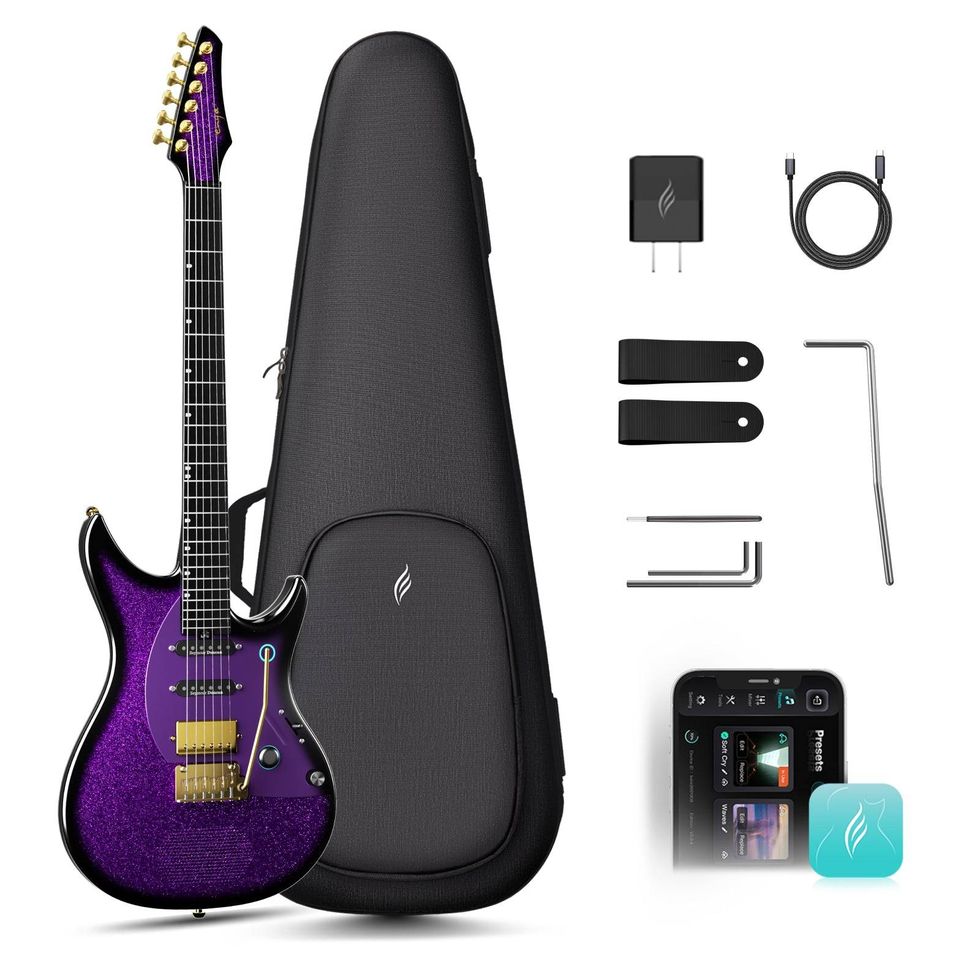
Usually, if you're bringing an electric guitar to a gig, you need to bring an amp, or at least a speaker, too. The Enya Inspire Pro changes that. It's got one built in. Tom Butwin unpacks a smart guitar that folds an entire signal chain into a carbon fiber body, and makes the case that even the most die-hard traditionalist can find a use for it.
Behind the speaker sits the processing: more than 50 amp models, a deep effects library, an onboard looper, tuner, and drum machine. Switch to line-out mode and all that modeling routes out the quarter-inch jack to an amp, interface, or FRFR cab. Add the wireless footswitch and you're jumping between patches and presets from the floor. The Enya app handles the rest, offering the ability to rearrange effect blocks, dial in parameters, and generate tones from a written or spoken prompt.
The Inspire Pro is available at two price points. The SD carries a USA Seymour Duncan set (SSL-2/SSL-3/TB-4), a titanium alloy and brass bridge, and a gloss finish. The AL swaps in Enya's own Apex Lab pickups and a matte Lazer Radiance finish, keeping all the same smart features.
Royal Blood Announce New Album "Dead Company"
Royal Blood, one of the most important British rock bands of their generation, return today with an explosive new single “Ten Over Ten” and announce their long-awaited fifth studio album, Dead Company released via Warner Records on November 13th.

Dead Company marks a powerful new chapter for the duo, who last released an album in 2023. Following a period away from the spotlight, Mike Kerr (bass, vocals) and Ben Thatcher (drums) entered the studio in 2025 with no deadline, no distractions and a simple ambition: to see what was possible with two people, 12 notes and infinite outcomes.
Self-produced by Royal Blood, they set out to make an album as raw, human and visceral as possible. Dead Company strips everything back to its core. Immediate and uncompromising, it captures Royal Blood at their most powerful.
The band adds “After putting the Royal Blood engine in neutral for a couple of years, we've been building up the revs and are playing faster and harder than ever with this album. Written and recorded with the stage in mind, we cannot wait to play it live for years to come.”
The first track to be revealed, “ Ten Over Ten ,” is a menacing desert rock meets Motörhead behemoth of a single. The lyrics and vibe were inspired by the frontman training for a marathon, and it became all about endurance and pushing yourself. Click here to listen.

Since they first emerged 12 years ago when they released one of the fastest-selling rock debuts of the century, Royal Blood have made one hell of an impact: each of their four albums has hit Number One in the UK, shifting over 1 million records, becoming an arena-filling, festival-headlining tour de force, and forerunners of the guitar rock revival we’re seeing today.
The album announcement follows news of three sold-out intimate August underplay shows in the UK. Click here for tickets and tour details. U.S. tour and more to be announced soon. Click here for more info.
Ultimately Dead Company is a bold 10-track album. This is what they were born to do, so they might as well turn it up. And with that Royal Blood return louder, sharper and more vital than ever.
Sully Guitars Adds 24-Fret Version of Singlecut ‘71 Trella

Sully Guitars is now offering a 24-fret version of its set-neck ‘71 Trella singlecut model. Builder Jon "Sully" Sullivan said, "The '71 addresses the issues I had with the classic singlecut while adding my own flair. The design celebrates its 15th birthday this year, and it's been rewarding to see it grow."
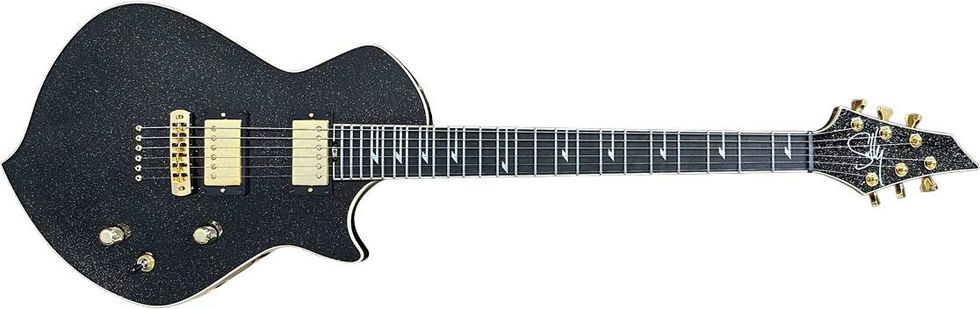
The new version adds two frets to the original 22-fret design. According to Sully Guitars, the upper-fret access and neck-to-body balance of the original have been maintained in the update. A '71 Trella 24 prototype has been used on tour by Smashing Pumpkins guitarist Kiki Wong, including on songs such as "1979."
Wong said: "The Trella is by far a work of art embodying all the beauty, versatility, and charisma I need from an instrument. It truly became one of my favorite guitars of all time."
Sully Guitars '71 Trella 24 specs:
- Body/top: Set-neck singlecut with carved top, now available with 24 frets (previously 22).
- Neck: Slim C profile, 24 stainless steel frets, contoured neck heel for upper-fret access.
- Hardware: Hipshot locking tuners; choice of Hipshot, TonePros, or Floyd Rose bridge; Sully's USA-wound pickups.
- Custom options: Sparkle finishes, heavy relic aging, custom inlays, and baritone scale lengths available.
- Build: USA Custom Series instruments are built by a small team in Texas, PLEK'd, and shipped with a handwritten certificate of authenticity from Sullivan.
Sully Guitars’ '71 Trella 24 has a straight price starting at $3,839. For more information visit sullyguitars.com.
On Bass: Are You Playing With Your Ears or Your Eyes?
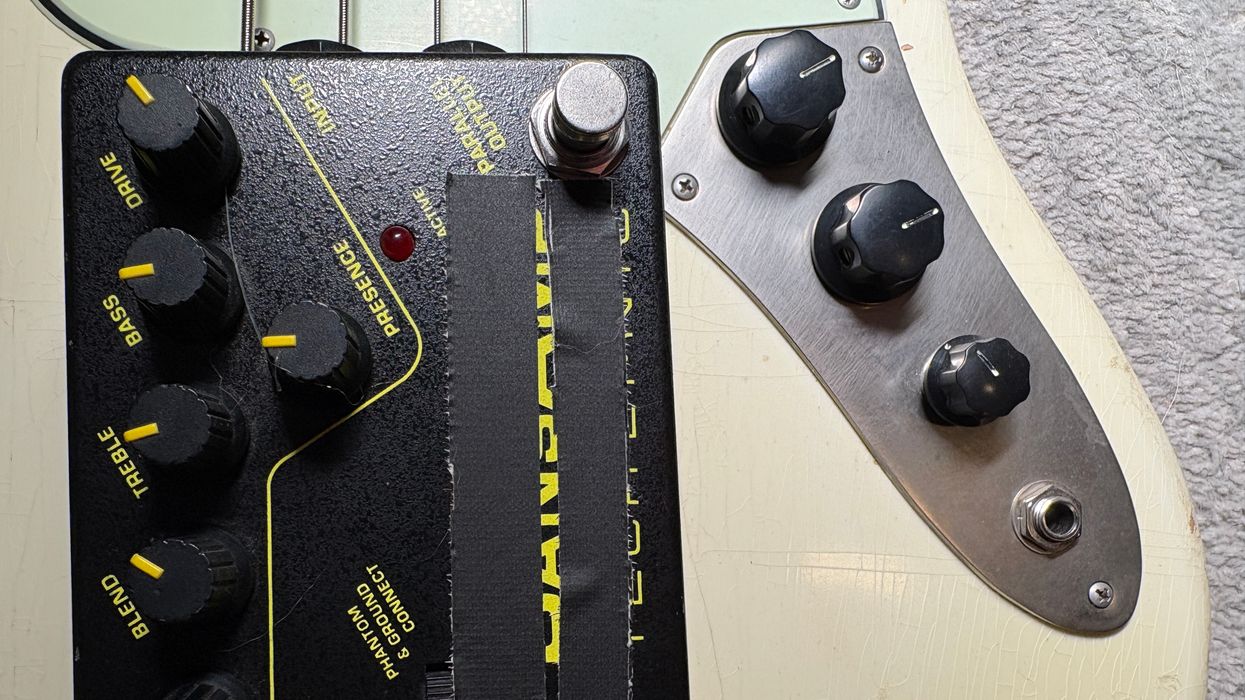
I was plugging away in my home studio recently and realized I needed to tune my bass. Within arm’s reach I have a rack tuner, a pedal tuner, and even a few clip-on tuners, but since my hand was on the mouse, I pulled up a tuner plugin within my DAW. The aesthetics on the tuner were great, from the pseudo brushed steel “housing” to the wide, beautifully visible strobe that danced nicely until I found my pitch. It was clear that out of the several DAW tuners I have, this one felt like someone wanted to give it a little more design attention than the others.
It’s a tuner. I get it.
What I also understand is marketing. My degree happens to be in marketing (world-traveling bass player was not one of the options at my college - I had to conquer that on my own), and as I spent many hours filling the plastic seats of my classrooms, I gained an understanding of how we are “nudged” toward certain products and when it comes to buying things, our eyes tend to drown out our other senses.
The MI (musical instrument) business is no different. Bass, amp, and pedal companies are all vying for your cash. They know what you are into. Or at least they think they know. They spend a lot of time designing products, sometimes for themselves, sometimes for the consumer. Either way, they are looking for an edge. There is a lot of trial and error, of course, and sometimes our eyes choose a product over all our other senses. Every company wants their product to stand out. Some follow trends and design for the current market (remember the relic’d guitar war of ‘14?), while others stick to their look forever (much like my dad’s haircut), come hell or high water.
“How many times have you turned your nose up at a particular amp based on the name plate or a guitar for its headstock shape?”
How many times have you turned your nose up at a particular amp based on the name plate or a guitar for its headstock shape? How often are we brand-biased and not sonically driven? Often, I think.
When I moved to Nashville two decades ago, I auditioned for a touring indie artist, and thankfully landed the gig. Before the tour, the MD took me aside and said he wanted to see a P-bass in my hands, not the active 5-string I used in the audition. I had other passive 4-strings that were great, but no, he wanted a P. After settling in town, I also learned that producers were looking to see a certain name on the headstock, no matter the tone or pedigree of the bass being played.
There is certainly an argument for a “tried and true” tone formula; however, I know some bass players that can track master recordings with a broom handle and twine, headstock shape be damned. We shouldn’t let a logo run our lives. I like certain features, I like certain tones, and I also like to root for the underdog. We certainly should give all instruments a fair trial before finding them guilty of not being ‘good’.
I have a $10 no-name garage sale bass that I have used on recording sessions. I’ve seen your favorite bands filling arenas running original red Line 6 “bean” PODs and dummy cabinets onstage. If you are using your ears instead of your eyes, you may free yourself a bit.
Variety is the spice of life. No doubt. We aren’t in a Henry Ford era where all the guitars are simply one design, one pickup, and painted black (and thankfully so). We have different musical needs and tonal requirements, so we inevitably search for “the sound,” or the workhorse, or the feature-packed entity that will quench our thirst. We have limitless wood/electronic configurations at our mail-order beck and call, and in the same breath, it is very easy to become a trail horse and only see what we want to see.
Do yourself a favor: go to a local store and pick up an instrument or try a brand you have ignored in the past. Close your eyes and listen. You may be surprised.
Eric Gales Goes Months Without Playing Guitar
The blues-rock guitar star sits down with PG's Nikos Arvanitis discussing his growth as a player (including prioritizing time away from the instrument), finding inspiration in figures outside of music, engaging with the social-media phenoms for a motivational challenge, and explaining why his partnership with Kiesel is a perfect fit. Sponsored by: https://stewmac.sjv.io/APO2ED
Tokai Hard Puncher Review
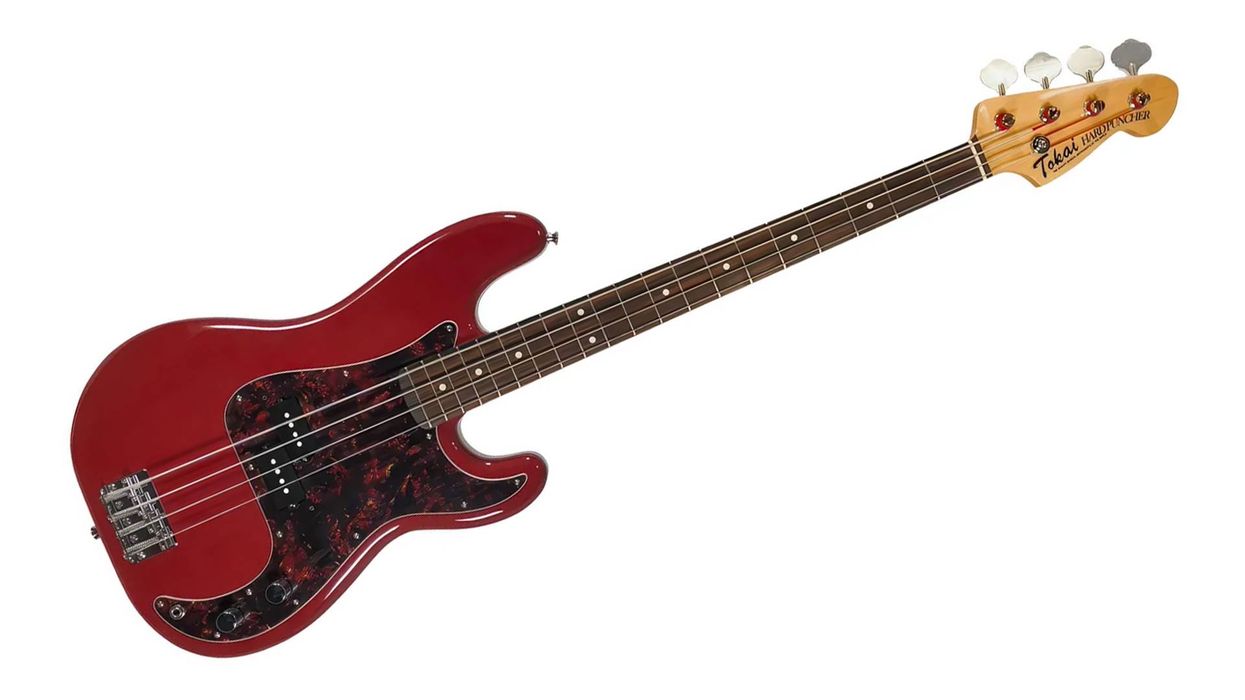
When my editor approached me about reviewing this bass, I had a very visceral sensation of being 12 years old again. That’s when I started playing bass—and perusing basses in a Swedish mail order catalog that had everything from home improvement tools to musical instruments. I distinctly remember scanning that catalog, once upon a time, and spotting a Precision Bass lookalike called the “Hard Puncher,” which, I suppose, sounded much more heroic to a non-native, beginning-English speaker than “P-Bass.”
The Hard Puncher, as it turns out, was made by Tokai, a Japanese manufacturer of what are now known colloquially among collectors as “lawsuit guitars.” Tokai’s instruments were more than just catalog eye candy for European and American players that couldn’t afford a real Fender or Gibson. Most Tokais of the ’70s and ’80s were also exceptionally well-made instruments. So, when the company ceased exporting instruments in the ’90s, it left behind a dedicated cult of fans. That cult is bigger these days, and Tokais are no longer cheap, secret sleepers among the collector set. Good ones fetch pretty hefty prices. So, it’s little mystery that Tokai is having a go at exporting these Japan-made gems again—this time with a push from Audio Collective Group, a distribution company founded by Warm Audio.
Picking Up Where They Left Off
The quality that makes original Tokais minor treasures is recognizable here by feel alone. Fretwork, the neck joint, and the bone nut seat are all tight and solid. The gloss polyester finish is rich and very well executed in a deep dakota red with hints of brown and oxblood that looks fantastic against the red tortoiseshell pickguard. Options abound, though—the new Hard Puncher is available in seven different finishes, and Tokai even offers a choice between alder and ash for bodies, and maple and rosewood for fretboards. (You can select these options on the Tokai website, which, in turn, directs you to a dealer with an instrument that matches your order.)
The 1-piece maple neck is U-shaped and employs a fairly thin slice of rosewood for the fretboard, if you opt for one. The neck has a very nice profile for those of us without large hands, and the compound 7.25" – 10.25" radius lends a natural feel under the fingers. But the neck is also reminiscent of real 1960s-vintage Fender Precisions I have known. As nice as that vintage familiarity is, I wouldn’t complain if Tokai opted to eschew authenticity and use a satin finish on the neck instead of the glossy one on our test instrument. But thanks to the general profile, the feel is fast.
More Extra Effort
Though the basic fit and finish on our Hard Puncher was easy to observe, I was impressed by deeper details—like how carefully the pickups were set up. The E-string side of the P-bass pickup was screwed deeper into the body than you tend to see from most manufacturers. This is the very first adjustment I perform on any bass I buy to compensate for naturally louder low E-strings. The move suggests to me that the folks at Tokai are hip to real-world performance challenges as well as pure aesthetics. It’s a nice thing to see.
The action was great, too—neither too low nor too buzzy. And like the pickups, the careful adjustment meant one less change to make before I took the Hard Puncher on the road or to a session. It’s easy to imagine living with the instrument onstage in most other practical respects, too. It’s comfortable, the medium weight feels good, and it’s very well balanced. Perhaps the only disappointment with the design is that the truss-rod access is a little too much like a vintage P-Bass. You can’t make an adjustment without removing the pickguard first. That’s not a big deal for many players, but as a touring professional who travels between drastically different climates, frequent and easy truss rod adjustment is pretty important.
Force and Flexibility
Rumbling through an amp with tone and volume wide open, the Hard Puncher rewards with a rich, punchy, classically P-bass sound. It’s free of the upper-midrange honk that plagues some P-styles, but retains the immediacy and low-mid emphasis in transient notes that a great P-style should have. Just as importantly, the upper notes on the neck have real body and strong sustain, while the lower notes never feel muddy or too big. The output is just very balanced.
It’s very easy to shape the output from that foundation, too. The tone control has a very usable sweep that allowed me to carefully shape the top end I wanted to tame, rather than just going fully bright or completely dark, which happens in some affordable basses. Dark tones still exhibited great sustain, by the way, which perfectly suited my reggae experiments with the Hard Puncher.
As a player who performs a lot of rock shows, I want to know that a P-style instrument will sound big, warm, and almost piano-like in that setting—particularly with a pick. To find out if this was the case with the Hard Puncher, I swapped the nickel-coated strings that came with the bass for steels. The new set really made the Tokai come alive, without sounding too bright—even on the thinner strings. As you might have suspected, it’s a great rock machine
The Verdict
The Hard Puncher’s $1,499 street price puts it in a very competitive bracket. But I think there’s room there for a high-quality, Japan-made instrument like this. The tones are super solid. The feel inspires confidence from a playability and quality standpoint. Plus, there’s just something hip about a Tokai. It’s a cool way to break from the pack, but it’s also just a great performer with a familiar, even vintage-like feel. Even in a crowded product space, the Hard Puncher screams “contender!”
Esoterica Electrica: What a Neck Joint Says About Your Guitar
The history of the bolt-on guitar neck joint is often told as a Leo Fender story, but it’s really about how replaceability and modularity came to the guitar sphere. Despite that, beneath every argument about sustain and resonance lies a deeper question: what kind of object is a guitar supposed to be?
For centuries, the answer seemed obvious. Long before the electric guitar existed, stringed instruments were built around the assumption that neck and body belonged together. Violins, cellos, lutes, and classical guitars employed mortise-and-tenon or dovetail joints secured with hide glue, creating an intimate union between the instrument’s major structural (and tone producing) components. Early steel-string acoustics and carved archtops inherited this tradition without question. The glued neck was not merely a construction method; it was part of an entire philosophy of instrument making. A guitar was conceived as a singular object, born whole and expected to age as such. Even the cast aluminum Rickenbacker “Frying Pan” from 1932 was a single piece, taking the concept to the max.
In that world, repair itself reinforced the idea. Neck resets and delicate joint work were accepted rites of passage in an instrument’s life. A neck might be removed, but only through a skilled and somewhat invasive process. The relationship between neck and body resembled marriage more than assembly—with all the benefits and arguments.
Then came Leo Fender.
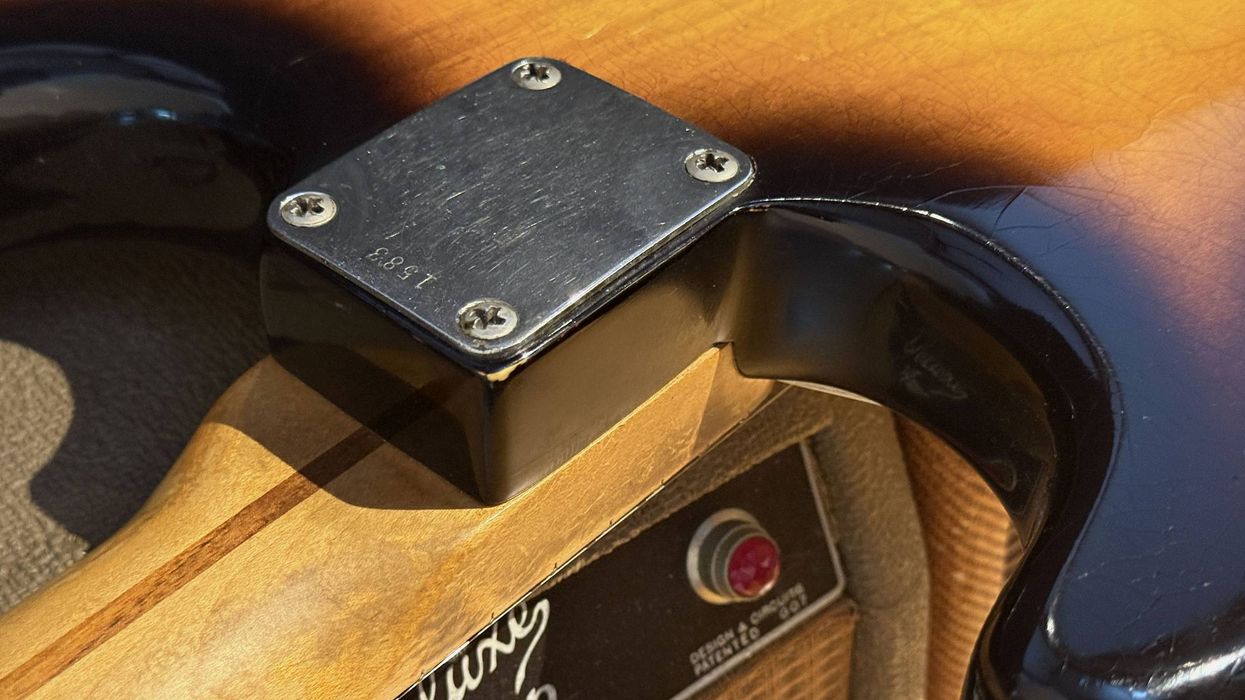
To be clear, guitars with screw or bolt-on necks had been marketed as early as the 1920s. The Stromberg‑Voisinet/Kay Kraft archtops from the 1930s even featured adjustable neck pitch. But when Fender introduced the Telecaster, it introduced a radically different understanding of guitar manufacturing. It was not conceived as an acoustic ideal. It emerged from the practical logic of Detroit industry. Bodies and necks could be fabricated separately, finished separately, inventoried separately, and united at the final stage of production. Repairs became simpler and cheaper. Variability became manageable. Most importantly, the neck ceased to be a permanent partner and became a module. This conceptual shift is difficult to overstate. Fender transformed one of the guitar’s defining structural elements into a replaceable component. Four screws and a neck pocket accomplished what centuries of instrument-making tradition had never contemplated.
The industry soon divided into two distinct cultural camps. Bolt-on instruments became associated with practicality, clarity, and twang. Elsewhere, companies like Gibson, Gretsch, Guild, and Rickenbacker doubled down on set-neck construction. There, the fixed neck remained a symbol of continuity with violin-making traditions, craftsmanship, and legitimacy. Over time, these manufacturing decisions hardened into mythology. But whether or not the physical reality justified such certainty is debatable, the cultural meanings endured and became codified.
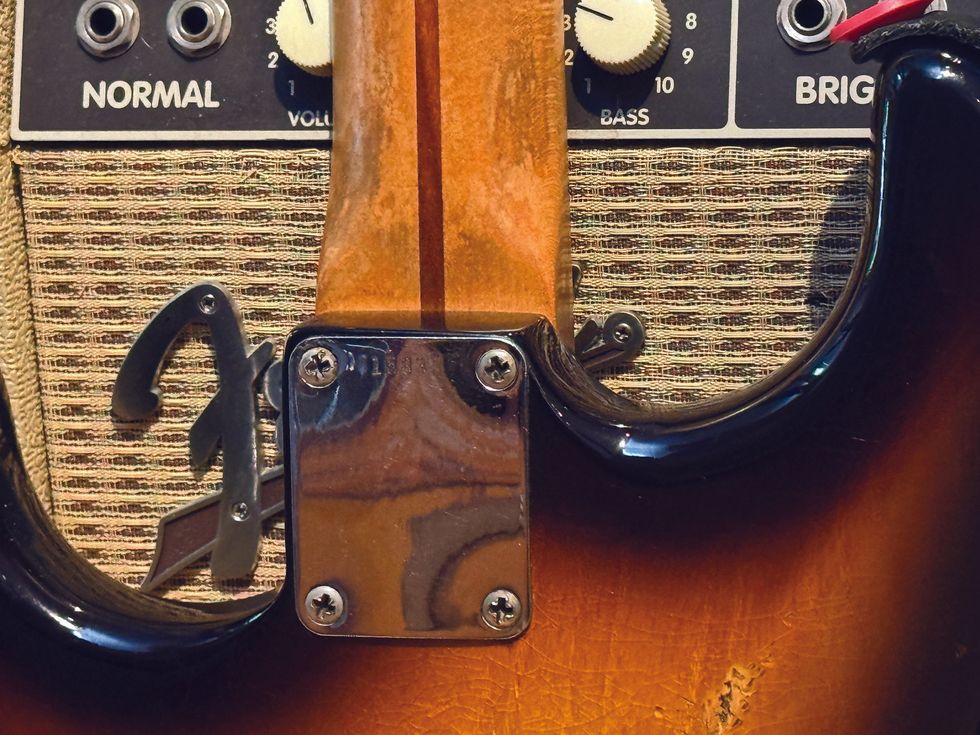
As decades passed, both approaches have evolved. Early bolt-ons were bluntly functional: flat pockets, wood screws, and steel neck plates. Still, builders set about refining the concept. CNC machining produced neck pockets of remarkable precision. Sculpted heels softened the once-abrupt transition between neck and body. Machine screws threaded into metal inserts pushed mechanical consistency beyond what Leo Fender (and vintage purists) felt necessary.
Set-neck construction has evolved as well. Traditional dovetails have given way in many production environments to more standardized mortise-and-tenon joints. Technology brought unprecedented consistency to neck angles and joint geometry. As both systems matured, many of the practical differences narrowed. A well-executed bolt-on could feel seamless. A precisely fitted set-neck could be astonishingly consistent. The old assumptions survive largely because they have become part of guitar culture itself.
Repair reveals the deepest distinction. A bolt-on remains fundamentally serviceable. Neck replacements, profile changes, and even scale-length experiments can be relatively straightforward. A set-neck guitar, meanwhile, remains committed to permanence—its repairs are often more invasive, and potentially more expensive.
Existing in the background of this long-standing debate is the neck-through design, the logical endpoint of continuity. Here, the neck is no longer attached to the body in the traditional way. It becomes part of the body, extending uninterrupted beneath the bridge and pickups. Utilized by makers like Rickenbacker, and later embraced by builders in the 1970s and 1980s, neck-through construction represents maximum integration and minimum modularity. If the bolt-on celebrates replaceability, the neck-through celebrates unity. Heaven help you if you need repairs.
Seen from this perspective, neck joints might not be categories, but points along a spectrum. At one end lies serviceability, at the other lies permanence. Today, no approach occupies a higher evolutionary rung. Each method is also at the mercy of a hundred other decisions a builder must make. So, the choice is rarely about quality or sound alone. Instead, the construction choice reflects a builder’s (and therefore the player’s) assumptions about identity, maintenance, sound, and the relationship between parts and the whole. In this subjective battle, where do you stand, and why?
Martin Guitar Launches Two Joe Bonamassa Signature Models
C. F. Martin & Co. has introduced the 00-18 Joe Bonamassa and 00-10E Retro Joe Bonamassa, two new signature acoustic guitars inspired by Bonamassa's treasured 1937 Martin 00-18 shade-top.
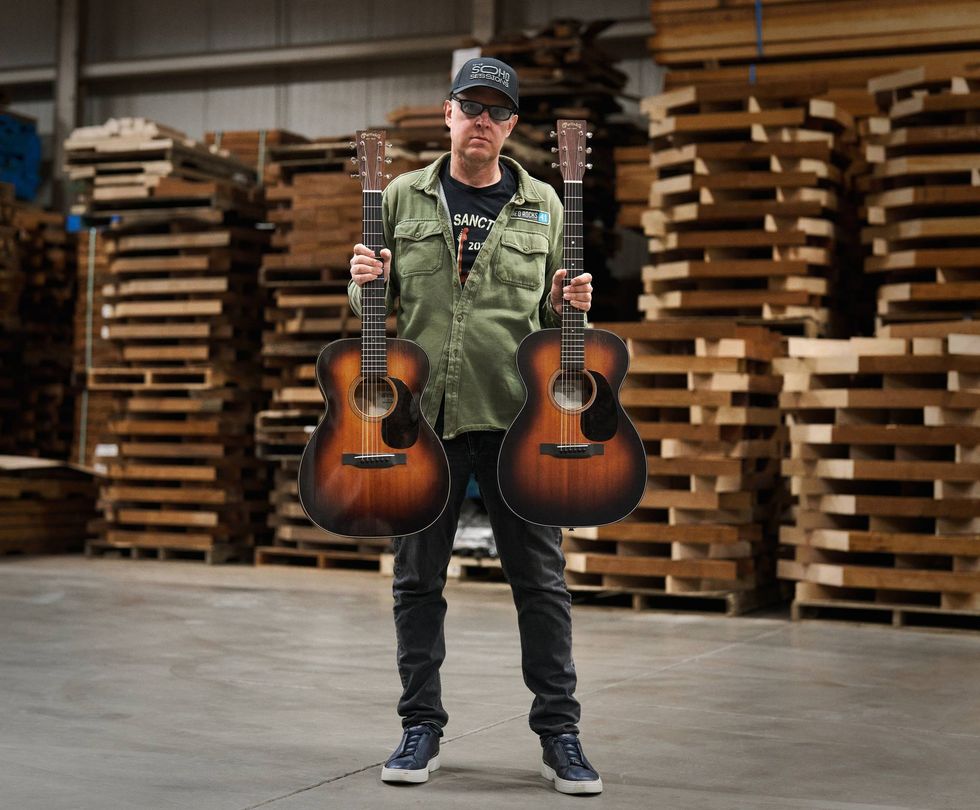
The 00-18 Joe Bonamassa and 00-10E Retro Joe Bonamassa recreate the look and character of his prized 1937 Martin 00-18
Marking Martin's second collaboration with the blues-rock superstar, the collection includes a handcrafted Nazareth-built model alongside a more accessible version produced at Martin's Navojoa, Mexico facility. Both feature a custom 1937-style sunburst and carefully replicated top wear based on Bonamassa's original guitar, capturing the appearance of an instrument that has spent decades making music.
"If you told me when I was a kid that I'd be sitting here in Nazareth, Pennsylvania, with not one, but two signature guitars, I'd be like, 'You're out of your mind,'" Bonamassa said.
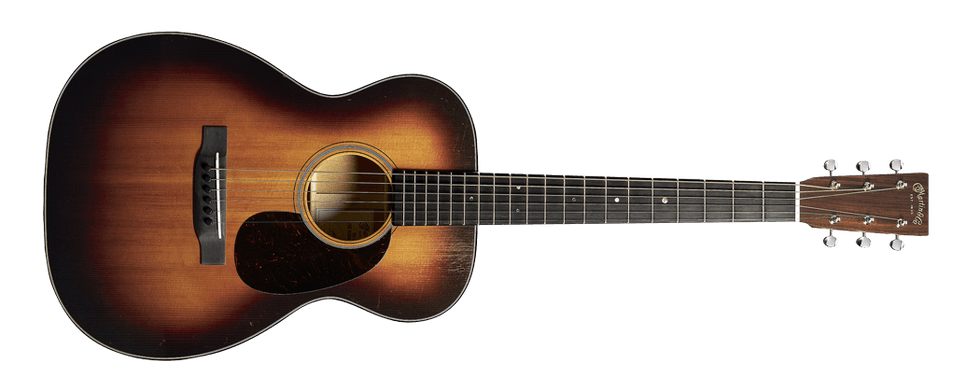
Handcrafted in Nazareth, Pennsylvania, the 00-18 Joe Bonamassa pairs a solid spruce top with genuine mahogany back and sides for a warm, clear, and responsive voice. Its compact 00 body offers balanced tone and comfortable playability equally well suited to blues, folk, fingerstyle playing, and songwriting.
Golden Era scalloped X-bracing delivers an open, dynamic response, while faux tortoise binding, the custom 1937-style sunburst, and replicated top wear faithfully reflect the appearance of Bonamassa's original pre-war instrument. A Golden Era Modified Low Oval neck profile with a standard taper provides a comfortable vintage-inspired feel.
Bonamassa brought an early prototype into the studio and compared it directly against his original 1937 Martin. "When we put the mic in front of it, my producer said, 'I like that one better,'" Bonamassa recalled of the Nazareth-built model.
Each 00-18 Joe Bonamassa includes a hardshell case and carries a $3,999.99 street price.
Crafted in Martin's Navojoa facility, the 00-10E Retro Joe Bonamassa brings the look, feel, and spirit of Bonamassa's pre-war 00 to a wider range of players.
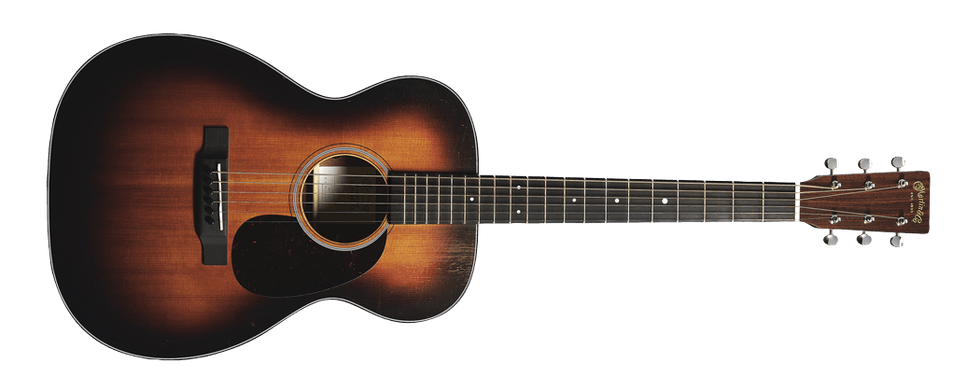
It pairs a solid spruce top with solid sapele back and sides for balanced tone, warmth, and focused projection. Its custom 1937-style sunburst and visually replicated top wear mirror the distinctive character of Bonamassa's original guitar. Scalloped spruce X-bracing supports a responsive acoustic voice, while a Performing Artist neck with a high-performance taper offers smooth, approachable playability.
The model also features Martin E1 electronics with volume, tone, and phase controls, along with a built-in chromatic tuner, making it equally at home onstage, in the studio, or around the house. Bonamassa personally tested the onboard electronics in live performance before approving the final production model.
Each 00-10E Retro Joe Bonamassa includes a softshell case and carries a street price of $1,299.99.
Widely regarded as one of the world's foremost vintage guitar collectors and historians, Bonamassa has built a reputation that extends well beyond the concert stage. His extraordinary collection of historically significant instruments has made him a trusted authority among players and collectors alike, while each of his signature collaborations has become an opportunity to faithfully recreate some of the rarest and most coveted guitars ever built. With these new models, Bonamassa and Martin turn their attention to one of the most personal instruments in his collection, giving players two ways to experience the sound, feel, and visual character of his beloved pre-war 00-18.
The 00-18 Joe Bonamassa and 00-10E Retro Joe Bonamassa are available through authorized Martin dealers and at martinguitar.com.
Duane Betts: Rising Son
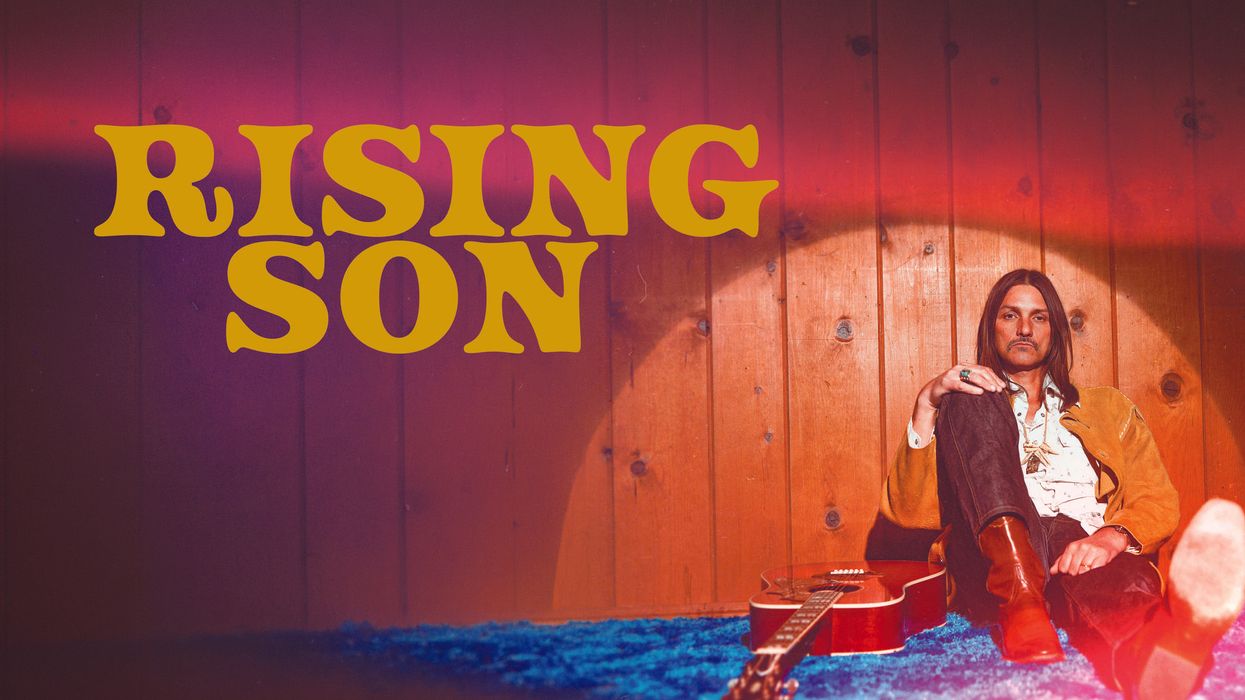
Towards the end of Duane Betts’ video for “Heartache,” a melancholy song about grief written after his father died in April 2024, the 48-year-old guitarist etches the initials “FRB” in the sand. It seems like a riddle, or perhaps a non sequitur, until you realize Betts’ late father, Dickey Betts of the Allman Brothers Band, was born Forrest Richard Betts. “It was something that was kind of thought about and plotted out as an easter egg—something very meaningful, but not obvious. We didn’t want to be too on the nose about any of the references,” the singer and guitarist says, speaking to Premier Guitar by phone from a summer home in Jackson Hole, Wyoming, the night before he’s scheduled to perform with the Allman Betts Family Revival in Vail, Colorado. “Some people don’t know that my dad’s first name is Forrest. They might not catch the initials.”
While inspired by the senior Betts’ death at age 80, “Heartache” is a universal ballad, on the edge of Neil Young-style folk-country and, yes, the Allman Brothers’ soulful southern rock. “I’ll wait, watch over you / Nothing I can do,” Betts sings, then repeats the phrase “there’s nothing you can do” multiple times before playing a solo that is both mournful and hopeful on his cherry-red 1961 Gibson ES-335, a guitar he inherited from his father. “I wrote that song down in Florida, shortly after my dad passed away, with my friend [singer-songwriter] Stoll Vaughan,” Betts says. “I had this haunting chorus melody, and I was mumbling ‘heartache,’ and it just went from there. It’s a universal feeling that everybody can relate to. It’s about loss and acceptance and getting through that process.
“It’s about everything and everyone that you’ve lost, you know?” he adds. “The lyric is simple, but it’s vulnerable and personal to me and I’m very proud of it.”
In the video, filmed in Malibu, California, last March, Betts, slender with long hair and a thin mustache, wears open-collar, earth-toned suits that can only be described as “Allman Brothers chic.” In one of these outfits, he wanders into the ocean; in another, he plunges into a pool. “Actually, I don’t think we wrecked any of them,” he says of the clothes. “The first one turned out okay. We just air-dryed it. It was a lot of fun. The pool was about 10 degrees colder than the ocean, and the ocean wasn’t warm.”
Betts made “Heartache” and the rest of his new album, Isle of Hope, with Dave Cobb, the Nashville producer who has worked with just about everybody, from the Bee Gees’ Barry Gibb to pop star Teddy Swims, and has a knack for drawing out the country soul from raggedy-voiced singer-songwriters like Chris Stapleton, Sturgill Simpson, and Jason Isbell. Betts came across Cobb’s work while recording a session with guitarist J.D. Simo; while Betts was waiting for an Uber, “me and J.D. were getting some quality time,” and Betts played him a new tune called “Reckless.” “You know who would love to do this? Dave,” Simo told him.
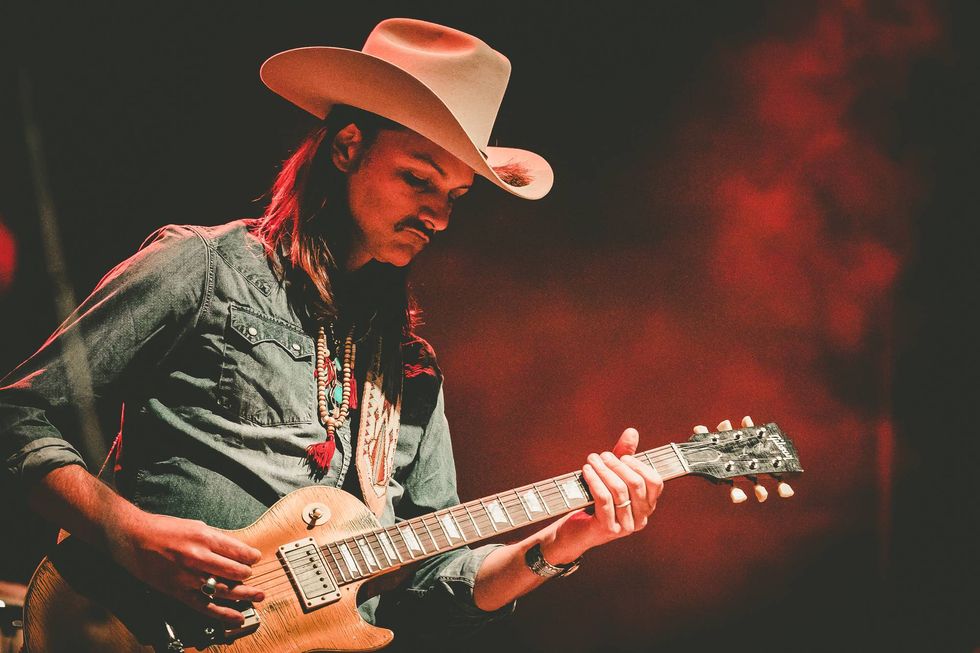
Duane Betts’ Gear
Guitars
- 1961 Gibson ES-335
- Gibson Dickey Betts Les Paul Gold Top prototype #1
- Pre-war Martin acoustic
- Fender Telecaster (courtesy of Dave Cobb)
Amp
- 1961 Magnatone Troubadour
Pedal
- Union Tube & Transistor NeverMORE
Cobb proved to be exactly as advertised while producing Isle of Hope, an album that balances laid-back, hymnlike tracks such as “Silver Afternoon,” “Best Wishes,” and the lead single “Heartache” with more hard-driving numbers like “Pills and Liquor,” “Down to Houston,” and the closing track “Keep My Hands Clean.” The latter songs capture the tight, barrelhouse swagger of early-1970s Rolling Stones, though they are surprisingly concise by the standards of the Allman Brothers diaspora. Throughout the album, potent slide-guitar solos—performed primarily by Betts and Johnny Stachela—add both fire and texture. Their guitar work often recalls Duane Allman’s playing alongside Eric Clapton on Derek & the Dominos’ “Layla.”
“Dave is a genius in the studio. He can frame things in his head while he’s playing in the band and map everything out perfectly and know where everything fits at all times. It’s what a producer is supposed to do—times 100,” Betts says, launching into a technical explanation of which portions of which studio takes wound up in the final track. “I wanted to have a vehicle like ‘Heartache’ to play a little differently. Dave set me up. I had the solo mapped out over different chords, over a different point in the song, and he changed it and gave me a nice path to just go at the end of the song, over those other chords. It turned out to be a great idea.”
Reproducing the album live has proved to be a challenge as the band rehearses for dates through the end of 2026 and early 2027—mostly because Betts’ road band has only two guitarists, which pushes him to play an acoustic or “an electric like an acoustic.” He adds: “You can’t play all the parts on the record. You have to be thoughtful. ‘Maybe the keyboard player can do something.’”
“We didn’t make a ‘guitar record,’ but there’s plenty of guitar playing on the record.”
Discussing the album, Betts has a habit of changing the subject to move the attention off of himself—his own songwriting, his own vision—and onto the other musicians who worked on the album, particularly his friend Simo on rhythm guitar. “I really wanted everybody to have their moments. J.D. doesn’t play any solos per se, but his guitar work on this record is just excellent,” Betts says. “We didn’t make a ‘guitar record,’ but there’s plenty of guitar playing on the record.”
The new album has a rawer, more spontaneous and live-in-the-studio feel than Betts’ solo debut, 2023’s Wild & Precious Life, a more star-studded affair that featured guests like Derek Trucks—himself the nephew of a late Allman Brothers Band member, founding drummer Butch Trucks—plus Marcus King and Nicki Bluhm. On Isle of Hope, Betts mostly plays an acoustic guitar, a pre-war Martin, although he uncorked the 335 in key moments, like the electric solo in “Heartache.” “I cut the solo after the band went home and got it,” he says.
Has Betts’ playing evolved since Wild & Precious Life? Not in his own estimation. “I don’t know if my playing has changed that much—I kind of play the way I play,” he says. “When given the opportunity to play over different chords, or a different style, you might play differently.”

Because Isle of Hope is so clearly—and lovingly—dedicated to his late father, Duane has had even more opportunities than usual to reflect publicly on Dickey Betts’ legacy and influence. Betts was a founding member of the Allman Brothers Band in 1969, after he and former bandmate Berry Oakley accepted an invitation from guitarist Duane Allman to join an informal jam session at FAME Studios in Muscle Shoals, Alabama. That gathering ultimately led to the formation of one of Southern rock’s most influential bands.
Duane was born to Dickey Betts and his then-wife, Paulette, in 1978, seven years after his namesake, Duane Allman, was killed in a motorcycle accident. By that time, the Allman Brothers had broken up, then reformed, and were putting out rock albums like Enlightened Rogue during an era of punk and disco. They were touring regularly, and Dickey brought his son on the road. Duane was home-schooled and had a tutor, as he once told the Marin Independent Journal: “It was great. I loved it. ... It was mainly me and the adults. I didn’t get to socialize with kids my own age. I had to make up for that later.” Eventually, he left his father’s hometown of Sarasota, Florida, for his mother’s home base in Malibu. There, he earned his GED and began playing in bands, including Backbone69, whose lineup featured the sons of Roy Orbison, producer Lou Adler, and Berry Oakley.
Around age six or seven, Betts took up drums before switching to guitar. His first electric was a tiger-striped sunburst PRS prototype with a 5-way switch—a model that Paul Reed Smith had personally given to Dickey Betts and Warren Haynes.
“Most of the guitars I own are my dad’s, and it’s really a beautiful thing.”
“I really haven’t played it much,” Betts says. “Believe it or not, I sold it to a good friend because I just wasn’t using it. Then I bought it back. About 15 years later, I thought, ‘Man, it’d be cool to own my first guitar.’” He approached his friend and asked, “You’re not playing as much anymore—can I buy my guitar back?”
“That’s what friends are for,” Betts adds with a laugh.
“Most of the guitars I own are my dad’s, and it’s really a beautiful thing,” he continues. “He was so good at playing that Delta stuff on the National steel. He was such a master, and a student of those guys, and it was always so thrilling to hear him play that style.”
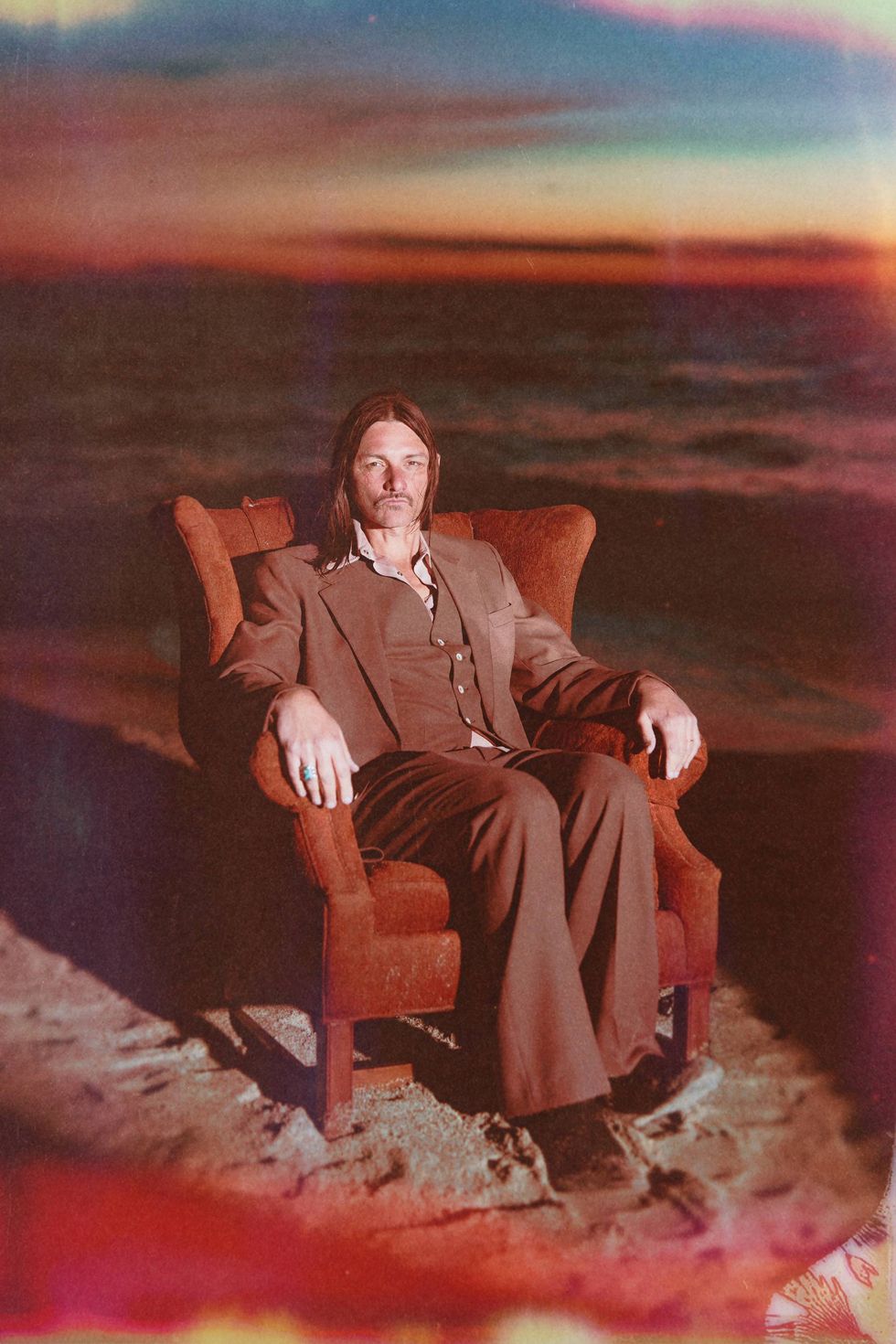
Children of famous musicians sometimes spend their careers trying to distance themselves from their parents’ work. But Betts is happy to talk about his father, who was his primary guitar inspiration and frequent teacher. Although, he says, “It’s not like we spent an hour a day talking about guitar—or an hour every other day, even. I kind of wanted to learn on my own. I liked the challenge.”
Dickey, he says, “taught me about fundamentals. Like a Chuck Berry rhythm. Like a 12-bar blues. ‘Go listen to Freddie King, “Hideaway.”’ He was turning me on to stuff like that.”
Befitting his own generation, Betts also picked up on the guitar sounds of Nirvana and Smashing Pumpkins, and combined their ideas with the John Coltrane records he was absorbing in his teens. “I forgot who said it: ‘Every rock ’n’ roll guitar player’—whether they’re punk rock, Steve Jones or whoever— ‘should have a little bit of Chuck Berry influence in them,’” Betts says. “That’s how my dad felt. I’m sure Keith Richards feels that way.”
“If you’re being truthful, it can’t be wrong.”
Betts has also forged a creative partnership with fellow Allman Brothers heir Devon Allman, the son of Gregg Allman, who died in 2017 at age 69. The two longtime friends formed the Allman Betts Band in 2018, embracing their shared musical heritage while occasionally inviting other second-generation musicians—among them Dweezil Zappa, son of Frank Zappa, and Tommy Prine, son of John Prine—to join them onstage.
After Dickey Betts’ death, Duane and Devon found common ground in a loss they both understood. “A lot of that goes without saying. We don’t sit and talk about it at length,” Betts says. “He knows. You just look at somebody, and you’re there for them—it’s an unspoken thing. He knows what it’s like.”
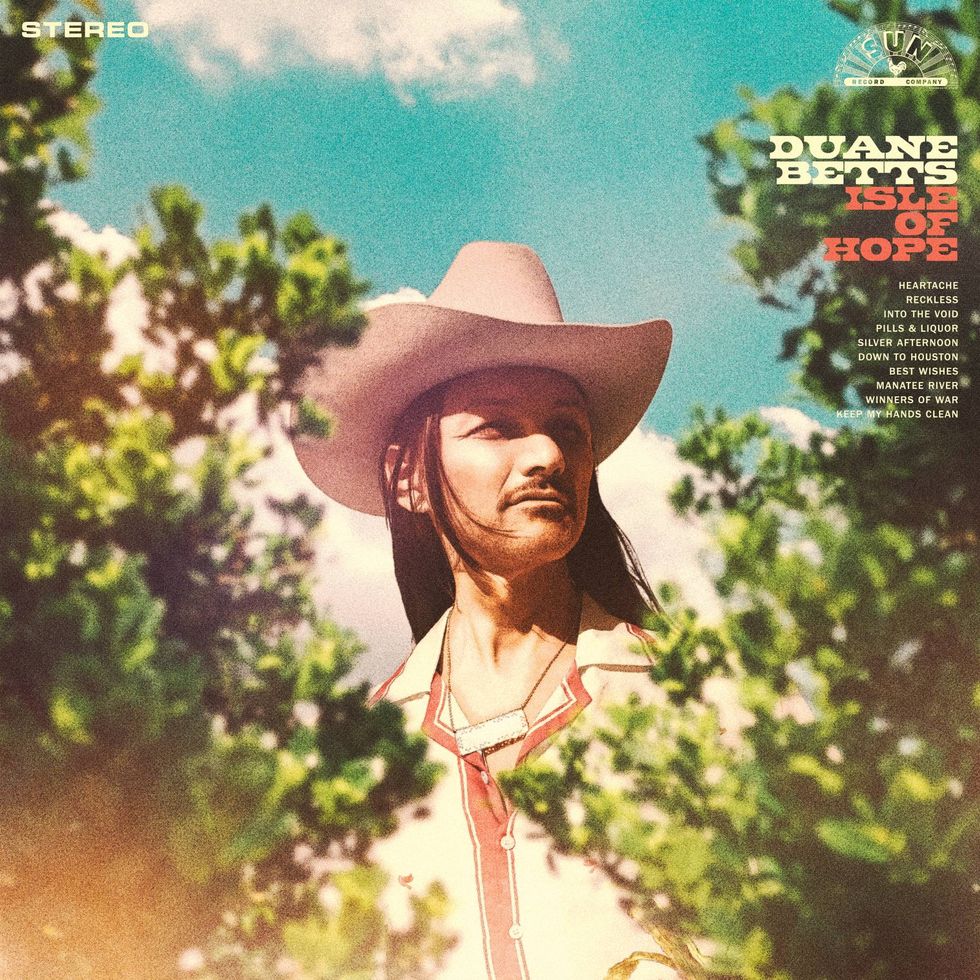
Betts says he has found similar understanding among other friends who have experienced the loss of a famous parent. “Alex Orbison lost his father at a young age,” he says. “They’re here in spirit. We’re in the same boat a little more.”
For all the practical lessons Dickey Betts taught his son about guitar—rooted in Chuck Berry riffs and blues fundamentals—it was a more philosophical piece of advice that left the deepest impression. As Duane has told interviewers, his father’s guiding principle was simple: “Go play to nature, and it can never be wrong.”
“He had an abstract way of thinking about art and music and life—the way he wrote some of his songs, like ‘Seven Turns,’” Betts says, referring to the Allman Brothers Band’s 1990 track. “I think what he meant was that god, nature, the universe—whatever higher power you believe in—can’t be wrong.”
“So if you’re being truthful, it can’t be wrong,” he continues. “If you can accurately emulate the movement of water, how could that ever be wrong? That’s god moving right in front of your eyes. He meant that you should try to reflect things that are beautiful and natural. Basically, try to have good taste.”
Rig Rundown: Kris Donegan
Nashville studio veteran Kris Donegan was at Nashville’s East Iris Studios earlier this summer when PG’s John Bohlinger stopped in to check out all the gorgeous vintage gear that Donegan uses to make the magic happen. Have a look at some quick highlights below, and tune into the new Rig Rundown for all the details. Brought to you by D’Addario.
Slip Sliding Away
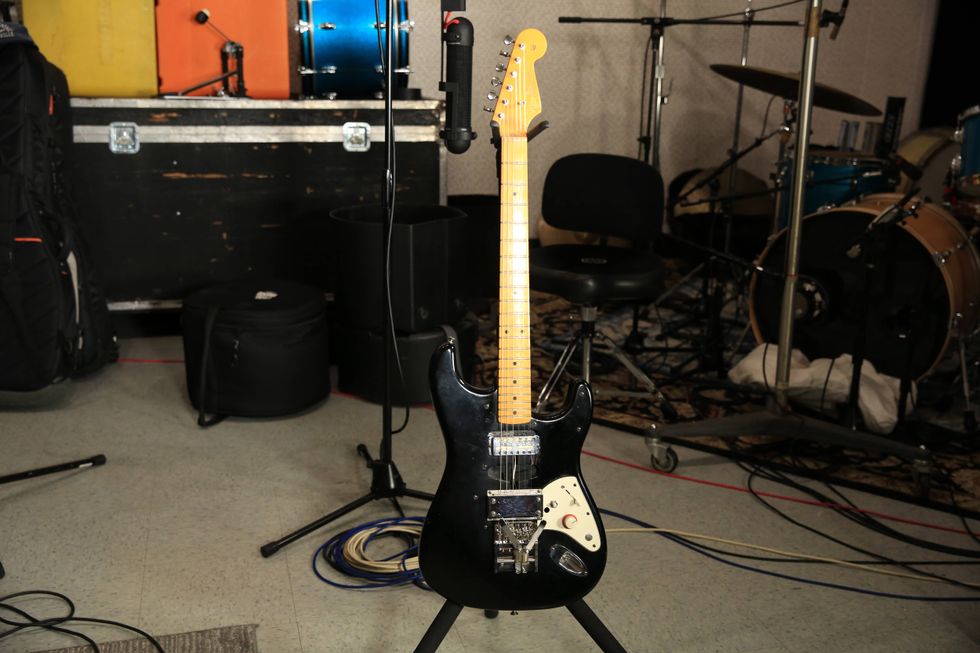
Donegan built this chopped-up, DIY slide guitar himself, using a Strat as a host instrument. The Duesenberg MultiBender gives a very convincing impression of a proper slide guitar. This, and all of Donegan’s guitars, take D’Addario strings.
Bukovac’s Beauty
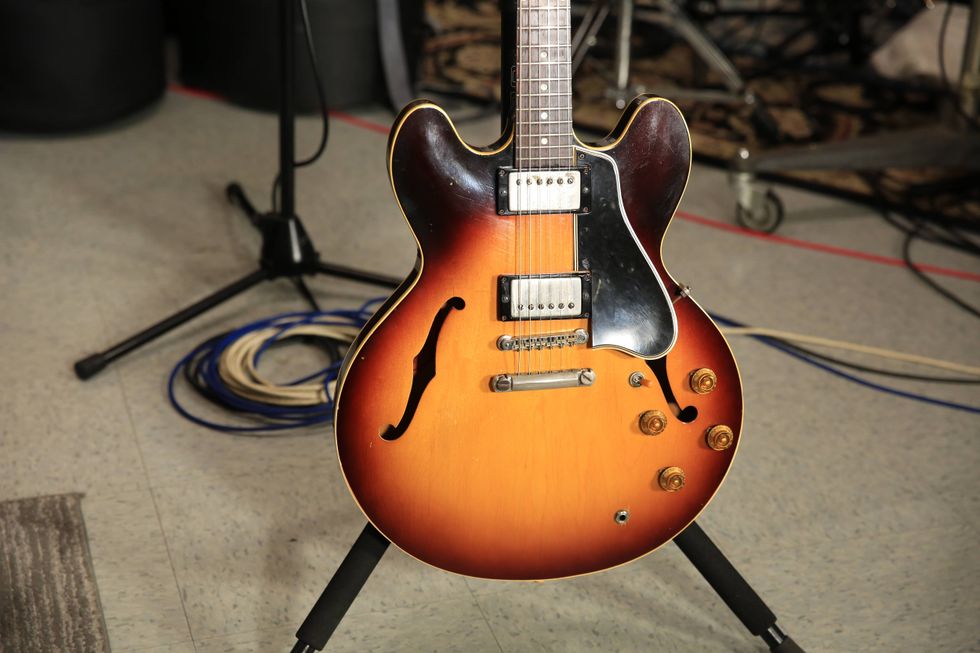
This 1958 Gibson ES-335, an early model with an unbound neck, 3-ply thin top, and a super-low neck angle, was previously owned by Tom Bukovac.
Four-Headed Beast
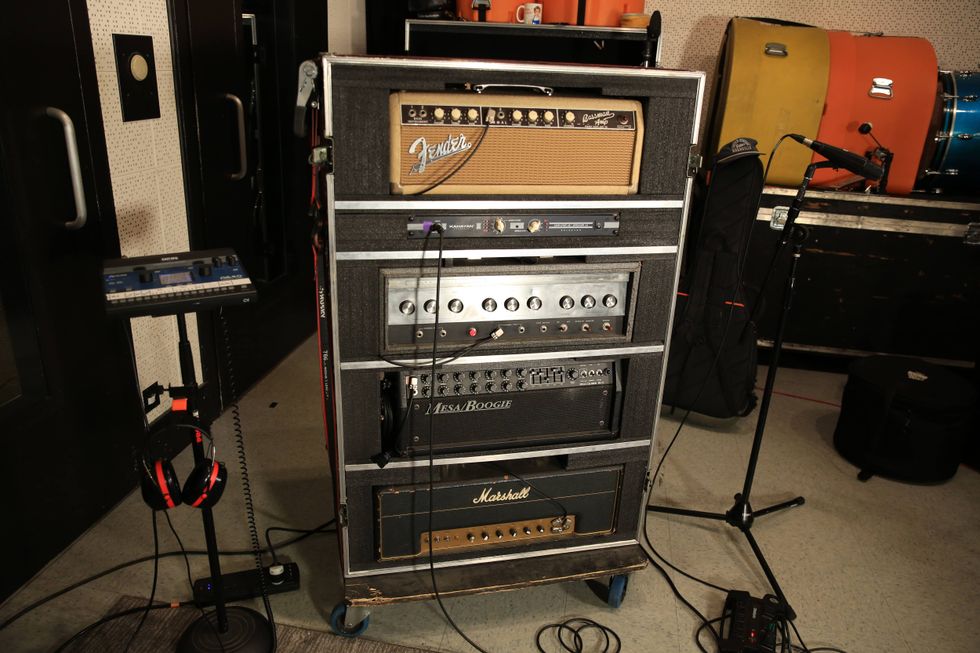
Among his studio tools is this quartet of amp heads: a Fender Bassman, Silvertone Model 1484 Twin Twelve, Mesa/Boogie Dual Caliber DC-5, and a late-’60s, 50-watt Marshall head from a transitional period.
Kris Donegan’s Pedalboard
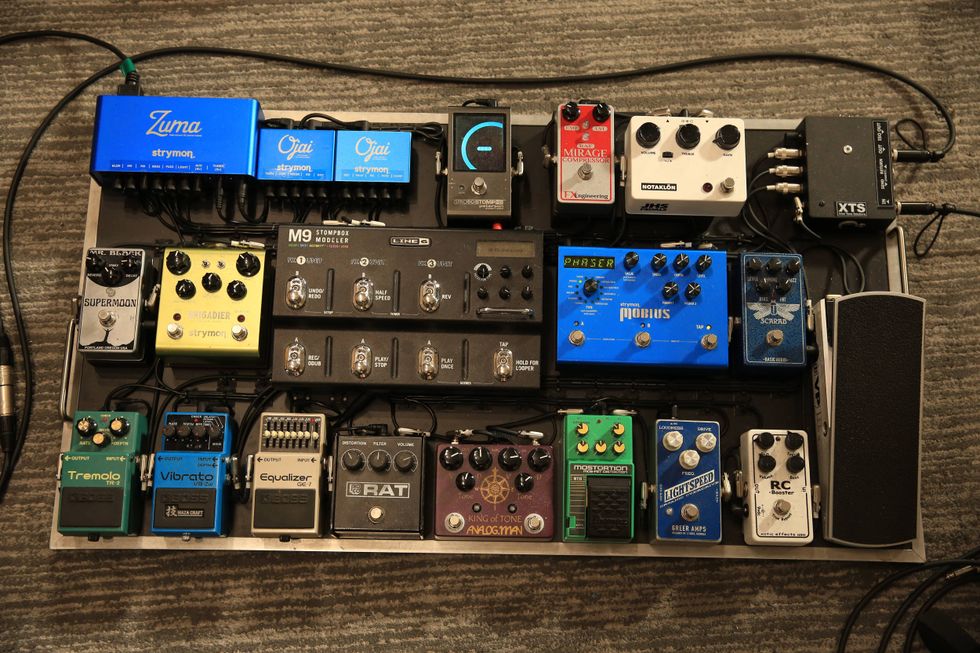
Donegan’s sprawling studio board includes an Ernie Ball VP JR, Peterson StroboStomp HD, Xotic Effects RC Booster, Greer Amps Lightspeed, Ibanez Mostortion, Analog Man King of Tone, Pro Co RAT, Boss GE-7, Boss VB-2w, Boss TR-2, Basic Audio Scarab, Strymon Mobius, Line 6 M9 Stompbox Modeler, Strymon Brigadier, Mr. Black SuperMoon, JHS NOTAKLÖN, and FX Engineering Mirage Compressor. A Strymon Zuma and a pair of Strymon Ojais handle power needs.
John Page Guitars Introduces the Noah Levine Signature DL Baritone
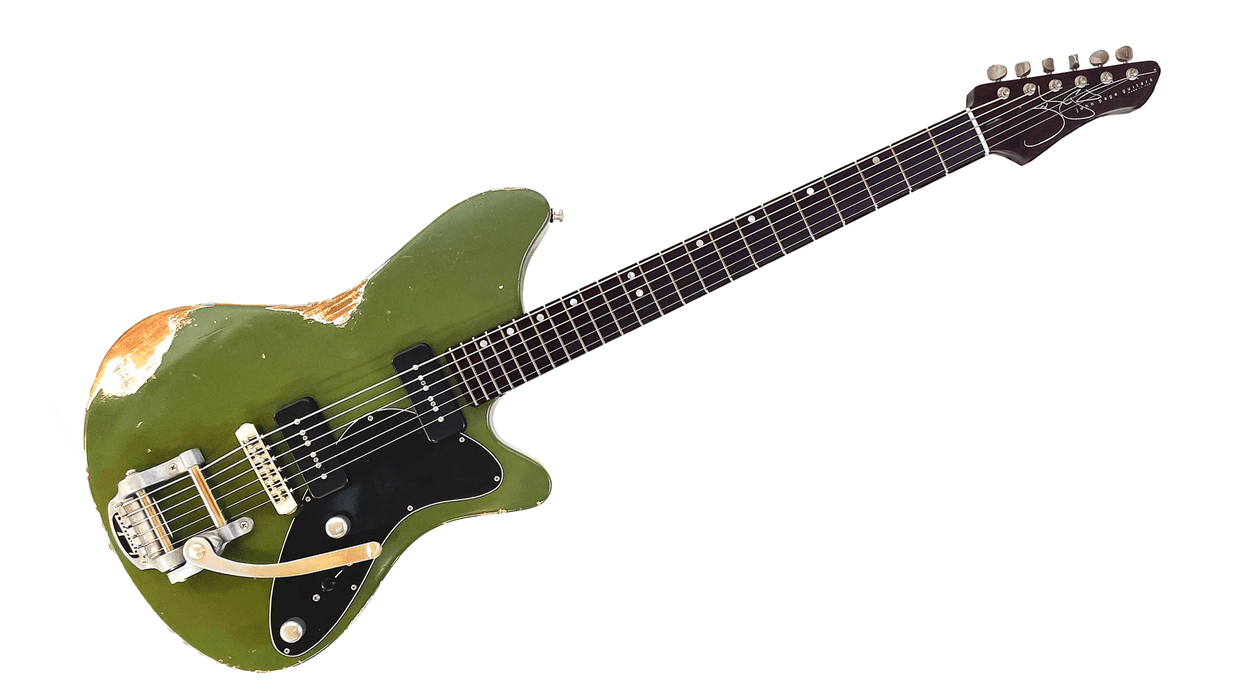
John Page Guitars has introduced the Noah Levine Signature DL Baritone, a new signature model developed in close collaboration with guitarist Noah Levine, lead guitarist for Noah Kahan and a multi-platinum songwriter. The release marks the latest expansion of John Page Guitars' baritone platform, continuing the company's focus on hand-built American instruments designed around the way real players actually use them.
Designed by legendary guitar builder John Page, who co-founded the Fender Custom Shop, and hand-built in Delaware, Ohio by John Page Guitars Master Builder Chase Gullett, the Noah Levine Signature DL Baritone launches in an initial “Batch 01” release of four artist-selected finishes: green, blue, black, and yellow, each finished as a heavy relic and personally chosen by Levine.
Highlights include:
- Heavy relic-finished body in green, blue, black, or yellow: an authentic, road-ready look and feel from day one
- Choice of rosewood or maple neck and fretboard: dial in the exact feel and tone that fits your playing style
- Fishman Fluence P90 or Lollar P90 pickup options: Fluence P90s deliver quiet, versatile tone built for the stage, while Lollar P90s bring classic vintage warmth
- “Noah’s Spec” rosewood neck and fretboard paired with Fishman Fluence P90 pickups: matches Levine’s own touring instrument exactly
- Premium hardware and electronics selected by John Page: reliable performance night after night
- Unique Batch 01 serial designation: marks your guitar as part of its debut run
The Noah Levine Signature DL Baritone carries a retail street price of $5,995 USD (Street Price: n/a). For more information visit johnpageguitars.com/noah.
Win a Double-Cut Powerhouse: Enter to Win the Hagstrom Megin!

Ready to unleash pure tone and road-tested reliability? Enter today for your chance to bring home the Hagstrom Megin!
Hagstrom Megin Giveaway
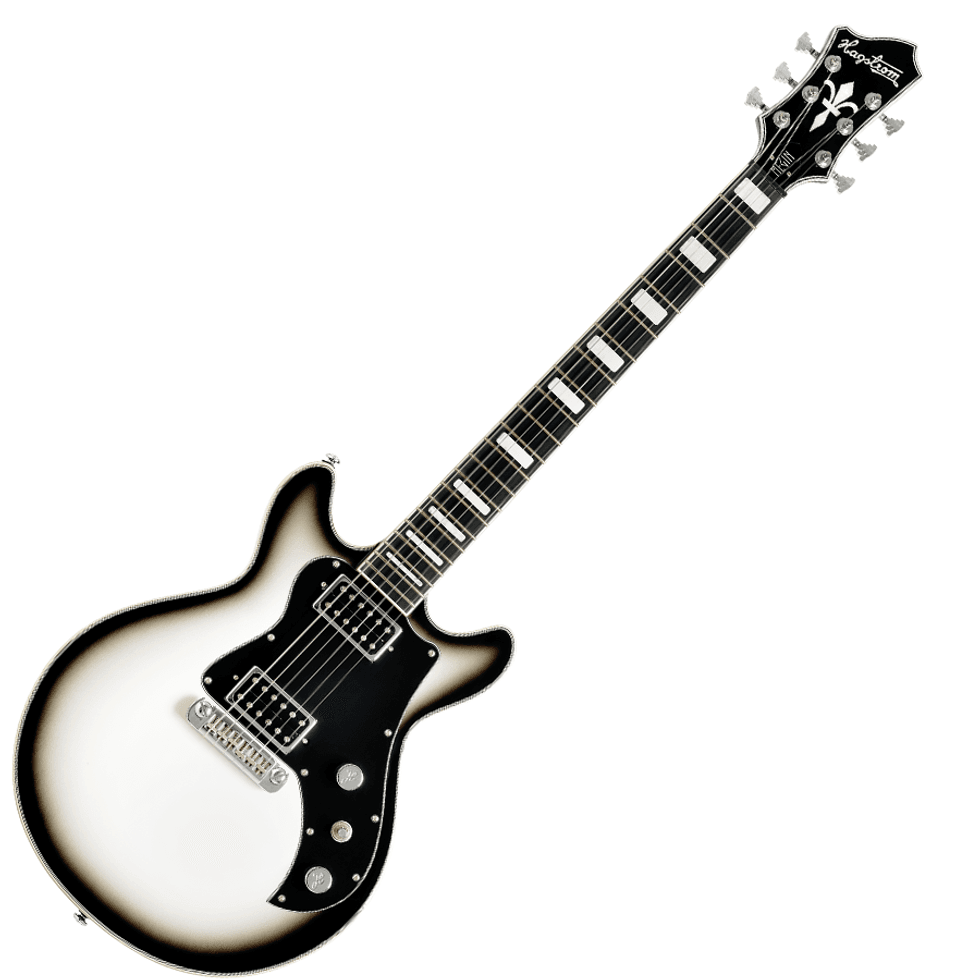
Hagstrom Megin
It’s a double-cut of magic.
Discover a new realm of musical enchantment with the all-new Hagstrom Megin – a guitar that transcends the ordinary and invites you into a world where tone and playability unite perfectly.
In the language of old Norse, “Megin” translates to “Magic,” and this guitar lives up to its name, promising a spellbinding playing experience that captures the essence of enchantment on every stage.
Crafted especially for the modern-day road warrior, the Hagstrom Megin stands as the essence of “bang for the buck,” presenting musicians with the ultimate gigging companion that never compromises quality.
Take it on the road, let it seamlessly become an extension of your musical mastery, and witness the magic unfold in every note.
This extraordinary instrument features a meticulously crafted mahogany long mortise and tenon set neck and a mahogany body, dually delivering a resonance that speaks directly to the soul of your music. Fitted with two powerful Hagstrom Custom 62 humbuckers, the Megin offers a versatile tone that effortlessly adapts to your musical journey, whether it’s weaving sweet melodies or unleashing powerful riffs.
Designed with the touring musician in mind, the Megin is a straightforward powerhouse. Its wrap-around bridge not only enhances sustain and resonance but also channels all that string energy directly back into the instrument, unlocking the magic of its tonal qualities. All that energy contained within the body works as a perfect partner together with our Hagstrom H-Expander truss rod, where that transfer of string energy resonates from the tip of the headstock to the butt of the body to masterfully capture complete resonation throughout the entire instrument. With master volume and tone and 3-way toggle controls, simplicity reigns without sacrificing control on stage or in the studio. This is pure tone, power, and playability – the perfect ally for those who demand reliability on stage.
To heighten the string energy and resonance to the next level, we selected a 25.5” scale length. This intentional decision not only enhances the sustain but also crafts a commanding voice that expresses unmatched clarity and precise pronunciation. Feel free to drop tune effortlessly, unleashing a growl and grunt that will undoubtedly leave your audience in awe.
Step into a world where music transforms into magic. Embrace the enchantment with the Hagstrom Megin – your passport to a sonic realm unlike any other. As always, Hagstrom delivers another masterpiece, ensuring that every chord struck with the Megin resonates with the enticement of true craftsmanship, design, and a pure dedication to the working musician. Welcome to a new era of musical magic.
This Small Amp Sounds HUGE
This dapper 20-watter delivers a full-spectrum sound that starts at jangly chime before its EL84s natrually overdrive into a musical, singing saturation zinging with overtones and sustain.
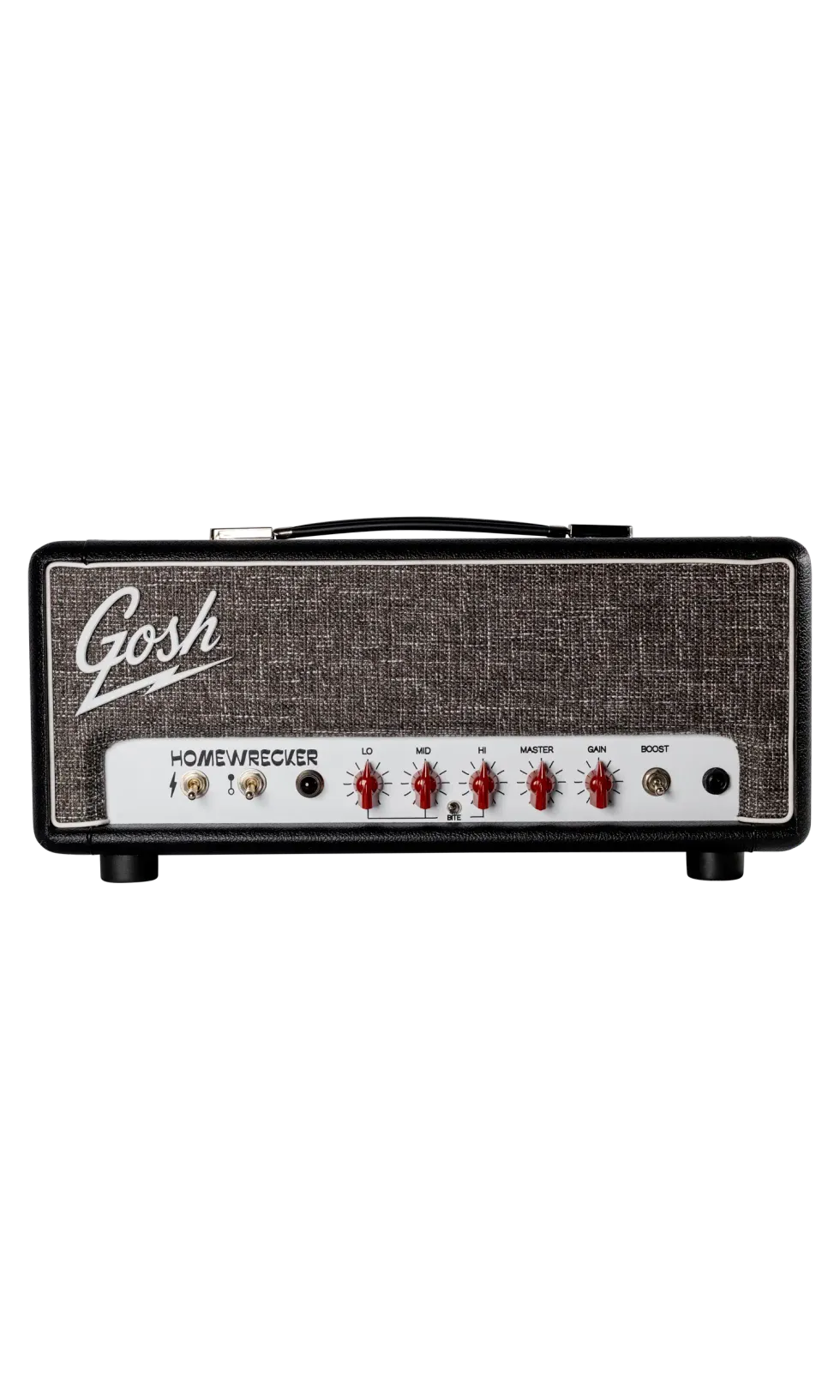
Homewrecker
I originally started experimenting with this circuit over a decade ago while chasing the aggression and harmonic complexity of a cranked vintage British amplifier, but at a volume that actually made sense in the real world. Most high-powered amps sound incredible wide open, but become almost unusable outside of large stages. I wanted something that captured that same energy, compression, and sustain without needing arena-level volume.
The goal became creating an amp that lived right on the edge of saturated and aggressive, while still articulate enough to hear every string inside a chord. I spent years refining the gain and power section so the amp would respond dynamically to pick attack and guitar volume changes instead of simply producing more distortion.
A huge part of the design was the transformers. I worked closely with Brian at Sour Sound to develop custom transformers specifically for this amplifier. Nothing about the power section was off-the-shelf. The transformers were designed around the exact feel, response, and harmonic character I was chasing, and they became a major part of the amp’s larger-than-life voice.
Even though it’s a 20W design, it doesn’t behave like most small amps. It feels bigger than its size, moving from subtle vintage textures to fully saturated overdrive while still retaining clarity and touch sensitivity.
The final design reflects years of refinement, listening, and testing. The 20W became the amp I had been trying to build for years — raw, responsive, and inspiring to play the second you hit the first chord.
A key part of the amp’s character is the custom-tuned smoothing filter in the power section. This helps control harshness while keeping the amp open, punchy, and harmonically rich. The result is an amp that stays aggressive and dynamic without becoming stiff or fatiguing.
The amp also features a Boost switch that adds additional gain, saturation, and low-mid body. It thickens the response and pushes the amp further into rich overdrive while still maintaining clarity and note separation.
The Bite switch is designed to increase perceived gain. It tightens the response, adds edge to the attack, and helps the amp cut through a mix with more aggression and presence without drastically increasing overall volume.
Combined with the custom Sour Sound transformers, the entire amp was voiced to feel bigger, more responsive, and more alive than a typical 20W amplifier. Every feature was designed around touch sensitivity, harmonic detail, and making the amp inspiring to play at any volume."
Features:
• 20 watt all-tube head
• Hand-wired in the USA
• Sour Sound Custom Transformers
• Full-wave rectifier
• Cathode Bias
• 2 x EL84 power tubes
• 2 x 12AX7 preamp tubes
• Bite switch
• Boost Switch
• 4, 8, and 16 ohm impedance
Learn more: https://www.goshsound.com/homewrecker
Acoustic Soundboard: A New Technique From a Romanian Violinist

As anyone who has toiled long enough in any art form can tell you, hitting walls is inevitable, even necessary. They exist to remind us that there’s something on the other side, someplace to go that we haven’t discovered yet. We may not see the way over today, but when we start looking, that’s when new ideas reveal themselves (and not always in a way we can anticipate).

Sometime around 2002, up against such a wall, I was gifted a portal into a new way of approaching the guitar. A friend of mine brought me to see the 1993 Tony Gatliff film Latcho Drom. It follows the path of Roma music as it moves from India and Iran through eastern Europe, eventually landing in Spain, evolving and changing along the way, picking up influences yet retaining its unmistakable signifiers. No talking, no written narrative, just people and music. One scene focuses on an older man standing under a tree with a young boy watching on. The man is Nicolae Neacşu (1924-2002), the great Romanian violinist known for his work with the group Taraf de Haïdouks. As he plays and sings mournfully about the dictator Ceaușescu, he begins to tug on a small piece of string, a horsehair from his violin bow that’s tied on to one of his violin strings. The sound is haunting, complex, simple, earthy, and mystifying. I wanted to run out of the theatre right then, grab a guitar, and try it.
Without a horsehair on hand, and after several attempts with dental floss, cotton thread, and fishing line, I landed on a certain quality of polyester sewing thread that was able to produce a similar effect: cheap, thin, textured, stretchy thread. When I finally got the grip and the right tension, and the first vibrations bounced the sound through my fingers, I felt like I’d been handed a secret technique, like a Japanese hiden—a singular masterstroke.
I’ve spent the last thirty years in pursuit of these connections between the guitar and the natural world. Whether it’s through the raw physics of the instrument, drawing from the sounds of animals, looking to other cultures and their instruments, or finding ways to prepare and effect the guitar to break it open, there is no shortage of discoveries to be made. And this one technique, distilled from Roma ingenuity, has been one of the most curious and most useful. I always have a spool of polyester in my gig case. It takes about 30 seconds to tie it on before a show. I most often tie a strand onto the G string and another onto the D (double knots each), so that two arms-length threads are constantly dangling gently and unobtrusively from about an inch in front of the bridge. (You can pull two strings or more at the same time to create harmony.) I can take them up at any time. By scraping my finger nails down the textured polyester thread, the friction creates a vibration that transfers onto the guitar string. It’s similar to the physics of a cuíca, or the feeling you get when you run scissors down a ribbon to make it curl.
It’s really effective. I most often tie thread onto my 1951 Gibson J-45. There’s a clarity, response, and growl that I get from this instrument that blends well with this technique. I also use it on my ’69 Martin N-10, but because the tension is a bit lower on classical guitars, intonation is less reliable when the thread pulls outward on the nylon strings. At low volume, though, the effect can be sublime. Tied onto an electric guitar and multitracked, a lone producer can emulate an orchestra, creating a more unique sound than using VST. Hit it with distortion, delay, and reverb, and you have the four horses of the apocalypse.
Why not just use a bow? Since guitar bridges, unlike violin bridges, are flat, it’s difficult to bow single-note melodies without hitting multiple strings. This technique produces a similar (if creepier) sound as a bow, but allows the player to focus on a single string.
It’s more complicated to talk about and describe this than it is to just try it. So, give it a shot. Make sure the thread can produce a “zipping” sound when you run your nails down it. That’s the most important thing. The wound strings of the guitar work best as anchors; they lock the thread in place. And you can tie it anywhere along the string horizontally, but the closer you are to the bridge, the clearer and more fundamental tone you get (the further away from the bridge you tie it, the more strange harmonics you get). It’s been a really rewarding way for me to experience another side of the guitar. I hope you get to try it.
MXR Flanger/Doubler Brings Legendary Rack Unit to Your Pedalboard
The MXR Flanger/Doubler recreates the original MXR rack unit in pedal form, capturing those classic all-analog flanger and doubler effects featured on hallmark recordings from the ’70s and ’80s. It’s designed for experimenters, offering the tools to blend and bend your signal into your own rich, multi-layered textures. Built around authentic bucket-brigade devices and the original control set, this pedal delivers the full range of sounds that made the rack unit a studio staple.
 Whether you're chasing the sweeping jet-engine swoosh of the flanger or the thick, doubled-up layering of the doubler, the MXR Flanger/Doubler is equipped with the controls, the CV connectivity, and the visual feedback to take you wherever you want to go.
MXR Flanger/Doubler highlights:
- The renowned rack unit has returned in pedal form
- Authentic all-analog bucket-brigade devices
- Full, original control set shapes tone, range of motion, and sweep rate
- Doubler button switches between classic flanger swoosh and thick doubler chorusing
- Mix knob blends wet and dry signals to taste, from fully dry to fully wet
- Invert switch reverses wet signal polarity for airy, hollow vocality or bold low-mid punch
- Two LEDs track instantaneous delay time for quick adjustments when it’s too loud to rely on just your ear
- CV In and Out jacks connect with synths, sequencers, and CV-capable expression pedals
- Line Level switch ensures optimal performance when working with hot signals
Availability
The MXR Flanger/Doubler is available now at $333.00 street/$475.71 MSRP from select retailers.