
Music is the universal language
“Glory to God in the highest heaven, and on earth peace to those on whom his favor rests.” - Luke 2:14
Guitar.com

“I probably spent $10,000 trying to get it to work”: Joe Satriani recalls his biggest musical mistake

As far as guitar virtuosos go, Joe Satriani is right at the top of the tree. But even a player of his stature isn’t immune to making ill-advised songwriting decisions from time to time.
In a newly resurfaced 2010 interview with Classic Rock [via MusicRadar], Satch recalled trying to make a song work during the recording of 1989’s Flying in a Blue Dream, before realising the task was impossible.
“There was a song I wrote for the Flying In A Blue Dream record,” he said. “I spent hours in the studio, went through three bass players, pummelled it to death! I just couldn’t make this song work until finally I realised it was the worst piece of crap ever.
Satch even revealed he spent “probably $10,000” trying to get the song to work: “That’s a lot of money,” he said.
Elsewhere in the interview, Satriani remembered the worst review he’d ever had, and it was for his landmark 1987 album, Surfing with the Alien, of all things.
“Every morning I’d go for a cappuccino at this little café, and I read a review of my album in a magazine,” he said.
“This guy did not like me, did not like my guitar playing, and did not like the music. He said it was the worst record he’d ever heard, and finished by saying that if you’re one of those people that likes to fill up the back of a pickup truck with a case of cheap beer, drive into a parking lot alone, turn up the music and get drunk, then this is the record for you. When I read that I peered over the top of the magazine to see if anyone knew that I was the culprit!”
Back in May, Joe Satriani recalled tapping into YouTube and the online guitar community when it came to learning Eddie Van Halen’s parts for Sammy Hagar’s Best Of All Worlds project.
“After I learned the song, I’d go and I’d spend an hour or two on YouTube just watching how other people address this immense problem of trying to emulate Ed’s playing,” he explained. “You can’t capture the magic, but you can get pretty close to the fingering, and some players are better than others.”
The post “I probably spent $10,000 trying to get it to work”: Joe Satriani recalls his biggest musical mistake appeared first on Guitar.com | All Things Guitar.
Fender Vintera III Mid ’60s Jaguar review: “this is the guitar Jaguar fans have been asking Fender to make for years”

$1,349/£1,149, fender.com
It feels like only a few months ago that I was reviewing a Fender Vintera II guitar, and that’s because, well, it was. But the arrival of the limited edition Road Worn guitars at the tail end of last year was perhaps always destined to be a final hurrah for Fender’s second iteration of its vintage-inclined Mexican – a fun and inspiring way to clear the decks of the last of the previous generation before the new hotness that is Vintera III.
- READ MORE: Fender Studio Pro 8 and Quantum LT 16 interface review: a guitar-recording match made in heaven?
Fender has been on the Vintera train since 2019, with the stated aim of offering a slice of vintage-vibed Fender goodness for a fraction of the price you’d have to drop to get yourself one of the brand’s US models attempting the same trick (in 2026 parlance, that would be the American Vintage II).
It’s barely three years since Fender launched the Vintera II range, which headlined things by reintroducing proper rosewood boards to the mixture after a few years of CITES-induced pau ferro misery.
There’s nothing quite so headline-grabbing about the Vintera III range, but there was very little wrong with the Vintera II, though, cosmetically at least, the Jaguar was the weak link in a strong lineup. Suffice to say, that isn’t going to be a problem with the 2026 model.
 Image: Adam Gasson
Fender Vintera III Mid ’60s Jaguar – what is it?
Fender has a real blind spot when it comes to giving the morally correct amount of love to its offset guitars – especially its short-scale models. I’ve grumbled on more than one occasion on this website about the 50s sunburst cul-de-sac that Fender seems determined to leave the Jazzmaster to rot in, and the poor Mustang and Jaguar have received even shorter shrift.
With Vintera II, for example, the only Jaguar offered was a 70s model that was as baffling as it was unappealing. I know that aesthetic is coming back in a big way in guitar circles, but I’ll be amazed if anyone actually bought a vintage white Jaguar with a maple neck, big headstock and black block fretboard inlays on purpose. It was, as we’d say in South Wales, honking.
For 2026, then, Fender has sensibly not gone anywhere near the 1970s with any of its guitar entries, and instead has opted to zero in on specific periods rather than generalisations of decades. It’s even more sensible of them to pick the mid-1960s as the option for the Jaguar.
Straight off the bat, this means that in every way imaginable this is a more beautiful guitar than its predecessor by many, many degrees. Because in addition to the unavoidable sunburst, we get to choose between an upsettingly lovely Shell Pink with matching headstock, or this magnificently attired Sherwood Green Metallic option. There are no wrong answers here, friends.
 Image: Adam Gasson
The new colours might be reformulated to be more vintage-accurate, but they are obviously not the sole reason for Fender to stick an extra roman numeral on the model name (which doesn’t appear anywhere on the guitar itself, natch).
If you remember reading any reviews of the Vintera II guitars, you will have probably seen some mention that in the venn diagram of price, quality and appointments, they were perhaps the best guitars Fender made. There really was not a whole lot wrong with them.
So for Vintera III then, the focus here is on details. Whenever Fender releases a vintage-inclined guitar, the internet comment sections soon fill up with a chorus of nays ready to tell the brand all the ways in which they are not quite right, actually.
These are never intended to be perfect vintage repros of course – that’s what the Custom Shop is for – but they do address a lot of the things that some people may have got hot under the collar about in the past.
So, for example, the headstock decals are now placed on top of the finish, rather than under it, making it feel a bit more authentically hand-made and accurate. More meaningfully, the nuts on these guitars are now bone instead of synthetic, as they would have been back in the day. The fingerboard inlays are now period-correct, whether that’s clay, black or in this case, pearloid, while the rosewood board itself is a round-laminated version, rather than a slab (as would have been the case with a 60s Jag).
The pickups across the range have been revamped and revoiced to better reflect the specific era they’re aiming for, while you also get various other period-correct features. In the Jag’s case that includes a vintage-style floating lockable tremolo, “period-correct” rhythm circuit and even a foam mute to lock into place should you be into that sort of thing.
As with the rest of the Vintera range, it comes with Fender’s ‘that’ll do’ soft gigbag, which is about as reassuring as a parasol in a hurricane, but at least it has something for you to bring it home from the guitar shop in.
 Image: Adam Gasson
Fender Vintera III Mid ’60s Jaguar – build quality and playability
Sliding the Jaguar out of its gigbag, it’s honestly quite hard not to just end this review and give the thing a 10 purely on looks alone. Your mileage may vary I suppose, but I happen to think that there are few things more downright beautiful in the guitar world than a Fender offset in a non-standard Dupont colour.
The Sherwood Green Metallic here is deep, rich and inviting – Fender says it’s reformulated the colours to look more ‘classic’ and this certainly looks the part. The polyester finish is also expertly applied to both the body and the peghead, without any overspray roughness around the edges, and yes, the decal sticker going on top of the finish might be a little thing, but it does help maintain the illusion that you’re playing something genuinely old.
The only issue with going headlong into the world of vintage accuracy is that the neck does have the full gloss treatment. Some players don’t mind this, of course, but the otherwise supremely comfortable Mid ’60s “C” profile neck is slightly hampered by occasional stickiness as you’re moving around.
 Image: Adam Gasson
It’s easily rectified with a bit of wire wool of course, but lots of people won’t want to do that sort of thing to their guitar out of the box, so you’d best be aware of what you’re getting into here before you pull the trigger.
That slight stickiness doesn’t prevent this guitar being a comfortable and fluid player, however, with the Mustang’s shorter scale length making string-bending a breeze – anyone who tells you you can’t bend on a 7.25” fretboard radius hasn’t spent enough time with a properly set-up instrument.
Speaking of set-ups, while the overall factory job is pretty decent, I did raise my eyebrow at the bone nut, and especially the cutting of the high E slot. It’s just about okay, but it really is right on the borderline of being too shallow.
While it didn’t happen in the course of my playtest, the string feels a bit too easy to knock out of its slot, and it doesn’t bode well for overall stability when combined with the thrice-damned (but vintage-correct) barrel saddles if you have a heavy right hand.
 Image: Adam Gasson
Sonically, the string sounded broadly as expected (Jaguars aren’t exactly known for their sustain after all), but I did notice an issue when I activated the mute – while the other strings offered a nicely dulled sound, the ‘plonk’ on the high E was pretty unusable – probably something that’s exacerbated by the shallow nut slot.
Again, this is the sort of issue that you can fix with a nut file in about 30 seconds, and is clearly an isolated incident (I’ve tried multiple other Vintera III guitars that have been fine), but this is a $1,300 guitar – you’d hope for the QC to be a bit better at this price point.
If you spend any time on offset forums and subreddits, you’ll hear a lot of chat about even new vintage-style guitars needing a neck shim. In the Jag’s case, I’d say it’s fine for most people’s everyday use – if you’re really going to give it the beans, maybe you’d want to increase the break angle with a shim, but it definitely doesn’t need it out of the box.
Given the amount of metal and hardware involved in a Jag, they’re not always the most svelte of guitars, and this one isn’t featherlight, but at 8.1lbs it’s certainly no dead weight either, and is lighter than some vintage examples I’ve played.
 Image: Adam Gasson
Fender Vintera III Mid ’60s Jaguar – sounds
I’ve had conversations with people inside Fender who will admit, off the record, that Johnny Marr’s interpretation of the Jaguar is a significantly better way to make this guitar usable and practical in the real world than Leo Fender’s crack at it… but that sort of tweaking is not what people are coming to Vintera for, and so this is about as stock and classic as you might expect, for good and for ill.
So that means you’re stuck with the legendarily counterintuitive Jaguar switching arrangement here, for good or for ill. In truth, once you spend a few minutes training your brain to remember that the middle switch activates the bridge pickup, and you need to hit two switches at once to cleanly transition between the bridge and neck pickups, it’s not exactly rocket science.
There is an element of this that is absolutely and correctly just part of the unique mojo of a vintage-style Jaguar – to mess with that would have meant this guitar failed at what it’s trying to do, and I’m not gonna damn it for that. If you’ve been charmed by the looks of this guitar without considering the practicalities of it – and look, no judgement here, I’m right there with you – then this is just a reminder to be forewarned and prepared.
In terms of sounds, again I feel like I should remind people that a Jaguar’s single-coil pickups are their own thing and tonally quite a departure from other Fender guitars. The term ‘ice pick’ perhaps doesn’t sound particularly flattering in the metaphor-laden world of describing guitar tones, but with the Jag it’s kinda bang on.
 Image: Adam Gasson
There’s an immediacy and punch to the treble on the bridge pickups that is very classically Jaguar but also unapologetic – it requires careful marshalling of the rest of your rig to not sound shrill, but the punchy, jangly quality it affords when you do is wonderful.
Add a bit of dirt to proceedings and you instantly start to understand why Jaguars found common cause with various members of the grunge community – it snarls and cuts through with power and venom, though deployment of the much-maligned strangle switch can take some of the mids down and make it a more conventional rocker.
The neck pickup is a woodier and plummier affair. It doesn’t have the warmth and roundness of a Strat’s, and you feel that sharp attack and lack of sustain more here, especially with gain involved, but it can be an exhilarating place to get fuzzy and unchained in.
The rhythm circuit is a subtle beast here compared to some I’ve played – adding a soupçon of muddiness to the neck pickup, making the bass frequencies that little bit more flappy. It’s not something that many of us will use very often, but it certainly has utility for jazzier sounds and if you want to really make your distorted sound have that 70s bloat to it.
Another feature that’s not going to be getting a huge amount of attention from most users is the string mute. When activated, the foam hugs the strings to give a dulled, decay-free sound to proceedings. You might look at it and expect a rubber bridge-esque tone, but it’s definitely not that, with the foam giving even less chance for the strings to ring.
One unfortunate side-effect of that narrowly cut E-string was that engaging the mute made the string sound like it had very much popped out of the slot – I don’t imagine that was intentional, but it sure isn’t pleasant.
One useful benefit of the mute being in place is that it stops the bridge from moving around so much, which is good news for tuning stability.
 Image: Adam Gasson
Fender Vintera III Mid ’60s Jaguar – should I buy one?
In many ways, this is the guitar Jaguar fans have been asking Fender to make for years – a Mexico-made, vintage-appointed Jaguar in a selection of achingly cool colours. For that reason alone, I imagine that Fender will have sold plenty of these guitars without so much as a play-test.
And if what you really want is a vintage Jaguar experience – eccentricities and all – this is a very good and very faithful take on the concept. There’s definitely a question to be asked about whether you really DO want that, however, and hopefully the various foibles I’ve pointed out in this review can help you get to that point.
What’s less acceptable is the QC issue. I’ve played enough of these guitars to know that it’s an isolated case, and it’s the sort of thing that likely wouldn’t cause any issues with a Telecaster… but the Jaguar is a more temperamental feline, and so the need to ensure things are fettled properly is even more important.
That aside, this Jag is a useful example of what Fender is trying to do with Vintera III as a whole. It’s not looking to reinvent the wheel, but in a variety of small ways, it’s nudging the Mexico-made experience ever closer to what the brand is doing in the USA, and that’s pretty exciting, no matter what kind of Fender fan you might be.
Fender Vintera III Mid ’60s Jaguar – alternatives
If you want much of the same sonic mojo but without the various electronic and constructional eccentricities, then Fender’s Player II Jaguar ($879/£819) is a well-sorted option – no weird switching, no wonky bridge, all fun. If you want a similarly ‘fixed’ Jag but with a US build, the American Professional Classic Jaguar ($1,599/£1,529) is not a whole lot more money than this, remarkably. If you want a unique offset with less fiddly switching but some fun and individual sounds, Harmony’s mini-humbucker-loaded Standard Series Silhouette ($1,499/£1,499) is a US-made steal.
The post Fender Vintera III Mid ’60s Jaguar review: “this is the guitar Jaguar fans have been asking Fender to make for years” appeared first on Guitar.com | All Things Guitar.
Yungblud shares an emotional response to accusations that he is an “industry plant”

Yungblud’s rise through the music industry has been voracious and undeniable, but even as he’s helming his own festivals and reaching Billboard #1s, he is still struggling with mental health.
On June 27, during his headlining set of BLUDFEST, his personally curated festival in Czechia, he shared some words about what he’s been going through: “Lately I have felt so disconnected from everything. I have been trying my best to wake up every day. I have felt in pain a lot, and I don’t know why, for a long time. But every time I find your faces, every time I find your eyes, every time I look at you, I know I belong somewhere.”
Yungblud, real name Dominic Richard Harrison, posted a video saying this at the festival along with some writings that went into the accusations that he is an “industry plant,” or rather, an artist who purports independent success while having considerable industry support from major labels, marketing agencies, and the like.
“The amount of hate and disbelief around me from strangers on the internet or bitter musicians really weighs on my heart,” Harrison writes. “All I’ve been trying to do for the past 10 years is spread love, build something I believe in and unify people in a safe space.”
Blunt Magazine examined the accusations that Harrison is an industry plant, concluding they were not true:
“Yungblud is not an industry plant. He has had real industry backing, including label support and experienced management, but having a team is not the same thing as hidden manufacture,” article author Joel King writes. “The public record shows years of releases, touring, fan-building, alternative scenes and visible development before the Ozzy, Grammy and BLUDFEST moments made him unavoidable.”
“In the past 10 years I’ve been on a million different journeys, tried a million different sounds trying to figure out who I am or what I can mean to the world every day whilst the world shouts back,” Harrison writes in another portion of his post.
In the wake of his confession, many big artists have come to Harrison’s defence. Anthrax guitarist Scott Ian specifically praised Harrison’s performance at Back to the Beginning, Ozzy Osbourne’s final performance. Many haters used that booking as an example of Harrison being an industry plant.
“I stood side stage at BTTB and watched you breathe rarified air the way you elevated ‘Changes,’” Ian says. “You’ve earned it all, Dom. Cheers, brother.”
Titanic hip-hop/R&B vocalist SZA chimed in as well with a brief comment on the post: “Rooting for you.”
The post Yungblud shares an emotional response to accusations that he is an “industry plant” appeared first on Guitar.com | All Things Guitar.
Bourgeois adds two new acoustics to its Downeast Series – meet the Hogtop 0014 and Soloist OMCE

Boutique acoustic builder Bourgeois Guitars is growing its more affordable Downeast Series with two new additions: the Hogtop 0014 and Soloist OMCE.
Designed to offer a taste of the company’s signature tone and craftsmanship at a lower price tag, the new models join a growing lineup aimed at making the Bourgeois name more accessible to working musicians.
The two newcomers both centre around the Orchestra Model body shape, but each takes a different tonal approach.
The Hogtop 0014 is an all-mahogany OM designed for players who favour fingerstyle and light strumming. Bourgeois says its “unique voicing method” helps draw out the wood’s naturally warm tonal character, producing singing trebles, balanced bass and a surprisingly full voice from its compact body.
The Soloist OMCE, meanwhile, is a modern take on one of the company’s most influential designs. It pairs Indian rosewood back and sides with an Aged Tone torrefied Sitka spruce top, adding Bourgeois’ soft cutaway for easier upper-fret access. The result, according to the company, is an acoustic with plenty of “clarity, balance and projection” that’s equally at home in the studio or on stage.
 Credit: Bourgeois Guitars
Both models feature long-scale 14-fret necks, ebony fingerboards and bridges, as well as Der Jung tuners. The Soloist OMCE is finished with Abalone Slotted Squares & Diamond inlays, while the Hogtop 0014 sports Mother of Pearl Vintage Style Dot inlays.
“The Downeast Series enables us to introduce our signature high-fidelity sound to a new set of players, some of whom may be familiar with our name though not with our guitars,” says Bourgeois Guitars founder Dana Bourgeois. “We’re greatly encouraged by players’ initial reception to the series and look forward to expanding these offerings.”
Like every guitar in the Downeast Series, both instruments are built to Dana Bourgeois’ exacting standards and hand-voiced under the guidance of Bourgeois and Master Luthier James Witkus to deliver the balance, clarity and responsiveness the brand is known for.
Prices for the Hogtop 0014 begin at $2,379, while the Soloist OMCE starts at $2,579. Both are available now through Bourgeois authorised dealers across North America, with Europe, Asia, and Australia set to follow later this summer and early fall.
Learn more at Bourgeois Guitars.
The post Bourgeois adds two new acoustics to its Downeast Series – meet the Hogtop 0014 and Soloist OMCE appeared first on Guitar.com | All Things Guitar.
Mastodon reflect on Brent Hinds’ death in candid new video: “I thought there’d be that turnaround where we’d meet, apologise, hug and say, ‘I love you’”

Mastodon have shared a new video reflecting on the loss of co-founding guitarist Brent Hinds, revealing they always believed the band would eventually reconcile before his death.
Hinds departed Mastodon in March 2025 after 25 years with the band. Five months later, he died in a motorcycle accident at the age of 51. Since then, the band has continued with touring guitarist Nick Johnston, who is also expected to appear on Mastodon’s upcoming studio album.
Titled The Mastodon in the Room, the 35-minute video sees Troy Sanders, Bill Kelliher and Brann Dailor address Hinds’ departure and death publicly for the first time.
“As we enter a new chapter of Mastodon we want to do this the right way and talk about Brent,” the video’s description reads. “We’ve all seen the clips, headlines and speculations, but we haven’t told our story in our own words about our 25 year relationship.”
“It isn’t easy to talk about Brent, he was our family, someone we all loved wholeheartedly. He was a wild man, our wild man and that came with some challenges. Both things are true and we aren’t interested in chasing one truth over the other. Losing him has meant sitting with a type of grief we never expected. No more hugs, no more high fives, no more disagreements, no more making up. That part has been hard, it’s real.”
Opening the discussion, drummer Brann Dailor admits he initially wasn’t ready to speak publicly after Hinds’ death.
“I wasn’t ready to address it. I wasn’t ready to talk about it, I didn’t even know what happened,” he says. “And to the fans, I’m sorry I wasn’t able to be more for them when that happened because I couldn’t for myself. I’m still unpacking it.”
The band also revisits some of its defining moments with Hinds, including the guitarist’s 2007 head injury after a drunken altercation that left him in a coma.
“We thought the band was over,” recalls Bill Kelliher.
But despite fearing the worst, Kelliher says Hinds returned with a fresh burst of creativity: “He was really fucked up for a long time… But then there was the other side of the coin where we got back home and actually went to go see him and he was playing acoustic guitar a lot. He was like, ‘I wrote all these songs’… Then Crack the Skye happened.”
The conversation then turns to Hinds’ final years in Mastodon, with the trio describing increasing struggles with alcohol, declining morale and increasingly inconsistent live performances.
“I could see the disconnect happening and the enthusiasm getting less and less, overall camaraderie as a four-piece dwindling,” Sanders says. “It became quite obvious at the time, the onstage energy would just be hit or miss.”
According to Sanders, those issues reached a breaking point during the Hushed and Grim era.
“It has always been ups and downs for the 25 years of our band, but I think it was at its peak unfortunately during these past five years.”
He says the band repeatedly tried to address the situation through sober, face-to-face conversations before ultimately concluding nothing was changing.
“We knew in our hearts that this was never going to change. I cannot tell you how many heart-to-hearts that the three of us had, daytime, sober, as a four-piece, pleading to someone that you’ve been with for the bulk of your life to listen to us. It got to the point where the shows were declining in the live environment, and we were exhausted, exhausted at throwing all this love at something that straight up was not listening or not caring.”
Kelliher adds, “You’re only as strong as your weakest link. The three of us could be out there practicing all day and rehearsing and we’d go out there, and we would rely on him, and it was killing us, killing all of us.”
Sanders also recalls the last time the four founding members were together. During a band meeting, he read a letter outlining his concerns with the band’s future, but Hinds stood up and walked out before he had finished.
“And that’s the last time I ever saw him again,” Sanders says.
He adds that he’d believed at the time there would eventually be a chance to make things right.
“I thought there’d be that turnaround where we’d meet, apologise, hug and say, ‘I love you.’ I didn’t know when, but I knew it would happen. And I was fucking wrong.”
“We all thought that,” says Dailor.
Watch The Mastodon in the Room in full below.
The post Mastodon reflect on Brent Hinds’ death in candid new video: “I thought there’d be that turnaround where we’d meet, apologise, hug and say, ‘I love you’” appeared first on Guitar.com | All Things Guitar.
The humble guitar tremolo gets a rare upgrade: Babicz and Gotoh unveil the new FCH510G

The humble guitar tremolo doesn’t get reinvented very often. But that’s exactly what hardware specialists Babicz and Gotoh are hoping to do with the new FCH510G.
The new tremolo system pairs Babicz’s patented Full Contact Hardware saddle design with Gotoh’s highly regarded 510 tremolo, promising what the companies describe as “exceptional tuning stability, tonal enhancement, and unmatched playability”.
Designed with precision engineering and premium materials, the FCH510G brings together two well-established pieces of guitar hardware into a single system, with each company contributing the technology it’s best known for.
Gotoh contributes its acclaimed 510 tremolo, prized for its clean, ergonomic design, dependable stability and substantial tremolo block, which is designed to increase sustain and resonance for a fuller, more dynamic sound.
Babicz, meanwhile, brings its patented Full Contact Hardware saddles, which replace traditional two-point saddle height adjustment with a cam-based mechanism that maintains complete contact with the bridge plate.
 Credit: Babicz / Gotoh
According to the companies, that full-contact design maximises the transfer of string vibration into the guitar body, resulting in “longer sustain, fuller note bloom, and more consistent resonance across all strings”.
The stable saddle design is also said to eliminate unwanted movement, leading to a tighter low end, clearer note definition, and a balanced feel across the fretboard.
The redesign isn’t just about tone, either. Babicz’s eCAM system allows smooth, precise height adjustments without relying on traditional screws, simplifying setup while reducing wear over time.
Combined with the Gotoh 510, the result is a tremolo aimed at players looking for modern performance upgrades without sacrificing classic styling.
The FCH510G is available to pre-order now for $349.
Learn more at Full Contact Hardware.
The post The humble guitar tremolo gets a rare upgrade: Babicz and Gotoh unveil the new FCH510G appeared first on Guitar.com | All Things Guitar.
“I can still play pretty good”: Black Sabbath drummer Bill Ward makes “sad” health announcement

Black Sabbath drummer Bill Ward has shared a new health update, revealing that he now regularly uses a wheelchair for longer distances as he “can’t walk very far without needing to rest”.
In a heartfelt post shared on Instagram, the 78-year-old drummer explains that he has been using a wheelchair for around 18 months, particularly when travelling through airports or attending public events.
“Dear friends, fans, families, and people I’ve not met yet, I’m announcing today somewhat sadly but nonetheless truthfully, that I’ve reached a place where publicly more and more I need to use a wheelchair, mostly in airports, or public events,” Ward begins.
“I can still walk, let there be no doubt, but I can’t walk very far without needing to rest, meaning I need to sit down. We started using the wheelchair about 18 months ago, mostly in airports. I became 78 years old on May 5th 2026. I was a long distance walker, I’ve walked in many different parts of the world, and I’m still a drummer.”
Ward says the decision to speak openly about it was motivated by a desire for transparency, while also addressing assumptions people often make when they see someone using a wheelchair.
“I’m just saying if you see me in a wheelchair, I’m just catching a ride, I’m not in retirement or ill or giving up, or any of those thoughts that ignite when we see people in wheelchairs.”
Despite the change, Ward stresses that little has changed where it matters most.
“I can still play pretty good for 78-year-old,” he says. “My talents and ambitions, and my unyielding need to be artful, and to play drums, is still as strong as it was so many years ago now.”
Ward also encourages fans not to hesitate if they happen to spot him while travelling.
“I’m making myself public and transparent about my new transport, and letting you know I’m OK,” says the musician. “If you see me in the airports or visiting friends in the music arenas or theatres say hi, I don’t bite, I’ll just look different, as pictured here. Much love to you all and I’ll keep rocking until I’m dead.”
Fans have since flooded the comments with messages of support.
“Forever my drumming hero,” wrote one, while another added, “No worries mate! Does not change how we look at you, one bit! Only love and respect!” A third summed up the sentiment shared by many: “You’ll always walk tall Bill. No need to explain. You’ve earned that ride.”
The post “I can still play pretty good”: Black Sabbath drummer Bill Ward makes “sad” health announcement appeared first on Guitar.com | All Things Guitar.
Keith Richards says Andrew Watt may already be planning another Rolling Stones album: “He knows so much about The Stones that I’ve forgotten”

If you thought Foreign Tongues might signal The Rolling Stones easing into retirement, Keith Richards has news for you.
Speaking to Apple Music’s Zane Lowe, the guitarist reveals that producer Andrew Watt may already have his sights set on another Stones record, saying the band has found a renewed creative spark since teaming up with the Grammy-winning producer on Hackney Diamonds.
After nearly two decades without a studio album, Richards credits Watt as a major reason the Stones have enjoyed such a prolific spell.
“I’m very glad that we met Andrew when we did because he knows so much about The Stones that I’ve forgotten,” says the 82-year-old musician. “And his enthusiasm for it, you can’t beat it, it’s great fun to work with.”
That enthusiasm, Richards explains, is also why Foreign Tongues exists in the first place.
“Really the only reason we have Foreign Tongues out is because we did so much work on Hackney Diamonds that Andrew and I both looked at it and somehow this is really a double album except, we’ll just give it a year or two of a break.”
“Before I think it was eighteen years between studio records, which was kind of stretching it a bit,” Richards adds. “But he’s probably got ideas for a third album already…”
The renewed momentum wasn’t lost on the rest of the band either. Ronnie Wood says the sessions were fuelled by spontaneity, with songs quickly taking shape once the members brought in a basic idea.
Asked what made the album’s making so “fun”, Wood replies: “I suppose the element of interaction and spontaneity. Spontaneity is the operative word here because we get the basic idea of a song. So Mick had an idea or something and said, come in the other room, let’s routine it, right? And so I get the basic structure. And then everyone else had their own idea of the basic structure. As long as it came back to that, it’s fine. You could do anything you wanted then.”
Richards sums up the atmosphere even more simply, saying, “The only thing you’re fighting is the room and the song, you’re okay as long as you’re not fighting each other. It was fun to make.”
Whether Foreign Tongues ends up being the Stones’ final album remains to be seen. Mick Jagger admits he thought Hackney Diamonds might have been the band’s last, before plans unexpectedly changed and another record came together.
Richards, however, sounds more than ready to keep going.
“I have no problem with that. Anytime the whistle blows, I’m there. I’m up for it. Always got a few songs in the bag and I’m sure Mick does, he never stops.”
Watch the full interview below.
The post Keith Richards says Andrew Watt may already be planning another Rolling Stones album: “He knows so much about The Stones that I’ve forgotten” appeared first on Guitar.com | All Things Guitar.
Judge dismisses Behringer’s patent lawsuit against Boss over tuning pedals
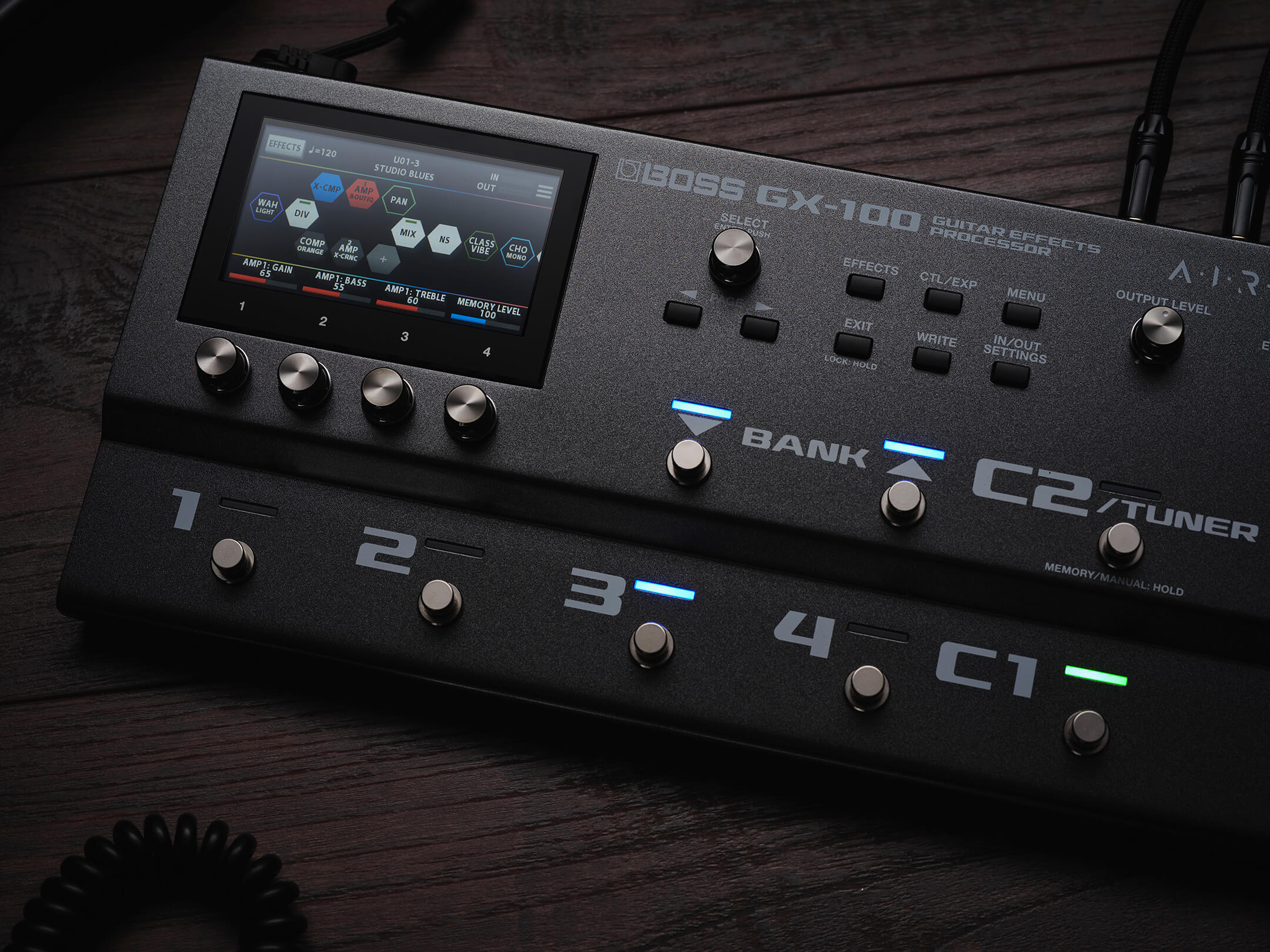
Behringer’s lawsuit against Boss, claiming that a polyphonic tuner found within Boss multi-effects is a “knock-off” of the TC Electronic Polytune, has been dismissed on the grounds of the ineligibility of the original patent, which was found to be too abstract.
Behringer and TC Electronic’s parent company Empower Tribe had brought the suit against Boss parent company Roland last year, alleging that the polyphonic tuning mode in Boss’ GT‑1000, GT‑1000CORE, GX‑100, and GX‑10 multi-effects pedals infringed on its patent for the system used in the TC Electronic PolyTune.
In response, Boss filed a motion to dismiss, mostly on the basis that Behringer’s patent does not actually demonstrate the required “inventive concept”. Under US patent law, you can’t patent abstract concepts or physical phenomena, nor can you simply apply existing hardware to a generic problem and patent the application. Behringer’s defence of the PolyTune’s patent stated that, although it used “generic computer components”, the “inventive concept” was found in the “non-conventional and non-generic arrangement of known, conventional pieces” – specifically in creating a mode-dependent display for a user-selectable two-mode monophonic/polyphonic tuner.
However, the court sided with Boss, and its motion to dismiss has now been granted, and the case has been dismissed with prejudice. (This doesn’t bar Behringer from attempting to re-open the case, but it will have to find a different argument if it wants to do so). The court’s decision was that “nothing in the claim limitations, considered individually and together as a whole, is sufficient to transform the [Empower/Behringer’s] Asserted Claims into a patent-eligible invention”, and Boss was successful in arguing that these claims “only describe generic computer components”.
The judge also found that it would be “futile” to grant the plaintiffs leave to amend their arguments, as patent ineligibility is “a defect that cannot be cured by amendment” – meaning Behringer does not get the chance to immediately re-assert this case, as the patent underlying its suit is not enforceable. While Behringer may still technically hold the patent for now, it’s unlikely it will ever be able to use it in a similar case, given the precedent set here.
The dismissal marks a relatively major loss for Behringer, which had already courted controversy by filing the suit in the first place. Many in the wider gear community were quick to point to Behringer’s controversial approach to trade dress. Recently this includes a legal clash with Klon, LLC, over Behringer’s Klon Centaur copy that almost directly replicated the pedal’s artwork, and shared its name. Behringer subsequently changed the name of its pedal from “Centaur” to “Zentara”, along with a number of visual design elements. The lawsuit was ultimately dismissed.
This is also not the first time Boss and Behringer have clashed in the courts – Boss sued Behringer in 2005 over the appearance of many of its effects pedals. The suit was ultimately settled under confidential terms.
The post Judge dismisses Behringer’s patent lawsuit against Boss over tuning pedals appeared first on Guitar.com | All Things Guitar.
How Josie and the Pussycats became one of the greatest guitar soundtracks of the 2000s – and why it cost over $2 million to make

You might be familiar with the film, Josie and the Pussycats (loosely based on the Archie comic) that follows a trio of friends from Riverdale who take their girl band harmonies and hard-charging riffs from a local bowling alley to the bright lights of New York City.
Despite its stellar cast of teen movie breakouts – She’s All That star Rachael Leigh Cook as Josie McCoy, ably supported by American Pie’s Tara Reid, Rosario Dawson, and even Alan Cumming as dastardly MegaRecords label exec Wyatt Frame – the movie flopped at the box office. But, a quarter of a century later, it’s often hailed as a cult classic. Whether you regard it as a subversively prescient commentary on the rapid commercialisation of rock music that occurred around the turn of the Millennium, or a fun teen comedy about three friends in a band (it’s kinda both to be honest), there’s one thing that’s undeniable – that soundtrack absolutely rips.
What you might be less familiar with is the fact that those powerful pop-punk numbers that brought the energy and starry-eyed ambition of Josie and her Pussycats, bassist Valerie Brown, and drummer Melody Valentine, were initially slated to sound like something else entirely.
As film songwriter and co-producer Dave Gibbs of Gigolo Aunts explains from his home in Boston, “My theory was the directors (Henry Elfont and Deborah Kaplan) were hoping for a bit of that Babyface, L.A. Reid magic. More dance pop, with an urban flair.”
Babyface’s involvement as the film’s executive music producer made perfect sense on paper. Having helped define the sound of TLC, he knew exactly how to craft modern girl-group pop: the trio’s third studio album, Fanmail, won Best R&B album at the 1999 Grammy Awards, with nods to Edmonds’ own guitar playing in that iconic plucked acoustic opening of standout single Unpretty. The trouble was that the soundtrack’s polished early recordings didn’t match what audiences were seeing onscreen.
 Josie and the Pussycats. Image: Universal Studios/Getty Images
Guitars & Marshall Stacks
After our call, Gibbs shares early demos of You’re A Star and Spin Around, both of which appear on the soundtrack. The pace is immediately slower, the guitar slashes almost languid. Josie’s scrappy start-up vocals from the film (this version performed by Grammy-award winning songwriter Tracy Bonham) are surprisingly crystalline without a hint of a snarl or affliction. Something had to shift.
Enter Letters to Cleo co-founder and vocalist, Kay Hanley. “By the time I got there, they had let the original Josie go, because Rachael was lip syncing to her voice, and people were just like, ‘Oh, there’s no way that voice is coming out of Rachael’s mouth.’”
Hanley had arrived on set for the Pussycats’ backing vocal duties alongside her then-husband and Cleo guitarist Michael Eisenstein. The pair travelled from Boston to West Hollywood, bundling all their belongings into a rental car alongside their 11-month-old daughter, Zoe Mabel. After months of back-and-forth to California, Hanley secured the lead role for the soundtrack, but capturing the trio’s fast and frenetic fretwork on record was still up for debate.
Buoyed by her position alongside the core production team, Hanley piped up about her bandmate taking a shot. Eisenstein remembers the moment clearly. “I put a pass down with this set doubling combination I used at the time through a Vox AC30 Top Boost and Mesa/Boogie Dual Rectifier Trem-O-Verb. A guy who was never introduced to me was sitting in the corner of the room. We got through that first pass, and he goes, ‘Yeah, have him redo all the songs!’ He was the co-director of the film, Harry Elfont.”
 Kay Hanley performs at the Josie and the Pussycats reunion. Image: Press
That Thing You Do
Yet Letters to Cleo weren’t the only alternative-rock recruits drafted into the project. “At the time, I was living with Adam Duritz,” recalls Gibbs. “Adam lived in Beverly Hills above Sharon Stone!” The Counting Crows’ frontman’s apartment became a haven for Californian creatives during the late 90s, including yet-to-be-discovered film costume designer Alex Bovaird Sprouse (The White Lotus).
“She and a bunch of people were in the hot tub,” says Gibbs, casting his mind back. “Adam and I came down and played Merry Go Round, the long-lost power pop song. Somewhere there’s a recording of Adam and me doing the songs, on piano with his vocals. It sounds like an acoustic Counting Crows record.”
A key song that wasn’t lost to the archives came from one of pop music’s greatest collaborators, the late, great Adam Schlesinger of Fountains of Wayne. Who better to craft the staccato punch of Josie’s imagined single, complete with Thin Lizzy-style octave guitar solo, than the man who effortlessly spun chart-topping earworms for a living? Gibbs had already pitted himself against Schlesinger for songwriting credits in 1996’s That Thing You Do, but Pretend To Be Nice is a masterclass in pop dynamics and unquestionably catchy, crowd sing-alongs, as Gibbs concedes. “When he gave me the demo of Pretend To Be Nice, I was like, ‘Oh, my God!’”
 Dave Gibbs. Image: Press
A Whole Lotta Money
Enlisting big names like Babyface and Schlesinger, alongside countless auditions and re-records, didn’t come cheap, though, as Eisenstein shares. “They had blasted through $2 million of soundtrack money and had five songs to show for it.” Gibbs likens the split to an old school vinyl track listing: Side A was recorded at Babyface’s legendary Brandon Way Studios. Side B saw the Boston-based heart of the band returning home. “Half that record I did in LA, the other half got finished in Q Division in Boston with original Cleo producer, Mike Dineen, and Schlesinger,” explains Gibbs.
Faced with an empty B-side, Hanley and Eisenstein stepped up with their alt-rock chops to contribute the chugging charge of Shapeshifter with that standout slam from Hanley, as she spits, “If you think that’s cool, whatever dude!” For Eisenstein, the second half of the soundtrack benefited from recent session work. “Not even a year prior, I’d performed on Nina Gordon’s (Veruca Salt) solo album with Bob Rock. I learned a lot, so I had my Cleo tricks and my Bob Rock bag of tricks.” Despite the wildly different circumstances, the guitarist believes the output proves it’s all about the songwriters behind the tracks. “Those two groups of Josie songs… different producer, different city. It shows you how much it really is about the musicians and not so much the gear and the studio.”
 Michael Eisenstein. Image: Josh Pickering
Rock’s Not Dead
The soundtrack’s influence extended far beyond its original release. In 2017, The New York Times published Rock’s Not Dead, It’s Ruled by Women, a round-table discussion featuring some of the most vital voices in contemporary guitar music. Among them was Speedy Ortiz’s Sadie Dupuis, who singled out Josie and the Pussycats as a formative influence. “Am I the only one who can speak to the importance of Josie and the Pussycats?” she asked. “Because that was the game changer!”
She wasn’t alone. In an interview with The Fader, Mitski also reflected on how the fictional trio shaped her early ideas about performing. “The little gestures and facial expressions they do in those music videos,” she recalled. “I’d be like, ‘Oh, that’s how you do it! That’s how you hold a guitar!’”
While the movie underperformed, grossing less than its production budget, the soundtrack has since become a gateway record for a generation of women discovering guitar music. In many ways, its legacy stretches far beyond the film itself.
The songs gave aspiring musicians a vision of what a guitar band could look and sound like, while finally earning Kay Hanley recognition for a performance that had spent years hiding behind a fictional alter ego. “It’s overwhelming to me to imagine that people listen to something that I did, especially young women, and decide, ‘Oh, I want to do that,’” she says.
Don’t You Know These Kitties Rule
That legacy was impossible to miss when the cast, directors, and musicians reunited for a sold-out screening at Los Angeles’ Ace Hotel in 2017 to celebrate the soundtrack’s long-awaited vinyl release. For Eisenstein, the scale of the event came as a shock.
“People travelled in for it,” he remembers. “After soundcheck, we went to get dinner sitting in this outdoor cafe, and we started seeing people show up, with the ears on and the outfits, lining up. I was like, ‘Oh, damn, this is big!’”
During the performance, the audience sang every word back to the band. “That screening night crowd was one of the most enthusiastic audiences I’ve ever played for,” he says. “During the ballad (You Don’t See Me), volume of the band and the audience was equal.”
Because this cult classic shouldn’t just be remembered for its sharp satire or killer soundtrack, it’s also a heartfelt love letter to fan culture. And even with a fictional band like Josie and the Pussycats, there’s no denying that the love and spirit behind the music was real all along.
 Michael Eisenstein and Kay Hanley onstage at Brooklyn Made. Image: Press
Gear For Cats
The varied gear that was used by guitarists Eisenstein and Gibbs to record the legendary Josie and The Pussycats OST
Mike Eisenstein
- Gibson Les Paul Junior
- Gibson Les Paul Special
- Fender Telecaster
- Vox AC30 Top Boost
- Mesa/Boogie Dual Rectifier Trem-O-Verb
- Line 6 Echo Pro rack delay
Dave Gibbs
- Gibson J-185 (later stolen from the film set)
- 1964 Gibson J-45
- Fender Telecaster
- Höfner-style bass
- Fender Deluxe amp
The post How Josie and the Pussycats became one of the greatest guitar soundtracks of the 2000s – and why it cost over $2 million to make appeared first on Guitar.com | All Things Guitar.
Ernie Ball has acquired Source Audio in an effort to expand into premium effects

Industry-leading guitar string maker Ernie Ball has entered into a “definitive agreement” to acquire Massachusetts-based effects pedal company Source Audio.
Financial terms of the agreement have not been publicly disclosed, but the acquisition has been pursued in order to give Ernie Ball an “immediate and credible presence in the premium effects category”, while giving Source Audio access to Ernie Ball’s vast global distribution network, artist relationships, manufacturing discipline and more.
Founded in 2006 – by engineers who had previously worked with Analog Devices and Kurzweil – Source Audio has become a big player in the premium effects market, with top-level players including David Gilmour, U2, David Bowie, John Mayer, King Crimson and loads more incorporating its pedals on their ‘boards.
We were lucky enough to get our hands on one of the brand’s latest units, the Encounter delay/reverb pedal, earlier this year, and couldn’t help but give it a 9/10 in our review for its stellar build quality and brilliant sounds.
Despite the acquisition, Source Audio will continue to operate as its own brand, with existing products “expected to remain available”, and immediate focus on “continuity for customers, dealers, distributors, artists and partners”.
“Source Audio has built one of the most creative and respected effects platforms in our industry,” says Ernie Ball CEO Brian Ball. “What excites me isn’t just the technology; it’s the way their pedals inspire musicians to find sounds they didn’t know they were looking for. Ernie Ball has always existed to help artists create, and Source Audio gives us a powerful new way to do exactly that.”
“We’re not acquiring Source Audio to change what makes it special,” Ball continued. “We’re acquiring Source Audio because we believe in what it already is, and because we believe Ernie Ball can put that innovation in the hands of more players than ever before.”
“Source Audio has always been driven by innovation and the desire to give musicians new ways to create,” says Roger Smith, CEO and Co-Founder of Source Audio. “From the beginning, our goal has been to combine world-class sound design with powerful technology in a way that inspires players. Ernie Ball understands musicians, artists, and the culture of guitar in a way very few companies do, and that alignment is what makes this such an exciting next chapter.”
“Ernie Ball gives Source Audio the scale, support, and reach to keep growing while preserving the spirit of what we built,” Smith added. “I am confident this is the right home for the brand, the products, the technology, and the community of musicians who have supported us from the start.”
The post Ernie Ball has acquired Source Audio in an effort to expand into premium effects appeared first on Guitar.com | All Things Guitar.
Country star Eric Church launches new whiskey made using maple tonewood offcuts from Gibson guitars – oh, and a brand-new signature Hummingbird, too

Epiphone has teamed up with American Grammy-nominated singer-songwriter and country artist Eric Church on a limited-edition Inspired by Gibson version of his prized Gibson Hummingbird, which has become a staple of his live shows.
Blending “iconic square-shoulder heritage” with “stage-forward aesthetics and modern performance detail”, the Epiphone Inspired by Gibson Eric Church Hummingbird Dark is built to Church’s exacting specifications, boasting a solid Sitka spruce top with moody darkened accents, plus layered mahogany back and sides for warmth, punch, and focused midrange.
Completing the darkened aesthetics is a black binding framing the top and back, as well as a custom Hummingbird Dark pickguard.
 Credit: Epiphone/Gibson
Eric Church needs his guitar to both sound good and feel comfortable when playing long sets, so his new signature model features a tapered body, from 4” to 3” at the neck joint. This keeps the guitar’s tone substantial and resonant, while improving ergonomics for superior comfort.
Meanwhile, the guitar sports a rounded C mahogany neck and rosewood fingerboard with grey pearloid parallelogram inlays, a Graph Tech nut and saddle, and nickel Grover tuners.
“For me, a great guitar is about expression – finding something honest and putting it out into the world,” says Church. “We’ve been working on this Epiphone Hummingbird Dark, and it’s been with me out on the road for the past two years, part of that journey every single night.
“It’s where songs take shape, where ideas turn into something real. I’m excited for other players to get their hands on it and see where it leads them, because that’s what this is all about – finding your voice and having the right partner to help you say it.”
 Credit: Epiphone/Gibson
Perhaps even cooler though, is that the launch is accompanied by a new whiskey under Eric Church’s own whiskey brand, JYPSI. Tonewood is a limited-edition whiskey developed by JYPSI in collaboration with Gibson, incorporating maple tonewood offcuts from Gibson guitar production into the finishing process.
 Credit: Epiphone/Gibson
“The wood is only wood until it arrives in a master’s hands – that rule applies to distillers, luthiers, and songwriters,” continues Church. “I’m excited to see what song this collaboration between world-class masters will write.”
The whiskey comes in two varieties: Tonewood: Vol. 1, a 109-proof whiskey built from older whiskey stocks, including a 20-year-old straight bourbon and 14-year-old whiskey from a bourbon mash bill; and the 103-proof Tonewood: The Collective, which offers a “lighter, more lifted expression”.
The former is priced at $799, and comes in a custom Gibson case inspired by Gibson’s classic hardshell cases, along with a co-branded Gibson guitar strap and two JYPSI whiskey glasses, while the latter is $199, and comes in a Hummingbird-inspired design for display or gifting. A portion of the proceeds from each whiskey sale will go to Gibson Gives – the guitar giant’s philanthropic organisation.
Back to the guitar now… the Epiphone Inspired by Gibson Eric Church Hummingbird Dark is priced at £699/$799.
Get it now at Epiphone.
 Credit: Epiphone/Gibson
The post Country star Eric Church launches new whiskey made using maple tonewood offcuts from Gibson guitars – oh, and a brand-new signature Hummingbird, too appeared first on Guitar.com | All Things Guitar.
“The most powerful delay pedal on the market”: Meet the Strymon TimeLine MX, the next generation of the king of digital delays

For 15 years, the Strymon TimeLine has staked its claim as the king of digital delay pedals. The stompbox first launched at the 2011 NAMM Show, and has found its way onto countless pedalboards ever since, with guitarists touting its vast array of delay algorithms, onboard 30-second looper and in-depth customisability.
But after those 15 years, it’s high time for an upgrade, and Strymon has delivered the goods with the new TimeLine MX, bringing a number of improvements to an already widely-loved design.
“Full of fresh inspiration”, the Strymon TimeLine MX introduces new Oil Can, Spectral, Drum and Multitap delay engines, and even a new reverb engine, meaning the unit can now serve as a delay-plus-reverb pedal, too.
 Credit: Strymon
Another significant improvement comes with the pedal’s looping capabilities; while the original TimeLine featured a 30-second looper, the new TimeLine MX ups that to five whole minutes worth of loop time.
Strymon calls the TimeLine MX the “most powerful delay pedal on the market”. Let’s take a closer look at what’s new and upgraded…
Strymon TimeLine vs TimeLine MX – what’s new?
At its core, the MX version features a more powerful processor (as you’d expect to handle all the upgraded and therefore more demanding features). Where the original was powered by a single 266 MHz SHARC DSP processor, the new model is loaded with a tri-core 800 MHz ARM chip, instead.
As stated, there are four new delay engines not previously found in the original TimeLine. Oil Can for vintage warble, Spectral for Strymon’s take on granular synthesis, Drum for complex and rhythmic delays, and Multitap for further complex delays and textural reverbs. The TimeLine MX also allows you to double up and use two delay engines at the same time, where you couldn’t with the original TimeLine.
There’s also a new reverb engine, too, allowing you to play around with everything from intimate room sounds to massive, seemingly endless atmospheric delays.
 Credit: Strymon
Elsewhere, looper time has been increased 10-fold, no doubt a welcome change for guitarists looking to lay down longer self-accompaniments without interruption. This is accompanied by a new one-button looper mode for easier access.
In addition, there’s a host of I/O improvements, plus a new Audio Pan control for shifting your signal freely across the stereo field, plus an improved OLED display screen, where the original had an LED display.
In terms of size, the TimeLine MX is marginally bigger than the TimeLine, but not by much. Where the original measured up 6.75” by 5.1”, the TimeLine MX measures 7” by 5”.
Strymon TimeLine MX – pricing & availability
The TimeLine MX is available now priced at $679, directly from Strymon and from authorised retailers.
For more information and to get yours, head to Strymon.
The post “The most powerful delay pedal on the market”: Meet the Strymon TimeLine MX, the next generation of the king of digital delays appeared first on Guitar.com | All Things Guitar.
The best acoustic and electric guitar strings for folk, rock, pop and more

Is there anything more satisfying than putting a new set of strings onto your guitar and hearing its tone zing back to life?
Strings lose their integrity, tone and playability over time, and change yours around at least once every two or three months, or after an intensive period of playing. Hard strummers might need to restring more frequently – although you can get coated guitar strings that last longer (but cost more).
There are differences in the materials, construction and gauges (thicknesses) of guitar string sets, so the best guitar strings for one guitarist might sound and play wrong for another musician. Most of us find our way to a go-to guitar strings manufacturer and model, but it’s sometimes worth experimenting with alternative options as your taste and abilities evolve.
Think about playing style and musical genre. Heavier-gauge strings that sound good when down-tuned are often used for metal, while smooth-sounding flat-wound strings are a great pick for jazz, and similar subtleties can apply to every guitarist.
Assuming you know how to restring a guitar, getting a new set of strings may well be the quickest and cheapest way to make your instrument sound better. You can find our acoustic guitar strings recommendations below – and if you’re looking for electric guitar strings, don’t fret, as these are further down the page.
The best acoustic strings at a glance:
- Ernie Ball Earthwood 80/20 Bronze Alloy
- Ernie Ball Aluminium Bronze
- Ernie Ball Paradigm Phosphor Bronze
- DAddario Phosphor Bronze
- D’Addario Nickel Bronze
- Elixir 80/20 Bronze, 12-String
- Martin LUXE Kovar
- Jim Dunlop Zakk Wylde Phosphor Bronze
- La Bella Folk Singer Golden Alloy & Black Nylon
- Rotosound Jumbo King Phosphor Bronze
The best electric strings at a glance:
- Ernie Ball Hybrid Slinky
- Elixir Nanoweb Nickel Wound
- D’Addario NYXL
- Jim Dunlop ‘Rev Willy’s’ Billy Gibbons 7-38
- La Bella Pure Vintage Pure Nickel
- Stringjoy Signatures
- Fender Bullets Jimi Hendrix Voodoo Child Nickel 10-38
- Thomastik-Infeld George Benson Flatwound 14-55
- Ernie Ball Slinky Skinny Top Heavy Bottom
- DR Strings Drop-Down Tuning DDT-13
- Why you can trust Guitar.com
Ernie Ball Earthwood 80/20 Bronze Alloy
These widely-loved, mellow-sounding strings from Ernie Ball launched over half a century ago, and they’re still up there with the best. Their combination of copper (80%) and zinc (20%) gives plenty of brightness without overpowering the tonal qualities of your guitar’s wood. Jimmy Page and Frank Turner are among the many guitarists who use Earthwood strings, so you’ll be in decent company.
Ernie Ball Aluminium Bronze
Distinguishable by their excellent clarity (and acoustically distinguishable because of it), these strings are ideal for buskers and acoustic performers who want every trill and plucked note to stand out. While they’re great for playing loud, we’d argue that the best thing about these strings is how they emphasise fine details.
Ernie Ball Paradigm Phosphor Bronze
Tired of restringing? Designed with longevity in mind, this set of strings is treated to limit corrosion and grime buildup. If you’d like to change your strings less often without necessarily sacrificing tone and volume, they’d be a smart choice. High-durability strings haven’t always sounded great, but these ones come pleasingly close to Ernie Ball’s Earthwood tone.
D’Addario Phosphor Bronze
If you’re a D’Addario diehard, you’re probably already sold on the sound of phosphor bronze strings – one of the brand’s innovations dating back to the 1970s. In this set, the material sounds as zingy and bright as ever. One of the great things about D’Addario strings is that the ball-ends are colour-coded for easy restringing.
D’Addario Nickel Bronze
Something a little different for the tonally adventurous, these D’Addario strings let the character of your guitar’s wood sing (or mumble, depending on the guitar). They’re not especially bright and perhaps not best suited for busking, but their gentler sound and interesting harmonic qualities are a treat for the inquisitive ear.
Elixir 80/20 Bronze, 12-String
These are our pick for 12-string acoustic guitarists, with a classic 80/20 bronze wrap and a fairly light gauge that goes easy on the guitar’s neck (you try having twelve metal strings tensioned across you all at once!) Those of you who are familiar with the epic chore of restringing a 12-string will be pleased to hear that the Polyweb 80/20 Bronze are long-lasting, as well as lush-sounding.
Martin LUXE Kovar
Has the name of these strings adequately conveyed a sense of luxury? Featuring a unique nickel and cobalt alloy, the LUXE Kovar stand out silvery against the fretboard, with powerful lows and mids. A different mix of metals means a different tone, and these are decidedly steelier-sounding than the average acoustic string.
Dunlop Zakk Wylde Phosphor Bronze
If you’ve heard Zakk Wylde’s acoustic rendition of “Voodoo Child”, you’ll be well aware that an acoustic guitar can be a rock guitar, in the right hands and with the right strings. His full-sounding, hard-wearing signature set is great for assertive players. As Wylde himself puts it, “they can take a beating”.
La Bella Folk Singer Golden Alloy & Black Nylon
Warm and gentle, this folksy set combines golden alloy strings with nylon trebles. It’s a great compromise for acoustic guitarists who like nylon strings but don’t want to go classical. Nylon is gentler on the fingertips than the alloys typically used in acoustic guitar strings, so these could be good for beginners too.
Rotosound Jumbo King Phosphor Bronze
Favoured by the merry old likes of Noel Gallagher and Jarvis Cocker, UK-based Rotosound makes some of the brightest strings in the biz. The phosphor bronze Jumbo Kings deliver massive resonance and detail, perfect for expressive fingerpicking. And as a nice side benefit, they’re very approachably priced.
Ernie Ball Hybrid Slinky
There are several excellent options in the Ernie Ball Slinky range, but these strings might well be the best. They’re called ‘Hybrid’ because the set is a combination of heavy-ish lower strings of the sorts that you’d typically find in a 10-gauge set, with relatively light higher strings. As a result, they’ll give you some low-end oomph and plenty of playability, especially if you’re into bends. The compiler of this guide uses them for post-punk and rock.
Elixir Nanoweb Nickel Wound
For vibrant tone that lasts and lasts, these coated Elixir strings are hard to beat. They cost a little extra, but their coating helps them to stay in good nick for several times the lifespan of your average string – and their clear, bright tone is a crowd-pleaser too. A side benefit to the coating is that it gives the strings a slick feel which lends itself well to slides or quickly changing hand positions.
D’Addario NYXL
If ultra-bright tone is the treasure you seek – not just straight after restringing, but for weeks or months – then these D’Addario strings could be your perfect jewel. They’re famously strong and long-lasting, but that strength comes from the carbon steel core within, rather than from a coating. Blues players and desert rockers take note: they have impressive mid-range power.
Dunlop ‘Rev Willy’s’ Billy Gibbons 7-38
Billy Gibbons’ stonking sounds are built on surprisingly slender strings, and this signature set from Jim Dunlop captures the ZZ Top legend’s particular brand of moonshine with light-gauge playability and brash tone. They’re worth trying for their bendability alone.
La Bella Pure Vintage Pure Nickel
Vintage electric guitar strings are absolutely a thing, and this set from New York-based La Bella is among the most faithful to its roots. Family-run for over a century, this brand makes strings using processes and machinery harking back to the 1950s and 1960s – and you can hear it.
Stringjoy Signatures
At a little over a decade old, Stringjoy is a young whippersnapper in the guitar strings trade. As well as making high-quality strings, this brand has made its name by offering interesting sets of gauges, as with this set featuring a chunky 0.48 low E.
Fender Bullets Jimi Hendrix Voodoo Child Nickel 10-38
Who among us would not wish to sound like Hendrix? This Fender set seeks to make the rainy daydream somewhat more plausible – at least tonally – with a light-gauge 0.38 low E that’s unusually bend-friendly and heavy-weight higher strings, as Hendrix preferred. Pair them with a wah and your favourite fuzz pedal.
Thomastik-Infeld George Benson Flatwound 14-55
If you’re a jazz head willing to invest in the best, then you could hardly do better than these Viennese George Benson signature strings. The gauge will feel on the heavy side for some guitarists, but it’ll help crisply picked melodies and crunchy chords sing. With a flat-wound construction that’s becoming quite a rarity, they feel suitably smooth to play.
Ernie Ball Slinky Skinny Top Heavy Bottom
A lot of guitarists swear by these Skinny Top Heavy Bottom Strings, but they’re arguably at their best when used to play metal or hard rock, where a heavy-gauge low E is needed for richer down-tuned sounds, and where dexterous lead playing is a must. As with all Ernie Ball Slinky strings, they feel easy to play and sound lively.
DR Strings Drop-Down Tuning DDT-13
For down tunings that go deeper than a drop D, a specially designed set of strings can make a huge difference to your guitar’s tone and musicality. This heavy-gauge set from DR Strings can handle drop C, drop B or even drop A tunings.
Why You Can Trust Us
Every year, Guitar.com reviews a huge variety of new products – from the biggest launches to cool boutique effects – and our expert guitar reviewers have decades of collective experience, having played everything from Gibson ’59 Les Pauls to the cheapest Squiers.
That means that when you click on a Guitar.com buyer’s guide, you’re getting the benefit of all that experience to help you make the best buying decision for you. What’s more, every guide written on Guitar.com was put together by a guitar obsessive just like you. You can trust that every product recommended in those guides is something that we’d be happy to have in our own rigs.
The post The best acoustic and electric guitar strings for folk, rock, pop and more appeared first on Guitar.com | All Things Guitar.
Jim Root’s signature Telecaster is now available in Shoreline Gold – here are some images to whet your appetite…

Jim Root’s signature Fender Telecaster is one of the most eye-catching Tele’s in the brand’s lineup, notable for flipping the script and turning the timeless electric guitar design into a metal-ready machine.
It’s developed something of a cult following since its launch in 2010, and remains a key instrument in his Slipknot live arsenal. But after 16 years, it’s time for a reskin…
Enter the Limited Edition Jim Root Telecaster, now boasting a striking Shoreline Gold finish. It’s a slight deviation from the monochrome colour scheme Root’s Fender signature models usually adopt – which also include a Stratocaster and a Jazzmaster – but we definitely dig it…
 Credit: Fender
Beneath its Shoreline Gold makeover, the guitar’s specs remain the same, including a mahogany body, maple neck with a 12”-radius ebony fingerboard with 22 jumbo frets, active EMG 60 and 81 humbuckers with a single volume control and three-way switch, a string-through-body hardtrail bridge and sleek black hardware.
“Fender guitars have been a cornerstone of my rig since the earliest days of Slipknot and continue to be today,” says Jim Root. “Seeing my signature model in Shoreline Gold gives it a completely fresh character. It’s the same guitar I’ve relied on for more than two decades, but this new finish makes it feel exciting all over again.”
 Credit: Fender
Earlier this year, Jim Root celebrated the timelessness of the Telecaster as a design, likening the classic shape to sunglasses, of all things…
“If somebody tells you to do something, you’re gonna do the opposite,” he said, referring to his decision to make a signature Telecaster as a metal guitarist all those years ago.
“Everybody thought I should be coming out with some pointy metal guitar that’s got 12 points or whatever. No, how about we just do a classic slab iconic guitar? Guitars, in my opinion, are like sunglasses. The classics never go out of style. They’ll always be there. People will make their version of it, but there’s only one Fender Telecaster.”
 Credit: Fender
2026 celebrates 75 years of the Telecaster, following the original’s launch back in 1951. In March, the brand unveiled a range of new 75th Anniversary Teles, comprising five models across the brand’s Player II, American Professional and American Ultra II ranges, and even including a classic Cabronita model.
But back to Jim Root’s new Tele… Price-wise the new Shoreline Gold edition clocks in at £1,599.
You can learn more at Fender.
 Credit: Fender
The post Jim Root’s signature Telecaster is now available in Shoreline Gold – here are some images to whet your appetite… appeared first on Guitar.com | All Things Guitar.
I got my first real six-string… bought it at the Fender Cafe Shimokitazawa

Word on the grapevine is that those were the original lyrics Bryan Adams wrote for Summer of ’69, but due to a last minute lyric change, the concept of a Fender Cafe became lost in the pages of what could have been. Until now…
That’s right, Fender has just dipped its toes into the bistro business, opening up a brand new cafe in Japan – and the menu is full of guitar-themed items, from Telecaster Maple Lattes to Six-String Burgers.
While Fender’s Tokyo store currently has an in-shop cafe, this is the first time Fender has opened a fully fledged cafe in its own right. Situated in the Shimokitazawa neighbourhood, a trendy, creative area known for its thriving music scene, the Fender Cafe joins the area’s selection of basement jazz bars and quirky cafes.
While there wont be a selection of guitars to peruse, the Fender Cafe promises to offer a more guitar-centric flavour to the eccentric district regardless. Visually, there’s nothing too guitar-y about it; the cafe simply looks like a modern, modern version of Edward Hopper’s famous Nighthawks cafe painting, complete with huge glass windows and almost brutalist, exposed cement walls.
But there are glimmers of Fender sprinkled across the stylish joint. The coffee machines are branded with Fender Cafe, while stools are plectrum-shaped and branded in ode to the Fender Heavy pick. There’s also a 1969 rosewood Tele mounted on a wall for good measure, considering it was the guitar that inspired Fender to set up the cafe in the first place.
“The new store adopts a space design inspired by the 1969 Rosewood Telecaster that has left its name in music history,” Fender Japan explains [via Guitar World]. “Fender combines the spirit of rock and roll with California coffee culture with Japanese sensibilities, craftsmanship, and subtle hospitality.”
“Fender Cafe Shimokitazawa aims to blend in with nature’s daily routine in this city and create a community place where music-loving people can connect at ease,” Fender Japan adds. “Musicians, community people, live house attendees, and musicians.”
The menu is also where things feel a little more Fender. We’re talking Stratocaster rose lattes, Six Strings Burgers, Chicken Overdrive Rice, and even a special coffee bean blend, First Set.
The post I got my first real six-string… bought it at the Fender Cafe Shimokitazawa appeared first on Guitar.com | All Things Guitar.
Megadeth are currently on their last tour ever after 43 years – but Dave Mustaine is teasing another “f**king massive” announcement

As we all know, Megadeth are finally calling it a day after 43 years of thrashing. However, frontman Dave Mustaine seems to have one final card up his sleeve…
In an interview with Turkey’s Apaçık Radyo, Mustaine revealed that there’s a “fucking massive” Megadeth announcement on the horizon. With plans to reveal it later this month, Mustaine can hardly contain his excitement, teasing: “It’s out of this world, let me say it like that… I gave you a clue right there!” [via Blabbermouth]
For now, all we can do is speculate. However, last November, Mustaine did suggest a rather “out of this world” goal in conversation with Metal Hammer; when discussing his ultimate dream for the farewell tour, Mustaine said that he would love to see Megadeth out amongst the stars. “I hope we’ll be playing up in space,” he said. “I think that will be a really fitting climax.”
“And I’m not talking about on the side of a vomit comet!” he insisted. “A gig on the moon – a full moon landing. That would be cool!”
Of course, there’s no guarantee as to what the plan really is. While we are yet to find out if Mustaine is going to be knocking out a space suit, we do, however, have confirmation that he’ll be hopping into a set of swim shorts in the near future.
That’s right, there’s going to be another Megacruise. “We got another Megacruise we’re starting to work on… the Peace Sails cruise,” he reveals.
Back in 2019, Mustaine was unfortunately too ill to join fans on the Megacruise due to his throat cancer diagnosis. This time around, he’s keen to hit the high seas. “[Missing the first cruise] was a real shame for me…” he reflects. “That was the beginning of the evidence that I was developing [throat] cancer. And so I had to stay home.”
Megadeth’s Farewell tour has kicked off without a hitch, with many fans lapping up the band’s cover of Metallica’s Ride The Lightning in particular.
For more info on the band’s final world tour, head to Megadeth’s official website.
The post Megadeth are currently on their last tour ever after 43 years – but Dave Mustaine is teasing another “f**king massive” announcement appeared first on Guitar.com | All Things Guitar.
“We lost your guitar… deal with it”: Johnny Marr blasts FedEx for losing Ella Feingold’s guitar
![[L-R] Johnny Marr and Ella Feingold](https://guitar.com/wp-content/uploads/2026/07/Johnny-Marr-Ella-Feingold-hero@2000x1500.jpg)
Smiths legend Johnny Marr has issued a dig at FedEx, after the shipping company allegedly lost a guitar belonging to Grammy-winning guitarist Ella Feingold.
Feingold recently revealed that one of her guitars had gone missing in transit, and quickly got in touch with FedEx to find out what had happened. In a screenshot shared to social media thereafter, it seems the company was less than helpful in locating the instrument.
“I completely understand where you’re coming from and I sincerely apologise for the trouble and frustration this situation has caused,” read a message to Feingold from FedEx.
“The package was marked as lost only after the investigation team conducted a thorough search and ultimately determined that they were unable to locate it. Thank you.”
Johnny Marr reposted the screenshot with a dig of his own at FedEx: “We lost your guitar… Deal with it,” he wrote.
‘We lost your guitar…deal with it’ @FedEx https://t.co/RzkE4oTVxH
— Johnny Marr (@Johnny_Marr) July 6, 2026
Afterwards, Feingold took to Instagram to vent her frustration at the seemingly automated reply and limited avenues she was offered to try and track down her guitar.
“FedEx loses guitars,” she wrote. “The real disappointing thing is how you never get to speak to a human being, just an automated AI copy and paste response for the last week. No communication and no humanity involved. Like, how do you lose a guitar that’s literally scanned onto a truck and supposed to show up on my front door [saying] it’s arriving within a half an hour to the guitar just being lost forever.
“All I get is automated messages and then asking me to fill out a survey if I’m pleased…”
Johnny Marr followed up again, writing: “So FedEx just ‘lose’ guitars now? Belonging to renowned guitarist Ella Feingold, too. And one that was scanned and reported to be on the truck? How does that happen? Shocking. You need to DM her and find her guitar.”
At the time of writing, it doesn’t appear that Feingold’s guitar has been found, but hopefully with the pressure placed by high-profile musicians like Johnny Marr, the instrument will be returned to her soon.
Unfortunately, this is far from the first time a company involved in transportation has treated guitars without the care they deserve.
Back in March, a viral video sparked outrage showing an airport baggage handler throwing guitar cases on the tarmac. And a number of other artists have faced damage to their instruments over the years following flights, too, including Emily Wolfe, Madi Diaz, Pete Thorn, and more.
The post “We lost your guitar… deal with it”: Johnny Marr blasts FedEx for losing Ella Feingold’s guitar appeared first on Guitar.com | All Things Guitar.
“Sometimes you’re just naturally called to things”: Samantha Fish explains her love of the Gibson SG – and why it’s the most “versatile” guitar in her arsenal

The SG is one of Gibson‘s more beloved, timeless models. Countless iconic guitarists have sang its praises over the years, from Jimi Hendrix to Tony Iommi – and dynamic blues guitarist Samantha Fish is a modern guitar great to sing the guitar’s praises.
In a new interview with Guitarist, the Grammy-nominated Fish explains that her Gibson SG has become her most prized axe in her collection. Her reasoning? It’s the ultimate all-rounder. “I find that the SG is the most versatile guitar in my whole arsenal,” she explains. “Some people might disagree and think, ‘No, it can only sound a certain way.’ But I feel like I can just apply it to a range of songs and I can shape the tone in a way.”
- READ MORE: The Close Up: Muse guitarist Matt Bellamy’s most iconic and beloved guitar, the Manson 007
With the American guitarist’s palette spanning from country rock to bouncy funk, the adaptability of the SG is crucial. “When I first got it, it just felt like me, and I’ve had [the one I’m using live] since 2015,” she says. “I really love this guitar. It feels good in my hands. It’s expressive when I need it to be. I can tame it when I need to… and it looks cool!”
When considering how she first wound up with an SG, Fish isn’t quite so sure. But she is certain there was some influence from Angus Young, Sister Rosetta Tharpe and Derek Trucks, who have all wielded their own SGs over the years.
Though Fish has other beloved guitars in her arsenal – namely her sparkly Gibson Custom ES-335, which sounds so beefy she has to almost “tame” it onstage – the SG will always be her top dog. Even if just for how natural the SG feels to perform with. “It’s my most comfortable guitar,” she adds. “The way the neck feels… I just feel the most comfortable playing it. When I stretch out on solos and everything, it fits my personality.”
Considering how personally Fish is invested in her SG it begs the question… will Fish ever receive a signature SG? We’ve collated a list of artists who deserve their own signature SG in the past, but Fish might be a late addition. Perhaps it could even emulate the look of her personal model, which she explains has been “relic’d [herself] through the sweat and everything, just playing it” without the need of “[taking] any tools to it”.
Fish’s recently released a live version of 2025’s Paper Doll, which was nominated for Best Contemporary Blues Album at this year’s Grammy Awards. Paper Doll (Live) is out now.
The post “Sometimes you’re just naturally called to things”: Samantha Fish explains her love of the Gibson SG – and why it’s the most “versatile” guitar in her arsenal appeared first on Guitar.com | All Things Guitar.
“I told you”: Liam Gallagher nearly predicted the England Mexico result – as Wonderwall once again soundtracks Three Lions win
![Liam Gallagher performing [main], Harry Kane and Jude Bellingham celebrate scoring against Mexico at the 2026 FIFA World Cup [inset]](https://guitar.com/wp-content/uploads/2026/07/Liam-Gallagher-England-news@2000x1500.jpg)
Oasis, Sunday roasts, a cuppa tea… these are but a few staples of the quintessential British experience. With that in mind, it only makes sense that this year’s World Cup has seen the England team celebrating their wins to the sound of Oasis’ Wonderwall – and Liam Gallagher is pretty chuffed about it.
The Three Lions team most recently kicked off a full stadium singalong to Wonderwall following their 3-2 win against Mexico on 6 July, earning them a ticket to the quarter-finals. The celebration was so fierce that it left team captain Harry Kane with a sore throat from singing along too enthusiastically. In a post-match interview with the BBC, Kane apologised to presenter Kelly Somers for his (hilariously) rough voice, explaining: “My voice is gone!”
- READ MORE: The Close Up: Muse guitarist Matt Bellamy’s most iconic and beloved guitar, the Manson 007
As the interview cut back to the BBC team all laughing at Kane’s hoarse voice, Liam Gallagher was quick to hop onto X. “It’s hard work that singing, Harry Kane,” he wrote. “C’mon ENGLAND! C’mon WONDERWALL!”
It’s hard work that singing Harry Kane cmon ENGLAND cmon WONDERWALL
— Liam Gallagher (@liamgallagher) July 6, 2026
The final was also nearly predicted by the Oasis star earlier in the day. While he didn’t quite land the Mexico score, he guessed that England would win with three goals. When a fan pointed it out, Liam simply replied with a smug: “I told you”. Liam was also responding to saddened Mexico fans in his typical sarcastic fashion, joking simply ‘Stop Crying Your Heart Out’.
Stop crying your heart out
— Liam Gallagher (@liamgallagher) July 6, 2026
Another X user insisted that it was “mandatory” to have Oasis flown out if England manage to reach the World Cup final to perform Wonderwall live. “We’ll see… I’m ready,” he wrote.
The Wonderwall singalong also saw a more serious injury on the team; footballer Jordan Henderson attempted to hop over a short wall mid-celebration, unfortunately leading to an injured his wrist – the half wall was the opposite of a “wonderwall”, we suppose.
“He injured his wrist,” England coach Thomas Tuchel told reporters [via NBC news]. “He’s at the moment in the hospital, so it’s a quite serious injury. And it just doesn’t fit to the evening that Jordan is now not with us. I don’t know the procedure, what’s going on. I just did the press, and the doctor told me that he’s in hospital.”
While Liam is clearly loving the England team’s celebration anthem being Wonderwall, his brother, Noel Gallagher, has also been in favour of Wonderwall being England’s unofficial 2026 World Cup anthem. Following the England team’s win 4-2 win against Croatia back in June, Noel told The Sun: “Wonderwall belongs to the people, and it was a magical moment between the people and the players… Best of luck to everyone who’s made the trip out there.”
England are set to play against Norway this Saturday (11 July). If a win is on the cards, we’ll have to see if Wonderwall makes yet another appearance.
The post “I told you”: Liam Gallagher nearly predicted the England Mexico result – as Wonderwall once again soundtracks Three Lions win appeared first on Guitar.com | All Things Guitar.