
Music is the universal language
“Glory to God in the highest heaven, and on earth peace to those on whom his favor rests.” - Luke 2:14
Guitar Lifestyle


The Long Road: Jared James Nichols
Jared James Nichols is one of those artists you like rooting for. I had a chance to meet him several years ago at a Gibson event, and he was as nice and genuine as he seems online.
Twenty twenty-six has been a big year for Jared so far. His No Cover Charge video podcast that he co-hosts with Tyler Larson hit 100,000 Youtube subscribers, which seems like a big accomplishment for a relatively new podcast. He also recently became a Marshall endorsee.
In June, he released his latest album Louder Than Fate, which I have been enjoying. He somehow manages to combine the hard rock music of the 80s and 90s into a blend that sounds of those eras, but also modern at the same time.
Finally, he was also featured in a documentary produced by Gibson TV called The Long Road: Jared James Nichols. The documentary covers how he got started playing guitar near Alpine Valley, Wisconsin up until recording his latest album. I really enjoyed it, and I’m glad to see him getting broader recognition. Check out the documentary:
Listening to Music Every Day
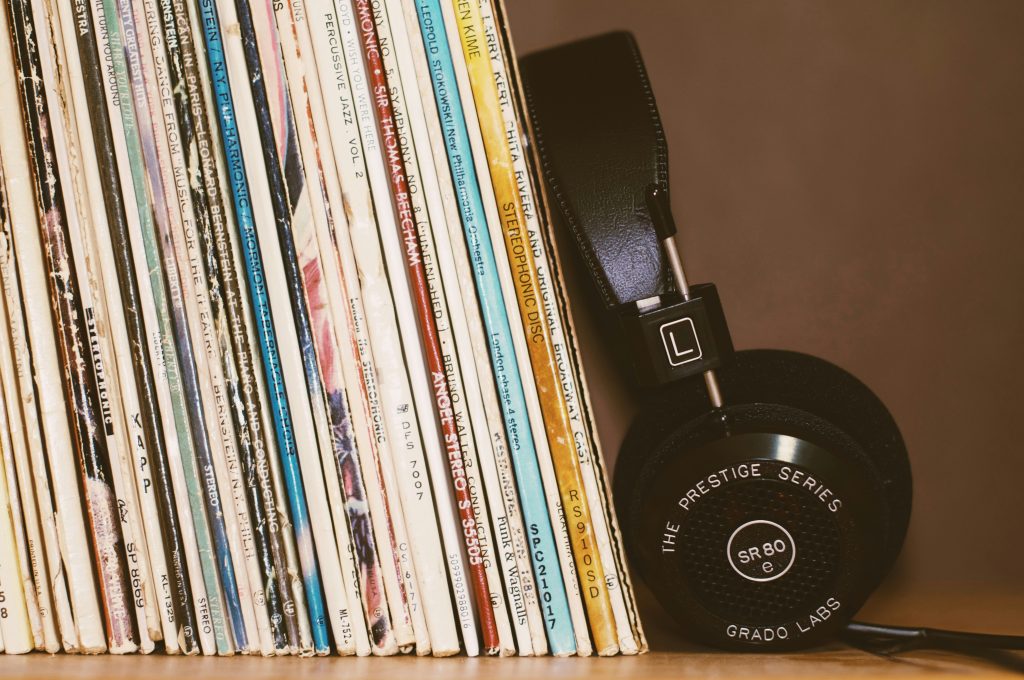
I was recently listening to an interview with guitarist JD Simo where he expressed surprise that some of the professional guitarists he knew didn’t really seek out new music to listen to or didn’t even listen to much music at all. He said that he listens to new music all the time.
It was surprising to hear that professional guitarists don’t uniformly listen to music all the time. But, after evaluating my own listening habits it may not be that surprising after all. Professional guitarists are no different than the rest of us. And I realized that I don’t listen to much new music either.
Somewhere along the way, music slowly shifted from being something I actively pursued to something that mostly filled the background. I’d put on familiar albums while doing other things, but I rarely sat down with the intention of discovering something new. When I did listen, it was usually to the same artists and records I’d listened to for years.
However, when I first started playing guitar, I did listen to music all the time. I listened to music I loved, but I also actively sought out new and different music to listen to. Finding new music I enjoyed was exciting. It seemed like something inside of me was unlocked when I found new music that really resonated with me.
Back then, finding new music meant listening to the local radio stations and trolling the local record stores. In fact some of my friends from that time period were people I met at the record stores because I was there so much.
Over time, of course, the record stores started closing. That feeling of hanging out with like-minded people and seeing what new music had come out that week kind of got lost. I’m glad to see the vinyl resurgence has helped some of the record stores stay in business, but it isn’t quite the same.
That being said, the ability to find and discover new music is unparalleled today. We have nearly the entirety of recorded music history a few clicks away. So, why are we all not listening to new music all the time?
I think it’s important to continue to seek out new music. As guitar players, we are the sum of what we’ve heard. Listening to the same music over and over will lead to playing the same things over and over. Listening to different genres or different eras of music can lead to some new ideas. I know it often does for me.
After realizing that I haven’t been doing this as much over the past few years, I’ve been trying to get back to that feeling of discovering new music. Each day I’m trying to listen to something I haven’t heard before. It doesn’t have to be brand new music. In fact, I recently went down the rabbit hole of 80s industrial music, much of which I’d never heard before.
I’m trying to actively listen to new music again. I’ve found some of the excitement that I used to have around music, and it’s been a lot of fun.
If you’ve found yourself in the same rut of listening to the same music you always have or not listening to much music at all, I would encourage you to seek out something new. A new artist, a new genre, or even just a new record you haven’t heard from a band you enjoy. Hopefully, it will give you some new inspiration.
The Case For Active Listening
Music is everywhere. We listen to it in the car, while we're working, when we're exercising, and while we're doing things around the house. With streaming services, smartphones, and wireless speakers, it's probably easier to listen to music now than at any other point in history. I think this is a great thing.
However, I'm not sure we're always really listening.
There's nothing wrong with putting on an album while you're doing something else. I’m often listening to music in the background when I’m doing some task.
I can’t imagine driving for any distance without having some kind of music or audio on the radio. I often like to have music on when I’m working at my day job. But there's a difference between hearing music in the background and actively listening to it.
Active listening means giving the music your full attention. Instead of treating it as background noise, you focus on the song and try to understand what's happening. You listen to the melody, rhythm, arrangement, production, and individual performances. You notice how the different parts work together and how the song changes from beginning to end.
For guitar players, I think this kind of listening is especially important.
When I first started listening to music, I mainly paid attention to the most obvious parts. Usually that meant the vocals, the drums, or the guitar solo. If a song had a great riff or an impressive solo, I liked it. I didn't spend much time thinking about some of the more intricate parts of the arrangement or production.
As I became more interested in playing music, I started hearing songs differently. I began noticing what the rhythm guitar was doing underneath the solo. I paid more attention to how the bass connected the guitar and drums. I noticed that a drummer could change the feel of a song without playing anything particularly complicated.
The songs hadn't changed. The way I listened to them had.
One of the benefits of active listening is that it helps you understand why a song works. It's easy to say that a song has a great groove or that a guitar solo sounds good. It's more useful to figure out what creates that groove or why the solo fits the song.
Maybe the drummer is playing slightly behind the beat. Maybe the bass player is leaving more space than expected or maybe even playing busier than expected. Maybe the guitarist starts with a simple phrase and gradually builds towards the hook of the song. Maybe the producer removes instruments from a verse so the chorus sounds bigger when everything returns.
These details can be easy to miss when music is playing in the background. When you listen closely, they become much more obvious.
Active listening can also help musicians develop better timing. Instead of only following the main riff or melody, try focusing on the relationship between the bass and drums. Listen to where the snare lands and how the bass notes line up with the kick drum. Pay attention to whether the musicians are playing directly on the beat or pushing and pulling against it.
This is especially useful when listening to blues, jazz, funk, and other styles where the feel of the music is difficult to communicate through written notation alone. Two musicians can play the same notes and still sound completely different. Often, the difference is in the timing, dynamics, and phrasing.
Dynamics are another thing that become more noticeable through active listening. Many of the best performances aren't played at the same intensity from beginning to end. The musicians leave themselves somewhere to go.
A guitarist may play softly during the first verse and become more aggressive during the solo. A drummer may move from the hi-hat to the ride cymbal to open up the sound. A singer may hold something back early in the song so the final chorus has more impact.
If you're only listening for the loudest or fastest parts, you may miss the way the musicians build toward those moments.
For guitar players, active listening is one of the best ways to improve phrasing. It's tempting to focus on the number of notes a player uses or the difficulty of a particular lick. However, some of the most memorable solos aren't especially complicated.
Listen to where the guitarist begins and ends each phrase. Notice how long certain notes are held. Pay attention to the bends, vibrato, slides, and spaces between phrases. In many cases, the notes that aren't played are just as important as the ones that are.
Tone is another area that rewards careful listening. Guitar players spend a lot of time thinking about guitars, amps, pedals, and pickups. Those things are important, but recorded guitar tone is also affected by the player's touch, the arrangement, the microphones, and the way the guitar sits in the mix.
A guitar tone that sounds thin by itself may work perfectly in a full band arrangement. A large, heavily distorted tone may sound impressive on its own but cover up the bass, drums, and vocals. Active listening helps you hear the guitar as part of the entire recording rather than as an isolated instrument.
A few ways I go about active listening is to listen to the song a few times in a row, focusing on a different instrument or aspect of the song each time.
For example, during the first listen I might just experience the song as a whole piece. I might just focus on the guitar part on the second listen. Then, the drums and how the rhythm impacts the song.
Once you’ve listened to the individual parts you want to focus on, I suggest listening to the song as a complete piece again. See if you hear something new.
Headphones can be useful for this, especially when listening for subtle parts. Depending on the recording, you may hear instruments panned to different sides, background vocals buried in the mix, or small production details that aren't obvious through speakers. These types of things often get lost when playing music on your phone or in your car with a lot of ambient sounds.
However, you can listen actively even if you’re aren’t using headphones. The most important thing is to remove as many distractions as possible and give the music your attention.
It's also useful to compare different versions of the same song. Listen to an original recording and then listen to a cover. Compare a studio version with a live performance. Pay attention to what changed and what stayed the same.
A live version may be faster, heavier, or more loosely arranged. A cover may use different instrumentation or emphasize a different part of the melody. Sometimes a musician will change a song so much that it becomes something new while still preserving the qualities that made the original work.
These comparisons can teach you a lot about arrangement and interpretation.
Transcribing music is probably one of the most focused forms of active listening. You don't necessarily need to write the music down. Simply learning a part by ear forces you to pay close attention to the notes, timing, articulation, and tone.
At first, it can be frustrating. A phrase that sounds simple may be more complicated than expected. On the other hand, an impressive-sounding lick may turn out to be based on a familiar pattern played with excellent phrasing.
Either way, the process helps connect what you hear with what you play.
Active listening also makes it easier to move beyond your primary instrument. A guitarist who only listens to guitar players may eventually begin repeating the same ideas. Listening closely to singers, horn players, piano players, bassists, and drummers can introduce new approaches to melody and rhythm.
I like to think of active listening as part of my practice routine. Time spent with an instrument is important, but so is time spent understanding how great music is put together. Technique gives you more options. Active listening helps you figure out what to do with them.
If you find yourself mostly listening to music passively, try putting on an album and doing nothing else; no phones, no television, just the music. Listen to instruments you normally wouldn’t. See how they interact with the guitar and work within the song. You might be surprised by what you’ve been missing.
If you’re not including active listening as part of your musicianship, give it a chance and see if it helps you improve how you hear the guitar within a song context.
Philip Sayce on That Pedal Show
I really enjoyed the recent episode of That Pedal Show featuring Philip Sayce:
Philip Sayce on That Pedal ShowHe’s not only a monster player, but he also seems very considered and thoughtful in his approach to the instrument.
He visited the show while he was on tour in the UK supporting his new album Scorched Earth, Vol. 2 (Live from LA and London), which you should check out if you’re into heavy blues rock.
Using Fewer Pedals
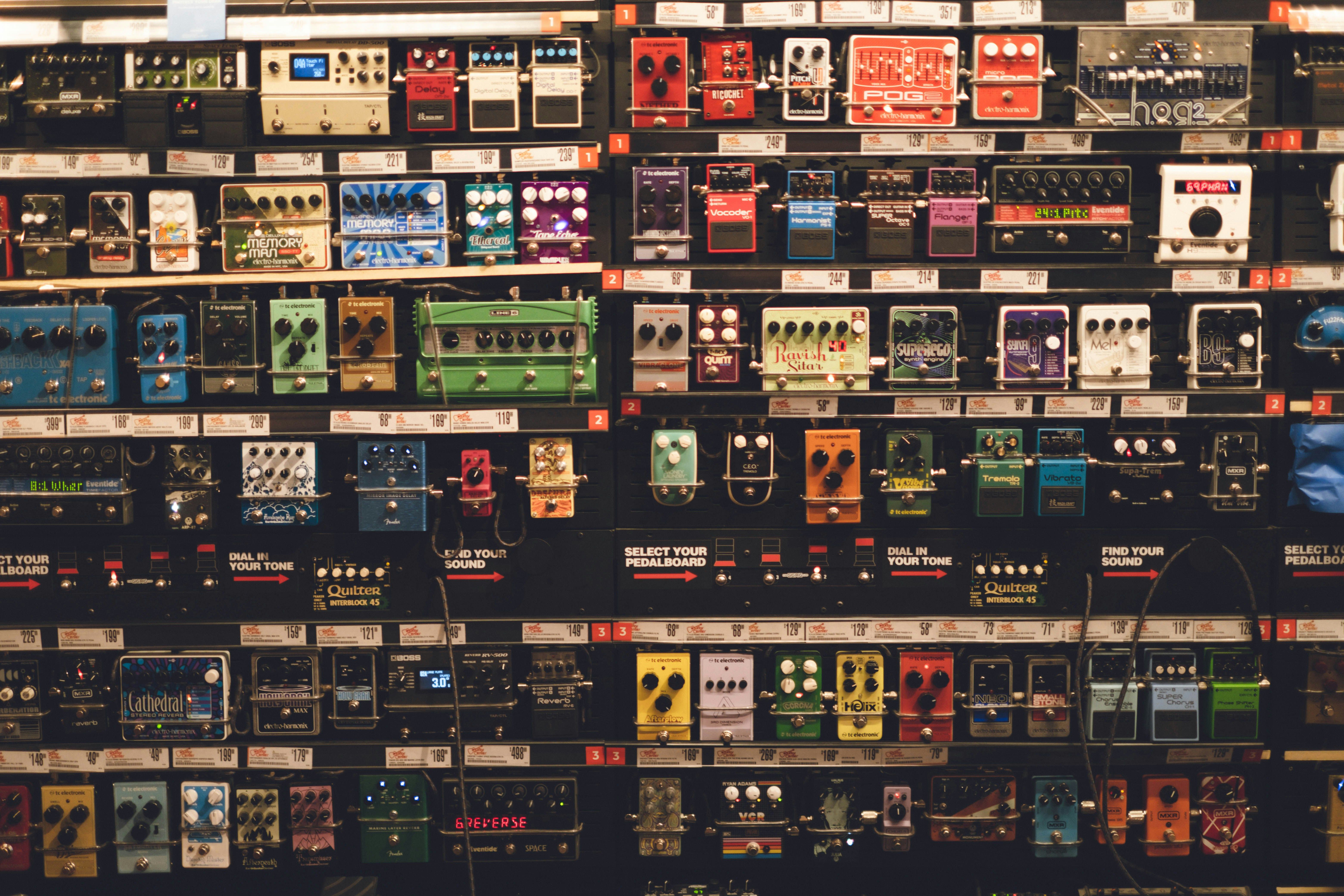
I love guitar gear. I have for most of the years I’ve been playing. So it might be surprising that I actually don’t like playing with a bunch of pedals.
I find pedals to be inspiring in a lot of ways. Even just adding a different overdrive pedal can make me play in different ways.
But I also find that too many pedals can be distracting.
If I have a univibe pedal on my board, I’m going to try and figure out how to use that pedal in the context of my other pedals. How does it sound before or after my dirt pedals? How does it sound before or after delay? I end up noodling for a while just trying out different sounds. This is, undoubtedly, fun and part of why I love guitar gear so much. There’s always something new to try.
This goes for any number of different effects. Trying them out in context is fun and also important if you plan to use the effect in a band. You need to know how they interact with your other pedals.
It’s also important to note that all that playing and testing is not equivalent to making music. It’s just making noise. Fun? Absolutely. But it’s working a different muscle than making music.
And that’s what I keep coming back to. How are all of these pedals helping me make music if I end up spending most of my time chasing sounds? It can sometimes lead to music that I wouldn’t have thought of otherwise, but I would say by and large it ends up just leading to noodling.
Additionally, I find that using fewer pedals forces me to think more about what I’m playing and how I’m attacking the guitar. It forces me to think more about the music I’m trying to make.
The only pedalboard I have is a Pedaltrain Nano+. It holds about 5-6 pedals. I’ve often thought about buying a larger board, and I may still do that someday.
But for now, I like the constraints that the Nano+ puts around how many pedals I can use. It makes me choose the few pedals that actually help me make the music I want to make. Sometimes, that’s more important than how many sounds you can get.