
Music is the universal language
“Glory to God in the highest heaven, and on earth peace to those on whom his favor rests.” - Luke 2:14
General Interest
Boss XS-1 Poly Shifter Review
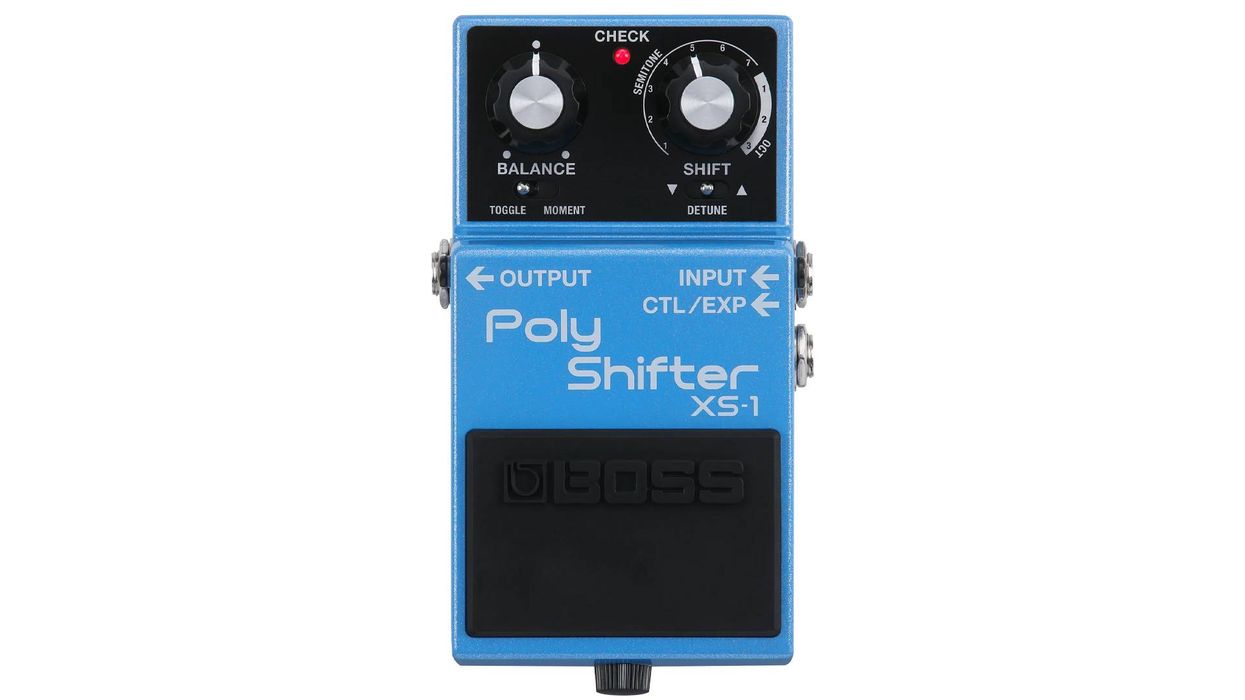
Any effect can color a guitar’s personality and language. But Boss’ new XS-1 Poly Shifter literally stretches the instrument’s vocal range. With the ability to shift input by +/-3 octaves or semitones, it can turn your guitar into a bass, a synth, or a baritone, or function as a capo. It also seamlessly generates harmonies for single note leads and keeps up with quick picking without any apparent latency. Furthermore, the pedal is capable of stranger fare that stokes many out-of-the-box ideas. But if you’re a guitarist that plays more than one role in your band—or musical life in general—the XS-1 can be a utilitarian multitool, too. It’s a pedal that can live many lives.
- YouTube
The XS-1, which was released alongside its bigger, more intricate sibling, the XS-100, is an accessible route to exploring pitch shifting’s potential. Housed in a standard Boss enclosure, it doesn’t consume a lot of floor space like the XS-100 or DigiTech’s Whammy. And while it achieves this spatial economy in part by forgoing a built-in expression pedal (which could be a deal breaker for some potential customers) it’s still capable of +/- seven semitones and a +/- three-octave range that can be utilized in momentary or latching applications.
Slipping, Sliding, and Twitching
Though digital pitch shifters have always been capable of amazing things, early ones sounded very inorganic at times. High-octave sounds in particular could come across as artificial, like the yip of a robot chihuahua plagued by metal fleas. Some very creative players use these colors—as well as the most sonorous pitch shift tones—to great effect (Nels Cline and Johnny Greenwood’s alien tonalities come to mind). In other settings, though, these older pitch devices can be downright cringey.
“The pedal clearly represents several leaps forward from first-generation pitch shifters.”
The XS-1 belies digitalness in some octave-up situations. But the pedal clearly represents several leaps forward from first-generation pitch shifters. Tracking is excellent and shines in string bending situations. Semitone shifts can provide focused harmony or provocative dissonance depending on the wet/dry mix and which semitones clash or sing against the dry signal. At many settings the XS-1 feels alive and organic, too, with legato lines taking on many of the touch characteristics of a violin-family instrument. You get far less of a note-to-note “hiccup,” and glissandos take on a beautifully fluid feel—with or without a slide—letting the XS-1 deliver convincing pedal- and lap-steel-style textures when you add a single octave up. (Such applications sound especially convincing when you kick back on guitar tone and restrict your fretwork to the 3rd through 5th strings, which keeps digital artifacts at bay.)
Mixmaster Required
The most crucial XS-1 control is the mix. For the most convincing bass, baritone, and 12-string tones, you’ll want a fully wet signal. But composite sounds can be awesome, too. You can use the control’s excellent sensitivity and range to highlight or fine tune the prominence of a consonant harmony. But it’s sensitive enough to make blends with dissonant harmonies sound a lot more intentional and integrated. And many of these eerie, wonky, off-balance textures are extra effective when introduced in quick bursts via the momentary switch. (That switch can also deliver great flashes of drama with more consonant harmonies—like dropping in a 3rd or 5th above a resolving chord in a verse.)
You can get creative in other ways using dissonant blends. Droney open tunings can yield fields of overtones that sound extra fascinating with delay, reverb, or 12-string guitar… or all of them! Dialing in blends that really work takes some trial and error, and you’ll definitely hit a few awkward moments if you’re navigating by instinct alone. But those same experiments often uncover real gems—especially in the pitch-down modes, which tend to produce more mysteriously atmospheric textures than their pitch-up counterparts.
The Verdict
Boss’ most straightforward pitch shifter covers a lot of ground. If you play in a duo, trio, or small band, it can expand that collective’s stylistic and harmonic range. It’s small, at least relative to treadle-equipped pitch shifters, so if you’re not a pitch shift power user, you don’t sacrifice a lot of room for an effect you might only employ occasionally, and you can still use the expression pedal jack to hook up a pedal for dynamic pitch control. The $199 price puts it in line with competitors of similar size and feature sets, but the XS-1 is a great value compared to more elaborate, treadle-equipped pitch shifters. If you’re taking your first forays into pitch shifting, or know that you need only the most straightforward functions here, it will ably return the investment. And along the way, it might even unlock a whole cache of unexpected tonal discoveries.
Recording Dojo: How Samplers and Loopers Create Beautiful Chaos
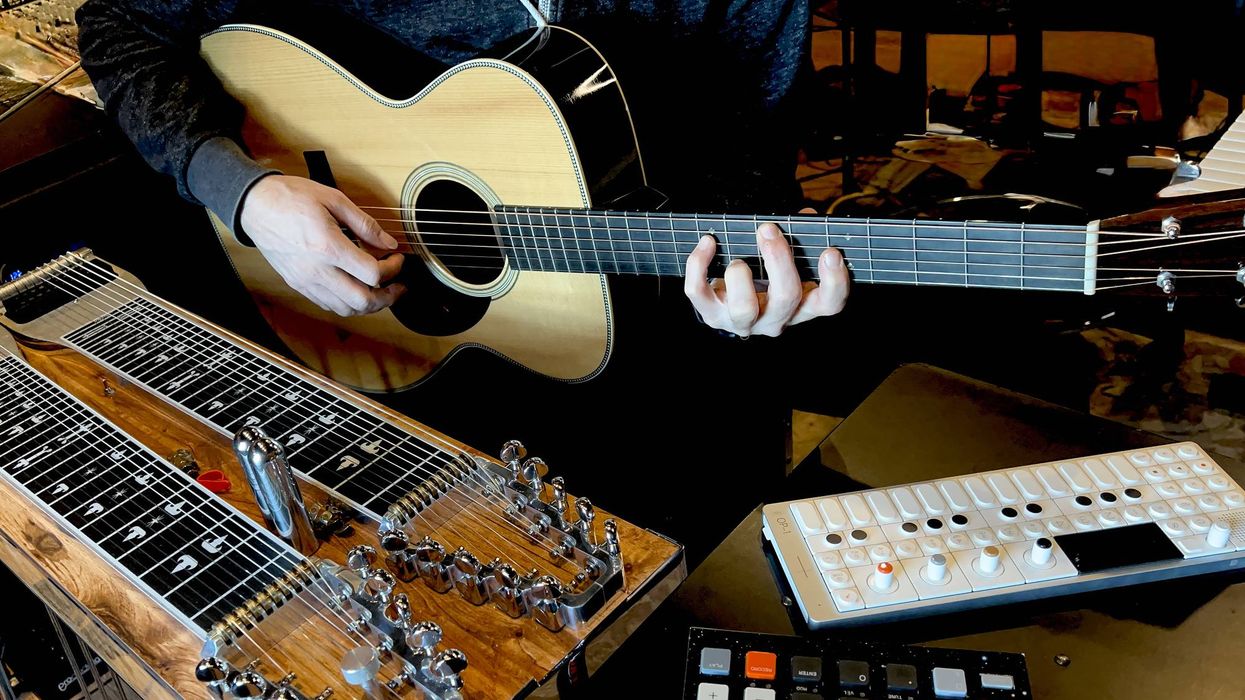
Most people think of samplers as drum machines with delusions of grandeur—four-bar loops, predictable patterns, and neatly sliced bits living forever in the prison of the grid. But for me, samplers and loopers are something completely different. They’re instruments of disruption. They’re creative accelerants. They’re circuit breakers designed to shock me out of my comfort zone and force my compositions, productions, and performances into strange, exhilarating new shapes.
One of my favorite studio practices—and something I encourage my Recording Dojo readers to experiment with—is to sample your performances. Not a preset library, not a pack from somebody else, but use your own melodic lines, motifs, rhythms, textures, and half-formed ideas. There’s something magical about hearing your own musical DNA come back to you in an unfamiliar, mutated form. It’s like collaborating with a version of yourself from an alternate timeline.
The real thrill isn’t about capturing pristine performances. In fact, it’s often the opposite: I’ll grab a phrase that’s imperfect, or mid-gesture, or harmonically unresolved, and drop it into a sampler purely to see what it becomes. When you do this, your musical habits—your well-worn licks, default rhythms, and predictable choices—don’t stand a chance. The sampler shreds them, recontextualizes them, and hands them back as raw material for re-writing, re-arranging, or composing something that never would have emerged in a linear workflow.
Sometimes the transformation is subtle—a lick becomes a rhythmic ostinato, a sustain becomes a pad, a passing tone becomes a focal point. Other times the sampler just mangles it, spits it out sideways, and you think, ‘Oh… now that’s interesting.’ Either way, it becomes a tool for breaking patterns, both musically and psychologically.
My Process: Mutations, Not Replications
My approach to sampling isn’t any more complicated than anyone else’s. I’m not using some secret, elite technique. I’m simply collecting fragments—little melodic cells, rhythmic quirks, harmonic gestures—and giving them permission to misbehave.
I’ll chop up key licks into uneven slices, or isolate just the back half of a phrase, or extract a rhythmic hiccup that wouldn’t survive in a normal editing session. Then I reassemble these bits with the expectation that they won’t behave. I want mutations. I want the musical equivalent of genetic drift. I’m not trying to color within the lines; I’m trying to see what happens when I throw the coloring book across the room.
Once the sampler gives me something intriguing, I run these new creatures through chains of further processing: glitch delays that stutter and fold the sound into origami-like shapes, micro-loopers feeding into overdrives or fuzz pedals, shimmering reverbs that stretch a 200-millisecond blip into a widescreen texture. The result can be anything from a ghostly sustained pad to a snarling, percussive accent, to a completely alien harmonic bed.
You can use these elements as alternate melodic lines, counterpoint, ambient beds, transitions, ear candy, or even structural material for entire songs. And because the source is you, the end result stays connected to your musical identity—just bent, twisted, and refracted into something fresh.
Outcome Independence: The Spirit Behind the Process
If there’s one thing that makes this approach powerful, it’s letting go of the expectation that what you sample must “work.” This is pure experimentation, not product-driven crafting.
I’m outcome-independent when I do this. I’m not looking for a result so much as engaging in the joy of the unknown. Some days nothing meaningful emerges. Other days I strike gold. But either way, the process sharpens my creative instincts. It keeps me curious.
“There's something magical about hearing your own musical DNA come back to you in an unfamiliar, mutated form.”
I use this same strategy when producing artists or working on film and soundtrack material. Recently, I applied it to pedal steel—an instrument known for its lyrical beauty—and the resulting textures were … well, not beautiful in the traditional sense. They were fractured, shadowy, almost Jekyll-and-Hyde. Perfect for a track built around the duality of personality. The clients absolutely loved the unpredictable, emotive soundscape those mutated pedal steel lines created.
Some Favorite Tools for Sonic Mutation
You don’t need a million pieces of gear to do this. A single sampler and a single effects chain can take you far. But here are a few of my favorite “chaos engines,” all of which I own and use regularly:
• Teenage Engineering OP-1 Field – A sampler, synth, tape machine, and chaos generator disguised as a minimalist art object. Its sampling engine and tape modes are perfect for tonal mutations.
• Teenage Engineering EP-133 K.O. II – A quick, dirty, wonderfully immediate sampler for slicing, punching, and recombining your ideas without overthinking.
• Omnisphere 3 – The granular engine alone is a goldmine for turning simple samples into cinematic, evolving textures.
• NI Maschine – Still one of the fastest environments for grabbing a sound, flipping it, and building an idea around the unexpected.
• …and whatever else you have lying around. The point is exploration, not allegiance to any one workflow.
Final Thoughts
Sampling your own voice as an instrumentalist—and then breaking it—reminds you that creativity doesn’t live in the safe, predictable spaces. It lives in the moments where you lose control just enough to discover something new. Give your sampler permission to surprise you, confuse you, and sometimes even challenge your sense of what you sound like. That’s where the good stuff begins.
Slipknot co-founder says AI is like “a professor in my pocket” – and it’s cheaper than a $150k producer who “might not even work with me”

The role of Artificial Intelligence in music-making has been one of the most debated topics of late – and Slipknot’s Shawn ‘Clown’ Crahan is among the few heavy metal musicians speaking openly in its favour.
In a recent interview with The Escapist, the Slipknot co-founder and percussionist praises AI as “a professor in my pocket who only wants to do what I ask it.”
“I’m employing AI 190 percent,” Clown says, explaining that he’s been using it “my whole life” as a tool to refine his work. Over the years, he claims to have transformed “thousands and thousands” of poems he’s written since he was young into new creative forms.
Demonstrating how he uses the tech, Clown tells the publication: “Here are my words. Don’t change them. Don’t alter them. But show me some different ways to sing it.”
The musician also points out the financial benefits of AI, comparing it to hiring a big-name producer – which could cost a small fortune:
“What’s the difference between me pulling out my pocket producer… or me trying to get a famous producer that might not even work with me and could potentially cost me $150,000… who will only give me one or two ways – I’m not mentioning any names!”
Still, Clown stresses the human element remains essential: “But it’s still going to take me to sing it. And it will never be like it was,” he adds. “None of it can work without you, the human. It’s a giant oracle… but it needs you.”
Crahan’s embrace of AI comes amid widespread controversy over the technology’s role in music creation. Critics have raised concerns over copyright and the value of human musical expression – a debate that’s seen contributions from rock’s wider community. Guitar legend Brian May, for one, recently warned that AI training on copyrighted material could make music creation ‘unaffordable’ for artists, while blues‑rock guitarist Kenny Wayne Shepherd said that AI-created music might become the norm even if it lacks the depth of a “fallible human”.
By contrast, not everyone in Slipknot’s orbit shares Clown’s optimism. Frontman Corey Taylor has been openly critical of AI‑generated music, telling Kerrang! in 2023 that he “can’t stand it” and “don’t care for any of that crap”.
The post Slipknot co-founder says AI is like “a professor in my pocket” – and it’s cheaper than a $150k producer who “might not even work with me” appeared first on Guitar.com | All Things Guitar.
Listening and Looking with Steve Tibbetts

There is a specific thread of experimental musician whose real motive is to deal in mystery and wonder. Think conceptualists like Brian Eno and David Bowie, sonic conjurers Sunn O))), transcendent improvisers as varied as Alice Coltrane and Loren Connors, song mystic Annette Peacock—each artist’s work is tied to something that happens beyond the notes, something bigger than just the sounds we hear. And for the listener, there are no easy answers. You can research and dissect compositional and production methods, know all of the gear that was used inside and out, break down all of the influences. But you’re always left with something to chase, to try and understand more deeply. For some, that’s the thrill.
Steve Tibbetts works with these ineffable parts of music, and he has ever since his 1977 self-titled debut. His albums create experiences that, at times, approach definability, but remain elusive: He’s a guitarist, but his music isn’t necessarily “guitar music”; his work is rooted in traditions, but it’s not traditional. So, what is it?
Since the beginning of the 1980s, Tibbetts’ records have been released primarily on the ECM label—the longstanding preeminent home of meditative and ambient jazz and jazz-adjacent sounds. On his earlier releases, you may hear grooves assembled around percussion from various global cultures mixed with suspended 12-string acoustic strumming, soaring evocative melodies, and, at times, blazing electric guitar solos. The cover images on his albums are striking, and often created by the composer himself, capturing some moment in a similarly un-pinnable land—check out the rock formations on either 1980’s Yr or 1986’s Exploded View, for example. The whole blissed-out package is conceptually inspired by place and tradition, yet totally untethered and fresh.
“If I just sat around and played guitar all day long, I don’t know how that would go.”
On more recent releases, and especially on his latest, Close, Tibbetts’ sound has evolved toward something else—more big-picture, but also more personal. Raw and organic sounds mix with a futuristic sonic landscape (and yet, he uses antiquated technology to create those sounds). Close feels like a universal meditation, a grand vision that pulls sounds from across the globe and reaches beyond, toward some distant sonic horizon, overcoming instrument and process. Basically, it sounds like nothing else.
Enigmatic as that is, over the course of an hour or so on our video call, Tibbetts himself proved to be anything but. Speaking from his wood-paneled Minnesota studio, where he’s made much of his music since 1985, he revealed his process and the philosophy behind it—a methodology deeply tied to his own experience of the world.
For Tibbetts, creation starts simply. “You have to sit down and put your hands on the instrument,” he explains. And it’s all about vibe. “Sometimes, it's a matter of getting the guitar warmed up. Hoping for the right humidity in the room.”
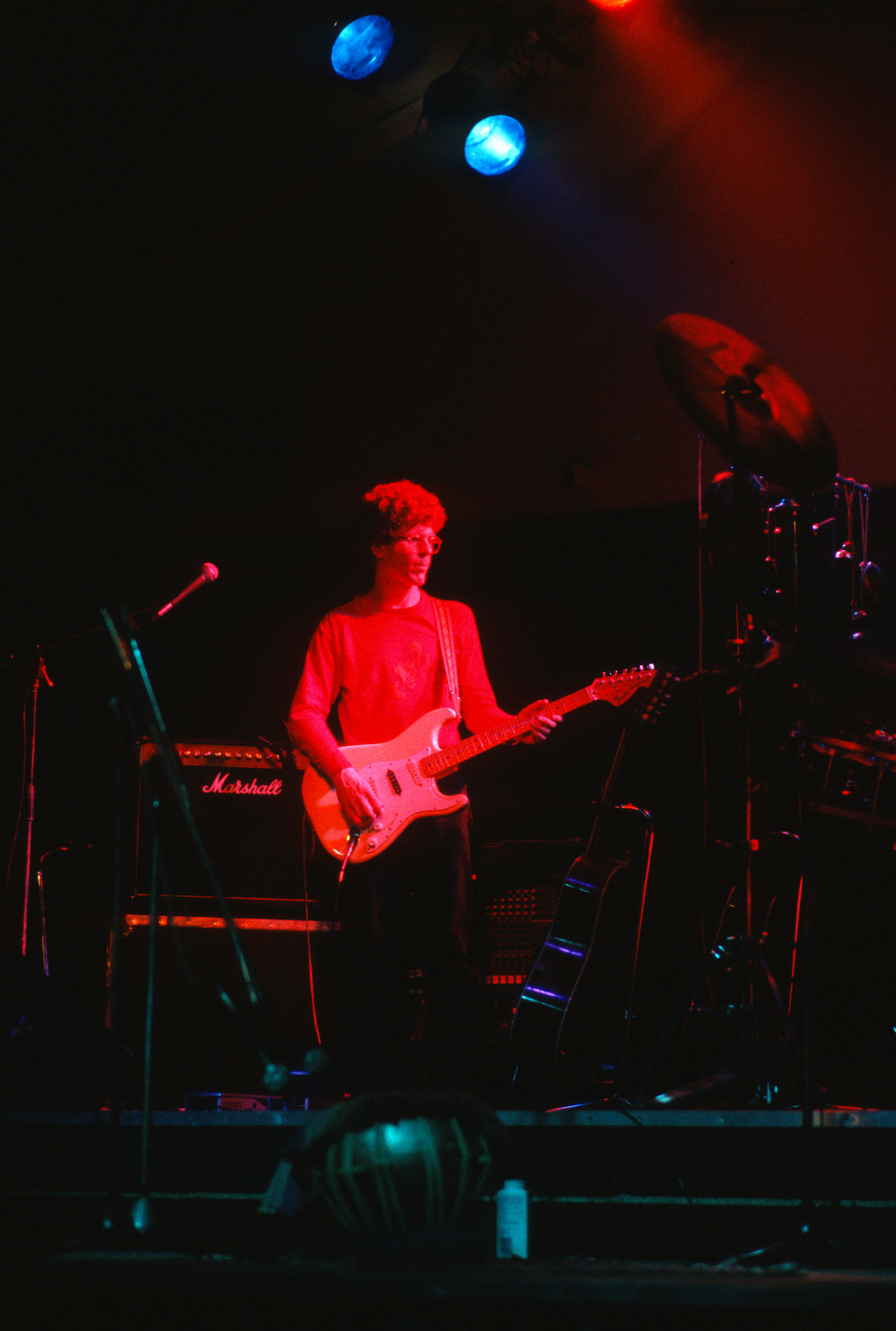
In order to keep things moving, his studio is always ready to go—his mics in position and DAW loaded up. “The process is to come to the studio, make a cup of coffee, begin to play, and see if we get to that point,” he says. He starts solo, bringing in other players further down the line. “Nobody cares how loud I get here. I’ve got a couple of Marshall JCM 800s, a younger Marshall, and as long as I wear adequate ear protection, I’m fine. I can get the sound that I need.”
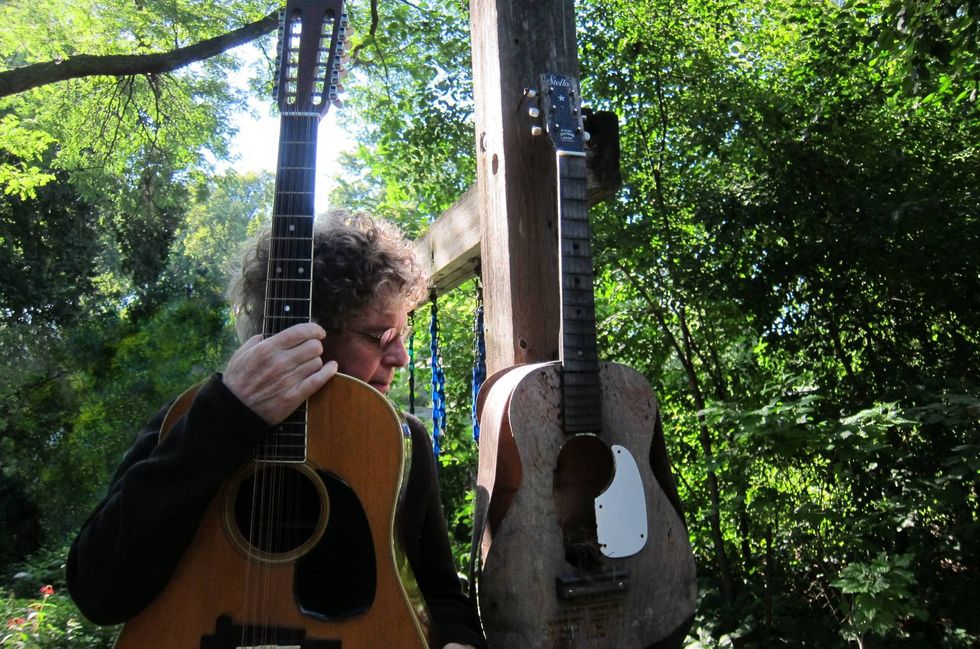
Steve Tibbetts’ Gear
Guitars
Martin D-35 12-string
Martin DM-12
(Fishman TriplePlay pickup for acoustics)
1971 Fender Stratocaster
Amps
Marshall JCM 800 combo
Matchless Lightning 15 watt
Strings
John Pearse custom 12-string sets with double courses instead of octaves
GHS Boomers (Medium)
The days slowly add up. “Do you know what it’s like when you wake up in the night and your fingers are throbbing?” he asks. For him, “that usually means it’s been a good, productive day at the studio. Then you come back the next day. Is there anything worthwhile? Probably not. But after five or six years, you’ve got something—30 minutes, 40 minutes worth of pieces.”
As the music takes form, at some point, he brings in collaborators. On Close, Tibbetts is accompanied by percussionist Marc Anderson, his longest-running musical partner, and drummer JT Bates.
“It begins to sort of assemble itself,” he continues. “It is a little bit of a cliché, but at a certain point, you are in service to the music that you've created and you just need to do a good job with it.”
He quickly balances that thought with a dose of reality: “Mostly, the process is one of tedium, boredom, failure, and actually figuring out what I need to do when I've started the car and am on the way home.”
“What a good thing to do, to listen and look at stuff.”
Tibbetts’ music isn’t purely an in-the-studio creation, though. The world outside his walls plays a major role. “If I just sat around and played guitar all day long, I don’t know how that would go. Maybe there are some guitar players who can do it,” he muses. “Sometimes, the process is to give up entirely and go someplace a long ways away and listen to some loops or little lines that you have as you’re walking around.”
That’s the specific method Tibbetts followed on 2018’s Life Of. He explains: “There’s an area in northern Nepal, close to Tibet, called Lhasa. Difficult to get to, but a friend of mine, a professional clown, named Marian, said, ‘We’re going to Lhasa, do you want to come?’ And I thought, I’ll go there, and I’ll make little mp3s, 60 minutes or so, to listen to while we're walking. That’s what I did. When I came back, I had a good idea of what I wanted to do to put things together.”
For those who can’t travel quite so far, he recommends just getting out of your surroundings. “What a good thing to do,” he enthuses, “to listen and look at stuff. Even mixing. I’m looking at the same paneling here all the time. It doesn’t work. You can take your little laptop now and go to a coffee shop and say, ‘This song is gonna be about this couple over here, or that guy drinking coffee by himself.’ Just mess with your mind a little bit.”
“If it’s not fun, I’m not interested.”
Travel has inspired Tibbetts work throughout his career, thanks especially to his early experience working for study-abroad programs in Bali and Nepal. “That was hard work,” he explains, “but I got to live in cultures where there was different music. Balinese gamelan, if I hear it in Minnesota, it’s just annoying. But over there, it sounds like it fits. The double drumming technique, I had to be in it and study it to bring it back.”
Across the globe, Tibbetts has collected the recordings to incorporate in his music. The idea goes back to his 1997 album, Chö, a collaboration with Tibetan singer Choying Drolma. “We made that record in Kathmandu, Nepal,” he says. “Her singing was incredible. I didn’t want to just strum along on guitar, I wanted to use some of the sounds of Tibetan longhorns, some of my own sounds like bowed hammered dulcimer, my wife’s wine glasses….”
Tibbetts continues, “I did that. And then we got an offer to go out on the road. Desperation takes hold. How am I gonna do this? There’s gotta be a way.”
He devised a setup to trigger samples with his guitar using a Roland MIDI pickup that “had a cable that was about as thick as a stalk of corn that went to another box that would jack into a sampler, probably with a SCSI port.” Inconvenient, but, Tibbetts says, “it did work and we did take that on the road, and then I thought, this will be a good composing tool, this will be fun.” He pauses, and adds, “If it’s not fun, I’m not interested.”
More recently, Tibbetts switched to a Fishman wireless system to trigger the samples. But the samples themselves come from an old version of MOTU’s Digital Performer, which requires him to keep his computer “probably 15 operating systems behind what’s current now.” (He jokingly explains: “I’m working with antiquated technology. I’ve got buggy whips and wooden wheels here.”)
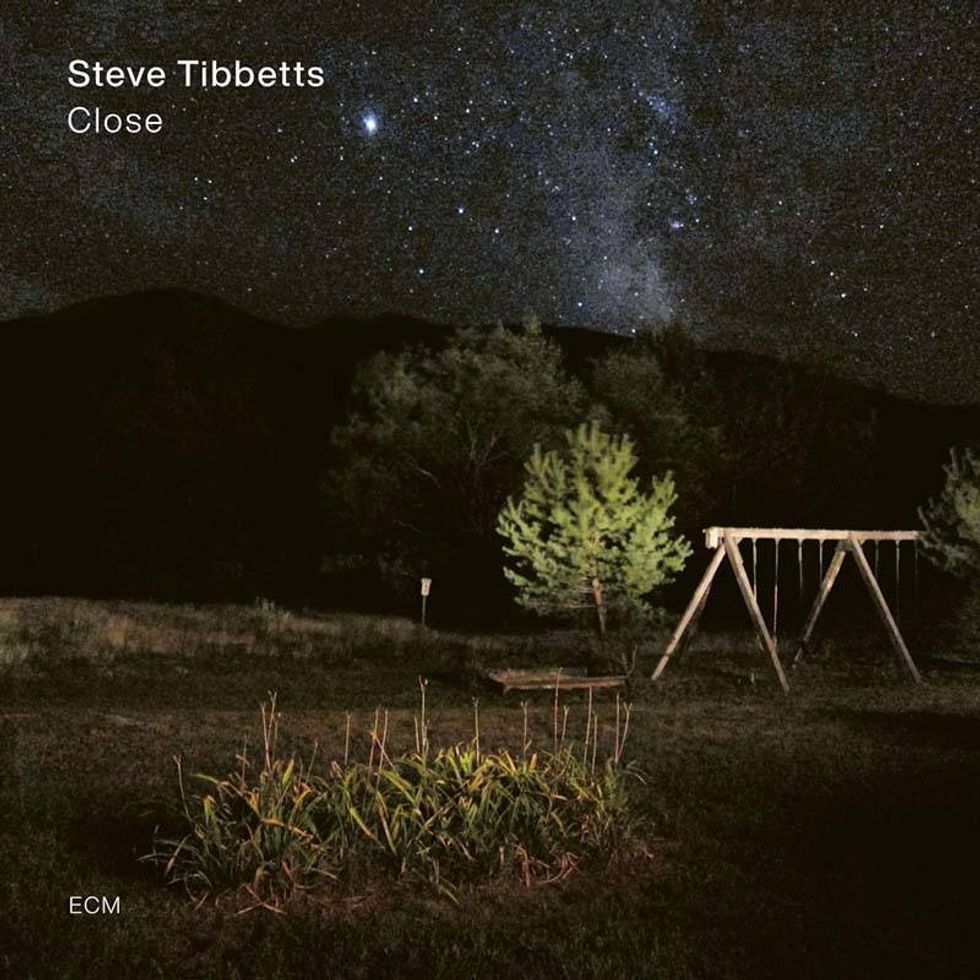
The result is otherworldly. Global sounds enmesh with Tibbetts’ strings, opening up the possibilities of his guitar—a sum-is-greater-than-the-parts experience where you might not realize what exactly is being played or where it’s coming from.
Knowing the sources, however, enriches the experience. Because though some of Tibbetts’ samples are created at home in his studio, many have a story. “I can still hear the chicken in the gong,” he says, launching into a story that goes back to his time working for a study-abroad program in Candi Dasa, Bali. He took the class to visit “a guy that did two things: made sacred knives that they use for ritual activities and had a gong shop.” He explains that gongs for gamelans are all made at the same time to coordinate the orchestra’s tuning, and they visited on a day where new bronze would be poured. “This was a once-in-a-lifetime thing. We went down there and spent a day watching these guys beat the shit out of these things to get them in their own tune, which is still a good 30 or 40 cents off what we would call in tune, but together it sounds good.
He continues: “I spent an extra day there sampling these gongs. I would hit the gong softly. I’d mute it. I would hit it hard.” The gong-maker was curious. “He said, ‘Let me listen to it.’ He listened to it on the headphones and said, ‘I’m sorry my chicken is squawking.’ I said, ‘It’s okay.’ And then the next thing I heard was no chicken squawking. He invited me for dinner. I declined.”
On Close, focused listening reveals another sonic element—the sound from Tibbetts’ acoustic guitar. Often more polished, it’s more raw this time around than on his other records—sometimes you’ll hear buzzing, fretting, and breath sounds. It gives his playing an intimacy, a warmth that stands out. It feels close.
Early in the creation process, Tibbetts wasn’t confident this was a direction he wanted to pursue. So he had Anderson listen to some takes. “People who work alone a lot tend to become a little inbred with themselves, start not understanding what direction they’re going in, or if they’re going in the right direction, or if anything is any good at all,” he muses. “Marc and I have been working together since 1979. His ears are very good. He made me understand that I already knew that this was okay. I just needed confirmation from him.”
He continues, “I am going for the feeling. I guess we’re always going for the feeling, but I just didn’t want to ditch a take because I happened to make a sound, a bad fret sound, a new string sound….”
With Closenow out in the world, don’t hold your breath to catch Tibbetts live—his performances are rare. When asked about this, it’s clear his days of getting in the van are long gone, adding that one-off gigs are also “not that great. It usually takes a few gigs on the road before you get your chops together, lighting, sound, loading in, loading out, your pedals, whatever you have….” But he says there are those occasional gigs that afford the travel, rehearsal time to get it together, and make a compelling enough offer. “If the gig is weird enough and far away enough,” he says, “we'll do it.”Courtney Cox Breaks Down Burning Witches Guitars, Tone, and Touring Gear
Burning Witches guitarist Courtney Cox joins the Axe Lords to talk technique, tone, and the realities of life as a modern touring guitarist. She breaks down how the band writes and records across borders, works under brutally short studio timelines, and balances locked-in rhythm playing with expressive lead work. Cox also explains why learning by ear—not regimented practice—has always driven her playing, and how ADHD shapes both her focus and creativity.

The conversation traces her path from early touring as a teenage prodigy through her years with Iron Maidens, to designing multiple signature guitars built for extended range, lower tunings, and long tours. Along the way, she gets specific about gear and discusses the realities of being a working guitarist, from social media burnout and Patreon economics to perfectionism onstage—and knowing when to stop forcing it and just play.
Follow Courtney @ccshred
Axe Lords is presented in partnership with Premier Guitar. Hosted by Dave Hill, Cindy Hulej and Tom Beaujour. Produced by Studio Kairos. Executive Producer is Kirsten Cluthe. Edited by Justin Thomas (Revoice Media). Engineered by Patrick Samaha. Recorded at Kensaltown East. Artwork by Mark Dowd. Theme music by Valley Lodge.
Follow @axelordspod for updates, news, and cool stuff.
Sounds of 2025: In Memoriam

Wolfgang Van Halen says this aspect of his father’s guitar playing is “incredibly underrated”: “Everybody looks at him as Mr. Tap and Mr. Shred, but that’s just a flavour to what he did”

When people talk about Eddie Van Halen, it’s usually all about the lightning-fast tapping, the jaw-dropping solos, the “Mr. Shred” persona. But, as his son Wolfgang Van Halen points out, that’s only part of the story – there’s another side of the guitar legend that rarely gets its due.
In a recent appearance on The Cody Tucker Show, the Mammoth frontman turns the spotlight on his father’s rhythm playing and songwriting, the very foundation that, according to Wolfgang, allowed those iconic solos to shine.
“I’ll throw you a different angle at something that I think is really obvious. I think my dad is an incredibly underrated rhythm guitar player and songwriter,” he says [via Blabbermouth].
“I think everybody looks at him as Mr. Tap and he’s Mr. Shred, but I think that’s just like a flavour to what he did. And I think it’s the fact that he was such a good songwriter and rhythm guitar player which allowed him to be the shredder guy on top of it. ‘Cause there are plenty of people who are just great shredders and they’re just running through scales and stuff, and that’s not as interesting.”
The interview also sees Wolfgang name dropping another underrated rhythm player whose contributions are often overlooked onstage: AC/DC’s Malcolm Young.
“But I think in terms of guitar players that are maybe underrated, I’d say one of my favorite underrated guitar players would have to be Malcolm Young from AC/DC,” says Wolfgang.
“Obviously, Angus [Young, AC/DC’s lead guitarist] is very in your face and dancing around while he was just in the back, but I think [Malcolm] is the greatest rhythm guitar player in history. He just had such a grit, and he’s absolutely one of my favourites.”
Beyond that, Wolfgang recently spoke to Guitar.com and shared his five all-time favourite guitar players, offering a glimpse into the influences that shaped his own approach to the instrument.
The post Wolfgang Van Halen says this aspect of his father’s guitar playing is “incredibly underrated”: “Everybody looks at him as Mr. Tap and Mr. Shred, but that’s just a flavour to what he did” appeared first on Guitar.com | All Things Guitar.
Opeth’s Mikael Åkerfeldt thinks prog music has “become a bit regressive”: “Now progressive means fast guitar solos”

Once upon a time, “progressive” meant breaking boundaries, mixing styles, and bending the rules of rock and metal. These days, according to Opeth’s Mikael Åkerfeldt, it’s often more about how fast you can shred – and the prog-metal veteran isn’t buying it.
In a recent chat with Prog Project, Åkerfeldt opens up about his frustration with how the term “progressive” has evolved, noting that the genre has drifted from its adventurous roots and become something of a cliché.
“I’m not sure if it’s so important for me to feel that we are progressive, because I don’t really know what it means anymore,” says Åkerfeldt [via Blabbermouth], who juggles the roles of Opeth’s lead vocalist, guitarist, and primary songwriter.
“Back in the day, I think that it was easier to define a progressive band because they were mixing styles and stuff like that, but now progressive means fast guitar solos, and it’s become a sound and maybe not so progressive.”
He adds that the genre’s overall direction has him scratching his head: “I think progressive music, especially in rock and metal, has become a bit regressive,” says Åkerfeldt.
“And it’s also, I don’t know if I can decide if we are progressive or not. I think it’s up to the audience to decide, but for me, it’s become less and less important to be labelled progressive because I don’t know what it means anymore.”
When asked whether he tries to consciously be “progressive” when writing Opeth’s music, Åkerfeldt is clear: “No. I don’t wanna repeat myself. Many of our fans want us to maybe repeat what we did in the early 2000s, but I’m not really interested in that. I like for us to progress, but not necessarily just so we fit into the progressive rock/ metal genre.”
For Åkerfeldt, the focus is always on creating music that moves forward in its own terms. Drawing on a wide range of influences and a deep passion for his craft, he says, “when I write music, it’s easy to, I think, make progress for our own music, because I have so many different kinds of influences and I’m very passionate about my music and stuff like that. So I try, but at the end of the day, I just wanna write emotional music.”
The post Opeth’s Mikael Åkerfeldt thinks prog music has “become a bit regressive”: “Now progressive means fast guitar solos” appeared first on Guitar.com | All Things Guitar.
Marty Friedman explains why practicing guitar at home won’t help you find your own sound
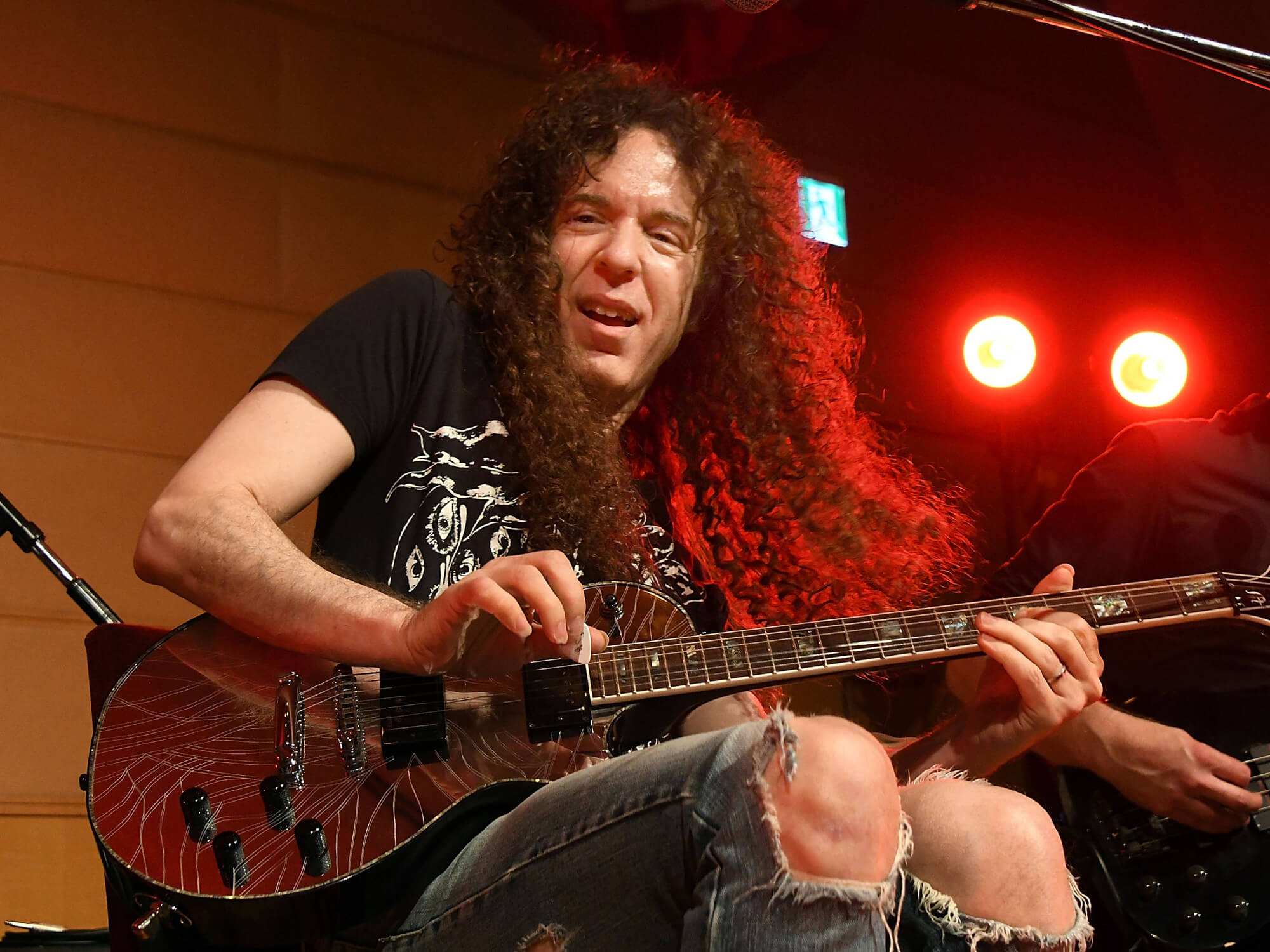
While hours of bedroom guitar practice will sharpen your chops, it won’t do much to help you find your musical identity – at least, according to Marty Friedman, who says the real magic begins when you’re forced into a ‘band situation’.
Speaking to English guitarist and YouTuber Bradley Hall, the former Megadeth guitarist explains that practising alone – even for hours a day – can only take you so far when it comes to developing a personal voice on the instrument.
“It takes so much to get your own thing down,” Friedman says. “Band situations is the way to get your own thing quicker than practicing. I don’t think there’s anything that you can really practice at home that’s gonna get your identity as well as being in a band, because then you’re forced to [think], ‘Now, this is your part.’ You’re the league. You’re George Harrison, or you’re Paul McCartney.”
The former Megadeth axeman also credits punk rock and Kiss as the major influences that first made him want to pick up a guitar.
“I think, when you start playing, there are things that happen that influence you enough to want to pick up a guitar in the first place,” Friedman explains. “That probably never leaves you, right? As you know, picking up a guitar and then playing it forever, it’s kind of a big [thing] – something big had to happen to make you do that crazy thing, right? So in my case, it was punk rock and Kiss.”
Even now, those early influences continue to shape how he approaches the instrument.
“I gravitate to those types of things when I’m playing rhythm,” says Friedman, noting that it also explains why certain modern techniques don’t feel as instinctive to him.
“Hence, I don’t have all of the modern rhythm chops. I mean, I can do them when necessary, but it’s not always as comfortable as [it is for the] guys [who] grew up in the 2000s, and that’s what made them start playing.”
The post Marty Friedman explains why practicing guitar at home won’t help you find your own sound appeared first on Guitar.com | All Things Guitar.
Yungblud claims that the “bitterness” and “blind negativity” he experiences is discouraging the next generation of rock artists from “trying at all”

Yungblud has addressed the criticism he routinely faces within rock, warning that “blind negativity” in the genre could be doing lasting damage to its future.
At 28 years old, Yungblud AKA Dom Harrison is one of rock’s most talked-about rising stars, having captured the world’s attention last year with his tribute to Black Sabbath at Back to the Beginning.
But while some see him as a symbol of the genre’s next chapter, others remain unconvinced – with members of The Darkness, for one, recently questioning his place in rock’s lineage.
Speaking to Loudwire, the British artist reflects on the level of criticism he routinely faces online, arguing that the “bitterness” aimed at new rock artists can have a far wider impact than people realise. According to Harrison, constant scrutiny doesn’t just affect established names – it risks discouraging younger musicians from even getting started.
“On my third album, a lot of people had an opinion about me,” he says, adding that being so publicly dissected isn’t always easy to navigate.
“People like me or people don’t and that’s not always easy to handle,” Yungblud admits. “It can make you feel really isolated and it can actually deter you as a young musician.”
“But to be honest, ultimately, I think that’s the reason why I’m fucking here – to take on the bitterness a little bit because people don’t realise that this blind negativity deters young musicians from trying at all.”
Elsewhere in the conversation, Yungblud also reflects on how his love for rock ‘n’ roll was shaped long before all the online discourse. Growing up in the north of England, he spent much of his childhood immersed in his family’s guitar shop.
“It was the coolest adventure,” he recalls. “Me dad and me grandad had a guitar shop in the north of England and I used to go in every day and I was exposed to rock music at four years old, three years old. I got taught guitar by the guys who would work in the shop – I got brought up on the good shit.”
That early exposure, he says, shaped not only his sound but his outlook – including his affinity for artists who divide opinion. Yungblud points to his bond with Smashing Pumpkins frontman Billy Corgan, whom he collaborated with on a reimagined version of his Grammy-nominated song Zombie, connecting over their shared experience of being polarising figures in rock.
“Isn’t it funny that every fucking great rock star was always hated? It almost encourages you more to use it as fuel and fight back,” says Yungblud.
The post Yungblud claims that the “bitterness” and “blind negativity” he experiences is discouraging the next generation of rock artists from “trying at all” appeared first on Guitar.com | All Things Guitar.
Megadeth wont be returning for any surprise ‘reunion’ tours, insists Dave Mustaine

As reunion tours become increasingly popular, plenty of bands are tempted to return to the stage for one final romp. From Slayer’s 2024 reunion, to Kiss performing on this year’s Kiss Kruise despite calling it quits in 2023, ‘goodbyes’ are apparently temporary nowadays. However, Dave Mustaine insists that Megadeth’s 2026 farewell will truly be the end.
In a new interview with Metal Hammer, Mustaine explains that, unlike his musical peers, Megadeth wont be returning after their 2026 tour. When asked if the band might return, he says “I don’t think so,” adding that Megadeth are a band that “stick to their word”.
“You see the scuttlebutt that is associated with [veteran rock] bands… you know they’ll never follow through with it and stick to their word,” he says. “There’s so many musicians that have come to the end of their career, whether accidental or intentional. Most of them don’t get to go out on their own terms on top, and that’s where I’m at in my life right now.”
Megadeth’s goodbye will be marked by a release of a final self-titled record in January. The record will be the band’s 17th full-length release, and will even feature a cover of Metallica’s Ride The Lightning in honour of Mustaine’s stint in Metallica between 1981 and 1983.
However, while Mustaine claims that Megadeth will record “no more studio albums,” he notes that a live album of the band’s final tour could very well be on the cards. “Might there be a live album at the end of all of this?” he teases. “Yeah, it certainly looks that way.”
While Mustaine is firm about 2026 being the end of Megadeth, he does admit that the change will be strange. “I can’t really conceive of an end right now,” he says.
“I think for all of us, we’re always going to be in Megadeth,” he adds. “We’re always going to be brothers now and best friends, and we’re always going to be responsible for making some of the most fun music that bassists and guitarists and drummers will ever want to play.”
When Megadeth first announced that 2026 would see them finally calling it quits, Mustaine encouraged fans to focus on the positives. “Don’t be mad, don’t be sad, be happy for us all, come celebrate with me these next few years,” he wrote in a statement. “We have done something together that’s truly wonderful and will probably never happen again.”
Rather than thinking of the band’s end, Mustaine wants fans to focus on the legacy they are leaving in their wake. “We started a musical style, we started a revolution, we changed the guitar world and how it’s played, and we changed the world,” he explained. “The bands I played in have influenced the world. I love you all for it. Thank you for everything.”
Megadeth’s final album will drop on 23 January. For more info, head to Megadeth’s official website.
The post Megadeth wont be returning for any surprise ‘reunion’ tours, insists Dave Mustaine appeared first on Guitar.com | All Things Guitar.
How Wheatus distorted an acoustic guitar to make Teenage Dirtbag an early 2000s classic

“I thought it was a peculiar track and interesting and people might like it, but I had pretty much excluded the possibility of it being a single of any kind,” exclaims Brendan B Brown, frontman, guitarist and songwriter of Teenage Dirtbag, the 2000 anthem by Brown’s group Wheatus that appeared on the group’s self-titled debut album.
It’s now 25 years since Teenage Dirtbag took Brown from playing to a handful of people to taking to the festival stages around the world. The song hit number one in several countries, including Australia, and made the top 10 in the US and UK. No one is more surprised at the song’s longevity than Brown himself. “I thought it was too long and that it had this kind of character switch in the middle that felt a bit theatrical,” he says.
- READ MORE: Trivium’s Matt Heafy names the five up-and-coming metal bands everyone needs to watch in 2026
Teenage Dirtbag’s instantly recognisable and unmistakable opening riff came about after Brown struggled to figure out Mark Knopfler’s opening guitar riff to Dire Straits’ Money For Nothing.
“I was trying to get my head around Mark Knopfler’s playing of the riff on Money for Nothing,” he explains. “It was such a big single when I was a kid. In the video it had Mark’s pinky sticking out, and I remember thinking, what’s he doing? And I ignorantly stabbed at that for many, many moons.
“Eventually I came up with my own version of it, which was similar, in regards to the shape of the hand. I wasn’t taught to do it by anyone. I just watched him in the video, as the video starts with a big closeup of Mark playing it, and I went from there.”
Brown’s attempt at mastering Knopfler’s legendary ‘clawhammer’ fingerpicking style was further informed by two other unlikely sources.
“I realized that AC/DC’s Malcolm Young did it on Rock and Roll Ain’t Noise Pollution too, and also Angus Young on Who Made Who,” he says. “So, I really learned how to play fingerstyle from rock and roll guitarists, which was kind of a little weird. You’re supposed to play fingerstyle with the pinky but I got there with my own incorrect version of it.
“Playing the main riff to Teenage Dirtbag absolutely destroys my fingernails on tour, so much so that I have to put glue on them to keep them together. It’s quirky how I play it too with a sort of thumb, thumb, finger pluck, thumb, thumb, finger pluck pattern. It’s very percussive, like a kick, kick, kick, snare, kick, snare, kind of thing.
“I’m just using a regular standard E major chord which to me, is a big chord. There’s a lot of big rock records that have big sounding opening E chords. For example, you have Back in Black and you have Rush’s Tom Sawyer. And those two songs came out around the same time and were big tunes back then, so, it inspired me to write a song that had a big E chord in it, too, which I did with Teenage Dirtbag.”
Leader Of The Gang
First written and demoed back in 1995, Brown asserts the song was pivotal in his transition from band member to frontman. “Doing the demo was the first exploration for me as to what it would be like to be the leader of a band where my voice was the lead voice,” he says. “And that’s a very nerve wrecking thing to try and do after you’ve only been a guitar player in previous bands, and feeling not very confident about.
“I did the demo on a Tascam Portastudio 424, one of the small four track units, which I still have in the attic. The finished recording was recorded on a Tascam DA-78HR system, which was the front loading ADAT machines from Tascam that you would stack and sync together. We had four of those that we bought with our advance money.”
The song’s change in dynamics, from acoustic driven verses to a choir of distorted electric guitar in the chorus has proved a mystery to many in how Brown achieves those heavily distorted tones. His answer will surprise somewhat.
“There’s no electric guitars whatsoever on the recording,” he reveals. “A hundred percent of the electric guitar that you hear on the record is a Martin 00016 TR. A guitar I picked up from the Guitar Center in Los Angeles. When I first played it, I was like, ‘Yeah, this is the one’. So, I took it home and it’s been with me ever since. It’s also the one that’s in the video, too. It’s retired from the road now as it’s a little too fragile. But it spent a good 15 years on the road with me.”
In order to achieve the distorted tones on the recording, Brown plugged his Martin into a SansAmp PSA-1 preamp, “with some very particular settings”.
“And I doubled-tracked it twice,” he adds. “So, there’s two performances on the right, and two performances on the left. I also took a Mesa/Boogie Subway Blues amp that I had, and put the volume knob just right before the breakup point so that if I played it hard, it gave me a little bit of tube distortion from the power amp tubes. And if I backed off of it, it would give me a sort of chunky clean sound. And I overdubbed one per side, too. When you listen to the Teenage Dirtbag recording, you’re hearing six tracks of six performances of guitars. So, there’s six layers of guitars on there.”
The song has of course become a staple of the band’s set ever since, but replicating that tone in the live environment proved challenging, but Brown found a way around it. “When it came to getting that distorted tone live, I initially was using a little Danelectro Daddy-O pedal for the real fuzz to give me that crunch, and an Ibanez Tube Screamer for just a bit of overdrive,” he says. “And I had it split through a Whirlwind ABY Splitter where I had the acoustic sound going out. Eventually, I put the acoustic sound on a volume pedal, so that it ducked when I played the ‘electric’ part. So, I was initially just tapping on and off the distortion pedal when playing Dirtbag. Then I switched over to expression pedals with the DigiTech 2120s [a rack-based valve amp simulator] which is what I now use.”
It’s an unconventional way of doing things, but one that fits perfectly in with the history of this most eccentrically recorded, but enduringly popular, slice of early 2000s rock.
The post How Wheatus distorted an acoustic guitar to make Teenage Dirtbag an early 2000s classic appeared first on Guitar.com | All Things Guitar.
Martin 000 Jr E Jeff Tweedy review – “I’ve played instruments that cost twice as much that don’t have this level of even tonality”

$1,149/£1,175, martinguitar.com
Martin and Wilco frontman Jeff Tweedy have some history. Back in 2012, the pair collaborated on the 00DB Jeff Tweedy – a guitar based very loosely on the 0-18 guitar he’d owned and played extensively on albums since the 90s.
People loved that guitar, but such is the nature of endorsement deals and licensing arrangements; it was discontinued in 2019. However, the tail end of 2025 brought happy news. Not only would Martin and Tweedy be renewing their relationship, bringing the 00DB Jeff Tweedy back into the lineup, but it would be joined in the lineup by a new and more affordable signature guitar, enter the 000 Jr E Jeff Tweedy.
 Image: Press
000 Jr E Jeff Tweedy – what is it?
Once you’ve managed to work your way through its rather elongated name, the 000 Jr E Jeff Tweedy is a small-bodied electro-acoustic that’s rather different from the 00 model. For a start, this guitar is made in Martin’s Navojoa, Mexico factory – which is why it costs the best part of 3,000 bucks less than the 00DB – but that’s not all.
Rather than a 00 body shape, the Tweedy uses the similar but slightly shallower 000 Jr body shape – as used to great effect in the Shawn Mendes signature as well as the most recent 000 Jr that Josh was so effusively impressed with earlier this year.
Like that 000 Jr, it has a solid Sapele construction, but here instead of the open-pore finish of the Junior series we get a rather handsomely applied Tweedy Burst. Unlike that Junior series, all the woods used in this guitar are FSC-certified, including the ebony fingerboard. That neck is a little shorter in scale than the DB, too – but it’s still ‘full size’ at 24.9 inches.
You also get a set of upgraded nickel Grover open-gear tuners for a vintage look with improved stability. Electronics are provided courtesy of Martin’s trusty E1 system, and you also get a soft shell gigbag for your money, too.
 Image: Press
000 Jr E Jeff Tweedy – playability and build
Before we start, a confession – I didn’t really want to review this guitar. When I saw both of the revealed Tweedy models, the guitar I was excited about was the reborn 00DB… so I was kinda bummed out when Editor Josh asked me to check out this one instead.
You hear the word Junior, and you assume that the guitar is going to be… well, junior! A smaller and less robust version of the original? I obviously forgot about all the amazing Les Paul Juniors!
Regardless, this preconceived notion didn’t last long – pretty much from the second I pulled it out of the gig bag and tuned it up. Instantly, it didn’t feel like a small guitar, with that 24.9-inch scale length it has the playing experience of a full-sized instrument, but with the comfort and portability of a travel guitar. I was caught off guard.
The nicely applied burst also makes it feel some distance away from the student guitar I had in my head. The comfortable PA neck shape and graduate Performance Taper carve makes this a very fluid and comfortable instrument to play. While the stripped-down Junior series often feels like ‘My first Martin’ visually, this really does feel elevated to go with that price tag.
 Image: Press
000 Jr E Jeff Tweedy – sounds
If I was wrong-footed by how impressive this guitar looks and feels, the first strum of an open E chord was enough to knock me on my behind. Despite its compact body dimensions, the Tweedy has a full, warm and balanced tonality from E to E string – something that’s probably a combination of sapele’s mahogany-like qualities, plus that rather fetchingly striped ebony fingerboard.
There’s no overabundance of anything here – bass, middle or trebles – it’s just impressively and compellingly even and balanced reproduction of each string. It’s a rare and impressive thing for a guitar in this price bracket – I’ve played instruments that cost twice as much that don’t have this level of even tonality. It’s a guitar that’s begging to be taken into the studio and recorded with.
In the studio, you’re likely gonna want to mic this thing up, but if you’re playing out (or lack a good mic at home) you have the option to go direct thanks to the onboard E1 electronics.
Running into my BOSS AC-22LX acoustic amp for testing purposes, I found that the pickup did a nice enough job of replicating that balanced tonality of the unplugged instrument – though it did need a little bit of chorus and reverb added on the amp side to really open it up.
The onboard tuner is fast and accurate, and having that phase switch certainly is handy if you have any issues with amps or PA systems in a live environment.
 Image: Press
000 Jr E Jeff Tweedy – should I buy it?
I know when to admit I’m wrong, and in this case Josh was entirely correct in picking this guitar for me to review. I assumed that a budget model would offer a markedly inferior experience to the US version – instead we have something that stands on its own two legs as a compelling guitar in its own right.
This is the most balanced acoustic guitar I’ve played or reviewed that costs less than $3,000 – so while that pricetag might seem a lot compared to other Martin 000 Jr models, you have to realise we’re dealing with a pretty special instrument here.
It’s also a fantastically portable instrument, and it’s the sort of thing I wouldn’t hesitate to take to a songwriter round, a jam session, or even to the studio. It offers the sort of balanced and compelling sound of a full-sized Martin in a travel guitar body – I didn’t think it would be possible, but I’ll say it again, I was wrong!
 Image: Press
Martin 000 Jr E Jeff Tweedy alternatives
The basic Martin 000 Jr Sapele is a very impressive guitar for a lot less money ($749/£749), though it lacks some of the visual and sonic refinement of the Tweedy. Another seriously impressive small-bodied guitar is the Taylor GS Mini e-Koa Plus ($1,199 / £1,099), while the Breedlove Oregon Companion CE ($1,999) is a lot more expensive than the Tweedy, but it sounds fantastic.
The post Martin 000 Jr E Jeff Tweedy review – “I’ve played instruments that cost twice as much that don’t have this level of even tonality” appeared first on Guitar.com | All Things Guitar.
The Lowdown: Why Do We Never Take Lessons as Professional Musicians?

In late 2015, I basically quit playing bass and spent a year traveling with the Bryan Brothers as their fitness coach. For those not familiar with the tennis world, they’re the most successful doubles team of all time, with 119 titles as a team, 16 Grand Slams, an Olympic gold medal, and a record 438 weeks (including 139 consecutive) at number one in the world.
Much like I’m an amateur tennis player, they’re amateur musicians. We met through music, specifically through our mutual friend James Valentine from Maroon 5, who is also way into tennis.
I was going through a divorce and needed a change of scenery. They had just lost early in the US Open and were back in California, so we started training together. They asked if I wanted to come out on tour with them—initially to make a bit of a documentary, as their career was going to wind down in the not-too-distant future. As we trained more, that morphed into going to the world tour finals in London, me becoming part of the team, working the off-season with them at the end of 2015, and then getting on a plane to Australia to start the 2016 season.
“I realized very early on that any serious tennis player on the modern tour doesn’t step foot on a court or into a gym without a coach or trainer. Ever.”
Early in the season, I woke up to my phone melting down in Australia because Bob had given an interview with The New York Times and mentioned me joining the team: “…Janek Gwizdala, an accomplished jazz musician turned fitness guru.” I didn’t realize how many of my music friends were into tennis until that moment, but they sure let me know about it double-quick. Most didn’t believe I was actually on the tour until I was getting them tickets to come see our matches.
All this is to say, I got to see the real day-to-day workings of professional athletes—not just at the top of their field, but at a historically important and legendary point in their careers. We practiced alongside Nadal and Federer regularly, did cryotherapy with Djokovic, and shot the shit in the physio room with Andy Murray. As a tennis fan, it was off the charts.
But when I eventually returned to being a musician and got back into the swing of my musical career, I carried a lot of priceless information with me from my time running around the world on the ATP Tour.
Most importantly, I realized very early on that any serious tennis player on the modern tour doesn’t step foot on a court or into a gym without a coach or trainer. Ever.
And what do we do as musicians? If—and that’s a big if—we go to some sort of music school between 18 and 22, we leave, we’re flat broke because it cost a fortune, and we might never take another lesson for the rest of our careers.
Not once in my 20s, having quit Berklee and moved to New York City, did I have anyone consistently guiding my playing, my mental capacity to deal with what it takes to break into the New York scene, my choices of gigs, sessions, tours—anything. I had friends, sure. We’d talk and commiserate over certain things. But they had no more experience than I did, for the most part.
Sometimes you’d be lucky enough to make friends with a far more senior musician in the scene, and you’d hang on every word and story like a kid getting to stay up late watching TV you shouldn’t see that young. But as amazing as those stories were, they were stories from a bygone era that bore little relevance to where I was at.
What I’ve made a conscious effort to do over the past decade—since that incredible experience of being in a completely different, intense professional scenario—is seek out advice, mentorship, lessons, and coaching whenever possible. Sometimes that’s been for my music, sometimes for business, other times for health or fitness when I’m trying to add something to my routine and want to get the most out of it.
If you’re a beginner or a pro—especially a pro—get a local teacher. Find someone you trust, someone you respect, and take a lesson once in a while. It’s amazing to have someone to talk to, to gain confidence from, and to help you remember you’re not alone in so many of the things we struggle with as musicians.
The Sounds of 2025: 25 Must-Hear Albums

“I’ve learned so much from classical music”: Marty Friedman on why every rocker should study classical music

On the surface, the worlds of rock and classical music couldn’t be further apart. However, former Megadeth guitarist Marty Friedman insists that listening to classical music could teach all rock and metal musicians a trick or two.
Speaking with interviewer Tobias Le Compte, Friedman reveals that he listens to classical music “all the time”, because he is constantly “learning” new skills from it. “I’ve learned so much from classical music and have played classical music, as a soloist, with many big orchestras,” he explains [as transcribed by Blabbermouth].
Rather than restricting yourself to the conventions of one genre, Friedman insists that all musicians should explore different worlds of sound. Rather than simply thinking “the grass is greener on the other side”, classical artists should allow themselves to “rock out, shake their asses and bang their heads”, just as Friedman is allowing himself to embrace the “big crescendos of classical music”.
The difference can sometimes be a challenge, but it’s worth it. He notes that even the nature of a classical performance can push you to your guitar limits. He recalls a recent performance with Antonín Dvořák, which saw him performing non-stop for a solid 25 minutes. “All the cues are so different from a rock band,” he explains.
“It takes so much work to do; it’s a whole different lifestyle,” he adds. “It took a lot of practising, rehearsing and learning in a different way. So I learned a ton from it, and I’ve done that several times now… it’s such a thrill.”
Plenty of other rock and metal guitarists have also cited classical music as a huge inspiration. Tim Henson in particular was classically trained in violin, which has massively informed Polyphia’s expansive, progressive sound. Elsewhere, Randy Rhoads’ complex solos are also classically informed.
Yngwie Malmsteen also praises the influence of classical music on his guitar playing. He has previously claimed that listening to German composer Johann Sebastian Bach had a far greater impact on him than, say, Deep Purple’s Ritchie Blackmore. “I based my guitar playing on classical violin, not guitar,” he revealed at Hellfest in 2024.
“I love Ritchie Blackmore, no doubt about it, but my playing is nothing like his,” he said. “It sounds a bit old fashioned to me when people tell me I was influenced by Blackmore: just listen to how we play!”
On the more experimental end of things, Polish guitarist Marcin Patrzałek’s unique Flamenco-tinged percussive fingerstyle approach to his instrument is also massively influenced by his classical training.
The post “I’ve learned so much from classical music”: Marty Friedman on why every rocker should study classical music appeared first on Guitar.com | All Things Guitar.
The Sounds of 2025: Guitars and Gear that Carried the Acoustic Tradition Forward

“That track was about as metal as it gets!”: Robert Fripp argues that this King Crimson track laid the foundations of heavy metal

Black Sabbath’s 1970 self-titled debut famously changed the face of metal forever. Without it, we wouldn’t have heavy metal – but, if you look further back, other artists were also beginning to explore heavier sounds. In fact, Robert Fripp believes that King Crimson’s 1969 debut helped lay the foundations of metal’s heavier sibling.
In a new interview with Guitar World, Fripp notes that King Crimson’s influence on heavy metal is often ignored. He argues that the band’s In the Court of the Crimson King record, and particularly the track 21st Century Schizoid Man, was “about as metal as it gets”.
“I saw a recent video on YouTube on the 10 precursors to heavy metal, and 21st Century Schizoid Man wasn’t among them,” Fripp says. “That’s absurd!”
While Crimson are often branded as a prog unit, the essence of metal has always rumbled beneath the surface. “The powerful, metallic element has always been there in Crimson,” the guitarist insists. “For me, it became increasingly articulated in the simple question: What would Jimi Hendrix have sounded like playing a Béla Bartók string quartet?”
“In other words, the sheer power and spirit of the American blues‐rock tradition speaking through Hendrix’s Foxy Lady or Purple Haze,” he adds.
Don’t just take Fripp’s word for it – even the Prince of Darkness himself paid tribute to the track 20 years ago. Ozzy Osbourne’s cover of 21st Century Schizoid Man features on his 2005 solo record, Under Cover, and is comfortably suits Osbourne’s heavy metal edge. “[Ozzy] was always generous enough to acknowledge Crimson,” Fripp notes.
Elsewhere, The Who’s Pete Townshend also acknowledged the track’s heavier textures back in 1969. “21st Century Schizoid Man is everything multitracked a billion times, and when you listen, you get a billion times the impact,” he wrote in a teaser ad prior to the release of Court of the Crimson King [via Rolling Stone].
“Has to be the heaviest riff that has been middle frequencied onto that black vinyl disc since Mahler’s Symphony No. 8,” he added.
While Crimson’s experimental sound has taken on many forms, Fripp argues that the band’s “metal voice” can be found everywhere. From their debut, to 1973’s Larks’ Tongues in Aspic, metal has always played a small part in the Crimson formula.
The post “That track was about as metal as it gets!”: Robert Fripp argues that this King Crimson track laid the foundations of heavy metal appeared first on Guitar.com | All Things Guitar.
Boss XS-1 Poly Shifter review – all the magic of the XS-100 in a smaller, smarter format

$209.99/£198, boss.info
Hey, have you ever considered that maybe you’ve got too many effects pedals? One answer might be to sell some of them – ha, imagine! – but another way to make more space is simply to get smaller ones. Boss knows this, and that’s why the XS-1 Poly Shifter exists.
Launched alongside the powerful but slightly enormous XS-100, this is the same kind of multi-function pitch-shifter, powered by the same all-new algorithms, but offered in the standard Boss form factor that’s been ruling stages since the 1980s. So… perhaps you’ve got room in your life for one more pedal after all?
 Image: Press
Boss XS-1 – what is it?
By all means have another quick read through my review of the XS-100, because the basics are unchanged (plus I really like the line about the elephant). But here’s a mini-recap anyway: with these two pedals, Boss is making a play for the market currently dominated by DigiTech and its Whammy range of pitch-manipulators. You can shift up or down, from a single semitone to a multi-octave interval, you can blend that sound with your dry signal, and you can also select ‘detune’ mode for more subtle chorus effects.
Obviously the bigger unit has an expression treadle, plus a screen for navigation (including presets) and the option of stomping between two different intervals – none of which is present here. For the record, the maximum interval has also been cut from four octaves to three; but seeing as a three-octave leap is still more than any human could possibly find a genuine use for, that hardly qualifies as a compromise.
 Image: Press
Boss XS-1 – is it easy to use?
This being a Boss pedal with two knobs and two switches, it couldn’t be any easier to use unless it had arms that stuck out of the sides and played the guitar for you. We’re talking real ‘don’t bother with the manual’ stuff here, and that’s quite a change from the logical but multi-layered operation of the XS-100.
The first knob controls the balance of the output signal, from all dry to all pitch-shifted; the second controls the shifting interval, which can be anywhere between one and seven semitones (ie: a fifth), or one, two or three octaves. The little toggle switch below that selects up, down or the detune option, while the one on the left lets you set the footswitch to latching or momentary mode. And that really is everything.
 Image: Press
Boss XS-1 – what does it sound like?
When it comes to the sounds, it’s all about the algorithms – and so this part of the review could almost be a direct copy of what I wrote about the XS-100. The crucial part is that the latency is impressively low and the processed tones are impressively pure, with barely a hint of the digital scratching and crackling that you might associate with pedals of this type.
The available effects can be divided into four broad categories: down-tuning for baritone-style metal riffing; up-tuning for a virtual capo and/or impossibly high widdling; blending in an up-octave for an approximation of a 12-string sound (you’ll want the balance at around 10 o’clock for this); and blending in any interval for tight-tracking harmonies. Oh, and that’s not counting the detune effect, which is much easier to access here than on the bigger unit thanks to that dedicated switch. It sounds really rather nice in an 80s kind of way, and can be adjusted using the two knobs.
The one thing you can’t do, of course, is Whammy-style soaring and swooping, which depends on foot control… but there is an input for an expression pedal, so even that isn’t completely off the table. Make sure you’ve got one that’s Boss-friendly, though: my Moog EP-3 normally gets on great with every stompbox it sees, but it sounded all sorts of wrong with this one.
 Image: Press
Boss XS-1 – should I buy it?
By now the reasons to buy into Boss’s new XS range should be clear: put simply, it’s got the best algorithms. So if you’re after purity and realism above all, then this has to be the first name on your shopping list.
That just leaves the question of which model to get. The XS-100 is a chunk of fun for sure, but I like the XS-1 a lot more. It’s got all the features you need – compatible expression pedal permitting – plus it’s far cheaper, it’s easier to use and it takes up much less space. Just don’t blame me if you end up buying three more pedals to fill the gap.
 Image: Press
Boss XS-1 alternatives
The DigiTech HammerOn ($299/£219) is one of three compact pedals in the Whammy family, and offers up/down shifting plus lots more besides. A simpler option is the Electro-Harmonix Pitch Fork ($198/£169), and a more complicated one is the full-size Boss XS-100 ($349.99/£299).
The post Boss XS-1 Poly Shifter review – all the magic of the XS-100 in a smaller, smarter format appeared first on Guitar.com | All Things Guitar.
Top 10 Rig Rundowns of 2025
This year was a big one for the Rig Rundown crew! John, Perry & Chris traveled to Boston, Cincinnati, Chicago, Milwaukee, and even a cave in Tennessee, while of course foraging in their home base Music City, to gather the biggest, brightest (and loudest) setups touring the world. Find out the most-popular episodes and behind-the-scenes adventures the tres amigos encountered in 2025.
Rig Rundowns supported by D'Addario
HONORABLE MENTIONS:
Rig Rundown: Jeff Tweedy

The Wilco frontman’s ’90s pawn shop raids are paying off decades later.
Rig Rundown: Marty Stuart & His Fabulous Superlatives
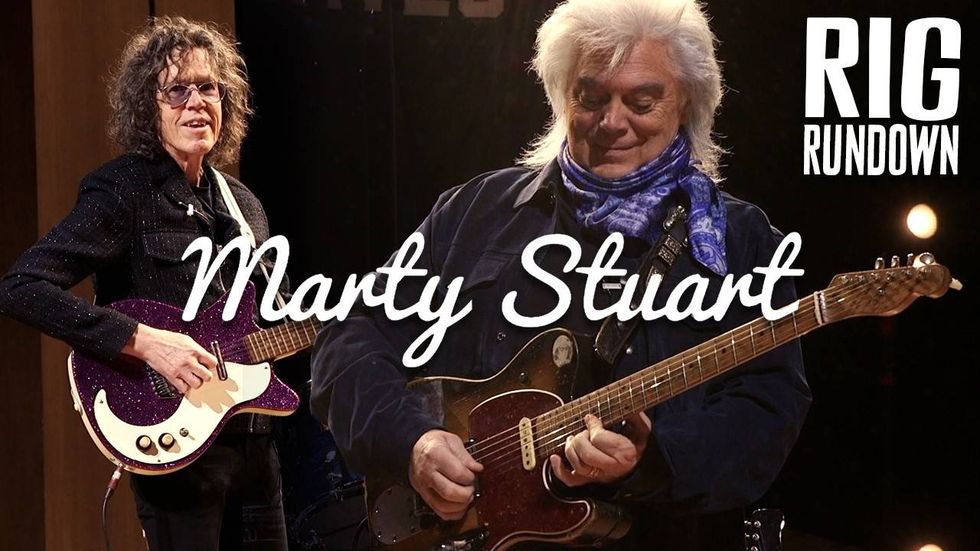
The legendary country musician and his right-hand man, guitarist Kenny Vaughan, prove that Fender guitars through Fender amps can still take you a long way in this world.
THE TOP 10:
10. Marty Friedman Rig Rundown
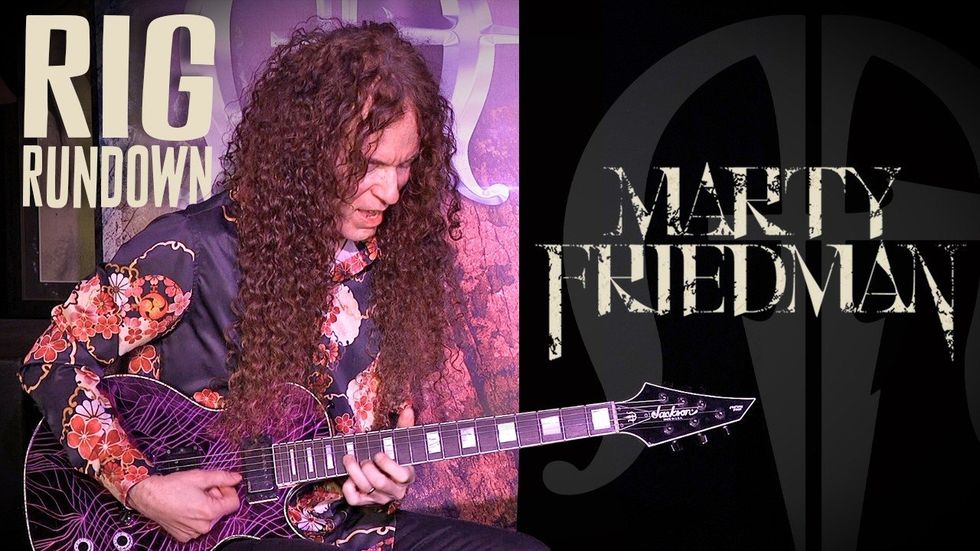
Marty Friedman and his trusted tech, Alan Sosa, who handles all effects switching manually during the show, showed us the goods.
9. The Who Rig Rundown
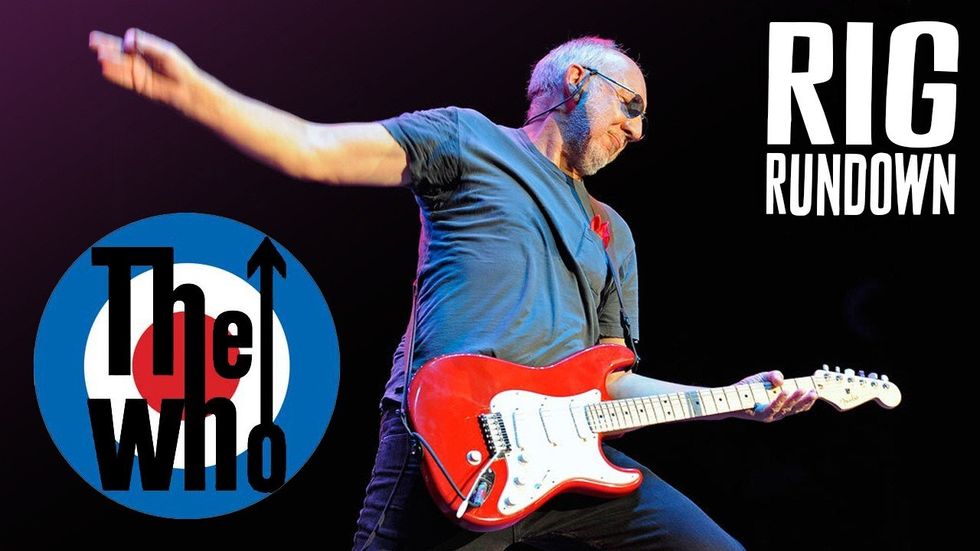
The Who need no introduction, so let’s get to the good stuff: PG’s John Bohlinger caught up with the band’s farewell tour at Fenway Park in Boston, where guitarist Pete Townshend’s tech Simon Law and bassist Jon Button’s tech Joel Ashton gave him a look at the gear that the infamous British rockers are trusting for their goodbye gigs celebrating 60-plus years together.
8. Fontaines D.C. Rig Rundown [2025]

The Irish post-punk band’s three guitarists go for Fairlane, Fenders, and a fake on their spring American tour.
7. Steve Stevens Rig Rundown

The Billy Idol guitarist rides his Knaggs into Nashville.
6. Dann Huff Rig Rundown
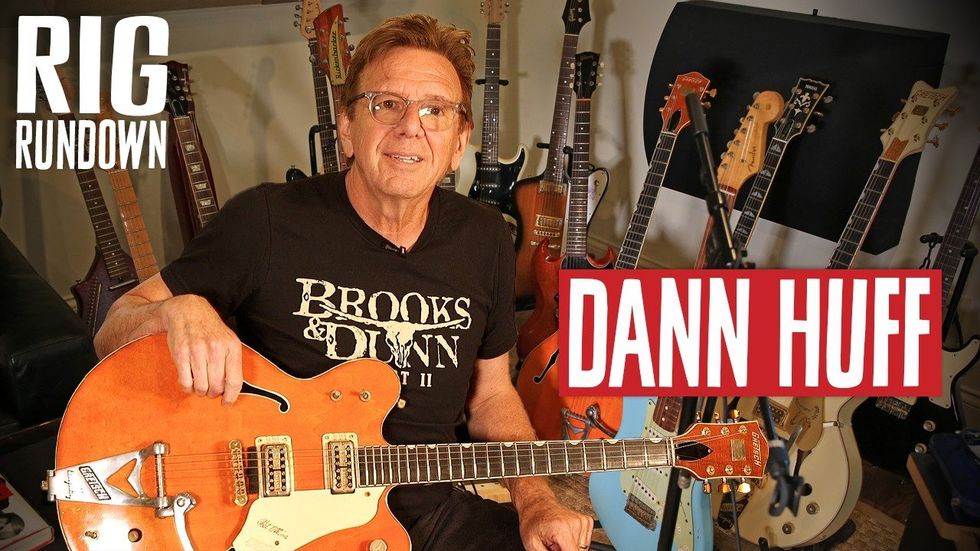
The all-star producer invites John Bohlinger to his home studio for a glimpse of his most treasured gear.
5. Queens of the Stone Age Rig Rundown with Troy Van Leeuwen

Fresh off a substantial break and a live acoustic recording from Paris’ infamous catacombs, hard-rock titans Queens of the Stone Age stormed back to life this spring with an American tour, including back-to-back nights in Boston at Fenway’s MGM Music Hall.
PG’s Chris Kies snuck onstage before soundcheck to meet with guitarist Troy Van Leeuwen and get an in-depth look at the guitars, amps, and effects he’s using this summer.
4. Keith Urban Rig Rundown for High and Alive Tour 2025
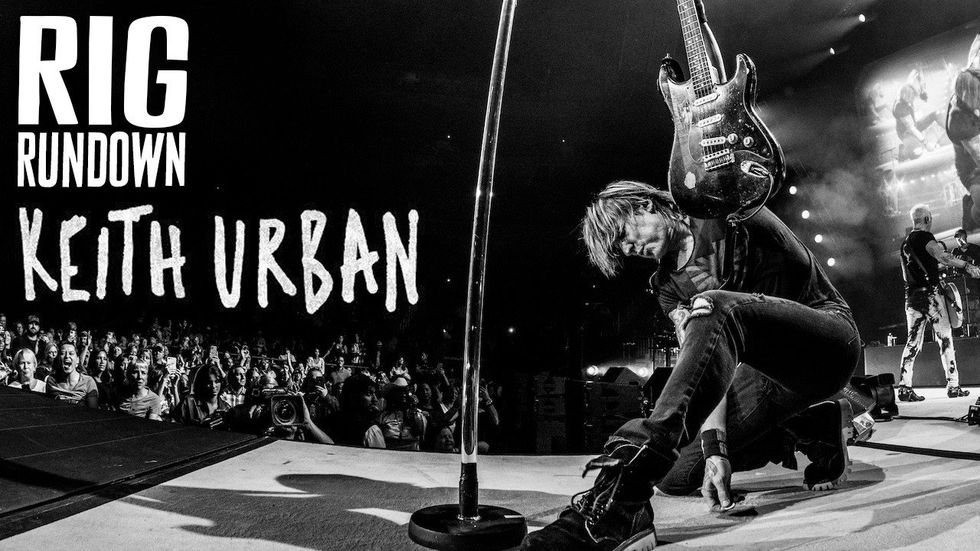
Down Under’s number one country guitar export—and November 2024 Premier Guitar cover model—Keith Urban rolled into Cincinnati’s Riverbend Music Center last month, so John Bohlinger and the Rig Rundown team drove up to meet him. Urban travels with a friendly crew of vintage guitars, so there was much to see and play. In fact, so much that they ran out of time after getting through the axes! Later, Bohli and Co. met up with Urban tech Chris Miller to wrap their heads around the rest of the straightforward pedal-free rig he’s rockin’ this summer.
3. System of a Down's Daron Malakian Rig Rundown
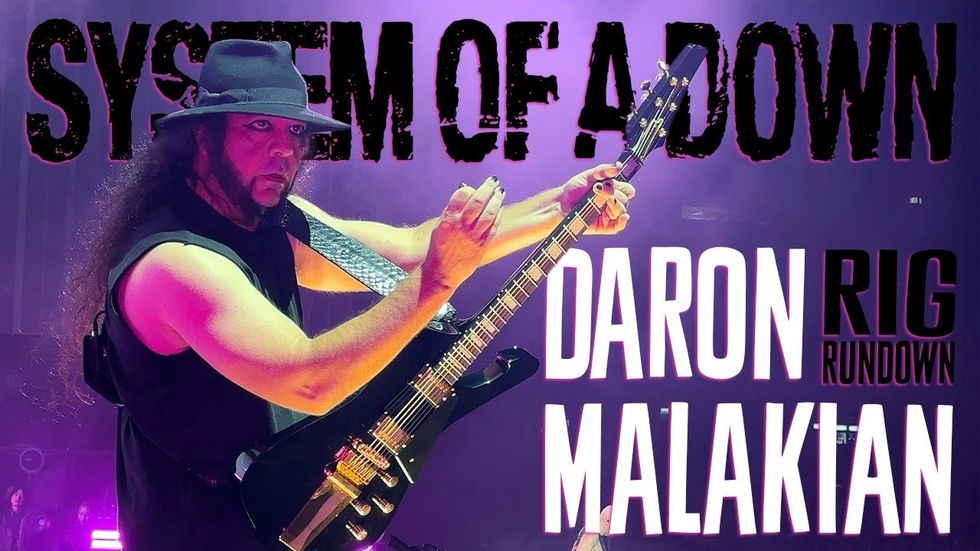
The metal giants return to the stage with a show powered by gold-and-black axes and pure tube power.
Except for two new singles in 2020, alt-metal icons System of a Down haven’t released new music in 20 years. But luckily for their fans, System—vocalist Serj Tankian, guitarist/vocalist Daron Malakian, bassist Shavo Odadjian, and drummer John Dolmayan—took their catalog of era-defining, genre-changing hard-rock haymakers on tour this year across South and North America.
2. Linkin Park Rig Rundown
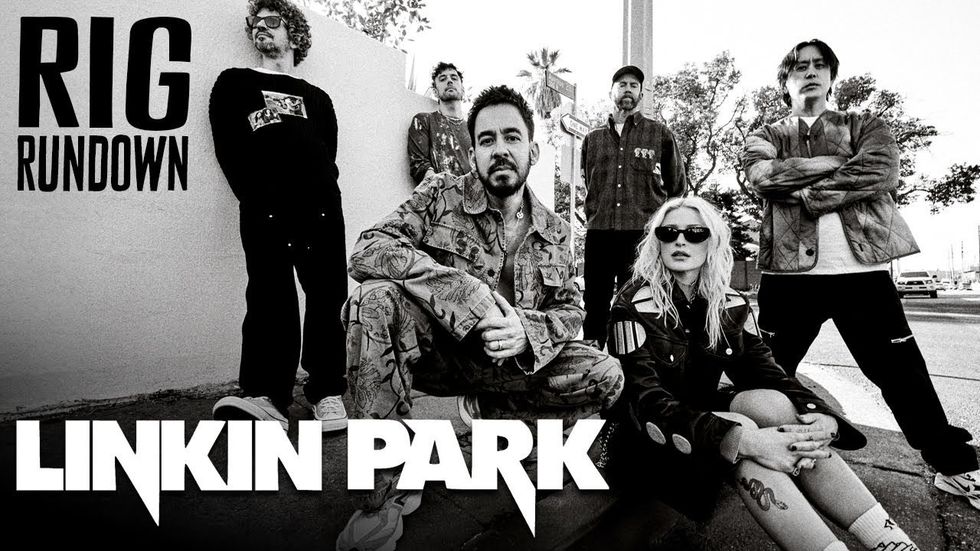
Linkin Park went on hiatus for seven years after lead vocalist Chester Bennington’s death in 2017, but last September, the band announced that they were returning with new music and a new lineup—including vocalist Emily Armstrong and drummer Colin Brittain. A new album, From Zero, was released in November 2024, followed by the single “Up From the Bottom” earlier this year, and this summer, the band tore off on an international arena and stadium comeback tour. Founding lead guitarist Brad Delson is still a creative member of the band, but has elected to step back from touring. And so on the road, Alex Feder takes his place alongside founding guitarist/vocalist/keyboardist Mike Shinoda, DJ Joe Hahn, and bassist Dave Farrell.
1. Deftones' Stephen Carpenter Rig Rundown
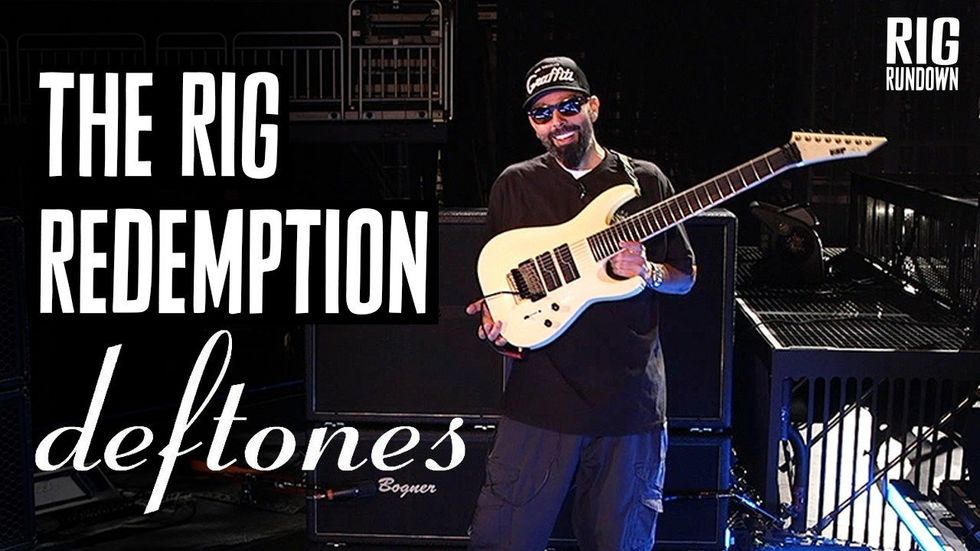
California metal giants Deftones returned this year with Private Music, their first album in five years. In support of it, they ripped across North America on a string of headline shows and support slots with System of a Down.
We linked with Deftones guitarist Stef Carpenter for a Rig Rundown back in 2013, but a lot has changed since then (and as Carpenter reveals in this new interview, he basically disowns that 2013 rig). Back in August, PG’s Chris Kies caught up with Carpenter again ahead of the band’s gig in Milwaukee, Wisconsin, where the guitarist gave us an all-access walkthrough of his current road rig.
Pages
