
Music is the universal language
“Glory to God in the highest heaven, and on earth peace to those on whom his favor rests.” - Luke 2:14
General Interest
Live Wire: A Conversation with Masterful Mandolinist, Guitarist, and Songwriter Sierra Hull

Höfner files for bankruptcy

Guitar and bass brand Höfner has filed for bankruptcy in Germany, a new filing in the Fürth District Court in Bavaria reveals.
Few details about the insolvency have been made public, however the filing does reveal that “provisional insolvency administration” has been ordered for Karl Höfner GmbH & Co as of 10 December. An insolvency administrator has been appointed, who will proceed to attempt to rectify debts over the next three months. Höfner has been contacted for comment.
The company has a long and storied history. It was founded by Karl Höfner in 1887, in what was then the Austria-Hungarian town of Schönbach, and is now Luby in the Czech Republic. Over the next few decades, the company grew to be one of the largest suppliers of stringed instruments in the area and for export. Operations were unsurprisingly scaled back during World War II, and its facilities were put to use making supplies for the German army. Germany’s postwar reconstitution meant the expulsion of Germans from Czechoslovakia, and Höfner relocated to West Germany, opening a new factory in Bubenreuth in 1950.
The company would go on to expand its facilities across the 50s, 60s and 70s. Höfner was acquired by the Boosey & Hawkes group in 1994, which led to further expansion. In 2003, Boosey & Hawkes sold its musical instrument division, including Höfner, to the Music Group as part of a rescue buyout. In December 2004, Höfner was sold to long-time general manager Klaus Schöller and his wife, finance director Ulrike Schrimpff.
The brand has made countless different instruments across its history, but one remains perhaps the most recognisable: the 500/1 bass guitar, AKA the Violin Bass, made most famous by Paul McCartney, who was seldom seen playing anything else while he was in the Beatles. The bass remains Höfner’s most recognisable instrument, and has seen many other notable users since McCartney. McCartney’s first 500/1 bass has its own unique history – it was stolen in 1972, only to be found in an attic in suffolk after nearly five decades of hunting.
Stay tuned for updates on this developing story.
The post Höfner files for bankruptcy appeared first on Guitar.com | All Things Guitar.
Scalpers are ruining the fun for real guitarists – and now I have the data to prove it

In one of the many ways that I am crushingly unoriginal as a guitar player, Back To The Future is a Very Big Deal for me. To call those three movies formative on me probably understates things somewhat.
Among the guitars and sports memorabilia that clutter up my home office, an ‘OUTATIME’ license plate sits proudly on my desk, while an Enchantment Under The Sea Dance poster sits framed over my shoulder. So unabashed is my love of BTTF in fact, that when I left Guitarist magazine a decade ago, the traditional ‘leaving cover’ given to departing staff as a farewell saw me expertly photoshopped into the red body warmer of Marty McFly, stepping out of a DeLorean.
All of which is a roundabout way of saying that when, earlier this year, Gibson and Epiphone announced their partnership with the movie to release a pair of commemorative instruments modelled on the mythical ES-345 used by Michael J Fox in the movie, I was paying attention.
The cold financial realities of being a guitar journalist meant that I was never going to be in for one of the 20 grand Gibson models, but the Epiphone version? That might well be in reach… or so I thought.
Because in reality, I would have needed a time machine built out of a DeLorean to get one – by the time I’d umm’d and ahh’d about whether I really needed it (I didn’t, by the way) all 1,985 of them had sold out.
I wasn’t really surprised by that– I doubt you were either. I am far from alone in being a guitar player for whom Back To The Future was hugely important to them. I’ve interviewed a lot of musicians who were born between 1970 and 1990, and by and large it’s more notable when one of them doesn’t cite Marty McFly as a musical touchstone.
And yet in the back of my mind, I knew it wasn’t just that. Plenty of genuine fans were buying the guitars, sure – but as the brand new instruments started popping up on Reverb and eBay with vastly inflated price tags in the following weeks, it was clear that plenty of people had simply bought them to flip for a profit. And it was even worse with the Gibson version.
Obviously, I wasn’t surprised by this. Scalpers are a fact of life in a culture that has become more and more obsessed with limited-edition drops and artificial scarcity. Whether it’s trying to cop the latest Palace x Nike collab, a Snoopy Moonswatch or god forbid, a Labubu, there will always be people trying to profit in these situations at the expense of people who would just quite like to own the thing in question.
 Image: Epiphone
The Scale Of The Problem
But how big is the problem in the guitar world? It’s always been quite hard to quantify – it certainly felt like something that was a growing issue, but how big was it exactly. Well, thanks to Reverb, we can now get a sense of the full scale of it.
As you may be aware, every year Reverb crunches the vast amount of data it holds on the buying and selling of new and used music gear across the globe to provide a list of the best selling products in various categories. 2025 was no different, but as I was perusing the lists this year I saw something that made me do a double-take.
At the top of the best-selling new electric guitars for 2025 was, you guessed it, the Epiphone Back to the Future ES-345. This guitar, which was offered for sale exclusively via Gibson’s own website and a few select dealers – and as a reminder, was limited to just 1,985 units – beat every other new guitar launched in 2025.
And let’s not forget, while Reverb may have got its start as a used gear marketplace, it’s now a place where a huge chunk of the gear sold is new – often by retailers. Don’t be under any illusions – a significant proportion of all the gear sales in the US, Europe and beyond now goes through Reverb.
For this guitar to beat out every single non-limited run new guitar made by Fender, Epiphone, Gretsch, PRS and everyone else this year… try and wrap your head around that. How many of those guitars that were bought must have been flipped for profit to have the BTTF Epiphone standing alone on the podium? It’s mind-boggling.
A glance at the other categories shows some similar red flags – if not quite as brazen. JHS’s troubled NOTADÜMBLË – a 15,000-run pedal kit that was sold exclusively via the brand’s website and discontinued after a month – is sitting pretty at number three in the overall pedal category. Elsewhere, Joe Bonamassa’s 500-run MXR Deep State sold out in a day, but still somehow made the top 10. A quick search of both sees them mainly listed for twice the amount they cost a few months back.
 Image: Epiphone
Spoiling Our Fun
But does it really matter? You can argue that it’s capitalism working as it’s supposed to, I guess. But I can’t shake the sense they’re ruining the entire point of releasing products with limited production runs – the fun and excitement of trying to bag one.
Obviously, this isn’t a guitar-specific problem – practically every leisure activity you can think of has to deal with scalpers in some shape or form. StockX exists, for crying out loud. I don’t blame the brands, retailers or marketplaces for this – nobody’s managed to fix this problem for shoes, trading cards or anything else, so expecting guitar to lead the way seems a tad unreasonable.
There’s also nothing wrong with buying something, using it for a bit and then selling it on, of course. If you make a profit on it along the way, good for you. But what I hope we can push back on, collectively, is the normalisation of flipping in guitar culture.
 Image: Epiphone
It’s that active desire to buy something with no intent to do anything more than stick it on Reverb for double what you paid for it – that feels quite gross to me. And looking at forums and social media, it seems like a lot of the guitar community agrees.
Perhaps the only way to fight back is to stop giving in to the price-gougers – ask yourself, do you really want that thing so much that you’re prepared to give some chancer double what it should cost to get it?
If we all decided to not play the game, the prices would start coming down because nobody wants a guitar they’re not playing kicking around the house long-term. In the end, that’s what I decided to do.
I was disappointed, sure, but in the months since I can’t honestly say I’ve missed it. Maybe in a few years the prices will come down and I’ll pick one up, maybe I won’t – but whatever happens, I won’t let the scalpers turn something that’s suppose to be fun into something so… heavy?
The post Scalpers are ruining the fun for real guitarists – and now I have the data to prove it appeared first on Guitar.com | All Things Guitar.
Billionaire’s holiday party brings Slash, Bruno Mars and a ridiculous lineup of rock royalty

When billionaires throw holiday parties, expectations tend to rise well above lukewarm wine and a dutiful covers band.
That was the case last Thursday (11 December), when Eldridge Industries chairman Todd Boehly hired out New York’s Capitol Theatre and turned what was ostensibly a corporate holiday party into a full-blown all-star rock showcase.
The 1,800-capacity venue in Port Chester reportedly played host to an in-house band led by Slash and Guns N’ Roses bassist Duff McKagan, alongside Red Hot Chili Peppers drummer Chad Smith and producer-guitarist Andrew Watt.
Performing under the name The Dirty Bats, the group was joined throughout the night by a rotating parade of guest vocalists including Bruno Mars, Eddie Vedder, Yungblud, Brandi Carlile and Anthony Kiedis, who donned a cowboy hat for his cameo – because why not.
The setlist leaned heavily on rock canon, with covers of Motörhead’s Ace of Spades and Iggy and the Stooges’ Search and Destroy sitting alongside covers of Led Zeppelin, Jimi Hendrix and Nirvana. Mars, in particular, made a strong case for himself as the night’s wildcard, strapping on a Fender Stratocaster for Whole Lotta Love, Fire, and a ferocious take on Smells Like Teen Spirit.
Slash, meanwhile, stuck to familiar territory, wielding a sunburst Gibson Les Paul in front of a line of his signature Magnatone amps, while a selection of Fender combos sat ready for guest guitarists to plug into.
The night closed with everyone piling onstage for Johnny B. Goode and Rockin’ in the Free World – a fitting finale to a holiday party where money is no object and the guest list plays arenas for a living.
The post Billionaire’s holiday party brings Slash, Bruno Mars and a ridiculous lineup of rock royalty appeared first on Guitar.com | All Things Guitar.
“It doesn’t really matter as much as I used to think”: Kiss guitarist Thommy Thayer on recording his new EP without “magic guitars”

Still stuck chasing the perfect rig? Kiss guitarist Tommy Thayer says he’s long since stopped worrying about “magic guitars” and his latest album is proof of that.
Speaking to MusicRadar about his newly released EP Bombshell, Thayer says some of its best sounds came from gear he barely remembers using – including a Gibson SG he never thought much of previously.
The EP reunites Thayer with longtime friend and collaborator Jaime St. James of Black ’N Blue. Describing the process as “super organic”, Thayer says of the project’s start: “Jaime and I got together simply because we’re so close and thought it would be fun to record again. We sat down intending to revisit a few old tracks we liked, but Jaime happened to show me two new ideas he had, and I loved them.”
“So, we just dove in – writing, finishing the songs, and working out arrangements right there in my living room with an acoustic guitar and recording the ideas on my phone.”
Once the material was ready, the pair headed into a Portland studio with producer Rob Daiker, who Thayer says took the reins when it came to gear and tones.
“It’s funny – people have asked me about the gear and guitars I used to record with Jaime on our new EP, and honestly, this is the truth – I’m not totally sure!” Thayer admits.
“Rob Daiker isn’t just an amazing engineer and producer. He’s also a guitar player and a fantastic musician in his own right. So he had a whole arsenal of guitars and amps ready to go, and he set me up completely.”
Still, one instrument did leave an impression. An old Gibson SG he’d brought along almost as an afterthought ended up making its way onto the record.
“I did bring along an SG I’d had hanging around for years, which I never thought was a particularly good-sounding guitar,” he says. “It was just something I happened to have with me in Oregon. But when we plugged it in at the studio, it ended up sounding great, so I used it a bit. Beyond that, Rob had everything dialled in.”
For Thayer, the experience reinforced a lesson that’s only become clearer with time – that gear matters far less than the people using it.
“Back in the old days, we all had those special guitars or amps you had to bring into the studio because they were the ‘magic’ guitars or instruments you couldn’t do without,” he says. “But over time I’ve realised it doesn’t really matter as much as I used to think.”
“What makes the difference is having someone in the room who knows what sounds good and understands the tone you’re aiming for. After that, it’s in your hands – literally in your hands. That’s what truly makes a great sound. With that, you can make almost anything work.”
The post “It doesn’t really matter as much as I used to think”: Kiss guitarist Thommy Thayer on recording his new EP without “magic guitars” appeared first on Guitar.com | All Things Guitar.
Is Keith Richards finally slowing down? Rolling Stones cancel tour plans as guitarist “didn’t think he could commit” to the gruelling schedule

The Rolling Stones have reportedly cancelled plans for a UK and European tour in 2026, after Keith Richards admitted he “didn’t think he could commit” to the demands of another full-scale stadium run.
According to The Sun, the Stones had been exploring a return to Europe following the success of their Hackney Diamonds tour in the US last year. The band – whose 2024 tour grossed an estimated $235 million – were said to be weighing up dates at major stadiums across the UK and mainland Europe, after earlier touring plans for 2025 were quietly shelved.
Had it gone ahead, the run would have marked their first live shows since the 2024 Hackney Diamonds tour, which sold close to one million tickets across North America. But those plans now appear to be on ice, with guitarist Keith Richards reportedly reluctant to sign on for another lengthy stretch on the road.
The news was first reported by The Sun, citing an American music critic familiar with the situation: “The Rolling Stones had all the big promoters throwing loads of ideas and dates at them for next summer,” the critic said. “But when they properly sat down to discuss the tour, Keith said he didn’t think he could commit and wasn’t keen on a big stadium tour for over four months.”
A spokesperson also added: “The band were looking to tour earlier this year but couldn’t make it work either. It’s hard for their fans but The Stones will get back onstage when they’re good and ready.”
Despite the uncertainty around touring, the band’s creative engine hasn’t stalled. Speaking to The Sun in September, Ronnie Wood confirmed he was still waiting on the green light for 2026 dates, while producer Andrew Watt revealed that the Stones have been back in the studio working on new material.
“You will be getting new music from the Rolling Stones with an album next year,” Wood said at the time. “It is almost done.”
The band’s most recent release, Hackney Diamonds, arrived in 2023 and marked their first album of original material in 18 years.
The post Is Keith Richards finally slowing down? Rolling Stones cancel tour plans as guitarist “didn’t think he could commit” to the gruelling schedule appeared first on Guitar.com | All Things Guitar.
My Favorite Tele Tones
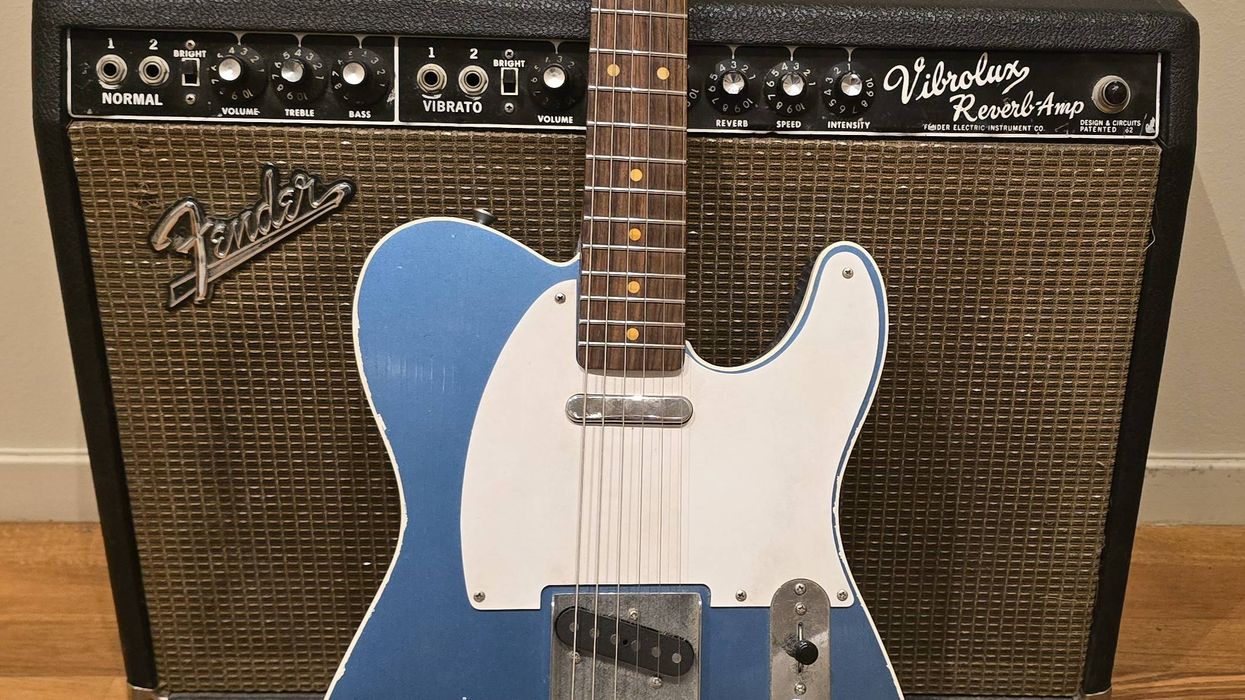
In this column, I’d like to focus on one of the fundamental guitar tones, the sound of a Fender Telecaster plugged into a vintage Fender amplifier. I’m most interested in the sound of a Telecaster’s bridge pickup and the bridge/middle position. For me, these are immediately recognizable. I like how the relatively hot-wound pickups and the metal bridge construction make single notes sound strong and stingy while chords and licks involving multiple strings are “creamy” and saturated.
Let’s start with a simple live stage scenario with a single guitar amp. Let’s assume the venue and stage is large enough for us to crank the amp. I’d like to nominate the Fender Vibrolux Reverb as a great Telecaster match. The strong mids from the Telecaster’s bridge pickup pair nicely with the scooped Fender black-panel tone from the two 10" speakers. At 35-watts, it’ll deliver both firm lows and enough sparkle to cut through, which is critical for the mid position to not sound muddy. It’s essential that we can set the volume high enough to achieve beautiful dynamics, compression, sag, and hairy, distorted tones when we hit the strings hard. Depending on the treble response from the speakers, guitar string gauge, pickup-style, and proximity to the strings, I carefully decide if the amp’s bright switch needs to be enabled. By disabling it, I can turn up the treble knob and get more upper mids, which is essential for clear rhythm chords. For solos and lead guitar parts, I sometimes use a delay and an OD pedal that adds a little more volume, treble, and dirt.
Let’s take it up a notch and add a second amp. A 2x12" Pro Reverb is a nice complement to a Vibrolux Reverb. I recommend warm-sounding speakers and flipping the bright switch off.
A well-known mod with the Pro Reverb is to install a 25k mid pot mod for more distortion and mids. I would dial the 25k mids high and the bass to zero, and if the volume gets too loud, I’d disengage one of the speakers. The role of this amp is to provide warm, sustaining cranked tones with burning mids and just a little reverb. The Vibrolux will be dialed into clean operation to provide clarity and attack with firm, modest bass and clearly pronounced treble. If the song requires reverb, it comes mainly from the Vibrolux.
“The strong mids from the Telecaster’s bridge pickup pair nicely with the scooped Fender black-panel tone from the two 10" speakers.”
For recording, the first problem is: What you hear in the room is not necessarily how the guitar sounds on tape. You therefore need to dial in your amp(s) based on how the guitar track will sound on tape and not in the room. Second problem: The guitar will sound different depending on your listening device. And problem number three: What sounds good on its own does not necessarily sound good in the mix. I am often surprised how narrow, trebly, and nasal a well-mixed guitar tone sounds on its own. Given all those obstacles, you need to listen to the final end result, and then go back and change what needs to be changed, pedals, amp EQ, microphone techniques, mixing, effects, compressors, EQ, and mastering. Since you can never re-create something that wasn’t there from the beginning—for example a clean tone, a particular overdriven tone, attack or nuances from finger tips—my strategy is to have amps that provide enough of these things.
My primary Telecaster amp for studio purposes is my 1966 Princeton Reverb with a bright cap mod. The added 47–100 pF bright cap brings back the top-end frequencies that I want for clean fingerstyle tone. On recordings, my Princeton Reverb’s clean tone sounds like a big 4x10" Super Reverb but with the practicality and breakup level of a small 12-watt amp.
As a second amp for cranked tones, I bring my Pro Reverb with only one speaker enabled. I spend some time EQing and mixing the guitar tracks in the entire mix. It’s important to be careful with high bass settings on the amp, because it can lead to muddiness that’s impossible to clean up afterwards. Same goes with reverb—I use only a little from the amp. It’s better to add more reverb and delay afterwards. The amps are traditionally miked up in front and further away and above for ambience. Having different amp tracks, clean and dirty, I can tweak the balance and tone afterwards. If I want more dirt I increase the level of the dirt amp track, or vice versa.
I hope this was inspiring for you to find your favorite Telecaster tones with Fender amps.
A New Voice for Acoustic Guitars: Fishman Fluence
PG contributor Tom Butwin demos the new Fishman Fluence Acoustic multivoice pickups, breaking down the nondestructive design, dual-voice control, and three distinct models built for everything from solo fingerstyle to full-band stages.
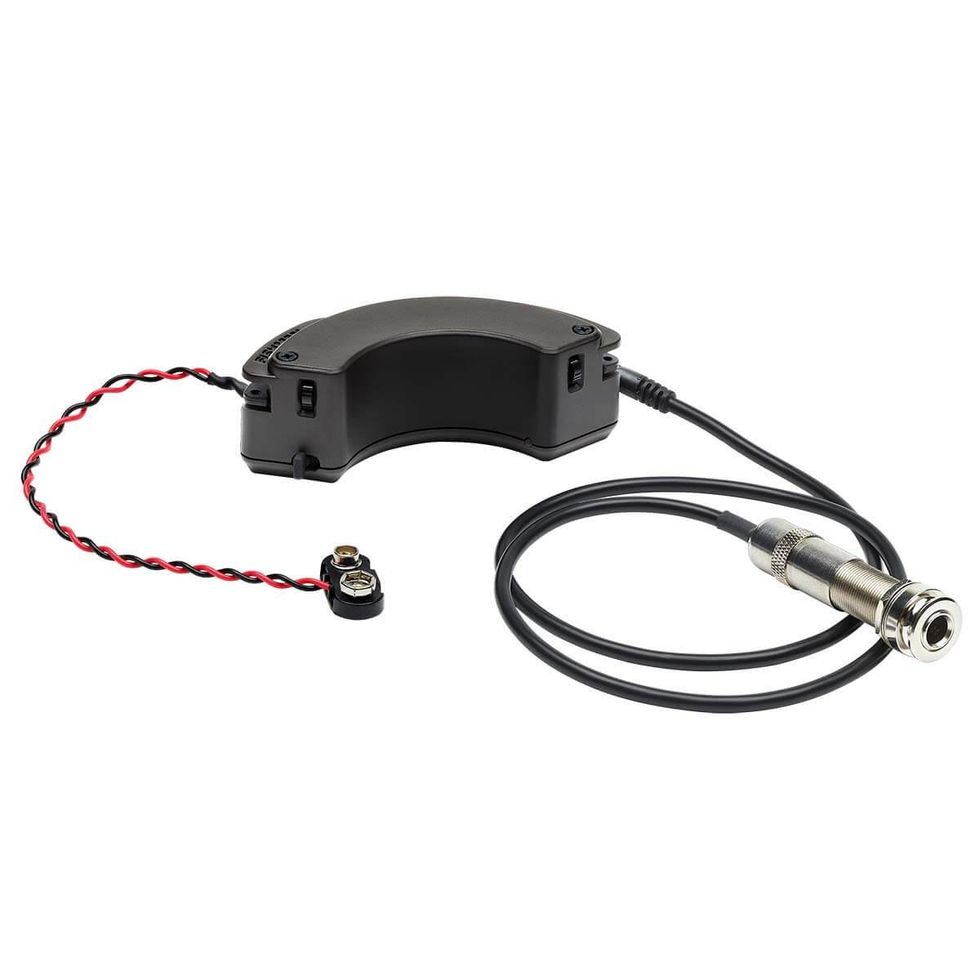
FLUENCE ACOUSTIC: ROCK ICON
All eras of rock have leveraged the driving sound of an acoustic guitar for depth and counterpoint. The Rock Icon delivers punch and clarity, with a killer second voice that sits above the mix.
Voice 1: Solos and clean picking. Dynamic and forward.
Voice 2: Vintage-inspired, riff-centric voicing. This is the acoustic tone that created legends.
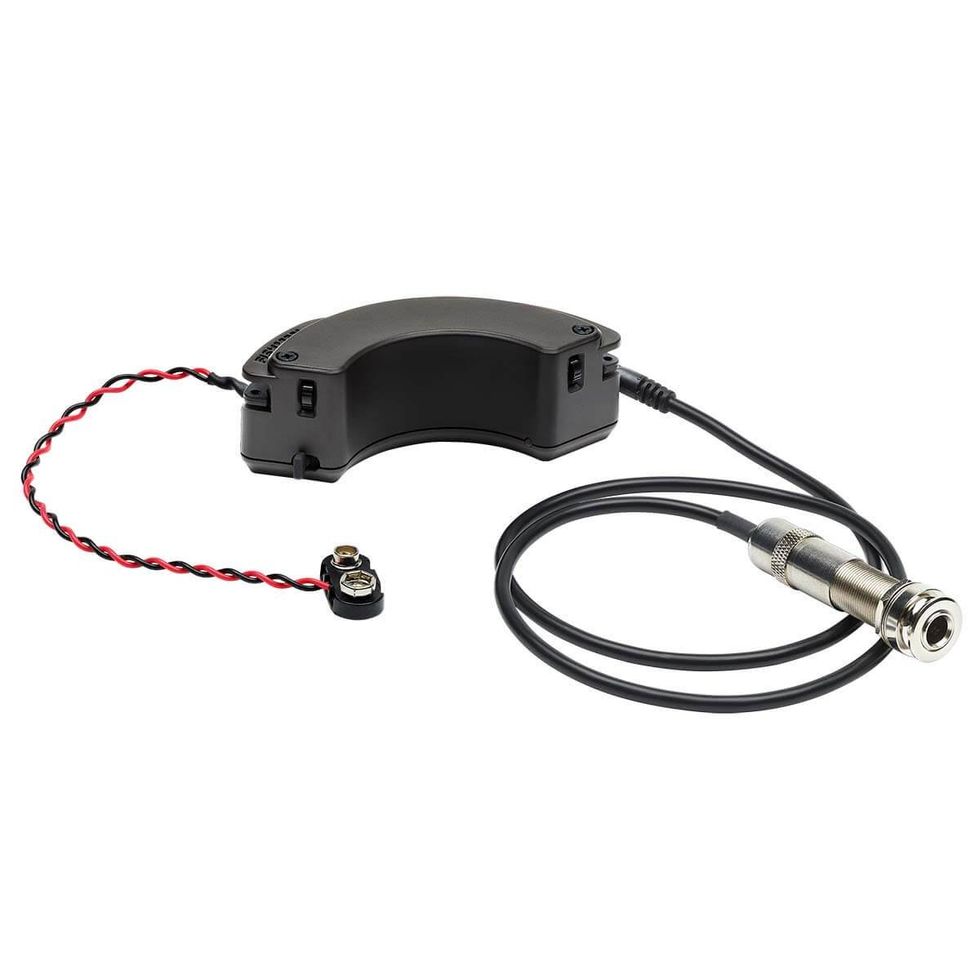
FLUENCE ACOUSTIC: SPOTLIGHT
When all eyes are on you, the Spotlight is there to help you shine. Its two voices provide warmth and articulation, making it well-suited for the solo artist or small ensemble.
Voice 1: Sweet and mellow, perfect for vocal accompaniment and more intimate arrangements.
Voice 2: Articulate and clear for solos or breaks, whether picking or playing fingerstyle.
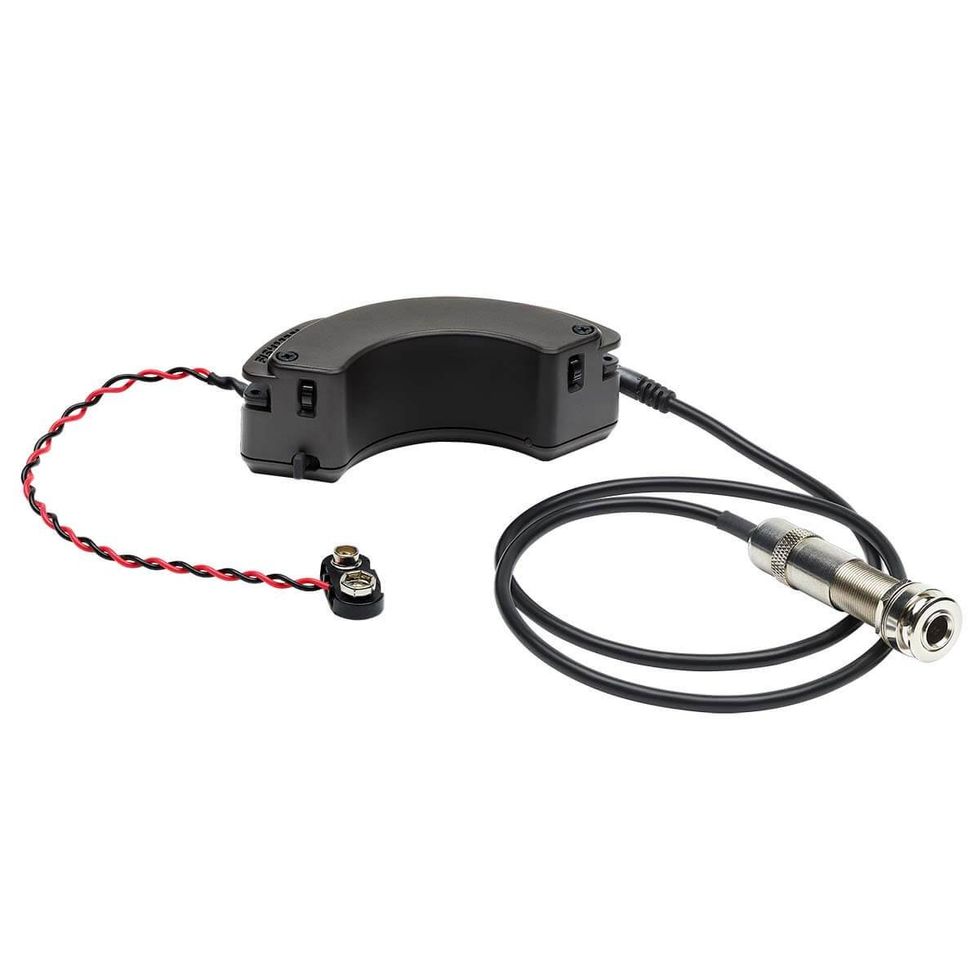
FLUENCE ACOUSTIC: NASHVILLE LEGEND
The Nashville Legend’s two voices provide you with ultimate versatility, ideal for flatpicking or fingerstyle whether performing on stages big or small.
Voice 1: Forward, clear, and articulate. A natural, well-balanced tone.
Voice 2: Up-front, percussive, round, and clear. Great for cutting through the mix.
Podcast 529: John Reischman
Mandolin hero John Reischman joins us this week to talk about his new album, The Salish Sea.
We chat about the influence the Pacific Northwest has had on his music-making, discuss his famed Lloyd Loar-signed Gibson F-5 mandolin, and so much more.
Check out ‘The Salish Sea’ here or on your favorite streaming platform.
Our next Fretboard Summit takes place August 20-22, 2026, at the Old Town School of Folk Music in Chicago. https://fretboardsummit.org
Our 58th issue of the Fretboard Journal will mail later this month. Subscribe here to get it.
We are brought to you by Peghead Nation: https://www.pegheadnation.com (Get your first month free or $20 off any annual subscription with the promo code FRETBOARD at checkout).
Stringjoy Strings: https://stringjoy.com


The post Podcast 529: John Reischman first appeared on Fretboard Journal.
The Chorus Pedal for Players Who Hate Chorus
The Aqueous Chorus is our take on the best of both worlds — vintage bucket brigade character andmodern watery tones” says Chris Van Tassel. Chris continues, “We wanted a chorus that didn’t just soundgood, but felt good to play. With added controls for EQ and gain makeup, it gives players a huge palette ofsounds from subtle vibe textures to full-on rotating speaker effects, vintage and modern chorus soundsthanks to its tilt EQ.”
Aqueous Chorus Features:
- Vintage to modern chorus tones with Tilt EQ shaping (wet signal only)
- Preamp section for gain makeup and added feel not typically found in modulation pedals
- Mix control blends chorus and vibe modes, with vibe-only in the last 1/4 rotation
- Depth and Speed controls for subtle movement to extreme modulation
- Rotary-style sounds and lush modulation effects are available with creative settings
- Built with rugged construction and vintage-inspired looks Specifications:
- 9VDC Negative Tip Power (no internal battery option)
- 28mA Current Draw
The Aqueous Chorus will be available November 6th, 2025 via select dealers for $229.99

Aqueous Chorus
With the Aqueous, J. Rockett applies its penchant for pedals that blend modern functionality with vintage charm to the world of chorus effects. Its stylish, handbuilt design provides a diverse palette of both classic and contemporary shimmers, with a 5-control layout for effortless tweakability. The Aqueous bridges the gap between vintage BBD-style effects and modern textures, featuring controls for Speed and Depth, along with a Tilt EQ that adjusts the overall tonal balance. A built-in Preamp sets the level, making it highly popular among Sweetwater guitarists by maintaining signal strength and adding a unique character to the overall tone. Designed for balance and accuracy, the Aqueous is a versatile chorus at home on any pedalboard.
“I really don’t find either of those guitars particularly comfortable”: YouTube star Bradley Hall on classic guitar designs like the Stratocaster and Les Paul

While the Fender Stratocaster and Gibson Les Paul are, by most accounts, the two most popular guitar designs ever – and have very much shaped the world of music as we know it today – some modern players aren’t entirely convinced, and prefer builds with more modern spec sheets to suit their playing styles.
Take YouTube star Bradley Hall for example, a formidable player who has built a loyal following of nearly 600,000 subscribers for his comedic takes on guitar culture. He’s also a guitarist for Swedish power metal outfit Twilight Force.
Asked in a recent Q&A for his thoughts on classic guitar designs like the Strat and Les Paul, Hall explains: “I really like the sound of classic guitars like Les Pauls and Strats. They’re amazing guitars for recording, but they’re just not very practical, in my opinion.”
He goes on: “I really don’t find either of those guitars particularly comfortable, especially traditional Strats. I love the sound of a Strat, but man, those guitars are just so uncomfortable to play…
“Les Pauls are a bit more comfortable, but they just feel horrible, especially when playing standing up. They’re just not very ergonomic at all, and I hate the pickup switch being up here. Sucks ass.”
Les Pauls have long gained a reputation for being heavy, which can make them more uncomfortable to play for long periods standing up than other, lighter guitars. And as Bradley Hall points out, a Les Paul’s pickup selector switch is located above the pickups rather than below, which can make on-the-fly pickup switching less seamless.
Bradley Hall’s comments are sure to spark a response from guitar purists who swear by either the Strat or the Les Paul, but a bit of healthy debate in the guitar world never hurt anyone, now, did it?
The post “I really don’t find either of those guitars particularly comfortable”: YouTube star Bradley Hall on classic guitar designs like the Stratocaster and Les Paul appeared first on Guitar.com | All Things Guitar.
“If you come up to the factory and draw it with me, I’ll do it!”: Mark Tremonti reveals how Paul Reed Smith challenged him to design his “coolest” custom guitar

Of all the guitars in Mark Tremonti’s arsenal, there’s one he regards as his numero uno. And that’s Stella, a bold design the Creed and Alter Bridge man worked on personally with PRS head honcho Paul Reed Smith.
If you’ve been lucky enough to catch Creed at one of their 2025 shows, you’ll have seen Tremonti donning the Explorer-esque build throughout the set. And in a new interview with Revv Amps recorded before the band’s Edmonton, Alberta show in August, he recounts how the guitar became a reality.
“I was talking to Paul about doing a new guitar design, and he was like, ‘You know what, if you come up here to the factory and draw it with me, I’ll do it,’” Tremonti says.
“So I went up there, we got on the dry erase board and started drawing shapes, and once we got kind of close I was like – when Paul started getting close – I said, ‘What about these lines here if they did this,’ and he just gave me the pen and let me draw what I envisioned. And between the two of us we came up with a design.
Next, Tremonti recalls, Paul and his team transferred the drawing to a computer programme which allowed them to visualise the guitar in three dimensions.
“It looked amazing, and they built me two of them,” he goes on. “The first was a black one, the second one was brown. The brown one was my favourite for years until they made this one…
“This is one of the best-sounding and -playing guitars I own. I absolutely love it. I named it Stella before I had my baby girl. We always planned on naming our daughter Stella, so I was like, we haven’t had a daughter yet, so I named it Stella before my daughter was born.
“[It’s] definitely one of my most talked about guitars, one of my most played guitars. Of all the guitars I’ll play tonight I’ll probably play this the most.”
Elsewhere, Mark Tremonti showcases his #2 guitar, a Charcoal Burst single-cut PRS with a Dimebag Darrell sticker on its lower bout.
“When Dime passed, a fan was handing out stickers at a House of Blues show we were at,” he says. “So I just immediately put it on here. Vinnie [Paul] even came up to me and thanked me because he had heard I had put this on there. This is my tribute to Dime.”
Watch the full interview below:
The post “If you come up to the factory and draw it with me, I’ll do it!”: Mark Tremonti reveals how Paul Reed Smith challenged him to design his “coolest” custom guitar appeared first on Guitar.com | All Things Guitar.
“I took it to my hotel room and played it all afternoon!”: How Iron Maiden’s Adrian Smith got his hands on the legendary Greeny Les Paul
![[L-R] Adrian Smith and Kirk Hammett](https://guitar.com/wp-content/uploads/2025/12/Adrian-Smith-Kirk-Hammett@2000x1500.jpg)
Few guitars have quite the same legendary status as Greeny, the 1959 Gibson Les Paul Standard once owned by Fleetwood Mac’s Peter Green, and now under the custodianship of Metallica guitarist Kirk Hammett.
As the story goes, Peter Green played the guitar while with John Mayall & The Bluesbreakers before selling it to blues ace Gary Moore in the early ‘70s for around £120 – a sum no higher than Green had originally paid for it.
Moore played the guitar for three decades – both in Thin Lizzy and throughout his solo career – before selling it in 2006 for a sum between six and seven figures. The guitar passed through the hands of several private collectors before Hammett bought it in 2014.
And a chance encounter at a hotel in Canada presented Iron Maiden legend Adrian Smith with the opportunity to get his hands on Greeny, and naturally, he jumped at the offer.
“Kirk’s a great guy,” Smith says in a new interview with eonmusic [via Ultimate Guitar]. “He’s a lovely guy, and I bumped into him in a hotel in Canada. We were just waiting for the lift. We’re just checking in, and Metallica were there, and the first thing I said to him, I said, ‘Oh, you bought Greeny.’ He goes, ‘Yeah, I’ve got it. You want to play?’ I said, ‘Yeah!’”
“So I went to his room. [Photographer] Ross Halfin was there as well, because he’s a mutual friend, although I know Kirk a little bit, and we sat, and he gave me the guitar and a little practice amp, and of course, I did [Fleetwood Mac’s] Oh Well. And then he says, ‘Look, I’ve got to go out.’”
Smith explains that Hammett and Halfin were busy taking photos, so Hammett suggested Smith take Greeny back to his hotel room and play it to his heart’s content.
“I took it to my hotel room and I had a little practice amp in there, and I just played it all afternoon,” Smith goes on. “It plays great; it’s the intonation, the feel, the sound. I mean, it’s just a wonderful, great guitar. I’m glad somebody’s using it, and it’s not on a wall in somebody’s air-controlled, climate-controlled guitar locker. It’s out there being played, as it should be.”
Kirk Hammett regularly plays Greeny onstage with Metallica, and you can watch him do so yourself at any of Metallica’s upcoming 2026 tour dates.
Check out the band’s official website for more info.
The post “I took it to my hotel room and played it all afternoon!”: How Iron Maiden’s Adrian Smith got his hands on the legendary Greeny Les Paul appeared first on Guitar.com | All Things Guitar.
How Women Are Giving Metal Guitars A Mainstream Moment

There are some rules of guitar that most of us stick to. Rock bands play Les Pauls, Jazzmasters and Telecasters are for indie kids (and country stars). Strats are for everything. And pointy guitars? Well… they’re just for metal, right?
- READ MORE: The Guitar Influences of Eddie Van Halen
Well, if you cast your eye across the biggest festival stages over the last few years, however, you’d have noticed something rather unprecedented happening. From Glastonbury to Coachella and beyond, a new generation of guitar-playing women have reclaimed the most aggressive and angry looking guitar shapes for a new generation. And for styles of music that have never seen such pointy and angular instruments before.
We can probably trace this back to Phoebe Bridgers. The Grammy-winning guitarist triggered an entire generation of angry guitarists when she smashed a BC Rich Warlock – a model more associated with Mötley Crüe, Slayer, and Guns N’ Roses than with indie’s resident sad-girl laureate – at the end of a Saturday Night Live performance in 2021, but it was clearly more than a stunt.
The guitarist began using Warlocks almost exclusively in the coming years, including as part of the cultural phenomenon that was Boygenius, but she would by no means be the last.
 Phoebe Bridgers performing with Boygenius at Oyafestivalen in 2023. Image: Per Ole Hagen/Redferns via Getty Images
At Glastonbury this year, Wet Leg ditched the prairie dresses and neutral-toned Fenders for a new and more confrontational stage presence. This shift was epitomised by frontwoman Rhian Teasdale, who ditched her trusty Telecaster for an even weirder BC Rich curio – a lime green transparent acrylic-bodied Warlock.
And that wasn’t the only pointy guitar around the neck of a guitarist at Worthy Farm that weekend. Fellow Wet Leg guitarist Hester Chambers was rocking the pointy headstock of the none-more-80s Kramer Jersey Star.
Elsewhere, Turnstile’s Meg Mills was helping reinvent hardcore for a mainstream audience with her trusty pink Jackson Soloist in hand, while over on the Pyramid Stage, Olivia Rodrigo’s co-guitarist Arianna Powell was another guitarist propelling the set forward with a Soloist in hand.
By the end of the festival, it became clear that this isn’t just a gear shift, but a key change away from the age-old archetypes.
 Meg Mills of Turnstile performing at Alcatraz in 2025. Image: Sergione Infuso/Corbis via Getty Images
Silver. Glittery. Crazy.
So why is it that more and more women in pop are reaching for pointy metal-adjacent guitars, and what does that say about gender, genre, and the evolution of our modern-day guitar heroes?
Originally a P-bass player, Emily Smith from rapidly rising Welsh upstarts Panic Shack never expected to pick up the Silvertone Apocalypse bass — the four-string version of KISS guitarist Paul Stanley’s early 2000s signature model — let alone be seen with it.
“I remember typing in Google, ‘Silver. Glittery. Crazy’,” she laughs from her home in Cardiff. For Smith, the shift isn’t just about aesthetics: it’s about subversion. “If you’re a woman, people assume you’ll gently play an acoustic guitar, shy away, and not take up space. I love that these artists are like, ‘No, I’m gonna get that crazy guitar. I want to stand out!’ It’s not all dainty, cutesy guitars. It’s ‘look at my minging rock guitar’. It’s disgusting and I love it.”
Young women are no longer being put into a Daisy Rock-shaped box when it comes to guitar inspiration. There’s nothing wrong with enjoying that of course, but a generation of new players are having their FYPs filled up with female musicians who aren’t ashamed to break with conventions.
 Emily Smith of Panic Shack. Image: Press
It’s why you’ll see Willow Smith rocking a Jackson King V at Coachella, or you’ll see Halsey’s pop pyrotechnics backed up by seven-string Warrior-toting guitarist Vixen. A Jackson artist, Vixen has definitely noticed a shift in who uses the pointy stuff.
“These instruments were traditionally designed for men’s bodies, so I’m seeing a lot of offsets and shorter-scale options,” they explain. But for the skilled session musician, this shift is something deeper than gear choice. “Why try to be a slightly worse version of someone? Just do your own thing.”
For Vixen, the use of out-there shape guitars like the Warrior and the King V is key to that “thing”. “The pop scene requires drama,” they explain. “It’s about dynamics, ups and downs – so let’s bring out the white V, you know?”
 Willow Smith performing at Coachella in 2023. Image: Presley Ann/Getty Images for Coachella
Full Circle
In some ways, this return to the pointy, the dramatic, and the genre-agnostic is a full-circle moment. In the 70s and 80s when many of these weird and wonderful guitars were first designed, shred and metal had yet to claim them.
Take a few minutes and look up Latin-pop legend Jose Feliciano posing in a suit and open-collar shirt with his custom Soloist with ‘Jose’ written in the Jackson font on the headstock – it’s wonderfully incongruous, and can be filed alongside a similarly amazing shot of Wrecking Crew legend Carol Kaye playing a BC Rich Warlock in while dressed a chic 70s housewife.
But as Tim Hillier-Brook, who heads Artist Marketing manager for Fender’s Specialty brands (Jackson, Gretsch, Charvel, and EVH), puts it, today’s revival isn’t about irony; it’s about reclamation.
“Men have had thirty years of playing guitars because they could,” he insists. “The idea that you need a bullet belt to play pointy guitars doesn’t exist anymore.”
 Rhian Teasdale of Wet Leg performing at the Royal Albert Hall in 2025. Image: Chiaki Nozu/WireImage via Getty Images
Rejecting the pressure to perform on a “correct” instrument resonates strongly with Smith, especially when confronted with purist opinions.
“If anybody said anything to me about using an instrument that’s metal, I’d be like, ‘Oh, fuck off!’” he exclaims. “It’s just a guitar at the end of the day; it’s not that deep.”
Vixen is equally unfazed by this sort of mindset. “It no longer has to be, ‘If I’m playing this genre, I have to play this guitar.’ It’s cool to play something different and to make it work.”
And women are making it work – everywhere. Fender’s 2019 study famously found that women made up 50 per cent of new guitar players. Their 2022 follow-up revealed that many bought guitars online to avoid the intimidation of traditional stores.
As Danielle Haim puts it on the band’s Women In Music Pt. III track Man From The Magazine: “Man from the music shop / I drove too far / For you to hand me that starter guitar.” And if the chart-topping LA sisterhood is still fielding that kind of prejudice, what chance does a new, fresh-faced player have?
 Arianna Powell performing with Olivia Rodrigo at BST Hyde Park in 2025. Image: Lorne Thomson/Redferns via Getty Images
Screen Idols
With physical stores still feeling fraught in some cases, thankfully, digital spaces have become a lifeline. Just as Ableton has equipped a whole new generation with access to studio gear and home recording opportunities, social media has made discovery democratic.
“Artists with huge followings like Willow Smith and Phoebe Bridgers,” continues Hillier-Brook. “People will see them and go ‘Cool, I’m going to buy that.”
Now, if someone is curious about picking up a guitar, they can simply find the model they want online, without being subjected to a character assassination.
New players without that traditional knowledge curve through dad-focused guitar mags and gatekeeping open mic nights are coming to guitar, thinking less about their forefathers and more about how the instrument fits with their identity and lifestyle.
When Vixen caught millennial musician Nai Palm of Aussie outfit Hiatus Kaiyote, they were intrigued to find her picking up a Randy Rhoads to play out the band’s sultry sounds. “Not only was it bad ass to have that guitar anyway, but to play it in a neo-soul way is like you really don’t give a fuck,” they explain.
 Nai Palm of Hiatus Kaiyote performing at Coachella in 2023. Image: Arturo Holmes/Getty Images for Coachella
Panic Shack’s Smith agrees about her role within her brash and bold foursome, who recently brought their high-kicks and hotpants to the BBC’s Later…with Jools Holland.
“We’re all very out there,” she agrees. “It makes sense to have a guitar that represents your style and personality.” And in pop – a genre built on the razzle dazzle – that matters more than ever.
“It is a conversation piece,” adds Hillier-Brook. “The aesthetic of a show is arguably more important than it’s ever been. You want people to leave thinking that was a complete spectacle!”
Perhaps that’s why earlier this year, after a decade-long legal battle with producer Dr Luke, Kesha returned to the stage as an independent artist, wielding a Jackson Rhoads.
It was, in many ways, the ultimate guitar power move: reimagining a guitar designed to be played with the Prince Of Darkness himself, Ozzy Osbourne, as a vehicle for a pop artist to celebrate her independence.
 Emily Smith performing with Panic Shack. Image: Press
“If you’re a woman playing guitar, you’re already doing something against the grain,” Vixen agrees. “So why not lean into that?”
For Smith, the empowerment goes beyond the stage. Picking up that gleaming Silvertone every night means seeing herself – loud, unapologetic – reflected back.
“The whole industry is intimidating as a woman or someone who’s not a guy,” she admits. “I know that the other girls in the band, Romy and Meg, only now feel confident to say ‘I’m a guitarist!’”
It takes more than talent to stand out; it takes courage. Because underneath the outrageous shapes, the bold finishes, and the sneers from traditionalists, most players want the same thing: to be heard.
“Just because you’re standing there gurning doesn’t make you look like a more serious musician,” Smith says. “If you listen closely, we’re doing the same thing as you are.”
The post How Women Are Giving Metal Guitars A Mainstream Moment appeared first on Guitar.com | All Things Guitar.
Blending Classical Tone with Modern Innovation – The Bromo BEN2C

Chris Shiflett Went Way Back with Ace Frehley
To celebrate the late great Space Ace, we called up PG’s favorite Kiss fan, Chris Shiflett.
On at least one of your 100 Guitarists hosts’ favorite episode of Shred with Shifty, the Foo guitarist sat down with Ace to talk about his guitar playing on “Shock Me.” It’s a fun interview with lots of great anecdotes and killer vibes. But Shiflett has a lot more perspective on Ace, going way back to meeting the members of Kiss without their makeup as a kid.
Thanks to our Sponsor! Learn more! www.gibson.com
 Just Mustard’s Art of Noise
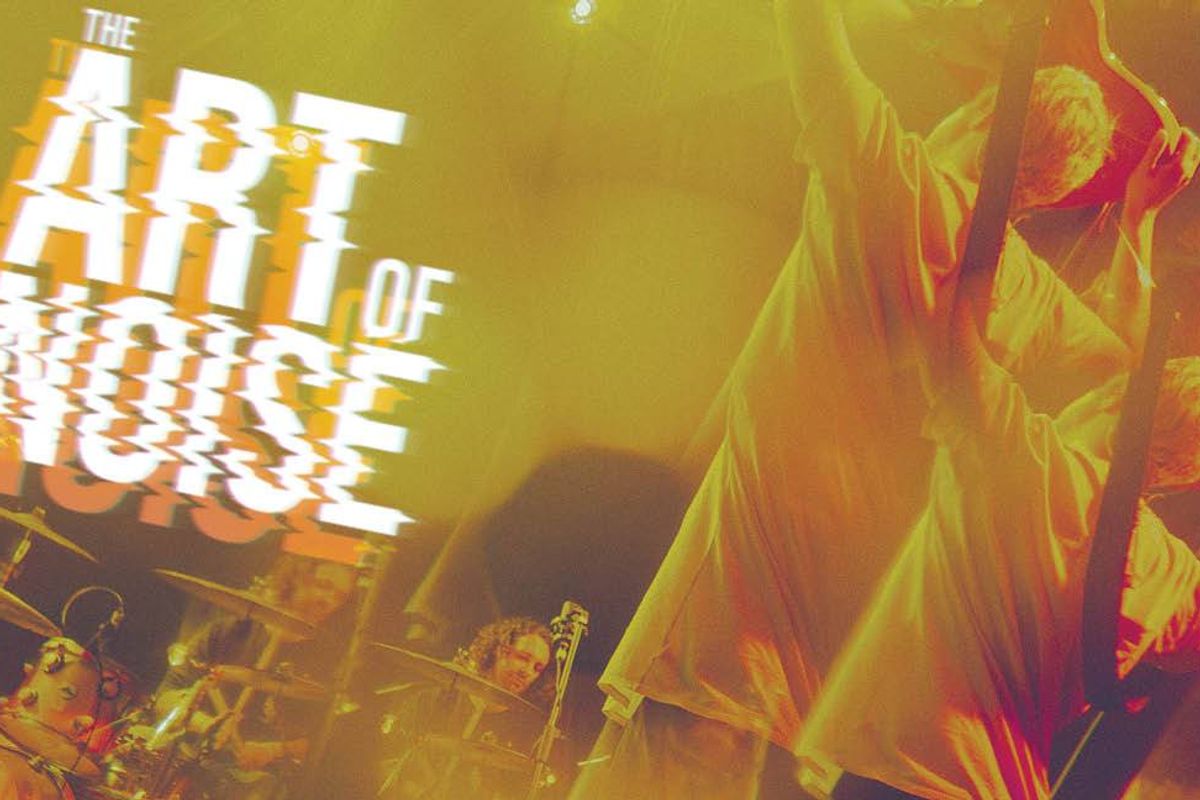
All it takes is a minute or so of listening to Just Mustard’s music—a bewitching and unruly blend of fuzzy, guitar-driven post-punk and shoegaze-y noise rock—to make one thing abundantly clear: They’re not exactly aiming to challenge Taylor Swift for chart supremacy. “No, we’re not really interested in having pop singles,” says David Noonan, who, along with fellow guitarist Mete Kalyon, delights in creating cavernous, atmospheric walls of sound for the Irish quintet. “We’ve always been trying to make music that’s more avant-garde. I know it’s a cliché, but we like to push boundaries.”
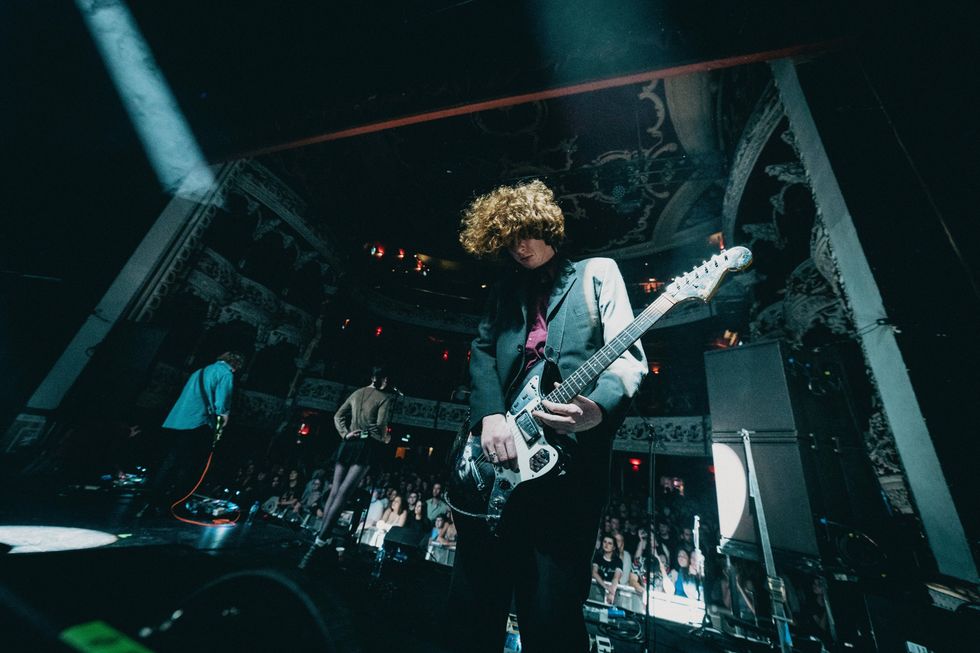
He pauses for a second, then adds, “Which isn’t to say that we don’t want to be popular, because that would be great. We just want to do it our way.”
Just Mustard (which also includes singer Katie Ball, bassist Rob Clarke, and drummer Shane Maguire) have a doozy of an album with their new We Were Just Here, which builds on the strengths of its predecessors, 2018’s Wednesday and 2022’s Heart Under. Like those records, it’s an immersive sonic extravaganza, brimming with walloping, cavernous soundscapes and gnarly, twisted guitar lines that dart off in all kinds of directions. At the same time, it ventures into warmer, friendlier territory. Lead single “Pollyanna” is one of the band’s most cheerful efforts to date—Ball’s enchanting, ethereal vocals float though its feedback-laden textures—and the propulsive, synth-like title track has an irresistible early-’80s peppiness to it.
“It’s interesting—people have said that song reminds them of early New Order, which isn’t what we were going for,” Kalyon says. “I think when you try to make guitars sound like synths it actually works sometimes. But I never want to disguise the sound of the guitars entirely. I’d rather have people say, ‘Wow, that’s a cool guitar sound,’ not ‘Are you playing a synth there?’”
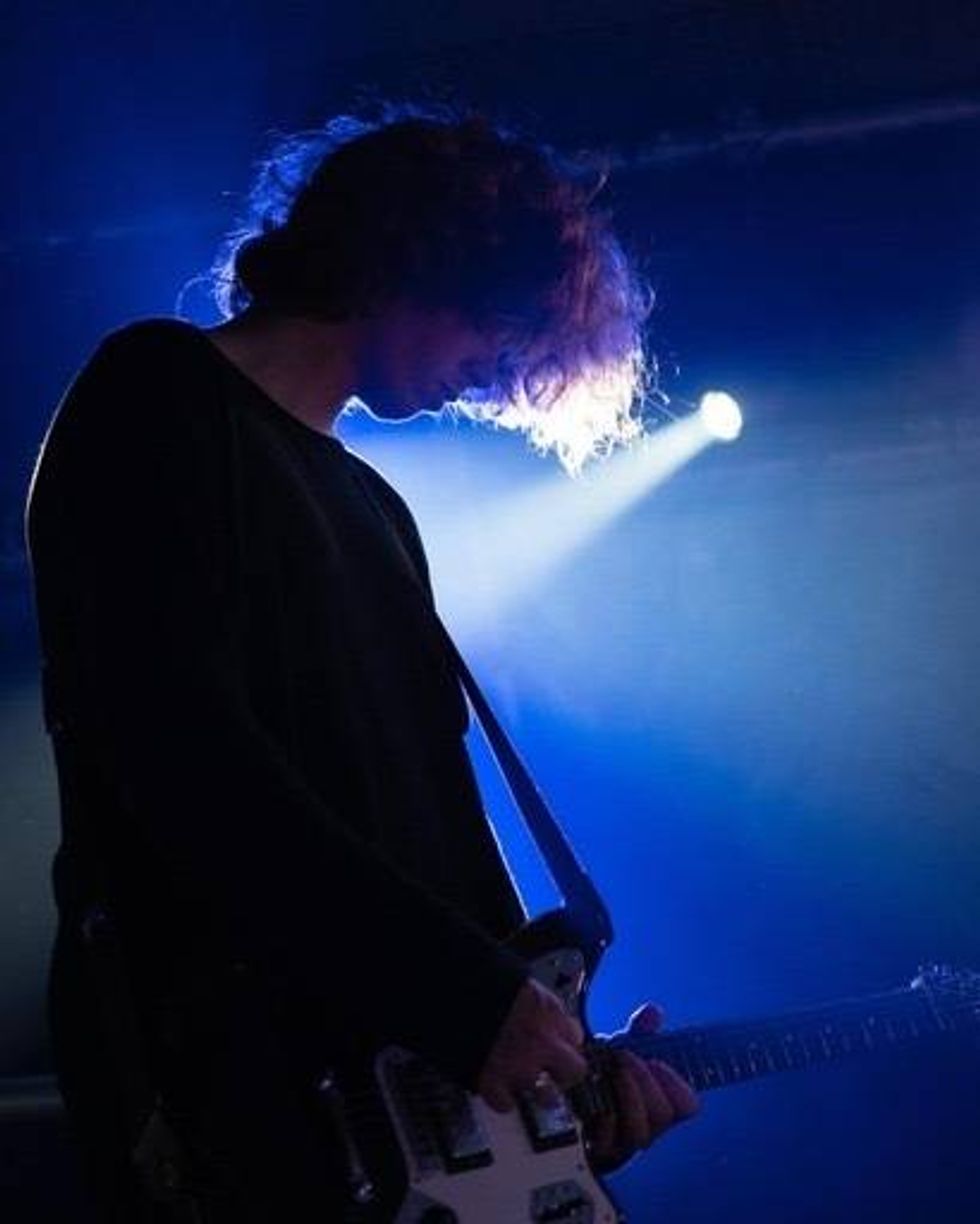
Unconventional as they may be in their guitar approaches, both Noonan and Kalyon came by their love of music by way of bands like the Beatles, Queen, and Led Zeppelin. “I wanted to be a saxophone player and a drummer at first, but they were too loud, so my parents got me a guitar,” Noonan says. His first guitar—a Squier Strat—practically became firewood when he discovered Nirvana. “The music was so exciting, and I thought that’s how you were supposed to play guitar, by throwing it around your bedroom and breaking things,” he says.
"I think when you try to make guitars sound like synths it actually works sometimes. But I never want to disguise the sound of the guitars entirely."—Mete Kalyon
It was also Nirvana that ignited the spark for Kalyon. “I used to listen to their greatest hits album, and that made me go, ‘All right, I need to learn how to play guitar,’” he says. “I got a crap guitar and played the hell out of it.” However, Kurt Cobain wasn’t the only Seattle guitarist who excited him: “I used to play loads of Jimi Hendrix’s stuff on guitar, but I can’t do it anymore,” he says.
Noonan laughs and says, “The first thing I remember about Mete was that he could play Hendrix’s ‘Little Wing.’ We were so impressed that he could break something like that out.”
Gear
David Noonan’s Gear
Guitars
Fender Jaguar Special HH
Fender Player II Jazzmaster (live)
Amp
Fender Hot Rod DeVille 212 IV
Effects
Fender Expression pedal
JHS Electro-Harmonix Soul Food with “Meat & 3” Mod
Electro-Harmonix Cathedral stereo reverb
Z.Vex Fat Fuzz Factory
Crowther Audio Hot Cake
DigiTech X-Series DigiDelay
Montreal Assembly Count to 5 delay/sampler
Hologram Effects Dream Sequence
Strings, Picks and Cables
Ernie Ball Super Slinky
Dunlop Max-Grip nylon .60mm
Fender cables
Mete Kalyon’s Gear
Guitar
Fender Telecaster
Amp
Roland JC-120 Jazz Chorus
Effects
Pro Co Turbo RAT distortion
Way Huge Swollen Pickle Fuzz
Z.Vex Machine Oscillator
Electro-Harmonix Cathedral stereo reverb
DigiTech Polara Reverberator
Boss DD-7 Digital Delay
Moog MF Moogerfooger Ring Modulator
Montreal Assembly Count to 5 delay/sampler
Strings, Picks and Cables
Ernie Ball Super Slinky
“Whatever picks I can get my hands on”
“I haven’t a clue what cables I use”
Noonan met Kalyon in the college town of Dundalk, where he and pal Clarke, enthralled by electronica and groups like the Pixies and Sonic Youth, had moved in the hopes of starting a band. Hooking up with Ball put things in motion, but they soon realized they needed a second guitarist to fill out their sound. “It wasn’t quite an abduction, but I guessed they had heard that I played guitar and was into their kind of music,” Kalyon recalls. “I just remember David grabbing me off the street and saying, ‘Quick—you’re joining our band.’ It was quite shocking, really. Just like that, I was in.”
After a few jam sessions, it became apparent to both guitarists that their experimental approaches to sound complemented each other perfectly. “We grew up with traditional rock and blues, but we did away with that once we formed the band,” Noonan says. “The idea was to sound like electronica, but with guitars making all the noise.”
“The idea was to sound like electronica, but with guitars making all the noise.”—David Noonan
Over the course of their first two self-produced albums, the duo created abrasive sheets of pedal-driven textures—loud then soft, continuing the Nirvana template—with Noonan driving home sparky lead lines wherever they seemed to fit. But the two insist that there’s no dedicated “lead player” in the group. “We’re quite capable of swapping roles,” Kalyon says. “If I’m making one sound, David does the other, and vice versa.”
Noonan graduated to producer on We Were Just Here, and his basic approach involved recording the band live and then adding numerous guitar tracks—Noonan on a Fender Jaguar, Kalyon on a Fender Telecaster—to heighten the overall impact. “Silver” is an unnerving yet wondrous full-frontal assault on which Noonan piles tracks of pitch-shifting noise, enhanced by a Hologram Effects Dream Sequence. He and Kalyon ratchet up the chaos on “Endless Death”—its engulfing sonic boom is spiked with jagged melody lines that seem to escape at random times, shrieking and sputtering from all ends of the frequency range.
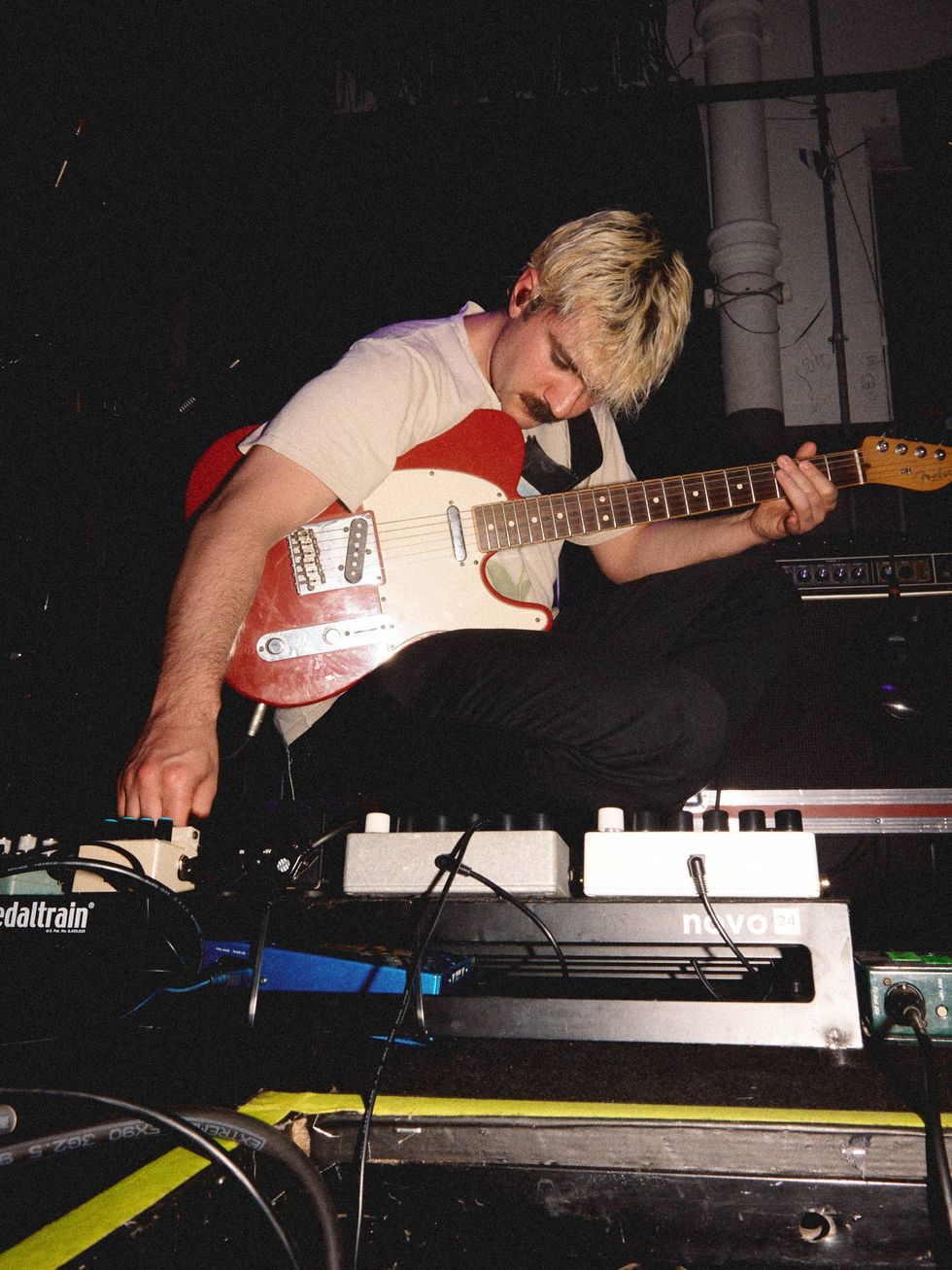
“We kind of came at that one with everything we had,” Noonan says. “There was a lot of tinkering that went into that song, and now we have to figure out how to play it live.”
The matter of transferring their new material to the stage is a task that the band is now pondering, and Noonan admits that it’s going to be a harder nut to crack than before. “On some level, we just have to do what feels right at the moment, which is what we’ve always done,” he says. “Here’s a guitar melody that sounds right, but then you’ve got to slip back into the sonic happening and play something that’s not necessarily a lead part.”
He continues, “When we’re in the studio, there’s a lot of constructing bits that can make everything sound overproduced, but we don’t want to get to the level with some bands where you go to see them live and they have to have backing tracks or add these session musicians who go on tour with them. When you come see us, we want you to experience what you’re hearing on the record, which is us playing everything.”
Justin Hawkins takes another brutal swing at Yungblud: “if the future of rock comes from musical theatre and Disney, if this is Ozzy’s heir, we’re in trouble”
![[L-R] Joe Perry, Steven Tyler and Yungblud](https://guitar.com/wp-content/uploads/2025/09/Joe-Perry-Steven-Tyler-and-Yungblud@2000x1500.jpg)
Back in September, The Darkness’ Dan Hawkins labelled Yungblud’s VMAs Ozzy Osbourne tribute as “nauseating”. In the months since, Justin Hawkins has backed his brother up, revealing just why the pair are critical of the Doncaster rockstar.
The point of contention is how some are heralding Yungblud as Ozzy Obsourne’s “heir”. However, Justin thinks Harrison is just too squeaky-clean to be the next generation’s Prince of Darkness. “If the future of rock comes from musical theatre and Disney, if this is Ozzy’s heir, we’re in trouble,” Justin tells Classic Rock in a new interview.
For those unaware, Yungblud, AKA Dom Harrison, previously starred as on Disney Channel show, The Lodge. The show ran between 2016 and 2017, with Harrison taking on the role of Oz, a cheeky, boy-next-door rocker – arguably a watered down, PG version of what he’s up to nowadays.
Despite Harrison moving on from his Disney days, most recently collaborating with Aerosmith for the One More Time EP, the Hawkins brothers can’t detach Harrison from his past. Harrison’s career has certainly been a bit more family-friendly than Ozzy Osbourne’s rampage of bat-chomping and drug-addled benders, that’s for sure.
With that in mind, The Darkness just can’t see him being Ozzy’s “heir”. Previously, Justin has also told Classic Rock that Harrison’s recent metamorphosis has felt like “101 School of Rock stuff”. But who can blame Justin for his caution; rockers are going to be critical of anything that threatens to encroach on Ozzy Osbourne’s legacy.
While Justin insists his and his brother’s opinion was never intended to start a “spat”, he did throw a slight dig at Harrison elsewhere in his chat with Classic Rock interview. Namely, he criticised Harrison’s use of auto-tune during the VMAs. “We said [called it a] ‘bit shit’ [because of the] auto-tune that was being run in real time,” he says. “If the future of rock needs auto-tune to carry a song, then we are in trouble.”
However, Harrison has previously proved his worth at Black Sabbath’s Back To The Beginning show. His performance of Changes showed some real vocal skills, and his performance has been repeatedly praised as an unsuspected standout of the event.
While the Hawkins brothers aren’t set to accept Yungblud as “Ozzy’s heir” any time soon, the Osbourne family have repeatedly expressed feelings that Harrison is similar to Ozzy. In a new interview with Piers Morgan on his Uncensored talkshow, Ozzy’s wife, Sharon Osbourne, seemed fond of the idea of Harrison portraying her late husband.
After revealing there was a “deal” agreed upon and that the job now was to “look for people to work on the movie”, Morgan asked “do you have any idea who you want to play him?”. After Sharon admitted she has someone in mind, she refuses to name anyone – but, when Morgan suggests “Yungblud?”, she lets out a small smile. While she doesn’t deny the suggestion, she simply says: “I’m not saying a word.”
The post Justin Hawkins takes another brutal swing at Yungblud: “if the future of rock comes from musical theatre and Disney, if this is Ozzy’s heir, we’re in trouble” appeared first on Guitar.com | All Things Guitar.
“It doesn’t work!”: Gojira’s Joel Duplantier explains why he doesn’t like bands playing albums in full live

As we all get older, so do our favourite rock albums. As a result, an increasing number of bands are embarking on milestone anniversary tours to perform their most iconic records in full; last year, Slipknot toured their debut record to celebrate its 25th anniversary, while Liam Gallagher embarked on his own solo tour to mark 30 years since Oasis’ debut.
However, French metallers Gojira aren’t too fond of a cut-and-dry anniversary tour. Despite 2026 marking 20 years of From Mars To Sirius, frontman Joe Duplantier insists the album’s anniversary tour will offer more than a back to front performance of the record.
“We already tried it in rehearsal, and it doesn’t work,” he explains of the concept. His reasoning is rooted in how a live show differs from the intimacy of listening to a record. “For me, listening to an album is about lying on a bed, headphones on, following a story,” he explains in a new issue of Rolling Stone France.
Duplantier notes that performing the record in full might even be a disservice to the original record. With all the “crazy things happening”, the intricacy and beauty of a record would simply get lost in the chaos of a live environment. He adds that “moments of calm” might also lose their magic, as quieter tracks wont translate as well in a massive arena.
In the end, the result is a diluted version of what was originally put to record. With that in mind, Duplantier would much rather breathe new life into From Mars To Sirius to honour its anniversary. “It’s the album that propelled us to international success,” he reflects. “We already tried [playing it in full] in rehearsal, but it doesn’t work!”
“We want to shake things up to give it a boost,” he explains, noting that the shows are set to have plenty of “surprises” for fans. One of which has been a massive flying whale, in honour of the album artwork and track Flying Whales.
The idea of giving old tracks a “boost” has been a staple of Gojira’s work as of late. Earlier this year, Gojira performed at Black Sabbath’s Back To The Beginning show, putting their own spin on Sabbath ‘s 1972 classic, Under the Sun/Every Day Comes and Goes.
As Duplantier explains, the band “reshaped”, “modernised” and “shortened” the track, transforming it into something more in-line with Gojira’s style. While the frontman notes the track wasn’t the band’s “usual groove”, he embraced the challenge to pay his respect to Sabbath’s legacy.
Despite the challenge, Gojira pulled their cover off without a hitch. They even made a point of knocking it back out on 22 July, the day Ozzy Osbourne passed away, to honour the heavy metal legend. “We were informed [of Ozzy’s passing] in the middle of the concert. When we played Under the Sun/ Every Day Comes and Goes, everyone was overwhelmed with emotion; people were crying in the audience.”
The post “It doesn’t work!”: Gojira’s Joel Duplantier explains why he doesn’t like bands playing albums in full live appeared first on Guitar.com | All Things Guitar.
Blur drummer reveals that some of his bandmates loved them becoming a “boyband”: “We’d gone from indie kids to screaming girls”

While 1994’s Parklife served as Blur’s breakout record, the band only began to understand the gravity of their newfound fame the following year. Thirty years on from The Great Escape, drummer Dave Rowntree recalls how 1995 marked Blur’s shift from a humble indie group to a chart-topping “boyband”.
In a new interview with Classic Pop, Rowntree notes how The Great Escape saw the band’s main demographic of fans totally change. “We’d gone from indie kids to screaming girls,” he recalls. “Some members of the band found that wonderful, others regretted it.”
While Blur have never been a boyband – they play their own instruments, for a start – they were a group of charming young lads in their 20s. Once their Britpop and indie tunes hit the mainstream, girls quickly took a shine to them, covering their walls with posters and dreamily obsessing over Damon Albarn.
“It had never occurred to me that we could fit into the boyband mould,” Rowntree laughs. “We knew Take That reasonably well, and of course they consciously played up to it, [but] we never had. To have it suddenly coming our way was interesting.”
While Rowntree notes that the hysteria “didn’t last” for too long, the group experienced their own mini version of Beatles-mania. One such incident happened in Spain, when the lads were escorted from a radio station, while another saw bassist Alex James and frontman Albarn being locked inside of a shop in Florence while police sent away crowds of rabid fans.
“It was very exciting, as every band wants to be The Beatles,” Rowntree notes. “We weren’t the first or the last band that happened to, but those were hairy, crazy times.”
Regardless of the new mania that surrounded them, the band were more excited about the doors that the fandom was opening for them. More fans meant selling more tickets, which meant bigger, more ambitious shows. “We worried if we could fill these stages just by being ourselves,” Rowntree admits as he reflects. “[But] we loved building stage sets that Damon could interact with in interesting ways.”
Rowntree picks out one of the band’s more ambitious ideas, which took place during Dan Abnormal. “We came up with some pretty berserk ideas,” he explains. “For example, ‘McNormal burgers’ were hid in the rafters, before they were lowered over audiences… We wanted everything as big and bold as possible!”
The Great Escape (30th Anniversary Edition) is out now.
The post Blur drummer reveals that some of his bandmates loved them becoming a “boyband”: “We’d gone from indie kids to screaming girls” appeared first on Guitar.com | All Things Guitar.
Pages
