
Music is the universal language
“Glory to God in the highest heaven, and on earth peace to those on whom his favor rests.” - Luke 2:14
General Interest
Taj Mahal and Keb’ Mo’ Reunite to Channel Tradition, Tone, and Spirit into a Sound All Their Own

Guitar.com cover star Mateus Asato releases his first official single Cryin’: “It’s been 10 years of identity crises about who I am in terms of music”

After years of viral Instagram performances and touring with pop superstars like Bruno Mars, Tori Kelly, and Jessie J, Mateus Asato has released his first official single, Cryin’, marking the start of his solo journey.
Despite millions of followers and years in the sideman spotlight, the Brazilian guitarist had yet to release a solo track – until now. Cryin’ arrives ahead of his forthcoming debut album, set for early 2026.
“It’s been 10 years of a lot of doubts and questions… and some identity crises about who I am in terms of music,” Asato says of his journey in the May/June issue of Guitar magazine. “The album is definitely a journey through all the sides of Mateus. The Mateus who’s a sideman, Mateus as the Instagram boy, and then the Mateus that got more mature over the years. Who developed a different vision regarding music, regarding how I see guitar.”
The song itself was a long time in the making. Asato began drafting Cryin’ in February 2020, during a period of global uncertainty, and finally completed it four years later, in February 2024, just a week before his wedding.
“Cryin’ is my emotional celebration of life — the first act of being human and the sound of joy, fear, and love all at once,” he says. “It’s a reminder that life is full of emotions, vulnerability, and movement, and you’re free to feel it your own way.”
Looking back on his career now, Asato admits that making the leap from stable pop gigs to solo artistry wasn’t easy.
“Trading the stability and the status of playing for a pop star to start walking on my own steps was a very tough decision, and that takes time,” he tells Guitar World. “I was able to give myself a proper season of rest. [It] cleared the path for me to start this first season of my solo career with a very great feeling.”
Listen to Cryin’ below.
The post Guitar.com cover star Mateus Asato releases his first official single Cryin’: “It’s been 10 years of identity crises about who I am in terms of music” appeared first on Guitar.com | All Things Guitar.
“I owe not just an artistic debt to him, but a life debt to him”: Tom Morello on the genius of Ace Frehley

Tom Morello has paid tribute to Ace Frehley, describing the late Kiss guitarist as not just a musical inspiration but someone to whom he owes a “life debt”.
Speaking on a recent episode of SiriusXM’s Trunk Nation With Eddie Trunk, Morello reflects on his first encounter with Kiss and his lifelong admiration for the band’s original guitarist, who passed away last week at the age of 74.
- READ MORE: Ace Frehley 1951-2025: Guitar community mourns the death of Kiss’s trailblazing founding guitarist
“[Ace] was my first guitar hero. Kiss was the band that made me love rock and roll, and he was the lead guitar player of that band,” says the Rage Against The Machine guitarist [via Blabbermouth].
“I mean, without him, I don’t know whether I would’ve ever wanted to play guitar. It was totally formative. Kiss was the supernova that made me light up and think, ‘Oh, this is something I might wanna do for the rest of my life.’ And the lead guitarist of that band, a crucial part of that band, an indispensable part of that band’s original chemistry, was Ace Frehley.”
“So I owe not just an artistic debt to him, but just a life debt to him. Every riff that has ever come, every guitar solo that’s ever been a part of my life has its origins, the DNA imprint of Ace Frehley.”
Placing Frehley in the context of transformative acts, Morello continues: “In the same way that acts like The Rolling Stones and The Beatles, they captured the imagination of generations and made people think, ‘There might be room for me to do that too,’ Kiss was that for us. And Ace was the coolest axe-slinging, Les Paul smoke-belching guitar hero for all of us.”
Morello also points out the enduring appeal of Frehley’s playing style, noting, in particular, how the guitarist prioritises melody and fun over technical perfection.
“And time has told the story that that really mattered,” says Morello. “I listened yesterday, after the news [of Ace’s death came], to Kiss’s Alive! beginning to end. I hadn’t listened to that record beginning to end for a long time. And maybe my kind of impression, off the cuff, is Kiss songs are these kind of hard rock songs with a pop element to ‘em.”
“It’s a band that has progressive elements. It’s a band that has huge [Black] Sabbath-like riffs in it. It’s a band where [Ace’s] guitar solos are these kind of journeys within the song – super hooky, super catchy. He’s got that kind of gun-slinging free way of playing that sometimes is beautifully messy. And I just was really kind of overwhelmed with it reminded me of what originally lit my fire and made me love the band and made me love him as a guitar player.”
Kiss were inducted into the Rock & Roll Hall of Fame in 2014, with Tom Morello delivering the induction speech. In his speech, the musician called Kiss his “favourite band” growing up and shared how it was “not easy being a Kiss fan” given the band’s relationship with critics.
The post “I owe not just an artistic debt to him, but a life debt to him”: Tom Morello on the genius of Ace Frehley appeared first on Guitar.com | All Things Guitar.
Tobias Forge once experienced a horrifying panic attack onstage which changed the way he performed with Ghost: “This was very close to the Bataclan shooting”

Ghost frontman Tobias Forge has revealed that a severe onstage panic attack during a 2015 show in Leeds forced him to rethink his entire approach to live performance, and to the elaborate masks that define his Papa Emeritus persona.
In a recent chat with Metal Hammer, Forge recalls how the Leeds Beckett University gig ten years ago marked a major turning point. Midway through the show, he says, the feeling of being completely enclosed in his full-face mask triggered a sudden wave of claustrophobia – one that made him realise just how much the costume had begun to affect him mentally.
“Throughout my years in masks, I’ve developed a not comfortable claustrophobia,” Forge explains. “It’s the idea of having something over your throat, being completely engulfed, completely enclosed.”
The panic attack struck mid-performance, during the band’s song Con Clavi Con Dio. It was, Forge recalls, something he had never experienced before, and it forced him to walk offstage and strip off his costume.
“It had never really happened to me before, but I was walking into the venue, and this is, this is very close to the [November 2015 Paris] Bataclan shooting,” he says. “We went into the venue, and it was raining outside, big surprise, absolutely pissing down. I was told there was only one entrance into the venue; you had to walk in on the right side of the stage, past the stage, and then into a backstage area.”
“So, essentially, you couldn’t get out. You were locked in. That was what I was told. And I didn’t think of it until during the show, when all of a sudden I was like, ‘I need to know where the door is…I can’t get to the door. Stop! Stop! Get the mask off!’ I had to get everything off. Restart the whole thing.”
As it turned out, there was another exit – one Forge simply hadn’t been shown before the gig.
“We had to have a guard come and show me – lo and behold, there was another door,” the musician recounts. “There was absolutely a way out. And then it became a thing [for future shows]: I need to know where the door out is. I need to know how I get out. As long as I know how to get out, we’re good.”
Since that night, Forge says he’s done “hundreds of shows” without any further incidents: “I haven’t had any problems with it. I know it works. I know how to deal with it. It’s definitely in the back of your head, that that can happen, but it’s just a panic attack. It’s nothing dangerous.”
The post Tobias Forge once experienced a horrifying panic attack onstage which changed the way he performed with Ghost: “This was very close to the Bataclan shooting” appeared first on Guitar.com | All Things Guitar.
Walrus Audio Mako Mk II R1 review – makes a whole lot of sense for the space conscious reverb fancier

$399, walrusaudio.com
Walrus Audio’s Mako range was one of the trendsetters in the realm of cramming the monster power of high-end DSP into a compact and pedalboard-friendly package, and five years later it seems like even your morning bagel comes with a SHARC chip crammed into there somewhere, so they must have been onto something.
It’s entirely fitting then that a few years on from their initial launch, the Oklahoma City-based maker took another swing at the concept – refining, enhancing and elevating the Mako concept in response to player feedback.
While the initial Mako range came out in batches over a couple of years, last year the brand dropped the Mk II versions of the entire range – which is a roundabout way of explaining why it’s taken us quite so long to get around to reviewing this final pedal in the range, the R1 Reverb.
And in truth, I shouldn’t have waited so long, because this Mk II might be the most transformative entry in the whole collection.
 Image: Adam Gasson
Walrus Audio Mako R1 Mk II – what is it?
Like its forebear, the R1 is a compact high-end reverb pedal with six distinct reverb ‘programs’ on board. These comprise the vanilla trio of spring, hall and plate, and then three of the more esoteric ambient reverbs that are all the rage these days – air, refract and BFR (which stands for big flippin’ reverb to those of us of a more evangelical persuasion).
Interestingly, Walrus claims that all six of these programs have been “rebuilt and revamped for vast tonal improvement” – that’s a much more bold claim than on any of the other Mk IIs, which talked about only minor tweaks to the sounds if they mentioned anything about it at all.
Perhaps this is because of the original four Mako pedals, the R1 was perhaps the least impressive – in a world overflowing with expensive high-end reverb pedals that do all manner of post-rock things, the core sounds were good but not great, as Richard’s review reflected. The R1’s sounds have been “completely reimagined from the ground up” according to Walrus, offering highly tuned EQ and more parameters and features to tweak.
 Image: Adam Gasson
The tweaking of these new parameters comes courtesy of the new OLED screen, which replaces the bank of mini-toggles on the Mk I as is the case with all the revamped Mako pedals.
Elsewhere, MIDI-botherers will be delighted/dismayed (delete as appropriate) to hear that the cumbersome full-size in and thru cables on the original have been swapped for mini-TRS versions here. Yes you’ll need some connectors now, but it certainly makes life neater and prettier from a cable management perspective – and truly, what matters more in pedalboard circles than having a neat and tidy undercarriage?
You’ll also get access to all 128 onboard presets via the pedal’s menu (as opposed to just nine on the original) – and if you really feel like you need more than that, seek professional help immediately.
 Image: Adam Gasson
Walrus Audio Mako R1 Mk II – usability and sounds
My biggest gripe with the M1 Mk II that I reviewed a while back was that the replacement of a few toggle switches with a screen to represent multiple different parameters took some of the WYSIWYG brilliance of the originals away.
That’s definitely still the case with the R1 – you’ll certainly want to consult the manual before diving in to determine what you’re doing – but the nature of reverb means that it’s not too much of a learning curve here, with most of the parameters being pretty straightforward.
One of the bigger criticisms of the Mk I R1 was that while it’s out-there stuff was special, it somewhat phoned in the more basic stuff, and you can really sense that Walrus has taken this to heart when you turn the knob to the spring reverb mode.
It’s a responsive and spanky reflection of a classic amp tank rather than anything more bespoke, but there’s a depth and lushness to the recreation here that feels more impressive than the original’s. It’s not the most out-there spring I’ve ever heard but you can use the decay control to push yourself outside the realms of what would be possible with a real spring reverb.
 Image: Adam Gasson
It’s fun, if somewhat limited in its everyday utility, but it does give me the opportunity to play around with some of the new parameters that are common for each reverb mode. On the left hand encoder you can tweak the rate and depth of the verb, and you also get a control to set the amount of diffusion on your repeats. A new addition is an expanded version of the swell control which also now allows you to duck your reverb – it’s a nice added extra, especially for the more esoteric sounds.
On the right hand side you can tweak the size of the room you want your verb to verb into, and you also now get the ability to tweak the low and high frequencies of the reverb itself. There’s also a bipolar EQ filter that will tweak the decay to be either darker or brighter depending on which side of the knob you’re twisting it to.
The other two ‘normal’ modes have also had a definite facelift – there’s a real organic quality to the way the room sound’s notes decay, while the plate has a really pleasant diffusion that gets more enjoyably wiggy as you expand the size of the plate.
Walrus’ reputation as purveyors of some of the most excitingly atmospheric reverbs was very evident in Mk I – there wasn’t a damn thing wrong with any of those sounds really – and while the improvement is definitely there in terms of fidelity and depth, the jump in quality is perhaps understandably less noticeable.
The BFR remains ironically named given that it is the most worship-appropriate reverb sound on the pedal – a giant lush, skyscraping sound that begs for plaintive single-note refrains, especially when you diffuse the trails to add even more ethereal vibes. Granular reverb is all the rage these days, and while Refract isn’t going to give the Qi a run for its money in that regard, it adds some fun glitchy grainy textures over a reverb sound that’s heavy on the diffusion. Finally you get the obligatory shimmer verb in Air. This is the sound that has the most unique parameters, namely the ability to tweak how much shimmer you have, and also whether it shims pre- or post the reverb tank. It’s massive and majestic and twinkly in all the ways you’d expect a Walrus reverb to be, and the ducking and swell controls really come into their own here to make the sound bloom and soar in that most ethereal way.
Walrus Audio Mako R1 Mk II – should I buy one?
There’s no escaping that $400 is a whole heap of beans for any pedal, but this has a versatility and round-the-park quality that few other pedals at this price point can match. You may well be tempted to splurge another hundred bucks or so on a big box unit from Strymon or Empress – or to get something that’s more focused (and candidly better sounding) from Universal Audio. But each of those options involves a compromise in terms of pedalboard real estate or variety of sounds… or both.
While I will go to my grave not understanding why Walrus didn’t just name this the R2 rather than the R1 Mk II, pretty much everything else about it makes a whole lot of sense for the space conscious reverb fancier. It’s the most compact and efficient way to go from basic verbs to heavenly choral excess without any real sonic compromises.
Walrus Audio Mako R1 Mk II – alternatives
Most of the R1’s more compact competitors tend to be more specialised, but one that will give it a run for its money is the Strymon BlueSky Mk II ($379) – it’s more tailored towards the three classic verb sounds, but with switchable shimmer and modulation, you can get some really magical sounds out of it. If space isn’t a concern and you want your reverb sounds to come with zero compromises and all the sounds you could ever dream of, then Strymon’s BigSky MX ($679) – it’ll cost you though! Another comprehensively excellent big box reverb is the Empress Reverb ($494) which is a bit long in the tooth now, but still a monster pedal.
The post Walrus Audio Mako Mk II R1 review – makes a whole lot of sense for the space conscious reverb fancier appeared first on Guitar.com | All Things Guitar.
Eight Classic Boss Pedals in One
Eight digital doppelgangers of Boss classics can be used simultaneously in a single stomp.
BOSS introduces the PX-1 Plugout FX, an innovative hardware platform that captures the timeless BOSS compact pedal experience in one versatile pedal.This convertible stompbox holds multiple authentic effect recreations from the historic BOSS effects lineup, providing endless fuel for every creative journey. Sixteen effects are included with purchase, and more can be added over time with the BOSS Effect Loader app for iOS and Android devices.
Backed by newly developed BOSS algorithms, each effect in the PX-1 delivers the genuine sound and response of the pedal it’s based on. Every detail is modeled with stunning accuracy, thanks to a powerful DSP engine dedicated to recreating the sound of a single effect at a time. Users can dial in tones fast with the familiar BOSS knob interface, supported by an onboard display for current parameters and internal settings.
The PX-1 offers external control with one or two footswitches or an expression pedal. There’s a Swap function to switch between two effects, and nearly any parameter can be assigned for real-time expressive control while performing. Stereo I/O provides flexible connectivity and enhanced sound for models with stereo operation, while tap tempo and MIDI clock support are provided for time-based effects.
Gibson ‘Back to the Future’ 40th Anniversary Guitar Collection
In one of the most iconic scenes in film history, a Gibson ES-345™ Cherry Red guitar took center stage in the film Back to the Future—and today, it’s making history again. To celebrate the 40th anniversary of the beloved Universal Pictures and Amblin Entertainment film starring Michael J. Fox as Marty McFly, and in honor of October 21—officially recognized as Back to the Future Day—Gibson, the legendary global instrument brand, in partnership with Universal Products and Experiences proudly announces the Back to the Future Collection. Featuring limited-edition ES-345 models from Gibson Custom and Epiphone, as well as an exclusive apparel line, the Back to the Future Collection is designed to thrill both guitar enthusiasts and fans of the iconic film. Music and film fans can stop by the Gibson Garage Nashville and London locations to see the entire Back to the Future Collection in person, and worldwide via Gibson.com.
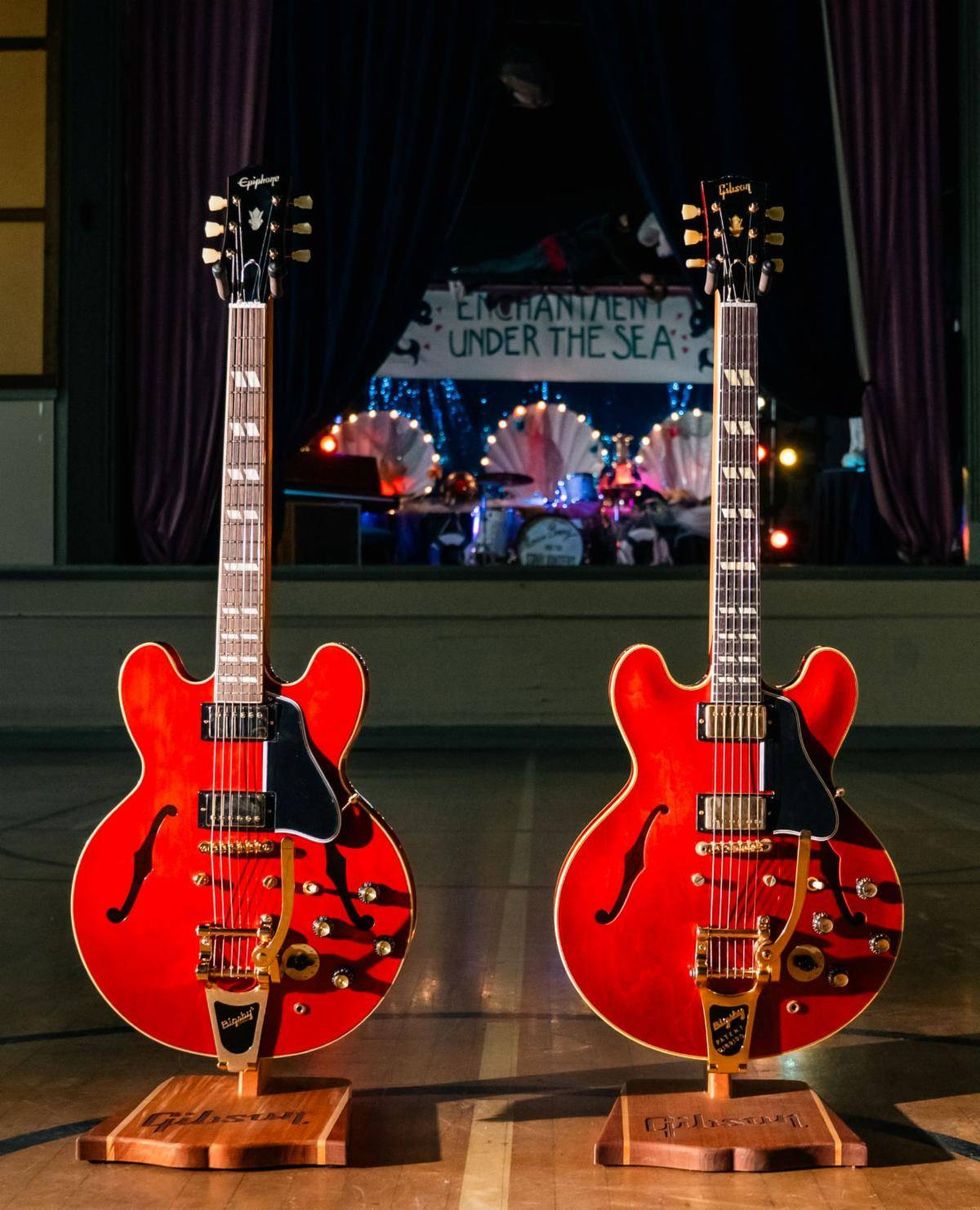
This summer, Gibson and Michael J. Fox launched a global “Lost to the Future” search for the original Gibson ES-345 Cherry Red guitar played by Fox in Back to the Future during the unforgettable “Enchantment Under the Sea” dance scene—a moment that inspired generations of musicians after Marty McFly’s electrifying performance of Chuck Berry’s “Johnny B. Goode.” Despite efforts to find the guitar during the filming of the sequel, the guitar’s whereabouts remained a mystery. Fans worldwide have been submitting tips at www.LostToTheFuture.com, and after thousands of submissions, Gibson has narrowed the search and is actively pursuing a handful of promising leads to locate and authenticate what may be the most significant guitar in movie history.
“Bringing this guitar to life has been a passion project for many years, and it’s incredibly exciting to finally see it become a reality,” says Mark Agnesi, Director of Brand Experience at Gibson. “We couldn’t be prouder of how these guitars turned out—they’re truly special. This is the guitar that inspired me, and countless others from my generation, to pick up playing in the first place.”
The Back to the Future 1955 ES-345 Collector’s Edition from Gibson Custom is limited to just 88 guitars worldwide, a nod to The Time Machine from the film, and features a stunning Cherry Red finish with exclusive design details. The Epiphone Back to the Future ES-345, limited to 1,985 guitars globally, celebrates the year the blockbuster film hit theaters and offers fans an accessible way to own a piece of cinematic and musical history. In addition to the guitars, there’s also an exclusive range of Back to the Future apparel and accessories, including tees, hats, collectible guitar pick tins, a guitar strap, and an AXE HEAVEN® mini guitar that will delight collectors and fans alike.

Back to the Future Gibson Custom Collection guitar case candy includes a flux capacitor, key to the Time Machine, a Casio watch, production still from the film, a guitar strap, picks, posters and a Certificate of Authenticity.
The new Epiphone Back to the Future ES-345 is a replica of the legendary Gibson ES-345 based on the model that Michael J. Fox aka Marty McFly plays in the film Back to the Future. A loving tribute to this cultural icon, the Epiphone Back to the Future ES-345 features a five-ply layered maple semi-hollowbody with a solid maple centerblock for enhanced sustain and improved feedback resistance. The top has four-ply binding with single-ply binding on the back. The mahogany neck has a comfortable Rounded C profile and is topped with a single-ply bound rosewood fretboard with 22 medium jumbo frets and is adorned with pearloid split parallelogram inlays that are a hallmark of the ES-345. The 60s Kalamazoo headstock is equipped with a Graph Tech® nut and Epiphone Deluxe tuning machines with cream Keyston buttons. The Epiphone logo and Gibson Crown are inlaid in mother of pearl. On the back of the headstock, in a nod to the 1985 film, you’ll find a Hill Valley Music store decal. The Back to the Future ES-345 has gold hardware, including an Epiphone LockTone™ Tune-O-Matic™ bridge and a Bigsby® B70 vibrato tailpiece, and just like the guitar in the movie, the original Stop Bar studs are left in place. The Back to the Future ES-345 is powered by two of Epiphone’s acclaimed Alnico Classic PRO™ pickups, each with individual volume and tone controls. A mono Varitone provides even more tonal versatility. It even comes packed in a vintage-style hardshell case with Marvin Berry and the Starlighters graphics. The Epiphone Back to the Future ES-345 is limited to only 1985 units worldwide, and they’re sure to go fast, so unless you have a flux capacitor-equipped Time Machine so that you can go back in time to get one later, you’d better grab yours now while you still can.
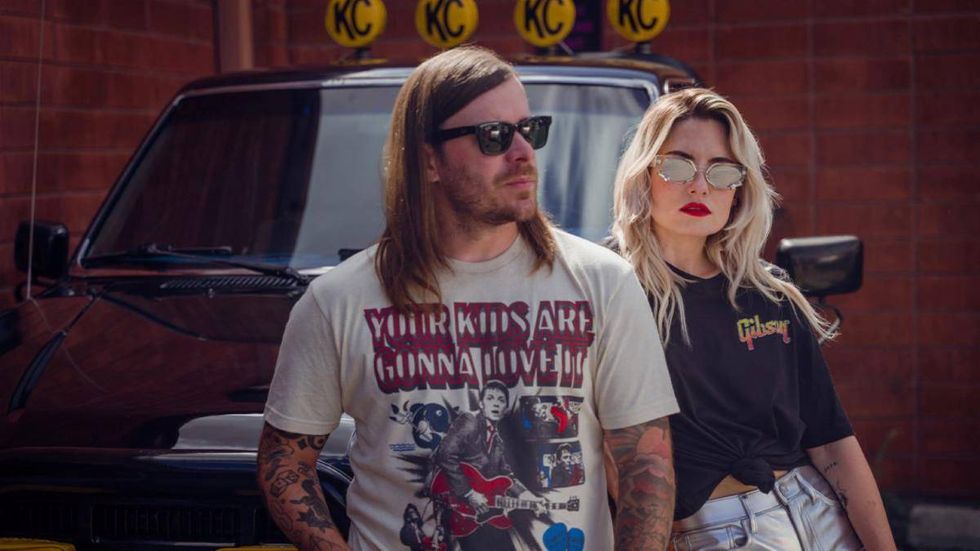
Launching alongside the Epiphone and Custom Shop ES-345 guitars, Gibson’s apparel division will release a collection of exclusive, film-inspired merchandise. Ranging from AXE Heaven mini ES-345 Cherry Red guitars to guitar pick tins, straps, T-shirts, and hats inspired by the film, the Back to the Future collection promises to be an exciting addition to any fans collection.
Way Huge Doom Hammer Review

Way Huge didn’t leave much to the imagination when it branded this fuzz the Doom Hammer. But that doesn’t mean it's without surprises. Jeorge Tripp’s latest design is based on an op-amp Big Muff that he modified for a client in the 1990s—primarily with the aim to tighten the low end. You hear Tripps hit that target when you play the Doom Hammer alongside other Big Muff types, which are massive in the low end and can sound comparatively sprawling in that frequency. But rather than merely heavy, the Doom Hammer’s combination of taut lows and the pronounced midrange one associates with op-amp Big Muffs is nasty, buzzy, punky, and brash. For all the desert-rock swagger in the name, the Doom Hammer is just as effective at lending contrast to heavy bass in a mix. And for any stoner rock power trio that has had to work against a wall of bottom-end sludge on stage or in the studio, it’s a practical and intriguing solution.
Fire Breather
Though it’s not hard to hear Big Muff lineage in the Doom Hammer, it can sound vastly different from most Muffs at identical fuzz, output, and tone levels. I didn’t have an op-amp Big Muff on hand for comparison, but in my experience with that circuit, I’ve found they have as much in common with other Big Muffs as they do differences. But Tripp’s recipe puts extra distance between them.
The Ram’s Head and Sovtek Muffs I used to A/B with the Doom Hammer, for instance, each exhibited the creaminess in low-midrange frequencies that makes David Gilmour obsessives ecstatic—particularly with the tone control at more modest levels. The Doom Hammer, however, sometimes has a buzz-saw aggressiveness that evokes a 1960s transistor fuzz swinging on a wrecking ball. And at low output and advanced fuzz levels it can quite convincingly play the part of Tone Bender. More modest fuzz and tone settings strike a more even balance between classic, buttery Big Muff sustain sounds and buzzier ones. And here it’s great for cooking up Carlos Santana and John McLaughlin’s questing lead tangles and Robert Fripp’s snaky synth-like lines. Indeed, the Doom Hammer, for all its midrange emphasis, can be flexible and adaptable.
The Doom Hammer, however, sometimes has a buzz-saw aggressiveness that evokes a 1960s transistor fuzz swinging on a wrecking ball.
Playing a bit more in the spirit of the Doom Hammer’s name (with an SG in drop-D, ’natch) I was still struck by how much less bossy it is in the bass range than a Ram’s Head or Sovtek. But again, this can be an ideal recipe for adding punchy contrast to the bass bomb coming from your bandmate’s Rickenbacker 4003 and Orange stack. It lends snarling aggression to big dumb rock riffs and drones, and detuned guitars sound less buried in blunted, washy overtones.
The Verdict
Jeorge Tripps’ knack for spinning new magic around fuzz formulas—whether with the wild Way Huge Atreides or the more straight-ahead Swollen Pickle—is a gift to fuzz freaks. Because, let’s face it, sometimes ferocious barrages of distortion can start to blur when ears are tired and you’re on the hunt for a different path. The Doom Hammer’s tight bass, and the resulting more prominent midrange, offer a discernibly different texture to work with, however, all while retaining the essential mass and menace that draws a player to a Big Muff in the first place.
Way Huge Doom Hammer Review
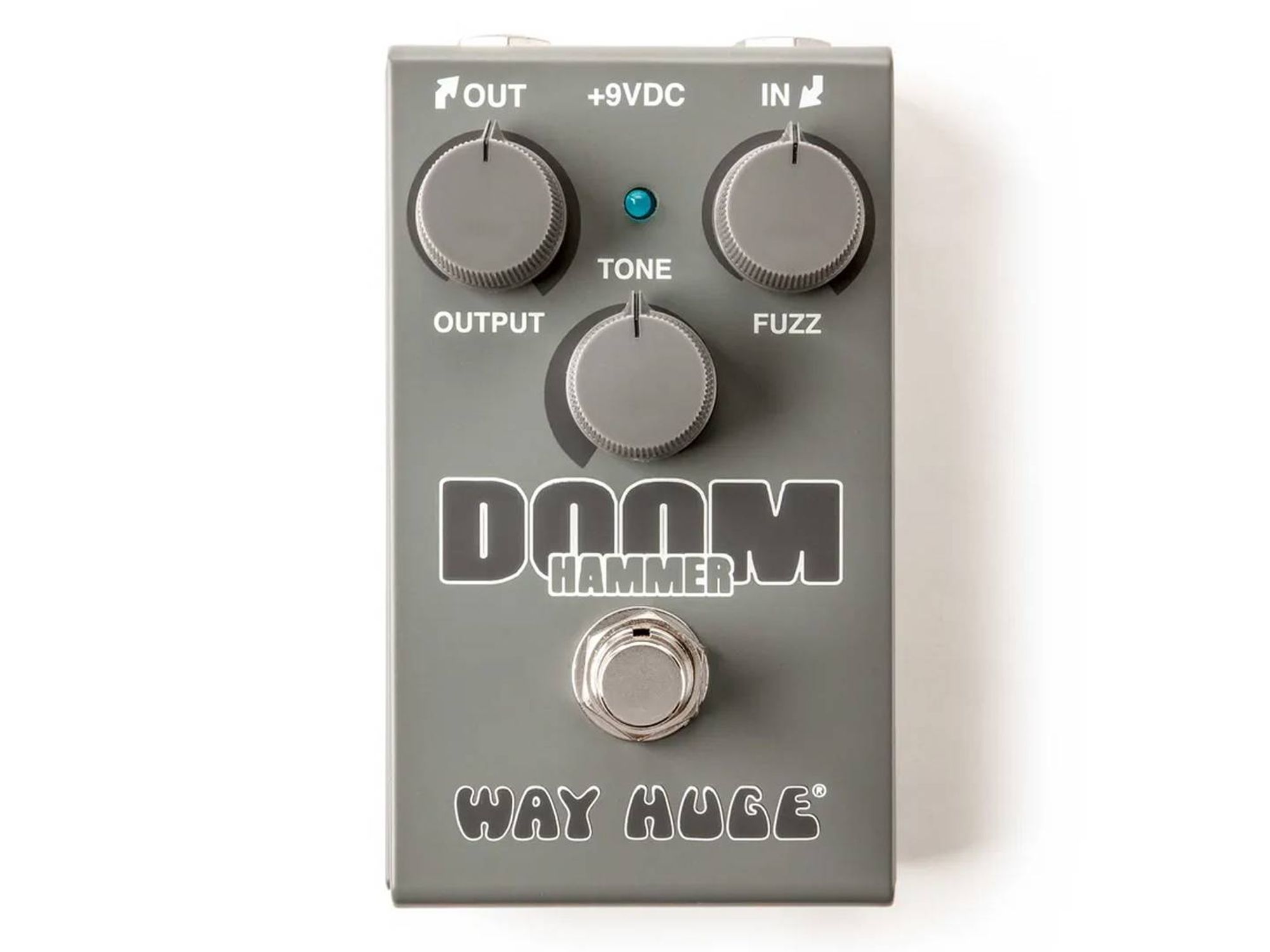
Way Huge didn’t leave much to the imagination when it branded this fuzz the Doom Hammer. But that doesn’t mean it's without surprises. Jeorge Tripp’s latest design is based on an op-amp Big Muff that he modified for a client in the 1990s—primarily with the aim to tighten the low end. You hear Tripps hit that target when you play the Doom Hammer alongside other Big Muff types, which are massive in the low end and can sound comparatively sprawling in that frequency. But rather than merely heavy, the Doom Hammer’s combination of taut lows and the pronounced midrange one associates with op-amp Big Muffs is nasty, buzzy, punky, and brash. For all the desert-rock swagger in the name, the Doom Hammer is just as effective at lending contrast to heavy bass in a mix. And for any stoner rock power trio that has had to work against a wall of bottom-end sludge on stage or in the studio, it’s a practical and intriguing solution.
Fire Breather
Though it’s not hard to hear Big Muff lineage in the Doom Hammer, it can sound vastly different from most Muffs at identical fuzz, output, and tone levels. I didn’t have an op-amp Big Muff on hand for comparison, but in my experience with that circuit, I’ve found they have as much in common with other Big Muffs as they do differences. But Tripp’s recipe puts extra distance between them.
The Ram’s Head and Sovtek Muffs I used to A/B with the Doom Hammer, for instance, each exhibited the creaminess in low-midrange frequencies that makes David Gilmour obsessives ecstatic—particularly with the tone control at more modest levels. The Doom Hammer, however, sometimes has a buzz-saw aggressiveness that evokes a 1960s transistor fuzz swinging on a wrecking ball. And at low output and advanced fuzz levels it can quite convincingly play the part of Tone Bender. More modest fuzz and tone settings strike a more even balance between classic, buttery Big Muff sustain sounds and buzzier ones. And here it’s great for cooking up Carlos Santana and John McLaughlin’s questing lead tangles and Robert Fripp’s snaky synth-like lines. Indeed, the Doom Hammer, for all its midrange emphasis, can be flexible and adaptable.
The Doom Hammer, however, sometimes has a buzz-saw aggressiveness that evokes a 1960s transistor fuzz swinging on a wrecking ball.
Playing a bit more in the spirit of the Doom Hammer’s name (with an SG in drop-D, ’natch) I was still struck by how much less bossy it is in the bass range than a Ram’s Head or Sovtek. But again, this can be an ideal recipe for adding punchy contrast to the bass bomb coming from your bandmate’s Rickenbacker 4003 and Orange stack. It lends snarling aggression to big dumb rock riffs and drones, and detuned guitars sound less buried in blunted, washy overtones.
The Verdict
Jeorge Tripps’ knack for spinning new magic around fuzz formulas—whether with the wild Way Huge Atreides or the more straight-ahead Swollen Pickle—is a gift to fuzz freaks. Because, let’s face it, sometimes ferocious barrages of distortion can start to blur when ears are tired and you’re on the hunt for a different path. The Doom Hammer’s tight bass, and the resulting more prominent midrange, offer a discernibly different texture to work with, however, all while retaining the essential mass and menace that draws a player to a Big Muff in the first place.
Demand has been so high for Rush’s reunion tour they’ve added 17 more dates

When Geddy Lee and Alex Lifeson announced Rush’s grand reunion earlier this month, its fair to say that fans ‘rushed’ to bag themselves some tickets; all of the tour dates instantly sold out. But don’t worry – Lee and Lifeson have announced 17 more dates.
Joining the now sold-out run of shows in Chicago, Cleveland, Fort Worth, Los Angeles, New York, and Toronto, Rush will also be performing in Atlanta, Boston, Philadelphia, and Washington D.C., to name a few.
- READ MORE: The guitar influences of Kurt Cobain
The Fifty Something 2026 tour will serve as the band’s official return to the stage after eleven years. As the name suggests, the tour is set to be a celebration of Rush’s 50+ years of music, as well as honouring the legacy of their legendary drummer, Neil Peart.
The tour will will be the first time Rush will perform together since 2015’s R40 tour, which was also the final time the late Peart was able to perform prior to his passing in 2020.
Alongside the new dates, Lee and Lifeson have shared a gracious video thanking their fans. After both uttering their own respective “WOW!”, Lee reflects on how “blown away” the pair feel about their initial announcement selling out. “I cannot tell you how [surprised] and overwhelmed we are,” he says.
Lee also takes a moment to thank fans for accepting their newest member, ex-Jeff Beck drummer, composer and producer Anika Nilles. “The way you guys have welcomed Anika Nilles into the Rush family has been very heart-warming,” he smiles. “I know she’s very appreciative of that and we’re even more excited to get back on stage with her and go through the plethora of songs that we’re planning!”
When first announcing the tour, Lee and Lifeson were keen to emphasise how the Fifty Something tour aims to honour Peart’s memory, and finding the right drummer was integral. “Life is full of surprises, and we have been introduced to another remarkable person; an incredible drummer and musician who is adding another chapter to our story while continuing her own fascinating musical journey,” they reflected.
“Her name is Anika Nilles, and we could not be more excited to introduce her to our loyal and dedicated Rush fanbase, whom, we know, will give her every chance to live up to that near impossible role… No small task, because as we all know Neil was irreplaceable.”
“Lerxst, Anika and myself, along with many of our longstanding crew members have been hard at work rehearsing and designing the kind of RUSH show you’ve grown accustomed to expect from us. We dearly hope you will come along and help us celebrate our history together.”
Peart’s family are also in support of the new era of the band, with both Peart’s daughter, Olivia Peart, and his wife, Carrie Nuttall, endorsing the tour in a statement: “We are thrilled to support the Fifty Something tour, celebrating a band whose music has resonated and inspired fans for generations, and to honour Neil’s extraordinary legacy as both a drummer and lyricist.”
“As the band enters this new chapter, it promises to be truly unforgettable. We are excited to see how their new vision unfolds, and to hear this legendary music played live once again.”
A presale for the newly added shows will be available for Ticketmaster members this Thursday (23 October) at 11:59pm ET. The Artist Presale begins on Monday (27 October).
The post Demand has been so high for Rush’s reunion tour they’ve added 17 more dates appeared first on Guitar.com | All Things Guitar.
Gibson’s Custom Shop recreation of the iconic Back to the Future ES-345 is finally here – alongside an affordable Epiphone version, too

A tease last week all but confirmed the imminent arrival of a production run version of the iconic Gibson ES-345 played by Marty McFly in Back to the Future’s famous school dance scene.
Now, coinciding with the 40th anniversary of the sci-fi cult classic, Gibson has officially unveiled the Custom Shop Back To The Future ES-345 Collector’s Edition – as well as a limited-edition Epiphone version for those with slightly more constrained pockets…
Back to the Future has been a heavy blip on Gibson’s radar in the past year after it launched a worldwide search – alongside the movie’s stars Michael J. Fox, Lea Thompson, Christopher Lloyd, Harry Waters Jr. and Huey Lewis – to track down the original ES-345 used in the movie.
At the time of writing, the search is still ongoing, but these new Custom Shop and Epiphone versions will have to do in the meantime.
 Credit: Gibson
Famously, guitar gear nuts have long called out the historical inaccuracy of the Gibson ES-345’s inclusion in Back to the Future. The film’s iconic school dance scene is set in 1955, three years before the launch of the ES-345…
As the story goes, producers sourced the guitar from Norman’s Rare Guitars, and insisted on using it despite Norman Harris notifying them that the dates would be wrong. At the end of the day though, in a movie about time travel, do the dates really matter that much? Certainly not to Gibson, which has even named the new BTTF ES-345 the “1955 ES-345”, celebrating the inaccuracy in plain sight. We love to see it.
“During a high school dance in 1955, a Gibson guitar helped change the course of music history – and even rewrote history itself – in one unforgettable cinematic moment,” writes Gibson. “The ES-345 model featured in Back to the Future became an icon and bridged the past, present, and future in a way that only a great instrument can.”
There’s the background, but by now we’re sure you want to see some specs, and no doubt the price these guitars will set you back. We’ll get to that, but first…
Lightly aged by Gibson’s Murphy Lab, the Custom Shop Back to the Future ES-345 Collector’s Edition – and its corresponding Epiphone version – sport all the hallmarks of the original seen in the movie, including a Cherry Red finish, Bigsby B7 vibrato, gold hardware, varitone switch and 12th fret block inlay.
Further specs include a maple/poplar/maple three-ply body, thin D-shape mahogany neck and bound rosewood fingerboard with split parallelogram inlays, and a pair of Custombucker pickups. There’s also an ABR-1 No-Wire bridge and Kluson tuners. Also included are a Marvin Berry and the Starlighters-style hardshell case, certificate of authenticity, Enchantment Under the Sea poster and even a Flux Capacitor. We’re not sure if this works – you’ll have to try it out.
The Epiphone model does without the Murphy Lab treatment and Custombucker pickups, and swaps out the B7 Bigsby for a B70 Bigsby, instead.
“Bringing this guitar to life has been a passion project for many years, and it’s incredibly exciting to finally see it become a reality,” says Mark Agnesi, Director of Brand Experience at Gibson.
“We couldn’t be prouder of how these guitars turned out – they’re truly special. This is the guitar that inspired me, and countless others from my generation, to pick up playing in the first place.”
 Credit: Gibson
Remember how we said we’d get to the price tag? Well, dig deep, as one of the Custom Shop Collector’s Edition Back to the Future ES-345s will set you back a not-insignificant £17,449. 88 are being made, corresponding with the 88 miles per hour required for time travel as per the laws of physics in the Back to the Future universe.
If nearly 20 grand sounds a little out of reach, the Epiphone version is priced at £949, with 1985 units being made – also the year the original movie was released.
Celebrating the release, Gibson has also launched a range of Back to the Future-branded merch, including T-shirts, pick tins, a guitar strap and more.
Learn more at Gibson.
The post Gibson’s Custom Shop recreation of the iconic Back to the Future ES-345 is finally here – alongside an affordable Epiphone version, too appeared first on Guitar.com | All Things Guitar.
Introducing The Reverend Reeves Gabrels Rg-Sus Mark II
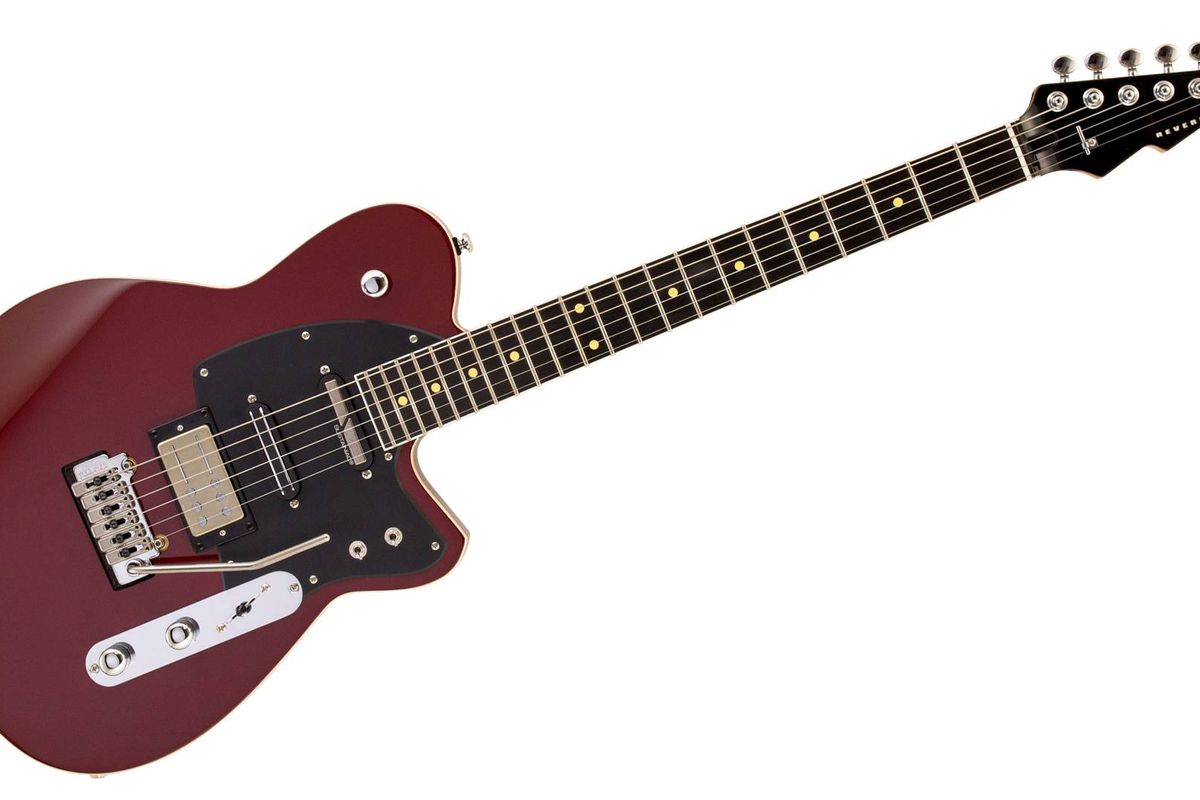
Introducing the Reverend Reeves Gabrels RG-SUS Mark II, reimagined with a new three-pickup layout. It features a 5-way selector for tone options galore. Fire up the acclaimed Sustainiac system for organic, controllable feedback and endless sustain. This system adds a whole new dimension to your playing, and it will pump up your creativity to a new level. If you’re a tone-shaping maniac, you need the Reeves Gabrels RG-SUS Mark II!
Reeves Gabrels has the unusual distinction of meeting David Bowie and forming a band with him – Tin Machine in 1989. He went on to work with Bowie in his solo career and a successful solo career of his own with his band Reeves Gabrels and His Imaginary Friends. He is currently the lead guitar player in The Cure, as well as involved with founding the project Gabrels/Kane/Parker-Wells.
The Reverend Reeves Gabrels RG-SUS Mark II is now available through any Reverend Authorized Dealer.
About Reverend Guitars:
Founded in 1997, Reverend Guitars has been at the forefront of creating instruments that are beyond the ordinary. With a commitment to quality, innovation, and the artistry of music, Reverend Guitars continues to inspire musicians worldwide. Each instrument is a testament to the brand's dedication to the craft, inviting players to explore new realms of sonic possibilities. Well played, indeed.
Gibson & Epiphone Honor Back to the Future's 40th Anniversary!
Turn back the clock, fire up the DeLorean, it's time to save the Hill County Courthouse & Clocktower. The only way to do that is to rock out with a cherry ES-345 like it's 1955!
These two players are doing so much to push guitar music forward Tim Henson has drafted them for the new Polyphia record

Back in 2013, a playthrough of Polyphia’s Impassion put the prog metal band on the map. The technical mastery at play instantly asserted guitarist Tim Henson as a young prodigy – and, 12 years on, Henson is keen to find the next wunderkind lurking in the shadows.
In a new interview with The Music Zoo, Henson reveals that he’s scouted a pair of up-and-coming guitarists to feature on Polyphia’s new record: RJ Pasin and Spiro Dussias. Considering Pasin’s intricate, videogame-soundtrack-worthy riffs and metal-infused hyperpop, and Spiro’s jawdropping shredding abilities, they’re sure to be a hit with Polyphia fans.
“We’ve brought them in for the Polyphia record, and it is insane – it is such a crazy sound!” Henson explains. “RJ Pasin can shred, and he can do all these [cool] things. And then, through working with [Spiro], I’ve rethought the way that I play.”
In terms of Spiro, Henson praises the gold-star shredder for his economy picking in particular. “One of the things that Spiro really tries for with his playing is, like, how easy can he make it?” he says. “He told me he wants to be an old guy who has no problem just [shredding], and it’s his approach to the economics of motion.”
“I learned economy picking when I was pretty young,” he continues. “And then you see players like Tosin Abasi who take that shit to the next level… then somebody like Spiro comes in, and just takes it up a whole other notch!”
It’s not the first time Henson has publicly praised Spiro. Back in February, the guitarist named Spiro as the next big guitar talent to watch out for. “That guy is fucking crazy,” he told Guitar World. “I’m definitely going to be hitting him up to see what kind of insanity he can bring [to the new record].”
While Henson’s background in classical violin has helped him forge his own unique style, he’s still keen to learn from the young prodigies of tomorrow. He points to Polish star Marcin Patrzałek’s insane percussive fingerstyle techniques and Italian jazz rocker Matteo Mancuso as examples. “They’re taking guitar to new heights,” he insists.
While Polyphia didn’t collaborate with Patrzałek on their upcoming record, Patrzałek has also shone a spotlight on one of Henson’s up-and-coming collaborators this year. The guitarist notably collaborated with RJ Pasin back in July… Small world!
“Every day, we continue to have absolute sicko monster players coming out,” he says. “It’s just getting crazier and crazier and crazier – and it’s awesome… Like, there’s Marcin, and all these other kids that are just absolutely incredible! They just play circles around me!”
“It’s cool, because, this late in the game, I’m so fortunate to feel inspired [by] my peers,” he reflects.
Elsewhere on the new record, Henson has also teased that there will be a collaborative track with System of a Down’s Serj Tankian. “The new record… it’s heavy!” he teased in conversation with Guitar World.
Check out Henson’s full chat with The Music Zoo below.
The post These two players are doing so much to push guitar music forward Tim Henson has drafted them for the new Polyphia record appeared first on Guitar.com | All Things Guitar.
The tastiest guitar tone ever? John 5’s pedalboard has been turned into a cake – complete with an array of edible Boss pedals

You could say John 5’s guitar tone is pretty delicious – but this is next level. With the Mötley Crüe guitarist turning 55 this year, one fan took on the challenge of transforming his pedalboard into a cake.
While John 5’s birthday was back in July, the cake looks like it was worth the wait. Commissioned by fan Merredith Mooth and made by Angie Martinez Hrndz, otherwise known as Cakes from the Crypt, the cake is a perfect replica of the guitarist’s famously Boss-heavy ‘board.
All six of his pedals have been expertly recreated, from his CE-2W Chorus to his NS-2 Noise Suppressor, to his DD-8 Digital and DM-2W Delay pedals. The pièce de résistance, however, seems to be John 5’s pair of SD-1 Super Overdrives. “The Super Overdrive never tasted so good!” the guitarist proclaims in an Instagram clip.
The board even has John 5’s Radial Engineering SGI 44 power supply, for an extra bit of tech to sink your teeth into.
As John 5 notes, the late arrival of the cake also coincides with the birthday of his guitar tech, David Vela. With that in mind, it’s a perfect gift for them to share – although we can’t imagine there’s much left at the time of writing… “Thank you, Meredith for this incredible birthday cake,” John 5 writes on Instagram. “My birthday was in July… David’s was a week ago. We really appreciate it. Thanks again.”
In the past, Vela has praised the Mötley Crüe riffer for his simple, no frills live rig. Speaking to American Music Supply last year, the tech explained: “Essentially, he has four pedals on that thing. You’re looking at six, actually. One of the pedals is doubled up, the Super Overdrive. He doubles up on the Super Overdrive because when he wants really high-gain pinch squeals and harmonics.”
“He’s got that, a delay, a reverb, and a chorus. And the noise suppression, but you don’t really hear anything from the noise suppression.”
Most significantly, Vela explained how “none of the pedals are modded”, which some find hard to believe. “They’re right out of the box,” he insisted. “Fans ask all the time, and I’m like, ‘No, those are just stock pedals!’”
In Vela’s words, “besides John’s fingers”, the secret to the guitarist’s ‘clean’ tone is his EVH 5150 EL34 amp.
The post The tastiest guitar tone ever? John 5’s pedalboard has been turned into a cake – complete with an array of edible Boss pedals appeared first on Guitar.com | All Things Guitar.
D’Addario Launches the Pick Holder 360

D’Addario introduces the Pick Holder 360, a sleek, fun new way to keep your favorite picks organized and visible, easy to reach, and ready to play.
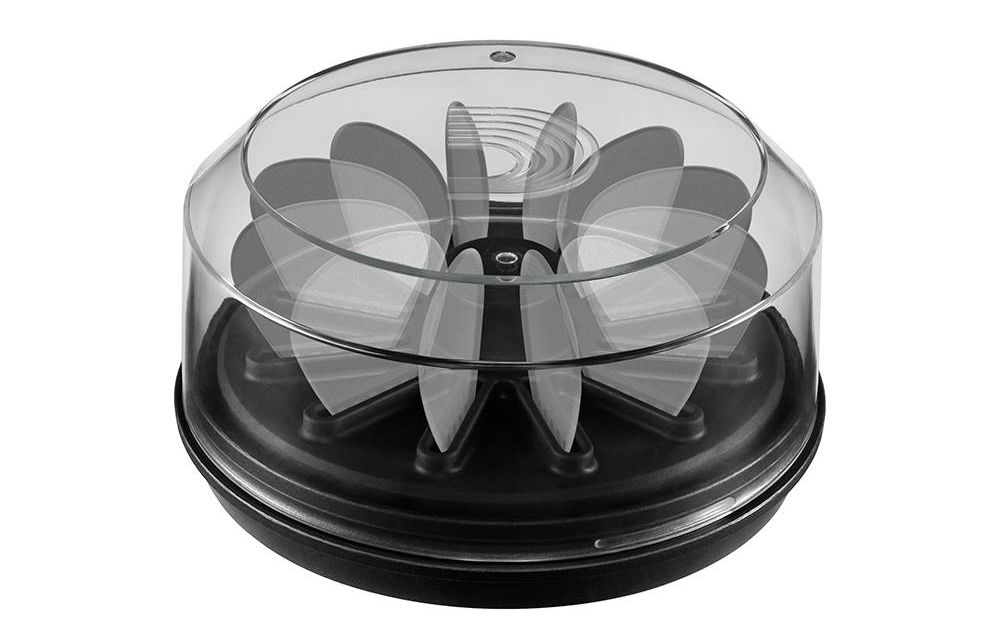
Spin, Grab, Play
The Pick Holder 360 offers rotating, stylish, easy-access storage for guitar picks of all shapes and sizes. Designed for one-handed use, all you have to do is give it a spin, grab your pick, and play. It’s a quick, perfect buy for musicians, custom pick collectors, or anyone simply looking for the perfect stocking stuffer for the musician in their life.
Highlights
- 360° Access: Rotating design keeps every pick within easy reach
- Stylish Storage: Sleek tabletop design fits comfortably in any setup
- Universal Fit: Holds picks of various sizes and shapes securely
- Gift Ready: Perfect for musicians and music lovers alike
Availability & Pricing
- The D’Addario Pick Holder 360 will be available October 13, 2025, through daddario.com and authorized retailers
- Street price: $19.99
- Watch the video: ddar.io/pickholdervideo
Brazilian Guitar Virtuoso Releases Long Awaited Debut Single "Cryin"
Mateus Asato, the Brazilian guitarist, composer, and musical innovator who is celebrated for redefining modern guitar artistry, has released his first official single, “Cryin’” today. The song will be on his forthcoming debut album, due out in early 2026.
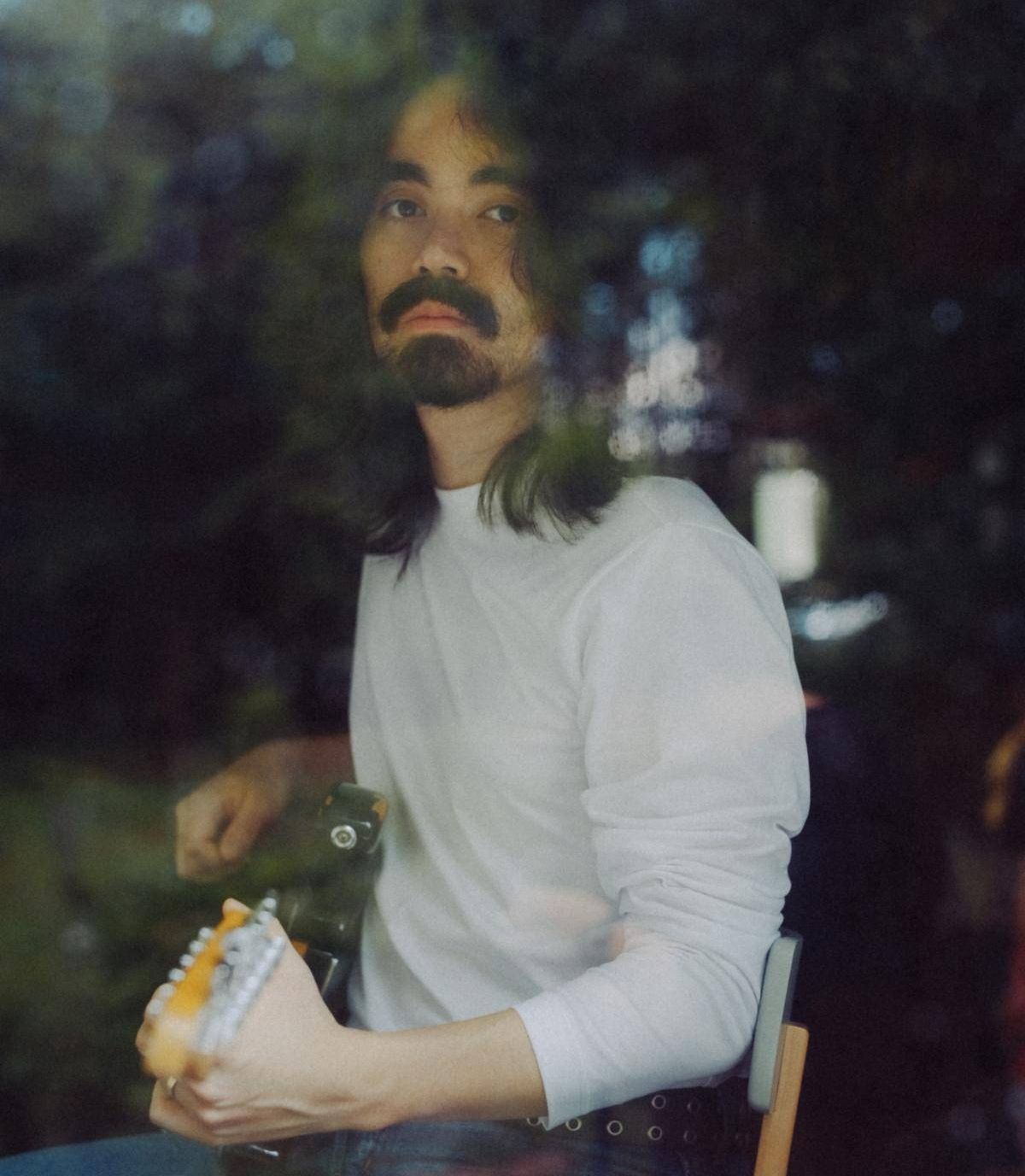
About the release, Masato says, “‘Cryin’’is my emotional celebration of life — the first act of being human and the sound of joy, fear, and love all at once. It’s a reminder that life is full of emotions, vulnerability, and movement, and you’re free to feel it your own way.”
Born in Campo Grande, Brazil, Asato began playing guitar at age nine and quickly developed a soulful, melodic style that blends technical mastery with deep emotional expression. After moving to Los Angeles to attend the Musicians Institute, he graduated with top honors and received the Outstanding Guitar Player of the Year award.
His expressive playing and viral Instagram performances propelled him to international fame, earning millions of followers and recognition as one of the most influential guitarists of his generation. Asato has toured and recorded with global superstars including Tori Kelly, Jessie J, and Bruno Mars, performing at venues such as Tokyo Dome and the Grammy Awards as part of Mars’s Silk Sonic band.
Mateus has been named among Guitar World’s Top 10 Guitarists of the Decade and Total Guitar’s Top 3 Guitarists in the World Today. Beyond his technical prowess, he is revered for bringing lyrical storytelling to the instrument — bridging genres from pop and R&B to instrumental fusion — and inspiring a new generation of players worldwide.
Fender opens its first Artist Showroom in China

Fender has opened its first Artist Showroom in China, in Shanghai’s Xuhui District.
The Fender Artist Showroom Shanghai marks Fender’s fourth Artist Showroom worldwide, following locations in Tokyo, London and Nashville. It will serve both as a working space for Fender’s Shanghai-based artist marketing and product teams, and to offer “elevated services to Fender China’s extensive roster of artists”.
The new showroom is housed within a two-storey building, with the first floor featuring a product display area, guitar tech station, and amp room – and regularly hosting community events including product trials, musician workshops and live performances – and the second floor serving as the workspace for the Fender China team.
 Credit: Fender
“From London to Nashville, and Tokyo, each Fender Artist Showroom is more than just a physical location, it’s an emotional bridge connecting artists with the brand. It’s a place where musicians find inspiration and support, and where Fender gains direct insight from artists to co-create the future of music,” says Edward “Bud” Cole, President of Fender Asia-Pacific.
“Today, we are proud to extend this bridge to Shanghai – a dynamic, inclusive, and international metropolis. This move is not only a key extension of our global strategy but also a solid commitment reflecting our firm belief in the future of the Chinese market and our long-term investment here.”
 Credit: Fender
“At Fender, we are committed to accompanying musicians and players at every stage of their music journey,” says Peggy Dai, General Manager of Fender China.
“With the establishment of Fender Artist Showroom Shanghai, we look forward to listening more directly to the voices of local musicians and players, translating their feedback into enhanced services and products that better meet local needs.”
With its new Artist Showroom Shanghai, Fender says it looks to “deepen artist relations and community cultivation”, while integrating “Fender’s brand spirit with Chinese music culture”.
 Credit: Fender
The post Fender opens its first Artist Showroom in China appeared first on Guitar.com | All Things Guitar.
“They want Mummy and Daddy not to be divorced anymore”: David Gilmour and wife Polly Samson reflect on why fans keep clamouring for him to reunite Pink Floyd
![[L-R] Polly Samson and David Gilmour, with Roger Waters inset](https://guitar.com/wp-content/uploads/2025/10/Polly-Samson-David-Gilmour-Roger-Waters@2000x1500.jpg)
Pink Floyd remain heavily in the rotation of prog lovers and music fans the world over, but they shouldn’t expect a reunion of any form any time soon.
The relationship between David Gilmour and Roger Waters remains acrimonious, to say the least; in October last year, Gilmour was on record saying he would “absolutely not” perform with Waters ever again, adding: “I tend to steer clear of people who actively support genocidal and autocratic dictators.”
Roger Waters has been accused of supporting President Vladimir Putin during Russia’s ongoing invasion of Ukraine, and even addressed the United Nations Security Council via video link in 2023 upon invitation from the Russian government.
Gilmour’s wife Polly Samson has also been vocal in her opposition to Roger Waters, writing in a 2023 tweet: “Roger Waters you are antisemitic to your rotten core,” going on to call him a “Putin apologist” among numerous other insults.
Sadly @rogerwaters you are antisemitic to your rotten core. Also a Putin apologist and a lying, thieving, hypocritical, tax-avoiding, lip-synching,misogynistic, sick-with-envy, megalomaniac. Enough of your nonsense.
— pollysamson (@PollySamson) February 6, 2023
Samson became somewhat professionally entangled with Pink Floyd following Roger Waters’ bitter departure in 1985, contributing many of the lyrics to the band’s 1994 album The Division Bell.
She refused to pursue writing credits, partly due to “an internalised misogyny”, as she explains in a new interview alongside her husband with The Telegraph, and hinting that it was some part due to Roger Waters fans blaming her for his Pink Floyd departure.
“The fans of Pink Floyd at that point were very much a divided community,” she explains. “I mean, they want mummy and daddy not to be divorced anymore,” she says, referring to Roger Waters and David Gilmour.
“I was like some sort of mistress who’d gone along and taken daddy away from mummy.”
“[Fans] still fight like cats and dogs,” says Gilmour, adding that Pink Floyd in the mid ‘90s was “very much still a very misogynistic boys’ club”.
“It was difficult for Polly,” he says. “I don’t think I did my best. I don’t think I’ve done enough to protect her in those ways really but we got through it.”
In other news, David Gilmour recently reflected on how he felt Pink Floyd were never prog rock, as they are often labelled. “To me, progressive rock is very serious players who can really do their stuff,” he said.
The post “They want Mummy and Daddy not to be divorced anymore”: David Gilmour and wife Polly Samson reflect on why fans keep clamouring for him to reunite Pink Floyd appeared first on Guitar.com | All Things Guitar.
The Last Dinner Party’s Emily Roberts on why she decided to embrace her most “outrageous” guitar impulses on new album From The Pyre

Emily Roberts has just landed in London from an exhausting set at Hungary’s Sziget festival. She is, rightfully so, a little weary after The Last Dinner Party, the band for which she is lead guitarist, led a fiery set under the blazing sun. The crowd was hungry for hits; fervently screaming back most (if not all) the words to songs from their debut album Prelude To Ecstasy. But Roberts has a twinkle in her eye this sunny Tuesday evening, despite her full-on day. There’s some big news to discuss.
It was during a thunderstorm in Prague last year when an unsuspecting audience heard a piece of The Last Dinner Party’s upcoming sophomore album, From The Pyre, for the first time. The band called themselves the decoy name Yeehaw Interlude for this moment, but the lead single This Is The Killer Speaking had officially been performed. This wasn’t like what happened on the run-up to last year’s debut, when many of the songs on the record had already been played live during the band’s early rise to fame.
This time, The Last Dinner Party were well on their way to becoming a household name, ubiquitously appearing on the radio, on billboards and happily finding themselves atop the charts. So, aside from this one-off performance as Yeehaw Interlude, it means the London five-piece still have no idea how their new songs will be received before releasing them. That’s a new feeling of anticipation they’ve never known.
“We haven’t played about eight out of ten of these songs live before,” says Roberts of the track list on From The Pyre. “With the first record, we always wanted to play the songs live and the recording wasn’t an afterthought, but it came later. At the time, we just wanted to get out and get gigging since it was after lockdown and covid. But with this one, the process is the other way round.”
Roberts, alongside her bandmates Abigail Morris, Lizzie Mayland, Aurora Nischevi and Georgia Davies, is clear on the fact that From The Pyre is not a new era following on from Prelude To Ecstasy. They’re both a collection of abstract, theatrical stories based on personal experiences. But whilst Prelude To Ecstasy was a highly successful test of this format with the songs structured into sections (a prelude, interlude and postlude), From The Pyre ditches any particular order for the tracks and dives deeper into storytelling, telling richer and earthier tales that sound every way from fragile to riotous.
 Image: Cal McIntyre
Look Who’s Back
“The start of this record is the opposite to Prelude,” Roberts continues, speaking of opening track Agnus Dei. “Prelude eased into itself and had this dramatic orchestral intro, but it made sense to have Agnus Dei at the start of this one because it just started things off with a bang.” Roberts’ guitar part narrates this track, striking a shiny three-note riff in an effervescent intro backed by crashing cymbals and momentous keys. As Morris slides into her first verse, Roberts drops down into three steady chromatic notes. She climbs them, tumbles back down and then glides beneath Morris’ sultry voice in effortless ease. It’s one way of yelling “look who’s back again” in the breeziest, most nonchalant way you can.
“It’s the most ridiculous song, but not in a negative way,” she laughs. “It’s unapologetic, it’s joyous and it’s silly, but all in a fun way.” Roberts also has a vibrant minute-long solo towards the end of the track – one which took two months to write.
“That solo took a really long time,” she admits. “I was kind of going back and forth. I kept thinking, ‘Is this too silly? Is it too outrageous?’ And because it’s such a long one as well, I realised I’d only ever written short guitar solos. I didn’t know how to write something that long that keeps your attention or tells a story over a length of time. So, that was quite challenging for me, but it was really fun to get to do that because I don’t think a lot of albums coming out in 2025 will have a minute-long solo at the end of a song.”
Roberts took influence from 60s rock for a lot of this record, pulling strands from The Rolling Stones and George Harrison to create a round, sustained sound with a bit of a bite that makes it her own. She used a combination of Music Man St Vincent signature models, a Gibson ES-330 and a Les Paul across the whole album to create a vintage twang throughout, but flavoured by that sharp bite from the St Vincent signatures and their bridge pickups. However, it’s not just her playing that reflects sixties icons – it’s also the way in which she’s written parts of the tracks.
“I definitely took inspiration from George Harrison and the way he writes in the context of a band,” she says. “We all needed to respect each other’s space. Writing my parts was something which was mine, and something I did. I do respect what the writer of the whole song wants but, at the same time, I want to bring my creativity to it as well. I feel quite protective over that. But we’ve just learned to balance those two things.”
Spooky Season
Roberts wrote bits and pieces of the instrumentals throughout From The Pyre, including an eerie, discordant vocal part at the start of Woman Is A Tree. The harmonies are hauntingly beautiful – they start off steady but bend unsettlingly upwards by a semitone. Then, like an elastic band, they snap, and a cold yelp escapes one singer like a gust of air. If you paired it with a horror film (it’s also ghostly a capella) you’d have a hard time sleeping.
“We were very meticulous with writing,” Roberts says. “We didn’t set ourselves many limitations, we just kept adding more layers to things. When I arranged the choir at the beginning of Woman Is A Tree, it was really fun, and it was kind of inspired by the Yellowjackets soundtrack. But I’d probably say it was the most challenging one to sing and to write. We hadn’t really done much of that [choral] stuff before. Lizzie’s usually the only one doing the backing vocal parts, so to have all of us singing in such close harmony was quite experimental and hard for us to do.”
The Last Dinner Party doesn’t choose anything safe or easy – From The Pyre straddles the line between truth and mythos. The record depicts a world where every story is character driven, written from specks of real life and lived experiences.
 Image: Rachel Smith
The characters, including scythes, Mother Earth, saints, cowboys, sailors and even Joan of Arc, may be flamboyant theatrical metaphors, but the true origin of each story lurks down at the core. It forced each band member to surrender themselves to the music and allow it to reach intimate parts of their soul. It meant trusting an individual vision and acting on it.
“I’ve been a lot better at conveying my opinions authoritatively, even if they don’t always end up as the result,” says Roberts. “With Prelude, we were still understanding what we’re each good at. I was definitely a lot more shy then, and I’d sit quietly and observe things. But I think it’s always better to say things and contribute. I learned more about writing parts and what works well in which situation, and how to serve the right energy at the right moment.”
Second Best, the third track on the album, is a perfect example of that expert judgement coming into play. The song starts with a magnificent choral passage whose density and power, this time, completely engulfs the listener. For the guitar part, although she mostly used the St Vincent signatures and the Gibson on this album, Roberts chose a Les Paul to create a classic rock sound that she resonated well with on the last album. “I used that for the lead guitar on the chorus specifically,” she explains. “It gave it that rocky sound because the song is a bit more seventies or eighties, so it needed that kind of energy since it’s got that big, sustained sound.”
Sharper Focus
But since Count The Ways needed something sharper with a definite edge, there was an obvious guitar choice. Roberts has known and loved the St Vincent guitars since Prelude to Ecstasy, so why stray elsewhere and fix what ain’t broke? “I’m a bit stuck in my ways at this point,” she laughs. “What I like about the St Vincent is that it really cuts through a mix, and it’s quite high-end. I think that’s a great quality that it has and it just doesn’t sound like a Fender or a Gibson. I wanted something that, when you hear it, it’s not obvious what it is. I wanted people to go, ‘What is that?’ and for it to sound new.”
As a lover of at least one signature guitar, Roberts has had her hopes set on one day releasing her very own signature model. When Guitar.com interviewed her last in 2024, she admitted she’d want it to be “modern-looking” and to “have the same ease for playing as a female”. Has there been any development on the idea since then?
“I’ve always wanted to design or make my own guitar, I just haven’t had any time to do that,” Roberts laughs. “I’d want it to be an amalgamation of different decades in one guitar, even if that’s really difficult to do. It would be cool to have a guitar that combines elements, like if it had different pickups from each other, or a switchable bridge pickup that changes from a P-90 into a humbucker or a Firebird. Having something with a lot of versatility that captures different decades of guitar playing and guitar history would be really cool.”
 Image: Rachel Smith
Something unique about being the lead guitarist in a popular rock band is that a lot of fans cover your solos. In fact, if you click on YouTube and search for The Last Dinner Party guitar covers, you’ll find countless clips of people putting their own spin on Roberts’ parts. Perhaps it’s not something she’s quite used to yet.
“It’s such an amazing feeling to watch other guitarists, whom you’ve never met, play something that you wrote just alone in your room,” she smiles. “People covered the Nothing Matters solo and added their own personality to it, which I loved. One guy even added these shreddy licks in between phrases, and I just thought that was crazy.”
The Scythe solo, Roberts says, could be one fans tackle next, or perhaps even sing along to since it’s largely melodic and “hooky”. Or maybe it’ll be the jaunty Inferno chorus which Roberts co-wrote with Morris. That’s the thing about releasing an album whose tracks people mostly haven’t heard yet – the next part is unpredictable.
“I’m just excited to put a lot of the new songs onto our setlist,” Roberts grins. “We can now pick and choose a curated set rather than having to fill an hour. We don’t need to play all of our songs plus a cover to fill the time anymore, so it’s going to be really exciting and freeing to use some of that spontaneity.”
So far, it’s just lead single This Is The Killer Speaking that’s out. It’s a smart hint at what else is to come – starting off snarling and mysterious as it creeps towards a more dynamic, groovy chorus. The thing about From The Pyre is that it packages up tonnes of emotions in one record in a way that’s jaggedly contrasting yet entirely fitting. It’s a giant landscape painting with different characters travelling all over it, in different directions. It’s meant to be loud and busy. But it’s honest, truthful, and another clear masterpiece.
The post The Last Dinner Party’s Emily Roberts on why she decided to embrace her most “outrageous” guitar impulses on new album From The Pyre appeared first on Guitar.com | All Things Guitar.
Pages
