
Music is the universal language
“Glory to God in the highest heaven, and on earth peace to those on whom his favor rests.” - Luke 2:14
General Interest
Black Friday 2025: Everything guitarists need to know

Black Friday is set to deliver its annual deluge of deals once again this year. The event and its follow-ups Cyber Weekend and Cyber Monday give guitarists a great chance to grab a saving on anything from a few packs of strings, to that dream instrument. The entire span from the week before Thanksgiving right through to Cyber Monday – AKA Cyber Week – is what serious gear-heads should be watching. Savvy shoppers in search of a new guitar, amp or effects pedal understand that the true savings often begin well before the day itself, with retailers such as Amazon, Sweetwater, Thomann, Reverb and zZounds launching early bird promotions to capture pre-holiday spending.
Where can you find savings? Well, if you’re in the UK or the EU, there are some great deals to be had at Thomann and Amazon, as well as Reverb and PMT. In the US, you’ll be able to grab some savings at Guitar Center, Amazon, Reverb and zZounds.
The Guitar.com team is primed to find the best deals for you across all of Cyber Weekend – so be sure to check back here, as this page will be regularly updated with our best picks! Until then, here’s just some of the places we’ll be trawling for savings:
| UK/EU Deals | US Deals |
| Thomann Save up to 70% | Reverb Up to 80% off |
| Reverb UK Up to 80% off | zZounds Black Friday savings |
| Positive Grid Up to 50% off | Sweetwater Up to 80% off |
| Gear4Music Black Friday deals | Positive Grid Up to 50% off |
| PMT Up to 70% off | Guitar Center Save up to 50% |
| Amazon UK Big savings | Amazon Black Friday deals |
| Guitar Tricks 20% off monthly sub | Tim Pierce Masterclass Free trial |
| Tim Pierce Masterclass Free trial | Guitar Tricks 20% off annual sub |
| Ultimate Ears EU Shop savings | Music & Arts 20% savings |
When is Black Friday 2025?
Black Friday 2025 will officially commence on 28 November 2025, with Cyber Monday 2025 falling on Monday, December 1, 2025. Across this weekend you’ll want to keep an eye on all of your favourite retailers, and indeed this very site – Guitar.com will be trawling the guitar world to find you the biggest and the best deals we can, on everything from string-winders to seven-strings.
It’s important to not just focus on the physical gear, too! Deals on plugins and amp sims are standar often featuring really hefty discounts. If you’re a bedroom producer, it’s a great time to stock your virtual gear collection with some industry-leading plugins without breaking the bank.
Why You Can Trust Us
Every year, Guitar.com reviews a huge variety of new products – from the biggest launches to cool boutique effects – and our expert guitar reviewers have decades of collective experience, having played everything from Gibson ’59 Les Pauls to the cheapest Squiers.
That means that when you click on a Guitar.com buyer’s guide, you’re getting the benefit of all that experience to help you make the best buying decision for you. What’s more, every guide written on Guitar.com was put together by a guitar obsessive just like you. You can trust that every product recommended in those guides is something that we’d be happy to have in our own rigs.
The post Black Friday 2025: Everything guitarists need to know appeared first on Guitar.com | All Things Guitar.
Ace Frehley 1951-2025: Guitar community mourns the death of Kiss’s trailblazing founding guitarist

Tributes have been pouring in from the guitar and wider music community following the news that Ace Frehley, Kiss’s trailblazing founding guitarist who was instrumental in their success, has died aged 74.
“We are completely devastated and heartbroken,” reads a statement from Frehley’s family, shared with Variety. “In his last moments, we were fortunate enough to have been able to surround him with loving, caring, peaceful words, thoughts, prayers, and intentions as he left this earth,” read a statement from the guitarist’s family.
“We cherish all of his finest memories, his laughter, and celebrate his strengths and kindness that he bestowed upon others. The magnitude of his passing is of epic proportions, and beyond comprehension. Reflecting on all of his incredible life achievements, Ace’s memory will continue to live on forever!”
No official cause of death has been given yet, but TMZ reported the guitarist was on life support following a recent fall at his home studio, which caused a brain bleed and forced him to cancel a string of upcoming tour dates.
Kiss lead the tributes to their former guitarist, with a statement on the band’s social media reading: “We are devastated by the passing of Ace Frehley. He was an essential and irreplaceable rock soldier during some of the most formative foundational chapters of the band and its history. He is and will always be a part of Kiss’s legacy. Our thoughts are with Jeanette, Monique and all those who loved him, including our fans around the world.”
Rage Against the Machine guitarist Tom Morello calls Ace Frehley his “first guitar hero”, thanking him for inspiring “generations to love rock ‘n’ roll” and for his “timeless riffs and solos”
Extreme virtuoso Nuno Bettencourt shares a similar sentiment, reflecting on how Kiss was the “first rock band I wanted to be like”, adding, “So long, Spaceman.”
“As far as I’m concerned Ace was the coolest dude out of the original four,” write Opeth. “He had some type of swagger that almost defined the term itself. A hard rocking Keith Richards of sorts, albeit in silver makeup and platform heels. Kiss was very much an introduction to my ‘school of rock’. All my childhood friends were fans of Kiss, and many of them regarded Ace as the ultimate rock-star.”
“I am so shocked and saddened that this happened to my hero and my friend,” adds John 5. “I’ve known Ace since 1988 and we’ve been very close ever since then. Ace changed the world. He influenced millions of people and changed my life. I will miss you my friend.”
Elsewhere, former Kiss guitarist Bruce Kulick calls Frehley “truly an iconic guitar player”, noting his “undeniable role in the creation and success of Kiss”, and his influence on “millions of guitarists around the world”.
Rush’s Alex Lifeson and Geddy Lee say they are “absolutely stunned and saddened” at the news of Frehley’s death.
“Back in 1974, as the opening act for Kiss, Alex, Neil [Peart] and myself spent many a night hanging out together in his hotel room after shows, doing whatever nonsense we could think of, just to make him break out his inimitable and infectious laugh.
“He was an undeniable character and an authentic rock star. RIP Ace… thanks for welcoming us newbies into the rock and roll world.”
Frehley was born April 27, 1951, and started playing the guitar aged just 13. After spending his early 20s playing in various rock bands, he would successfully audition for a new project being formed by Paul Stanley, Gene Simmons and Peter Criss in 1972. He would help conceptualise Kiss, and launch the band in 1973.
As Kiss’ Spaceman, Frehley brought an old-school hard-rock attitude to the band’s lofty theatrics, drawing on his early influences such as Cream, The Who and Jimi Hendrix. While the band slowly garnered an audience in its first year, he established a frenetic playing style that provided a grounded counterbalance to his sci-fi persona and the band’s overall bombastic stylings.
Frehley would co-write the occasional song for Kiss’ early material, but increased his writing credits by the late 1970s – 1979 and 1980 albums Dynasty and Unmasked both featured three Frehley-penned songs. Despite this, he began to find himself pulling in a more experimental, less commercial direction than Simmons and Stanley, especially after Peter Criss’ firing in 1980.
By 1982, he had left the group and embarked on a solo career. In 1987 he released the self-titled record with his solo band Frehley’s Comet, which was well-received.
Alongside Criss, Frehley rejoined Kiss in 1996 for a successful reunion tour. After the band’s original lineup embarked on a ‘farewell’ tour in 2001, however, he departed and resumed his solo career. Following some disputes with the remaining members of Kiss surrounding payment, he didn’t return to the band to participate in their final tours.
He continued releasing music under his own name after his departure, with his next LP scheduled for released this year.
The post Ace Frehley 1951-2025: Guitar community mourns the death of Kiss’s trailblazing founding guitarist appeared first on Guitar.com | All Things Guitar.
Podcast 521: Paul Rigby
Guitarist Paul Rigby joins us this week to talk about his 15-plus-year collaboration with Neko Case and so much more.
We hear about growing up in Calgary (and why it’s an oddly great town for guitarists); meeting Neko; writing for Broadway; songwriting help from the Black Stallion; and why his favorite electric guitar is a $123 partscaster.
https://www.instagram.com/paul.rigby003/
Neko Case’s new album, ‘Neon Grey Midnight Green, is out now. https://nekocase.com
Our new, 57th issue of the Fretboard Journal is now mailing. Subscribe here to get it.
Our next Fretboard Summit takes place August 20-22, 2026, at the Old Town School of Folk Music in Chicago. https://fretboardsummit.org
We are brought to you by Peghead Nation: https://www.pegheadnation.com (Get your first month free or $20 off any annual subscription with the promo code FRETBOARD at checkout).


The post Podcast 521: Paul Rigby first appeared on Fretboard Journal.
Manson x Cort MBM-2H review – as sparkly as it is playable

£569, mansonguitarworks.com
Christmas comes earlier every year, doesn’t it? Particularly in this year, when it arrived in June with the launch of the Manson x Cort MBM-2H. It’s the latest entry to the affordable side of Matt Bellamy’s signature line, and the most striking addition is a finish option that looks like Saint Nick himself carved the body out of peppermint and magical reindeer noses. That’s no coincidence, of course – the finish echoes Bellamy’s own more high-end custom guitar, one nicknamed ‘Santa’ for its sparkly red-and-white colour scheme.
 Image: Adam Gasson
What is the MBM-2H?
So yes, in my hands is the new – sort of – Meta Series MBM-2H. It’s worth noting that, other than a new set of finishes and the addition of a neck humbucker rather than a P90, not much has changed from the previous Meta Series MBM-2. The rest of the spec-sheet all remains the same, with a basswood body, soft-V maple neck, compound 12-16” laurel fretboard and locking tuners
This particular model is also the most barebones version of the instrument, as there is also a slightly pricier option if you want to go with a Sustaniac in the neck position. You can even add a built-in ZVEX Fuzz Factory for a little extra again, if you want to get really close to Bellamy’s own loadout. And if you do happen to be a little less ‘LED shutter sunglasses’ in your aesthetic sensibilities, the MBM-2H does come in two other finishes that are a little less festive – olive green and black.
 Image: Adam Gasson
Construction and QC
The construction and attention to detail here is generally pretty great for the price, but my eye is drawn to a few reminders that this is a sub-£600 guitar. The 12th-fret dot markers have been drilled noticeably askew, and a non-zero amount of glitter from the body has made its way under the otherwise plain neck finish. It’s worth highlighting that lopsided fret-dots were also present on previous iterations of this instrument, so it’s a little bit of a shame that this issue hasn’t been addressed. There’s also one pretty egregious tool mark along the fretboard edge, and the transition from the painted headstock to the laurel fretboard is rough at best.
Some of the hardware choices are similarly indicative of a more budget instrument, too – the line of strings is almost entirely flat to the body, but angled humbucker rings are still used, meaning that the pickups have one coil just slightly closer to the strings. Luckily, this issue is nowhere near as bad as it was on the similarly-priced Vintage REVO Integra, and the result isn’t audible here – especially as there’s no coil-splitting going on.
But in terms of any QC quibbles that impact playability, it’s thankfully a lot harder to find fault. There may be some rough spots to look at right up close, but under the hand, everything along the neck is smooth as can be, and the frets are polished and level. Intonation is also set perfectly out of the box, and the action has been dialled in for speedy riffing. So let’s do some of that.
 Image: Adam Gasson
In use
In the hands and on the body the guitar is a very comfy experience – it’s light but well-balanced, and the soft-V neck and the generous comfort carves mean the guitar stays out of the way as you play. The factory action gives me a clue as to what this guitar has been dialled in to do – it’s low and slinky, which combined with a compound radius and a killswitch, makes this a guitar that invites big, silly riffs and shreddy solos. Not that I can shred very well, mind, but I’m not going to let that stop me.
Something that’s immediately striking when I plug in is just how damn good the bridge pickup is. It’s pretty much the opposite of a touch-responsive PAF, with bucketloads of output, quickly driving my amp into heavy saturation. This makes sense, of course. Subtlety is not a word neither Matt Bellamy or his LED sunglasses know: this is a guitar designed for big riffs and killswitch-stuttered solos.
With that said, though, the main addition here over the previous MBM-2 guitar is that the neck P90 has been replaced by a humbucker. This is, in my view, a bit of a strange change to make, as it does remove some of the versatility and identity from the guitar. There’s not even any coil-splitting to be had to compensate – the sheer power of these Manson-designed humbuckers makes the bridge position great for huge riffs, but can mean that the neck position becomes a little muddy and overwhelming.
So without the electronic curveball of a P90, a Sustaniac or a Fuzz Factory, this version of the MBM-2H approaches being generic. And generic does a disservice to a design rooted in kick-to-the-teeth impact and electronic whackiness, not to mention that finish.
There is still the killswitch, of course, which is a quality bit of kit. It has a nice smooth action and there’s zero crackle while using it. It is also well-placed on that upper-bout, being pretty easy to integrate it into your playing. This isn’t one of those killswitches that asks you to paw at hitherto unexplored areas of a guitar to activate the stuttering effect – it remains accessible in most imaginable playing positions. Equally, if you find yourself not wanting to use it for whatever reason, it is still a low-profile push-button – and so will stay out of the way.
 Image: Adam Gasson
Should I buy an MBM-2H?
The MBM-2H has all of the hallmarks of a high-quality Indonesian-made instrument – and therefore will absolutely perform for you without breaking the bank. The playability-to-price ratio here is undeniable, and by most measures it’s an excellent guitar. Manson and Cort continue to prove themselves a worthy pairing when it comes to making excellent guitars at this price point.
However, there is something about it that doesn’t quite spark as much joy as, on paper, it should. It’s hard to put my finger on why. Maybe it’s the pretty generic satin-finished maple neck. Maybe it’s my aversion to the flashiness of the red sparkle. Maybe it’s the fact I’m looking at the slightly more anonymous version without a Sustainiac or a Fuzz Factory. Or maybe it’s the fact that the main change over the Meta Series MBM-2 makes the guitar, in my view, a little more generic.
But with that said, these are the kinds of criticisms that you may well easily dismiss. Maybe you personally would never have used a neck P-90, and are overjoyed about this change to a humbucker! And for the fans of Bellamy’s Santa guitars, it is cool to see such an out-there finish arrive at the more affordable end of things.
The post Manson x Cort MBM-2H review – as sparkly as it is playable appeared first on Guitar.com | All Things Guitar.
Kiss Legend Ace Frehley Passes Away at Age 74
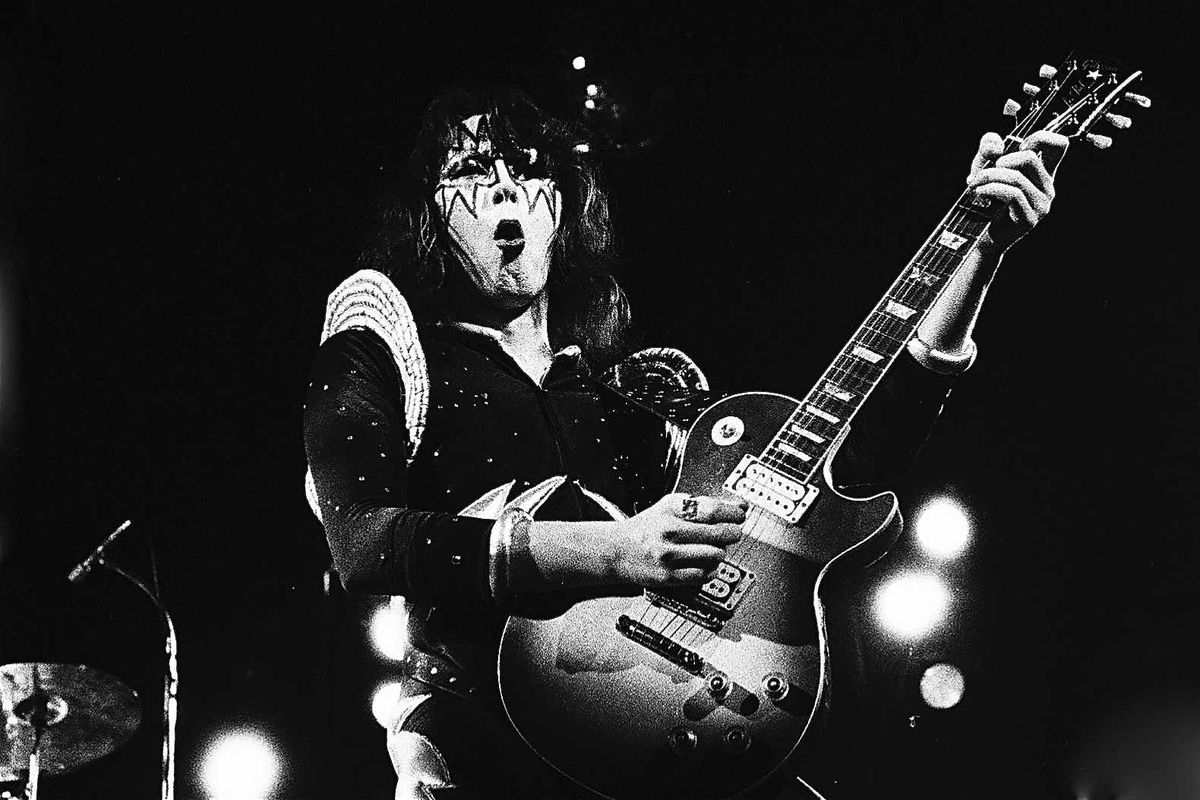
Ace Frehley, the Kiss guitar legend whose fiery playing and pyro-laden guitar tricks influenced and enraptured generations of players, died Thursday in Morristown, New Jersey, following complications from a fall in his home studio last month. He was 74.
“We are completely devastated and heartbroken,” Frehley’s family said in a statement. “In his last moments, we were fortunate enough to have been able to surround him with loving, caring, peaceful words, thoughts, prayers and intentions as he left this earth. We cherish all of his finest memories, his laughter and celebrate his strengths and kindness that he bestowed upon others. The magnitude of his passing is of epic proportions, and beyond comprehension. Reflecting on all of his incredible life achievements, Ace’s memory will continue to live on forever!”
Frehley's former Kiss bandmates, Gene Simmons and Paul Stanley, released a joint statement, writing: “We are devastated by the passing of Ace Frehley. He was an essential and irreplaceable rock soldier during some of the most formative foundational chapters of the band and its history. He is and will always be a part of Kiss’s legacy. Our thoughts are with Jeanette, Monique and all those who loved him, including our fans around the world.”
Over the course of five decades, Frehley's Les Paul-fueled riffs and solos helped to define not just Kiss’ music, but the very sound of arena rock guitar. His influence stretched far beyond the makeup, from Tom Morello calling him his “first guitar hero” to Dimebag Darrell having Frehley's face tattooed on his chest.
Born April 7, 1951, in the Bronx, Paul Daniel “Ace” Frehley got his first electric guitar as a Christmas gift in 1964. A self-taught player, he drew early inspiration from Hendrix, Beck, and the Stones—and in particular the Who’s Pete Townshend. As he told Premier Guitar in 2010, “I used to sit next to the record player and figure out every Who song. Playing a lot of Who music really helped develop my right hand, which helped with not only my rhythm technique but my leads, too.”
In 1973, Frehley auditioned for a band seeking a “hard rock guitarist with balls and flash.” After hauling his 50-watt Marshall up a flight of stairs and jamming on “Deuce,” he landed the gig, forging Kiss alongside Simmons, Stanley and Peter Criss.
As Kiss’ lead guitarist from 1973 to 1982, Frehley’s smoking, rocket-shooting, levitating Les Pauls became as iconic as the music itself. These stunts also carried genuine risks. As he told me in 2014, “One night [my flying guitar] hit something and slipped off, just grazing my shoulder. Imagine [a Les Paul] with a battery pack and a box to protect it from the heat of a smoke bomb.”
Frehley's unique picking technique, where his loosely-held pick and thumb simultaneously struck the string, created what he described on Shred with Shifty as “a sound just shy of a pinched squeal, but more spunky.” This approach, combined with the fact that he ripped his solos through a “dimed Marshall stack,” powered the licks in Frehley-composed songs like “Cold Gin” and “Shock Me,” as well as “Rock and Roll All Nite,” Love Gun” and other Kiss classics.
Frehley's 1978 self-titled solo album went platinum, with his cover of “New York Groove” reaching No. 13 on Billboard's Hot 100—the highest-charting single from any Kiss member's solo effort. His recording philosophy, as he explained to Premier Guitar, involved tracking basics with Les Pauls, then “doubl[ing] stuff up with Fenders because they have a different sound.” He'd layer acoustics underneath electrics, he said, because it “adds a fullness that you don't really hear until you take it away.”
After forming Frehley's Comet in the mid-'80s, Ace returned to Kiss for their massively successful 1996 reunion tour, remaining until 2002. His late-career solo work demonstrated continued vitality. From 2009's Anomaly through 2024’s 10,000 Volts, Frehley’s output was well-received by fans, and he toured steadily behind the records. His 2016 effort, Origins, Vol. 1, and 2018’s Spaceman, featured collaborations, respectively, with former bandmates Stanley and Simmons. Despite public animosity over the years (Frehley was not involved in the band’s 2019-2023 End of the Road farewell tour) he recounted to me that working together again, at least at that time, was simple: “We all have the other's cell phone numbers and we just call each other!”
As a player, Frehley opted for feel over technical dexterity. But never stopped learning. When I asked him in that same interview if he was still discovering things at 67, he laughed: “All the time. Half the stuff I do, I don't know what it's called. But you know, if it sounds good, I do it.”
This intuitive approach defined his career. As he told Premier Guitar in 2010, “I pride myself on thinking outside the box, and I'm probably like that because I'm not a schooled musician. To me, there are no rules, and there never were.”
Stompboxtober 2025: Kernom

Drive into a new tonal frontier today! Enter to WIN the Kernom RIDGE — the pedal that morphs from clean boost to full‑on high gain, with MIDI control, dual EQ sections, and a responsive “MOOD” knob that blends multiple overdrive voices in one. Don’t miss today’s chance — come back tomorrow for your next shot at pedal gold!
Stompboxtober 2025 - Win Pedals All Month Long!
Kernom Ridge
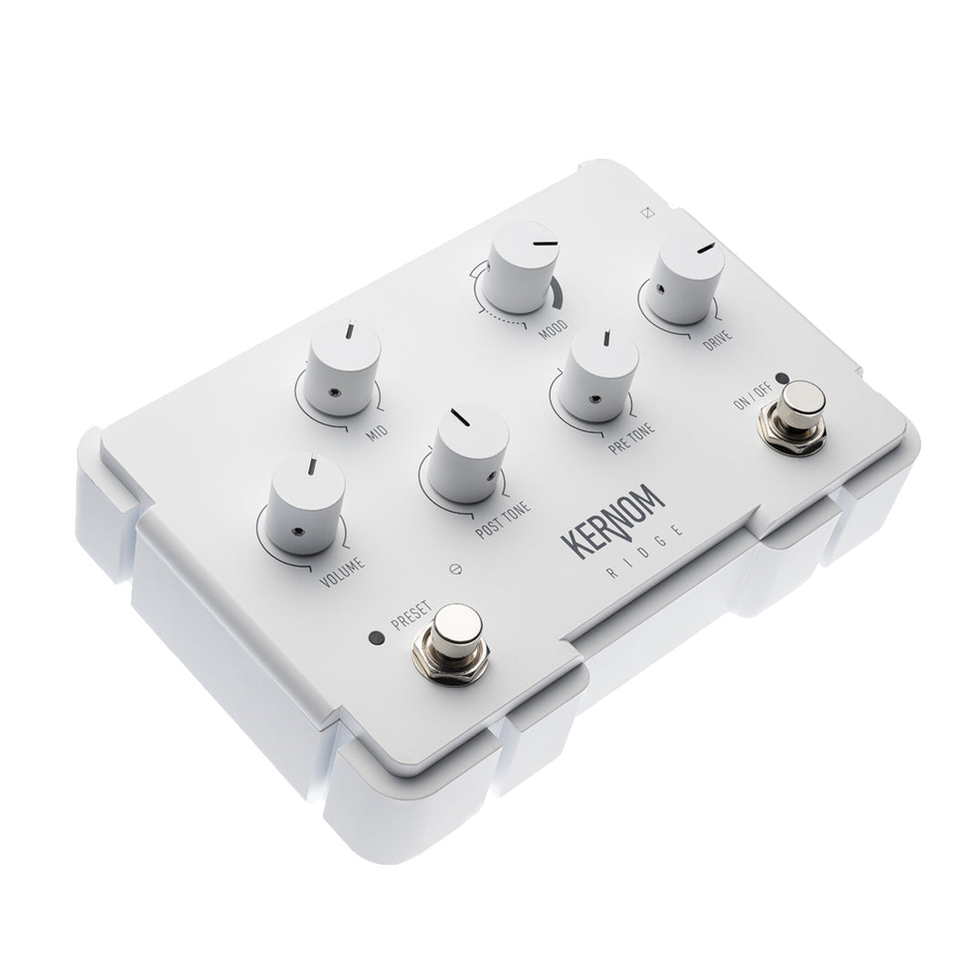 Every Overdrive You’ll Ever Need, One Pedal
Struggling to find the perfect overdrive? Whether you need a clean boost, a transparent overdrive, or high-gain distortion, RIDGE gives you a seamless spectrum of tones—all in one pedal.
From Klon-like transparency to Tube Screamer warmth, from bluesy edge-of-breakup tones to modern high-gain saturation, RIDGE eliminates the need for multiple pedals. Dial in your perfect drive with the MOOD knob.
- The Only Overdrive You Need: From Clean Boost to High Gain
- Seamless Morphing: Effortlessly transition between legendary overdrive styles
- Advanced EQ Section– Sculpt your tone before and after the clipping stage
- MIDI & Preset Control – Save up to 128 presets and integrate seamlessly into your rig.
- Expression Pedal Input – Morph between two drive settings in real time.
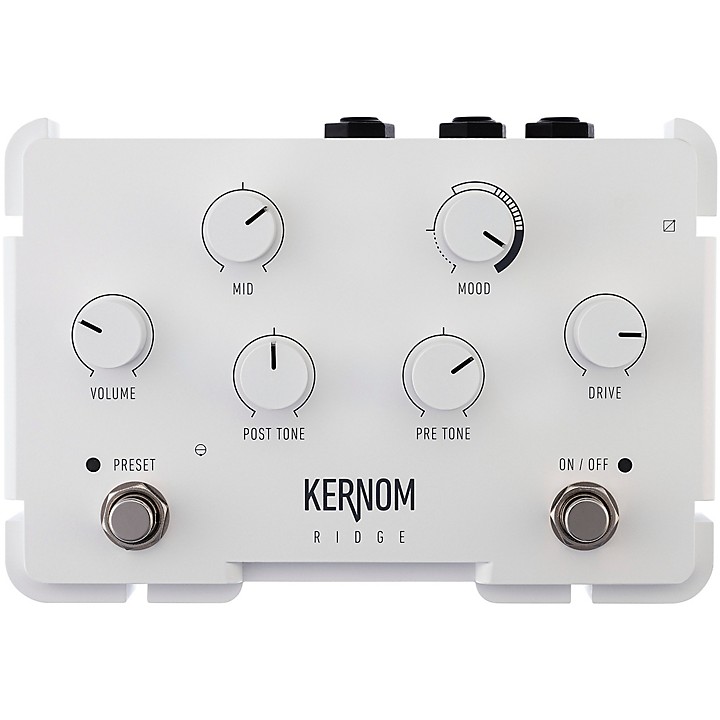
Kernom Ridge Overdrive Effects Pedal
All About Guide Tones
Do you feel like your solos lack focus or that there isn’t any underlying structure to your lines? Does it seem that you are wandering around the neck, hoping that what you are playing “looks like it sounds cool”? Would pushing peas around a dinner plate with a knife be more riveting than the last lick you played? If any of these statements are true, then you need some guide tones, my friend.
Guide tones, also known as target notes, are commonly used in jazz improvisation and usually refer to only the 3rd and 7th of a chord. But, for our purposes, we’re going to apply a more generous definition where all notes of a chord can be used. There are two benefits to using guide tones: They create a predetermined melodic structure that serves as a framework for your solo, and they provide an inner melody to your lines that carry the sound of the chord changes.
The first two examples show a couple of possibilities when building a guide tone melody over a ii-V-I chord progression in the key of C major. The only requirement is that the guide tones should be played on the strong beats of the measure (beats 1 and 3). Next, spell each chord to see what notes you have to work with. For our progression, our choices will come from Dm7 (D-F-A-C), G7 (G-B-D-F), and Cmaj7 (C-E-G-B). Since these examples have one chord per measure, I have chosen to use only one guide tone in each measure. But, I could have used two guide tones in a measure, one on beat 1 and the other on the beat 3. Other than what has already been discussed, there is no right or wrong way to do this. Basically, pick some chord tones, put them on the strong beat(s), and see how it sounds. Change or edit as you see fit!
Take a listen to Ex. 1. The guide tones create a descending melody that leaps up at the end. Using one note per measure, the line starts with C (the 7th of Dm7), then to B (the 3rd of G7), to G (the 5th of Cmaj7) and finally E (the 3rd of Cmaj7). Ex. 2 has a guide tone line similar to the first example, descending for the first three measures and a leap up at the end. It begins with F (the 3rd of Dm7), to D (the 5th of G7), to B (the 7th of Cmaj7), and then to E (the 7th of Cmaj7).
Ex. 3 is an eight measure progression, similar in structure to a popular jazz standard. Harmonically, the first half is a ii-V-I-IV in C major and the second half is a ii-V-i in the key of A minor. In the first six bars, there is one guide tone per measure, and then concludes with two guide tones in each of the last two bars.
Once you have decided on a framework for your solo, use scales and arpeggios to add notes before each guide tone. By doing so, you create motion in your line that sounds musical, and not like you’re choosing notes at random. Listen to Ex. 4 where each guide tone is approached from above by a scale step. Since all the chords are in the key of C, my approach notes are from the C major scale. I can also think in modal terms, where I would use D Dorian in bar 1 to approach the G7 in bar 2. Then, I can use G Mixolydian in bar 2 to approach the Cmaj7 in bar 3, and C Ionian to approach the next Cmaj7 in bar 4. Ex. 5 is the same scalar concept, this time approaching the guide tones from below.
Ex. 6 and Ex. 7 use arpeggios to approach the guide tones from above and below, respectively. I prefer to do this by using the arpeggio of the chord I am going to, not the one I am playing over. So, when I am playing over the Dm7 in the first measure, I will use the G7 arpeggio to approach the guide tone in bar 2. Then, when playing over G7 in the second measure, use the Cmaj7 arpeggio to approach the guide tone in bar 3. This concept is a little easier to see in Ex.7. Dm7 is the chord in bar 1. You approach the guide tone in bar 2 with a G, which is not in a Dm7 chord, but it is in G7.
To get longer lines, use two, three, or more notes from the scale or arpeggio when approaching the guide tones. Ex. 8 approaches the guide tone from above and below, using two and three notes from the scale. Ex. 9 shows the same approach methods, but with notes from the arpeggio.
After you get a handle on the guide tone concepts, experiment with rhythms, rests, and an ever-increasing number of approach notes. Check out Ex. 10 as an example of what is possible. It’s the guide tone line from Ex. 2 fleshed out with a mixture of scale and arpeggio approach notes of various lengths. Ex. 11 is an expansion of the guide tone line from Ex. 3. I used an increasing number of approach notes in the first half of the line. The second half is more rhythmically complex, ending with the triplet figures in the last two measures.
Applying these concepts to something more familiar, Ex. 12 is one possible guide tone melody over an A minor blues. Give it a listen to hear how the first two phrases are relatively scalar, but the last phrase has more of a “sawtooth” vibe. Ex. 13 is the completed solo, using the ideas discussed previously. Throwing everything into the guide-tone blender yielded different types of approaches combined with a variety of rhythms and rests.
Once you get a foothold, substitute different modes, scales, arpeggios, chords, and time signatures to achieve some different sonic flavors. Remember that you are restricting yourself to these few concepts in order to get a more melodic and meaningful solo. If you practice it enough, your brain will start working this way on its own!
Universal Audio Introduces Volt 876 USB Recording Studio
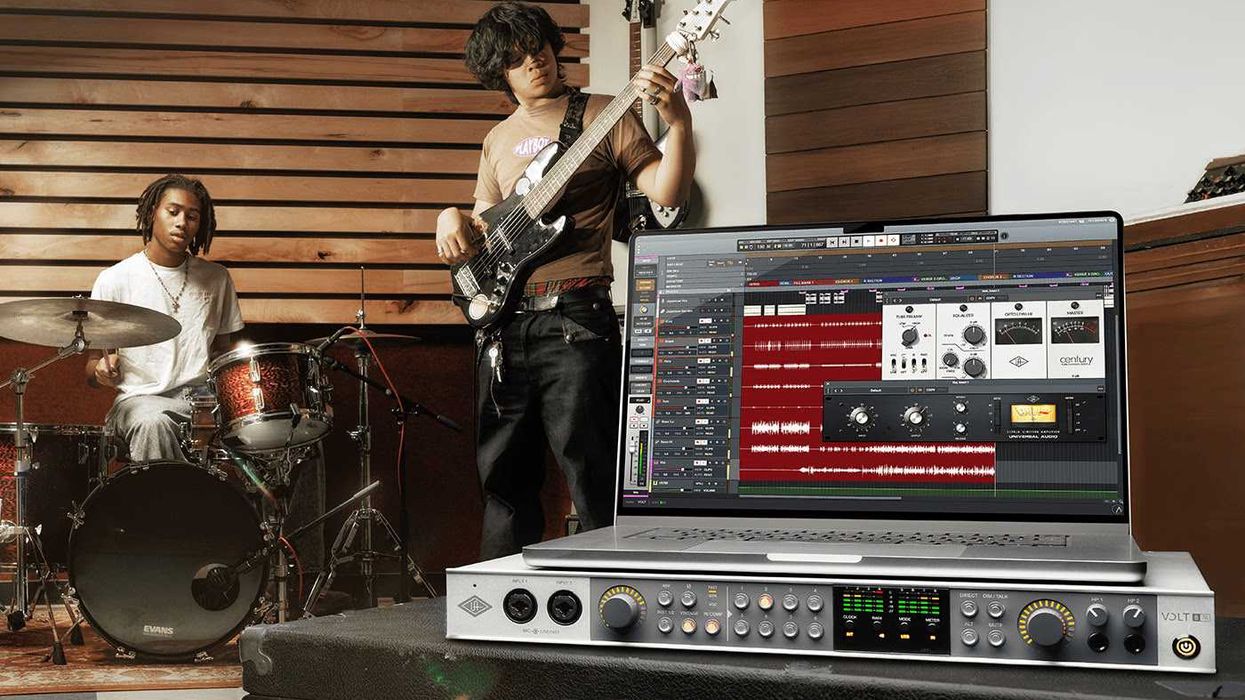
Universal Audio Inc. (UA), a worldwide leader in audio production tools, is proud to announce Volt 876 USB Recording Studio, a 24‑in / 28-out rackmount USB audio interface for Mac and Windows with eight Vintage preamps and classic 1176‑style compressors on every channel.
Delivering next‑generation 32-bit / 192 kHz audio quality, Volt 876 is designed for serious music producers and bands who want legendary UA analog sound, a curated suite of UAD plug‑ins, and powerful integration with UA's groundbreaking LUNA Digital Audio Workstation.
“Volt 876 is all about giving musicians and producers a classic UA analog studio sound, with more power to create together,” says Bill Putnam Jr., CEO of Universal Audio. "Beyond its fast, push-button tone shaping, it offers a level of digital integration with UAD plug‑ins and LUNA that we believe is the fastest path to creating great‑sounding music."
Volt 876 USB Recording Studio - $999 MAP USD
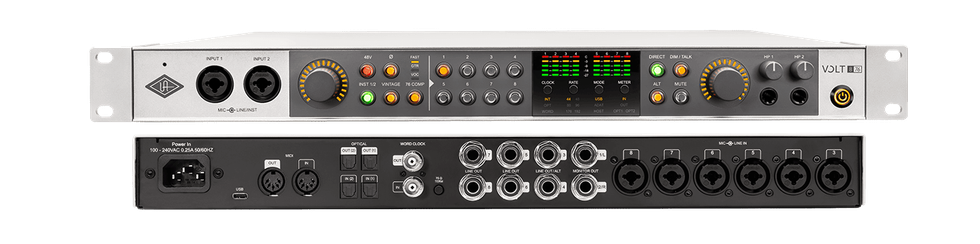
Built by the same team behind the award-winning Apollo interfaces, Volt 876 is a complete recording system with powerful hardware‑software integration, including instant session recall, AI‑powered tools in UA’s LUNA DAW, software remote control, and the premium UAD Producer Suite plug‑in bundle — giving musicians and creators everything they need to capture and shape music with authentic analog tone.
Key Features:
- 24‑in / 28‑out rackmount USB audio interface with eight onboard Vintage preamps and classic compressors — inspired by UA’s iconic 610 console and 1176 limiter
- Next‑generation 32‑bit / 192 kHz audio conversion on Mac, PC, iPad, and iPhone
- Includes LUNA Digital Audio Workstation with unlimited track count and smart AI-powered tools like Voice Control, Instrument Detection, and Tempo Listen
- Features UAD Producer Suite plug‑in bundle with Teletronix LA‑2A and UA 1176 compressors, Pultec EQs, PolyMAX Synth, Showtime ’64 Guitar Amp, and more
- Assistive Auto‑Gain, full session recall of front‑panel settings, and two low‑latency cue mixes with talkback using UAD Console app
- ADAT connection allows aggregation of up to 3 Volt 876 interfaces, as well as integration with Apollo and other digital audio equipment
Volt 876 USB Recording Studio is now available for purchase from retailers worldwide.
Judge Dredd comic book-inspired ThorpyFX pedals? Yes, please

ThorpyFX has teamed up with multimedia studios Rebellion on a line of comic book-themed pedals inspired by 2000 AD characters.
Three pedals have been launched through the partnership – which are each respectively based on the characters Judge Dredd, Judge Death, and Rogue Trooper – and a range of funky picks are also available as part of the launch.
- READ MORE: These Fender Japan x Godzilla guitars might be the coolest we’ve seen this year – and possibly ever
2000 AD was first published in 1977, and has been in the care of Rebellion since the year 2000. Rebellion is one of the world’s most successful independent video games studios, and it also produces books, TV, film, board games, and more alongside its comics too.
Not only do these pedals look cool, they’re also made to “survive the rigours of the road and deliver consistent superior sound in all working environments.” Built around existing ThorpyFX pedals, each one aligns with the character it’s named after, and features exclusive 2000 AD collab artwork.
Judge Dredd has been honoured with The Lawbringer, based on the award winning British-style Gunshot overdrive, which “aims to place Law above all else in line with Judge Dredd’s singular uncompromising attitude”. At the heart of this pedal is a proprietary cascading ‘gain engine’, tuned to deliver maximum tonality for a wide range of amps.
Judge Death’s Deathbringer is built around the distortion Warthog pedal that ThorpyFX designed to be “the distortion to beat all others”. This one has an American voice, and can cover all kinds of tones from boost to fuzz.
The final pedal in the collection is the Rogue Trooper Fallout Cloud. It’s described as embodying “the dark vengeful theme of the dystopian Nu-Earth world, but with a soundscape that is as massive as the wastelands found on Nu-Earth.” It’s a special edition version of the original Fallout Cloud designed by ThorpyFX in 2016 and is branded as a Triangle era-inspired fuzz.
Each pedal is available to pre-order now via ThorpyFX and each is priced at £229. You can also find out more about 2000 AD via Rebellion.
The post Judge Dredd comic book-inspired ThorpyFX pedals? Yes, please appeared first on Guitar.com | All Things Guitar.
Guild takes aim at singer-songwriters and fingerstylists with two smaller concert-sized acoustics

Guild has lifted the lid on two new USA-made concert-sized acoustics, the M-50 Standard and M-40 Standard, with smaller bodies and wider nut widths aimed at singer-songwriters and fingerstyle guitarists.
A concert-sized body is essentially smaller and less deep than that of a standard acoustic guitar, and so is ideal for smaller players, or perhaps those seeking a travel guitar.
Both the M-50 Standard and M-40 Standard are available in acoustic and electro-acoustic configurations, with the latter featuring an L.R. Baggs Element VLC Pickup System, designed to “faithfully reproduce the guitar’s acoustic sound when amplified or recorded”.
Though similar, each guitar sports a slightly different build; both feature a solid Sitka spruce top, while the M-50 Standard features an Indian rosewood back and sides, and the M-40 Standard features a back and sides built using African mahogany.
Both guitars have two finish options; the M-50 comes in either Natural or Antique Burst, while the M-40 comes in Natural and Pacific Sunset Burst.
Guild says the Indian rosewood of the M-50 Standard contributes to a “full and rich tone with excellent articulation”, while the M-40’s African mahogany means “warmth and an earthy richness”.
Further specs present on both models include a mahogany C-shaped neck, Indian rosewood bridge, compensated bone saddle and bone nut, tortoiseshell pickguard, white binding, Guild Peak headstock inlay and Guild Deluxe Vintage open-gear tuners.
Of the L.R. Baggs electronics featured on the M-50E and M-40E, Guild explains: “By detecting soundboard movement rather than picking pressure, the pickup captures the full and balanced tone of the guitar while eliminating the high-frequency ‘quack’ typical of undersaddle pickups.”
Learn more at Guild.
The post Guild takes aim at singer-songwriters and fingerstylists with two smaller concert-sized acoustics appeared first on Guitar.com | All Things Guitar.
Is Music Telepathy Real? | Last Call with John Bohlinger
When playing, try to bring the resistance down to zero.
Ronnie Wood reveals his marathon initiation when joining The Rolling Stones: “Keith kept me going… we hardly slept”

Ronnie Wood has looked back on his early induction into The Rolling Stones, and how he was given 300 songs to learn rapidly with a little help from Keith Richards.
Wood began working with the Stones during the recording of their Black And Blue album, just after the departure of Mick Taylor. Though Richards recorded the vast majority of guitar work on the record, the band also used it as a window of opportunity to trial Taylor’s replacement.
Wood became a touring member of the band in 1975 for their Tour Of The Americas, and became a permanent member in 1976. Speaking to Uncut surrounding the upcoming November reissue of Black And Blue, Wood looks back on the chaos of joining the band and having to catch up to the others.
Recalling his contributions to Black And Blue, he shares: “One of my favourites was Hey Negrita, the first song that I wrapped in the studio and said, ‘Right, we’re going to play this.’ And Charlie [Watts] said, ‘We’ve only known him five minutes and he’s bossing us around already.’ That was my classic introduction to the boys in the studio. I think I got an ‘inspiration by’ [credit] or something.”
He adds, “Joining the band, I had to take a deep breath and say, ‘Here we go.’ You’d either got it or you hadn’t. From Beggars Banquet onwards, I loved all those albums of theirs. When I actually joined, I thought, ‘I’m finally home now.’ I think I had about 300 songs that I had to learn rapidly. Keith kept me going. We were playing and playing, we hardly slept, and it was certainly a crash course.”
Speaking of the difference between being in The Stones’ inner circle and actually being a member of the band, he says, “[This was the beginning] of being a part of the outfit, the circus. And I remember Keith’s, ‘I’ve got a great idea – let’s not tell anyone you’re in the band.’ Great, thanks, Keith! I came in by osmosis. There was never actually an announcement, so I was still the new boy 20 years later.”
The new, Super Deluxe Box Set reissue of Black And Blue will be released on 14 November via Universal. Arriving as a 5LP vinyl box set and a 4CD box set, both editions come alongside a Blu-ray disc, a 100-page hardback book, and a replica tour poster. In other Stones news, producer Andrew Watt recently teased that another album is on the way from the band.
You can pre-order the Black And Blue Super Deluxe Box Set now, or check out more from the band via their official website.
The post Ronnie Wood reveals his marathon initiation when joining The Rolling Stones: “Keith kept me going… we hardly slept” appeared first on Guitar.com | All Things Guitar.
“My dad was a great guitarist but a terrible guitar teacher”: Eddie Van Halen once asked Paul Gilbert to give his son Wolfgang a guitar lesson
![[L-R] Wolfgang Van Halen and Eddie Van Halen, with a photo of Paul Gilbert inset](https://guitar.com/wp-content/uploads/2025/10/EVH-WVH-Gilbert-hero@2000x1500.jpg)
Though rarely omitted from any conversation surrounding the world’s most legendary guitar players, Eddie Van Halen wasn’t the best teacher, or so says his son Wolfgang.
It’s certainly true that just because someone is proficient or highly skilled in something, doesn’t mean they share the same skill in imparting that knowledge. And as Wolfgang Van Halen explains in a new interview with Guitar.com, for Eddie, that skill didn’t come so naturally.
- READ MORE: Sean Long’s new Neon Pink Charvel signature model might secretly be the most metal guitar of 2025
“My dad was a great guitarist but a terrible guitar teacher – he’d tell you that himself,” Wolfgang recalls, adding that his father once tapped Mr Big and Racer X virtuoso Paul Gilbert to give him a lesson instead.
“He even called Paul Gilbert one time and asked him if he would give me a lesson, and he laughed his ass off,” he continues. “That just shows you how he felt about being a teacher.
“And, yeah, he was right. He’d be like, ‘Just do it like this.’ ‘Well, how?!’ You’re at such a different level, you’re just not even thinking in the same way.”
While Eddie Van Halen was, in large part, known for being technically gifted, what Wolfgang took from him the most was his sense of melody and musicality.
“When it comes to Dad, people always talk about the tapping and the shredding and stuff, but I think very much what he instilled in me is that melody is song,” he goes on.
“If you can hum it, if you can think of it and sing it, that’s the best kind of solo – which is another reason why I love Aaron [Marshall, Intervals] so much!
“But, yeah, I think his ability to not only be an amazing rhythm guitar player, but just to merge melody with the shreddiness, and never letting melody fall, is a very important thing as a musician. While shredding scales is technically impressive, it’s almost artistically stale.”
Read the full interview – in which Wolfgang Van Halen names his five favourite guitar players – at Guitar.com.
The post “My dad was a great guitarist but a terrible guitar teacher”: Eddie Van Halen once asked Paul Gilbert to give his son Wolfgang a guitar lesson appeared first on Guitar.com | All Things Guitar.
Wolfgang Van Halen names his five favourite guitar players

When it comes to titles, Wolfgang Van Halen usually keeps things simple. He named his hard rock outfit Mammoth (formerly Mammoth WVH due to trademark issues), after one of the bands his legendary dad Eddie played in before forming Van Halen. The project’s first album was self-titled. Then, its second was given the logical moniker Mammoth II. Now, though, album three is breaking tradition, brandishing the somewhat ominous title of The End.
- READ MORE: The guitar influences of Kurt Cobain
“The evolution from the second album to this one warranted this being the first album to actually be titled,” Wolfgang tells me. “This just didn’t feel like Mammoth III to me. There’s a lot of songwriting evolution and maturity and confidence that I don’t think were there on the last two. It just felt like the right time to actually break out.”
In contrast to his dad’s famously exuberant work as the guitarist for Van Halen, Wolfgang started his career playing less showy rock’n’roll music, inspired by the likes of Foo Fighters and Nine Inch Nails to focus on the song rather than the shred. However, on The End, things feel less conscious, more fun. The title track opens with some invigorating guitar tapping that may seem like an homage to Eruption, but it’s actually a sequence that Wolfgang’s had in his back pocket for more than 10 years. Plus, throughout the rest of the album, there’s more soloing and theatricality, without compromising the simplicity and directness of Mammoth’s trademark hooks.
“This pre-production process was a bit different in comparison to the last few,” says Wolfgang. “Instead of doing it on my laptop, we had the studio all ready to go. I would just try something [on guitar], run out to the drums, play it, run back and play bass to it, and it was this really creative, electric, quick-reaction environment. You could tell if something was working or not right away, rather than wasting three hours on a computer trying to figure it out.”
Given the greater focus on the guitar on this new album, we went on to ask Wolfgang to name his five favourite guitar players. His answers ranged from the very obvious to the totally unexpected.
 Image: Travis Shinn
Aaron Marshall, Intervals
“Aaron is a close personal friend of mine, so it’s a bit tough to separate that, but, man, he’s probably my most favourite guitar player out there right now. What’s so fantastic about him is that he has this melodic sensibility that’s unrivalled by a lot of other guitar players. Rather than being shreddy, he’s almost the singer of his band, as well as the solo guitar player. The first song off of his album [2020] album Circadian, 5-HTP, is probably one of my favourite songs ever. I know the guys get sick of it: every time I have a guitar in drop D at soundcheck, I end up playing that song.
“Growing up, you hit these phases of, like, ‘I wanna hear more of this type of music.’ When I heard Meshuggah for the first time, I started exploring and found Periphery and Tesseract, and then I came upon Intervals. I was like, ‘This is exactly my shit.’ I really fell in love with Aaron’s playing on their [2012] EP In Time, the songs Epiphany and Tapestry.
“I was already a huge, huge fan of his, and then Mammoth came out. He messaged me and said he liked my albums, which blew my mind. I couldn’t believe that! Through the magic of social media, we met and hung out a handful of times, and we were actually able to tour together last year, which was really cool.”
Adam Jones, Tool
“I think, in terms of every instrument I play – bass, guitar, drums and singing – each member of Tool is on the respective Mount Rushmore for their instrument. The first song I heard from them was Third Eye [from 1996’s Ænima], which is funny, because it wasn’t a single or anything. It kind of opened my mind – opened my third eye, so to speak – regarding what music can be. I was like, ‘This is a 13-minute song! Not just a four-minute thing!’ It blew my mind when I was in seventh grade. There’s power in its simplicity: when Adam just holds down the rhythms and almost lets Justin [Chancellor, bass] take the lead, they have such a great connection.
“When it comes to rhythm playing, Adam is almost like the Malcolm Young of metal. He is such a fucking awesome rhythm guy, and he’s a great lead guy, too. Things like the talkbox solo on Jambi are just the best.
“In Mammoth, the influence of bands like Tool and Meshuggah will come out in places you don’t expect. If you listen to [the song] The End, the very end of it, there’s this double-kick, half-time, metal-ey thing. They just pop up! Even on the last album [2023’s Mammoth II], on Right?, there’s that Meshuggah-ey breakdown in the middle after the solo. It’s never intentional: I try not to stifle the creative process by overthinking and just do what feels right.”
Eddie Van Halen
“There was a benefit I played in fourth grade where I played drums and my dad played guitar. I remember, we went out to the car afterwards and some guy came up and asked him to sign something. He left, then he put on a different shirt and came back. I think – in moments like that, seeing that sort of desperation – I was like, ‘Oh, yeah, my dad’s probably a big deal, huh?’
“When it comes to Dad, people always talk about the tapping and the shredding and stuff, but I think very much what he instilled in me is that melody is song. If you can hum it, if you can think of it and sing it, that’s the best kind of solo – which is another reason why I love Aaron so much! But, yeah, I think his ability to not only be an amazing rhythm guitar player, but just to merge melody with the shreddiness, and never letting melody fall, is a very important thing as a musician. While shredding scales is technically impressive, it’s almost artistically stale.
“My dad was a great guitarist but a terrible guitar teacher – he’d tell you that himself. He even called [Mr Big and Racer X guitarist] Paul Gilbert one time and asked him if he would give me a lesson, and he laughed his ass off. That just shows you how he felt about being a teacher. And, yeah, he was right. He’d be like, ‘Just do it like this.’ ‘Well, how?!’ You’re at such a different level, you’re just not even thinking in the same way.”
Angus Young and Malcolm Young, AC/DC
“I couldn’t keep going without talking about AC/DC and how important those brothers are. I’m usually not the most bluesy guy – I respect it, but it’s just not my vibe – but what I love about Angus is how he manages to take the relaxing, sort of scaly stuff of blues and add this anarchistic punkiness to it, just by being so fucking crazy. It’s attitude: it almost doesn’t matter what he’s playing, it’s how he’s playing it. Look at songs like Down Payment Blues from [1978 album] Powerage. The solo is one note, and it’s also one of my dad’s favourite solos ever.
“Angus is still an incredible showman in his 70s. I know some people try to poke and make fun of him [for still wearing his schoolboy stage outfit aged 70], but I’d love to see you fucking do that. Personally, I try to avoid that sort of 80s-esque performance stuff. I get a lot of criticism from 80s music fans who love Van Halen, see me and go, ‘Why aren’t you jumping around?’ My idea is somebody like Tool or Meshuggah: they just stand on the stage and fucking destroy.
“Malcolm, to me, is the greatest rhythm guitar player to have ever lived. There’s nothing more perfect than his rhythm, his metre, his timing, and his tone was out of this world. If you listen to something like If You Want Blood (You’ve Got It), there’s nothing like it. And he did some of the best background vocals ever, like on TNT and Thunderstruck.”
Mark Tremonti, Alter Bridge/Creed
“Mark is another guitarist where he’s got the shred but he knows what makes a song good. The shred never overtakes that. I think people are so surprised that the dude from Creed can shred like that. I don’t think enough people recognise how important Alter Bridge are and the versatility they have: you have [acoustic ballad] Watch Over You, but then you have [heavy metal track] Cry of Achilles.
“I was in Mark’s solo band from 2012 to 2016. I’m on [the albums] Cauterized and Dust, which is pretty funny, because I only played one or two shows of that material. I toured the whole first album [2012’s All I Was], and that was the first time I came to the UK and Europe to tour. He became a personal friend. He’s such a silly, fun dude. He doesn’t take anything too seriously.”
The End is out on 24th October via BMG.
The post Wolfgang Van Halen names his five favourite guitar players appeared first on Guitar.com | All Things Guitar.
Reverend Introduces New Kyle Shutt Mark 2 Signature Electric
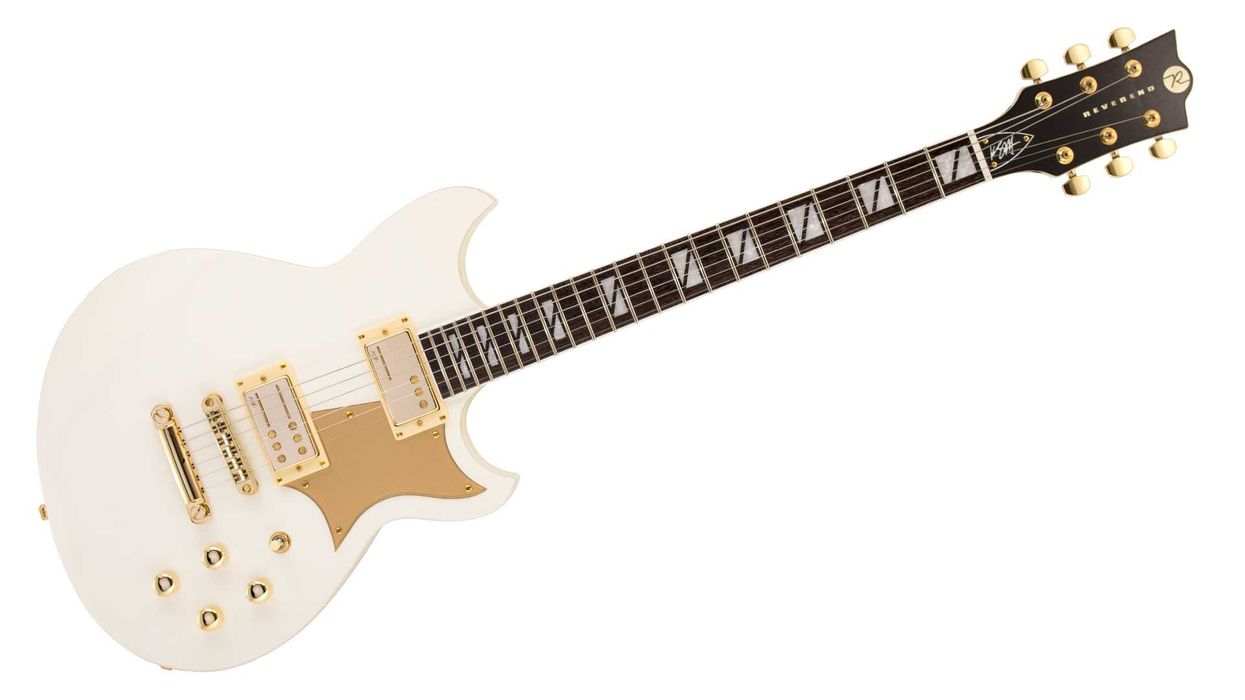
Reverend Guitars has launched a new generation of the company’s Kyle Shutt Signature solid body electric: the Reverend Kyle Shutt Mark 2 covers an extraordinarily broad range of sonic ground…just like its namesake artist.
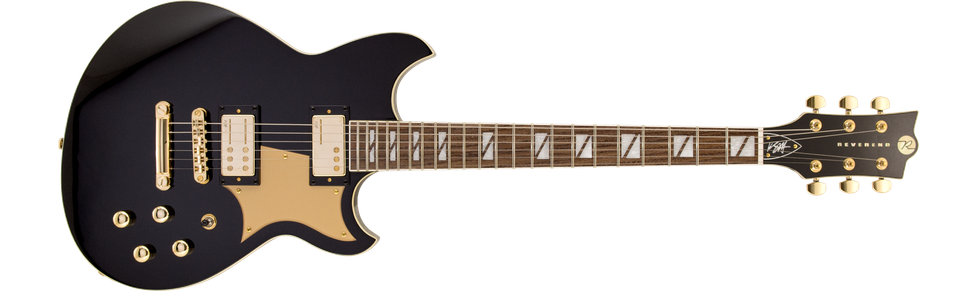
As a founding member of The Sword – a band that has toured worldwide with acts such as Metallica, Lamb of God, Clutch, and Opeth – Shutt’s playing deftly shifts between heavy fuzz, classic crunch, and open cleans. Since the band’s 2003 inception in Austin, TX, The Sword has blown away audiences with their unique brand of stoner rock-meets-doom metal-meets-70s riff rock.
Shutt’s new Reverend model includes a pair of Railhammer Kyle Shutt Signature pickups that deliver a plethora of tones with ease. Outfitted with custom Diver Flag fret marker inlays and gold hardware, this guitar looks as good as it sounds.
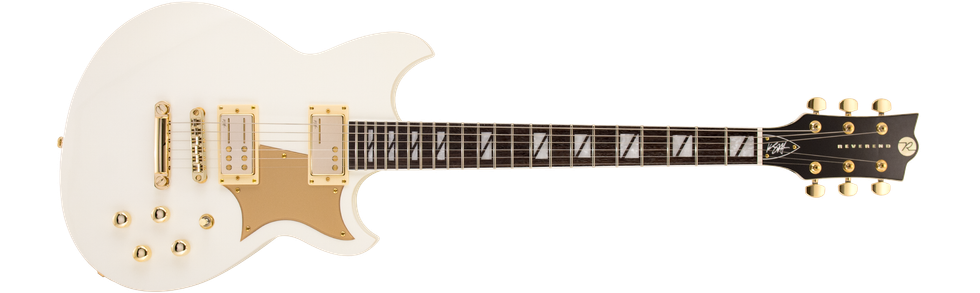
It also includes a special Reverend feature for shaping your tone: the guitar’s Bass Contour control knob is a passive bass roll-off that’s perfect for tightening up the low end, or re-voicing the pickups. It can make a humbucker sound like a single-coil, or give a P-90 that classic twang. With this Bass Contour control you’ve got variable pickup voicing at your fingertips.
Other features include:
- Solid Korina body available in Ice White or Midnight Black finish
- Railhammer Kyle Shutt Signature bridge and neck pickups
- Electronic controls for bridge pickup volume, neck pickup volume, tone, bass contour control, and 3-way pickup selector
- Three-piece Korina neck with 22 frets, 24 3/4" scale length, medium oval neck profile and rosewood fingerboard with 12” radius
- Hardware includes Reverend Pin-Lock tuners and a tune-o-matic style bridge with stop tail piece
The Reverend Kyle Shutt Mark 2 electric carries a street price of $1499 and is available through any Reverend authorized dealer. For more information visit reverendguitars.com.
MXR Honors MC5’s Wayne Kramer with Jail Guitar Doors Drive
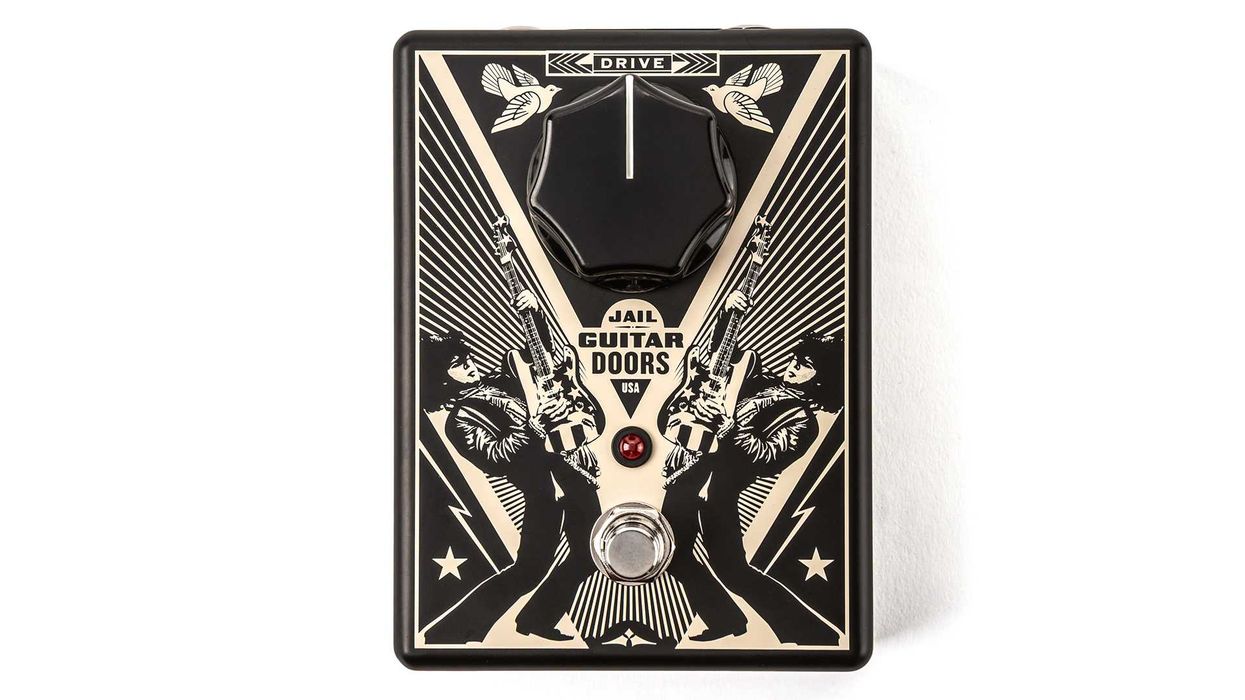
You’d be hard-pressed to find a punk or garage rocker who was not influenced by the raw tones that Wayne Kramer pitched into the guitar universe through MC5’s iconic recordings in the early 1970s. MXR teamed up with lifelong MC5 fan Johnny Wator of Daredevil Pedals to capture that gritty, groundbreaking sound in a compact, straightforward stompbox. The result is a pedal that delivers a huge rock ’n’ roll kick in the pants—just like Wayne’s music.
The MXR Jail Guitar Doors Drive cranks out powerfully rich tones reminiscent of two dimed-out 100-watt amp stacks. Johnny combined his Drive-Bi Dual Gain Distortion with the MXR Micro Amp to create two separate gain stages, one cascading into the other. A single knob controls the outputs of both circuits, and as the volume is raised, more gain is fed from the first stage into the second. The EQ range is wide and balanced with all the definition you need to cut through a loud live mix with an unrestrained roar thick with harmonics. And it’s all passed the ultimate test—an early prototype of this pedal, delivered to an MC5 recording session, made it onto the album.
We figured this pedal should look as great as it sounds, so we enlisted street art pioneer Shepard Fairey to create a visual representation of the pedal’s rebellious tones.
A limited run, a majority of the proceeds from the sale of each pedal will be donated to Jail Guitar Doors USA, a nonprofit organization co-founded by Mr. Kramer, his wife Margaret, and Billy Bragg. For over fifteen years, JGD's efforts have included programs to help incarcerated individuals heal and grow through music in over two hundred facilities nationwide. In 2021, JGD opened the doors to their youth-driven C.A.P.O Center (Community, Arts, Programming & Outreach) in the heart of Los Angeles to aidsystem-impacted young men and women in the exploration of personal healing through the art of self-expression. To make a further donation, please visit jailguitardoors.org.
MXR Jail Guitar Doors Drive highlights:
- Special limited edition
- Includes numbered certificate of authenticity
- Recreates the raw tones that Wayne Kramer used in MC5
- Reminiscent of two dimed-out 100-watt stacks
- Two cascading gain stages—Daredevil Drive-Bi Dual Gain and MXR Micro Amp
- Single knob increases both gain and volume for a thick, unrestrained roar
- Custom artwork from Shepard Fairey
- Co-designed with Daredevil Pedals proprietor Johnny Wator
- Majority of proceeds go to nonprofit Jail Guitar Doors USA
Availability
The MXR Jail Guitar Doors Drive is available now at $199.99 street/$285.70 MSRP from your favorite retailer.
Gigahearts FX Launches Mashed Voltaire Deluxe and Hyper Soup Fuzz Pedals
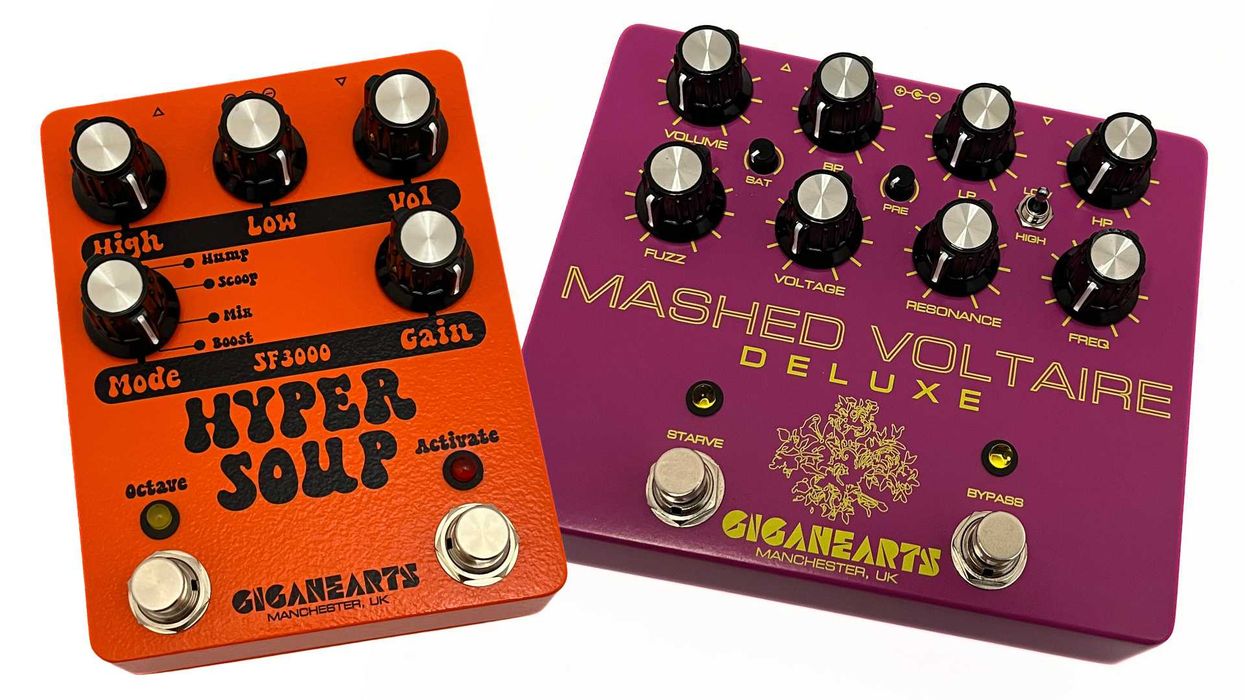
Adding to the company’s line of boutique effects, Gigahearts FX has introduced two new fuzz pedals: the Hyper Soup and Mashed Voltaire Deluxe bring unique tonal variations, circuit refinements and performance-driven controls to guitarists seeking to expand their distortion and fuzz palate.
Designed to appeal to musicians who want to push their tone into new directions, and value genuinely hand-soldered and wired construction, both pedals build upon classic and well-loved circuits by bringing the feature-set into the 21st century.
- Wildly expanded take on the “Violet Rams Head” circuit
- Eleven external controls to fully sculpt and fine-tune your sound
- Three band EQ (HP/BP/LP) feeding a dual-mode synthesizer-style resonant filter offering unlimited tonal variation from lo-fi to cocked-wah and full-on fat fuzzed out bliss
- Footswitch-activated “starve” circuit limits voltage to the second transistor stage, bringing control over gating, dying-amp sounds, octave-glitches and textural artifacts
- Comprehensive adaptation of the popular “Super Fuzz /Hyper Fuzz” circuit
- Four-way rotary control, offering three fuzz modes and a boost mode
- Footswitchable upper-octave, essentially doubling the number of fuzz tone options
- Powerful Two-band High and Low active EQ controls
Both pedals feature Gigahearts’ signature hand-made construction, with high quality dual-layer PCBs, all through hole parts and hand soldering/wiring throughout. The pedals utilize 9-volt DC from an external power supply using standard 2.1mm tip negative (no battery compartment) and feature true bypass mechanical switching.
Mashed Voltaire Deluxe fuzz is priced at $239 USD / £175 GBP and Hyper Soup is $213 USD / £155 GBP available directly from www.gigaheartsfx.com, shipping worldwide, with free UK shipping and DDP duties paid to the USA.
Jared James Nichols Releases New Single "Ghost"
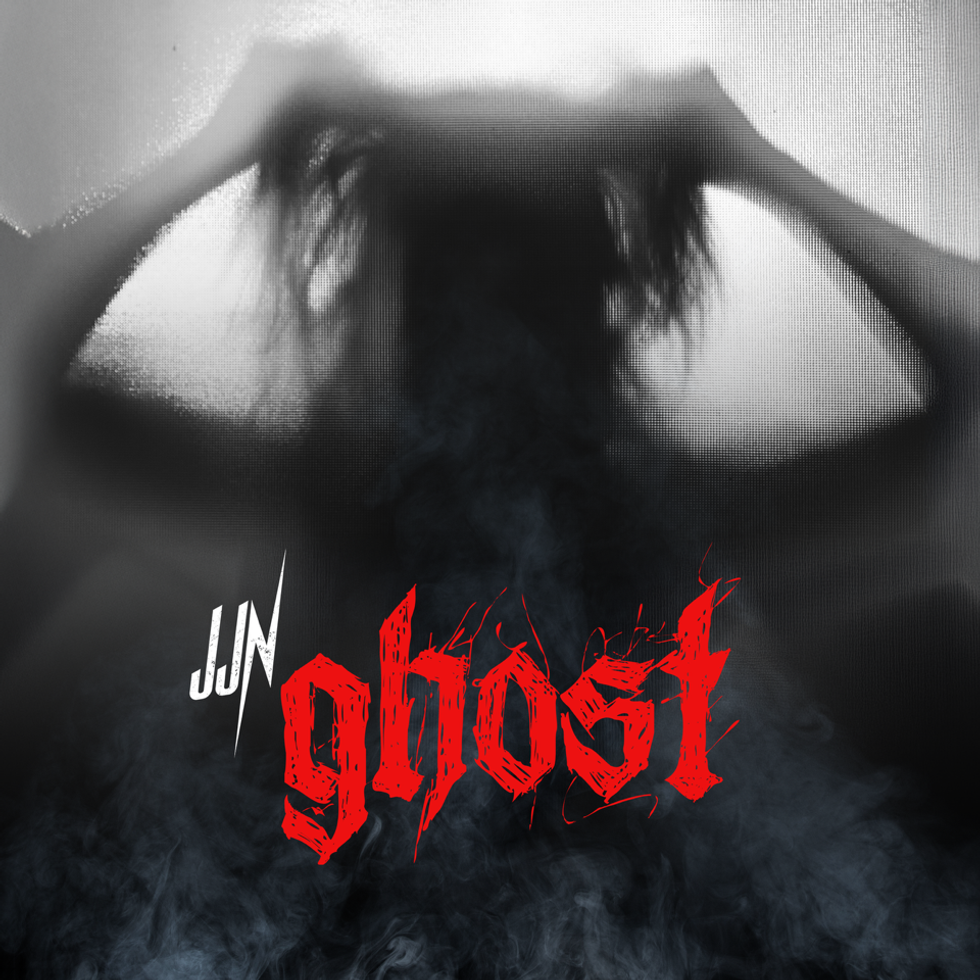
Today, guitar powerhouse JARED JAMES NICHOLS is proud to release his new single, "Ghost," marking his first new music since recently signing with Frontiers Music Srl. The new track arrives accompanied by an official lyric video, available to view below.
In addition, JARED JAMES NICHOLS will be embarking on his European and UK headline tour starting November 5th in Valencia, Spain, at Loco Club and concluding December 6th in London, UK at The Underworld.
On the new single, JARED JAMES NICHOLS comments:
"‘Ghost’ was written with a very good friend of mine, Grammy-winning producer and epic guitarist Tyler Bryant. We have a synergy whenever we get together; it’s infectious, and things happen quickly. Tyler jumped behind the drums, and I started jamming the verse groove with the guitar. Within minutes, we had carved out the entire bones of the song in an old-school way of a jam.
"Lyrically speaking. ‘Ghost’ is something we can all relate to. It’s all about trying to live up to the voices inside your head, staying away from the insecurities and fear we all have running in our minds. It is about facing your fears, accepting the mind wars, and ultimately conquering them."
He continues, "‘Ghost’ was recorded with super producer Jay Ruston at Dave Grohl's 606 Studios in Los Angeles, California. Working with Jay is like breathing air; things come out so naturally and fresh. We share a common vision that is always hard to find when working with a producer. We put a lot of trust in each other, which means we care about nothing less than what is best for the song. As a band, our adrenaline was pumping…! Recording this song at such a legendary studio really sparked the fire and energy that you hear in the track."
Stream / Listen HERE
Armed with nothing more than his signature Gibson Les Paul, a cranked amp, and a microphone burning hot, JARED JAMES NICHOLS lives the Blues the way it was meant to be lived - tough by design, raw in delivery, and authentic to the core. The Wisconsin-born, Nashville-based singer, songwriter, and guitarist unleashes unapologetic rock ’n’ roll, his voice hitting with grit and soul while his fretwork roars with fire and fury.
Celebrated by American Songwriter, Guitar World, and Relix, NICHOLS has already tallied millions of streams and built a devoted following online. Gibson Guitars recognized his impact by naming him one of only four Global Brand Ambassadors worldwide - a rare honor that cements his standing as one of today’s most vital guitar slingers.
Now preparing his fourth - and most defining - album, NICHOLS calls this era “JJN Mach II.” Written and inspired by his post-pandemic touring experiences and new home base in Nashville, the record showcases his growth as a singer and songwriter, while taking his guitar playing to explosive new heights.
NICHOLS’ journey has not been without hardship: cancelled tours, collapsed labels, breakdowns on the road, even a freak accident that left him with 20 screws in his arm. Yet every challenge has only fueled his drive and deepened the legend of his self-proclaimed “Blues Power.”
With Frontiers Music Srl now by his side, JARED JAMES NICHOLS is ready to bring his uncompromising rock ’n’ roll to the world. The time has come for his name to be known in every household where true rock is alive.
JARED JAMES NICHOLS - Tour Dates 2025
Tickets Available HERE
European Headlining Tour:
Nov 5 - Valencia, Spain @ Loco Club
Nov 6 - Barcelona, Spain @ Sala Razzmatazz 3
Nov 7 - Madrid, Spain @ Teatro Magno
Nov 8 - Aiguaviva, Spain @ Ca La Dolo (La Torrentera)
Nov 9 - Villava, Spain @ Sala Totem Aretoa
Nov 11 - Barberaz, France @ Le Brin de Zinc
Nov 12 - Paris, France @ Cafe de la Danse
Nov 14 - Hamburg, Germany @ BETTY (ex-headCRASH)
Nov 15 - Joldelund, Germany @ Gerd’s Juke Joint
Nov 16 - Cologne, Germany @ Yard Club
Nov 18 - Ahrensburg, Germany @ Stromarnschule
Nov 19 - Milan, Italy @ Legend Club
Nov 21 - Meppen, Germany @ Rockpalast Meppen
Nov 22 - Hoofddorp, Netherlands @ Cpunt
Nov 23 - Dordrecht, Netherlands @ Bibelot
Nov 25 - Wattrelos, France @ La Boite à Musique
UK Headlining Tour:
Nov 26 - Southampton @ The 1865
Nov 27 - Southend-on-Sea @ Chinnerys
Nov 29 - Manchester @ Manchester Academy
Nov 30 - Wolverhampton @ KK’s Steel Mill
Dec 1 - Bristol @ Thekla
Dec 2 - Glasgow @ The Garage
Dec 3 — Bradford @ Nightrain
Dec 4 - Nottingham @ Rescue Rooms
Dec 5 - Brighton @ Volks
Dec 6 - London @ The Underworld
Devon Eisenbarger [Katy Perry] Rig Rundown
The in-demand gunslinger brings a load of silverware to arenas across the world.
Devon Eisenbarger, session ace and touring shredder for stars including Chappell Roan and One Direction’s Zayn Malik, met up with PG’s Chris Kies at Nashville’s Bridgestone Arena before hitting the stage with Katy Perry to show off the sleek 6-string rig she’s using on Perry’s Lifetimes tour.
Brought to you by D’Addario.
Splitting Up
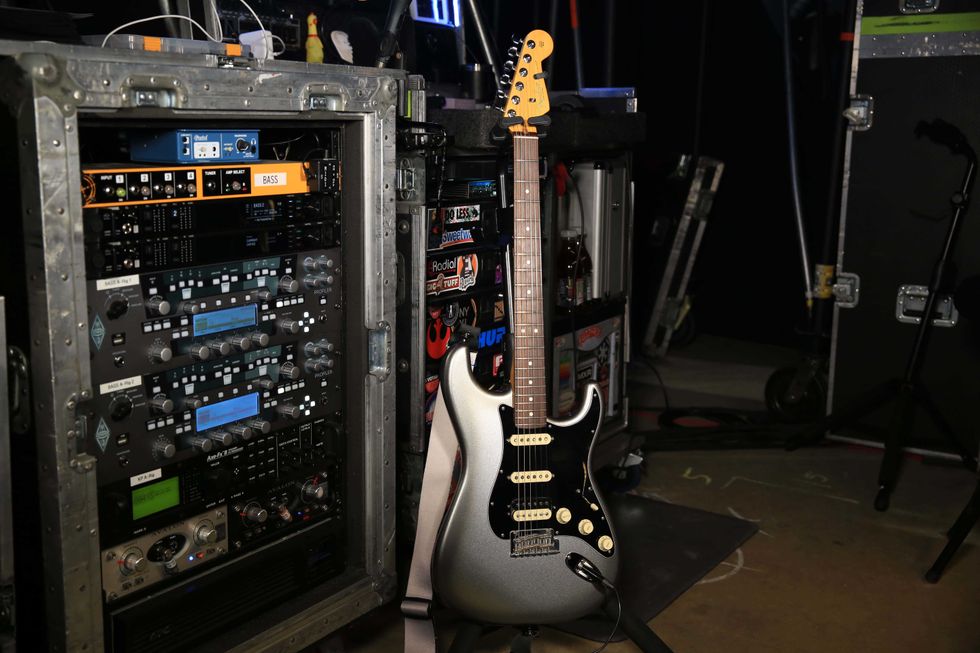
Eisenbarger cut her teeth on a Stratocaster, and its sonic character still feels like home. She filmed a demo for Fender using this American Professional II Strat with a coil-splitting humbucker in the bridge—the best she’s heard so far. This one and all other electrics run D’Addario strings (.010–.046).
Fiery Fiore
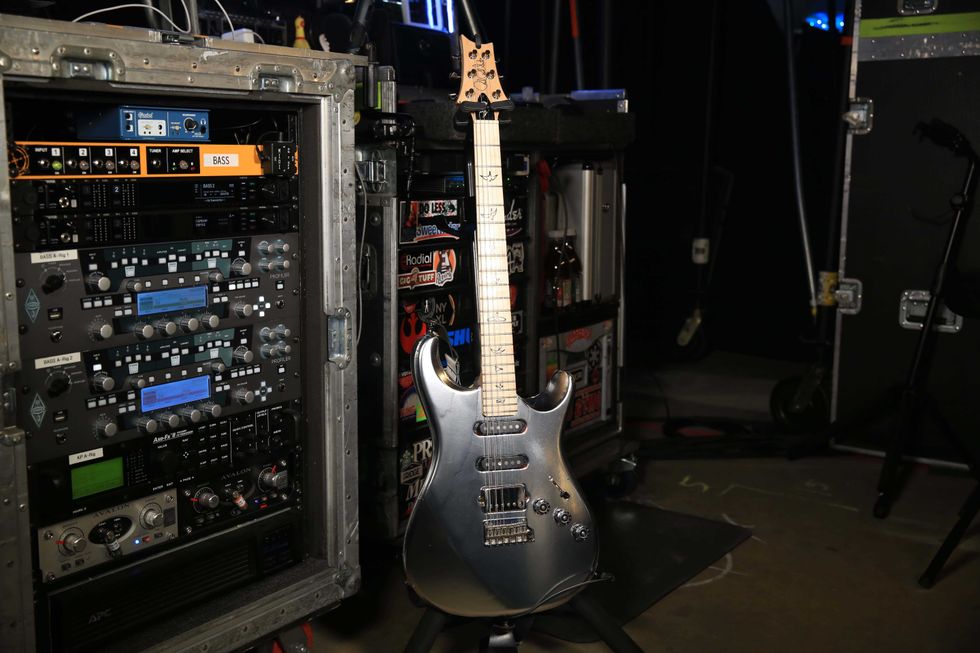
Eisenbarger just scored this PRS Fiore before this tour. It has a beefier, slightly more midrange-y sound than the Strat.
Silver Surfer
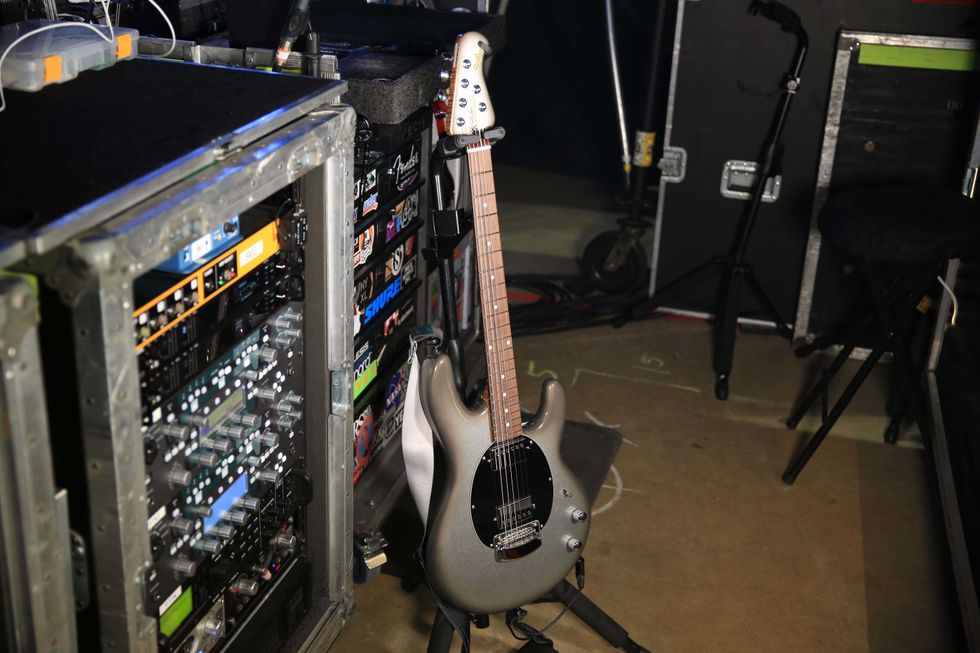
This Ernie Ball Music Man StingRay II, designed in collaboration with Cory Wong, was made for Eisenbarger just before this run of shows.
Saintly Signature
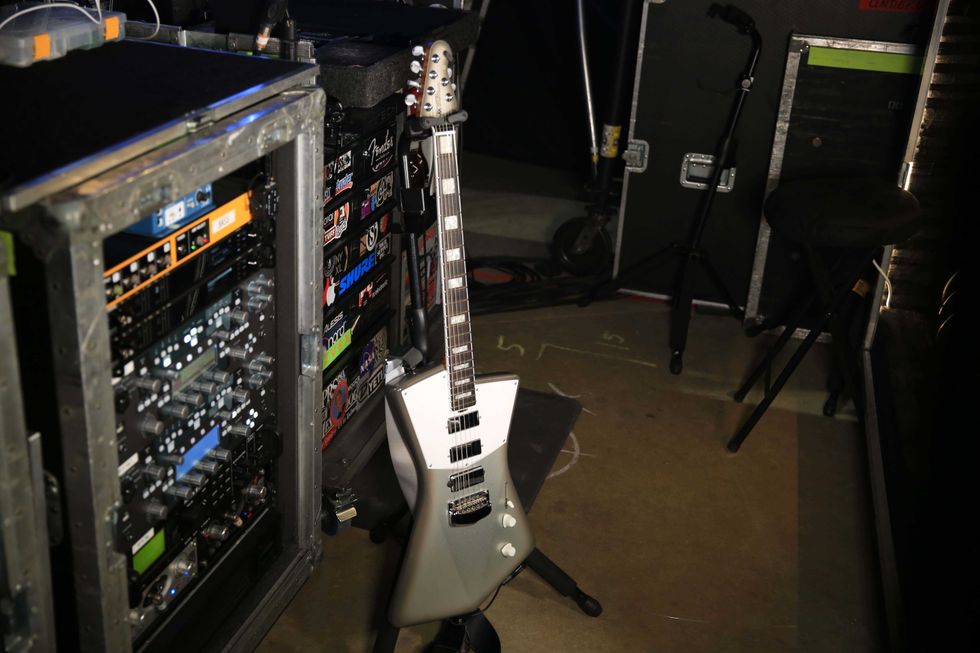
Eisenbarger uses this Ernie Ball Music Man St. Vincent Signature for “I Kissed a Girl.”
Taped-Up Taylor
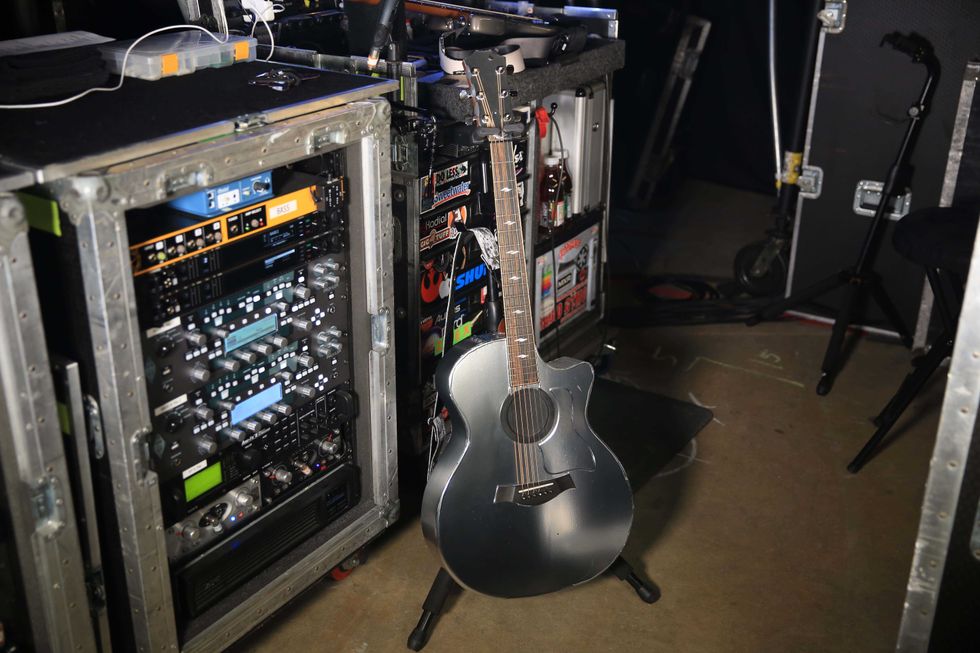
This Taylor 814ce, wrapped in silver tape, comes out for a mid-show acoustic set.
Devon Eisenbarger’s Rack Setup
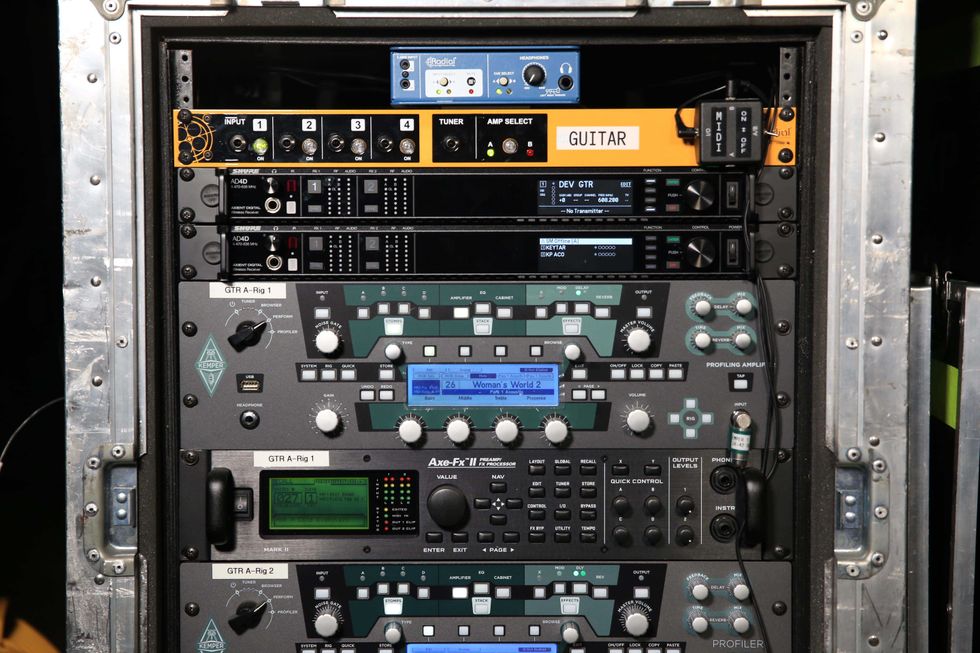
Eisenbarger runs an all-digital rig, contained in this rack backstage. The key pieces are a Radial JX42, two Shure AD4Ds, a Kemper Profiling Amplifier, and a Fractal Axe-Fx. The Kemper runs a SELAH SOUNDS pack of profiles and impulse responses.
With no onstage monitors, Eisenbarger’s signal runs only to in-ear monitors and front of house.

Fender American Professional II Strat
Ernie Ball Music Man St. Vincent
Justin Hawkins thinks there’s one guitarist who could have rivalled Eddie Van Halen – if only he was born 10 years earlier

Justin Hawkins of The Darkness believes there’s one virtuoso that could have rivalled Eddie Van Halen back in the 1980s, if only he wasn’t “born 10 years too late”.
Talking to Rick Beato, Hawkins claims Extreme guitarist Nuno Bettencourt would be “competing with Eddie Van Halen if he were a bit younger”, but that his talents went under the radar in the ’90s.
- READ MORE: Sean Long’s new Neon Pink Charvel signature model might secretly be the most metal guitar of 2025
According to Hawkins, Bettencourt may have become better known if Extreme were thrust into the bigger limelight that was 1980s glam metal, rather than being subject to the differing tastes of the ’90s.
“Extreme was successful with their couple of ballads… More Than Words was such a big hit, and it transcended like an Everly Brothers type song… But Nuno is one of the greatest guitar players of his generation.”
He’s also quick to add that he doesn’t think the rise of grunge had anything to do with what killed off glam rock. Instead, he thinks that glam metal bands like “Nitro… killed it because then nobody’s going to be able to sing higher than Jim Gillette. Nobody’s going to be able to play as fast or as ridiculous as Michael Angelo Batio.”
“So I think Nitro was the natural conclusion of that, and it meant the end for bands like Extreme unfortunately and other interesting glam rock stuff from that period.”
Hawkins’ own band The Darkness gained success in the 2000s after Extreme, and reminisces about what his own band might have missed out on: “Rivalries are what got people excited about music. It seemed like the ’80s were this wonderfully tumultuous decade”.
Hawkins doesn’t believe that rock should return to the old days, though. As he told Kerrang! earlier this year: “It’s about getting to a certain age and realising that the world’s changing, and you’ve gotta change or that’s you fucked, you get left behind. And that’s rock.”
“It’s actually from the perspective of rock – rock is a middle-aged guy in a world full of people who are just generation… whatever the fuck it is now, and it has to wake up and be part of it.”
The post Justin Hawkins thinks there’s one guitarist who could have rivalled Eddie Van Halen – if only he was born 10 years earlier appeared first on Guitar.com | All Things Guitar.
Pages
