Music is the universal language
“Glory to God in the highest heaven, and on earth peace to those on whom his favor rests.” - Luke 2:14
Norse Guitar Feeds
Looking for a new multi-effects processor? Get this exclusive Line 6 HX Stomp XL from Sweetwater with $100 off – and a freebie included…

Sweetwater is currently offering $100 off the Line 6 HX Stomp XL floorboard amp and effects processor, which comes in an exclusive colour and includes a freebie.
Floorboard amp and effects units are becoming increasingly popular, helping touring artists scale down their rigs and keep things uber-portable. This exclusive burgundy version is priced at $649.99, and you’ll also get a free Eminence IR Sampler Pack chucked in the deal for good measure.
[deals ids=”2PWB3ZZTePXVLm9YwLNeLP”]
This expanded version of the compact HX Stomp floor processor offers eight switches, enhanced MIDI capabilities, and an intuitive pedal editing mode. Like the original HX Stomp, the HX Stomp XL offers eight blocks – amps, cabs, and stomps – per preset, and adds a fourth snapshot per preset for further sonic tweaking.
- READ MORE: Superlunar SR-01 review – a designer dirt pedal that sounds a lot more rock’n’roll than it looks
There are over 300 onboard amp, cab, and stomp models from the Helix family, M-series, and legacy Line 6 products, and 128 presets in total. There’s also an FX loop for front- or back-loading stomp effects, support for third-party cab IRs, and many more features.
The HX Stomp XL can be used as a standalone rig or as a command center for your MIDI-enabled gear. Find out more in the video below:
Line 6’s hotly anticipated Helix Stadium XL Amp Modeller and FX Processor is also now available at Sweetwater, and you’ll get a free Eminence IR Sampler Pack included with your purchase. The Helix Stadium and its deluxe XL sibling, which were announced back in June last year, were tipped as a tough new rival to the beloved Neural DSP Quad Cortex. They bring entirely new modelling tech, cloning capabilities, and high-resolution touch screens.
Shop this deal and more at Sweetwater.
The post Looking for a new multi-effects processor? Get this exclusive Line 6 HX Stomp XL from Sweetwater with $100 off – and a freebie included… appeared first on Guitar.com | All Things Guitar.
Did Billie Joe Armstrong just soft-launch a signature Marshall “Dookie Mod” head and cab at the Super Bowl?

The world might be talking about Bad Bunny’s blockbuster halftime show at this year’s Super Bowl, but props must be given to Green Day for opening the event in style with a brief but powerful set comprising Good Riddance (Time of Your Life), Holiday, Boulevard of Broken Dreams and American Idiot.
The keen gear heads among the hundreds of millions of viewers round the world spotted something interesting about the band’s performance, though. And that’s that frontman Billie Joe Armstrong appeared to soft launch a new signature head and cab with Marshall.
To the side of Tré Cool’s drum riser, fans noticed a somewhat unfamiliar light blue Marshall stack, and quickly began speculating as to what exactly it was. Many – who possess fantastic eyesight, we must say – have noticed a little plaque in the top left corner of the amp head, which appears to read “Dookie” (a nod to the band’s landmark 1994 album).
While it hasn’t been officially confirmed yet, Marshall has made a series of social media posts strongly hinting at the imminent arrival of a Billie Joe Armstrong signature amp.
“Green Day showing the world how to keep it loud,” the brand writes in one post.
Another shows Armstrong standing next to the monstrous amp stack – which, incidentally, is taller than him – alongside the caption, “Are you seeing what we’re seeing?”
Billie Joe Armstrong’s Dookie sound is widely regarded as a masterclass in chunky pop-punk tone. That album was recorded largely using “Pete”, a modded 100-watt Marshall Plexi 1959SLP.
As we say, it certainly looks like an official announcement is close, but for now, we can enjoy speculating using the information we do have. We’ll keep you in the loop as we know more…
The post Did Billie Joe Armstrong just soft-launch a signature Marshall “Dookie Mod” head and cab at the Super Bowl? appeared first on Guitar.com | All Things Guitar.
How Angel Du$t became the most unconventional band in hardcore

What do Justice Tripp, Wes Eisold, Kevin Baker, Dave Weinberg and Frank Carter have in common? Well, aside from being some of the most revered and influential singers in modern hardcore, they’ve all shared a stage with Jim Carroll, a guitarist who’s a punisher’s dream – essentially a heavily-tatted Zelig with a Les Paul Custom cinched at his waist. “I guess I’m fairly versatile,” he says, playing it down during a Zoom call from New York. “I like a lot of different shit.”
But, in fairness, that self-deprecation is perhaps only natural given how long he’s been bouncing between gigs. Hailing from Worcester, Massachusetts, Carroll came up in a febrile hardcore scene at the turn of the millennium, joining local band Hold Strong while still in his teens. “I went to one of their shows and they announced over the PA between songs that they needed another guitar player,” he recalls. “So, I went up to their merch table. I ended up playing with them when I was 17, 18 and they were in their late 20s. That was a big thing.”
From there, dominoes kept falling. Carroll moved to Boston when he was 19 and started touring, chipping away at a rep as a collaborator capable of switching gears with verve and adaptability. He played with Weinberg on some early Suicide File recordings and would later indulge his inner rocker in Carter’s post-Gallows project Pure Love, while pulling double duty as a touring member of American Nightmare and the Hope Conspiracy, switching between backing Eisold’s mile-a-minute-bark and Baker’s muscular roar. Of late, though, it’s been his job to tune in to Tripp’s way of thinking as a member of Angel Du$t.
 Image: Nat Wood
Chilled Out
And that remains a unique proposition in hardcore thanks to the genre-defying sprawl the vocalist has embraced since Trapped Under Ice hung up their recording spurs almost a decade ago.
Angel Du$t was originally a side project for Tripp to have fun with his buddies Michael Quick and Nicholas Heitman, alongside Daniel Fang and Pat McCrory of Turnstile. Turnstile’s tilt for unprecedented stardom for a hardcore band has been based on their willingness to push its musical boundaries, and it’s something that’s baked into Angel Du$t in different but no less experimental ways.
On their new record Cold 2 The Touch, Carroll and guitarist Steve Marino, better known for his indie-rock solo work as Bugg, make themselves right at home, lending sinuous riffage to songs such as Pain is a Must, warped pop flourishes to Man on Fire and straight-up hardcore carnage on The Beat. So far, so Angel Du$t, you might think, but it’s been a while since the group has sounded this sure of itself, this hench.
“That’s Justice’s brain,” Carroll says. “He’s described it to me as ADHD music. He always wants something new to catch the listener’s ear. It’s been a cool way of approaching music, because I feel like it’s not my natural way of doing things. It’s been fun to jump into it and then try to write songs that will fit what he’s doing, and what he wants.
“I think Steve is the same way – we’re filtering our way of writing into the Angel Du$t vision. Approaching this record, I definitely tried to put my stamp on it. I like big guitars, I like layers, I like cool psychedelic elements that go with heavy music. I feel like I was pretty successful with that.”
Cold 2 The Touch was recorded with producer Brian McTernan, who worked on a lot of Angel Du$t’s early stuff, including their debut A.D., and also Nonstop Feeling, the first LP by another TUI offshoot: Turnstile. Given Carroll’s long history in hardcore and the fact McTernan has been around since the early 90s himself, as vocalist of the underrated Washington, DC youth crew band Battery and a Boston-headquartered collaborator with everyone from Cave In to Snapcase, it’s surprising to discover that they were strangers when recording began.
“I grew up seeing his name on seven inches,” he says. “When we went into the studio and I met him for the first time, we realised we have a ton of mutual friends. We clicked. We definitely have a lot of the same interests — he’s great at getting good guitar sounds and making things huge, but he’s a great songwriter as well, and makes great suggestions [when it comes to] harmonies and melody. He’s a guitar player, a singer. It was cool to work with him. We had to shove a lot into a short period of time, so it would get hectic at times. But it worked out.”
Pumping Iron
In truth, Carroll’s tenure with Angel Du$t has been hectic from the drop. It began in his local gym, where bassist Zechariah Ghosttribe is a trainer. “One morning he was talking about how their guitar player couldn’t go to Brazil, and it was kind of screwing up some shows they had,” Carroll recalls. “And I was like, ‘If you need a guitar player, I’ll go to Brazil for a weekend. That sounds all right.’ Justice and I had met over the years, but very briefly. We got on the phone later that night and talked about it. Two weeks later, we went and did a couple shows with No Warning. We had a good time, they had some stuff coming up, and he was just like, ‘If it’s something you want to do…’”
Serendipity aside, Carroll and Marino make a lot of sense as a pairing given Angel Du$t’s split personality. In the past, Marino has described playing with the band as “exercising a different muscle” to his own songs, and from the outside the same is true for Carroll. Where Marino is being drawn into heavier realms than he’s used to, Carroll is pushing different buttons to the one he needs to rely on when on stage with American Nightmare or Hope Con.
There is a moment a minute or so into Cold 2 The Touch standout Zero when all of this comes into focus: the guitars slow and Tripp barks out a line that feels like a mosh call, but instead of a breakdown we get Carroll peeling off a solo. It’s a bait and switch that serves as a perfect encapsulation of what Tripp calls “aggressive rock and roll”.
In the studio, Carroll’s search for punchy tones took him down an unexpected path. Using a JCM800 as a starting point, and with everything from a Pro Co RAT to a API Tranzformer and a JHS Bonsai in the mix pedals-wise, he settled on a Rickenbacker Dakota 650D for most of his contributions, swerving away from the 2000 Black Beauty that’s been his go-to for decades and the 2017 humbucker-rigged Fender Jaguar that’s served as his Angel Du$t live guitar. “Brian had a handful of guitars in the studio, and I played that on the first day,” he says. “It felt great, it had a good sound. You could run the gamut of nice, gain-y distortion, and cleaner, more percussive, classic Marshall sounds. I think I played that on every song.”
 Image: Nat Wood
Solid State Logic
On the road, Carroll is still wearing a few different hats. For him, touring means switching between the more abrasive sounds required by American Nightmare and Hope Con, with Angel Du$t presenting a different, more tonally nuanced challenge. So, if he was playing a show tomorrow, what would he be taking with him? “I am playing a show tomorrow,” he replies. It’s with AN at Rough Trade in NYC, before a couple of dates with youth crew icons Gorilla Biscuits, so the Les Paul is up.
“These days, I have a Quilter Tone Block 202 and then I’ve been playing through a Line 6 HX Stomp XL,” Carroll adds. “If you told me five years ago that I would have a solid state head and a digital modeller, I would have called you crazy. But it’s made travel and jumping between bands so much easier. I fit all my stuff into a Pelican and a two-guitar Gator case.”
“I know that every night when I plug in, I have every band programmed,” he continues. “It’s just a flip of the switch. At festivals or shows where you’re not the headliner, I can get up there and set my stuff up in five minutes. I don’t have to think about pedals and dead cables, trying to find where things are going wrong. It has its downsides, because it’s like a computer on stage and, if you’re playing a smaller hardcore show, you have people running up and maybe trampling on stuff.”
And there are a lot of feet out there right now ready to do that trampling. Hardcore is as big as it’s ever been, and that’s down to people like Jim Carroll slogging it out during some lean years. Over the past two decades and change, every good show, every bad show, every connection, every recording session, has led to this niche, outsider music catching fire in a manner few could have expected it to.
He’s seen it all first hand, just like so many of his peers have. It feels fitting that Carter and Eisold both guest on Cold 2 The Touch, underlining the fact that hardcore, before merch, Grammys and social media beefs, is about pulling together with your friends. “It’s just a case of, ‘Hey, do something on this,’” Carroll says. “Make it cool.”
Angel Du$t’s Cold 2 The Touch is out February 13 through Run For Cover.
The post How Angel Du$t became the most unconventional band in hardcore appeared first on Guitar.com | All Things Guitar.
Converge’s Kurt Ballou: Heavy by Design
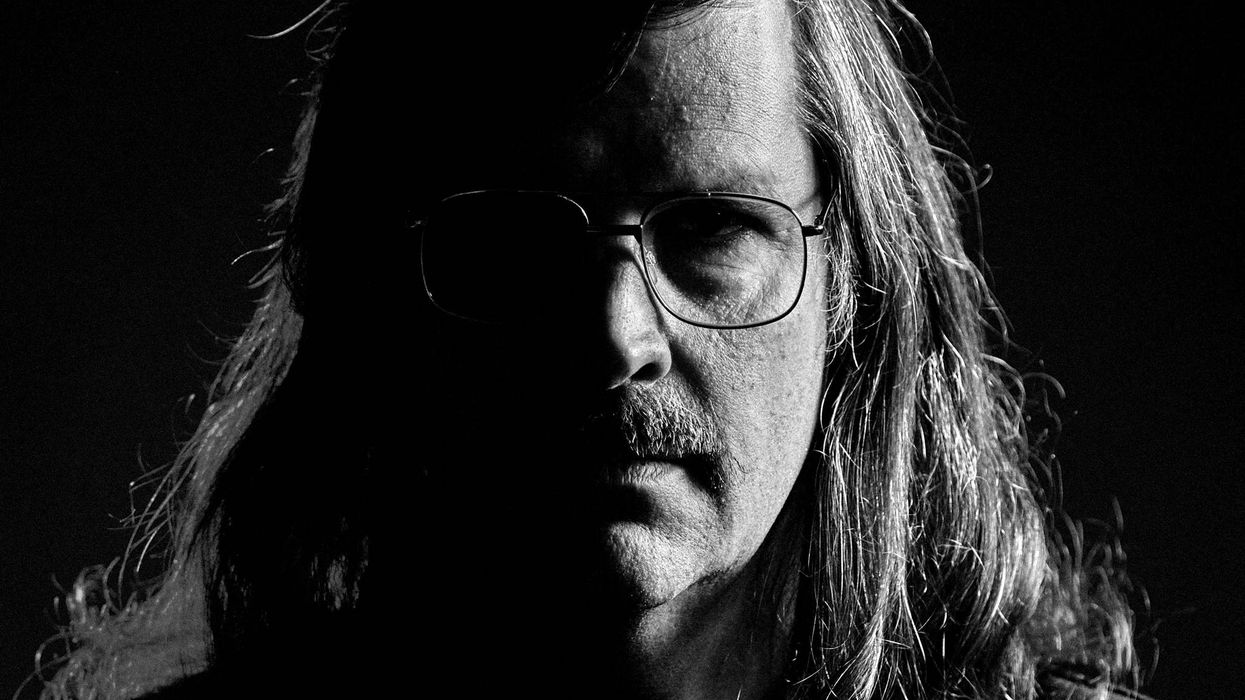
Few players have been more instrumental in shaping the sound of modern metalcore than Converge’s Kurt Ballou. But to hear the producer and guitarist tell it, the 6-string was originally a consolation prize, not a calling. “My buddy Rob and I had this pact to start a band together, but we both wanted to play bass because we were both really into Rush and Iron Maiden at the time,” he says, calling in from his God City recording studio in Salem, Massachusetts. “And those bands have fantastic guitar playing, but they also have these bass heroes in Geddy Lee and Steve Harris, respectively. So, we decided that whoever could save up money for a bass first got to be the bass player, and the other one had to play guitar. I obviously lost.”
It’s a good thing the chips fell where they did. Since Converge formed in 1990, Ballou’s chugging-yet-sinuous brand of guitar brutalism has proved to be the perfect foil for vocalist Jacob Bannon’s throat-rending forays into emotional catharsis. It’s a sound that has evolved exponentially since the band’s early days, though never lacking ferocity. “The music that I was making was about trying to find a voice that was true to me and to what my influences were, but wasn’t parroting something that I was a fan of,” Ballou says of the band’s earlier work. “You start out by emulating, and you either emulate poorly and come up with something original, or you just find your own voice and get to something that’s original. I think that’s what we got to eventually, but it took a while.”
A decade into their career, Converge had already solidly established themselves in the extreme music world. But with release of the album Jane Doe in 2001—the band’s first to feature the almost supernaturally kinetic rhythm section of drummer Ben Koller and bassist Nate Newton—Converge demonstrated their ability to challenge, and sometimes even transcend, genre tropes with a deft balance of fury and finesse. Their new album, the bleakly titled Love Is Not Enough, is their first in nearly a decade (Bloodmoon: I, a 2021 collaboration with doom metallist Chelsea Wolfe and Stephen Brodsky of Cave In, notwithstanding). “Converge is basically our side hustle,” explains Ballou, who spends most of his time producing and mixing other artists. “So, it’s not like we’re beholden to an 18-month album cycle. But there was definitely a feeling that like, ‘Oh yeah, it's been too long.’”
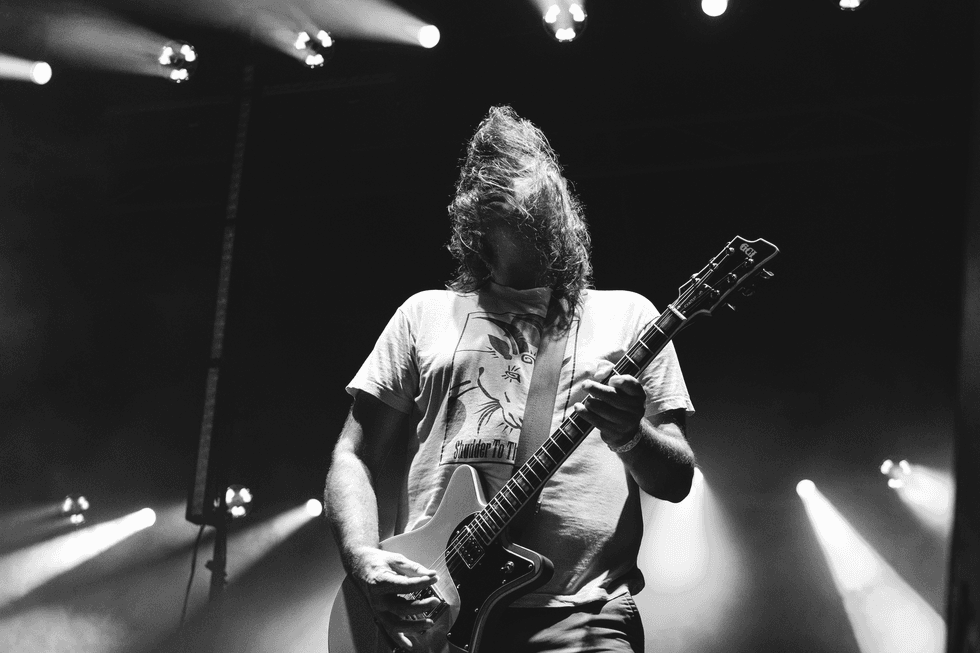
Love Is Not Enough was well worth the wait. Songs like the album-opening title track are relentless blasts of aggression, replete with riffs and half-time breakdowns sure to incite circle pits the world over, while brooding, delay-and-reverb-drenched midtempo numbers like “Gilded Cage” continue to expand and refine Converge’s palette. Throughout the album, a compositional discipline reigns that never allows the listener’s attention to drift. “It’s a good idea in anything creative to leave people wanting more rather than giving them too much, and if you try to limit how many ideas are in one song, you can increase the impact that that song has by keeping it tight and memorable,” Ballou says. “It’s like when you listen to newer Metallica. I actually think there's a lot of cool shit on St. Anger, but they just beat every idea into the ground. Instead of doing something four times, they do it 32. And if they’re like, ‘Well, part A sounds good going into part B, but part A also sounds good going into part C, and part C sounds good going back to A, but part C also sounds good going to B, then they do it every possible way in the song. These are all cool ideas, but I think it’s better to just find the best ones, tighten up your arrangements, and give people the best version of the thing rather than every version of the thing.”
Converge’s economical arrangements are certainly integral to what gives their songs an instantly recognizable contour, but the bespoke alternate tunings that the band have explored since Jane Doe are perhaps what distinguishes them most. “There were only a few songs in the first 10 years of Converge that had any alternate tunings because I was always really against them,” Ballou says. “Every time I tried drop D, I felt like what I was coming up with was really generic and basic. It took a while before I cracked the code to making something that felt like me.” Ballou credits Neil Young’s soundtrack to the 1995 Jim Jarmusch film Dead Man with finally opening his ears to the possibilities of alternate tunings. “It was atmospheric, vibe-y stuff that really spoke to me,” he says. “There was also a guy named Alex Dunham, who was in the bands Hoover and then Regulator Watts and Abilene, who had a similar vibe but also played slide. And so, I started experimenting with slides. But then you realize, like, ‘Oh, I don’t want this major third here. Let me get that out of there.’ And so, you start changing the guitar’s tuning to get the chord shapes you want. Eventually, I just stopped using the slide but stayed with those open tunings.” Ballou also cites other heavy bands like Cave In, Melvins, and Neurosis with providing him with inspiration, as well as indie rock legends (and alternate tuning icons) Sonic Youth.
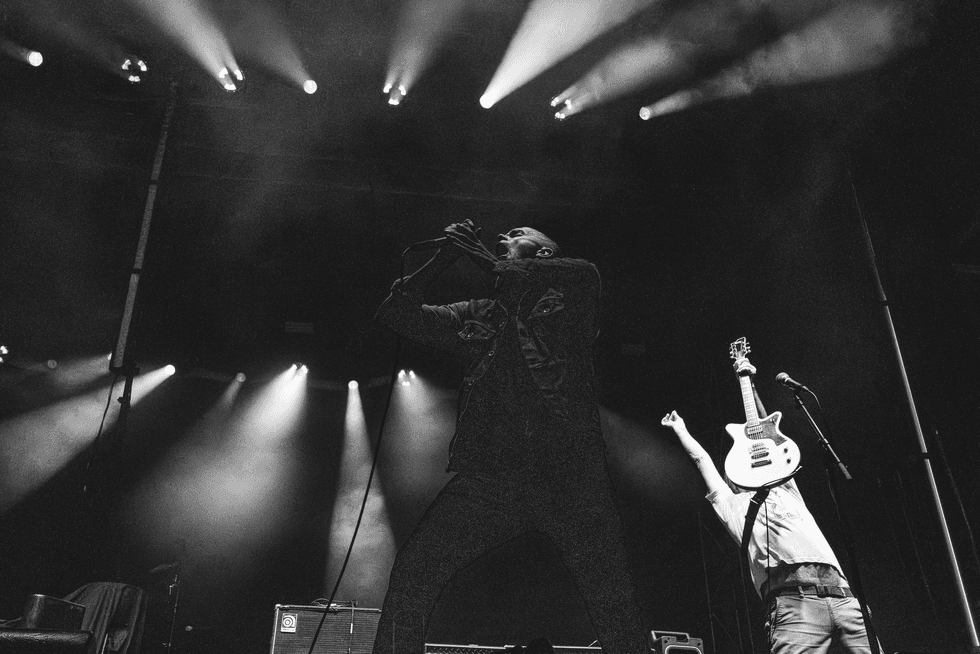
“You start out by emulating, and you either emulate poorly and come up with something original, or you just find your own voice and get to something that’s original.”
“I feel like if you really boil it down, Converge is sort of like Sonic Youth meets Slayer meets New York hardcore,” Ballou says. “And I actually have a tuning I call ‘Open Slayer.’ It’s C–F#–C–F#–C–F#, which is a take on Sonic Youth’s C–F–C–F–C–F.” Ballou’s favorite tuning, however, is one that he and the band refer to as “Wacky Tuning.” And while the internet will tell you that it’s C–G–C–F–G#–C, the guitarist will neither confirm nor deny this. “For whatever reason, I’ve put my foot down,” he says, smiling. “I’m not going to say what it is. It’s a challenge for people to figure it out. But we’ve used it almost half the time on every record since Jane Doe.”
For the recording of Love Is Not Enough, Ballou auditioned many of the amps in his studio’s collection, only to return to his stalwarts. “It's funny, when I have a record where there’s a little more time in the budget to experiment, like we have with Converge, I will tend to set up more amps and do shootouts,” Ballou says. “And a lot of times I’m just like, ‘Oh yeah, the shit I use all the time I’m using all the time for a reason—this is the best shit that I have!’ There are a few amps that really are the best at everything.”
He continues, “On this record, for the main rhythm guitars, the left side is this uncommon amp from Belarus made by Sparrows Sons. There’s a handful of them that are out there. I own two, and they don’t sound the same as each other. My purple one has a very “home brew” kind of vibe. And it’s just really great sounding. I don’t know what kind of circuit it’s based on. And then the right side is a 100-watt HMW, which stands for ‘Heavy Metal Warfare,’ by Dean Costello Audio. Both amps ran through Marshall 1960 cabinets that have a mix of Celestion Classic Lead 80s and Amperian speakers, miked with Shure Unidyne SM57s and Soyuz 1973s.”
Instead of relying exclusively on his amplifiers’ preamp sections to produce crushing gain levels, Ballou prefers to hit the amp’s front end with a pedal. It’s a practice he adopted early on in Converge’s career, when he primarily employed a ’70s-era Traynor YRM-1 45-watt head, which he still owns and used for many of the clean and semi-clean sounds on Love Is Not Enough. “There’s something about starving the low end and tightening things up with a pedal that I still like,” he says. “The Traynor is somewhere between a Fender Twin and a Marshall JMP kind of circuit, so it wasn’t designed to go ‘chug, chug, chug.’ I was forcing it to do that against its will by hitting the front end with a Boss OS-2 [Overdrive/Distortion], which has a really good midrange push to it.”
When pressed to unpack the concept of “starving the low end” a little more thoroughly, Ballou, who has a degree in aerospace engineering, is more than happy to expound. “In any negative-feedback-based op-amp overdrive, there’s always this sort of shunt to ground that happens in the negative feedback circuit in order to get gain. And basically, you have to high pass that—meaning cutting the lows—because low end tends to overdrive before high end, and you can end up with a signal where the low end is distorted but the highs are clean,” he explains. “So, to get that searing tone with high end and mids compressed and overdriven, you have to starve the bottom end going into the overdrive circuit. To do that, a lot of pedals—like, say, the Boss Metal Zone—have a bunch of EQ stages working under the hood that precondition the signal before the drive section by cutting lows, and then post-condition after the drive section to add it back in. So, you’re starving the bottom end going into it to tighten it up and make it more responsive, and then you’re boosting the bottom end at the output to restore what you’ve lost. The same theory applies when you’re hitting the front of an amp.”
Ballou eventually graduated from the OS-2 to using a Boss GE-7 graphic equalizer pedal “set to a frowny-face EQ with the output gain jacked up,” and now favors the Onslaught, a pedal that he designed for his own God City Instruments brand of stompboxes, guitars, and basses. Although he also used a Wild Customs electric, a pine T-style partscaster with Lindy Fralin pickups, and a First Act Sheena with EMGs, the bulk of the guitar parts on Love Is Not Enough were in fact tracked using GCI guitars that Ballou designed himself.
“My father’s a machinist and owns a machine shop and has CNC mills and stuff, so making shit was always just sort of normal to me,” Ballou says. “There was a summer where the studio was slow and my dad’s shop was slow as well, and I went down the rabbit hole and built about 30 guitars. I was making the bodies that I had designed on the CNC machines, and having Warmoth make the necks with a custom headstock.”
The guitarist would assemble and set up the instruments himself, a process that he found less satisfying than dialing in the design and specifications of the instruments. “I am definitely better at the design aspect of it than I am at the craftsman aspect,” he says. “Now I’ve got a relationship with this fantastic factory in South Korea that’s doing the building for me, but I still do all the quality control of each instrument myself when they get here.”
“I feel like if you really boil it down, Converge is sort of like Sonic Youth meets Slayer meets New York hardcore.”
Kurt Ballou’s Gear
Guitars
God City Instruments Craftsman
God City Instruments Constructivist
God City Instruments Deconstructivist baritone
Amps
Studio:
Dean Costello Audio 100-Watt HMW
Sparrows Son
Traynor YRM-1
Marshall 1960 4x12 cabinets with Celestion and Amperian speakers
Live:
Line 6 Helix into Quilter Labs Tone Block 202 heads
Picks, Strings, & Cables
D’Addario Duralin Standard Light/Medium Gauge (.70mm) picks
D’Addario NYXL (.011–.056) and NYXL Players Choice (.013–.064) custom set for baritone strings
D’Addario cables
While his production runs often sell out—as of this writing, there are no guitars available for sale on the God City Instruments website—one thing that never fails to bedevil Ballou (as surely it must his peers) is the mercurial and unpredictable taste of the guitar-buying community. “I am always amazed at the things that people are particular and not particular about,” he admits. “And people are very, very particular about colorways. Sometimes, I order guitars in a color where I’m like, ‘Yeah, whatever, it’s white,’ and, boom, they sell out. Then sometimes I order a colorway, and I just think like, ‘Oh my God, this color looks fucking awesome!’ And then it’s slow to sell.”
He continues. “I love doing it, but I get really scared because none of this is done through pre-order. So it’s all out of pocket to me. Twice a year, I have to wire half my life savings halfway around the world to get a batch of guitars. And then when they come in, I’m just crossing my fingers that they’ll sell!”
“Make this stuff too hot to handle”: Chris Buck calls for help after gear stolen

Guitarist Chris Buck is the latest victim of musical gear theft, and he’s appealing to the internet for help.
In a new post on Instagram, Buck – who alongside Yamaha, recently launched his new signature Revstar at NAMM 2026 – makes an appeal to anyone who has seen or may come across his stolen gear, which includes a brand-new, unused Schmidt Array SA450 pedalboard, plus two cases with a selection of accessories.
- READ MORE: Vista Musical Instruments acquires Scottish retailer Kenny’s Music and confirms relaunch plans
“While I was in the US for the launch of my signature Yamaha, my car’s rear window was smashed in Bristol and a load of gear stolen,” he writes, promising to reveal more details about the theft in the coming days.
Alongside the Schmidt Array SA450 pedalboard, two Peli 1510 and 1640 cases were stolen, the first with accessories including guitar cables, capos, guitar straps, two Audix Cab Grabber mic stands, picks and a lid organiser. Buck says this case had two Telefunken stickers on it at the time it was stolen, but admits these would be “fairly easily removed”.
Meanwhile, Buck’s stolen Peli 1640 case is adorned with a “Let’s Get Loud” sticker, a Mythos Pedals sticker, as well as purple tape and “Heavy” tape from airport travel. The foam inside is moulded to fit a Schmidt Array pedalboard.
Buck says he believes the stolen items are still in the Bristol area, and urges anyone who comes across it, in person, “at a Cash Converters/car boot sale or online”, to contact him at chrisbuckguitar@gmail.com.
“If we could make this stuff too hot to handle, that’d be great!” he concludes.
Sadly, music gear remains a prime target for thieves, and many high-profile musicians have found themselves victims of this crime. Last year, for example, Australian jazz/funk band Hiatus Kaiyote saw “tens of thousands of dollars” worth of gear, including Jackson and Ernie Ball guitars, stolen from their studio space.
Similarly, New Zealand rock band the Beths had instruments, pedalboards and even their entire rented backline stolen from their van while on tour in France.
But musicians aren’t the only victims of such gear thefts, and brick-and-mortar retail spaces regularly find themselves victim, like when thieves managed to steal a $5k Gibson Les Paul in 2024 by simply walking out of a store with it.
The post “Make this stuff too hot to handle”: Chris Buck calls for help after gear stolen appeared first on Guitar.com | All Things Guitar.
We scored Steve Vai’s Positive Grid Spark Mini amp a 9/10 – get it now with over $50 off

You can now save over $50 on Positive Grid’s Spark MINI Vai portable amplifier thanks to Sweetwater.
The 10-watt amp, developed in collaboration with Steve Vai, was launched in 2024 and reflects the “unique tone and style” of Vai’s influential work. It’s ultra-compact and battery-powered, featuring a host of features requested by Vai himself, including four onboard presets and an exterior design that oozes Vai character.
[deals ids=”36eJFa66h7yMVCZJwEWt5J”]
Just like the original, the Vai MINI hosts a dual angled-speaker design that utilises a personalised EQ, omnidirectional bass response, and custom damping to produce a tone to match amps much bigger in size. Users can also access more than 100,000 additional tones and presets via the Spark app, as well as tools to help you practise. Its built-in USB-charge battery delivers up to eight hours of playtime.
- READ MORE: “He saved my bacon!”: How Steve Stevens saved an “inexperienced” Steve Vai from tonal humiliation
Instead of the standard black or white Tolex of the Spark MINI, the Vai version features a deep red burgundy exterior coupled with a Mandala design on the grille, made famous on Vai’s Hydra guitar. You’ll also get a matching 10-foot guitar cable featuring 24K gold-plated connectors and a durable burgundy weave nylon jacket to match the aesthetic.
In addition to the aesthetic glow-up, the Spark Mini Vai also offers a collection of loops and backing tracks pulled from Vai’s catalogue, as well as four new Steve Vai-curated presets. These are: Fresh (a bright, clear voice), Mild (a lightly distorted tone), Hot (ideal for crunchy rock rhythms and leads), and Fire (saturation for solos with vocal-like character).
We rated the MINI Vai a 9/10 in our 2024 review, noting it offered brilliant sounds in a compact package, and the accompanying app made editing presets easy and offered a wide range of effects.
Shop this deal and find out more via Sweetwater.
The post We scored Steve Vai’s Positive Grid Spark Mini amp a 9/10 – get it now with over $50 off appeared first on Guitar.com | All Things Guitar.
Pages
