
Music is the universal language
“Glory to God in the highest heaven, and on earth peace to those on whom his favor rests.” - Luke 2:14
Norse Guitar Feeds
Nashville’s Stacy Hogan Launches His Newest Creative Chapter With Gallows West
Press Release
Source: Gallows West PR
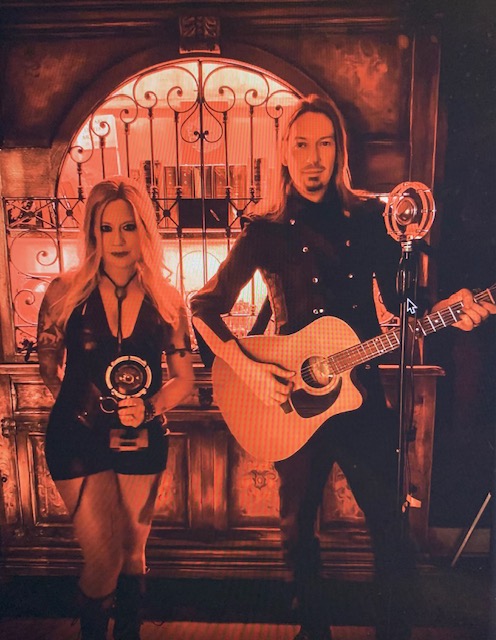
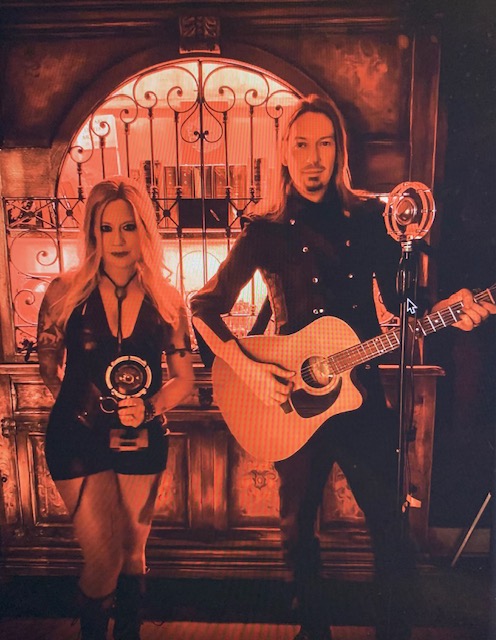
Gallows West – Lauren & Stacy Hogan
Stacy Hogan 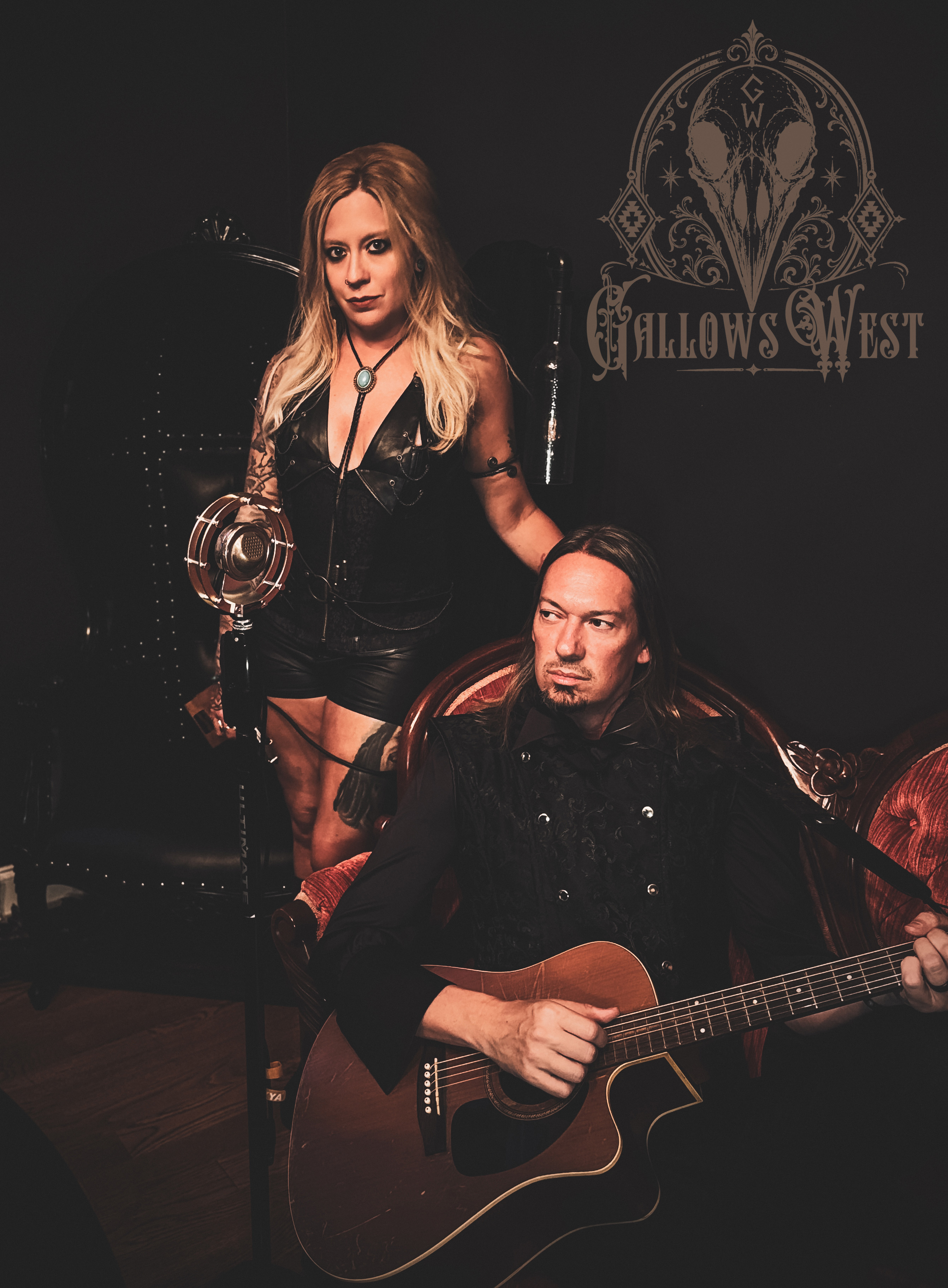 is a Nashville-based producer, mixer, songwriter, and artist with more than 20 years of experience in the music industry. As the founder and owner of A Writer’s Paradise, Hogan has built a career helping artists develop songs from the ground up — from writing and production to mixing, mastering, release strategy, promotion, and sync placement.
As an artist, Hogan is best known for Sin Shake Sin, a politically charged alternative rock project that has earned more than 300 million streams, a #1 Amazon single with “Misinformation,” and placements across more than 100 film, television, sports, and video game projects.
Stacy’s music and production work have been connected to major platforms and shows including Cobra Kai, The Voice, American Idol, Call of Duty, The Vampire Diaries, The Daily Show, NFL programming, WWE, Locke & Key, and more. Hogan’s work has also received coverage or recognition from outlets and organizations including: SPIN, Loudwire, Guitar World, BMI, and MUSO.AI, where he has ranked among the top percentage of producers and songwriters.
In addition to his artist career, Hogan has spent years producing and developing independent artists through A Writer’s Paradise, helping clients shape songs, records, branding, and release campaigns with a full-service Nashville-based approach. His work has crossed rock, country, pop, Christian, Americana, cinematic, and alternative genres, with an emphasis on songs that feel emotionally direct, commercially usable, and sonically finished.
His newest creative chapter is Gallows West, a vocal duo featuring Hogan and his wife, Lauren Hogan. The project grew out of a unique intersection between music, fiction, and cinematic storytelling.
Gallows West is shaped by a their creative partnership. Stacy produces and builds the musical world, while Lauren brings that world to life visually as the director and editor of the project’s videos. She also contributes background vocals and plays a central on-screen role, helping define the project’s visual identity and giving its cinematic world a recognizable presence.
Gallows West began during the creation of music connected to the novel, Cadillac Wheels, by Scott Saxberg. The project was originally developed as the musical identity behind the book’s fictional world and characters, especially the character Tanner Banks. Hogan created a collection of songs that could feel like they existed inside that story — songs with an old-soul, western, haunted Americana quality, but still shaped with the weight and production instincts of modern alternative rock.
That creative experiment eventually became something larger than a book companion. Gallows West developed into its own full artistic world: part dusty outlaw folk, part gothic western, part cinematic alt-rock, and part ghost story. The sound leans into imagery of desert highways, blood-red rivers, old sins, forgotten towns, worn leather, and voices from another century — but with the polish, impact, and atmosphere of a modern record.
The first official Gallows West single is “Where the River Turns Red.” While Gallows West was born from the Cadillac Wheels universe and the project is tied to that larger creative world, “Where the River Turns Red” stands as the first proper public statement from the band.
Where the River Turns Red Video!
Click here to view the embedded video.
The song captures the tone Hogan is building around Gallows West: dark, visual, and cinematic, with a sense of American folklore and old-west mythology filtered through modern production. It feels like a story you can hear — murder ballad energy, frontier imagery, and a haunted atmosphere, but with enough rock weight and melodic focus to sit naturally beside Hogan’s broader catalog.
For Hogan, Gallows West also represents a creative shift. After years of writing politically charged music with Sin Shake Sin, Gallows West offers a different kind of expression — less about the daily fight of modern culture and more about timeless stories, atmosphere, character, place, and myth. It allows him to build a world instead of simply react to one.
The project also gives Hogan a way to connect several parts of his career: songwriting, production, sync-minded storytelling, artist development, visual branding, and literary collaboration. Gallows West is not just a band name; it is a world with a sound, a setting, and a mythology.
At its core, Gallows West is Stacy and Lauren Hogan stepping into a darker, more cinematic version of Americana — one that carries the grit of the Old West, the shadow of southern gothic storytelling, and the scale of modern alternative rock.
A Writer’s Paradise Studios – Nashville, TN
www.AWritersParadise.com
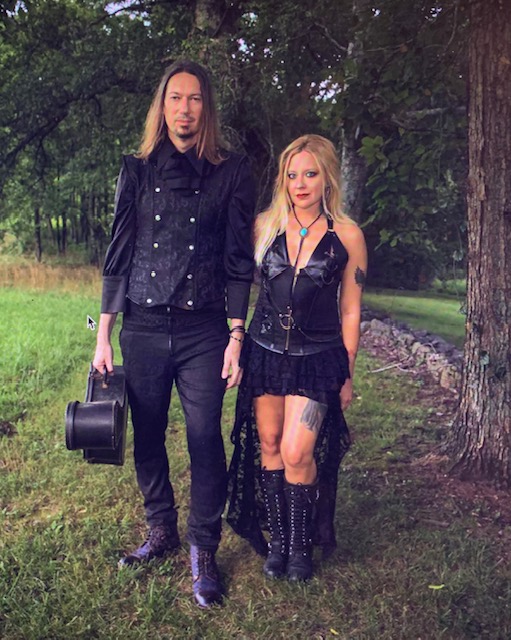
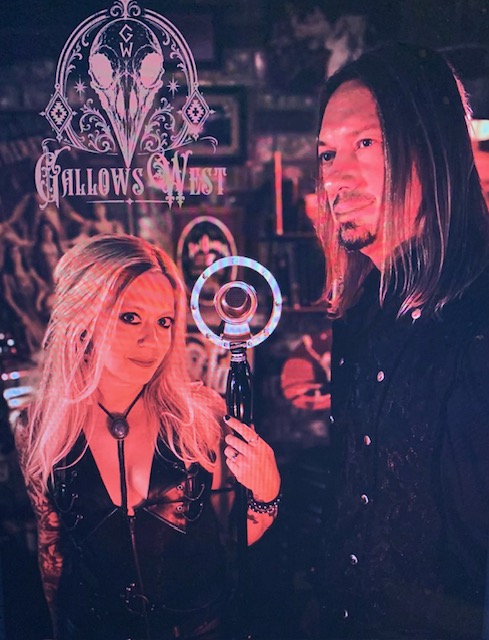
GALLOWS WEST PHOTO GALLERY

Totally Guitars Weekly Update July 24, 2026
July 24, 2026 A student recently wanted to learn Do You Know The Way To San Jose, which brought the song back into my orbit and…what a great piece of music by Burt Bacharach and Hal David. We now have a lesson on it that looks at three different ways of accompanying a vocalist, ranging […]
The post Totally Guitars Weekly Update July 24, 2026 appeared first on On The Beat with Totally Guitars.
Lizzie No’s Songs of Solidarity | Acoustic Guitar Sessions

Richie Faulkner’s dad made him listen to music in the car at full blast to prepare for how loud a gig would be

We all remember our first rock concert. Realistically, nothing was ever going to prepare us for how loud it was going to be. For many of us, that unadulterated, visceral noise was the reason we fell in love with the genre in the first place.
If you went to your first gig as a child, there’s a good chance you went with your parents. And while some parents might choose to furnish their children with earplugs to keep their hearing safe, in the case of Richie Faulkner, his father chose a different tack to get him ready for his first show…
Specifically, Faulkner’s first-ever rock show was a date on Bryan Adams’ Into the fire tour in the late ‘80s.
“It was my first live gig in an arena, and my dad used to take me out in the car preparing me for how loud it was going to be. We’d crank Reckless really loud and drive around listening to songs like Run to You at full volume.”
He continues: “Everyone at school was getting into guitar music, but instead of buying a Guns N’ Roses record like everyone else was, I bought Live After Death by Iron Maiden.
“I remember trying to learn Hallowed Be Thy Name with the light and shade and the different parts. The guitars panned left and right, so you had Adrian Smith on one side and Dave Murray on the other. I’d learn Murray’s bits and then turn him off and play the gig, essentially. After school my friends would go out, and I’d just play guitar night after night with Iron Maiden.”
The post Richie Faulkner’s dad made him listen to music in the car at full blast to prepare for how loud a gig would be appeared first on Guitar.com | All Things Guitar.
AFI frontman claims label wanted them to collaborate with 50 Cent – and other terrible advice: “This motherf**ker says to me, ‘What if you were the first band to write a ringtone album?’”
![AFI [main], 50 Cent [inset]](https://guitar.com/wp-content/uploads/2026/07/AFI-50@2000x1500.jpg)
Once upon a time it was the dream of bands everywhere to get signed to a label. It was often the first sign that you had ‘made it’. Now, the internet has enabled self-promotion, leading many to question whether they need a record label in 2026 like they would have done years ago.
In 2024, M. Shadows, frontman of one of the biggest metal bands in the world, Avenged Sevenfold, questioned the legitimacy of record labels and what they’re able to offer artists.
“You’re going to take 24 cents on our dollar and that’s all you can do, come up with a f**king fake viral TikTok moment?” he asked.
Now, AFI frontman Davey Havok has shared some of the strange advice given to the band after they’d signed to Dreamworks in the mid-2000s.
“The writing of Decemberunderground was a miserable period,” he tells Metal Hammer in a new interview.
“We had signed to Dreamworks, but they sold it to Interscope… Out A&R guy was hellbent on trying to get [Interscope boss] Jimmy Iovine – who had expressly claimed in the press that rock is dead – to pay attention to AFI, and so it was suggested that we collab with Jimmy’s great love at the time, which was 50 Cent.”
He continues: “I have nothing against 50 Cent, but what does that even mean?!”
But Havok says the worst advice came around the time ringtones started becoming popular.
“Even worse than this was the era when ringtones were the new technology craze. I love this man and I still see him once a month at the least, but this motherfucker says to me, ‘What if you were to be the first band to write a ringtone album?’”
While certain tracks from 2006’s Decemberunderground were made available as ringtones, the band never made a full-on ringtone album – nor have they ever collaborated with 50 Cent, so it’s safe to say they stuck to their creative guns…
The post AFI frontman claims label wanted them to collaborate with 50 Cent – and other terrible advice: “This motherf**ker says to me, ‘What if you were the first band to write a ringtone album?’” appeared first on Guitar.com | All Things Guitar.
Boss GX-1 review: A gateway to bigger sounds without the bigger price tag?

$229 / £219, boss.info
In the 49 years since the brand first blessed the world with a compact effects pedal, Boss has been the musical equivalent of a bandmate that always turns up on time, has learned the material perfectly, and offers to be the designated driver home.
- READ MORE: Fender Studio Pro 8 and Quantum LT 16 interface review: a guitar-recording match made in heaven?
The best Boss products tend to hit the sweet spot that has made the compact format such an enduring and popular icon of guitar – they’re not too expensive, they’re very well built and they sound great.
Into that equation comes the latest affordable multi-effects processor, with a simple but compelling mission statement: a unit that’s fully loaded with effects, has a user-friendly interface, and contains enough sonic flexibility to keep you knob-turning until you feel the need to upgrade – if ever.
With an SRP of just $229, it’s also eyebrow-raisingly affordable in a world of four-figure multi-effects units. Obviously, this is not meant to go toe-to-toe with Helix or Neural, but so many other players in this space are trying to be that on a budget, leading to a glut of menu-heavy and often clunky equipment that can fry the brain of a newbie to the world of multi-effects.
This, on the surface at least, looks like a much more gentle introduction…
Boss GX-1: what is it?
The GX‑1 is an all‑in‑one guitar effects processor aimed squarely at entry‑level and intermediate players on a budget. It bundles together all the usual suspects of classic effects – overdrive, distortion, modulation, delay and reverb – alongside an intriguing collection of built‑in amp models, all housed within a solid, yet lightweight and portable unit.
Think of it as a guitarist starter kit that’s been lovingly curated rather than hastily assembled. The GX‑1 offers a full buffet of tones, enough to help you discover what you like with ease.
Accessibility is clearly at the forefront of the design process here. You’re not expected to understand the complexities of audio, nor do you need a PhD in engineering to set up your own presets.
Instead, it’s about plugging in, scrolling through sounds, and stumbling upon something that makes you want to keep playing, which, ultimately, is the whole point, right?
 Image: Adam Gasson
Boss GX-1: build quality and usability
If there are two things Boss consistently gets right, it’s usability and solid construction. The GX‑1 continues that proud tradition with reassuring confidence.
The interface is clean, logical and refreshingly inviting. Navigating through presets feels straightforward, and making adjustments is as intuitive as it gets. Hold down the effects button of your choice, and the screen presents your options. Easy. It’s the kind of unit where you can spend more time actually playing and enjoying than puzzling over button combinations and complicated menus.
 Image: Adam Gasson
Physically, it’s lightweight but far from flimsy. The chassis has that trademark Boss ruggedness, giving me the confidence to toss it into a gig bag without hesitation. The footswitches are responsive with a satisfying “click”, and the expression/wah/volume pedal invites some Hendrix-esque stomping. I don’t expect it to be as bomb-proof as my precious 1980s OD-1, but then again, that’s not the brief here. It’s less future heirloom and more faithful companion – the sort of unit you might outgrow eventually, but not before it teaches you a few valuable lessons.
For bedroom practice, guitar lessons, rehearsals and even the odd gig, the GX-1 is more than up to the task. It can also be battery powered, though it breaks with the conventions of some contemporary multi-effects to eschew a built-in rechargeable battery in place of four AA batteries. This is perhaps not the most environmentally friendly way to go about things, and the cost of those batteries will add up over time, but you can also see the wisdom of using something that is easily and quickly replaced – it will also likely enhance the GX-1’s longevity. As well as keeping the initial asking price down.
 Image: Adam Gasson
Boss GX-1: sounds
Plugging in, you can really get the sense that the sonics will be where the GX‑1 begins to justify its place at the upper echelon of this hotly contested corner of the market.
The range of effects and modulation on offer is impressively broad, especially at this price point. From fuzz, crunch, and high-gain drive to spacious delays and reverbs, there’s a lot here to explore and edit to taste. The effects themselves really are top quality, something I wouldn’t have doubted from Boss-made equipment.
Boss has long been known as the undisputed king of looper pedals, so I was pleased to see an excellent little looper has been included here. It’s a little fiddly to activate, as you have to spread your foot across two pedals to get it started. But from there, it’s more straightforward. It’s an inspiring setup on the effects side, particularly for newer players who are still figuring out what “their sound” might mean, and the possibilities really are endless.However, the 23 included amp models, along with many of the harsher drive tones, are something of a mixed bag. The bright, clean presets are spot on out of the box, with very little adjustment needed. They were more than suitable for live use and even some light recording. Some of the crunch sounds hold their own too, particularly when layered into a full mix.
But push things further, and the cracks begin to show. Higher‑gain tones can feel a touch flat, like a photocopy of a photocopy rather than the original document.
That said, context is key. Through many low-stakes settings, these tones work absolutely fine. They might not fool a seasoned tone purist with a Mayer-like ear, but they’re more than capable of inspiring a player who’s still finding their sound.
 Image: Adam Gasson
Boss GX-1: should I buy one?
If you’re just starting out, or looking for a wallet-friendly way to explore a rich tapestry of guitar effects for rehearsals or demo recording, the Boss GX-1 is a strong contender. Its satisfying combination of user accessibility, a wide range of tonal possibilities, and build quality that exceeds its price makes it an excellent choice.
The amp modelling won’t compete with some higher-end units, but the strengths here outweigh the limitations tenfold.
Boss GX-1: alternatives
There’s so much varied and decent competition at this end of the market, the best thing here is probably to look at what you really want if this ain’t it. If you want ultimate screen-free multi-effects simplicity, then the Line 6 POD Express ($179.99/£149.99) is a great option, as is Blackstar’s ID:X Floor One ($269.99/£169). If you want something that’s perhaps a little more in-depth in terms of sounds and editing, Boss’s own GX-10 ($439.99/£349) is very valid, while the HeadRush Flex Prime ($499/£459) goes even further with profiling and all sorts. If you want something that’s directly going against the GX-1 in vibe and price point, NUX’s MG-300 ($169/£129) and Mooer’s GE150 (£149) don’t have Boss’s prestige, but they’re very good for the money.
The post Boss GX-1 review: A gateway to bigger sounds without the bigger price tag? appeared first on Guitar.com | All Things Guitar.
“I couldn’t play to the potential they needed”: How insecurity made Jim Root turn down joining Slipknot at first

A list of the best modern-day metal guitarists is scarcely complete without Jim Root. His dizzying legato runs in Slipknot are now legendary – try Sulfur or Psychosocial for a quick primer – but, while it may be hard to believe, the guitarist reveals he hasn’t always been sure in his technical ability.
In fact, before joining Iowa’s would-be metal titans in 1999, Root had pretty much checked out of guitar playing altogether. “I was bitter, because I had passed 18 years old and didn’t ‘make it,’” he tells Ben Giese in a new episode of the RIDE BYND podcast.
Root – also a passionate motorcycle enthusiast – says there was a time before joining Slipknot that he didn’t even own a guitar.
“I think I had an amplifier still, but I didn’t even have a guitar at the time,” he says. “I’d given up. I was working at a screen printing place. It was seasonal, and I’d collect unemployment in the winter.”
“My parents had just gotten divorced so I moved in with my mom so she wouldn’t be so low,” he continues. “Then I was just kinda like, ‘Well, this is gonna be it. Maybe something will happen. Maybe there’s a light at the end of the tunnel.’ But I’d resigned myself to the fact that music was just gonna be done.”
But some time later, the call came from then-Slipknot frontman Anders Colsefni asking Root if he was interested in joining the band.
“When that happened, I think Donnie Steele was the guitar player at the time,” Root recalls. “Joey [Jordison, late first drummer of Slipknot] was the drummer… They were players, man… And I hadn’t been playing for so long. I just didn’t feel like my ability was good enough to join their band.
“I didn’t say no to them for any other reason than I just didn’t feel like I was ready for it. I didn’t feel like I could play up to the potential that they needed as a guitar player. Self-defeating, maybe, a little bit.”
Root later answered the call, which proved to be the best career move he could ever make. In the nearly 30 years since he joined the band, Slipknot have become one of the quintessential forces in modern metal, putting out seven top-selling studio albums, frequently headlining festival slots and regularly playing sold-out arena shows.
He’s also made his mark as one of the more unconventional Tele players around right now. The Fender Telecaster is traditionally an instrument claimed by country, blues and softer rock artists, but Root loaded EMG pickups into one and streamlined its features to make it his own signature metal-ready monster.
In a recent video with Fender, Root explained his love of the Telecaster, saying it’s so cool as a guitar design it’s like a timeless pair of sunglasses.
“Everybody thought I should be coming out with some pointy metal guitar that’s got 12 points or whatever. No, how about we just do a classic slab iconic guitar?” he said of his signature model. “Guitars, in my opinion, are like sunglasses. The classics never go out of style. They’ll always be there. People will make their version of it, but there’s only one Fender Telecaster.”
The post “I couldn’t play to the potential they needed”: How insecurity made Jim Root turn down joining Slipknot at first appeared first on Guitar.com | All Things Guitar.
Ghost’s phone ban controversy was legend – but it’s alright because you’ll soon be able to watch their show in IMAX

Of all the artists who have instated phone bans during live shows in order to create a more ‘present’ atmosphere among attendees, Tobias Forge’s Ghost have made themselves the unofficial face of the campaign.
The band’s massive Skeletour World Tour ran from April 2025 to February 2026, and they famously made fans lock away their smartphones while watching the show in order to create a more “connected” atmosphere.
“If you have 10,000 people at a concert and 8,000 of them are holding a phone, there’s something deeply disconnected,” frontman Forge reasoned at the time.
Of course, no phones meant no fan-filmed footage, so if you couldn’t make it to a show, you missed out. But the Swedish metallers had a plan all along, as Ghost: 2 Big to Rig, a feature-length film spotlighting the massive production behind the band’s Skeletour and the show itself, is coming soon to a cinema and IMAX theatre near you.
Captured live over the course of the band’s two sold-out shows in Mexico City in 2025 and shot on 16mm film, 2 Big to Rig is described as the “definitive document” of the Skeletour World Tour.
“Featuring the only pro-shot footage of Papa V Perpetua and his band of Nameless Ghouls from the phone-free Skeletour, 2 Big to Rig immerses the audience in the Ghost live ritual, including exclusive behind-the-scenes and backstage access,” the band say.
The film is said to feature performances of some of the band’s most classic tracks, including Mary on a Cross and The Future is a Foreign Land.
Ghost: 2 Big to Rig arrives 26 August. Get your tickets now.
The post Ghost’s phone ban controversy was legend – but it’s alright because you’ll soon be able to watch their show in IMAX appeared first on Guitar.com | All Things Guitar.
He’s one of the most prominent jazz-funk players in the world – but Cory Wong says this one thing is more important than guitar playing

Jazz-funk virtuoso Cory Wong has spoken about how his “artistry” took precedence over his guitar playing during the making of his latest studio album, Lost In The Wonder.
In a recent chat with Guitar.com, Wong explains that taking on double duty as both artist and producer on his 12th studio record meant constantly juggling two creative mindsets: his instincts as a guitarist, and his broader vision as the artist steering the album as a whole.
“A producer’s got several jobs. One of them is getting this thing finished and delivered. One of them is being a good casting director,” Wong explains. “I have a whole Rolodex of musicians that I draw from, and that I wanted to work with for this album.”
The record features 12 guest vocalists, including Taylor Hanson, Cody Fry and Benny Sings, with Wong building each song around the people performing it.
“Another side of the producer is bringing the artist’s vision to life, helping the artist discover more about themselves, and express themselves in new and different ways,” he says. “In this case, because I am the producer and the artist, I have to separate those things.”
It’s a balancing act that ultimately changed how Wong viewed his own role on the record.
“My artistry comes before my guitar playing. My guitar playing is a byproduct and expression of my artistry, so I think of my artistry as being more important,” he says.
Wong also explains that stepping back from the instrument helped him record what he considers some of his strongest guitar work to date.
“As a producer, I’m thinking about the writing and how to treat the production of it, knowing that the artist is a guitar player, knowing that the artist is collaborating with a bunch of people, and that the artist is a band leader and arranger,” Wong says. “Splitting my brain into different pieces. Those things are fun on the producer side because then it shapes a little more easily what is being asked of the guitar.”
That also meant resisting the temptation to fill every track with flashy solos, instead waiting for the moments where the guitar could make the biggest impact.
“It’s not solos, but it’s definitely like, ‘Here’s a moment for the guitar.’ Here’s how to incorporate the guitar as a featured instrument,” says Wong. “The producer brain of mine gave the guitar a lot of those instrumental hooks, and the artist is a guitar player, so let’s do some weird, cool, interesting tone.”
The post He’s one of the most prominent jazz-funk players in the world – but Cory Wong says this one thing is more important than guitar playing appeared first on Guitar.com | All Things Guitar.
Why John Lydon will “never forgive” the Sex Pistols

If you’re still holding out hope for the original Sex Pistols to reunite, John Lydon has some bad news: the chances are “in the minus infinities”.
The former frontman has once again shut down any prospect of reconciling with guitarist Steve Jones, drummer Paul Cook and bassist Glen Matlock, saying he’ll “never forgive” his ex-bandmates over the legal battle surrounding Pistol while his wife, Nora Foster, was battling Alzheimer’s.
Speaking in a new interview with Rolling Stone, Lydon reflects on the bitter dispute over Danny Boyle’s Pistol miniseries, which saw him unsuccessfully attempt to block the band’s music from being licensed for the Disney+ show. The court case unfolded while Foster was battling Alzheimer’s disease; she died in 2023 at the age of 80.
“I’ll never forgive them for the way that they piled that court case on me while my wife was dying of Alzheimer’s,” Lydon says. “It was a most unfortunate act on their part, and then using Disney to strip-mine me [for FX’s Pistol]…. If I didn’t raise, say, $10 million after the first week, the case couldn’t go on. That’s money I could have spent taking care of my lovely Nora. They knew she was ill.”
When asked to rate the chances of ever singing with the band again on a scale of zero to 100, Lydon bluntly replies: “It’s in the minus infinities. The dirt that they unloaded on me in a time where I was in real serious grief … No, I cannot forget about that.”
The musician also reveals that none of his former bandmates contacted him following Foster’s death. Asked whether a lack of respect lies at the heart of the split, he replies: “Yes, there was no respect.”
“And to try to put together what I call a mockumentary about the Pistols, and for three years, deliberately not tell me a word, not share any of this with me, and not consider that I might have an opinion on this and then to force that into the law courts, that was really, really untasteful. So no, I don’t hang out with low-renters.”
Lydon also hit back at comments made by Jones in an earlier Rolling Stone interview, in which the guitarist joked that the singer might return to the band if he needed the money.
“There’s desperation for you. How little they know me,” Lydon says. “They must be the only fools on the planet that could think that about me. Well, then, they are special people with special needs.”
The latest remarks follow Sex Pistol’s recent reunion shows, which saw Jones, Cook and Matlock return with Gallows frontman Frank Carter handling vocal duties. Lydon previously slammed the project, accusing his former bandmates of ‘killing the content’ of the Pistols’ message and reducing the band’s legacy to “rubbish childishness”.
Grab tickets to the show.
The post Why John Lydon will “never forgive” the Sex Pistols appeared first on Guitar.com | All Things Guitar.
How do you play guitar with a hologram? The live guitarists behind ABBA Voyage reveal all

The ABBA Voyage concert experience brings to life again the timeless music of one of the 70s’ biggest pop groups, ABBA. The Swedish foursome called it a day back in 1982, though in 2021 they did reunite on record for one last hurrah which culminated in the album Voyage.
Then the following year, the group was back on the concert stage albeit in digital form or as they’ve now become known as, ABBA-tars. And to describe the ABBA-tars as holograms is inaccurate; they are digital versions of ABBA created through cutting edge motion capture performance techniques by video effects company, Industrial Light & Magic – the company behind some of the most incredible Hollywood special effects of the last five decades.
The Voyage concert is held in the purposely built ABBA Arena in London and features a 10-piece live band, with the twin guitar team of Fernando Sanchez and Christian Mendoza tasked with replicating live all the intricacies of the guitar parts on the original ABBA recordings.
But ABBA Voyage is no ordinary show. It’s a concert where the technicalities involved are multi-levelled, especially when it comes to the live band who, each night, face the challenge of bringing ABBA’s memorable music to life for 21st century audiences.
“We try to stick as much as we can to the original part and to the arrangements that we’ve been told to play,” explains Sanchez who first auditioned for the gig in June 2025 and made his live debut with the Voyage band in December, 2025. “However, because we’re playing every night and doing a lot of shows, you are in this little bubble and so, you start adding a little note here, and adding on something there. But when I do that personally, the next day I try to go back to the original so I don’t lose track of what I’m supposed to be playing. We know as musicians we can do other things and maybe embellish it or do something, but I always try to go back to the original the next day.”
“I would say that this is not a job for me to put much of a stamp on what I want or what I would think would be needed,” adds Mendoza, who is now in his third season with the Voyage troupe after having first auditioned back in December 2023, and made his live debut in April, 2024. “These are timeless classics and to go and change like a lead part because I want to do something, is not on. I think the purpose of us is to recreate this music and have people hear these lines and be excited that they’re hearing the stuff that they were excited about when they were young or first heard it.”
 Image: Johan Persson
Reconstruction Workers
From day one the modus operandi for all the musicians involved with the concert was to reconstruct the sonic aspects to the original recordings in minute detail. In order to help the musicians along in the process of learning the material, charts were also offered up.
“It’s not necessarily a gig where you have to read music, but it is obviously a massive plus if you do,” explains Sanchez. “I do read music. So, in my case, I got sent the charts and I had to learn the songs before we went into rehearsals. And then in rehearsals we have our MD who is guiding us through it, so if we’re playing a part that is not being played correctly, he will come and let you know what we’re supposed to be basically doing.”
And early on in the process, the musicians received some guidance from ABBA’s piano playing maestro Benny Andersson.
“When I joined, Benny was at some of the rehearsals and there were a few things like if he heard something that he maybe wanted more closer to on the record, he would mention it,” recalls Mendoza.
“Like with the lead line in Knowing Me, Knowing You. It was funny because he said, ‘I don’t know what’s on the paper as it doesn’t matter, because what’s on the record is this’. And he then sang the line to us. So, he knows that sometimes liberties maybe get taken in the way that stuff gets written, but that was an example of something where he felt strongly, ‘Let’s do it like the way it was’.
“But he was very gracious. I believe that at that point had we been playing something very differently, I feel like that wouldn’t have happened because they would’ve made sure that before Benny came to the rehearsals, we were playing the music the way it is intended.”
 Fernando Sanchez. Image: Press
In The Pocket
One of the difficulties both guitarists and the band face each night are the occasional alternating tempos of the original recordings which were recorded in the pre-digital age where click tracks weren’t a common practice in the studio as they are today.
“Some of the tracks are not exactly to the grid,” says Sanchez. “People record to a click track today, but some of the avatar’s instruments are not to a click so, we have to pay attention. For example, in Chiquitta, there’s a part where Christian and I are playing the exact same thing and we need to listen to the track intently because it kind of moves around the click. And if we are not playing accurately to that part, it’ll just sound a bit messy.”
“There’s a click in our tracks, but they [ABBA] didn’t put the music to a grid, so it’s going to move,” adds Mendoza. “In Chiquitta, because everything goes quiet at one point, the click obviously is louder in our ears than normally, but because the piano part is slower, we kind of have to ignore the click in that part at the beginning and just play to the piano, even though the click is still there.
“We have to play together to this piano part and ignore the click to kind of know when to come in. It’s only for a couple of bars, but those are little challenges we face. Sometimes intros too like on Thank You for the Music the click is only given to us in the intro and then we don’t have a click. So, the drummer has to play to the vocals and we have to match his beats to the vocals. But that’s a lot easier to feel, as you’re playing in time following the drums.”
 Christian Mendoza. Image: Press
Knowing Me, Knowing Tubes
Perhaps surprisingly given the technological nature of the show, both guitarists are running real tube amps for the show. Both employ Mesa/Boogie California Tweed amps, with Mendoza primarily using a Fender Telecaster for the majority of the concert, and a Fender Strat for a few select numbers, while Sanchez uses a Fender Stratocaster for the entire performance. Just as important is the selection of tones for the guitars, which too, has to be matched to the tones on the recordings.
“I built my pedalboard to what I knew and also after hearing the music, certain overdrives because the gig doesn’t really necessarily need much distortion,” explains Mendoza. “I try to get close to it with just an overdrive tone, not so much 80s distortion or whatever. I got a Phase 90 too because of the funky parts and all that kind of stuff. I remember when I auditioned, there was somebody who came in with a sort of more of a heavy metal tone and they were playing right, but I remember they were asked, ‘You think you could put less drive on your sound as it’s not quite in context with the style.’
“I got given the pedalboard that the previous guitarist had chosen for the gig,” interjects Sanchez. “So, for me, the challenge was to rearrange the way I wanted to use the pedal board, because obviously the other guitarist was using it in a different way. So that might have affected the tone. I had to try to change a few things, but it was a conversation that we had to have with the guys, so that I didn’t change the tone much because it’s a very specific thing for the show.”
 Image: Johan Persson
With multiple performances per week, sometimes with two in a day, how do the pair cope with the pressure to deliver the goods night after night.
“Because it’s a live band and we’re on stage all the time, for me that gets me buzzing with the audience,” affirms Sanchez. “It’s not like other stage shows where you are sat in a pit and it’s very small. I get excited if I’m going on stage to play to 3,000 people every night and even though we’re playing the same thing, there are fantastic arrangements, and the band that we’re playing with is amazing. And we have certain freedom to interact with each other on stage, too, which makes it more interesting.”
“I’m what they call a road dog,” concurs Mendoza. “So, I’m more than happy for me as a musician personally. A day played, is better than a day you have not played. And I started out with my first paid gig, when I was 15 years old playing weddings with my parents. My parents are musicians and I played clubs five days a week and three one-hour sets back in my home country of Mexico. So, I’m used to very late nights and playing and that’s just what I live for.”
The post How do you play guitar with a hologram? The live guitarists behind ABBA Voyage reveal all appeared first on Guitar.com | All Things Guitar.
Is the UK finally in good hands? New UK Prime Minister Andy Burnham loves “soaring guitar bands”

Andy Burnham, the New Prime Minister of the United Kingdom, is a proud lover of guitar-driven music.
Burnham became Prime Minister on 20 July 2026, taking on the role after the resignation of Kier Starmer. Speaking to The Quietus in 2022 (when he was Mayor of Greater Manchester), which has been newly re-shared by Louder, Burnham explored his admiration of “guitar bands” and his most treasured albums.
In the interview, Burnham picked records from The Beatles, The Stone Roses, Radiohead, and hailed George Best, the 1987 debut record by Leeds-based indie band The Wedding Present, as “the pinnacle of guitar music.”
He said: “I played this to death. I loved it and it had everything for me. I love guitar bands, if there’s anything I’ve always loved it’s soaring guitar bands and George Best is the kind of album that does that better than anything.
“I love David Gedge’s style, that slightly conversational, matter-of-fact thing. Everyone Thinks He Looks Daft, it’s just great. It’s been a constant, I loved it when I first heard it and still do.”
In the piece, Burnham also praised The Strokes’ Is This It? and The Pogues’ Rum Sodomy & The Lash. He also shared his love of The Smiths, specifically their 1984 compilation album Hatful of Hollow.
“I remember everyone at school going on about The Smiths on Top Of The Pops. It was a massive thing when that happened, and someone took a record to school and told me to take it home, it was Hatful Of Hollow. Then I remember buying it at Piccadilly Records. I listened to that to death. It was the first indie record I ever bought,” he said.
Watch The Smiths on Top Of The Pops below:
The post Is the UK finally in good hands? New UK Prime Minister Andy Burnham loves “soaring guitar bands” appeared first on Guitar.com | All Things Guitar.
DIY workshop: adding coil-splitting to humbuckers with push-pull pots

If you’ve got a humbucker-equipped guitar, you might miss the spanky, bright sounds of single-coil pickups – but worry not! One of the easiest mods you can do is adding a coil-split via a push-pull pot. Ready to unlock some extra sounds? Grab your soldering iron and wire strippers, and let’s dive in.
Well, actually – a quick note before we get to the edge of the diving board: to do this, you’ll need humbuckers with modern four-conductor wiring. Some humbuckers will have two-conductor wiring, either in the form of modern insulated multi-core, or vintage-style braided wiring. Four-conductor wiring will have an extra pair of wires that, when the pickup is in humbucker mode, are simply connected and taped off – these are the wires that will allow us to perform the coil-split.
So the first thing to do is to pop the pickguard/control cover off, take a look at your guitar’s wiring and check that your humbuckers are four-conductor. If they’re not, you can either mod your pickups (a little risky and difficult, and beyond the scope of this guide!) or swap out for pickups that do have this wiring.
To understand why we need four conductor wiring, and help us down the line if anything goes wrong, let’s look a little deeper at how a humbucker works. A standard humbucker consists of two coils, commonly called the north coil and the south coil. These are wound in opposite directions around pole-pieces magnetised with the opposite polarity. Standard humbucker operation calls for the finish wraps of each coil to be wired together, and the start of wrap of the south coil connected to ground. The start wrap of the north coil will then carry the signal picked up from the strings.
This is what makes a humbucker, well, buck the hum: because of the opposite winding and polarity of each coil, they pick up the same polarity of signal from the moving strings, but pick up opposite-polarity versions of any hum. Combining the two signals, then, means that you both get a beefier sound from the strings and cancel out the noise at the same time.
For coil-splitting, we obviously want to isolate just one of the humbucker’s coils, ignoring this hum-cancelling behaviour but getting a sound much closer to a traditional single-coil. To do this, we can take those two finish wraps, and wire them to ground, along with the start wrap of the south coil. This means that any signal generated in the south coil just gets conducted away to ground – but we still read the north coil’s signal as normal.
What do you need to perform this mod?
Alongside compatible pickups, you’ll also need a few tools and supplies to make this job go smoothly. Most obviously, you’ll want the push-pull pots themselves – I’m using CTS pots here, and I’d recommend them – if you’re going to the trouble of taking your guitar apart and rewiring it, you might as well put nice and reliable high-quality full-sized pots in there, especially with push-pull pots, which have more moving parts. Just keep in mind you may need to drill out the potentiometer hole a little larger if you’re currently using mini pots.
You’ll also want some of your hookup wire of choice, as you’ll need to make a few new connections, and it’s good to have flexibility rather than just rely on re-using what’s already there. To get that in place you’ll need a decent soldering iron, solder itself, wire strippers that will accommodate the full multi-core pickup wire, and a multimeter. These are, in general, pretty essential for general maintenance, repairs, testing and troubleshooting, so if you plan to keep your guitars operational yourself rather than take them to a tech, then they’re a worthwhile investment.
Wiring up a push-pull pot
CTS push-pull pots come with a little PCB that breaks out the standard switch into separate connections – here’s how they change depending on whether they’re down or up:
 These pots are being visualised as if you’re working on an upside-down guitar.
As you can see above, we have two common connections, each of which switches between two poles depending on the pot’s position. (It’s worth noting here that a push-pull pot is two components in one – the push-pull switch doesn’t interact with the potentiometer). If we want, as is conventional, to have the coil split when the pot is pulled up, all we need to do is twist the two finish wraps together and wire them to either of the common connections – and then wire connection 1 or 3 (depending on the common connection we used).
For my project, I’m splitting the humbuckers of a Squier Telecaster Deluxe. The wiring scheme here is, in a very Gibson manner, two volumes, two tones and a three-way toggle switch – I’m replacing each pickup’s volume control with a push-pull pot to split each individually. The full wiring for the guitar essentially remains the same as standard, but each pickup has its finish wraps wired like this (or with the finishes to C1 and ground to 1):
 Just for clarity I’ve used Seymour Duncan’s colour scheme here for the wire colours.
There are a few tricks to achieve this in practicality. First things first – identify how things are already wired, as different pickup manufacturers will colour-code their wires differently. Two of the four conductors will be soldered together and taped off – these are our finish wraps. Another will be going to a lug on the volume pot – this is the north start, or hot wire of the pickup. And finally there’ll be a wire that’s connected to both the shield of the multi-core and a ground connection, like the back of the pot.
Wires identified, it’s time to desolder and remove the pots you want to replace with push-pull. There’s no hard-and-fast rule as to which pots to replace – you can put the push-pull controls on the tone pots if you want, or use both sides of a single push-pull to split both of your pickups at once. You could even use switches rather than pots if you’d rather – the same principle applies. Ground the finish wires, and you split the pot.
Once you’re ready to reinstall, get your pots in position and get your pickup wires ready to work with. You can use your wire strippers to remove the main insulation for a bit more to work with, and you’ll also want to make sure the ends of the core wires are nice and clean to work with. You can strip, twist and tin the two finish wraps together to make it easier to wire them both to the push-pull, and do the same for the south start and the shield.
The rest of the wiring goes like any other wiring job – here’s how I did my Telecaster Deluxe in the end (switch, output jack and string ground not shown, as those will vary between guitar):

You don’t have to follow this exactly – there are loads of wiring schemes out there depending on your guitar and your goals. The main thing is that those finish wraps connect to ground when you want a split-coil sound, and are only connected to each other when you don’t.
Wired up, it’s time to test. You can test your wiring before stringing up your guitar in a few ways – for basic operation, the old screwdriver test is quick and easy. Simply plug your output jack into an amp (carefully, depending on how detached from your guitar the pickguard is!) and lightly tap on the pickups with a screwdriver. You can then go through the switch positions to check that the bridge makes a noise and the neck doesn’t when the switch is down, and so on – and you can also test the volume and tone controls here.
To test that the splitting has been a success, you can also just listen for an increase in hum when you pull up the pots for single-coil mode – but, let’s be a little more rigorous, and get out the multimeter. Measuring between the sleeve and the tip of the output jack with your multimeter on the 20K Ohms setting, you should read the total impedance of the selected pickup. For a humbucker this varies, but it’ll likely be between 6K and 9K ohms. If you pull the pot and the impedance decreases by half, then you’ve successfully split!
Now you can enjoy both full-bore humbucker sounds and single-coil sounds at the pull of a pot. Get that pickguard/control cover back on, and get playing.
The post DIY workshop: adding coil-splitting to humbuckers with push-pull pots appeared first on Guitar.com | All Things Guitar.
“I watch him on YouTube and it feels like he’s still here with us”: Tony Iommi reflects on friendship with Ozzy Osbourne a year on from his death

Black Sabbath’s Tony Iommi has reflected on his friendship with Ozzy Osbourne in a new social media post.
Today (22 July) marks one year since the passing of the Sabbath frontman, which occurred just a matter of weeks after his final gig with the band for the mighty Back To The Beginning concert event in their home city of Birmingham, UK.
Iommi writes, “Hi everyone. Well, it’s now a year since Ozzy’s passing and I still can’t believe that he’s not with us. I watch him on YouTube and it feels like he’s still here with us. We always stayed in touch, almost every week or so and we’d usually talk about our ailments and then about what we’d been doing that particular week.
“The fans have been absolutely brilliant and the love and respect that they have shown for him has just been amazing. I’m so glad that we were able to play one final show with the original line up of Sabbath at the Back To The Beginning show in our home town of Birmingham! There will never be another Ozzy. I miss you my dear friend.”
Iommi spoke to ITV News shortly after Osbourne’s death last year, in which he shared his belief that the Prince of Darkness held on to be able to do their final gig: “I think he really just held out to do that show. I really feel, and me and Geezer [Butler] were talking about it last night, that we think he held out to do it, and just after that, he’s done it and said goodbye to the fans. And that was the end of it, really.”
The Back To The Beginning event raised an estimated eight million for charity in total. Iommi was recently made an MBE (Member of the Order of the British Empire) in the King’s Birthday Honours for his services to music and charity. Iommi has worked on humanitarian projects over the years, such as international disaster relief and cancer patient advocacy.
The post “I watch him on YouTube and it feels like he’s still here with us”: Tony Iommi reflects on friendship with Ozzy Osbourne a year on from his death appeared first on Guitar.com | All Things Guitar.
Harley Benton’s Fusion IV Series is its most shred-ready offering to date

Ad feature with Harley Benton.
Are you looking for a shred machine with top-notch playability and superior tones that doesn’t shred apart your wallet? With a metal-ready spec sheet that defies its price point – plus a plethora of attention-grabbing finishes that’ll turn heads if your lead playing doesn’t already, Harley Benton’s new Fusion IV Series might just be the ticket.
Harley Benton – the brand owned by German musical instrument retail giant Thomann – has made a name for itself for its tantalisingly affordable guitar gear, with a vast product lineup spanning everything from electric and acoustic guitars to amps, effects and even banjos. But the Fusion IV Series arrives as the brand’s most shred-friendly offering to date.
Each guitar in the range clocks in around the very reasonable £400 mark. There’s a massive range of spec sheets to choose from, too.
A choice of double-humbucker, HSS and HSH pickup configurations is on offer, ensuring everything from warm, smooth sweep picking, articulate twangy leads, crushing high-gain riffs and soaring Eddie Van Halen-style solos are taken care of.
Each guitar is powered by Tesla and EMG pickups, with a unique voicing option switch located between the volume and tone pots to further expand your tonal palette. On the double-humbucker models, flipping this switch activates a hum-free Ghost Coil mode, the HSH activates a classic coil split, and the HSS models offer series switching for thicker, humbucker-style tones.
The series also features a range of bridge options, including Babicz two-point tremolos, hardtail options, and – because no shred offering would be complete without them – a couple of Floyd Rose models, too.
And if lead playing is the name of the game, you’ll need uninhibited access to the upper frets if you really want to soar. So you’ll be glad to know Fusion IV Series guitars sport a contoured neck hell, so playing all the way in the higher registers is a breeze.
As guitarists we’ve all got our own identity and different finishes speak to us differently. But there’s definitely an option for you with the 11 vibrant finishes on offer with the Fusion IV Series. Our favourites are this White Metallic and Purple Metallic you see in the video above…
Other specs present on each model in the Fusion IV Series include a truss rod spoke wheel for quick neck relief adjustments, staggered locking tuners for faster string changes, and a compound-radius fretboard for superior playability across the ‘board.
Learn more about the Fusion IV Series at Harley Benton.
The post Harley Benton’s Fusion IV Series is its most shred-ready offering to date appeared first on Guitar.com | All Things Guitar.
Great Acoustics—1938 Euphonon Dreadnought

Feast your eyes on these lush new colours for Fender’s Player II Series: Rallye Orange and Cactus Gray

Fender has given its Player II instrument series a refresh by introducing some new colour options and a choice of fretboard and body materials on select guitars.
The Player II series was launched in 2024, building upon its original Player series that was unveiled in 2018. It replaced the Standard Series as “the new foundational offering and first official step into Fender’s electric guitar product lines”, as explained by Fender itself.
The guitars included in the refresh are the Player II Stratocaster, Stratocaster HSS, Telecaster, Telecaster Left-Handed, Telecaster HH, Jaguar, Jazzmaster, and a Mustang. Three basses also complete the line up: a Player II Precision Bass, Jazz Bass, and Mustang Bass PJ.
The new colours joining the Player II Series include Rallye Orange and Cactus Grey, along with a Birch Green which is only available in the form of a Player II Jaguar. The models are all priced between £669.00 and £919.00, and offer Modern C neck profiles and medium jumbo frets.
Tone is mostly powered by Player Series Alnico V Single-Coil pickups across this refreshed range, though there are some exceptions on the basses and other select guitars: the Telecaster HH of course being one of them, offering Player Series Alnico II humbuckers, and the Stratocaster HSS, fitted with Player Series Alnico V Single-Coil Strat pickups and a Player Series Alnico II humbucker.
Players also get a choice of body material (alder, chambered ash or chambered mahogany) on the Stratocaster, Stratocaster HSS, and the Telecaster, with the rest offering alder as standard. All models have either rosewood or maple fingerboards.
To find out more and view the full Player II Series, head over to Fender.
 Credit: Fender
The post Feast your eyes on these lush new colours for Fender’s Player II Series: Rallye Orange and Cactus Gray appeared first on Guitar.com | All Things Guitar.
Lenny Kravitz says there’s an entirely logical reason why he works out at the gym in leather trousers: “I can fit in a workout anytime, anywhere”

Two years back Lenny Kravitz sent the internet into a frenzy when he shared a workout video of him dressed in his classic attire combo of combat boots, a mesh vest, sunglasses and leather pants.
Now 62, it seems Kravitz isn’t ditching the leather trousers when exercising anytime soon, and he’s now explained why he does it. Not just about looking cool, his peculiar choice of workout clothing is tied to his performance stamina – sort of like how Beyoncé sings while on a treadmill.
Speaking to Men’s Health, he explains, “I perform onstage in leather, denim, whatever, so those are the pants I wear to train. It also means I can fit in a workout anytime, anywhere.
“I can gauge everything by how I’m in my pants,” he adds. “Like, if my pants are a little tight, I know I’m getting outta’ shape. My friend Denzel Washington gave me this phrase, ‘The pants don’t lie, the pants don’t lie.’”
Thank God for today! Grateful. Never been better. There are no shortcuts so seize your day. It is all possible. Love! pic.twitter.com/BHqQ63oNOt
— Lenny Kravitz (@LennyKravitz) April 9, 2024
In more recent Kravitz news, he spoke to Guitar World earlier this year about why he remains unconvinced by digital emulations and guitar gear tech advances.
Asked whether he could recreate the sound of his classic albums using modern gear, Kravitz replied: “It ain’t the same, man. It really isn’t the same. I A/B test everything, and while technology has come a long way and some things are very close, they’re just not close enough.
“Plus, there is the effect of the accumulation of one thing on top of the other, one old piece combined with something else vintage,” he says. “It begins to build up a sound that modern equipment can’t reproduce. Just look at old guitars – the age of the wood, you know? That’s something almost indefinable.”
The post Lenny Kravitz says there’s an entirely logical reason why he works out at the gym in leather trousers: “I can fit in a workout anytime, anywhere” appeared first on Guitar.com | All Things Guitar.
Collectors alert: the stunning Birds of a Feather inlay was previously only available on PRS Private Stock guitars – now you can get it on a Custom 24

Collectors pay attention: PRS has announced a new extremely limited-edition model, the Birds of a Feather Custom 24, limited to only 350 worldwide.
Anyone even slightly into guitars knows the classic bird inlays that decorate PRS guitars. But this one features a special flock of birds across the length of the fretboard that’s sure to make any serious collector consider getting the wallet out…
This specific fretboard inlay design – dubbed “Birds of a Feather” – is actually now 10 years old, and before this drop, was only available on PRS’s ultra-high-end private stock guitars. It was first designed by Paul Miles, who is now PRS’s Director of Manufacturing and head of Private Stock. On the new Birds of a Feather Custom 24, the flock of birds creates an exquisite transition from ebony to maple.
Three colour options are available as part of the release: Blood Red, Charcoal Microburst and Honey Gold. All three have another bird etched into their headstock, too.
 Credit: PRS
“Very often, Private Stock is an incubator for what we can do on Core. This helps our production line grow and learn new techniques that we would usually save for custom builds,” says Paul Miles. “We have passed down colours, processes, and inlay to offer more options for dealers who are looking for custom work, making the Core series a branch of the Private Stock shop.”
“I wanted to design an inlay that was simple and easy to read from across the room or on a stage but was also uniquely PRS,” he goes on. “I have always been fascinated with inlay work and PRS has afforded me the opportunity to see the evolution from hand cut shell to intricate CNC work. For me, this was a new way of looking at inlay design, using the woods to create movement and space.”
 Credit: PRS
Beyond the Birds of a Feather design, the custom model implements the same specs as other PRS Custom 24 models: a figured maple top, mahogany back, 25” scale length, and PRS DMO pickups. Elsewhere, the PRS Phase III locking tuners and the Gen III tremolo maintain tuning even for the most flamboyant players.
Of course, PRS is no stranger to dealing out custom models. This past June, the company produced a real-life version of the guitar from the popular Japanese anime, Rock Is A Lady’s Modesty. Only 690 units of that guitar were available. Then last year, PRS made a custom model for Dragonforce guitarist Herman Li. 200 lucky buyers got their hands on that one.
For more information, head to PRS Guitars.
The post Collectors alert: the stunning Birds of a Feather inlay was previously only available on PRS Private Stock guitars – now you can get it on a Custom 24 appeared first on Guitar.com | All Things Guitar.
Beto Cuevas Performs on Taylor Guitar’s Next Generation Builder’s Edition 814ce

Pages
