
Music is the universal language
“Glory to God in the highest heaven, and on earth peace to those on whom his favor rests.” - Luke 2:14
Guitar International

Your first pro IEMs: Clear Tune Monitors CTM CE220
By Carlos Martin Schwab
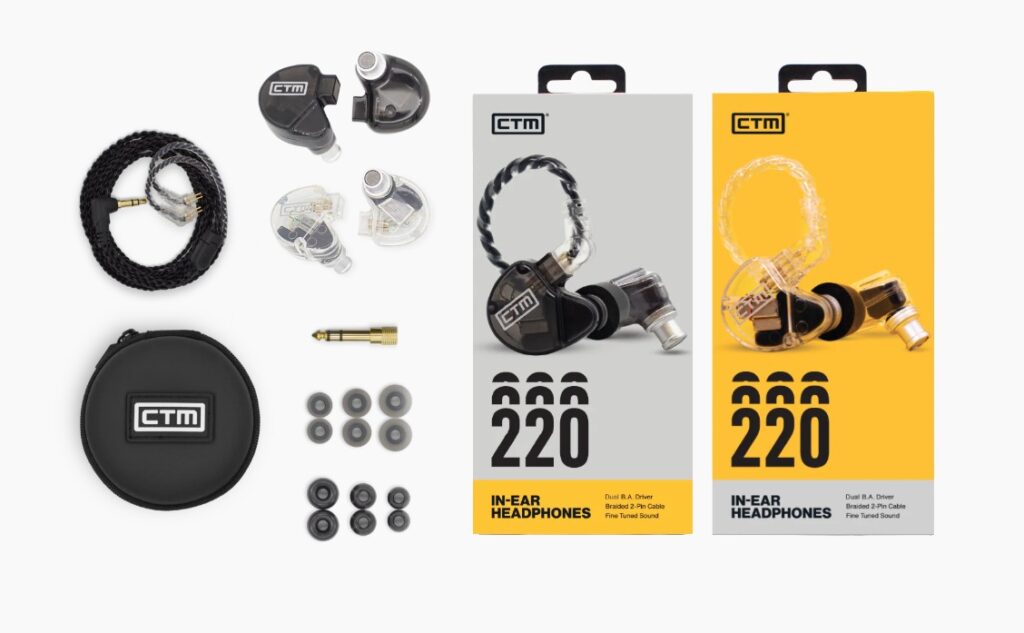 The Clear Tune Monitors CTM CE220 is a highly capable, entry-level professional in-ear monitor (IEM) that bridges the gap between everyday consumers and touring musicians.
Engineered with a dual balanced armature driver configuration, these monitors split the workload efficiently: one dedicated low-frequency driver generates a robust, punchy bass response that gives a solid foundation to the sound stage, while the second driver delivers warm, natural midranges alongside sparkling, airy highs. Vocals and strings are reproduced cleanly without harshness or fatiguing sibilance.
Comfort is a primary design pillar for the CE220. CTM utilized a unique scientific approach to craft a universal fit shell shaped by averaging data from their extensive library of custom-molded customers. The result is a highly ergonomic design that locks securely in the ear canal, ensuring a flawless acoustic seal even during active live performances. This structure achieves a remarkable -26 dB of passive noise isolation, easily blocking stage noise or ambient distractions.
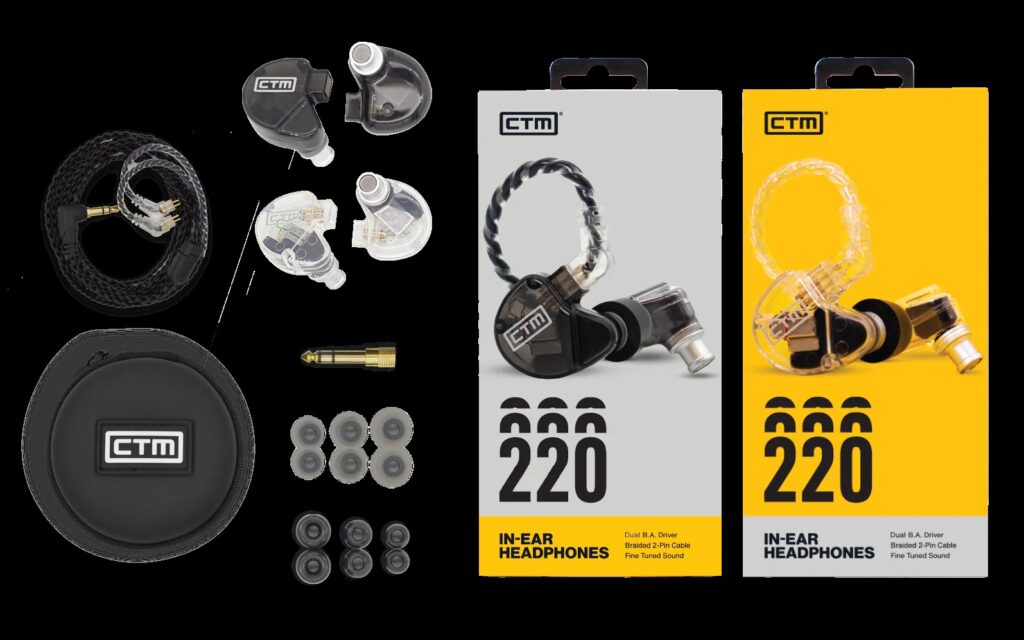
Built to last, the monitors feature a detachable 4-core braided copper cable using standard 0.78mm 2-pin connectors, offering excellent signal conductivity and easy replacement. Technically, they are highly efficient and easy to drive from any portable source, presenting a 20-ohm impedance, 124 dB SPL sensitivity, and a smooth frequency response ranging from 20 Hz up to 16 kHz. Sold with a protective zipper case, various ear tips, and a quarter-inch adapter, the CE220 stands out as an affordable, durable, and acoustically balanced tool for any stage performer or demanding audiophile.
Pros
Outstanding Comfort and Ergonomics: The shell shape—designed by averaging thousands of CTM’s custom ear molds—fits the ear incredibly well. They are extremely stable, don’t fall out during active stage movement, and cause zero fatigue after hours of continuous use.
Excellent Passive Noise Isolation: Offering a -26 dB noise reduction, this feature is highly praised by live musicians and commuters alike, as it efficiently blocks ambient noise without relying on electronic cancellation.
Warm and Musical Sound Profile: The tuning is coherent, leaning towards a smooth, analog signature. The mid-range sounds organic, and the highs are polite and airy, completely avoiding harsh peaks or piercing sibilance.
Punchy Bass for Balanced Armatures (BA): Unlike other BA-only monitors that can sound thin or dry, the dedicated low-frequency driver delivers a bass response with solid body, warmth, and impact.
Easy to Drive: With a 20-ohm impedance and high sensitivity, they perform beautifully straight out of wireless bodypacks, modest audio interfaces, or smartphones.
Complete Accessory Package: Includes a sturdy zipper case, a 1/4-inch adapter, and a generous variety of both silicone and foam ear tips.
Cons
Loss of Micro-details: By prioritizing a smooth, fatigue-free sound, some of the finest, hyper-analytical details in the high frequencies are sacrificed. They are not the most resolving IEMs on the market.
Slight Congestion (Muddiness): In very fast or complex musical tracks, the sound can feel a bit congested or “cloudy” in the transition between the bass and the lower mid-range.
Basic Plastic Build: While the polycarbonate shell (available in clear or smoke finishes) is robust enough for stage abuse, it looks and feels a bit plain or overly “plastic” compared to resin or metal competitors in the same price bracket.
Average Soundstage and Imaging: The 3D space and instrument separation are perfectly adequate for reference monitoring, but they do not particularly stand out when compared to similarly priced hybrid models from Chi-Fi brands.
Carlos Martin Schwab would like to thank Cesar Milano (Clear Tune Monitors) for his help in writing this article.
Two strobe tuners: Peterson StroboStomp HD and Fender Strobo-Sonic Pro
By Carlos Martin Schwab
If we divide a semitone into 100 cents, the average human ear can hardly perceive variations of less than 5 cents in a musical context. A standard pedal tuner (such as the BOSS TU-3) has an accuracy of ±1 cent. A strobe tuner has an accuracy of 0.1 cents. Let’s take a closer look at this.
 The fundamental difference between a strobe tuner and a conventional tuner lies in the nature of their measurements. While a standard tuner (needle or LED) averages the note’s frequency and displays a visual approximation with an accuracy of 1 or 2 cents, the strobe tuner operates in real time without processing latency.
Instead of interpreting the signal, a strobe model allows the input signal to interact directly with a light or wheel pattern, revealing minute harmonic discrepancies with an accuracy of up to 0.1 cents.
For a musician, this means that the conventional tuner is useful for quick adjustments during live performances, but it may overlook slight detunings that affect intonation. In contrast, the strobe tuner is indispensable for octaving instruments and professional recordings, as its display only stops when the frequency is mathematically exact, offering a level of sound fidelity that a standard digital sensor simply cannot achieve.
These tuners are extremely precise—so much so that they are used more for adjusting the technical intonation of the guitar than for a quick tune-up between songs.
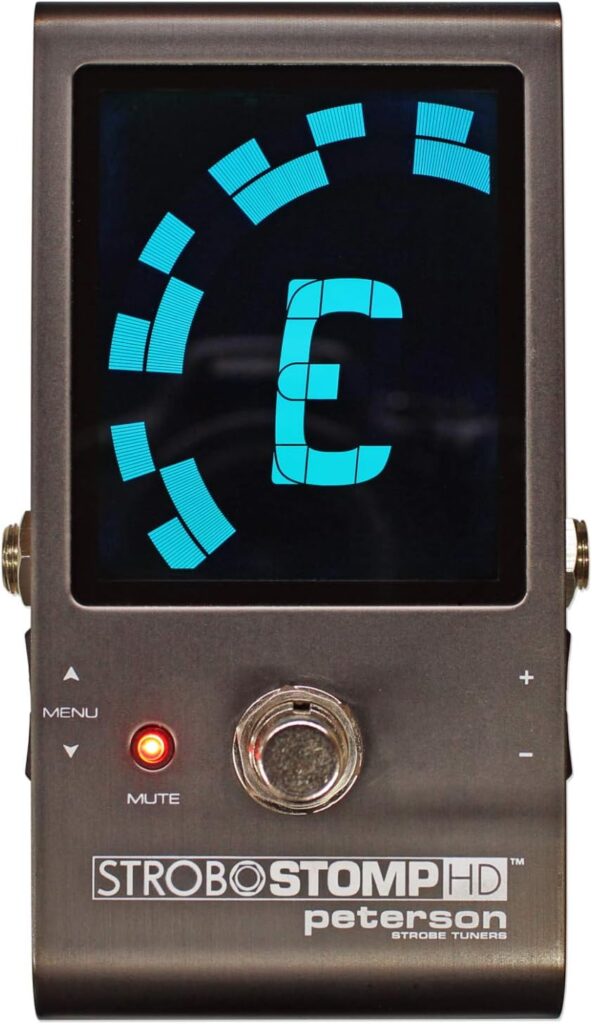
This strobe tuner is widely regarded as the gold standard in the world of tuning, offering unmatched accuracy of 0.1 cents. This pedal is not just an accessory, but a professional-grade tool that ensures every note is mathematically perfect, thanks to its true strobe technology in a compact and extremely durable pedal format.
Key Features
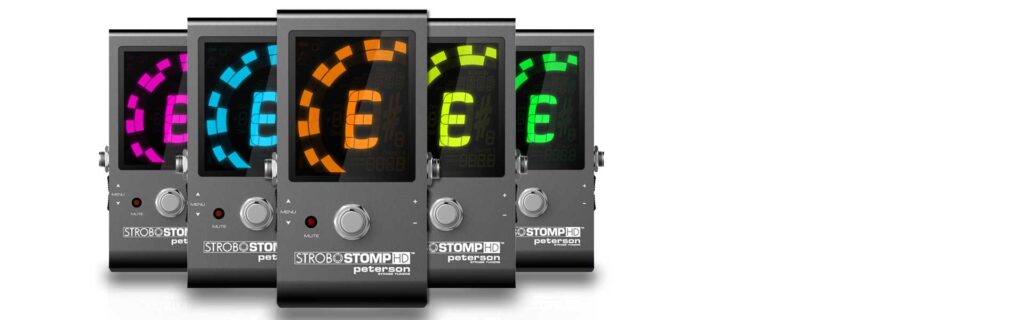
Configurable High-Definition Color LCD Screen: Features a large screen with customizable LED backlighting, making it easy to view in any lighting environment. The user-selectable colors can be used to personalize the tuner or to improve display visibility in varying ambient lighting conditions, depending on the usage environment. The vibrant screen colors can also be assigned to stock or user presets to significantly reduce menu navigation time and increase on-stage tuning confidence during a gig.
“Sweetened” Tunings: Includes 135 exclusive presets that optimize tuning intervals for specific instruments (guitars, basses, banjos, and even wind instruments). Its low-frequency note detection algorithm (such as for 5-string basses) is the most stable in the industry.
Signal Management: The integrity of your signal is vital, especially if you have many pedals. This tuner offers 3 pop-free operating modes: True Bypass, Buffered output (to maintain tone integrity over long cables), and a Monitor mode (tuning always visible) by setting the mode switch located in the battery compartment.
Power: 9V battery or DC jack. It can power other 9V pedals on your board via the power-through jack.
Professional users unanimously praise its ease of use, noting that the stroboscopic wheel is much more intuitive for fine-tuning than traditional needle meters. They also highlight its versatility, as it allows for firmware updates and the loading of sweetened tunings via USB. Although it requires a brief learning curve, it is the ultimate pedal for those seeking maximum harmonic fidelity both in the studio and on international tours.
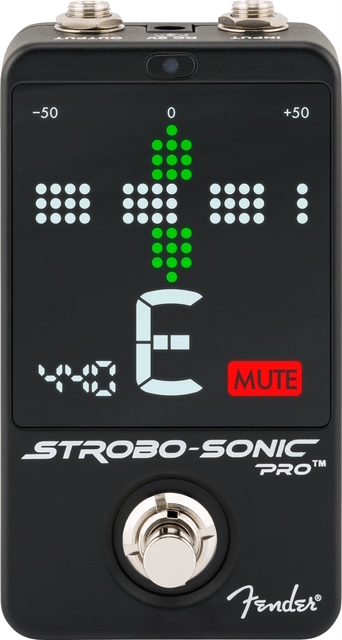 This is a high-end strobe tuner that redefines precision on stage. Sharing many features with its predecessor, this device stands out for its impressive accuracy of 0.1 cents, positioning itself as one of the most reliable tools on the market for ensuring perfect intonation, even in demanding studio setups.
Key Features
Its rugged aluminum design houses a 2.3-inch LED display with automatic brightness adjustment, ensuring full visibility in both dark stages and broad daylight. It offers two display modes: strobe (for maximum precision) and needle (for quick visual reference). A significant technical advantage is its bypass versatility, allowing you to choose between True Bypass, Buffered Bypass, or an always-on monitoring mode. Additionally, it features space-saving top-mounted connectors and power via 9V or USB-C.
Professional users praise its response speed, which eliminates the annoying lag found in other digital tuners. It does not have sweetened tunings, but it does allow you to calibrate the reference pitch between 430 Hz and 450 Hz. Reviewers agree that it is a direct competitor to the industry standard (Peterson), surpassing it for many in terms of ergonomics and ease of use. Its high-definition color LCD screen, which is its most useful feature, is extremely smooth and offers different display modes (including one that mimics an oscilloscope). It is, arguably, the most beautiful tuner display on the market.
More info: www.petersontuners.com and www.fender.com
Carlos Martin Schwab would like to thank Bob Potsic (Peterson) and Gabriel Madera (Fender) for their help in writing this article.