
Music is the universal language
“Glory to God in the highest heaven, and on earth peace to those on whom his favor rests.” - Luke 2:14
General Interest
Sully Guitars Adds 24-Fret Version of Singlecut ‘71 Trella

Sully Guitars is now offering a 24-fret version of its set-neck ‘71 Trella singlecut model. Builder Jon "Sully" Sullivan said, "The '71 addresses the issues I had with the classic singlecut while adding my own flair. The design celebrates its 15th birthday this year, and it's been rewarding to see it grow."
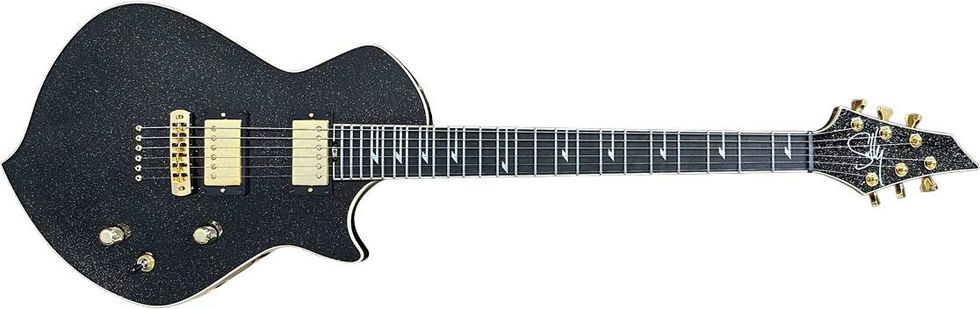
The new version adds two frets to the original 22-fret design. According to Sully Guitars, the upper-fret access and neck-to-body balance of the original have been maintained in the update. A '71 Trella 24 prototype has been used on tour by Smashing Pumpkins guitarist Kiki Wong, including on songs such as "1979."
Wong said: "The Trella is by far a work of art embodying all the beauty, versatility, and charisma I need from an instrument. It truly became one of my favorite guitars of all time."
Sully Guitars '71 Trella 24 specs:
- Body/top: Set-neck singlecut with carved top, now available with 24 frets (previously 22).
- Neck: Slim C profile, 24 stainless steel frets, contoured neck heel for upper-fret access.
- Hardware: Hipshot locking tuners; choice of Hipshot, TonePros, or Floyd Rose bridge; Sully's USA-wound pickups.
- Custom options: Sparkle finishes, heavy relic aging, custom inlays, and baritone scale lengths available.
- Build: USA Custom Series instruments are built by a small team in Texas, PLEK'd, and shipped with a handwritten certificate of authenticity from Sullivan.
Sully Guitars’ '71 Trella 24 has a straight price starting at $3,839. For more information visit sullyguitars.com.
On Bass: Are You Playing With Your Ears or Your Eyes?
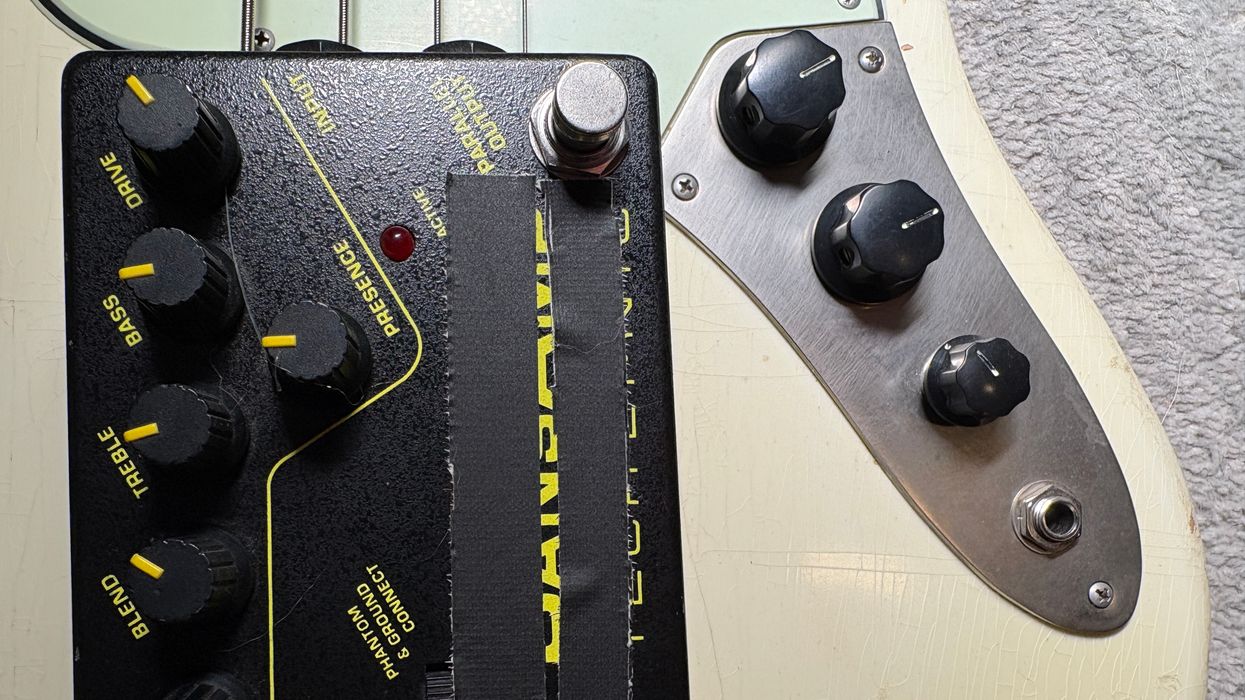
I was plugging away in my home studio recently and realized I needed to tune my bass. Within arm’s reach I have a rack tuner, a pedal tuner, and even a few clip-on tuners, but since my hand was on the mouse, I pulled up a tuner plugin within my DAW. The aesthetics on the tuner were great, from the pseudo brushed steel “housing” to the wide, beautifully visible strobe that danced nicely until I found my pitch. It was clear that out of the several DAW tuners I have, this one felt like someone wanted to give it a little more design attention than the others.
It’s a tuner. I get it.
What I also understand is marketing. My degree happens to be in marketing (world-traveling bass player was not one of the options at my college - I had to conquer that on my own), and as I spent many hours filling the plastic seats of my classrooms, I gained an understanding of how we are “nudged” toward certain products and when it comes to buying things, our eyes tend to drown out our other senses.
The MI (musical instrument) business is no different. Bass, amp, and pedal companies are all vying for your cash. They know what you are into. Or at least they think they know. They spend a lot of time designing products, sometimes for themselves, sometimes for the consumer. Either way, they are looking for an edge. There is a lot of trial and error, of course, and sometimes our eyes choose a product over all our other senses. Every company wants their product to stand out. Some follow trends and design for the current market (remember the relic’d guitar war of ‘14?), while others stick to their look forever (much like my dad’s haircut), come hell or high water.
“How many times have you turned your nose up at a particular amp based on the name plate or a guitar for its headstock shape?”
How many times have you turned your nose up at a particular amp based on the name plate or a guitar for its headstock shape? How often are we brand-biased and not sonically driven? Often, I think.
When I moved to Nashville two decades ago, I auditioned for a touring indie artist, and thankfully landed the gig. Before the tour, the MD took me aside and said he wanted to see a P-bass in my hands, not the active 5-string I used in the audition. I had other passive 4-strings that were great, but no, he wanted a P. After settling in town, I also learned that producers were looking to see a certain name on the headstock, no matter the tone or pedigree of the bass being played.
There is certainly an argument for a “tried and true” tone formula; however, I know some bass players that can track master recordings with a broom handle and twine, headstock shape be damned. We shouldn’t let a logo run our lives. I like certain features, I like certain tones, and I also like to root for the underdog. We certainly should give all instruments a fair trial before finding them guilty of not being ‘good’.
I have a $10 no-name garage sale bass that I have used on recording sessions. I’ve seen your favorite bands filling arenas running original red Line 6 “bean” PODs and dummy cabinets onstage. If you are using your ears instead of your eyes, you may free yourself a bit.
Variety is the spice of life. No doubt. We aren’t in a Henry Ford era where all the guitars are simply one design, one pickup, and painted black (and thankfully so). We have different musical needs and tonal requirements, so we inevitably search for “the sound,” or the workhorse, or the feature-packed entity that will quench our thirst. We have limitless wood/electronic configurations at our mail-order beck and call, and in the same breath, it is very easy to become a trail horse and only see what we want to see.
Do yourself a favor: go to a local store and pick up an instrument or try a brand you have ignored in the past. Close your eyes and listen. You may be surprised.
The Truth About Vintage Amps, Ep. 169
It’s the 169th episode of the Truth About Vintage Amps, the call-in show where amp tech Skip Simmons fields all of your tube amp and life questions. This week, returning guest Steve Soest joins us for a chat about the vintage days of vintage guitar buying; playing alongside Chuck Berry and Dick Dale; Leo Fender’s dining habits; and more.
Thank you to our sponsors: Grez Guitars; Emerald City Guitars; and Amplified Parts / Mod Electronics.
Some of the topics discussed this week:
:55 What’s on Skip’s Bench: A messed-up Masco MA-17
4:06 Special guest: Guitar and amp legend Steve Soest (Soest Guitars)! A meeting of the amp minds, Danelectro tales, Standel heads, David Lindley, G&L, consulting for Fender, Dick Dale tales, and so much more!
1:16:25 A possessed Ampeg, redux
1:18:26 Skip’s Disney picks
1:20:57 The Tone Quest Report
1:22:58 Woodinville in the WSJ
1:24:43 Gain knob/master volume 101, cleaning Tolex
1:34:02 Hollywood Bob’s Bandmaster
Want amp tech Skip Simmons’ advice on your DIY guitar amp projects? Want to share your top secret family recipe? Need relationship advice? Join us by sending your voice memo or written questions to podcast@fretboardjournal.com! Include a photo, too.
Want to support the show? Join our Patreon page to get to the front of the advice line, see exclusive pics, the occasional video and more.
Hosted by amp tech Skip Simmons and co-hosted/produced by Jason Verlinde of the Fretboard Journal.
Above: What Skip removed from his client’s Masco PA.


The post The Truth About Vintage Amps, Ep. 169 first appeared on Fretboard Journal.
Eric Gales Goes Months Without Playing Guitar
The blues-rock guitar star sits down with PG's Nikos Arvanitis discussing his growth as a player (including prioritizing time away from the instrument), finding inspiration in figures outside of music, engaging with the social-media phenoms for a motivational challenge, and explaining why his partnership with Kiesel is a perfect fit. Sponsored by: https://stewmac.sjv.io/APO2ED
Tokai Hard Puncher Review
When my editor approached me about reviewing this bass, I had a very visceral sensation of being 12 years old again. That’s when I started playing bass—and perusing basses in a Swedish mail order catalog that had everything from home improvement tools to musical instruments. I distinctly remember scanning that catalog, once upon a time, and spotting a Precision Bass lookalike called the “Hard Puncher,” which, I suppose, sounded much more heroic to a non-native, beginning-English speaker than “P-Bass.”
The Hard Puncher, as it turns out, was made by Tokai, a Japanese manufacturer of what are now known colloquially among collectors as “lawsuit guitars.” Tokai’s instruments were more than just catalog eye candy for European and American players that couldn’t afford a real Fender or Gibson. Most Tokais of the ’70s and ’80s were also exceptionally well-made instruments. So, when the company ceased exporting instruments in the ’90s, it left behind a dedicated cult of fans. That cult is bigger these days, and Tokais are no longer cheap, secret sleepers among the collector set. Good ones fetch pretty hefty prices. So, it’s little mystery that Tokai is having a go at exporting these Japan-made gems again—this time with a push from Audio Collective Group, a distribution company founded by Warm Audio.
Picking Up Where They Left Off
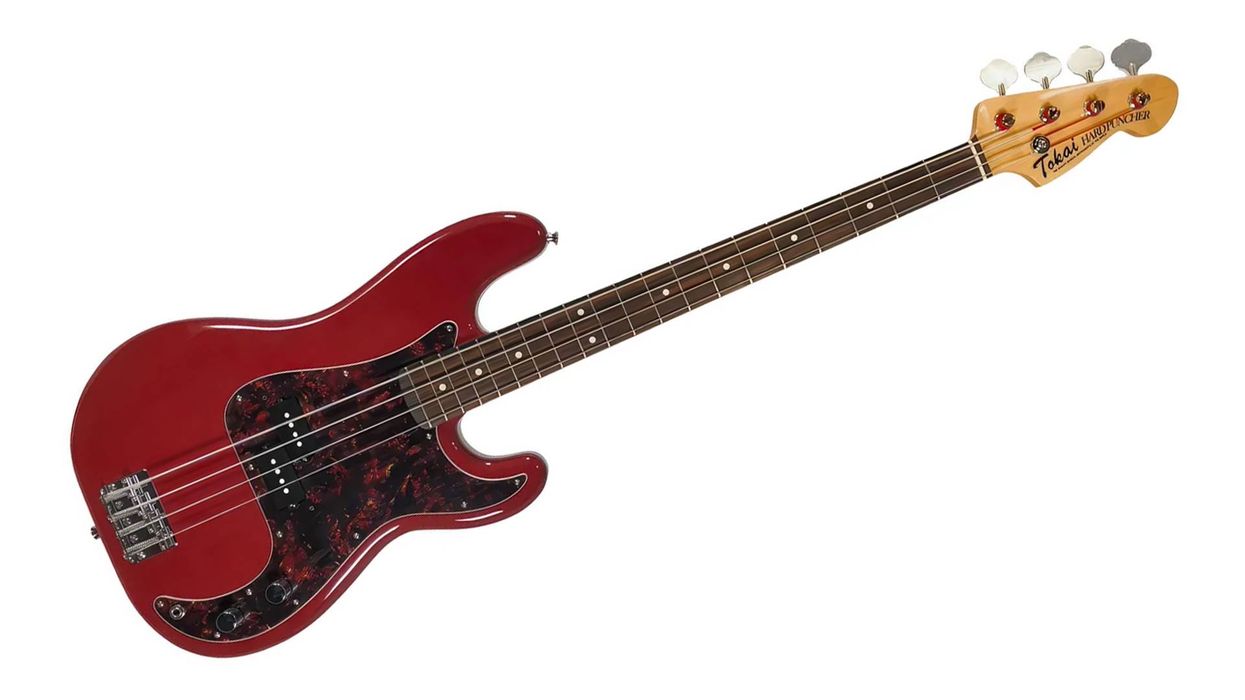
The quality that makes original Tokais minor treasures is recognizable here by feel alone. Fretwork, the neck joint, and the bone nut seat are all tight and solid. The gloss polyester finish is rich and very well executed in a deep dakota red with hints of brown and oxblood that looks fantastic against the red tortoiseshell pickguard. Options abound, though—the new Hard Puncher is available in seven different finishes, and Tokai even offers a choice between alder and ash for bodies, and maple and rosewood for fretboards. (You can select these options on the Tokai website, which, in turn, directs you to a dealer with an instrument that matches your order.)
The 1-piece maple neck is U-shaped and employs a fairly thin slice of rosewood for the fretboard, if you opt for one. The neck has a very nice profile for those of us without large hands, and the compound 7.25" – 10.25" radius lends a natural feel under the fingers. But the neck is also reminiscent of real 1960s-vintage Fender Precisions I have known. As nice as that vintage familiarity is, I wouldn’t complain if Tokai opted to eschew authenticity and use a satin finish on the neck instead of the glossy one on our test instrument. But thanks to the general profile, the feel is fast.
More Extra Effort
Though the basic fit and finish on our Hard Puncher was easy to observe, I was impressed by deeper details—like how carefully the pickups were set up. The E-string side of the P-bass pickup was screwed deeper into the body than you tend to see from most manufacturers. This is the very first adjustment I perform on any bass I buy to compensate for naturally louder low E-strings. The move suggests to me that the folks at Tokai are hip to real-world performance challenges as well as pure aesthetics. It’s a nice thing to see.
The action was great, too—neither too low nor too buzzy. And like the pickups, the careful adjustment meant one less change to make before I took the Hard Puncher on the road or to a session. It’s easy to imagine living with the instrument onstage in most other practical respects, too. It’s comfortable, the medium weight feels good, and it’s very well balanced. Perhaps the only disappointment with the design is that the truss-rod access is a little too much like a vintage P-Bass. You can’t make an adjustment without removing the pickguard first. That’s not a big deal for many players, but as a touring professional who travels between drastically different climates, frequent and easy truss rod adjustment is pretty important.
Force and Flexibility
Rumbling through an amp with tone and volume wide open, the Hard Puncher rewards with a rich, punchy, classically P-bass sound. It’s free of the upper-midrange honk that plagues some P-styles, but retains the immediacy and low-mid emphasis in transient notes that a great P-style should have. Just as importantly, the upper notes on the neck have real body and strong sustain, while the lower notes never feel muddy or too big. The output is just very balanced.
It’s very easy to shape the output from that foundation, too. The tone control has a very usable sweep that allowed me to carefully shape the top end I wanted to tame, rather than just going fully bright or completely dark, which happens in some affordable basses. Dark tones still exhibited great sustain, by the way, which perfectly suited my reggae experiments with the Hard Puncher.
As a player who performs a lot of rock shows, I want to know that a P-style instrument will sound big, warm, and almost piano-like in that setting—particularly with a pick. To find out if this was the case with the Hard Puncher, I swapped the nickel-coated strings that came with the bass for steels. The new set really made the Tokai come alive, without sounding too bright—even on the thinner strings. As you might have suspected, it’s a great rock machine
The Verdict
The Hard Puncher’s $1,499 street price puts it in a very competitive bracket. But I think there’s room there for a high-quality, Japan-made instrument like this. The tones are super solid. The feel inspires confidence from a playability and quality standpoint. Plus, there’s just something hip about a Tokai. It’s a cool way to break from the pack, but it’s also just a great performer with a familiar, even vintage-like feel. Even in a crowded product space, the Hard Puncher screams “contender!”
“It’s what we’ve been looking forward to for 21 hours of the day”: Slash on why Guns N’ Roses still love touring and have no plans to stop

For a band that has spent decades on the road, Guns N’ Roses still sound pretty enthusiastic about the prospect of getting onstage. And according to Slash, that enthusiasm comes down to keeping things fresh and, above all, making sure the band still enjoys what it does.
Speaking to New York rock station Q104.3, the guitarist was asked how Guns N’ Roses keep fans engaged after all these years. His answer was refreshingly simple: “We just sort of do what we do.”
“We throw different things in,” Slash continues. “[But] I think we’re more about keeping ourselves, you know, sort of inspired and having a good time and keeping it fresh for us and then we just come out there and do our thing.”
That enthusiasm becomes particularly apparent once the band reaches the venue. Slash explains that while the travelling and waiting that comes with touring isn’t exactly exciting, once they’re there and ready to play, it’s a different story.
“We’re one of those bands that has been around for a long time, but really loves what we do,” he says. “We spend most of our time humming and hawing about traveling until we get to the venue and then we finally get to get unleashed, and, you know, it’s what we’ve been looking forward to for 21 hours out of the day.”
The band also leaves plenty of room for spontaneity in its setlists. Instead of locking themselves into the exact same sequence every night, Guns N’ Roses keep a large pool of songs ready to go and decide what to play as they go.
“We don’t really have what you call a setlist either,” Slash says. “We have an opening song, we have an ending song, and we have a lot of tentpole songs that we’re going to play. And then we mix a lot of stuff up.”
He adds that the band has around 50 songs to choose from, pulling from across their catalogue each night.
In other news, Slash recently revealed that Guns N’ Roses are have been working towards the long-awaited follow-up to 2008’s Chinese Democracy.
“There’s a lot of writing going on with Guns,” the guitarist told Rolling Stone Australia. “So after I get back from [touring with The Conspirators], we’ll see if [Guns N’ Roses] can start putting some stuff together and getting in the studio.”
The post “It’s what we’ve been looking forward to for 21 hours of the day”: Slash on why Guns N’ Roses still love touring and have no plans to stop appeared first on Guitar.com | All Things Guitar.
Guitar Center CEO says they’ve turned their stores into “a theme park for musicians”

Guitar Center CEO Gabe Dalporto wants its stores to be “a theme park for musicians”. It might sound like a fairly ambitious way to describe a chain of music shops, but the company has been putting that idea into practice, creating spaces where musicians can stick around, try out gear and connect with other players.
And so far, the numbers suggest the strategy is working. Guitar Center has recorded nine consecutive quarters of positive growth, with its most recent quarterly sales up 5.2% to $635 million [via Bloomberg]. Time spent across the brand’s roughly 300 stores is also up 16% year over year, while foot traffic has increased for the first time in more than a decade.
Much of that turnaround comes down to a fairly simple idea: make Guitar Center a place where people “want to come and play”.
Speaking to Modern Retail, Dalporto – a guitarist himself – says the company had drifted away from its core audience before he became CEO in 2023. Around 70% of its merchandise was made up of lower-end, entry-level products, despite its most dedicated customers being musicians for whom playing music is “a big part of their identity”.
Guitar Center has since flipped that ratio, with around 70% of its inventory now aimed at “serious musicians”. But it isn’t just about filling the stores with more expensive gear. The company has also made its instruments easier to try, moving guitars and keyboards to eye level, unlocking them and setting them up so customers can actually play.
“If you’re trying guitars, you’re going to try 10 or 15 of them before you find the one you like,” Dalporto says. “Imagine just the terrible experience that is [when products aren’t immediately available].”
The retailer has also put more emphasis on knowledgeable staff after previously scaling back employee training. The result, says Dalporto, is an “experiential environment, with knowledgeable people and great products”.
That experience doesn’t stop at the guitar wall. Guitar Center now runs monthly workshops covering subjects such as modifying guitars and building pedalboards, while individual stores have hosted events with musicians and producers including Smashing Pumpkins guitarist Kiki Wong and producer Zaytoven.
For Dalporto, those events are also a way to make Guitar Center feel like a local music shop rather than a standardised retail chain.
“What we’re trying to do is to engage with all the incredible local musicians in all of our markets locally and provide a national stage for them,” the exec says. “The last thing we want to be is Best Buy – a completely and utterly standardised national box retailer. We want to feel like the local music store who has deep personal connections with local artists.”
That same musician-first approach is now feeding into Guitar Center’s own gear. The retailer is developing a new private-label guitar, but Dalporto isn’t interested in simply slapping the Guitar Center name on another familiar design.
Staffers initially suggested making a version of a Fender Telecaster but Dalporto believes “the last thing the world needs is another Telecaster.”
Instead, the company is asking guitarists what they actually want from a modern instrument through its r/GuitarLab subreddit, where Dalporto and Guitar Center engineers have been gathering feedback on everything from hardware and controls to players’ frustrations with existing guitars.
The retailer is also experimenting with AI, although again with the aim of supporting musicians rather than replacing the human element. Earlier this year, Guitar Center launched Rig Advisor, an AI tool that can answer questions such as, “I want to sound like Jimi Hendrix on Purple Haze. What should I play?” The company is also giving employees access to ChatGPT and using AI to help train staff and improve its guitar-lesson operations.
Still, Guitar Center’s turnaround is far from complete. The company continues to carry significant debt and while the wider guitar market is dealing with pressure from tariffs and shifting consumer spending. But Dalporto believes the retailer has an advantage that online stores can’t easily replicate: giving musicians somewhere to try gear, meet other players and simply hang out.
“We don’t want to be the place where you just come and buy your string instruments and leave,” he says. “We want to be the place where you feel comfortable hanging out, playing [guitar], forming bands. … We’ve invested hugely in making Guitar Center a theme park for musicians.”
The post Guitar Center CEO says they’ve turned their stores into “a theme park for musicians” appeared first on Guitar.com | All Things Guitar.
Guitarist apologises after guitar-throwing stunt sends audience member to hospital

Japanese punk outfit Otoboke Beaver have apologised after guitarist Yoyoyoshie threw a guitar into the crowd at a show earlier this year, accidentally striking and injuring an audience member.
The incident happened during the band’s April show at Umeda Club Quattro in Osaka, Japan. The audience member was taken to the hospital by ambulance, where they were treated for a forehead laceration requiring seven stitches, as well as a cervical sprain.
Otoboke Beaver addressed the incident publicly on 11 August, writing on Instagram that they “wish the injured person a full recovery” and acknowledging: “we caused this accident.”
Beyond the physical injuries, the band said the incident had also caused the fan “significant emotional distress”.
The group – comprising singer Accorinrin, guitarist Yoyoyoshie, bassist Hirochan and drummer Leo – also admit that their response in the aftermath was not as swift as it should have been.
“Coordination between us and the staff member entrusted to act as the point of contact that day, as well as our follow-up response, was not prompt, resulting in a delay to both our direct apology and public statement.”
They added that the apology was being made “in good faith” before concluding: “We are truly sorry.”
The Osaka show was a significant one for Otoboke Beaver beyond the incident, as it marked a farewell to former drummer Kahokiss, who stepped away from the band to go on maternity leave. She was subsequently replaced by Leo.
The post Guitarist apologises after guitar-throwing stunt sends audience member to hospital appeared first on Guitar.com | All Things Guitar.
Soundgarden’s Kim Thayil says it’s “emotionally draining” working on new material using vocals Chris Cornell recorded before he died

Soundgarden’s Kim Thayil says working on new material featuring Chris Cornell’s vocals has been a draining experience, but feels it would be a “disservice” to the fans and the band for them not to release them.
Cornell died by suicide in May 2017. Thayil revealed last year that the bwere planning to release the final album they worked on with Cornell before his passing, and that it had always been a goal for them to complete the record as a gift to the fans, and to Cornell too.
Now, speaking to Guitar World, Thayil shares that the process has been challenging emotionally, but exciting at the same time. Though he confirms they do not have a release date in mind yet, he does say it will “definitely sound like Soundgarden”.
“It’s emotionally draining and there are things about it that are sad and melancholic. But at the same time, it’s exciting to finish the work that we started with Chris. It’s a tribute to Soundgarden and a tribute to Chris. To not do this would be a great disservice to everyone, including the fans who knew we were in a writing cycle while we were touring,” he states.
“I made an aphorism earlier about having too many cooks in the kitchen. Well, now we have one less. But we have these recordings Chris is on, and we all have a strong understanding of Chris’ identity within the band, so we are going to honour that completely, even though Chris isn’t there to throw in his two cents. So, yes, it will definitely sound like Soundgarden and I’m going to sound like me.”
Last month, Taylor Momsen of The Pretty Reckless shared her thoughts on Cornell’s work, and how it had impacted her life. The Pretty Reckless supported Soundgarden on their final tour with Cornell.
“I’ve listened to his solo work and to Soundgarden so many times, but every time I listen to them, it evokes something different in me,” she told NME.
“There is the sheer amount of depth and sensitivity and aggression… [but] also, it’s so smart. It’s musically exquisite and complex — like this never-ending onion where you discover something new about it and about yourself every time you listen to it. I think that is so powerful and so fucking rare. It’s coming from a place that’s so deep and so powerful that it touches your soul.”
The post Soundgarden’s Kim Thayil says it’s “emotionally draining” working on new material using vocals Chris Cornell recorded before he died appeared first on Guitar.com | All Things Guitar.
“I think you should stay there”: The great reason why Joe Bonamassa changed his mind about Jared James Nichols borrowing his guitar gear
![Jared James Nichols [main image] and Joe Bonamassa [inset]. Both are photographed on stage playing guitars.](https://guitar.com/wp-content/uploads/2026/08/jared-james-joe-bonamassa@2000x1500-2.jpg)
Jared James Nichols has been offering fans a peek behind the curtain on his new album, Louder Than Fate, and how a visit from Joe Bonamassa reframed both of their views on the amount of gear that should be used on a track.
Bonamassa has quite the reputation as a gear connoisseur, as his mighty Nerdville museum proves, but when he bought an entire rig over for Nichols to use on a track for his new album, the pair eventually settled on a less is more mind set, with a minimal set up.
- READ MORE: “Those amps are part of the DNA of rock music”: Jared James Nichols on becoming a Marshall endorsee
In an interview with Guitar World, Nichols says his use of gear forms not much of a long list “beyond the cable”. Though small and concise, he definitely utilised some pretty cool gems within his rig.
“I had the plexi and this special amp from Blackstar that’s a one-of-one, point-to-point handwired Series One. They’d made it for Jeff Beck but never got it to him. It’s more aggressive than the plexi, like an old JCM800. I used my Tube Screamer and for Runnin’ Hot I borrowed this [Electro-Harmonix Small Stone] big box phaser from the early ’80s,” he shares.
“The main guitars were Dorothy [his 1952 Les Paul Goldtop] and this Korina Futura for all the big-ass humbucker parts. I didn’t have to search when it came to tone. It’s funny; I remember doing this track with Joe Bonamassa, and he brought his whole rig over, saying to use whatever I needed. I brought my Marshall head, Dorothy and my Klon and started testing out tones with my stuff before asking him what I should try. His answer was, ‘I think you should stay there.’ That was it. I try not to overcomplicate things.”
Further speaking on his bond with Bonamassa and the Blues Titan’s connection to rare gear, Nichols looks back on the time he went to Bonamassa’s house to film a video on Gary Moore’s 1989 Soldano SLO-100 amp head (which you can watch below).
“Joe must have balls of steel because the amp hadn’t been serviced or even turned on. It literally just showed up in a shipping crate. It was like finding a classic muscle car, sticking some gas in and firing it up. Joe was cranking it right away with a 1959 Les Paul. In the video you can see the power sizzle down, shut off, then come back. It did that a few times. It’s like we were feeling Gary Moore’s spirit in the room,” he remembers.
Jared James Nichols’ Louder Than Fate is out now. Head over to his official website to find out where you can stream the album or buy a copy.
The post “I think you should stay there”: The great reason why Joe Bonamassa changed his mind about Jared James Nichols borrowing his guitar gear appeared first on Guitar.com | All Things Guitar.
Gretsch G2622TG Streamliner Ltd Ed Center Block Double-Cut with Bigsby review: “there are a million and one songs trapped inside this guitar, impatiently waiting to be unleashed”

$739/£549, gretschguitars.com
Gretsch guitars have always stood in a fascinating corner of the guitar world. Even music aficionados without a guitar-playing background know what a Stratocaster is, what it does, how it looks, and the fact Hendrix played one upside down. Similarly, fans with a penchant for the heavier side of the rock spectrum know the Les Paul ‘Burst in the gifted hands of Slash and Jimmy Page.
Gretsch guitars, however, have always seemed to exist in their own lane. From George Harrison’s early Merseybeat-jangle, to Tom Petty & The Heartbreakers’ signature songcraft, and Neil Young’s raw, jagged riffs, Gretsch guitars have become the choice for players who prioritise character over familiarity.
Into this comes the new Limited Edition G2622TG Streamliner – a guitar that seemingly offers a very affordable route to that rich heritage, with visuals that lean towards the most famous Gretsch big-bodied guitars, but will the reality match up to the first impression?
 Image: Adam Gasson
What is it?
The Streamliner designation of the ever-catchily named G2622TG means that it sits at the bottom of Gretsch’s three-tier production range after the Electromatic and premium Professional, but in truth you’d never notice from a distance. This is a beautiful instrument with the fancy elegance that has set the brand apart from the more utilitarian charms of its competitors.
In practice, that means a beautifully measured double-cutaway design finished in Vintage White (though the Midnight Sapphire option is also lovely), and paired with all the shiny gold hardware you could ask for. Some would say that a Gretsch is never fully dressed without a Bigsby, and here we get a lovely licensed B70 wobbler to pull the whole thing together.
The iconic “G” arrow logo on the control knobs never fails to make me smile, and the master volume knob includes a push/pull coil split option for extra Beatle-y twang when needed.
 Image: Adam Gasson
Usability and build quality
When the G2622TG landed in my hands, before I even played a note, I had an immediate sense that Gretsch might have hit a home run. It looks, feels, and sounds far more premium than its asking price would suggest.
The laminated body feels solid, and is wonderfully resonant, providing that airy sound that semi-hollow body players expect. The soft ‘C’ shaped neck nests comfortably in the hand, and the 22 nicely finished medium-jumbo frets give a sense of familiarity to the fingers for long-time Gretsch-heads. Combined with a low, comfortable action out of the box, they never get in the way and are an ideal bed for a wide-style of approaches.
Then, there’s the golden elephant in the room: the Bigsby B70. Many guitar purists still shoot a side-eye towards the B70, and other die-cast, affordable Bigsby ‘licensed’ models. After all, the B70s are manufactured overseas and cost a fraction of their US-made B7 counterpart. However, as we sit here in 2026, I think the B70 and B7 are almost identical in use.
Yes, the B7 is a touch heavier, and feels a tad more solid, but I barely notice a difference when comparing the two. The fact that a vibrato of this quality is bolted on to the G2622TG at this price point is still staggering to me. That expressive wobble is synonymous with thousands of classic recordings and should not be seen as merely an afterthought. It provides exactly what you’d hope – some slight shimmer and movement, without turning tuning into your new full-time job.
The controls are laid out in the typical Gretsch fashion, which is to say slightly different to the classic Gibson four-knob method. What you get instead is a volume knob per pickup, a master tone knob, and the previously mentioned, and extremely welcome push/pull coil splitting master volume knob.
In practice this means that the two pickup volumes are only really needed for blending, or if you want to use the volume to roll some of the gain off a sound on one pickup. The master volume is likely all you’ll need for actually controlling volume.
 Image: Adam Gasson
Sounds
This guitar’s tonal palette is fairly wide, whilst never sacrificing its character. That semi-hollow resonance instantly makes itself heard when plugging in – chords ring with authority, and lead lines are clear and articulate, with some satisfying snap about them in coil-split mode. To put it bluntly, this guitar sounds incredible. It just oozes Gretsch DNA and character.
The Broad’Tron BT-3S humbucking pickups are versatile, to a point, offering suitably punchy mids and predictably sparkling highs. Provided that you’re not going to push this thing into high gain territory, it can cover a lot of the rock-adjacent bases with aplomb.
The bridge pickup is clear, bright and spanky, with the sort of cutting midrange that makes it a usable clean twanger while also having plenty of ability to cut through when you start piling on the gain. Again, don’t expect to have your mind blown by the clarity and punch with excessive gain here, but everything up to this point sounds fantastic.
The neck pickup is a much thicker, more rounded affair that really shows its mettle when you add some distortion to proceedings – it’s chewy and meaty, and really suits bluesy lead lines.
The middle pickup offers a nice blend of both worlds that seems to be begging you to lean into the Hermanos Gutierrez vibes, add a bit of reverb and slapback, and start putting the Bigsby through its paces. It’s got a nice compressed quality when you add a bit of fuzz into the mix too.
Speaking of the Bigsby, provided that you don’t throw yourself too recklessly into extreme wangling, it stays in pitch nicely enough, though the nature of the beast means that its best suited to polite wobbles if you want to keep things in tune.
The coil-split does what you’d expect it to, bringing even more spank and twang on the bridge pickup, though you do lose a lot of the low-end – you have to be careful how and when you deploy it because there’s a real risk of things getting a little shrill here.
The middle and neck positions are more forgiving, and the blended sound in particular really opens up the sound, adding in some single-coil airyness to proceedings that can work really well as a contrast. Nobody is going to be mistaking this for a Strat any time soon, but it’s a nice extra option to have.
 Image: Adam Gasson
Should I buy one?
The Gretsch G2622TG Streamliner won’t be for players angling for tonal neutrality, or an ultra-modern feel and aesthetic. Instead, those wanting to immerse themselves into the world of Gretsch, with an instrument that is bold in character and elegant in design, this is the guitar for you.
Above all else, this just feels like it has the raw materials to take you on a journey as a musician and a songwriter. It’s a cliche to say that this guitar feels like it has songs in it, but that was my experience every time I picked it up to play.
The quality of its tones, the playability, and the versatility here means that you can easily find yourself coming across fresh inspiration, and there’s something so refreshing about that – especially for a guitar that is so competitively priced.
The $799 outlay not only gets you a guitar that looks, sounds and feels high-quality, but also grants you a lifetime membership into the Gretsch players club. The G2622TG doesn’t just make you want to play it over and over – it reminds you exactly why you fell in love with guitar in the first place.
 Image: Adam Gasson
Alternatives
The natural semi-hollow competitor for the G2622TG is, of course, the ES-335, and Epiphone’s version ($599/£599) is a very good guitar for the money. Another affordable take on the semi-hollow with bags of vintage pedigree is Guild’s Starfire I DC ($599/£659), while D’Angelico Premier DC ($799/£699) is another semi with a name from the annals of guitar history.
The post Gretsch G2622TG Streamliner Ltd Ed Center Block Double-Cut with Bigsby review: “there are a million and one songs trapped inside this guitar, impatiently waiting to be unleashed” appeared first on Guitar.com | All Things Guitar.
MXR Flanger/Doubler Returns As A Stompbox
Esoterica Electrica: What a Neck Joint Says About Your Guitar
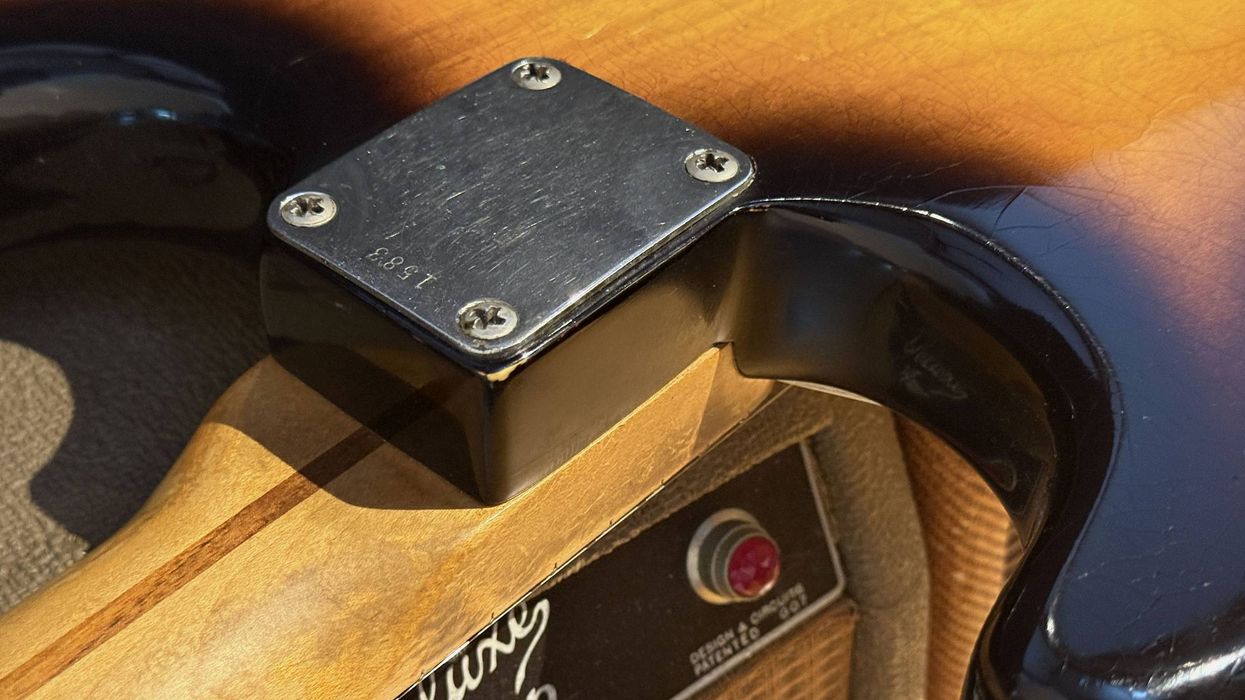
The history of the bolt-on guitar neck joint is often told as a Leo Fender story, but it’s really about how replaceability and modularity came to the guitar sphere. Despite that, beneath every argument about sustain and resonance lies a deeper question: what kind of object is a guitar supposed to be?
For centuries, the answer seemed obvious. Long before the electric guitar existed, stringed instruments were built around the assumption that neck and body belonged together. Violins, cellos, lutes, and classical guitars employed mortise-and-tenon or dovetail joints secured with hide glue, creating an intimate union between the instrument’s major structural (and tone producing) components. Early steel-string acoustics and carved archtops inherited this tradition without question. The glued neck was not merely a construction method; it was part of an entire philosophy of instrument making. A guitar was conceived as a singular object, born whole and expected to age as such. Even the cast aluminum Rickenbacker “Frying Pan” from 1932 was a single piece, taking the concept to the max.
In that world, repair itself reinforced the idea. Neck resets and delicate joint work were accepted rites of passage in an instrument’s life. A neck might be removed, but only through a skilled and somewhat invasive process. The relationship between neck and body resembled marriage more than assembly—with all the benefits and arguments.
Then came Leo Fender.
To be clear, guitars with screw or bolt-on necks had been marketed as early as the 1920s. The Stromberg‑Voisinet/Kay Kraft archtops from the 1930s even featured adjustable neck pitch. But when Fender introduced the Telecaster, it introduced a radically different understanding of guitar manufacturing. It was not conceived as an acoustic ideal. It emerged from the practical logic of Detroit industry. Bodies and necks could be fabricated separately, finished separately, inventoried separately, and united at the final stage of production. Repairs became simpler and cheaper. Variability became manageable. Most importantly, the neck ceased to be a permanent partner and became a module. This conceptual shift is difficult to overstate. Fender transformed one of the guitar’s defining structural elements into a replaceable component. Four screws and a neck pocket accomplished what centuries of instrument-making tradition had never contemplated.
The industry soon divided into two distinct cultural camps. Bolt-on instruments became associated with practicality, clarity, and twang. Elsewhere, companies like Gibson, Gretsch, Guild, and Rickenbacker doubled down on set-neck construction. There, the fixed neck remained a symbol of continuity with violin-making traditions, craftsmanship, and legitimacy. Over time, these manufacturing decisions hardened into mythology. But whether or not the physical reality justified such certainty is debatable, the cultural meanings endured and became codified.
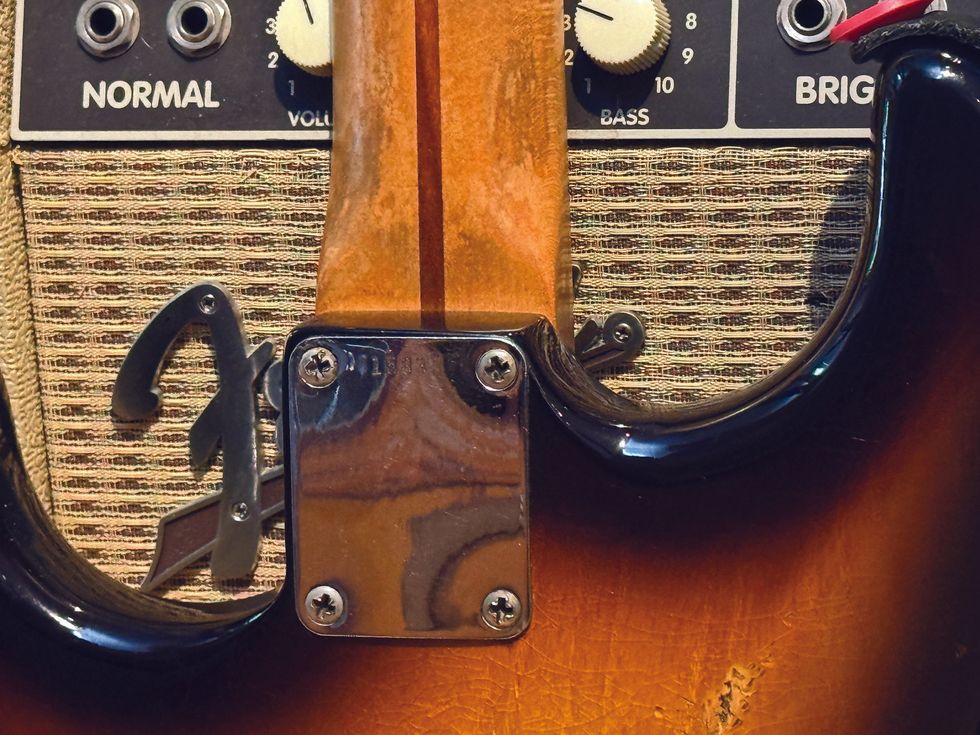
As decades passed, both approaches have evolved. Early bolt-ons were bluntly functional: flat pockets, wood screws, and steel neck plates. Still, builders set about refining the concept. CNC machining produced neck pockets of remarkable precision. Sculpted heels softened the once-abrupt transition between neck and body. Machine screws threaded into metal inserts pushed mechanical consistency beyond what Leo Fender (and vintage purists) felt necessary.
Set-neck construction has evolved as well. Traditional dovetails have given way in many production environments to more standardized mortise-and-tenon joints. Technology brought unprecedented consistency to neck angles and joint geometry. As both systems matured, many of the practical differences narrowed. A well-executed bolt-on could feel seamless. A precisely fitted set-neck could be astonishingly consistent. The old assumptions survive largely because they have become part of guitar culture itself.
Repair reveals the deepest distinction. A bolt-on remains fundamentally serviceable. Neck replacements, profile changes, and even scale-length experiments can be relatively straightforward. A set-neck guitar, meanwhile, remains committed to permanence—its repairs are often more invasive, and potentially more expensive.
Existing in the background of this long-standing debate is the neck-through design, the logical endpoint of continuity. Here, the neck is no longer attached to the body in the traditional way. It becomes part of the body, extending uninterrupted beneath the bridge and pickups. Utilized by makers like Rickenbacker, and later embraced by builders in the 1970s and 1980s, neck-through construction represents maximum integration and minimum modularity. If the bolt-on celebrates replaceability, the neck-through celebrates unity. Heaven help you if you need repairs.
Seen from this perspective, neck joints might not be categories, but points along a spectrum. At one end lies serviceability, at the other lies permanence. Today, no approach occupies a higher evolutionary rung. Each method is also at the mercy of a hundred other decisions a builder must make. So, the choice is rarely about quality or sound alone. Instead, the construction choice reflects a builder’s (and therefore the player’s) assumptions about identity, maintenance, sound, and the relationship between parts and the whole. In this subjective battle, where do you stand, and why?
Martin Guitar Launches Two Joe Bonamassa Signature Models
C. F. Martin & Co. has introduced the 00-18 Joe Bonamassa and 00-10E Retro Joe Bonamassa, two new signature acoustic guitars inspired by Bonamassa's treasured 1937 Martin 00-18 shade-top.
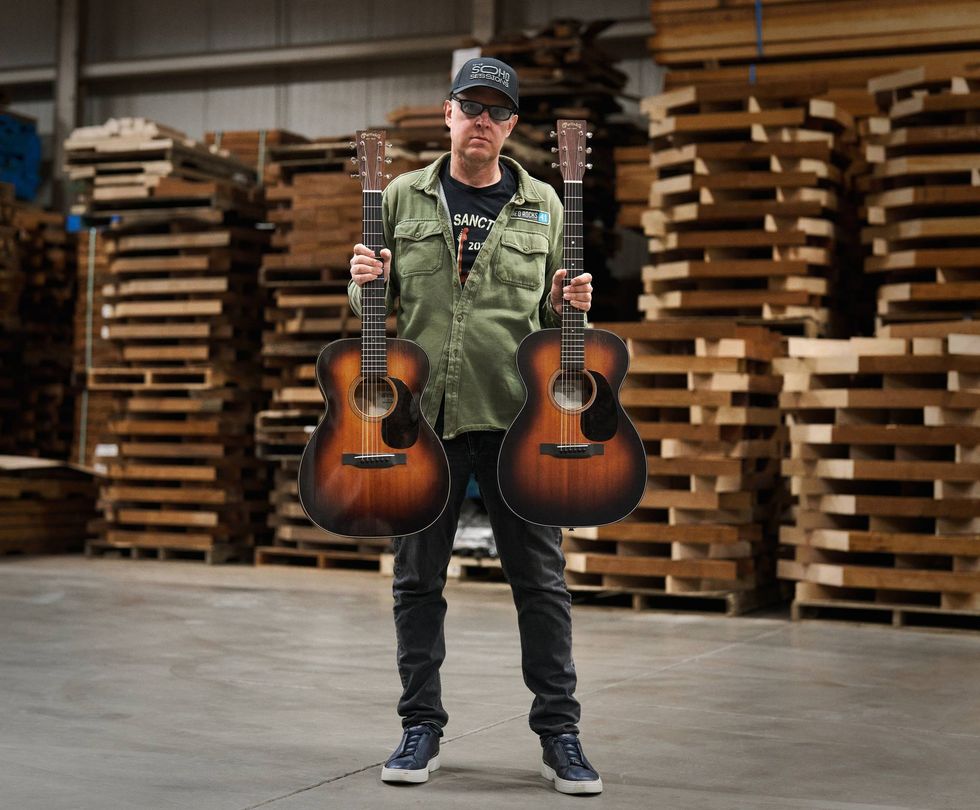
The 00-18 Joe Bonamassa and 00-10E Retro Joe Bonamassa recreate the look and character of his prized 1937 Martin 00-18
Marking Martin's second collaboration with the blues-rock superstar, the collection includes a handcrafted Nazareth-built model alongside a more accessible version produced at Martin's Navojoa, Mexico facility. Both feature a custom 1937-style sunburst and carefully replicated top wear based on Bonamassa's original guitar, capturing the appearance of an instrument that has spent decades making music.
"If you told me when I was a kid that I'd be sitting here in Nazareth, Pennsylvania, with not one, but two signature guitars, I'd be like, 'You're out of your mind,'" Bonamassa said.
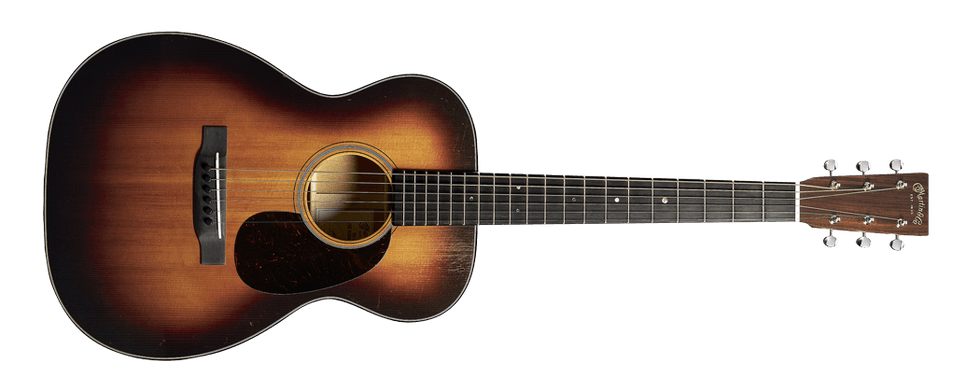
Handcrafted in Nazareth, Pennsylvania, the 00-18 Joe Bonamassa pairs a solid spruce top with genuine mahogany back and sides for a warm, clear, and responsive voice. Its compact 00 body offers balanced tone and comfortable playability equally well suited to blues, folk, fingerstyle playing, and songwriting.
Golden Era scalloped X-bracing delivers an open, dynamic response, while faux tortoise binding, the custom 1937-style sunburst, and replicated top wear faithfully reflect the appearance of Bonamassa's original pre-war instrument. A Golden Era Modified Low Oval neck profile with a standard taper provides a comfortable vintage-inspired feel.
Bonamassa brought an early prototype into the studio and compared it directly against his original 1937 Martin. "When we put the mic in front of it, my producer said, 'I like that one better,'" Bonamassa recalled of the Nazareth-built model.
Each 00-18 Joe Bonamassa includes a hardshell case and carries a $3,999.99 street price.
Crafted in Martin's Navojoa facility, the 00-10E Retro Joe Bonamassa brings the look, feel, and spirit of Bonamassa's pre-war 00 to a wider range of players.
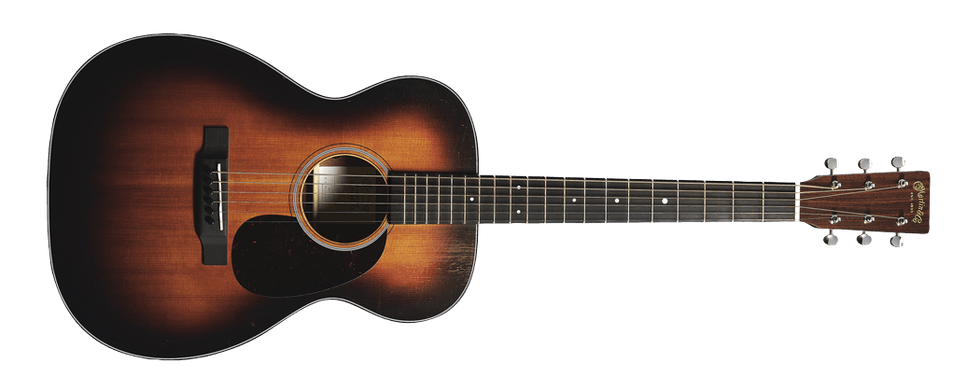
It pairs a solid spruce top with solid sapele back and sides for balanced tone, warmth, and focused projection. Its custom 1937-style sunburst and visually replicated top wear mirror the distinctive character of Bonamassa's original guitar. Scalloped spruce X-bracing supports a responsive acoustic voice, while a Performing Artist neck with a high-performance taper offers smooth, approachable playability.
The model also features Martin E1 electronics with volume, tone, and phase controls, along with a built-in chromatic tuner, making it equally at home onstage, in the studio, or around the house. Bonamassa personally tested the onboard electronics in live performance before approving the final production model.
Each 00-10E Retro Joe Bonamassa includes a softshell case and carries a street price of $1,299.99.
Widely regarded as one of the world's foremost vintage guitar collectors and historians, Bonamassa has built a reputation that extends well beyond the concert stage. His extraordinary collection of historically significant instruments has made him a trusted authority among players and collectors alike, while each of his signature collaborations has become an opportunity to faithfully recreate some of the rarest and most coveted guitars ever built. With these new models, Bonamassa and Martin turn their attention to one of the most personal instruments in his collection, giving players two ways to experience the sound, feel, and visual character of his beloved pre-war 00-18.
The 00-18 Joe Bonamassa and 00-10E Retro Joe Bonamassa are available through authorized Martin dealers and at martinguitar.com.
“I was just up my own arse” Johnny Marr recalls the moment he realised he was being “ridiculous” not playing The Smiths songs live

Johnny Marr has opened up about life after The Smiths, including the years he spent treating the band’s songs as too “precious” to revisit onstage.
Following the band’s acrimonious split in 1987, Marr says the idea of performing The Smiths’ material felt “wrong and raw” – until one very casual suggestion from a fellow musician changed his mind.
- READ MORE: “We lost your guitar… deal with it”: Johnny Marr blasts FedEx for losing Ella Feingold’s guitar
Speaking to MOJO, Marr recalls the moment during a 2001 soundcheck for Crowded House frontman Neil Finn’s charity project 7 Worlds Collide, when Finn suggested that Marr play The Smiths’ There Is A Light That Never Goes Out.
“[For years], the idea of performing Smiths songs felt wrong and raw and just very, very precious. Too precious,” he says. “He just assumed that it would be absolutely fine me doing a Smiths song that day. He went, ‘Hey, Johnny, how about doing There Is A Light?’”
Finn’s matter-of-fact attitude made Marr realise just how much he had been overthinking it.
“And in that moment I saw how ridiculous it was to be so precious,” the guitarist explains. “He didn’t say it, but it was like I was just up my own arse.”
The realisation came after Marr had already spent years carving out a career beyond The Smiths. After the breakup, he worked with artists including The The and Electronic before joining Modest Mouse in 2006, an experience that reignited his enthusiasm for live shows.
“My role was to be the guitarist in Modest Mouse. It really got me back into playing live,” says Marr. “And it showed me a new way of writing as a lyricist. Modest Mouse and The The were very alike. A lot of testosterone.”
Elsewhere in the chat, Marr also reveals a particularly memorable conversation with former Beatle Paul McCartney after The Smiths’ breakup.
“[McCartney’s wife] Linda was so generous as a person, she was asking me all about my life. And he was sat there so I just told him about the break-up of the band. I looked to him and waited and he just said, ‘That’s bands for you.’”
“It’s such a brilliant answer coming from him,” says Marr. “Over the years, I’ve been asked to give advice. There is just a time to say, ‘That’s bands for you.’”
The post “I was just up my own arse” Johnny Marr recalls the moment he realised he was being “ridiculous” not playing The Smiths songs live appeared first on Guitar.com | All Things Guitar.
Joe Bonamassa’s second collaboration with Martin is a stunningly accurate recreation of his prized pre-war 1937 00-18

Joe Bonamassa’s got one of the most impressive vintage guitar collections in the biz, so big that it has to be housed at two museum-style locations in Nashville and Los Angeles. And among his collection sits a 1937 Martin 00-18 shade-top…
Now, an instrument of this calibre tends to be out of reach for most guitarists, but thanks to two new Martin Joe Bonamassa signature models directly inspired by that guitar, the idea is a little more in reach than before.
Meet the 00-18 Joe Bonamassa and 00-10E Retro Joe Bonamassa, two new acoustic guitars that aim to give players the look and feel of the blues maestro’s treasured pre-war 00-18.
Martin’s second collaboration with Joe Bonamassa – the first being an epic $20k recreation of the guitarist’s 1941 000-45 – the two guitars include a handcrafted model built at Martin’s headquarters in Nazareth, Pennsylvania, and a more accessible version made at Martin’s Navojoa, Mexico factory.
Both guitars sport a custom 1937-style sunburst and carefully recreated top wear to give it the feel of an instrument that’s seen decades of use.
In terms of build, the pricier 00-18 Joe Bonamassa pairs a solid spruce top with mahogany back and sides for a “warm, clear and responsive voice”, with a compact 00 body suited to blues, folk and fingerstyle playing. The guitar also features Martin’s Golden Era scalloped X-bracing, a faux tortoise binding, and a Golden Era modified Low Oval neck profile with a standard taper for a vintage feel.
Meanwhile, the more affordable 00-10E Retro Joe Bonamassa features a solid spruce top, sapele back and sides, scalloped spruce X-bracing, Performing Artist neck and a high-performance taper and Martin E1 electronics with volume, tone and phase controls and a built-in tuner. Martin says Joe Bonamassa road-tested the E1 electronics onstage before approving the final production model.
Both guitars come with a case, the 00-18 Joe Bonamassa a hardshell case and the 00-10E Retro Joe Bonamassa a softshell.
 Credit: Martin
“If you told me when I was a kid that I’d be sitting here in Nazareth, Pennsylvania, with not one, but two signature guitars, I’d be like, ‘You’re out of your mind,’” says Bonamassa.
He also says the sound of the Nazareth-built model stands up to that of his 1937 pre-war original. “When we put the mic in front of it, my producer said, ‘I like that one better,’” he recalls.
Both guitars are available now from Martin.
The post Joe Bonamassa’s second collaboration with Martin is a stunningly accurate recreation of his prized pre-war 1937 00-18 appeared first on Guitar.com | All Things Guitar.
What are pots anyway? A working guide to the knobs on your guitar, and what they actually do

We talk a lot about guitar construction and the components that can have an impact on your tone, but one item is far too often left out of the equation, and they appear on nearly every electric guitar model made today. The pots – these are the things underneath your guitar’s control knobs that control what happens when you turn said knob.
A guitar pot (short for potentiometer) is a variable resistor with three lugs. Inside the case sits a horseshoe of carbon-resistive material and a wiper that sweeps across it when you turn the shaft. It’s really quite simple. The full resistance of the track lives between the two outer lugs, and the wiper picks off a point somewhere along it. The design has barely changed since the 1930s, and the part still costs a few dollars. It also has more say over how your guitar sounds than most of the hardware players actually obsess over.
The Value
Let’s start with the number stamped on the case, usually 250k or 500k. That figure is the pot’s total resistance. Higher numbers mean a brighter guitar, which is backwards from how most people guess. In electronics terms, a volume pot sits across the pickup as a load to ground, and that load bleeds off a little high end constantly, even with the knob wide open. A 500k pot bleeds less than a 250k, so more treble survives the trip to the amp. The load also flattens the pickup’s resonant peak, which is the bump in the frequency response that gives a pickup its character. Lower values flatten it harder.
That relationship explains the standard pairings. Humbuckers run slightly dark on their own, so they get 500k pots to hold onto their highs. Single coils are already bright, sometimes harsh, so 250k takes the edge off. Drop 250k pots into a Les Paul and it plays like there’s a blanket over the cab. Put 500k pots in a Strat and the top end gets glassy, sometimes brittle.
These pairings are just conventions. Gibson has shipped plenty of guitars with 300k volume pots, which splits the difference and shaves a little sparkle off a humbucker. Fender put 1 Meg pots in the Jazzmaster and Jaguar, and that enormous value is a big part of why the offsets sound so open and spiky on top. If your humbucker guitar sounds dull, checking the pot values and replacing them with something brighter is a lot cheaper than shopping for new pickups.
The Taper
Taper is a separate spec, and it governs the shape of the sweep. A linear pot changes evenly, so at halfway around the shaft you’re at roughly half the resistance. An audio pot, also called log, saves most of its change for the last part of the rotation. The curve exists because human hearing is logarithmic. An audio taper feels even to your ear on a volume control even though the resistance underneath isn’t. Wire a linear pot into the volume position instead and the sweep feels bunched, with nearly all the audible change crammed into a narrow slice of the travel. Tone is less settled, and plenty of players run linear there on purpose because they want a slower roll-off.
Get ready for some unavoidable electronics jargon. On modern CTS pots, current Alpha imports, and current Japanese pots, A means audio and B means linear. However, the old European DIN convention ran the opposite way and used A for linear, and the vintage Japanese JIS scheme did the same, so an old European pot, a vintage ALPS or Panasonic, or an unmarked one from a parts drawer can be exactly reversed from what you assume. When you can’t trust the stamp, measure it with a multimeter. Set the shaft dead center and read resistance from the wiper to each outer lug in turn. Roughly equal readings mean linear. A lopsided split, something like 10 to 20 percent of the total on one side, means audio.
Every pot carries a manufacturing tolerance, and even good ones drift off their rating. CTS’s factory standard is plus or minus twenty percent, so a stock “500k” can legitimately measure anywhere from 400k to 600k. The tighter ten percent pots sold by suppliers like StewMac are special-order runs, and some boutique parts houses go further, speccing nine percent tolerance with the nominal value bumped upward so the pot never lands under its rating. This is part of why two guitars off the same rack can sound slightly different. Builders chasing a specific voice will sit with a multimeter and hand-pick pots to hit a target number.
What The Tone Pot Is Actually Doing
A tone control uses the same kind of potentiometer as the volume knob, but wired with a capacitor to ground to create a variable low-pass filter. Turn it down and the pot lets more signal drain through the cap, which only passes high frequencies. The cap value sets how dark the fully rolled-off sound gets. Modern convention puts .022 microfarad caps with humbuckers and .047 with single coils, though vintage Fenders used values as big as .1, which is why an old Strat’s tone knob goes so muddy so fast. With the knob on ten, the cap barely matters.
Fender’s no-load tone pots go a step further. They have a detent at ten where the resistive track is physically broken, lifting the entire tone circuit out of the signal path. The guitar gets a touch brighter and more open at full, and behaves like a normal tone control everywhere else.
Shaft Size Does Matter…
US-made CTS pots use a 3/8 inch bushing. Metric pots use 8mm, so a metric replacement drops loose into a CTS-sized hole and a CTS pot won’t fit a metric hole without reaming. Split knurled shafts differ too: US pots carry 24 splines, metric pots carry 18, and push-on knobs made for one won’t seat on the other. Carved tops like a Les Paul need long-shaft pots to clear the carved maple top. Check all of this before ordering. The right electrical spec is useless if the part won’t mount. So shaft size does matter, no matter what anyone says!
The post What are pots anyway? A working guide to the knobs on your guitar, and what they actually do appeared first on Guitar.com | All Things Guitar.
“Eddie said, ‘I can’t play on that!’” Albert Lee reveals the genre that Eddie Van Halen was reluctant to play

Eddie Van Halen could tap, shred and generally make a guitar do things that seemed physically impossible. But according to country guitar legend Albert Lee, there was one style that had the rock virtuoso briefly questioning whether he could pull it off.
That moment came when Van Halen joined Lee’s Biff Baby’s All-Stars for a handful of gigs. The unlikely supergroup brought together some serious guitar talent, and during one of their shows, Van Halen found himself tackling Lee’s country classic Country Boy – complete with its chicken-pickin’ passages.
- READ MORE: Two of Eddie Van Halen’s Kramer guitars are up for auction – accompanied by his used cigarette butts
Speaking in a new interview with Guitar World, Lee recalls, “On a couple of gigs, we had Eddie Van Halen playing with us. He said, ‘I can’t play on that!’ I said, ‘Yes, you can – you can do all that tapping!’ And of course he was great.”
Van Halen apparently didn’t see country picking as part of his usual vocabulary, though Lee was quick to convince him otherwise.
“He didn’t think it was his style. I said, ‘Of course it is!’”
That said, Biff Baby’s All-Stars was never really a band in the traditional sense. Put together by Ernie Ball’s son Sterling Ball, the group featured a rotating cast of the era’s top guitarists including Lee, Steve Morse, Steve Lukather and, on occasion, Van Halen for impromptu performances and the occasional “odd gig”.
That included a memorable appearance at NAMM with Van Halen and Morse, a performance Lee says fans still bring up decades later.
“We did one at the NAMM show, which people still talk about,” says the guitarist. “They used to say, ‘That show you did with Steve Morse and Eddie Van Halen was great. Any chance of any more?’ I’d say, ‘I don’t think so!’”
Watch the full interview below.
The post “Eddie said, ‘I can’t play on that!’” Albert Lee reveals the genre that Eddie Van Halen was reluctant to play appeared first on Guitar.com | All Things Guitar.
“I didn’t even get the question out”: How Peter Frampton convinced Tom Morello to play on his new album

Earlier this year, Peter Frampton released Carry The Light, his first album of all-new rock material in 16 years. Written and produced alongside his son Julian Frampton, the album features guest appearances from Sheryl Crow, Bill Evans, H.E.R., Graham Nash, and Tom Morello.
In a new interview with Guitar World, Frampton reveals how a shared manager and a mutual admiration for each other’s work led to Morello joining the record – and, as it turns out, the Rage Against The Machine guitarist didn’t need much convincing.
“I’ve known Tom for a while now – I keep bumping into him,” Frampton says. “We’re managed by the same person, and I’ve been a huge fan of Rage Against the Machine and Audioslave, and – rest in peace – Chris Cornell. I’m a big fan of his.”
That connection eventually gave Frampton the opening to ask Morello about joining him in the studio.
“So a couple of years ago, I said to Tom, ‘If I’d a song, would you…,’ and he said ‘Yes!’ I didn’t even get the question out! It was wonderful, and he said some lovely things about Frampton Comes Alive! and how it affected him.”
Morello’s contribution ended up on Lions At The Gate, a protest song about the concentration of wealth and power among billionaires. Frampton says the title was inspired by the huge lion statues he saw outside mansions when he first visited Beverly Hills in the late ’60s.
“To me, that always made me feel like they were showing off their power,” he explains. “Basically it’s a protest song, saying that we’ve got to stick together. There’s safety in numbers, and we’re a band of brothers, and we’ve got to fight this.”
For Frampton, Carry The Light also arrives at an important point in his relationship with the guitar. The guitarist revealed in 2019 that he had been diagnosed with inclusion body myositis (IBM), a progressive neuromuscular condition that has affected his ability to play.
Rather than stepping away from the instrument, however, Frampton says he has embraced the “challenge” of continuing to perform as the condition progresses.
“I can’t complain about my life at all,” he told People recently. “Yes, it’s not the most pleasant thing to have. It changes your life. It’s not going to end it, but yeah, it’s a little difficult. But really I’ve gotten used to it, and I like the challenge of being able to do what I do as it progresses.”
The post “I didn’t even get the question out”: How Peter Frampton convinced Tom Morello to play on his new album appeared first on Guitar.com | All Things Guitar.
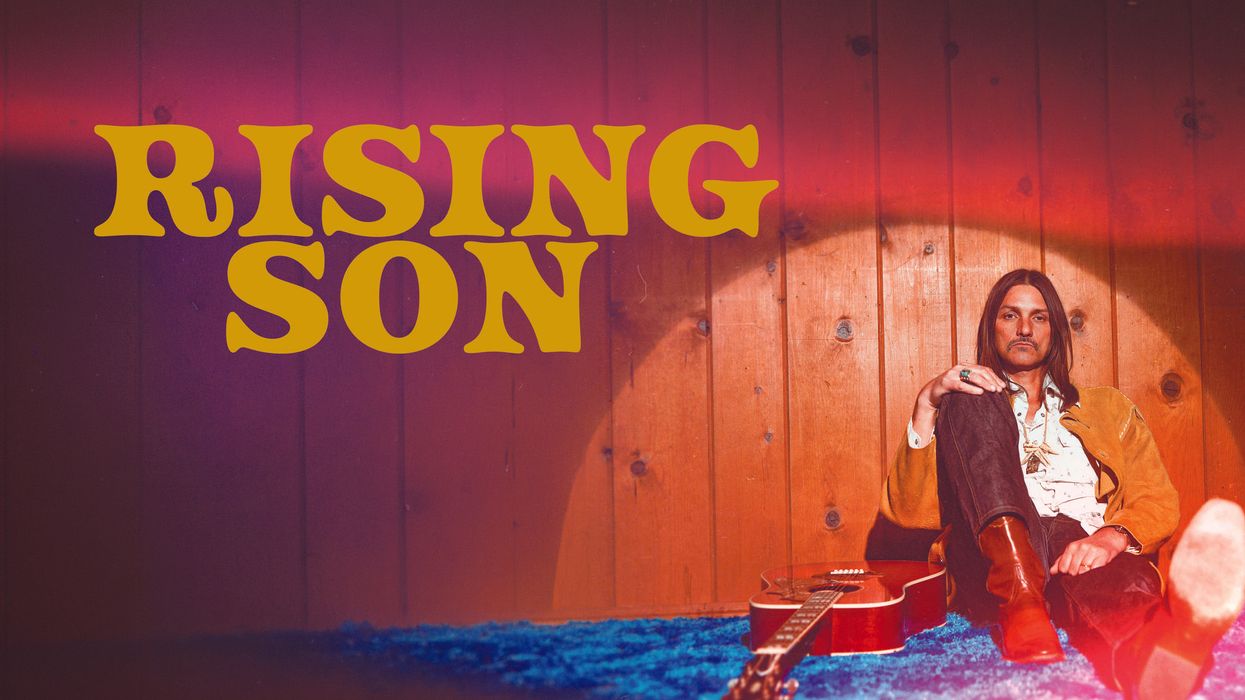
Duane Betts: Rising Son
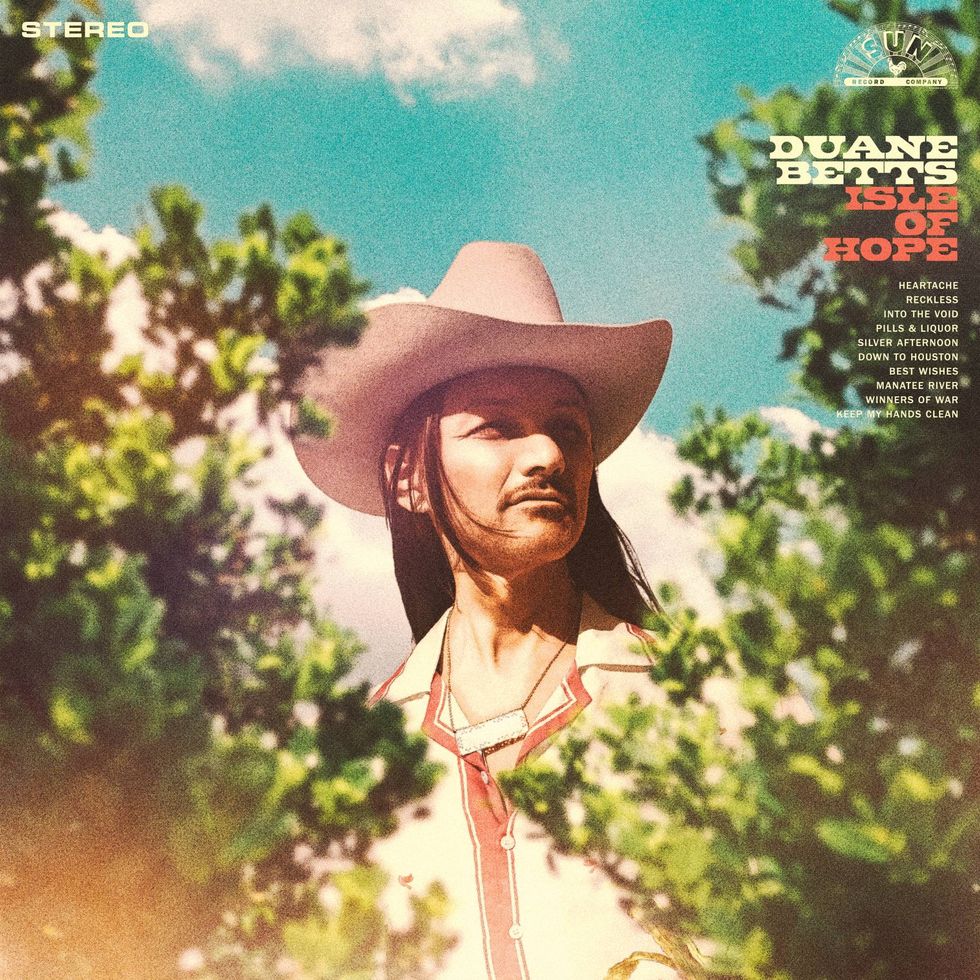
Towards the end of Duane Betts’ video for “Heartache,” a melancholy song about grief written after his father died in April 2024, the 48-year-old guitarist etches the initials “FRB” in the sand. It seems like a riddle, or perhaps a non sequitur, until you realize Betts’ late father, Dickey Betts of the Allman Brothers Band, was born Forrest Richard Betts. “It was something that was kind of thought about and plotted out as an easter egg—something very meaningful, but not obvious. We didn’t want to be too on the nose about any of the references,” the singer and guitarist says, speaking to Premier Guitar by phone from a summer home in Jackson Hole, Wyoming, the night before he’s scheduled to perform with the Allman Betts Family Revival in Vail, Colorado. “Some people don’t know that my dad’s first name is Forrest. They might not catch the initials.”
While inspired by the senior Betts’ death at age 80, “Heartache” is a universal ballad, on the edge of Neil Young-style folk-country and, yes, the Allman Brothers’ soulful southern rock. “I’ll wait, watch over you / Nothing I can do,” Betts sings, then repeats the phrase “there’s nothing you can do” multiple times before playing a solo that is both mournful and hopeful on his cherry-red 1961 Gibson ES-335, a guitar he inherited from his father. “I wrote that song down in Florida, shortly after my dad passed away, with my friend [singer-songwriter] Stoll Vaughan,” Betts says. “I had this haunting chorus melody, and I was mumbling ‘heartache,’ and it just went from there. It’s a universal feeling that everybody can relate to. It’s about loss and acceptance and getting through that process.
“It’s about everything and everyone that you’ve lost, you know?” he adds. “The lyric is simple, but it’s vulnerable and personal to me and I’m very proud of it.”
In the video, filmed in Malibu, California, last March, Betts, slender with long hair and a thin mustache, wears open-collar, earth-toned suits that can only be described as “Allman Brothers chic.” In one of these outfits, he wanders into the ocean; in another, he plunges into a pool. “Actually, I don’t think we wrecked any of them,” he says of the clothes. “The first one turned out okay. We just air-dryed it. It was a lot of fun. The pool was about 10 degrees colder than the ocean, and the ocean wasn’t warm.”
Betts made “Heartache” and the rest of his new album, Isle of Hope, with Dave Cobb, the Nashville producer who has worked with just about everybody, from the Bee Gees’ Barry Gibb to pop star Teddy Swims, and has a knack for drawing out the country soul from raggedy-voiced singer-songwriters like Chris Stapleton, Sturgill Simpson, and Jason Isbell. Betts came across Cobb’s work while recording a session with guitarist J.D. Simo; while Betts was waiting for an Uber, “me and J.D. were getting some quality time,” and Betts played him a new tune called “Reckless.” “You know who would love to do this? Dave,” Simo told him.
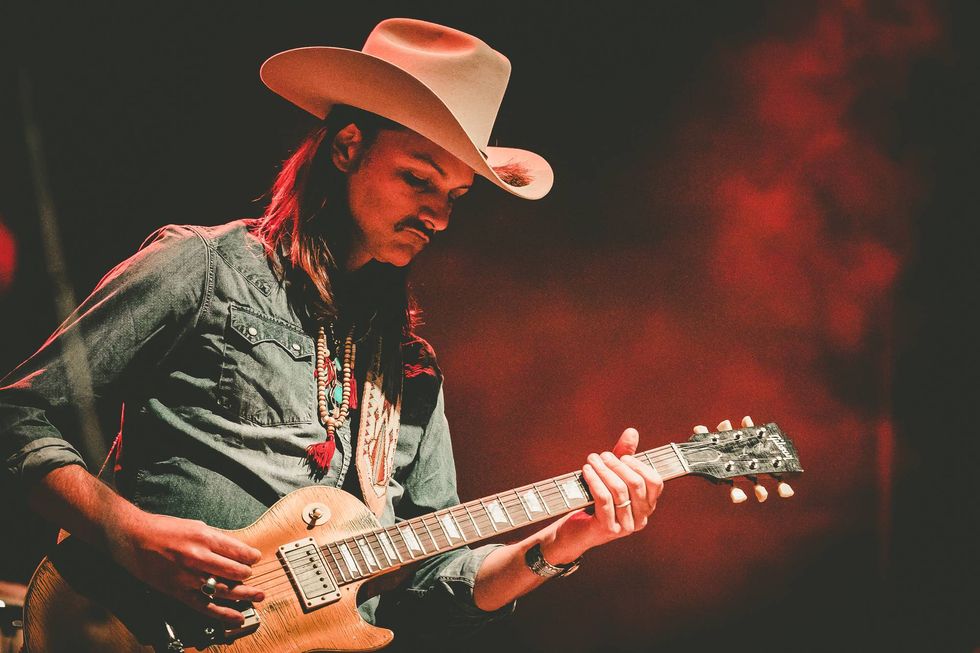
Duane Betts’ Gear
Guitars
- 1961 Gibson ES-335
- Gibson Dickey Betts Les Paul Gold Top prototype #1
- Pre-war Martin acoustic
- Fender Telecaster (courtesy of Dave Cobb)
Amp
- 1961 Magnatone Troubadour
Pedal
- Union Tube & Transistor NeverMORE
Cobb proved to be exactly as advertised while producing Isle of Hope, an album that balances laid-back, hymnlike tracks such as “Silver Afternoon,” “Best Wishes,” and the lead single “Heartache” with more hard-driving numbers like “Pills and Liquor,” “Down to Houston,” and the closing track “Keep My Hands Clean.” The latter songs capture the tight, barrelhouse swagger of early-1970s Rolling Stones, though they are surprisingly concise by the standards of the Allman Brothers diaspora. Throughout the album, potent slide-guitar solos—performed primarily by Betts and Johnny Stachela—add both fire and texture. Their guitar work often recalls Duane Allman’s playing alongside Eric Clapton on Derek & the Dominos’ “Layla.”
“Dave is a genius in the studio. He can frame things in his head while he’s playing in the band and map everything out perfectly and know where everything fits at all times. It’s what a producer is supposed to do—times 100,” Betts says, launching into a technical explanation of which portions of which studio takes wound up in the final track. “I wanted to have a vehicle like ‘Heartache’ to play a little differently. Dave set me up. I had the solo mapped out over different chords, over a different point in the song, and he changed it and gave me a nice path to just go at the end of the song, over those other chords. It turned out to be a great idea.”
Reproducing the album live has proved to be a challenge as the band rehearses for dates through the end of 2026 and early 2027—mostly because Betts’ road band has only two guitarists, which pushes him to play an acoustic or “an electric like an acoustic.” He adds: “You can’t play all the parts on the record. You have to be thoughtful. ‘Maybe the keyboard player can do something.’”
“We didn’t make a ‘guitar record,’ but there’s plenty of guitar playing on the record.”
Discussing the album, Betts has a habit of changing the subject to move the attention off of himself—his own songwriting, his own vision—and onto the other musicians who worked on the album, particularly his friend Simo on rhythm guitar. “I really wanted everybody to have their moments. J.D. doesn’t play any solos per se, but his guitar work on this record is just excellent,” Betts says. “We didn’t make a ‘guitar record,’ but there’s plenty of guitar playing on the record.”
The new album has a rawer, more spontaneous and live-in-the-studio feel than Betts’ solo debut, 2023’s Wild & Precious Life, a more star-studded affair that featured guests like Derek Trucks—himself the nephew of a late Allman Brothers Band member, founding drummer Butch Trucks—plus Marcus King and Nicki Bluhm. On Isle of Hope, Betts mostly plays an acoustic guitar, a pre-war Martin, although he uncorked the 335 in key moments, like the electric solo in “Heartache.” “I cut the solo after the band went home and got it,” he says.
Has Betts’ playing evolved since Wild & Precious Life? Not in his own estimation. “I don’t know if my playing has changed that much—I kind of play the way I play,” he says. “When given the opportunity to play over different chords, or a different style, you might play differently.”
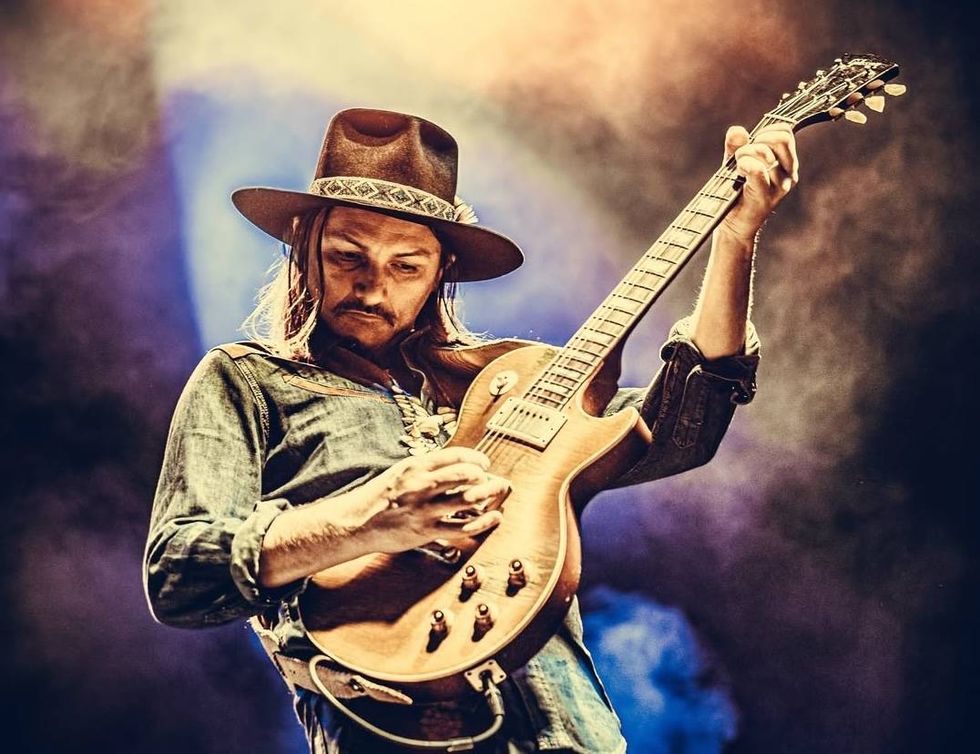
Because Isle of Hope is so clearly—and lovingly—dedicated to his late father, Duane has had even more opportunities than usual to reflect publicly on Dickey Betts’ legacy and influence. Betts was a founding member of the Allman Brothers Band in 1969, after he and former bandmate Berry Oakley accepted an invitation from guitarist Duane Allman to join an informal jam session at FAME Studios in Muscle Shoals, Alabama. That gathering ultimately led to the formation of one of Southern rock’s most influential bands.
Duane was born to Dickey Betts and his then-wife, Paulette, in 1978, seven years after his namesake, Duane Allman, was killed in a motorcycle accident. By that time, the Allman Brothers had broken up, then reformed, and were putting out rock albums like Enlightened Rogue during an era of punk and disco. They were touring regularly, and Dickey brought his son on the road. Duane was home-schooled and had a tutor, as he once told the Marin Independent Journal: “It was great. I loved it. ... It was mainly me and the adults. I didn’t get to socialize with kids my own age. I had to make up for that later.” Eventually, he left his father’s hometown of Sarasota, Florida, for his mother’s home base in Malibu. There, he earned his GED and began playing in bands, including Backbone69, whose lineup featured the sons of Roy Orbison, producer Lou Adler, and Berry Oakley.
Around age six or seven, Betts took up drums before switching to guitar. His first electric was a tiger-striped sunburst PRS prototype with a 5-way switch—a model that Paul Reed Smith had personally given to Dickey Betts and Warren Haynes.
“Most of the guitars I own are my dad’s, and it’s really a beautiful thing.”
“I really haven’t played it much,” Betts says. “Believe it or not, I sold it to a good friend because I just wasn’t using it. Then I bought it back. About 15 years later, I thought, ‘Man, it’d be cool to own my first guitar.’” He approached his friend and asked, “You’re not playing as much anymore—can I buy my guitar back?”
“That’s what friends are for,” Betts adds with a laugh.
“Most of the guitars I own are my dad’s, and it’s really a beautiful thing,” he continues. “He was so good at playing that Delta stuff on the National steel. He was such a master, and a student of those guys, and it was always so thrilling to hear him play that style.”
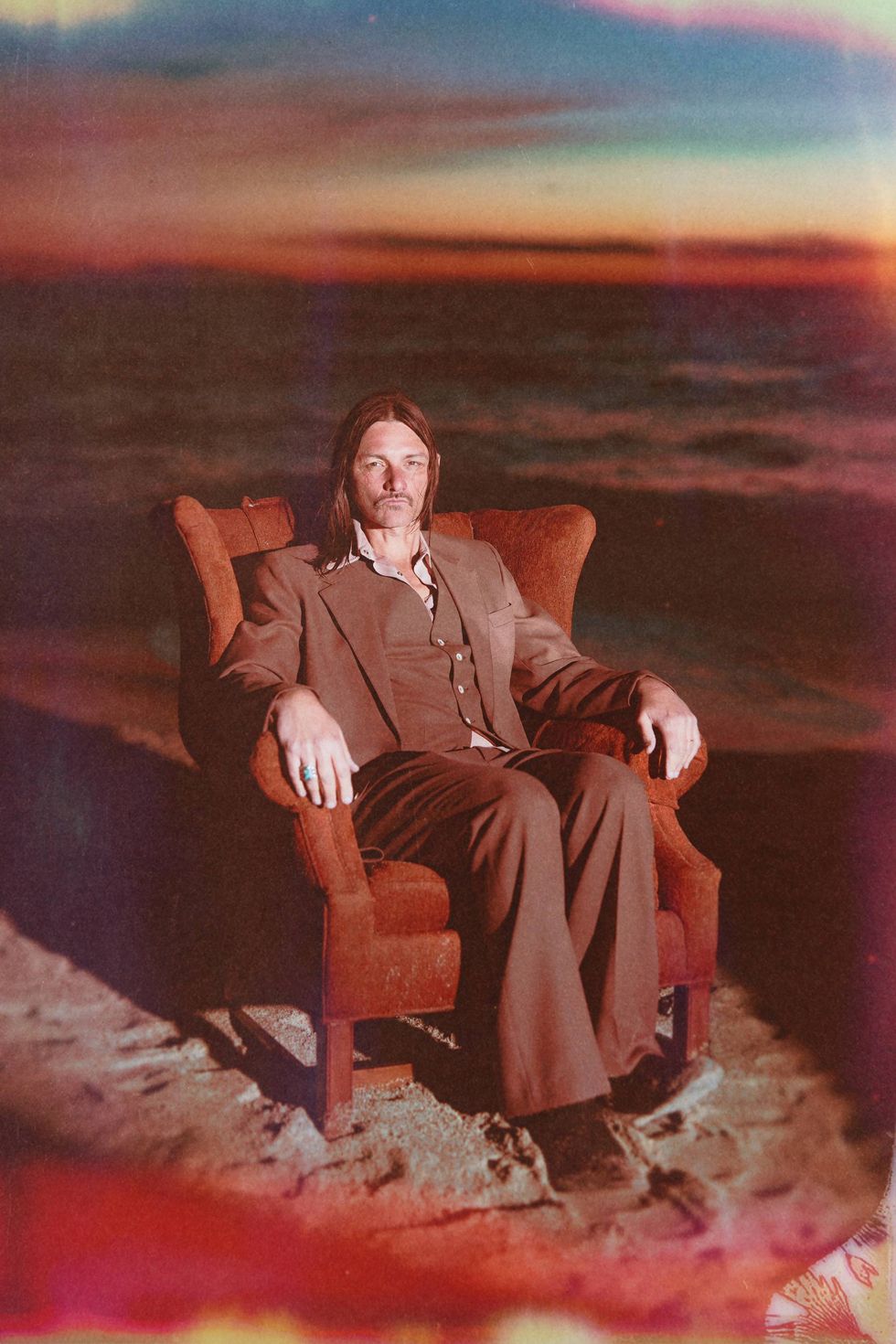
Children of famous musicians sometimes spend their careers trying to distance themselves from their parents’ work. But Betts is happy to talk about his father, who was his primary guitar inspiration and frequent teacher. Although, he says, “It’s not like we spent an hour a day talking about guitar—or an hour every other day, even. I kind of wanted to learn on my own. I liked the challenge.”
Dickey, he says, “taught me about fundamentals. Like a Chuck Berry rhythm. Like a 12-bar blues. ‘Go listen to Freddie King, “Hideaway.”’ He was turning me on to stuff like that.”
Befitting his own generation, Betts also picked up on the guitar sounds of Nirvana and Smashing Pumpkins, and combined their ideas with the John Coltrane records he was absorbing in his teens. “I forgot who said it: ‘Every rock ’n’ roll guitar player’—whether they’re punk rock, Steve Jones or whoever— ‘should have a little bit of Chuck Berry influence in them,’” Betts says. “That’s how my dad felt. I’m sure Keith Richards feels that way.”
“If you’re being truthful, it can’t be wrong.”
Betts has also forged a creative partnership with fellow Allman Brothers heir Devon Allman, the son of Gregg Allman, who died in 2017 at age 69. The two longtime friends formed the Allman Betts Band in 2018, embracing their shared musical heritage while occasionally inviting other second-generation musicians—among them Dweezil Zappa, son of Frank Zappa, and Tommy Prine, son of John Prine—to join them onstage.
After Dickey Betts’ death, Duane and Devon found common ground in a loss they both understood. “A lot of that goes without saying. We don’t sit and talk about it at length,” Betts says. “He knows. You just look at somebody, and you’re there for them—it’s an unspoken thing. He knows what it’s like.”
Betts says he has found similar understanding among other friends who have experienced the loss of a famous parent. “Alex Orbison lost his father at a young age,” he says. “They’re here in spirit. We’re in the same boat a little more.”
For all the practical lessons Dickey Betts taught his son about guitar—rooted in Chuck Berry riffs and blues fundamentals—it was a more philosophical piece of advice that left the deepest impression. As Duane has told interviewers, his father’s guiding principle was simple: “Go play to nature, and it can never be wrong.”
“He had an abstract way of thinking about art and music and life—the way he wrote some of his songs, like ‘Seven Turns,’” Betts says, referring to the Allman Brothers Band’s 1990 track. “I think what he meant was that god, nature, the universe—whatever higher power you believe in—can’t be wrong.”
“So if you’re being truthful, it can’t be wrong,” he continues. “If you can accurately emulate the movement of water, how could that ever be wrong? That’s god moving right in front of your eyes. He meant that you should try to reflect things that are beautiful and natural. Basically, try to have good taste.”
Pages
