
Music is the universal language
“Glory to God in the highest heaven, and on earth peace to those on whom his favor rests.” - Luke 2:14
General Interest
The best pitch shifters for guitarists: from Boss and DigiTech classics to sound-bending oddities

You shift the pitch of your playing whenever you switch frets, bend a string or turn a tuning peg, but the sounds (and pitches!) available via a pitch shifter pedal open up new frequencies – and ways to leap between them.
Depending on the pitch shifter, you can add harmonies, shift everything you play up or down by notes or octaves, and sometimes tap into more creative sounds and modulations. You’re a few twiddles and a stomp away from filling out the harmonics of your compositions, adding oomph to riffs, helping melodies cut through, or enriching the texture of your guitar’s sound.
The best pitch shifters range from simpler models that do just one type of pitch modulation, such as drop-tuning or octaving, to more multi-fangled options with textural effects like ring modulation and harmonisation, or additional features such as an in-built expression pedal.
Whether you want a functional pedal to adjust your pitch, or you’re looking for something that will spark creativity and broaden your compositional horizons, you’ve found your way to the right type of effects pedal. You can find ten of our favourites below, from the likes of Boss, DigiTech, Electro-Harmonix and TC Electronic.
At a glance:
- Best overall: Boss XS-1 Poly Shifter
- Most powerful: Boss XS-100 Poly Shifter
- Best for downtuning: DigiTech Drop
- Best for classic Whammy sounds: DigiTech Whammy 5
- Best compact: Electro-Harmonix Pitch Fork
- Best harmoniser: Boss PS-6 Harmonist
- Best workstation pitch-shifter: Electro-Harmonix POG3
- Best for experimental sounds: EarthQuaker Devices Data Corrupter
- Best doubler: TC Electronic Mimiq Doubler
- Best ring-modulator: DOD Gonkulator
- Why you can trust Guitar.com
Best overall: Boss XS-1 Poly Shifter
‘Poly’ is right. This small-format pitch shifter from Boss offers extraordinary scope in an impressively navigable package, with drop-tuning, chorus-y detuning, up-tuning, octaving and harmonies. There’s also an expression pedal input, so you can plug one in to produce Whammy-style sweeps.
What blew us away about this pedal was how it delivers its effects in a remarkably pure-sounding form, and with minimal latency, thanks to the world-beatingly clever algorithms under the hood. This translates into crisp drop-tuned riffing, refreshingly clear harmonies, and sweeter melodies than the average pitch shifter can muster. The ’80s-flavoured detune effect is easily accessed via its own switch.
Need more? Read our Boss XS-1 Poly Shifter review.
Most powerful: Boss XS-100 Poly Shifter
The eagle-eyed pedal-enjoyers among you will have noticed that this pedal is closely modelled on the DigiTech Whammy. We dare say it might be even better than the genuine article, with the same smarts and sounds as the XS-1 Poly Shifter (reviewed above), plus a built-in Whammy-style expression pedal and some superior specs. Essentially, it does similar things to a Whammy, but has less latency (delay between hitting your strings and hearing the sound) and purer pitch shifting effects.
Not convinced? The XS-100 has a few extra tricks up its sleeve that just might sway you, including an ear-boggling eight-octave range (that’s more than Mariah Carey), and a swanky digital display that makes it easy to tweak the parameters of its effects.
Need more? Read our Boss XS-100 Poly Shifter review.
Best for downtuning: DigiTech Drop
If you crave the capability to tune your electric guitar extra-low, without spending eternal seconds twiddling with tuning pegs under stage lights, then what you need is a good drop-tuning pedal. This uncharacteristically straightforward option from DigiTech takes your signal and shifts it down, polyphonically, by anywhere from one to seven semitones – or by an octave.
Using the ‘momentary’ switch is key to enjoying this pedal’s creative potential at its fullest. When it’s activated, the footswitch will only activate drop-tuning for as long as it’s pressed, so you can get your pitch to nimbly dip and dive with a press of the toe.
Best for classic Whammy sounds: DigiTech Whammy 5
If you’ve spent much time peering at alt rock pedalboards from the 1990s onwards, there’s a good chance you already know and love the DigiTech Whammy. Radiohead, Melt Banana, QOTSA and countless other guitar bands owe their spikiest, harmonically squelchiest sounds to this ostentatious box of tricks.
There’s much debate over which iteration (or spin-off) of DigiTech’s pitch shifting icon is the best – which one bubbles with the most characterful digital artefacts, which has the nicest tread on its footpedal, and so on. We’re going with the Whammy 5, which sounds much better than its predecessors when chords (not just individual notes or melodies) are played through its harmonising and octaving effects. No other pedal sounds quite like it.
Best compact: Electro-Harmonix Pitch Fork
You get more pitch-shifting capabilities than you might expect from this dinky EHX stompbox. There are three octaves to shift your way through, and you have the rare option to add up and down octaves at the same time for an ostentatiously filled out sound.
Transposition comes in 12 degrees, from a slight detune to a full octave, selectable via the shift dial or a connected expression pedal (sold separately). As with the DigiTech Drop, you can use it in ‘momentary’ mode for precipitous peaks and troughs in pitch, while the blend control allows you to mix varying levels of pitch-shifted signal with your dry input.
Best harmoniser: Boss PS-6 Harmonist
We promise to stop talking about Boss pitch shifters when the brand stops making such outrageously good ones. This Harmonist model is a slightly different beast to the XS pedals above, with a tighter focus on adding harmonies to your signal.
It takes some mastering, but the PS-6 opens up interesting possibilities for adventurous musicians. Set it to produce three-voice harmonies (taking care to use the minor/major selector) and it’ll make your individual notes sound positively choral. Meanwhile, its seven-octave ‘S-bend’ pitch shifting range can transpose your sound further than the average competing pedal, creating astonishing swoops in your frequency. Max out the fall time setting to enter a wonderland of squelchy squeals.
Best workstation pitch-shifter: Electro-Harmonix POG3
If you could make your guitar sound like an organ at will, why wouldn’t you? This is one of the many possibilities wrapped up in the byzantine knobs and faders of the POG3 – the latest and most sophisticated model from EHX’s line of polyphonic octave generators.
Our reviewer loved getting to grips with this workstation pedal, which retains a lo-fi spirit despite its high complexity (and price). It’s easy enough to dive right in with up octaves, down octaves, envelope filtering and more – and once you’ve got to grips with tweaking all of the pedal’s synth-like parameters, you can start saving your creations to its 100 preset slots.
Need more? Read our Electro-Harmonix POG3 review.
Best for experimental sounds: EarthQuaker Devices Data Corrupter
As you may have gathered, we’re now travelling towards the experimental fringes of the pitch shifting universe, and the EQD Data Corrupter takes the bizarro biscuit.
These days, most pitch shifter pedals are (ostensibly) polyphonic – they work with chords – but here we have a monophonic specialist that’s meant for shifting single notes in some of the weirdest and coolest-sounding ways imaginable. It converts the signal to a fuzzy square wave, splits it into octaves or harmonies, and spits a glorious cacophony that’s better heard than described.
EQD pedals are often one of two things: pointedly simple or intimidatingly elaborate. This one’s the latter, with plentiful voicing, sub-harmonics and pitch oscillation controls to exercise the mind, before it’s blown.
Best doubler: TC Electronic Mimiq Doubler
Doubling is a technique that’s been used to thicken guitar sounds in studio recordings since the heyday of Abbey Road. The guitarist is recorded twice playing the same part, and the two subtly different recordings are put together to create a fuller sound.
Subtle pitch shifting – in the form of detuning – is one of several tricks that the clever Mimiq Mini Doubler uses to reproduce the sound of studio doubling in a live context, along with other nods to human unpredictability like variations in timing and attack. You can use the pedal’s ‘tightness’ knob to narrow or widen the gap between the dry and wet signals, which can both be dialled up or down via their own respective controls.
Best ring-modulator: DOD Gonkulator
If you haven’t gonkulated in the last decade or so, then it’s high time to give DOD’s classic ring modulator pedal another stomp. For us, the Gonkulator is at its best when it’s used to add an unhinged, uncanny feeling to riffs, arpeggios and chromatic runs. Some guitarists won’t find much use for this pedal, but our reviewer certainly had fun combining its abrasive, sci-fi sounds with other effects like looping, delay and reverb. Compared to the vintage unit, too, this modern reissue has moved the carrier frequency control to an external knob rather than an internal trim-pot.
Need more? Read our DOD Gonkulator review.
Why You Can Trust Us
Every year, Guitar.com reviews a huge variety of new products – from the biggest launches to cool boutique effects – and our expert guitar reviewers have decades of collective experience, having played everything from Gibson ’59 Les Pauls to the cheapest Squiers.
That means that when you click on a Guitar.com buyer’s guide, you’re getting the benefit of all that experience to help you make the best buying decision for you. What’s more, every guide written on Guitar.com was put together by a guitar obsessive just like you. You can trust that every product recommended in those guides is something that we’d be happy to have in our own rigs.
The post The best pitch shifters for guitarists: from Boss and DigiTech classics to sound-bending oddities appeared first on Guitar.com | All Things Guitar.
RhPf Electronics Mosphoros review – this boutique drive pedal doesn’t have any tone controls… or does it?

CHF149/£149/€179/$199, rhpfelectronics.com
Choosing a new overdrive pedal these days is like looking for a needle in… well, a massive bucket full of needles. If you’re looking for something with an interesting angle to set itself apart from the crowd, consider the RhPf Electronics Mosphoros: a drive pedal that has three gain knobs and no EQ controls.
That’s not quite the whole story, though, because it is possible to adjust the tonality of this MOSFET-powered crunch machine – just not in the way you’re probably used to.
 Image: Richard Purvis
What is it?
RhPf isn’t the snappiest of brand names, but they don’t like to make a fuss of themselves in Switzerland. This is the same company behind the Mosrawr, a high-gain fuzz aimed at pedal-stacking shoegazers, yet the Mosphoros lies right at the other end of the dirt scale: it’s a transparent overdrive, designed for organic tones and touch sensitivity.
The two main controls are for gain and output level, but what’s going on with the two mini knobs below? These are also for increasing the gain, but in specific frequency zones, so basically you’ve got separate (though interactive) bassy drive and trebly drive dials.
In theory, this offers plenty of tonal control without the need for a standard tonestack – and with the bonus of a huge dirt range, from clean boosting to what designer Thomas Besse calls “harmonic mayhem” with all three gain knobs maxed out. In practice? Let’s find out.
 Image: Richard Purvis
Sounds
You have to get used to a new way of navigating with this thing. For a clean starting point, set all three gain controls at minimum and level at max – this is a perfect match for the bypass sound, with just a teeny sliver of added hiss. And from there, you’ve got three different ways to mess things up.
The tonal overlap between the mini knobs is such that going really bright and thin or dark and flabby is not on the table – really it’s all about subtle variations on the transparent theme – but this pedal has two key things on its side. One is that its fundamental voice is very nice indeed; the other is that the promised extra-wide gain range is delivered in style.
MOSFET overdrives are known for offering natural and amp-like breakup, and that’s never been more true than it is here. My main reference for transparent drive is the divine EarthQuaker Devices Special Cranker; the Mosphoros can come pretty close to the Cranker’s perfect purity, but with a looser feel and a slightly softer attack – at least until you hit the strings hard to bring out the rasp.
Blues players looking for a low-gain option to add smooth grit will have no trouble finding it here, while rockers in need of more full-on crunch will be equally satisfied. The nuclear option of all three gain knobs at full blast is fearsome but by no means unmanageable, and there’s just enough flexibility in tweaking the trio’s relative levels to ensure every guitar/amp combination can find its best voice. The touch sensitivity, meanwhile, remains impeccable even at fairly feisty settings.
 Image: Richard Purvis
Should I buy one?
It’s a bit of a head-scratcher, this one. The Mosphoros is defined by the ingenious individuality of its design, but in sound terms it’s actually pretty orthodox. What this means, I think, is that it’s the overdrive to get if you’re happy with classic MOSFET drive tones but like the idea of being able to tune them in a way that feels more ‘embedded’ than simple filtering.
As a considerable bonus – one that I probably should have mentioned earlier – it’s one of the coolest-looking dirt pedals I’ve seen in a long time, especially when you switch it on and those ghoulish eyes glow orange.
 Image: Richard Purvis
Alternatives
A list of good transparent-ish overdrive pedals would end up longer than the rest of the review, so let’s stick to MOSFET options. The lovely Blackstone Appliances Mosfet Overdrive ($260) has become something of a stompbox legend, but more mainstream options include the Wampler Mofetta ($200/£185) and Electro-Harmonix OD Glove ($82/£70).
The post RhPf Electronics Mosphoros review – this boutique drive pedal doesn’t have any tone controls… or does it? appeared first on Guitar.com | All Things Guitar.
Gear Radar: Stage-Ready Mini Combos, Multiscale Basses & Modern Acoustics

From stage-tested mini combos and upgraded bass amps to versatile multiscale basses and modern acoustic designs, check out the latest gear hitting the market in this month's Gear Radar.
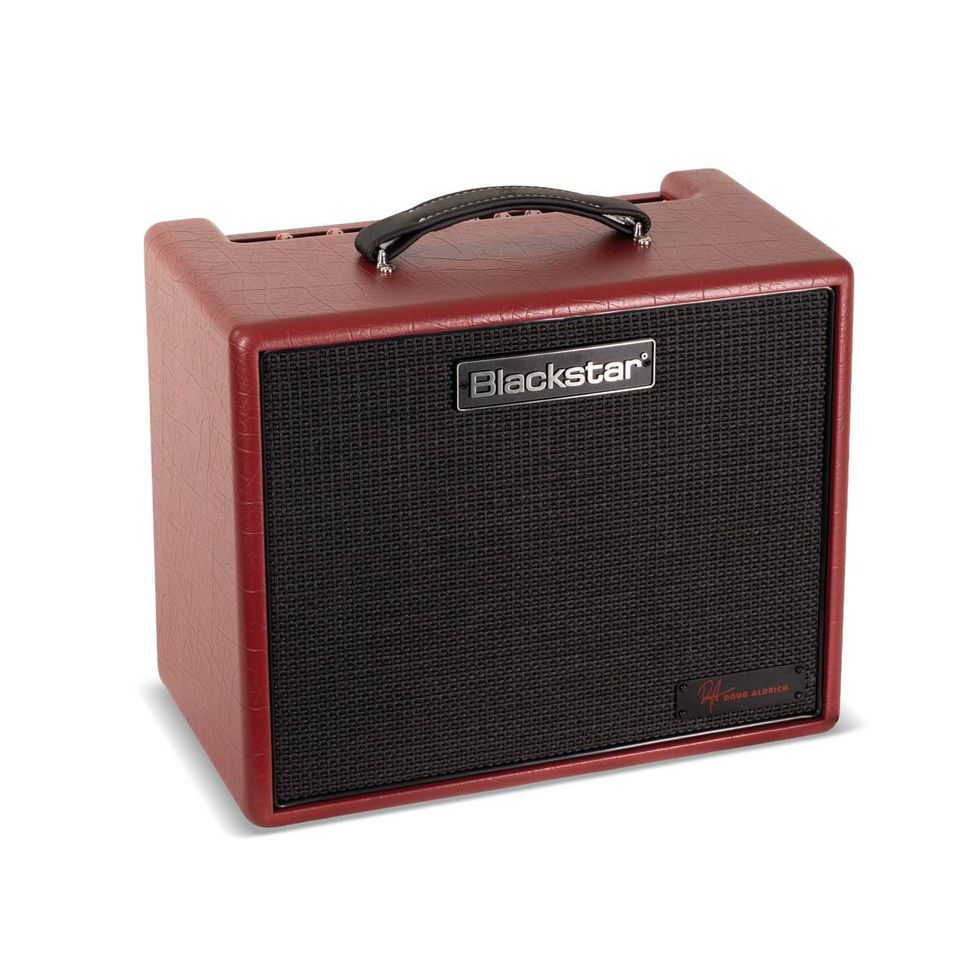
DA5 Ruby - Doug Aldrich Signature Combo
The DA100 Ruby won awards across the world. Developed in close collaboration with Doug Aldrich, it delivered a stage-ready tone that players everywhere wanted. The DA5 Ruby gives you exactly that. Same DNA. Same Ruby finish. Same legendary Aldrich character. Now in a form that fits your home and studio.
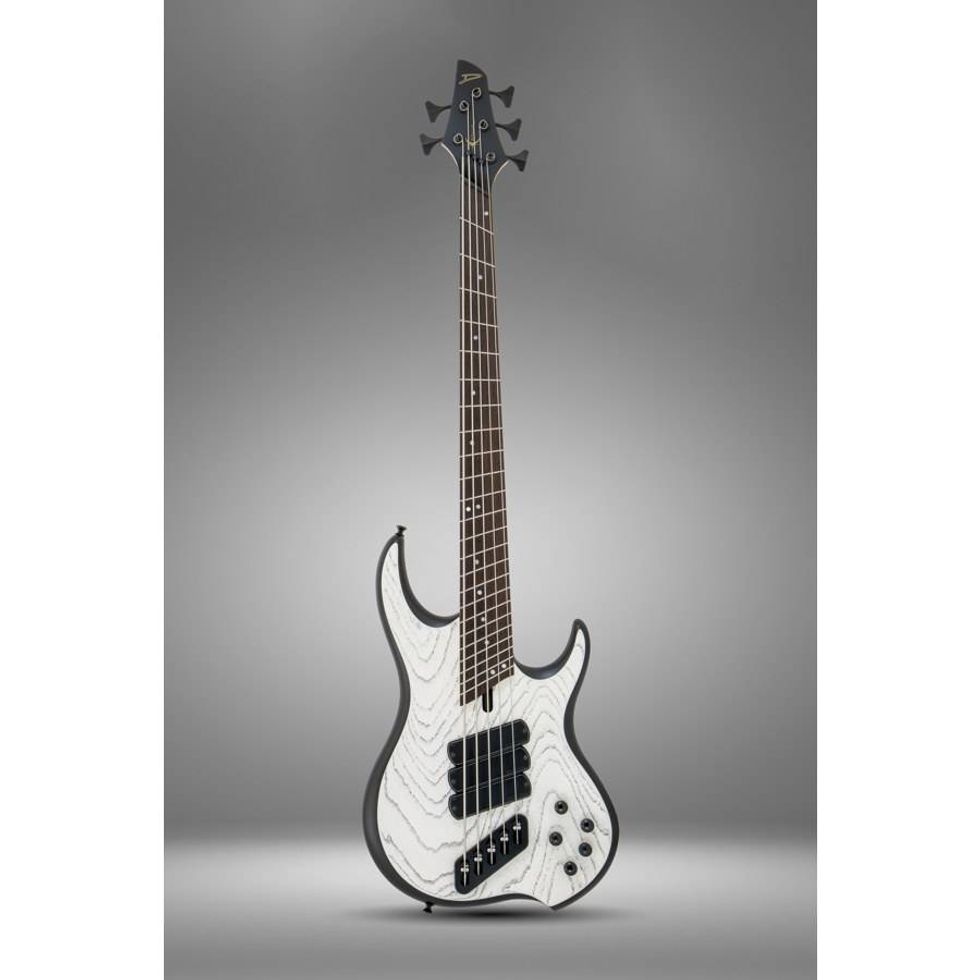
Jacob Umansky ‘Sol’ Signature Model
INCLUDE 5-string: $3,145 USD 6-string: $3,245 USD
Designed as a more affordable take on Jacob Umansky’s Custom Shop Dingwall Z3, the Sol retains many of the Canadian bass brand’s premium features. Player-focused ergonomics and a powerful Darkglass electronics package deliver huge tonal versatility, making it equally at home with intricate slap bass and crushing modern metal.
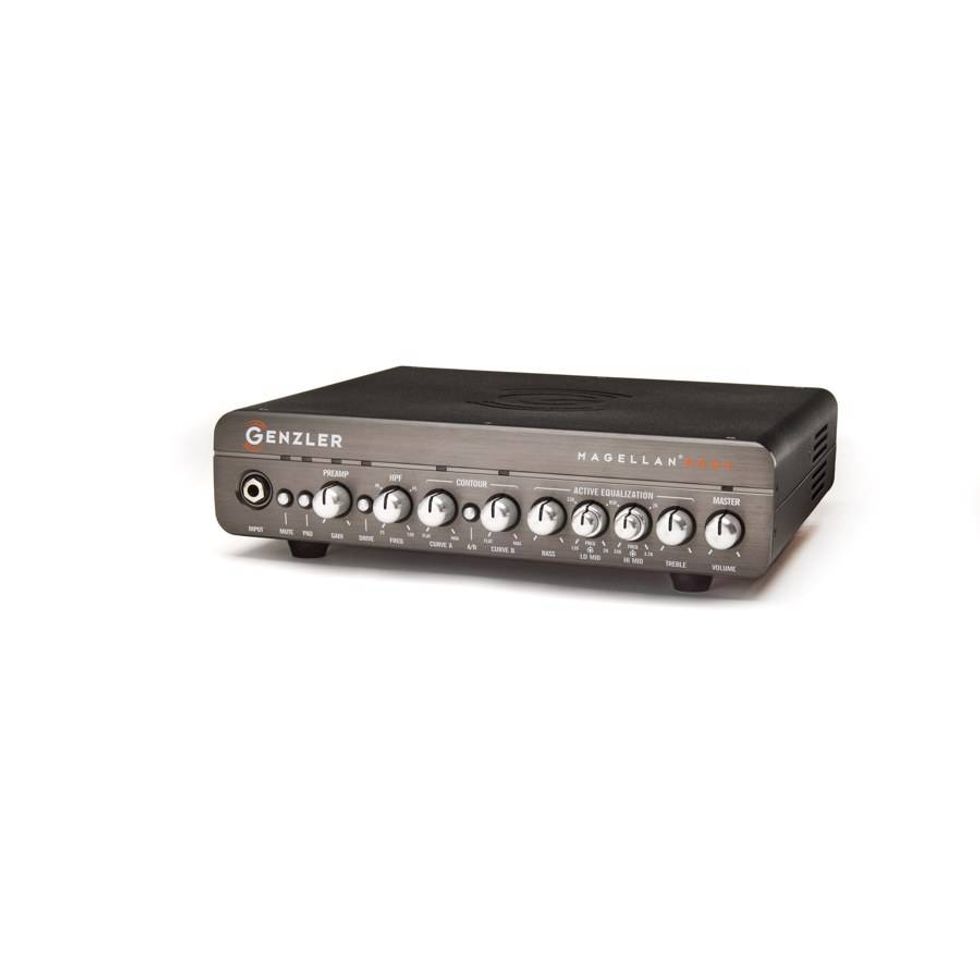
MAGELLAN 800+
WE'VE UPGRADED A LEGEND! Explore the next generation Magellan amplifier design. With a 10-year legacy of night-after-night performances and exceptional tone, we now introduce the Magellan 800 PLUS, with all new preamp features---while continuing the same musical tone, quality and durability that players expect from GENZLER AMPLIFICATION.
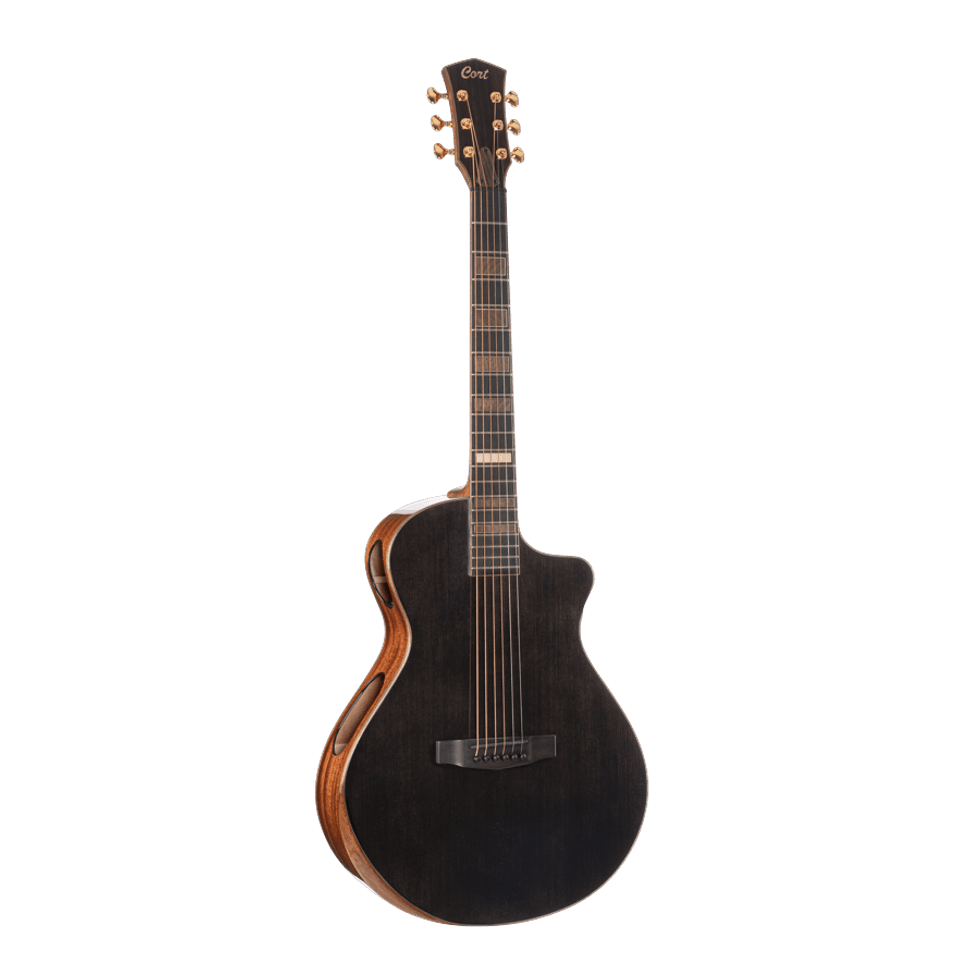
Modern Black
The Cort Modern Black reimagines acoustic design with its Modern Concert body shape, delivering rich, full sound from a compact instrument. Featuring dual side sound ports, a solid European spruce top, and solid mahogany back and sides, it combines player-focused innovation, contemporary design, premium tone, and exceptional playability.
Fender continues 75th anniversary celebrations for its Telecaster and Precision Bass – including a “meticulous tribute” to the Nocaster

Fender is continuing to celebrate 75 years of the Telecaster and Precision Bass with even more Anniversary models, including a tribute to the nameless Nocaster.
A range of new guitars join the previously unveiled P-Bass 75th Anniversary models that landed in May, and a range of Teles that arrived in March – including a new Cabronita model.
This latest drop consists of a number of P-Bass and Tele models that integrate archival finishes, classic and peculiar models of the past, and modern features that offer a contemporary take on their historic features.
Let’s dive into each one…
75th Anniversary American Vintage II 1951 Nocaster
In 1951, between the end of the Broadcaster name and the dawn of the Telecaster, Fender shipped guitars with no model name on the headstock. This ‘Nocaster’ documents a peculiar window in electric guitar history; informed by a telegram from Gretsch that the ‘Broadkaster’ name had been registered for a drum kit, Fender began clipping the Broadcaster name from headstock decals until the new Telecaster decals were delivered.
The 75th Anniversary American Vintage II 1951 Nocaster features an ash body finished in Nocaster Blonde and an exclusive Heirloom Lacquer treatment. It has a ’51 U-shaped maple neck with a 7.25” radius fingerboard and vintage tall frets.
True to the Nocaster specifications, the 12th fret face-dot spacing is narrow and the sole single Phillips-head fastener on the guitar is at the truss rod nut. Elsewhere, it has a triple brass saddle bridge and single-line Fender Deluxe tuners, while the 75th Anniversary Blackguard Telecaster pickups honour the guitar’s lineage.
 Credit: Fender
75th Anniversary Player II Baritone Telecaster
This Baritone model offers a Modern C-profile, a rosewood or maple fingerboard, 22 medium jumbo frets, and a 27” scale length – ideal for players seeking access to lower registers. Fitted with Player Series Alnico V Single-Coil Tele pickups and a 3-way blade, it’s completed by a 6-saddle bridge, block steel saddles and ClassicGear tuners. This one is available in 3-Color Sunburst and Black with a Rosewood Fingerboard, or Lake Placid Blue and Butterscotch Blonde, both with a Maple Fingerboard.
 Credit: Fender
75th Anniversary Player II Telecaster
Bringing a contemporary take to the Tele, this Anniversary Player II model also offers a Modern C-profile with satin urethane finish and a 9.5”-radius slab rosewood or maple fingerboard with rolled edges. It hosts 22 medium jumbo frets, and players get a choice between alder, chambered ash or chambered mahogany bodies available in Daphne Blue and Seafoam Green with a Rosewood Fingerboard, or Candy Apple Red and Aztec Gold with a Maple Fingerboard. This model is powered by Player Series Alnico V Single-Coil Tele pickups, accompanied by a 3-way blade switch, a 6-saddle bridge, block steel saddles and ClassicGear tuners.
 Credit: Fender
75th Anniversary Player II Precision Bass
This Player II Precision Bass is “primed for today’s players”, according to the Big F. It has a Modern C-profile with a satin urethane finish on the back, a 9.5”-radius slab rosewood or maple fingerboard with rolled edges, and 20 medium jumbo frets.
An alder body is available in both classic Fender finishes and never-before-seen colours unearthed from the archives: Daphne Blue and Seafoam Green with a Rosewood Fingerboard, or Candy Apple Red and Aztec Gold with a Maple Fingerboard. Player Series Alnico V Split-Coil P Bass pickups power tone, while an adjustable 4-saddle bridge, single-groove steel saddles and open-gear tuners aid tuning stability.
 Credit: Fender
To find out more about the 75th anniversary collection, visit Fender.
The post Fender continues 75th anniversary celebrations for its Telecaster and Precision Bass – including a “meticulous tribute” to the Nocaster appeared first on Guitar.com | All Things Guitar.
Last Call: Verifying the Vintage
When I first got into guitars, “vintage” wasn’t really a thing. A ’59
Burst was special because our heroes played one. But everything else was just a used guitar. You could score a 1952 Les Paul Gold Top in that greenish gold hue, covered in checking, for a hundred bucks in pawnshops, classifieds, or at garage sales. A buddy of mine had one and was embarrassed every time he pulled it out of its brown case. They just weren’t cool.
Luckily, because these old planks were considered second-tier back then, I managed to buy and hold onto a few I couldn’t touch today. As vintage guitars became serious business, authentication usually came down to some old-timer with a good eye and strong opinions. Counterfeiters are getting terrifyingly good. It’s forensics now, not gut feel.
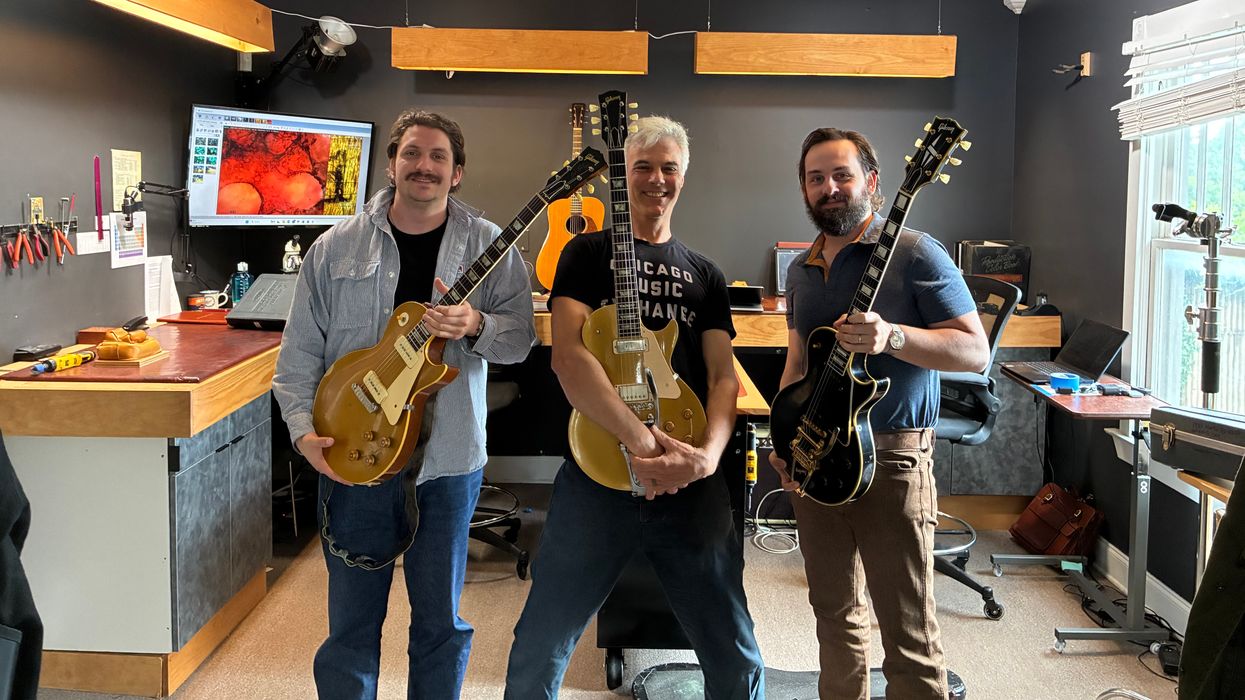
So I turned to the pros at Vintage Verified, a third-party guitar analysis lab run by Jon Roncolato and Zach Ziemer, two talented, respected members of Nashville’s guitar community that I’ve known for years. They built out a state-of-the-art lab and hired some of the top chemists in the world, like Dr. Tom Tague Jr., to perform non-destructive scientific testing—spectrometers, analytical chemistry, 3D scanning, the works—to check if a vintage instrument's parts and finish match its claimed era and maker. They examine finish, plastics, hardware, pickups, electronics, body and neck structure, inlays, logos, everything, and compare it against their massive database of known-good and known-suspect examples, and also of period-correct and modern materials alike.
I brought them what I believed to be my 1952 Les Paul Standard (refinished with new electronics), my seemingly stock 1954 Les Paul Standard, and my 1956 Les Paul Custom (partially refinished with a neck repair from its misspent ’70s youth). If they’re genuine, the trio could fetch serious money—think north of $80K combined in today’s crazy market. If they’re clever fakes or heavy rebuilds? Maybe $6K–$10K for the lot.
"As vintage guitars became serious business, authentication usually came down to some old-timer with a good eye and strong opinions."
The anxiety was real. What if I’d been lying to myself all these years? What if my retirement plan was actually worth five percent of what I imagined?
I was most concerned about how they could accurately date my 1952 Les Paul. Gibson did not start using the ink-stamped five-digit serial numbers on the back of the headstock until well into 1953. That makes dating a bit of a challenge. On top of that, my ‘52 came to me as a hacked-up husk, having been repeatedly stripped, routed, and repainted over its very rough 72 years on this planet. The Vintage Verified guys told me that if the guitar is a legit 1952, the instrument will likely have at least traces of original paint in the pickup cavities, as it’s very uncommon for someone to strip the concealed guts completely.
Cavity remnants in combination with 3D scanning provides a high degree of certainty as to whether a husk is legit or not. The 1952 Gibson Gold Top finish is unique because it used a bronze powder mixed into clear nitrocellulose lacquer instead of modern gold metallic flake or mica. As with most period-correct materials, a period-correct Gibson finish from the 1950s is virtually impossible to recreate. As Vintage Verified put it, the complexity of the chemistry involved in these coatings is far beyond the grasp of many people.
But I wonder—when the Boomers finish unloading their collections, will Gen X, Millennials, Gen Z, Alpha, or the incoming Beta crowd even blink? These younger players think nothing of dropping $7 on coffee or $800 on a modeler, but a 70-year-old plank with checking and a questionable neck reset?
I’m betting that as the chasm between the Haves, the Have Nots, and the Have Jets grows increasingly larger, the mega rich will run out of things to buy, so they will chase what is rare. You can build as many custom shop reproductions as you want, but unless you have a Delorian and a flux capacitor, you can not build a true ’50s-era Les Paul.
I don’t know if I’ll ever sell mine, but at least now I know what I actually own. When I’m gone, there’s objective evidence for my daughter. Maybe she’ll drag them to gigs and bang on them just like she watched me do her whole life. Or maybe she’ll sell them and buy a house. Either way, the guesswork is gone.
The process isn’t cheap, but the confidence it gives any future buyer (or inheritor) more than pays for itself. Plus, it just feels good to stop wondering.
Joe Bonamassa reveals the vast number of his Gibson and Epiphone signature guitars that have sold over the years

It will soon be 20 years since Joe Bonamassa released his first signature model with Gibson, and ahead of the milestone he’s provided an estimate on how many of his signature models with Gibson and Epiphone have sold overall so far.
JoBo’s first signature was a Custom Shop ‘Inspired By’ Gold Top Les Paul model, which was released as a drop of only 300. The model sold quickly, unexpectedly for Bonamassa at the time, opening the gate to more opportunities for further guitars over the years.
During his appearance with Eric Dahl on the Gear Gab podcast, Bonamassa begins to reflect, “Mat Koehler over at Gibson told me that next year is the 20th anniversary. Time flies! We originally started with 300 Custom Shop ‘Inspired By’ Les Pauls, that was my take on an old Gold Top.
“The late great Pat Foley was the one that basically approached me about that. Rick Gembar, who was the head of the Custom Shop at Gibson at the time, he was the one that green lit the whole thing. I don’t think they were expecting to sell those kinds of guitars that fast, especially because I was not as well known, but for some reason they sold really fast and we did other ones. ”
He adds, “We did other Custom Shop ones and then we did… I mean, there’s probably Custom Shop JB ones, there’s maybe a couple thousand out there. I know there’s at least 20,000 Epiphones out there, so we’re vastly approaching 25,000 Gibsons over the last 20 years.”
Watch the full podcast below:
On a similar note, Bonamassa has teamed up with Martin again for two new signature models inspired by his 1937 Martin 00-18 shade-top. The collaboration consists of the 00-18 Joe Bonamassa and 00-10E Retro Joe Bonamassa – two acoustic guitars that aim to give players the look and feel of the blues maestro’s treasured pre-war 00-18.
The post Joe Bonamassa reveals the vast number of his Gibson and Epiphone signature guitars that have sold over the years appeared first on Guitar.com | All Things Guitar.
Walrus Audio’s new Canvas Expression pedal has no mechanical parts for better reliability

Walrus Audio has introduced a new addition to its Canvas Series, an expression pedal that promises minimal wear and tear overtime.
Building on its Canvas Volume pedal that launched earlier this year, Canvas Expression is said to offer smooth control without “the mechanical compromises of traditional expression pedals” thanks to its sensor operation.
Walrus Audio describes it as a “command centre” rather than a typical pedal, providing a control hub for compatible devices through Expression, MIDI, USB-C or CV, making it adaptable to pedalboards, synths, and computer-based rigs.
- READ MORE: Red Panda RD-1 Pitch Delay review – a clever compact delay with multiple note-manipulating tricks
Engineered in Oklahoma City, Canvas Expression relies on a contactless precision magnetic position sensor for smoother operation and improved reliability, unlike conventional designs that rely on strings, gears, or potentiometers. With this modern take, the brand says it delivers “consistent performance with no mechanical parts to stretch, slip, or wear out”.
Users get simultaneous control over multiple devices at one time, and there are multiple analogue 1/4” expression connection options such as expression, CV and switch signals.
Using the Canvas Expression web editor, musicians can also further customise tapers, wiring, MIDI CC and PC assignments, CV settings, switch behaviour, and more to optimise compatibility with a wide array of setups.
 Credit: Walrus Audio
Walrus Audio’s Canvas Series also features a number of other nifty tools like DI boxes and the Canvas Tuner, Clock, and even its own Rehearsal tool. The series aims to deliver the “cleanest, clearest signal possible throughout your rig”.
Outside of the Canvas range, we’ve included a number of Walrus Audio tools in some of our top roundups. We highlighted the Walrus Audio Fundamental Distortion in our guide to the best distortion pedals, and its Fundamental Ambient reverb in our top picks for the best pedals for beginners.
Walrus Audio’s Canvas Expression is available now for $299.99. Find out more via the Walrus Audio website.
The post Walrus Audio’s new Canvas Expression pedal has no mechanical parts for better reliability appeared first on Guitar.com | All Things Guitar.
“Okay, Hans, no need to hurt my feelings!”: Johnny Marr reveals the brutal but helpful expletive-laden advice he once got from Hans Zimmer

Back in 2010, legendary composer Hans Zimmer roped in Johnny Marr to feature on his latest film project – that’s how The Smiths legend wound up performing a 12-string electric on the Inception soundtrack. Zimmer was so impressed that he’s enlisted Marr for plenty of projects ever since. However, things could have ended at Inception if Zimmer hasn’t given Marr a stern pep talk.
Despite being a renowned axeman, Marr used to be pretty coy about his guitar skills. When first faced with Zimmer 16 years ago, the guitarist was too reserved – and Zimmer wasn’t having it. Sensing that Marr was holding back, the composer quickly knocked some sense into him. “When I was younger I was too reverential,” Marr admits in the latest issue of MOJO. “Hans Zimmer had to tell me that – ‘I got you in to sound like Johnny Fucking Marr, so get on with it!’”
While Marr jokes “Okay, Hans, no need to hurt my feelings!”, Zimmer was right. Marr wasn’t living up to his name or legacy – so he made sure to bring everything to the table from that day on. “It was a good lesson learned,” he says. “These days I think I know what people want me to bring [to a recording session].”
In the years since their first collaboration, Marr has also given Zimmer some helpful advice in return. In fact, in 2015, Marr began to encourage Zimmer to pick up his own guitar and start performing live. “[He said it had] came to the point now where I have to look the audience in the eye, where I can’t hide behind a screen anymore, and I need to get out there and confront humanity,” the composer explained on CBC’s Q with Tom Power podcast last year.
Just as Zimmer had encouraged Marr to be more confident in his skills. And Zimmer decided to take his advice, even performing guitar for Pharrell Williams at the 2015 Grammy Awards. “At that moment, I thought only an idiot would say no,” Zimmer noted. “That sort of started the whole thing up.”
That’s how Zimmer began embarking on tours to perform his soundtracks live, with the first tour coming in 2016. “It’s all Johnny Marr’s fault, really,” he told Irish News in 2016. “He talked me into doing a concert, then another, then another and now a tour. There I was, trapped away in my little room with no windows for 30 years, and now I’m playing arenas.”
“I always had [stage fright], and it was Johnny making me go on stage that got me out there each time we’ve performed,” he added. “He was always saying, ‘Come on, you can do it, you’ve got to’, and I got out there. You can’t not do something in life just because you are afraid of it. You cannot let fear rule your life; you just have to throw yourself at the mercy of humanity. If I mess up, people will be kind about it.”
Elsewhere in the MOJO interview, Marr also reflected on how another legend’s advice reframed his sadness over The Smiths breakup – namely, Beatles icon Paul McCartney. “I just told him about the break-up of the band,” he remembers. “I looked to him and waited and he just said, ‘That’s bands for you.’ It’s such a brilliant answer coming from him.”
“Over the years, I’ve been asked to give advice,” he continues. “There is just a time to say, ‘That’s bands for you.’”
Johnny Marr’s new album, The Age of Everything, drops on 2 October. You can pre-order it now.
The post “Okay, Hans, no need to hurt my feelings!”: Johnny Marr reveals the brutal but helpful expletive-laden advice he once got from Hans Zimmer appeared first on Guitar.com | All Things Guitar.
The time Jimi Hendrix met Paul McCartney at a fancy event, and couldn’t handle it: “Paul McCartney’s walking towards me… What shall I do?”

Jimi Hendrix could make a guitar scream, set it on fire and generally look like the coolest man in the room. Put him in front of Paul McCartney without a guitar to hide behind, though, and even Hendrix got the nerves.
That’s what happened when the late legend was invited to a star-studded event at London’s Post Office Tower, as his former roadie Eric Barrett recalls in a new interview with Uncut.
With Hendrix arriving without his usual six-string safety blanket, things got particularly tense when he spotted Beatles star Paul McCartney heading his way.
“Jimi was invited to an event at the Post Office Tower, in the revolving restaurant at the top. Gerry [Stickells, tour manager] couldn’t take him, so I said I’d go along with him,” Barrett recalls. “I have no idea what the function was but I went to loads of events like that, just happy to get the free beer and a canapé and spend some time with Jimi.”
There was just one problem: Hendrix didn’t have his guitar.
“Jimi didn’t have a guitar, so he didn’t have a prop, something to hide behind,” Barrett explains. “We walked in and he saw who was there and started speaking out the side of his mouth: ‘Eric, Eric… Paul McCartney’s walking towards me… What shall I do?’ I told him to relax, it would be fine. Paul McCartney came over and was showering him with praise, but Jimi wasn’t good at that at all.”
According to Barrett, Hendrix was similarly uncomfortable around other famous musicians, despite being a hero to many of them himself.
“He was so shy, he didn’t know how to respond. And he was like that with all the stars he met,” says the former roadie. “He didn’t seem to understand why they were looking up to him. If he had met Paul McCartney in the studio, he’d have been much more comfortable.”
Barrett’s years on the road with Hendrix produced no shortage of memorable stories. In an excerpt from his new memoir, Experienced: On the Road with Jimi Hendrix and Beyond, he also looks back on the guitarist’s habit of destroying his instruments onstage – and what Hendrix told him when he finally asked why.
“Eric, I just couldn’t get any more out of it, man,” Hendrix explained. “I squeezed every note and every sound that guitar was ever going to give me. It had nothing left to give.”
The post The time Jimi Hendrix met Paul McCartney at a fancy event, and couldn’t handle it: “Paul McCartney’s walking towards me… What shall I do?” appeared first on Guitar.com | All Things Guitar.
Meet the little-known boutique builder who makes the secret weapons behind some of metal’s most brutal guitar tones

Sometimes, Michael W. Klein is tagged in posts filled with horrifying noises. They’ve been shared online by musicians fighting to contain the fury and chaos of his Oni pedal, a high-gain collaboration with God’s Hate and Twitching Tongues guitarist Taylor Young that’s capable of peeling skin from skulls. “I’m like a proud father watching their kid round the bases,” Klein says with a laugh when he brings up the videos. “God, that thing is nasty.”
If he wanted to, Klein could field a whole baseball team of bench-clearing brawlers, having spent the past decade building a rep as an amp and pedal maker of particular renown among artists whose tastes run to these kinds of extremes. Alongside Young, also an in-demand producer whose Los Angeles-headquartered studio The Pit has become a hub for musicians seeking grimy, mosh-forward textures, his champions include Sammy Duet, of Goatwhore and sludge-metal comeback kids Acid Bath, Matt Harvey, main man of San Jose death metal veterans Exhumed, and thrash titan Gary Holt, who riffs in both Slayer and Exodus.
Sitting in his basement workshop as we talk over Zoom, Klein wears a cream Eyehategod shirt while surrounded by boxes of stuff – miscellaneous tools, screws, cables, stuff – that he’ll put to work in pursuit of noises that would terrify the average person on the street. “I hate to use the word craftsmanship,” he says, trailing off. But, in fairness, what other word is there? Klein’s approach is a fascinating marriage of creativity, technology and old-school trial and error – he will do the scut work of populating a circuit board by hand while contemplating what it means to devote love and care to something so outwardly confrontational.
“I’ve spoken with Taylor, Sammy, Matt about this – it’s almost like those guys and myself are philosophically grounded and driven,” he says. “As a fan of heavy music I tend to gravitate towards music that feels that way as I’m experiencing it. I’m into builders who are that way, too, like Dean Costello. When you hear his amps, and you see how he builds them, it’s so clear that there’s deeper meaning behind it. I’ve been fortunate that other nerds see that in my stuff.”
 Michael W. Klein. Image: Kelly Powell, Elements Brand Haus
Don’t Quit Your Day Job
Klein is fully aware that he is never going to be a unit-shifter of any real note, and equally steadfast in his desire not to be. Based in Kansas City, he has a full-time job that he has no intention of quitting and his equipment is produced in small runs that are pored over in his spare time, reflecting a passion that has been there since he was a teenager studying the chugs on Metallica records. “A friend I used to jam with would tease me about how I spent more time trying to get my guitar rig to sound like [Sepultura’s] Chaos A.D. than playing together,” Klein recalls.
At the same time, the vibrant messageboard scene of the early internet opened doors in terms of starter-pack electronics knowledge and records that pushed his metal fandom towards more esoteric realms. When he emerged from college completely broke and minus all the gear he’d sold to buy food and other unfortunate necessities, Klein stopped short of replacing it. What if, he thought, instead of chasing gear that may or may not sound the way he wants it to, he made it himself? “It just built from there over time,” he says.
“One of the first tube amps I built was a 40-watt simplified Dumble circuit,” he continues. “I had never done anything from scratch quite like that. I remember finishing it, measuring everything, doing startup and it sounded great. That was a turning point for me. In my mind, there were so many legends about tube circuits, specific builders, and all this black magic. I realised there wasn’t anything special – if I could do it, anyone could.”
 Image: Kelly Powell, Elements Brand Haus
Access All Areas
This punk commitment to accessibility is fundamental to Klein’s approach – he keeps his prices as low as possible, especially considering the labour involved, and is really only in it to help other people make the cool stuff he’s always liked. Once he realised he could do it, it was a short hop to thinking he’d like to bring some of the sounds in artists’ heads screaming into reality. A crucial moment arrived in 2015 when, following an Exhumed show, he wandered over to Harvey and offered to buy him a drink.
“I told him how much I appreciated what he does,” Klein remembers. “I was like, ‘I build guitar stuff, and if there’s anything you’d ever like to have, I would be honoured to build it.’ He had a pretty lofty idea – a preamp that had the distortion channel of an Ampeg VH-140C, a clean channel, and then built-in reverb that was assignable to either channel. At that time, I was making my circuit boards by hand, drilling every pad, etching them. That was a logistical nightmare to tackle, and it was also such a blast. That was the impetus for the word of mouth.”
Later, Klein approached Duet with a similar offer through Instagram, while Young was introduced to his work by his former Nails bandmate Leon del Muerte, who was himself introduced to Klein by Harvey, his former Exhumed bandmate. The circle, it spins. Now, having seen Klein in action, they’re all intent on hipping people to what’s going down in Missouri. “I really like working with DIY people,” Young observes. “And it doesn’t get more DIY than Michael’s ‘only-man’ operation.”
 Oni pedal. Image: Kelly Powell, Elements Brand Haus
Oni Option
To make Oni, Klein was tasked with turning a “pedal chain of ridiculousness” into a box that Young estimates still gets used on 50 per cent of sessions at The Pit. “It was a combo of the original Slayer tone, an OD-1, Boss 10-band EQ and a RAT to get more grit and slime out of it,” Young says. “I floated Michael an idea for this chain as a pedal and he sprinted with it. We landed on modded versions of each pedal in one box, but each with their own individual low boost, and a switch to choose which is first in the internal chain.”
With Acid Bath playing stadiums alongside System of a Down thanks to a Crowbar-style TikTok glow up, plenty of eyes will also be resting on Klein and Duet’s Tube Screamer-esque Dybbuk pedal and their SPD100 amplifier, which both featured in Klein’s latest drop. Crucially, though, he’s not just slapping famous names onto things in order to glom some of their buzz. He’s making tools that are there to be used. “I like everything to make sense and have a purpose,” Klein says, and that extends to the process itself.
On one hand, each component finding its right place is about doing the job to the best of his ability, but on the other it’s also about how it makes him feel. “The thing I realised over time is that I was not only building and designing and modding stuff for this love of guitar tone, it was also a way of managing mental health issues,” Klein notes. “I’m dealing with depression and anxiety and suicidal thoughts, all this stuff.”
“It was a way for me to work with my hands and be creative in a way that helped quiet that stuff down, at least temporarily,” he continues. “I’m in a better place than I’ve been in a while. But that is still there. It’s crazy for me that people are interested in this thing I’ve done for myself, because I’m a hopeless nerd and because I have difficulties. If that interest suddenly stopped, I would still be down here in my shop building stuff because I need to. And, because it’s fun.”
The post Meet the little-known boutique builder who makes the secret weapons behind some of metal’s most brutal guitar tones appeared first on Guitar.com | All Things Guitar.
Walrus Audio Introduces Canvas Expression
A Guitar With a 20-Watt Speaker Built In? | Inspire Pro Demo
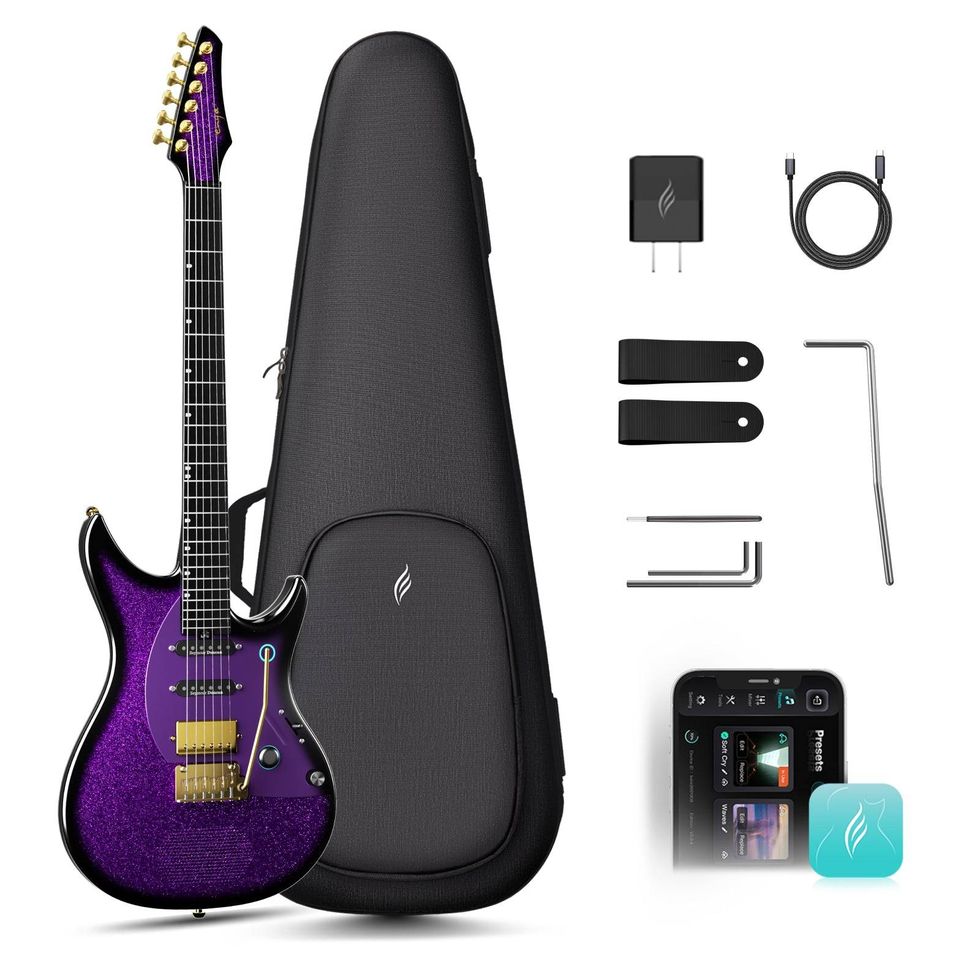
Usually, if you're bringing an electric guitar to a gig, you need to bring an amp, or at least a speaker, too. The Enya Inspire Pro changes that. It's got one built in. Tom Butwin unpacks a smart guitar that folds an entire signal chain into a carbon fiber body, and makes the case that even the most die-hard traditionalist can find a use for it.
Behind the speaker sits the processing: more than 50 amp models, a deep effects library, an onboard looper, tuner, and drum machine. Switch to line-out mode and all that modeling routes out the quarter-inch jack to an amp, interface, or FRFR cab. Add the wireless footswitch and you're jumping between patches and presets from the floor. The Enya app handles the rest, offering the ability to rearrange effect blocks, dial in parameters, and generate tones from a written or spoken prompt.
The Inspire Pro is available at two price points. The SD carries a USA Seymour Duncan set (SSL-2/SSL-3/TB-4), a titanium alloy and brass bridge, and a gloss finish. The AL swaps in Enya's own Apex Lab pickups and a matte Lazer Radiance finish, keeping all the same smart features.
Save $250 on this killer metal-ready Epiphone Flying V prophecy

The Flying V might have been something of a dud when it originally launched back in 1958, but one of Gibson’s most unique designs is proof positive that some guitars are simply ahead of their time.
Indeed, it took a few decades for the circumstances to be quite right, but nowadays the iconic V shape has become a staple of rockstardom – particularly at the heavier end of the spectrum, where pointy guitars are almost mandatory, and shapes like the V and Explorer have become oft-imitated classics.
Thankfully, the success of the Flying V in the hands of Metallica’s Kirk Hammett, Zakk Wylde, Michael Schenker or scores of others means that the guitar world is well-stocked when it comes to options from both Gibson’s range and the more affordable Epiphone end of the spectrum.
Back in 2021, Epiphone launched the Prophecy collection, which was set up metal fans from the off, complete with all-black livery and crucially, sporting a pair of Fishman Fluence active pickups – and now thanks to the good folk at Sweetwater, you can snag one for a very respectable $250 discount.
In addition to the none more black looks and the Fluence pickups, the Prophecy is a classic mahogany design with a 24-fret ebony fingerboard with an asymmetrical Slim-Taper-shaped neck. You’ll also find upgraded hardware that also includes Grover locking Rotomatic tuners, a LockTone Tune-o-matic bridge, and a Graph Tech NuBone nut.
Given that this guitar was originally over a grand, the $250 discount makes this guitar a real steal – the Fluence pickups would cost you about $400 on their own, and that’s without the guitar it’s attached to!
The post Save $250 on this killer metal-ready Epiphone Flying V prophecy appeared first on Guitar.com | All Things Guitar.
Royal Blood Announce New Album "Dead Company"
Royal Blood, one of the most important British rock bands of their generation, return today with an explosive new single “Ten Over Ten” and announce their long-awaited fifth studio album, Dead Company released via Warner Records on November 13th.

Dead Company marks a powerful new chapter for the duo, who last released an album in 2023. Following a period away from the spotlight, Mike Kerr (bass, vocals) and Ben Thatcher (drums) entered the studio in 2025 with no deadline, no distractions and a simple ambition: to see what was possible with two people, 12 notes and infinite outcomes.
Self-produced by Royal Blood, they set out to make an album as raw, human and visceral as possible. Dead Company strips everything back to its core. Immediate and uncompromising, it captures Royal Blood at their most powerful.
The band adds “After putting the Royal Blood engine in neutral for a couple of years, we've been building up the revs and are playing faster and harder than ever with this album. Written and recorded with the stage in mind, we cannot wait to play it live for years to come.”
The first track to be revealed, “ Ten Over Ten ,” is a menacing desert rock meets Motörhead behemoth of a single. The lyrics and vibe were inspired by the frontman training for a marathon, and it became all about endurance and pushing yourself. Click here to listen.

Since they first emerged 12 years ago when they released one of the fastest-selling rock debuts of the century, Royal Blood have made one hell of an impact: each of their four albums has hit Number One in the UK, shifting over 1 million records, becoming an arena-filling, festival-headlining tour de force, and forerunners of the guitar rock revival we’re seeing today.
The album announcement follows news of three sold-out intimate August underplay shows in the UK. Click here for tickets and tour details. U.S. tour and more to be announced soon. Click here for more info.
Ultimately Dead Company is a bold 10-track album. This is what they were born to do, so they might as well turn it up. And with that Royal Blood return louder, sharper and more vital than ever.
This Taylor Swift-vibed Epiphone acoustic is over $400 off at Sweetwater – and that’s a steal whether you’re a Swiftie or not

While Taylor Swift’s 2023-2024 Eras Tour was a global phenomenon, her arsenal of guitars was equally as staggering. However, one guitar stood head and shoulders above the rest in her grandiose collection: the Gibson J-180. The J-180 was the true star of the show, with the superstar wielding multiple versions of the acoustic-electric, from pastel pink to rhinestone-adorned.
With Swift asserting herself as a modern guitar hero, her favoured guitar is certainly worth considering if you’re in the market. Thankfully, Sweetwater currently has a sweet deal on Gibson’s sister brand, Epiphone – meaning you can get an Epiphone J-180 LS for over $400 off.
While Gibson quickly jumped on the hype of Swift’s Eras tour, releasing a Gibson Custom Everly Brothers version of the J-180, that model will set you back by over $4,000. The Epiphone edition was a much more realistic $1,299 at launch, but that’s now been slashed to an even more appealing $899 – and it packs plenty of charm and quality into that price.
The Epiphone J-180 LS is a great way to capture Swiftie tones. Though there isn’t a silver, rhinestone-studded edition, you can get the same $400-off deal on both the lovely pastel pink and classy ebony black options. Both also feature a C-shaped mahogany neck, with popstar-worthy mother-of-pearl star inlays across a laurel fingerboard.
 Credit: Sweetwater
With a classic Gibson 25.5-inch scale it’s a comfortable player for anyone, and the classic J-style body shape means much of the guitar’s mass is away from the player’s body, with that svelte waist offering easy access even for smaller frames. It also has onboard LR Baggs Element Bronze VTC preamp electronics for to help amplify and maintain a strong, warm acoustic tone.
While the Eras Tour saw Swift run through the full gamut of guitars she’s used and loved throughout her career, the J-180 was clearly her current favourite squeeze. If it’s good enough for Swift, it’s well worth your time.
While last year saw Swift releasing her album The Life of a Showgirl, this year has seen slightly less musical output from the pop superstar. Though, she did have a feature on the new Toy Story 5 soundtrack, releasing the country pop, acoustic-sprinkled I Knew It, I Knew You.
The post This Taylor Swift-vibed Epiphone acoustic is over $400 off at Sweetwater – and that’s a steal whether you’re a Swiftie or not appeared first on Guitar.com | All Things Guitar.
“If you have a bottle of Jack Daniel’s and an eighth of speed – I’ll be there” Lemmy’s amazing response when Billy Morrison asked him to play a show

What exactly do you need to get Motörhead legend Lemmy Kilmister to play your gig? If you’re Billy Morrison, apparently just a bottle of Jack Daniel’s and an eighth of speed.
As Morrison recalls in the new issue of Classic Rock, Ozzy Osbourne had given him Lemmy’s number with the assurance that the singer was “easy to deal with”.
“I do these occasional all-star shows in LA, where we play covers with a bunch of famous people,” says the guitarist. “About twenty-five years ago, Ozzy gave me Lemmy’s cell number and said: ‘Drop him a line, he’s easy to deal with.’ So I cold-texted Lemmy Kilmister. And I’m terrified. Because I don’t know how this legend of debauchery is going to respond.”
Morrison kept the message simple, asking Lemmy if he would come down to the Roxy and play Motörhead classics Ace Of Spades and Bomber.
“Within seconds, he responded: ‘If you have a bottle of Jack Daniel’s and an eighth of Beryl’ – that’s Beryl Reid, which is Cockney rhyming slang for speed ‘I’ll be there.’”
True to his word, Lemmy turned up, bringing all the ingredients Morrison had apparently been promised. His guitar tech also brought along the Motörhead frontman’s famously enormous Marshall rig.
“At that show he was everything you would want Lemmy to be,” Morrison says. “His tech brought down his famous Marshall amp. It was ridiculously loud. The cowboy hat, the voice, the volume – he killed it.”
The experience also left Morrison with a unique perspective on Lemmy’s ability to perform through the excesses that had become synonymous with his image.
“I don’t think [playing under the influence] made any difference,” he says. “This is where everyone goes wrong in the music business, me included. You think you’re great, but you’re shit. There are precious few – Keith Richards being one, Lemmy being another – where, actually, it makes no difference. I’ve seen the man drink a bottle of Jack and snort three grams of speed, then I’d have a conversation with him.”
The post “If you have a bottle of Jack Daniel’s and an eighth of speed – I’ll be there” Lemmy’s amazing response when Billy Morrison asked him to play a show appeared first on Guitar.com | All Things Guitar.
“It could be the last time we see each other”: Ritchie Blackmore on his “very emotional” Deep Purple reunion

For anyone who thought Ritchie Blackmore and Deep Purple would never share a stage again, last Wednesday night at Jones Beach proved that time really does heal all wounds. More than three decades after his last gig with the band in 1993, the guitarist surprised fans when he walked out onstage to perform Smoke on the Water.
Speaking to Guitar Player, 81-year-old Blackmore reveals that the surprise jam was, in fact, entirely his idea.
“I woke up one morning thinking, the day before their show, ‘You know it would be good for the fans if I just got up for one song, probably ‘Smoke’ and just show that we’re not at each other’s throats and don’t hate each other,’” he explains.
Blackmore’s wife and Blackmore’s Night bandmate Candice Night then got in touch with Deep Purple singer Ian Gillan, who gave the idea his approval.
“I said, ‘What do you think about me getting up for ‘Smoke?’ His exact words were, ‘It made me smile.’ He then put it to the band and it was thumbs-up all around.”
That said, stepping back into a Deep Purple rock show came with some understandable nerves for Blackmore – the guitarist hasn’t played a full-on rock gig since performing with Rainbow in 2019, and he wasn’t sure how he would fit into the band’s current setup alongside guitarist Simon McBride.
“I had my misgivings at first, as I didn’t know if I would be heard or too quiet or whatever,” he admits. “I could see the guitarist [Simon McBride], who is very good, had a big amplifier, and I thought I’ll just bring a 50-watt amp, but luckily it all worked.
The performance itself was deliberately stripped back. Blackmore says he didn’t want to overplay, given the short preparation time he had.
“It was very moving because I went on very quickly and had to play immediately,” he says. “I couldn’t warm up, but I wasn’t there to be playing correct notes. I was there to see old friends. I hadn’t seen in 40 years and we’re all getting older. I think we realised it could be the last time we see each other, maybe.”
“It was tricky; I didn’t play anything too technical, as I felt I should stick to the rudiments of being simple. I still lost my place at one point, but it’s not why I was there. I was there to heal any wounds – but there weren’t any wounds. Everyone was like, we were in the army, all along the Western front and we were all getting together again. Very emotional moment.”
Gillan appeared to feel much the same way. After the performance, he turned to address the New York crowd: “I tell you, it was an absolute pleasure to have back on stage the founder member, the great legend, the immortal Ritchie Blackmore… I’ll see you in the bar.”
McBride also shared a backstage photo with Blackmore, describing it as an “absolute pleasure” to share the stage with the guitarist, whom he called “an inspiration to all.”
The post “It could be the last time we see each other”: Ritchie Blackmore on his “very emotional” Deep Purple reunion appeared first on Guitar.com | All Things Guitar.
Jimi Hendrix believed guitars were possessed by spirits, and he smashed them up to “set the spirit free”

We often hear guitarists talk about the ‘soul’ of an instrument, but Jimi Hendrix apparently took the idea quite literally. The guitarist believed that different guitars carried different spirits, and according to his former roadie Eric Barrett, he would sometimes smash an instrument to “set the spirit free” once it had given him everything it could.
In a new interview with Uncut, Barrett – who earlier this month released his memoir Experienced: On the Road with Jimi Hendrix and Beyond – recalls one particularly memorable example. Asked about Hendrix’s belief that the spirit of a guitar could depend on the wood it was made from, Barrett explains that the guitarist had certain instruments he would never destroy.
“Jimi believed that. Certain guitars he’d never smash because of the wood they were made from. One time, he smashed up a beautiful brand-new guitar. After the show I said, ‘Why that one, Jimi?’ He told me he couldn’t squeeze one more note out of it. It had given him everything it could, so he smashed it to set the spirit free.”
As dramatic as Hendrix’s guitar-smashing habit was onstage, it also led to some rather amusing moments when the band took its collection of instruments through customs.
“When we travelled we had to fill out a carnet,” Barrett explains, referring to the document used for transporting equipment across international borders. “You’d write down whatever you were taking out of the country. One time we were coming back into America and the customs official said he could only count 12 guitars but there were 22 on the carnet.”
“I opened a case and it was full of pieces of guitar. I said, ‘There’s your other 10.’ I’ll never forget his face.”
The spirit of Hendrix’s guitars wasn’t the only thing Barrett remembers from life on the road. The roadie also has some less-than-glowing memories of Woodstock, despite the festival’s legendary status.
“I was not crazy about Woodstock. It was not The Jimi Hendrix Experience,” he says. “We had to put up with some attitude from one or two of the new musicians, who looked down on Gerry and I – we were just the help. That left a bitter taste in the mouth.”
“We also went on so late,” Barrett continues. “After the show we were due to play The Dick Cavett Show. The band got some sleep in the house in Woodstock while I set up at the TV studio. I got a call saying that Jimi’s not coming. Mitch told me that the network sent a helicopter. Jimi had looked at the chopper and said, ‘I can’t get on that, it doesn’t have enough blades,’ and went back to bed.”
Released on 4 August, Experienced: On the Road with Jimi Hendrix and Beyond offers a firsthand account of Barrett’s years alongside Hendrix during the guitarist’s rise in the late ‘60s.
The post Jimi Hendrix believed guitars were possessed by spirits, and he smashed them up to “set the spirit free” appeared first on Guitar.com | All Things Guitar.
What guitar does Taylor Swift use? The varied and unique instruments of The Eras Tour

The most famous person in the world is a guitar player. Yep it’s easy to forget that long before Taylor Swift became perhaps the defining cultural icon of the 2020s, Time’s Person Of The Year and an artist so universally popular that she can single-handedly boost NFL TV ratings and jersey sales, she was an aspiring songwriter with a guitar and a dream. But what guitars did Taylor Swift use?
And like any other guitar lover, the more famous and successful Tay-Tay has become, the more interesting and unique guitars she’s added to to her collection – mainly some acoustics but also a fair few interesting electrics along the way.
The epoch-defining Eras Tour has revealed the full gamut of Taylor’s unique and interesting guitar collection, and also showcased it to a wider audience than ever before – it is of course the highest grossing tour of all time, a $200-million cinema box office smash, and the sort of cultural event that defines an entire generation of music fandom.
 Taylor with her baby blue Gibson J-180 (Photo by Fernando Leon/TAS23/Getty Images for TAS Rights Management)
The Eras Tour is a three and a half hour trip through Taylor’s entire career to date – from her self-titled 2006 debut all the through to Midnights – and most interestingly of all from a Guitar.com perspective, the tour has seen her showcase many of the guitars she used to write and perform those songs at the time.
As such, The Eras Tour gives us a definitive picture of what guitars Taylor Swift uses – many of which are custom-versions of standard models, or rare limited-run designs – read on to find out more about Taylor’s guitar history, and your best options to capture Taylor Swift guitar tones in the real world.
Taylor’s Taylors
 Taylor with her diamante-clad Taylor GS6, which was retired in about 2007 (Photo by Jemal Countess/Getty Images)
It’s perhaps not shocking that going all the way back to her earliest records, Taylor Swift has been a fan of Californian acoustic guitar company Taylor Guitars – after all, who needs a signature model when your name is already right there on the headstock!
Taylor’s Taylor guitars are clearly very sentimental to her, as she’s used them constantly throughout her career, and brought out some of her most cherished examples on the Eras Tour – they’re also some of her most iconic instruments, including her custom red Taylor 614ce that was the main acoustic on the Red Tour, and a diamante-encrusted GS6 that was used on the Fearless Tour in 2008.
Taylor Presentation Series PS-24ce Grand Auditorium
 Taylor’s Taylor PS24 (Photo by Scott Eisen/TAS23/Getty Images for TAS Rights Management)
If there’s one guitar that we think might be Taylor’s most sentimental instrument, it’s this one – this stunning guitar has a flamed koa body with a distinctive matching soundhole cover and a ‘Taylor Swift’ in what Taylor calls a ‘Byzantine inlay’ on the fingerboard.
A custom-build, this is based on Taylor’s super-high end Presentation Series PS-24ce Grand Auditorium model, but with a very unconventional ‘Florentine’ cutaway, which has a sharp point, unlike a regular GA model. The guitar also has an ebony peghead and bridge, Gotoh tuners and ivoroid binding.
Taylor started using the guitar around 2007, but it’s clearly a meaningful one as she’s been using it for several songs on The Eras Tour, and displaying it proudly on a stand in front of the audience when she’s not using it.
Get the sound: Taylor’s 214ce is an affordable route to a similar kind of look and sound, with Grand Auditorium body style and koa top
Taylor Grand Symphony “Living Jewels” Series
 Taylor’s ‘Living Jewels’ Taylor Guitar (Photo by Ashok Kumar/TAS24/Getty Images for TAS Rights Management)
This guitar is often referred to as the “Living Jewels” Guitar or the “Koi Guitar”, and is one of the most distinctive and unique instruments seen on The Eras Tour. She first began using the Living Jewels guitar around 2011-2012 during the Speak Now Tour, famously performing songs like Last Kiss. She also used it in 2022 for the music video Anti-Hero, and even put the guitar on display at the Country Music Hall of Fame until it was removed in 2023 for use on the Eras Tour.
This particular guitar came from a very limited series of acoustics designed by Pete Davies Jr. around the year 2000. Only around 100 of these guitars were made, in different designs – one featuring a grey whale, one with a sea turtle, and one with koi fish that Taylor owns. Each of the guitars features beautifully ornate inlay work of the aforementioned sea creatures on the body and fretboard.
Get the sound: Original Living Jewels guitars are almost impossible to find as they were made in very limited numbers and Taylor’s association with them has made them even more collectable, however if you’re not too worried about price, Taylor released a tribute to the guitar back in 2025 that, while not much cheaper, is a little more widely available on the used market.
If seventeen thousand dollars seems a bit rich for a guitar but you’re still in the market for a Taylor Swift-approved Taylor, well you’re in luck – the company has for some time made a Taylor Swift signature version of its entry-level Baby Taylor model. It’s a great starter guitar even without the various Swiftian embellishments.
The Gibson Eras
 Taylor with her pink Gibson J-180 (Photo by TAS2023 via Getty Images)
As befits any country star worth her salt, Taylor has had a long love affair with Gibson guitars – particularly the brand’s acoustic instruments. However, the Eras Tour has seen Gibsons replace Taylors as her primary instruments, with a whole host of new and bespoke instruments of various types that often have colours and customisations that reflect the various albums that she’s referencing in that portion of the show.
While none of these guitars have become actual signature models for Taylor (yet!) they have quickly become as iconic as the popularity of the Eras Tour has exploded, with each of the unique instruments telling its own story about a period in Taylor’s glittering music career.
Gibson J-180
 Taylor’s diamante-clad Gibson J-180 (Photo by Christopher Jue/TAS24/Getty Images for TAS Rights Management )
While several of the guitars used on The Eras Tour are instruments she’s pulled out of the rack from the period in question, she’s also brought out several new instruments that are themselves designed to nod to those eras, but with her 2024 sonic preferences.
Key amongst these are a series of Gibson guitars derived from the company’s iconic SJ-200 model – first introduced back in 1937 and used by everyone from The Everly Brothers and Jimmy Page to Billie Joe Armstrong and Justin Timberlake.
Swift recreated her crystal rhinestone-encrusted Taylor Guitars GS6 that was used on the Fearless Tour for The Eras Tour, only this time she used a Gibson J-180 (a thinner-depthed version of the J-200). The GS6 was retired sometime around 2013, but the new guitar featured around 5,400 Swarovski Lead Crystals attached with silicone epoxy by Taylor and her family just days before the tour – the original GS6 was apparently also blinged out by Taylor and her mom.
One notable difference between the new guitar and the original – the addition of a “13” (Swift’s favourite number) rhinestone pattern just behind the bridge.
Taylor clearly really loves the J-180 body shape, as she’s also got several other customised versions of the guitar, including pink and powder blue examples, plus a black one that she auctioned off for charity in 2020 – the guitars are notable for having star inlays on the fretboard as opposed to the usual dots or blocks.
Get the sound: While Taylor still makes the only actual Taylor Swift signature model guitar, Gibson sensibly jumped on the hype train and quickly not only released a Gibson Custom version of the J-180, but also added a trio of more affordable Epiphone models into the line. Conspicuously, these guitars came in hues that were very similar to the custom colour J-180s Taylor used on the Eras tour including pink and blue. It’s a signature model in everything but name.
Gibson J-45
 Taylor’s black sparkle Gibson J-45 (Photo by Christopher Jue/TAS24/Getty Images for TAS Rights Management )
While the J-180 might be her preferred instrument, The Eras Tour also sees Swift playing two different versions of Gibson’s J-45 model – one in a deep red colour and one in a black sparkle finish. Unlike the J-180s these guitars just have standard dot inlays and feel a bit more restrained.
As with pretty much all of Taylor’s guitars though, these J-45s are certainly custom builds, given that they use non-standard finishes, and do not feature pickguards.
Get the sound: Thankfully, Gibson’s J-45 is still in production, though it’s certainly not cheap you can get it in both Cherry Red and Black. If your budget doesn’t stretch to that however, the Epiphone J-45 might be more up your street.
Gibson Hummingbird
 Taylor’s Gibson Hummingbird (Photo by Scott Eisen/TAS23/Getty Images for TAS Rights Management)
Most of the guitars we’ve seen Taylor use on The Eras Tour have been heavily customised and personalised, but there’s one guitar that has the distinction of being stock – a Cherry Sunburst Gibson Hummingbird. Asides from the soundhole plug to prevent feedback (which is common with all her guitars) this instrument is pretty much identical to the guitar you could walk into a store and buy today – including that iconic hummingbird motif on the pickguard.
Get the sound: As mentioned, Taylor’s Hummingbird seems pretty much stock, which means you can buy one from Gibson’s Original Collection today. If you’re not up for spending thousands however, there’s an Epiphone Inspired By version that even comes in the right colour.
Taylor’s Electrics
 Taylor with her diamanté-clad Les Paul (Photo by Larry Busacca/TAS/Getty Images for TAS)
The Eras Tour sees Swift relying mostly on her acoustic guitar collection, and leaving the electric guitar work to her backing band – that said, she has been known to use a variety of electric guitars over the years, including a red-sparkle Les Paul Standard, a similar guitar with mini-humbuckers, a Les Paul Studio with red diamante finish, and even Taylor T5 and a Johnny Marr Jaguar back in the day.
The Red Sparkle Les Paul Studio even got a run-out on the opening night of The Eras Tour, though the other guitars have yet to make an appearance – they’re all pretty stock spec-wise however.
Get the sound: Taylor has generally been drawn to Gibson-style single-cut guitars over the years, particularly the Les Paul – while her guitars are custom, the recently revived Gibson Les Paul Studio might be your closest bet here.
 Taylor’s Gibson Les Paul with mini-humbuckers (Photo by Mike Marsland/WireImage)
The post What guitar does Taylor Swift use? The varied and unique instruments of The Eras Tour appeared first on Guitar.com | All Things Guitar.
Red Panda RD-1 Pitch Delay review – a clever compact delay with multiple note-manipulating tricks

$229/£224, redpandalab.com
The job of a delay pedal is simple: to listen to what you play then repeat it back to you a few times. Some of them do this job very well – but the really good ones do it extremely badly.
The Red Panda RD-1 Pitch Delay is here to wreck stuff, and that word ‘pitch’ is your big clue as to how: from detuned weirdness to cascading octave screeches, this is all about digital manipulation of notes. Not everything it does is strange and discombobulating – there’s a nice reverse function, and plenty of scope for more standard delay sounds too – but that just means you can lower yourself into the madness gently.
 Image: Richard Purvis
What is it?
The RD-1 has been designed as an alternative to the Red Panda Raster 2 for more compact pedalboards (and more compact bank accounts). If you’re familiar with that pedal, you’ll have a decent idea of what to expect here; if you’re not, let me just begin by telling you it’s a gem.
The Raster 2 is a stereo pedal with lots of multi-function knobs, a second footswitch for layered effects, and the ability to store and recall presets. You’re not getting any of that with its diddy sibling, but you are getting three different pitch-altering modes and an input for an expression pedal, plus a hidden tap-tempo option.
Those modes are called ‘frequency shift’, ‘detune’ and ‘chromatic transpose’, and they have a radical effect on what happens when you tweak the shift knob on the left. Like, radically radical…
 Image: Richard Purvis
Sounds
The shift dial pitches downwards to the left and upwards to the right, naturally, so when it’s pointing straight up the RD-1 becomes a simple, non-mangling digital delay with standard controls for time, feedback and dry/wet blend. While this sound is nothing special it is pleasant, and you only have to tap the reverse button to turn it into something much more fluid and ambient.
But we’re all here for the pitch effects, so let’s get a shift on. The first one is the most out-there of the three, with strangely metallic repeats that can sound something like church bells run through a ring modulator. It’s extreme, but again the reverse function is a great sweetener; and while the pitch-shifting is cumulative, so that each repeat jumps off from the shoulders of the one before, hitting the ‘once’ button means it will only shift the first time – a very different, much more manageable effect.
The second mode measures its shifting in cents and only goes a couple of notes in either direction; the best use I found for this was setting the knob just a tiny twist beyond noon, with the ‘once’ button engaged, for subtle thickening with a hint of modulation.
But the third mode is the one that I suspect most people will end up sticking with. This offers fixed semitone intervals, so perfect harmonies – delivered with a pleasing hint of lo-fi jitteriness – are now in play. With a single shift of a fifth or an octave up, this can sound creepily pretty; now start dabbling with those two buttons and the feedback knob (plus an expression pedal if you have one), and you might just find yourself in glitchy pitchy noise-scape nirvana.
 Image: Richard Purvis
Should I buy one?
Ideally, no, you shouldn’t buy the RD-1 – you should get the Raster 2. But what’s impressive here is how much of that pedal’s unique magic has survived the transition into a properly compact stompbox.
Of course it’s not as good, but it’s closer than I was expecting; and for some players – those who only ever play in mono and don’t need instant access to more than one or two unorthodox delay sounds – the smaller footprint and cleaner interface might even make it more appealing.
 Image: Richard Purvis
Alternatives
It’s infinitely more fiddly than the RD-1, but the Gamechanger Audio Auto Delay (€272/£299/$329) can do extreme pitch swoops among its many digital tricks. A more simple option is the Dreadbox Raindrops (€214/£229/$299) – or you could keep it old-school with the Beetronics BeeBeeDee ($299/£289), an analogue delay with digital control.
The post Red Panda RD-1 Pitch Delay review – a clever compact delay with multiple note-manipulating tricks appeared first on Guitar.com | All Things Guitar.
Pages
