
Music is the universal language
“Glory to God in the highest heaven, and on earth peace to those on whom his favor rests.” - Luke 2:14
Norse Guitar Feeds
Vintage Vault: How a Sunburst 1960 Gibson Les Paul Broke My Heart
I don’t usually give advice because, as a friend of mine pointed out a long time ago, “Giving someone advice makes you an accomplice.”
And yet, here I am being someone’s accomplice, because I’m about to give you some knowledge, straight from the chef: If you want to get a guitar collector to pay attention, mention these four little words, “Uncirculated sunburst Les Paul.” If their hearing is in order, you will have their complete and undivided attention.
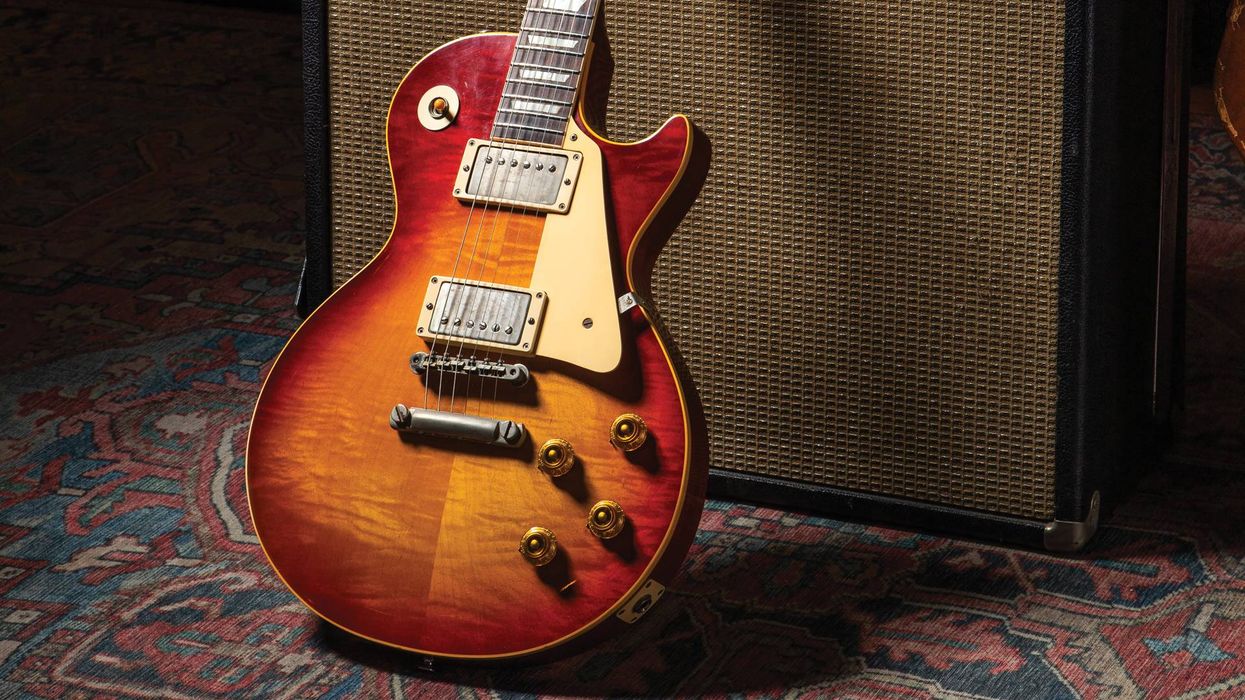
Carter Vintage recently picked up this gorgeous early-1960 Gibson Les Paul Standard from its second owner. He was quite discerning with his collecting choices. This 1960 ’burst is one of two sunbursts we brought back from his place on the East Coast, and there wasn’t a bad guitar in the whole bunch. In my conversation with him, the owner of the guitar told me he bought it in the early ’70s from the original owner. I asked him if he ever played the guitar professionally, or used it in a band—he hadn’t. He never played out with any guitar in his collection; he simply bought them because he thought they were cool, and guitars are a passion of his. He’d had the instrument for over half a century, and now it was time to pass it along to its next caretaker.
“This guitar has totally ruined other Les Pauls for me.”
Whenever I open a brown 5-latch Gibson case with a late-’50s Les Paul Standard in it, the first place my eyes go is the top. This guitar definitely pushed all my “personal fave” buttons: Gorgeous figured maple, “action” (how the figuring on the top moves and lights up as you angle the guitar in the light), and the color all hit the spot for me. The top on this guitar is one of my favorite ’burst tops ever. It’s not an overly flashy, wildly flamed guitar like the Stanley ’burst, or Nikki, but at the same time it’s not subtle, or understated, like a plaintop would be. If I had my pick of tops for a ’burst, this guitar would win, and out of around 15 sunbursts we’ve had in the store over the past year, this one takes the cake.
The next thing you notice on this ’burst is the color, and it’s crazy good. No iced-tea ’burst, lemon-drop top, or anything like that here. The red in the sunburst has been preserved incredibly well, and it fades perfectly into the amber and gold of the body’s center. These guitars are now in their late sixties, and to find one that’s not severely faded out is a rare occurrence.
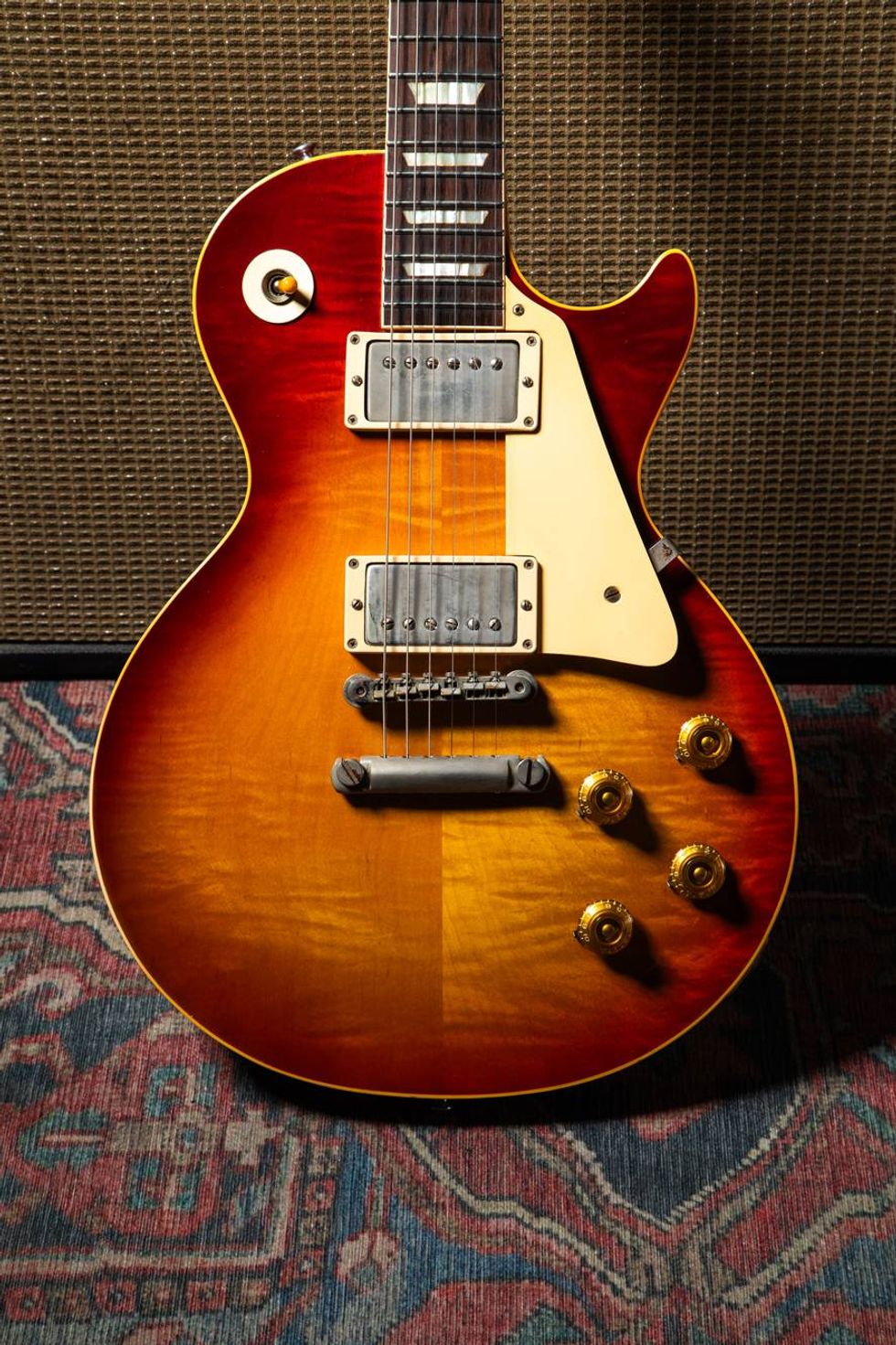
Now for the fun part—playing it! I picked the guitar up and was initially greeted by the slim neck. I don’t know about you but I really love, to the point of adoration, the slim necks on 1960-through-mid-’62 Gibsons. The old-school players called them “speed necks,” and that’s an excellent description. Once you learn how to relax while playing these things, you can really get around so effortlessly. I think this neck was actually taken down a bit slimmer than the way it came from the factory, because it’s in the “Jimmy Page Number 1” ballpark. Way back in the ’70s, I remember reading an interview in Guitar Player with Joe Walsh, and he said the thin-neck ’60s Les Pauls were his favorite for their sonics and feel. Joe knows guitars. That Page guy isn’t so bad either.
On to the sound. I was just talking with a big-time pro guitarist who plays for an even bigger-time country-music icon and, before plugging in the guitar, he posed a question that I hear quite often: “Sunburst Les Pauls, don’t they all sound great?” In a word, no. They definitely don’t all sound great. Some of them are about as forgettable as can be. My old friend Tom Murphy says that with the advent of the Murphy Lab finishing process at Gibson, they’ve caught up with the old guitars in how they sound and feel. As usual, Tom’s not wrong. I’ve heard some Murphy Lab guitars that can absolutely hang with their vintage counterparts. In some cases, they can lap the old guitar sonically. Not all the old ones sound great.
Back to our subject, this killer ’60 sunburst. Some rare vintage guitars sound and feel so good that nothing else even comes close. This 1960 ’burst is one of them. Bridge pickup, neck pickup, middle position, roll the tone off, roll it back up, turn the volume down, turn the volume up: There isn’t a switch position or control setting that isn’t absolutely stunning with this guitar. I’m more than a little bummed about the way this guitar sounds, the truth be told. My good friend Dave Cobb told me years ago that you have to be careful about what sonics you allow into your ears: “You can’t un-hear stuff, man. It’ll ruin you if you hear the wrong thing.”
This guitar has totally ruined other Les Pauls for me. Yes, it’s that good. For the life of me, I can’t quit hearing it in my head. But being ruined never felt so good. I love my job!
“I used to give Stephen s**t because he wasn’t a shredder like Eddie Van Halen”: Original Deftones bassist says he used to make fun of Stephen Carpenter’s guitar skills
![[L-R] Dominic Garcia and Stephen Carpenter](https://guitar.com/wp-content/uploads/2026/03/Deftones-hero@2000x1500.jpg)
Stephen Carpenter’s Deftones riffs have played a pivotal role in shaping the alt-metal genre. But his guitar skills haven’t always been universally admired.
In a new interview in the latest issue of Metal Hammer, original Deftones bassist Dominic Garcia – who held the post between 1988 and 1991 – remembers actively teasing Carpenter during the band’s early years for not being a “shredding guitar player”.
While Garcia was the band’s original bassist, he assumed the drummer position “around 1991 or 1992” after he says original drummer Abe Cunningham “left the Deftones” to join another band called Phallucy.
“I took over on drums and that’s when [bassist] Chi Cheng joined the group,” he says. “I loved Chi, he was really cool – he was into poetry and all this stuff. Just a wonderful, kind-hearted person.” Chi Cheng remained a member of the Deftones until 2008, when he was involved in a serious car crash in California. Cheng died in 2013 from a sudden cardiac arrest.
Garcia continues, explaining that Phallucy’s bassist quit, and the idea of him playing “two different instruments in two different bands” – drums in Deftones and bass in Phallucy – seemed “super-cool”.
“I found out from a third party that Stephen had got a guy named John Taylor to play drums in the Deftones,” he says. “I was a little bit heartbroken because I’d started the band, but we were still friends.”
He adds: “I used to give Stephen a load of shit because he wasn’t a shredding guitar player like Eddie Van Halen. I was just being a snob, a cocky kid, but maybe it was low-key bullying.”
As it stands, Stephen Carpenter is still not touring internationally with Deftones. In 2022, the guitarist announced his decision to step away from performing with the band outside the US. Many believed it was due to his anti-vax views around the time of the Covid pandemic. The guitarist has also noted his struggles with anxiety more recently.
Last year, frontman Chino Moreno noted he wasn’t sure the exact reason why Stephen Carpenter was refusing to tour with the band outside the US,
“I don’t want to speak for him. And even if I could, I still don’t have an answer,” he told Metal Hammer. “And if he does have an answer, I think it’d be great if one day he would share it. But yeah, we support him. We have to. He’s our friend. And his health, be it physically or mentally, always takes the forefront of anything.”
View the Deftones website for a full list of upcoming tour dates.
The post “I used to give Stephen s**t because he wasn’t a shredder like Eddie Van Halen”: Original Deftones bassist says he used to make fun of Stephen Carpenter’s guitar skills appeared first on Guitar.com | All Things Guitar.
“I didn’t know if I wanted to be on that train”: Original Trivium frontman explains why Matt Heafy’s “laser focus” on perfection made him leave the band

While Matt Heafy has very much been the face of American metal heroes Trivium for the bulk of their career, the band’s original frontman was Brad Lewter, who filled the spot between 1999 and 2000.
A year after their formation, the band recruited a young Heafy at only 13 years old. And despite his fledgling status, he played a pivotal role in driving the eventual success of the band.
In a new interview in the latest print issue of Metal Hammer, Lewter recalls the shift in the band’s dynamic after Heafy joined, explaining how the “determination” of Heafy and founding drummer Travis Smith had him questioning whether he “wanted to be on that train”.
“Heafy and Travis were really determined,” Lewter explains. “They’d be woodshedding, where you just sit and go over the same riff over and over again, whereas me and [founding member] Jarred [Bonaparte] had other things away from the music.
Lewter remembers Heafy’s “laser focus” and pursuit of perfectionism, adding: “His dad was very active in management and promotion and I didn’t know if I wanted to be on that train.”
The vocalist ultimately left the band in 2000 – a year after Matt Heafy joined – but admits he did later feel a sense of regret after witnessing the group’s success.
“There were some regrets about hopping off when I did – seeing them on MTV or touring with Metallica – but it wasn’t for me,” he says. “I’m more of an introvert. I’m an animator, and so I would sit in my comfortable space in a dark room in front of a screen.”
Things all worked out in the end, as Lewter is now a professor of animation at Ithaca College, New York.
“I am still friends with Heafy and his wife on social media,” he explains, “so I see the updates, and that’s not the kind of life I could sustain.”
Trivium’s last album was their 10th outing, In the Court of the Dragon, which landed in 2021. The band have confirmed a new album is in the works, with an eye to release it in late 2026 or early 2027.
The Orlando metallers also have a number of shows booked in Europe this summer. For tickets and a full list of dates, head to Trivium.org.
The post “I didn’t know if I wanted to be on that train”: Original Trivium frontman explains why Matt Heafy’s “laser focus” on perfection made him leave the band appeared first on Guitar.com | All Things Guitar.
Squeeze’s Glenn Tilbrook Comes Full Circle
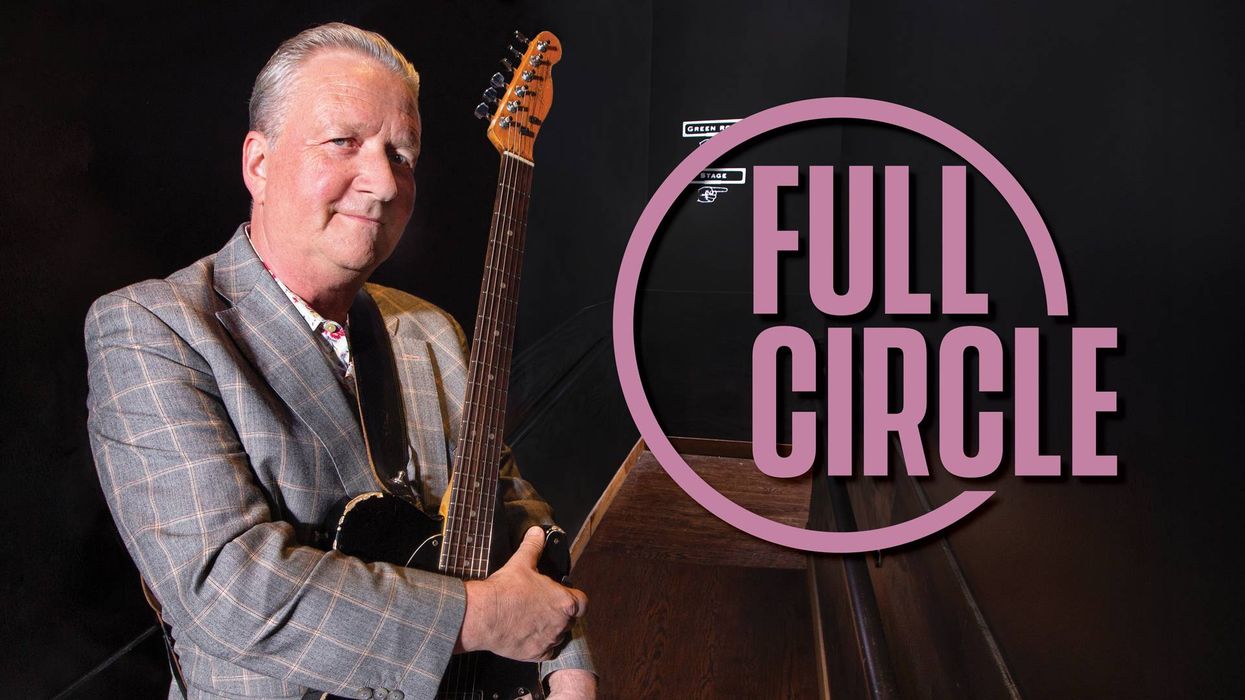
In the world of rock guitar, Glenn Tilbrook may be the ultimate IYKYK (“if you know, you know,” for us old-schoolers). Because anyone familiar with Squeeze, the band he co-founded in the 1970s, is aware that hiding in plain sight alongside his songwriting and lead vocals are some masterful guitar hooks, solos, and arrangements. In a Tilbrook appreciation titled “Humble Guitar God,” CultureSonar editor Al Cattabiani declared, “Simply put, he’s a quiet monster.”
Squeeze has been termed new wave, pub rock, power pop, post-punk, and more—always a sign that a good rock ’n’ roll band has multiple tools in its shed. In its 50-plus years, surviving breakups, hiatuses, and wholesale personnel changes, Tilbrook and Chris Difford have been its only constants. “Chris and I were writers, first and foremost, and we were an exciting rock band,” Tilbrook reflects. “We were probably better than most of our contemporaries, I would say. We were more rock ’n’ roll, and we could deliver as a band onstage.”
They still do. Though they had more success in the U.K. than in the States, folks everywhere seem able to hum “Tempted.” They were making videos as far back as their 1978 single, “Take Me I’m Yours,” three years before MTV came along, and were on American Bandstand in ’82. Top 10 hits in England like “Cool for Cats” and “Up the Junction” didn’t dent American charts, but crowds large and small sing along to them—as well as “Hourglass,” “Annie Get Your Gun,” “Black Coffee in Bed,” “Is That Love,” and “Pulling Mussels (from the Shell).”
In 1973, 18-year-old Chris Difford put a wanted ad in the window of a sweetshop in Blackheath, Southeast London. It sought a guitarist with influences like the Kinks, Lou Reed, and Glenn Miller. Tilbrook, three years younger, was the only person who responded.

Glenn Tilbrook’s Gear
Guitars and Basses
- 1954 Fender Telecaster
- 1966 Fender Telecaster (black) with Gene Parsons StringBender (added in ’75)
- 1954 Fender Stratocaster
- 1966 Gibson ES-345
- 1930s Gibson parlor acoustic
- Gibson Firebird
- Gibson ES-125
- Gibson ES-335
- Gretsch Chet Atkins Country Gentleman
- Jerry Jones Master Electric Sitar
- Taylor 665 12-string
- Avalon L10C
- Danny Ferrington custom f-hole guitar
- Martin nylon-string
- Hofner Violin Bass
- Fender 5-string bass
Amps
- Fender Blues Junior IV
- Fender Twin
Effects
- Dunlop Cry Baby
- Strymon Deco
- Strymon Flint
- Strymon Riverside
- Strymon El Capistan
They determined that Glenn was better equipped to put music to Chris’s lyrics. They were called “the new Lennon and McCartney,” an appellation nobody cares to be saddled with. In terms of a working model, they more closely resemble Bernie Taupin and Elton John. “Yes, exactly like that, in that order,” Tilbrook says. “Each one handwritten on the page, and I go off and do my thing, write the chord changes.”
Difford rarely offers any direction, leaving Tilbrook to his own devices. Glenn recounts, “When I was growing up, there were songbooks that just had the lyrics of the hit songs of the day, and that was a lot of how I learned. I could figure out how they went. If I didn’t know the song, I’d make up my own tune. I’ve written some stuff, but my lyrics aren’t very good. Chris was more developed as a songwriter.”
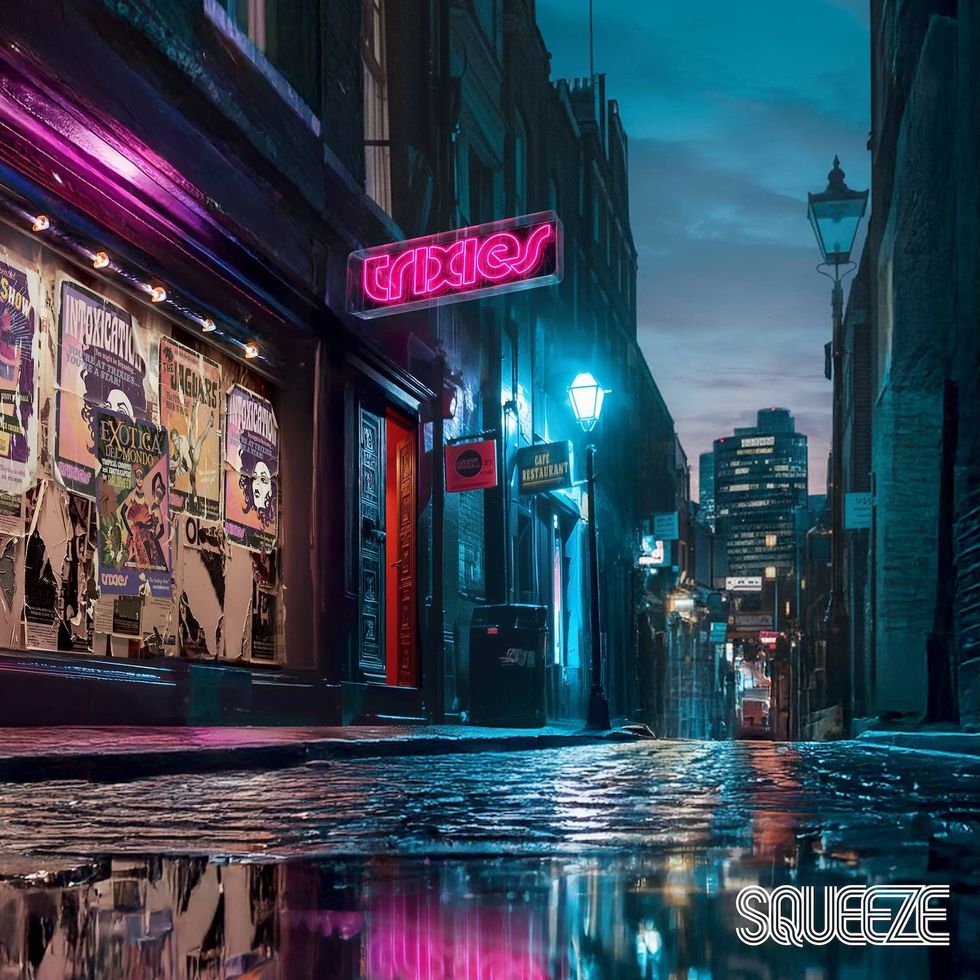
A window into the early stages of that partnership is the new Trixies. “It’s a set of songs that we demo-ed in 1974,” Tilbrook details, “obviously when we were hoping to get signed, but that didn’t happen. I’m honestly amazed at what we did at that point. It was more sophisticated than stuff we did quite a few years after that. Our manager said, ‘You have to simplify; otherwise, people won’t know who you are.’ We were all over the place, but the band couldn’t play it then. Now we can play it, so it’s really gratifying to see the path and development.”
Re-recorded with the current lineup, the new release is a concept album about a nightclub named Trixies. “‘Good Riddance,’ I actually did eight solos, and then I stitched it together,” Tilbrook says. “It reminded me of listening to shortwave radio as a kid, with stations drifting in and out. It’s my Gibson ES-125. I write 80 percent on keyboard—a lot of this on an RMI.”
“Chris [Difford] and I were writers, first and foremost, and we were an exciting rock band.”
A child's first album and concert may not be pivotal, but they’re often revealing. “Last Train to Clarksville,” with the layered guitars of Louie Shelton, Gerry McGee, and Wayne Irwin, prompted Tilbrook to fork over six shillings and eight pence for the single. “What a great record,” he exclaims 60 years later. Despite the controversial revelation that the Monkees didn’t play on their records, he declares, “They were a massive thing for me. To me, it absolutely was real. I think they made great pop records. The first concert I went to was at a folk club when I was 13, to see an Irish duo, Tír na nÓg. I was absolutely enchanted by them. Sort of whimsical folk music. Then the first bigger concert I saw was T. Rex. ‘Bang a Gong’ had just come out, and Electric Warrior, and that just blew my mind. Marc Bolan was such a weird songwriter and player. He wasn’t very good, but he was great at the same time. And the effect he had on the audience was also part of the experience and atmosphere. It was electrifying. I was literally buzzing.”
Bolan’s influence can be heard on “It’s Over” from Trixies. “The house band, the Jaguars, are through the prism of T. Rex, which was quite English. Bolan’s solos are really odd. I don’t know how he gets to the places he does and gets away with it. But he does.”
Sometimes as important as a first guitar is a tape recorder. “I started playing when I was six or seven, and I put a lot of time into it,” Tilbrook says. “I was fascinated, and there was music in the house, like Sinatra, Ella Fitzgerald, George Shearing. My nylon-string guitar didn’t have a make. I very much regretted painting it with wall paint when I was 11 or 12. It was still playable, but something changed about the sound, regrettably.”
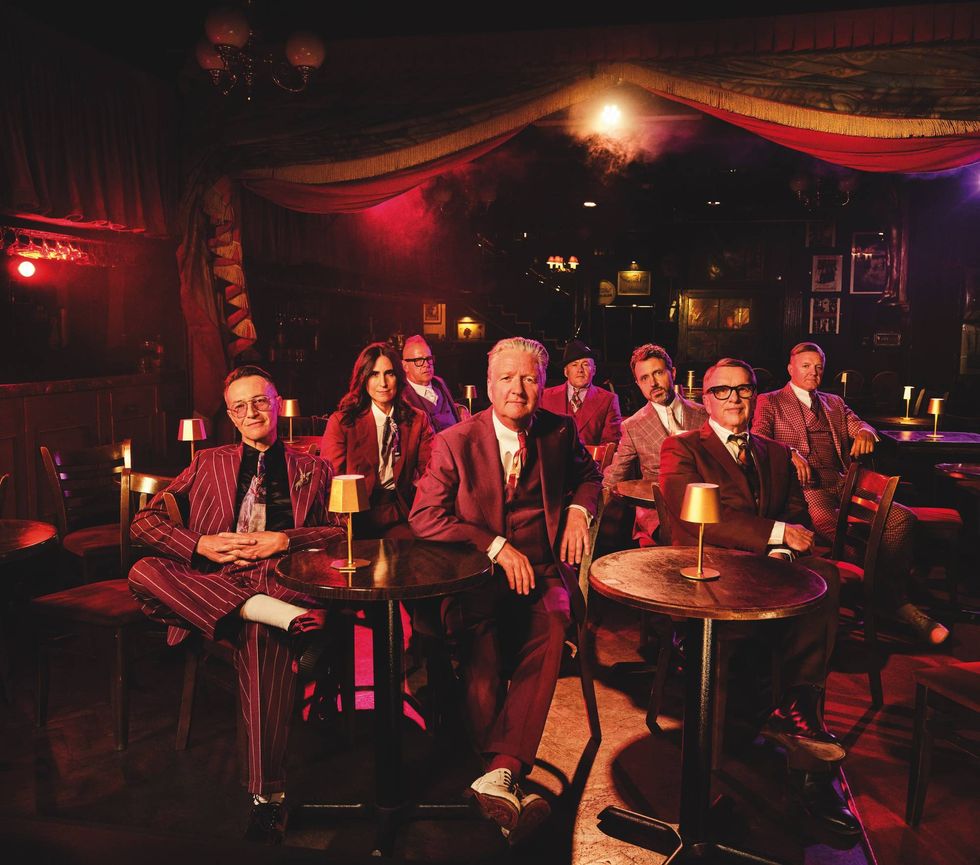
He continues, “Recently I’ve gone back to playing a nylon-string. It has such a lovely, emotive sound. I can remember the exact date that my dad bought me a cassette recorder—December 19, 1967. It was everything I wanted. The fact that I could record myself was pure pleasure. I loved learning, and by the time I was 12, I could play pretty well. I’ve had a studio since ’93, and the first things I could afford to work with were ADATs. They were absolutely brilliant and very game-changing for me.”
Squeeze’s 1977 EP, Packet of Three, and self-titled debut album the following year were produced by Velvet Underground alumnus John Cale. “Our manager got him to produce us,” Glenn explains. “Chris was into Velvet Underground before I was, but I really liked them, too. John didn’t like the pop side of us, and he didn’t much like our songs, and threw them out. But when he was engaged and onto something, he was one of the most inspirational people I ever worked with.”
Two subsequent albums were produced by John Wood, while Elvis Costello and Roger Bechirian took over for 1981’s East Side Story. “Elvis got us all working together, getting good takes,” Tilbrook offers. One of those takes was Costello’s decision to have keyboardist Paul Carrack, who’d replaced Jools Holland, take over lead vocals on “Tempted.” The song reflects Tilbrook’s affinity for the ’60s soul of Stax and Motown. “All that is in there,” he says. “Obviously, ’60s music is the bedrock of what I learned growing up. I don’t want to stay there as a writer, but it’s part of my DNA.”
“In the ’80s, guitar was such an uncool instrument in the U.K. But I had moments.”
Calling Tilbrook underrated as a guitarist barely covers it—as evidenced by everything from the muscular solo in “Pulling Mussels” to the restraint of “Black Coffee,” the staccato double-stops of “Is That Love,” and the say-it-all-in-13-seconds brilliance of “In Quintessence.” “I’ve not pushed myself forward as a guitar player,” he admits. “I think I do that more now. I wasn’t embarrassed, but in the ’80s, guitar was such an uncool instrument in the U.K. But I had moments.”
Some guitar influences he cites are surprising, and not the typical Clapton, Beck, Page. “I liked Kelly Joe Phelps a lot,” Tilbrook says. “Hendrix is my first big love, and my parents loved Wes Montgomery; I do too. Amos Garrett is another, and I’m a big Willie Nelson fan as a guitarist. In 1981, I went to see him with Elvis, and it was one of those defining moments for me. His voice, his songwriting, his artistry. I understood, with the help of Elvis, that all those barriers—‘We do that, we don’t do that’—are all nonsense. It’s delivering from the heart, and anyone can do that if you’re receptive to it.”
Tilbrook’s solos are smart without being pretentious, clever without being cute. And like his role in the band, they’re composed. Worked-out solos often get a bad rap, as if one must jump off a high dive and improvise or it’s cheating. But countless composed solos (Harrison, Fogerty, even Page) rank among rock’s most iconic. Tilbrook points out, “From Cool for Cats [1979] onward, I started working on constructing solos. I was influenced by Tony Peluso, who played the great solo on the Carpenters’ ‘Goodbye to Love.’ I love the melodic element of it. I began really working on a solo and then cutting it together. And then I’d learn it. That would be the solo—not improvised.”

For “Another Nail in My Heart,” he continues, “it’s such an unusual place for a solo, coming after the first verse and chorus. After I got the first bit right, I’d figure out where it’s going to go. That was an afternoon’s work to get it down. But it sounded interesting, and it sounded like it was part of the song then. It occupied another part of musical narrative. That really nailed the benefit of doing that.”
Although he doesn’t consider himself a gearhead, Tilbrook has an impressive collection of guitars. “I’ve never gotten rid of anything unless it’s been stolen. My first Strat, a ’58, which is still the best Strat I ever had, I bought from a guy in Steeleye Span. I used it on the early Squeeze albums, and then it got stolen in Liverpool. It still upsets me.”
Tilbrook continues, “When I tour, and almost always in the studio, I mostly use my black ’66 Tele. I use the B-bender sparingly, but it’s an integrated part of my playing now. The first record I used it on properly was ‘Hourglass.’ I used to use Strats, but since I went to the Tele, it really defines my sound. My ’54 Telecaster is the one that Elvis gave me in 1981 or ’82. Extremely generous of him. It’s a beautiful guitar. I’ve also got a lovely ’66 ES-345. It has such an amazing tone. I started using it in the studio, and it sends my playing to a different place, which I love.”
“Sixties music is the bedrock of what I learned growing up. I don’t want to stay there as a writer, but it’s part of my DNA.”
Tilbrook grew up playing nylon-string but switched to steel-string early on. “Now I have a Martin gut-string that I’ve absolutely fallen in love with,” he says. “And I’ve got one of those Jerry Jones electric sitar guitars. I used it on ‘Nirvana,’ from [2015’s] Cradle to the Grave. You can’t use those too often, though. I have a 12-string Taylor that says ‘Red Thunder’ on the neck. It was made for Robby Romero, front man of the band Red Thunder, but he didn’t want it.”
Apart from Squeeze’s ups and downs, including a 1984 splinter group and album, Difford & Tilbrook, Glenn has released a dozen solo records, including a series of demos, the side hustle Glenn Tilbrook & the Fluffers, and a collaboration with blues/pub-rockers Nine Below Zero. His most recent offering was 2014’s Happy Ending. “I wrote most of it, but there were a few I did with Chris Braide,” he says. “I wanted to do an album without drums, and it’s sort of referencing some of the early Tyrannosaurus Rex things, like Moroccan hand drums.”
When touring as a solo artist, Glenn manages to represent familiar Squeeze numbers with just one guitar—acoustic or electric. In November 2001, he set out on an American tour behind the wheel of a Cruise Master RV motor home, a route he still employs. Thankfully, his first excursion was filmed for the delightful documentary Glenn Tilbrook: One for the Road, released in 2004. “The thing about touring and seeing this country and being there was a great influence on me—as opposed to being in whatever tour bus, which is sort of isolating,” he says.
Another benefit? “Seeing what kind of musician people thought I was from Squeeze,” he continues. “First of all, to experience that decline in your career. We were never a massive band here, but we sold tickets. And then not, really. And back to playing clubs. I always knew that I loved it, but it was then that I knew I really loved it. Like, I’m good with that. I didn’t feel bitter about it. I’m very lucky to play music.”
Trixies brings the band back full circle. “When we split up last time,” Tilbrook says, “seeing Brian Wilson’s Pet Sounds tour and the amazing work that his band did, I thought, ‘If ever Squeeze get back together again, we should be like that.’” For the new tour, he continues, “We’ve been rehearsing the songs in the order they are on the record. It’s the first record where we thought, ‘You know what? We might just do all of it.’”
Wolfgang Van Halen reveals he and his dad jammed a song on the new Mammoth album before he died: “I taught him how to play it on guitar, and I played drums”
![[L-R] Eddie Van Halen and Wolfgang Van Halen](https://guitar.com/wp-content/uploads/2026/03/WVH-EVH-new-hero@2000x1500.jpg)
Wolfgang Van Halen has reflected on the time he and his late father Eddie Van Halen jammed on a song that would appear years later on his band Mammoth’s latest album, The End.
Guitar legend Eddie Van Halen tragically passed away in 2020 before the release of any music under his son Wolfgang’s band, Mammoth. The band’s first song, Distance, arrived a month after Eddie’s death, and served as a touching tribute from Wolfgang to his father.
But ideas that would later become Mammoth songs were in the works years beforehand, and as it turns out, Wolfgang even jammed one song in particular with Eddie way back in 2014.
Answering a fan’s question in a new edition of SiriusXM’s Trunk Nation with Eddie Trunk, Wolfgang remembers [via antiMusic] : “Actually in December of 2014 when I was getting ready to track what would be the beginning of Mammoth – it was January 2015 that we started the original tracks.
“I actually have a video – it’s a really terribly filmed video because it’s right next to my hi-hat on my cell phone, so it’s just all hi-hat, total noise.
“But on a song that actually ended up on The End – Selfish – I have a video of my dad and I jamming on that song in 2014, which is crazy to think that it came out last year. That’s how long that idea has been around.”
Wolfgang explains that the pair jammed the song through “a couple of times”.
“I taught him how to play it on guitar, and I got on drums… That’s a video I hold very close. I love that.”
He says the only reason he’s never shared the video with the world is because of the poor audio quality due to the camera placement.
“I don’t know, you can barely hear it,” he says. “I probably should have put the phone camera somewhere else. But yeah, we did. I don’t think it ever got out how stoked Dad was about it. He loved the music so much. And he heard a lot of what would end up on the next few albums, because the 28 songs I wrote at the very beginning of Mammoth in 2015, kind of got spread out because certain ideas weren’t done yet.”
While Wolfgang appears to be in a good spot now, he admits he still has moments of sadness when thinking about sharing his newest musical ideas with his father.
“It’s a tough, emotional thing,” he continues. “Every positive thing that happens to me has a tinge of sadness because it’s like, ‘Dang, I really wish I could have shared this with Dad. I wish he could have seen it. He would be stoked.’”
The post Wolfgang Van Halen reveals he and his dad jammed a song on the new Mammoth album before he died: “I taught him how to play it on guitar, and I played drums” appeared first on Guitar.com | All Things Guitar.
“Two of his right-hand fingers were bleeding afterwards”: Tony Visconti on Pete Townshend’s one-take David Bowie Heathen session

David Bowie producer Tony Visconti has shared new behind-the-scenes stories from the making of Heathen, including a blistering one-take guitar performance from Pete Townshend that left the Who legend with bleeding fingers.
In a new interview with Spin, Visconti revisits the 2002 record, his first full-album collaboration with Bowie since 1980, and the musicians who contributed to its sessions.
“As for working side-by-side in the studio, we both played many instruments, and I was singing backing vocals with him since the earliest albums,” Visconti says of his time with Bowie. “He was impatient. If we wanted a guitar part, we didn’t want to phone for a player and wait until that guitarist was free. David and I shared guitar duties frequently. We were a two-man band.”
Occasionally, outside musicians were brought in. One such cameo was Pete Townshend, whose appearance on Heathen happened largely by chance.
“Townshend dropped in for a visit when we were recording in Philip Glass’s studio, Looking Glass. They had a long chat, and I could see camaraderie between old friends,” the producer recalls. Before long, Bowie invited him to pick up a guitar.
“David asked him to play. He did, but we asked him to play a bit more aggressively, and he said, ‘Oh, do you mean Townshend Windmill Chords?’ He nailed it in one take. Two of his right-hand fingers were bleeding afterwards,” says Visconti.
Another contributor to the album was Foo Fighters frontman Dave Grohl, who played acoustic guitar on Bowie’s cover of Neil Young’s I’ve Been Waiting for You.
“The Grohl story is interesting,” Visconti says. “He played acoustic guitar, remotely from California, and sent us a file. His drumming would’ve been better, but that didn’t happen.”
The session also came with a price tag Visconti still finds hard to believe.
“Afterwards he sent David an invoice for $10,000. Sure, he was on top of his game, but that was ludicrous,” the producer says. “I don’t know if David actually paid him that much.”
The post “Two of his right-hand fingers were bleeding afterwards”: Tony Visconti on Pete Townshend’s one-take David Bowie Heathen session appeared first on Guitar.com | All Things Guitar.
“I made it with realism in mind”: Inside Masayoshi Takanaka’s ridiculous six-kilogram surfboard guitar

Nothing proves humans have free will quite like Japanese jazz fusion virtuoso Masayoshi Takanaka’s ridiculous red surfboard guitar.
Weighing around six kilograms and looking more like beach equipment than a stage instrument, the larger-than-life guitar will return to the spotlight this March. Takanaka’s first UK solo shows were originally booked for London’s Shepherd’s Bush Empire, but overwhelming demand saw them upgraded to two nights at Brixton Academy, where nearly 10,000 fans are expected to watch the 72-year-old shred his psychedelic surf classics with the lifeguard-board-turned-guitar in hand.
Created in collaboration with luthier Takeda Yutaka, the surfboard guitar was designed to capture the breezy, beachy essence of Takanaka’s psych-surf sound. It also doubles as a tribute to a late friend – an experience that prompted the guitarist to reflect on life’s fleeting nature.
“You can do what you like while you’re alive. When you’re dead, you can’t do anything. So I decided to make a surfboard guitar,” Takanaka says in an interview with Surfer Today. “I’m jumping the gun a bit, but I was thinking, ‘Oh, come to think of it, surfing was popular around the time of the Bubble Era… I have a summer song that goes well with it…’ and then I thought it would be interesting to make a surfing guitar. I heard it was hard to make.”
After exploring several options, Takanaka and Yutaka hollowed out a real surfboard to house a playable guitar inside.
“I made it with realism in mind,” the luthier explains. “The surfboard itself is hollow inside, so you can’t attach the neck or parts directly to it. So I attached the neck to a small wooden body and screwed it in from the back of the surfboard. In order not to sacrifice playability, we made sure it wasn’t too heavy and left enough clearance around the neck. Considering maintenance, the guitar part is removable.”
The surfboard guitar originally debuted in light blue on Takanaka’s 2004 and 2005 tours before being repainted bright red. Its complexity made the luthier vow never to attempt another, and its monstrous weight meant Takanaka could only play it for a few songs per show.
“It’s hard to play, as expected. I just play this because I wonder if people watching me will find it fun, but I wonder if some percentage of them think I’m stupid,” Takanaka admits. “So if I play two songs with this guitar at a concert, I will get a little more exhausted. So, I think it would be better to use it only occasionally.”
Fans hoping to see the surfboard guitar in action are in luck. Takanaka says he’d given the instrument away after years of touring with it in Japan, but managed to get it back for his upcoming world tour.
“Actually, I gave it away after using it at a lot of my shows in Japan,” the guitarist tells The Guardian. “I thought I didn’t need it any more. But life is short, and you have to do what you really want to do while you’re still alive – that was why I made the guitar in the first place.”
The post “I made it with realism in mind”: Inside Masayoshi Takanaka’s ridiculous six-kilogram surfboard guitar appeared first on Guitar.com | All Things Guitar.
“He says stuff off the top of his head, and I’m sure regrets it later”: Chris Poland says he “doesn’t hold a grudge” against Dave Mustaine over the “terrible s**t” he said about him after he left Megadeth

Former Megadeth guitarist Chris Poland has opened up about his early years with the thrash icons, recalling the intense musical chemistry – and often chaotic bond – he shared with frontman Dave Mustaine.
In a new interview with the Heavy Metal Mayhem radio show, Poland looks back on life with Mustaine in Megadeth’s formative days [via Blabbermouth]: “Me and Dave lived together in a rehearsal studio. We took ‘bird baths’ with cold water in a sink for a year. And then we toured repeatedly. We were together all the time. We were a real band when Megadeth first started. And once that happens, everybody kind of becomes brothers.”
“I know Dave said terrible shit about me [in the later years], but I don’t hold a grudge. And I understand,” the guitarist adds. “I know how Dave is. I know Dave. That’s how he is. He says stuff off the top of his head, and I’m sure regrets it later.”
Poland played on the band’s first two albums, Killing Is My Business… And Business Is Good! and Peace Sells… But Who’s Buying?, and returned as a guest on 2004’s The System Has Failed.
“When [Dave] asked me to play on The System Has Failed, I was, like, ‘Yeah, I’ll play on that. Of course I will,’” Poland recalls. “[It had] the same vibe that I got from the first two records. There’s something about when he writes riffs and I play over ‘em – there’s some kind of weird magic, man.”
On creative freedom in the early days, he explains, “The way it was with Dave was if you played something and he didn’t tell you not to play it, then you could play it. So when I did the descending harmonies on Peace Sells or I added some kind of minor note in a chord here or there, and he didn’t say, ‘Hey, don’t play that,’ then I’d play it.”
“But as far as writing, Dave wrote everything. All I did was play with a note here and there, or a harmony. But that’s the thing about Mustaine – I mean, he’s still writing riffs today that are fucking good. [Laughs] He’s the riff master.”
Reflecting on the musical style that drew him to Megadeth in the first place, Poland says, “The way I looked at [Megadeth’s music] was, ‘This is fast Led Zeppelin.’ I had a decent idea of how to get a good distorted sound, and so when the pedaling got involved, I just adapted to it. And then, of course, his spider chord thing – I learned a lot from Dave.”
The post “He says stuff off the top of his head, and I’m sure regrets it later”: Chris Poland says he “doesn’t hold a grudge” against Dave Mustaine over the “terrible s**t” he said about him after he left Megadeth appeared first on Guitar.com | All Things Guitar.
Billy Corgan thinks rock has been “purposely dialled down” in culture: “All I know is I saw the gravity shift”

Billy Corgan feels rock was purposely dialled down within culture, so that rockstars didn’t have as much of a voice.
The Smashing Pumpkins frontman shared his thoughts during his The Magnificent Others podcast, where he even mentions his theory of the supposed involvement of the CIA. In the video, Corgan argues that rock was replaced by rap in late 1990s, and now a similar shift is occurring with pop being “completely dominant”.
He says [via MusicRadar], “I think, and I will say it overtly, I think that rock has been purposely dialled down in the culture. Again, this gets ‘wizard behind the curtain,’ right? Somebody’s gonna say, ‘Well, how do you know who was the wizard behind the curtain?’ All I know is I saw the gravity shift.”
He continues, “If you were at MTV or around MTV in 1997 or 1998, suddenly they decided rock was out when rock was still very, very high up. And it was replaced by rap… Their standards and practices immediately shifted, so now things that weren’t allowed were suddenly allowed.
“People were waving guns. Some people assert that the CIA was involved in all that. Again, above my pay grade, but I saw it happen. I did witness it happen. Of course, great music came out of it,” he clarifies. “Qualitative things and great artists came in, but there was this overt shift. I saw it happen. And then now, rap seems to be waning in terms of its cultural influence.
“Pop is completely dominant. Rock is probably the most dominant ticket-selling thing in the Western world, and yet there’s almost no representation of rock in culture. So, why do we have that schism? I think they purposely dialled down the ability of rock stars to have a voice in the culture.”
Another hot take from Corgan comes from a recent Guitar World interview, in which he argued that technical proficiency when it comes to guitar isn’t as impressive as it used to be.
“If you’re going to play a lead in an alternative rock band in 2025, what are you trying to say? No-one’s going to care that you can play good, because there’s fifty 10-year-olds playing Eruption on YouTube,” he said.
“There’s nothing actually that impressive about somebody being able to play the guitar at a decently high level anymore, so I think it’s the expressive quality that makes it interesting. So I’m more interested in creating a feeling than showing off.”
The post Billy Corgan thinks rock has been “purposely dialled down” in culture: “All I know is I saw the gravity shift” appeared first on Guitar.com | All Things Guitar.
“I couldn’t help overplaying”: John Mayer on nerves during first Dead & Company tours

John Mayer has opened up about his early days playing with Dead & Company, including the healthy dose of nerves he felt sharing a stage with his idol, Grateful Dead legend Bob Weir.
Despite being a Grateful Dead fanatic long before he joined Dead & Co. in 2015,, stepping into the band’s sprawling, improvisational world – and doing it next to one of its founding members – was a different challenge altogether.
Speaking to Rolling Stone about those first tours, Mayer admits he struggled to resist filling every gap in the music.
“As much as I want to lean back at the very beginning when I’m playing, I couldn’t help overplaying in some of those first few tours. You just do,” he says. “Even if I knew not to overplay, I’m still going to overplay. It’s going to be wordy. I have to adjust my way into the 10-ring on the target.”
Part of that, he explains, simply came down to nerves.
“You could tell yourself not to get nervous, you know exactly why you shouldn’t be nervous, and your hands are going to shake,” says Mayer, describing it as a “natural, physiological moment you have to break through to get comfortable through experience.”
The musician also reflects on his relationship with Weir, who passed away earlier this year, and how their onstage chemistry evolved over time. As the tours went on, the two guitarists gradually developed an almost unspoken understanding onstage – the kind that comes from playing night after night together.
“It changed over the years, because we both got to know each other and trust each other,” Mayer explains. “How did I read his signals? I just knew the way his head moved – we all do – and had an understanding of what his instincts were night after night.”
Eventually, their musical back-and-forth became second nature.
“It got to the point where, in those last few tours, he knew when I would step forward and really hit the gas. And because I’d figured it out by then, I knew when to step back, look at Bobby and say, ‘It’s yours again.’”
That comfort didn’t come immediately, though. Mayer admits that during the early shows he often found himself wondering whether Weir approved of what he was doing onstage.
“I’d think: ‘I hope he’s happy. He might not be. Oh, he just went and turned his guitar amp up. Does that mean he thinks I’m too loud? Is someone going to come into my [dressing] room and say, ‘Hey, can you turn your guitar down?’ Then one day, you walk up onstage and there’s plexiglass between the amps and you go, ‘I have a feeling I’m a little too loud.’”
Looking back, Mayer says those early tours were about earning his place – both with fans and with Weir himself.
“The first couple of tours were proving to the audience that I had a right to be there. And the rest of the tours were proving to Bobby that I meant well for everything I was trying to do.”
“I think whatever conversations Bob had on the bus about me in the very beginning changed over the years,” he adds.
The post “I couldn’t help overplaying”: John Mayer on nerves during first Dead & Company tours appeared first on Guitar.com | All Things Guitar.
It’s time you ditched your tube amp for a modeller: this is why you should do it

The discourse online about real amplifiers versus modelling and emulation is just that: discourse. While it’s healthy to explore different avenues, the conversations bring up points that may not matter as much as you may think.
Realistically, an amp modeller can never replace an amp, but I’m here to say that modern amp modelling is good enough to consider, the pros of portability, reliability, form and function outweighing the difference between a real amp and a modeller. Even that statement might ignite some fiery discussion, so let’s get down to brass tacks.
Better Than The Real Thing
An emulation of an amplifier can never really sound like an amplifier, but that doesn’t mean they sound bad. Older amplifiers and boutique designs alike are often hand-wired, meaning while the quality control might be higher, they’re more susceptible to characterful imperfections. These are ironically why we love our own amps so much – or lust after someone else’s!
Digital reproductions of amps will perform exactly the same in every condition, there’s no imperfection. Real amplifiers, especially those equipped with valves, are heavy, cumbersome and require consistent servicing. While digital modellers may require software updates or repair from time to time, the wear-and-tear is minimal.
The reason an emulator can’t really replicate an amplifier in a room is because of how a speaker cabinet and its speakers push air after being amplified by a circuit. The size, arrangement and layout of speakers in a cabinet change how sound and air is pushed in every direction, adding different layers of frequencies in front (and behind!) the amplifier that also bounce around the room.
Here’s the kicker: even a real amplifier is often mic’d up, either in the studio or on the stage. The crowd won’t really be hearing your amp in an ambient space, they’ll be hearing the mic’d sound, often digitised, mixed and amplified through a PA. Hell, even at bigger venues you’ll be hearing this mic’d sound in your monitors or in-ears, and in a recording it’ll (usually) be a digital version of your mic’d amp. So the difference between a real amp and a modern emulation? Negligible.
Modern amp modelling has come a long way. Early incarnations of amp modelling left a lot to be desired, the presence, heft and nuance of an amplifier’s circuit being lost in the capture. Today, amp modelling seems to be about as good as it can get, seemingly really tough to pick in a blind test, and it continues to improve. Digital solutions allow guitarists to access plugins intended for use in mixing, as well as a growing number of increasingly accessible and affordable options. Early adopters of professional-sounding emulations and modellers were expected to fork out thousands, and the modern day sees world-class sounding solutions in increasingly tidy, pedalboard friendly packages.
Pedal Power
What’s more, how rare is it these days to see a guitar player that doesn’t have a fairly substantial pedalboard at their feet? It’s almost a given that someone is going to be using multiple pedals that can be used to subtly shift and shape our sounds, or overtly process them for more special effects like chorus, delay and abrasive distortion.
The problem though, is that sometimes we’re required to turn on or off multiple pedals at once, requiring either compromise or tap dancing maneuvers to engage multiple pedals at once. The system offered by most modellers allows you to create and toggle between different patches, i.e. multiple settings saved as a single patch, allowing you to create different patches, either with a base tone and multiple effects or for totally different tones.
For example, a single stomp on a pedal can switch an effect-laden patch to a dry one, or even switch to a whole new amp between sections of a song. The digital effects are all available inside the modellers so you require a smaller pedalboard, the units themselves being set up in a way that you require less footswitches depending how your patches are set up.
Speak The Truth
Another huge part of improved amplifier emulators are the leaps and bounds that cabinet emulation has taken via impulse responses, microphone emulation and even detailed nuance of speakers and cabinet construction. Cabinets and speakers play a huge part in the low end of a tone, your choice helping palm mutes to bloom, adding dynamic and weight to your playing, further helping to develop a realistic feel to emulations, instead of just a great tone.
Multiple ‘mic’ options give you more control over that end of your sound than the mics used at a venue, and you’re less susceptible to mics on cabinets getting bumped and changing your tone dramatically. Anyone who’s tried their hand at recording will know that movements of mere millimeters of a microphone can shift your tone from weighty, balanced bliss to fizzy, grating buzz.
What’s more, amplifier emulators bring emulations of mics that are often relegated to the safe confines of a studio, like big tube condensers, vintage ribbons and more. In this instance you’d likely set up your sound, cabinets and microphones and all, and send your tone direct to front-of-house (FOH).
The risk here is that you’re still at the mercy of the front of house engineer to treat and mix your sound, but this is no different than a real amp mic’d up!
Perfect Balance
Another thing to keep in mind when choosing to make the switch to digital is if you’re in a two-guitar band. It can sometimes sound unbalanced when only one guitarist in the band has gone digital, especially so when sending sound directly to FOH. The ambient sound of a cabinet in the room, especially smaller venues, can leave a digital rig feeling thin and lacking air and space, despite all the huge advancements in cabinet emulation.
All of this is to say that digital amplification and modelling has come a long, long way since the early days of stock plugins, kidney-shaped digital modellers and the like. While the emulation of pre-amp sections has come a long way, the technology to emulate the sound of an amp in a room helps us to more accurately recreate our favourite tones, all recallable at the touch of a single button – no tapdancing!
Writing off a technology only serves to ensure you’re left behind. There’s nothing to lose as an amp devotee, you’ll either confirm your commitment or find a new avenue for tone!
The post It’s time you ditched your tube amp for a modeller: this is why you should do it appeared first on Guitar.com | All Things Guitar.
A New EarthQuaker Devices Reverb Pedal
Kemper Upgrades Its Profiling Technology
The best looper pedals for all needs and budgets

If a riff is worth playing, it’s worth playing 25 times while you widdle ineptly over the top of it. And that is one very good reason for the current popularity of loopers… but it’s by no means the only one.
A looper is your pathway to instant multitracking. Most of them use the same basic principle of operation – stomp once to start recording, stomp again to end the cycle and start overdubbing – and that’s putting a uniquely powerful tool at your feet. If you want to slap down rough backing tracks for writing new melodies, build elaborate soundscapes of layered harmonies, or just have a virtual band to jam with, there’s going to be at least one pedal on this list that will make your life easier than it was before. And while some of them are both complex and pricey, the good news is that plenty are neither of those things.
Incidentally, there’s a certain ginger-mopped troubadour who’s probably done more than anyone else to popularise the art of looping – and, naturally, not everyone is a fan. But if you’re hoping to get to the end of this guide without seeing him mentioned, that’s going to be rather difficult… as his name is on one of the products.
At a glance:
- Best simple looper: TC Electronic Ditto 2
- Best do-it-all looper: Boss RC-600 Loop Station
- Best two-channel looper: Pigtronix Infinity 2
- Best multi-memory looper: Electro-Harmonix Nano Looper 360
- Best soundscaping looper: Chase Bliss Audio Mood MkII
- Best combined looper and delay: Keeley Eccos
- Best practice looper: DigiTech Trio+
- Best looper for busking: Sheeran Looper +
- Best compact looper: Boss RC-5 Loop Station
- Why you can trust Guitar.com
Best simple looper: TC Electronic Ditto 2

[products ids=”4XON6XmO5j45LZ9LgQfvd0″]
It was a different world before the original TC Ditto came along – think caves, loincloths and saber-toothed tigers. This was the pedal that kickstarted the looping craze, simply by being so much simpler than what came before it. The Ditto 2 isn’t quite as basic as its predecessor (which, by the way, is still being made), but it retains that ethos of putting user-friendliness first.
So again you get a single footswitch – which is now more rugged, to withstand relentless repeat stomping – and a knob for loop level. But there are also a few handy added features, including a LoopSnap mode that automatically corrects slightly mistimed taps of the switch. And the price difference from the old version is minimal.
Need more? Read our TC Electronic Ditto 2 review.
Best do-it-all looper: Boss RC-600 Loop Station
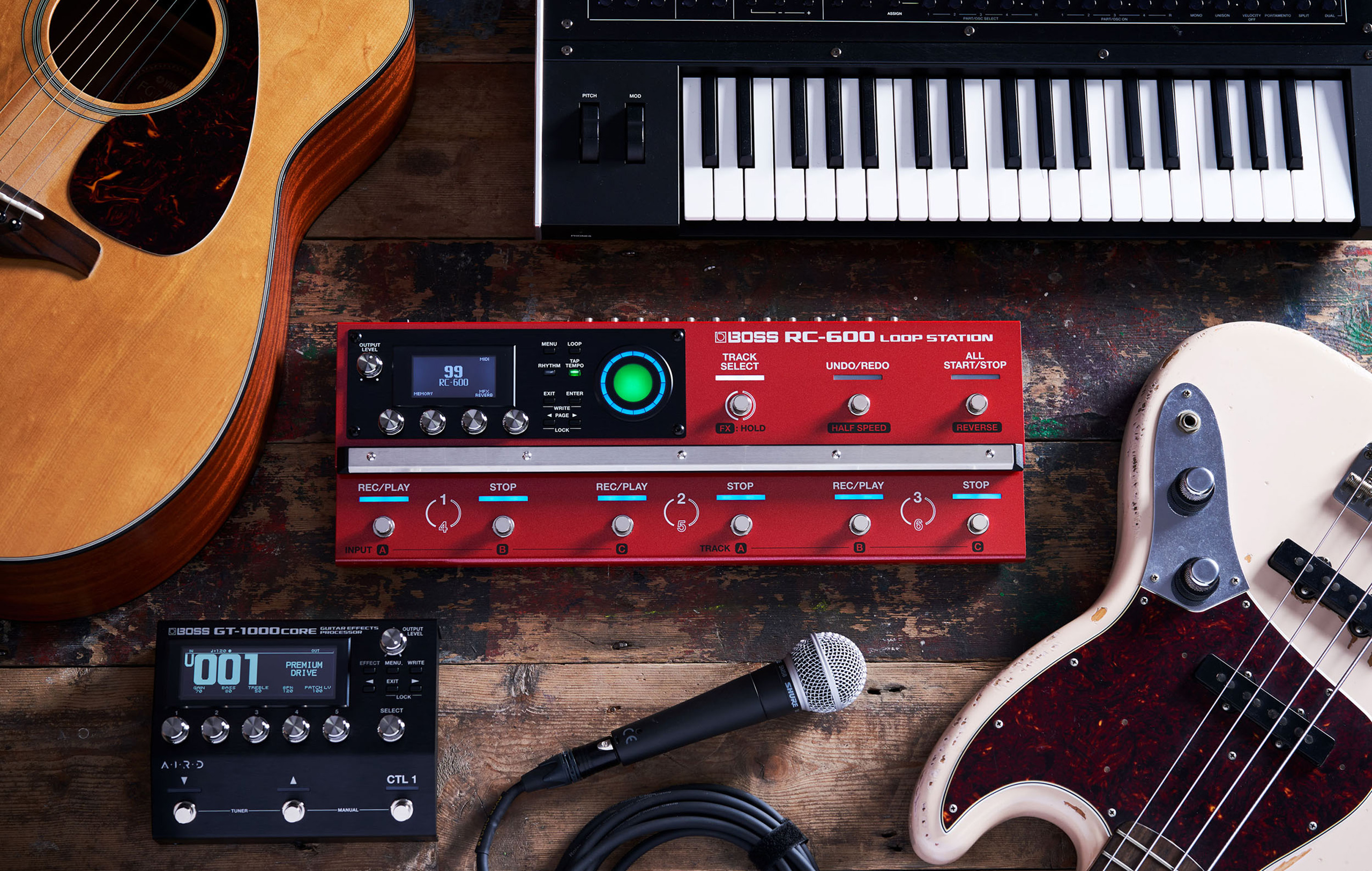
This is pretty much the opposite of the Ditto 2, in the same way that an Airbus A380 is the opposite of a paper aeroplane: not simple but elaborate, and not tiny but absolutely hee-yooge. Because this is the flagship of the Loop Station line, and it’s a very powerful piece of kit.
With the RC-600 you’re getting six stereo tracks, 13 hours of storage and a suite of on-board effects, with an LCD screen to help you navigate it all. But don’t be intimidated: Boss knows how to keep things accessible, and you can easily begin with straightforward Ditto-style looping before you begin to explore the advanced capabilities of this floor-hogging beast.
Need more? Read our Boss RC-600 Loop Station review.
Best two-channel looper: Pigtronix Infinity 2
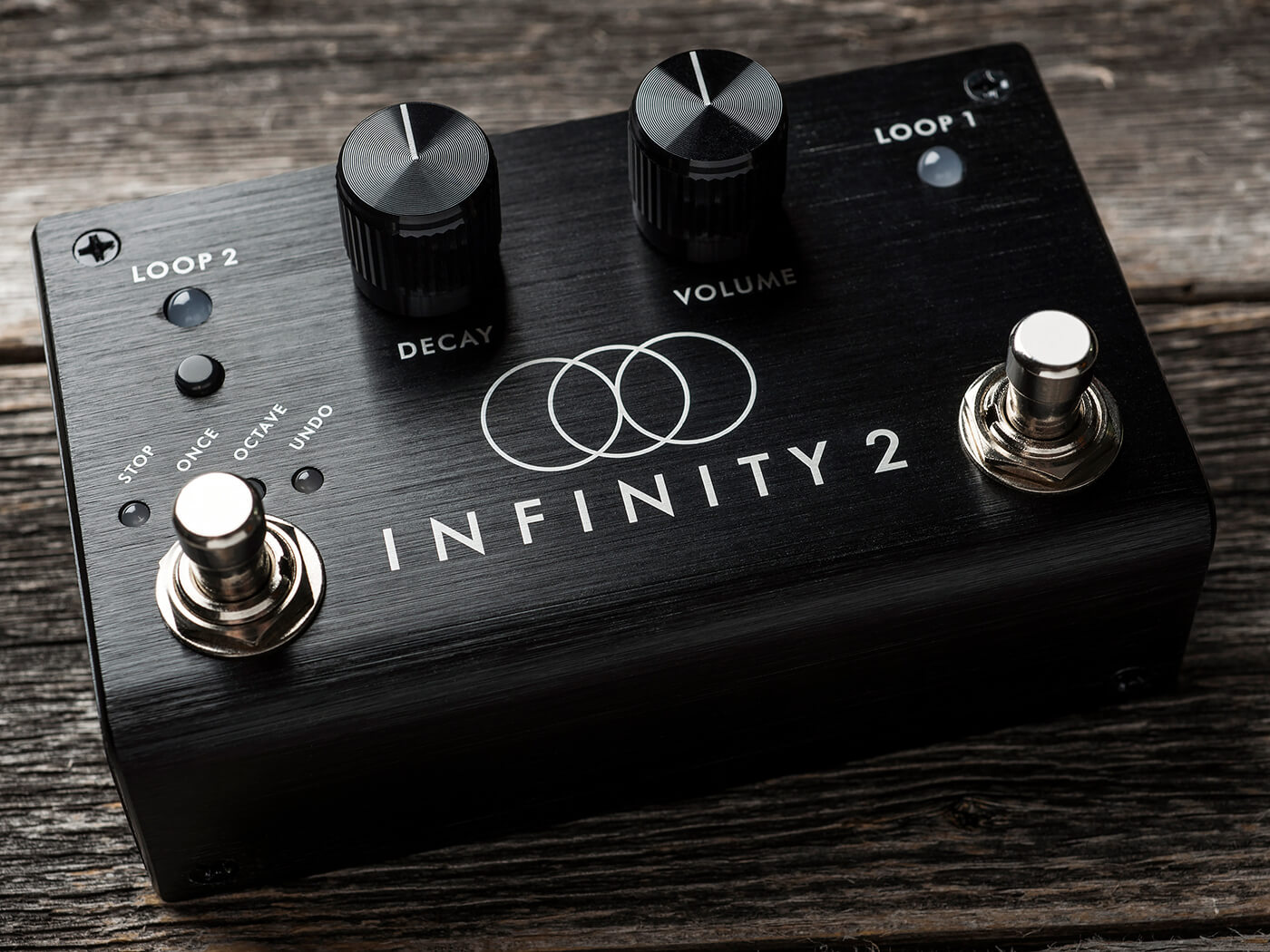
This one’s been around since 2020, and there’s since been an Infinity 3 model launched, but it remains a solid choice if you want to be able to loop on two independent tracks… and yes, it’s every bit as intuitive to use as it looks.
Record a loop on track 1, record another on loop 2, then flip freely between the two to overdub more parts – it automatically times these jumps to happen at the end of the currently playing cycle, so you don’t need to worry about messing things up with sloppy transitions. Again there are bonus features – notably an octave-down effect that has numerous uses – but again you can have a lot of fun without them.
Need more? Read our Pigtronix Infinity 2 review.
Best multi-memory looper: Electro-Harmonix Nano Looper 360
In spirit, the Nano Looper 360 is another entry in the ‘simplicity first’ category: if it didn’t have that right-hand knob it would be more or less a clone of the original TC Ditto. But that knob is a secret weapon that opens up all sorts of possibilities.
Well, actually, what it opens up is one particular possibility: that of recording a whole bunch of backing loops at home – up to 11 of them – and then calling them up whenever you need them. This means it can be used as a handy notepad for song ideas, or even as a live backing band with a built-in set list.
Best soundscaping looper: Chase Bliss Audio Mood MkII
[deals ids=”3uF5Fb41nWCLIDFePTi3XX”]
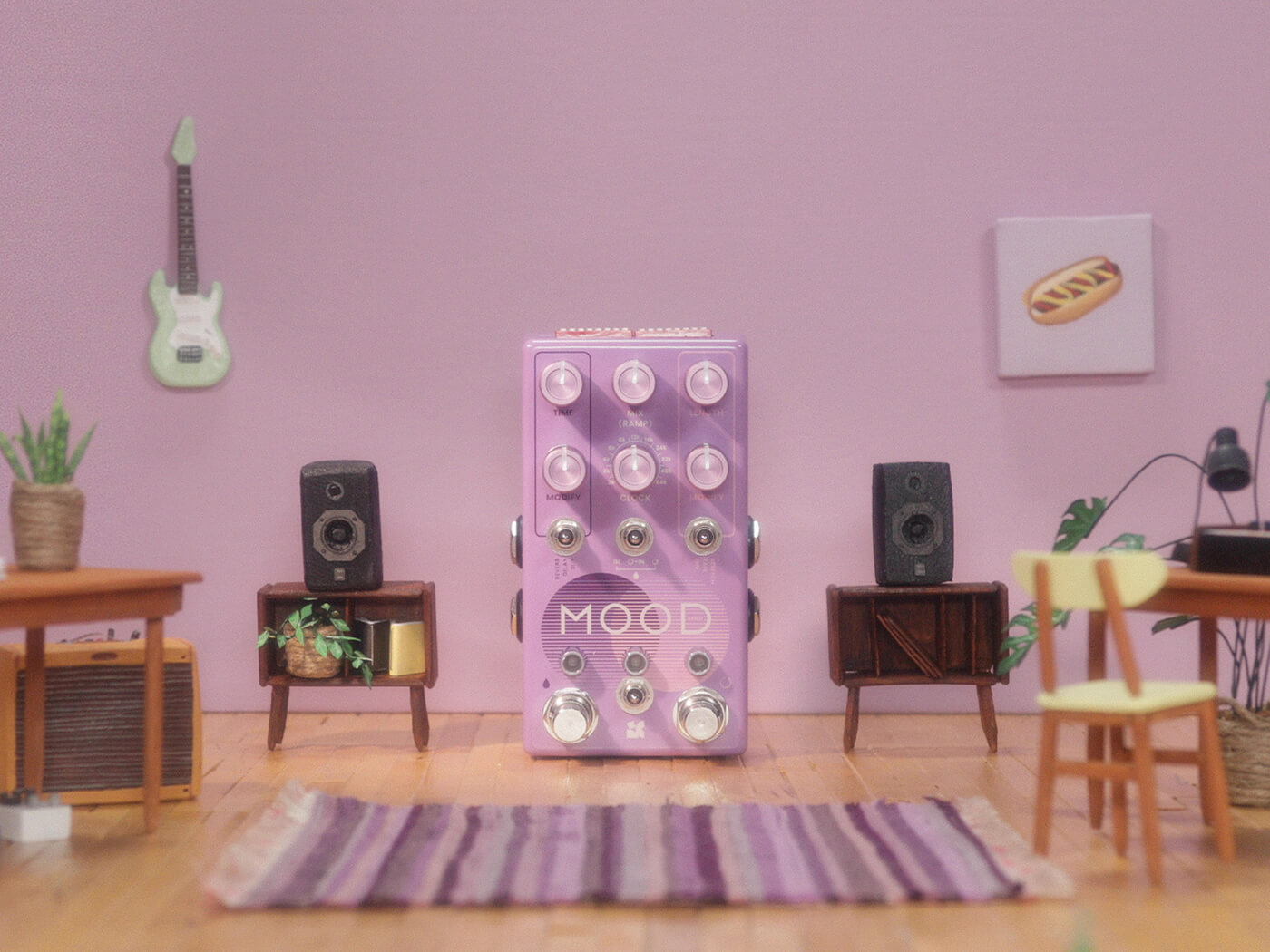
All the loopers described above are really good at recording whatever you play into them and then repeating it back to you in pristine audio quality – clean, pure and unaltered. The Mood really, really doesn’t want to do that.
In my review of this pedal I summarised it as “a cinematic loop-scaping leviathan”. It has delay and reverb on one side, randomised micro-looping on the other, and a ‘clock’ control for messing with the fabric of space and time in the middle. It’s always listening, even when it’s switched off, and you have no control over which of your notes it will fire back at you… so yes, the Mood is a looper, but it’s way more creative and unpredictable than anything else on this list.
Need more? Read our Chase Bliss Audio Mood MkII review.
Best combined looper and delay: Keeley Eccos
[deals ids=”1kE4Ge8AlYnPjvTeDDGZiy”]
In a sense, a looper is just a digital delay pedal with ideas above its station – so why not stick the two effects in one unit? The Keeley Eccos does this brilliantly, and crams an impossible amount of functionality into one compact enclosure.
The looping side works just as it should, with the usual footswitch operation and the added bonuses of reverse and half-speed modes. But the delay part goes off on its own path, colouring the repeats with a nice touch of flangey modulation – or more than a touch if you go mad with the knobs’ secondary functions. You even get three slots for storing user presets… and just to really blur the line between the two effects, you can record a loop and set it to gradually decay.
Best practice looper: DigiTech Trio+
Bandmates all walked out on you because of your excessive perfectionism and/or poor personal hygiene? Neither of those things will be a problem if you replace them with DigiTech’s ‘band creator and looper’ – because it never makes mistakes and it doesn’t have a nose. What it does have is the power to listen to what you play and respond by adding drums and bass.
With 12 musical genres to choose from, 12 song styles within each genre and up to five parts for each song, it’s quite the sophisticated arranger – and you get separate level knobs for the guitar, bass and drum loops. Obviously this is never going to sound or feel the same as playing with real musicians, but it’s a heck of a home practice tool.
Best looper for busking: Sheeran Looper +
[products ids=”5pj8wVAYnBk5cOJsU5XI5t”]
Considering how many young strummers must have been inspired to buy a looper after seeing him play, you can hardly blame Ed Sheeran for grabbing his own slice of the pedal pie by launching a signature brand. This is the entry-level model, but it still offers two tracks, instrument and microphone inputs, a full-colour LCD screen and – most crucially if you’re planning to take it busking – the ability to run off four AA batteries when you don’t have access to mains power.
There’s even a battery-powered PA speaker, the Sheeran Busker, to complete your street-ready rig. Just add a guitar, a mic and maybe a smidge of talent.
Best compact looper: Boss RC-5 Loop Station
[products ids=”2tmyCjwVNKxIHGgn1FcZBf”]
Some loopers are simple and small; others are complicated and expansive. The real challenge is to mash those two worlds together without making a mess all over the floor. Boss has plenty of history in that kind of smart engineering, and has been building loopers for longer than most – its influential RC-20 came out in 2001. So who better to make a genuinely compact pedal that can do it all?
The RC-5 follows the classic Boss design format that goes all the way back to the 1970s, yet it somehow packs in 57 backing rhythms, 13 hours of stereo recording time for up to 99 separate loops, and an unrivalled array of connectivity options including MIDI, expression pedal control and USB backup. It’s a big looper hiding in a small box.
Why You Can Trust Us
Every year, Guitar.com reviews a huge variety of new products – from the biggest launches to cool boutique effects – and our expert guitar reviewers have decades of collective experience, having played everything from Gibson ’59 Les Pauls to the cheapest Squiers.
That means that when you click on a Guitar.com buyer’s guide, you’re getting the benefit of all that experience to help you make the best buying decision for you. What’s more, every guide written on Guitar.com was put together by a guitar obsessive just like you. You can trust that every product recommended in those guides is something that we’d be happy to have in our own rigs.
The post The best looper pedals for all needs and budgets appeared first on Guitar.com | All Things Guitar.
Rig Rundown: Tyler Armstrong (The Band Feel)
The guitarist for the classic rock revivalists proves old amps, paired with even older guitars, is still a recipe for tonal success.
Tyler Armstrong, lead guitarist for St. Louis, Missouri, rockers the Band Feel, recently invited PG’s John Bohlinger out to Smoakstack Studios in Berry Hill, just south of Nashville, for this Rundown of the axes, amps, and effects he’s using to conjure the classic rock ’n’ roll sounds of the ’70s. Aside from his pedals, Armstrong sticks to the tried-and-true recipe: American guitars through British amps. Scroll for some highlights of the Rundown, and watch the video to get the nose-to-tail treatment.
Brought to you by D’Addario.
Tone on Loan
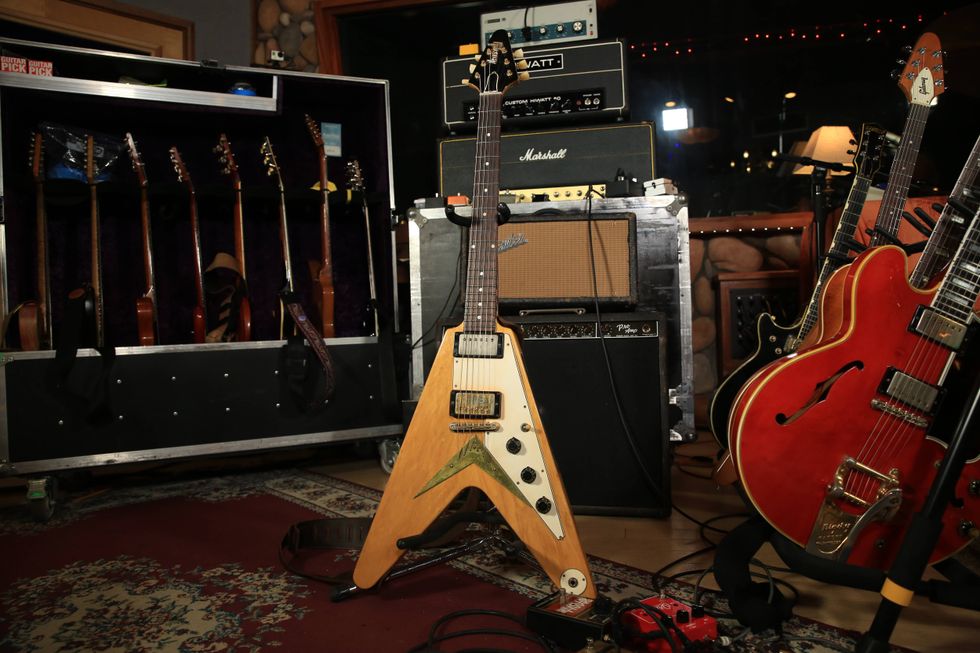
This all-original 1959 Gibson Flying V is on loan from Gibson’s Certified Vintage program. Armstrong secured it for some recent studio work, and attests that out of five he test-drove that were built in the same period, this one is the best of the bunch. He’s gotta give it back, right? “We’ll see what happens,” Armstrong grins.
Friend from ’53
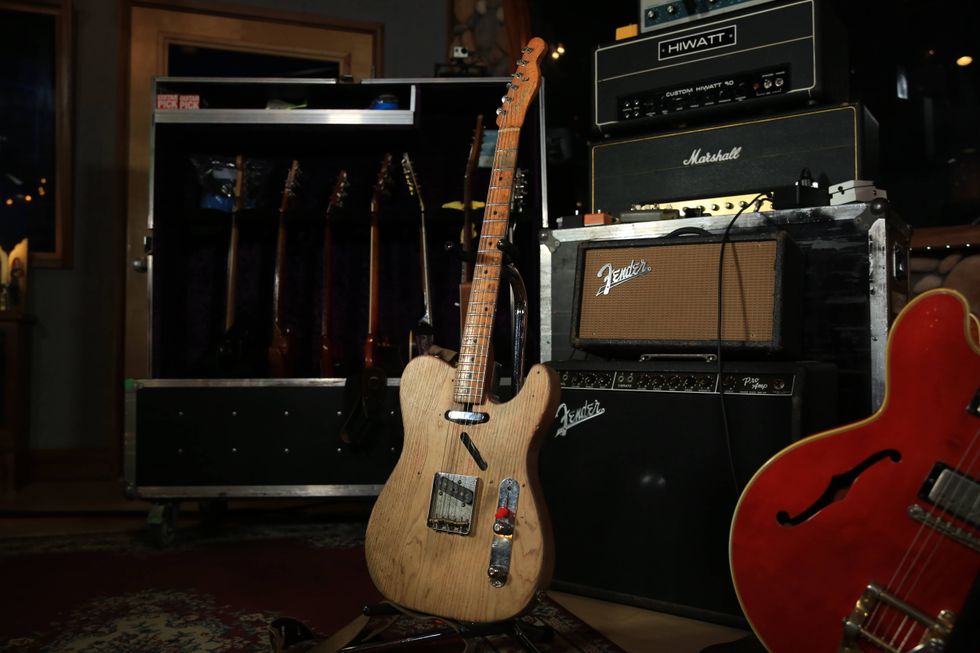
Armstrong acquired this “super messed-up” 1953 Fender Telecaster with the help of a friend in Illinois. The warped neck was heat-treated to make it playable, and the body has been contoured on the back and front to give it a Jeff Beck feeling. It’s kept in open-G tuning for some live performances.
Dynamic Duo
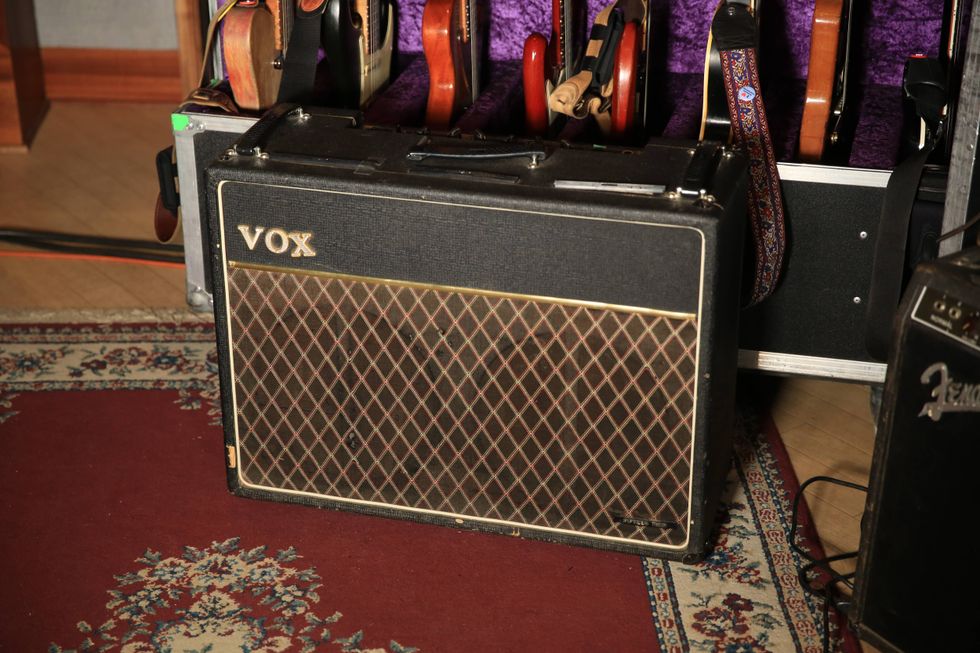
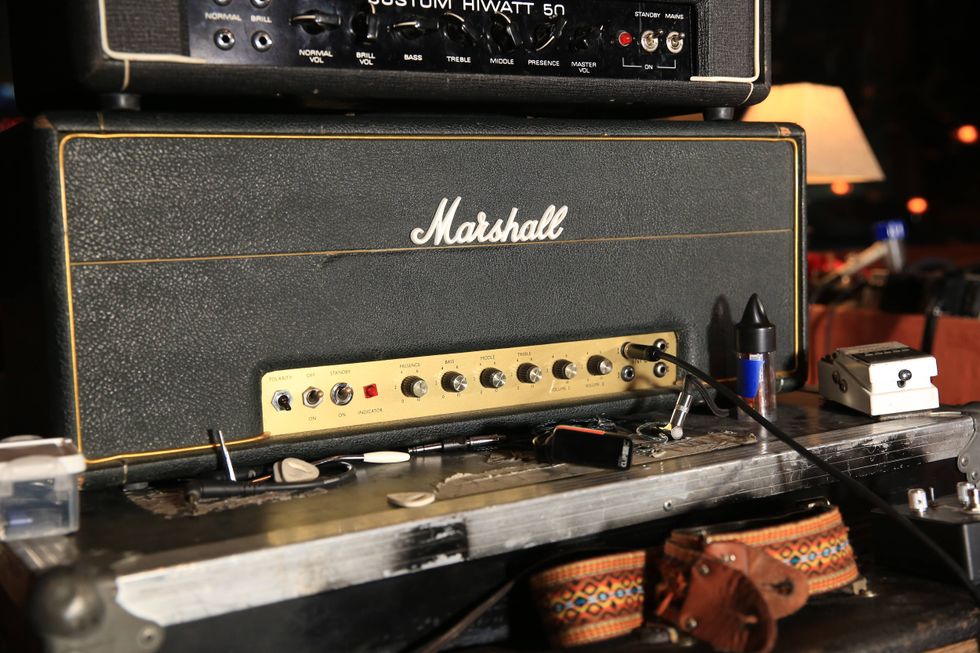
In studio, Armstrong uses a 1965 Vox AC15 2x12 combo and a Marshall JMP Super Bass. When playing live, he runs the JMP alongside a 1963 Fender Bassman.
Tyler Armstrong’s Pedals
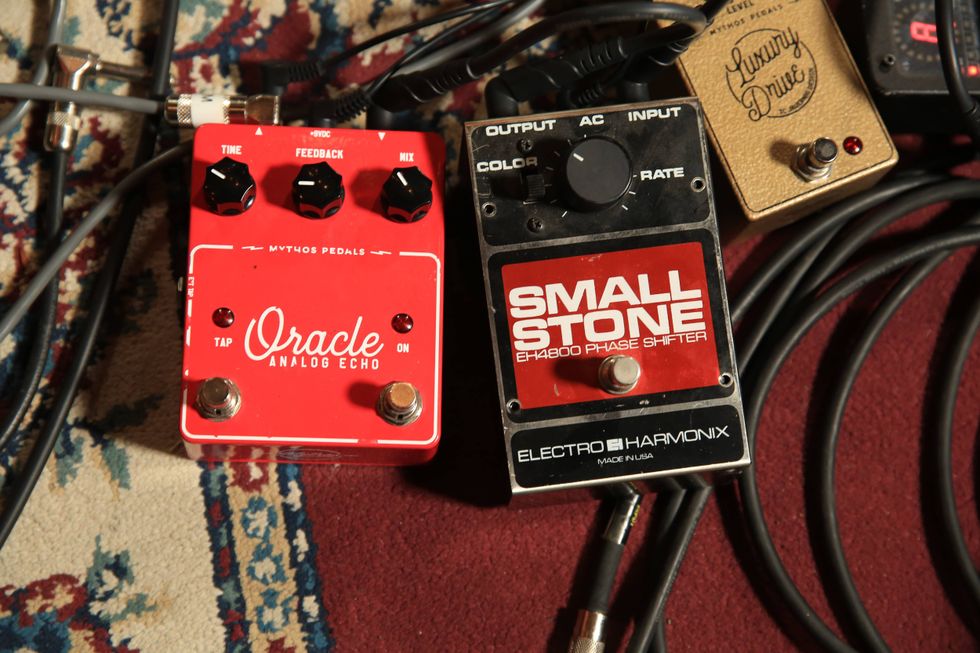
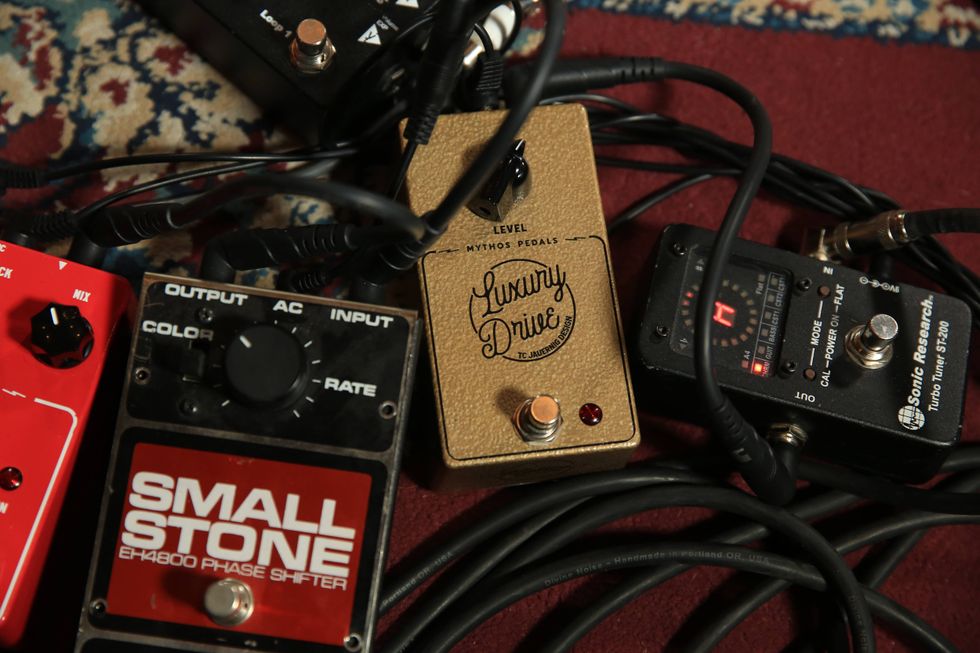
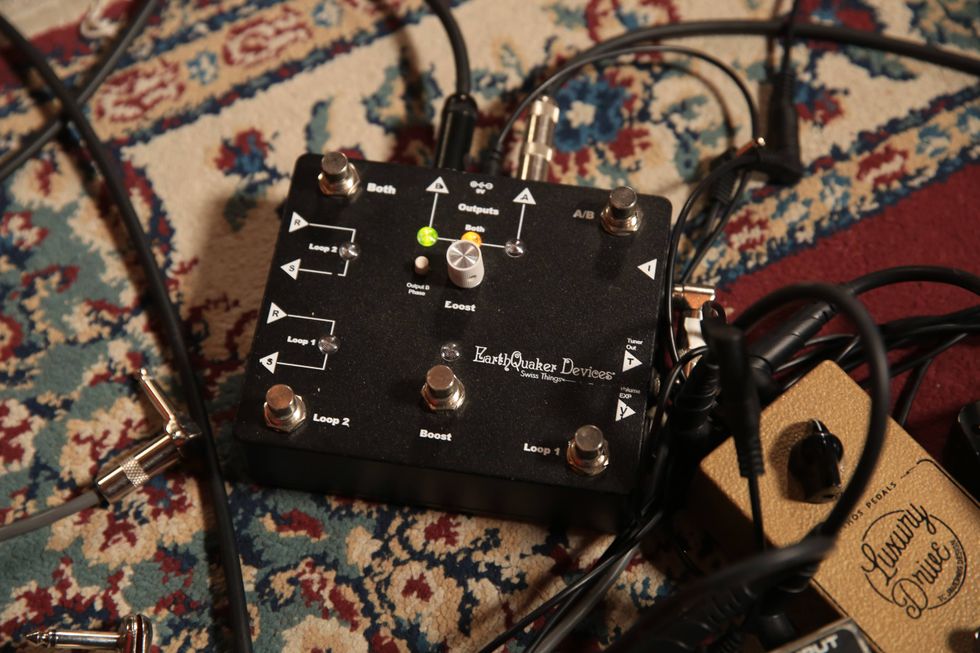
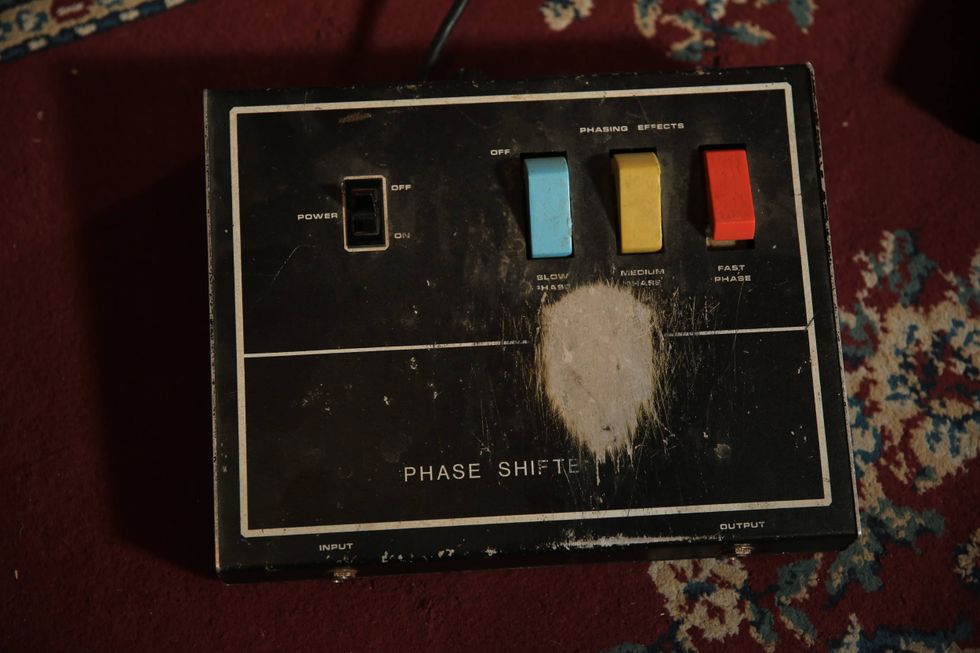
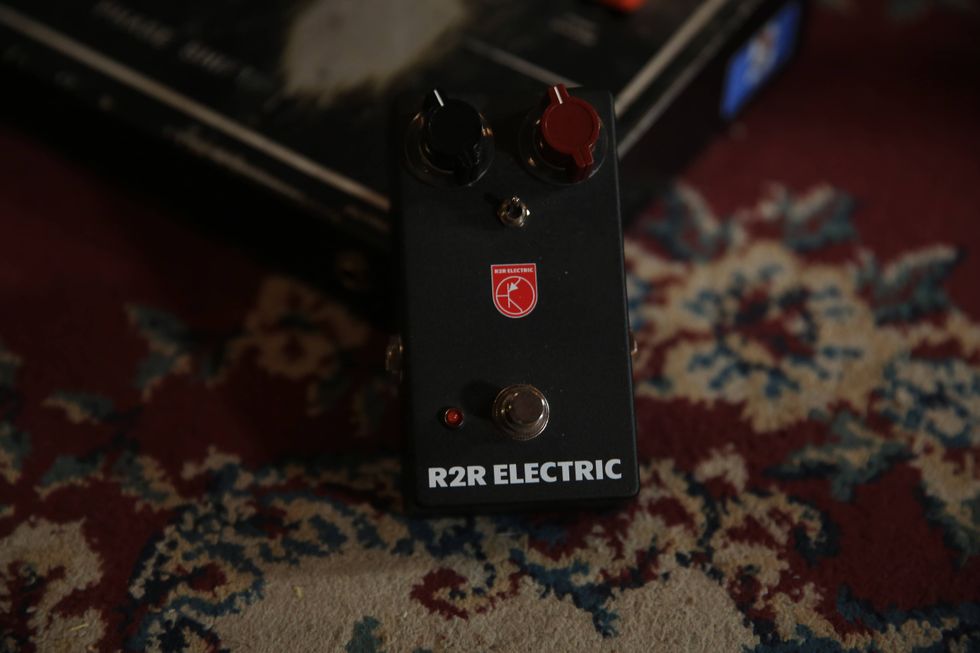
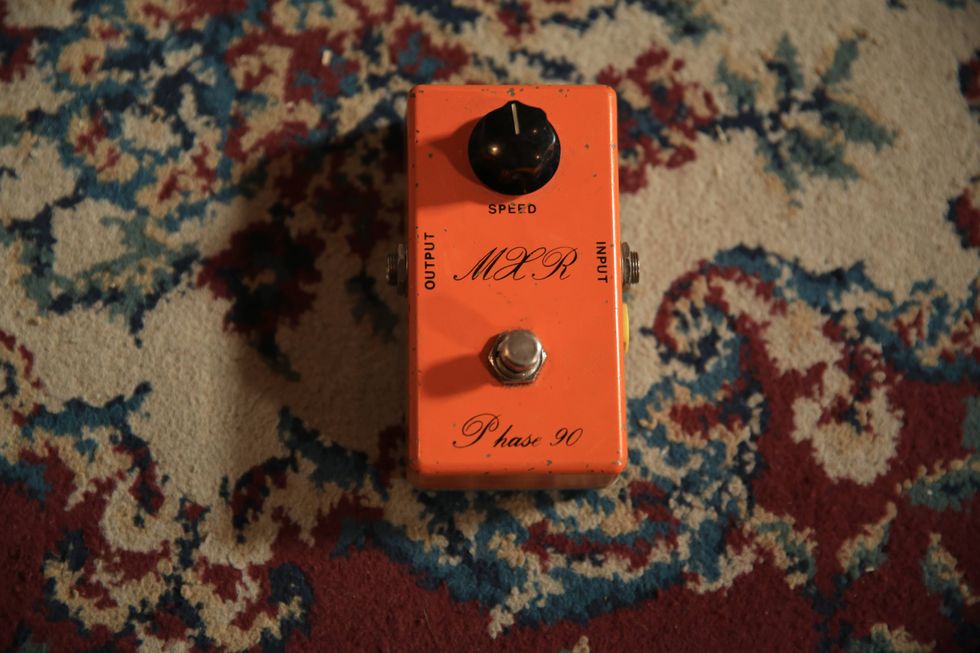
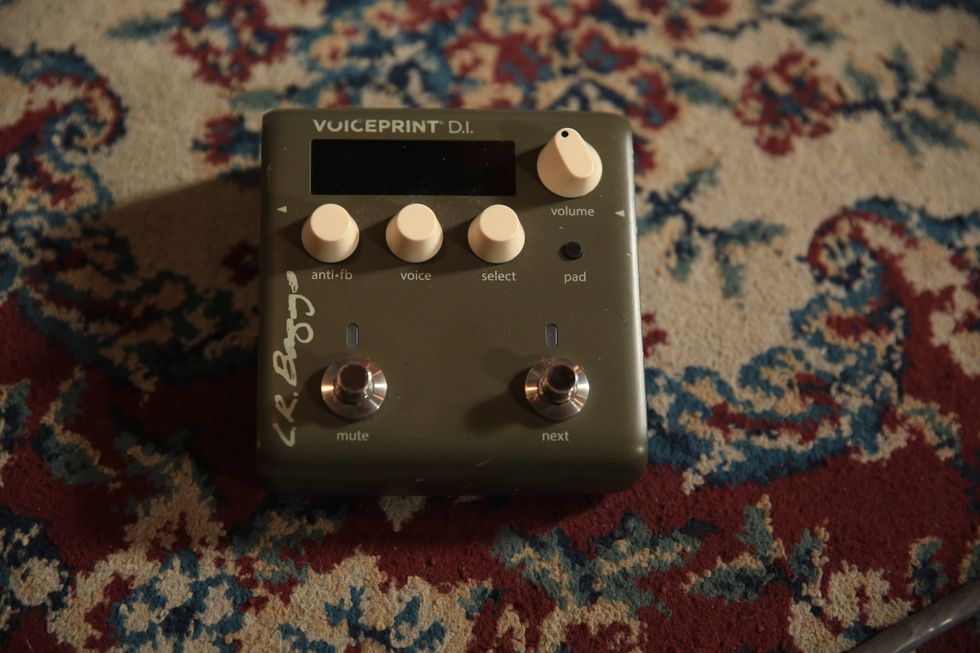
Among Armstrong’s select studio weapons are a Sonic Research ST-200 tuner, Mythos Oracle, Electro-Harmonix Small Stone EH4800, Mythos Luxury Drive, EarthQuaker Devices Swiss Things, R2R Electric Pre-Amp with an extra knob for EQ, MXR Phase 90, vintage Maestro PS-1A, and an L.R. Baggs Voiceprint D.I.

Fender celebrates 30 years of the Hot Rod Deluxe with limited-edition version – here’s how you can get one

Fender is celebrating 30 years of its hugely popular 40-watt Hot Rod Deluxe combo amp with a limited-edition 30th Anniversary version.
In keeping with the 30th Anniversary aesthetics also boasted by the company’s Blues Junior IV relaunch that arrived last year, the 30th Anniversary Hot Rod Deluxe features a Western-style covering, along with a vintage ‘50s brown and gold grille cloth.
Tweaks haven’t only been made in the aesthetics department, though; the 30th Anniversary version of the Hot Rod Deluxe swaps out the original’s 12-inch Celestion A-type speaker for another ceramic Celestion speaker, the 12-inch G12M-65 Creamback.
 Credit: Fender
The amp’s circuitry has been modified on the original, too, with tweaks to the preamp section for “increased overdriven note definition”, plus a “smoother” spring reverb.
Elsewhere, the 30th Anniversary Hot Rod Deluxe sports a pine cabinet, polished stainless steel faceplate, black Chickenhead knobs and a leather handle, and comes with a two-button footswitch and cover.
 Credit: Fender
Still 40 watts, the amp is fitted with three channels to choose from – Normal, Drive and More Drive – and is powered by a trio of 12AX7 tubes in the preamp section and two 6L6’s in the power section.
Often touted as a great pedal platform for its high headroom, the Hot Rod Deluxe also features an effects loop, in which you can place modulation, delay and reverb pedals after the preamp and prior to the power amp.
Price-wise, you can get your hands on the 30th Anniversary Hot Rod Deluxe for the princely sum of $1,299 / £1,269 / €1,489.
Learn more at Fender.
 Credit: Fender
The post Fender celebrates 30 years of the Hot Rod Deluxe with limited-edition version – here’s how you can get one appeared first on Guitar.com | All Things Guitar.
Megadeth On Ice: Watch Teemu Mäntysaari play Let There be Shred while ice skating

Megadeth guitarist Teemu Mäntysaari has just shared a rather cool video of him playing Let There Be Shred while ice skating.
The Finnish guitarist, who joined the band in 2023 following Kiko Loureiro’s departure, says making the video was “so much fun” and combines his two favourite things: guitar and ice hockey. Let There Be Shred marked the third single to arrive from their final album, which landed in January.
Though the video doesn’t use the raw audio, Mäntysaari masters this ice cold shred-through smoothly, even when moving backwards, and close up shots show him tearing through the fretboard. Take a look in the video below:
The final, self-titled album from Megadeth marks their 17th studio record. It is also their first and only record featuring Mäntysaari since he joined the band. In 2024, Mustaine said having on board made them feel more united: “We are a band again,” he told Loudwire Nights. “It doesn’t feel like me and some side players or session guys… I feel like Kiko did us a really huge courtesy by helping us find Teemu.”
The band’s final record features their own rendition of Metallica’s Ride The Lightning, which frontman Dave Mustaine originally helped to craft during his time with Metallica. At first, people believed the track to be middle-finger to the band that fired Mustaine back in 1983, but their decision to record the track came with intentions much more wholesome.
Mustaine helped write a number of Metallica songs before his firing, including a selection from the band’s debut album, Kill ‘Em All, and decided to record Ride The Lightning as a mark of respect to his first real band. Though Megadeth are retiring, it does seem that Mustaine has his sights set on other projects, with one possibly being acting.
Megadeth are currently on their farewell tour. You can view the full list of scheduled shows via their official website.
The post Megadeth On Ice: Watch Teemu Mäntysaari play Let There be Shred while ice skating appeared first on Guitar.com | All Things Guitar.
How Eddie Van Halen’s treasured Lamborghini Miura was restored and unveiled as a touching tribute to the guitar legend

Eddie Van Halen wasn’t just about music, he also had an impressive collection of classic cars and was passionate about all things automotive.
In 2023 after his passing, Lamborghini paid tribute to the guitar icon during a special 60th anniversary event for the luxury car brand, after restoring Eddie’s custom Miura. The model made its public debut in 1966, was the first to be coined a “supercar”.
The vehicle’s revving engine can also be heard on Van Halen’s Panama right after the guitar solo. According to a 2023 article from Van Halen Newsdesk, Eddie sold the car in 2019 to Curated Motors in Miami.
As newly shared by Ital Passion, John Temerian, founder of Curated Motors, sent the Miura to Italy to be restored by Lamborghini’s historical division. The restoration should have taken around two years and ended up taking almost four due to COVID-19.
Eddie’s Miura was originally gifted to him as a wedding present from his wife Valerie Bertinelli, and featured custom changes that made it a special model, including a custom number plate bearing their wedding date, “APR 11”, and a red finish instead of green.
It was decided they would not restore an idealised version, but would reinstate the car’s unique character, just as it was given to the musician. The refurbished car was officially unveiled at the anniversary event while Van Halen’s music played out, and then taken for a stunning drive around Northern Italy.
You can hear more about the story and check out the refurbished car in the videos below:
In other Van Halen news, a recently unearthed 1978 interview with rock journalist, author and Eddie’s close friend, Steve Rosen, shows the legendary guitarist recounting his experience stumbling across his famed tapping technique.
“I really don’t know how to explain it. I was sitting in my room at the pad at home, drinking a beer. I remember seeing people just stretching one note and hitting the note once… Anyway, it’s just one note like that, and they popped the finger on it real quick to hit one note and I said, ‘Well, fuck nobody is really capitalising on that.’ I mean nobody’s really doing more than just one stretch and one note real quick,” he said.
“So I started dicking around and said, ‘Fuck, this is a totally new technique that nobody really does.’ ‘Cause it is. I really haven’t seen anyone really get into that as far as they could because it is a totally different sound. A lot of people listen to that, and they don’t even think it’s a guitar.”
The post How Eddie Van Halen’s treasured Lamborghini Miura was restored and unveiled as a touching tribute to the guitar legend appeared first on Guitar.com | All Things Guitar.
Play Sierra Hull’s Lyrical New Ballad “Spitfire”

“It took a while for James and I to open up”: Lars Ulrich admits not being receptive to Cliff Burton’s musical ideas when he first joined Metallica

Metallica’s third album, Master Of Puppets, celebrates its 40th anniversary this year, and bassist Cliff Burton helped it soar to success.
During the making of the record, which would be Burton’s last before his tragic death during its supporting tour, the other band members began to embrace Burton’s more melodic ideas, opening them up to new ways to experiment.
In an archival interview republished in Classic Rock magazine, drummer Lars Ulrich says, “Most of the record was written in May and June of 1985, from the best ideas that were kicking around on our riff tapes.
“Cliff had been in the band for a few years and he brought in a lot of harmonies and melodies. It took a little while for James [Hetfield] and I to open up to some of Cliff’s ideas about harmony and melody, because we’d never played stuff like that before. But after a while we got it and that’s when we started experimenting more.”
Guitarist Kirk Hammett adds, “James would show Cliff and me the riffs, and we’d build the songs from there. Some I’d already be familiar with. The main riff in Battery, for instance. The first time I heard James play that was in England, on his acoustic guitar. We were watching The Young Ones, and all of a sudden he started messing around with this sort of galloping rhythm. I said: ‘Wow, that’s cool.’”
Ulrich describes this young iteration of the band as “snot-nosed punks trying to do something different from everyone else,” before Hetfield then adds, “I remember writing the chorus to Master Of Puppets in our living room and thinking it was too commercial, too obvious. ‘If it’s too easy, something’s wrong’ was kind of the Metallica mantra.”
In other huge Metallica news, the band are due to take up residency at the Las Vegas Sphere across October and November of 2026, and into January 2027. The residency will continue their ‘no-repeat’ weekend tradition, with unique set lists for each night.
The post “It took a while for James and I to open up”: Lars Ulrich admits not being receptive to Cliff Burton’s musical ideas when he first joined Metallica appeared first on Guitar.com | All Things Guitar.
Pages
