
Music is the universal language
“Glory to God in the highest heaven, and on earth peace to those on whom his favor rests.” - Luke 2:14
Norse Guitar Feeds
“I was afraid of silence, of having to feel”: Dave Grohl admits he used music as a “crutch” after Taylor Hawkins’ death

Dave Grohl has opened up about life after the death of Foo Fighters drummer Taylor Hawkins, sharing how he used music as a “crutch” while processing his grief.
In a new interview with MOJO, Grohl reflects publicly for the first time on Hawkins’ death in 2022, calling it a moment that “threw our world upside down” and fundamentally altered his outlook.
“Losing Taylor was never meant to be,” says the guitarist. “That threw our world upside down and made me question everything about life, that it was so… It was so unfair. I still have a hard time making sense of it.”
Grohl, who threw himself into work in the immediate aftermath, admits that he turned to music as a way of avoiding difficult emotions.
“I think I was afraid of silence, afraid of having to feel,” he says. “I could have used a bit more of the silence, a bit more of digging deeper. I never want to say music is a distraction, but I was definitely using it as a crutch for some broken limb.”
The musician also reflects on his wider career and the motivations behind some of his past projects, suggesting that not everything he pursued came from a place of necessity.
“I’ve had to reexamine my ambition and intention,” he says. “A lot of those projects over the years were surface validation to prove that I could do it – not that I needed to do it. I was always the guy who couldn’t sit still. I couldn’t take a vacation. I needed the TV on to put me to sleep. It was the silence – the still – that scared me.”
Now, however, “my horizon is much different,” Grohl notes. “There will be plenty of things that we’ll do in the next few years that will remind everyone that Foo Fighters love to circle the planet playing rock shows. Before, I was running on fumes and unleaded gas. Now, I’m just burning fucking diesel.”
Foo Fighters are set to release their 12th studio album, Your Favorite Toy, on 24 April.
The post “I was afraid of silence, of having to feel”: Dave Grohl admits he used music as a “crutch” after Taylor Hawkins’ death appeared first on Guitar.com | All Things Guitar.
“Pinnacle of the Electromatic collection”: Gretsch’s new Electromatic Premier Jet packs “premium appointments” and upgraded specs into a sub-$1k package

Gretsch has unveiled the Electromatic Premier Jet, a revamped take on its workhorse Jet platform that focuses on improved playability, stability and a wider range of tones.
Positioned as the “boldest evolution yet” of the Electromatic and Streamliner Jet lines, the Premier Jet keeps the brand’s familiar look and feel but updates the spec where it matters most for modern players.
At the core of each guitar is a chambered mahogany body with a carved maple top and sculpted contours for what Gretsch calls “exceptional acoustic balance” and playing comfort. It’s paired with a mahogany neck in a performance “C” profile and a 10”-14” compound-radius ebony fingerboard with 22 Medium Jumbo frets. Pearloid neo-classic thumbnail inlays and Luminlay side dots round things out, offering exceptional visibility even on dimly lit stages.
 Credit: Gretsch
Electronics are where things get especially interesting. The newly developed Sphera Twin Six humbuckers, powered by Alnico 6 magnets, deliver everything from pristine clean tones to aggressive overdrive right at your fingertips. Aimed at balancing vintage warmth with a more modern edge, they’re voiced to be “beautifully dynamic, exceptionally expressive and addictively powerful”.
As Gretsch explains, “each pickup features twelve adjustable pole pieces for precise attack and unrestrained flexibility. In the neck position Alnico VI magnets pair with clear poly sol coated wire, while in the bridge Alnico VI magnets pair with plain enamel coated wire. Specially calibrated coil winds create the perfect marriage of brilliance and brute force, while vacuum wax-potting keeps noise and interference to a minimum.”
Controls wise, a master volume with treble bleed keeps the top end intact when rolling back, while a push-pull Lumen filter and dual no-load tone controls offer a wide range of usable tones without overcomplicating things.
The hardware takes a similarly practical approach. A Lockdown locking wraparound bridge, locking tuners, and a GraphTech NuBone nut all work to keep tuning stable so you don’t have to babysit your guitars mid-set.
“For years, the Electromatic and Streamliner Collections have offered Gretsch power and fidelity to a broad range of players,” says Gretsch VP Jason Barnes. “While Gretsch has always been renowned for its truly iconic tone and style, the Electromatic Premier Collection elevates the playing experience even further with incredible sonic punch and definition, effortless playability and of course, signature Gretsch style.”
The Electromatic Premier Jet is priced at $799.9/£709/€829 and is available in four finishes – Vintage Pearl, Robusto Burst, Onyx Storm and Clairvoyant.
Learn more at Gretsch.
The post “Pinnacle of the Electromatic collection”: Gretsch’s new Electromatic Premier Jet packs “premium appointments” and upgraded specs into a sub-$1k package appeared first on Guitar.com | All Things Guitar.
Why Taylor’s Next Generation Grand Auditorium is the ultimate player’s guitar

[shorthand url=”https://nme-networks.shorthandstories.com/taylor-next-gen/index.html”]
The post Why Taylor’s Next Generation Grand Auditorium is the ultimate player’s guitar appeared first on Guitar.com | All Things Guitar.
The guitar secrets of Steely Dan: as revealed by Walter Becker: “All of our equipment was always broken”

The inner workings of Steely Dan have always remained under a cloak of mystery and intrigue. Known for their perfectionist streak in the recording studio, Steely Dan’s esteemed hipsters Donald Fagen and Walter Becker, were a world unto themselves.
While vocalist and keyboardist Fagen remains the sole surviving member of the pair – guitarist and bassist Becker passed away in 2017 – the duo etched a musical legacy that continues to both enthral fans of their music, and musicians alike.
With albums such as 1972’s Can’t Buy A Thrill, 1976’s The Royal Scam and 1977’s Aja, Steely Dan married their love of the absurd with unique sophisticated musical complexity.
Tales of their studio escapades have become legend, best exemplified by the duo’s fastidious approach in capturing the right guitar solo for Peg where they churned through a succession of studio guitar aces such as Robben Ford, Rick Derringer, Elliot Randall and Larry Carlton among others, before finally settling for Jay Graydon’s blistering six-string offering.
Keep It Brief
When it came to a Dan recording session, guitarists hired for the session were usually given a brief prior to the session. “There were cases where we had lines or we had particular rhythm parts in mind, but a lot was always left up to the individual with the guitar,” Walter Becker explained to this writer in a rare interview in 2010.
“Guitar players are so idiosyncratic in how they voice chords and how they approach chords and so on. You want to tell somebody the effect you want to create, and what you want to end up with, more than you want to tell them how to create that effect because if you have strong, interesting players, they already have developed their own personal techniques for doing that sort of thing.”
An aficionado of the blues, Becker always sought a particular kind of guitarist to lay to tape a blues-infused solo. Yet, many times at the eleventh hour, it was Becker himself who wound up being tasked with the performance.
“In some cases, we just couldn’t find anybody that really was the right combination of things that could play blues style electric guitar, and also play over changes,” he said. “There weren’t too many people that really could do that back in the 70s. Now of course, there are lots of people who could do it.”
Keep It Low
While Becker himself was also a competent bassist, he and Fagen would also employ the services of bass virtuoso Chuck Rainey whose contributions, according to Becker, were integral to the duo’s recordings.
“Chuck always liked to hear the demos and hear the bass parts that I had on demos because he got a certain amount of information out of it,” recalled Becker. “There were a few things that were written that Chuck played, but mostly Chuck just got the chord chart. He would hear things on the demos that he liked or that told him something about what the general approach was.
“He basically created the bass lines himself and of all the great bass players that we’ve had a chance to work with from time to time, he was by far the best at that, at creating a part that really worked with the song and worked with what the other players were doing.”
Keep It Jazz
Fagen and Becker were one of the very few songwriters who were able to successfully incorporate jazz harmonies within a pop framework. “I don’t think most people wanted to do that,” admitted Becker. “Very few people really. Jazz and jazz harmonies, especially in the 60s and 70s, for many people evoked the notion of the music that their parents danced to at the USO or something, or the band that played the theme music for the Ed Sullivan show and stuff like that.
“So, jazz harmony and jazz instrumentation had been co-opted into sort of less reputable forms of music that didn’t have any of the interesting, powerful elements of jazz that we love, such as improvisation and really driving rhythm sections and that kind of thing. So, most people just weren’t even interested in doing anything like that.
“And I think probably up until a certain point, we were the only people really and we spent a lot of time trying to figure out how to integrate. We experimented with a lot of writing and over a period of years, on how to integrate the different elements that were in our songs.
“In other words, how to integrate humour into the lyric of a song without them becoming novelty songs, and how to integrate jazz harmonies into rock band sounds, rock band combos and rock band rhythms and stuff like that without it sounding like half ass jazz or without it sounding like, without it evoking the sort of out of date, old generation.”
Their taste in adding those sophisticated jazz harmonies into their songwriting, saw the pair experiment with multiple chord voicings as a way to stamp their take on their music.
It was through this trial-and-error approach, that Becker and Fagen came up with the ‘Mu’ chord, which became an integral part of their signature sound. At its core, the ‘Mu’ chord is basically a major chord with an added 2nd, and due to the added 2nd being paired to the chord’s 3rd, it results in a mildly dissonant sounding chord.
“When we started writing, some of the songs that we wrote were sort of folk-ish types of songs,” explained Becker. “And so, we were looking for ways to make the triads sound better and richer and ways to add a little dissonance and colour to the chords. And that ‘Mu’ chord was one of the ways that we came up with doing that.”
Keep It Appropriate
While much of Steely Dan’s output has been noted for its production sheen, they made sure that polished veneer never replaced the music’s substance, of which was the primary goal for both Fagen and Becker. “First of all, the sense that from the beginning the substance of the song, is the substance of the song,” explained Becker cryptically.
“And that’s not always the case for everybody. I think a lot of pop music now is predicated on the idea that the style and the trappings are more important than the substance and that the substance shouldn’t interfere with the style and the trappings, which is just a completely different 180 degrees from the way that we look at it anyway.
“So, I think the thing is that the production has to be appropriate, has to advance the cause of the substance of the song. It has to add to the impact of the song rather than diminish it or obscure it or overwhelm it. There are times when you can create some interesting effects by having a very unlikely production combined with a particular song, but generally speaking, it’s very easy for things to be overproduced and over fussed with and over ornamented.”
Looking back over the group’s prolific 70s period, Becker admitted that both he and Fagen weren’t cut out to be touring musicians, preferring instead the studio environs where they thrived and could allow their creative spirit to run freely.
“In the 70s, we were completely wrapped up in the idea of writing songs and making records,” he expressed. “That’s what we really wanted to do, and the touring just seemed to detract from that; it burned up a lot of energy. All of our equipment was always broken and destroyed the flow of work as regards to writing and recording, so we stopped doing it.”
The post The guitar secrets of Steely Dan: as revealed by Walter Becker: “All of our equipment was always broken” appeared first on Guitar.com | All Things Guitar.
Corey Davis, Alvin Youngblood Hart & Guy Davis New Album, Fight On!: True Blues Vol. 2 Release Date April 17, 2026
Press Release
Source: Mark Pucci PR
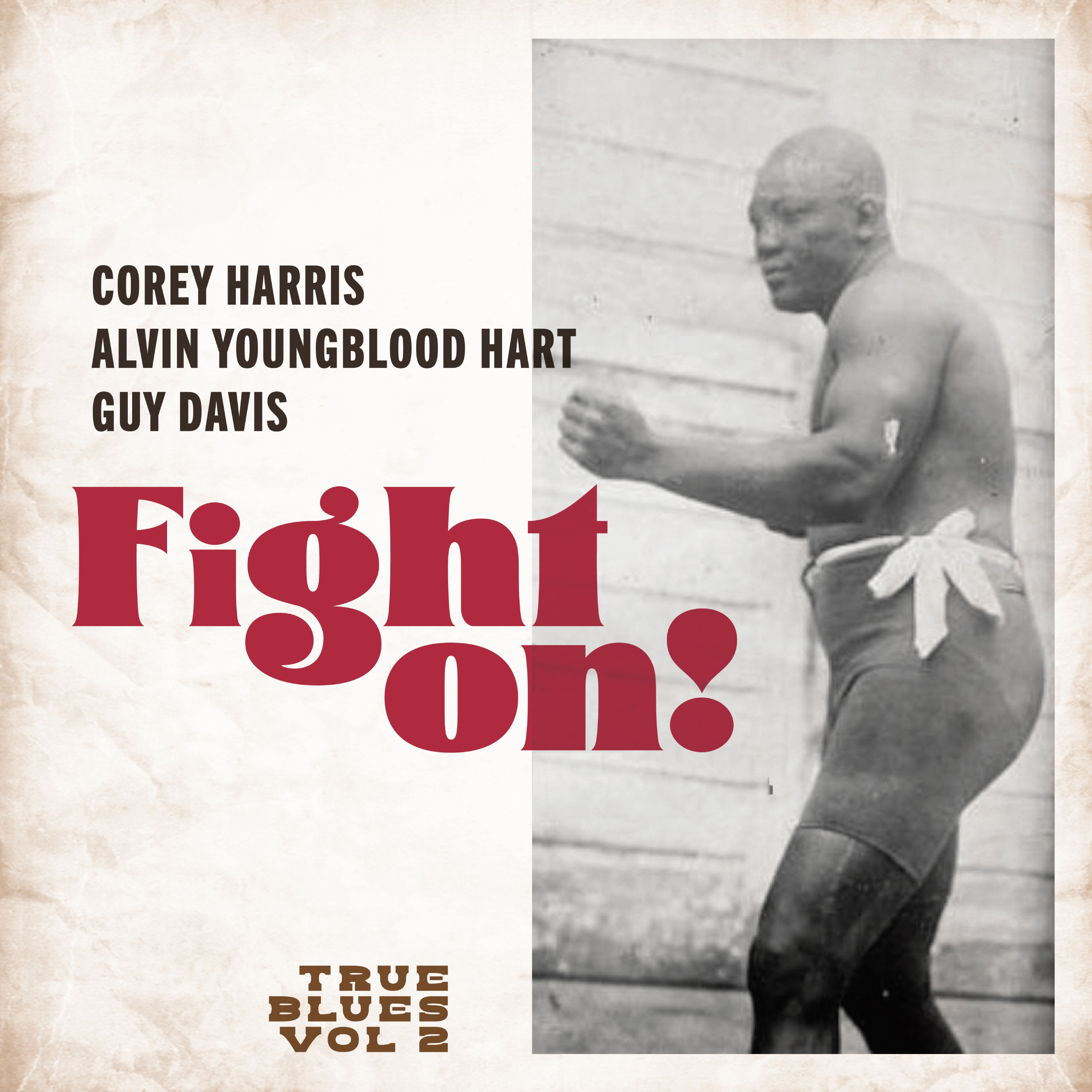
 Corey Harris/Alvin Youngblood Hart/Guy Davis – new album, Fight On!: True Blues Vol. 2 (out April 17 on Yellow Dog Records), from three of today’s deepest, most decorated acoustic blues masters who reunite to summon ancestral spirits with songs both long remembered and newly created.
Advance music and album pre-orders HERE!
Even as they step back in time, Guy Davis, Corey Harris and Alvin Youngblood Hart—who won ardent acclaim for their first True Blues project in 2013—prove beyond a shadow of a doubt that African American blues remains as vital and vibrant as ever.
These three first met at the Chicago Blues Festival in 1996 and are now coming together nearly 30 years later for a powerful follow-up to their acclaimed first True Blues collaboration. The album features nine tracks blending traditional material (Charley Patton, Rev. Gary Davis, Virginia songsters) with original compositions.
“I have a photograph somewhere of Corey, Guy and myself at the Chicago Blues Festival, 1996,” remembers Alvin Youngblood Hart. “A time when we were being touted by the ‘Blues Establishment’ as ‘The New Saviors Of The Blues.’ So whatever man, it was destiny that we’d end up doing something like True Blues. This new album is a continuation, or reunion of the project we started over a decade ago.”
“The thematic tie of the record lies in the fact that we are three African-American bluesmen who are fighting to maintain our cultural legacy and heritage,” adds Corey Harris. “Each of these nine tracks represents a contemporary image of traditional Black lifeways.”
As for the album’s title, Guy Davis states: “The fight we are waging is to keep this precious music form alive. To us, there is not so much difference between our arrangements of blues classics and our newly created work. It’s all connected to the ancestral spirit.” Raw, heartfelt and sounding absolutely nothing like a dusty museum piece, Fight On!: True Blues Vol. 2 is a loving celebration of shared music and friendship, a long-dreamed-about project that now, countless tours and conversations later, finally arrives.
Behringer takes Boss to court over alleged patent infringement

Behringer’s parent company, Empower Tribe, is suing Boss – and its parent company Roland – alleging its use of polyphonic tuning technology in several of its products infringes upon the patent of the TC Electronic PolyTune.
Polyphonic tuning – a method by which a guitarist can play and tune multiple strings at the same time, as opposed to monophonic tuning – is used in the PolyTune by TC Electronic, another brand under the Empower Tribe umbrella.
The technology also features in a number of Boss products, including GT‑1000, GT‑1000CORE, GX‑100, and GX‑10 multi-effects pedals. Empower says this breaches its patent for the PolyTune.
Boss filed a motion to dismiss the claim on 9 October, 2025, arguing that Empower’s original patent is invalid for a number of reasons. Firstly, Boss claims the technology simply collects and displays data, meaning it was never patentable as it’s an “abstract idea” rather than a concrete technological solution.
In Boss’ motion, while the nature and right to obtain patents for new technologies is acknowledged, it points to an exception “long-held” by the US Supreme Court: “Laws of nature, natural phenomena and abstract ideas are not patentable”. Under this provision, Boss says Empower’s polyphonic tuning patent is not valid.
“Tuning is the quintessential definition of an abstract concept because musicians have been tuning stringed instruments by ear for as long as there have been stringed instruments,” Boss says. “A musician would play a note, compare it in their mind to what the note should sound like, and then adjust their instrument, repeating the process until the notes matched…
“Likewise, a musician has been tuning by ear multiple strings played at the same time allowing a person to differentiate ‘two pitch frequencies simultaneously’… Plaintiff’s opposition [Behringer/Empower] would have the Court believe that the ‘683 Patent [the PolyTune patent] invented polyphonic tuning.” Boss also says the PolyTune’s polyphonic tuning technology is achievable using generic hardware, and therefore not patentable for the same reasons that most guitar pedals aren’t patentable.
Empower has responded to this motion to dismiss with its own opposing motion, stating that Boss is “vastly oversimplifying” the technology described in the PolyTune patent in order to make its point, and overall strongly rebukes essentially all parts of Boss’ motion. In terms of the lack of an “inventive” aspect to the original patent, Empower argues that the court should at the very least undergo an “intensely factual inquiry” to determine if this is the rather than just “take [the] Defendant’s word for it”, and accept the motion to dismiss.
But why are we only hearing about this dispute now? Well, pending further ruling from the court, Boss has opted, as of March 2026, to remove the polyphonic tuner function from its GT‑1000, GT‑1000CORE, GX‑100, and GX‑10 multi-effects pedals.
This was discovered by YouTuber John Nathan Cordy, who posted a video earlier this week detailing the firmware update which removed polyphonic tuning from the above Boss pedals.
“Although [Boss parent company] Roland has developed many patented products on its own, it decided that instead of creating a polyphonic tuner itself, it would simply knock off Empower’s patented device instead,” Behringer’s initial lawsuit read [via Guitar World].
“[The] defendants have never sought or obtained a licence of the patent, and are not authorized to practice any claim of that patent,” Behringer says, adding that it contacted Roland to “reach an amicable solution”, but Roland “denied infringement” and “refused to negotiate a potential settlement”.
Many in the guitar and wider music gear community have been quick to point out that Behringer regularly produces products heavily inspired by classic pieces of gear.
This isn’t the first time Boss and Behringer have been at odds, either, after Boss sued Behringer in 2005/2006 over the trade dress (appearance) of many of its effects pedals. The suit was ultimately settled under confidential terms.
Just last year, Bill Finnegan, creator of the iconic Klon Centaur overdrive pedal, sued Behringer over its Klon copy. Behringer subsequently changed the name of its pedal from “Centaur” to “Zentara”, along with a number of visual design elements. The lawsuit was ultimately dismissed.
Guitar.com has reached out to both Boss and Behringer for comment.
The post Behringer takes Boss to court over alleged patent infringement appeared first on Guitar.com | All Things Guitar.
Gibson Custom Shop recreated Michael Schenker’s 1971 Flying V – and it sold out in a day

One of the most iconic Flying V guitars in history is being given its flowers. Gibson’s Custom Shop has faithfully recreated Michael Schenker’s 1971 Flying V, with a limited run of 50 hand-signed Collector’s Edition guitars selling out in just one day.
Based on 3D scans of the original instrument, which is currently owned by Metallica’s Kirk Hammett, the Michael Schenker 1971 Flying V Collector’s Edition serves as a testament to one of the most influencial guitars in hard rock and heavy metal. The original guitar was used to record UFO’s first three records, with the guitar soon undergoing a striking black and white makeover. With its new look, the Flying V became Schenker’s signature axe.
This Collector’s Edition is crafted with a mahogany body, three-piece mahogany neck with a slim artist profile, and a one-piece rosewood fretboard with 22 medium jumbo frets. Of course, the Flying V headstock and pickguard also boast the same black and white paint job as Schenker’s original Flying V.
Elsewhere, the guitar is also fitted with Schaller M6 tuners and a Corian nut. There’s also a pair of uncovered T-Top humbuckers with Alnico 5 magnets, each wired with unique volume controls and a shared tone knob. There’s also a Switchcraft three-way toggle, as well as a quarter inch output jack.
All 50 instruments have also been hand-signed by Schenker himself on the back of the headstock, which is sure to delight those that managed to snag a guitar. The instrument also comes housed in a custom replica flight case, while fans will also receive a commemorative mahogany display block featuring a #56 Medallion (presumably a nod to when the Michael Schenker Group’s 1980 track Cry For the Nations peaked at #56 in the UK).
Speaking about his limited edition Collector’s Edition guitar, Schenker sings praises for the Flying V. “When I was about 16 years old, I broke a string at a show and my brother was playing a V and I had to take a solo, so he quickly gave me his guitar,” he recalls. “That’s when I noticed there was something about the guitar… It almost became like part of my body.”
While the release coincides with the 50th anniversary of UFO, it’s a perfect way to reflect on the impact Schenker’s sound has had on the guitar world. Hammett in particular has spoken highly of Schenker, revealing in Gibson Publishing’s 2025 release, The Collection: Kirk Hammett, that having the Flying V in his collection feels akin to owning a “religious relic”.
 Credit: Gibson
“Wolf Hoffman got it from Michael Schenker’s tour manager, who had been sitting on it for like, 20 years,” Hammett explained. “But it’s the original V that Michael Schenker played on UFO albums, Phenomenon, Force It, and No Heavy Petting. It’s crazy because you can still see some of the red finish, if you look at certain spots on the guitar.”
“The Schenker Flying V is almost like a religious relic for me,” he added. “It represents so much of my youth and all the travails I went through in just trying to learn how to play guitar and be a great improviser and soloist like Michael Schenker. I spent so much time as a teenager just staring at this guitar on the back of UFO’s Force It album… I used to stare at it and go, ‘I need to get a Flying V’. Little did I know that, decades later, I would have the very Flying V that I was staring at!”
On the YouTube video announcing the release, some fans believe the recreation deserves to be a permanent part of Gibson’s offerings to honour Schenker’s impact on music. “Gibson, release a production model,” one user pleas. “Michael’s influence deserves way more than 50 guitars. He’s incredibly important.”
The guitar – which is now sold out – was priced at £14,899 / $16,999. You can find out more at Gibson.
The post Gibson Custom Shop recreated Michael Schenker’s 1971 Flying V – and it sold out in a day appeared first on Guitar.com | All Things Guitar.
Sinners’ love letter to the blues won Best Score at the Oscars – and Buddy Guy, Kingfish and Eric Gales came out for a star-studded mid-show performance

Amid Sinners’ bloodthirsty vampires and Irish step-dancing, the 2025 blockbuster is a love letter to the blues. And that love was on full display at this year’s Oscars, with Ludwig Göransson bagging the award for Best Score and the cast pulling off a show-stopping performance of film’s track I Lied To You.
This weekend, Hollywood’s Dolby Theatre stage transformed into a Mississippi juke joint, a central location throughout Sinners. The stage felt equally as bustling and alive as the juke joint in the movie; as lead actor Miles Caton struts across the stage, vintage Dobro guitar in hand, multiple artists emerge to join in the performance.
A majority of those involved also played an integral role in the movie. Some played key acting roles, like Buddy Guy, who played the older version of Caton’s character, wielding a Strat, or Christone ‘Kingfish’ Ingram, who served up blues licks on his signature Telecaster. Elsewhere, other artists worked on the score, with Brittany Howard performing on a Gibson SG while Eric Gales opted for a Kiesel.
But that’s not all – a few other artists hopped onstage for a boogie, too. Notably, hip-hop star Shaboozey even appeared, adding some further joy to the marvellous display of blues excellence.
With the majority of the film taking place in a juke joint, and central character, guitarist Sammie (played by Caton) finding a supernatural power within bluesy riffs, blues is the heart and soul of Sinners. Considering how much effort director Ryan Coogler put into honouring the blues, it’s no surprise that so many people wanted to show their support.
Of course, the movie’s love of music was rightfully honoured. Swedish composer Göransson was awarded the Oscar for Best Score, and he took the opportunity to thank the blues for guiding him throughout his life. “My dad bought his first blues album in Sweden in 1964,” he reflected. “It was a John Lee Hooker album, and even though it was from the other side of the world, in a place where my dad had never been, and could not relate to, the music was so powerful that it changed his life.”
“When I was seven years old, he put a guitar in my arms, and it became everything to me,” he continued. “The guitar opened up a lot of doors to me; it brought me to the States and eventually led me to one of the greatest storytellers of our time, Ryan Coogler.”
The post Sinners’ love letter to the blues won Best Score at the Oscars – and Buddy Guy, Kingfish and Eric Gales came out for a star-studded mid-show performance appeared first on Guitar.com | All Things Guitar.
Jazz-Folk with Prawit Siriwat & Daniel Durst | Acoustic Guitar Sessions

The best value electric guitars: 11 affordable options for beginners and players on a budget

Any guitarist can tell you that there aren’t many things that’ll give you as much value for money as a good electric guitar. Over the years, you’re paying pocket change per month, or fractions of a penny per riff – but for many of us, the economic reality is that we’ll need to choose a value model to manage the up-front cost.
Some of the best value electric guitars are beginner models from the likes of Squier and Yamaha, providing a solid introduction to the instrument without daunting levels of investment. For those shopping a little further up-market, another reason to buy a value guitar is to add a totally different set of sounds to your repertoire – an affordable ‘second guitar’ can bring a much wider range of sounds to within your grasp, especially if you want to change up things like the bridge, pickup or scale setup from your main guitar.
It’s quite tricky to define a ‘value electric guitar’. Rather than fixating on the lowest-priced options, the potted reviews below are focused around relatively inexpensive guitars that are genuinely good examples of their type, with prices ranging from the low £100s to around £1,000. We believe that all of these guitars are genuinely good value, with craftsmanship and playability that you can enjoy for years to come.
At a glance:
- Our Pick:: Squier Classic Vibe Custom Esquire
- Best for advanced guitarists: Sterling By Music Man Rabea Artist Series Sabre
- Best value offset: Eastman Fullertone Offset ’62
- Best affordable Stratocaster: Squier Sonic Stratocaster HSS
- Best value rock guitar: Manson MBM-2H
- Best value guitar for speedy playing: EVH Wolfgang Standard TOM
- Best value singlecut guitar: Heritage Ascent+ H-150
- Best affordable guitar for clean sounds: Gretsch G5230T Electromatic Sparkle Jet
- Best guitar for begginner guitarists: Yamaha Pacifica 112J
- Best value guitar for downtuned metal: Jackson Lee Malia LM-87
- Best affordable kids guitar: Squier Mini Stratocaster
- Why you can trust Guitar.com
[products ids=”2LjVHJGuhQ2tiRx9V3FXVX,4wqf5wWBKONYF3dvtpfxZF,52yCXViwCR6MgIwZBuKtMl,66sMf70xbU4VBjyogz5faE,7e9mw7HHW2nVHy28b9xs47,212yDlMqOtNQ6lugYfgxAI,5dDAdCSgO2ZBWry2uq2abN,59rmZIUbmWZidrhZHe5IXZ,5iJIvQ0gmrg79ARQ4QBSdw,5s6LAyjEu1Zh8YjLlt93KE”]
Our Pick:: Squier Classic Vibe Custom Esquire
 Squier Classic Vibe Custom Esquire. Image: Adam Gasson
[products ids=”2LjVHJGuhQ2tiRx9V3FXVX”]
It often takes a while for a guitarist to learn that simplicity is a virtue. Whether you’ve made that revelation after years of playing, or you’re looking for an outstanding first guitar, this Custom Esquire from the Squier Classic Vibe range will help you cut straight to what matters most: great tone and fun, fluid playing.
There’s only one pickup, but it’s a cleverly wired one supplying a different set of filtered tones for a varied sound. The faux-‘neck’ position is everything we’d hope for in an Esquire: bright, sweet, punchy, and capable of some really spiky sounds when used with gain-based effects.
As you can see, this guitar is quite a looker. Its classy, double-bound, early 60s, custom colour design is a classic vibe indeed.
Need more? Read our Squier Classic Vibe Custom Esquire review.
Best for advanced guitarists: Sterling By Music Man Rabea Artist Series Sabre

[products ids=”4wqf5wWBKONYF3dvtpfxZF”]
If you’re a devotee of rock or metal, you’ve probably cast a few admiring glances (or at least an admiring ear) at the Music Man Rabea Massaad Artist Series Sabre. The only trouble with the YouTube heavyweight’s signature edition guitar is the price, which is well over £3,000/$4,000.
The good news for budget-conscious musicians is that you can now pick up an affordable version of the ‘Rabea’ that comes pretty close to the real deal: the Sterling By Music Man Rabea Artist Series Sabre. This rock and metal workhorse has a low action for easy soloing right up and down the neck, and it sounds awesome when it’s lathered in gain.
Need more? Read our Sterling By Music man Rabea Artist Series Sabre review.
Best value offset: Eastman Fullertone Offset ’62

[products ids=”52yCXViwCR6MgIwZBuKtMl”]
This guitar only just scrapes into the ‘value’ bracket, but it’s something special that might warrant the extra outlay, especially if you’re looking for an instrument to play long-term. We were enamoured at first glance with its offset vibes and unique Göldo trem system – and once our reviewer had actually played the Eastman Fullertone Offset ’62, it was true love.
Beautifully, ergonomically sculpted, the Offset ’62 practically melts into the player’s body. It sounds as good as it feels, with impressive pickups delivering plenty of snap, jangle or punch, as per your selected settings. For guitarists who play with feeling, this elegant and idiosyncratic offset can capture the mood.
Need more? Read our Eastman Fullertone Offset ’62 review.
Best affordable Stratocaster: Squier Sonic Stratocaster HSS
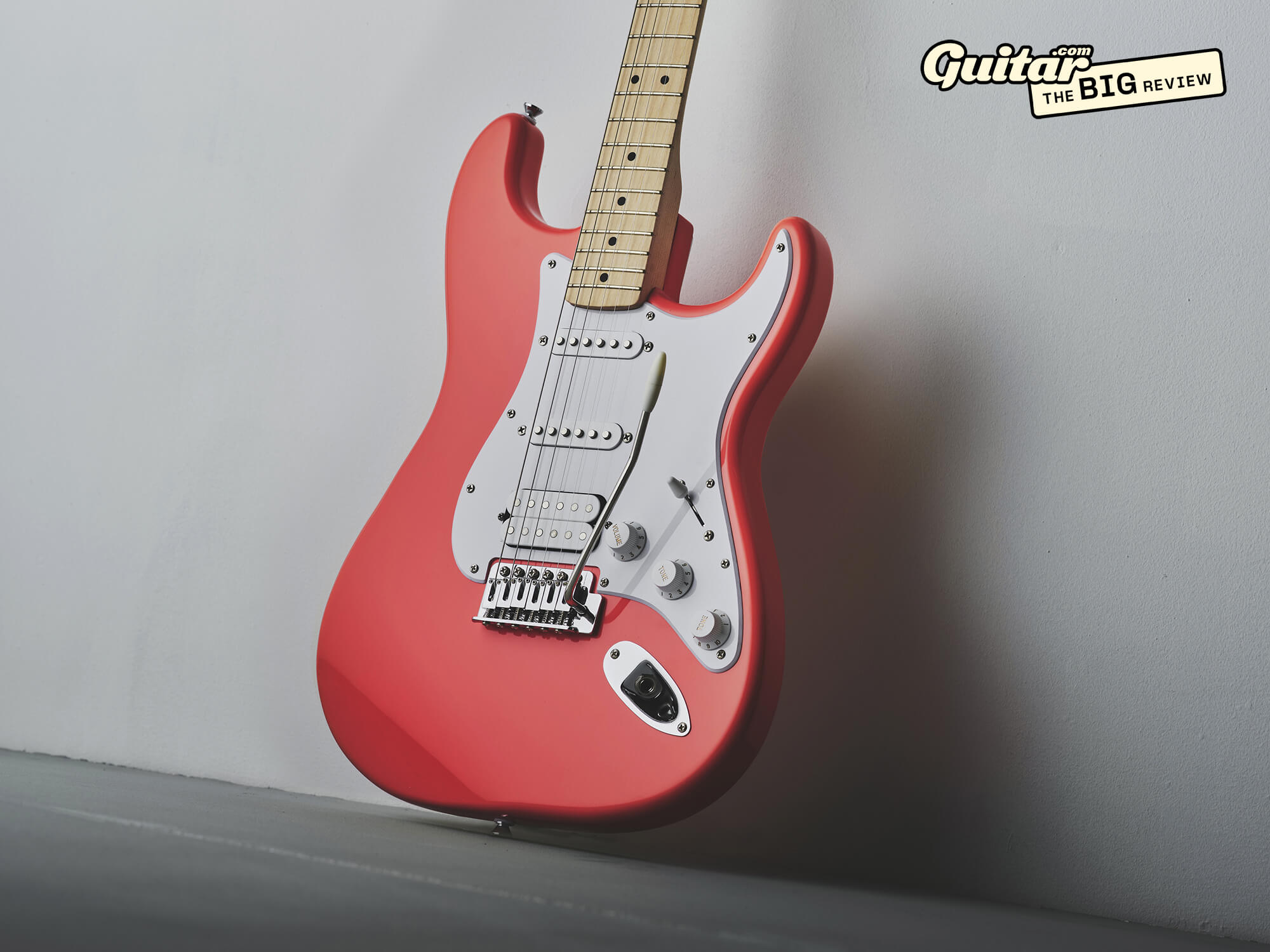 Image: Adam Gasson
[products ids=”66sMf70xbU4VBjyogz5faE”]
A good beginner guitar doesn’t just have to be cheap – although the Squier Sonic Stratocaster HSS is – it’s also got to be approachable. Who’s going to want to continue learning through sharp fret-ends, terrible sounds or miles-high string action? Luckily the Sonic Strat is a very approachable instrument indeed, with a pleasantly playable satin-finished neck, and far better-sounding pickups than a guitar at this price point has any right to be loaded with. And whether you were inspired to pick up a Strat by Hendrix’s dive-bombs or by more subtle wobble, the standard vintage-style vibrato unit will get you there.
Need more? Read our Squier Sonic Stratocaster HSS review.
Best value rock guitar: Manson MBM-2H
 Manson x Cort MBM-2H. Image: Adam Gasson
[products ids=”7e9mw7HHW2nVHy28b9xs47″]
Carrying more than a sprinkling of Matt Bellamy stardust, this Cort collab from Manson is one of the best (relatively) affordable options from the Muse virtuoso’s workshop. Our reviewer found this guitar a delight to play, with lightweight, well-balanced construction, a soft, V-shaped profile to the neck and generous custom carves to accommodate your forearm, thigh, or whichever other body parts you might happen to rest your guitar against.
The MBM-2H is as playable as it is sparkly, with a low, slinky action, highly responsive pickups and a fun killswitch that you can use to stutter your guitar sound (or simply shut it off during the quiet bits of a song).
Need more? Read our Manson MBM-2H review.
Best value guitar for speedy playing: EVH Wolfgang Standard TOM
 EVH Wolfgang Standard TOM. Image: Adam Gasson
[products ids=”212yDlMqOtNQ6lugYfgxAI”]
Not content with single-handedly making two-handed tapping cool, the late, great Eddie Van Halen also managed to design one of the best accessible hard rock guitars in history: the Wolfgang. The Standard TOM is a wallet-friendly version of the maestro’s masterpiece, and while it replaces the original’s Floyd Rose vibrato system with a Tune-o-Matic bridge, it’s largely true to the blueprint.
This may be the cheapest EVH Wolfgang out there, but the Standard TOM plays beautifully and sounds impressive. It’s lightweight, resonant, and has a smooth, oiled finish to the maple neck that’s perfect for fleet-fingered playing.
Need more? Read our EVH Wolfgang Standard TOM review.
Best value singlecut guitar: Heritage Ascent+ H-150

[products ids=”5dDAdCSgO2ZBWry2uq2abN”]
This Heritage is an ornately-finished single-cut that demonstrates impressive craftsmanship and great playability. It packs two humbucker pickups, each with a push/pull potentiometer that can split the coils for a single coil sound, and these deliver a superb range of classic rock tones, from smooth, dark sounds at the neck to honk and snarl at the bridge. It’s a great guitar for retro chords and riffs, with plenty of sustain and resonance.
Need more? Read our Heritage Ascent+ H-150 review.
Best affordable guitar for clean sounds: Gretsch G5230T Electromatic Sparkle Jet
I hope you don’t mind the brief first-person intrusion, but I (the compiler of this article) have one of these lovely-looking, spangly Gretsches at home, and I’d highly recommend it as a first (or alternate) guitar. It’s my go-to for warm, mellow sounds when playing Motown, pop or folk-rock songs, and I often find my hand drawn to the chunky tremolo arm for added retro wobble.
The short-ish scale length is ideal for beginners or guitarists with smaller hands as it makes elaborate chord positions easier to achieve, while the slender, U-shaped neck profile offers plenty of purchase for your thumb.
Best guitar for begginner guitarists: Yamaha Pacifica 112J
[products ids=”59rmZIUbmWZidrhZHe5IXZ”]
Surprising beginner guitarists with its superior playability since the 1990s, Yamaha Pacifica is the budget S-type (Stratocaster-like) guitar line par excellence.
There are Pacificas for all sorts of budgets these days, but arguably the best option at a minimal cost is the 112J. It’s a versatile choice for adventurous beginner guitarists, with a host of tones available via its trio of pickups (two single coil; one humbucker) and a softly rounded neck that goes easy on your fretting hand.
The finishing on this budget model is understandably basic, but the 112J is nonetheless a solidly made guitar that will suit beginners and newcomers – as was ever the case with Yamaha Pacificas.
Best value guitar for downtuned metal: Jackson Lee Malia LM-87
 Image: Press
[products ids=”5iJIvQ0gmrg79ARQ4QBSdw”]
Maybe you’re into Bring Me The Horizon. Maybe you’re not. The Jackson Lee Malia LM-87 – named for the BMTH lead guitarist – is an excellent value guitar, either way. This distinctive signature edition from Jackson brings bucketfuls of vintage cool and metal aggression, with an eye-catching yet accommodating offset shape and a Tune-o-Matic hardtail bridge for easy tuning adjustment – perfect for drop tunings.
What we liked best is how the LM-87 sounds. The distinctive-looking bridge pickup with its large, hex-head polepieces is excellent at picking up the detail from individual strings, so you can hear the complexity of crunchy chords, even when you have some gnarly distortion in play.
Need more? Read our Jackson Lee Malia LM-87 review.
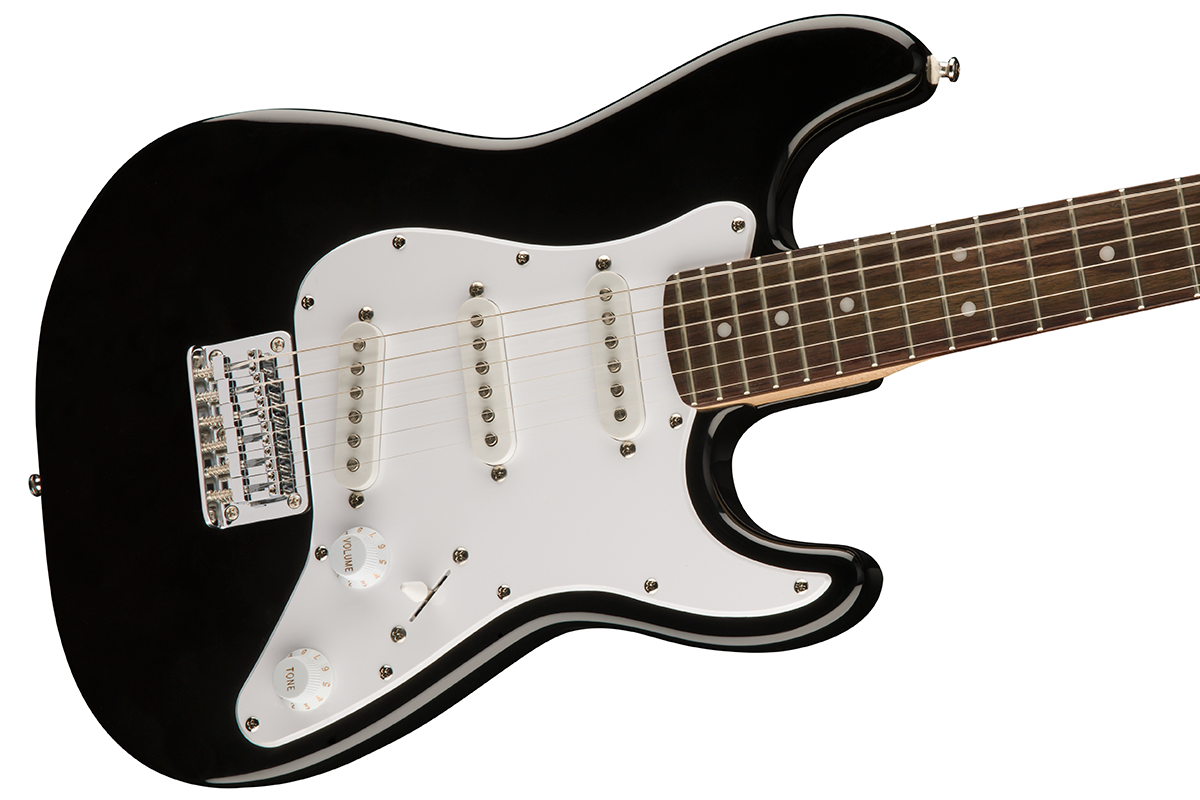
Best affordable kids guitar: Squier Mini Stratocaster
[products ids=”5s6LAyjEu1Zh8YjLlt93KE”]
You’re never too young to rock out – the only thing standing in your way is that most electric guitars are not made for little hands. Thankfully, the youngest guitarists can start out with a mini guitar, such as this cute, scaled-down Strat from Squier.
Don’t mistake this for a toy: the mini Stratocaster has three proper single-coil pickups, sports a decidedly decent Indian laurel fretboard and is designed by Fender. Helpfully, it also has a slender, C-shaped neck profile that’s relatively easy for younger guitarists to fret, and the hardtail bridge offers decent tuning stability for parent-pleasing tonality.
Why You Can Trust Us
Every year, Guitar.com reviews a huge variety of new products – from the biggest launches to cool boutique effects – and our expert guitar reviewers have decades of collective experience, having played everything from Gibson ’59 Les Pauls to the cheapest Squiers.
That means that when you click on a Guitar.com buyer’s guide, you’re getting the benefit of all that experience to help you make the best buying decision for you. What’s more, every guide written on Guitar.com was put together by a guitar obsessive just like you. You can trust that every product recommended in those guides is something that we’d be happy to have in our own rigs.
The post The best value electric guitars: 11 affordable options for beginners and players on a budget appeared first on Guitar.com | All Things Guitar.
Zakk Wylde says the riff for Miracle Man was inspired by this classic Jimi Hendrix song
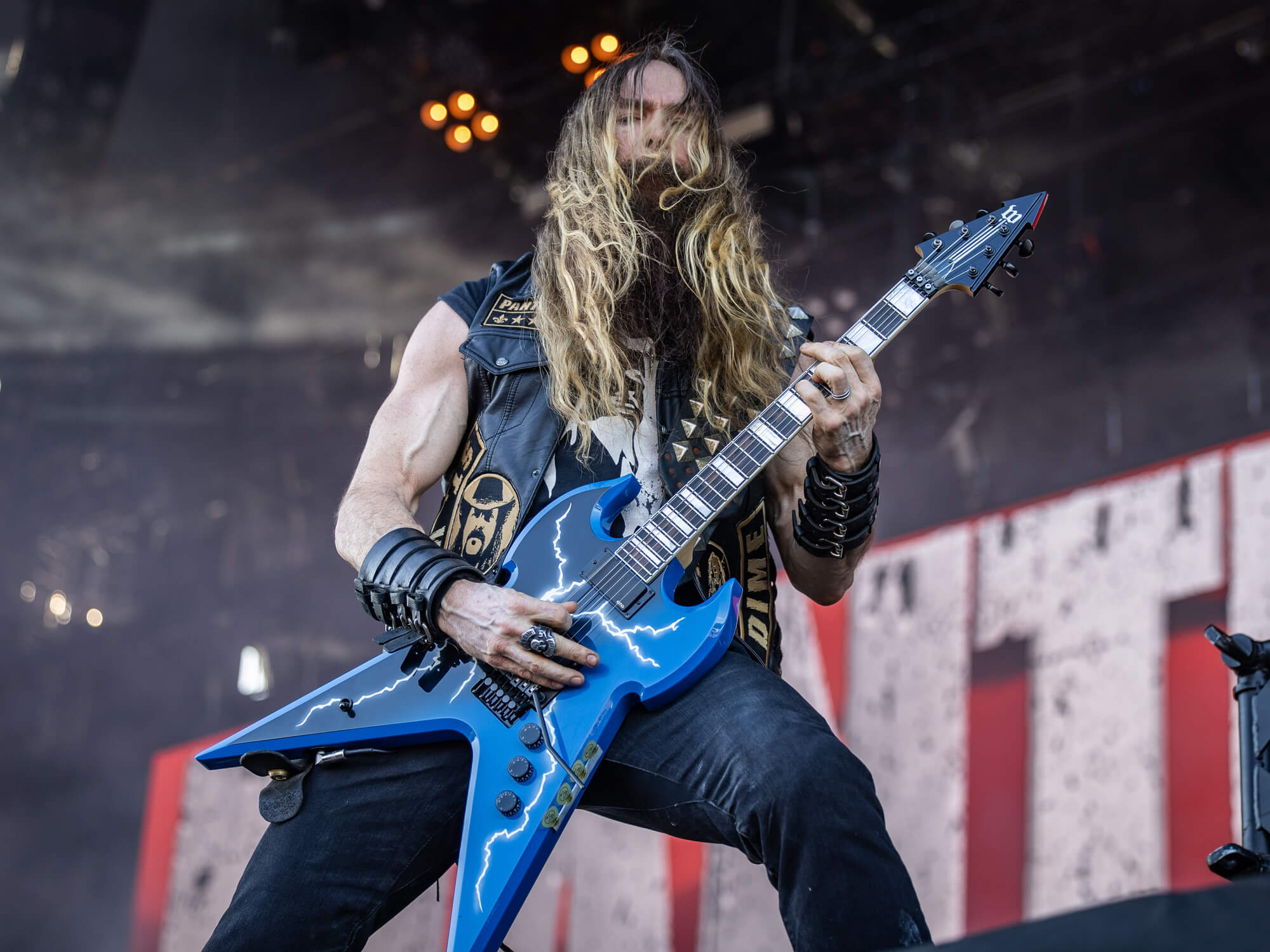
Ever heard a riff so darn good you wish you’d written it? It’s happened to most of us, and those moments invariably inspire us when we write our own riffs later down the line.
In a February interview with the Garza Podcast, Zakk Wylde touches on Ozzy Osbourne‘s tendency to borrow ideas from his favourite riffs. The guitarist explains that the Prince of Darkness was particularly inspired by Jimi Hendrix’s Foxey Lady, which inspired the riff for Ozzy’s 1988 track, Miracle Man.
Plenty of artists take inspiration from their peers, using music as a springboard to create something new. “That’s why I always tell kids [songwriting] is just like cooking,” Wylde explains [via Ultimate Guitar]. “You learn how other songs are written, and you’re inspired or influenced by them. Or you remember it, and then you tweak it and bend it [to make a new song].”
Wylde goes on to explain that Ozzy was inspired by other artist’s riffs throughout his career. The guitarist picks out N.I.B from Black Sabbath’s 1970 debut as a case in point, noting how it twists elements of Cream’s Sunshine of Your Love. “You end up mutating it, bending it, and changing it,” he says. “Then it’s a whole new song, which is awesome.”
Even the most legendary and accomplished guitarists take inspiration from their heroes when writing guitar parts. Wylde also notes how late Pantera axeman Dimebag Darrell compared an unspecified track with its inspirational origin. “I went ‘If you didn’t tell me that, I would have never got it, because you changed it around a bit,’” he says. “But that spark of inspiration led [him] to where [he] ended up with a specific song.”
Countless riffs have been borrows and twisted, from Metallica nabbing a riff from David Bowie’s Andy Warhol for Master of Puppets, to the Red Hot Chili Peppers taking inspiration from Tom Petty and the Heartbreakers’ Mary Jane’s Last Dance for their 2006 smash hit Dani California.
On the flip side, those whose riffs serve as inspiration for others often don’t mind. In 2006 rumours floated around that Petty was going to sue the Chili Peppers, but he quickly shut that down in an interview with Rolling Stone. “I seriously doubt that there is any negative intent [from the Red Hot Chili Peppers],” he said. “It doesn’t bother me,” he confirmed. “If someone took my song note for note and stole it maliciously, then maybe. But I don’t believe in lawsuits much. I think there are enough frivolous lawsuits in this country without people fighting over pop songs.”
“A lot of rock and roll songs sound alike,” he adds. “Ask Chuck Berry! The Strokes took American Girl [for 2011’s Last Nite]. I saw an interview with them where they actually admitted it. That made me laugh out loud. I was like, ‘OK, good for you!’”
The post Zakk Wylde says the riff for Miracle Man was inspired by this classic Jimi Hendrix song appeared first on Guitar.com | All Things Guitar.
Compression Pedal For Bass Guitar
Sammy Hagar says Eddie Van Halen’s death made it “necessary” for him to carry on performing Van Halen music: “Those people who grew up with that music, they’ve got to hear it again”

Sammy Hagar feels it’s important to keep playing Van Halen music live, in order for the work of Eddie Van Halen to carry on.
Hagar and his Best Of All Worlds band are currently performing shows at Dolby Live at Park MGM for a residency. The band’s lineup includes Michael Anthony, Joe Satriani, Kenny Aronoff and Greg Phillinganes (stepping in for Rai Thistlethwayte).
Speaking to Las Vegas Magazine, Hagar says that after Eddie’s passing in 2020, he felt it was necessary to continue performing their music for fans. Their current residency shows are billed as the “deepest dive” into the band’s catalogue yet.
“I started thinking, geez, we’re never going to play together again. Then Alex Van Halen made an announcement that he can’t play drums anymore due to his health. It’s so necessary to carry the legacy of that music on,” he says.
“The Van Hagar catalogue, I wrote every song with Eddie. Eddie wrote the music, I wrote the lyrics and the melodies. Those people who grew up with that music, they’ve got to hear it again.”
Asked if any Van Halen songs mean something different to him now, he replies, “A song like Right Now – every time I sing it, I think how it’s about right now, because something else is happening right now than what was happening in ’91 when we wrote it. And Love Walks In, I wrote about aliens and automatic writing. Now all this UFO stuff is coming out, and when I sing that song, I have a feeling it’s touching people differently.”
Soon, Eddie’s recorded work may also live on, as his brother Alex Van Halen has confirmed that he’s working on a project involving archival Van Halen material. The forthcoming project will utilise old demos, but it’s not yet clear if it will go out under the Van Halen name.
Alex has already suggested that he originally wanted Free’s Paul Rodgers to take on vocal duties, who was eventually unable to take on the job, but he’s now “looking for somebody else”. Michael Anthony, who played bass for the band between 1974 and 2006, thinks they should go forwards without one. A release date is yet to be confirmed.
The Best Of All Worlds residency ends on 21 March. The band will then continue to tour from June 2026. Find out more via the Red Rocker website.
The post Sammy Hagar says Eddie Van Halen’s death made it “necessary” for him to carry on performing Van Halen music: “Those people who grew up with that music, they’ve got to hear it again” appeared first on Guitar.com | All Things Guitar.
“The one that started it all”: Fender celebrates 75 years of the Telecaster with new limited-edition collection – including new Cabronita model

It’s been 75 years since the Telecaster made its debut, and Fender is celebrating that three-quarters of a century in style with a brand-new range of special-edition Tele models.
Paying homage to the world’s first mass-produced, solidbody electric guitar, the 75th Anniversary Telecaster Collection comprises five instruments, spanning a range of price points across Fender’s Vintera, Player II, American Professional and American Ultra lines.
The Fender Telecaster started life in late 1950 as the Fender Broadcaster, a two-pickup version of the Esquire, which hit the market months earlier in April 1950.
Due to a trademark conflict with Gretsch over its Broadkaster drum kit, the Broadcaster guitar was renamed the ‘Telecaster’ in 1951. Taking direct feedback from players, Leo Fender sought to create a guitar which unlocked a “new level of expression”. Since then, the Telecaster has become one of the most iconic and recognisable guitar designs of all time.
Let’s take a closer look at the five new 75th Anniversary Telecasters on offer:
75th Anniversary American Professional Classic Cabronita Telecaster – £1,799
Perhaps the most noteworthy of the five is a new Cabronita Tele, the first time the concept has appeared in the standard Telecaster line in the classic double Filter’Tron pickup configuration since the model’s debut for Fender’s 60th Anniversary in 2011.
Pairing “vintage charm with modern performance”, this guitar features TV Jones pickups, along with a modern “C” neck and pearloid button tuners.
75th Anniversary Vintera Road Worn 1951 Telecaster – £1,599
This one features authentic ‘50s specs with a swamp ash body, plus an early ‘50s “U” shape neck, Road Worn nitrocellulose finish and Pure Vintage 1951 pickups for “crystal-clear chime and raw, steely twang”.
75th Anniversary American Ultra II Telecaster – £2,899
Arriving as the most high-end offering of the new collection, the 75th Anniversary American Ultra II Telecaster features a Liquid Gold finish, ebony compound radius fingerboard, and advanced pickup system – with a 75th Anniversary Noiseless Single-Coil and Fastlane humbucker – with dual S-1 switches.
75th Anniversary American Professional Custom Telecaster – £2,499
The second entry to the American Professional line offers a flame maple top with a double binding and two-tone sunburst finish, plus 75th Anniversary V-Mod pickups and push/push pot for series wiring, along with gold hardware.
75th Anniversary Player II Telecaster – £949
Outfitted with a Diamond Dust Sparkle finish and a selection of contemporary visual appointments, the 75th Anniversary Player II Telecaster is loaded with Thunderbolt pickups for “rich, powerful tones with enhanced clarity and punch”.
Learn more about the 75th Anniversary Telecaster Collection at Fender.
The post “The one that started it all”: Fender celebrates 75 years of the Telecaster with new limited-edition collection – including new Cabronita model appeared first on Guitar.com | All Things Guitar.
Les Claypool says he chose to be a bassist because the guitar sounded “wimpy”

Les Claypool, known for his unique approach to bass, has said he chose the instrument because the guitar sounded “wimpy” to him when he was younger.
The Primus frontman’s bass style combines varying techniques such as tapping and slap bass. Regarded as one of the best bassists by music media for his authentic approach, it seems his journey with the instrument started out purely because it sounded much richer – even though he grew up in the era of Eddie Van Halen’s reign over guitar culture.
- READ MORE: Rick Beato says excessive phone scrolling is the reason he can’t downpick like James Hetfield
In an interview with The Guardian promoting his collaborative concept album on AI, made with Sean Ono Lennon, Claypool says, “To me the bass was a more sultry instrument, whereas the guitar sounded kind of wimpy.” He also explained his playing style as “holding down the root of the bass but also trying to play the rhythm guitar parts”.
Elsewhere in the interview, he also spoke of how his bass chops led him to audition for Metallica to replace Cliff Burton after his sudden passing. Kirk Hammett was a former classmate of Claypool’s, but it just wasn’t meant to be: “I didn’t know how popular they were,” he says. “We played a song or two and I said, ‘Hey, you guys want to jam on some Isley Brothers?’ Nobody laughed.”
Claypool also spoke of his early friendship with Hammett during an interview with Rick Beato last year. Hammett actually wanted Claypool to be a singer in one of his early bands when they were just teenagers, and gave him some cassettes so he could learn a few tracks for an audition, including Cream’s Sunshine Of Your Love.
“But also on there was Hendrix. I’d never heard Hendrix before. I was 14 or whatever so he turned me on to Hendrix and all these different things. But I chickened out. Back then I was total Bobby Brady, you know, croaking and cracking. But I met this other guy that needed a bass player,” Claypool recalled.
“Everybody wanted to be Eddie Van Halen, so bass players were a very rare commodity… I didn’t find out till years later that [Hammett] was kind of pissed at me for bailing on his thing to go play bass in this other band.”
Claypool’s band with Sean Ono Lennon, The Claypool Lennon Delirium, will release their third album, The Great Parrot-Ox and the Golden Egg of Empathy, on 1 May. The concept album features 14-songs reflecting on morality, mortality, and the warnings of AI. You can pre-order the album now.
The post Les Claypool says he chose to be a bassist because the guitar sounded “wimpy” appeared first on Guitar.com | All Things Guitar.
Acorn Amplifiers Solid State Preamplifier review – the ‘Peavey in a box’ you didn’t know you needed?

$179/£169, acornamps.com, joespedals.com
The clip is easy to find on YouTube – just search for “Josh Homme’s secret weapon”. The Queens of the Stone Age frontman goes off to find the amplifier, a crappy little 1980 Peavey Decade practice combo, then pops it up on his lap and tells the interviewer: “This thing is incredible.”
That was enough to prompt Peavey to create a signature reissue of the amp itself, as well as including a Decade model in the line of pedals it put out last year. And it also prompted Atlanta builder Acorn Amplifiers to give this 10W titan the proper boutique stompbox treatment – in the shape of the Solid State Preamplifier.
 Image: Richard Purvis
Acorn Amplifiers Solid State Preamplifier – what is it?
Strictly speaking, this isn’t a Peavey in a box – it’s a Peavey in a box in a box. Because the SSP is a compact version of the Acorn Solid State, a bigger pedal that includes a recreation of the Decade’s output stage and can be plugged straight into a speaker cab. The preamp-only model might not be able to do that but it keeps all the core features – three-band EQ, footswitchable ‘normal’ and ‘saturated’ channels, pre and post gain controls – and adds a toggle switch marked ‘thick’ for a chunkier tone option.
The main drawback of the downsizing process seems to have been in reducing the gap between the two footswitches. Hitting one and not the other on an empty floor can be tricky; in the middle of a packed pedalboard, it’ll surely be like trying to perform brain surgery with barbecue tongs.
One design feature I do like is the light-up Acorn logo, which turns from cheery green to fiendish red when you engage the saturated channel (and is extra-bright when running off 18 volts). Pity there’s no way of telling which channel is selected when the pedal’s in bypass, though – you just have to remember how you left it.
 Image: Richard Purvis
Acorn Amplifiers Solid State Preamplifier – what does it sound like?
Deliberate spoiler for anyone who just wants to know if it sounds like Songs For The Deaf: yes, in the right setup, it absolutely does. But between the channel footswitch and the toggle, there are four very different sound zones to explore here and that’s just one of them.
The normal channel goes from clean to medium-scuzzy, adding a crisp edge to the top end and some decidedly solid-state firmness to the bottom. This could certainly serve as an always-on tone improver for some players. The firmness doesn’t last long when you flip the switch down, however: now you get a more wiry kind of crunch that flirts with horribleness at times but mostly keeps things nicely clear and ultra-sparkly.
Switch to the saturated channel and the first thing you might notice is a fractional difference in output level – up or down, depending on where the pre gain is set and whether you’re using 9v or 18v. Sadly, there are no individual volume controls to correct that; happily, this channel is a monster. The effects of the toggle seem to be magnified here: the thin mode is beautifully abrasive, in stark contrast to the chunky richness – albeit still edgy – of the thick setting.
In both cases it really does sound just like the dirty channel of a small transistor amp from the 80s: raw and insolent in the best way imaginable. It’ll even do the old doomy scoop if you kill the thickness, set the mids to zero and max out the gain.
 Image: Richard Purvis
Acorn Amplifiers Solid State Preamplifier – should I buy it?
The sound of this pedal is hard, dry, unrefined – all the things that some of us longed to escape from when a little practice amp was all we had. But that stuff has a vibe of its own, and a usefulness beyond mere nostalgia, especially when it’s presented in such a smart and multifaceted package.
Practical issues might limit its appeal for live work, but maybe it’s fitting that the SSP’s real strength should lie behind the scenes as a recording tool – just like Josh’s old Peavey.
 Image: Richard Purvis
Acorn Amplifiers Solid State Preamplifier alternatives
It’s made in Taiwan, but the Peavey Decade Preamp ($199/£179) does have the right name – in the classic spiky font – on the front. More interested in the Josh Homme connection? The Stone Deaf PDF-2 (£160) is the latest version of a drive and EQ pedal he actually uses, while the Funny Little Boxes Skeleton Key (£99) is a ‘dirty boost’ inspired by the sounds of QOTSA.
PS. Thanks to Joe’s Pedals, Acorn’s UK dealer, for the loan of the SSP.
The post Acorn Amplifiers Solid State Preamplifier review – the ‘Peavey in a box’ you didn’t know you needed? appeared first on Guitar.com | All Things Guitar.
Totally Guitars Weekly Update March 13, 2026
March 13, 2026 A random improv started today’s Update, followed by some discussion on time signatures and strumming techniques. The time signature thoughts cited Nights In White Satin, Lucky Man and Stormy Monday. The technique primer was on using rest strokes to hit bass notes cleanly. The progression to Mr. Bojangles was used as an […]
The post Totally Guitars Weekly Update March 13, 2026 appeared first on On The Beat with Totally Guitars.
“He’s never playing the same thing once”: Eddie Vedder shares what he learned about Keith Richards “liquid” guitar playing by sharing a stage with him
![[L-R] Eddie Vedder and Keith Richards](https://guitar.com/wp-content/uploads/2026/03/Vedder-Richards@2000x1500.jpg)
Back in November 1997, Pearl Jam had the opportunity to open for the Rolling Stones across four shows at California’s Oakland Stadium. And on the final gig of the run, frontman Eddie Vedder was invited to actually play with the Stones for one song only.
And in a new interview with Howard Stern, Vedder recalls choosing which song he wanted to play with the band. After initially being sceptical about performing Let’s Spend the Night Together for fear he wouldn’t be able to “keep up” with frontman Mick Jagger, he opted for the band’s 1981 ballad, Waiting on a Friend.
Describing the “interesting experience” of performing with the rock legends, Vedder recounts the daunting experience of playing on a stage so big, and performing the song with minimal prior rehearsal.
“There was no introduction or anything,” Vedder says [via American Songwriter] , adding that when he asked whether he should go out on stage when the band started performing the song, “everyone turned their head, like, ‘I have nothing to do with this.’”
“Mick looked like a football field away … and he’s singing it already, and I’m coming in for the second verse. So I just kind of tucked my head down… and then just walked to the middle and started singing. It was okay.”
Vedder recalls later telling guitarist Keith Richards: “Hey, sorry, man – your man [Mick] left me hanging a bit there,” to which Richards replied: “Don’t you worry about it, me boy. He’s been doing that to me for 35 years.”
Vedder also remembers being struck by the “liquidity” of Keef’s playing: “You’re standing on the side of the stage, and it’s a big stage. It’s a stadium in Oakland, and Mick’s in the middle and then Keith, and you’re standing right next to Keith’s amp, like behind it. And then you’re listening to the liquidity of what he plays. It’s like he’s never playing the same thing once.”
You can listen to audio from the performance below:
The post “He’s never playing the same thing once”: Eddie Vedder shares what he learned about Keith Richards “liquid” guitar playing by sharing a stage with him appeared first on Guitar.com | All Things Guitar.
Former Kiss guitarist Vinnie Vincent has released an album – but you’ll have to pay $2 million to hear it

Vinnie Vincent hastens to call his new album Guitarmaggedon “one of the greatest rock albums of all time”. In fact, the former Kiss guitarist is so confident in his latest body of work that he’s placed upon it a $2 million barrier, which one wealthy rock fan must pay him in order to hear it.
It’s pretty common for a creative person to play down their talent and creative output in a bid to stay humble. It would appear Vincent suffers from no such concerns…
Bearing a $2 million price tag, Guitarmaggedon is a fully completed album comprising 10 tracks in total. That’s $200,000 per track, for the mathematically challenged…
Essentially, Vinnie Vincent’s marketing strategy for the album is as follows: one wealthy fan must pay him $2 million, after which point they are free to release it and share it with the wider world, should they choose to do so.
The fee includes a selection of artwork accompanying the album, including per-song artwork – you know, in case you were worried you weren’t getting your money’s worth.
“I am very proud of this very special album,” Vincent explains [via Guitar World]. “The entire album will be offered in master format only for $2,000,000. This includes 10 songs mixed in master, final product format, all the master files of the artwork, related posters, and 10 separate vinyl and CD packaging art for each individual song, should the buyer choose to release the album on a per-song basis.
“The buyer can choose to release the entire album in any format they desire; vinyl, CD, or any other configuration, in whole or in part, at their discretion. All marketing plans and ideas require approval by Vinnie Vincent. The price does not include any right, title, or interest in the copyrights and/or trademarks related to Vinnie Vincent or the product itself.
He goes on: “If the buyer wishes to purchase any associated rights in the compositions, a separate agreement can be arranged and negotiated. The price will also include a perpetual license to use the brand name, ‘Vinnie Vincent Invasion’ and ‘Vinnie Vincent’ for the life of the album.”
It’s easy to brand such prices as slightly ridiculous, but there are enough wealthy music fans out there to make it worth having a shot in the eyes of the seller. Just take the recent Jim Irsay auction, for example, which saw David Gilmour’s legendary black Fender Stratocaster sell for a gargantuan $14,550,000.
The post Former Kiss guitarist Vinnie Vincent has released an album – but you’ll have to pay $2 million to hear it appeared first on Guitar.com | All Things Guitar.
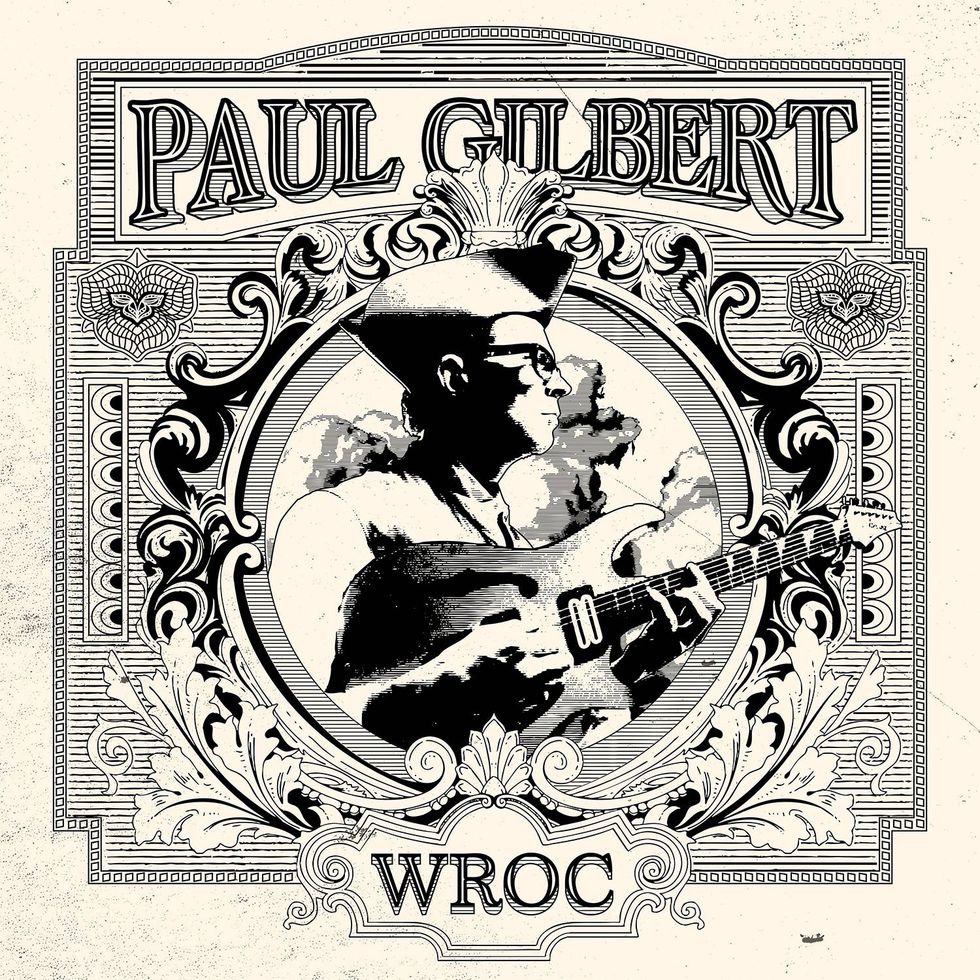
Paul Gilbert: WROC-ing in the Free World

Guitar virtuoso/singer-songwriter Paul Gilbert’s latest release, WROC, a homophone of “rock,” is based on George Washington’s Rules of Civility and Decent Behaviour In Company and Conversation. Yes, the George Washington you learned about in middle school—Gilbert’s one of the few people on the planet that can make a history lesson fun!
While Gilbert’s peers in his early metal days were more inclined to doodle pentagrams and flip through the Satanic Bible, Gilbert had vastly different interests. “I read a bunch of Founding Father writings decades ago,” he explains to PG. “I was curious, so I bought the full, thick compendium of everything written by Ben Franklin, Thomas Jefferson, and George Washington. There are no stories there; instead it’s almost like finding somebody’s emails from hundreds of years ago. That was the first time I came across Washington’s Rules of Civility, and the idea of being more civil, of having better manners, somehow that was appealing to me.”
In February of last year, Gilbert had just wrapped up the final concert of Mr. Big’s “The Big Finale” tour at Tokyo’s storied Budokan, and on the flight home, both inspiration and Rules of Civility struck. “I was thinking, ‘Okay, it’s a new start for me,’ and I was excited about what to do next. I had an internet connection on the plane, and that excitement turned into this conversation with AI,” he recalls. “I couldn’t remember what they were called, I just sort of remembered there were these rules that Washington tried to follow when he was a kid. So I Googled around and asked AI, and refreshed my memory.”
Gilbert and his chatbot then worked in tandem to dissect lyrics out of Washington’s rules. “I said, ‘Take a random Washington rule and turn it into a blues lyric.’ And in three seconds, I got this Washington rule turned into a blues lyric,” he says. Gilbert then proceeded to ask AI to do additional things: Make the chorus repeat more. Find a different Washington rule for the bridge. “I was sort of telling AI what to do. That was my initial process,” he says. “As I went on, I realized it was better if I did it myself, because I know what I want. So then my conversation with AI changed. Instead of having AI do it, I said, ‘AI, give me the list of rules.’ There’s 110 of them, so I said, ‘Put them in order according to length—the short ones first and the longest last.’ That way, when I’m searching around, if I just need a short line, I don’t have to hunt through the whole book.”
Washington’s rules were the perfect springboard for Gilbert. “I love writing from a lyric—it’s so much easier than any other way of songwriting,” he says. “It was maybe the most fun I’ve ever had writing songs in my life. It’s almost escapism—I can get out of myself and enter some other world. I would take [Washington’s] lines and try to make it into a melody. Then once I had that, all the jobs that follow are my favorite jobs. I love finding chords for a melody, I love the balance of repetition—but not too much. You get to that point where it’s like, ‘Okay, that’s too many repeats, I’ve got to pull it back and find, like, a weird note that I haven’t used yet.’ And that will inspire a chord I didn’t think of. That whole craft is something I really have fun with.”

Paul Gilbert’s Gear
Guitars (live)
Ibanez FRM350 Paul Gilbert signature
Ibanez PGM50 Paul Gilbert Signature
1970s Ibanez IC200
Ibanez RS530
Ibanez Custom Shop PGM Paul Gilbert Signature (pink)
1970s Ibanez double neck (set neck version)
Guitars (studio)
Ibanez AS7312
1970s Ibanez 751 acoustic
Amps
1990s Fender Custom Vibrolux Reverb into a Randall isolation cabinet
1960s Fender Vibrolux Reverb as a wedge monitor
Victoria Club Deluxe (turned on for solos as a volume boost)
Effects
Distortion pedals for main amp:
Xotic AC Booster (always on)
JHS Overdrive Preamp
Mojo Hand Colossus
Distortion pedals for solo boost amp:
MXR Distortion+
Xotic AC Booster
Voodoo Labs Pedal Power 2 Plus
Boss LS-2 Line Selector (Gilbert has two: one to switch between distortion and clean, the other to switch on solo boost amp)
“Clean” pedals:
Boss CS-3 Compression Sustainer
Catalinbread Callisto
“Modulation” pedals:
JAM Pedals RetroVibe
MXR Stereo Chorus
Home Brew Electronics THC Three Hound Chorus
Sabbadius Tiny-Vibe
Strings, Picks, Slides & Cables
Ernie Ball Mighty Slinky (.0085–.040; Gilbert replaces the .040 with a .046)
Dunlop Tortex III .73 mm picks
Dunlop 318 Chromed Steel slide
Divine Noise coiled cable
DiMarzio straight cables, patch cables, and speaker cables
In a perfect world, Gilbert would have loved to use Washington’s rules exactly as they were written, but each song went a different way. To turn the rules into songs and make them singable, Gilbert had to resort to some basic rules of songwriting. “The first trick is just to repeat things. Or repeat an ending,” he explains. “Like, ‘If you soak bread in the sauce, let it be no more, let it be no more.’ You sing the last line twice, it becomes more like a song. So a lot of that is, you sing a line and then take the end of it and repeat it. And then once I had the verse, I might grab the book and flip through to find the bridge. Some of the songs are really simple in that I just sort of repeat the same part, but the second verse will have a harmony to it, so that’ll take it to a different direction.”
The chord progressions on some WROC songs like “Orderly and Distinctly” reveal a harmonic palette that stands out among today’s songwriters. When I covered Gilbert’s Great Guitar Escape camp in 2013, the nightly jams featured harmonically rich songs like the Bee Gees’ “How Deep is Your Love,” and ABBA’s “Dancing Queen.” These types of compositions inform Gilbert’s writing style, and their influences can be heard on many of the chord progressions on WROC.
“The idea of being more civil, of having better manners, somehow that was appealing to me.”
“That comes from growing up in the ’60s and ’70s and hearing a lot of piano-composed songs,” he says. “I was listening to Elton John, the Carpenters, Todd Rundgren, Queen, the Beatles, the Beach Boys. And you know, there’s some chords in there. That was the hard thing for me as a kid—and it was really helpful for me to go to school [in 1984 Gilbert enrolled at GIT, now called Musician’s Institute] to learn that stuff, because I was essentially an ear player. I’ve learned by ear mostly. I never had a deep knowledge of harmony until I went to school, and then I started filling in the missing puzzle pieces.”
Gilbert continues, “I remember learning ‘God Only Knows.’ I’m ruminating about the half-diminished chord in that song because it was so important to me. Or another one is, ‘When I Grow Up to Be a Man.’ The opening vocal harmony, I don’t even know what it’s called—I know what it looks like. It’s like a sharp 11 or something. It’s really a crazy chord and it starts the song off. And I don’t necessarily have to know what it’s called—whenever I hear one of those things I know it’s the ‘When I Grow up to Be a Man’ chord. My wife [Emi Gilbert] is amazing at jazz piano, but she began as a classical piano player. So some of the jazz chords are new to her and she’ll be like, ‘What is that?’ Well, there’s that Beach Boys chord. I can spot it. And I think the Beatles were like that. They weren’t trained in the vocabulary of the terminology. But they were really well trained with songs.”
As the songs for WROC started coming together, Gilbert made an interesting, and unfortunate, discovery about AI, his writing partner. “I learned that AI doesn’t always tell you the exact truth. It’ll make stuff up,” he says. He found this out when he did a Google search for a rule he used for a song title—and nothing came up. Gilbert recalls, “I then asked AI, ‘Which Washington rule is this?’ And AI was like, ‘That’s not any Washington rule.’ I said, ‘Well, you gave it to me. You were the one that told me.’ And the response was, ‘Oh, I’m sorry, I must have hallucinated.’ So I was searching through this list, and now I know it was about 80 percent correct and 20 percent hallucinated. And that was a good learning experience.”
The lesson? “Always double check your AI, because it’ll just make stuff up,” he says. Nevertheless, one song on the album, “Conscience is the Most Certain Judge” features some of these AI hallucinations—Gilbert kept them because he felt they were still in the correct spirit. He also took poetic license and composed variations with his own words on “Show Yourself Not Glad at the Misfortune of Another.”
WROC, of course, is more than a mere (AI-assisted) history lesson. Since his Racer X days, Gilbert’s fanbase has been heavily populated by guitar geeks that salivate at every 16th-note run he unleashes. As is to be expected, WROC showcases Gilbert’s fiery six-string work. The opener, “Keep Your Feet Firm and Even,” kicks off with characteristic neoclassical licks and harmonized melodic lines. “Maintain a Sweet and Cheerful Countenance,” meanwhile, is built on an incendiary harmonized jazz/fusion and prog-influenced riff in the intro, which leads to a solo that sees Gilbert tearing it up on the slide—a texture he’s been exploring over the past decade.
“I learned that AI doesn’t always tell you the exact truth.”
Gilbert’s slightly unusual guitar setup accommodates both his newfound slide inclinations and his legacy speed-demon licks. While Gilbert’s strings are very light—he uses .0085 for his high-E string (at this year’s NAMM convention, while performing with Steve Morse at the Ernie Ball booth, he even admitted to using .007s on that day)—the guitar’s action is set fairly high. “It’s funny, I did a guitar clinic in Italy where I didn’t bring my own guitar,” he says. “All the students let me use their guitars, so there were, like, ten guitars on a stand. They said, ‘Use any guitar you want,’ and I picked this one up and I hurt myself. Everybody had .010s and low action and, man, I can’t play .010s with low action. I can’t get a grip on the string, and I bend all the time.”
Even though he’s been most often identified throughout his career as a guitar hero, Gilbert’s focus hasn’t been strictly on the guitar. Since King of Clubs, his 1997 debut solo album, his abilities as a lead vocalist have come to the forefront. Gilbert is a charismatic frontman who can belt out songs in a multitude of styles. He readily admits, however, that guitar is still more natural for him. “As a lead singer—which, really, if you want to be a pop musician, singing is very important—my voice always had limitations that my hands didn’t have,” he says. “If I sat down and practiced, you know, I could play this Van Halen thing. Whereas if I practice singing, I still couldn’t sing ‘Oh! Darling’ by the Beatles, no matter how much I practiced.”
Currently, Gilbert’s guitar practice goals are less about mechanics and more about melody. The days of endlessly repeating outside picking exercises with an ever-increasing-in-tempo metronome have taken a backseat to his new obsession with mastering the ability to instantaneously play the melodies he hears in his head on the guitar. Being able to produce a melody on the guitar with the proper inflections is an art that isn’t nearly as easy as it might sound (especially doing it on the spot in real time), even if you can shred scales and arpeggios at supersonic speeds. “It’s funny, right before this interview I was practicing improvising over Gary Moore’s ‘Still Got the Blues,’” he says. “Which has challenging changes, almost like ‘Autumn Leaves.’ To me, that’s a rough, rolling rapid of rocky river to navigate, but I’m getting better at it. Step one is I found all the shapes—the shape for the B half-diminished and for the E7. But then I’m using my eyes to navigate, like, ‘This shape goes into this shape.’ That’s useful to some extent, but it’s not coming from my singer’s voice. So now I sit down and go, ‘Don’t play it if you can’t sing it.’ And I force myself to sing and solo at the same time.
“I’m not great at it yet,” Gilbert continues, “so it’s risky to do it because it does slow everything down. But the more I do it, the better it gets, and there’s a real payoff at the end. But it feels like I’m telling the truth when I really play what was in there. Suddenly everything’s connected and it tells a story.”
Pages
