
Music is the universal language
“Glory to God in the highest heaven, and on earth peace to those on whom his favor rests.” - Luke 2:14
Norse Guitar Feeds
Queens Of The Stone Age’s Josh Homme on why his first guitar experience was playing polka: “In the desert there wasn’t a lot of guitar teachers”

Pop on a Queens Of The Stone Age track, and Josh Homme’s riffs are instantly recognisable. Years of experimentation went into his thick, distinctively dark and downtuned guitar tone – but Homme didn’t follow the conventional playbook of a hard rock guitarist. In fact, his first introduction to the guitar was through polka music.
Speaking on the Queer the Music podcast, Homme reflects on the limitations of growing up in California’s the Palm Desert. In particular, when he was keen to learn guitar, it was slim pickings in terms of who could teach him. “In the desert, there wasn’t a lot of guitar teachers, apparently,” he laughs. Instead of asking what style a teacher taught, if you found a teacher “it was like ‘You teach guitar? Good.’”
The one teacher available happened to be Tom Polanski, a polka guitar teacher. Polanski ended up teaching Homme guitar for two years. “So polka was my original style,” Homme explains. “And I’m actually really thankful for that, too. Because, if you listen to No One Knows, [it has] that sort of polka thing – [the beat] goes one – down, two – up… which is also what reggae does as well.”
In the past, Homme has explored how his unconventional guitar education helped carve out his unique tone. On Noisey’s Guitar Moves series in 2013, Homme explained that he has since developed his own ‘Josh Homme scale’, refined over years of melding polka, Jimi Hendrix techniques and altered blues scales.
While the desert didn’t have much going on, Homme also tells Queer the Music that “boredom” lead him to music. Being from a “very empty, very idyllic small town”, he had to entertain himself. “The gift of nothing is a very real thing,” he explains. “In the boredom… you’re allowed to practice playing guitar, piano, or drums.”
Homme also notes that his first musical obsession wasn’t even the guitar – it was the drums. “I used to play with chopsticks on wicker dirty clothes hampers… beats were always important to me,” he recalls. However, his dad was hesitant to splash out on a drum kit for a nine-year-old. Instead, he gave Homme a challenge: “if you play guitar for five years and you’re accomplished, then I’ll buy you a drumkit.”
Of course, Homme’s dad’s challenge ended up making Homme obsessed with the guitar. And that’s what he does best to this day with Queens Of The Stone Age. The band’s latest record, Perfecth, is due to drop October 30, and a pair of teasing singles, Insignificant Other and Easy Street, are already out.
Queens Of The Stone Age’s Perfecth drops on October 30. You can pre-order it now.
The post Queens Of The Stone Age’s Josh Homme on why his first guitar experience was playing polka: “In the desert there wasn’t a lot of guitar teachers” appeared first on Guitar.com | All Things Guitar.
IK Multimedia Launches TONEX Board
The complete TONEX rig on a single pedalboard, combining AI-captured tone, AmpliTube effects, advanced routing, and professional performance control.
IK Multimedia today launches TONEX Board, its most advanced TONEX hardware platform to date and the centerpiece of the expanding TONEX ecosystem. Combining IK's award- winning AI Machine Modeling™ technology with AmpliTube studio-grade effects, dual signal paths, advanced routing, extensive connectivity, and intuitive touchscreen control, TONEX Board puts one of the most advanced and best-sounding complete guitar and bass rigs into an extremely powerful, ultra-low-latency compact pedalboard.
At its heart, TONEX Board delivers the sound, feel, and response of real amps, cabinets, and pedals, with the flexibility to run up to four Tone Models simultaneously across two independent signal paths. Players can combine these with 76 effects from AmpliTube and TONEX, plus all- new processors, using up to 12 effect slots to create everything from streamlined traditional rigs to sophisticated dual-amp, parallel, stereo, and wet/dry setups.
A 5-inch high-resolution color touchscreen and six hands-on controls make building and editing complete rigs fast and intuitive, while flexible performance modes, independent stereo outputs, an assignable stereo effects loop, MIDI, and expression control provide the connectivity and control needed for recording, rehearsal, and the stage.
Key Features
- Incredible amp sound - The sound, feel, and response of real amps, cabinets, and distortion pedals, powered by AI Machine Modeling™
- Studio-grade effects - 76 total effects, including 51 derived directly from AmpliTube 5, 15 from TONEX, and 10 brand-new studio-grade guitar and bass effects, with more to come
- Complete rig building - Combine up to four Tone Models across flexible dual signal paths with 12 slots and flexible routing
- Effortless control - Intuitive touchscreen editing and flexible performance modes keep everything immediately accessible
- Connect to any rig - Professional routing and comprehensive I/O for amps, FRFR, front of house, studio setups, and more
- A universe of tone - 2,000 Premium Tone Models included, plus tens of thousands more to discover on ToneNET
- A complete, evolving ecosystem - Capture, create, edit, record, perform, share, and expand your sound across TONEX hardware and software.
One Board. A Complete Rig. TONEX Board takes the core technology behind TONEX further with a dual- signal-chain architecture capable of running up to four Tone Models simultaneously, combined with 76 studio-grade effects across nine categories. The effects collection includes 51 processors derived from AmpliTube, 15 from TONEX, 10 all-new effects, and more to come. Up to 12 Tone Model and effect slots can be freely positioned and routed across flexible signal paths to create dual-amp stereo rigs, wet/dry setups, two-instrument configurations, sophisticated parallel chains, and more.
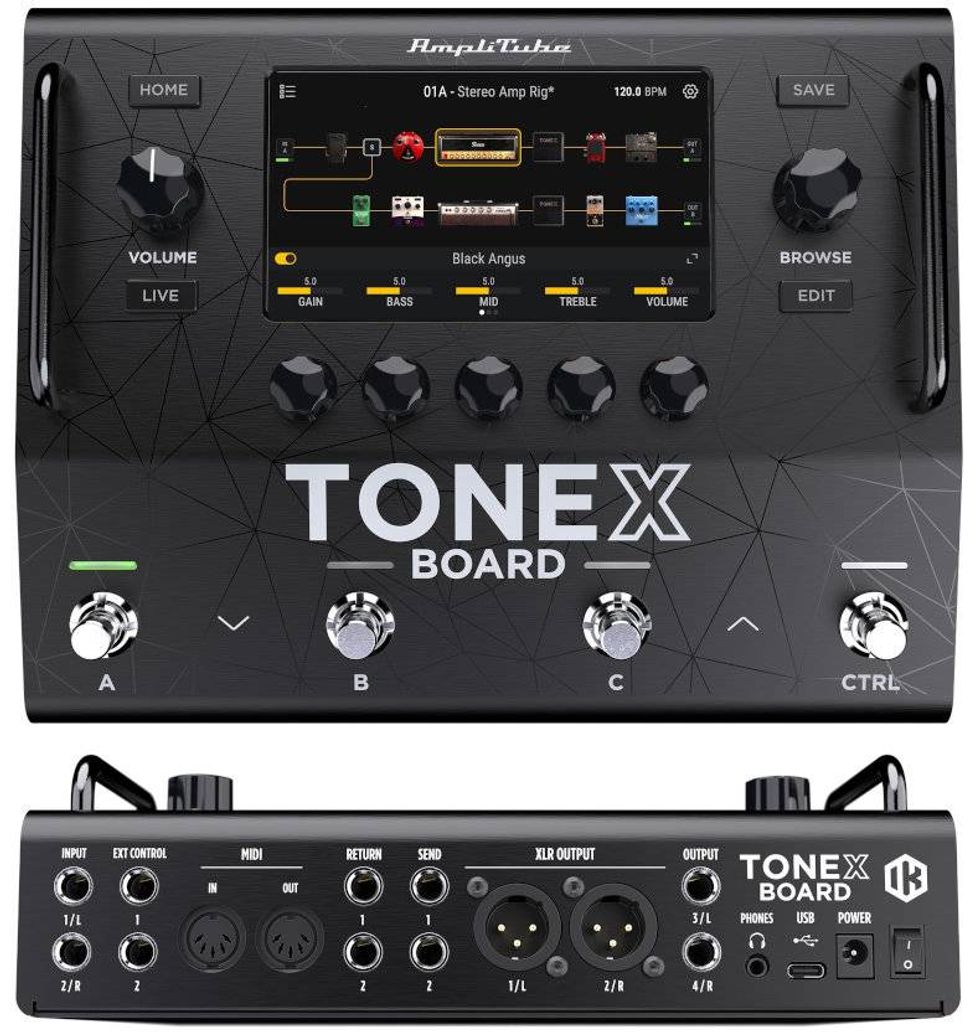
From authentic captured amps, cabinets, and pedals to drives, dynamics, modulation, delay, reverb, and creative processing, TONEX Board gives players the freedom to build the exact rig their music requires - all on a single pedalboard.
Control Without Complexity TONEX Board combines the depth and connectivity of a professional rig with fast, intuitive hands-on control. Its large 5-inch high-resolution color touchscreen provides immediate visual feedback, while six precision push-rotary controls make building and editing complete presets fast and direct.
Preset, Scene, and Stomp modes provide flexible control onstage, from recalling complete rigs and changing multiple settings at once to controlling individual effects directly from the footswitches.
TONEX Board also adapts to virtually any rig or performance environment. Players can split and merge signal paths, integrate external pedals with the movable stereo effects loop, or divide the loop into two independent mono paths. Two independent stereo output pairs (one with balanced XLR connectors), individual output EQ, MIDI, expression control, and four-cable method support provide the flexibility to connect to traditional amplifiers, FRFR systems, recording setups, or directly to front of house (4-in/2-out USB audio interface functionality with configurable routing and direct monitoring will be available October 1, 2026, via a free firmware update). Whether recording, rehearsing, or performing live, TONEX Board keeps the focus on playing rather than programming.
A Universe of Tone TONEX Board includes 2,000 Premium Tone Models, spanning sought-after vintage amplifiers and essential classics to modern high-gain rigs, pedals, and more. The collection combines the original TONEX MAX library, a selection from the latest TONEX ONE+ Signature Collection, and new TONEX content made exclusively for TONEX Board.
Nearly 200 of the included captures were contributed by a curated group of leading TONEX Tone Partners, including, in alphabetical order: Amalgam Audio, Big Hairy Guitars, Core Tone Captures, Drums And Tones, Gitarrenlehreronline, Jason Sadites, Juca Nery, Live Ready Sound, Mad Steex, Massimo Varini, Matt Fig, Passion For Tone, Signal Theory, The Studio Rats, The Tone Shepherd, Tone Factor, Tone Junkie TV, Tone Wars, and XOG.
And the included library is only the beginning. Through ToneNET, TONEX Board users can explore more than 60,000 additional Tone Models and presets from IK, Tone Partners, artists, brands, and a growing worldwide TONEX community.
A Full Software Ecosystem TONEX Board is the centerpiece of the complete, connected TONEX ecosystem. Capture gear with TONEX Modeler, discover sounds through ToneNET, shape and organize them with TONEX software, transfer Tone Models and presets with the dedicated TONEX Board Editor, and record with the TONEX plug-in.
Existing TONEX users can import their presets into TONEX Board and pick up where they left off, providing a seamless path from other TONEX hardware and software. And with new content, effects, and capabilities planned through future updates, TONEX Board is built to evolve along with the TONEX ecosystem.
TONEX Board at release includes the following software:
- TONEX Modeler to capture amps, pedals, cabinets, and full rigs
- TONEX software to import, download, and play Tone Models as a standalone or plug-in version
- TONEX Board Editor to transfer existing Tone Models and presets to TONEX Board
Additionally, TONEX Board users will have exclusive access to TONEX Player 2.0 Beta (version 2.0.3), which will offer complete dual-rig editing with all 76 included effects, TONEX Board preset saving, and full bidirectional transfer of Tone Models and presets between Mac or PC and TONEX Board using TONEX Board Editor.
Presets created with TONEX Board will be available to share with the community on ToneNET beginning October 1, when TONEX Player 2.1 is officially released. Full real-time editing in TONEX Board Editor will be implemented in Q4 2026.
Pricing & Availability The TONEX Board is now available for $/€999.99 (tax excluded) from the IK Multimedia online store and authorized IK dealers worldwide.
For more information, audio demos, videos, and availability, visit: www.ikmultimedia.com/tonexboard
LR Baggs Unveils Next Era as Baggs, Welcomes Second-Generation Leadership
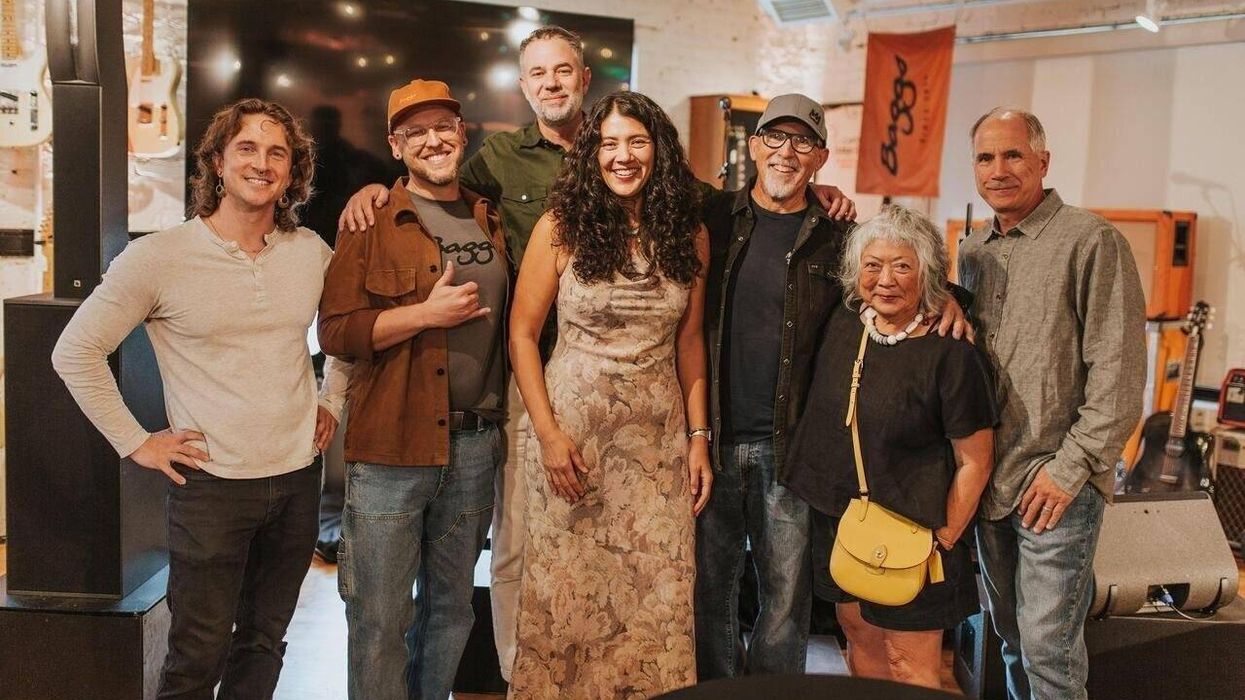
As the company celebrates its 50th anniversary, LR Baggs has changed its name and unveiled new branding. The company is now simply Baggs, and has announced that Jenny Luckett, daughter of founder Lloyd Baggs, has joined the leadership team as Creative Director.
A Pepperdine University graduate with a BA in Art and Multimedia Design and a successful entrepreneur, Luckett recently sold her January Moon children’s brand to join Baggs full-time. She has led and directed a year-long development of Baggs' core visual identity and brand message.
"Removing the LR isn't about removing Lloyd from the story," says Luckett. "It's about expanding the story. It takes something that began with one person and makes room for all the people who have become part of it. To us, Baggs is the family, and that family is much bigger than Lloyd's actual family. It includes all the people who have helped build this company and all of the people who will be part of where it goes next."
Baggs began with one person: luthier Lloyd Baggs, one of the most influential innovators in acoustic amplification. Over the past five decades, most people have simply started calling the company "Baggs." Lloyd himself introduced the shorter name three years ago on the AEG-1 guitar, where "Baggs" appears on the headstock to represent the entire team behind it. The new name makes that philosophy official.
"I'm thrilled beyond words for Jenny to be joining the company and helping guide it into the future," says Lloyd Baggs. "Not only is she amazingly talented and driven to do the right things, but she's thoughtful, kind and joyful. She's a born leader and a joy for all of us to work with."
Lloyd's role isn't changing. He remains focused on product design and innovation, with a strong management team overseeing day-to-day operations.
The new identity follows a year-long, top-to-bottom examination of how Baggs presents itself and communicates its identity today. The result: a cleaner, more legible logo, vibrant and warm color palette, and all-new original photography that reflect the company's blend of craftsmanship and innovation. A distinctive orange icon incorporates Lloyd's personal "chop," the signature he used as a fine-art master printer before becoming a luthier, connecting his history to the company's future.
"We know our products are world-class, and we want the brand around them to perform at that same level," says Luckett.
For more information visit baggs.co.
Greta Van Fleet’s Jake Kiszka says people who dismiss them as being imitators are ignoring the “far more complex and nuanced” reality of their music

Ever since their debut single topped Billboard’s Rock Chart in 2017, Greta Van Fleet have been scrutinised by the press. While Highway Tune and every subsequent release has been a hit, listeners and critics have branded them as “derivative” rock ‘n’ roll, with many citing their similarities to Led Zeppelin. However, guitarist Jake Kiszka argues that Greta Van Fleet’s sound is more “nuanced” than the press might have you believe.
In a new conversation with Guitar World, Kiszka argues that there is a “lineation between innovation and imitation”, and Greta Van Fleet fall on the side of innovation. “People perceive our sound to be one way, but, in reality, it’s far more complex and nuanced than that,” he says.
He believes that a lot of the heat Greta Van Fleet have faced was exacerbated and fuelled by online forums and trolls. “There’s a lot of negative commentary that perhaps comes from the evolution of Greta Van Fleet, and how quickly it exploded and how polarising it has become… and there’s a lot of controversy on the internet, which has expedited and proliferated it,” he explains. “It was just a fire in the corner, and now it’s a conflagration.”
Kiszka also admits that people labelling his band as “saviours of rock ‘n’ roll” certainly didn’t help. “I think that’s a misconception as well… [it’s] an inaccurate representation of us…” he says. “We’re a bunch of young guys who grew up in mid-Michigan, in a little town somewhere. And in a garage, we fell in love with American blues and music of all cultures from all places.”
And anyway – is rock ‘n’ roll dead or in need of saving? “I don’t think so,” Kiszka says. “It just lays in wait, you know? And then it’s there for the next generation to pick up.”
Back in May, Greta Van Fleet sparked breakup rumours after releasing a cryptic social media video. However, they’ve recently confirmed that they’re still together, and their fourth album, Palace For The People, is dropping on 9 October. The release will be their first record since 2023’s Starcatcher.
The group have already shared a pair of new singles: Saw You Stand and Play Your Games. They also pulled off an intimate $20 show in New York City at the end of May.
Palace For The People from Greta Van Fleet is available to pre-order now.
The post Greta Van Fleet’s Jake Kiszka says people who dismiss them as being imitators are ignoring the “far more complex and nuanced” reality of their music appeared first on Guitar.com | All Things Guitar.
Phil X explains the things that “scream fake” when he hears someone using a digital guitar amp: “Violence is hard to replicate with the modeller”

The world of digital guitar amps and effects has got dramatically better in recent years, leading even sceptics like Joe Bonamassa to come around to them but not Phil X.
In a new interview, the Bon Jovi band member stated his belief that there are still ways that you can tell the difference between a real amp and a digital one – and even listed three ways that he thinks you can tell if a guitar player is running through a tube amp or a model.
He told Guitar World: “Playing with, you know, tube amps and stuff like it really dictates how you can approach getting all those dynamics where modellers, you know, you’re kind of stuck with that sound and it’s a little more nuanced where you where you have a lot more there. There’s three characteristics that scream fake to me.
“One is the squeal. It just sounds when guys squeal, it just it sounds like the old like kidney pod or something, right? And then, the chunkiness that you get from an amp like Unchained… that violence is hard to replicate with the modeller.
“It’s not an EQ thing. It’s violence. It should be a violence knock. And then chords. Sometimes you hear a chord and it’s just mush. You don’t hear the note separation. Those are the three things for me that scream fake.”
Phil X has been a member of Bon Jovi since 2013, playing lead guitar with the Livin’ On a Prayer hitmakers for 13 years. He uses Friedman amplification and became a Gibson artist in 2019.
He’s previously been outspoken about the quality of his playing. For years the guitarist would refuse to play Gibson products, and explained why in an interview two years ago.
“I got used to playing with the hardtail piece, and then I wanted an SG, but I have a thing for quality control,” Phil X tells Guitar Summit [via Ultimate Guitar]. “So for the longest time, Gibson wasn’t so good with the quality control. And that’s a long time ago.”
The guitarist elaborates, “And it’s not me — I could walk in and I could pick up a beautiful Les Paul that looks amazing, but it doesn’t sound very good and it doesn’t feel very good because it wasn’t set up right, because of the quality control, or the lack thereof.”
“And for me, it’s like, ‘I don’t care.’ I put it back. But you got a kid who saves all their money to go buy it, and Gibson Les Paul because Jimmy Page uses it, and they get a non-good version of it for, like, $4,000 that they saved. And that kind of bugged me.”
The post Phil X explains the things that “scream fake” when he hears someone using a digital guitar amp: “Violence is hard to replicate with the modeller” appeared first on Guitar.com | All Things Guitar.
Why your guitar’s fretboard radius matters more than you think

Every guitarist, in time, will develop guitar specs that they prefer, one of those specs, regarding playability, is the fretboard radius. Radius has more to do with how a guitar feels under your fretting hand than almost any other spec on the sheet, and it decides how low your action can go before your bends start dying.
So what is fretboard radius? Well, first of all, I’ll bet that some of you reading this didn’t even realise that the wood of your guitar’s fretboard probably isn’t perfectly flat, but actually has a very subtle curve running across its width.
And that’s what fretboard radius is talking about – it’s a measurement of the way in which the wood of your fretboard is curved. Still not following me? Picture a circle, and then slice a thin strip out of its edge and lay it across the neck.
That arc is your fretboard surface, and in order to measure this surface, we use the radius of the circle that you took that thin slice out of.
The bigger the radius number – and the bigger the circle you’re pulling from – the flatter your fretboard will be. So, for example, a vintage Fender guitar would have a radius of 7.25 inches, meaning that the slice comes from a relatively small circle.
Modern Fenders run to a flatter 9.5 inches, while Gibsons are generally flatter again at 12 inches. PRS sits in the middle at 10 inches. Ibanez’s Wizard necks are very flat in the 15.75-17-inch range, while a classical guitar has no radius at all and is completely flat (sometimes called “infinite radius”).
 Image: Adam Gasson
The Bending Debate
The biggest question you might be having is why are most guitar necks radiused at all? Radius was added to the guitar design long ago to adapt to the fact that your hand isn’t flat.
Wrap your fingers around a barre chord and they form a natural curve. A rounder board matches that curve, which is why cowboy chords and barre work feel so easy on old Fenders.
Flat boards make chording feel like pressing strings against a table. It’s fine for a classical player with proper left-hand position and the neck up at 45 degrees. Less fine for someone playing an open G with their thumb hooked over the top.
But there is a potential trade-off there, and that’s to do with bending strings further up the neck.
When you bend a string, you push it sideways across the board. On a curved board, sideways means uphill. Bend the high E at the 15th fret and the string travels toward the crown of the arc, where the frets sit higher relative to the string’s straight path from your fingertip to the saddle. If your action is low, the string loses clearance over the frets ahead of your finger and the note chokes out.
This is a famous issue that many players have found with Fender’s preferred vintage 7.25-inch radius. These guitars feel wonderful for chording, when you attempt a full-step bend above the 12th fret dies on the fret in front of it.
The fix is raising the action, which trades one problem for another. Flatter boards suffer less from this because the crown is lower. A 12-inch Gibson board will take noticeably lower action than a 7.25-inch Fender board before bends choke.
Now, there are plenty of eminent guitar experts who will tell you that a properly set up 7.25-inch radius guitar will take whatever you can throw at it. There are few men more obsessive about the minutiae of electric guitar design than Paul Reed Smith, and he dismissed the idea that you can’t bend on a vintage Fender as “new internet lore”.
He’s joined in his fight by John Mayer who dismissed the idea that his PRS Silver Sky was somehow problematic for having a vintage Fender radius, claiming that, “The difference between 7.25” and 9.5” is less significant than your strap being an inch higher or lower. I’ll fight anybody on that.”
As with most other things in guitar, the debate never stops!
 Image: Adam Gasson
What About The Compound Radius?
In 1978, a luthier named Denny Rauen was refretting a Stratocaster for a customer who wanted his Strat set up with the same low action as his Les Paul. Rauen got the action down, tried a bend, and hit the choke problem head on. His solution was a fretboard with more than one radius – one that’s round at the nut, where you generally chord, and flat at the heel, where you’re generally adding bends to a solo.
He called it the multi-radius fingerboard and published the idea in American Lutherie and String Instrument Craftsman in the mid/late 80s rather than patenting it. Warmoth picked it up, renamed it the compound radius, and the term stuck. Today Jackson and Charvel run 12 to 16-inch compounds as standard, Fender’s American Ultra line goes 10 to 14, and Warmoth still cuts its classic 10 to 16.
Now the part that gets muddled in forum threads. A properly made compound radius board is a section of a cone. Your strings aren’t parallel. They splay outward from a narrow nut to a wider bridge, and each one needs to travel in a straight line at a consistent height over the frets. A cone is the one surface that lets every string in that fan lie flat along it. Rauen understood this from the start, which is why he also called his invention a conical fingerboard.
The distinction worth knowing is between a true conical board and a blended one. CNC-cut boards from good makers are genuine cone sections, with the radius opening up continuously from the first fret to the last. Some cheaper boards and plenty of hand-modified ones are really two or three cylindrical sections sanded together at the transitions. This requires some careful fret leveling to get right. I’ve done it myself and admittedly, I’ve screwed it up a time or two before I got proper jigs.
 Image: Adam Gasson
So Which Is Best For You?
The obvious answer is that if you are playing chords, get a rounder radius, if you want to do bigger bends, get a flatter radius. For shred, flat or near-flat is what you’ll want. Wide legato stretches, tapping, and sweep picking all reward a board where every string sits at an identical, minimal height. That’s why Ibanez has kept the Wizard neck up around 17 inches for decades and why so many extended-range and metal builds push flatter still. The cost is that first-position chording feels slightly alien, which is a price most shredders happily pay – nobody pays to see Yngwie Malmsteen play cowboy chords, after all.
Two practical notes before you go shopping. First, your saddle radius should follow your board. Set a flat saddle arc over a 9.5-inch board and your middle strings sit too low. On a compound board, set the saddles slightly flatter than the last fret’s radius. Second, if you love your vintage-radius guitar but hate the choking, a good tech can level the frets with progressively more fall-away above the 12th fret, effectively cutting a compound into your existing fretwire. It’s a $100 fret dress instead of a new neck, and on a 7.25-inch board, it’s the single best playability upgrade money can buy.
Regarding radius, my advice, as always, is to play as many guitars as you can. Radius is one spec, but it is not a spec that exists in a vacuum – there’s also neck contour (the shape of the back of the neck), neck width, string spacing, etc – all of which can have a subtle effect on a guitar’s playability and feel. So play on, and when you find something you like, figure out what that is and stick with it.
The post Why your guitar’s fretboard radius matters more than you think appeared first on Guitar.com | All Things Guitar.
Danny Garwood Hits The Mark With “50/Fifty” And Gigs With Blues Icons
By: Rick Landers
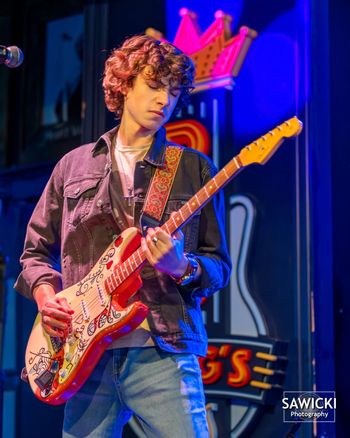
Danny Garwood
Hailing out of Music City USA (Nashville, Tennessee), there’s a young guitar slinger, Danny Garwood, rolling out some heavy hitter blues, getting stage time with the likes of the legendary Buddy Guy, Christone “Kingfish” Ingram, and other world-class artists.
While checking out Danny’s video that captured the scene with Mr. Guy, I was reminded of an older video with a young Joe Bonamassa being invited to show his chops alongside the great Danny Gatton. It seems each new generation produces newcomers to the world of guitar that sometimes get to count coup with their guitar heroes, and gain some early career traction.
Kenny Wayne Shepherd and Lang are others come to mind. The power and magic of music can merge generational gaps, fusing young and older musicians together in ways that honor the elders, and inspire the passion of talented and driven young axe masters.
Enter, Danny Garwood, who took a turn in 2022 at the Dallas International Guitar Festival’s ’10 Under 20′ festival where he impressed and met Ally Venable who pulled him on stage, and has since invited him to open for her several times. In keeping with generational power shifts, Ally’s own professional entry to the music scene happened when she released her first EP at 14 years old, and since then has gone on to become an internationally acclaimed touring artist.
Inspired by those who came before, that include Jimi Hendrix, Stevie Ray Vaughan, John Mayer and Jeff Healey, Danny’s blues licks are nuanced by his guitar idols’ good works. And his new EP, 50/Fifty, hits the bulls-eye offering us skilled grit and passion, with the releases only short-coming being leaving us wanting for more, much more. Without a doubt, Garwood has plenty more in his quiver to send our way.
Guitar International is pleased and honored to present, Danny “Guitarwood’ Garwood, to our pages and we look forward to much more from this very special world-class artist.
******
Rick Landers: Some of my friends spent countless hours alone learning and trying to master the guitar, and I wonder at what cost to their social lives, schooling and relationships? Did you or do you still find a total immersion necessary to develop your talent; what have the joys and challenges been so far for you?
Danny Garwood: I can totally see how that can happen, music being a time consumer, but I’ve been very lucky to have a family that supports balance. I go to public school and ensure that I have enough time for friends and being a kid. Which is something that’s super important to my parents and management.
First starting out it was a total challenge, so I spent tons of time in my room practicing. Eventually I just kept on going and it got to a point where I was having so much fun I didn’t realize how long and often I was practicing. At this point I practice daily and honestly can’t even walk into the living room without picking up an acoustic.
Danny Garwood
Rick: Your EP, 50 Fifty, is a catchy honking guitar album, tell us how you chose the songs that you covered, and the kinds of songwriting processes you use to come up with your own tunes?
Danny Garwood: It all came together in a very neat way. In June of 2024 I made the trip to Sweetwater Studios in Fort Wayne, Indiana and cut a handful of songs, which led to me releasing a single months later in October called “Two Wrongs.” I returned back to Sweetwater in November of 2025 and redid vocals and guitar parts on the tunes. My voice had changed and I wanted to enhance the guitar parts a bit.
As for the decision making on covers, let’s start with “Them Changes” originally done by the late great Buddy Miles. I was in the car and my dad had Eric Clapton’s and Steve Winwood’s Live At Madison Square Garden on. Their cover of “Them Changes” came on.
As soon as I heard that riff I was immediately hooked. I found the original done by Buddy and it blew my mind, not only because of how amazing the music sounded, but that the person who was singing was also playing drums. I looked him up some more and found out he was the drummer on the Band of Gypsy’s album, which is now one of my personal favorites. The influence the song had, inspired me to do something with it, and I knew this would be one that I would cut.
The other cover, “As the Years Go Passing By,” originally done by Albert King, I discovered from Jeff Healey’s version. I’ve always been a huge fan of slow blues songs, but this one just had a different feel. Healey has always been a huge inspiration to me and that was one of the songs that introduced me to him as well as his role in the movie “Roadhouse.” It was a song that made its spot on my setlist and I loved it so much I wanted to record it.
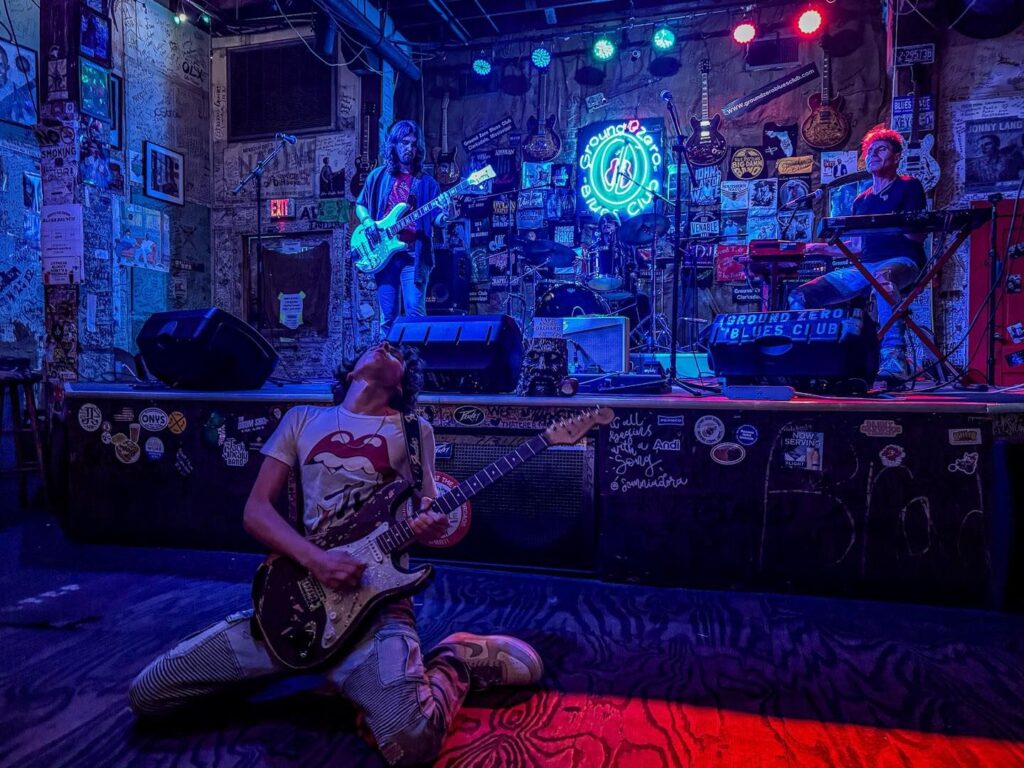
Now, for the originals: “50/Fifty,” “Up Your Sleeve,” and “387 Delta”. “50/Fifty” and “Up Your Sleeve” were written in a very natural way that was made to sort of fit the theme of the instrumentals, but “387 Delta” goes deeper than that. I wrote that song about one of my favorite venues, “Ground Zero Blues Club,” in Clarksdale, Mississippi. There’s some sort of energy there that I don’t think I’ve found any place else.
I’ve been playing there ever since I was around 13, and I’ve met so many great people. I couldn’t resist writing a song about it. I needed to figure out a title, and I originally intended it to be called “Ground Zero,” but that just felt a little too basic. I gave it some more thought, and someone suggested I look up the address and “387 Delta Avenue” came up. Something about 387 Delta just had a ring to it, so that’s when I knew I had my title.
Click here to view the embedded video.
Rick: What’s your rig for performing – guitar, amp, effects – who are some of the guitarists that have inspired you, and what sounds draw you in by them that you incorporate into your own playing?
Danny Garwood: I get pretty versatile with my collection, but I’m totally a Stratocaster guy at heart. For amps I’m running a Category 5, which is a company out of Texas. I’m playing through the TBR-35 model, and it sounds excellent.
In terms of pedals, I’m always running a Tube Screamer and an MXR pedal called, Timmy Overdrive, for extra grit. On occasion I’ll turn on a chorus or a smidge of delay. And for certain songs I use a wah or an octave pedal.
To name a few influences I definitely incorporate a lot of Jimi Hendrix, John Mayer, and Kenny Wayne Shepherd licks into my playing. I do venture off a bit though, Steely Dan has become a huge inspiration for me, more specifically both albums, The Royal Scam, and Aja gave me a whole different lens towards music.
An incredible drummer I work with, Dale Myers, introduced me to drummer, Jeff Porcaro, and gave me a book about him to read called, The Man and His Music, which had so much valuable information and taught me a lot of things about the music industry. Even though Porcaro is a drummer, as a musician and a person he’s a huge influence on me and this sparked a deep connection to his music and a lot of songs from Toto’s discography.
Rick: Along the way, musicians who get traction tend to have supporters who help move their passion forward into a professional career path. Who’s been on your side and what have they brought to you, to help keep things moving ahead and/or helping you keep your life well balanced?
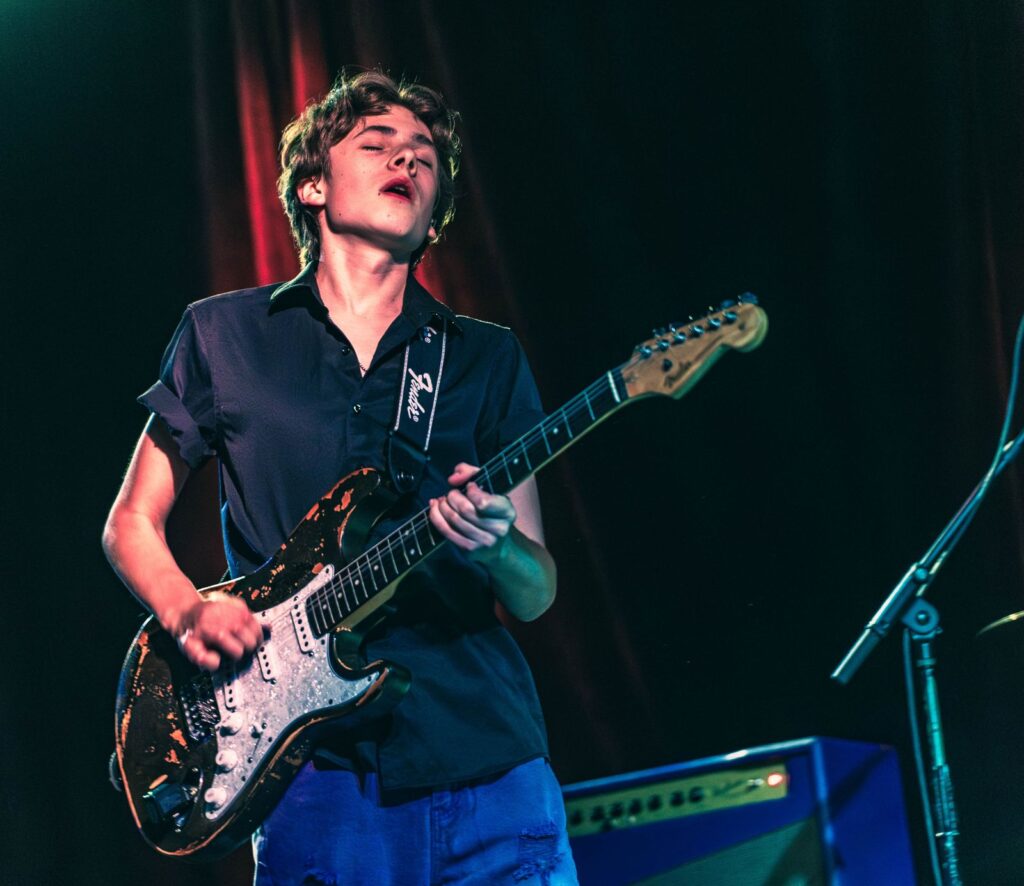
Danny Garwood
Danny Garwood: Too many to list. To start, my parents, and especially my Dad, have been here for everything. I wouldn’t have gotten to places I’ve been, let alone meet my management, Curation, who are also nothing but amazing towards me.
To name another, this incredible keyboard player and even more amazing human, Eric Robert, I’ve had the privilege of working with. I met him shortly after moving to Tennessee and he’s supported and inspired me both on and off stage. Not to mention he gifted me the sickest watch. I always sport it on stage.
Rick: The arena of business in the music industry has a a few potholes to be aware of and to try to avoid. Are you cautious to not jump the gun when it feels that your ambitions might lead the way to decisions that end up with disagreeable results?
Danny Garwood: I’ve got an amazing support system, and we always really think through decisions. For example, I cut those tracks at Sweetwater intending for an album, but I discussed with management on what to do and decided on holding off for an album until I was a little older.
After that recording process, tons of people would come to shows asking if we had CDs or music they could stream. Further down the road this prompted me to piece together my EP. It’s important for me to do things right and not fast.
Rick: Tell us about the production of your album, the recording, engineering and packaging of it. Were you hands on or were there others you relied on heavily to pull it all together?
Danny Garwood: Sweetwater is one of the coolest places I’ve ever been. And if you haven’t been, figure out how to get to Ft. Wayne, Indiana. I had a great first experience recording with producer, Shawn Dealey, and his studio partner Jason Peets.
My first experience with them in 2024 was nothing but amazing. I made the choice to hold off, and returned when my voice changed a little over a year after. I redid the parts to sound more up-to-date. Shawn pulled some really awesome things out of me just by talking to me and honed in on a lot.
Rick: A career in music can be tough and some have what many would call a “normal” job or career, often to be able to pay the rent. Are you also pursuing an education or another career that might be a more traditional path to your idea of success?
Danny Garwood: I will do whatever it takes to continue on this path, I can’t see myself doing anything else. I love connecting with other people through music, and the stage just feels like home to me.
Rick: Have you found other musicians competitive or helpful to give you ideas, get gigs, or offer up lessons learned for you to reach your potential?
Danny Garwood: It’s definitely a competitive market, but I feel like you can find that in any path. There have been so many people that are extremely helpful, whether it’s mentors or people I’ve shared the stage with. To name one, Mr. G, my very first mentor. This was when I was living in Illinois, where I am originally from.
I showed up to a jam in a small town in Wisconsin, called Zenda. I was around 10 years old at the time and had never experienced an open jam before. The host “Mr. G” had let me come up and play with the house band for a few. This experience ignited my passion even more, and he ended up taking me under his wing as his very first guitar student. He taught me stage etiquette, and to always let others shine, which I think is key when playing onstage.
Click here to view the embedded video.
Rick: How did you end up on stage with Ally Venable at the Dallas International Guitar Festival in 2022, and do you consider it a milestone in your career so far?
Danny Garwood: I saw Ally perform in early 2022 opening for Kenny Wayne Shepherd in Chattanooga, Tennessee. Needless to say, I was absolutely floored. A few months later I found out that I was going to be going to Dallas to compete in the Dallas International Guitar Festival “10 under 20” competition. The day of our arrival we went to go see Ally perform.
After the show I introduced myself and took a picture with her. That very next day, she had another slot performing. Before we left to go to the festival I almost didn’t bring my guitar. But, my dad just had this gut instinct and told me to bring it, just in case. So I did.
When we went to go see Ally play, we received a message from her Dad through Facebook asking if we were still there and if I had my guitar. Luckily, yes. I rushed to the front of the stage and before I knew it 13 year old me was up there jamming on Freddie King’s “I’m Going Down” which was a song I did not know at the time.
Ever since, Ally and her crew have been so good to us. I’ve had the privilege of opening for her and spending time with them on numerous occasions. And I’m beyond grateful for that. Not to mention there was a woman in the audience, Natasha Cornblatt, who is a videographer. She filmed the performance and posted it on YouTube and it is now standing at 8.6 million views.
Rick: Sharing the stage with the legendary Buddy Guy and Christine “Kingfish” Ingram, at the Ryman no less, must have been a dream come true. How were you able to corral that opportunity, what was that experience like, and has it led to even more opportunities?
Danny Garwood: Around mid-February, 2023, we had tickets to go see Buddy Guy in Evansville, Indiana. Ally Venable and Eric Gales were opening for him which they were fantastic per usual. Near the end of the show, Buddy did his signature crowd walk, and eventually came up to me.
I was wearing this very vibrant blue suit jacket, with shiny silver polka dots. Buddy handed me a pick and let me strum his guitar. There’s a picture of it, and a video from my point of view, it’s always fun to go back and watch on occasion. Buddy asked if I played guitar, of course I said, “Yes”. He asked if I wanted to jam on stage at the end of the show, but it never happened, that night at least.
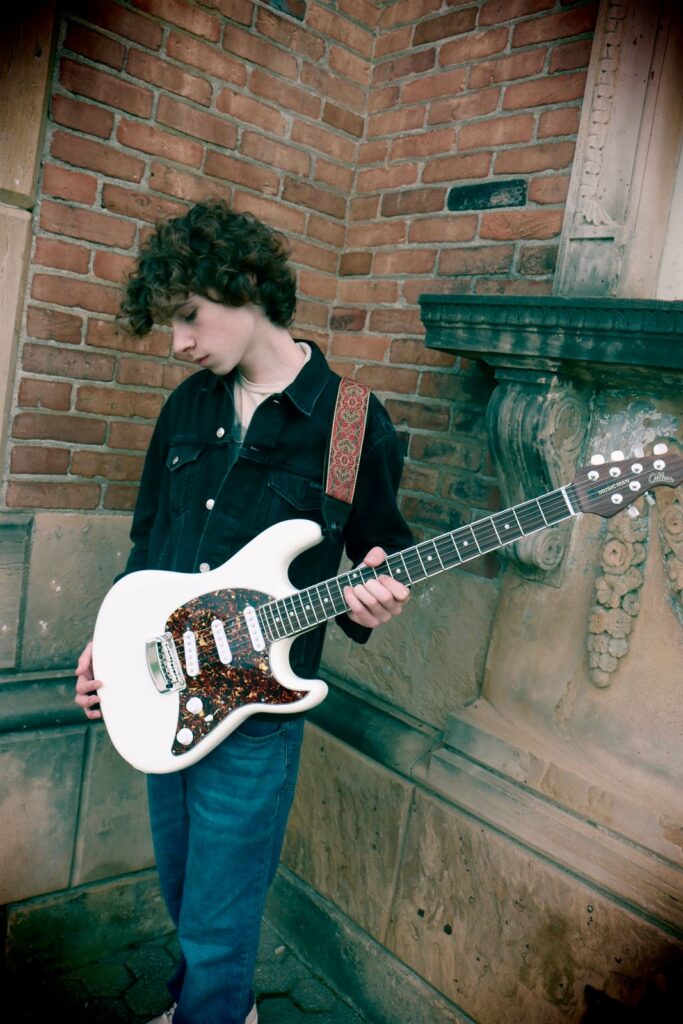
Danny Garwood
I was working with an outstanding drummer at the time, Paige O’Rourke, from Chicago, Illinois. She had jammed with Buddy before, and happened to know Buddy’s guitar tech, Connor Korte. Connor had spoken to Buddy and he said he had remembered me from the Evansville show, and he was informed that we’d be seeing him in late March at the Ryman Auditorium here in my hometown, Nashville, Tennessee. We weren’t entirely sure on whether I was going to jam with Buddy, but either way I was excited to see him live and I wore that blue jacket again.
Christone “Kingfish” Ingram was playing the opening set who I had previously met before. When we were waiting in line, we saw his van, and his bass player at the time, Paul Rodgers, recognized me. He invited me in the van and I got to chat with Christone for a bit.
This meant the absolute world to me. When it came time for the show, we still weren’t sure on whether or not I’d be jamming with Buddy. When he did his crowd walk, he didn’t walk up to me, so I had a feeling it wouldn’t happen. Near the end, I see Connor. He’s pointing at me to head backstage. My mom came with me, as well.
It was funny when Connor handed me a guitar, we couldn’t adjust the strap height to fit me because I was so much smaller at the time. Then before I knew it I was on stage with Buddy Guy, Kingfish, and all the other incredible musicians on stage. It didn’t really hit me till afterwards what had just happened. I couldn’t believe it.
This experience opened the door for opportunities to play with Buddy yet another time, jam with Kingfish again at Ground Zero, and play at Buddy’s blues club in Chicago, Illinois, “Legends.”
Click here to view the embedded video.
Rick: Are you winging it or have you developed a career strategy, with goals and objectives, that you check off, then once interim goals have been reached, do you update your plans with more things you want to experience and accomplish?
Danny Garwood: I’m definitely a go with the flow type of person. A lot of things have just sort of came to me, and I let the universe do its thing. Not to say it isn’t important to have a plan or strategy. After I finish my senior year of high school, I’m planning to record my debut album. It’s been a goal of mine for a while, create a killer debut album and tour and I’m really excited to see what the future has in store.
Rick: Giving back is always a good thing to do and I see that you’ve helped other musicians starting and facilitating the Youth Blues Jam at the Ground Zero Blues Club in Memphis. What was that like and are you still involved in that annual event? Have you plans to do any more “giving back” ventures?
Danny Garwood: Being able to start, and host the Youth Jam at Ground Zero was such a treat. My last time hosting this year was very bittersweet, but it felt amazing to pass the torch and let other young artists experience what it’s like to be in that spot. I’m no longer involved in that event since I’ll be 18 soon, but I’m excited to see what the future holds for it.
Giving back always feels good, and I am 100% open to doing it as much as I can. Gary Hoey had Ally Venable sit in on “Going Down” when she was younger, and she paid it forward to me. So, I know one day, I’ll find someone young that I see potential in and do the same.
Rick: What’s next on your “to do” platter and what can your fans expect for the rest of this year and in 2027?
Danny Garwood: My biggest focus is to enhance my writing skills. So, definitely expect more original music, as well as more shows, so you can catch the new material live, further down the road!
Cort Introduces the CR300MT Electric Guitar
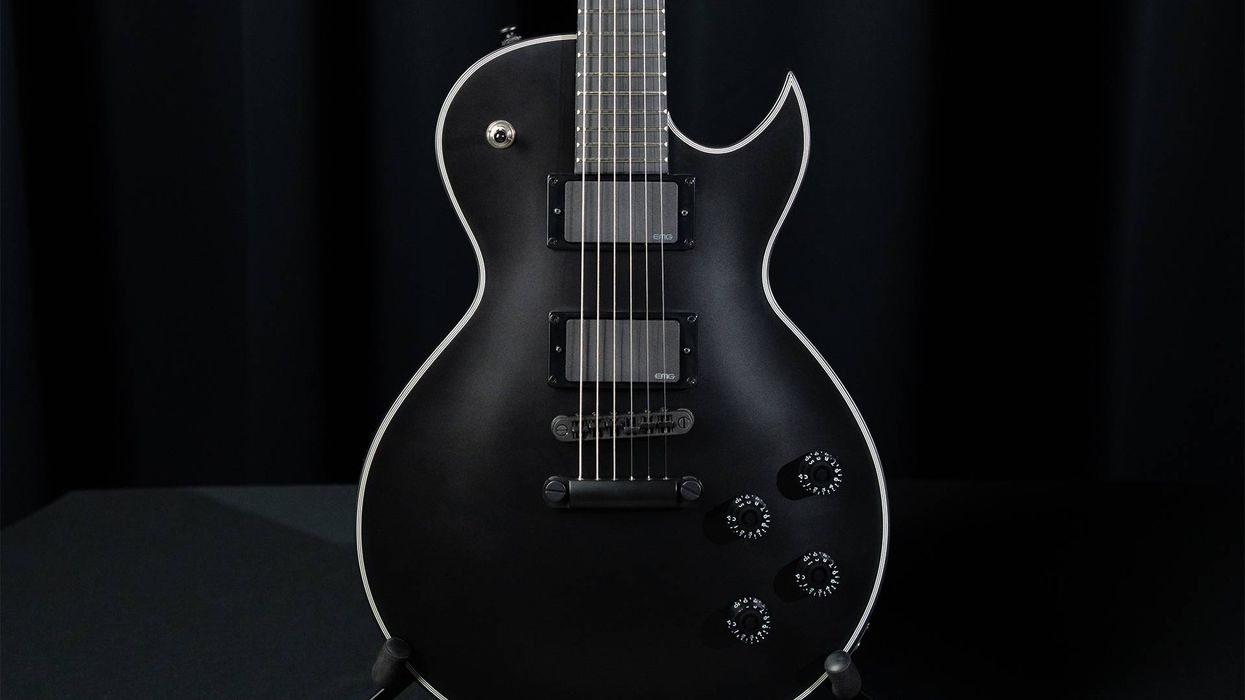
Cort announces the expansion of its single cut lineup with the introduction of the CR300MT electric guitar. Developed to fulfill the evolving preferences of contemporary guitarists, this guitar unites a highly requested combination of components and materials in a classic design.
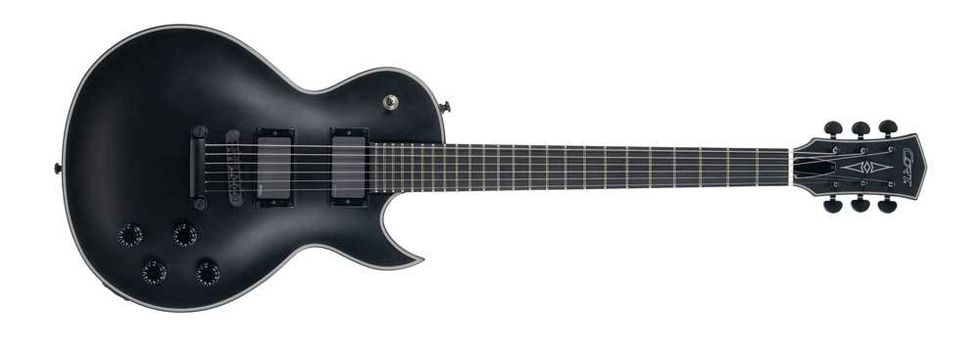
Built with a focus on traditional material choice, the CR300MT features a solid mahogany body configured to deliver sustained resonance and low-end warmth. The instrument is finished in a modern, streamlined Black Satin (BKS) finish, highlighting a clean aesthetic highlighting the physical architecture of the guitar body without distraction. The multi-ply white-and-black binding wraps the perimeter of the body and headstock, serving as a stark architectural outline against the deep satin color.
The guitar layout relies on a traditional set-neck construction, seamlessly pairing the mahogany body with a robust mahogany neck. This configuration refines mechanical stability and string-vibration transfer across the entire length of the instrument. Built to a classic 24.75-inch (628mm) scale length, the neck is capped with a durable Micarta fingerboard carved to a comfortable 12-inch (305mm) radius. The fretboard hosts a full 24-fret layout with nickel-silver frets. At the headstock is a premium Graph Tech® TUSQ nut, measuring a standard 1-11/16 inches (43mm) in width to ensure comfort and tuning stability.
The electronic architecture of the CR300MT is powered by a high-output EMG® 81 and 60 active humbucker pickup set to provide tonal versatility. This iconic pickup pairing is wired into an intuitive, control array consisting of two individual volume knobs, two individual tone knobs, and a standard 3-way toggle switch. This layout gives musicians precise control over their output shaping, allowing for immediate switching and independent adjustments between the neck and bridge pickup positions.
Rounding out the specifications, the CR300MT is equipped with Grover® Rotomatics™ tuning machines for reliable tuning stability and micro-adjustment precision. On the body, string tension and height are regulated by a classic Tune-O-Matic-style bridge paired with a secure stop tailpiece.
For more information, please visit the official Cort website at www.Cortguitars.com
Street Price: $899.99 USD
SatchVai: Joe Satriani And Steve Vai New Single “Mayhem” out Today!
After more than five decades of friendship, musical exchange and separate careers that helped redefine what the electric guitar could do, Joe Satriani and Steve Vai have finally made a record together. The Sea of Emotion, the first studio album from SatchVai, will be released November 6, 2026 via earMUSIC. The announcement arrives alongside the release of “Mayhem,” the album’s blistering new single, out today.
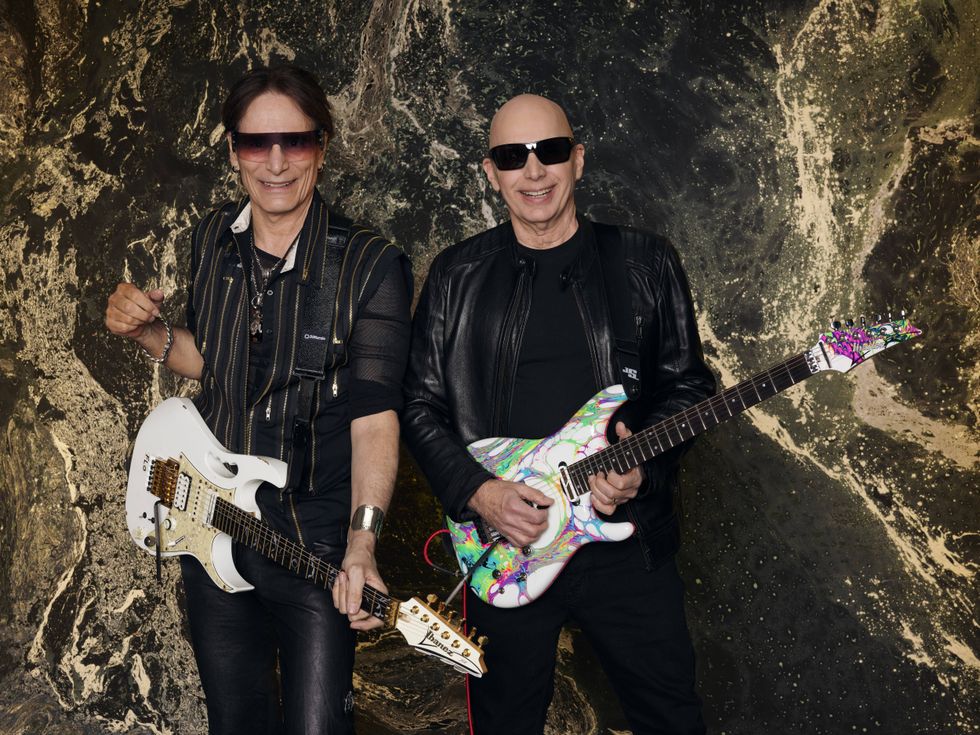
The story began in 1973, when 13-year-old Steve Vai began taking guitar lessons from his 17-year-old teacher, Joe Satriani, in Long Island. Neither could have known where that shared obsession with the guitar would lead. More than 50 years later, after establishing themselves as solo artists and sharing stages around the world through the legendary G3 tours, they have brought their musical histories together on one album.
“We’ve been planning this since 1973,” Vai says with a laugh. “Just unconsciously.”
The album came together after a G3 reunion tour created an unexpected opening in their schedules. What began as a suggestion to record a single track quickly expanded when Satriani sent Vai two finished pieces, “The Sea of Emotion, Part 1” and “Part 2.” Vai knew immediately that the time had come.
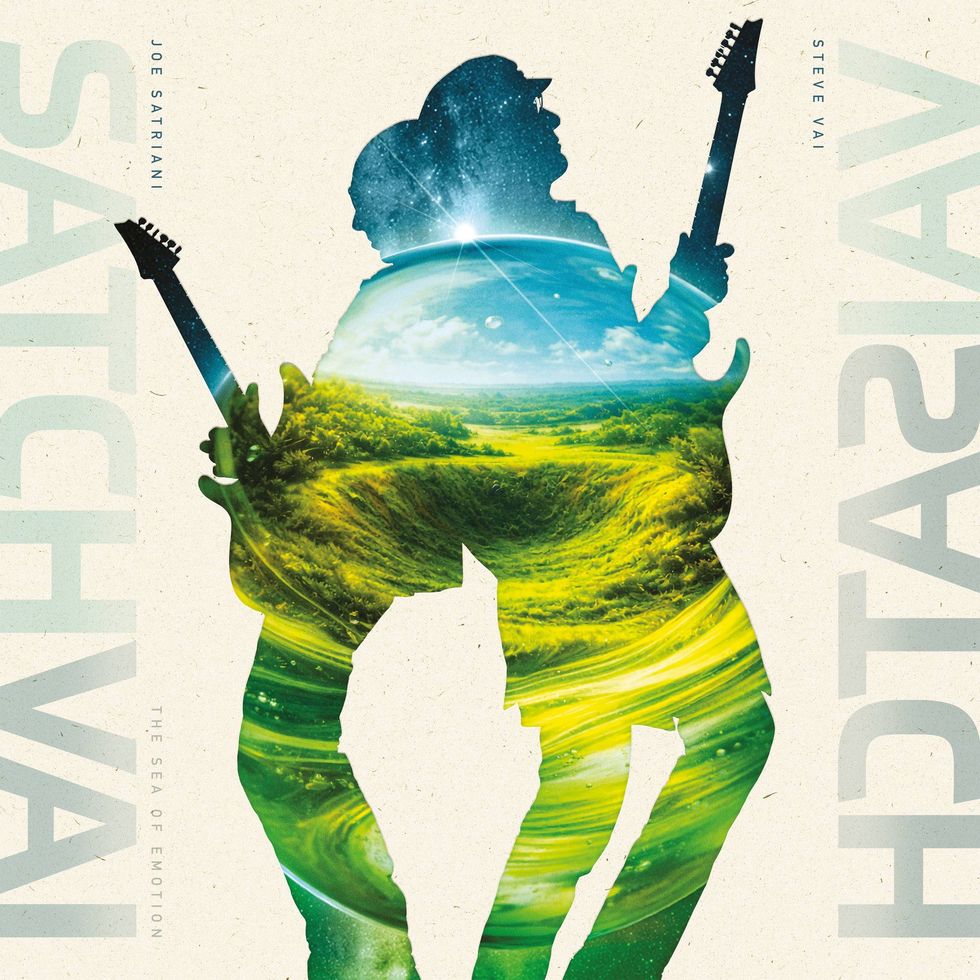
The process was anything but predictable. Although the two musicians share a deep musical history, similar influences and a lifelong understanding of the guitar, they discovered that they write very differently. That contrast became one of the defining elements of the record, with ideas moving back and forth as the songs took unexpected turns.
“The biggest surprise was that we write in completely different ways,” Satriani explains. “And that’s what made the project so fun and interesting.”
The album brings together two musicians who have spent decades developing unmistakable individual voices, while giving each the freedom to push the other somewhere new. Producer and keyboardist Eric Caudieux helped keep the process honest, while a formidable group of longtime collaborators supplied the rhythm section, including drummers Gregg Bissonette, Jeremy Colson, Kenny Aronoff, Matt Chamberlain and Mike Mangini, and bassists Billy Sheehan, Bryan Beller, Philip Bynoe, Matt Bissonette, Marco Mendoza and Henrik Linder.
Across The Sea of Emotion, SatchVai move from the raw rock ’n’ roll of “Mayhem” and “Bronco Freight Train” to the darker, cinematic “Old Sins Have Long Shadows,” the unruly swing of “Zoot Suit Riot” and the arena-sized “I Wanna Play My Guitar,” featuring legendary singer Glenn Hughes.
At the center of the album is the three-part “The Sea of Emotion” suite, which reaches back to the Carle Place school field where the two teenage musicians once spent time dreaming about music. “The Sea of Emotion, Part 3” even begins with a vintage reel-to-reel recording from one of Vai’s early lessons with Satriani, a glimpse of two young guitarists still searching for their voices.
“It illustrates just how far we’ve come,” Satriani says. “We’re these two kids who haven’t found our sound yet, but we’ve got enthusiasm. We’re chasing something, and we’re determined.”
For Vai, the album ultimately represents something more personal than a meeting of two celebrated guitarists.
“That’s when I really feel, like, wow, we really did it,” he says. “It’s a beautiful coming together of me and my friend in a very intimate musical way. That was the reason we did the record.”
THE SEA OF EMOTION TRACKLIST
- Mayhem
- Bronco Freight Train
- Dancing
- The Feeling I Know
- Zoot Suit Riot
- Old Sins Have Long Shadows
- I Wanna Play My Guitar
- The Sea Of Emotion Pt. 1
- The Sea Of Emotion Pt. 2
- The Sea Of Emotion Pt. 3 / Reflections On A Year And A Half
SATCHVAIBAND.COM
Rig Rundown: Seth Lee Jones
John Bohlinger drove out to Seth Lee Jones’ home in Tulsa to see the guitars the luthier and slide player builds for himself, plus the barn-find Leslie and the pedalboard behind one of the more distinctive sounds going. Have a look at some quick highlights below, and tune into the new Rig Rundown for all the details.
Brought to you by D’Addario.
Born of a Bad Neck
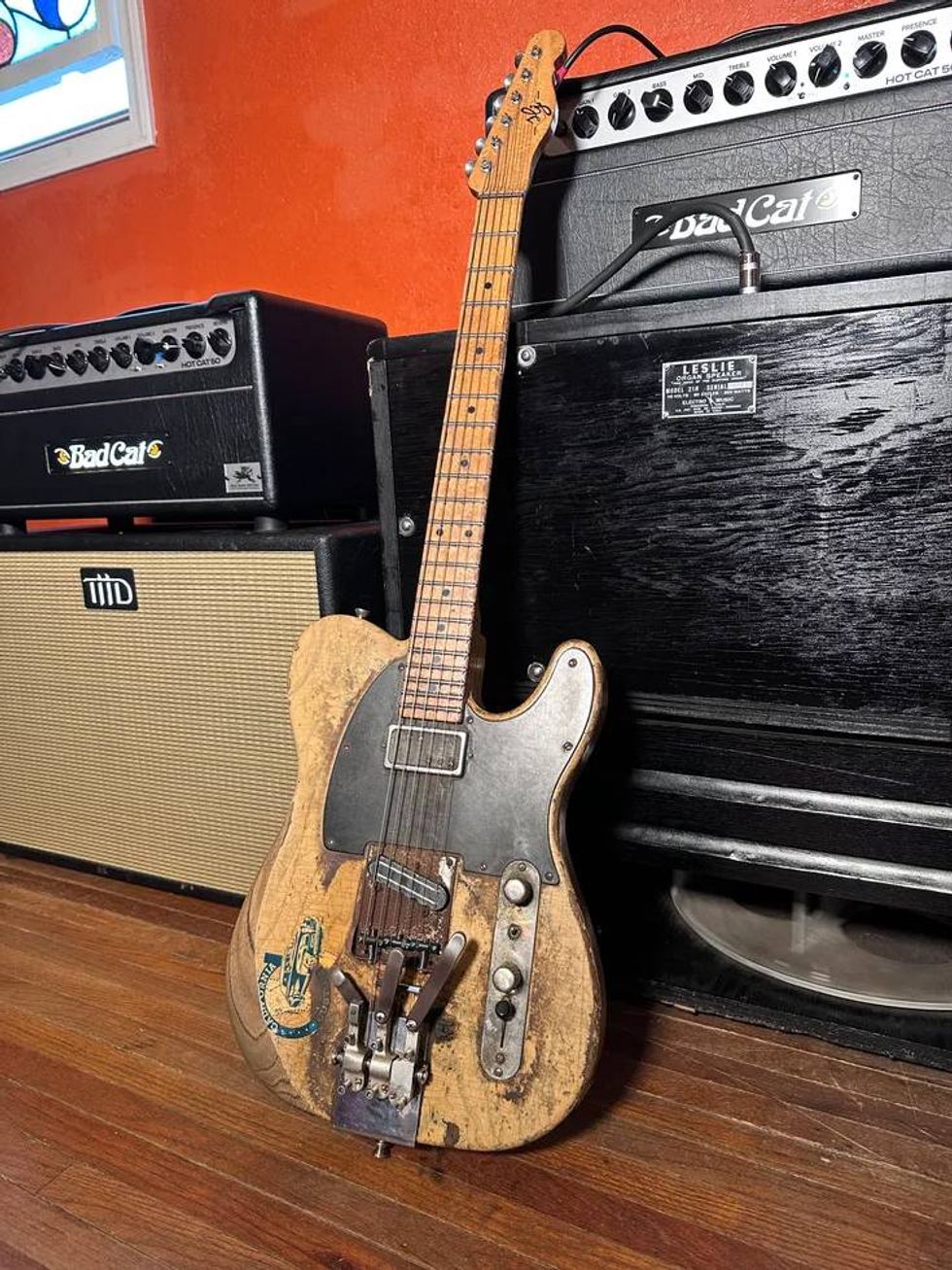
Jones calls this T-style a story based in failure. Fresh out of luthier school, he built a neck that back-bowed past saving, so he made another, strung it with heavy lap steel strings, pushed the levers and heard it go from a I to a IV, “and the light bulb came on.” He carved the body in 2006 with routers, chisels, and gouges—no CNC—and this is the fourth or fifth neck it’s worn.
Sunny Side Up
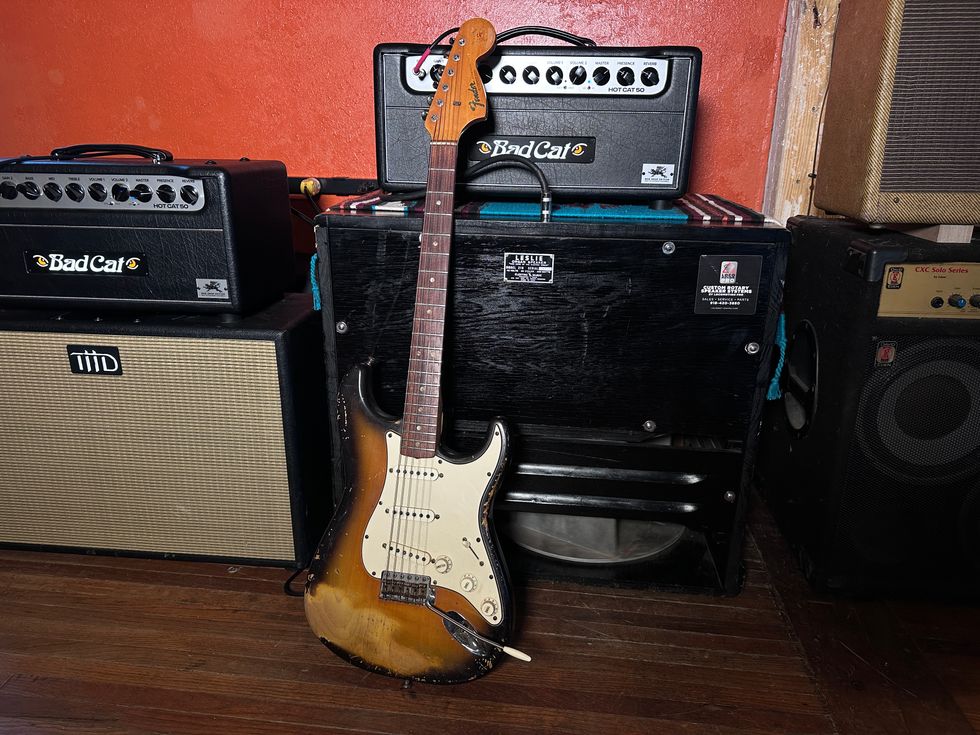
Jones picked up this 1966 Stratocaster, mostly original, from Guitar House of Tulsa last year. It came out of Florida with all the red bleached out of the front of the sunburst and none out of the back. The neck has a reverse taper—thicker at the first fret than at the 12th — which Jones figures is a Friday-afternoon mistake, and loves. He keeps the three-way switch, floats the trem, and tunes it to standard D with a set of .011s.
Seventy-Five-Dollar Question
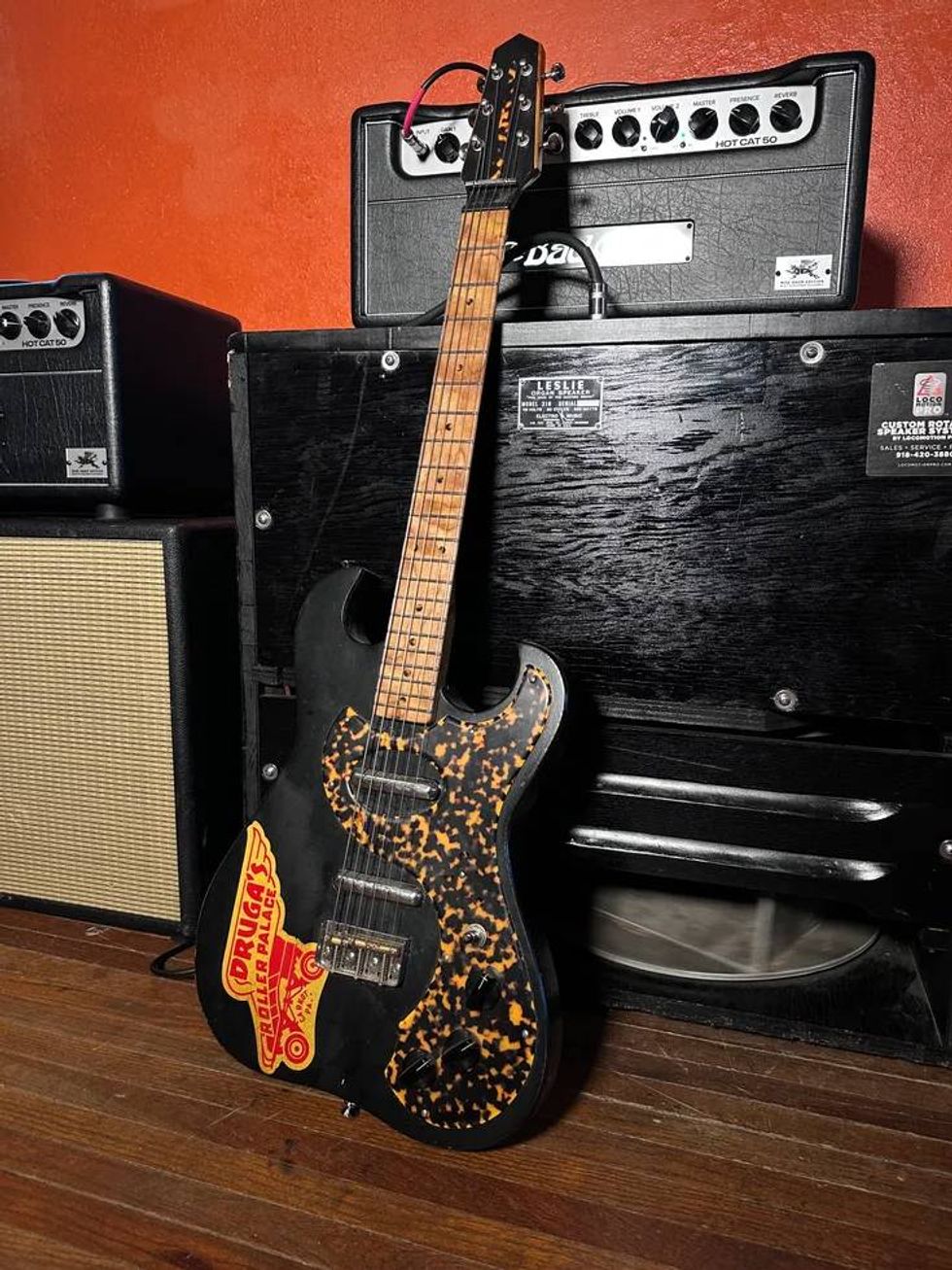
This one arrived at the shop in a trash bag, with its neck whittled to ruin and its Tolex stripped. Jones built a new short-scale cherry neck with a headstock shaped in tribute to Rick Turner, added a guard, oven knobs, and a Tele bridge, and rewired the lipsticks to two volumes and a tone. It’s tuned to C with flatwounds, and nothing else he owns sounds like it.
Cat Pack
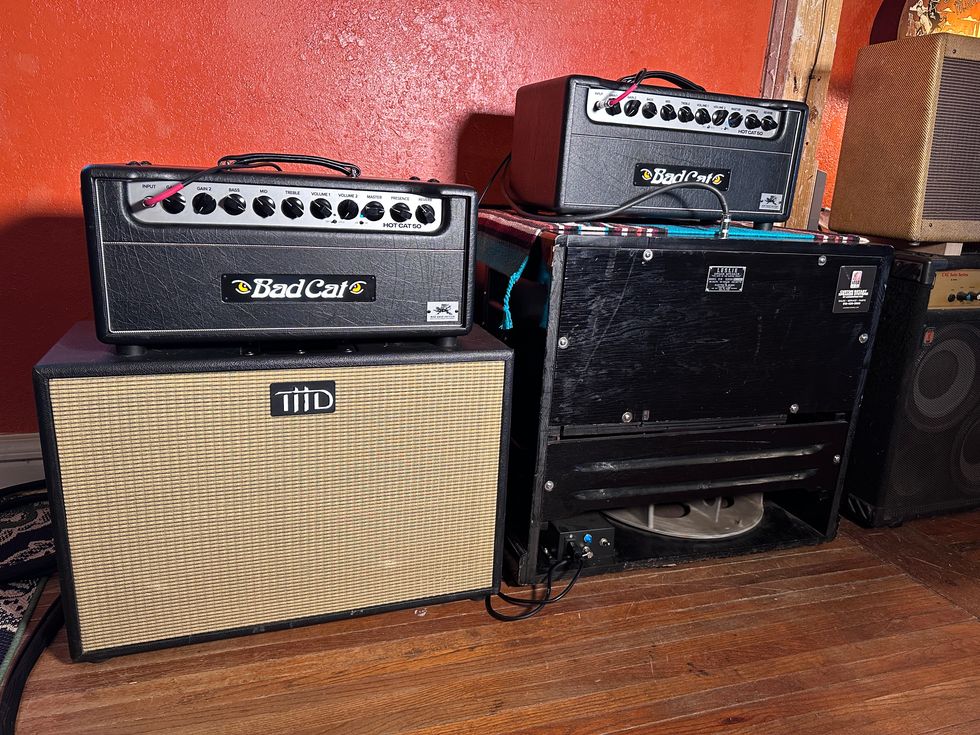
Jones runs a pair of Bad Cat Hot Cat 50s with the master up and the gain low—he’d rather get his dirt off the floor and ride it with his volume. A GigRig Humdinger allows the two amps to work together, and he says it does the job cleaner than anything else he’s tried. One head sits on a THD 2x12", and the other amp feeds a Leslie that Jones built from a 21H that survived a barn fire.
Seth Lee Jones’ Pedalboard
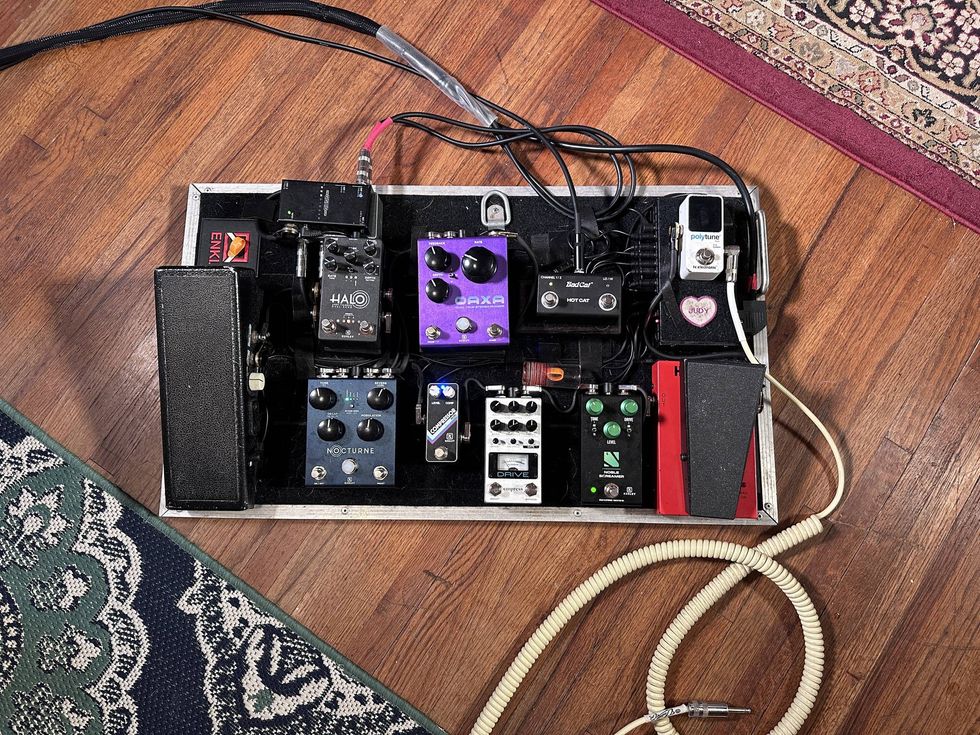
A TC Electronic PolyTune starts things off, into a Morley wah, then a Keeley Noble Screamer, an Empress Drive, and a Keeley Mini Comp — which he runs after the drive, and has been told repeatedly is the wrong way around. From there is a Hilton volume pedal and three Keeleys—a Nocturne, Halo, and Oaxa.
Blackstar Offers Free Moises Integration into Beam products
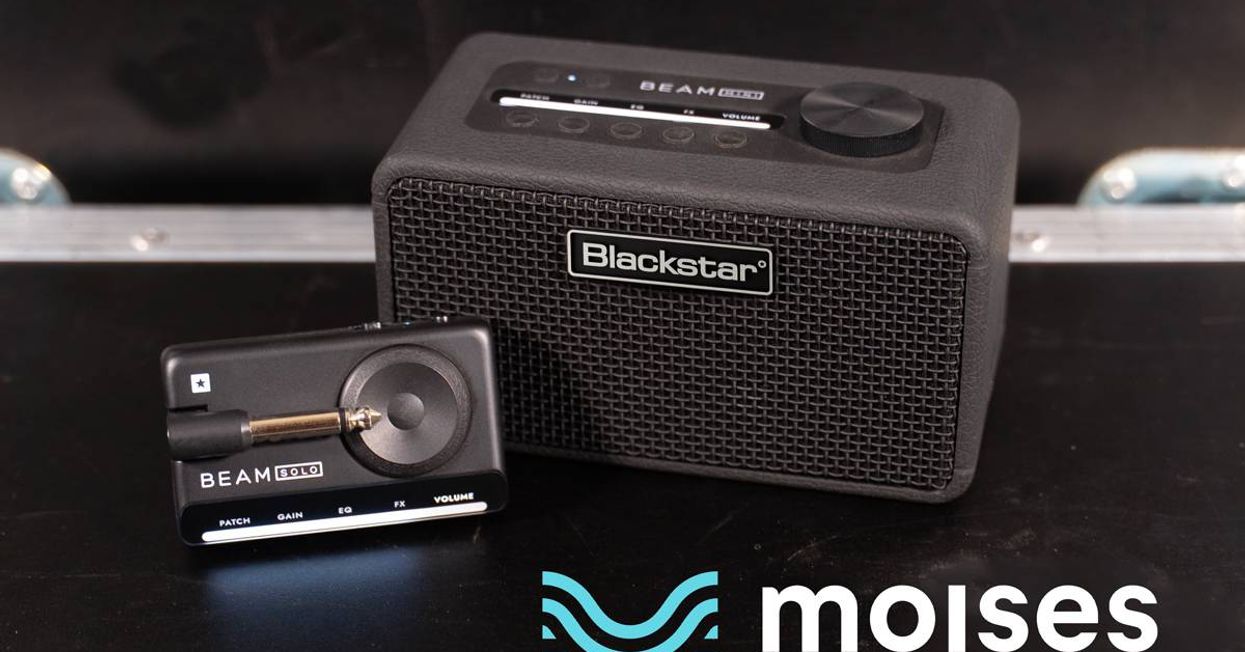
Blackstar has announced a major free update for Beam Solo and Mini on iOS, introducing seamless integration with Moises’ industry-leading real-time stem separation technology.
With this Moises integration, using the Blackstar Beam app you can separate guitars from the rest of the mix from virtually any song streamed or played from your device in real-time.
With simple, intuitive volume controls, you can instantly mute the guitar and step into the shoes of your favourite players, isolate guitar parts to hear every nuance or turn down the vocals and perform the entire song yourself. Whether you’re learning difficult passages, practising with your favourite artists or simply enjoying music in a completely new way, Moises opens up an entirely new playing experience with Beam.
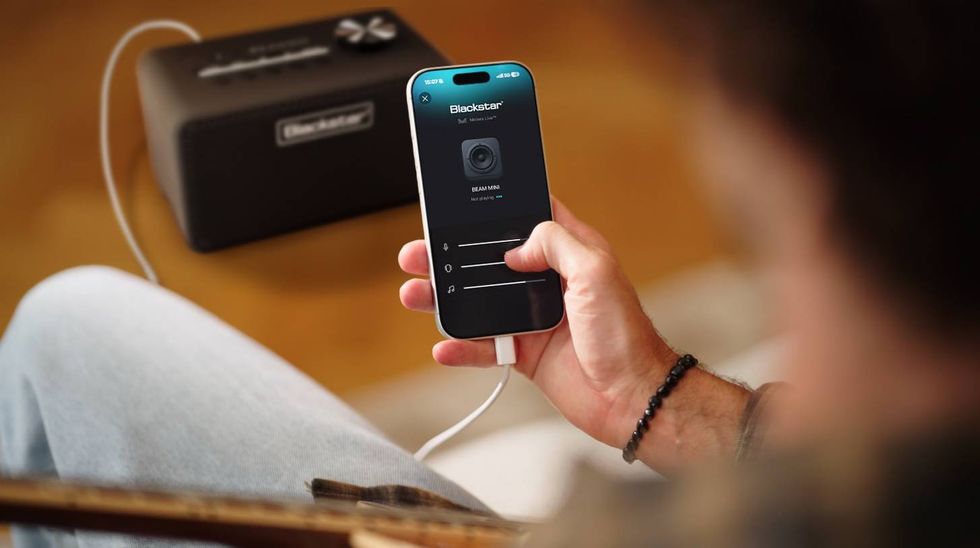
There’s no complicated setup or editing required. Simply connect your Beam, start your music and adjust the mix in real time with a few simple sliders. Professional stem separation has never been this easy.
Android users will receive this free update on the 30th September.
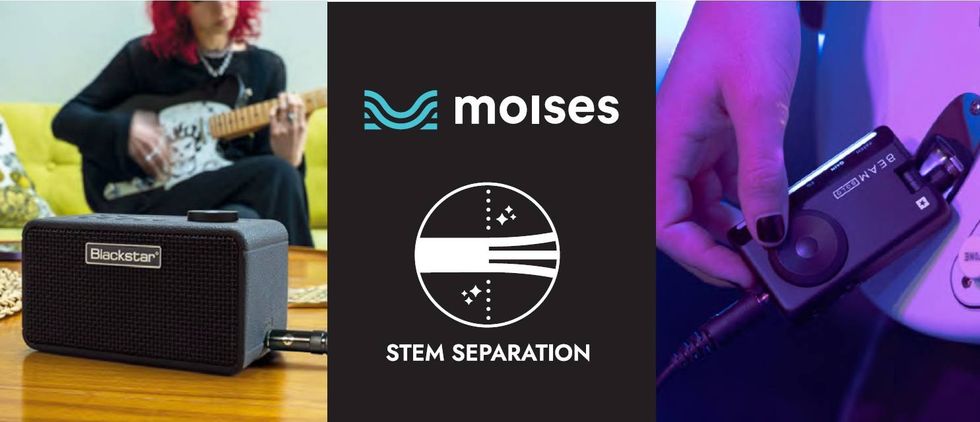
Moises Integration – Key Features:
- Premium stem separation free for all Beam users.
- Compatible with Beam Solo and Beam Mini.
- Works with streamed or stored music - Requires an active music streaming subscription where applicable.
- Instantly isolate or remove guitar parts completely.
- Vocals and the other instruments in the track can be turned down to 25%.
- Perfect for learning songs, practising solos and playing along with your favourite artists.
- Simple real-time control with intuitive volume sliders.
- Available as a free update from 28th August to iOS users.
Available as a free update from 30th September to Android users.
For more information visit www.blackstaramps.com.
Josh Klinghoffer’s Spare Time
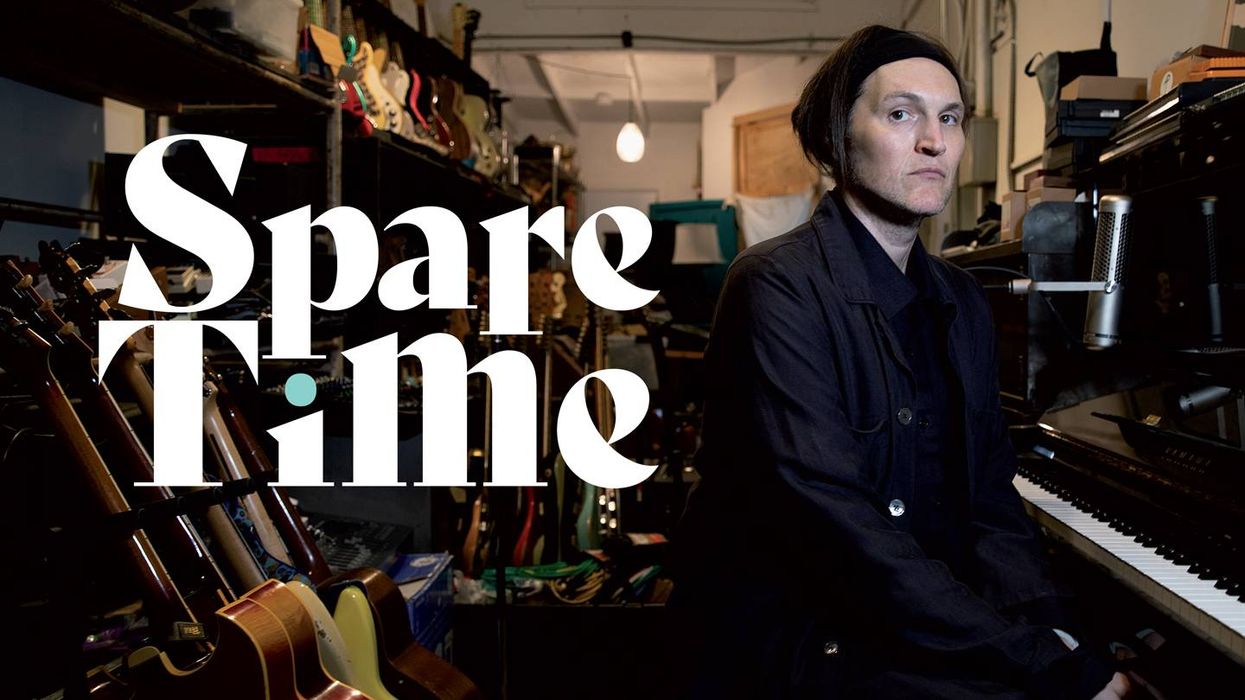
For most of his career, Josh Klinghoffer has been the alt-rock wiz kid. His career began as a Los Angeles-area teenager, and his talents caught the attention of Bob Forrest, who enlisted him in his band, the Bicycle Thief. Since then, he’s had stints with the Forrest-led Thelonious Monster, Dot Hacker, and Gnarls Barkley, and toured with Jane’s Addiction, PJ Harvey, and Sparks. Most famously, he was a member of the Red Hot Chili Peppers from 2007 to 2019 (with whom he was inducted into the Rock & Roll Hall of Fame in 2012). Since 2020, Klinghoffer has been a touring member of Pearl Jam, serving as a multi-instrumentalist.
While he’s had a charmed career playing with some of the giants of rock, the 46-year-old has also, for nearly a decade, pursued a solo career under the Pluralone moniker. In that span, Klinghoffer released several albums, EPs, and singles, the most recent of which was 2022’s This Is the Show. A history aficionado, the album touched on historical tensions beginning with World War II through the present day. Also that year, he teamed with Pearl Jam’s Jeff Ament to compose the score for the FX television show Under the Banner of Heaven.
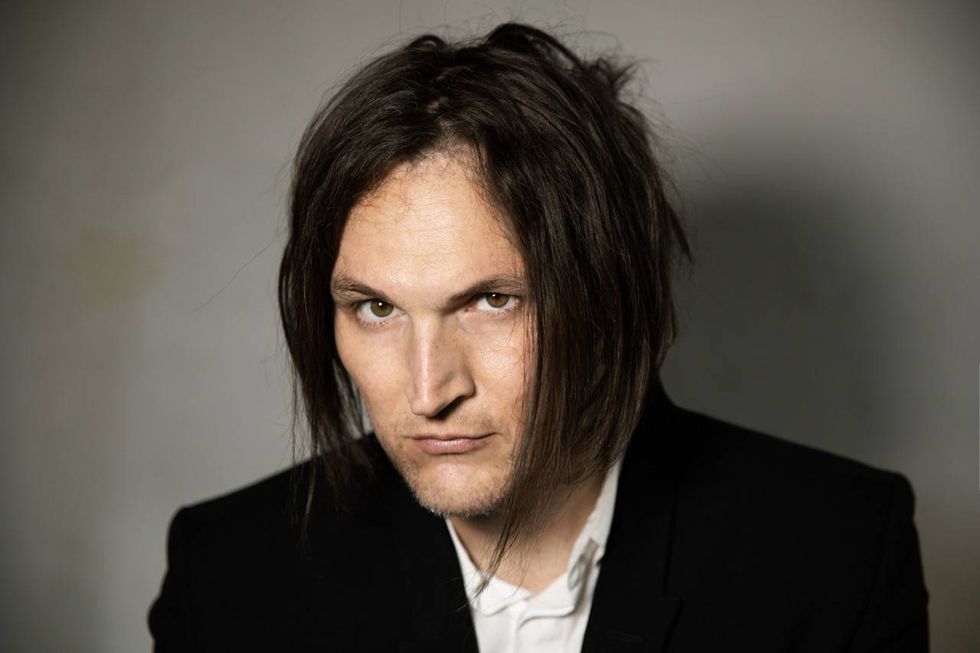
Now, Klinghoffer has released his fourth and newest Pluralone album, A Drop in the Ocean, through his longtime label, Org Music. Produced by Eric Palmquist, the seeds for the sparse, 10-song collection were planted at the end of the This Is the Show sessions. But as he started to sketch out a new album, his “other” jobs called—in particular, Pearl Jam toured on and off, as did its frontman, Eddie Vedder, in whose solo band, the Earthlings, Klinghoffer also plays. Add to that his ongoing session work with superproducer Andrew Watt, and it’s a wonder Klinghoffer had any time to himself (he jokes that he didn’t), let alone time for his own material.
Yet that was only part of the reason A Drop in the Ocean took as long as it did.
“I was recording it during the writing process, which was probably the problem,” Klinghoffer tells Premier Guitar, ahead of a private show in New York with Watt, Red Hot Chili Peppers drummer Chad Smith, and others. “I wasn’t fully done writing some of the songs. While I was trying to build these recordings, half of me was thinking that they were only demos, and then I grew to like them.”
“I’m always trying to simplify and put less on.”
Working at what he calls a “relaxed” pace, Klinghoffer began recording A Drop in the Ocean in earnest last May and had it finished by October. Like its predecessor, the new album carries a thematic thread: The cover art—a trash can and trash bags—nods to the waste we dump into the ocean. For Klinghoffer, though, the symbolism extends to music.
“Lots and lots of music gets dumped into the world,” he says. “Lots of art gets dumped into the world, and it’s an enormous ocean, it’s an enormous sea of stuff.”
Josh Klinghoffer’s Gear
Guitars
1946 Martin 00-17
Vintage koa Martin
1959 Fender Stratocaster
1960 Fender Stratocaster
Pedals
Boss TB-2W Tone Bender
Boss JB-2 Angry Driver
Boss DM-2 Delay
Boss VB-2 Vibrato
Boss CE-2 Chorus
Boss DD-3 Digital Delay
Boss DD-6 Digital Delay
Ibanez WH10 Wah
Klon Centaur
Robot Pedal Co. MS-20 Brain Freeze
Origin Effects Cali76
JHS 424 Gain Stage
Red Panda Context
Red Panda Particle
Red Panda Tensor
Pianos & Synthesizers
Steinway upright piano
Therevox ET-5 analog synth
Roland Juno 106 polyphonic synth
Korg MS-20 analog monophonic synth
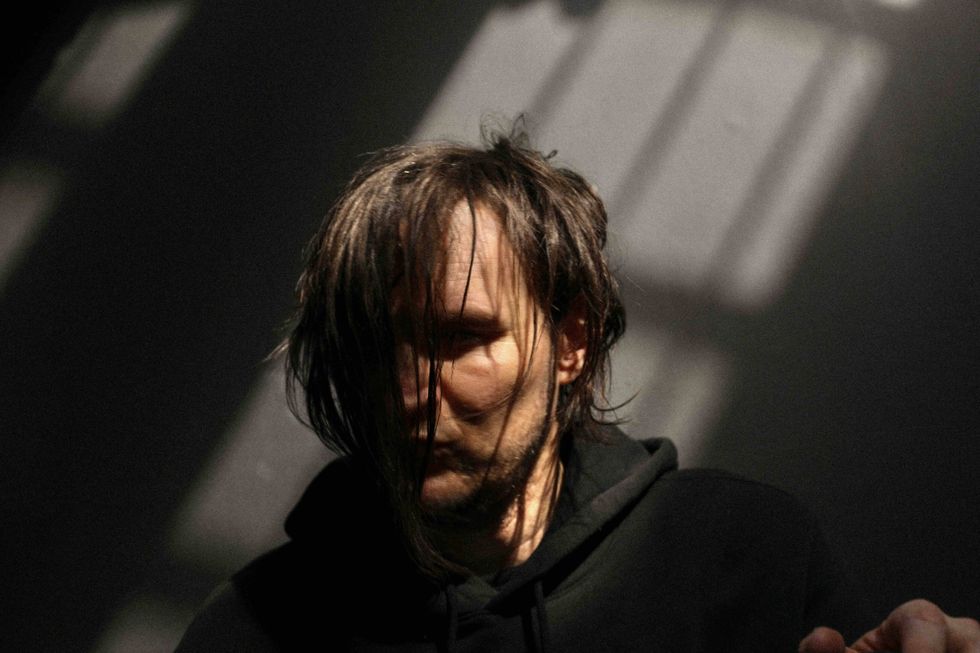
The album’s spare aesthetic came from an unlikely source: Tony Allen. When the Nigerian drummer died in 2020, Klinghoffer posted an Instagram cover of “Poison,” a song by Rocket Juice & the Moon—the trio of Allen, Damon Albarn, and Klinghoffer’s former Chili Peppers bandmate Flea. The response to the sparseness of his version pushed him toward that sound, even if it didn’t fully manifest until A Drop in the Ocean.
“I needed that suggestion,” he says. “I’m always trying to simplify and put less on, and double my voice less. It’s what I’m interested in listening to these days, just smaller stuff, less production.”
“Lots of art gets dumped into the world, and it’s an enormous ocean.”
In 2024, Klinghoffer dipped his toes into producing when he helmed Redd Kross’ first full-length in five years. The well-received effort, which featured Klinghoffer on drums, taught him several lessons that informed A Drop in the Ocean—mainly, getting out of his own head and thinking about what a listener can actually latch onto.
“With Redd Kross, I had an easy job as the producer because they had done all the writing, and I didn’t have to make a single adjustment to the songs,” he says. “For me, it was just a matter of making sure they had the best time and were as satisfied and happy with the result as they could be. When I was doing it for myself, I included things that allowed for most people to connect to it.”

Calling himself “not much of a professional hustler,” Klinghoffer says he enjoyed producing for friends but doesn’t see himself doing it for artists outside his orbit. When Andrew Watt calls, though, he’s always game. Recently, Watt brought him in on new songs for Yungblud and tracks for singer Charlotte Lawrence. Working with Watt, he says, is “always a lesson”—in this case, staying open to new ideas and not clinging to a conviction when it’s clear it isn't moving things forward.
Klinghoffer has no plans to tour in support of A Drop in the Ocean, which he sees as a blessing. He has a few projects on the horizon—a potential follow-up to the Redd Kross album, and music from 2023 and 2024 that he’s finishing with Eric Palmquist—but is otherwise taking things slowly. It’s a career path he keeps in perspective.
“I get to work with people that are, for the most part, really open and supportive,” Klinghoffer says. “I’ve been lucky throughout my whole journey.”
Blackstar’s BEAM just became an even more useful practise tool with this major free update

Blackstar has confirmed their Beam Solo app will receive a huge, free overhaul on iOS and Android. While the update is available on iOS from August 28, Android users will need to wait until September 30 to get their hands on the new tools.
We were hugely impressed with the Beam Mini when we reviewed it earlier this year, and as part of that review we got a sneak peek at how impressive the Moises tech can be. Said tools offer stem separation technology, meaning app users can separate the guitars from the rest of the mix for almost any song streamed or played from your device in real time.
READ MORE: Blackstar Beam Mini review: “a new benchmark for practice amps”
Those using the app can now instantly mute the guitar and isolate the guitar parts for easier fret learning. You can also turn down the vocals and perform the song yourself with this new app update.
All those using the app need to do is connect to your Beam Mini or Beam Solo, start playing their music and adjust the mix with the slider options available in real time.
Several features are included as part of the Mosies Integration update. This includes premium stem separation free for all Beam users, as well as the ability to turn down other instruments and vocals by 25% in order to better hear the guitar part you’re trying to nail.
The really impressive thing is that this is compatible not just with the Beam Mini practise amp, but also with the tiny Beam Solo headphone amp, and the update has already rolled out on iOS devices, with Android following at the end of the month.
Find out more about the new update from Blackstar.
The post Blackstar’s BEAM just became an even more useful practise tool with this major free update appeared first on Guitar.com | All Things Guitar.
Jimmy Page recalls the life-changing guitar gift Jeff Beck gave him: “This is for yours for getting me in the Yardbirds”

Long before he was in Led Zeppelin, Jimmy Page was a young upstart session guitarist in London, mixing with an all-star cast of future guitar legends. And in a new documentary about the Fender Telecaster, Page reveals the time he received an incredible gift from Jeff Beck that would alter his entire guitar trajectory.
- READ MORE: Fender Telecaster: 75 Years Of History
In the Fender-produced documentary, The Fender Telecaster: The One That Started It All, Page reveals that as a very young man making his way in the London session scene, Eric Clapton had recommended Page his guitar replacement in The Yardbirds in 1965, when Slowhand left to join John Mayall’s Bluesbreakers.
Page, who was barely 21 at the time, decided to turn the offer down, instead suggesting his friend at the time, Beck, as an alternative. The rest as they say, is history. The Yardbirds would be transformed with Beck on guitar, pushing them into groundbreaking new musical territory, and enjoying major label success and multiple chart hits over the following year.
The Yardbirds made Beck a star, and he wouldn’t soon forget the part Page had played in his success, and on the back of The Yardbirds signing their major label record deal, he paid his friend a visit.
According to Page, the guitar legend rolled up in a newly bought 1963 Corvette Stingray with the guitar in hand. He recalled: “I was still living with my parents at the time in Epsom. And I heard this car come roaring up.
“I looked out the window and I saw this blue Stingray outside… and Jeff’s coming out and he’s holding this guitar. [I thought] ‘Oh, he’s come to have a play.’
“He knocked on the door and explained that [the Yardbirds] had just done a new deal and he bought the Stingray with it. Then he said, ‘Here, this is yours’ and gave me his 1959 Telecaster. He said, ‘This is yours for getting me in the Yardbirds.’ Well, obviously, I was really moved, you know, because there was a lot of love in that gesture of giving it to me.”
Beck had used the Telecaster in his early days as guitarist in the Deltones – he borrowed it from bandmate John Owen, who soon asked for it back, and Beck moved on to find his legendary 1954 Esquire as his number one. It’s unclear exactly how the guitar ended up back in Beck’s possession full-time, but by the time he joined The Yardbirds it would be a regular backup and alternative to the Esquire.
Before long however, Beck’s guitar preferences evolved and he moved on to his Les Paul, leaving the ’59 Tele in need of a good home, and given how hard it was to get Fender guitars in the UK in the 50s and 60s it was obviously the perfect gift for a young guitar player.
Page would use the guitar throughout his stint in The Yardbirds, before the guitar would have an even more important part to play in the history of rock ‘n’ roll. When Page formed The New Yardbirds with John Paul Jones, John Bonham and Robert Plant in the wake of the original band dissolving in 1968.
By that point, the guitar had changed dramatically from its original form, with Page stripping and painting it with an artwork all of its own. “I painted it in one go over the course of an evening, finishing it the next day,” Page later explained. “The pattern took on the imagery of a dragon. I was quite happy with the way it ended up. Now it was the ‘Dragoncaster.’
The guitar would become a staple of the early recordings of his new band, who quickly changed their name from The New Yardbirds to Led Zeppelin. “I played it on the last Yardbirds recordings at the Anderson Theater in New York and on Led Zeppelin,” Page explains. “Once it was created and painted it became like the legendary Excalibur as it traveled from the Yardbirds to Led Zeppelin.”
And without Beck’s bit of generosity, things could have turned out very differently.
Watch The Fender Telecaster: The One That Started It All now on Fender’s YouTube channel.
The post Jimmy Page recalls the life-changing guitar gift Jeff Beck gave him: “This is for yours for getting me in the Yardbirds” appeared first on Guitar.com | All Things Guitar.
Ask the Expert: Why Do Acoustic Guitar Bodies Taper from Heel to Tail?

Why Eric Clapton never wanted his Unplugged album to be released, and bet his label boss $100 it was going to be a flop

The impact of Eric Clapton‘s Unplugged is hard to overstate. The recording of Slowhand’s legendary MTV set has sold over 25 million copies, and over 30 years after its release in 1992 remains the best-selling live album of all time. Quite asides from the sheer numbers, Unplugged is credited with revitalising mainstream interest in acoustic guitar music, and no less than Chris Martin IV himself once claimed the album “saved the Martin guitar” – and revitalised interest in 000-style instruments. However, the most remarkable thing of all might be that Clapton himself never even wanted to release it.
In a new interview with Guitar Center, Clapton admits that he outright “didn’t want” Unplugged to be released. He was so certain that it would flop that he even bet on its downfall. “There’s 100-dollar bill on the wall of [ex-Warner Brothers president] Lenny Waronker’s office that he won from me, because I said ‘I bet you $100 it won’t even go into the top 50,’” he reveals.
Thankfully, Waronker put his foot down, because he believed that Unplugged had the makings of a “hit album”. Of course, he was right; the former president of Warner Brothers had an ear for a hit. But Clapton had tried his hardest to resist a formal release. “I wanted to do a deal with them… to put it out as a limited edition,” he says. “Just 500 copies or something. I just didn’t want to hear it anymore… I had a real aversion to it for a long time.”
Despite his initial “aversion”, Clapton’s Unplugged has become a key part of his history. “That’s the Clapton that people know,” he admits. “People didn’t really a lot of what I was doing before that – the music was either far too underground or too poppy. I [recently] thought, ‘Okay, I have to listen to [Unplugged] again.’”
When Chris Martin IV’s praise for Clapton’s Unplugged is revealed, Doyle explains that the CEO has crowned Clapton as a saviour of the Martin Guitar. Clapton is unwilling to accept the praise outright, instead focusing on how wild it is to go from admiring Martin guitars through shop windows to having his own signature axes with them.
“When I was a kid… I saw a Martin Dreadnought [in Kingston Market],” he remembers. “There was a crowd gathered round this guitar case, and they opened the lid, and there was a Dreadnought in there… I thought, ‘Wow! One one day, I’m going to have one of those… that’s the most beautiful shape… Picasso could have done that!’”
Now, Clapton’s latest signatures in the Crossroads 2026 Marin Collection will surely be admired by budding guitarists through shop windows. Alongside some John Mayer models, Clapton has the Martin 000-42 EC and Martin 000-13E EC, with both six-string acoustic-electrics wearing Clapton’s favoured 000 shape.
The Crossroads 2026 Collection also recreates Clapton’s Blind Faith Telecaster. With just 130 in existence, the Tele has the unique Frankensteinian mish-mash of a sunburst single-cut body and a Stratocaster neck.
For more information on the Crossroads 2026 Martin Collection, head to Guitar Center.
The post Why Eric Clapton never wanted his Unplugged album to be released, and bet his label boss $100 it was going to be a flop appeared first on Guitar.com | All Things Guitar.
Keeley Releases Tube Drive
Power Amp For Modern Guitar Modellers
World's Largest Library Of Guitar Tone - Free
Win an EHX Pico Atomic Cluster

Electro-Harmonix's newest Pico pedal breaks your signal down to its atomic level: glitchy lo-fi textures, ambient synth pads, and everything in between. We've teamed up with EHX to give one away. Enter below.
EHX Pico Atomic Cluster Giveaway
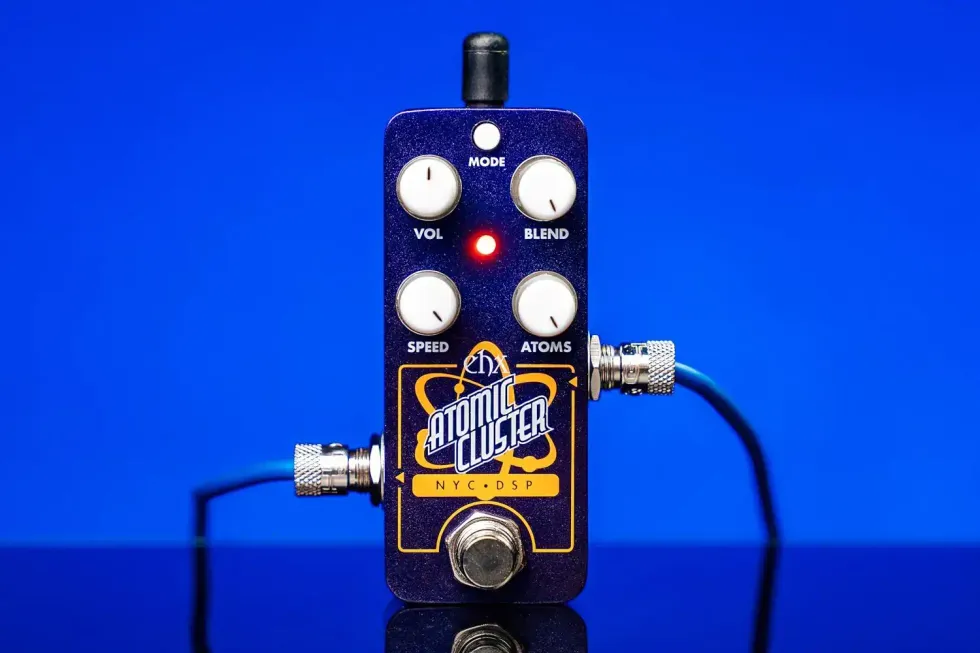
Pico Atomic Cluster
Deconstruct your tone to an atomic level with the Atomic Cluster Spectral Decomposer. Unlike any effect Electro-Harmonix has made before, this compact glitch and synth pedal breaks down your signal and interpolates it into a variety of musical and whimsical sounds. Using a unique algorithm to reduce the frequency resolution of your instrument, it creates a wide range of unique effects from rhythmic lo-fi glitch and auto-arpeggio tones to ambient synth pads and more!
Pages
