
Music is the universal language
“Glory to God in the highest heaven, and on earth peace to those on whom his favor rests.” - Luke 2:14
Norse Guitar Feeds
Fender Custom Shop releases a “painstaking” recreation of George Harrison’s Bass VI

The Fender Custom Shop has launched a limited-edition George Harrison 1967 Bass VI, which it describes as a “painstaking” recreation of the Beatle’s original.
The model has been crafted in Corona, California, capturing the look, feel and character of Harrison’s model, which he acquired in 1967 and used as an integral part of his work with the band at Abbey Road Studios.
This limited model is priced at $9,500.00 (£8,599), is built to the same specifications by the Fender Custom Shop luthiers, and is finished with Relic aging to give it a worn-in look. It has a two-piece select alder body to deliver warmth and a balanced midrange, with a thin nitrocellulose lacquer finish.
The neck is shaped to match the profile of Harrison’s Bass VI, featuring a bound 3A rosewood fingerboard and white pearloid block inlays. The 7.25” radius and 21 vintage frets provide a period-correct playing surface across a 30” scale length. This shorter scale produces lower string tension, lending a “supple, elastic feel that invites both bass lines and guitar-style phrasing”, according to the FCS.
A bone nut ensures “precise” intonation and open-string sustain at the headstock end. As for tone, the instrument comes loaded with three period-correct Custom Shop Hand-Wound Jaguar pickups, and individual on/off slide switches for each pickup so players can sculpt their signal path on the fly.
Another personal touch and nod to the original is on the switch plate, where etchings made by Harrison on his original to note his preferred settings can be found. Other premium features include a 6-saddle vintage-style adjustable bridge with “floating” tremolo tailpiece and Bass VI mute, a 4-ply brown shell pickguard, and vintage-style tuning machines with the Fender logo. A deluxe hardshell case, strap and certificate of authenticity are all included.
“George Harrison’s Bass VI holds a unique place in Fender history. It played a defining role in some of the most influential recordings ever made while showcasing the remarkable versatility of the Bass VI itself,” says Chase Paul, Director of Fender Custom Shop.
“With this Limited Edition release, our Custom Shop team has faithfully recreated George’s original instrument with extraordinary attention to detail, honouring its legacy and giving players and collectors the opportunity to own an extraordinary piece of music history.”
To find out more, visit the Fender Custom Shop.
The post Fender Custom Shop releases a “painstaking” recreation of George Harrison’s Bass VI appeared first on Guitar.com | All Things Guitar.
Watch as UK PM Andy Burnham plays a Smiths song with Ukrainian soldiers in Kyiv: “You can take the man out of Manchester…”

UK prime minister Andy Burnham has made no secret his love of guitar music, proclaiming back in 2022 his love of The Beatles, The Stone Roses, Radiohead and others.
But he’s not just a fan of guitar music; he’s also a longtime guitar player, and has been captured on video on numerous occasions playing both guitar and bass, and showing an affinity for Gretsch and Gibson guitars.
And his guitar skills have been showcased once again during his recent visit to Ukraine’s capital, Kyiv, as the UK pledges its continued support for the country amid its ongoing war with Russia.
- READ MORE: How Taylor Guitars captured a whole new audience by putting the musician at the heart of everything
Burnham – who was mayor of Manchester – joined soldiers in a mobile recording studio, part of Ukraine’s military and artistic unit, which routinely performs on the front lines and in hospitals to boost morale.
Equipped with a silver T-style electric guitar, the British prime minister can be seen in a video posted to his official Instagram page playing a rendition of Rusholme Ruffians by Mancunian legends the Smiths.
The guitar he plays is in fact a hand-built model by Kyiv’s WM Guitars. It also features the emblem of the Ukraine military’s Cultural Forces division. Check out the clip below:
Andy Burnham isn’t the first guitar-toting politician to have flexed his six-string skills in Ukraine since the Russian invasion began in 2022. Back in 2024, then-US Secretary of State Antony Blinken made a surprise visit to the Ukrainian capital after the United States signed a new aid package, during which he performed a cover of Neil Young’s Rockin’ in the Free World.
The post Watch as UK PM Andy Burnham plays a Smiths song with Ukrainian soldiers in Kyiv: “You can take the man out of Manchester…” appeared first on Guitar.com | All Things Guitar.
How Taylor Guitars captured a whole new audience by putting the musician at the heart of everything

Ad feature with Taylor Guitars
Taylor Guitars has always been a brand that listened to the player. But when Andy Powers became Taylor’s Master Guitar Designer over a decade ago, this mindset became even more central, evolving Taylor into something remarkable: a global guitar brand with the mindset of a bespoke luthier. Now a brand new Guitar.com Presents film gets to the heart of what this really means.
In Taylor Guitars: Crafted To Inspire we head to Taylor’s HQ in El Cajon, California, and sit down with both Powers and other members of the Taylor team to explore exactly what it means to bring the in-depth, player-centric mindset of a one-of-one luthier and how that can be scaled up to make better instruments for thousands of guitarists all over the world.
“I’ve never lived in a world where there was a separation between the builder and the player,” Powers explains. “Whether it was building an instrument for myself, or building an instrument for someone that I’m sitting across from, or even building an instrument for somebody who’s half a world away, we speak the same language, and we’re seeking the same kinds of things, which is musical inspiration. ”
This mindset has reached new heights with the Gold Label Collection – a range of radical new guitars launched just last year that showcases the bold and unconventional way that Taylor is responding to the needs of musicians like never before. And the proof of this is not just in the instruments themselves, but the artists who have embraced them already, from signature artists Trey Hensley and Ben Harper, to Nashville musicians who would previously have never picked up a Taylor.

“But I have a lot of long-time traditional guitar player, pre-war guitar players who are knocking down our door to get their hands on one of these,” explains Jay Parkin, Taylor’s director of artist relations and partnerships. “Andy had the foresight to create guitars that sound and look incredibly familiar, yet they have the playability of a modern Taylor, which is like none other.”
But the real magic of Powers’ design genius can be found in the way that the innovations that he uses to make guitars that have a particular sonic and visual style can be redeployed to enhance and evolve other guitars in the Taylor range. This is seen most strikingly in the evolution of Taylor’s classic Grand Auditorium and Grand Concert Next Generation guitars – which utilise many of the innovations found in the Gold Label, but result in a sound that is much more classically Taylor.
“I love that musicians don’t all sound alike,” Powers explains. “We have different interests. We have different influences, different inspirations, and I enjoy that. I don’t want instruments to all be just the same thing.
Watch Taylor Guitars: Crafted To Inspire at the Guitar.com YouTube Channel.
The post How Taylor Guitars captured a whole new audience by putting the musician at the heart of everything appeared first on Guitar.com | All Things Guitar.
MXR Mr. TalkBox Signature Talk Box Brings More Power, More Headroom, More Voice
Byron "Mr. TalkBox" Chambers is a Grammy-recognized artist whose talk box talents have lent unmistakable, expressive power to some of the defining gospel, funk, R&B, and pop records of the modern era. When he wanted a device made specifically to elevate his silky smooth, electro grooves, he came to MXR.
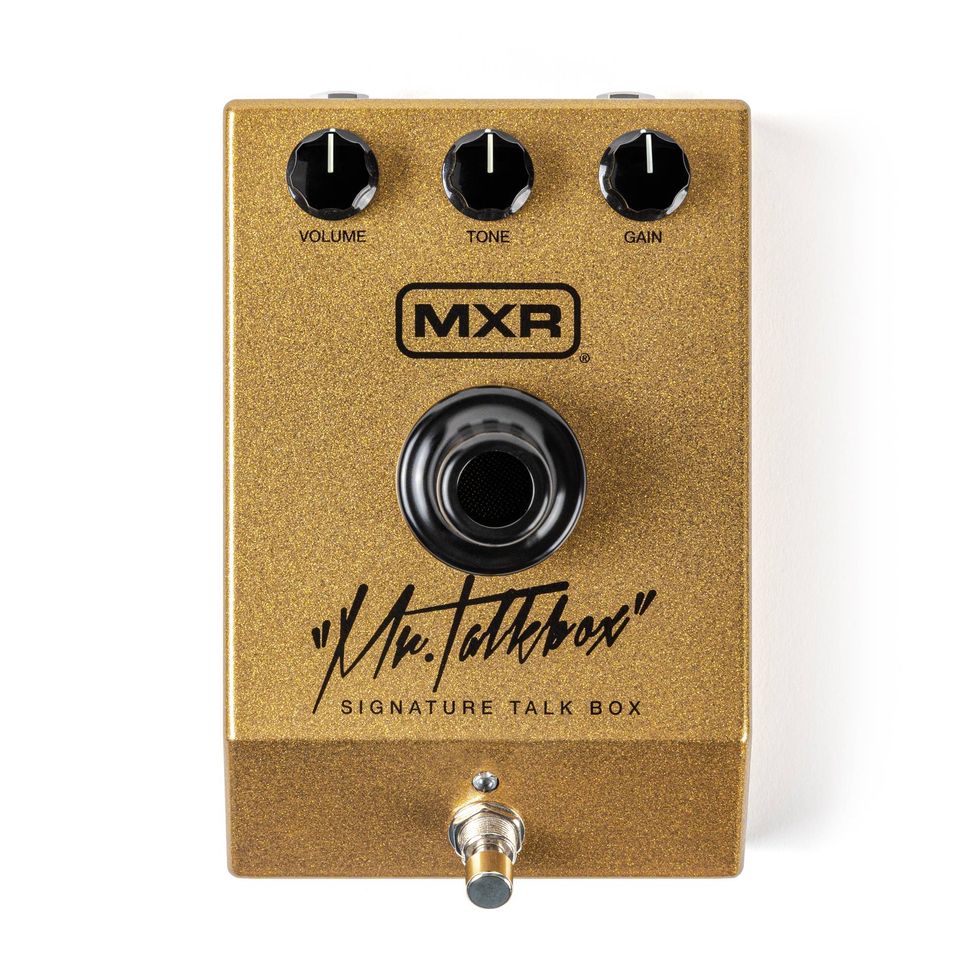
We held nothing back building the MXR Mr. TalkBox Signature Talk Box. You get more power, more headroom, more control over your voice, and better articulation of each sound over a low end that stays thick and full. This is a professional-grade talk box tailor-made for keyboardists and guitarists who want to speak through their instrument, straight from the soul.
“I’ve been using a talk box for 27 years,” Byron says. “I wanted to work with MXR because they know how to do portable and powerful at the same time. Whether I’m playing on stage or doing radio shows and podcasts, I want my setup to be quick, easy, and sound great. This talk box gives me all of that.”
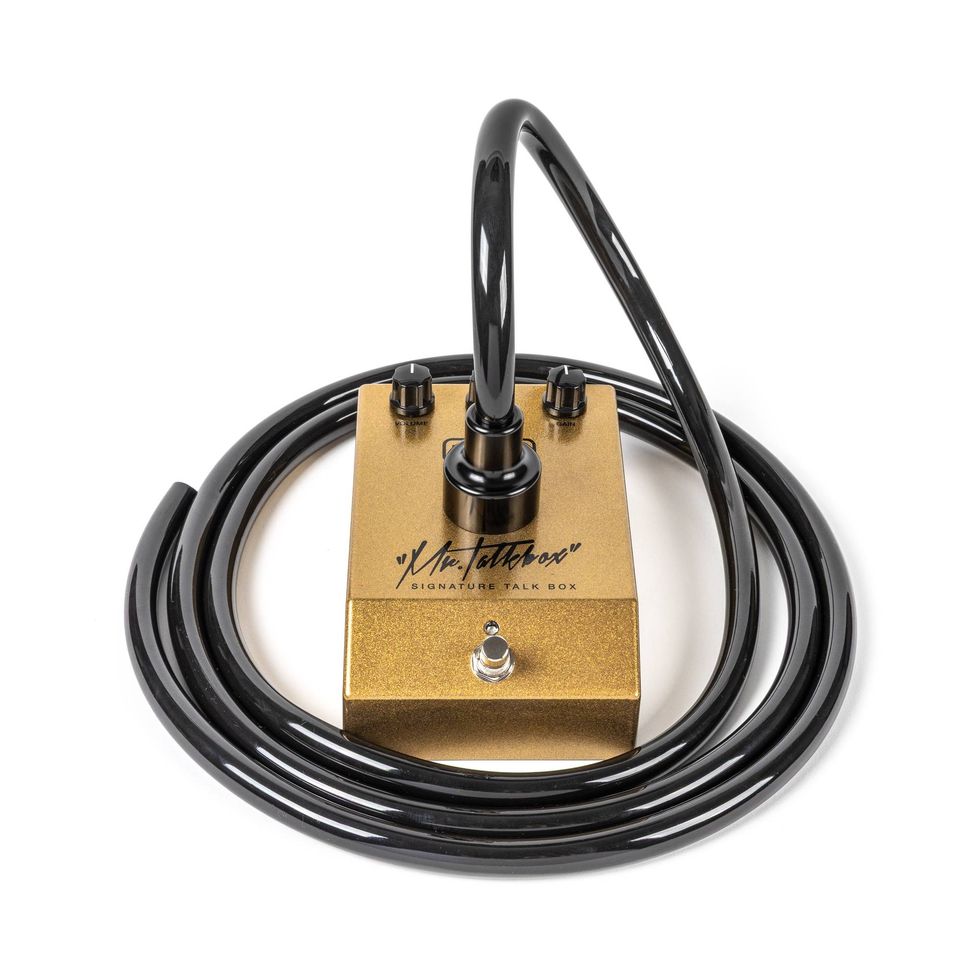
MXR Mr. TalkBox Signature Talk Box highlights:
- Collaboration with Grammy-recognized artist Byron “Mr. TalkBox” Chambers
- Lightweight neodymium driver for more low end without weighing you down
- 25W amp for increased headroom and improved dynamic response
- Volume, Tone, and Gain controls allow you to shape your voice
- Gain bypass switch helps keep hot signals under control
- Fit for desktops and pedalboards with an 18V power supply, 8’ tube, and mic stand clip
Availability
The MXR Mr. TalkBox Signature Talk Box is available now at $449.99 street/$642.84 MSRP from your favorite retailer.
Queens of the Stone Age Detail Ninth Studio Album "Perfecth"
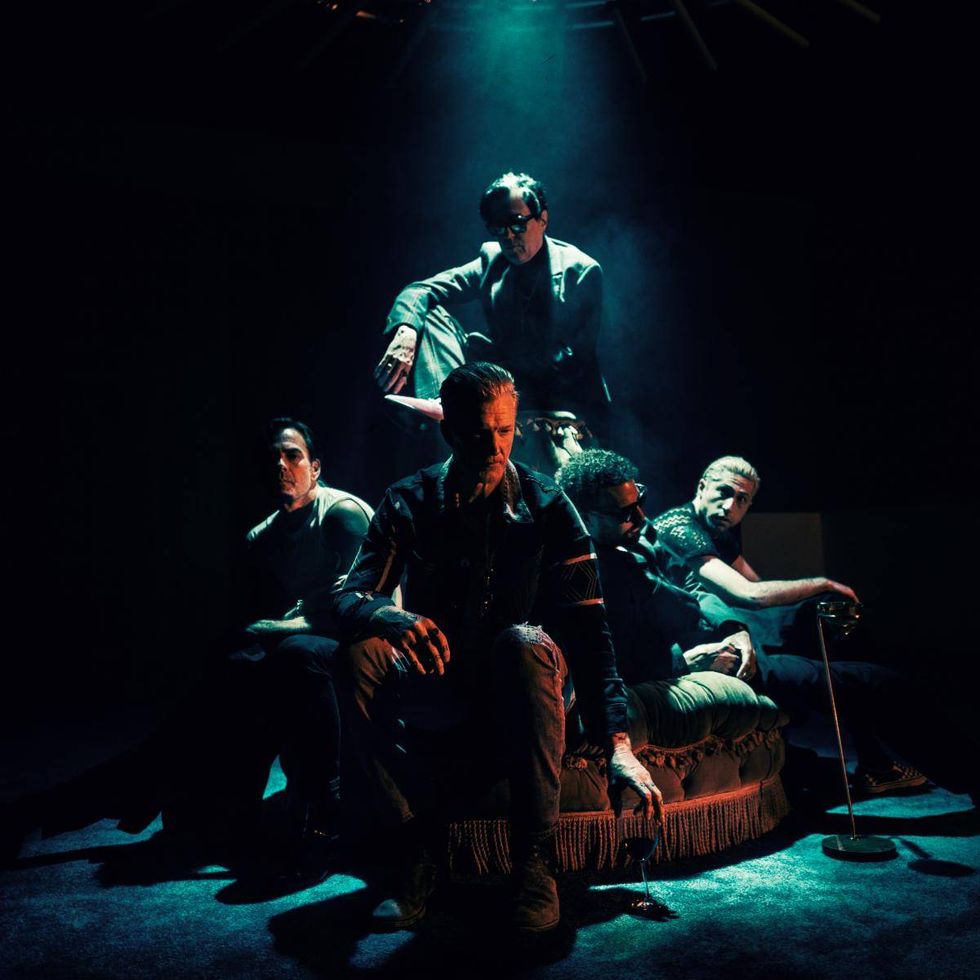
Queens of the Stone Age have always remained enduringly, singularly magnetic. It isn't just their sound. It's their spirit. They are provocative in the most essential sense: unafraid to explore the dark, the sexual, the surreal, the absurd. It's art that snarls and seduces in equal measure, and never more so than on the band’s ninth album, Perfecth, due Oct. 30 from Matador Records.
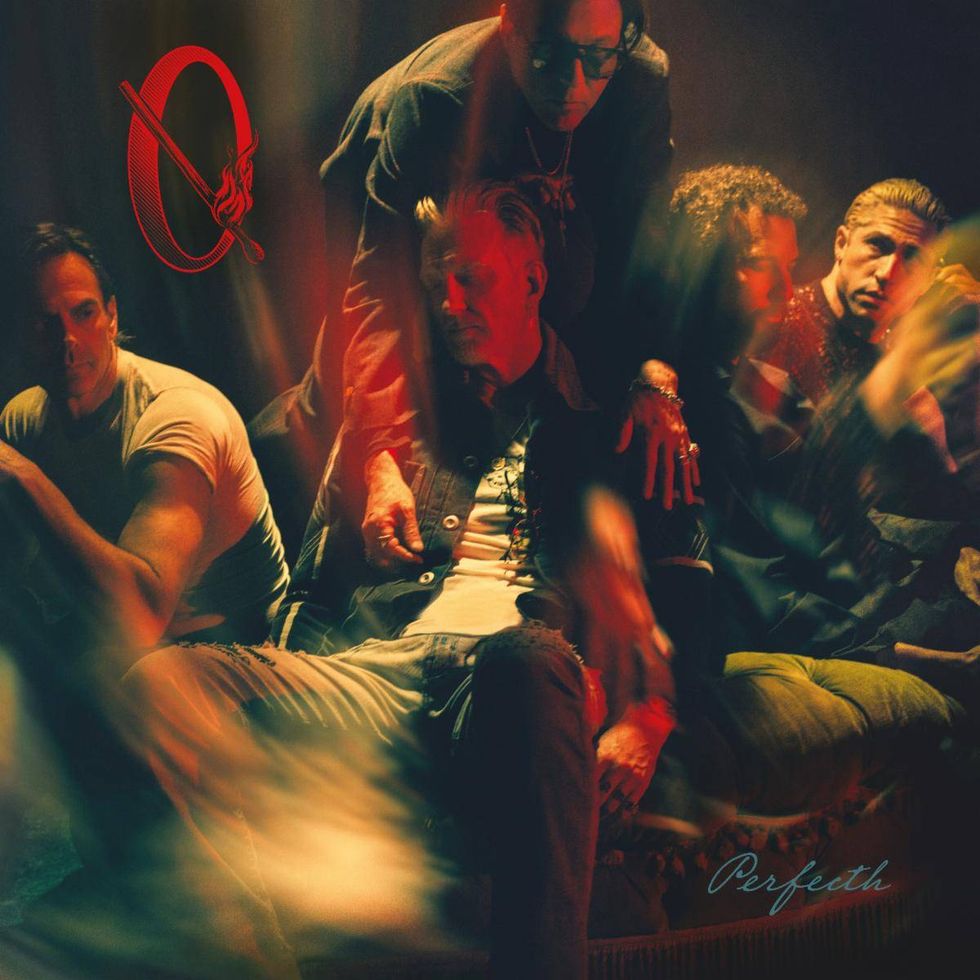
Out today is latest single "Insignificant Other,” which could be considered the album's centerpiece. It's the second of only two takes and captures the quintet playing loose and unguarded and making space for one another on the fly. "It's a song about distance,” says frontman Joshua Homme. “About how someone can be your entire world only to simply vanish. And about the strange vertigo of being on the receiving end of that.”
The album announcement is accompanied by a Chapman Baehler-directed video starring Big Chongus as the embodiment of “perfecth.” Joined by the goodest boys and girls Ruby Homme, Max Homme, Pumpkin Van Leeuwen, Isabella Puppolini (Izzy) Van Leeuwen and Reesa Shuman, watch HERE to find out if Big Chongus finds the perfect home. You can also watch the now infamous Five Finger Filet teaser that announced the date the album would NOT be released HERE .
Produced by Homme and band member Michael Shuman, Perfecth will be available on CD, Standard Black Vinyl everywhere, on Clear Vinyl at Indie Retailers and as a limited Deluxe Edition — a gatefold LP package which includes handwritten lyrics, stationary, ‘stamps’ housed inside a custom envelope as well as a bespoke piece of art temporarily placed in a custom pocket — exclusively on the QOTSA and Matador webstores. Pre-order is available HERE .
Kintsugi — the Japanese art of repairing broken pottery by filling its cracks with gold — holds that what has been shattered is made more beautiful, not less, by the act of repair. This is the spirit in which Perfecth was made. An album that could only have been made right now thanks to Homme, Troy Van Leeuwen, Michael Shuman, Dean Fertita, and Jon Theodore taking significant evolutionary steps as a collective and arriving at hard-won clarity, its nine songs map different forms of love: of family, friends, and others both significant and insignificant. The loves that break you beyond survival and the loves that put you back together.
Birthed from sessions tracked everywhere from New Orleans to Los Angeles, the music is fearless and boundless, moody and menacing, gentle and strange. Here, Queens have moved a career's worth of jagged pieces into alignment. "Every song sounds like it's from a different world," says Homme. "And that's on purpose, because it's trying to stitch together all these emotions revolving around love, lust, foolishness, and the sort of wisdom that comes as a gift from all that."
The record is called Perfecth because "perfect," as a word, has never been honest. It doesn't exist. So, Homme broke the word and made it "perfecth," a more appropriate spelling for a term that never felt right to begin with. "Nothing in this world is perfect, but everything seems to be 'perfecth'," he explains. "And that title is funny when you're in a group, but it ain't so funny when you're alone.”
While fans await the new album, they can air their gripes and grievances, moans and groans, chagrin', carpin', and any judgements they wish to pass via the official Queens of the Stone Age Complaint Hotline at +1 (760) 437-1966. Callers may even find a live ear at the other end of the line.
The Complaint Hotline opened following Queens of the Stone Age’s rapturously received new single “Easy Street (feat. Nikki Lane) .” Debuted live last year during their lauded Catacombs tour and eagerly awaited by fans, it was the band’s first new music since 2023’s In Times New Roman…. Homme also released high-profile collaborations with Shania Twain on her new single “'Faded Blue Jeans” and added guest vocals to Mastodon's latest rocker, “Snakes for Dinner.”
Queens of the Stone Age resume their North American stadium tour with Foo Fighters on Sept. 15 and also recently announced a fall headline run in Australia, New Zealand, Japan and Singapore. 2027 headline shows will be announced in the coming weeks. Sign up at qotsa.com to be the first to receive updates.
Queens of the Stone Age on tour:
09/15 - Regina, SK, CA - Mosaic Stadium^
09/17 - Edmonton, AB - Commonwealth Stadium^
09/20 - Vancouver, BC, CA - BC Place^
09/24 - Louisville, KY, US - Bourbon & Beyond Festival
09/26 - Las Vegas, NV, US - Allegiant Stadium^
10/04 - Sacramento, CA, US - Aftershock Festival
10/24 - Reykjavík, IS - Laugardalshöll
11/25 - Tokyo, JP - Zepp Haneda
11/26 - Nagoya, JP - Zepp Nagoya
11/28 - Osaka, JP - Zepp Namba
12/2 - Singapore - Star Theatre
12/8 - Adelaide, AU - The Drive
12/11 - Hobart, AU - My State Bank Arena
12/13 - Melbourne, AU - Rod Laver Arena
12/15 - Sydney, AU - Qudos Bank Arena
12/16 - Newcastle, AU - Newcastle Entertainment Center
12/18 - Brisbane, AU - Brisbane Entertainment Center
12/20 - Auckland, NZ - Spark Arena
^ w/ Foo Fighters
Perfecth tracklisting:
1.It’s Only Love
2.Insignificant Other
3.Where The Goth Girls At?
4.Mono
5.From The Cliff
6.Sunday
7.Easy Street
8.Phantom Limb
9.Run Away From The Mob
Fender Custom Shop Honors George Harrison with Limited Edition 1967 Bass VI
The Fender Custom Shop (FCS) today unveils the Limited Edition George Harrison 1967 Bass VI, a meticulous recreation of the legendary instrument that became one of George Harrison's most distinctive creative tools during one of the most influential periods of his career. Crafted in Corona, California, the model faithfully captures the look, feel and character of Harrison's original Bass VI, bringing one of music's most iconic instruments to a new generation of players and collectors.
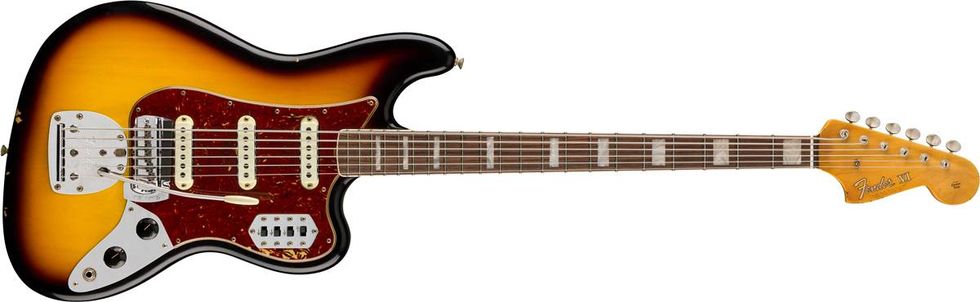
Acquired by Harrison in 1967, his sunburst Bass VI became an integral part of the sound created at Abbey Road Studios, contributing melodic lines and rich textures across some of the most celebrated recordings in popular music. At a time when The Beatles were redefining what was possible in the studio, the Bass VI became another creative tool that helped expand the band's evolving sound.
Occupying a unique space between guitar and bass, the Bass VI gave Harrison another creative voice in the studio. Its distinctive sound allowed him to achieve melody and depth in ways few instruments could, making it ideal for sonic exploration and helping shape the evolving sound of an era. Today, it remains one of Fender's most versatile and inspiring designs.
Harrison's creative influence extended far beyond The Beatles. As a songwriter, solo artist and collaborator - including his work on All Things Must Pass and with The Traveling Wilburys - he continually pushed creative boundaries and inspired generations of musicians through his fearless approach to musical innovation.
"George Harrison's Bass VI holds a unique place in Fender history. It played a defining role in some of the most influential recordings ever made while showcasing the remarkable versatility of the Bass VI itself," said Chase Paul, Director of Fender Custom Shop. “With this Limited Edition release, our Custom Shop team has faithfully recreated George's original instrument with extraordinary attention to detail, honoring its legacy and giving players and collectors the opportunity to own an extraordinary piece of music history."
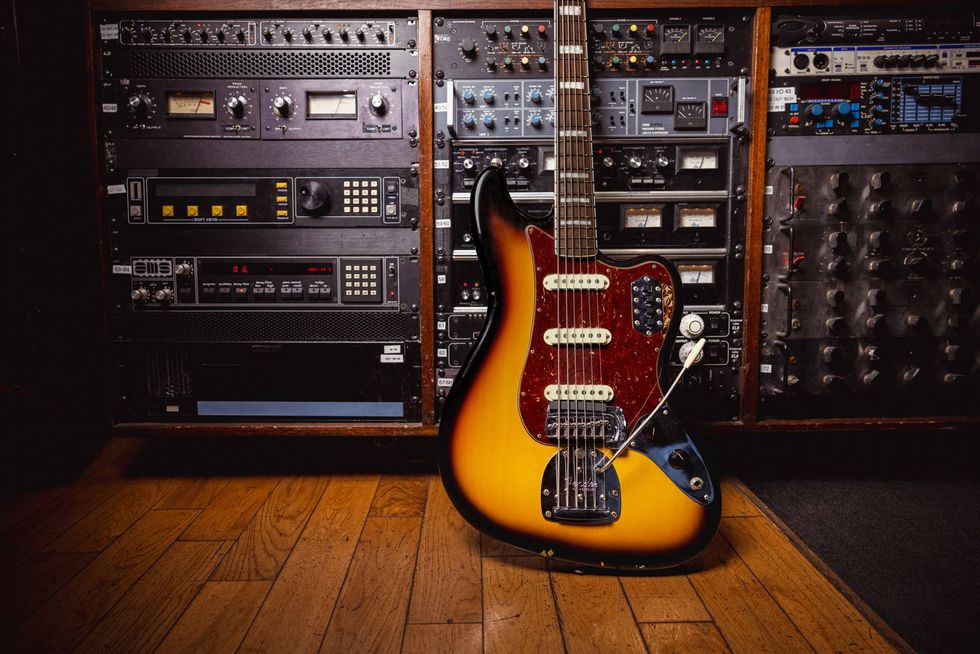
The Limited Edition George Harrison 1967 Bass VI faithfully recreates Harrison's original instrument with remarkable authenticity. Every detail was chosen to faithfully recreate Harrison's original instrument - from the Relic® Bleached 3-Color Sunburst finish and handwritten switch plate markings to the Custom Shop Hand-Wound Jaguar® pickups that capture the Bass VI's distinctive voice. Together, these elements deliver the look, feel and sound that made the instrument such an important part of Harrison's creative process.
Key features include:
- Bleached 3-Color Sunburst Relic® lacquer finish modeled after the original
- Custom neck profile matched to Harrison’s personal Bass VI
- Era-correct bound 3A rosewood fingerboard and block inlays
- Three period-correct Custom Shop Hand-Wound Jaguar® pickups
- Etched control plate markings replicated from Harrison's own instrument
- Full technical specifications are listed below
LIMITED EDITION GEORGE HARRISON 1967 BASS VI (MSRP: $9,500.00 USD, £8,599 GBP, €10,099 EUR, $14,999 AUD, ¥1,650,000 JPY) George Harrison’s sunburst Fender® Bass VI became an essential voice at Abbey Road Studios, providing the melodic counterpoints and textural layers that shaped some of the most admired arrangements in popular music. The Fender Custom Shop Limited Edition George Harrison 1967 Bass VI is a painstaking recreation of that instrument, built to the same specifications by the luthiers in Corona, California, and finished with Relic® aging that channels decades of creative life. The two-piece select alder body delivers resonant warmth and balanced midrange, with a thin nitrocellulose lacquer finish.
The Relic® treatment in Bleached 3-Color Sunburst gives this bass the worn-in look and feel of an instrument that has seen years of regular studio and stage use. The neck is shaped to match the profile of Harrison’s Bass VI, featuring a bound 3A rosewood fingerboard and white pearloid block inlays. The 7.25” radius and 21 vintage frets provide the period-correct playing surface that rewards a lighter touch with expressive dynamics, making chord voicings and melodic runs feel effortless across the 30” scale length. This shorter scale produces inherently lower string tension, lending a supple, elastic feel that invites both bass lines and guitar-style phrasing. A bone nut ensures precise intonation and open-string sustain at the headstock end. Loaded with three period-correct Custom Shop Hand-Wound Jaguar® pickups, the Harrison Bass VI captures the full harmonic spectrum of the instrument’s unique register. These pickups deliver articulate highs that cut through a dense mix, a growling midrange with natural compression, and defined low end that anchors without muddiness. Individual on/off slide switches for each pickup let you sculpt your signal path on the fly, from a single pickup’s vocal clarity to the full trio’s orchestral depth. The switch plate replicates the etchings Harrison made on his original to note his preferred settings. Other premium features include a 6-saddle vintage-style adjustable bridge with “floating” tremolo tailpiece and Bass VI mute, 4-ply brown shell pickguard, vintage-style tuning machines with Fender® logo, American Vintage ’59-’64 string tree, nickel/chrome hardware, and Fender® Bass VI stainless steel strings (.025-.095), deluxe hardshell case, strap and certificate of authenticity.
Phil Collen says Mutt Lange is “the best producer in the world” – this is how he helped Def Leppard rise to success

Def Leppard guitarist Phil Collen says producer Robert ‘Mutt’ Lange was “about 99 percent” responsible for the band’s success in the 1980s.
Lange has produced huge hit records for a large number of successful artists, with a pivotal example being AC/DC and their Highway To Hell album, but also for artists like Shania Twain, Bryan Adams, Muse, Britney Spears and Lady Gaga.
Lange worked with Def Leppard on their 1981 album High ‘N’ Dry, 1983’s Pyromania, and their fourth studio album, 1987’s Hysteria. In an interview with Meltdown of WRIF radio station, Collen is asked just how much Lange impacted their triumph back then.
“Probably about 99 percent. [He taught us] everything,” Collen says (via Blabbermouth). “He taught us how to sing, he taught us how to play guitar. He sings on every song we’ve ever done [with him]. He does backing vocals. He’s got the best singing voice out of all of us put together. And he sings on everything he does.
“I mean, I even hear him on Highway to Hell. His backing vocals are on that, and all the Bryan Adams stuff, Shania Twain stuff. Obviously, all of our stuff. And, yeah, you hear him on Foreigner, I think on The Cars. He’s got a great voice. It’s just amazing.”
Collen goes on to explain, “[Mutt did] everything. He’s the best producer in the world, [and a] songwriter as well. You’d come to him and you go, ‘I’ve got this chorus.’ He’d go, ‘Okay, well, that’s not strong enough for a chorus. We could use that for a middle eight or a bridge or something like that, but we need a stronger chorus.’ And he’d come and he’d write with us as well. So that was a great thing.”
Looking back on the making of Hysteria, Collen shares how Lange came up with the main hook of Pour Some Sugar On Me: “We’d got 11 songs, and [Mutt] heard Joe [Elliot] play an acoustic, and he’s like, ‘What’s that?’ [Joe] goes, ‘I don’t know.’ He [starts going], ‘Pour some sugar on me…’
“We went in, took about 10 days to do that song. We stopped everything, and Mutt just kind of orchestrated the whole thing. So he was very active in everything we did. And most of the bands that he worked with, he did that kind of thing with everyone.”
Watch the full interview below:
The post Phil Collen says Mutt Lange is “the best producer in the world” – this is how he helped Def Leppard rise to success appeared first on Guitar.com | All Things Guitar.
Wolfgang Van Halen claps back at old comment saying he’d be playing his father’s music by now: “Don’t ever let anyone tell you what you’re capable of”

Wolfgang Van Halen has responded to an old hate comment he received in 2021, in which someone suggested he would be playing his father’s music by now.
In a gloriously petty post, the Mammoth frontman reflects on his success over the past half a decade, and has quoted the words of his own father, Eddie Van Halen, about the importance of playing your own music.
On Instagram he shares a screenshot of the comment, along with the caption: “August 24 2021. The first Mammoth record just came out, we had just started touring, when this kind fella (along with many MANY others) said this. I jokingly responded, threw it in my calendar and forgot about it. Today is that day.
“Five years later. What a trip. And yeah, this guy is a dickhead, but I just wanted to say thanks for listening and sticking with me. I’m very proud of what we’ve built here and I intend to keep going until the wheels fall off.”
He adds, “I never planned on playing VH in any capacity when it came to Mammoth, and five years later I feel exactly the same. As my dad once said, ‘I’d rather bomb on my own than succeed with someone else’s music.’ Don’t ever let anyone tell you what you’re capable of. That’s for you to decide.”
Wolfgang has of course received a lot of support in the comments, notably from Phil Demmel who writes, “Receipts kept!” and Nita Strauss, who says: “Big fan of a spite calendar reminder.”
Check out the full post below
Wolfgang has always been clear about his decision to not play any Van Halen material at his shows. Just a couple of months ago he said during an interview with 105.7 The Point, “If anybody’s been really paying attention, they know that I wouldn’t do anything like entertaining to play a Van Halen song,” he says. “I’ve been very forthright about not wanting to play Van Halen songs.
“I’d rather bomb playing my own stuff than succeed by shacking up in my dad’s legacy and playing Panama every day. It’s just not what I’m interested in doing. I like to have a little bit more artistic and personal integrity than that.”
Find out where you can catch Wolfgang Van Halen live on tour via the Mammoth website.
The post Wolfgang Van Halen claps back at old comment saying he’d be playing his father’s music by now: “Don’t ever let anyone tell you what you’re capable of” appeared first on Guitar.com | All Things Guitar.
Marshall celebrates 60 years since Jimi Hendrix first plugged into a Super 100 with a stunning purple-on-black JMH studio amp

Back in 1966, Jimi Hendrix – arguably the greatest guitarist who has ever lived – plugged into a Marshall Super 100 for the first time. It began his love affair with the legendary British amp maker, with whom he became synonymous during the later years of his career.
Marshall amplifiers powered many of Hendrix’s most iconic performances, including his landmark closing set at Woodstock 1969, and his show at Monterey Pop Festival in 1967, when he famously set his Fender Stratocaster on fire.
It’s only right, then, that 60 years after that first spark, Marshall should do something big to celebrate.
In fact, Marshall has been celebrating 60 years since it collided with one of the world’s greatest players for much of 2026 already. In May, the firm unveiled a collection of cosmic-inspired purple-and-black guitar gear, including a 1959 JMH Half Stack based on Jimi’s rig, a reskinned Acton III Bluetooth speaker and a limited-edition Fuzz Face pedal.
Now, the company has expanded its Hendrix 60th Anniversary collection with a new pair of headphones, a Bluetooth speaker, and another amplifier. Each sports the same purple oil-on-water design as previous items in the 60th Anniversary collection.
First up is a new pair of over-ear Major V headphones, boasting a rugged, foldable design, and purple-and-black colour scheme that extends throughout the inner headband and ear cups, and a battery that lets fans “listen to days of Hendrix tracks on a single charge”.
Next is a limited-edition Emberton III Bluetooth speaker, with a silver all-seeing eye motif, purple LEDs, and a silicone sleeve that’s been hand-dipped using a water transfer print, making each piece unique. A full day of listening is offered on a single charge.
 Credit: Marshall
But the pièce de résistance of the collection is a stunning new portable JMH Studio amplifier, which reimagines the design of the classic Studio Vintage amp.
Produced at Marshall’s factory in Bletchley, UK, the Hendrix 60th Anniversary JMH Studio is built using quality plywood wrapped in black Tolex, the same black-and-purple psychedelic pattern, a purple LED indicator, silver beading woven throughout and an all-seeing eye badge, which pays homage to Hendrix’s fascination with the “third eye and expanded vision”.
“The story of Jimi and Marshall has always been personal to me because I first heard it from my dad, Al Hendrix,” says Jimi’s sister, Janie Hendrix. “Dad was there and shared those memories with me, so I carry that story only one degree from its source.
“Jimi was always searching for a sound that did not yet exist, pushing beyond what anyone thought an electric guitar could do. Marshall gave him the power and freedom to turn those bold ideas into a sound the world had never heard before. Sixty years later, that connection between Jimi and Marshall still speaks to new generations of musicians who are pushing creative boundaries and searching for their own sound.”
Pricing & availability
The Hendrix 60th Anniversary Major V headphones and Emberton III Bluetooth speaker are available now direct from Marshall, priced at £129.99 and £149.99, respectively. They’ll also be available at selected retailers from 9 September. Meanwhile, the JMH Studio Edition Bundle will be available from 9 September from Marshall.com and selected retailers, priced at £1,749.99.
Learn more at Marshall.
The post Marshall celebrates 60 years since Jimi Hendrix first plugged into a Super 100 with a stunning purple-on-black JMH studio amp appeared first on Guitar.com | All Things Guitar.
The magic of partscasters – build your perfect guitar yourself

Ad feature with StewMac
We all know the myth of the ‘endgame guitar’ – it’s rare that one single instrument is the final piece of the puzzle for your rig. But there’s a good chance you’ve got some idea of what your perfect guitar might be, and there’s an equally good chance this perfect guitar isn’t just hanging on the wall of a guitar shop. Maybe it has some wild arrangement of specs and features that you’ve been hunting down for years – maybe it’s a more standard guitar with your own stamp on it. In any case, let’s explore how you can follow in the footsteps of Eddie Van Halen and Tom Morello and assemble that perfect guitar from parts.
Parts unknown
The two most important parts of a part guitar are, of course, the body and the neck. Making sure you’ve got a good match between the two, and the right sort of body for the kind of instrument you want to make, is crucial. There are a lot of options out there, either via the custom body route or official Fender parts – you could even salvage a body or neck from an existing instrument.
The most important thing a body defines is what kind of bridge you work with in the end. Broadly speaking each kind of bridge commonly found on Fender-style instruments presents a different level of challenge when it comes to getting assembly right. The least confounding is the straightforward hardtail setup – this includes Telecaster-style bodies with a full bridge plate, and bodies designed for shorter hardtail bridges, like the Telecaster Deluxe or Hardtail Stratocaster bodies. You can also find custom bodies in all sorts of shapes that accommodate various styles of hardtail bridges.
You then have the Stratocaster-style block vibrato – this requires a bit of finesse, but as long as the body you find has high-quality mounting holes already drilled (or you have a steady drilling hand), it’s not that bad. After this is the offset-style vibrato found on Jazzmasters and Jaguars, which requires a good deal of accuracy to get a well-performing string path, and of course is infamously fiddly even once it is assembled.
 The blank neck for the project.
Today I’m working with a Telecaster-style body and a Fender neck, both relic’d. The Tele platform is, as I mentioned, relatively straightforward, but it’s not without its own challenges – regardless, it’s a good place for a beginner to start thanks to the lack of a vibrato with moving parts and extra things to align.
Start with the Finish
 The body in question – without any shielding, electronics or hardware.
If it’s your first time assembling a parts guitar, then it’s probably a good idea to get a body and a neck that are already finished. The art of finishing is by no means inaccessible, but it can be a big hurdle for first-timers – there’s a lot that can go wrong, and depending on what kind of finish you opt for, the process itself can require a lot of practice and patience.
Getting pre-finished parts takes that worry out of the equation, but if you are keen to give it a go, StewMac has some excellent in-depth guides and info on the various finishing processes you can apply to get the right look for your guitar – just remember, don’t ever rush it!
Pickup some ideas
What kind of body you choose will define what kind of pickups you can go for – some bodies are more flexible than others, with swimming-pool routes that allow for any and all pickups, while some – like the more traditional Tele-style body we have today – won’t take non-standard pickups without serious modifications.
To help make the decision, it’s good to work backwards from the kinds of sounds that you want your perfect guitar to be capable of – do you want vintage PAFs? Full-throated Wide Range humbucker tones? Spanky single-coils? Thanks to the very wide world of aftermarket pickups, there are options that incorporate a wide range of sounds into all sorts and sizes of pickups. Getting a Tele doesn’t chain you to single-coils, for instance, as there are single-coil-sized humbuckers designed specifically for them.
If you need some inspiration, StewMac has a huge stock of various pickups, ranging from lovingly recreated PAF-style humbuckers to active EMGs, from vintage Tele single-coils to powerful blade pickups. For our purposes today we’re sticking with StewMac’s own vintage-style Tele single-coils.
Shields up
 The same body, shielded with copper tape. All of the separate cavities shielding parts have been joined with a wire or a strip of shielding tape.
If you’re keen to cut down on hum, you’ll want to shield the body cavities with conductive tape or paint. When the shielding is connected to ground, it works as a faraday cage, protecting the signal-generating parts of the guitar from external noise.
I opt for conductive tape. The Tele body in particular presents the fun challenge of getting all of the different cavities connected, and for that I use either a strip of tape between the two cavities that are hidden by the pickguard, and a jumper wire to connect these to the control cavity. Similarly the bridge plate is connected to the electronics’ ground via a stripped wire, sandwiched between it and the body.
Check the fit
Of course pickups are often fitted into pickguards, and one thing you quickly learn when assembling a parts guitar is that eventually, something just won’t fit, especially if you’re using a smorgasbord of parts from different brands.
Doing a dry fit is always a good idea, even if your body already has pickguard screw holes. If it doesn’t, it’s good to position the guard with everything installed before marking and drilling, just so you know that it’ll be properly aligned without any components crashing into cavity walls and so on. You may find you need to plug existing pickguard screw holes and re-drill them, or shave off a millimetre of pickguard to let a pickup through – just be careful, go slowly, and remember the age-old adage: measure twice, cut once.
And talking of things fitting – you’ll want to check that your neck is the right kind. If you’re building a Telecaster-style guitar, a traditional Tele pocket is designed for a square heel. Hence a Telecaster-style neck will fit in a Strat-style pocket (with a little gap), whereas a Strat-style neck’s rounded heel means it won’t fit in a Tele-style pocket!
 The neck, ready for mounting holes to be drilled. I’m using a cardboard caul to ensure the frets aren’t damaged by the pressing motion, and a concave curved piece of wood to keep the neck itself as vertical as possible.
The neck I’m using today also doesn’t have any mounting holes. And so I get the bridge installed, loosely string up an outer E to ensure alignment, and then clamp it in place, using a cardboard caul. Once I know the neck is aligned properly I mark the positions for the screw holes with the sharp end of a brad-point bit, and unclamp it all so I can drill them straight and true with a press – you’ll want to use a bit that’s the same diameter or very slightly larger than the shank of the neck pocket screw you’re using.
For more on what fit and alignment issues you might run into, check out StewMac’s full guide to assembling a parts guitar here. In fact, little like the measure twice, cut once adage, there’s not really too much reading you can do before embarking on a project like this!
Hardware and electronics
The body and neck we’re using today are relic’d, and so to complete the look of an aged guitar we can grab some aged hardware to match. StewMac has a veritable treasure-trove of ready-aged hardware, including a lovely Gotoh bridge that has a super vibey vintage aesthetic but also compensated saddles to keep things in tune. The Kluson tuners are an easy fit and also come pre-aged, so they don’t stick out like a sore thumb next to the aged Fender logo!
Of course, you may not like the relic vibe, or want to add a bit of modern panache to proceedings – that’s fine too, as of course this is your guitar that you’re making! There are lots of different modern options, each of which is suited for different aesthetic tastes and playstyles.
 The guitar’s control plate, all wired up. Here the pickguard screws are yet to be drilled, as I want to ensure the pickguard will key against the completed control plate before I commit to a location for it.
Once everything else is ready, I assemble the guitar’s electronics on the control plate – once it’s all wired up I give it the old screwdriver tap test to check that the switch and controls work. All this involves is plugging in and tapping the pickups with something metal, just to establish that the guitar makes the right signals in different switch positions, and the controls actually function – it’s good to check this before you get everything strung up and ready to go.
All together now
So that’s it all assembled – there are, as with all things guitar, a lot of improvements you can make to a simple parts instrument – once it’s working and making sound, there’ll be a long process of dialling in the action, neck relief, pickup height and so on to get it playing its best. It’s rarely a case of just bolting a body onto a neck and calling it a day, but the process is absolutely not beyond the average enthusiastic guitar-modder! Building a parts guitar is a great way of getting an instrument with your stamp on it, and when playing it you’ll feel even more connected to it knowing it was your handiwork that brought it into being.
For more on assembling parts guitars, check out StewMac’s full guide here.
The post The magic of partscasters – build your perfect guitar yourself appeared first on Guitar.com | All Things Guitar.
“Right away, your brain goes into survival mode” how having all his gear stolen led to Russian Circles’ Mike Sullivan reinventing his approach to guitar

Two Les Paul Customs, three cabinets, 12 pedals, 13 microphones and a bicycle. When Russian Circles opened their U-haul truck outside of a California hotel in 2021, they found that all these things and more had been stolen from them overnight. As if that weren’t calamitous enough, they were about to start the biggest tour of their lives, supporting System of a Down and Korn in stadiums, and were 2,100 miles away from their then-base of Chicago. The only thing that could have been worse was if someone had died.
“It was an ‘Oh, shit’ moment, obviously,” remembers guitarist Mike Sullivan, talking to me from his home in Los Angeles. “Right away, your brain goes into survival mode. We’re in fucking Bumblefuck, California! Who do we know around here? How do we get their gear? How do we reach out to these people? Despite being on a huge tour at the time, there weren’t many people looking to help us out in that world.”
The instru-metal trio took whatever they could to carry on. Chelsea Wolfe lent Sullivan her Dunable Gnarwahl guitar. Hiwatt, a company they’d never worked with before, let them borrow some amps. They overcame – playing the shows, crowd-sourcing $60,000 (£45,000) and getting some of their stuff back in 2024 – but the incident reinvented Sullivan’s rig. Five years later, Dunable and Hiwatt are his go-to manufacturers.
“I was desperate for anything that sounded like a Les Paul. Anything with humbuckers and a glued neck would have sufficed,” he recalls. “But the Gnarwahl was such a cool-looking instrument, which sounded and felt great, and I was hooked on it. It’s a fun guitar to play. You don’t feel weighed down: it’s so ergonomic for tapping.
“I was blown away by how good the Hiwatt sounded,” he adds. “It took pedals so well. All these pedals that I thought I needed no matter what, I started tossing them out of the pedal chain. Less is more. When your blueprint tone, your foundation, is that fucking good, then you don’t need as much garbage to polish the turd.”
 Image: Press
Cutting The Chaff
Hearing Sullivan talk about discarding pedals is like hearing Father Christmas talk about laying off elves. Since he co-founded Russian Circles in 2004, the guitarist’s penchant for pedals has become a cornerstone of the band’s identity. Many of their songs are centred around his loops, which help the three-man lineup, completed by drummer Dave Turncrantz and bassist Brian Cook, build bulletproof walls of noise.
Their approach is so ear-grabbingly loud, and Sullivan’s playing so immediately melodic, that they’ve transcended the insular post-rock scene which ensnares most modern instrumental rockers. As well as Korn and System of a Down, they’ve toured with Tool and Mastodon. Gojira’s Christian Andreu sports their merch onstage, ex-Killswitch Engage singer Howard Jones has touted them in interviews and Converge guitarist Kurt Ballou produced their four latest albums, including their brand-new ninth, aptly titled Nine. The soft-spoken Sullivan almost sounds uncomfortable with the elite company.
“After doing the System of a Down/Korn tour, I’ve never been more proud to be part of the underground,” he says. “Some of the stories are jaw-dropping. I have a lot of good things to say about Korn. System of a Down? Next question.”
Certain fans have talked about Nine as if it’s Russian Circle’s mainstream moment, pointing out the increased synths and electronics on the single Eluvial. But Sullivan only leaned further into his underground proclivities, such as on the punishing Empath and Seventh Seal. After being inspired by metal bands Pantera and At the Gates for 2022’s Gnosis, he went even deeper, turning to cult UK death metal luminaries Bolt Thrower.
“Death metal tremolo picking can be very vocal,” he explains. “It’s very minimal as far as melody. It’s a hummable, simple melody. It’s similar to black metal, where you can hold the chord shape and keep different voice lines interweaving in a cool way. You can rub an open string against a fretted string and create tension, a breathing pulse to the melodies.”
Unconventional Sources
Sullivan’s a metalhead at heart: he has a vinyl copy of Sabbath Bloody Sabbath on the table next to him and a 1981 Dean ML on his wall, in tribute to Dimebag Darrell. To understand the essence of his guitar playing, though, you need to know about obscure math-rockers Don Caballero. Like Russian Circles, they were an instrumental three-piece whose guitarist, Ian Williams, used tapping and loops. Sullivan saw them in Chicago after moving there to study and was floored.
“I came from the world of [punk legends] Fugazi, where many people were like, ‘Pedals? We don’t need pedals! Do it with your fingers!’” he says. “So the first pedal I ever had that I used in a band was a looper, and then a friend showed me, ‘Hey, you ever mess with a delay pedal?’ I’m like, ‘Not really. Let me try it out. Oh, this is fucking awesome! Alright, what does a tremolo pedal do? Oh, reverb’s great! Oh, the volume pedal!’”
He admits that his approach to distortion is pedal-first, “not out of preference, but utility”: “If I had my way, I’d probably draw upon a distorted amp channel and then boost it if need be. But I switch between gain stages so much. I want the decay of delay to bleed through. If I change channels on-amp from clean to dirty, the delay trails will be bumped up to a distorted signal, and I don’t want that. I want the delay to be after distortion, always.”
Seeing What’s Important
By the 2021 robbery, his fixation had become a bit much. “I had a bunch of tone sweeteners, like Klon clones and shit, and EQ sculpting devices that I just didn’t need,” he laughs. “Too many things were taking up space and compromising the tone.”
But Sullivan’s setup has always revolved around the looper. Be it a Les Paul or a Gnarwahl, he uses instruments with humbucker pickups so he’s not stacking layer upon layer of feedback. The Hiwatt amps have plenty of headroom so the loops don’t “collapse”. Unfortunately, other drawbacks can’t be circumvented. Mistimed loops force drummer Turncrantz to adjust or improvise.
“It’s all on me if it fucks up,” the guitarist admits. “It’s more about, do I know how to cheat to get the loop or the phrase sampled? If a loop’s awful, I’ll find a way to bury it and do some work-around.”
While making Nine, Sullivan was in his element. He recorded guitars at Ballou’s own studio God City in Salem, Massachusetts, where he experimented with so many models and bits of gear that he can’t remember what was used where. What he can say for certain is that he wrote some of the album with his favourite guitar, the 1985 Les Paul Custom that was stolen in 2021 then returned to him.
“All Les Pauls are a little bit different, and that one looks like it saw action in the Civil War,” he grins. “It’s falling apart, there are stress cracks everywhere, but it’s the most resonant guitar I’ve ever played. It just shakes for you and you can really feel it respond.”
He also dabbled in a variety of tunings. “I’ve always hovered around DADGAD tunings or that relative setup. The lowest [on this album] is DADGAD but tuned down to A. Other ones are that same shape of DADGAD but in B.”
Get Low
Across Russian Circles’ career, as the guitar influences have grown heavier, the tunings have got lower. Although Sullivan’s always imbued his riffs with a Sabbath-esque sludge, the early albums were much higher, in D or C-sharp. It’s a bit of a pickle for a man who tells me “I don’t like changing guitars during a set”.
“There’s enough changing pedals and settings, so to change guitars and all that takes so much time, and I end up getting gum in my hair or something like that while I’m doing it,” he elaborates. “It’s a fucking trainwreck.”
Then why do you use so many different guitars and tunings in the studio?!
“Oh, I fuck myself over at every opportunity. If you only knew. If there’s a fork in the road, I seem to always take the more difficult route.”
He may self-deprecate, but the more difficult route clearly pays off. You don’t get to support Korn and System of a Down by not knowing what you’re doing. As our conversation turns towards the future, Sullivan tips his hat to Mastodon for gradually getting bigger without compromising their musical vision. Given he’s still attached to his extreme metal and math-rock touchstones, even after getting a taste of stadiums, surely he wants the same thing?
“If it happens, that’d be awesome, and I’d be happy to go that course our own way,” he answers. “But we’re proud to be on an independent label. I’ve had endorsees turn me down because we’re not on late-night talk shows and tell me I’m ‘not pushing the brand hard enough’. We’re not going to be on a late-night talk show, and if we are, I don’t want that to matter if I get an endorsement or not. I’m fortunate that I have the ability to play, I get to play and people care enough to hear our records. That’s a good spot to be in.”
Nine is out on 28 August via Sargent House.
The post “Right away, your brain goes into survival mode” how having all his gear stolen led to Russian Circles’ Mike Sullivan reinventing his approach to guitar appeared first on Guitar.com | All Things Guitar.
DOWN To Release "Volume V" Full-Length November 20th
American heavy metal icons DOWN will unleash their long-awaited new studio album, Volume V, on November 20th via Nuclear Blast Records!
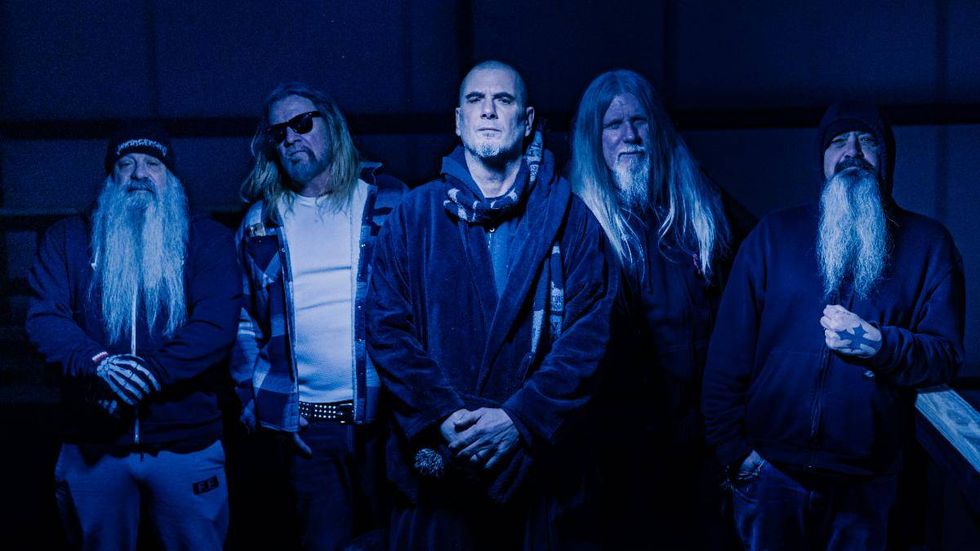
American heavy metal icons DOWN will unleash their long-awaited new studio album, Volume V, on November 20th via Nuclear Blast Records!
DOWN was never just a band. It’s a brotherhood rooted in childhood friendships that have endured for decades. It’s an homage to the city of New Orleans, Louisiana. It’s music meant for anybody who has ever headbanged, played air guitar, or worn a weathered tour t-shirt like armor. For over three decades, the quintet – Philip H. Anselmo, Pepper Keenan, Kirk Windstein, Jimmy Bower, and Pat Bruders – have quietly built a legacy like no other. When these individuals congregate, magic ensues, conjured by earthquaking grooves, bellowing straight from the soul, and riffing loud enough to awaken an ancient deity.

This Fall, DOWN begins another chapter with Volume V.
“We were all excited about this,” smiles Anselmo. “There was a sense of lightness in the air. Everyone’s attitude was positive. There was more focus than ever. It just felt fresh again. Each one of us was individually striving for something, and I believe we achieved what we wanted to achieve. The record is a journey. It’s classic DOWN, but it’s also unique.”
“Everybody played their asses off, wrote great riffs, and Philip is singing amazing,” adds Windstein. “There’s so much electricity when we get together. To me, it’s the same vibe as our debut NOLA, but we’ve got another 35 years of experience as songwriters.”
“The five of us are from the same era, grew up together, and accomplished a lot on our own,” Keenan observes. “We all sounded different, but we’re still from the same 20-block radius. As far as what makes DOWN special, we knew one another before any of us had done anything. There’s history.”
DOWN’s bond runs deep. The guys initially crossed paths as teens in various local bands throughout New Orleans. Over the years, each musician went off and made a name for himself with Anselmo notably fronting Pantera, Keenan holding down guitar and vocals for Corrosion Of Conformity, Windstein leading Crowbar, and Bower slinging guitar in Eyehategod.
Two writing sessions yielded the bulk of material on Volume V. Upholding a tradition dating back to Down II, the members retreated to Anselmo’s home studio and their de facto clubhouse, Nodferatu’s Lair. Songs originated on the spot as they jammed face-to-face. Throughout 2025, the music naturally took shape. Keenan and Windstein chose to simultaneously record guitar together, giving the album a timeless punch.
The album opens with a blistering barnburner “The Myth.” It sets the tone with a powerhouse vocal, pummeling rhythms, and precise down-picking. Then, there’s “Merciful Fate” featuring King Diamond. It reaches an apex with a vocal duel between Anselmo and King Diamond and fret-burning solos executed at a breakneck pace of 120bpm. King’s wife Livia Zita even blesses the track with dark accents of her own. Closer “Twice-Told Tales” caps the trip off with a heavy and hypnotic denouement. “It’s a conglomerate of tight riffs and blues rock mixed with the diligence of classic metal,” Anselmo reveals. “It’s an important song to us. I could feel Ozzy Osbourne’s influence on me in the strangest way.”
Lead single, “Blood Oath,” is anchored by an alternately hard-hitting and hummable riff, culminating on a clarion call chorus. With a sly tip of the hat to their stomping grounds, it practically bleeds old gold, black, and white. “Anybody who’s from New Orleans is going to get a kick out of the references to the city,” grins Anselmo. “Musically, it’s got a big hook. It’s a DOWN song, but it takes a turn.”
“You’ll know it’s DOWN right off the fucking bat,” adds Keenan. “It’s heavy in its attack.”
DOWN’s Volume V was produced by Eddie Mapp and DOWN, mixed by Dave Fortman, and mastered by Maor Appelbaum at Maor Appelbaum Mastering in California.
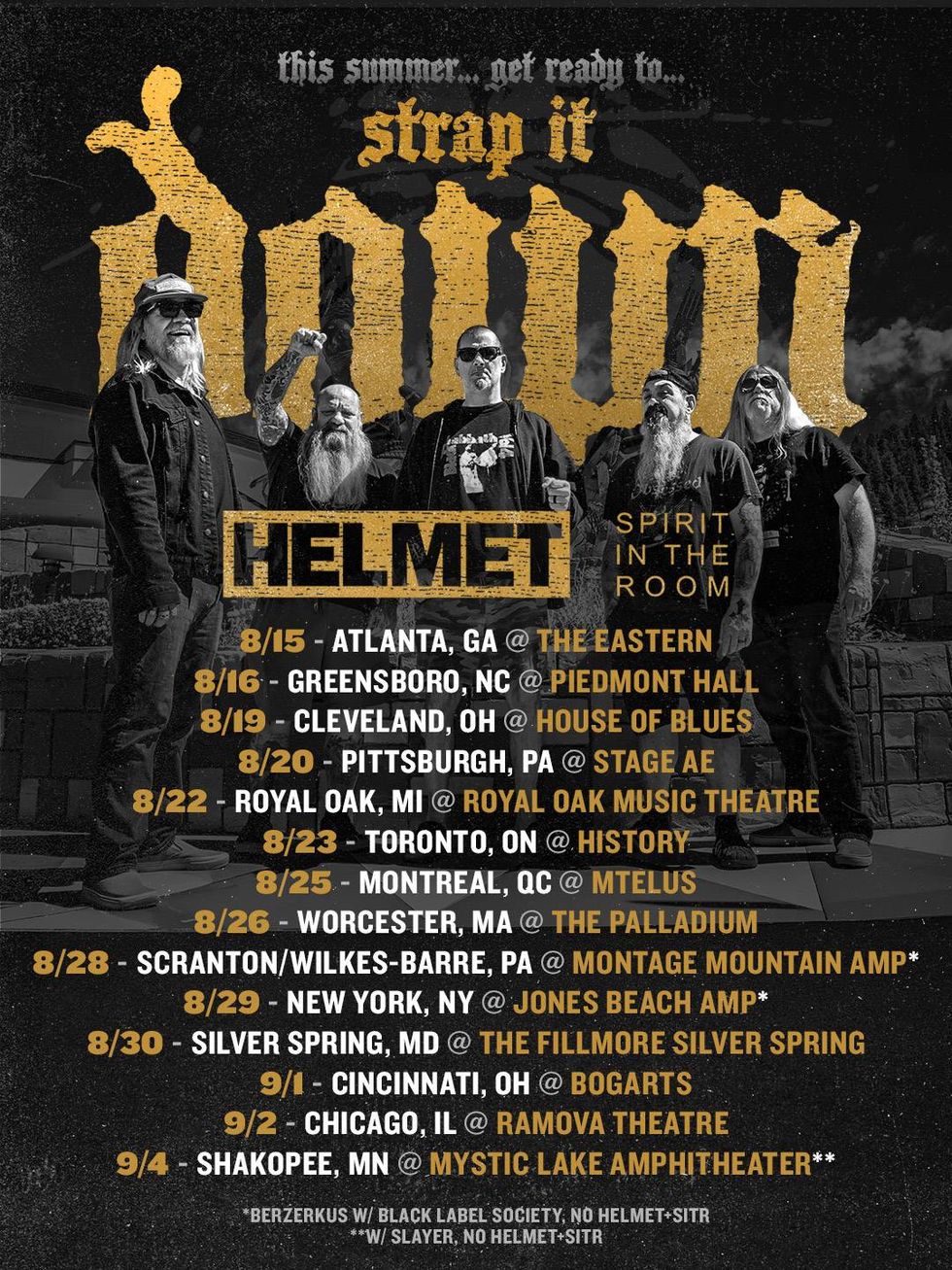
DOWN is amid their North American headlining tour with support provided by Helmet and Spirit In The Room. The Strap It Down tour commenced in Atlanta, Georgia on August 15th and will close in Shakopee, Minnesota on September 4th with a special performance as direct support to Slayer. The journey also includes slots on the 2026 installment of Zakk Wylde’s Berzerkus Festival featuring Lamb Of God, Black Label Society, and others on August 28th in Scranton, Pennsylvania and August 29th in Wantagh, New York.Limited DOWN VIP ticketless packages are available now, featuring a soundcheck experience, meet & greet, photo opportunity, signed poster, and exclusive merch item.
Visit down-nola.com/tour to secure yours.
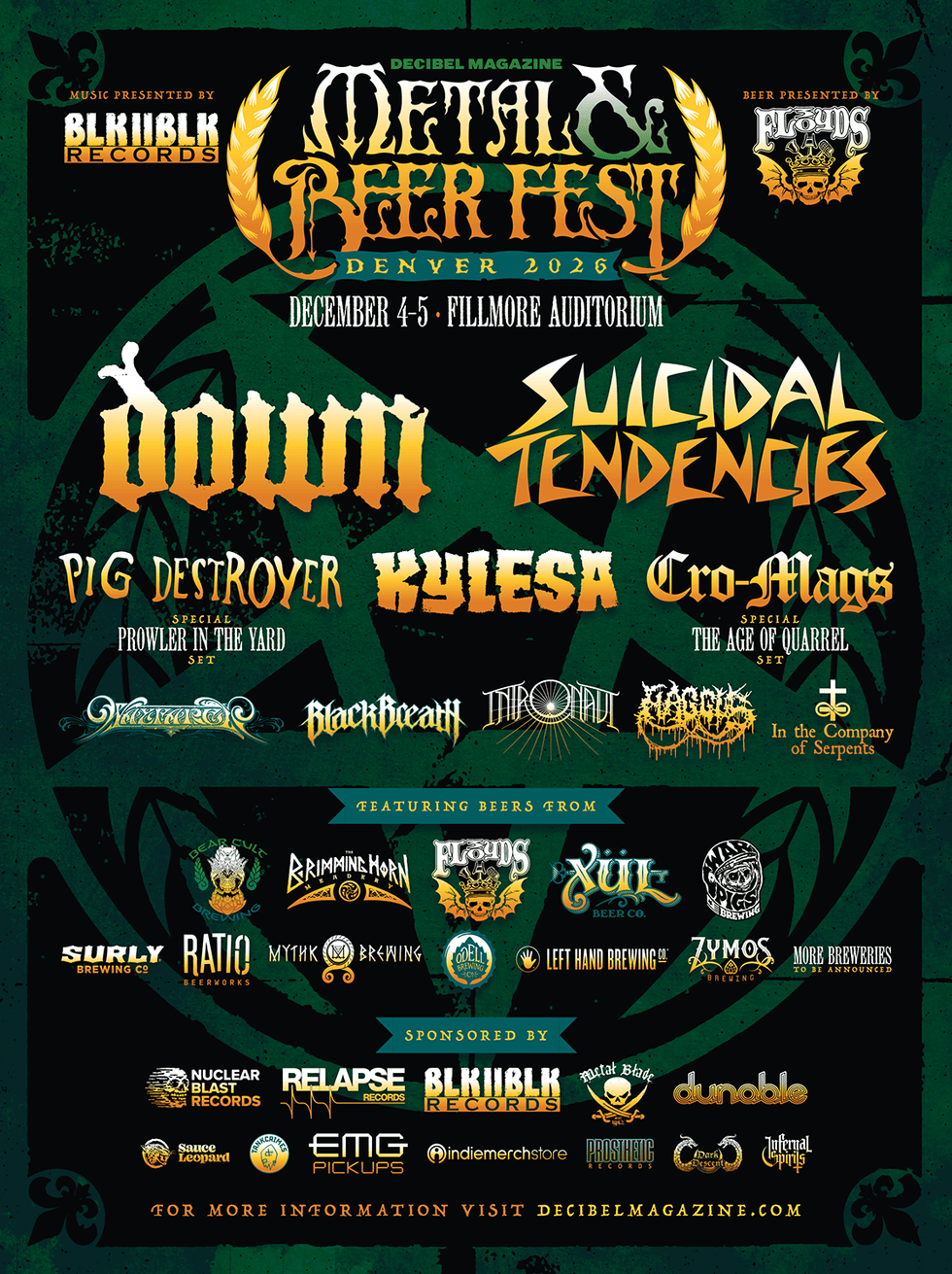
In October, DOWN will perform at both Aftershock and Sick New World Texas. In December the band will headline day two (December 5th) of this year’s edition of the Decibel Magazine Metal & Beer Fest Denver. The appearance marks the band’s first Denver appearance in over twelve years!
Tickets for all shows are on sale now. See confirmed dates below.
DOWN w/ Helmet, Spirit In The Room [remaining dates]:
8/19/2026 House Of Blues – Cleveland, OH
8/20/2026 Stage AE – Pittsburgh, PA
8/22/2026 Royal Oak Music Theatre – Royal Oak, MI
8/23/2026 HISTORY – Toronto, ON
8/25/2026 MTELUS – Montreal, QC
8/26/2026 The Palladium – Worcester, MA
8/28/2026 The Pavilion @ Montage Mountain – Scranton, PA ** Berzerkus Fest w/ Lamb Of God, Black Label Society, more…
8/29/2026 Northwell @ Jones Beach Theater – Wantagh, NY ** Berzerkus Fest w/ Lamb Of God, Black Label Society, more…
8/30/2026 The Fillmore Silver Spring – Silver Spring, MD
9/01/2026 Bogart’s – Cincinnati, OH
9/02/2026 Ramova Theatre – Chicago, IL
9/04/2026 Mystic Lake Amphitheater – Shakopee, MN ** w/ Slayer, Suicidal Tendencies, Hatebreed
US Festival Dates:
10/03/2026 Aftershock – Sacramento, CA
10/24/2026 Sick New World Texas – Fort Worth, TX
12/05/2026 Decibel Metal And Beer Fest – Denver, CO
** No Helmet, Spirit In The Room
Carl Martin Introduces the Dual Compressor Limiter
Carl Martin has introduced the Dual Compressor Limiter, an analog dynamics pedal that places two independently adjustable compression setups in one compact enclosure. Designed for guitarists who want consistent dynamics and longer sustain without sacrificing pick attack or clarity, it moves from subtle leveling to firm peak limiting at the press of a footswitch.
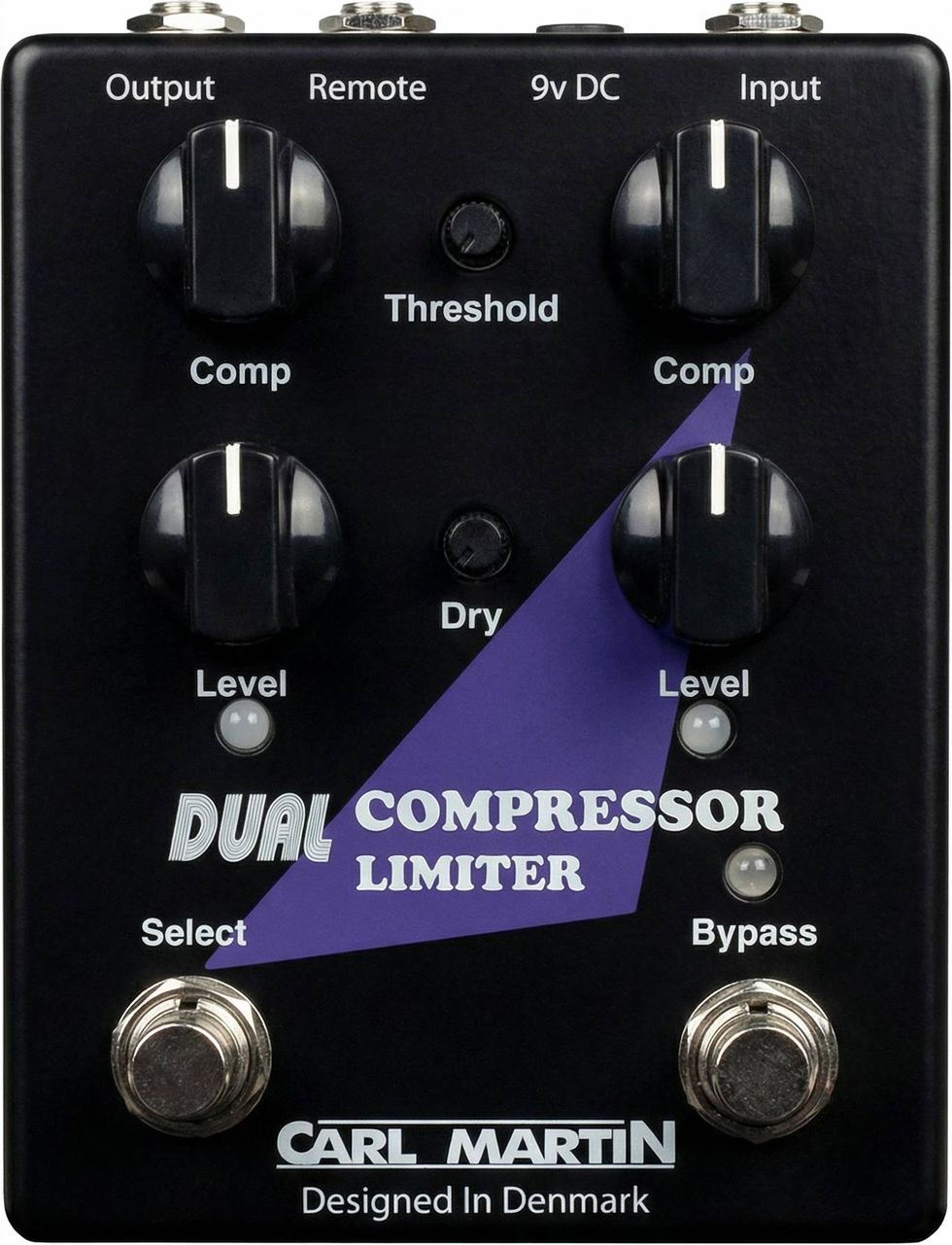
Each preset has its own COMP and LEVEL controls, while a shared THRESHOLD keeps the response consistent across both sides. Players can use one preset for transparent rhythm control and the other for stronger lead sustain, then switch between them using the onboard SELECT footswitch or the REMOTE input.
At the heart of the pedal's flexibility is the global DRY control, which adds parallel compression by blending the processed signal with the untouched instrument signal. Instead of choosing between compression and natural pick response, players can retain the original transient while adding body, consistency and sustain underneath it. This keeps the pedal responsive and natural-feeling even when more compression is applied. The pedal accepts a standard regulated 9V DC supply and generates +/-12V internally for increased headroom, clarity and stability.
Dual Compressor Limiter highlights include:
- Two independently adjustable compression presets in one analog pedal
- Dedicated DRY blend preserves the original attack while adding compressed body and sustain
- Individual COMP and LEVEL controls for each preset
- Shared 60 dB THRESHOLD range for consistent response
- Compression range from 1:1 to 30:1 for leveling, sustain or limiting
- Onboard SELECT footswitch plus REMOTE preset switching
- Internal +/-12V operation from a regulated 9V DC input
- True bypass, 105 dB signal-to-noise ratio and 0.05% THD
The Carl Martin Dual Compressor Limiter carries a street price of $199. For more information visit carlmartin.com.
EarthQuaker Scrolls Bass Odyssey Review
I thought I had everything a gigging bassist could possibly need. I usually get a pretty solid bass tone, the players and clients I engage with generally like it, and I tend to feel pretty good about my EQ choices. Some instruments I like to run direct, without much tonal color. Others I run through an amp, where I can get plenty of it. Between the two, I figured I had any session covered.
EarthQuaker’s Scrolls might have changed the standard for just fine, however. My P bass that sounds really good on its own? When I plugged it into the Scrolls it went from “just fine” to “sweet Mary!” EarthQuaker definitely ratcheted up the bar for what a DI’d bass can do onstage and in the studio.
Healthy Scrolling
Scrolls is a new bass DI box developed in collaboration with Japanese bassist Kentaro Nakao. Sometimes a pedal built for a specific player’s needs means essentials are overlooked. Not so with the Scrolls. Clearly, careful consideration was given to what the average bass player desires. But it also gave me things I didn’t know I wanted.
“When I turned it off, my bass suddenly sounded like a junior varsity team trying to compete with a professional squad.”
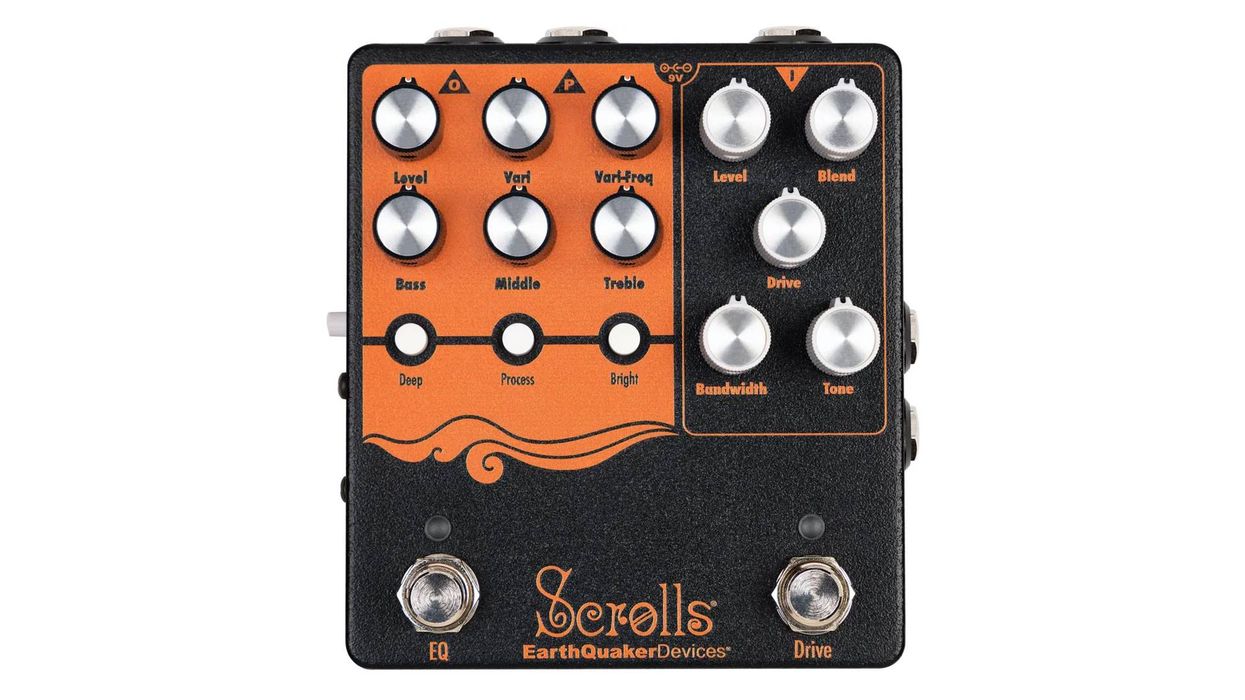
The pedal is divided into two robust sections, tied together by some common threads and some unusual ones. The first is a flexible drive section with wet/dry blend control, a clipping frequency knob (called “bandwidth” here,) and more. The second section is dedicated to EQ. Seems straightforward enough, right? Well, EarthQuaker decided to give players three output options: an XLR, a 1/4" out and a parallel buffered 1/4" out for a clean signal. In this configuration, a clean signal can go to an amp and/or front of house, where the signal can be manipulated and adjusted independent of the Scrolls. The effects loop lives between the drive and EQ sections, so if you add other effects, the loop will be after the drive but before EQ, leaving the EQ to shape the overall tone. Pretty clever, indeed.
Trust the Process
Scrolls’ EQ is the part of the pedal that sells the design. A DI’s job, after all, is to cover as many tones as possible for as many applications as possible, and Scrolls does that well enough that I can see it earning permanent real estate on a lot of pedalboards. The range comes down to how finely the EQ is divided—in the studio, it’s like having brushes from a fine liner up to a two-inch flat. Three push buttons—deep, process, and bright—provide a 80Hz boost, low-mid scoop, and 5kHz boost, respectively. Three corresponding tone knobs, which work with or without the pushbutton settings, cut or boost low, middle, and high frequencies. But the secret weapon might be the variable frequency control, which sweeps the emphasis anywhere from 20Hz to 10kHz and lets picky players slot their bass tone just so.
Though the numerous knobs look formidable, Scrolls is easy to use, too. I was able to take my bass from great to downright legendary in about 15 seconds. The pushbutton settings are excellent starting points, and activating all three adds up to a big, strong, and authoritative bass tone. The sweet spot for my P bass was a mix of boosts from the process and bright pushbuttons, and a little mid and treble boost from the corresponding EQ controls. I got used to this tone fast, and frankly, I didn’t want to box up the pedal again. When I turned it off, my bass suddenly sounded like a junior varsity team trying to compete with a professional squad.
The Verdict
EarthQuaker’s Scrolls is focused, smartly designed, and usable across just about any genre. The drive is the one section some players could find non-essential. It’s deeply tweakable—especially the wet/dry mix and the clipping frequency control—and harder-rocking players will love it. But I got what I needed from the EQ alone, and whether that's enough to justify the pedal comes down to your own tastes and objectives. As bass drives go, this is a flexible one, and in the right situation the two halves feed each other.
The Scrolls Bass Odyssey answers questions I hadn’t thought to ask. Can a great bass sound better going direct than it does through an amp? It can. Do I need three outputs on a bass DI? Turns out I do. Can I set this on my board, leave it there, and stop thinking about my bass tone? I think a lot of you will.
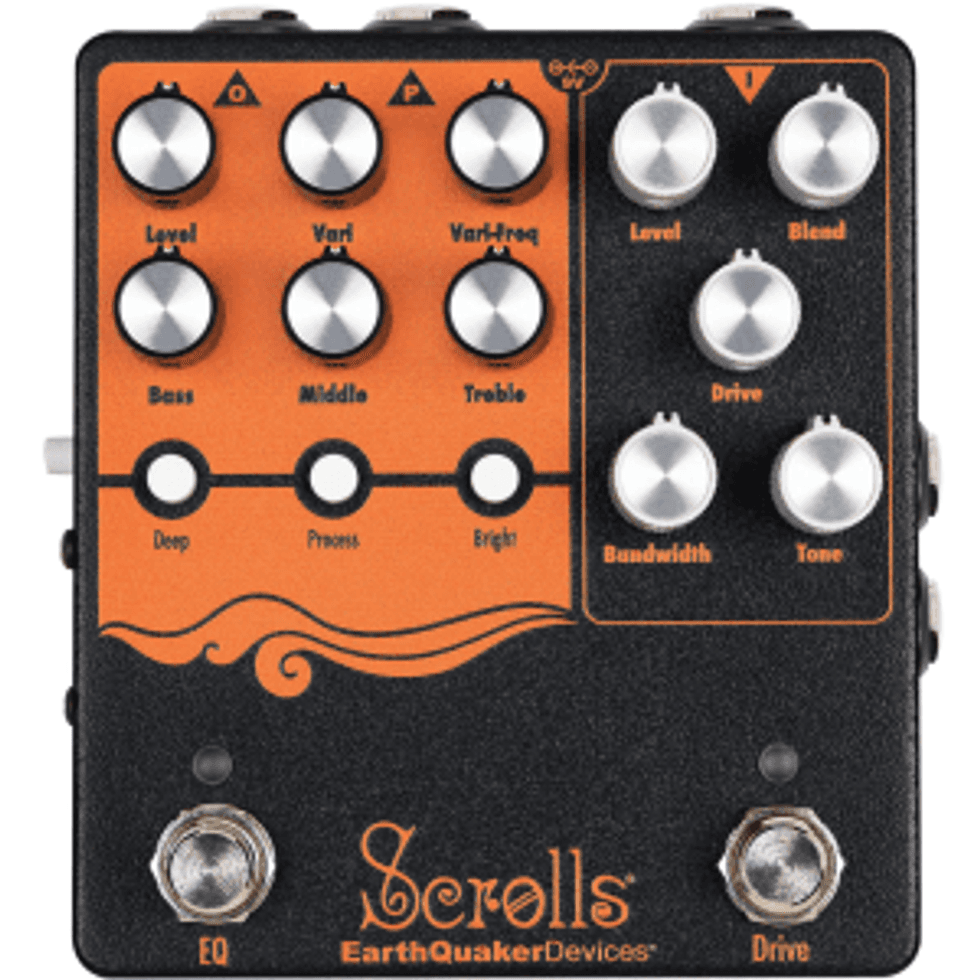
Scrolls Bass Preamp Pedal
Preamp Bass Guitar Pedal with EQ Channel, Drive Channel, FX Loop, XLR Direct Out, Parallel Out, and Ground Lift
Death By Audio and Rainger FX Announce the Amp Crash
Death By Audio and Rainger FX have joined forces to create Amp Crash, a completely new kind of effects pedal containing a real 3-watt amplifier, internal 2" speaker, and microphone.
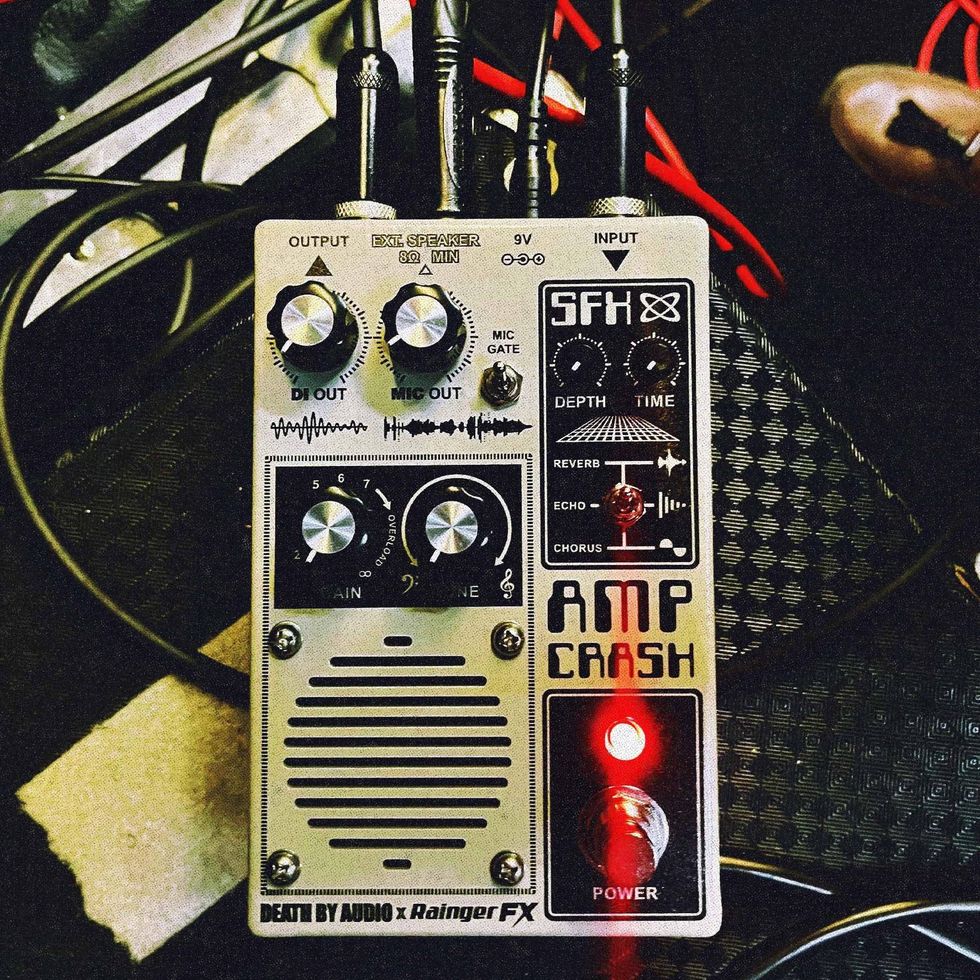
Amp Crash captures the sound and feel of a cranked amp inside a compact stompbox. A real amplifier drives a real speaker, while a built-in microphone captures what that speaker is actually doing. Players can then blend the direct amplifier signal with the mic'd sound, creating everything from rich, touch-sensitive overdrive to crushing fuzz, blooming harmonics, natural feedback, and completely unpredictable textures.
Unlike traditional distortion or amp simulation pedals, Amp Crash creates sound physically, not just electronically. As the amplifier, speaker, and microphone interact, they generate harmonics, feedback, compression, and textures that only exist because air is physically moving inside the pedal. The result is an instrument that breathes, responds, and sometimes even fights back.
The project began when David Rainger came to New York with an idea: put a microphone inside a pedal so ambient sound could blend with the guitar signal, creating new harmonics and unexpected overtones. Death By Audio took that idea and asked another question: what if the pedal contained its own speaker?
The internal speaker and microphone interacted like a real amp in a room, producing the sound and feel of small combo amps pushed to their limits. From there, Death By Audio built a complete multi-effects engine around the concept, adding Reverb, Echo, and Chorus to push the sounds even further.
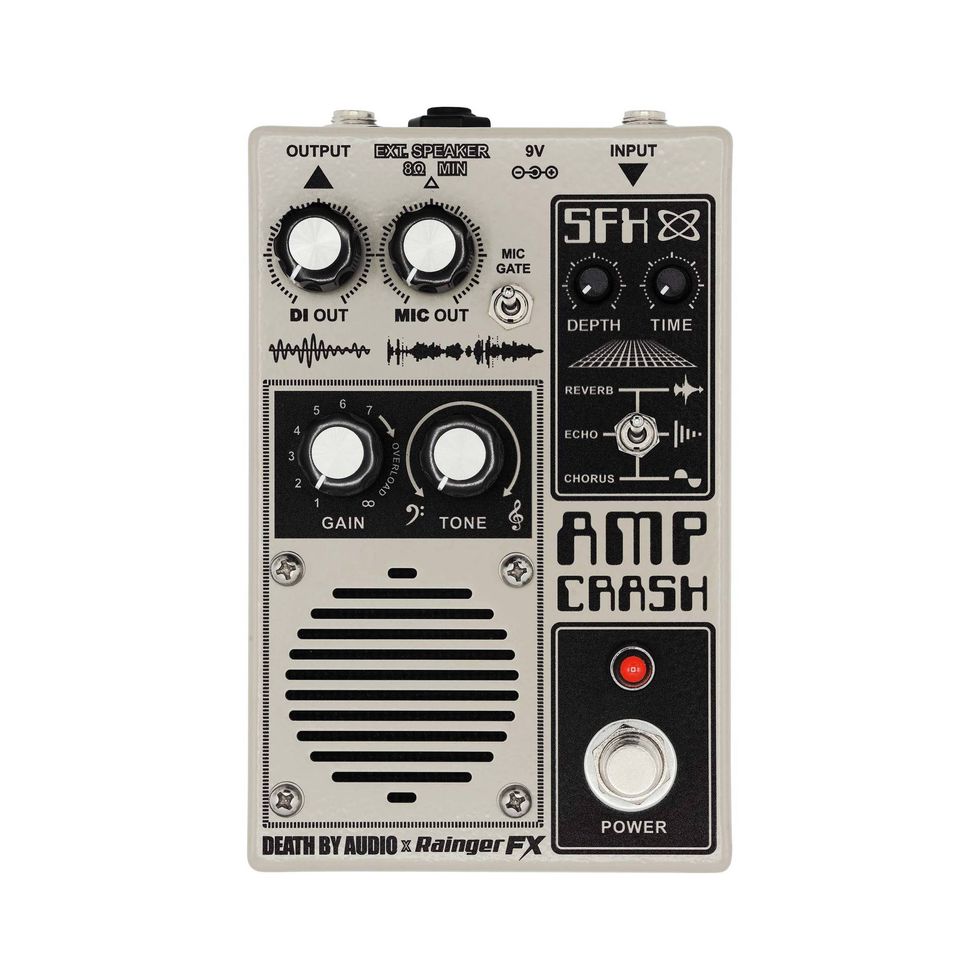
Amp Crash can be a real mic'd amp experience, a compact recording tool, a portable practice amp, an experimental effects platform, or an endlessly inspiring instrument capable of sounds that conventional pedals simply cannot create.
An external 8Ω speaker output also allows players to connect a speaker cabinet, transforming Amp Crash into a tiny but very real amplifier.
Key features:
- Real 3-watt amplifier, internal 2" speaker, and microphone built into the pedal
- Blend direct amplifier and internal microphone signals
- Real speaker interaction creates harmonics, feedback, compression, and unpredictable textures
- Built-in Reverb, Echo, and Chorus
- From edge-of-breakup overdrive to crushing fuzz and wild harmonic feedback
- External 8Ω speaker output for connecting a speaker cabinet
- Buffered bypass, lifetime warranty
- Power: 9V DC, 2.1mm center-negative, 300 mA
Amp Crash will be available directly and from participating retailers for a street price of $395 USD. For more information visit https://deathbyaudio.com/products/amp-crash or https://www.raingerfx.com/releases/p/amp-crash.
MXR Textures Can Make Your Guitar Sound Like Almost Anything
MXR Textures Granular Synth Engine uses granular synthesis, to slice and dice sound and experience your guitar in the fifth dimension.
- Transforms your signal into shimmering pads, glitched rhythms, and evolving textures
- Eight ready-to-play presets get you experimenting instantly, from regenerative octave loops to warbly polyphonic synth
- Three different modes—Delay, Auto-Freeze, and Layers—define how grains are sampled and replayed
- Size, Overlap, Pitch, Reverse, Delay, Regen, and Mix knobs allow you to sculpt every grain
- On-board reverb, filter, and vibrato FX add further depth and dimension • Deep parameter tweaks unlock randomization, effect fine-tuning, and tap tempo
- Full stereo I/O with mono, wet/dry, and true stereo output options, plus expression pedal and
- MXR Split + Tap compatibility
The MXR Textures Granular Synth Engine is available now at a $269.99 street price. For more information visit jimdunlop.com.
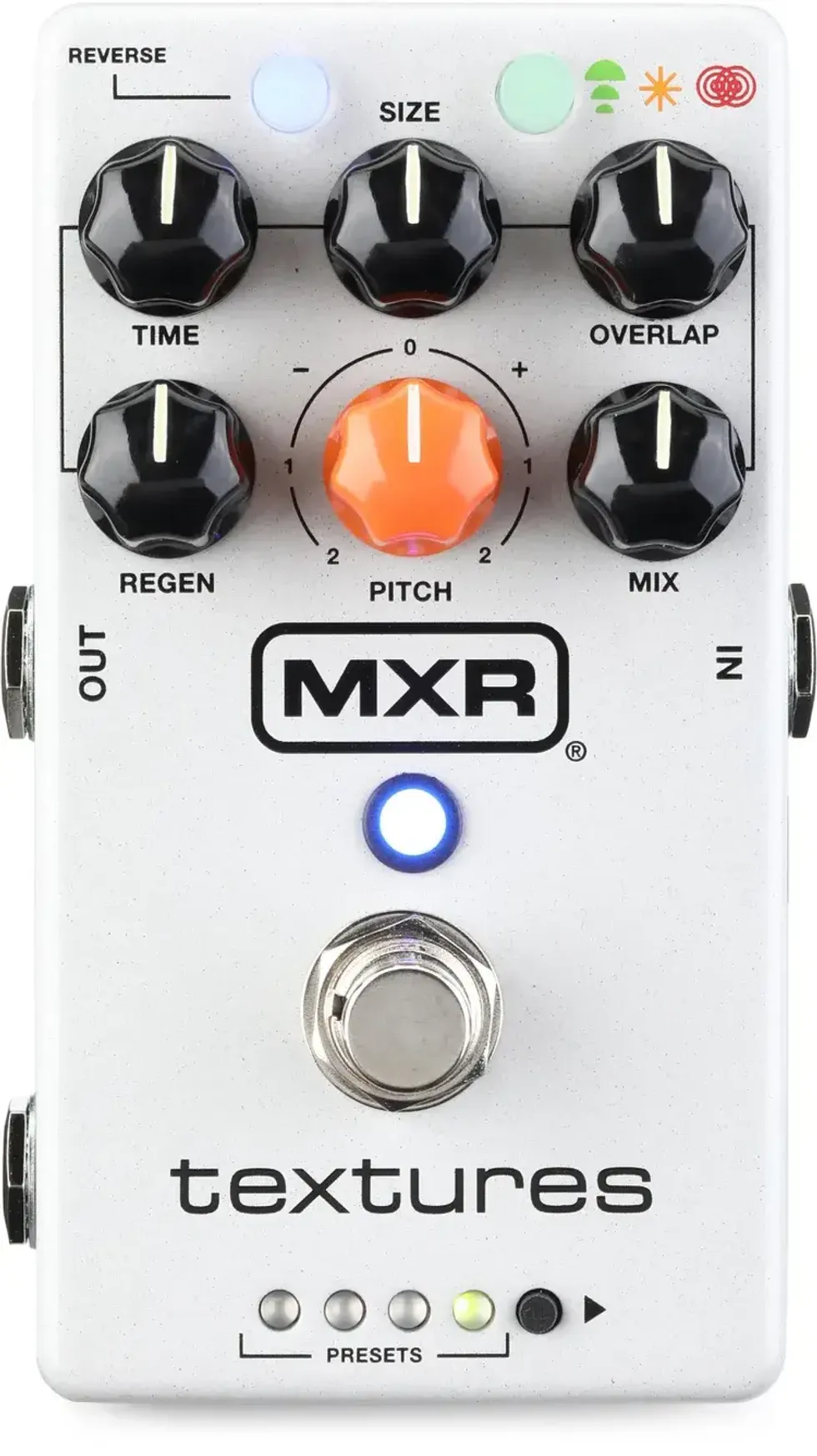
Textures Granular Synth Pedal
Stereo Granular Synth Guitar Pedal with 8 Presets, 3 Modes, Size, Overlap, Pitch, Reverse, Time, Mix, and Regen Controls, Second-layer Controls, Expression Input, and Split/Tap Compatibility
“There’s a difference between someone saying, ‘You’re in my thoughts and prayers’, versus somebody who goes into detail about his treatment”: The simple advice Bruce Dickinson gave Dave Mustaine as he faced cancer battle

Back in 2019, Dave Mustaine revealed that he had been diagnosed with throat cancer. In the limbo between his diagnosis and being declared cancer free in January of the following year, plenty of people reached out to the Megadeth frontman offering their support – but the wise words of fellow cancer survivor Bruce Dickinson were what really helped pull him through.
Just like Mustaine, the Iron Maiden frontman was also confronted with a throat cancer scare at the end of 2014. With Dickinson getting the all-clear in 2015, he was keen to share some advice with his heavy metal comrade. “Bruce had some fantastic stuff to say as a cancer survivor,” Mustaine explains to Metal Hammer in a new interview.
“There’s a big difference between someone saying, ‘You’re in my thoughts and prayers’, versus somebody who goes into detail about his treatment and tells you about the outcome,” he adds.
Considering Dickinson cam out the other side of his diagnosis, it felt like proof that Mustaine could come out the other side too. “I needed hope, and he gave me it,” he says. To keep spirits high, the Iron Maiden icon also encouraged Mustaine to “surround [himself] with good people” and to focus on “spending time with people who are upbeat and positive”.
Mustaine also reflected on Dickinson’s support in an interview with Forbes in 2020. As he puts it, Dickinson was one of the first people he wanted to talk to about his throat cancer experience. “After I was diagnosed, I thought, ‘I want to call Bruce,’” Mustaine said. “It’s not like I have a whole Rolodex of rock friends that sing heavy metal music that have throat cancer… so my choices were limited.”
“I was pretty proud of Bruce after speaking with him,” he added. “Although we’re not super close, I consider him to be someone I look up to… When you’re a frontman in one of the biggest bands in the galaxy, you don’t really have to tolerate the frontman of the other bands very much, but he’s always been super kind to me.”
With Megadeth releasing their final record and currently in the swing of a grand farewell tour, Mustaine is feeling reflective. In fact, he is set to drop a new memoir, In My Darkest Hour, later this year in September.
For news on Megadeth’s final tour, head to the band’s website. Mustaine’s upcoming memoir, In My Darkest Hour, will also drop on 24 September.
The post “There’s a difference between someone saying, ‘You’re in my thoughts and prayers’, versus somebody who goes into detail about his treatment”: The simple advice Bruce Dickinson gave Dave Mustaine as he faced cancer battle appeared first on Guitar.com | All Things Guitar.
Captured by a drama student who snuck onstage, new rare footage of Jimi Hendrix’s legendary 1969 Woodstock show has surfaced online

Nearly 60 years after his death, Jimi Hendrix remains one of the most iconic and influential guitarists to ever live. Over the course of a relatively short career – with his heyday lasting between his breakthrough in 1966 and death in 1970 – Hendrix performed hundreds of shows, notably including his Monterey Pop Festival set, which saw him famously set his Fender Stratocaster ablaze.
Indeed, there are a few Jimi Hendrix shows that make a claim for his most iconic, but perhaps the most legendary of all was his closing set at Woodstock on August 18, 1969.
The set included some of the guitarist’s biggest hits, including Purple Haze, Voodoo Child and Hear My Train a Comin’, as well as his landmark rendition of US national anthem The Star-Spangled Banner, which later became a defining symbol of the anti-war movement at the time the US was heavily involved in the Vietnam War.
Though one of the most iconic rock shows in history, good-quality extended footage of Hendrix’s Woodstock set is notoriously hard to find. But one of the best clips of the show yet has just surfaced…
It was captured by 22-year-old drama student Albert Goodman, who successfully snuck onstage shielded by a friend carrying a guitar, according to Guitar World. He managed to set up his camera just 15 feet across the stage where Hendrix was set to perform.
Now, the footage has been uploaded to the official Jimi Hendrix YouTube channel for all to see. In the footage, Hendrix can be seen playing his biggest hits – plus his fiery version of the US national anthem, alongside his newly formed Band of Gypsys.
The band’s lineup consisted of guitarist Larry Lee, bassist Billy Cox, Jimi Hendrix Experience drummer Mitch Mitchell, and percussionists Juma Sultan and Jerry Velez. Check out the footage below:
“Goodman was left alone, assumed to be just one member of the sprawling film crew who had surrounded the stage for the entire event,” reads the video’s description. “Armed with just two previously recorded, open reel videotapes, Goodman settled in behind percussionist Juma Sultan and prepared to document history.”
But that’s not the end of the story. After sneaking onstage to capture the awe-inspiring footage, as luck would have it, Albert Goodman was later given a ride by a driver who was friends with people working at the house Hendrix was renting nearby. One thing led to another, and legend has it Jimi Hendrix himself watched Goodman’s footage and approved.
The post Captured by a drama student who snuck onstage, new rare footage of Jimi Hendrix’s legendary 1969 Woodstock show has surfaced online appeared first on Guitar.com | All Things Guitar.
This D’Angelico could be your first semi-hollow – and it’s now just $500

[Editor’s note: Please note that this deal is only available to US customers. If you’re reading from outside the US, you’ll be shown similar deals.]
If you’ve never owned a semi-hollow before, D’Angelico’s Premier DC makes a pretty compelling case for being your first. It’s versatile, comfortable and built to handle everything from jazz and blues to rock – and right now, it’s priced at just $499.99.
That’s $250 off its usual $749.99 price, making this a particularly tempting way to dip your toes into the world of semi-hollows without blowing your entire guitar budget.
Semi-hollows are popular for good reason. You get that unmistakable warmth and resonance, but with the right pickups and some gain, they can also get surprisingly punchy and aggressive. That makes them a handy choice if you want one guitar that can cover a lot of ground.
That’s exactly what D’Angelico is going for with the Premier DC. It’s a double-cutaway semi-hollow with a 16-inch-wide laminated maple body and a solid centre block, giving it plenty of sustain while helping keep unwanted feedback under control when you turn things up.
The tonal flexibility continues with a pair of Seymour Duncan Designed humbuckers, which can cover everything from warm, jazzy cleans to searing distortion. They’re paired with a familiar two-volume, two-tone setup and three-way pickup selector, giving you plenty of control over your sound.
It’s a remarkably comfortable guitar to pick up, too. The Premier DC features a maple neck with a slim C profile, a 24.75-inch scale length and a 14-inch-radius Ovangkol fingerboard with 22 medium vintage nickel silver frets. The set-neck construction and smooth heel transition also make it easier to reach the higher frets.
Visually, it nails that classic D’Angelico vibe without looking over the top. The Sky Blue finish really pops against the Tortoise pickguard, while the pearloid block inlays and ebony knobs give it a clean, premium look up close.
Players also get a chrome Tune-o-Matic bridge, stopbar tailpiece and Grover tuners with Stairstep machine, rounding out a solid hardware package for the price.
At $499.99, the Premier DC is an appealing option if you’ve been curious about semi-hollows but don’t want to spend a fortune on your first one. If you’ve been waiting for the right time to give semi-hollows a try, this could be it.
Learn more at Sweetwater.
The post This D’Angelico could be your first semi-hollow – and it’s now just $500 appeared first on Guitar.com | All Things Guitar.
Session legend Chris Spedding – known for work with Elton John and Paul McCartney – diagnosed with lymphoma

Chris Spedding – a legendary session guitarist who has played alongside the likes of Elton John, Paul McCartney, Tom Waits and Roxy Music – has been diagnosed with lymphoma, it has been revealed.
The 82-year-old guitarist has now begun a nine-month process of chemotherapy, which will render him unable to work and tour, so his wife Jody and campaign organiser Eden Cale have set up a GoFundMe to cover his essential living and medical costs during this time.
At the time of writing, nearly £25,000 has been raised of the campaign’s £50,000 goal with 314 donations.
“For over six decades, Chris Spedding has been bringing magic to stages and studios across the world with his inimitable guitar work with Roxy Music, Bryan Ferry, Elton John, John Cale, Jack Bruce, Tom Waits, Paul McCartney and Robert Gordon,” the GoFundMe reads.
“Chris’s genius as a musician, session guitarist and producer has touched generations of music lovers. But to our family, he’s just been Uncle Chris.”
It continues: “Anyone who knows Chris knows he is a kind, generous soul who would step up for anyone in need. For decades, he has given us unforgettable music. Now, it is our turn to rally around him to show our appreciation of him during this challenging time.”
You can make a donation now at the official GoFundMe page.
The post Session legend Chris Spedding – known for work with Elton John and Paul McCartney – diagnosed with lymphoma appeared first on Guitar.com | All Things Guitar.
Pages
