
Music is the universal language
“Glory to God in the highest heaven, and on earth peace to those on whom his favor rests.” - Luke 2:14
Norse Guitar Feeds
Richie Faulkner on the “pressure” of nailing Judas Priest’s Painkiller guitar parts live: “You can’t mess it up – you’ve got one shot at it”

It’s no small feat to be tasked with assuming lead guitar duties for Judas Priest, one of the most iconic metal bands to ever exist.
Richie Faulkner is, of course, up to the task, but as he explains in a new interview with TribLive, he still feels the pressure to nail his guitar parts live, even after having been a member of the outfit since 2011.
Pointing specifically to 1990 album Painkiller – of which the band is currently celebrating its 35th anniversary on tour – Faulkner reveals: “Whenever we play a song from the Painkiller record or when Rob mentions the Painkiller record, the roof just lifts off the room.”
The Painkiller album features, in addition to its ferocious title track, the likes of Night Crawler, Leather Rebel, A Touch of Evil and One Shot at Glory, with guitars played by KK Downing and Glenn Tipton.
Faulkner goes on: “To be back playing a celebration of that record is always uplifting from our point of view and the crowd as well.
“And the guitar playing on that record is stunning, as we all know: Painkiller, One Shot at Glory, Hell Patrol. All those tracks are relentless guitar playing, like a master, you put that on, learn that and you’ve probably got everything down in your toolbox for heavy metal guitar.
“It’s great to play live because you can’t mess it up, you’ve got one shot at it, you’ve got to get it right or close to right the first time. So it’s a bit of a challenge as a guitar player, but it’s really fun to play and the audience loves it, too.”
But while it’s important for Richie Faulkner to nail the classic guitar parts laid down by KK Downing and Glenn Tipton, he acknowledges that, on fresh Priest material, he wants to inject his own voice and style.
“It’s always been a hard thing for me to have my own voice,” he says while recounting the writing process for the band’s latest album Invincible Shield.
“I played in cover bands when I was younger, and so you make a living emulating everyone else. So you emulate everyone else, but you haven’t got your own voice. So it’s always been a challenge for me to have my own voice.
“So I always try and add a little bit more of whatever my voice is on the guitar solos. Something that if someone put the record on, they can identify it as mine. I don’t know if I ever achieved that. That’s not really for me to say. That’s for the listener to decide really, but I always try to do that, something that has my character in there somewhere, if that’s possible to do.”
In other news, Richie Faulkner recently revealed he works “three times a day” with a physio while on tour, to manage the damage caused by an aortic aneurysm and stroke he suffered onstage in 2021.
For a full list of upcoming Judas Priest tour dates, head to the band’s official website.
The post Richie Faulkner on the “pressure” of nailing Judas Priest’s Painkiller guitar parts live: “You can’t mess it up – you’ve got one shot at it” appeared first on Guitar.com | All Things Guitar.
The guitar influences of Kurt Cobain

Influences are incredibly important when it comes to musicians developing their own style. Some musicians can become the sum of their influences, while others will find their own voice after being inspired by the artists who came before them – Kurt Cobain is the latter. His brilliant songwriting was highlighted by the way he used his instrument. His goal was never to be flashy or impress anyone with his sweep picking – it was to accentuate the artistic statement he was trying to make, and he was unquestionably successful in his endeavor.
Nevertheless, we can learn a lot by examining the guitarists who influenced the way that Cobain played, both sonically and technically. So, in this article, we’ll take a look at some of the guitarists whose playing helped guide Kurt Cobain to be the musician we all know him as today.
Buzz Osborne
Kurt Cobain frequently acknowledged Buzz Osborne as a mentor and an influence. Their music-centric kinship was a much more personal influence on Cobain’s guitar playing than simply admiring the handiwork of Jimmy Page. Osborne was a local person with whom Cobain could actually talk about his musical ideas. Osborne was an important figure in Cobain’s music journey – a Samwise to his Frodo, if you’ll indulge that overly nerdy metaphor.
Lead Belly
In 1989, while Kurt Cobain and Mark Lanegan were busy establishing their own bands, they got together to record a series of Lead Belly cover songs for a tribute project they were going to call The Jury. Lead Belly was an early blues musician that Cobain has expressed a lot of admiration for – Bob Dylan also credited Lead Belly for getting him interested in folk music.
Cobain and Lanegan’s version of Where Did You Sleep Last Night ended up being the final track on Nirvana’s Unplugged performance and Mark Lanegan put a version on one of his solo albums. Cobain’s main acoustic used on songs like Polly and Something in the Way was a 12-string Stella, which was likely a tribute to his hero Lead Belly.
John Lennon
It’s probably fair to say that everyone has been influenced by The Beatles or a derivative in one way or another. The Beatles were such a cultural force that it’s hard to ignore them completely if you are a musician. Cobain specifically found John Lennon to be an inspiration. In a 1992 interview with The Advocate, Cobain said, “John Lennon is definitely my favorite Beatle…I just like his attitude. He’s not a great musician, but he’s a great songwriter.”
It was evident that Cobain looked to Lennon, not for his technique or tone, but for more of an overarching blueprint for how to approach the guitar, as simply a tool for writing great songs. As we know, Cobain steered well clear of flashy playing, which helped to shift focus to the songwriting. This was a similar tactic to how John Lennon operated in The Beatles.
Greg Sage
Kurt Cobain has publicly commented on his love for the band Wipers, particularly the songwriting and playing style of guitarist and vocalist, Greg Sage. Wipers were an early punk band who started back in 1977 in Portland, Oregon. Nirvana covered Wipers songs like D-7 and Return of the Rat, on early albums. Furthermore, Sage was a left handed guitarist. I’m not sure if that had anything to do with Cobain being drawn to him. It seems more likely that Cobain loved punk rock and Wipers, while not widely known, were very popular in the early Northwest punk scene.
Warren Mason
This is a name you may not recognize as he was another local person in Cobain’s early musical development. Warren Mason was a guitar teacher who gave a young Cobain guitar lessons for a few months while Cobain was in high school. Cobain’s family eventually pulled him out of the lessons due to poor performance in school. Mason passed away in 2021 but was remembered as a supportive teacher who encouraged creativity. He has said in interviews that Cobain wanted to learn to play Stairway To Heaven. Krist Novoselic also took lessons from Mason. Mason was in a couple of local bands, one was called Fat Chance, which featured Cobain’s uncle on drums. I won’t claim that Mason was a profound influence on what would come to be Cobain’s signature sound, but he was elemental in providing the basis for him learning to play guitar. Guitar instructors are far too often the unsung heroes of the music industry.
Joey Santiago & Black Francis
It’s no secret that Nirvana was heavily influenced by the Pixies, Kurt Cobain even going so far as to say in a January 1994 interview with Rolling Stone, “[With Smells Like Teen Spirit] I was trying to write the ultimate pop song. I was basically trying to rip off the Pixies. I have to admit it [smiles]. When I heard the Pixies for the first time, I connected with that band so heavily I should have been in that band—or at least in a Pixies cover band. We used their sense of dynamics, being soft and quiet and then loud and hard.”
Joey Santiago’s unconventional guitar solos seemed to resonate with Cobain as well as he would often use the space in a song where usually there would be a solo to make a statement with his note choices rather than show off some fancy shred technique he’d been working on.
The Pixies also had an influence on Nirvana’s production, citing Surfer Rosa as one of the main reasons they approached Steve Albini to produce their final studio album In Utero, in 1993.
This is by no means meant to be a comprehensive list. I tried to stick to artists that Cobain directly referenced in interviews for the purposes of this article. But Cobain was heavily influenced by such a wide array of music – he allowed himself to be inspired by everyone from Flipper and Black Flag to ABBA and Jimmy Page. If there is a lesson to be learned from exploring Cobain’s musical roots, perhaps it’s that – explore all the music you can and allow yourself to be inspired
The post The guitar influences of Kurt Cobain appeared first on Guitar.com | All Things Guitar.
Monger Pedals Unveils Boiling Honey Optical Tremolo and Little Guy Fuzz/Phaser
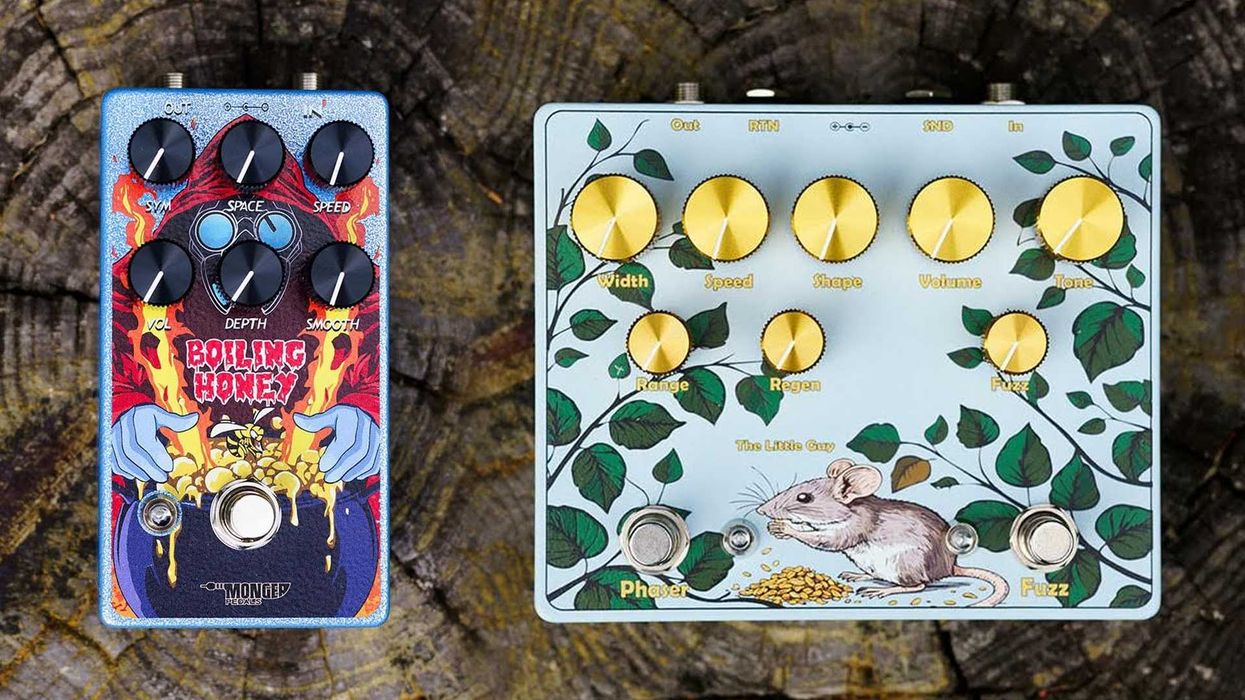
Adding to a lineup of versatile sound shaping guitar effects,boutique effects firebrand Monger Pedals has launched a pair of provocative new pedals: theBoiling Honey tremolo and Little Guy fuzz / phase shifter.
Boiling Honey
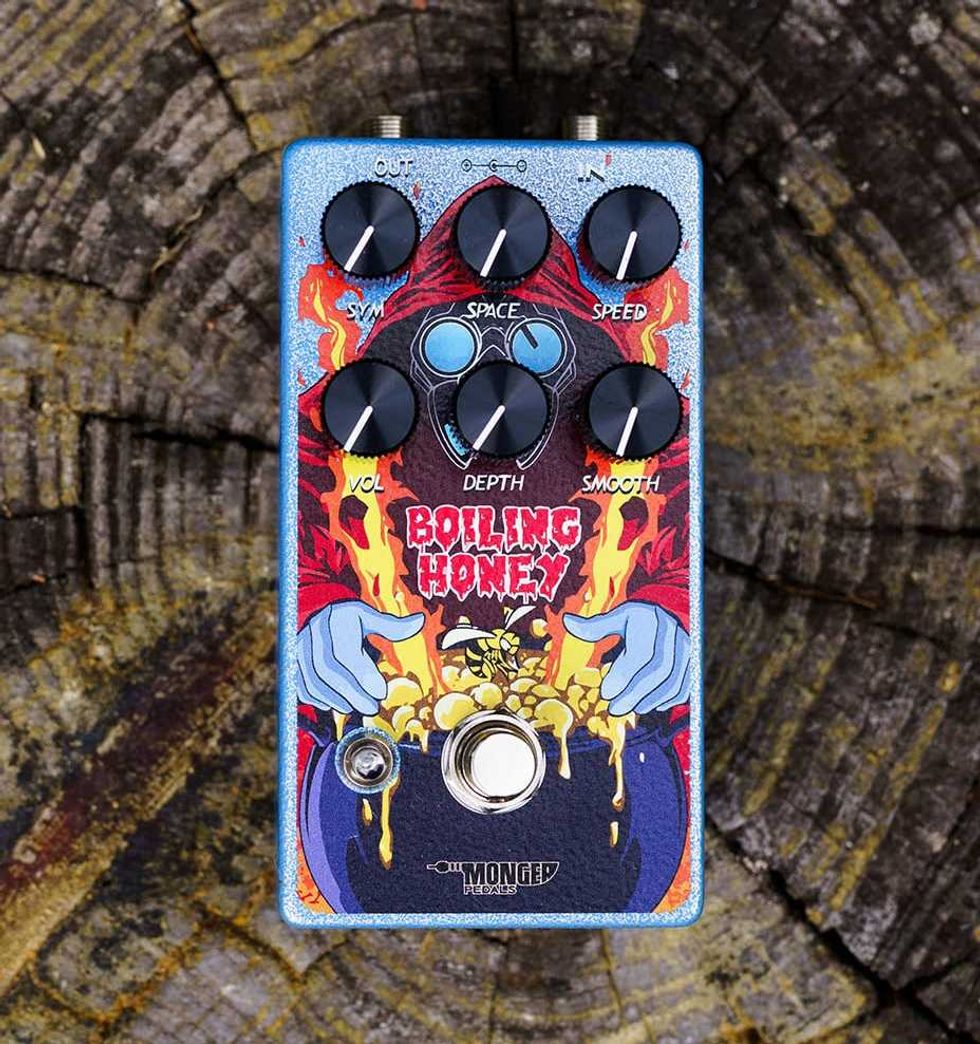
The Boiling Honey is an optical amplitude tremolo that delivers rich, pulsing modulation with a distinctly organic character. From smooth syrupy sways to sharp stuttering chops, it captures both warmth and bite in a single unit.
Boiling Honey features include:
- Analog optical amplitude tremolo
- 6 controls - Shape, Space, Speed, Volume, Depth, Smooth
- Rate LED shows what each control does internally
- True Bypass, Standard 9v operation, Top-mounted I/O
The Little Guy
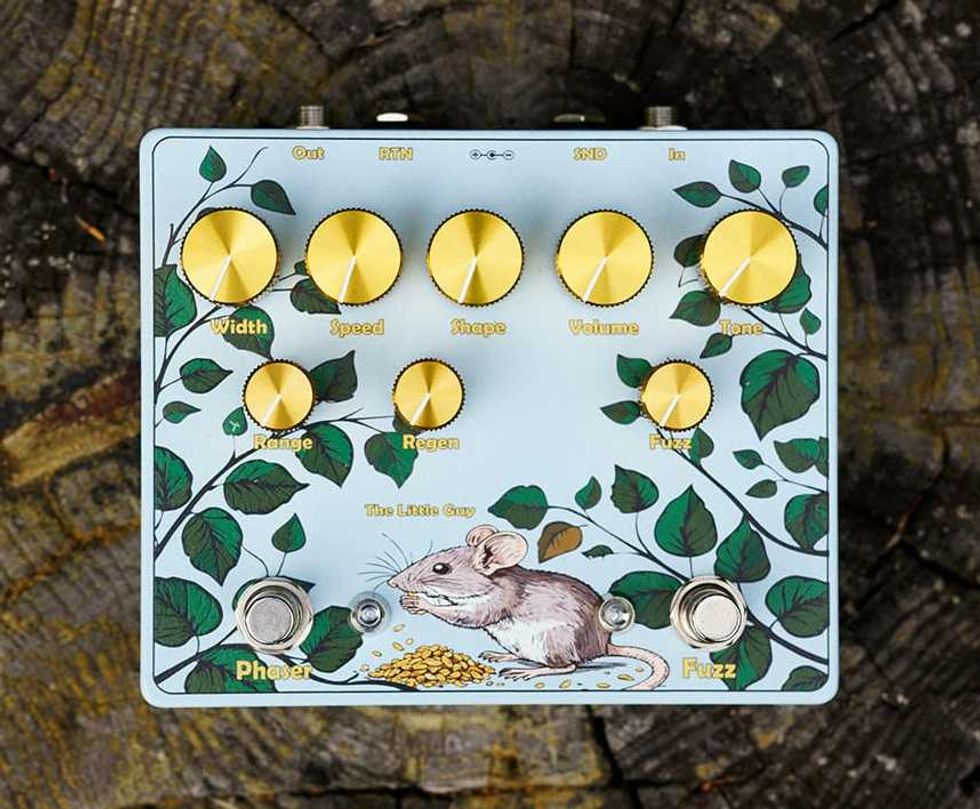
The Little Guy offers an extremely versatile two in one effect, combining fuzz and phase shifting into a single package designed to deliver a wide range of sounds. The phaser can shift frequencies and waveform shapes, while the fuzz keeps clarity and is extremely responsive to guitar input.
Little Guy features: include
- Fully analog modulation
- Two effects in one package with an internal signal chain from fuzz to phaser
- Send and Return input/output jack to break up the internal signal chain to allow for easy placement into your effect chain.
- Phaser controls for: Width, Speed, Shape, Range, Regen. Allows for infinite possibilities
- Fuzz controls for: Volume, Tone, Fuzz
- True bypass footswitches, 9-volt standard DC input, top mounted I/O
The Boiling Honey tremolo carries a street price of $145.00, and the Little Guy fuzz/phaser is priced at $224.99. Both pedals can be purchased directly from the Monger Pedals online store at www.MongerPedals.com.
Stompboxtober 2025: Xotic Effects

Turn up the tone! Enter today’s Stompboxtober giveaway to WIN the Xotic AC Booster V2 — responsive overdrive with touch sensitivity, classic warmth, and tonal shaping via dual EQ + DIP switches. Don’t forget to stomp back tomorrow for your next chance to score gear!
Stompboxtober 2025 - Win Pedals All Month Long!
Xotic Effects AC Booster V2
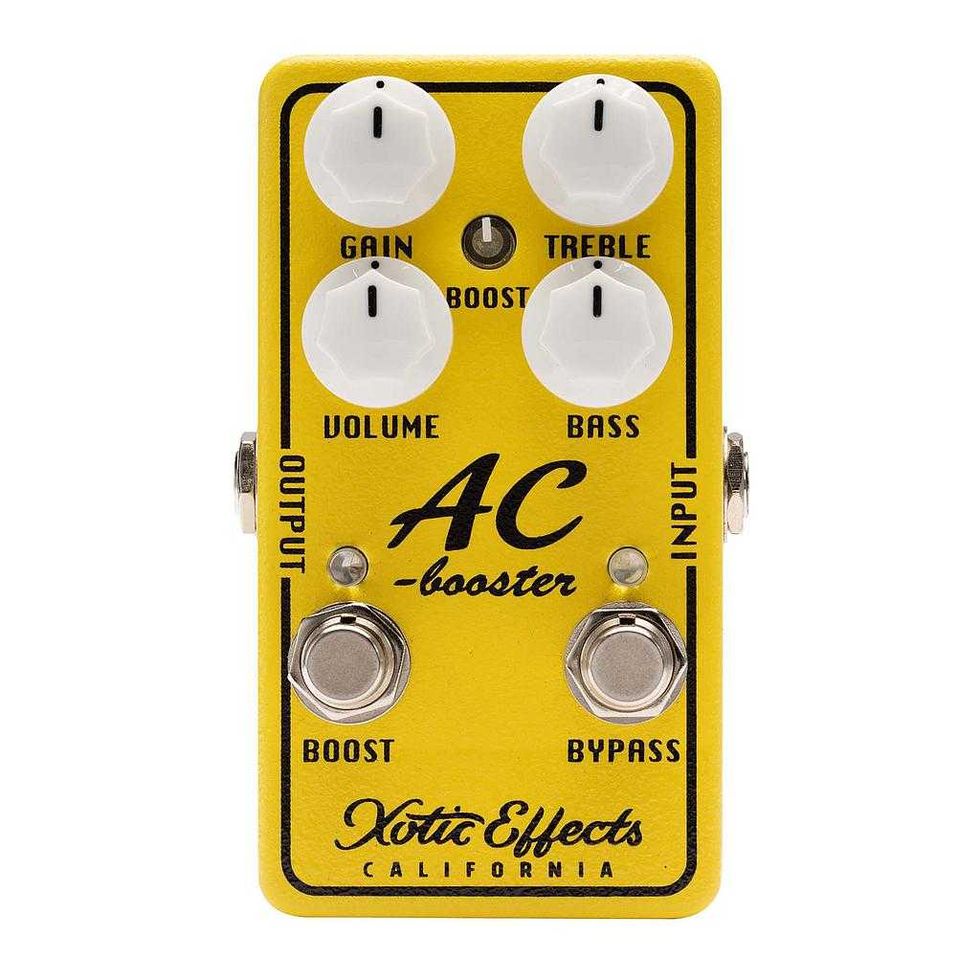
Reacting exactly like a great tube amp, the newly designed AC Booster V2 offers a wide range of overdrive with touch sensitivity just like the original AC Booster.
You can set it up to get a crunchy warm overdriven tone and with just a little rolling off of the guitar’s volume, it will give you a great clean sound.

Xotic AC Booster V2 Overdrive Pedal
Joe Walsh: The Classic Classic Rock Guitarist with Greg Koch | 100 Guitarists Podcast
When you think of classic rock guitar, what do you hear? Who is the most classic of all classic rock guitarists? We have a theory, and we tapped Greg Koch, the hard-touring, hard-rocking Gristlemaster himself, to join us and test it out. Is it Joe Walsh?
From his time with the James Gang through joining the Eagles and embarking on a successful, hit-laden solo career, Walsh epitomized the sound of ‘70s rock guitar riffs and solos. There’s a reason he eventually found his way to Ringo’s All-Starr Band! So is he the definition of classic rock?
Also, Greg takes this opportunity to chat about his Oasis obsession and shares his favorite Beach Boys song.

Learn More! www.gibson.com
Nembrini Audio Launches The Hughes & Kettner Tube Rotosphere Plugin
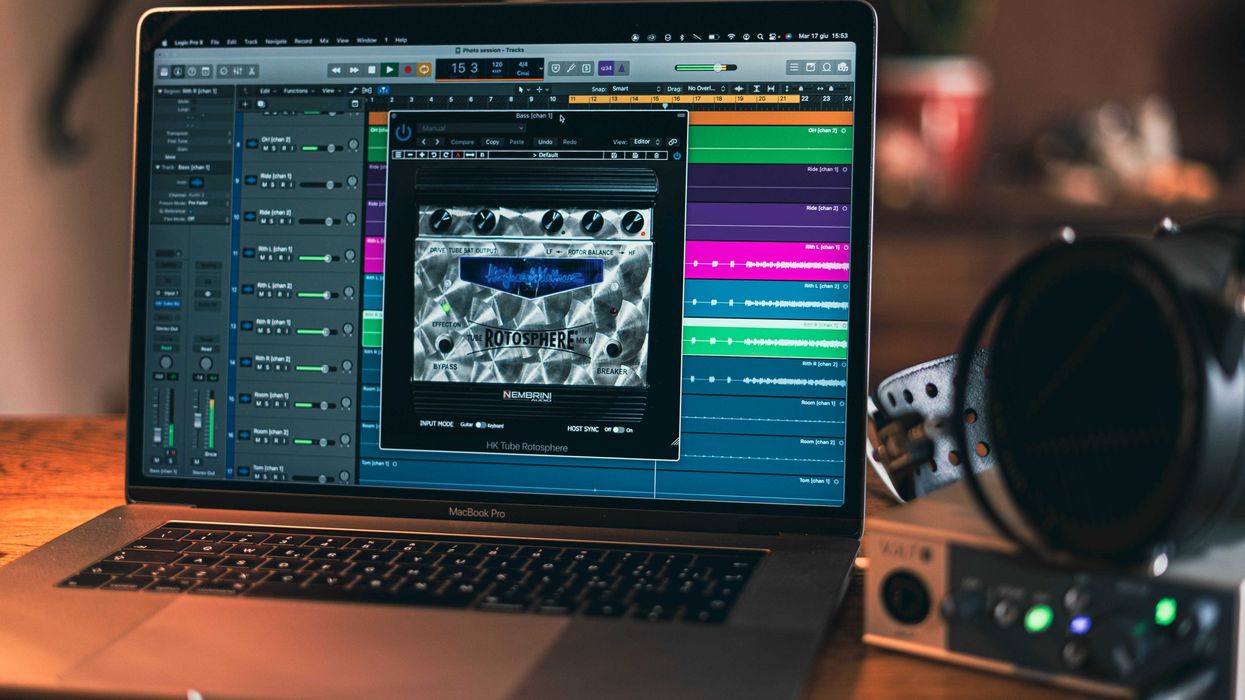
Nembrini Audio is pleased to launch the Hughes & Kettner Tube Rotosphere plugin, an authentic digital emulation of the acclaimed Hughes & Kettner Tube Rotosphere MKII Rotary Speaker* simulator. Listen to it here and see it here.
In the 1960’s the Leslie Speaker System*, originally developed in the 1930’s for the Hammond Organ, began to be used for guitars by The Beatles, Eric Clapton, David Gilmour and more. In the 1990’s Hughes & Kettner, a highly respected manufacturer of instrument amplifiers, cabinets and effect boxes, created the Tube Rotosphere pedal, an extremely accurate, analog reproduction of the Leslie Speaker System.
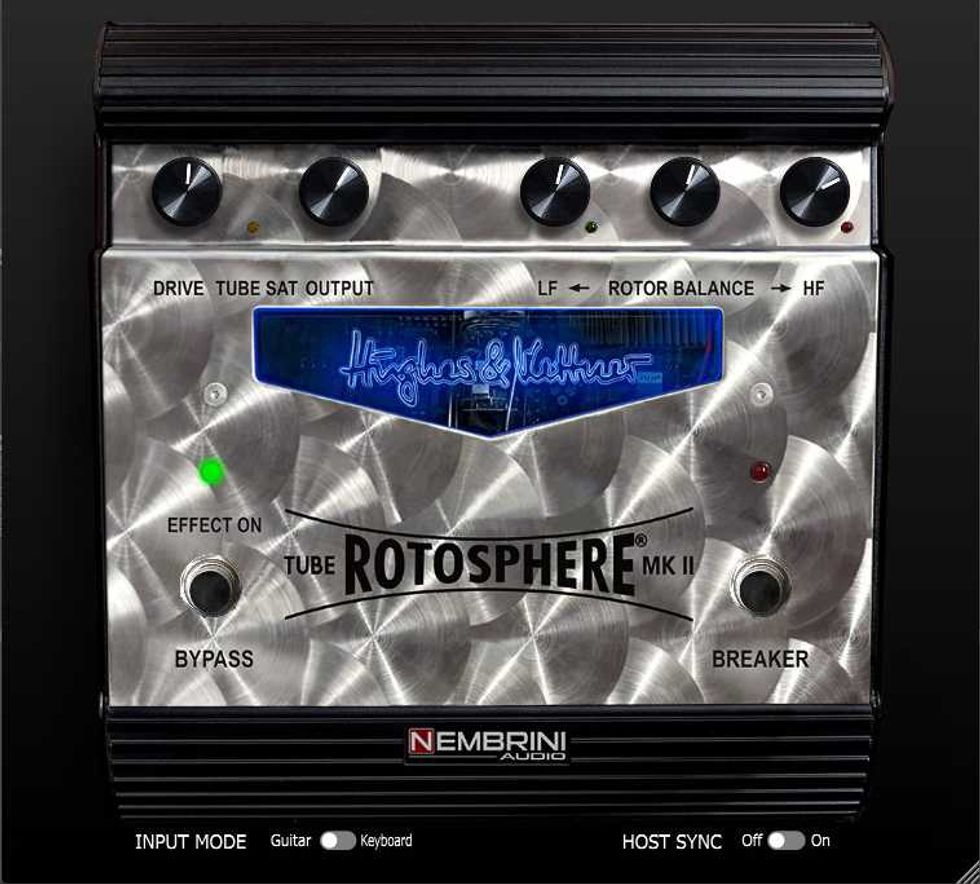
More than thirty years later, Nembrini ‘s new plugin breathes fresh life into this cool sound with the introduction of a realistic digital simulation of the much admired Hughes & Kettner Tube Rotosphere. Celebrated for its rich tube-driven character and highly musical rotary modulation, the original hardware was used keyboardists and guitarists seeking the iconic swirling depth of a classic rotary cabinet, with the warmth of real tube saturation. The new Hughes & Kettner Tube Rotosphere plugin faithfully captures every nuance of its analog counterpart, offering everything from subtle to dramatic Doppler-infused motion, with can be seamlessly integrated into any rig.
Nembrini’s advanced modelling technology captures all of the lush swirl, warm tube saturation and authentic rotary motion of the original pedal. The key features of the new plugin include true to life emulation of the analog circuitry and tube preamp behaviour, independent rotor speed simulation with separate LF and HF controls allowing precise adjustment and a breaker switch for realistic ramp-up/down and rotor stop effect. There is also tube saturation modelling with visual feedback, rotor balance control for fine tuning the blend and a stereo signal path for wide, immersive rotary modulation.
The Hughes & Kettner Rotosphere plugin desktop version is available at the introductory price of $29.99 (normally $99) until the October 31st 2025.
To find out more and download the Hughes & Kettner Rotosphere plugin please go to www.nembriniaudio.com/products/hughes-kettner-tube-rotosphere.
Eric Gales downplays those who praise him as the best guitarist in the business: “I turn on YouTube or Instagram and see some of the baddest players in the world!”

There’s no denying Eric Gales possesses some of the best guitar chops in the business. And that’s not counting the fact that the left-handed virtuoso plays a right-handed guitar upside down.
And while he’s appreciative of those who would go as far as to call him the very best guitarist in the world, Gales is quick to point to the level of talent that exists out there, particularly on social media.
“I take it as the highest compliment,” he tells Classic Rock in its new print issue. “I put a lot of years and hard work into my craft, and for people to have that mindset about me is larger than life for me.”
He explains that opening YouTube or Instagram is a quick route to seeing some of the finest guitar talent out there today: “I turn on YouTube or Instagram and I see, in my opinion, some of the baddest players in the world, doing some stuff that is completely mind-boggling,” he says. “My mind is flipped upside down by the stuff I’m seeing.
“But at the end of the day, when the question gets asked who do they think is the baddest motherfucker in the world, they still say, ‘Eric Gales.’ That’s huge for me, man.”
Elsewhere in the interview, Gales reflects on A Tribute to LJK, his new album and a collection of his late brother Manuel’s songs recorded by Eric.
“The record is my way of giving honour to my older brother, [who’s] been gone for over 20 years now,” he says, reflecting on Manuel’s (Little Jimmy King) passing in 2002.
“I decided to do some of his songs, through my eyes, with a 2025 approach, to show the world exactly how badass he was, incorporating some allies and friends of mine. I’m ecstatic with it, man.”
He later adds: “[I’m] happy that I’m able to make a project that brings memory to him. Excitement. Happiness. Sadness. It overcame me here and there, but I held it together, because I knew there was a job that needed to be done.
“I’m sure I’ll see my brother again. And not only him. I got other family members [who have] passed on too. And I believe I’ll see them again. I’m sure of it.”
Eric Gales’ new album A Tribute to LJK is out now.
The post Eric Gales downplays those who praise him as the best guitarist in the business: “I turn on YouTube or Instagram and see some of the baddest players in the world!” appeared first on Guitar.com | All Things Guitar.
Sammy Hagar says this Van Halen classic sounds “as good as it sounded for 20 years” with Michael Anthony singing instead

Sammy Hagar has sung the praises of bassist Michael Anthony, saying his longtime bandmate can now confidently perform lead vocal duties on some Van Halen classics.
Lately, Hagar’s been showing more love to Van Halen’s Roth-era hits – something he admits wasn’t always his thing. At his recent Best of All Worlds Las Vegas residency shows, the singer tackled Panama himself, while Anthony took the mic on various fan favourites like Ain’t Talkin’ ’Bout Love, Somebody Get Me a Doctor, and Runnin’ With the Devil.
In a recent chat with Ultimate Classic Rock, the former frontman admits he’s been especially impressed by Anthony’s evolution as a singer, noting how the bassist has moved far beyond his days of providing tight, “sterile” backing harmonies to become “a really good lead vocalist.”
“I like to get Mikey to sing lead, because he sings freaking great,” says Hagar. “People always just hear his background vocals, [but] he’s becoming a really good lead vocalist. Early on, he wasn’t, because he was always used to singing background.”
He explains that background singing requires a more restrained approach but says Anthony has since broken free of that.
“When you sing background, you have to sing very sterile. You have to sing the note and you can’t put any inflection on it or nothing. That’s the lead singer’s job. So the harmony guy has to sing very straight and very on key, and just nail the note and then hold the note [with] very little movement.”
“So when he was singing lead, it was [initially] a little stiff like that. But not anymore,” says Hagar. “In the last couple years, man, Mike’s come around. I’m listening to him sing Ain’t Talkin’ ‘bout Love and in my opinion, it sounds as good as it sounded for [the past] 20 years with him singing [it instead].”
That said, there are still a few songs Hagar keeps for himself.
“Panama is my favourite. You know, that’s the one I want to sing,” he laughs. “I don’t let Mikey sing Panama, because I like singing it. It’s a really fun song to play and sing. It’s badass.”
According to Hagar, revisiting these tracks isn’t just nostalgia; it’s about celebrating the full legacy of Van Halen, both eras included.
“We add those songs to the set because we’re doing a lot of Van Halen stuff,” he says. “Unlike the other guys that didn’t want to play my era, or can’t play my era. I like playing those songs, and I can play and sing those songs, and I think everyone appreciates them.”
The post Sammy Hagar says this Van Halen classic sounds “as good as it sounded for 20 years” with Michael Anthony singing instead appeared first on Guitar.com | All Things Guitar.
“There’s so much baggage that comes with a Strat”: Why Chris Buck is ditched his Fender for a Yamaha Revstar

Iconic as the Stratocaster may be, its history also comes with a heavy set of expectations.
St. Vincent, for one, previously described the Strat as burdened with the “cultural baggage” of “a history of people trying to play like Jimi Hendrix and sucking”, a pressure that “scared” her off the instrument for years.
And now, Cardinal Black guitarist Chris Buck says he too stepped away from his Strat, trading it for a Yamaha Revstar to escape the “baggage” that comes with playing one of the world’s most legendary guitars.
Chatting in a new Guitar World interview, the longtime Fender player looks back on the first time he encountered the Revstar: “I walked into a guitar shop in Cardiff and the Revstar had just been released. This would have been like late 2015, maybe. I saw a selection of them on the wall and was immediately intrigued… There were always Yamaha acoustics around the house as well, so Yamaha was always a brand that I was kind of cool with.”
“I just loved the idea of the Revstar being a new guitar,” says Buck. “It wasn’t an S type, it wasn’t a T type, it wasn’t a Les Paul, it was its own thing, and just such a simple, ergonomically kind of attractive guitar – three-way switch, master volume, master tone, two pickups… boom, you’re away.”
But Buck’s reasoning went beyond design. Playing a Strat had started to feel like carrying the weight of history.
“Part of me was getting a little bit miffed or kind of just annoyed with the idea that playing a Strat – as I had done for a very long time until that point – there’s so much baggage that comes with a Strat, arguably more so than any other guitar, because it’s such a distinctive sounding guitar,” says the musician.
“The moment you’re maybe on the neck pickup with an amp that’s kind of pumping, and you’re kind of playing quite aggressively, well, it’s Stevie Ray [Vaughan].”
“If you’re kind of on the bridge pickup, and you’ve got a load of gain or you run into a Marshall, then you’re Ritchie Blackmore. If you’re in the in-between positions… you’re John Mayer. If you start using the tremolo bar, you know, you’ll have the older generation coming out going, ‘Hank Marvin.’”
With the Revstar, that pressure is gone, says Buck, and he’s free to explore his own sound without being compared to the guitar greats.
“There’s no baggage attached with that,” he says. “I can kind of feel like I’m stepping out of their shadows just by virtue of picking up a different guitar.”
The post “There’s so much baggage that comes with a Strat”: Why Chris Buck is ditched his Fender for a Yamaha Revstar appeared first on Guitar.com | All Things Guitar.
Why shred guitar died in the ’90s, according to Polyphia’s Tim Henson

Polyphia’s Tim Henson has offered his take on why shred guitar fell out of fashion in the ’90s, noting how an overload of copycats had watered down what made it exciting in the first place.
In a new interview with The Music Zoo, the 31-year-old guitarist explains how the ’80s ‘shred boom’ ultimately sabotaged itself. He says the era became oversaturated with players chasing technical fireworks without the feel that made the original innovators – from Jimi Hendrix to Eddie Van Halen – so compelling.
“I guess the thing is, when somebody does the cool thing, and they do it so well – you think about Hendrix and those cool licks, that came from that awesome, incredible generation, and probably even before Hendrix, where they were probably doing those kinds of licks too… And then, everybody wants to sound like that,” says Henson [via Ultimate Guitar]. “But [only] the 1% are hitting the feel, and everything else is falling flat. And, you know, that’s kind of just what happens, I guess.”
“Like, when somebody like Eddie comes out and does the thing, and it’s the cool thing, and then everybody else wants to sound like the cool thing, but they’re kind of — I don’t want to say bastardising, but they’re watering it down a little. But it takes that; that’s needed, because it pushes things forward.”
According to Henson, the scene had reached a breaking point by the late ‘80s.
“I feel like, around the ’80s, all the shredders kind of ganged up together,” he says. “And when that happened, it was so heavily weighed on the shredder side, that the universe needed to balance itself out and pop out Kurt Cobain. And then, all of a sudden, it’s not cool to shred.”
The post Why shred guitar died in the ’90s, according to Polyphia’s Tim Henson appeared first on Guitar.com | All Things Guitar.
The common guitarist bad habit Joe Bonamassa finds “so unappealing”
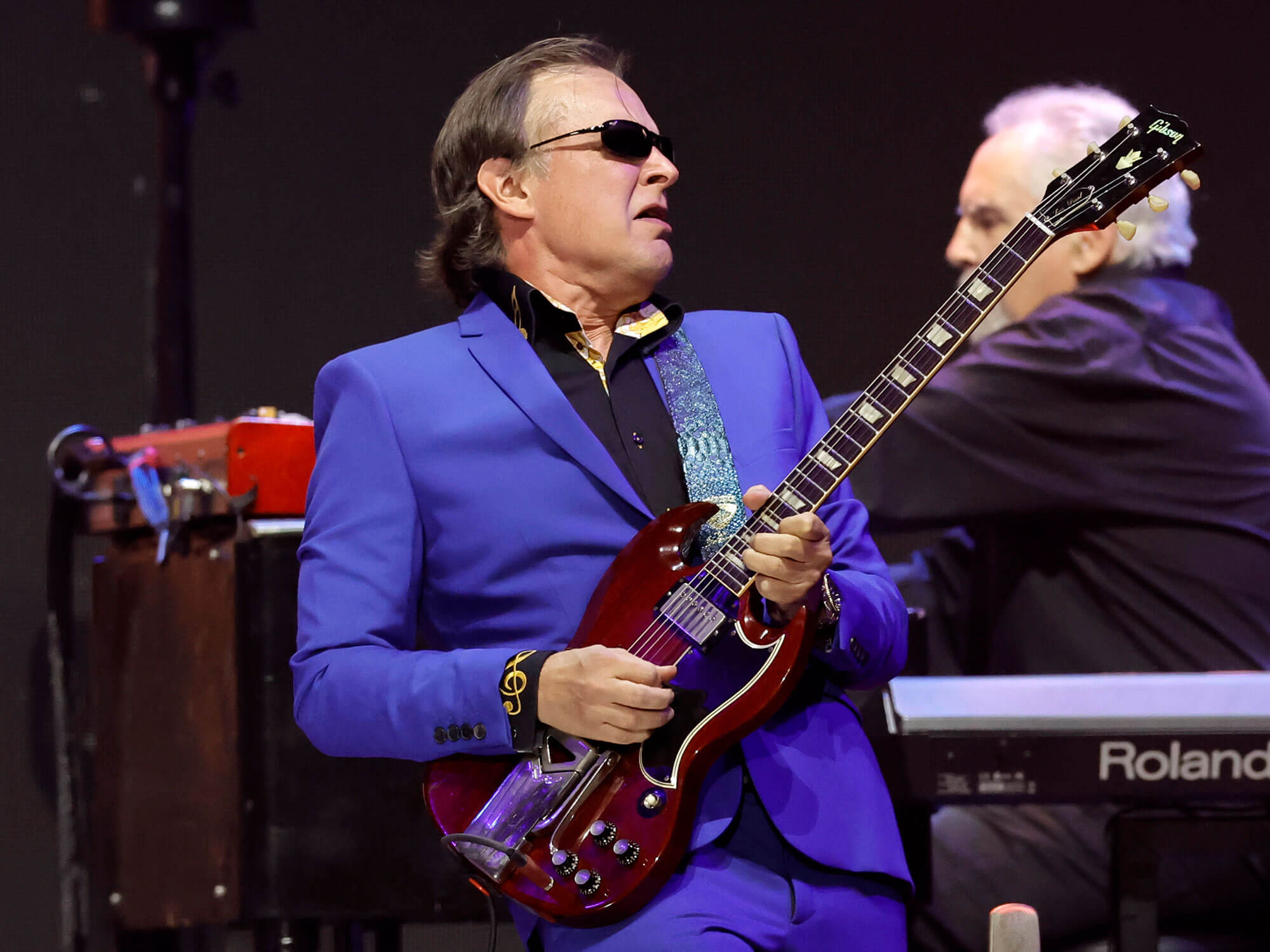
Joe Bonamassa has some timeless advice for guitar players – and a few thoughts on the “unappealing” habits that turn jam sessions into ego shows.
In a new interview for Gibson Gear Guide promoting his latest collaboration with Epiphone – the ’59 Les Paul Custom, a recreation of his “extremely rare” Gibson “Black Beauty” LP – Bonamassa lays out what he sees as a common bad habit among guitarists: failing to “read the room.”
“As a player, you’ve got to read the room,” says Bonamassa. “If you’re getting called up [onstage] for a jam, or called up for one song, there shouldn’t be a technical team in tow with a pedalboard the size of a Fiat.”
There’s no need, he adds, for an “F1 pit crew” just to play a three-minute jam. “Just plug straight in, man. We’re not making our careers here. Just use the volume and tone controls, and figure it out.”
His interviewer, Dinesh Lekhraj, then notes how Bonamassa practices what he preaches in his own sessions, often plugging straight into whatever amp’s available in the room during shoots.
“I think we get caught up in, ‘Is the tone right? Is the volume right?’” says Lekhraj.
“Exactly,” Bonamassa replies. “And if you want a Tube Screamer or something like that, great. Stick it on the amp and go.”
“If it’s your gig and if it’s your situation and you set it up, then yeah, go down as many rabbit holes plug it all in – because that’s your gig. I mean, if you’re sitting in with somebody, that’s a little different story.”
The guitarist also describes how “unappealing” it is when jam sessions spiral into all-out guitar duels.
“I’ve been onstage plenty of times with five or more guitar players, and the greatest asset you have at your disposal is the volume control,” says Bonamassa. “When somebody’s soloing and there are five guitar players, it shouldn’t be on.”
“Leave some space,” he continues. “And then when they point to you, go for it. You wanna make music for music’s sake and not your sake. The days of those Ralph Macchio and Steve Vai duels are long gone. It is so unappealing to sit there and watch that go down.”
That said, Bonamassa admits there’s one exception to that rule.
“The only time I’ll do it – and it’s fun because I love the man and we have such a mutual respect for one another – is when Eric Gales gets onstage,” he says. “We both know we’re going to get a black eye and a bloody nose. We’re going for it, and the crowd loves it.”
“But it serves a purpose because it’s a spectacle, it’s P.T. Barnum juggling a polar bear on a unicycle. But in other situations, you want to be respectful to your fellow players.”
The post The common guitarist bad habit Joe Bonamassa finds “so unappealing” appeared first on Guitar.com | All Things Guitar.
Martin Road Series SC-10E review: “I’ve played every iteration of the SC platform that Martin has produced and this one is my favourite”

$1,099/£999, martinguitar.com
Martin first debuted the hugely polarising SC acoustic guitar back in 2020 – a radical and bold move for America’s oldest surviving guitar brand that put offset looks and maximum playability at the forefront of things.
Many thought it would be a flash in the pan excursion at the time, but in the five years since, Martin has continued to iterate on the concept, gradually making the SC a more and more accessible and affordable acoustic guitar model.
For 2025, Martin has moved the Mexico-made SC-10E into the Road Series – and in doing so has made it the most affordable and accessible SC model yet.
 Image: Press
Martin SC-10E – what is it?
You may remember Guitar.com reviewing a Mexico-made SC-10E a few years ago, and given that you’re well within your rights to enquire as to whether we’re just reviewing the same product twice here – because on the surface the Road Series SC-10E seems pretty damn similar to the previous version
So you get the same super-thin satin natural finish over the body and neck, you get a spruce top and a select hardwood neck (the term Martin uses as a catch-all for Honduran mahogany, Spanish cedar, Sapele, Sipo, and African mahogany – it can be any of these depending on the supply situation), and you get the same ultra-playable Low Profile Velocity neck profile.
You also get that all-important Sure Align Linear Dovetail Neck joint. This means there’s a securing bolt in the back of the body and a neck shim inside the body that allows you to set your own neck height preference for maximum player comfort. Inside you’ll also find the SC-specific Tone Tension X-bracing inside, and the same Fishman MX-T electronics system inside.
So what is different? Well quite a big thing actually – the original SC-10E had a koa laminate back and sides, whereas this guitar sports an all-sapele arrangement. Less importantly, the headstock has been overhauled visually – gone are the black matt tuners and dark-stained fascia, replaced with a more classic rosewood-capped Martin peghead and chrome tuners.
 Image: Press
Martin SC-10E – feel and sounds
Obviously, from the sheer look of the thing you can tell from the outset that this is not your traditional Martin guitar, and so it is when you pick it up and start playing. The all-over satin finish makes the guitar instantly more comfortable and playable out of the gate – and what’s more, you aren’t muffling the vibration of the wood with a thick gloss coating either.
In practice, this means that the guitar is vibrant and rings clearly with plenty of midrange. Sapele is a similar wood to mahogany, and so you have that inherent warmth that sets this guitar apart tonally somewhat from the brighter and more direct sound of koa. You don’t get the boominess or higher trebles that you might find in a traditional Martin dread, but the tradeoffs are plain to see.
Because ultimately, the real reason someone picks up an SC model is the playability, and here it really does still feel like no other acoustic guitar on the market. The combination that the body shape, neck join and the profile all combine to make this a guitar that plays like an electric without ever not feeling like an acoustic – you can go to places you’d have never considered on a regular flat-top, but it still keeps the inherent tone, vibration and heft that you don’t get in a crossover or hybrid instrument.
Plugged in, the Fishman system does a nice job of replicating the guitar’s inherent tonality – it’s full and warm plugged in, but still midrange forward, which works great backing up vocalists or yourself. The built-in tuner is also very accurate, and is bright and clear enough to easily see on a dimly-lit stage.
 Image: Press
Martin SC-10E – should I buy one?
If you’re looking for a traditional Martin look, sound and feel, obviously the SC-10E is not for you, but provided that you’re not put off by the asymmetrical body style, there are more reasons to try one of these guitars out than not.
I’ve played every iteration of the SC platform that Martin has produced and this one is my favourite. I prefer the warmer frequencies that the sapele wood generates compared to the koa version, and I like the more restrained and traditional cosmetics here. Because when you’re sat playing it, this feels and sounds every inch a classic Martin guitar – but with a level of playability that opens up a whole new musical plain for you to explore.
You also can’t really knock the price – at barely over $1,000 this is the most affordable SC guitar yet, which should help put the guitar in the hands of more curious and experimental players who will truly maximise its potential. And that’s a good thing for everyone.
 Image: Press
Martin SC-10E – alternatives
A more overtly hybrid electric option that blends electric playability with acoustic tones is the Taylor T5z Classic ($2,499). Another offset hybrid acoustic-electric guitar is the Fender Acoustasonic Player Jazzmaster ($1,299/£1,049), while the Highway Series Dreadnought ($999/£849) offers a classic shape with an ultra-thin body. If your main concern is sounding great plugged in while having a more ergonomic body design, the LR Baggs AEG-1 ($1,599) is a remarkable amplified acoustic.
The post Martin Road Series SC-10E review: “I’ve played every iteration of the SC platform that Martin has produced and this one is my favourite” appeared first on Guitar.com | All Things Guitar.
Stompboxtober 2025: Hotone

Don’t just echo—immerse. Enter today’s #Stompboxtober giveaway for a chance to WIN the Hotone Verbera convolution reverb — double engines, 120 built‑in IRs, stereo magic, and sonic depth to lose yourself in. Come back tomorrow for your next shot at gear you’ll love!
Stompboxtober 2025 - Win Pedals All Month Long!
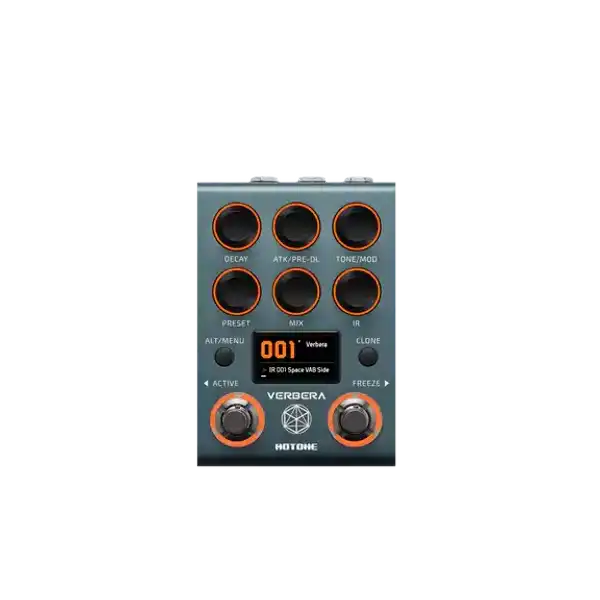
Ever imagined your sound echoing through a sold-out stadium? Or reverberating off the metallic walls of a NASA spacecraft hangar? What if your guitar fell into a cosmic white hole… or drifted through the vaulted ceilings of a centuries-old cathedral?
Welcome to Verbera — where imagination meets reality. This is not your typical software convolution plugin. Verbera is a standalone, hardware-based convolution reverb pedal — with Instant IR loading, stunning tweakability, and boundless sonic range. Whether you’re recreating iconic spaces, vintage hardware, or crafting otherworldly reverbs never heard before, Verbera gives musicians and engineers a powerful new tool for both live and studio setups.

Hotone Verbera Convolution Reverb Pedal
Neural NanOS 2.0.0 Review
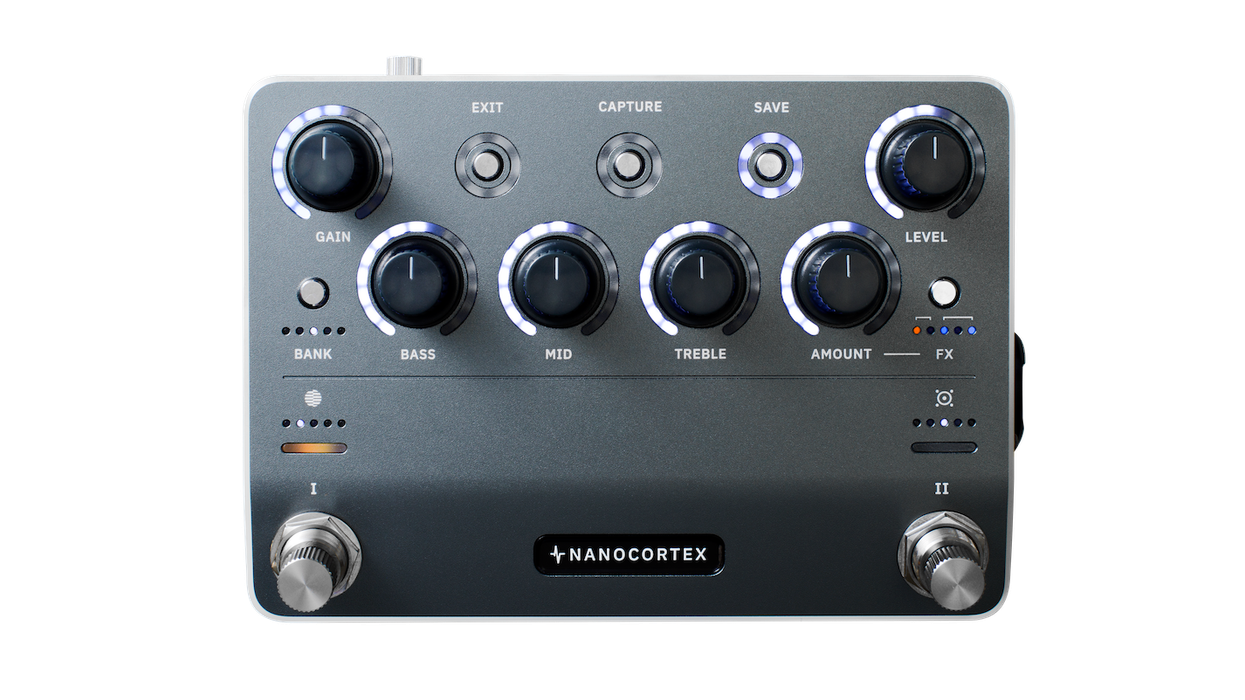
Neural DSP’s Nano Cortex for dyed-in-the-wool analog advocates new to the concept, is a whole rig—digital amp, cabinet simulator, effects unit, and capture device—in a box. It’s also a 24-bit, 48k Hz audio interface that can be powered by a laptop or power bank via USB-C. We reviewed the Nano Cortex upon its release in 2024. Like any new release, it left some hardcore users wanting for certain features. Some users found the effects roster underwhelming. There were also limitations about where you could situate effects relative to an amp capture. With a raft of new effects and greater flexibility, though, Neural’s 2.0.0 update addresses many concerns of power users and casual adopters alike.
Ever Evolving Technology
When the $549 Nano Cortex was released, it was a hit. The idea of a small, pocket-sized version of a Quad Cortex that weighs only 1.36 pounds—and at a third of the cost—had many guitarists drooling. But the truth is that while they are part of the same lineage, the Nano Cortex can’t match the flexibility of the Quad Cortex. This led to some confusion, and in some cases, unmet expectations.
The new, free NanOS 2.0.0 update addresses some of those letdowns with a much-expanded collection of 47 new effects—including dirt options, which, oddly, weren’t offered in the first OS version. (There is, however, only a single fuzz—a Fuzz Face emulation—which hints at the challenges of successfully modeling fuzz’s more chaotic nature.) There’s also an IR loader and global bypass to turn off IRs on all presets when you play the Nano Cortex through a real cabinet. The more customizable signal chain is also a very big deal.
The effects slots are more flexible, too. EQs and compressors can be set up in any slot—pre-or-post capture. Overdrive and wah effects can go into any pre-capture slots, while modulation, delay, and reverbs are assigned slots in the post-capture area. (The tape delay is warm, and a highlight.) Delay is only available in post-capture slot 2, before the reverb, which can only be slotted in post-capture 3 position. As you can see, NanOS 2.0.0 has opened up more possibilities, but limitations remain, especially for players that experiment with unorthodox setups.
Magic in the Clouds
Unlike the Quad Cortex, the Nano does not have a 7" touchscreen and the controls are very utilitarian. There are a few knobs and two hybrid footswitches/rotary knobs, but to really maximize the potential of the unit and manage your presets, you need to use Neural DSP’s Cortex Cloud app with your phone or tablet.
NanOS 2.0.0 has opened up more possibilities, but limitations remain—especially for players that experiment with unorthodox setups.The app makes things way easier, and using the Nano Cortex without it seems almost unimaginable. However, if your phone is the main interface, you can’t use your phone simultaneously for other common functions like filming videos at a gig or playing backing tracks. That said, the app lets you do a lot …once you get up and running. I can generally get around the basic functions of most multi-effects modeler-type systems, but being new to the Neural DSP ecosystem, it took me some time to get a workflow going. When I got it all figured out, the app made it very easy to instantaneously control parameters, maneuver complete signal chains, and capture pedals and amps.
Captivating Captures
Using the Nano Cortex, I easily captured the hi and lo channels of my Mesa/Boogie Flux Five, as well as the vintage, modern, and combined vintage-plus-modern modes of my Wampler Dual Fusion. I initially set up a lead sound with delay from my Yamaha UD Stomp situated after the Flux Five, but learned the hard way that a “capture” is a moment in time that cannot accommodate time-based effects.
Using a Shure SM57 mic, I captured the clean tones from my Ampeg SJ12-R and vintage black-panel Fender Deluxe combos. Each capture took about three minutes and nailed the sound. Impressively, the touch-sensitive qualities of the pedals and amp were present—I could dig in hard or play soft, and feel the Nano Cortex respond just like my Dual Fusion pedal and amps. One bummer about those clean Fender Deluxe sounds, though: The new effects in NanOS 2.0.0 do not include tremolo or spring reverb—a strange omission given how many vintage Fender amps fans exist among the Neural user community. That omission aside, I enjoyed the ethereal cave reverb effect and assigned it to one of my clean captures to satisfying effect.
In addition to allowing you to capture your own gear, the Nano Cortex also comes with many preloaded captures of amps like the Mesa/Boogie JP2C, Marshall Silver Jubilee, and Peavey 5150, among many others. There are also 10 IRs and two pre-and three post-FX blocks. And the Cortex Cloud app offers a ton of free presets, which have a complete chain of captures and effects from artists like Plini and Cory Wong.
The Verdict
I recently balked at using a favorite vintage ’60s Fender tube amp for a bar gig as visions of spilled beer filled my head. Instead, I used a pretty underwhelming solid-state alternative. But if I had had the Nano Cortex, I could have used captures of that vintage Fender, a few pedals, and put the whole setup in my gig bag. That part of the Nano Cortex experience remains a game changer. But as the incremental improvements in the NanOS 2.0.0 show, there is still ground to cover.
Neural NanOS 2.0.0 Review
Neural DSP’s Nano Cortex for dyed-in-the-wool analog advocates new to the concept, is a whole rig—digital amp, cabinet simulator, effects unit, and capture device—in a box. It’s also a 24-bit, 48k Hz audio interface that can be powered by a laptop or power bank via USB-C. We reviewed the Nano Cortex upon its release in 2024. Like any new release, it left some hardcore users wanting for certain features. Some users found the effects roster underwhelming. There were also limitations about where you could situate effects relative to an amp capture. With a raft of new effects and greater flexibility, though, Neural’s 2.0.0 update addresses many concerns of power users and casual adopters alike.
Ever Evolving Technology
When the $549 Nano Cortex was released, it was a hit. The idea of a small, pocket-sized version of a Quad Cortex that weighs only 1.36 pounds—and at a third of the cost—had many guitarists drooling. But the truth is that while they are part of the same lineage, the Nano Cortex can’t match the flexibility of the Quad Cortex. This led to some confusion, and in some cases, unmet expectations.
The new, free NanOS 2.0.0 update addresses some of those letdowns with a much-expanded collection of 47 new effects—including dirt options, which, oddly, weren’t offered in the first OS version. (There is, however, only a single fuzz—a Fuzz Face emulation—which hints at the challenges of successfully modeling fuzz’s more chaotic nature.) There’s also an IR loader and global bypass to turn off IRs on all presets when you play the Nano Cortex through a real cabinet. The more customizable signal chain is also a very big deal.
The effects slots are more flexible, too. EQs and compressors can be set up in any slot—pre-or-post capture. Overdrive and wah effects can go into any pre-capture slots, while modulation, delay, and reverbs are assigned slots in the post-capture area. (The tape delay is warm, and a highlight.) Delay is only available in post-capture slot 2, before the reverb, which can only be slotted in post-capture 3 position. As you can see, NanOS 2.0.0 has opened up more possibilities, but limitations remain, especially for players that experiment with unorthodox setups.
Magic in the Clouds
Unlike the Quad Cortex, the Nano does not have a 7" touchscreen and the controls are very utilitarian. There are a few knobs and two hybrid footswitches/rotary knobs, but to really maximize the potential of the unit and manage your presets, you need to use Neural DSP’s Cortex Cloud app with your phone or tablet.
NanOS 2.0.0 has opened up more possibilities, but limitations remain—especially for players that experiment with unorthodox setups.The app makes things way easier, and using the Nano Cortex without it seems almost unimaginable. However, if your phone is the main interface, you can’t use your phone simultaneously for other common functions like filming videos at a gig or playing backing tracks. That said, the app lets you do a lot …once you get up and running. I can generally get around the basic functions of most multi-effects modeler-type systems, but being new to the Neural DSP ecosystem, it took me some time to get a workflow going. When I got it all figured out, the app made it very easy to instantaneously control parameters, maneuver complete signal chains, and capture pedals and amps.
Captivating Captures
Using the Nano Cortex, I easily captured the hi and lo channels of my Mesa/Boogie Flux Five, as well as the vintage, modern, and combined vintage-plus-modern modes of my Wampler Dual Fusion. I initially set up a lead sound with delay from my Yamaha UD Stomp situated after the Flux Five, but learned the hard way that a “capture” is a moment in time that cannot accommodate time-based effects.
Using a Shure SM57 mic, I captured the clean tones from my Ampeg SJ12-R and vintage black-panel Fender Deluxe combos. Each capture took about three minutes and nailed the sound. Impressively, the touch-sensitive qualities of the pedals and amp were present—I could dig in hard or play soft, and feel the Nano Cortex respond just like my Dual Fusion pedal and amps. One bummer about those clean Fender Deluxe sounds, though: The new effects in NanOS 2.0.0 do not include tremolo or spring reverb—a strange omission given how many vintage Fender amps fans exist among the Neural user community. That omission aside, I enjoyed the ethereal cave reverb effect and assigned it to one of my clean captures to satisfying effect.
In addition to allowing you to capture your own gear, the Nano Cortex also comes with many preloaded captures of amps like the Mesa/Boogie JP2C, Marshall Silver Jubilee, and Peavey 5150, among many others. There are also 10 IRs and two pre-and three post-FX blocks. And the Cortex Cloud app offers a ton of free presets, which have a complete chain of captures and effects from artists like Plini and Cory Wong.
The Verdict
I recently balked at using a favorite vintage ’60s Fender tube amp for a bar gig as visions of spilled beer filled my head. Instead, I used a pretty underwhelming solid-state alternative. But if I had had the Nano Cortex, I could have used captures of that vintage Fender, a few pedals, and put the whole setup in my gig bag. That part of the Nano Cortex experience remains a game changer. But as the incremental improvements in the NanOS 2.0.0 show, there is still ground to cover.
Stompboxtober 2025: Ernie Ball
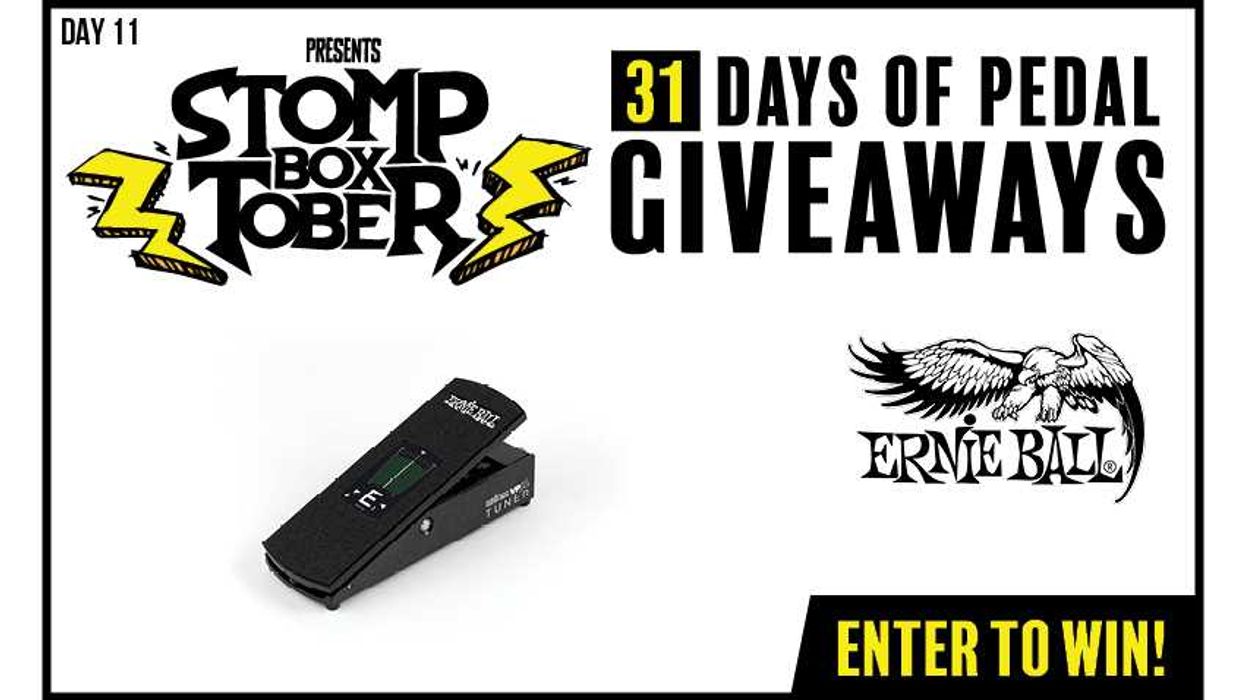
Tune and control in one sweep! Enter today’s Stompboxtober giveaway for your chance to WIN the Ernie Ball VP Jr. Tuner/Volume Pedal — get silent tuning, full volume control, and sleek efficiency all in one pedal. Don’t forget to come back tomorrow for another stellar giveaway!
Stompboxtober 2025 - Win Pedals All Month Long!
Ernie Ball VPJR Tuner Pedal
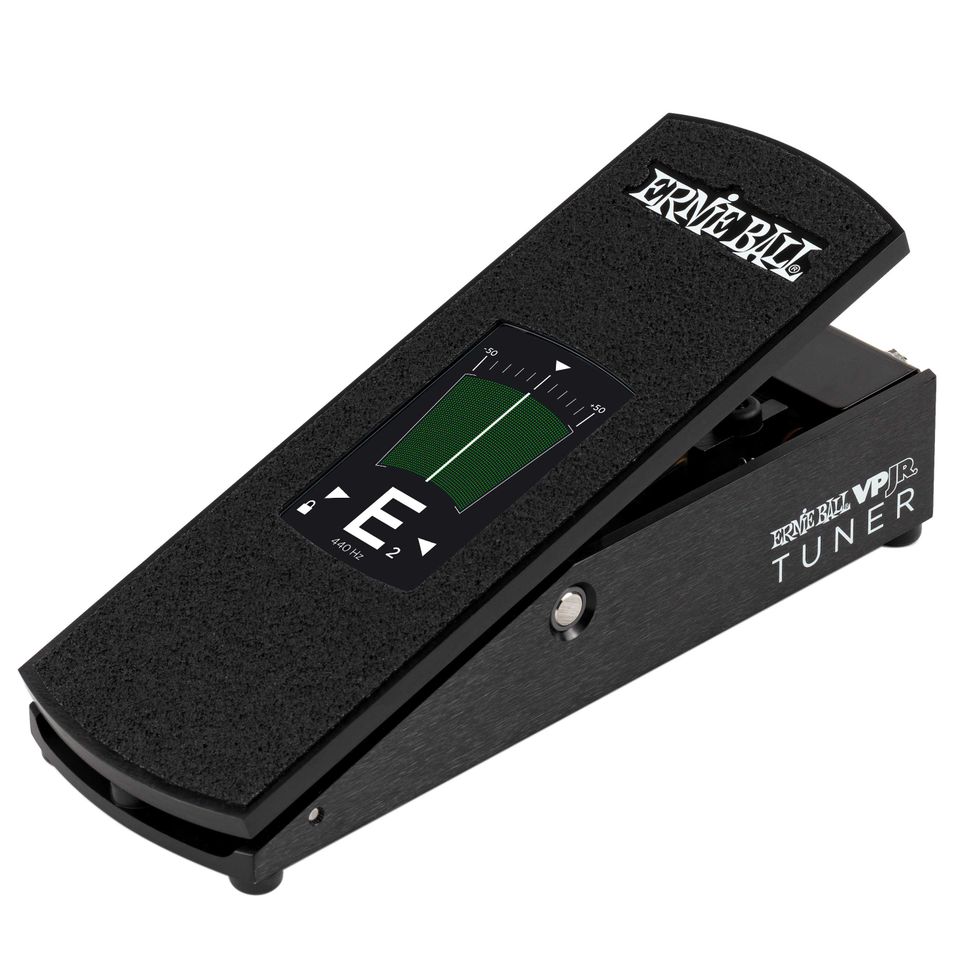
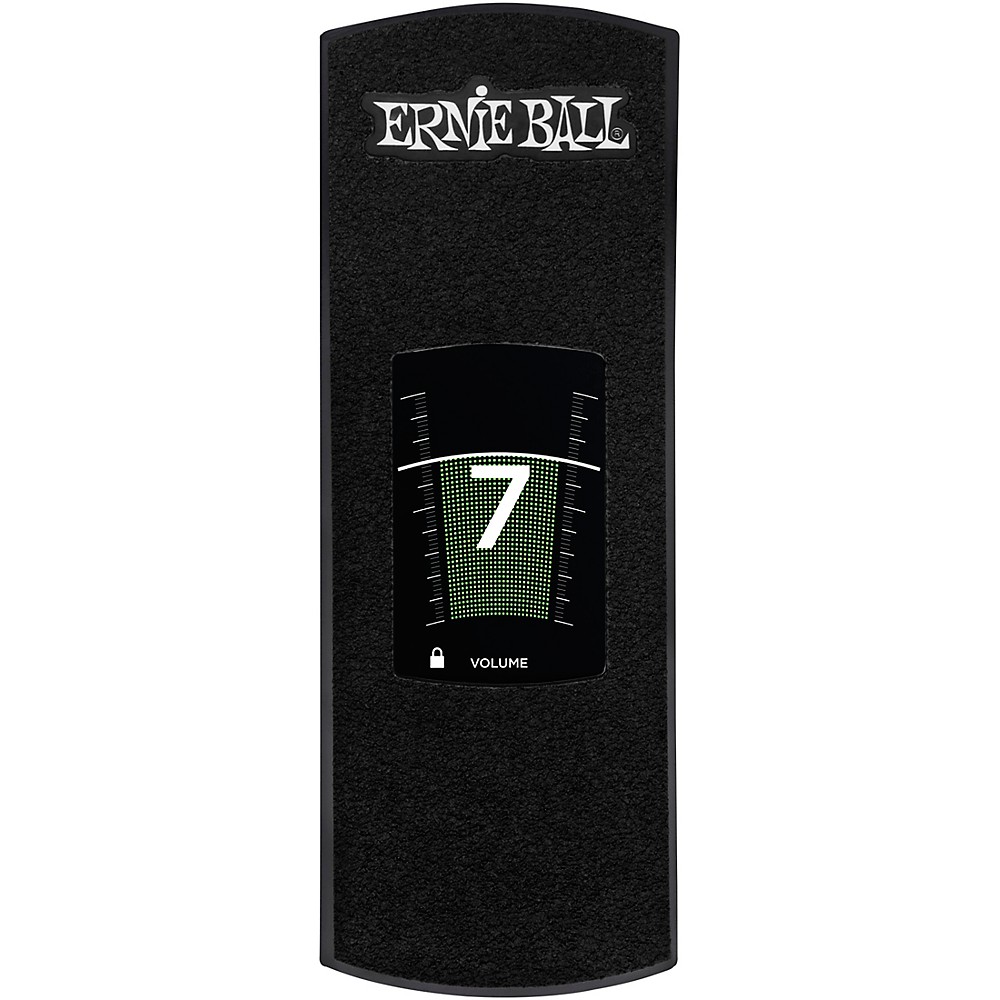
The VPJR Tuner pedal combines Ernie Ball’s world-renowned volume pedal with an enhanced definition digital guitar tuner. In the heel-down position, the pedal’s vibrant touchscreen automatically enters tuner mode, allowing for silent tuning. As the foot sweeps forward, the screen switches to volume mode, providing a graphic display of your volume level. Alternatively, the screen can remain in volume mode or tuner mode, regardless of the pedal’s position in the sweep. Simply double tap on the touchscreen to toggle between modes. The VPJR Tuner provides the same rugged construction and time-tested performance as Ernie Ball’s traditional volume pedal.
Ernie Ball VPJR Tuner Volume Pedal Black
Willie Nelson and the Lost Art of Relentless Creation
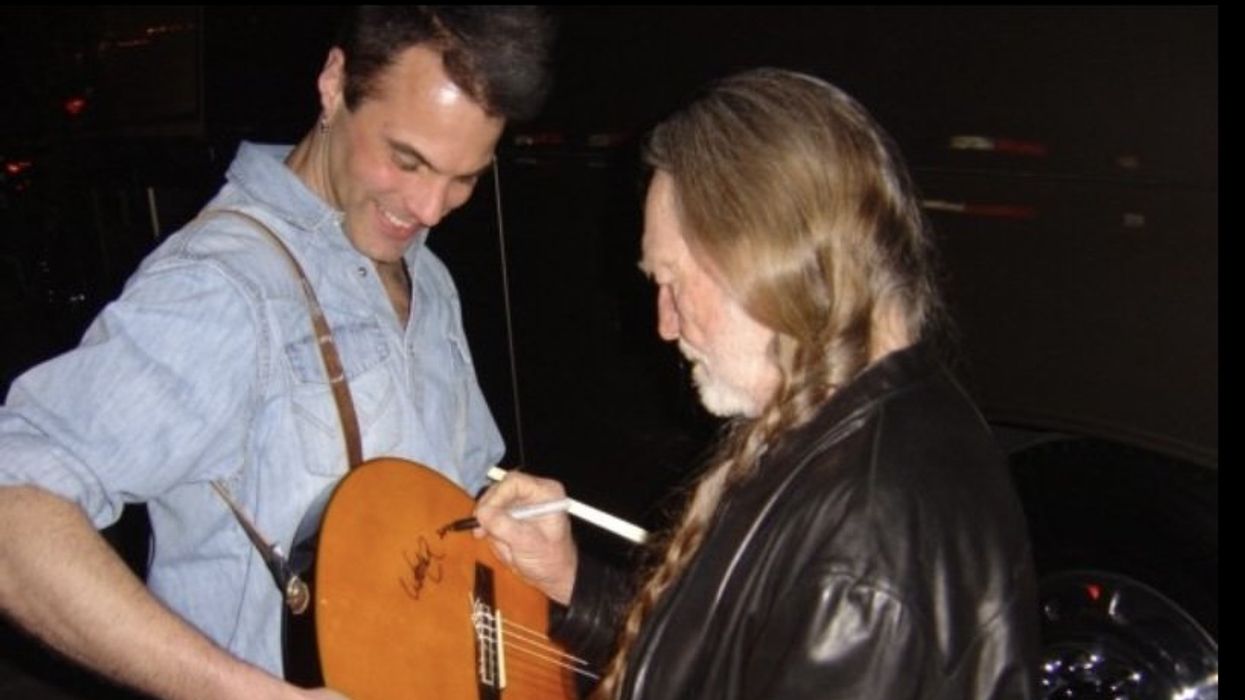
Over the years, I’ve done two TV shows with Willie Nelson—Nashville Star in 2004, and a CMA award show a few years later. On TV sets, there’s a lot of standing-around time while producers fiddle with lights and other details. What struck me both times was that whenever the action stopped, Willie did not stand around: He’d get on the ground and rip out a bunch of pushups. No wonder that today, at 92, Willie Nelson is still out there, braids swinging and beating Trigger, his Martin N-20 he bought new in 1969, like it owes him money. Willie and that guitar have both ridden some hard miles that have left them a bit threadbare, but to my ears, their voices are a bit warmer, softer, and darker for it—like weathered tapestry. You have to marvel at his endurance. In an era where artists tour sparingly and drop albums like rare comets, Willie Nelson is a throwback to a time when musicians lived to play and create, night after night, record after record.
Willie’s numbers tell the story. Since his debut album, …And Then I Wrote, in 1962, he’s released 153 albums—76 solo studio records, 26 collaborations, 14 live albums, 51 compilations, and soundtracks like The Electric Horseman and Honeysuckle Rose. That’s roughly 2.5 albums per year over 62 years. His latest, 2024’s Last Leaf on the Tree, proves he’s still got something to say. Compare that to today’s artists: Many release an album every two to three years, often with heavy promotion and long breaks. Billie Eilish, a generational talent, has three albums since 2019. Taylor Swift, a prolific outlier, has averaged roughly one album per year since 2006. Willie’s output dwarfs them all.
Then there’s the road. Estimating Willie’s live shows is like counting stars, but conservative math suggests he’s played 4,700 to 10,000 gigs since the 1950s. In his peak decades (1960s–2010s), he averaged 50–100 shows annually, from honky-tonks with Ray Price to headlining Farm Aid, which he co-founded in 1985. A 2018 Rolling Stone piece noted that even at 85 he was still clocking 100 dates a year. That same year, his harmonica player, Mickey Raphael, claimed to have played over 5,400 shows with Willie since 1973. Today’s artists? Many cap tours at 20–50 dates, citing burnout or “self-care.” The contrast is stark: Willie’s work ethic is a relic of a bygone era.
Why the difference? Part of it is cultural. In Willie’s day, musicians survived on gigs and records, not streams or brand deals. The 1960s and ’70s demanded constant output—labels expected albums, fans expected shows. Willie, Waylon, and the Outlaw crew thrived in that grind, playing dives and arenas alike. Today, streaming platforms prioritize singles over albums, and social media rewards viral moments over sustained creation. Artists can tour less and still profit through merch and sync deals. Willie’s era had no such shortcuts.
But it’s not just economics. Willie’s drive feels existential. Born in 1933, he’s outlived the male life expectancy of his time (59.1 years) and today’s (74.8 years). Despite early years of heavy smoking and drinking—traded for marijuana in 1978—Willie’s still here, defying odds. I suspect it’s because he has to create. Music isn’t just his job; it’s his oxygen. Compare that to modern artists who pause careers for side hustles or other non-musical reasons. There’s wisdom in balance, but Willie’s relentless output suggests purpose fuels longevity.
He’s got things to do, but he never seems rushed … he’s just always moving. Like his 1993 song says: “Still is still moving to me / I swim like a fish in the sea all the time / But if that’s what it takes to be free, I don’t mind / Still is still moving to me / Still is still moving to me.”
Willie cut his classic 1975 record, Red Headed Stranger, in a week, and on a shoestring budget. It’s not a polished effort, but it carries a lived-in authenticity, each track a snapshot of a moment. Today’s overproduced tracks can feel like products, not stories. Stranger feels like Willie is an old friend sitting in your living room, singing his story.
What can we learn from Willie? For musicians, it’s a reminder that creation is a muscle—use it or lose it. The road, the studio, the stage … these are where songs are born, not in boardrooms or Instagram reels. Willie’s not chasing trends; he’s chasing truth. His 153 albums aren’t all masterpieces, but they’re all him. Modern artists could take a cue: make more, fear less. Quantity breeds quality when you’re unafraid to fail.
Willie has had plenty of tragedy and struggle, but one of his superpowers is his ability to let go of worry and lean into the good in life. As he has said, “Worry will make you sick. I’ve never seen it accomplish anything. I’ve never seen worrying about something change it, so I decided not to do it. Every negative thought you have releases poison into your system … so if you’re thinking negatively about something, erase that.”
In a world of fleeting hits and curated personas, he’s a beacon of what it means to live for the music. Maybe that’s why he’s still here, outlasting time itself.
Finding Dissonance in Tonality
This is a lesson in what I call “finding dissonance in tonality.” The goal here is to focus on creating arpeggiated chord shapes and riffs that use tense intervals like 2nds, tritones, and 7ths, while still remaining in a particular key signature. This creates a haunting and moody sound that I often like to think of as “pretty dissonance.” In these examples we will find progressions that are dissonant yet still diatonic. It is a sound I use quite often in my own music and one that my ears are naturally drawn to.
Ex. 1
Ex. 1 demonstrates this concept by picking a key—in this case A minor. Then, I decide on a modal sound in that key (D Dorian). Next, we construct chord shapes in that key to include things like stacks of 2nds, or tritones mixed with 2nds. We have to look at our key signature and find which notes give us 2nds, tritones and 7ths. In this case, the notes we want to utilize are B and C, and E and F for our minor 2nds (or major 7ths depending on which note is in the bass). We’ll use A and B, D and E, and G and A for our major 2nds, and F and B for our tritones.
You might find that this example has a pleasing sound, despite the dissonance, since Dorian has a dreamy and nostalgic feeling to it. Yet the particular mix of intervals gives it a certain tension. The stretches here can be challenging, and there is a bit of movement around the neck. This example sounds best when played with a clean sound with all the notes ringing out together. We also have some time signature changes to keep us paying attention as well.
Ex. 2
For Ex. 2, we’re in the key of G major and are focusing on using a combination of 2nds, tritones, and 7ths to create some lush modal chords. The tension in these chords in particular is created by the G root note of chord one ringing against the F# on the D string, creating a major 7th. Then, we have that same F# hitting a C to create a tritone. Finally, the C to open B string at the top is creating a minor 2nd. Chord two has the major 7th again with the low C to B, then we have a major 2nd with the E to F#, and at the top of the chord, that same F# against the open E, creating another major 2nd. The final chord uses tritones again with the F# to C and then up to F# again. The top of the chord has an A to open B creating a major 2nd. This is a good example of how to create uplifting, major-key progressions that have a little spice to them.
Ex. 3
Ex. 3 takes the same chords of Ex. 2 but “octave displaces” certain notes to create wider spread voicings. The note relationships are still the same, it’s just that some notes have now been placed an octave higher throughout the progression. This makes it a bit more challenging to play, so I’ve taken the bpm down a bit. In general, I recommend practicing these very slowly at first and aiming for clarity and articulation. Utilizing the approach of octave displacing can create some very interesting melodic sequences. It is a fantastic way of creating a variation out of something you’ve already written.
So far these examples have been fairly light and bright sounding despite the dissonance in the chords. Ex. 4 gets a little darker and more tense. It’s also in 5/4 time. Based in the key of D minor, this riff heavily focuses on using minor 2nds. First, I look at the key signature, which has one flat: Bb. Next, I find which notes in the D minor scale give me minor 2nds. These notes are A to Bb and E to F. Bb to E also gives me a tritone. Once again, there is a bit of movement all around the neck in a short amount of time.
Ex. 5
Ex. 5 is again in D minor but more of a lower-register riff. In this example, I also use a somewhat tense interval we haven’t talked about yet, the minor 6th. In the first three notes of the example, we have a D to an A. Nothing tense there, just a perfect 5th. Next, though, is an A to a Bb—a minor 2nd. In addition, the relationship between notes one and three is a minor 6th. This interval appears again as the last dyad in the first bar. Those first three notes (D, A, and Bb) give us a sus b6 chord shape. I first came across this chord in the song “Guardian” by Fates Warning. Their guitarist Jim Matheos uses a lot of these haunting interval combinations, which became an influence on me early on in my playing.
Ex. 6
I encourage you to find some chords and progressions of your own that take inspiration from this approach. I’ll leave you with Ex. 6, a simple way to start. Take some basic major and minor chord shapes and add extensions to them like 2nds, 4ths, 6ths, etc. Chord one is an Am(add9), which is the 2nd moved up an octave. Chord two is a Cmaj(add#4). Chord three is a Bm(add11/b9). Chord four can be thought of as an inversion of Cmaj(add#4). The E in the bass makes it sound very dark. Those new scale tones create extra tension and dissonance and automatically make what you’re playing sound more evocative. Try these ideas out and see what paths they take you down!
Five covers EPs I always loved
Some bands build their early careers on a well-placed cover, like Van Halen blasting right out of
the gate with a redefining take on The Kinks’ “You Really Got Me.” Some bands make a point of
avoiding covers altogether. And some love their covers so much that at a certain point in their
career they’ll release an entire album of covers (and there’s a great list of them here). Buried
somewhere in the middle of it all though is the covers EP. For many listeners a covers EP hits a
certain sweet spot: enough tracks to feel like a little treat, not so many as to lose focus or have
listeners impatiently drumming their fingers waiting for the next album of original material. A
covers EP says “dude, listen to these songs that we loved when we were starting out” but it
doesn’t say “and you must listen to everything I listened to in order to understand where I’m
coming from.” There are countless covers EPs out there but these are my personal favorites.
Skid Row – B Side Ourselves

“Psycho Therapy” (Ramones)
“C’mon and Love Me” (KISS)
“Delivering the Goods” (Judas Priest)
“What You’re Doing” (Rush)
“Little Wing” (The Jimi Hendrix Experience)
Skid Row released this EP between their Slave To The Grind and Subhuman Race albums, and
it stood out for me because in those pre-Spotify/YouTube/iTunes days you couldn’t simply
command a song to appear in your ears: you had to either catch it on the radio or encounter its
physical representation in the form of a CD or cassette. Wild, I know. So for me, this was the
first time I’d heard a song by The Ramones, and although I was already a Jimi Hendrix fan by
age 13 I hadn’t yet come across “Little Wing.” The Judas Priest cover features a guest
appearance by the metal god Rob Halford himself, and there’s an energy throughout this disc
which captures the power of Skid Row in this unique era, when they successfully survived the
last days of rock’s hair metal era and before grunge temporarily put the boot in to bands like
Skid Row. This was a band with the world at their feet and a song in their hearts.
Metallica – The $5.98 E.P.: Garage Days Re-Revisited

“Helpless” (Diamond Head)
“The Small Hours” (Holocaust)
“The Wait” (Killing Joke)
“Crash Course In Brain Surgery” (Budgie)
“Last Caress/Green Hell” (Misfits)
This EP represented Metallica’s first release with Jason Newsted on bass following the tragic
death of Cliff Burton, and the band chose to go back to their roots before diving in to new music.
These tracks are all available on the band’s 1998 Garage Inc double album too, but for me they
tell an entirely different story when heard in their original context instead of fitting in amongst
other covers, B-sides and one-offs. If Garage Inc is the story of a band using their platform as
The World’s Biggest Metal Band to shine a light on the songs that inspired them, Garage Days
Re-Revisited tells a story of a band who was struggling to cope with the emotion of the situation,
and who retreated to the comfort of the jam room and the songs that inspired them in their early
days before life became so complicated.
Stone Sour – Meanwhile In Burbank…

“We Die Young” (Alice In Chains)
“Heading Out To The Highway” (Judas Priest)
“Love Gun” (KISS)
“Creeping Death” (Metallica)
“Children Of The Grave” (Black Sabbath)
I get a feeling we’ll be seeing more of this as time goes on: covers EPs that feature songs
released post-1990. While most of Stone Sour’s recent covers EP (the first of a trilogy) focuses
on tracks from the 1980s, the inclusion of Alice In Chains’ “We Die Young” acknowledges AIC’s
rightful place in the Great Heavy Rock Songbook. It’s interesting to note that this EP features
songs by Judas Priest and KISS, just like Skid Row’s. And it’s also cool to see a band paying
tribute to Metallica, who have done so much to share cool covers with the world.
Red Hot Chili Peppers – Rock & Roll Hall of Fame Covers EP

“A Teenager in Love” (Dion and the Belmonts)
“Havana Affair” (The Ramones)
“Search and Destroy” (Iggy Pop and James Williamson of The Stooges)
“Everybody Knows This is Nowhere” (Neil Young)
“I Get Around” (The Beach Boys)
“Suffragette City” (David Bowie)
The Chili Peppers released this EP in 2012 as an iTunes-only digital download to celebrate their
induction in the Rock & Roll Hall Of Fame. The idea was to pay tribute to other bands who came
before them in joining the ranks of the Hall. The tracks themselves date from between 1991 and
2011, with three guitarists represented: John Frusctiante, Dave Navarro and Josh Klinghoffer.
Rush – Feedback

“Summertime Blues” (Eddie Cochran/Jerry Capehart)
“Heart Full of Soul” (The Yardbirds)
“For What It’s Worth” (Buffalo Springfield)
“The Seeker” (The Who)
“Mr. Soul” (Buffalo Springfield)
“Seven and Seven Is” (Love)
“Shapes Of Things (The Yardbirds)
“Crossroads” (Robert Johnson, Cream)
Alright, this one is probably long enough to qualify as an album if you really wanna stretch it, but
this eight-song release clocks in at just over 27 minutes. While most of the EPs covered (ha!) in
this list feature songs from the ‘metal and onwards’ era, Rush’s reflects an earlier era, an era we
now think of as ‘classic rock.’ Heck, it even includes two songs apiece by Buffalo Springfield and
The Yardbirds, and you might as well count “Summertime Blues” as a The Who song too and at
them to the ‘two songs by…’ list. What’s really great about Feedback is that it gives the listener
a clear indication of where Rush derived their energy, yet it provides virtually no hints
whatsoever as to how they developed such a progressive, iconic sound of their own.
Page Title: Five Great Covers EPs
Page Description: Here are five great covers EPs by Metallica, Stone Sour, Red Hot Chili
Peppers, Rush and Skid Row. What are your favorites?
Page Keywords: Metallica,Stone Sour,Red Hot Chili Peppers,Rush,Skid Row,Jimi
Hendrix,Black Sabbath,Judas Priest,Ramones,Alice In Chains,
The post Five covers EPs I always loved appeared first on I Heart Guitar.
Totally Guitars Weekly Update October 10, 2025
October 10, 2025 This week I spent a bit of time revisiting my Jim Croce albums. He was a big influence on me and I spent countless hours figuring out all his songs as each album was released. I even found myself singing most of them, although certainly not with the great style and delivery […]
The post Totally Guitars Weekly Update October 10, 2025 appeared first on On The Beat with Totally Guitars.
Pages
