
Music is the universal language
“Glory to God in the highest heaven, and on earth peace to those on whom his favor rests.” - Luke 2:14
Norse Guitar Feeds
Gretsch Synchromatic Falcon review – “this guitar is going to make Falcons a much more common sight on everyday stages”

$1,469.99/£1,299, gretschguitar.com
If we accept that the most recognisable and iconic electric guitars of all time are exclusively made by Fender and Gibson, the Gretsch Falcon might be the exception to that rule. Whether in the hands of Neil Young, Joe Strummer, John Frusciante or The Edge, the Falcon has established itself as a big, bold and blingy holy grail guitar for many musicians – though the eye-watering price tag has usually disqualified most people who aren’t rock stars from indulging their raptor reverie.
But now the velvet rope behind which the Falcon has existed for the last 70-odd years has been dropped, and now Gretsch are for the first time producing a Falcon that won’t cost as much as a small family car.
The catch? It’s made in China like many of Gretsch’s more affordable instruments, but interestingly this isn’t part of the popular Electromatic range – instead these new instruments form the bedrock of a new class that sits between Electromatic and the Japan-made Professional Series – the Synchromatic collection.
 Image: Adam Gasson
Gretsch Synchromatic Falcon – what is it?
For years now, Gretsch has been one of the worst offenders for giving products overly long and unnecessary names. So it’s quite nice to see a guitar that is just called “Synchromatic Falcon” without the jumble of numbers and letters that no human being outside of Gretsch shipping and handling can understand spaffed in there somewhere.
They can’t quit cold turkey however, and so this guitar is technically called the “Gretsch Synchromatic Falcon Hollow-body Single-cut with Bigsby”. That certainly goes a long way to explaining the basic makeup of this guitar without having to consult a spec sheet, but beyond that is an absolutely insane thing to call a product.
Imagine if the new iPhone was called the “iPhone 17 Pro Max with 6.9″ Super Retina XDR display, A19 Pro chip and a USB-C port”? That’s what Gretsch is doing every time and someone needs to stage an intervention.
Anyway, this is a classic Falcon in all the ways that are fundamental to the concept: a big, deep hollowbody guitar with a honkin’ great Bigsby and a bunch of flashy gold hardware.
How big? Well, it’s actually a teeny bit smaller than a Professional Series Falcon. The classic is 2.5” deep and 17” wide, while my example is more like 2.45” deep and 16.9” wide.
That is basically nothing, but does correspond to bang on 6cm deep and 44cm across, so I would guess this is probably to make the measurements more straightforward in a metric-using Chinese factory than anything else. Still, the more you know!
 Image: Adam Gasson
The Synchromatic range is designed to offer “upgraded materials and components, enhanced bracing, and authentic aesthetic features”, says Gretsch, and that’s clear to see when you look closer.
Perhaps the most notable change here in terms of construction is the new Semi-Arc bracing. This is a variation on Gretsch’s classic trestle bracing – which has two straight braces running down the top of the guitar, anchored with two sets of ‘feet’ to the guitar’s back – designed in the 50s to improve sustain and reduce unruly vibrations and thus feedback, at the cost of a little resonance.
Semi-Arc bracing effectively does away with one of these sets of feet, meaning that the bracing is now connected to the back only beneath the bridge. The thinking is that this still retains the advantages of trestle bracing while allowing more liveliness and resonance.
Elsewhere it’s all very Falcon – the body and neck are maple, you get a nice “Classic C” neck profile and 25.5-inch scale length, plus a bone nut and thumbprint pearly inlays on the ebony fingerboard. You even get a set of Grover Super Rotomatic tuners to keep things as stable as a Bigsby-toting laminate hollowbody can hope to be.
Finishes are a choice between classic white or black for the finish, and there’s an abundance of gold sparkly binding throughout – though the headstock is a disappointingly demure affair compared to the regular Falcon.
While there’s precedent for Falcons having the simple Gretsch logo on the peghead, it does feel rather underwhelming compared to the glorious bewinged ostentatiousness of the classic design – but I suppose costs have to be factored in somewhere.
That’s also something you’ll have to make peace with for two of the most important components. The Bigsby is a B60 with V cutout, but it’s a licensed version as opposed to the proper USA-made model, while the pickups are Gretsch’s own Hi-Fidelity Filter’Tron units – no TV Jones for those in the cheap(er) seats.
In happier news, the guitar ships with a deluxe Gretsch hard case – something that has been a glaring omission from the top end of the Electromatic line.
 Image: Adam Gasson
Gretsch Synchromatic Falcon – build quality and playability
Whenever an iconic guitar gets reimagined at a significantly reduced price point, the first thing you’re looking to ensure is that the inevitable corners that have been cut to get there don’t compromise the essence of what the guitar should be.
But for the Synchromatic Falcon, the initial impression is very positive indeed. Pulling it out of the case, it looks every bit the Falcon – the drab headstock ornamentation aside.
I happen to have a Japan-made Professional Falcon to hand and visually it really does stand up to muster on initial inspection. The binding and hardware are equally as vibrant and sparkly on both guitars, and you even get the same red jewel-encrusted control knobs for an extra bit of opulence.
White is obviously the classic Falcon colour, but I tend to think the black version here is actually the connoisseur’s choice – black and gold is a timeless guitar pairing, and it feels more gig-ready than the white’s ‘looks nice in a music video’ aesthetic.
On closer inspection, however, there are a few finishing issues that you would not expect on a near-$1,500 guitar. The binding is generally well applied, but there are a few areas where the binding has some tool marks and roughness, mainly in the f-holes, and there’s also an excess of glue around the heel which really should have been tidied up.
The fingerboard also has some unsightly residue above the 12th fret – something easily removed with a bit of wire wool but again, this is a $1,500 guitar and I’d expect a bit better on the QC/finishing side of things at this price point.
 Image: Adam Gasson
Most problematically, however, there’s a white blemish to the finish on the top of the neck just before the neck joint. It’s a tiny dot, but one that’s pretty visible against the black finish, and is also right in your eyeline as you look down at the guitar – it’s the sort of thing that you might not notice at first but you’d never stop noticing once you did.
I’d be surprised if this wasn’t an isolated issue – another Synchromatic guitar I have in for review has no such oversights – but it’s also the sort of thing that really should have been spotted and rectified before it left the factory.
Strapping it on, and while a hollowbody is never going to be a boat anchor, I was still surprised at its weight – a hair off 9lbs isn’t a deal-breaker by any stretch of the imagination, but if you’re buying this expecting to feel like you’ve got a cloud wrapped around your neck, take heed.
The neck is described by Gretsch as a ‘soft C’ and it certainly makes for a smooth and enjoyable playing experience. It might not have the personality of a bigger and more heavily-shouldered neck, but it feels comfortable in the palm and doesn’t discourage meandering up to the dustier regions.
Be warned, however, that this does ship with 11s out of the box – a suitably robust thickness of string to ensure better tuning stability, but one that might come as something of a shock to those used to 10s or 9s.
The Bigsby’s travel is smooth and responsive, and while there’s always going to be a degree of compromise in terms of stability with one in situ, the Grover tuners and a nicely cut and lubricated nut certainly make the experience as in-tune as you could hope for.
A nice touch that deviates from tradition is the presence of an oval jack plate. There are too many sad stories about plate-less hollowbodies getting a new and entirely unwanted hole in the side courtesy of a free-mounted jack socket, so this is a definite upgrade.
 Image: Adam Gasson
Gretsch Synchromatic Falcon – sounds
With more freedom for the top to vibrate, you’d expect the new bracing used on the Synchromatic would make this a more strident acoustic instrument, and an unplugged strum certainly presents a little more volume and vibration than I’d expect, even from a big ol’ hollowbody like this one.
Confession time before we plug in – I absolutely love Filter’Trons. If you’ve never played a guitar with a set in before, do yourself a favour and rectify that because they split the difference so well between single-coil and humbucker, while still maintaining the punch and power that makes them so well suited to rocking out.
Plugging in, and it’s immediately apparent that these High Fidelity units capture a lot of the best bits about Filter’Trons – with plenty of growl, punch and articulation. However, they’re definitely not overburdened with the airiness that characterises a ‘classic’ Filter’Tron.
In fact, the bass frequencies can get a little overwhelming at times – part of that is just what you’d expect from a big-bodied guitar of course, but I wonder if this new bracing pattern makes those low-end frequencies resonate more forcefully.
It makes for a guitar you have to keep a watchful eye on when played clean and at volume then – it doesn’t take much for that punchy bass to tip things into feedback. The Falcon has the classic Gretsch four-control wiring, however, including the master volume with treble bleed, and this is an effective way to tame some of those thuddier frequencies on the fly.
Add a bit of gain to proceedings and it all starts to come together in a way that’s tremendously rewarding. Rhythm tones are thick and muscular while retaining the note separation that you’d expect from a Gretsch, while adding fuzz to proceedings is an absolute riot.
The liveliness of that more freely vibrating top makes the Synchromatic a perfect companion to my Bigfoot King Fuzz, and emphasises the inherent sonic character of the guitar. It feels like something of a hybrid between a traditional humbucker and a Filter’Tron.
That might mean it’s not going to nail the Brian Setzer rockabilly sound necessarily, but if your White Falcon heroes are more at the Neil Young end of the spectrum, turn it up and have fun.
 Image: Adam Gasson
Gretsch Synchromatic Falcon – should I buy one?
For an awful lot of potential buyers, the proposition of cutting the price of entry for a Gretsch Falcon in half is compelling enough on its own, regardless of how good the guitar is. And you can certainly make the argument that for $1,500 you can easily drop a few hundred bucks on a pair of TV Jones pickups and get a lot closer to a Professional Series instrument for a fraction of the cost.
And that’s because, QC issues aside, this is a fundamentally very good guitar that captures much of the essence of what a Falcon should be without cutting too many obvious corners. Even the decision to use pickups that are voiced a little bit more to the middle ground probably makes sense in the grand scheme of things – they still sound great and will rock in the free world with the best of them.
Some Falcon owners will be dismayed at what they perceive as a dilution of the exclusivity of the model. For decades it has been a Rolex of a guitar that was as much a status symbol as it was a musical tool.
There’s no doubt that this guitar is going to make Falcons a much more common sight on everyday stages, but the Tudor Black Bay hasn’t stopped people wanting to buy Rolex Submariners, has it? Falcons for the masses – it’s a beautiful thing.
 Image: Adam Gasson
Gretsch Synchromatic Falcon – alternatives
If you want the big-bodied Gretsch hollowbody vibe without the Falcon appointments, the Gretsch G5420T Electromatic Classic Hollowbody ($839 / £769) is a great value alternative. At the other end of the scale, the Professional Collection Falcon ($3,789 / £3,549) offers Japanese build and quality of life improvements like a string-thru Bigsby. Another affordable hollowbody with prestige and heritage is the Guild M-75 Aristocrat ($1,199).
The post Gretsch Synchromatic Falcon review – “this guitar is going to make Falcons a much more common sight on everyday stages” appeared first on Guitar.com | All Things Guitar.
Summer School Electronics and Supercool Pedals Collaborate on Distortion Pedal
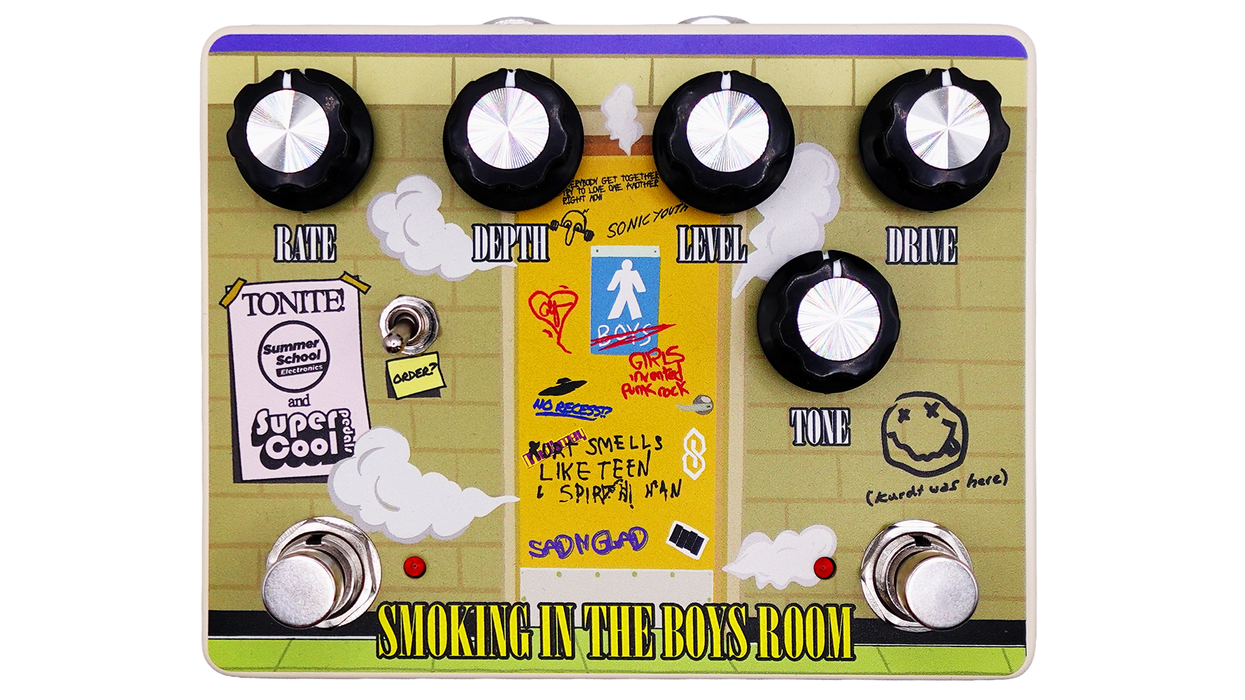
“Smoking in the Boys Room” is a collaborative two-in-one distortion and chorus pedal created by Summer School Electronics and Supercool Pedals – A cross-border team-up that delivers unmistakably 90’s grunge tones with a refreshed modern bite and artful design.
Smoking In the Boys Room artfully fuses a Summer School Electronics DS-1-inspired distortion – complete with classic buzzsaw edge and a modernized mid-range snarl – with Supercool Pedals’ organic and watery Small Clone-style analog chorus. This tribute to the legendary Seattle Grunge pioneers Nirvana is unmistakable and loving, summoning classic tones but delivering original spins on sound and circuit to bring this iconic sound into the 21st century.
Smashed into a single thoughtfully designed enclosure (with art that is SATURATED with deep 90’s and Nirvana lore), each effect can be run independently or simultaneously for a classic cacophony of flannelled saturation, with an all-important external order switch to determine the effect chain sequence.
Each pedal offers the following features:
- Buzzsaw distortion tones with a revamped easy to use tone circuit.
- Watery chorus with adjustable rate and depth.
- Internal order swap accessible by an external toggle switch.
- Nostalgic and 90’s-rich art and design (with full colour manual, printed fabric bags, and plenty of box candy).
- Hand-built across borders by two independent builders: Summer School Electronics (Syracuse, NY) and Supercool Pedals (Peterborough, ON).
- True mechanical bypass on both circuits (no more BOSS buffer woes).
- 9-volt operation with a stranded DC input.
Smoking In The Boys Room is available at Supercool Pedals and Summer School Electronics dealers, at a street price of $299.99 as well as online at www.summerschoolelectronics.com and www.supercoolpedals.com
The Truth About Vintage Amps, Ep. 157
It’s the 157th episode of the Truth About Vintage Amps, the call-in show where amp tech Skip Simmons fields your questions on all things tube amps.
Some of the topics discussed this week:
Thank our sponsors: Grez Guitars; Emerald City Guitars and Amplified Parts
:42 Atmospheric rivers
3:52 Skip’s appearance at the Bay Area Guitar Show (Jan 10-11, link)
8:46 Fretboard Journal 58 (coming soon!)
9:57 Unsung electronics hero (and possible con man) Lee De Forest (read his memoir here); power conditioners
17:44 Skip’s new trail cam
20:47 One man’s trash: Repurposing the square capacitor/resistor found in a Gibson GA-19 RVT/Falcon
22:44 What’s on Skip’s Bench: A clean early 1969 SF Fender Vibro Champ with a trem that didn’t want to go slow; an Ampeg J-20
29:11 Advice on an amp road trip (New Orleans, Phoenix, LA, and Denver)
34:25 What’s louder: Two 50-watt halves or one full 100-watt stack of amps
37:29 Using the potentiometers in hi-fi speaker units from the 1950s; the Christmas Jug Band; ukuleles
42:10 What’s up with this Winson combo amp? EL84s vs 7189s; garlic bread; Roy Buchanan’s The Messiah Will Come Again (YouTube link); Roy Clark and Joe Pass; Van Morrison’s “You Are My Sunshine;” The Fretboard Journal’s You Are My Sunshine project (link)
50:29 Gigging a 1947 Fender Deluxe 5A3, Brookwood leather
55:40 6L6s in Deluxe Reverbs and Princetons? wild mushrooms
1:00:43 Are all trebles created equal?
1:05:38 Greetings from Canada; Slow Horses (redux); Life on the Line featuring John Travolta (Wikipedia link); chicken curry
1:13:26 Questions re: a Knight 93SX670 PA amp and the phono wiring
1:17:23 WD-40 musings
1:19:33 Just completed my Mojotone Tweed Princeton kit, but what’s with this hum?
1:22:50 An RCA MI12155 PA head with no output; Chuck Prophet; Mosquito Coast cocktails; recommended book: ‘The Night Train to Nashville’ (Amazon link)
1:26:40 The Whole Earth Catalog; Stewart Brand (Amazon link)
1:30:30 Vacuum Tube Valley
Want amp tech Skip Simmons’ advice on your DIY guitar amp projects? Want to share your top secret family recipe? Need relationship advice? Join us by sending your voice memo or written questions to podcast@fretboardjournal.com! Include a photo, too.
Hosted by amp tech Skip Simmons and co-hosted/produced by Jason Verlinde of the Fretboard Journal.
Don’t forget, we have a Patreon page. Support the show, get behind-the-scenes updates and get to the front of the line with your questions.
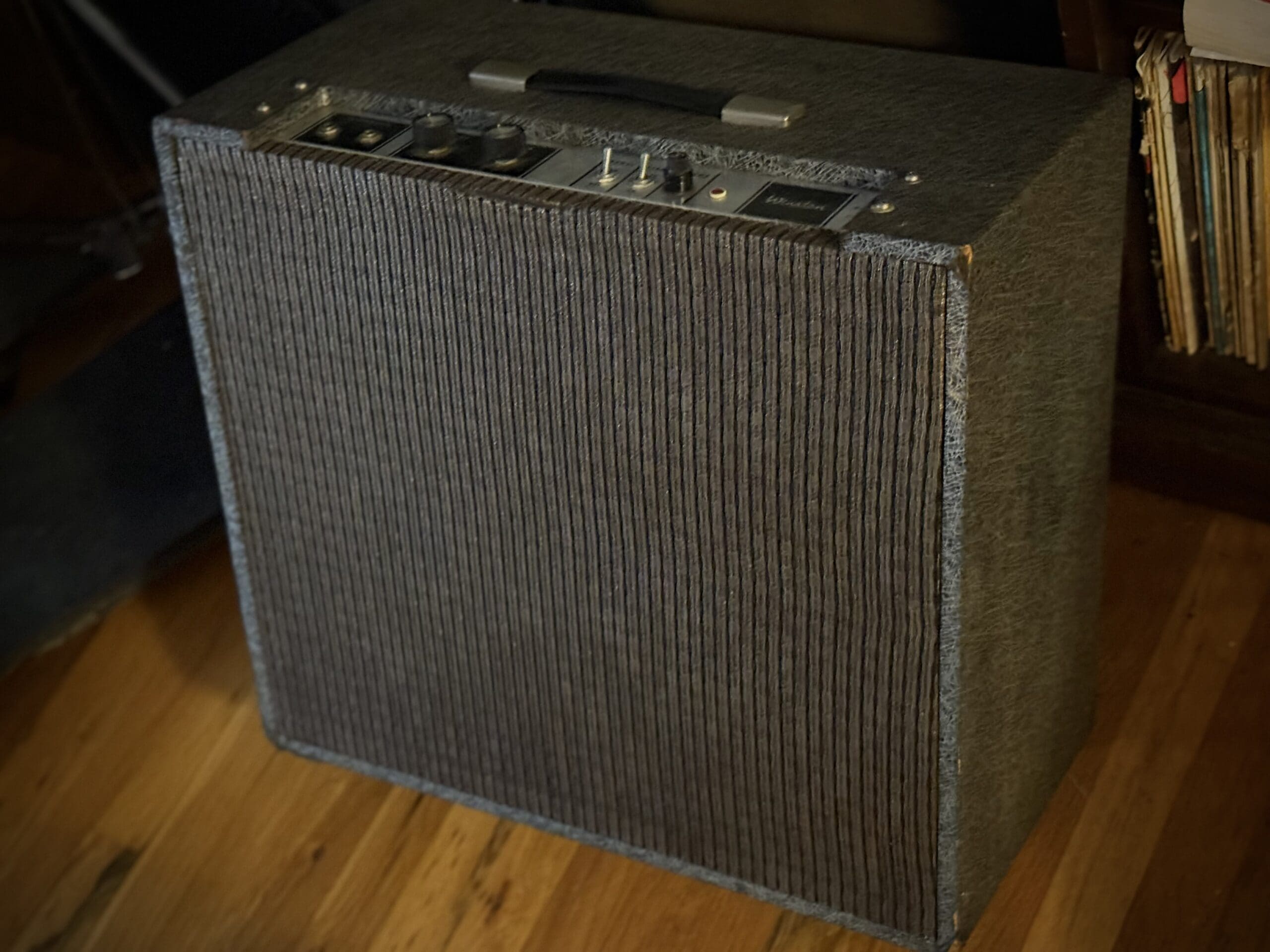
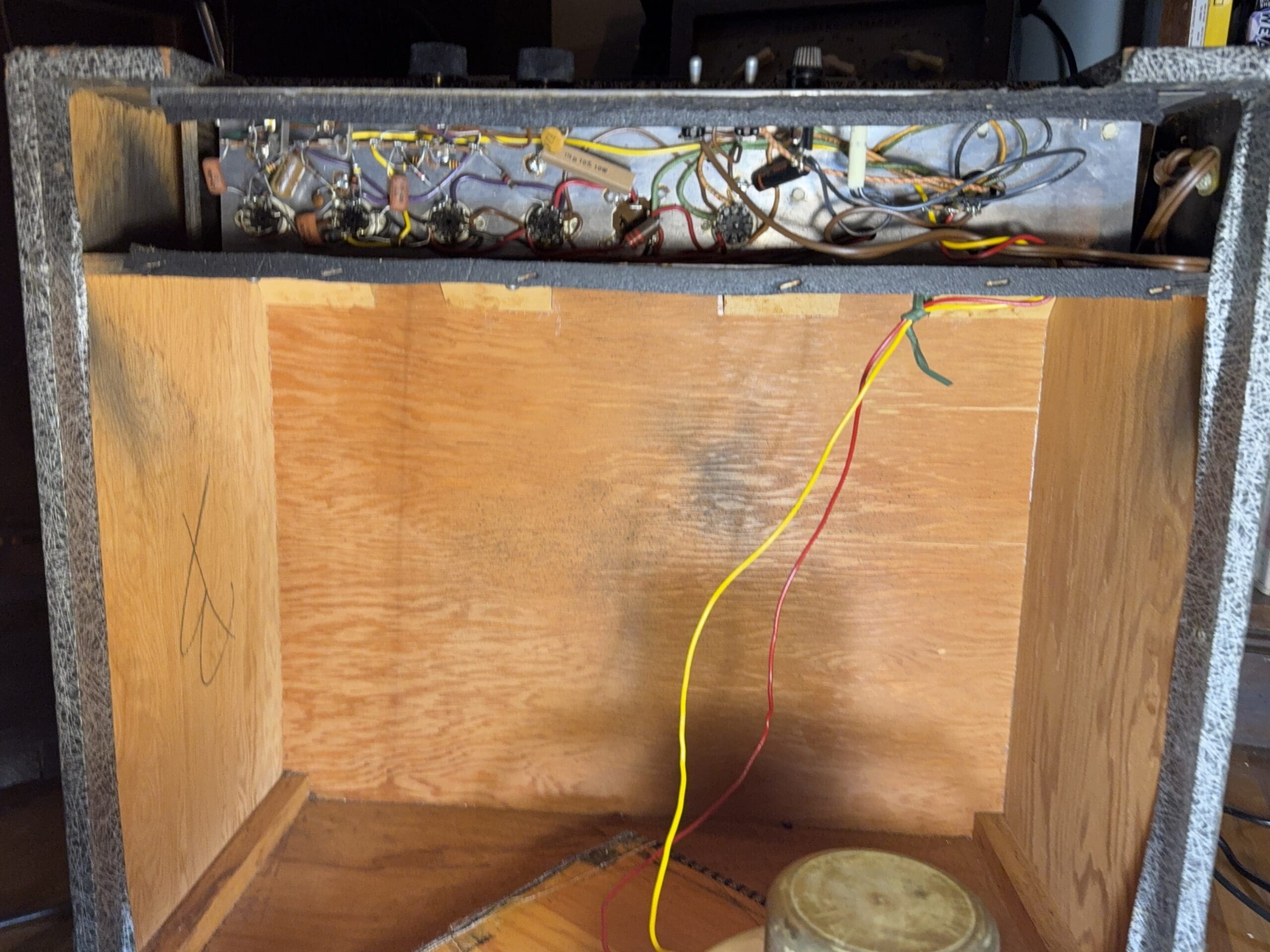
Above and below: Listener Rick’s Winston amplifier, as discussed on this episode.


The post The Truth About Vintage Amps, Ep. 157 first appeared on Fretboard Journal.
Chris Stein on Guitars, Vintage Gear, and Blondie’s Sound
The Blondie co-founder talks early Stratocasters, fingerpicking punk riffs, CBGBs-era New York, and the cultural truth of electric guitars.
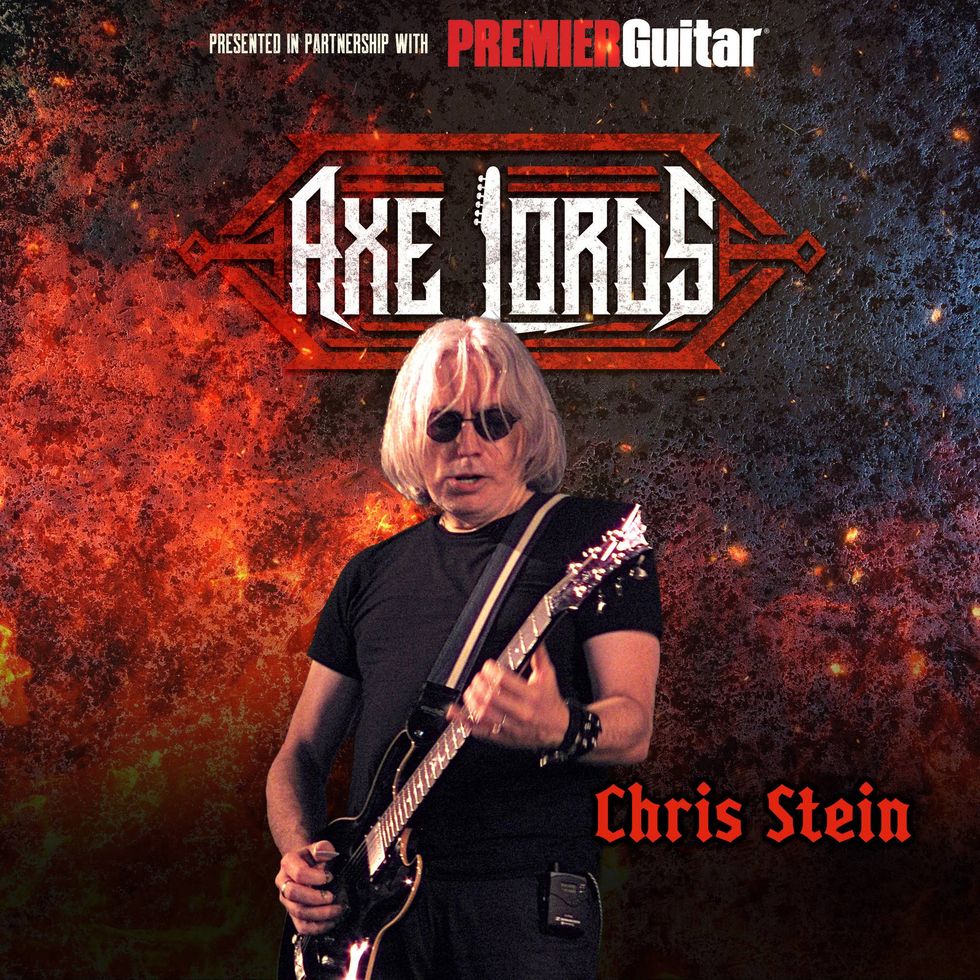
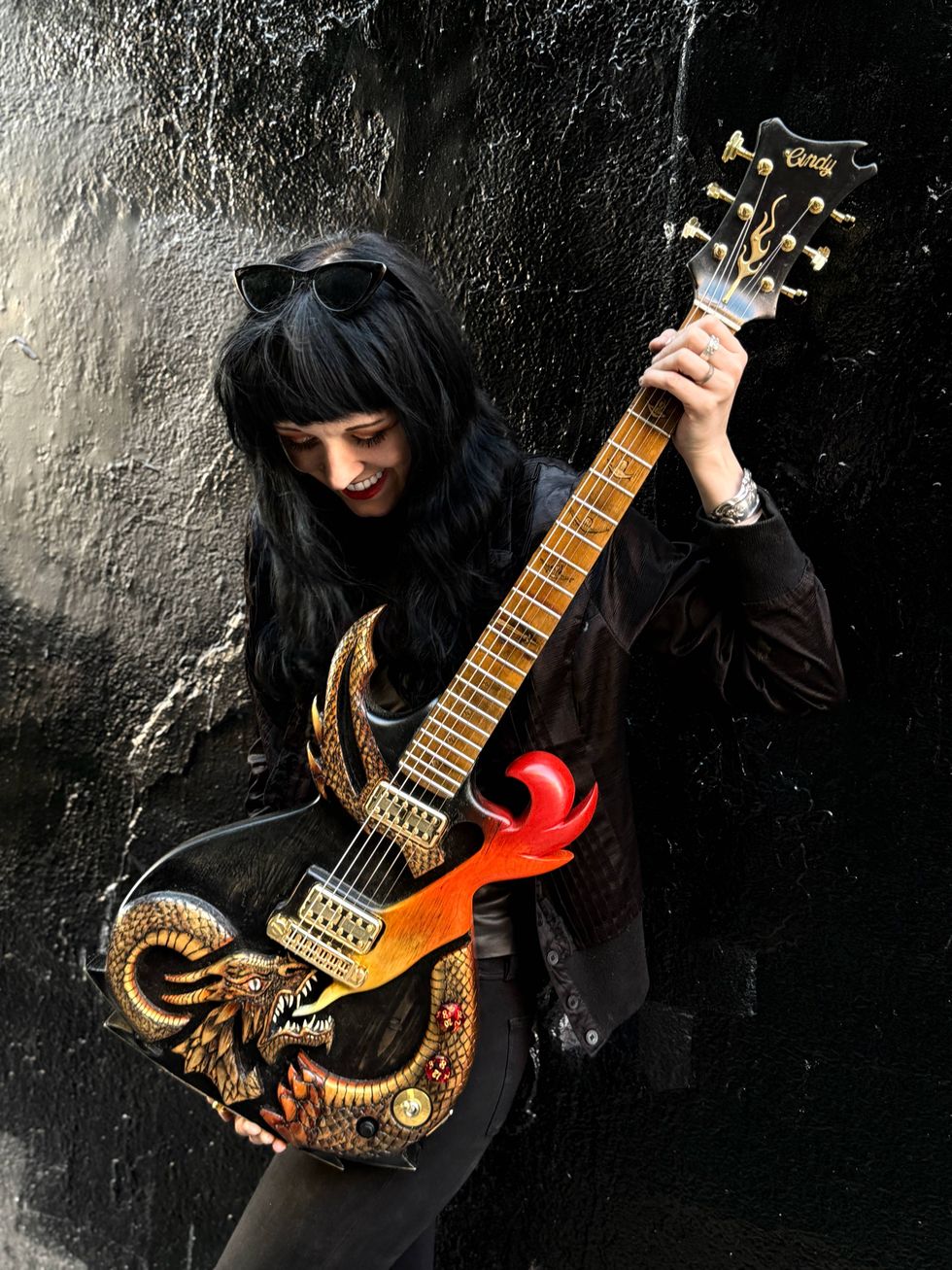
Chris Stein of Blondie joins the Axe Lords for a deep conversation about tone, technique, and the guitars that shaped Blondie’s sound from their early years at CBGBs to today. The Rock & Roll Hall of Famer also explains why he dislikes relic guitars, how he came to his very un-punk fingerpicking picking technique and reveals that some of the band’s most iconic “synth” sounds were actually produced by guitars. A thoughtful, opinionated, and unrelentingly wise-cracking look at creativity by a punk and new wave legend who Dave says is basically his best friend. Make sure to stick around through the end of the episode for a deep dive into the design and build of Cindy’s D&D guitar.
Cindy's D&D Guitar!
“There was never a desire for drama. He just wanted to play guitar”: Wolfgang Van Halen believes his father hated the politics and arguments in Van Halen

In Alex Van Halen’s 2024 memoir, Brothers, he wrote that “when there was a disagreement within Van Halen, he was taking [his brother’s] side” – and the band certainly had its fair share of disagreements. From Sammy Hagar to David Lee Roth, there was seemingly always a drama in the Van Halen camp.
However, Wolfgang Van Halen argues that drama is the last thing his father ever wanted. In a new interview with Song Cake, Wolfgang explains how Eddie Van Halen always just wanted to rock out and have a good time. “He just wanted to play music,” he insists. “There was never a desire for drama.”
- READ MORE: Sammy Hagar thinks Alex Van Halen is “angry” because he’s still “out doing it” – and Alex can’t
“He just wanted to play guitar,” he continues. “He just wanted to make music. Why can’t you just make music and have a good time with people you love?”
It’s possible that some of the older Van Halen dramas were a by-product of Eddie’s addictions. For example, in a 2016 interview with AXS TV, Hagar called Eddie’s behaviour “horrible” on Van Halen’s 2004 World Tour, adding that the guitarist “did horrible things to people”.
However, Wolfgang’s introduction to the lineup in 2006 helped keep Eddie in check. “I was just there for my dad,” Wolfgang reflects. “My dad was newly sober, had a noted, you know, problem with addiction, and he needed me there.”
However, even after Eddie cleaned up his act, ex-members have caused a stir countless times over the years. Notably, Hagar called Eddie a liar for implying Michael Anthony was a subpar bassist in 2015 – and he did so with a big “fuck you, Eddie Van Halen”. And, even since Eddie’s passing, David Lee Roth has had an ongoing drama with Wolfgang.
Last year, David Lee Roth posted a YouTube video titled This Crazy Kid, a fiery 5-minute verbal rampage aimed at the late Eddie’s son. “This fucking kid…” Roth said. “He’s complaining the entire tour like I’m not paying enough attention to him on stage.”
He also seemingly took another swipe at Wolfgang in another video entitled Family Therapy. “Son, commercially speaking, you got your ass handed to you,” he said, referring to Van Halen’s 2012 record A Different Kind Of Truth.
The post “There was never a desire for drama. He just wanted to play guitar”: Wolfgang Van Halen believes his father hated the politics and arguments in Van Halen appeared first on Guitar.com | All Things Guitar.
Polarising Boss pedals, brilliant Martins and a relic Fender: these are my favourite new guitar products of 2025

2025 marked my 16th year working as a guitar journalist. And before you ask, yes – the very act of writing that sentence made me feel so old that it receded my hairline by an extra half a centimetre and my knees started to ache. It’ll come for you too, younglings.
Anyway, it’s safe to say that in that decade and a half, I’ve played, reviewed and written about a LOT of guitars, amps and effects. Some of them were inspirational enough that I still use or think fondly of them today. Others, well… let’s not dwell too much on the Peavey AT-200, lest we frighten the children.
With the benefit of hindsight, the thing that I always find remarkable looking back is that somehow I’ve not run out of stuff to say about these things – no matter how many hundreds of thousands of words I’ve scribbled down about them over the years.
I don’t think it has much to do with me, or my gift for prose for that matter. It’s more to do with the fact that every year – every month really – the guitar industry continues to delight and surprise me with its creativity. Given that we often joke about how the fundamentals of this whole thing haven’t really changed in 70-plus years, it’s amazing how often I come away from someone’s NAMM booth, or a product demo thinking that I’ve played or experienced something I’ve never seen before.
2025 was no different in this regard – we saw innovation and exploration in every part of the guitar world, with a special focus on the more affordable end of the market. As someone who still winces at the thought of spending over a grand on a new guitar, it’s something that’s always hugely encouraging to see.
Read on then, to get my personal picks of the best guitar gear for 2025:
My favourite electric guitar of 2025: Fender Vintera II Road Worn ‘50s Jazzmaster
Okay, I’m going to cheat slightly here because, frankly, this is my article and you can’t tell me what to do. Yes, you will probably have noticed that Guitar.com hasn’t quite got round to publishing our review of Fender’s latest Road Worn return… but I’ll let you in on a little secret: I’ve had one in my house for the last month and it is K-I-L-L-E-R killer.
That might be somewhat spoiling the review when it comes out early next year, but time is a construct and I will not be constrained by such trivialities. I love a Jazzmaster at the best of times, but the Fender Road Worn Vintera II is such a wonderfully bang on version for the money.
The original Vintera II guitar was already great, but adding a properly worn-in finish to the whole thing just really makes you feel like you’re slipping into an old pair of well-loved Chuck Taylors.
It’s also a real exercise in restraint – I remember the first RW Jazzmaster they did over a decade ago, and while it was cool, it did very much look like a factory-aged guitar. The subtle ageing and lacquer checking on the 2025 variant is so much more believable. The only thing that’s lacking is the colour options – Fiesta Red and Sunburst? Come on guys, give us some custom colour options – Sonic Blue, Seafoam Green, Shoreline Gold… who cares if it’s vintage-correct, live a little!
My favourite acoustic guitar of 2025: Martin 000-Jr Sapele

I am not a small person. I am big and broad enough that I will begrudgingly accept that I do look rather silly playing any kind of student or parlor guitar. And yet… I bloody love a small-bodied acoustic. Especially as the entirety of my acoustic playing life is now at home, I don’t really care about the power and projection of a big-bodied guitar at this point. I just want something that’s comfortable, plays well and sounds good.
That said, I was not expecting to get on with the Martin 000 Jr quite as much as I did – but something about the whole recipe really did just click with me in a way that made it a very, very hard guitar to say goodbye too.
That scaled-down 000 body shape doesn’t feel as dainty as a parlor-sized instrument, and the full-size scale length certainly combines with that to make it feel every inch a ‘proper’ guitar, but just a big more ergonomic and compact.
It also sounds and looks great too, and with its stained sapele finish, it just looks at home in any space you put it in – a killer instrument and a killer price too.
My favourite amp of 2025: Orange O Tone 40

I didn’t actually review this one in the end, Richard did, but the Orange O Tone 40 spent a few weeks in my house while it was waiting to be photographed and man, did I have a good – and extremely loud – time with it sitting in for my trusty Princeton over that time.
We film quite a lot of our Guitar.com Originals videos on London’s iconic Denmark Street. As a result, I often find myself on the street, glancing up to the nondescript workshop Orange Amps design guru Ade Emsley keeps above the guitar shops there, wondering what one of the true geniuses of modern amp design is cooking up there.
Because, as the O Tone 40 proves, nobody really designs amps like Adrian. Here’s a solid-state, non-modelling amp that sounds absolutely fantastic, responds like a tube amp in all the best ways and is unapologetically and unreasonable loud with it.
I am a paid up member of the ‘most people play at home we need amps that sound great at bedroom levels’ club, but I love that there are people out there like Orange building these uncompromising machines in 2025 – it’s a dying art and we should appreciate it.
My favourite pedal of 2025: Boss PX-1

A confession, before we start: I think we might have reached something of a saturation point in terms of pedal innovation in 2025. That’s not a particularly original thought I know – my esteemed colleague Cillian said much the same last year – but it’s something I’ve been coming back to a lot this year.
It’s not that there aren’t still good and interesting pedals being made all the time of course. But I think we’ve reached the point in the curve where the ‘surprise and delight’ aspect has started to wear off. Pedals are a bit like iPhones now – what would have blown your mind a decade ago is kinda normal now, and it takes a lot to really inspire much strong emotion.
Which is why I found the reaction – and dare I say the backlash – to the Boss PX-1 so interesting. There’s no doubt that what Boss is trying here is quite different – creating a pay-as-you-go archive of classic and rare stompboxes from the brand’s illustrious past is not what anyone had on their bingo cards I don’t think.
And while I think that the discussion and debate it provoked was actually quite useful and important – I’ll be very surprised if anyone tries a subscription-based pedal thing any time soon on the back of it, for example – it did rather obscure what the pedal itself was about.
And taken on its own merits, the PX-1 is a very fun thing to have around – a living library of Boss rarities to pull out as and when the mood strikes. And judging by how quickly they flew off the shelves, a lot of you agreed with that sentiment.
The post Polarising Boss pedals, brilliant Martins and a relic Fender: these are my favourite new guitar products of 2025 appeared first on Guitar.com | All Things Guitar.
Tech 21 Announces SansAmp Classic Limited Run for Early 2026
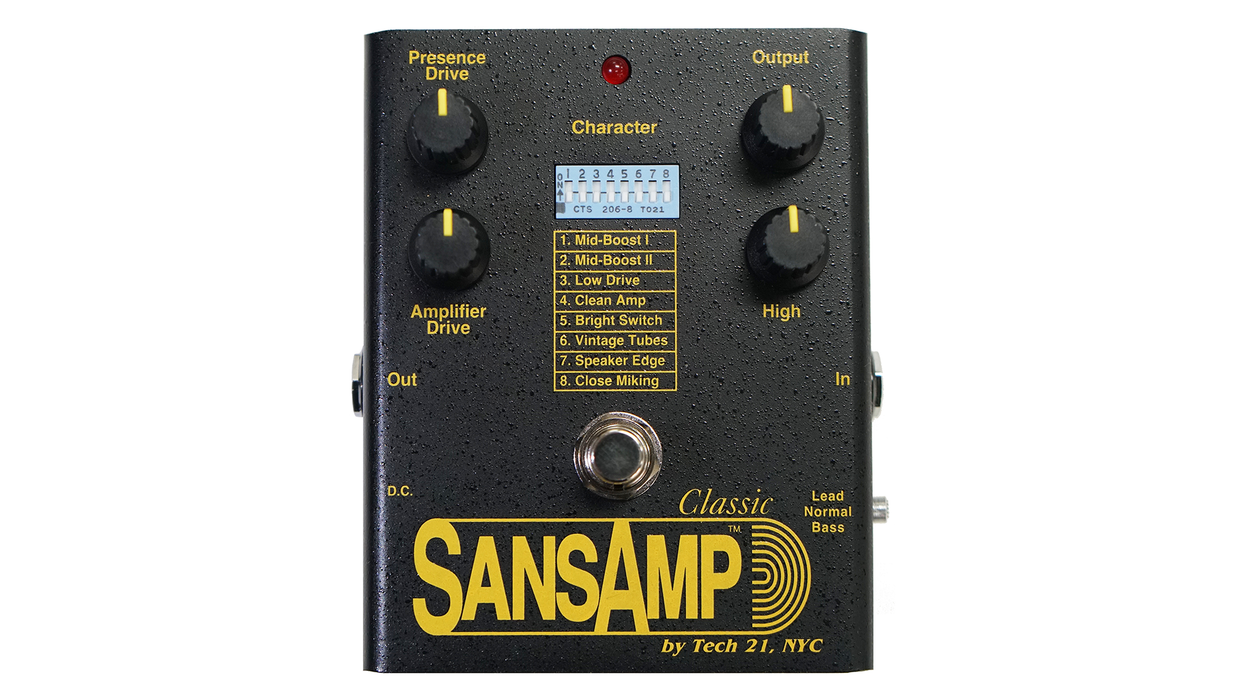
The original SansAmp Classic, introduced 37 years ago, was in constant production for 27 years until 2016. After a 5-year hiatus and a surge in popular demand, it was reissued in 2021. Once again, its enduring popularity has prompted Tech 21 to do another release of a limited quantity scheduled for early 2026.
Virtually unchanged and still made in the USA, the all-analog SansAmp Classic pedal design is B. Andrew Barta's unique invention that was the catalyst for the whole “going direct” movement way back in 1989. Since then, SansAmp evolved into an extensive line of pedals and racks, as well as being the essential element of Tech 21’s Fly Rig series.
Of the pedal formats, SansAmp Classic is the most sophisticated. There is a bank of eight Character switches to adjust tonality, harmonics and dynamics; a 3-position input switch offers a choice of pre-amp styles; and four knob controls to shape pre-amp contours, power amp contours, volume and final tone.
It is rare an electronic music-related product can withstand such a test of time. For over almost 40 years, the SansAmp Classic has been used for every kind of music style from death metal to commercial jingles, in countless pro studios, on tours around the globe, on a vast variety of major releases (including Grammy Award-winning records), and by hundreds of thousands of everyday players, producers, and engineers.
While all SansAmps are flexible, user-friendly, robust devices that deliver the warm, rich, natural tones of the most desirable tube amplifiers on the planet, the SansAmp Classic is the original. Not just for guitar and bass, everything from industrial samples to maracas have been saved from atonal death by its analog magic. It has defied the odds and to this day, remains the standard of the industry.
“She made the guitar specifically designed for women”: Olivia Rodrigo on her love of St. Vincent’s feminine signature guitars

If you’ve ever laid eyes on a St. Vincent signature axe, you’re sure to have clocked its distinctively angular design. While its certainly reflective of Annie Clark’s experimental and bold musical identity, her guitars are designed with something else in mind – boobs.
In a since-deleted Instagram post, Clark wrote that her initial 2016 Ernie Ball Music Man signature was made to be “ergonomic, lightweight, and sleek” while also allowing for “room for a breast – or two” [via Dazed]. Ever since, Clark has continued to release guitars designed with a feminine edge – and Olivia Rodrigo loves them.
On her recent Guts tour, Rodrigo was seen wielding Clark’s Ernie Ball Music Man St. Vincent Goldie. We awarded the guitar we awarded a strong 9/10, and Rodrigo is equally as enthusiastic about it. “It’s such a fucking cool looking guitar,” she praises on the Music Makes Us podcast.
What really excites her about the guitar is Clark’s consideration of women when designing the axe. “She made [the] guitar specifically designed for women,” she explains. “Because she plays her guitar really high up, it’s cut so that you can have boobs and play guitar, which is so awesome.”
Ironically, some argue guitars were initially designed to mimic the shape of a woman’s body. As The Guardian’s Cate Le Bon pondered in 2017, if guitars are “inspired by female bodies” then “why are they uncomfortable for women to play?”
Clark took this problem and worked to produce her own solution. Prior to the release of her first signature, a 2016 interview with Guitar World saw Clark explaining her mindset when designing the guitar. “For me a guitar that is not too heavy is really important because I’m not a very big person,” she said. “I can’t even play a ‘60s Strat or 70s Les Paul! I would need to travel with a chiropractor on tour in order to play those guitars.”
While she would love to be capable of using a ‘60s Stratocaster or ‘70s Les Paul, noting that they are great guitars, she explained how “they render themselves impractical and unfunctional for a person like [her] because of their weight”.
Rather than elevating her performance, she noted that that these guitars are “prohibitive” for her stature. Her guitar, on the other hand, “redistributed” its weight, making it easier for smaller players to play while still looking great – be that female, male or anything in-between. “I wanted to make something that looked good and not just on a woman, but any person,” she said.
And it isn’t just Olivia Rodrigo waving the St. Vincent signature flag; The Last Dinner Party’s Emily Roberts has also given Clark’s guitar her seal of approval. Speaking to Guitar.com in October, she explained: “What I like about the St. Vincent is that it really cuts through a mix, and it’s quite high-end. That’s a great quality that it has and it just doesn’t sound like a Fender or a Gibson. I wanted something that, when you hear it, it’s not obvious what it is. I wanted people to go, ‘What is that?’ and for it to sound new.”
She also shared her love in an interview with Guitar World last year. “I started out gigging on a Music Man Mariposa… but I had my eye on the St. Vincent one and saved up to get it,” she said. “It’s now my main guitar.”
“It’s iconic-looking and quite trebly and really sticks out,” she continued. “I’m only 5ft 2in as well, and some guitars give me backache, but this one fits really well. There aren’t many guitars designed by women, so it was kind of a no-brainer.”
The post “She made the guitar specifically designed for women”: Olivia Rodrigo on her love of St. Vincent’s feminine signature guitars appeared first on Guitar.com | All Things Guitar.
Yungblud fires back at The Darkness over Ozzy Osbourne tribute criticism: “They were trying to be doormen at a party that they weren’t invited to”

Yungblud has responded to criticism from The Darkness following his headline-grabbing Ozzy Osbourne tribute at the 2025 VMAs, dismissing the band’s remarks as little more than gatekeeping from the sidelines.
The performance in question took place at the VMAs in New York on 7 September, where Yungblud – real name Dominic Harrison – joined forces with Aerosmith’s Steven Tyler and Joe Perry, alongside Extreme guitarist Nuno Bettencourt, to honour the late Prince of Darkness. The tribute earned a warm response inside the room, including from pop heavyweight Ariana Grande – though not everyone watching was impressed.
Dan Hawkins of The Darkness took to Instagram shortly after, posting images of Yungblud and Ariana Grande alongside a blunt verdict: “Another nail in the coffin of rock n roll. Cynical, nauseating and more importantly, shit.”
The criticism didn’t stop there. In a video posted to the Justin Hawkins Rides Again YouTube channel, the band’s frontman expanded on his brother’s comments, accusing Yungblud of “[positioning] himself as a natural heir to the Ozzy legacy, having nothing to do with the really important stuff.”
Speaking separately to Classic Rock, Justin doubled down: “If the future of rock comes from musical theatre and Disney, if this is Ozzy’s heir, we’re in trouble.”
The pair’s comments soon sparked backlash online, with Justin later insisting that “none of that was intended to incite a feud”.
Harrison initially addressed the remarks during a conversation with Ozzy’s son Jack Osbourne, labelling the criticism as “bitter and jealous”. Now, in a new interview with Billboard, the 28-year-old has offered his latest take on the situation.
“The criticism at the VMAs was coming from people that were trying to be doormen at a party that they weren’t invited to,” he says. “That’s the harsh reality of it.”
Rather than viewing the backlash as a setback, Yungblud frames it as evidence that the performance had made an impact: “If you don’t have that fear that you need to prove something, you’re not on the right path and journey” he explains. “If people are indifferent about you, then you’re not truly anything at all.”
The post Yungblud fires back at The Darkness over Ozzy Osbourne tribute criticism: “They were trying to be doormen at a party that they weren’t invited to” appeared first on Guitar.com | All Things Guitar.
How post-rock heroes This Will Destroy You split into two separate touring lineups – and rediscovered themselves in the process

On a fall Nashville evening, This Will Destroy You are minutes from performing 2014’s classic Another Language album in full. Backstage in the green room there’s laughter, small talk, and the familiar pre-show rhythm. But underneath it all, there’s something heavier – the quiet awareness of a band rediscovering itself.
Back in 2024 the band made what was certainly an unconventional announcement. The statement said that founding guitarists and the band’s only constant members, Chris King and Jeremy Galindo, were ending their working relationship to “pursue their own creative endeavors, focusing on solo, collaborative, and compositional work”.
So far so normal, bands break up all the time… but there was a kicker. Rather than call time on This Will Destroy You as a touring act, the King and Galindo announced plans to share the name for the foreseeable future. Each would have their own distinct line-ups, tours and setlists, but both would remain officially This Will Destroy You.
It’s a unique and rather equitable approach to a band breaking up, by any measure – but one that has certainly left outsiders somewhat bewildered. To try to get to the bottom of what this might mean, for the band and for the individuals involved, we sat down with King and multi-instrumentalists Jesse Kees to talk gear, new music, and the strange beauty of finding your way back through one of the worst moments of your life.
 Image: Jason Mays
Drama Minor
When we ask King about the events surrounding the unconventional dissolution of his creative relationship with Galindo, it’s clear he doesn’t want to go into too much detail or air too much dirty laundry in public, but the emotion is clearly still raw.
“I was kicked out of my own band… and it broke me,” he reveals.
“I was sticking up for someone really close to me, and it resulted in me being kicked out of my own band,” he repeats quietly. “It took years to get back on social media and sort my head out. But now, I feel lucky. The energy’s different. I didn’t enjoy touring for a long time — and I finally feel things again.”
He smiles when he says it, but the words still hang heavy. Sitting beside him, Jesse Kees – a longtime bandmate but also a friend – nods in agreement, but he doesn’t add anything. It’s clearly not a tale that anyone really wants to get into, and maybe that’s fine.
Because today, King, Kees, Robi Gonzalez, Masaru Takaku, and multi-instrumentalist Emily Xander are having a great time representing the heavier, doomgaze-centric side of This Will Destroy You – and clearly they’re having a blast.
When questioned if the dual-lineup setup is permanent, King replies, “For now, that’s not up to us…We’ve been playing together for a while – this is how it’s going to go until it changes. The only thing I care about is that fans are happy.” King replies.
Kees adds, “We’re prioritizing mental and emotional health on tour. That’s not something we’ve always done. It feels good to finally make that part of the work.”
 Image: Jason Mays
No Backing Tracks, No Shortcuts
Part of what makes this version of the band so vital again is how alive it sounds. Another Language is a dense record – layers of drones, sub-bass, and reverb-drenched delay that would usually demand a laptop to pull off. But this lineup refuses to fake it.
“After the [2009 LP] Tunnel Blanket run, I was covering two roles on a Bass VI,” Kees explains. “This time, we wanted every sound performed in real time. No backing tracks. That’s why Emily’s here. She handles synths and keys, and on the heavy parts, she’s on another Bass VI. When everything hits — bass, Bass VI, and sub — the whole room shakes.”
“Memory Loss feels like an airplane taking off,” King laughs. “People up front do that hair-blown-back face. It’s the best part of the night.”
For a band that helped define post-rock’s dynamic extremes and then spent years trying to outrun them, this moment feels like a reclamation of sorts.
 Image: Jason Mays
The Sound of Feeling Again
If you’ve followed This Will Destroy You, you know the gear isn’t just aesthetic – it’s the architecture of emotion. King’s main guitar these days is a stripped-down Jazzmaster fitted with a Fishman pickup and a single knob. “No frills,” he says. “Heavy strings, almost a baritone feel. I got the idea years ago while tracking with John Congleton – he had this Thurston Moore Jazzmaster with just one knob, and it stuck with me.”
On the subject of gear, King doesn’t shy away. His pedals of choice have become a museum of TWDY textures and sounds: a Strymon El Capistan, a Vongon Polyphrase run in a feedback loop (“total game-changer”), a Pittsburgh Downward Spiral, and a vintage EHX Memory Man with the Japanese-chip mod that gives it a three-dimensional sheen.
Kees’s setup revolves around the Expandora. “It’s my secret weapon,” he says. “It’s not distortion — it’s how I shape touch and clarity. That crisp, fingerpicked attack that still feels human.”
The set thrives on drones, the band’s secret language since Young Mountain. “When people say ‘doomgaze,’ I think of drone plus emotion,” Kees says. “It’s closer to what post-rock originally meant — a hundred different ideas living under the same roof.”
Solo Ventures
One quirk of the This Will Destroy You split is that both band members agreed that the future music they produced would be released separately as independent new projects – not under the TWDY banner.
For King and Kees, that new thing is Dreamage – a project born of necessity but also friendship, that released its first album last year.
That first record felt intimate – made in a cabin, mics propped on stacks of toilet paper, the sound of the room bleeding into every take. “We didn’t even know we were starting a band,” Kees says. “We were just making what made sense to make in that moment.”
The next release, already finished, is bolder: full-band arrangements, real drums, vocal harmonies. “It’s the same DNA,” King says, “just a wider lens.” Dreamage doesn’t chase post-rock tropes; it lets them dissolve into ambience, electronics, even pop. “If This Will Destroy You is the cathedral,” King says, “Dreamage is the side chapel – smaller, but maybe closer to the heart.”
They’re also collaborating with Shed Project, the New Mexico collective founded by chef Johnny Ortiz, where meals and music intertwine in ritual. “It’s not really a venue,” Kees says. “It’s a living piece of art. You eat food grown on the same land you’re sitting on, served on plates made from local clay. We’re playing unplugged sets there – filmed, one-of-a-kind. It’s about connection.”
There’s no doubt that This Will Destroy You’s new two-band phase is novel, and fans will understandably wonder why they didn’t just call it a day and start fresh. But bands aren’t companies, they’re groups of people – and nobody involved was quite ready to put This Will Destroy You to bed.
“More than anything, there’s unity again,” King says of the new era. “Intent. The stuff that actually matters when you play music. Every show, I’m excited. I don’t take it for granted.”
Kees nods. “The past was heavy. Now it feels lighter. We’re chasing something honest.”
And for now, that’s enough — because no matter who’s on stage, This Will Destroy You is still an auditory experience that more than delivers on its namesake while remaining unequivocally steady and human. That’s all fans can really ask for.
The post How post-rock heroes This Will Destroy You split into two separate touring lineups – and rediscovered themselves in the process appeared first on Guitar.com | All Things Guitar.
The New Breed: A Complete Guide to the Nuno Guitars Lineup
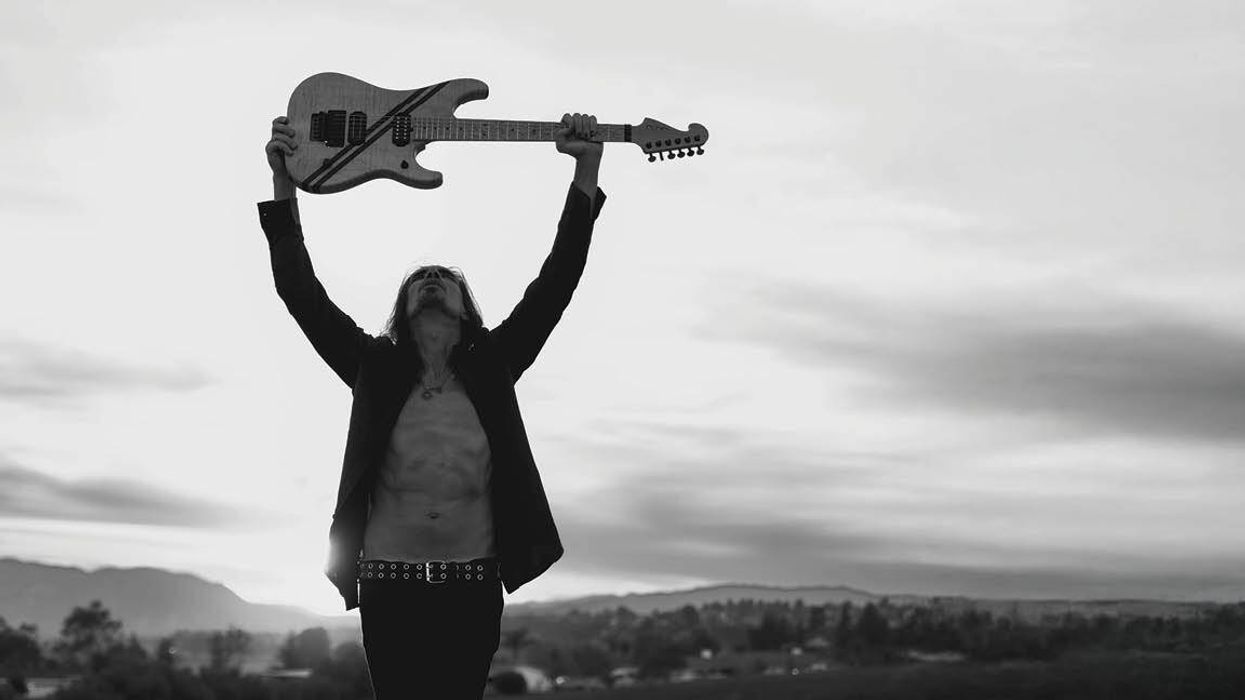
After decades of playing guitars bearing the Washburn logo, Nuno Bettencourt has launched a line of instruments under his own name. But Nuno Guitars isn’t just about slapping a famous name on a headstock, and it’s not merely another signature line. The new venture is a hands-on operation that lets him oversee everything, from tonewood selection and hardware choices to the way each model is built and brought to market.
The brand is launching with three distinct ranges. At the top sits the Thoroughbred Series—Masterbuilt guitars hand-crafted by longtime N4 builder Chris Meade in his Cincinnati shop. This series consists of the Dark Horse and White Stallion models, featuring exotic wood combinations chosen by Bettencourt. “I wanted to switch it up,” Bettencourt says. “I didn’t want to just go, ‘Well, here’s a Washburn with the Nuno logo on the headstock.’” The Dark Horse boasts an alder body with a ziricote top, while the White Stallion has a three-piece avodire (white mahogany) body and a curly maple top. The ziricote caught his eye, he says, because it creates the illusion of a paint job while being entirely natural wood, with each guitar’s grain pattern being completely unique.
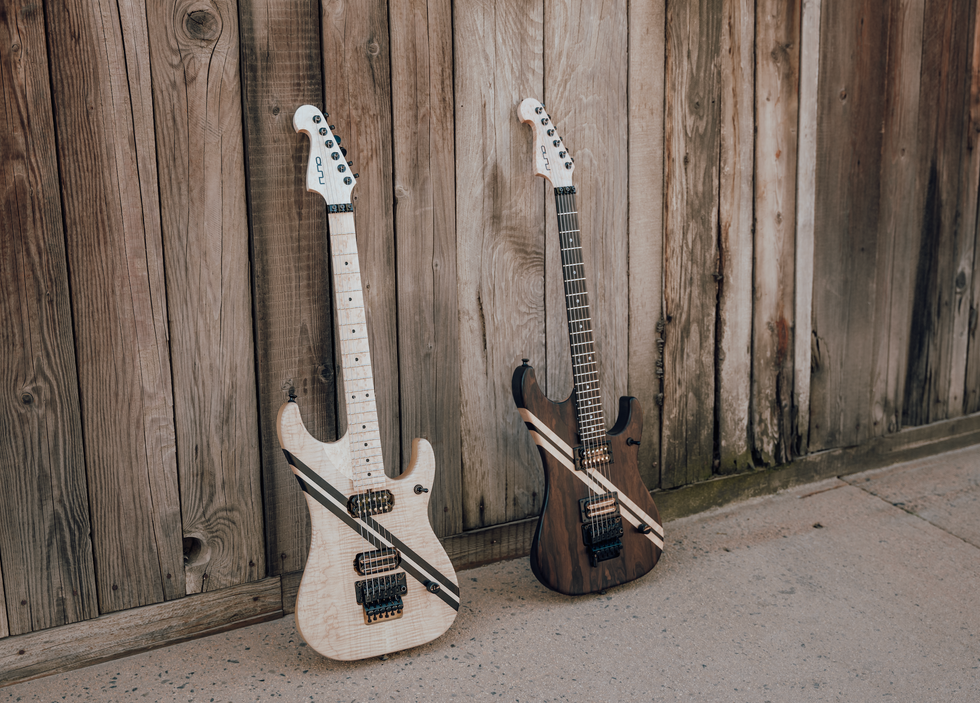
Adding to the arresting visuals on the Dark Horse and White Stallion is the wood striping across the body. Inspired by the B.C. Rich Mockingbird Nuno’s older brother Luís owned growing up, these aren’t painted stripes, but rather actual contrasting woods, ebony and maple, inlaid into the instrument. On the Masterbuilt models, these stripes run completely through the body. “When I drew the design, I really connected with it because of what I remembered from my childhood,” Bettencourt says. “It felt like me, and it felt like a great way to go into this new era of guitars.”
The second range, the Stable Series, represents the U.S. production line built in Oxnard, California. This series offers the Dark Horse, White Stallion, and N4 models, all maintaining premium quality—alder bodies with wenge (Dark Horse) or swamp ash (White Stallion) tops, genuine Floyd Rose bridges, and the same U.S.-made Nuno signature pickups found in the Masterbuilts. The differentiator isn’t quality, but exotic versus traditional materials. “The Masterbuilt is like the Ferrari of the guitars,” Nuno says. “But still, you’ve gotta be able to jump into a Mercedes, and take that thing onstage and say, ‘I could play this all day.’ That’s the U.S.A. guitars.”
“I didn’t want to just go, ‘Well, here’s a Washburn with the Nuno logo on the headstock.’”
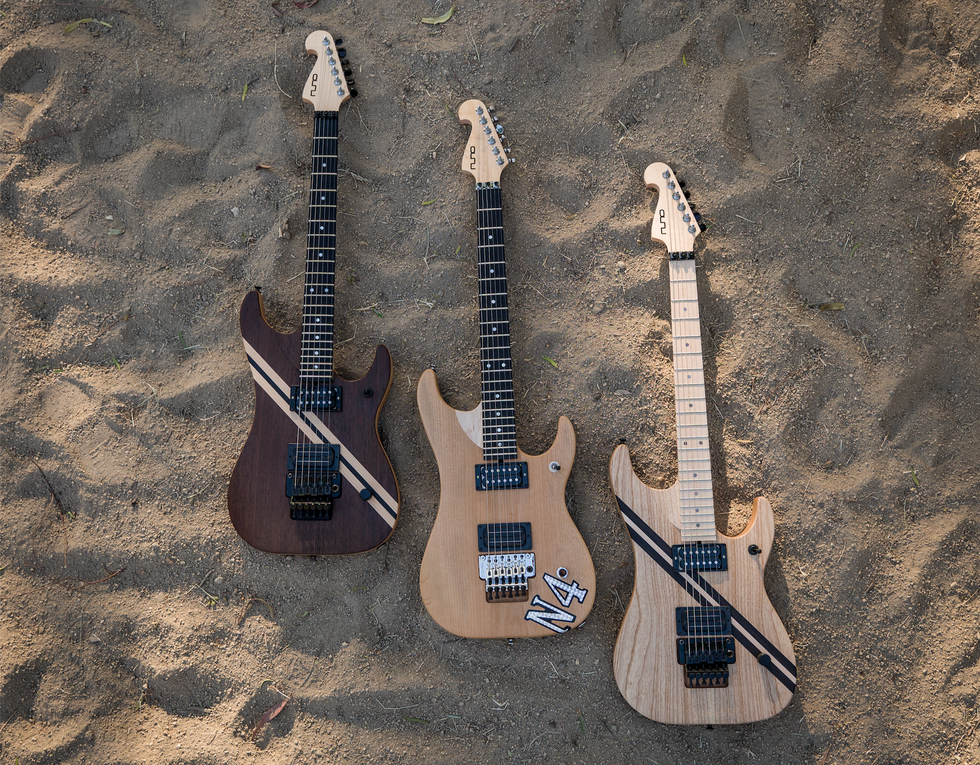
The Colt Series rounds out the line as the import offering, manufactured in China. All three models—Dark Horse, White Stallion, and N4—are available in this series with woods including alder and swamp ash for the bodies and rock maple for the necks. While these guitars also use budget-friendly components—licensed Floyd Rose-style hardware rather than genuine Floyd units, Korean-made Nuno pickups—Bettencourt stresses that they are not mere entry-level instruments. “With the stuff that’s coming from overseas, everybody’s always like, ‘Yeah, those are beginner guitars, whatever.’ No. It was like, who are the best of the best [builders], where they can fool you into going, ‘Wait—this was made where?’”
All electric models feature the Extended Cutaway neck joint—a 5-bolt design that’s been Nuno’s signature for decades and provides exceptional upper-fret access—as well as Floyd Rose tremolo systems: Original Floyd Rose units on the Masterbuilts, genuine Floyd Rose bridges on the U.S. production models, and licensed Floyd Rose-style systems on the imports.
A point of interest is the fingerboard options, which include a flamed maple offering on the White Stallion—Nuno’s first maple board in many years. Limited signature runs with Washburn occasionally featured maple fretboards, and he famously played one in Extreme’s 1990 video for “Decadence Dance.” “That was an N3,” he recalls. “And stupidly, in the last shot in the video, I dove into water. You see me splashing around like an idiot.” He laughs: “I think I ruined the guitar, but then it got stolen, anyway.” Years later, just the body resurfaced at a Hard Rock Cafe in Asia—the neck was gone, but the shadow of the N3 sticker remained.
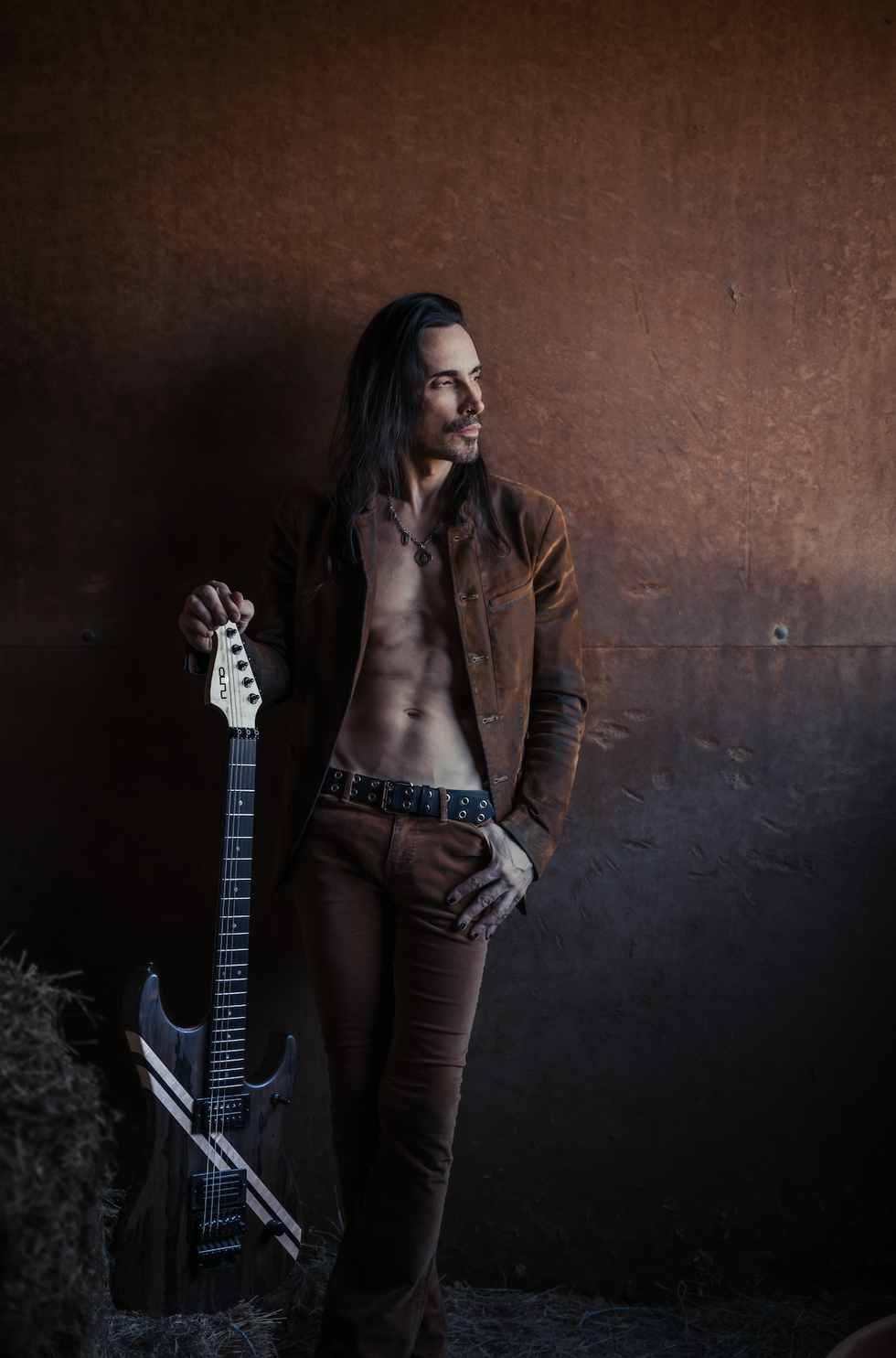
While all White Stallions feature flamed maple boards, the Dark Horse models and N4s stick with ebony fretboards. All models maintain the 25.5" scale length, 22 frets, and dot inlays that have been Nuno hallmarks. The necks themselves are birdseye maple on Masterbuilt models, hard maple on U.S. production guitars, and rock maple on imports.
Nuno’s classic N4 tone came from a Seymour Duncan ’59 in the neck paired with a Bill Lawrence L-500 in the bridge, and the new guitars feature custom Nuno signature humbuckers designed to capture that trademark sound. U.S.-made versions of these pickups appear in both Masterbuilt and U.S. production models, while Korean-made versions populate the import line. All models feature the same minimalist control layout Nuno has always preferred: one volume knob, a 3-way toggle, and no tone pot.
The N4 itself remains in the line, and since it was always Nuno’s design—and one that he controls—it has come over to Nuno Guitars virtually untouched. Notably, the N4 is the only model that features chrome hardware; the Dark Horse and White Stallion models all sport black hardware regardless of production level.
“I didn’t want anything super extravagant. I didn’t want a ton of guitars. I just wanted ‘mine.’”
Additionally, Nuno Guitars will offer an acoustic model—the Lusitano, which features a grand auditorium body with a solid spruce top and mahogany back and sides, with custom f-holes alongside a traditional soundhole. It’s fitted with a soundhole-mounted preamp and an under-saddle Piezo pickup system, chrome hardware, ebony fretboard, and 20 frets, with a 12th fret inlay of the Portuguese national emblem, a nod to Nuno’s heritage. “It’s full black, with white trim all around,” he says of the Lusitano. “We also do some different things with the neck, because I’ve always wanted an acoustic that plays more like an electric. Why wouldn’t you?”
Across all three electric series, and the acoustic, the quality approach remains consistent. From the Masterbuilts with their exotic woods and premium finishes to the U.S. models to the imports to the Lusitano, each guitar has its place. “I didn’t want anything super extravagant,” Nuno says. “I didn’t want a ton of guitars. I didn’t want a big line. I just wanted ‘mine.’”
Getting to that point wasn’t easy. “It was really hard for me to do this,” he admits. “The main reason was because of my name on the headstock. It felt really, really egotistical and self-serving.” But after a lifetime of playing, he realized it was time. And that means being involved in and fully committed to every aspect, from Chris Meade’s Cincinnati workshop to the factories in Oxnard and overseas. It’s the same philosophy he brings to the stage—the work ethic doesn’t change whether it’s a small club or a stadium, and it extends from his playing to the instruments themselves. “I’ve never done anything but be all in on everything,” Nuno says. “It’s either you’re that or you’re out. And when it comes to that passion for the instrument, I’m all in. That’s why I did this.”
Rig Rundown: Gary Rossington Collection
PG brings you a hands-on look at some of the gear that the late Skynyrd guitarist used to change rock history.
While our Rundown team was in Chicago in November, they spent some time at Chicago Music Exchange with CEO Andrew Yonke and vintage inventory and purchasing manager Daniel Escauriza. In 2023, they were contacted by Gary’s daughter Mary Rossington to help manage the gear that belonged to her late father, the legendary Lynyrd Skynyrd guitarist Gary Rossington. With the help of friends and crowd-sourced knowledge, Yonke and Escauriza embarked on a months-long saga to learn about Rossington’s guitars and amps.
PG’s John Bohlinger met up with Yonke and Escauriza inside CME’s Vault to learn about the adventure, and to get up close and personal with some of Rossington’s most treasured pieces of kit. Check out some of the highlights below, and after the photos, we have an exclusive interview with Mary Rossington, so keep scrolling!
Brought to you by D’Addario.
Rossington’s Reds
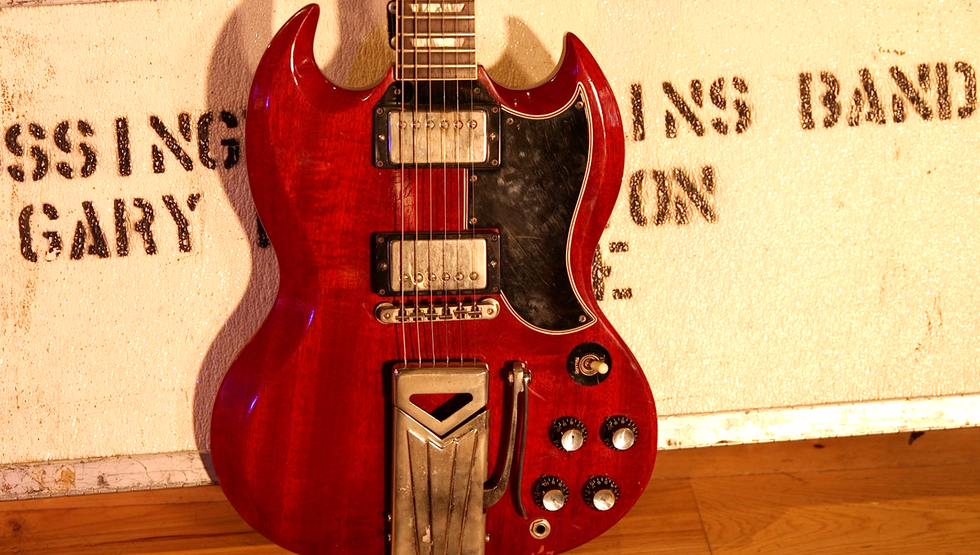
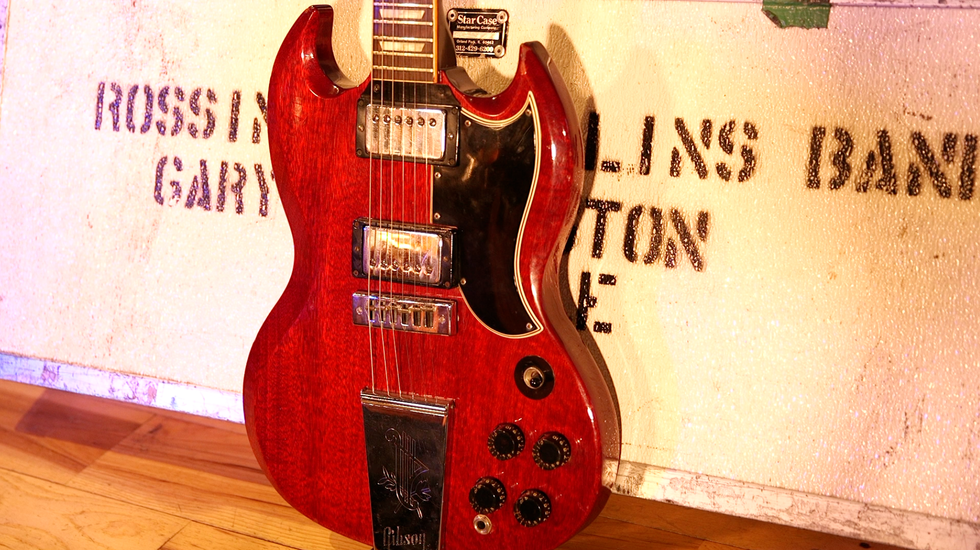
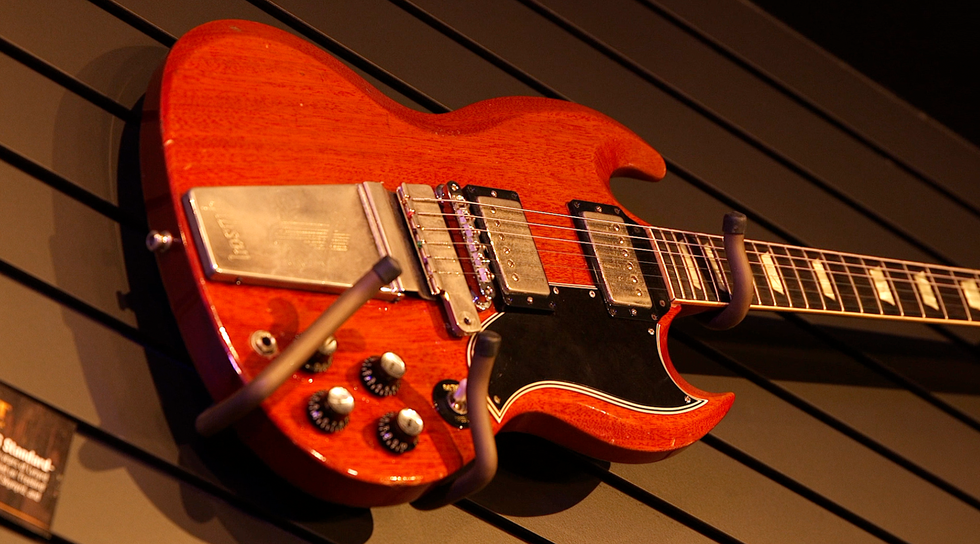
Rossington’s iconic Gibson SGs, some of which he owned from high school, were among the most prized and recognizable instruments in his arsenal. They’re gathered together on display now at CME.
Bernice’s Twin
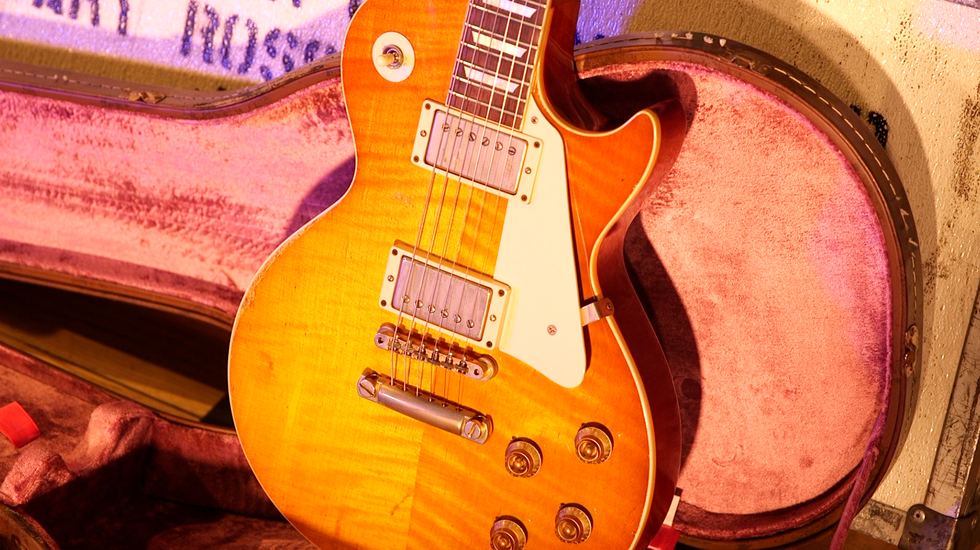
This is the first prototype of Gibson Custom Shop’s Gary Rossington '59 Les Paul Standard, a replica of his infamous 1959 LP named “Bernice,” dated to the early 2000s.
Southern Sounds
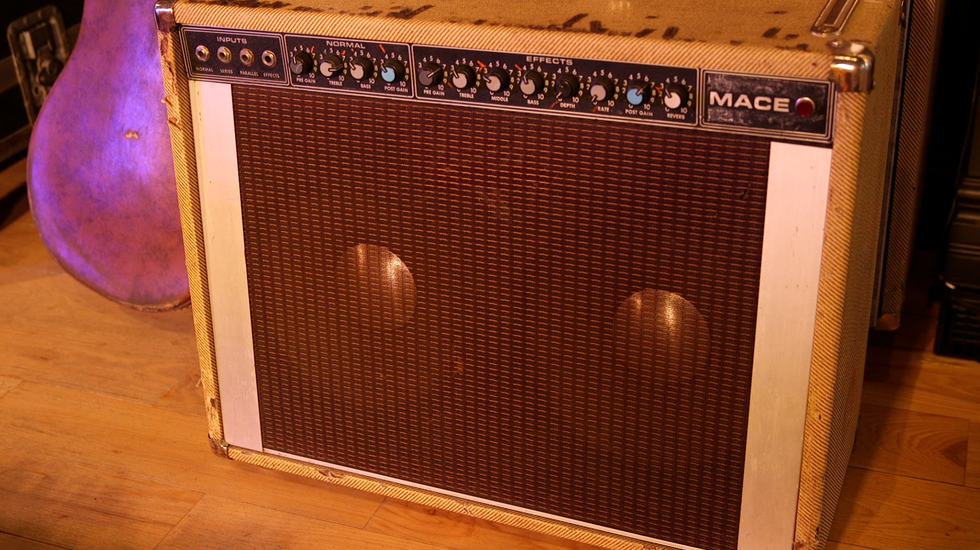
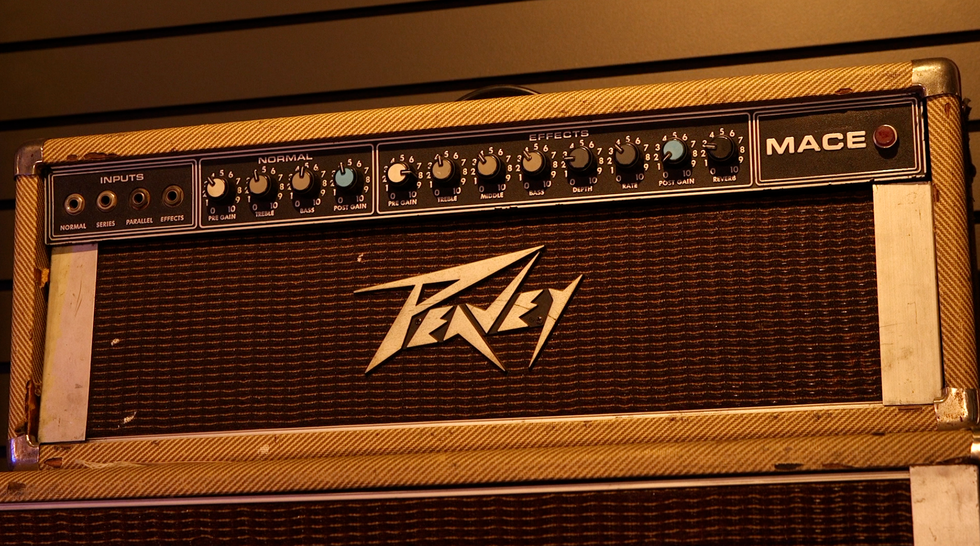
When word got out that Rossington’s rig had resurfaced, Yonke fielded calls from dozens of guitarists wondering one thing: Were his Peavey Maces going to be going on the market? These old Mississippi Marshalls were a cornerstone of Rossington’s tone.
A Bit of British
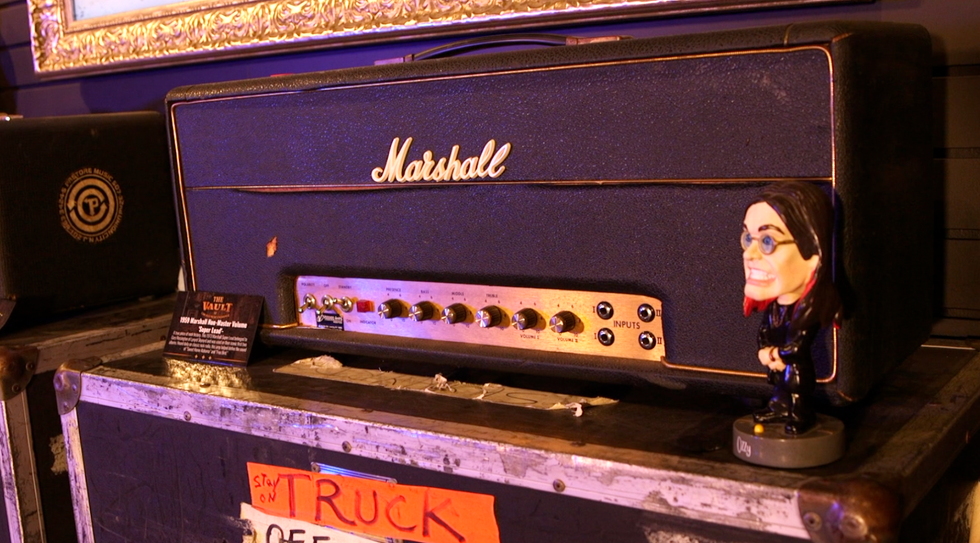
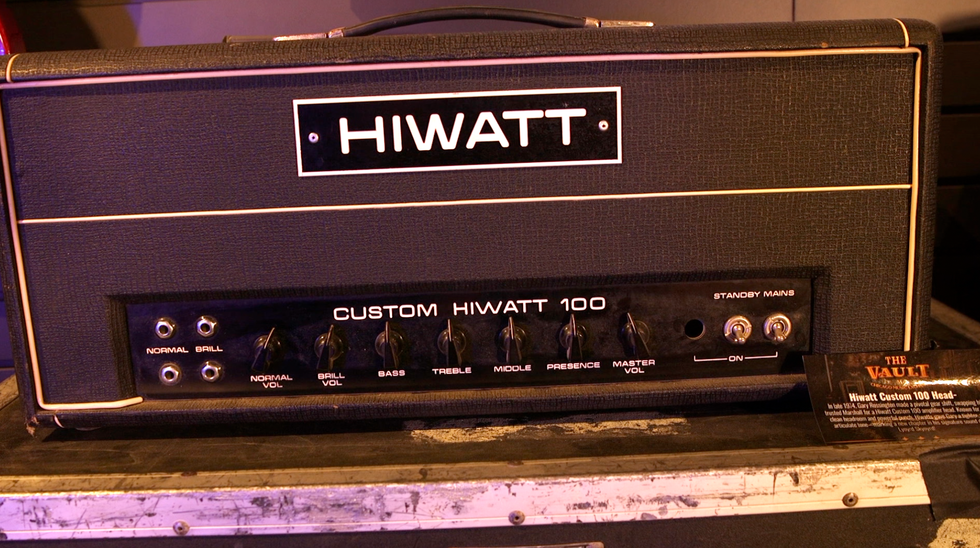
This Hiwatt Custom 100 and non-master-volume 1959 Marshall Super Lead head were also key components of Rossington’s sound.
We spoke with Gary’s daughter, Mary Rossington, about her father’s legacy, the importance of honoring his influential impact through the Collection, and how Chicago Music Exchange became the ambassadors to this awesome musical history.
Did Gary ever speak about what he’d want done with his instruments after he was gone?
Rossington: Gary never spoke about what his wishes were as far as his collection. These were his tools he used and was as humble a man as there ever was. I don’t think he really even grasped how truly special he was and how impactful his contribution to the music was (and always will be). He was just doing what he loved and knew how to do it.
Gary was known for valuing guitars as tools rather than trophies. How did that philosophy shape your decisions when evaluating how to preserve his gear? I know Rickey Medlocke made the suggestion/introduction, but when did CME seem like the right fit for your vision?
Rossington: Two weeks after dad’s passing we asked Rickey following the CMT tribute what on earth were we to do now? He directed us to Andrew Yonke and the CME family having every faith they would be the one to guide us in the next steps. Upon speaking with Andrew, which honestly is a blur for us due to the timing, we went about setting up the first meeting for Andrew and Daniel to come down to Atlanta and go through the collection with us. We had no idea where we wanted to go with anything but knew we needed help in every way.
We instantly fell in love with their passion and energy for the project. We just stood in the doorway and watched as they meticulously and carefully opened each and every case and examined each guitar. At times we didn’t have a clue as to what they were saying, and at one point after about two pots of coffee, they paused and said ‘Ok, we're really trying to be cool but this is blowing us away!’
Mom and dad had sat down a few years prior and wrote a little note for each one describing where each guitar came from and the story behind it. Their enthusiasm for what we could potentially do with all these instruments and their knowledge made us feel so comforted and we trusted them. All dad ever wanted to do was keep the music alive for his brothers that passed and we feel the need to do the same for him.
We want to share his legacy with the world and that starts with the instruments that made the music come alive. They had met dad over the years and respected him as not only an artist but as the amazing man he was—that was all we needed to know to this was the right fit. Andrew never made mention of money or selling anything, so we knew he was in this to assist in preserving his legacy and it was not about a payday for him.
What part of the process brought you the most comfort?
Rossington: We knew very little about dad’s collection, but it was very apparent they knew exactly what they were talking about. We prayed on it and knew this was God putting us with exactly who we were meant to be paired with. Their dedication, knowledge, and enthusiasm to preserve the pieces and further dad’s legacy meant the world to us. Many people would’ve only been interested in selling the collection and that’s never been a concern with Andrew, Daniel, and CME.
Allowing other players to use these instruments is a powerful gesture. How did you arrive at that decision?
Rossington: We again just want to keep his music and legacy alive and by allowing others artists to touch a piece of history while furthering his name and contribution to music that has shaped and inspired generations. I'll never forget how excited dad was when he got to hold Duane's guitar and we want that for other musicians as well.
Was there one guitar that symbolized Gary to you more than any other? Why?
Rossington: Of course Bernice was the standout guitar and dad thought it was the coolest thing ever that the Rock & Roll Hall of Fame would want to not only house the piece, but that it was displayed right next to Duane's. It blew his mind!
All of his Les Pauls were so special and the SGs were the sound of “Freebird.” Every time we hear the guitars played it resonates in our hearts and souls.
Were there any specific guitars that Gary insisted should continue to be played? Why?
Rossington: Dad never really discussed his instruments with us. When he was home it was all about the family and he kept most of that knowledge to himself.
You’ve mentioned hoping younger musicians feel inspired when they hold or hear these guitars. What do you hope they learn about Gary from this collection? Is there a message Gary tried to pass down to the next generation that CME is helping carry forward?
Rossington: Our hope is that through the continued exposure of his collection and hearing the guitars onstage that those experiences will inspire others to explore not only what an amazing musician and songwriter he was, but what a humble and beautiful man he was. He would have given the shirt off his back to anyone in need. He would’ve said to always work hard and never give up no matter what life may throw your way.
He tried every day of his life to honor and further the music the guys wrote together when they were so young. Those songs were written from the heart and performed with such accuracy and dedication that they will stand the test of time.
Do you envision the CME vault becoming a long-term home, or is it the beginning of a larger legacy project—documentaries, books, exhibitions?
Rossington: For now we are so very pleased that his collection survived the early days in the Hell House in Florida and everything that happened, and they are protected, secure, and in loving hands. We have hopes in the future for documentaries and are exploring the possibility of an exhibition in the future.
We would love to see a portion of his collection travel the world so more people could enjoy them and feel that they were a piece of this amazing history, too. It will come down to logistics and safety ensuring that the instruments remain in their current condition so there’s peace of mind for everyone.
Taking the Reins: Nuno Bettencourt on Why and How He Built His Own Guitar Company
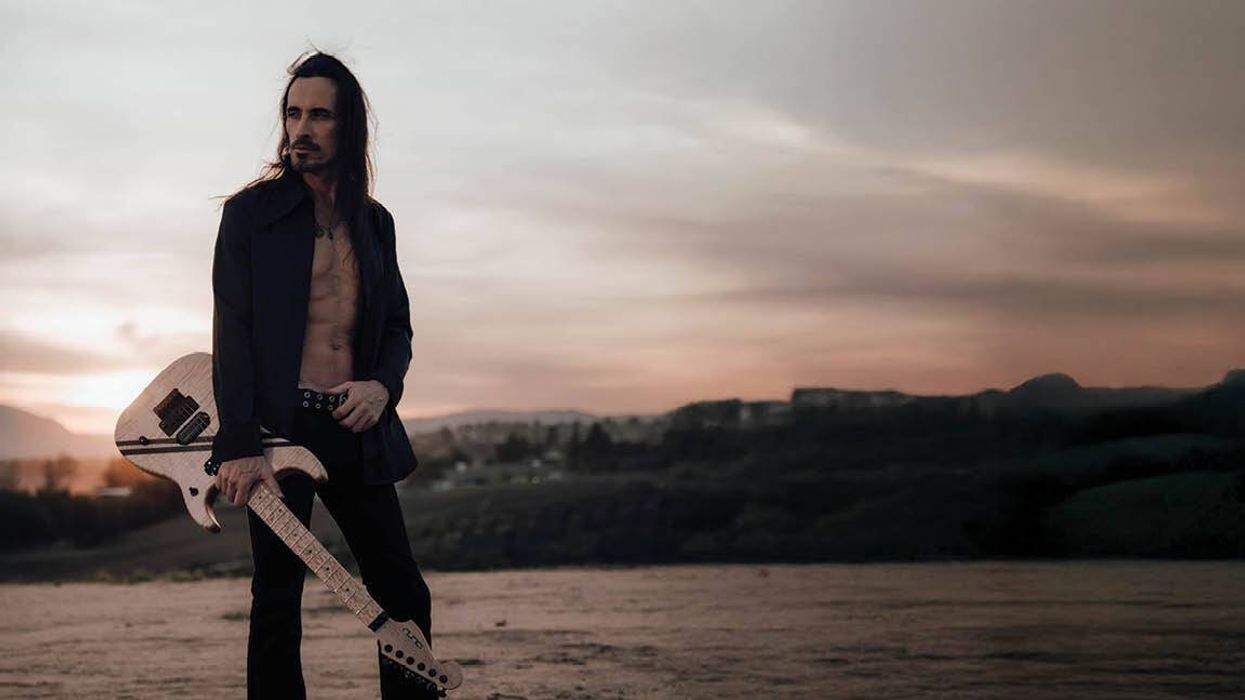
The guitar showed up first in an Instagram video. Nuno Bettencourt in the back of a cab on his way to Villa Park in Birmingham, England, for Black Sabbath’s Back to the Beginning benefit concert on July 5, playing the solo to Ozzy Osbourne’s “Bark at the Moon” on an instrument nobody recognized. Dark wood body with light stripes running through it. And on the headstock: NUNO.
Then he brought it onstage at the event in front of 45,000 people, serving as one of the MVPs in an all-star supergroup that tackled Ozzy and Sabbath classics. The instrument was clearly visible in videos that hit the internet immediately afterward, and the guitar community began speculating about what they’d just seen. But Bettencourt stayed quiet.
A few months later at the MTV Video Music Awards, where he appeared alongside Steven Tyler, Joe Perry, and Yungblud in an Ozzy tribute, he performed with two versions of the unidentified model—the dark one for “Crazy Train,” and a blonde variant for “Changes.” Another high-profile moment, more online chatter, but no further details on the guitars.
Finally, on September 30th, the speculation ended. Bettencourt announced the launch of Nuno Guitars, his own company, marking the end of a 35-year partnership with Washburn. The brand included the Dark Horse and White Stallion—the mystery models from the taxi video and the shows—along with the N4, his signature design that has defined his sound since the early ’90s. For the first time, the N4 would carry his name instead of Washburn’s. (For Bettencourt's full rundown of the Nuno Guitars line, head here.)
It’s a significant move for a guitarist whose influence has stretched across multiple generations. Bettencourt first turned heads in 1989 with Extreme’s self-titled debut album and 1990’s Pornograffitti, albums that showcased both his funky, acrobatic playing and his songwriting versatility. While the latter’s “More Than Words” became an acoustic phenomenon, it was his electric work that made him a guitar hero. He was an explosive guitarist who recalled the best of Eddie Van Halen—incredible rhythm chops, lightning-fast technical dazzle, and genuine melodic songcraft. He could blend funk grooves with shred-level technique, throwing in tapped runs, off-time phrases, and blistering alternate picking lines without ever losing the pocket. He could match any virtuoso, but had the taste to know when to serve the track and when to let loose.
Decades later, that guitar-hero status was reaffirmed when Extreme released Six, their first album in 15 years. The opening track, “Rise,” featured a solo that stopped the guitar universe cold—not an easy thing to do in 2023. YouTubers analyzed it, guitar legends called to congratulate him, and forums lit up with players trying to decode the insane runs that capped the performance. It wasn’t just technical—it was emotional, physical, and undeniably fun. Once again, Bettencourt had reminded people what guitar playing could be.
Through it all, the N4 was his constant. Introduced in the early ’90s, it became one of the most recognizable and longest-running signature guitars in the industry. The design was distinct: a Strat-inspired body with a unique curved cutaway neck joint, fitted with dual humbuckers and a no-frills control layout. It was a workhorse—a term Bettencourt used repeatedly over the years—built for players craving versatility, speed, reliability, and tone. The N4 wasn’t just his guitar; it became the guitar for countless players who grew up idolizing his sound and style.
Which makes the move to his own company significant. The N4 has been in production for over three decades, and walking away from the Washburn partnership means taking full responsibility for everything: design, production, quality control, and the relationship with guitarists who’ve played his signature instrument for years.
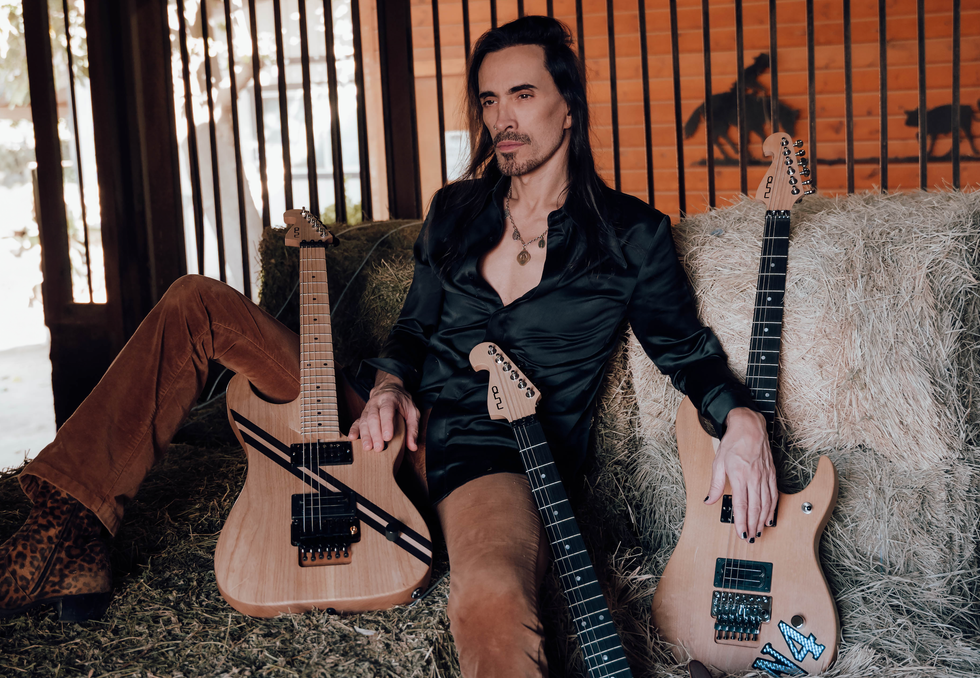
The new brand is structured around three lines: the Thoroughbred Series (Masterbuilt guitars with exotic woods and custom shop-level craftsmanship), the Stable Series (U.S.-made instruments), and the Colt Series (import models). Currently, it’s a direct-to-consumer operation, cutting out traditional retail in favor of a model that lets Bettencourt communicate directly with the people buying his guitars. And he wants every one of those guitars, regardless of price point, to feel like something he’d play himself.
At 59, after four decades of playing, touring, and recording—from Extreme’s platinum records to Generation Axe tours with Steve Vai, Yngwie Malmsteen, Zakk Wylde, and Tosin Abasi, from the Super Bowl halftime show with Rihanna to Black Sabbath’s final concert—Bettencourt is, in one respect, starting over. Not out of necessity, but because he wants to pursue his unfiltered vision and foster a closer connection to the people playing his instruments.
What follows is an exclusive conversation—Bettencourt’s first about Nuno Guitars—about why he finally made the leap, what went into designing these instruments, and what it means to put your name, literally, on what you believe in.
Let’s start with that moment everyone noticed—you were in the cab on the way to the Sabbath show, playing a guitar nobody had seen before. Was that part of a planned rollout?
Nuno Bettencourt: Not at all. To be honest with you, it probably wasn’t a good idea to play that guitar at all. I’d been thinking about this for a long time, and Washburn didn’t know I was leaving. So for them to see not only a guitar they’d never seen, but then to see not their name on the headstock—to see mine—was probably a really fucked up thing to do. [laughs]
But I didn’t really have a contract with them. It was more of a gentleman’s agreement that had been up for so long. After a while, especially after Six came out, I just felt nothing from them. Guitars were back ordered, no press, nothing.
“When someone buys one of these guitars, I want them to feel like it’s something that’s directly from me.”
But the reason I pulled the guitar out that day is because when I got it, I played it and was like, this feels like the best N4 I’ve ever played. I was super excited. I just wanted to play it onstage. It wasn’t marketing or teasing. I was just authentically excited. I was blown away by how the neck felt. It just felt right.
Even if you were leaving Washburn, you could have gone to another established company. What made you decide to start your own?
I’ve always wanted to do it. When Washburn first called, I stayed loyal to them because nobody else gave a shit about me when I first came out. It was only after “More Than Words” that other companies started asking.
But I didn’t want to endorse. I love Les Pauls, I love Strats. I sat down with B.C. Rich, many companies through the years, and it wasn’t because they weren’t great—it just never felt like “me.” So it felt natural to do my own thing now. And without sounding like a hippie, it was time. Everything was happening organically—the Six album, the attention with “Rise,” that solo, the Back to the Beginning concert—all these dominoes were tipping. I felt like the universe was saying, “Here are a few opportunities for you. You’ve worked your ass off, you’ve hustled for 40 years. This is it.”

Walk us through the different lines you’re offering—the Thoroughbred Series, the U.S.-made Stable Series, and the import Colt Series.
I’ve always played lighter woods—alder mostly, which I’ve always had in the N4. But with the Masterbuilts, which we’re calling the Thoroughbred Series, I wanted something fresh. I started searching for woods that looked cool, especially darker woods. I found ziricote, and the cool thing about ziricote is every guitar can look a little different. Very personalized. But the wood happened to be really heavy. So we did it as a top. And so the Dark Horse is an alder body, black stained, with a ziricote top. The White Stallion is a white mahogany body with a curly maple top.
And you know, once you get involved in your own company, you’re not just like, “Okay, put out my guitars, good luck.” I’m actually going to these factories. I got sent Stable Series guitars, the U.S. models, and I have to tell you, if you hand me that guitar on stage, no problem. Obviously, once you go into the Thoroughbred Series, yeah, okay, I feel that difference of why it costs this much and not that much, but man, it’s close. It’s so well done.
So even in the Stable Series, I still want it to feel like the Masterbuilts. Don’t fuck around. Don’t give me frets that are all jaggedy. I want it to be smooth. I’m going in and tweaking. I’m not trying to set a world record of selling as many guitars as possible. I don’t want anybody to be bummed and think, “Ah, I gotta pay an extra thousand bucks just for the frets to not hurt my fingers.”
How about the Colt series?
The same thing. I wanna believe that if I’m playing at Back to the Beginning and my guitars don’t make it, and somebody has one of the imports, I better be able to bring that up on stage and still sound like me. That neck better feel like me. That’s the bar. I don’t want it to be like, “Oh, Nuno is just using those expensive ones and the rest are garbage.” That is not the case. And if anybody knows me and the way I work, they know that’s not the case.
“It felt natural to do my own thing now. And without sounding like a hippie, it was time.”
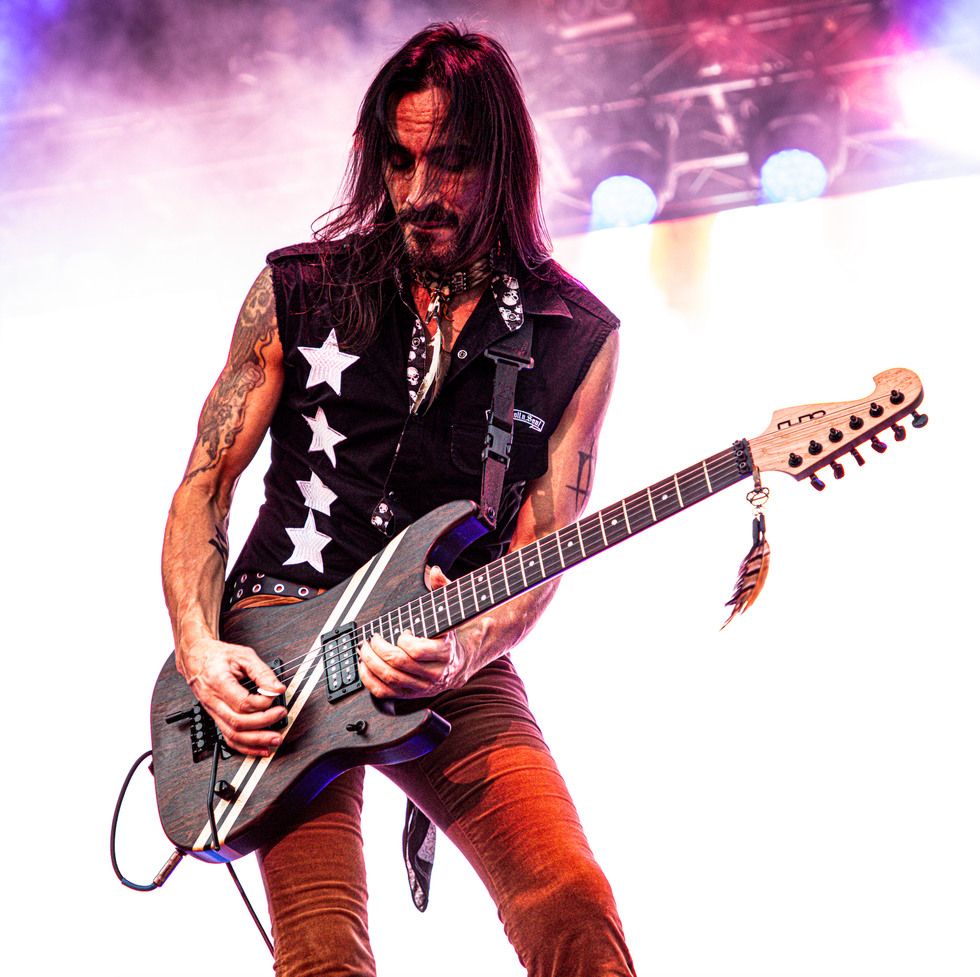
The N4 is part of this new chapter as well. What does that model mean to you now?
I really want it to be what it always was for anybody who wants that guitar. I want people to be able to say, “I want the one that Nuno played, the one that got him everywhere.” I don’t want that to go away.
The Stephen’s Extended Cutaway, which allows greater access to the upper frets on the neck, has always been a signature feature of your guitars. Will it still be present on the N4 and new models?
Yes. We actually reached out to Stephen [Davies, the original designer] about it, and he told us he’s not doing it anymore. The patent, everything about it—he’s moved on. But we asked, “Are you okay if we use the cutaway?” And he said, “Have at it.” So it won’t have his logo or his name or his patent on it, but it’s there as part of the guitar.
One of the things you’re doing with Nuno Guitars is going direct to consumer. What’s the thinking behind that?
I feel there’s a disconnect when you go through traditional channels. There are these platforms and people talking about the guitars amongst themselves. I felt like an outsider. I’m like, I want to get in on that. It’s my guitar. I want to hear what people are talking about. I want to put something up on the website where I can hear what they think. I want them to post videos of them playing—the good, the bad, the ugly.
I’ve always wanted to engage more. I used to ask Washburn, why am I touring all over the world and there are no music stores I’m going to, to play or talk or meet dealers? I always loved having conversations with people, and I felt like nobody else was interested.
“With the Masterbuilts, which we’re calling the Thoroughbred Series, I wanted something fresh.”
Eddie Van Halen has always been one of your idols, and he made his name with a guitar that he built himself, one that became almost an extension of his creative being. While you’re not literally hand-building every Nuno guitar, you are forging a more direct line between your ideas and the guitars themselves.
You actually just made me realize something about Edward. Like him, I did make my first guitar. I put it together from parts. I didn’t buy a company guitar. It was Warmoth parts, and it had a Bill Lawrence pickup that was just a blade. So in a way, you’re right. It’s come full circle where I’m like, “Well, I want to be involved in putting the pieces together.” That’s what I did from the beginning. That’s what I’ve been selling from the beginning, even though somebody else has been manufacturing it. It’s always been Nuno guitars. Now it just has a cool logo. [laughs]
Chris Meade built your Washburn signature model for years, and he now handles your Masterbuilt line. Why was he the guy for this?
It had to be him. The good news was, I didn’t steal Chris from Washburn. Chris was a third-party hire, and all he made was my guitars. I just said to him, “Man, I’m leaving Washburn, and I think that means you might not have a chunk of work anyway.” And Chris is the best. He’s meticulous. He makes guitars that players want to play, not just guitars that look good. It’s like an old baseball glove you put on.
So I’m so excited that he agreed to continue working with me. When I sent him my ideas and I got the guitar back, he surpassed what I imagined. When you get that guitar and it’s not only visual, but the playing and quality are there, you’re like, “Oh, hell yeah.” Chris is amazing. I wouldn’t want anybody else there. It would’ve been hard to find somebody as mental as I am about detail.
“I don’t want it to be like, ‘Nuno is just using those expensive ones and the rest are garbage.’ If anybody knows me and the way I work, they know that’s not the case.”
When you first saw your name on the headstock of these guitars, how did it feel?
It was wild. I felt like, you play Gibsons, you play Fenders—you don’t play your own. I felt uncomfortable with it for a while. Because everybody was like, “Well, what are you gonna call it? Is it gonna be Bettencourt guitars?” And I thought, yeah, maybe it should be Bettencourt Guitars. I almost felt better about that, because that didn’t feel so first-person. That feels like a guitar company. We could write it in cursive, like Fender and Gibson. But then everybody looked at me and said, “No, no, your name is Nuno. There’s nobody else named Nuno. It’s gotta be Nuno.”
What did you think about that?
It took me a minute to wrap my head around it. But then I was like, you know what? You’re 59 years old. Everybody knows who’ve you played with and what’s been going on with you. It should be Nuno. It felt right. It felt like me. And when someone buys one of these guitars, I want them to feel like it’s something that’s directly from me.A compact 100-watter, some liminal ambience and a metal offset: this is my gear of the year 2025

2025 is almost over, and so arrives year-end list season, clattering through the swing doors of journalism right after everyone gets bored of sharing their Spotify wrapped. Is there anything more festive than curling up in front of the fire with a mulled wine and several hundred year-end lists? For my sake, I hope not, because here comes another one.
Year-end lists are great opportunities to look back over emerging trends, and identify where the strongest innovations lay across the year. And this year I was pleased to see that, while the digital side of things continues to grow in power and usability, the world of analogue amps and bespoke pedals was actually a pretty damn dynamic one this year. My personal gear preferences tend towards the messy, loud and, yes, inconvenient universe of real analogue kit – so without further ado, let’s see what I was impressed by this year.
My favourite guitar of 2025: Jackson Lee Malia LM-87
 Jackson Lee Malia LM-87 guitar. Image: Press
[products ids=”5iJIvQ0gmrg79ARQ4QBSdw”]
Is it a metal guitar for offset nerds? Or an offset guitar for metal nerds? Who knows, but either way, Jackson’s new Lee Malia signature is absolutely my top pick of 2025’s new guitar releases. Firstly: it looks cool as hell, but manages to keep it relatively classy. This is not the kind of heavy guitar that screams “mettuuull”, shotguns a beer and stage-dives into the moshpit. Instead, its dark, open-pore finish, the offset shape and the weird tune-o-matic nabbed from Malia’s love of vintage Gibsons make it appealingly minimalist but nevertheless mean looking. Sonically, the combo of a subtle P90 in the neck and an absolute jackhammer of a bridge humbucker makes it great for doing textural things as well as drop-A chugs, and ergonomically, the thing is built for speed and comfort – a boon in any genre.
The LM-87 also shares what’s compelling about the Jack Antonoff and Diamond Rowe signatures: Lee Malia’s personality is here, but it’s definitely a guitar that transcends his and Bring Me’s influence. It’s a minor trend, but a trend nonetheless, for signature guitars to feel a little more like the artist is an honest part of the design process, and less like the guitars are very expensive, playable merch. The side effect is that I still feel drawn to the instrument despite the fact that, and Bring Me The Horizon’s kind of metal is very much not what I’d choose to listen to. Long may this approach continue, basically, where artists of all stripes can contribute to the wider world of cool gear, beyond appeals to their fanbase!
Read the full review.
My favourite amp of 2025: Orange Tour Baby
 Image: Orange
[products ids=”1Wm3RZH94Qmcv7woe2mJ3D”]
It’s no secret I love Orange amps, and I’ve recently been having a very good time with the brand’s solid-state offerings. Late last year I bagged myself a used Super Crush 100, which is essentially a JFET version of the Rockerverb preamp running into a Pedal Baby power amp. It’s a great amp and I love how it sounds and looks, but I was really impressed with one of Orange’s more compact solid-state offerings this year – the Tour Baby.
The Tour Baby is the same size as the Pedal Baby, but adds two preamp channels and a built-in compressor for the cleans. Given its miniscule size but beefy 100-watt power stage, it’s a really compelling option for gigs where you don’t want to load the boot of your car to bursting but still want to kick out some serious dBs on stage. Its overdrive sounds are great too, and it took dirt pedals amazingly – the mid-gain character of the dirty channel was an excellent combo with thick fuzzes. In all, it’s a very Orange take on the compact-solid-state thing, with some added versatility and portability, all for under £400. What’s not to like?
Read the full review.
My favourite pedal of 2025: Old Blood Noise Endeavours Bathing
 Image: Press
[products ids=”2ziixnJ6HWsWKgGJSPIDi9″]
A lot of guitar gear is rooted in what was. Innovation may not quite be a dirty word, but there’s a lot of gear that arrives every year – particularly in the pedal universe – that’s retreading old ground. Maybe with pretty carbon comp resistors and unique enclosure designs, but retreading is retreading – but it’s hard to level that accusation at Old Blood Noise Endeavors’ Bathing. It’s a delay with a totally unique signal chain that shunts the feedback through a variable-stage and variable-LFO phaser – which is a whole lot of jargon to say it sounds utterly unique, totally gorgeous and, true to OBNE’s stated goal, very ‘liminal’.
While it’s by no means for everyone, it’s hard to think of a pedal release I was so intrigued by this year, and I have a lot of respect for the approach of aiming for a totally new, uncharted feeling with a pedal – the art of the thing is in the driving seat, and it’s the sort of thing I’d love to see more pedal companies do.
Read the full review.
The post A compact 100-watter, some liminal ambience and a metal offset: this is my gear of the year 2025 appeared first on Guitar.com | All Things Guitar.
Neural DSP launches Archetype: John Mayer X

Neural DSP has announced what could be the biggest plugin collaboration of all time – Archetype: John Mayer X, a digital version of the Mayer’s recognisable and sought-after tone.
Archetype: John Mayer X takes a similar approach to the brand’s other Archetype plugins, in that it sonically captures Mayer’s favoured analogue bits of kit. On the amps side, you get some digital replicant of his three most beloved and commonly used tube amps – a 1964 Fender Vibroverb, John’s #002 Dumble Steel String Singer, and the prototype of his signature Two-Rock head.
On the pedal side, you get versions of the pedals that you’d expect if you’ve ever even dipped a toe into Mayer tone scholarship: a Keeley Katana, an EHX Q-tron, a Way Huge Aqua-Puss, a combined Bluesbreaker/TS-10 Tube Screamer, and, of course, a Klon Centaur. Alongside this you get a huge variety of speaker cab simulations as well as the usual boatload of microphones that come with any given piece of Archetype software. That makes for a pretty compelling collection of sought-after vintage gear, even outside of the Mayer connection!
Neural DSP head Doug Castro said about the launch in a statement: “John’s sound has inspired guitarists around the world, and it was a privilege to work with him directly to recreate the rig that anchors his tone. “There’s an intimacy to the way his rig responds – it breathes, it opens up, it carries emotion – and capturing that behavior was one of the most meaningful projects we’ve taken on.”
The collaboration is notable as it’s one of the few non-heavy plugins Neural DSP has made, although certainly not the first, as it was preceded by Archetype: Mateus Asato and Archetype: Cory Wong.
And, in case you’d wondered if I’d started putting kisses at the end of my headlines – I haven’t. The ‘X’ in this case indicates an expanded approach to the Archetype software, which is understandable given the scope of the gear captured. Perhaps relatedly this is one of the pricier Archetype offerings from Neural, coming in at €199.
Want to know more? Check out our review of the software, or indeed the 14-day free trial is available from Neural DSP.
The post Neural DSP launches Archetype: John Mayer X appeared first on Guitar.com | All Things Guitar.
Neural DSP Archetype: John Mayer X review – is this the Mayer tone plugin we’ve been waiting for?

€199, neuraldsp.com
Back in the early 2000s, I was a woefully underqualified student on a music college guitar course, powerfully unenthused by the guitar heroes I was encouraged to emulate. In truth, I was probably struggling to see myself in the Mount Rushmore shredders because well, I was and remain a witheringly average guitar player. But a few months into the first semester, one of the tutors switched us onto this new young American lad who was taking an unconventional route to guitar success.
This kid had landed himself a spot on the Billboard top 40 with a fairly dreadful song about someone’s body being a wonderland. But, listen to his new album, Room For Squares, we were told – there’s a serious guitar player lurking underneath the radio-friendly pop songs.
I’m telling you this not to flaunt my John Mayer credentials – as if such a thing exists – but to explain that I am something of a greybeard when it comes to Mayer tone chasing. But obviously, I’m not alone.
Mayer is probably the most influential guitar player of the last two decades, with some of the biggest artists on the planet citing him as a huge inspiration on their tone, technique and artistry. There are whole websites devoted to analysing every piece of gear in an attempt to emulate his sound. This then, is a big ol’ deal.
Because while Mayer has had signature products before – the wildly popular PRS Silver Sky being the most notable – he’s often been quite secretive about his actual signal chain. Now however, he’s pulling the curtain back and presenting any guitar player with a laptop and an audio interface the opportunity to experience a high-end emulation of his guitar amps and pedals, and presets to show you how he puts it all together.
Whisper it, but this might be the most asked-for new artist-related product the guitar world has seen in a very, very long time.
 Image: Press
Neural DSP Archetype: John Mayer – what is it?
Archetype: John Mayer is the latest in Neural DSP’s – maker of the Cortex pedals and a bunch of other high-end digital guitar stuff – series of wildly popular artist-focused guitar plugins.
For the most part, these Archetypes have focused heavily on the shredder, metallic end of the guitar spectrum – John Petrucci, Gojira, Tim Henson and the like – with the occasional flirtations with non-heavy guys like Mateus Asato and Cory Wong.
Landing a bluefin tuna of a fish like Mayer then, is a big deal not just for guitar fans who have been crying out for an official Mayer plugin, but also for Neural DSP. While the Quad Cortex has become hugely popular with fans and artists across the musical spectrum for its remarkably realistic amp profiles (including Mayer himself), the company has struggled to fully cater to the non-heavy audience at times – this is quite the statement of intent that they’re going to change that.
So, what actually is it? Well it’s a guitar plugin, which will work standalone or with your DAW of choice, that offers a bunch of amps and effects exhaustively modelled on Mayer’s own gear, plus a bunch of presets for that gear created not only by the man himself but by a boatload of other artists, too. Yep, if you’ve ever wondered what John Petrucci, Lee Malia or Plini would do if they were plonked down in front of John Mayer’s rig – wonder no more.
Specifically, what we get here are replications of John’s three most beloved and commonly used amps – a 1964 Fender Vibroverb, John’s #002 Dumble Steel String Singer, and the prototype of his signature Two-Rock head. All three come with corresponding cabs, and there’s an interesting fourth option, “The Three-In-One Amplifier”, which combines all three together as Mayer himself would do, under one streamlined control panel.
You can run each of the amps through any of the connected speaker options – and there are a boatload of mic options, both in terms of type and placement, as you’d expect with any high-end guitar plugin.
 Image: Press
Effects-wise, the signal chain offers 11 effects in total, split up into various stages in the chain. And if you ever doubted that Mayer was both extremely online and extremely aware of the internet’s feverish obsession with his signal chain, the fact that all the pedals here are rendered as if clumsily covered in black paint – a nod to Mayer’s habit of ‘blacking out’ certain pedals on his real ‘board to throw off the tonehounds – should remove them conclusively.
In terms of actual pedals, we have five Mayer staples in the pre-effects slot – a Keeley Katana, EHX Q-tron, Way Huge Aqua-Puss, Klon Centaur and a combined Bluesbreaker/TS-10 Tube Screamer. At the other end we also have a Providence Chrono Delay and the reverb bit of a Strymon Flint, and there’s also a studio EQ and compressor after the amp stage.
The most interesting part of the rig, however, is the ‘Gravity Tank’ a Neural-designed hybrid harmonic tremolo and spring reverb tank that puts together the sound of John’s favourite units in a bespoke unit that sits between the pre-effects and the amps.
You also get a transpose function that enables you to go up or down 12 full steps, a noise gate, doubler, plus a built-in tuner, metronome and all the MIDI jiggery you’d expect.
There are 18 built-in Mayer-designed presets, plus multiple presets from over 40 different artists, and a shedload from Neural itself – you can of course, create and save your own too.
 Image: Press
Neural DSP Archetype: John Mayer – usability
Neural’s Archetype platform is a mature one at this point and if you’ve used any of Neural’s plugins before the basic setup is as you’d expect. Even if you’ve never used one before however, the interface is extremely straightforward and intuitive.
Across the top of the interface, no matter what you click on, you have the five editable parts of the signal chain – pre-fx, verb & trem, amp, cab, EQ and comp, and post-fx. Below that you have another permanent bar with the input and output level, noise gate, transpose, doubler and a menu to select presets. At the bottom you have an outlined depiction of the four amp and cab options so you can see at a glance what you’re playing through anywhere, while the big space in the middle is devoted to a suitably WYSIWYG depiction of whatever it is you’re currently editing.
Each effect and amp is clearly laid out in the manner you’d expect from the originals, though the blacked-out thing isn’t the most helpful at a glance. The coloured labels don’t exactly pop with their slightly washed-out colour palette, while the labels for the controls are scrawled in what you assume is Mayer’s fair hand. Again, it’s not the most legible thing I’ve ever seen, and from an accessibility standpoint it would be helpful to be able to alter the font to something more legible – but they’re hardly the first pedals, virtual or otherwise, to put form over function in that regard.
Speaking of pedals, as is the nature with all other Archetypes, the signal chain is fixed to Mayer’s preference in terms of both the overarching chain and the individual components therein. That means if you wanted to move, say, your Aqua Puss to your post fx bank, it’s a no-go – it’s sat at the end of your pre fx slot and that’s where it will stay.
 Image: Press
The fixed chain has other limitations too – not least the decision to have an either/or situation with the TS-10/Bluesbreaker pedal – and then there’s the amps. Each amp has its own tone stack when selected independently, but it defaults to whatever Mayer’s preferred option for the three-in-one option. In this mode you also only get the ability to tweak the level of each amp, a master gain, plus output and room send.
What’s more, each amp only offers a single channel, and the tone stack is obviously condensed quite considerably from what’s on the front of the real thing – for example, the Vibroverb only has four controls (volume, bass, treble, output) and a bright switch.
This is less of a criticism than it is a note of caution – if you’re buying this expecting to get a fully realised replication of a Steel String Slinger or a Two-Rock, you’ll be disappointed. Instead, think of it more like what Mayer considers the most important bits of each amp – and this is an artist plugin at the end of the day. If you’re buying something for its endlessly editable and configurable sonic options, plenty of options exist.
 Image: Press
Neural DSP Archetype: John Mayer – usability
Booting up the plugin on my 2022 MacBook Pro, I naturally reach for the USA Strat that has been a faithful companion for over 20 years – it’s only as I go to plug it in that I recall that both the guitar and its finish choice (sunburst with a tortie pickguard) were the direct result of me spending too much time poring over Mayer’s Any Given Thursday live DVD in a grubby Coventry student house in 2004. The past is nothing if not cringe. Anyway!
The presets are obviously the right place to start for any signature product like this. While Mayer can be a cantankerous character at the best of times, it’s good to see that he hasn’t been totally obtuse here – there are no less than five presets here that have the word ‘Gravity’ in their name. Give the people what they want, John.
I start with ‘Gravity Clean’ because of course I do, with my Strat’s in-between position selected, and well… there it is. Taking into account the fact that Mayer is many dozens of forces of magnitude better at playing guitar than I am, and that my well-loved old Strat is far from a ’64, all it takes is those first five notes to raise the eyebrows at how close this sounds to the man himself.
The presets run a nice gamut of the sort of tones Mayer has become associated with, from meaty Hendrix and SRV-adjacent leads to tastefully restrained bluesy cleans, through to more raucous affairs. The ‘Just Plain Dumb’ preset is frankly, far from it – chaining all three dirty options in the pre effects into a cooking Dumble is certainly a wild ride, but one that is bags of fun.
Isolating all three amps really shows the effort and time that has clearly gone into capturing the sounds, as they really do have distinct and enjoyably authentic characteristics. The Vibroverb is like a warm hug no matter how you set it, while the Steel String Singer certainly lives up to Alexander Dumble’s reputation for creating amps that will show off exactly how good a player you are for good or for ill – forgiving this thing ain’t.
The three-in-one is obviously meant to be the headline event here though – it’s the one that most of Mayer’s presets make use of, but it’s a truly enjoyable experience regardless. The best part is the way you can use the three level controls to precisely tailor how much of each amp you want in your particular sonic gumbo – and the three are different enough that you can easily compensate for anything you don’t like about one with an extra dollop of something you do.
The effects are very impressive across the board, but the star of the show is that Gravity tremolo/reverb tank. The tremolo, in particular, throbs with a wonderfully organic and warm tonality that you rarely find in digital recreations.
And as silly as they might seem from the outset, some of the non-Mayer artist presets – looking at you John Petrucci – do a nice job of showing that there’s utility here beyond Mayer’s bluesy heartlands.
 Image: Press
Neural DSP Archetype: John Mayer – should I buy it?
The good thing about Neural’s Archetypes is that you don’t really need me to answer that question for you – a 14-day free trial is available for you to download and let your ears be the judge.
If you’re a seasoned user of plugins and in-the-box guitar stuff, boot it up and have a go. The sting in the tail is that it’s quite a bit more expensive than other Neural artist Archetypes – but you are getting a lot for your money.
The other thing to weigh on is the fact that, despite being a longtime user of various digital guitar solutions – including Kemper, Fractal and Neural – Mayer is often held up by the guitar community as a bit of an analogue messiah.
As a rule, he’s all about big amps, real effects pedals, and putting them together to make massive sounds – can a digital plugin really come close to that? Well… yes and no. Within the scope of some headphones and a laptop, you’re not going to capture the full majesty of playing through several hundred thousand dollars’ worth of boutique and vintage gear on a giant stage.
But you can feel the care and attention to detail that’s gone into this from a sonic point of view – it really does capture the essence of those sounds you hear on stage and on record in a way that I’ve not heard from other plugins, and presets that claim to offer you some of that Mayer magic in digital form.
I have no doubt that the man himself would never claim that this is going to replace his analogue rig – this is a guy who built mini isolation boxes for his amps so he could use them at The Sphere for Dead & Co this year, don’t forget. But what it offers him, and all of us, is the ability to capture some of that magic in a much more affordable, accessible and replicable way. Arguably, it’s what Mayer fans have been asking for for decades.
 Image: Press
Neural DSP Archetype: John Mayer – alternatives
Not down with the digital thing? Well Fender don’t currently make a Vibroverb but the ’68 Custom Vibro Champ Reverb ($1,049/£899) is a smaller and quieter substitute. Mayer’s Two-Rock signature has been discontinued for a while, but a Silver Sterling signature will set you back the thick end of $7,000/£6,399. Dumbles? Most clones emulate the Overdrive Special as opposed to the Steel String Singer, but the Overtone SSS 100 from Ceriatone ($2,000) is one option. Alternatively, if you just want a very high-quality suite of guitar amps and pedals in plugin form, without the Mayer endorsement, Paradise Guitar Studio from Universal Audio ($149) is well worth an audition.
The post Neural DSP Archetype: John Mayer X review – is this the Mayer tone plugin we’ve been waiting for? appeared first on Guitar.com | All Things Guitar.
Live Wire: A Conversation with Masterful Mandolinist, Guitarist, and Songwriter Sierra Hull

Höfner files for bankruptcy

Guitar and bass brand Höfner has filed for bankruptcy in Germany, a new filing in the Fürth District Court in Bavaria reveals.
Few details about the insolvency have been made public, however the filing does reveal that “provisional insolvency administration” has been ordered for Karl Höfner GmbH & Co as of 10 December. An insolvency administrator has been appointed, who will proceed to attempt to rectify debts over the next three months. Höfner has been contacted for comment.
The company has a long and storied history. It was founded by Karl Höfner in 1887, in what was then the Austria-Hungarian town of Schönbach, and is now Luby in the Czech Republic. Over the next few decades, the company grew to be one of the largest suppliers of stringed instruments in the area and for export. Operations were unsurprisingly scaled back during World War II, and its facilities were put to use making supplies for the German army. Germany’s postwar reconstitution meant the expulsion of Germans from Czechoslovakia, and Höfner relocated to West Germany, opening a new factory in Bubenreuth in 1950.
The company would go on to expand its facilities across the 50s, 60s and 70s. Höfner was acquired by the Boosey & Hawkes group in 1994, which led to further expansion. In 2003, Boosey & Hawkes sold its musical instrument division, including Höfner, to the Music Group as part of a rescue buyout. In December 2004, Höfner was sold to long-time general manager Klaus Schöller and his wife, finance director Ulrike Schrimpff.
The brand has made countless different instruments across its history, but one remains perhaps the most recognisable: the 500/1 bass guitar, AKA the Violin Bass, made most famous by Paul McCartney, who was seldom seen playing anything else while he was in the Beatles. The bass remains Höfner’s most recognisable instrument, and has seen many other notable users since McCartney. McCartney’s first 500/1 bass has its own unique history – it was stolen in 1972, only to be found in an attic in suffolk after nearly five decades of hunting.
Stay tuned for updates on this developing story.
The post Höfner files for bankruptcy appeared first on Guitar.com | All Things Guitar.
Scalpers are ruining the fun for real guitarists – and now I have the data to prove it

In one of the many ways that I am crushingly unoriginal as a guitar player, Back To The Future is a Very Big Deal for me. To call those three movies formative on me probably understates things somewhat.
Among the guitars and sports memorabilia that clutter up my home office, an ‘OUTATIME’ license plate sits proudly on my desk, while an Enchantment Under The Sea Dance poster sits framed over my shoulder. So unabashed is my love of BTTF in fact, that when I left Guitarist magazine a decade ago, the traditional ‘leaving cover’ given to departing staff as a farewell saw me expertly photoshopped into the red body warmer of Marty McFly, stepping out of a DeLorean.
All of which is a roundabout way of saying that when, earlier this year, Gibson and Epiphone announced their partnership with the movie to release a pair of commemorative instruments modelled on the mythical ES-345 used by Michael J Fox in the movie, I was paying attention.
The cold financial realities of being a guitar journalist meant that I was never going to be in for one of the 20 grand Gibson models, but the Epiphone version? That might well be in reach… or so I thought.
Because in reality, I would have needed a time machine built out of a DeLorean to get one – by the time I’d umm’d and ahh’d about whether I really needed it (I didn’t, by the way) all 1,985 of them had sold out.
I wasn’t really surprised by that– I doubt you were either. I am far from alone in being a guitar player for whom Back To The Future was hugely important to them. I’ve interviewed a lot of musicians who were born between 1970 and 1990, and by and large it’s more notable when one of them doesn’t cite Marty McFly as a musical touchstone.
And yet in the back of my mind, I knew it wasn’t just that. Plenty of genuine fans were buying the guitars, sure – but as the brand new instruments started popping up on Reverb and eBay with vastly inflated price tags in the following weeks, it was clear that plenty of people had simply bought them to flip for a profit. And it was even worse with the Gibson version.
Obviously, I wasn’t surprised by this. Scalpers are a fact of life in a culture that has become more and more obsessed with limited-edition drops and artificial scarcity. Whether it’s trying to cop the latest Palace x Nike collab, a Snoopy Moonswatch or god forbid, a Labubu, there will always be people trying to profit in these situations at the expense of people who would just quite like to own the thing in question.
 Image: Epiphone
The Scale Of The Problem
But how big is the problem in the guitar world? It’s always been quite hard to quantify – it certainly felt like something that was a growing issue, but how big was it exactly. Well, thanks to Reverb, we can now get a sense of the full scale of it.
As you may be aware, every year Reverb crunches the vast amount of data it holds on the buying and selling of new and used music gear across the globe to provide a list of the best selling products in various categories. 2025 was no different, but as I was perusing the lists this year I saw something that made me do a double-take.
At the top of the best-selling new electric guitars for 2025 was, you guessed it, the Epiphone Back to the Future ES-345. This guitar, which was offered for sale exclusively via Gibson’s own website and a few select dealers – and as a reminder, was limited to just 1,985 units – beat every other new guitar launched in 2025.
And let’s not forget, while Reverb may have got its start as a used gear marketplace, it’s now a place where a huge chunk of the gear sold is new – often by retailers. Don’t be under any illusions – a significant proportion of all the gear sales in the US, Europe and beyond now goes through Reverb.
For this guitar to beat out every single non-limited run new guitar made by Fender, Epiphone, Gretsch, PRS and everyone else this year… try and wrap your head around that. How many of those guitars that were bought must have been flipped for profit to have the BTTF Epiphone standing alone on the podium? It’s mind-boggling.
A glance at the other categories shows some similar red flags – if not quite as brazen. JHS’s troubled NOTADÜMBLË – a 15,000-run pedal kit that was sold exclusively via the brand’s website and discontinued after a month – is sitting pretty at number three in the overall pedal category. Elsewhere, Joe Bonamassa’s 500-run MXR Deep State sold out in a day, but still somehow made the top 10. A quick search of both sees them mainly listed for twice the amount they cost a few months back.
 Image: Epiphone
Spoiling Our Fun
But does it really matter? You can argue that it’s capitalism working as it’s supposed to, I guess. But I can’t shake the sense they’re ruining the entire point of releasing products with limited production runs – the fun and excitement of trying to bag one.
Obviously, this isn’t a guitar-specific problem – practically every leisure activity you can think of has to deal with scalpers in some shape or form. StockX exists, for crying out loud. I don’t blame the brands, retailers or marketplaces for this – nobody’s managed to fix this problem for shoes, trading cards or anything else, so expecting guitar to lead the way seems a tad unreasonable.
There’s also nothing wrong with buying something, using it for a bit and then selling it on, of course. If you make a profit on it along the way, good for you. But what I hope we can push back on, collectively, is the normalisation of flipping in guitar culture.
 Image: Epiphone
It’s that active desire to buy something with no intent to do anything more than stick it on Reverb for double what you paid for it – that feels quite gross to me. And looking at forums and social media, it seems like a lot of the guitar community agrees.
Perhaps the only way to fight back is to stop giving in to the price-gougers – ask yourself, do you really want that thing so much that you’re prepared to give some chancer double what it should cost to get it?
If we all decided to not play the game, the prices would start coming down because nobody wants a guitar they’re not playing kicking around the house long-term. In the end, that’s what I decided to do.
I was disappointed, sure, but in the months since I can’t honestly say I’ve missed it. Maybe in a few years the prices will come down and I’ll pick one up, maybe I won’t – but whatever happens, I won’t let the scalpers turn something that’s suppose to be fun into something so… heavy?
The post Scalpers are ruining the fun for real guitarists – and now I have the data to prove it appeared first on Guitar.com | All Things Guitar.
Billionaire’s holiday party brings Slash, Bruno Mars and a ridiculous lineup of rock royalty

When billionaires throw holiday parties, expectations tend to rise well above lukewarm wine and a dutiful covers band.
That was the case last Thursday (11 December), when Eldridge Industries chairman Todd Boehly hired out New York’s Capitol Theatre and turned what was ostensibly a corporate holiday party into a full-blown all-star rock showcase.
The 1,800-capacity venue in Port Chester reportedly played host to an in-house band led by Slash and Guns N’ Roses bassist Duff McKagan, alongside Red Hot Chili Peppers drummer Chad Smith and producer-guitarist Andrew Watt.
Performing under the name The Dirty Bats, the group was joined throughout the night by a rotating parade of guest vocalists including Bruno Mars, Eddie Vedder, Yungblud, Brandi Carlile and Anthony Kiedis, who donned a cowboy hat for his cameo – because why not.
The setlist leaned heavily on rock canon, with covers of Motörhead’s Ace of Spades and Iggy and the Stooges’ Search and Destroy sitting alongside covers of Led Zeppelin, Jimi Hendrix and Nirvana. Mars, in particular, made a strong case for himself as the night’s wildcard, strapping on a Fender Stratocaster for Whole Lotta Love, Fire, and a ferocious take on Smells Like Teen Spirit.
Slash, meanwhile, stuck to familiar territory, wielding a sunburst Gibson Les Paul in front of a line of his signature Magnatone amps, while a selection of Fender combos sat ready for guest guitarists to plug into.
The night closed with everyone piling onstage for Johnny B. Goode and Rockin’ in the Free World – a fitting finale to a holiday party where money is no object and the guest list plays arenas for a living.
The post Billionaire’s holiday party brings Slash, Bruno Mars and a ridiculous lineup of rock royalty appeared first on Guitar.com | All Things Guitar.
Pages
