
Music is the universal language
“Glory to God in the highest heaven, and on earth peace to those on whom his favor rests.” - Luke 2:14
Norse Guitar Feeds
Wolfgang Van Halen says this aspect of his father’s guitar playing is “incredibly underrated”: “Everybody looks at him as Mr. Tap and Mr. Shred, but that’s just a flavour to what he did”

When people talk about Eddie Van Halen, it’s usually all about the lightning-fast tapping, the jaw-dropping solos, the “Mr. Shred” persona. But, as his son Wolfgang Van Halen points out, that’s only part of the story – there’s another side of the guitar legend that rarely gets its due.
In a recent appearance on The Cody Tucker Show, the Mammoth frontman turns the spotlight on his father’s rhythm playing and songwriting, the very foundation that, according to Wolfgang, allowed those iconic solos to shine.
“I’ll throw you a different angle at something that I think is really obvious. I think my dad is an incredibly underrated rhythm guitar player and songwriter,” he says [via Blabbermouth].
“I think everybody looks at him as Mr. Tap and he’s Mr. Shred, but I think that’s just like a flavour to what he did. And I think it’s the fact that he was such a good songwriter and rhythm guitar player which allowed him to be the shredder guy on top of it. ‘Cause there are plenty of people who are just great shredders and they’re just running through scales and stuff, and that’s not as interesting.”
The interview also sees Wolfgang name dropping another underrated rhythm player whose contributions are often overlooked onstage: AC/DC’s Malcolm Young.
“But I think in terms of guitar players that are maybe underrated, I’d say one of my favorite underrated guitar players would have to be Malcolm Young from AC/DC,” says Wolfgang.
“Obviously, Angus [Young, AC/DC’s lead guitarist] is very in your face and dancing around while he was just in the back, but I think [Malcolm] is the greatest rhythm guitar player in history. He just had such a grit, and he’s absolutely one of my favourites.”
Beyond that, Wolfgang recently spoke to Guitar.com and shared his five all-time favourite guitar players, offering a glimpse into the influences that shaped his own approach to the instrument.
The post Wolfgang Van Halen says this aspect of his father’s guitar playing is “incredibly underrated”: “Everybody looks at him as Mr. Tap and Mr. Shred, but that’s just a flavour to what he did” appeared first on Guitar.com | All Things Guitar.
Opeth’s Mikael Åkerfeldt thinks prog music has “become a bit regressive”: “Now progressive means fast guitar solos”

Once upon a time, “progressive” meant breaking boundaries, mixing styles, and bending the rules of rock and metal. These days, according to Opeth’s Mikael Åkerfeldt, it’s often more about how fast you can shred – and the prog-metal veteran isn’t buying it.
In a recent chat with Prog Project, Åkerfeldt opens up about his frustration with how the term “progressive” has evolved, noting that the genre has drifted from its adventurous roots and become something of a cliché.
“I’m not sure if it’s so important for me to feel that we are progressive, because I don’t really know what it means anymore,” says Åkerfeldt [via Blabbermouth], who juggles the roles of Opeth’s lead vocalist, guitarist, and primary songwriter.
“Back in the day, I think that it was easier to define a progressive band because they were mixing styles and stuff like that, but now progressive means fast guitar solos, and it’s become a sound and maybe not so progressive.”
He adds that the genre’s overall direction has him scratching his head: “I think progressive music, especially in rock and metal, has become a bit regressive,” says Åkerfeldt.
“And it’s also, I don’t know if I can decide if we are progressive or not. I think it’s up to the audience to decide, but for me, it’s become less and less important to be labelled progressive because I don’t know what it means anymore.”
When asked whether he tries to consciously be “progressive” when writing Opeth’s music, Åkerfeldt is clear: “No. I don’t wanna repeat myself. Many of our fans want us to maybe repeat what we did in the early 2000s, but I’m not really interested in that. I like for us to progress, but not necessarily just so we fit into the progressive rock/ metal genre.”
For Åkerfeldt, the focus is always on creating music that moves forward in its own terms. Drawing on a wide range of influences and a deep passion for his craft, he says, “when I write music, it’s easy to, I think, make progress for our own music, because I have so many different kinds of influences and I’m very passionate about my music and stuff like that. So I try, but at the end of the day, I just wanna write emotional music.”
The post Opeth’s Mikael Åkerfeldt thinks prog music has “become a bit regressive”: “Now progressive means fast guitar solos” appeared first on Guitar.com | All Things Guitar.
Marty Friedman explains why practicing guitar at home won’t help you find your own sound
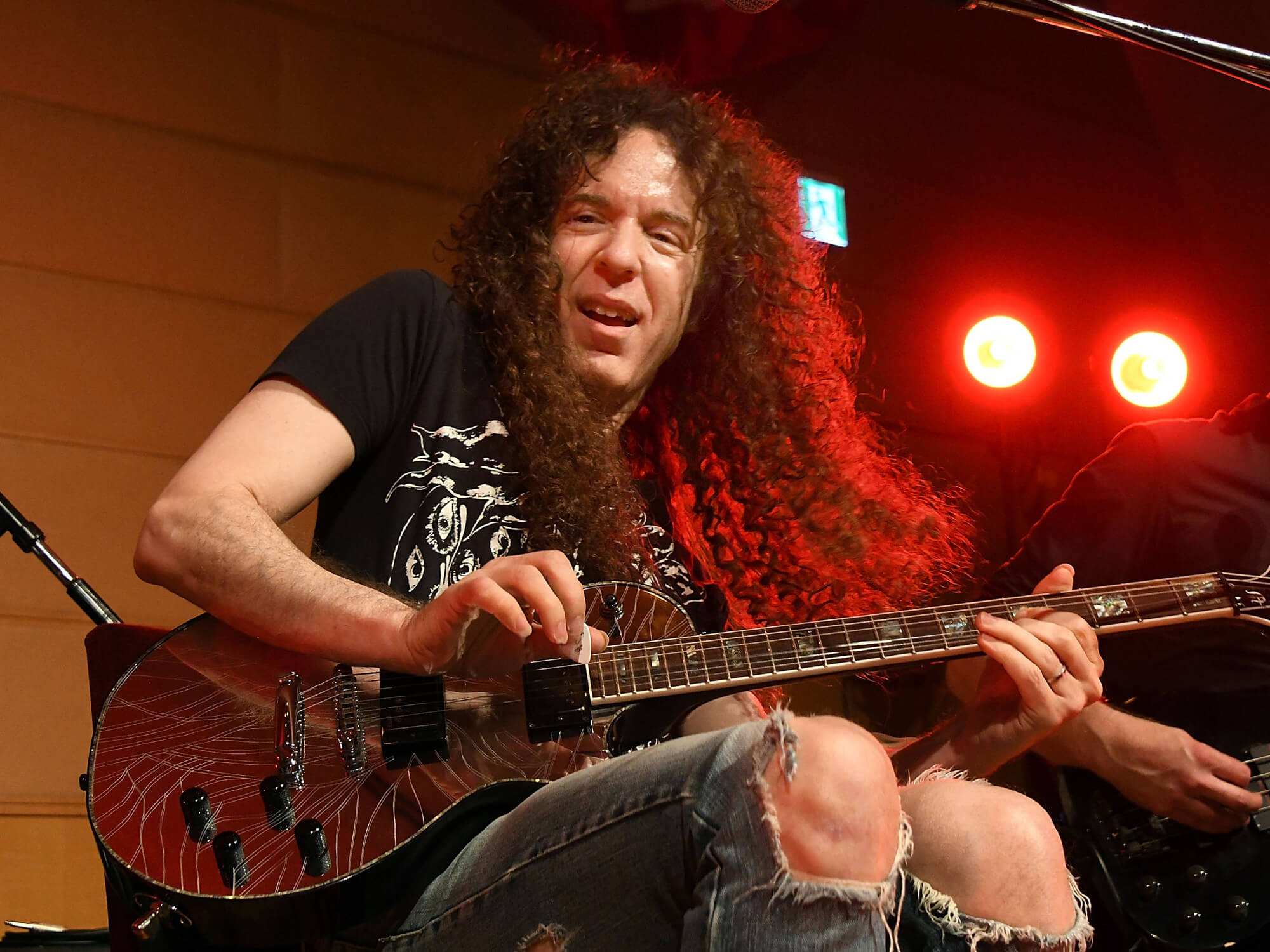
While hours of bedroom guitar practice will sharpen your chops, it won’t do much to help you find your musical identity – at least, according to Marty Friedman, who says the real magic begins when you’re forced into a ‘band situation’.
Speaking to English guitarist and YouTuber Bradley Hall, the former Megadeth guitarist explains that practising alone – even for hours a day – can only take you so far when it comes to developing a personal voice on the instrument.
“It takes so much to get your own thing down,” Friedman says. “Band situations is the way to get your own thing quicker than practicing. I don’t think there’s anything that you can really practice at home that’s gonna get your identity as well as being in a band, because then you’re forced to [think], ‘Now, this is your part.’ You’re the league. You’re George Harrison, or you’re Paul McCartney.”
The former Megadeth axeman also credits punk rock and Kiss as the major influences that first made him want to pick up a guitar.
“I think, when you start playing, there are things that happen that influence you enough to want to pick up a guitar in the first place,” Friedman explains. “That probably never leaves you, right? As you know, picking up a guitar and then playing it forever, it’s kind of a big [thing] – something big had to happen to make you do that crazy thing, right? So in my case, it was punk rock and Kiss.”
Even now, those early influences continue to shape how he approaches the instrument.
“I gravitate to those types of things when I’m playing rhythm,” says Friedman, noting that it also explains why certain modern techniques don’t feel as instinctive to him.
“Hence, I don’t have all of the modern rhythm chops. I mean, I can do them when necessary, but it’s not always as comfortable as [it is for the] guys [who] grew up in the 2000s, and that’s what made them start playing.”
The post Marty Friedman explains why practicing guitar at home won’t help you find your own sound appeared first on Guitar.com | All Things Guitar.
Yungblud claims that the “bitterness” and “blind negativity” he experiences is discouraging the next generation of rock artists from “trying at all”

Yungblud has addressed the criticism he routinely faces within rock, warning that “blind negativity” in the genre could be doing lasting damage to its future.
At 28 years old, Yungblud AKA Dom Harrison is one of rock’s most talked-about rising stars, having captured the world’s attention last year with his tribute to Black Sabbath at Back to the Beginning.
But while some see him as a symbol of the genre’s next chapter, others remain unconvinced – with members of The Darkness, for one, recently questioning his place in rock’s lineage.
Speaking to Loudwire, the British artist reflects on the level of criticism he routinely faces online, arguing that the “bitterness” aimed at new rock artists can have a far wider impact than people realise. According to Harrison, constant scrutiny doesn’t just affect established names – it risks discouraging younger musicians from even getting started.
“On my third album, a lot of people had an opinion about me,” he says, adding that being so publicly dissected isn’t always easy to navigate.
“People like me or people don’t and that’s not always easy to handle,” Yungblud admits. “It can make you feel really isolated and it can actually deter you as a young musician.”
“But to be honest, ultimately, I think that’s the reason why I’m fucking here – to take on the bitterness a little bit because people don’t realise that this blind negativity deters young musicians from trying at all.”
Elsewhere in the conversation, Yungblud also reflects on how his love for rock ‘n’ roll was shaped long before all the online discourse. Growing up in the north of England, he spent much of his childhood immersed in his family’s guitar shop.
“It was the coolest adventure,” he recalls. “Me dad and me grandad had a guitar shop in the north of England and I used to go in every day and I was exposed to rock music at four years old, three years old. I got taught guitar by the guys who would work in the shop – I got brought up on the good shit.”
That early exposure, he says, shaped not only his sound but his outlook – including his affinity for artists who divide opinion. Yungblud points to his bond with Smashing Pumpkins frontman Billy Corgan, whom he collaborated with on a reimagined version of his Grammy-nominated song Zombie, connecting over their shared experience of being polarising figures in rock.
“Isn’t it funny that every fucking great rock star was always hated? It almost encourages you more to use it as fuel and fight back,” says Yungblud.
The post Yungblud claims that the “bitterness” and “blind negativity” he experiences is discouraging the next generation of rock artists from “trying at all” appeared first on Guitar.com | All Things Guitar.
Megadeth wont be returning for any surprise ‘reunion’ tours, insists Dave Mustaine

As reunion tours become increasingly popular, plenty of bands are tempted to return to the stage for one final romp. From Slayer’s 2024 reunion, to Kiss performing on this year’s Kiss Kruise despite calling it quits in 2023, ‘goodbyes’ are apparently temporary nowadays. However, Dave Mustaine insists that Megadeth’s 2026 farewell will truly be the end.
In a new interview with Metal Hammer, Mustaine explains that, unlike his musical peers, Megadeth wont be returning after their 2026 tour. When asked if the band might return, he says “I don’t think so,” adding that Megadeth are a band that “stick to their word”.
“You see the scuttlebutt that is associated with [veteran rock] bands… you know they’ll never follow through with it and stick to their word,” he says. “There’s so many musicians that have come to the end of their career, whether accidental or intentional. Most of them don’t get to go out on their own terms on top, and that’s where I’m at in my life right now.”
Megadeth’s goodbye will be marked by a release of a final self-titled record in January. The record will be the band’s 17th full-length release, and will even feature a cover of Metallica’s Ride The Lightning in honour of Mustaine’s stint in Metallica between 1981 and 1983.
However, while Mustaine claims that Megadeth will record “no more studio albums,” he notes that a live album of the band’s final tour could very well be on the cards. “Might there be a live album at the end of all of this?” he teases. “Yeah, it certainly looks that way.”
While Mustaine is firm about 2026 being the end of Megadeth, he does admit that the change will be strange. “I can’t really conceive of an end right now,” he says.
“I think for all of us, we’re always going to be in Megadeth,” he adds. “We’re always going to be brothers now and best friends, and we’re always going to be responsible for making some of the most fun music that bassists and guitarists and drummers will ever want to play.”
When Megadeth first announced that 2026 would see them finally calling it quits, Mustaine encouraged fans to focus on the positives. “Don’t be mad, don’t be sad, be happy for us all, come celebrate with me these next few years,” he wrote in a statement. “We have done something together that’s truly wonderful and will probably never happen again.”
Rather than thinking of the band’s end, Mustaine wants fans to focus on the legacy they are leaving in their wake. “We started a musical style, we started a revolution, we changed the guitar world and how it’s played, and we changed the world,” he explained. “The bands I played in have influenced the world. I love you all for it. Thank you for everything.”
Megadeth’s final album will drop on 23 January. For more info, head to Megadeth’s official website.
The post Megadeth wont be returning for any surprise ‘reunion’ tours, insists Dave Mustaine appeared first on Guitar.com | All Things Guitar.
How Wheatus distorted an acoustic guitar to make Teenage Dirtbag an early 2000s classic

“I thought it was a peculiar track and interesting and people might like it, but I had pretty much excluded the possibility of it being a single of any kind,” exclaims Brendan B Brown, frontman, guitarist and songwriter of Teenage Dirtbag, the 2000 anthem by Brown’s group Wheatus that appeared on the group’s self-titled debut album.
It’s now 25 years since Teenage Dirtbag took Brown from playing to a handful of people to taking to the festival stages around the world. The song hit number one in several countries, including Australia, and made the top 10 in the US and UK. No one is more surprised at the song’s longevity than Brown himself. “I thought it was too long and that it had this kind of character switch in the middle that felt a bit theatrical,” he says.
- READ MORE: Trivium’s Matt Heafy names the five up-and-coming metal bands everyone needs to watch in 2026
Teenage Dirtbag’s instantly recognisable and unmistakable opening riff came about after Brown struggled to figure out Mark Knopfler’s opening guitar riff to Dire Straits’ Money For Nothing.
“I was trying to get my head around Mark Knopfler’s playing of the riff on Money for Nothing,” he explains. “It was such a big single when I was a kid. In the video it had Mark’s pinky sticking out, and I remember thinking, what’s he doing? And I ignorantly stabbed at that for many, many moons.
“Eventually I came up with my own version of it, which was similar, in regards to the shape of the hand. I wasn’t taught to do it by anyone. I just watched him in the video, as the video starts with a big closeup of Mark playing it, and I went from there.”
Brown’s attempt at mastering Knopfler’s legendary ‘clawhammer’ fingerpicking style was further informed by two other unlikely sources.
“I realized that AC/DC’s Malcolm Young did it on Rock and Roll Ain’t Noise Pollution too, and also Angus Young on Who Made Who,” he says. “So, I really learned how to play fingerstyle from rock and roll guitarists, which was kind of a little weird. You’re supposed to play fingerstyle with the pinky but I got there with my own incorrect version of it.
“Playing the main riff to Teenage Dirtbag absolutely destroys my fingernails on tour, so much so that I have to put glue on them to keep them together. It’s quirky how I play it too with a sort of thumb, thumb, finger pluck, thumb, thumb, finger pluck pattern. It’s very percussive, like a kick, kick, kick, snare, kick, snare, kind of thing.
“I’m just using a regular standard E major chord which to me, is a big chord. There’s a lot of big rock records that have big sounding opening E chords. For example, you have Back in Black and you have Rush’s Tom Sawyer. And those two songs came out around the same time and were big tunes back then, so, it inspired me to write a song that had a big E chord in it, too, which I did with Teenage Dirtbag.”
Leader Of The Gang
First written and demoed back in 1995, Brown asserts the song was pivotal in his transition from band member to frontman. “Doing the demo was the first exploration for me as to what it would be like to be the leader of a band where my voice was the lead voice,” he says. “And that’s a very nerve wrecking thing to try and do after you’ve only been a guitar player in previous bands, and feeling not very confident about.
“I did the demo on a Tascam Portastudio 424, one of the small four track units, which I still have in the attic. The finished recording was recorded on a Tascam DA-78HR system, which was the front loading ADAT machines from Tascam that you would stack and sync together. We had four of those that we bought with our advance money.”
The song’s change in dynamics, from acoustic driven verses to a choir of distorted electric guitar in the chorus has proved a mystery to many in how Brown achieves those heavily distorted tones. His answer will surprise somewhat.
“There’s no electric guitars whatsoever on the recording,” he reveals. “A hundred percent of the electric guitar that you hear on the record is a Martin 00016 TR. A guitar I picked up from the Guitar Center in Los Angeles. When I first played it, I was like, ‘Yeah, this is the one’. So, I took it home and it’s been with me ever since. It’s also the one that’s in the video, too. It’s retired from the road now as it’s a little too fragile. But it spent a good 15 years on the road with me.”
In order to achieve the distorted tones on the recording, Brown plugged his Martin into a SansAmp PSA-1 preamp, “with some very particular settings”.
“And I doubled-tracked it twice,” he adds. “So, there’s two performances on the right, and two performances on the left. I also took a Mesa/Boogie Subway Blues amp that I had, and put the volume knob just right before the breakup point so that if I played it hard, it gave me a little bit of tube distortion from the power amp tubes. And if I backed off of it, it would give me a sort of chunky clean sound. And I overdubbed one per side, too. When you listen to the Teenage Dirtbag recording, you’re hearing six tracks of six performances of guitars. So, there’s six layers of guitars on there.”
The song has of course become a staple of the band’s set ever since, but replicating that tone in the live environment proved challenging, but Brown found a way around it. “When it came to getting that distorted tone live, I initially was using a little Danelectro Daddy-O pedal for the real fuzz to give me that crunch, and an Ibanez Tube Screamer for just a bit of overdrive,” he says. “And I had it split through a Whirlwind ABY Splitter where I had the acoustic sound going out. Eventually, I put the acoustic sound on a volume pedal, so that it ducked when I played the ‘electric’ part. So, I was initially just tapping on and off the distortion pedal when playing Dirtbag. Then I switched over to expression pedals with the DigiTech 2120s [a rack-based valve amp simulator] which is what I now use.”
It’s an unconventional way of doing things, but one that fits perfectly in with the history of this most eccentrically recorded, but enduringly popular, slice of early 2000s rock.
The post How Wheatus distorted an acoustic guitar to make Teenage Dirtbag an early 2000s classic appeared first on Guitar.com | All Things Guitar.
Martin 000 Jr E Jeff Tweedy review – “I’ve played instruments that cost twice as much that don’t have this level of even tonality”

$1,149/£1,175, martinguitar.com
Martin and Wilco frontman Jeff Tweedy have some history. Back in 2012, the pair collaborated on the 00DB Jeff Tweedy – a guitar based very loosely on the 0-18 guitar he’d owned and played extensively on albums since the 90s.
People loved that guitar, but such is the nature of endorsement deals and licensing arrangements; it was discontinued in 2019. However, the tail end of 2025 brought happy news. Not only would Martin and Tweedy be renewing their relationship, bringing the 00DB Jeff Tweedy back into the lineup, but it would be joined in the lineup by a new and more affordable signature guitar, enter the 000 Jr E Jeff Tweedy.
 Image: Press
000 Jr E Jeff Tweedy – what is it?
Once you’ve managed to work your way through its rather elongated name, the 000 Jr E Jeff Tweedy is a small-bodied electro-acoustic that’s rather different from the 00 model. For a start, this guitar is made in Martin’s Navojoa, Mexico factory – which is why it costs the best part of 3,000 bucks less than the 00DB – but that’s not all.
Rather than a 00 body shape, the Tweedy uses the similar but slightly shallower 000 Jr body shape – as used to great effect in the Shawn Mendes signature as well as the most recent 000 Jr that Josh was so effusively impressed with earlier this year.
Like that 000 Jr, it has a solid Sapele construction, but here instead of the open-pore finish of the Junior series we get a rather handsomely applied Tweedy Burst. Unlike that Junior series, all the woods used in this guitar are FSC-certified, including the ebony fingerboard. That neck is a little shorter in scale than the DB, too – but it’s still ‘full size’ at 24.9 inches.
You also get a set of upgraded nickel Grover open-gear tuners for a vintage look with improved stability. Electronics are provided courtesy of Martin’s trusty E1 system, and you also get a soft shell gigbag for your money, too.
 Image: Press
000 Jr E Jeff Tweedy – playability and build
Before we start, a confession – I didn’t really want to review this guitar. When I saw both of the revealed Tweedy models, the guitar I was excited about was the reborn 00DB… so I was kinda bummed out when Editor Josh asked me to check out this one instead.
You hear the word Junior, and you assume that the guitar is going to be… well, junior! A smaller and less robust version of the original? I obviously forgot about all the amazing Les Paul Juniors!
Regardless, this preconceived notion didn’t last long – pretty much from the second I pulled it out of the gig bag and tuned it up. Instantly, it didn’t feel like a small guitar, with that 24.9-inch scale length it has the playing experience of a full-sized instrument, but with the comfort and portability of a travel guitar. I was caught off guard.
The nicely applied burst also makes it feel some distance away from the student guitar I had in my head. The comfortable PA neck shape and graduate Performance Taper carve makes this a very fluid and comfortable instrument to play. While the stripped-down Junior series often feels like ‘My first Martin’ visually, this really does feel elevated to go with that price tag.
 Image: Press
000 Jr E Jeff Tweedy – sounds
If I was wrong-footed by how impressive this guitar looks and feels, the first strum of an open E chord was enough to knock me on my behind. Despite its compact body dimensions, the Tweedy has a full, warm and balanced tonality from E to E string – something that’s probably a combination of sapele’s mahogany-like qualities, plus that rather fetchingly striped ebony fingerboard.
There’s no overabundance of anything here – bass, middle or trebles – it’s just impressively and compellingly even and balanced reproduction of each string. It’s a rare and impressive thing for a guitar in this price bracket – I’ve played instruments that cost twice as much that don’t have this level of even tonality. It’s a guitar that’s begging to be taken into the studio and recorded with.
In the studio, you’re likely gonna want to mic this thing up, but if you’re playing out (or lack a good mic at home) you have the option to go direct thanks to the onboard E1 electronics.
Running into my BOSS AC-22LX acoustic amp for testing purposes, I found that the pickup did a nice enough job of replicating that balanced tonality of the unplugged instrument – though it did need a little bit of chorus and reverb added on the amp side to really open it up.
The onboard tuner is fast and accurate, and having that phase switch certainly is handy if you have any issues with amps or PA systems in a live environment.
 Image: Press
000 Jr E Jeff Tweedy – should I buy it?
I know when to admit I’m wrong, and in this case Josh was entirely correct in picking this guitar for me to review. I assumed that a budget model would offer a markedly inferior experience to the US version – instead we have something that stands on its own two legs as a compelling guitar in its own right.
This is the most balanced acoustic guitar I’ve played or reviewed that costs less than $3,000 – so while that pricetag might seem a lot compared to other Martin 000 Jr models, you have to realise we’re dealing with a pretty special instrument here.
It’s also a fantastically portable instrument, and it’s the sort of thing I wouldn’t hesitate to take to a songwriter round, a jam session, or even to the studio. It offers the sort of balanced and compelling sound of a full-sized Martin in a travel guitar body – I didn’t think it would be possible, but I’ll say it again, I was wrong!
 Image: Press
Martin 000 Jr E Jeff Tweedy alternatives
The basic Martin 000 Jr Sapele is a very impressive guitar for a lot less money ($749/£749), though it lacks some of the visual and sonic refinement of the Tweedy. Another seriously impressive small-bodied guitar is the Taylor GS Mini e-Koa Plus ($1,199 / £1,099), while the Breedlove Oregon Companion CE ($1,999) is a lot more expensive than the Tweedy, but it sounds fantastic.
The post Martin 000 Jr E Jeff Tweedy review – “I’ve played instruments that cost twice as much that don’t have this level of even tonality” appeared first on Guitar.com | All Things Guitar.
The Lowdown: Why Do We Never Take Lessons as Professional Musicians?

In late 2015, I basically quit playing bass and spent a year traveling with the Bryan Brothers as their fitness coach. For those not familiar with the tennis world, they’re the most successful doubles team of all time, with 119 titles as a team, 16 Grand Slams, an Olympic gold medal, and a record 438 weeks (including 139 consecutive) at number one in the world.
Much like I’m an amateur tennis player, they’re amateur musicians. We met through music, specifically through our mutual friend James Valentine from Maroon 5, who is also way into tennis.
I was going through a divorce and needed a change of scenery. They had just lost early in the US Open and were back in California, so we started training together. They asked if I wanted to come out on tour with them—initially to make a bit of a documentary, as their career was going to wind down in the not-too-distant future. As we trained more, that morphed into going to the world tour finals in London, me becoming part of the team, working the off-season with them at the end of 2015, and then getting on a plane to Australia to start the 2016 season.
“I realized very early on that any serious tennis player on the modern tour doesn’t step foot on a court or into a gym without a coach or trainer. Ever.”
Early in the season, I woke up to my phone melting down in Australia because Bob had given an interview with The New York Times and mentioned me joining the team: “…Janek Gwizdala, an accomplished jazz musician turned fitness guru.” I didn’t realize how many of my music friends were into tennis until that moment, but they sure let me know about it double-quick. Most didn’t believe I was actually on the tour until I was getting them tickets to come see our matches.
All this is to say, I got to see the real day-to-day workings of professional athletes—not just at the top of their field, but at a historically important and legendary point in their careers. We practiced alongside Nadal and Federer regularly, did cryotherapy with Djokovic, and shot the shit in the physio room with Andy Murray. As a tennis fan, it was off the charts.
But when I eventually returned to being a musician and got back into the swing of my musical career, I carried a lot of priceless information with me from my time running around the world on the ATP Tour.
Most importantly, I realized very early on that any serious tennis player on the modern tour doesn’t step foot on a court or into a gym without a coach or trainer. Ever.
And what do we do as musicians? If—and that’s a big if—we go to some sort of music school between 18 and 22, we leave, we’re flat broke because it cost a fortune, and we might never take another lesson for the rest of our careers.
Not once in my 20s, having quit Berklee and moved to New York City, did I have anyone consistently guiding my playing, my mental capacity to deal with what it takes to break into the New York scene, my choices of gigs, sessions, tours—anything. I had friends, sure. We’d talk and commiserate over certain things. But they had no more experience than I did, for the most part.
Sometimes you’d be lucky enough to make friends with a far more senior musician in the scene, and you’d hang on every word and story like a kid getting to stay up late watching TV you shouldn’t see that young. But as amazing as those stories were, they were stories from a bygone era that bore little relevance to where I was at.
What I’ve made a conscious effort to do over the past decade—since that incredible experience of being in a completely different, intense professional scenario—is seek out advice, mentorship, lessons, and coaching whenever possible. Sometimes that’s been for my music, sometimes for business, other times for health or fitness when I’m trying to add something to my routine and want to get the most out of it.
If you’re a beginner or a pro—especially a pro—get a local teacher. Find someone you trust, someone you respect, and take a lesson once in a while. It’s amazing to have someone to talk to, to gain confidence from, and to help you remember you’re not alone in so many of the things we struggle with as musicians.
The Sounds of 2025: 25 Must-Hear Albums

Totally Guitars Weekly Update December 31, 2025
December 31, 2025 It has been a fun year at TG, and I hope everybody is enjoying the Holiday Season. Today I started with a couple tunes you should recognize, and catch the connection. I also ended with a couple of my seasonal favorites. In between there were just a few thoughts about practicing and […]
The post Totally Guitars Weekly Update December 31, 2025 appeared first on On The Beat with Totally Guitars.
“I’ve learned so much from classical music”: Marty Friedman on why every rocker should study classical music

On the surface, the worlds of rock and classical music couldn’t be further apart. However, former Megadeth guitarist Marty Friedman insists that listening to classical music could teach all rock and metal musicians a trick or two.
Speaking with interviewer Tobias Le Compte, Friedman reveals that he listens to classical music “all the time”, because he is constantly “learning” new skills from it. “I’ve learned so much from classical music and have played classical music, as a soloist, with many big orchestras,” he explains [as transcribed by Blabbermouth].
Rather than restricting yourself to the conventions of one genre, Friedman insists that all musicians should explore different worlds of sound. Rather than simply thinking “the grass is greener on the other side”, classical artists should allow themselves to “rock out, shake their asses and bang their heads”, just as Friedman is allowing himself to embrace the “big crescendos of classical music”.
The difference can sometimes be a challenge, but it’s worth it. He notes that even the nature of a classical performance can push you to your guitar limits. He recalls a recent performance with Antonín Dvořák, which saw him performing non-stop for a solid 25 minutes. “All the cues are so different from a rock band,” he explains.
“It takes so much work to do; it’s a whole different lifestyle,” he adds. “It took a lot of practising, rehearsing and learning in a different way. So I learned a ton from it, and I’ve done that several times now… it’s such a thrill.”
Plenty of other rock and metal guitarists have also cited classical music as a huge inspiration. Tim Henson in particular was classically trained in violin, which has massively informed Polyphia’s expansive, progressive sound. Elsewhere, Randy Rhoads’ complex solos are also classically informed.
Yngwie Malmsteen also praises the influence of classical music on his guitar playing. He has previously claimed that listening to German composer Johann Sebastian Bach had a far greater impact on him than, say, Deep Purple’s Ritchie Blackmore. “I based my guitar playing on classical violin, not guitar,” he revealed at Hellfest in 2024.
“I love Ritchie Blackmore, no doubt about it, but my playing is nothing like his,” he said. “It sounds a bit old fashioned to me when people tell me I was influenced by Blackmore: just listen to how we play!”
On the more experimental end of things, Polish guitarist Marcin Patrzałek’s unique Flamenco-tinged percussive fingerstyle approach to his instrument is also massively influenced by his classical training.
The post “I’ve learned so much from classical music”: Marty Friedman on why every rocker should study classical music appeared first on Guitar.com | All Things Guitar.
The Sounds of 2025: Guitars and Gear that Carried the Acoustic Tradition Forward

“That track was about as metal as it gets!”: Robert Fripp argues that this King Crimson track laid the foundations of heavy metal

Black Sabbath’s 1970 self-titled debut famously changed the face of metal forever. Without it, we wouldn’t have heavy metal – but, if you look further back, other artists were also beginning to explore heavier sounds. In fact, Robert Fripp believes that King Crimson’s 1969 debut helped lay the foundations of metal’s heavier sibling.
In a new interview with Guitar World, Fripp notes that King Crimson’s influence on heavy metal is often ignored. He argues that the band’s In the Court of the Crimson King record, and particularly the track 21st Century Schizoid Man, was “about as metal as it gets”.
“I saw a recent video on YouTube on the 10 precursors to heavy metal, and 21st Century Schizoid Man wasn’t among them,” Fripp says. “That’s absurd!”
While Crimson are often branded as a prog unit, the essence of metal has always rumbled beneath the surface. “The powerful, metallic element has always been there in Crimson,” the guitarist insists. “For me, it became increasingly articulated in the simple question: What would Jimi Hendrix have sounded like playing a Béla Bartók string quartet?”
“In other words, the sheer power and spirit of the American blues‐rock tradition speaking through Hendrix’s Foxy Lady or Purple Haze,” he adds.
Don’t just take Fripp’s word for it – even the Prince of Darkness himself paid tribute to the track 20 years ago. Ozzy Osbourne’s cover of 21st Century Schizoid Man features on his 2005 solo record, Under Cover, and is comfortably suits Osbourne’s heavy metal edge. “[Ozzy] was always generous enough to acknowledge Crimson,” Fripp notes.
Elsewhere, The Who’s Pete Townshend also acknowledged the track’s heavier textures back in 1969. “21st Century Schizoid Man is everything multitracked a billion times, and when you listen, you get a billion times the impact,” he wrote in a teaser ad prior to the release of Court of the Crimson King [via Rolling Stone].
“Has to be the heaviest riff that has been middle frequencied onto that black vinyl disc since Mahler’s Symphony No. 8,” he added.
While Crimson’s experimental sound has taken on many forms, Fripp argues that the band’s “metal voice” can be found everywhere. From their debut, to 1973’s Larks’ Tongues in Aspic, metal has always played a small part in the Crimson formula.
The post “That track was about as metal as it gets!”: Robert Fripp argues that this King Crimson track laid the foundations of heavy metal appeared first on Guitar.com | All Things Guitar.
Boss XS-1 Poly Shifter review – all the magic of the XS-100 in a smaller, smarter format

$209.99/£198, boss.info
Hey, have you ever considered that maybe you’ve got too many effects pedals? One answer might be to sell some of them – ha, imagine! – but another way to make more space is simply to get smaller ones. Boss knows this, and that’s why the XS-1 Poly Shifter exists.
Launched alongside the powerful but slightly enormous XS-100, this is the same kind of multi-function pitch-shifter, powered by the same all-new algorithms, but offered in the standard Boss form factor that’s been ruling stages since the 1980s. So… perhaps you’ve got room in your life for one more pedal after all?
 Image: Press
Boss XS-1 – what is it?
By all means have another quick read through my review of the XS-100, because the basics are unchanged (plus I really like the line about the elephant). But here’s a mini-recap anyway: with these two pedals, Boss is making a play for the market currently dominated by DigiTech and its Whammy range of pitch-manipulators. You can shift up or down, from a single semitone to a multi-octave interval, you can blend that sound with your dry signal, and you can also select ‘detune’ mode for more subtle chorus effects.
Obviously the bigger unit has an expression treadle, plus a screen for navigation (including presets) and the option of stomping between two different intervals – none of which is present here. For the record, the maximum interval has also been cut from four octaves to three; but seeing as a three-octave leap is still more than any human could possibly find a genuine use for, that hardly qualifies as a compromise.
 Image: Press
Boss XS-1 – is it easy to use?
This being a Boss pedal with two knobs and two switches, it couldn’t be any easier to use unless it had arms that stuck out of the sides and played the guitar for you. We’re talking real ‘don’t bother with the manual’ stuff here, and that’s quite a change from the logical but multi-layered operation of the XS-100.
The first knob controls the balance of the output signal, from all dry to all pitch-shifted; the second controls the shifting interval, which can be anywhere between one and seven semitones (ie: a fifth), or one, two or three octaves. The little toggle switch below that selects up, down or the detune option, while the one on the left lets you set the footswitch to latching or momentary mode. And that really is everything.
 Image: Press
Boss XS-1 – what does it sound like?
When it comes to the sounds, it’s all about the algorithms – and so this part of the review could almost be a direct copy of what I wrote about the XS-100. The crucial part is that the latency is impressively low and the processed tones are impressively pure, with barely a hint of the digital scratching and crackling that you might associate with pedals of this type.
The available effects can be divided into four broad categories: down-tuning for baritone-style metal riffing; up-tuning for a virtual capo and/or impossibly high widdling; blending in an up-octave for an approximation of a 12-string sound (you’ll want the balance at around 10 o’clock for this); and blending in any interval for tight-tracking harmonies. Oh, and that’s not counting the detune effect, which is much easier to access here than on the bigger unit thanks to that dedicated switch. It sounds really rather nice in an 80s kind of way, and can be adjusted using the two knobs.
The one thing you can’t do, of course, is Whammy-style soaring and swooping, which depends on foot control… but there is an input for an expression pedal, so even that isn’t completely off the table. Make sure you’ve got one that’s Boss-friendly, though: my Moog EP-3 normally gets on great with every stompbox it sees, but it sounded all sorts of wrong with this one.
 Image: Press
Boss XS-1 – should I buy it?
By now the reasons to buy into Boss’s new XS range should be clear: put simply, it’s got the best algorithms. So if you’re after purity and realism above all, then this has to be the first name on your shopping list.
That just leaves the question of which model to get. The XS-100 is a chunk of fun for sure, but I like the XS-1 a lot more. It’s got all the features you need – compatible expression pedal permitting – plus it’s far cheaper, it’s easier to use and it takes up much less space. Just don’t blame me if you end up buying three more pedals to fill the gap.
 Image: Press
Boss XS-1 alternatives
The DigiTech HammerOn ($299/£219) is one of three compact pedals in the Whammy family, and offers up/down shifting plus lots more besides. A simpler option is the Electro-Harmonix Pitch Fork ($198/£169), and a more complicated one is the full-size Boss XS-100 ($349.99/£299).
The post Boss XS-1 Poly Shifter review – all the magic of the XS-100 in a smaller, smarter format appeared first on Guitar.com | All Things Guitar.
Top 10 Rig Rundowns of 2025
This year was a big one for the Rig Rundown crew! John, Perry & Chris traveled to Boston, Cincinnati, Chicago, Milwaukee, and even a cave in Tennessee, while of course foraging in their home base Music City, to gather the biggest, brightest (and loudest) setups touring the world. Find out the most-popular episodes and behind-the-scenes adventures the tres amigos encountered in 2025.
Rig Rundowns supported by D'Addario
HONORABLE MENTIONS:
Rig Rundown: Jeff Tweedy

The Wilco frontman’s ’90s pawn shop raids are paying off decades later.
Rig Rundown: Marty Stuart & His Fabulous Superlatives
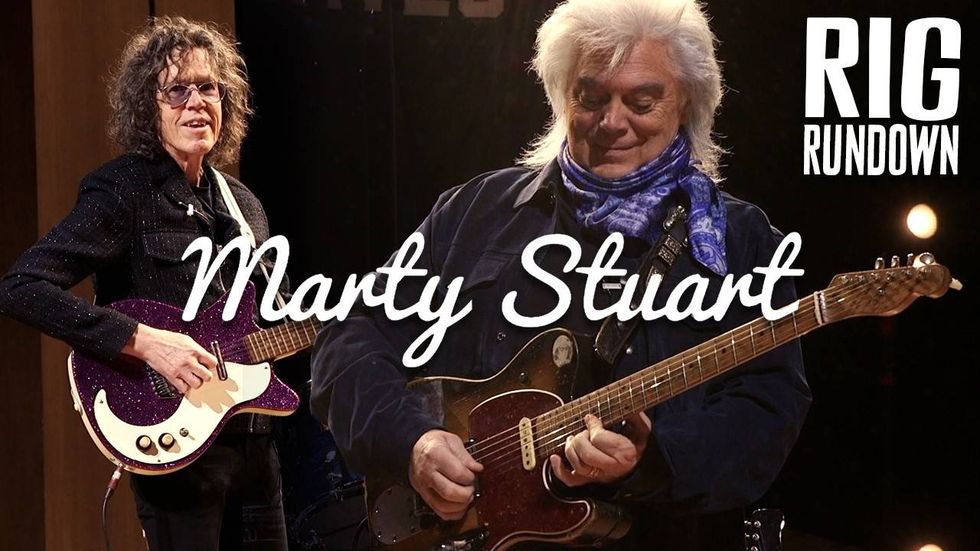
The legendary country musician and his right-hand man, guitarist Kenny Vaughan, prove that Fender guitars through Fender amps can still take you a long way in this world.
THE TOP 10:
10. Marty Friedman Rig Rundown
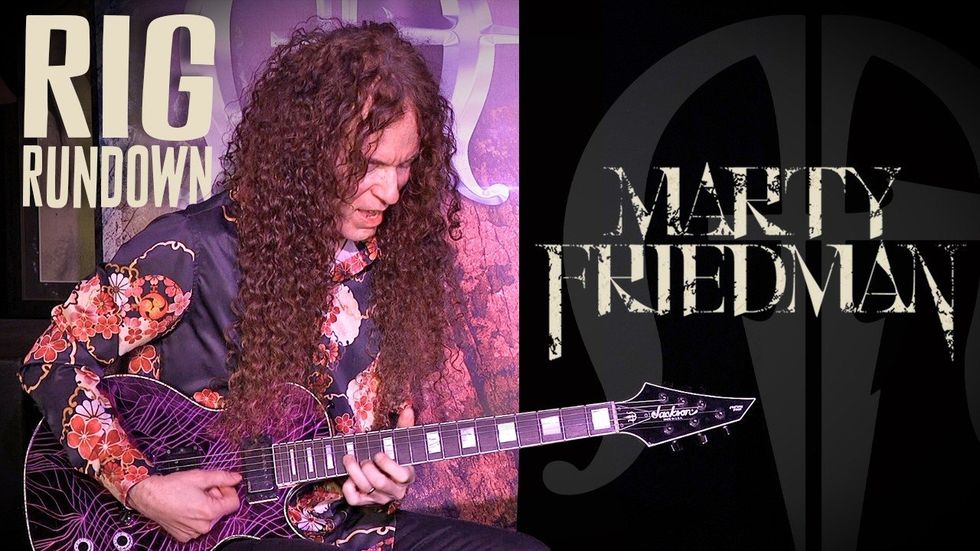
Marty Friedman and his trusted tech, Alan Sosa, who handles all effects switching manually during the show, showed us the goods.
9. The Who Rig Rundown
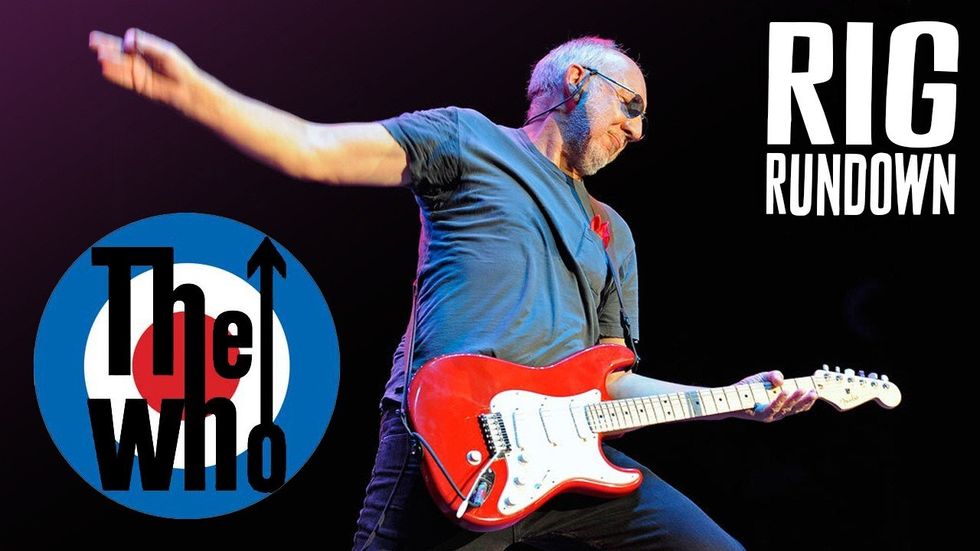
The Who need no introduction, so let’s get to the good stuff: PG’s John Bohlinger caught up with the band’s farewell tour at Fenway Park in Boston, where guitarist Pete Townshend’s tech Simon Law and bassist Jon Button’s tech Joel Ashton gave him a look at the gear that the infamous British rockers are trusting for their goodbye gigs celebrating 60-plus years together.
8. Fontaines D.C. Rig Rundown [2025]

The Irish post-punk band’s three guitarists go for Fairlane, Fenders, and a fake on their spring American tour.
7. Steve Stevens Rig Rundown

The Billy Idol guitarist rides his Knaggs into Nashville.
6. Dann Huff Rig Rundown
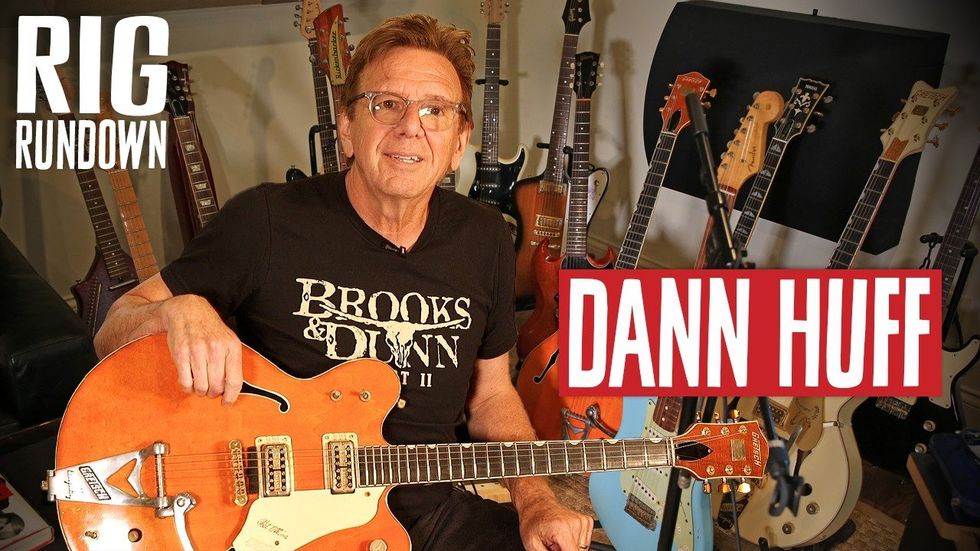
The all-star producer invites John Bohlinger to his home studio for a glimpse of his most treasured gear.
5. Queens of the Stone Age Rig Rundown with Troy Van Leeuwen

Fresh off a substantial break and a live acoustic recording from Paris’ infamous catacombs, hard-rock titans Queens of the Stone Age stormed back to life this spring with an American tour, including back-to-back nights in Boston at Fenway’s MGM Music Hall.
PG’s Chris Kies snuck onstage before soundcheck to meet with guitarist Troy Van Leeuwen and get an in-depth look at the guitars, amps, and effects he’s using this summer.
4. Keith Urban Rig Rundown for High and Alive Tour 2025
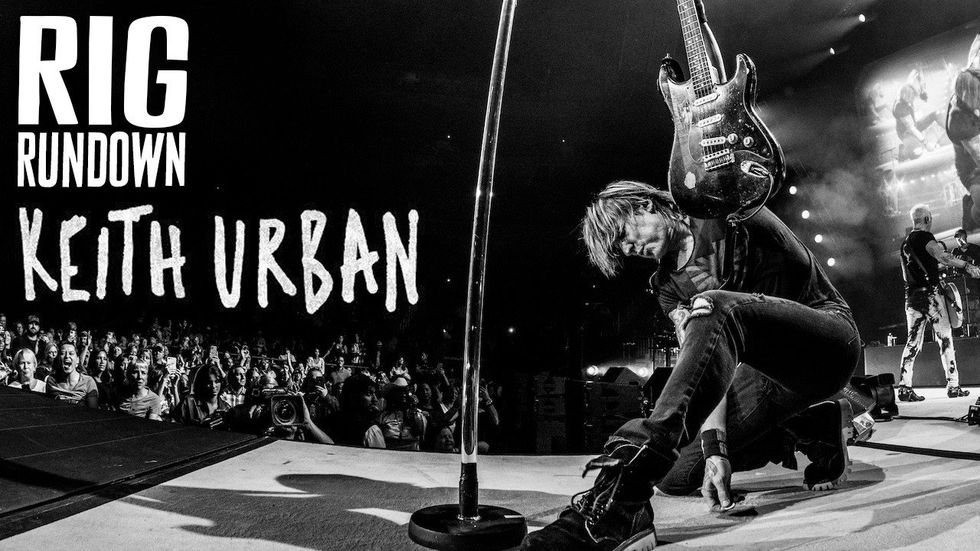
Down Under’s number one country guitar export—and November 2024 Premier Guitar cover model—Keith Urban rolled into Cincinnati’s Riverbend Music Center last month, so John Bohlinger and the Rig Rundown team drove up to meet him. Urban travels with a friendly crew of vintage guitars, so there was much to see and play. In fact, so much that they ran out of time after getting through the axes! Later, Bohli and Co. met up with Urban tech Chris Miller to wrap their heads around the rest of the straightforward pedal-free rig he’s rockin’ this summer.
3. System of a Down's Daron Malakian Rig Rundown
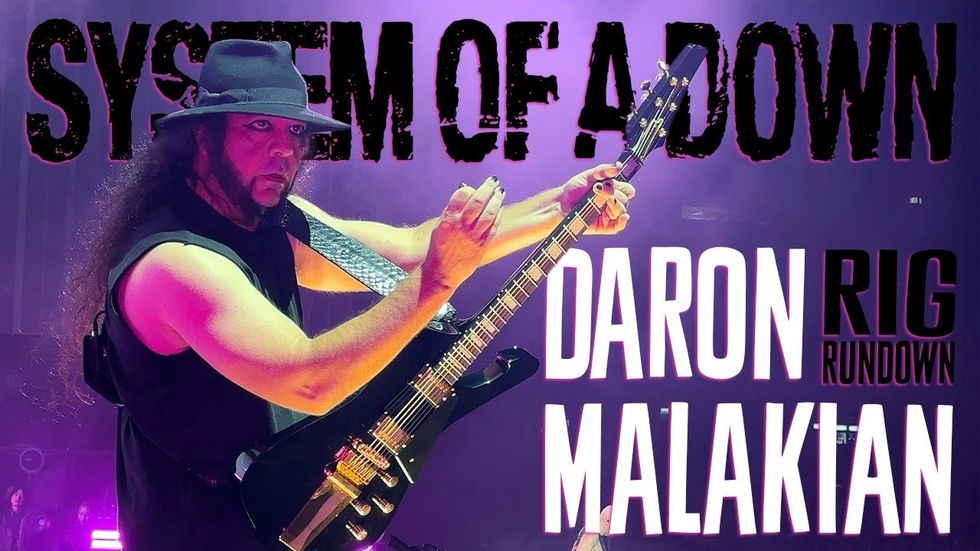
The metal giants return to the stage with a show powered by gold-and-black axes and pure tube power.
Except for two new singles in 2020, alt-metal icons System of a Down haven’t released new music in 20 years. But luckily for their fans, System—vocalist Serj Tankian, guitarist/vocalist Daron Malakian, bassist Shavo Odadjian, and drummer John Dolmayan—took their catalog of era-defining, genre-changing hard-rock haymakers on tour this year across South and North America.
2. Linkin Park Rig Rundown

Linkin Park went on hiatus for seven years after lead vocalist Chester Bennington’s death in 2017, but last September, the band announced that they were returning with new music and a new lineup—including vocalist Emily Armstrong and drummer Colin Brittain. A new album, From Zero, was released in November 2024, followed by the single “Up From the Bottom” earlier this year, and this summer, the band tore off on an international arena and stadium comeback tour. Founding lead guitarist Brad Delson is still a creative member of the band, but has elected to step back from touring. And so on the road, Alex Feder takes his place alongside founding guitarist/vocalist/keyboardist Mike Shinoda, DJ Joe Hahn, and bassist Dave Farrell.
1. Deftones' Stephen Carpenter Rig Rundown
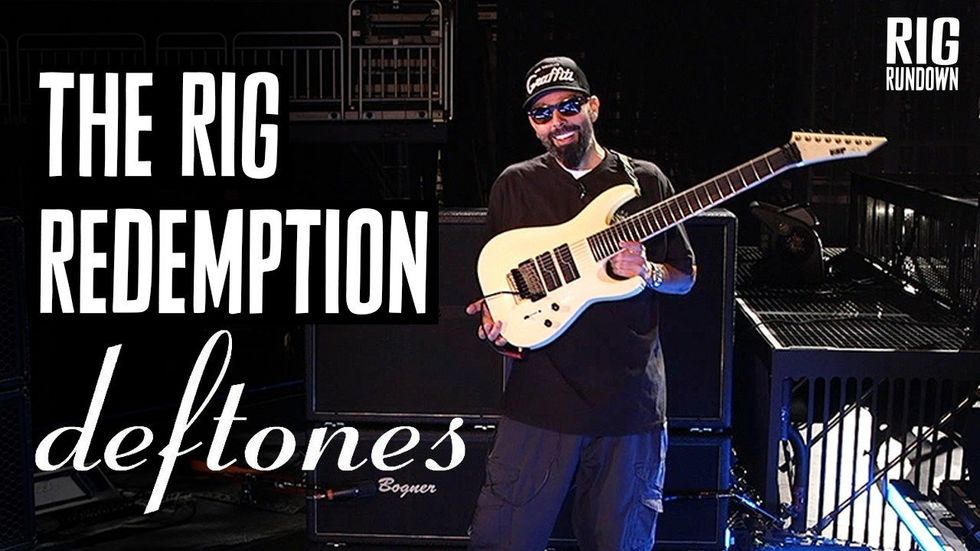
California metal giants Deftones returned this year with Private Music, their first album in five years. In support of it, they ripped across North America on a string of headline shows and support slots with System of a Down.
We linked with Deftones guitarist Stef Carpenter for a Rig Rundown back in 2013, but a lot has changed since then (and as Carpenter reveals in this new interview, he basically disowns that 2013 rig). Back in August, PG’s Chris Kies caught up with Carpenter again ahead of the band’s gig in Milwaukee, Wisconsin, where the guitarist gave us an all-access walkthrough of his current road rig.
Acoustic Soundboard: The Ethics and Practice of Revoicing Flat-Top Guitars
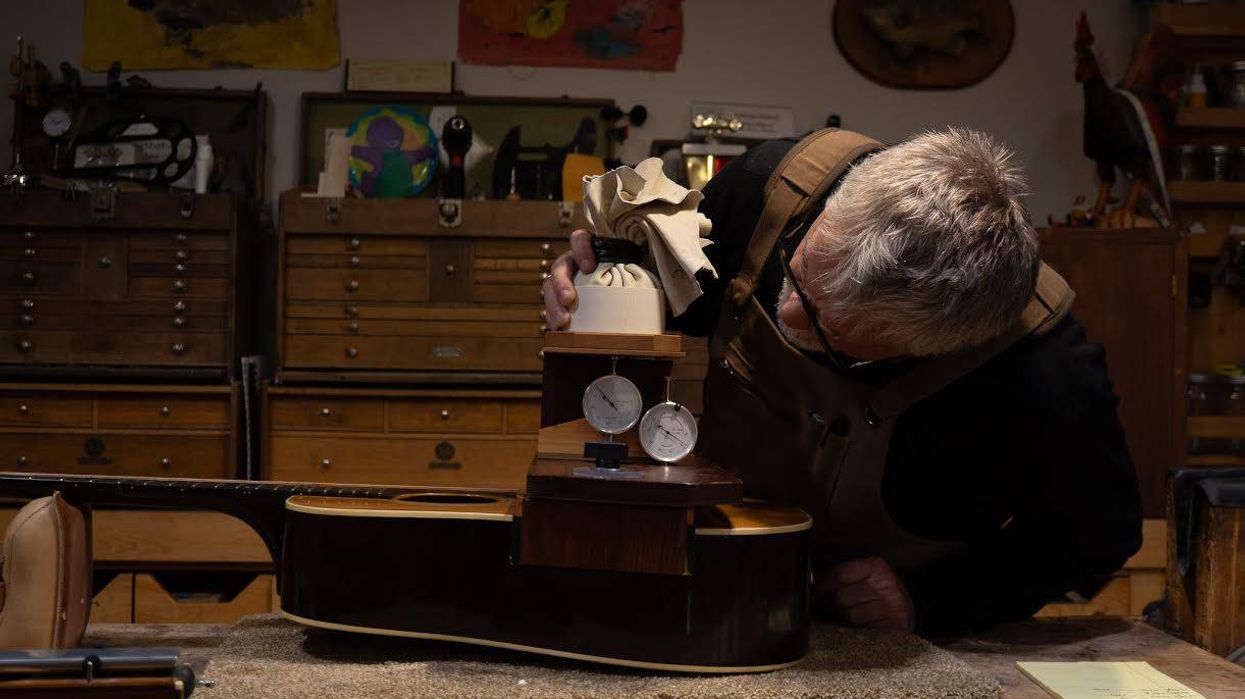
Revoicing flat-top steel-string guitars is something I’ve practiced for decades. In the early days, once I discovered what scalloping was and how it affected tone, I began reaching inside instruments and carving braces in hopes of improving their sound. The problem was that I had no real idea what I was doing, no sense of targets, and certainly no clear understanding of purpose. Fortunately, I didn’t attempt this on many guitars, and never on anything of real value.
As time went on and I began building my own instruments, I developed the ability to tune tops through scalloping or tapering braces. This gave me valuable insight into what to look for when approaching revoicing later in my career. The process became more disciplined; it included setting air resonance, balancing top and back frequencies, and measuring deflections.
But the question remains: Should we even be revoicing guitars at all?
In the violin world, revoicing is standard practice. Instruments are designed to be disassembled and worked on, and re-graduating tops is one of the most common procedures performed on vintage violins, violas, and cellos. These repairs are done routinely, even on valuable vintage instruments, and often multiple times across their lifespans. This tradition also extends to historical pitch change, such as the move from A=340 Hz to A=440 Hz, where instruments had to be physically altered to remain functional. Violin makers are trained from the very beginning to understand instrument revoicing and the practice is widely accepted.
“For those with the training and experience, revoicing can transform a lifeless guitar into something inspiring and enjoyable to play.”
Flat-top steel-strings are different. We now have guitars, pre-war Martins in particular, that are considered the Stradivari of the flat-top world. These instruments already sound extraordinary, and carving on their braces would not only be unnecessary, but destructive. Still, not all guitars share this level of excellence even within vintage Martin examples. Over the years I’ve encountered many instruments that simply missed the mark, where the relationships between air, top, and back resonances were poorly balanced.
Take, for example, a Guild D-40 from the 1980s that recently came into my shop. Guilds of that era were well-built, sometimes even overbuilt. This particular guitar measured an air resonance of 101 Hz, a top resonance of 200 Hz, and a back resonance of 207 Hz. The problem was obvious: The top was so tight at 200 Hz it had restricted musicality, and its frequency nearly sat on top of the back, only separated by 7 Hz. Worse, the air resonance, at 101 Hz, was far too high for a large-body guitar, which typically falls around 95 Hz or lower.
This guitar was crying out for a revoice. My plan was simple: reshape and scallop the accessible braces on the top, drop the top resonance into the 170 Hz range, and allow the air resonance to settle near 95 Hz. Step by step, I carved, restrung, measured, and repeated until the targets were met. The top gradually dropped: first to 190 Hz, then 180 Hz, and finally 173 Hz. The air resonance followed, landing at 95 Hz. The results were dramatic. The instrument opened up, resonances began to couple, and its musicality increased significantly.
Of course, there are caveats. Any revoicing work voids a warranty, and on a new instrument that can be a serious consideration. In this case, the Guild was decades old, had changed hands multiple times, and carried no warranty concerns. More importantly, the guitar was so overbuilt that there was little danger in loosening the top.
So, what are the ethics of revoicing? Should you attempt it? The answer is clear: Unless you thoroughly understand resonance, frequency targets, deflection values, and how they interact, you should not. For those with the training and experience, however, revoicing can transform a lifeless guitar into something inspiring and enjoyable to play.
In restoration, the golden rule is to enter and exit an instrument without leaving a trace. But sometimes, as with this Guild, the only way forward is to make meaningful change. Done carefully, with respect for the instrument and for the physics of sound, revoicing is not only ethical; it can be a gift to both the guitar and its player.
“Eddie would have taken over”: why Gene Simmons rejected Eddie Van Halen’s request to join Kiss

Back in the ‘80s, tensions between David Lee Roth and the rest of Van Halen were steadily rising. In 1982, Eddie Van Halen was even prepared to jump ship and abandon Van Halen altogether, begging Gene Simmons to let him join Kiss. However, Simmons rejected the guitar legend’s proposal.
We know what you’re thinking – who would say no to Eddie Van Halen? While the rejection might seem like a slight on Eddie’s talent, it was actually an admission that the Eddie’s guitar playing was a little too bold for Kiss to contain. “There wouldn’t be room for Eddie in Kiss,” he admits in an interview with MusicRadar.
Eddie proposed the idea of joining Kiss in 1982, following the release of Van Halen’s Diver Down record. At the time, Eddie was unsure whether he could continue working with frontman Roth. Aware that Kiss were on the hunt for a new guitarist to replace Ace Frehley, he approached Simmons and asked to join the band.
“Eddie told me, ‘Roth is driving me nuts – I can’t take it!’” Simmons recalls. “He said: ‘I gotta leave. I know you’re looking for a lead guitar player. Do you want me in the band?’”
Despite Eddie’s desperation, Simmons was firm. He gave the Van Halen guitarist some vital advice: “I said, ‘Eddie, a band is worse than a marriage. You’re going to have ups and downs and stuff. But with Van Halen, everything begins and ends with you – it’s all about the guitar. Those riffs, that’s the backbone of what it is. That’s the sound.”
Simmons went on to note that those “backbone” riffs were “not necessarily the point of view of Kiss”. As he puts it, Eddie joining Kiss would have been like “putting Jeff Beck or Jimi Hendrix in AC/DC”.
“Hendrix would suck up all the oxygen,” he explains. “He needed just one bass player and a drummer so he’d got that room without a rhythm guitar player there. Eddie was like Hendrix in that sense. He needed a lot of room.”
While Van Halen had been created with Eddie Van Halen’s riffs in mind, Kiss didn’t have enough space for such gargantuan solos. “With Van Halen, it [allowed] a lot of room for the guitar player to take up,” Simmons notes. “There just wasn’t that room unless we wanted to gut what Kiss was all about. Eddie would have taken over.”
Although we’d love to have seen Eddie Van Halen storming the stage in Kiss makeup, Simmons’ rejection forced Eddie to persevere with Van Halen. And it’s good he did, because the band’s next album, 1984, featured some of Van Halen’s most iconic cuts, including Jump and Panama.
“Morally, I think I did the right thing,” Simmons concludes. “[I told] Eddie, ‘You’ve got to stick it out. No matter what the problems are in the band, you’ve got to hang in there.’”
“It’s never easy! You take a look at Mick Jagger and Keith Richards, who had their ups and downs, or John Lennon and Paul McCartney, who were childhood friends. But you don’t let the band break up, even if it means switching lead singers. And in the end, that’s exactly what Eddie did.”
The post “Eddie would have taken over”: why Gene Simmons rejected Eddie Van Halen’s request to join Kiss appeared first on Guitar.com | All Things Guitar.
Mayones Duvell DT-7 Giveaway!

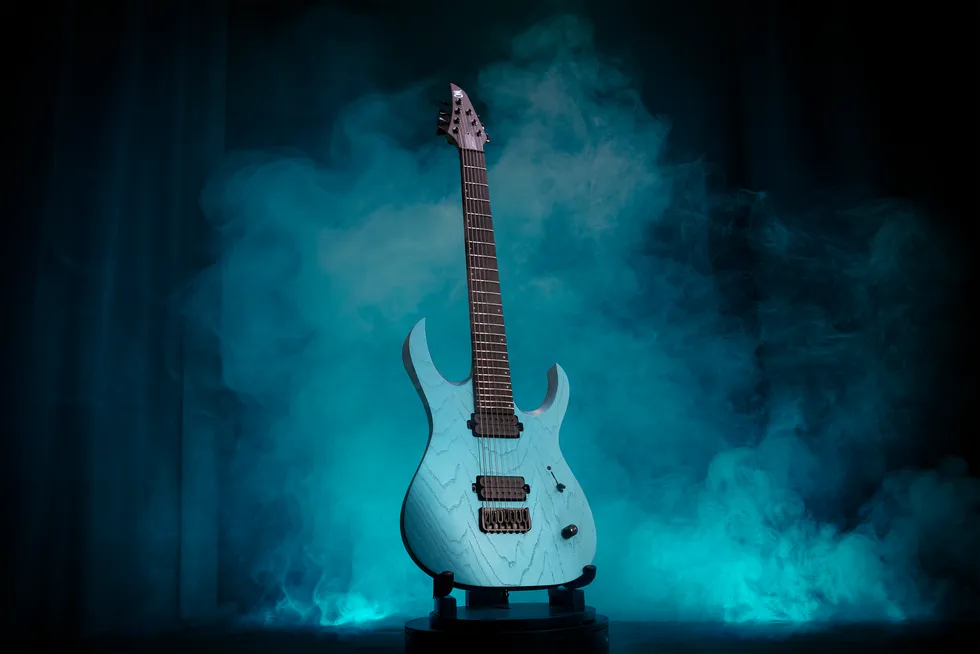
Win a Maynoes Duvell Dt-7, a 7-string built around clarity, control, and directed tone. Enter by January 30 ,2026.
Mayones Duvell DT 7 String Giveaway
Duvell DT-7
Duvell DT was created with the “Directed Tone” concept in mind. It’s about mastering simplicity and letting the core of the music resonate deeply with both the performer and the audience.
The “evil plan” that led the Haim sisters to start playing music together

Globe-trotting can come with a hefty price tag – but what if you got paid to travel the world? That’s exactly what inspired the Haim sisters to pack up their lives and pursue a career in music.
Speaking to The Times, Haim reveal what first inspired them to bind together back in 2007; the trio wanted to break out of Los Angeles and see the world. “It was our evil plan,” Este Haim reveals. “Growing up, we hadn’t seen much of anything. We wanted to discover the music scene in the UK, to visit Japan, but how the fuck are we going to afford it? If we start writing songs together, maybe we can.”
From an early age, Haim were weaned on all things musical, aiding in the efforts of their singer of a mother and drumming father. This meant that the trio shared an innate musical connection – something that deserved to be explored. In 2005, sisters Danielle and Este joined with pop group Valli Girls. but it quickly became clear that there was a missing link – their younger sibling, Alana.
When the trio finally joined forces in 2007, everything fell into place. They were adamant they’d be able to take on the world. “Starting Haim, we had blind optimism,” Alana admits. “We just thought it was going to work. Not to be too ‘LA’ about it but it was a form of manifestation.”
Of course, success didn’t come overnight. However, nothing could deter them. “For the first five years we were playing to three or four people,” Danielle recalls. “But something about getting on a stage together made us happy.”
Eventually, Haim would get their big break supporting The Strokes’ Julian Casablancas on his solo tour in 2010. Danielle was performing double duties, performing with her sisters before going out and playing guitar in Casablancas band. Thereon out, it seemed like everything clicked into place.
Their true breakout moment would come in 2013, when the sisters were seemingly everywhere at Glastonbury Festival. They performed sets on both the Pyramid and Park stages, as well as joining Primal Scream onstage as backing vocalists.
With their newest album, I Quit, up for a Grammy for Best Rock Album, its clear that Haim were absolutely correct – they are stronger together. Looking back, the sisters are proud of themselves for committing to the grind. Though Este admits that “when you’re 13, being forced to be in a band with your parents and little sisters is not the coolest thing”, now she fully embraces it. “I think it’s cute,” she notes.
The post The “evil plan” that led the Haim sisters to start playing music together appeared first on Guitar.com | All Things Guitar.
I was wrong: I’ve been building my own guitars for over a decade, and here’s the most important lessons I’ve learned

About ten years ago, I started building my own guitars in my garage. I did it in an effort to better understand the instruments that I love so much – and it certainly did that, though perhaps not in the way that I anticipated.
Over many years and many builds, I have realized that I was wrong about a lot of things when it came to guitar construction prior to starting to build my own. These were common preconceptions and misunderstandings, I think – but learning about them the hard way has helped me to understand the gear I own better, and enabled me to make better choices when I’m buying new guitars. Hopefully it can help you too, even if you never have any intention of picking up a fret file!
 Image: Justin Beckner
“Hand Built” Is More Complex a Term Than Many Realise
I had always believed that “hand-built” guitars were superior to standard production line guitars that were carved out using CNC machines. When you build a guitar by hand you get an appreciation for hand-built guitars because of the focus and literal sweat that goes into it, but you also realise that consistency is difficult to achieve, even with using jigs. Over the years, I have developed an appreciation for CNC Machines as they take a lot of the rough cutting work out of guitar building – work that is not all that fun to do.
I’ve learned that the machines used to industrialise the guitar-building process are just as impressive as the instruments they create. Plek machines, for example, are able to level frets down to such an impressive degree that it makes the prospect of doing them by hand seem rather archaic. Even touring the Gibson factory and seeing the old custom hand-built machines and tools that were used to streamline the building process helped me to embrace the idea that hand-built is a more complex term than I had previously imagined.
 Gibson factory. Image: Justin Beckner
Everything Matters
Claiming that a guitar is simply the sum of its parts ignores the interplay between those parts. This is a topic that can get really deep into the weeds, but mastering the art of constructing an instrument with a certain sound is a science that I am far from mastering. However, building your own guitars does give a healthy respect for builders out there who carve bracing, chamber specific sections of a body, or use certain metals in the bridge that are designed to create very specific sympathetic frequencies, giving each guitar its own voice.
I’ve learned that when you pluck a string on a guitar, the entire instrument vibrates; those vibrations can sometimes feed back into the string, giving it those sympathetic resonances. A high-end instrument that is tailored to a certain playing style will take every aspect of construction into account when trying to achieve that sound. After building my own guitars, I believe that tonewood matters, I believe that the glue we use to glue the body matters, and I believe that how the neck fits in the neck pocket matters. Everything matters.
I’m certain someone will claim they saw a guitar made out of corkboard that sounds just as good as a vintage Stratocaster, simply because they saw something on YouTube. But I have to ask those people, did you hear it with your own ears, or did you hear it through some computer speakers?
The only way to do such a comparison is to play both with your own hands and listen to it, live, with your own ears. And I’m not going to say that all vintage guitars sound good – they certainly don’t. They were incredibly inconsistent, as anyone who has played a lot of them will tell you.
Some will say that a guitar’s tone is all about the pickups and not much more, but I have learned that is not true either. A guitar is more than the sum of its parts and sometimes the smallest details can be just as important as the “main” features of a guitar. For example, we spend so much time talking about how certain pickups sound, but we far too often ignore that those pickups are subject to the wiring within the guitar, the pots that we use, the wire itself, the shielding, the output jack.
If one of those components is sub-par, then the overall sound of the pickups will be sub-par. Building your own guitars forces you to focus on these small details that casual guitar players overlook when discussing tone. It will force the realization that a guitar’s tone is not the result of one certain thing.
 Image: Justin Beckner
Let’s Talk About Money
When I first started thinking of building my own guitar, I was under the impression that it would be cheaper than buying my own version of that guitar. For the cost of the tools needed to build a guitar alone, one could purchase a pretty nice production-line guitar.
When you start thinking of all the tools needed to build a guitar; routers, sanders, fret saws, files, levelers, drills, bits, sandpaper, fret press, sanding blocks, clamps, various jigs and templates, it can add up very quickly. Just to give you an idea, if you want to do binding on your guitar, you’ll need a router bit and a series of bearings.
 Image: Justin Beckner
StewMac sells this kit for $160-$206 (depending on how many bearing sizes you want), which is about as much as I spent on my router itself.
I was fortunate enough to have a lot of these tools before I started building my own guitars, but there are always some tools that you’ll find makes the job so much easier. A fret slot miter box would be a good example.
Good quality fret files would be another. If you are anything like me, you will try to buy some cheap ones on eBay that suck and end up buying quality files from a reputable company anyway.
I’ve found guitar building to be an incredibly enlightening and rewarding hobby and I encourage anyone who loves guitars to give it a try. As one of my childhood heroes, Red Green, used to say, I’m pulling for you. We’re all in this together.
The post I was wrong: I’ve been building my own guitars for over a decade, and here’s the most important lessons I’ve learned appeared first on Guitar.com | All Things Guitar.
Pages
