
Music is the universal language
“Glory to God in the highest heaven, and on earth peace to those on whom his favor rests.” - Luke 2:14
Norse Guitar Feeds
Flight Introduces New Ukulele Models
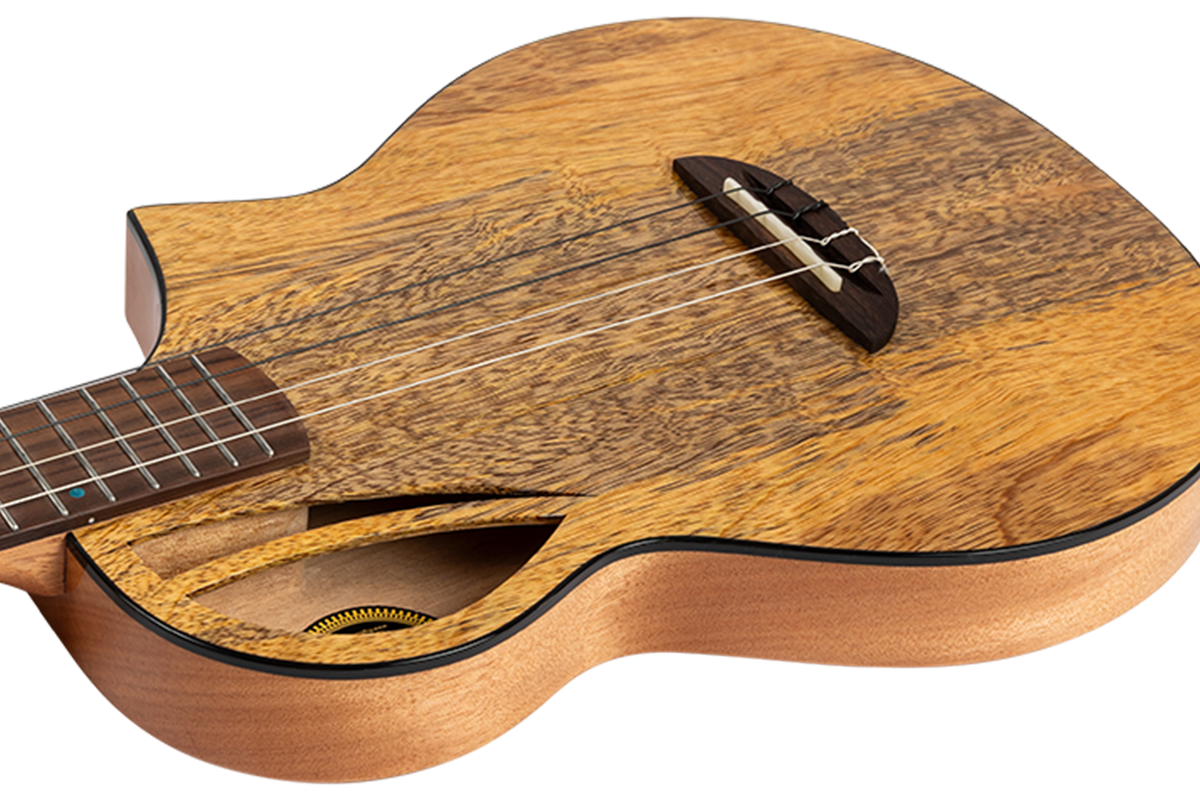
Adding to the company’s diverse array of acoustic instruments, Flight has introduced multiple new ukulele models to their product line.
Leading the way is the Aviator, a new slim ukulele model available in tenor and baritone sizes. The instrument features a solid mango top with solid okoume back and sides, producing a warm, resonant sound with notable sustain. Its slim body profile is designed for comfortable playability while still providing the projection expected from a full-bodied instrument.
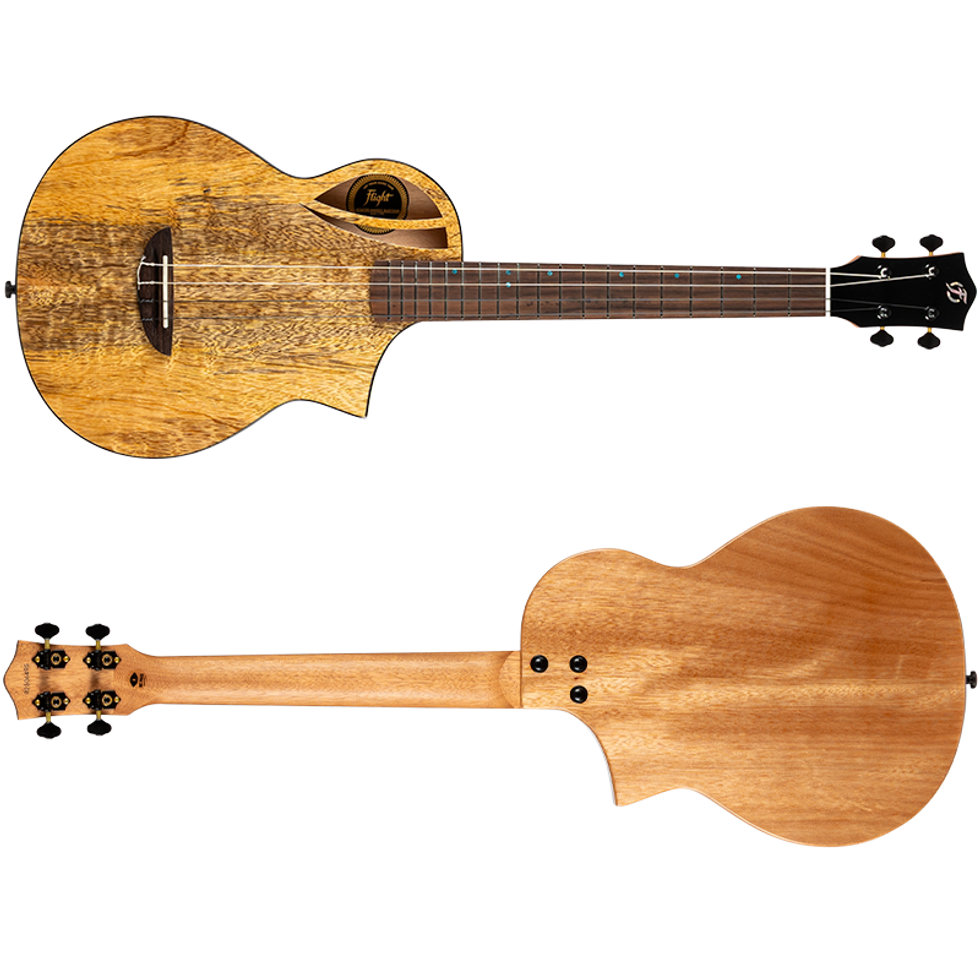
The Aviator includes a rosewood fretboard, bone nut and saddle, and a gloss-finished black headstock. Its construction emphasizes clean lines, natural materials, and balanced ergonomics, supported by the tonal qualities of mango and okoume. Each model comes with Flight’s Deluxe Gig Bag in royal burgundy.
The tenor version is factory-strung with a Low-G setup to extend its lower range, while the baritone provides a deeper register suited for players who prefer a broader tonal spectrum. Together, these models bring well-crafted additions to Flight’s solid-wood lineup.
The Flight Aviator Tenor Mango Ukulele carries a US street price of $379. The Flight Aviator Baritone Mango Ukulele carries a US street price of $416.

Flight has added two new solid top additions to the Princess Series with its first-ever Calantas models: the Iris Calantas Concert and Iris Calantas Tenor. Each ukulele features a solid calantas top paired with laminate mahogany back and sides, introducing a warm, balanced new tone to the Iris family while offering an affordable solid-top option for players looking for great value.
Calantas is a Southeast Asian hardwood known for its smooth response and distinctive natural grain, adding both character and clarity to these instruments. The familiar Iris appointments remain: slotted headstock, offset front markers, white binding, thin rosette, and fluorocarbon strings. Every model includes a padded gig bag, instructional booklet, and Flight sticker pack.
The concert offers a clear, focused sound, while the tenor adds depth and projection, together marking an elegant new chapter for the Iris lineup.
The Flight Iris Calantas Concert carries a $179 US street price and the Flight Iris Calantas Tenor carries a $189 US street price.
Flight has also expanded its Princess Series with the Iris Tinta, an all-solid mahogany model available in concert and tenor sizes, offering players an affordable way to enjoy the richness of an all-solid build. The line adds a striking stained gloss finish in four colors: Natural, Transparent Black, Transparent Blue, and Transparent Purple. Each shade brings out the wood grain differently, offering players a choice that ranges from classic to bold.
The Iris Tinta features a slotted headstock, rear-facing tuners, offset position markers, fluorocarbon strings, and a padded gig bag. Its solid mahogany build delivers a warm, balanced tone suited to many musical styles, while the glossy stained finish and colorful rosette give the instrument a fresh, fun look.
With these new models, Flight offers bright, colorful options for players who want an all-solid mahogany ukulele with an eye-catching, modern finish.
The Flight Iris Tinta Concert carries a US street price of $219 and the Flight Iris Tinta Tenor carries a US street price of $229.
For more information about the Flight ukulele line visit flightmusic.com.
Driving Home For Christmas star Chris Rea dies at 74

Singer-songwriter Chris Rea – the man behind the festive classic Driving Home For Christmas – has died aged 74.
His wife Joan and two daughters Josephine and Julia confirmed in a statement that Rea died “peacefully in hospital… following a short illness”.
Born in Middlesbrough, England in 1951, Rea went on to find considerable success as a musician, releasing 25 studio albums over his multi-decade career – touching on a multitude of genres including pop, blues and rock – and selling more than 30 million albums.
While Driving Home For Christmas has enjoyed a perpetual place on Christmas playlists every year since its release in 1988, Rea had hits with tracks including Looking for the Summer, Fool (If You Think It’s Over), Let’s Dance, Josephine and On the Beach, to name a few.
Chris Rea suffered a number of health issues throughout his life; in the early 2000s he was diagnosed with pancreatic cancer, and had his pancreas removed in 2001. He later suffered a stroke in 2016.
Per the Guardian, he later described the stroke as a “very scary moment,” adding: “I got it into my head that my perception of pitch had gone with the stroke. And it took a lot of convincing from people saying there’s nothing wrong with what you’re playing.”
The post Driving Home For Christmas star Chris Rea dies at 74 appeared first on Guitar.com | All Things Guitar.
Eddie Van Halen once gifted Alice In Chains’ Jerry Cantrell so much gear it filled up his manager’s garage: “I haven’t been able to park my car for months!”

Alice In Chains’ Jerry Cantrell has looked back on his friendship with Eddie Van Halen, sharing how the guitar mastermind gave him so much gear that it completely took over his manager’s garage.
The pair became buds when touring together for Van Halen’s For Unlawful Carnal Knowledge Tour in the early 1990s. Cantrell was originally nervous to play in front of EVH, but soon enough they would hang out together backstage playing ‘name that riff’.
- READ MORE: The Guitar Influences of Eddie Van Halen
In an interview for Gibson TV, Cantrell shares how Eddie generously gave him a guitar for free, and even went the extra mile to gift him even more guitars as well as amp heads and cabs, all for nothing in return.
“The first time I met Ed Van Halen I was getting ready to go onstage [to open] for his band, and he was standing in my pit with Valerie [Bertinelli] right next to him and Wolfie [Wolfgang Van Halen] in her arms. He’s got his guitar on, and he’s running scales like, ‘Hey, dude, what’s up?’ And I’m like, ‘Are you fucking kidding me?’”
He adds, “I think it was probably the worst show I ever played in my life, because I could not stop thinking, ‘He’s right there!’ I couldn’t focus, and I couldn’t wait until the gig was over. After that, it was fine… We ended up being really good friends.
“On that tour he had the [Peavy] 5150 heads that he had kind of made, and he had the [Ernie Ball] Music Man guitars; the EVH Music Man that he had designed. I was like, ‘Man I’d really like to have one of those, think you could give me a good price on one of those?’ And he was like, ‘Fuck that dude, I’ll just give you a guitar! Everybody gives me everything for free now, when I can totally afford it. When I couldn’t afford it, nobody would give me anything. So, let me do that for you. I’ll give you a guitar.”
Cantrell continues, “I remember coming home off that tour, and I was living with [Alice in Chains’ manager] Kelly Curtis and his wife, Peggy… He was like, ‘Hey man, welcome home. You had a good tour? Now you can relax. Hey, by the way, do you think you could clear your shit out of my garage? I need to put my car in there.’
“I’m like, ‘What are you talking about?’ And he says, ‘Eddie Van Halen filled the garage with gear for you. I haven’t been able to park my car in my garage for months.’”
You can watch the full interview with Jerry Cantrell below:
You can watch the full episode of Icons: Jerry Cantrell of Alice In Chains via Gibson TV on YouTube.
The post Eddie Van Halen once gifted Alice In Chains’ Jerry Cantrell so much gear it filled up his manager’s garage: “I haven’t been able to park my car for months!” appeared first on Guitar.com | All Things Guitar.
Ergonomic shred machines, AI amp suites and a real-life acoustic love story: these are my favourite guitar products of 2025

The festive season is finally upon us. And amid the intergenerational wrestling matches that invariably break out over who gets the last Green Triangle in the Quality Street tin, it’s also a time in which we take stock of the past year, of our biggest wins and failures, and the resolutions we might look to carry into 2026.
But there’s a more important order of business on the agenda before you get into your 2026 personal growth plan: my favourite guitar gear of 2025.
I’m Sam – Guitar.com’s News Editor – and my inbox is busier than the Shibuya Crossing with guitar brands the globe over notifying me of exciting new gear releases and product innovations. So choosing my favourites from the past year was no easy feat, let me tell you. That said, there were a few that stood out as particularly innovative, and some I was lucky enough to get my hands on myself.
My identity as a guitar player can be defined in simple terms: metal and digital. A huge metalhead for nearly 20 years, and an avid lover of digital amp modellers and in-the-box tones, I’m genuinely thrilled to see the rapid pace of progress in the amp modeller space – not to mention the throngs of what you might call legacy players who have keenly made the switch. And that brings me to my first pick…
My favourite (amp) of 2025: Positive Grid BIAS X

My colleagues Cillian and Josh started their year-end gear picks lists with their favourite guitars, and I’ll get to mine, but first I have to highlight BIAS X, the groundbreaking new AI-powered amp and effects suite from Positive Grid. Essentially an evolution of the brand’s long-adored BIAS FX 2, BIAS X blew the in-the-box tone market wide open when it landed in September, bringing with it an AI assistant, on hand to turn the tone in your head into a reality, in some cases in seconds.
I get it: auditioning amp sounds can be very fun, and is invariably part of the process when recording music, but how often have you found yourself spending more time than you planned sifting through pages and pages of presets, never landing on the one you’re actually looking for?
Creativity should be the ultimate goal, and the tone-making process taking too long can be a hindrance to that end. With BIAS X, you can enter any prompt (“give me a high-gain tone for modern metal”), and the AI assistant conjures a signal chain from the platform’s vast amp and effects library to best match the vibe you’re going for. Like any AI, it’s not always perfect, but almost always offers a solid starting point which you can then tweak to your heart’s content.
For the record I’m not a fan of any AI which takes creativity out of the hands of humans. But this is an application which expedites the tone-chasing process, and ultimately keeps you in your creative flow, so it’s a big A+ in my book.
My favourite guitar of 2025: Sterling by Music Man Kaizen 6

I’m fortunate enough with this job to have many guitars across my desk, and every now and then there’s one which has me tempted to get my wallet out to persuade the powers that be to let me keep it. When I was delivered the Sterling by Music Man Kaizen 6 last month, it was one of those moments.
I love to experiment with jazz, blues and all manner of other genres, but really I’m a metal player through and through. And the SBMM Kaizen – an affordable take on its Ernie Ball Music Man counterpart, developed in partnership with Animals As Leaders visionary Tosin Abasi – is genuinely up there as one of the best guitars I’ve ever played.
Much is often made of a guitar’s ergonomics, and for good reason. The way it sits in your lap and contours against your body will often be the defining factor in whether you play it casually for 10 minutes or get lost in it for two hours. And when I say I couldn’t put the Kaizen down, I mean I actually couldn’t put it down. I had plans on the evening of the day I received it which I was late for because I was so consumed.
It’s so lightweight and thin that it quickly starts to feel like an extension of yourself – which in my mind is the perfect recipe for creativity. Oh, and I’m not even mentioning the high-gain and clean tones offered up by its duo of ceramic humbuckers. And add to that a floating trem? Take my money.
My favourite acoustic guitar of 2025: Taylor 314ce Studio

Forget the scene when Jack lets go of the door and Rose watches him fade into the icy abyss of the Atlantic Ocean. A real tragic end to a beautiful love story came earlier this year when the UPS courier came to collect the Taylor 314ce Studio I had spent months developing an intimate bond with. I’ve never quite felt heartbreak like seeing that van – carrying what I can only describe as the love of my life – fade into the distance. I won’t be judged for being dramatic.
The Taylor 314ce is among a small crop of the finest instruments I’ve ever played. Everything, to me, is exactly how I want it to be. The action is set up pristinely, which, paired with Taylor’s “easy-playing” neck profile – and satin-finished neo-tropical mahogany neck and West African Crelicam Ebony fingerboard – makes for one of the most luxurious acoustic guitar playing experiences imaginable. The guitar also delivers a stunningly balanced and earthy tone, with satisfying low end projection plus gorgeous sparkly highs, making everything from simple chord strumming to intricate fingerstyle playing an utter delight. I must also note that I had this guitar for months and played it regularly, and somehow the strings still sounded brand-new…
The cost of the Taylor 314ce Studio is lower than that of a fully US-made Taylor, owing to the fact the neck is made in Mexico. Some purists might take issue with that, but when a guitar looks, plays and sounds this good, who really gives a shit?
The post Ergonomic shred machines, AI amp suites and a real-life acoustic love story: these are my favourite guitar products of 2025 appeared first on Guitar.com | All Things Guitar.
Höfner blames effects of US tariffs for bankruptcy, but “business operations will continue” throughout administration

Höfner has given an update on its recent bankruptcy filing, stating that “business operations will continue” throughout the administration process. It has also cited the effects of a challenging export market, particularly due to the recent hike in US tariffs rates.
A new press release from the German guitar and bass manufacturer adds some context to the filings, which were made on 10 December 2025. It claims that around 65% of its most recent turnover of €6.5 million was due to export business – hence, when the recent US tariff changes were made and EU businesses faced much higher export costs, this had an outsized effect on Höfner. The company also points towards a generally unenthusiastic market for musical instruments due to the “tense overall economic situation.”
Klaus Schöller, managing director of Hofner, adds: “This step [filing for insolvency] was necessary in order to open up realistic prospects for the future of the company. Our goal is to work with a strong partner to position the Höfner brand for the future and secure business operations and jobs in the long term.” The press release further clarifies that filing for insolvency has allowed it to continue operations, as employee salaries are secured by the Federal Employment Agency until February.
The company is, of course, best known for making the 500/1 bass, AKA the Violin Bass, made iconic by Paul McCartney. Last week McCartney paid tribute to Höfner, writing on Instagram about his longstanding relationship with Höfner and the instrument that helped shape his playing.
“It is very sad to see Höfner go out of business. They have been making instruments for over 100 years, and I bought my first Höfner bass in the sixties. I have loved it ever since. It’s a wonderful instrument to play: lightweight, and it encourages me to play quite freely. It also offers pleasing variations in tone that I enjoy. So commiserations to everyone at Höfner, and thank you for all your help over the years.”
It’s worth noting that McCartney may have been premature in stating that Hofner is going out of business. Insolvency proceedings could help secure investors in the company and get it back on track.
The post Höfner blames effects of US tariffs for bankruptcy, but “business operations will continue” throughout administration appeared first on Guitar.com | All Things Guitar.
Save an incredible $170 on this Gold Spark PRS SE Silver Sky at Sweetwater

The PRS SE Silver Sky is one of the most popular guitars of the modern day, and Sweetwater is offering a number of festive deals across the lineup – including on a rather spectacular one that caught our eye.
The SE Silver Sky launched in 2022 as a slightly more affordable alternative to the original John Mayer signature Silver Sky released in 2018. It’s gone on to become increasingly popular, having been crowned as the best-selling guitar on Reverb for two years in a row in 2022 and 2023.
If you’d like to get your hands on one as a last minute Christmas present, then look no further than this Gold Spark version, exclusive to Sweetwater.
[deals ids=”6pAkVCTjjCXWLTKDwHtdtt”]
Reduced to $679, saving you $170, this sparkling SE model’s striking finish was personally selected by John Mayer for Sweetwater, and it even has a sparkle-finished, colour-matched truss rod cover. Beneath the aesthetic upgrade lies the beloved SE Silver Sky foundation of a lightweight poplar body, a maple neck, a rosewood fingerboard (with an 8.5-inch radius), and a trio of 635JM “S” pickups.
If gold isn’t to your taste, Sweetwater is also offering a Platinum Spark colourway also at the same reduced price. If you’d like a refresh on how it sounds, then check out the demo below, from none other than John Mayer.
We scored the PRS SE Silver Sky a near-flawless 9/10 in our original 2022 review. We noted that it was incredibly comfortable to play, and that its voice remains balanced with no sharp jumps in volume or tonal character as you change pickups – making it an uber versatile axe.
The range was expanded back in August this year, with new finishes made available for the first time on any PRS model: Derby Red, Trad Blue, Laurel Green, and Dandy Lion (yellow). According to Mayer, each colour was inspired by traditional American fashion.
Get your hands on the Gold Spark exclusive via Sweetwater.
The post Save an incredible $170 on this Gold Spark PRS SE Silver Sky at Sweetwater appeared first on Guitar.com | All Things Guitar.
Silktone Expander review – a refined and versatile drive pedal that does things a little differently

$269/£279, silktone.org
By now we can safely conclude that Charles Henry knows his shit. The man behind Silktone hasn’t exactly flooded the market with amps and pedals, but there’s been a common theme to the stuff he’s put out so far: utter brilliance.
The Expander is his second overdrive. Seeing as we described the first one as an “instant classic”, I’m going to be massively disappointed if this new pedal – notable for its distinctively handsome enclosure design and lack of a conventional tone control – is anything less than stellar.
 Image: Richard Purvis
Silktone Expander – what is it?
OK, it isn’t just an overdrive… and nor is it, despite the name, a studio-style expander. What we’re promised here is one dirt pedal to rule them all, covering everything from subtle enhancement to aggressive drive and even fuzz. And the key to all of that is its novel approach to tone-shaping.
As mentioned, there’s no standard treble-attenuating control, but what you get instead is an interesting double act: a ‘choke’ knob for rolling off bass and a three-way toggle switch for dark, normal or bright voicing. On paper, that should have everything covered – just as soon as your overworked little brain has got a handle on how they interact.
 Image: Richard Purvis
Silktone Expander – usability
Three-knob pedals are never exactly difficult to use, but there is a learning curve with this one just because of those unusual tone controls. Luckily, there’s a card in the box with a basic manual on one side and three suggested settings on the other: an always-on tone-improver, a full-range drive and a Rangemaster-style treble boost.
If you’re wondering where the fuzz is, well so was I… but as so often in life, cranking up the gain will provide all the answers.
 Image: Richard Purvis
Silktone Expander – sounds
I begin with a Telecaster, a clean black-panel amp and the first suggested setting… and it hits the spot like the first cup of tea after being stuck up a tree for two days. It’s light, smooth and crisp-edged, with just enough compression to stop it getting abrasive – something like a sophisticated Rat at a low distortion setting. In fact, it’s a lot like the 1981 Inventions DRV, which is a heck of a start – but there’s lots more to this pedal than that.
The second setting is a mid-gain crunch that keeps the same sweet treble response but fills out the body of the tone a little, marking a step in the direction of transparent overdrive. This could come in very useful for a lot of players, and works just as well with humbuckers as it does with single-coils.
In a sense the third setting is more of the zingy same – lots more, in fact, as the gain is now close to maximum – but this can easily be turned into a more familiar full-range voice simply by flipping the toggle switch to the left, its darkest setting. Does that make it muffled? Actually it’s still quite bright, but you can now turn down the choke knob to let more bass through, which forces the treble to take a step back.
This can feel like a topsy-turvy way of doing things, but there’s no denying it’s effective at shifting the tonal balance. Set the choke to minimum and you can even get properly squelchy splat-fuzz, which is all about the overblown bottom end – and feels a long way away from the shimmery grit of that first suggested setting.
 Image: Richard Purvis
Silktone Expander – should I buy it?
There’s an awful lot of competition in the world of premium dirt – just look at the ‘alternatives’ paragraph below, phwoar! – but the Expander sets itself apart with an emphasis on addictively sugary treble. In that respect it’s very much an equal to the vaunted DRV, but with way more versatility.
It won’t make all your drive and fuzz pedals redundant, but put this thing anywhere near your existing pedalboard and there’s a good chance it’ll have its pick of which one to knock off.
Silktone Expander alternatives
Other ultra-classy overdrives that push all the way into fuzz territory include the Dinosaural Hypoid Drive (£219), Great Eastern FX Co Focus Fuzz Deluxe (£299) and Origin Effects Deluxe55 (£279). See also the 29 Pedals FLWR ($269.99/£285), which lets you shape its tone with a trio of three-way toggle switches.
The post Silktone Expander review – a refined and versatile drive pedal that does things a little differently appeared first on Guitar.com | All Things Guitar.
Presets Are Not a Prescription

In the modern DAW world, every plugin comes with a buffet of presets promising instant results: “Vocal Gold.” “Drum Bus Glue.” “Radio-Ready Mix.” The implication is that these settings are the magic sauce separating amateurs from professionals. Just load the preset, and you’re done. Right?
Not quite.
Presets can be powerful tools, but only if you understand what they really are: starting points, not finish lines.
I’ve spent years inside some of the best studios in the world, working with world-class players, gear, and engineers, and I’ve seen how subtle context drives every EQ, compressor, and fader move. That experience shapes how I approach presets—and how I think they should be used.
Designing Presets with KIT Plugins
I’ve had the privilege of working closely with the team at KIT Plugins almost since their beginning—as an early beta tester and collaborator on nearly every product they’ve released. When they asked me to design some of the included presets for the BB A5 (a modern interpretation of a 96-channel Legacy API console, $199 Street) and the BB N105 (modeled after Blackbird Studio’s world-famous Neve 8078 console - $99 Street), I felt genuinely honored.
I’d spent years recording and mixing through those very consoles and EQs at Blackbird, and now I had the chance to help translate that analog DNA into the digital world.
When creating my presets, I didn’t approach them as “ready-made sounds.” Instead, I thought of them as guides—compass points that could help an engineer or musician quickly find a tonal direction. Each one reflects a real-world scenario from my own sessions: a slightly edgy vocal that needed midrange presence, a bass guitar fighting for space in a dense mix, a snare that needed to punch through without losing body.
Every preset I made came from that practical place. My goal was to share a bit of the process—how I think about frequency balance, gain staging, and energy within a mix—not to hand anyone a “paint-by-numbers” result. That distinction matters.
The “Preset Mismatch”
Imagine: you open a plugin, scroll through the options, find something like “Vocal Gold,” and think, “Perfect, that’s exactly what I need.” You load it—and suddenly your vocal sounds worse.
What happened?
Every preset, whether it’s mine or someone else’s, was born in a very specific context. Maybe the original source was a male singer with a soft top end and a ragged low midrange. Maybe he was singing into a vintage Neumann U67 through a Neve 1105 preamp, hitting a “Blue Stripe” 1176, inside a mix stacked with distorted guitars and busy drums.
But if you’re recording a lo-fi shoegaze female vocal with an SM57 in a bathroom through an Apollo X2, that same EQ curve will likely make your singer sound potentially worse. (Or will it?)
“Every preset, whether it’s mine or someone else’s, was born in a very specific context.”
The preset didn’t “fail”—it just wasn’t meant for your signal chain.
There are layers of invisible context behind every EQ decision: the performer, the instrument, the mic, the preamp, the compressor, the room, the genre, and the emotional target of the mix. When you remove a preset from that ecosystem, you have to re-interpret it. Otherwise, you’re comparing apples to lava lamps.
How to Use Presets the Right Way
Presets are at their best when you treat them as teachers. Here are four ways to get the most out of them:
- Start, Don’t Stop
Load a preset, listen, and then move a few knobs. Ask yourself why it sounds the way it does. Does it bring clarity, weight, excitement? Or does it tilt things too far? You’ll learn more by adjusting than by accepting. - Reverse-Engineer the Intent
Solo each band or section. If it’s an EQ, sweep the frequencies. If it’s a compressor, change the attack and release. Try to imagine the sound that inspired those moves. That’s how you train your ear. - Ignore the Labels
“Vocal Gold” might be perfect on a snare drum. “Drum Bus Glue” might breathe life into an acoustic guitar. Don’t let the category box you in. Think in terms of function, not title. - Trust Your Ears Over Everything
No preset designer, even the most experienced one, can hear what you’re hearing in your room with your monitors. The final call always belongs to your ears.
The Value of Presets
When I sit down to make presets, I’m not trying to predict your sound—I’m trying to invite you into the process. A well-made preset can accelerate learning, spark curiosity, and remind you that every mix decision has a reason behind it.
They’re saying, “Here’s how I started; now make it yours.” Used that way, presets become more than convenience—they become education. They let you peek over the shoulder of another engineer for a second and understand why a particular setting works.
So, the next time you load one of my KIT Plugins presets, don’t treat it like a rulebook. Twist the knobs, push it too far, pull it back, and most of all, listen. Because presets aren’t prescriptions—they’re invitations.
Podcast 530: Breedlove Guitars’ Pete Mroz and Shannon Pollard
Nearly every guitar player has daydreamed about running their favorite guitar company. On this week’s Fretboard Journal Podcast, we hear from two individuals currently living that dream: Nashville’s Pete Mroz and Shannon Pollard. Earlier this year, these two guitar fanatics and businessmen became the new owners of Bend, Oregon-based Breedlove Guitars.
During our chat, we talk about the realities of running a guitar business in 2025; the surprises they weren’t anticipating; what changes they are implementing at the 35-year-old company; and where they see growth in the guitar space.
Whether or not you’re a Breedlove owner, Pete and Shannon’s enthusiasm for guitars is downright infectious. We think you’ll love this chat.

Our next Fretboard Summit takes place August 20-22, 2026, at the Old Town School of Folk Music in Chicago. https://fretboardsummit.org
Our 58th issue of the Fretboard Journal will mail later this month. Subscribe here to get it.
We are brought to you by Peghead Nation: https://www.pegheadnation.com (Get your first month free or $20 off any annual subscription with the promo code FRETBOARD at checkout).
Stringjoy Strings: https://stringjoy.com


The post Podcast 530: Breedlove Guitars’ Pete Mroz and Shannon Pollard first appeared on Fretboard Journal.
Winzz Guitars Unveils the WGT100 Electric Guitar
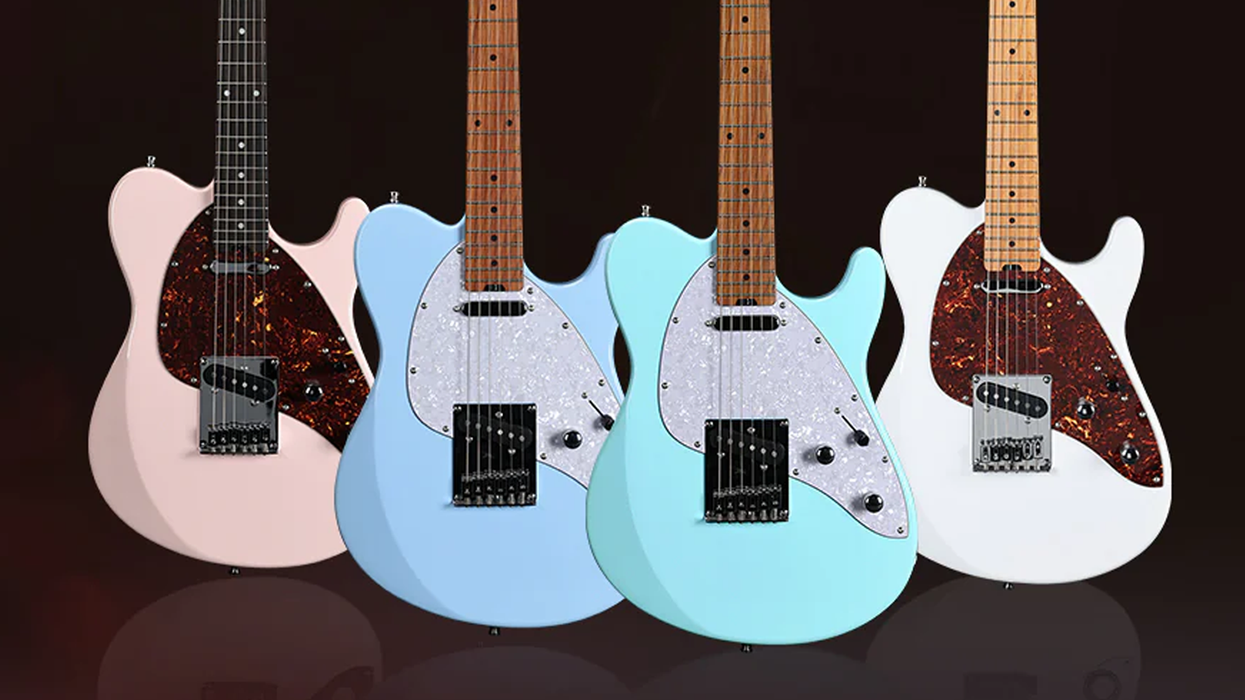
Winzz Guitars announces the WGT100, a new electric guitar designed to blend classic inspiration with modern refinement. The WGT100 introduces a unique combination of ergonomic shaping, upgraded playability, and versatile tonal performance. Built for musicians seeking comfort, stability, and expressive sound, it delivers a fresh interpretation of the electric guitar while staying rooted in time-tested design principles.
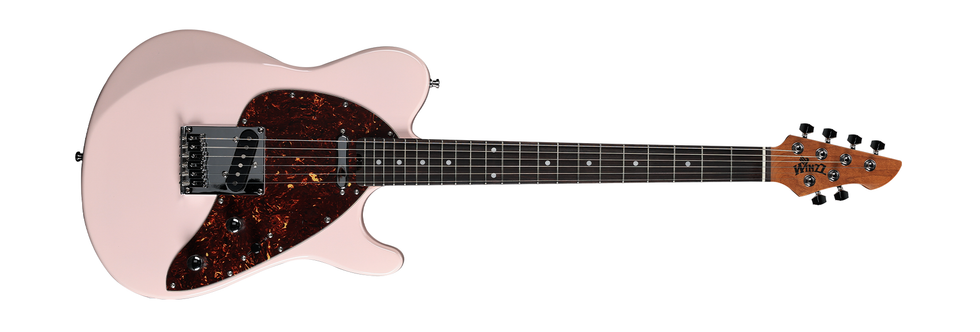
Featuring a selected alder body, the WGT100 pairs a classic silhouette with a delicate offset contour and smooth curved edges that enhance both comfort and visual appeal. A seamless and asymmetric ergonomic neck-body joint ensures easy access to higher frets. The instrument employs a 25.5” scale, roasted maple neck topped with either a rosewood or maple fingerboard and 22 stainless steel, medium frets. The guitar’s signature “glider neck” C+D profile and satin finish make for a fast, fluid feel. This combination, along with a stable five-bolt construction and Luminlay side dots provide comfort and confidence when playing under any circumstances.
For electronics, the WGT100 is fitted with custom ceramic single coil pickups, offering a versatile tonal palette that stays faithful to traditional single-coil clarity while supporting a wide range of modern styles. The upgraded pickups are designed to respond dynamically to picking nuances and playing intensity, providing both warmth and precision. Controls and switching work in a familiar, intuitive layout, allowing players to easily shape their sound onstage, in the studio, or at home.
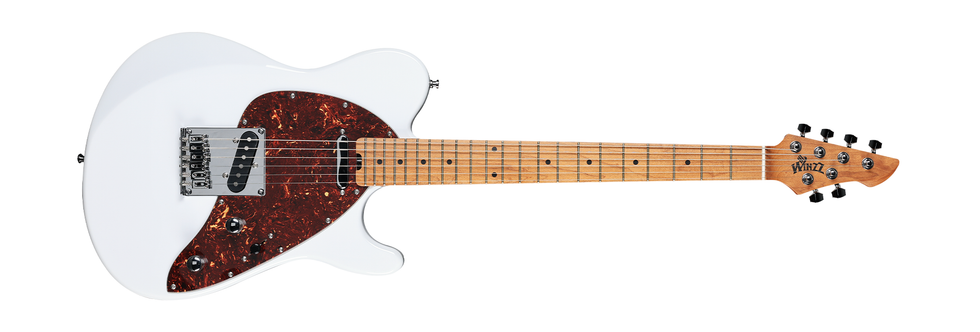
The guitar’s hardware emphasizes tuning stability with modern steel bridge saddles and locking tuners working together to enhance accuracy, performance, and reliability. The instrument’s 4+2 tuner layout further contributes to balanced string tension and improved intonation. A spoke adjustable truss rod provides setup flexibility and playing comfort.
Born from a partnership between passionate guitar builders from Germany’s village of Winz and Aileen Music in China, Winzz Guitars blends German precision with Chinese industriousness — a union that celebrates both artistry and innovation. Guided by the belief that music should be accessible to everyone, Winzz creates instruments that invite players to “find their voice and make every stage their own.” The WGS150 embodies that mission, offering a professional instrument that welcomes beginners, creators, and seasoned musicians alike.
For more details about the WGT100 or to explore more instruments from Winzz Guitars, please visit www.winzzguitars.com
Street Price: $339.99 USD
Diver Down Gets No Respect at All

Just the other day, I was thinking, “Diver Down gets no respect.” (You have to imagine Rodney saying it.)
This lesson is a lighthearted look at one of the David Lee Roth era’s most maligned albums. Does it have too many covers? Probably. Does it seem kinda just thrown together? Sort of. Do I love it? Well, no. Do I like it a whole lot? Yes. Yes, I do. And, as with every VH record, there are some inspired Eddie Van Halen moments. The following is a look at just a few of them, and, if you don’t walk away at the end with at least a couple of fun ideas, well, we won’t ever mention this again.
Not Those Kinds of Pedals
Here’s the scintillating EVH riff that begins “Hang ’em High”:
This unique riff finds Eddie using an inverted pedal point—a re-articulated or sustained note above an accompanying melodic figure. Ex. 1 is inspired by this barnburner; it ends with a Van Halen-style flourish of natural harmonics.
Ex. 1
The opening two beats’ picking pattern incorporates string skipping, which can open up a new world of ideas involving wider intervals. Here that interval is a minor seventh, so, to spark some new ideas, let’s take the B Dorian scale (B–C#–D–E–F#–G#–A) and play it in sevenths, as in Ex. 2. B Dorian is simply A major, but with B as the root or “home base.” Try experimenting with these and other wide intervals in your own playing.
Ex. 2
Just a few bars later, Eddie hints at another pedal (below, this time) to kick-start his nimble fill at 0:10; Ex. 3 expands on his idea. Begin with a mini-barre on the top two strings, allowing the F# on the second string to ring over the pull-offs. The lick ends with a bluesy flourish, as Eddie’s does. So often, he would ground phrases that are a bit off the beaten path by balancing them with something bluesy and down to earth.
Ex. 3
“Secrets” finds Eddie applying a pedal in yet another way, allowing a slightly palm-muted open D-string drone to gently linger below shimmering, melodic chords. Check him out here as he plays the song’s intro on the 12-string neck of his rarely-seen Kramer doubleneck guitar:
Ex. 4 is along the same lines. If you have an ’80s-style chorus pedal, now’s the time to add it back to your pedalboard.
Ex. 4
The Pick’s the Thing (Or Is It?)
My favorite of Diver Down’s covers is VH’s bouncy version of the Motown classic “Dancing in the Streets” by Martha and the Vandellas. The lick that always catches my ear is the wicked descending line Eddie plays at the 2:57 mark of his solo.
The song is in the key of D, and that lick (Ex. 5) is played over an F#m chord. Eddie uses the basic 14th position F#m pentatonic box (F#–A–B–C#–E), but cunningly adds most of the chromatic notes in between those pitches. But he summons even more magic from how he uses his pick. Starting on beat 2, Eddie is using upstrokes only, scratching the edge of his pick along the string to create a grinding squeal. Be sure to play these notes short (as indicated by the staccato dots) by quickly resting your pick back on the string right after the scratching motion. Great stuff.
Ex. 5
More of Eddie’s pick-based antics—likely inspired by ZZ Top’s Billy Gibbons—are found in “The Full Bug.” Over a nasty two-note boogie riff, Eddie conjures a subtle high-pitched countermelody using pinch harmonics.
Pinch harmonics are sounded by lightly touching the string with the flesh of your picking-hand thumb immediately after striking it. In the same way an open string offers harmonics of varying pitches, depending on where you touch it with a fretting-hand finger along its length, the same holds true for your picking-hand thumb, as illustrated in Ex. 6. To match the pitches in the example, begin with your pick about an inch from the bridge pickup—about halfway between the middle and bridge pickups if you’re using a standard Strat. This produces a pitch three octaves and a fifth above the fretted notes. On beat 3 of the third bar, slowly begin moving your picking hand towards the headstock to produce the remaining pitches. But this is rock ’n’ roll, so better to just go for it and find the harmonics that sound good to you.
Ex. 6
Okay, but how about not using your picking hand at all? “Cathedral” has Eddie doing just that, hammering notes with his fretting hand while creatively employing a dotted-eighth-note delay setting. Since a dotted-eighth is equal to three 16-notes, every time a note is played, it repeats itself three 16-notes later. (Eddie sets his delay at approximately 380 ms with just one repeat and Mix set at 100%.) If you swell the volume at a straight eighth-note pace, the repeats will create the bouncy 16th-note pattern of the tune.
Ex. 7 is inspired by “Cathedral” and illustrates how Eddie uses both triads and scales to create classical-sounding melodies.
Ex. 7
Happy Trails…
Let’s close with a look at “Little Guitars,” a Diver Down highlight that Eddie was inspired to write after picking up a pint-sized Les Paul. In the song’s verses, Eddie employs hybrid picking—simultaneously plucking three strings by using the pick, index, and middle fingers.
Eddie again creates drama by playing staccato, quickly resting his pick and fingers back onto the strings after plucking each chord. Ex. 8 is inspired by his approach. (Note you can also play it fingerstyle, if you prefer.) Eddie’s mini Les Paul is tuned up one and a half steps from standard; the example approximates this by using a capo, but feel free to omit it if you prefer. Lastly, try turning down your guitar’s volume knob a bit to reduce the amount of distortion, and note that the final three chords are strummed with the pick.
Ex. 8
In the end, Diver Down may not arguably be Van Halen’s greatest album, but even after all of these years, it still holds its own, bolstered by Eddie’s cleverness and creativity.
Diver Down Gets No Respect at All

Just the other day, I was thinking, “Diver Down gets no respect.” (You have to imagine Rodney saying it.)
This lesson is a lighthearted look at one of the David Lee Roth era’s most maligned albums. Does it have too many covers? Probably. Does it seem kinda just thrown together? Sort of. Do I love it? Well, no. Do I like it a whole lot? Yes. Yes, I do. And, as with every VH record, there are some inspired Eddie Van Halen moments. The following is a look at just a few of them, and, if you don’t walk away at the end with at least a couple of fun ideas, well, we won’t ever mention this again.
Not Those Kinds of Pedals
Here’s the scintillating EVH riff that begins “Hang ’em High”:
This unique riff finds Eddie using an inverted pedal point—a re-articulated or sustained note above an accompanying melodic figure. Ex. 1 is inspired by this barnburner; it ends with a Van Halen-style flourish of natural harmonics.
Ex. 1
The opening two beats’ picking pattern incorporates string skipping, which can open up a new world of ideas involving wider intervals. Here that interval is a minor seventh, so, to spark some new ideas, let’s take the B Dorian scale (B–C#–D–E–F#–G#–A) and play it in sevenths, as in Ex. 2. B Dorian is simply A major, but with B as the root or “home base.” Try experimenting with these and other wide intervals in your own playing.
Ex. 2
Just a few bars later, Eddie hints at another pedal (below, this time) to kick-start his nimble fill at 0:10; Ex. 3 expands on his idea. Begin with a mini-barre on the top two strings, allowing the F# on the second string to ring over the pull-offs. The lick ends with a bluesy flourish, as Eddie’s does. So often, he would ground phrases that are a bit off the beaten path by balancing them with something bluesy and down to earth.
Ex. 3
“Secrets” finds Eddie applying a pedal in yet another way, allowing a slightly palm-muted open D-string drone to gently linger below shimmering, melodic chords. Check him out here as he plays the song’s intro on the 12-string neck of his rarely-seen Kramer doubleneck guitar:
Ex. 4 is along the same lines. If you have an ’80s-style chorus pedal, now’s the time to add it back to your pedalboard.
Ex. 4
The Pick’s the Thing (Or Is It?)
My favorite of Diver Down’s covers is VH’s bouncy version of the Motown classic “Dancing in the Streets” by Martha and the Vandellas. The lick that always catches my ear is the wicked descending line Eddie plays at the 2:57 mark of his solo.
The song is in the key of D, and that lick (Ex. 5) is played over an F#m chord. Eddie uses the basic 14th position F#m pentatonic box (F#–A–B–C#–E), but cunningly adds most of the chromatic notes in between those pitches. But he summons even more magic from how he uses his pick. Starting on beat 2, Eddie is using upstrokes only, scratching the edge of his pick along the string to create a grinding squeal. Be sure to play these notes short (as indicated by the staccato dots) by quickly resting your pick back on the string right after the scratching motion. Great stuff.
Ex. 5
More of Eddie’s pick-based antics—likely inspired by ZZ Top’s Billy Gibbons—are found in “The Full Bug.” Over a nasty two-note boogie riff, Eddie conjures a subtle high-pitched countermelody using pinch harmonics.
Pinch harmonics are sounded by lightly touching the string with the flesh of your picking-hand thumb immediately after striking it. In the same way an open string offers harmonics of varying pitches, depending on where you touch it with a fretting-hand finger along its length, the same holds true for your picking-hand thumb, as illustrated in Ex. 6. To match the pitches in the example, begin with your pick about an inch from the bridge pickup—about halfway between the middle and bridge pickups if you’re using a standard Strat. This produces a pitch three octaves and a fifth above the fretted notes. On beat 3 of the third bar, slowly begin moving your picking hand towards the headstock to produce the remaining pitches. But this is rock ’n’ roll, so better to just go for it and find the harmonics that sound good to you.
Ex. 6
Okay, but how about not using your picking hand at all? “Cathedral” has Eddie doing just that, hammering notes with his fretting hand while creatively employing a dotted-eighth-note delay setting. Since a dotted-eighth is equal to three 16-notes, every time a note is played, it repeats itself three 16-notes later. (Eddie sets his delay at approximately 380 ms with just one repeat and Mix set at 100%.) If you swell the volume at a straight eighth-note pace, the repeats will create the bouncy 16th-note pattern of the tune.
Ex. 7 is inspired by “Cathedral” and illustrates how Eddie uses both triads and scales to create classical-sounding melodies.
Ex. 7
Happy Trails…
Let’s close with a look at “Little Guitars,” a Diver Down highlight that Eddie was inspired to write after picking up a pint-sized Les Paul. In the song’s verses, Eddie employs hybrid picking—simultaneously plucking three strings by using the pick, index, and middle fingers.
Eddie again creates drama by playing staccato, quickly resting his pick and fingers back onto the strings after plucking each chord. Ex. 8 is inspired by his approach. (Note you can also play it fingerstyle, if you prefer.) Eddie’s mini Les Paul is tuned up one and a half steps from standard; the example approximates this by using a capo, but feel free to omit it if you prefer. Lastly, try turning down your guitar’s volume knob a bit to reduce the amount of distortion, and note that the final three chords are strummed with the pick.
Ex. 8
In the end, Diver Down may not arguably be Van Halen’s greatest album, but even after all of these years, it still holds its own, bolstered by Eddie’s cleverness and creativity.
Review: ‘Imaginational Anthem vol. XIV: Ireland’ Finds New Paths Through Old Forms

Totally Guitars Weekly Update December 19, 2025
December 19, 2025 We are getting further behind in Holiday prep every day, so not much new on my guitar front this week. Although, we did get a new Bee Gees lesson from Nesh – How Deep Is Your Love. I did take the opportunity in today’s video to play a few of my favorite […]
The post Totally Guitars Weekly Update December 19, 2025 appeared first on On The Beat with Totally Guitars.
Hayden Pedigo – “I’ll Be Waving As You Drive Away”
Hayden Pedigo performs “I’ll Be Waving As You Drive Away,” the title track from his 2025 album, at our headquarters.
For this recording, he borrowed our ladder-braced Waterloo WL-14 guitar (the same one that Bill Frisell used for prior FJ sessions).
Follow Hayden’s Instagram here.
The post Hayden Pedigo – “I’ll Be Waving As You Drive Away” first appeared on Fretboard Journal.
Shnobel Tone Introduces Dumbbell Boost Pedal
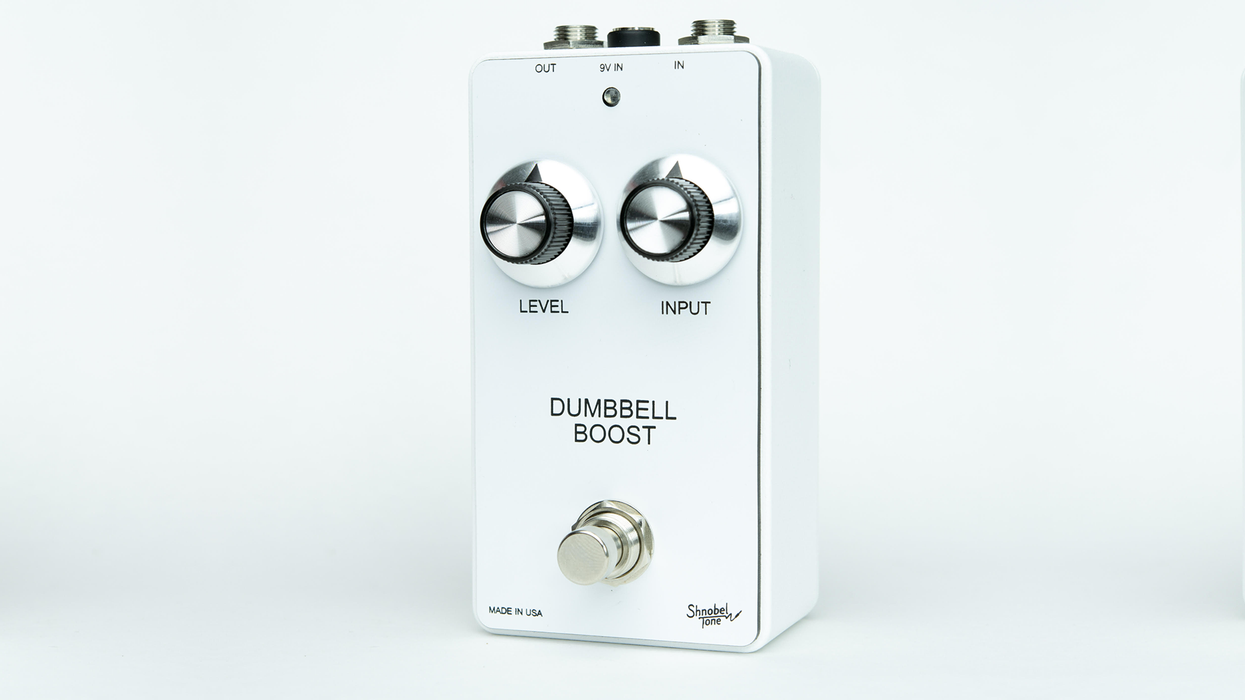
Shnobel Tone has introduced the latest addition to its line of premium guitar effects: the new Dumbbell Boost offers a Dumble® BBC-1 circuit in a compact two knob pedal.
Available in either black or white finishes, it’s a dead-simple way to fine-tune your tone, add some grind and help your guitar stand out in the mix.
The Dumbbell Boost’s Input knob controls the input impedance and impacts your tone and grit. When turned fully to the left (counterclockwise) it gives you a brighter, less bassy sound. Turned all the way to the right (clockwise) you’ll get a full range sound with rich harmonics and Dumble® like tones. The pedal’s Level knob controls the pedal’s overall output volume.
Hand soldered with the best through hole components for maximum tone and reliability. Shnobel Tone’s Dumbbell Boost includes these features:
- Simple two-knob control set: Input and Level
- True-bypass on/off footswitch
- Top mounted power and in / out jacks for easier pedalboard placement
- Available in Black or White finish
- Hand-built in the USA with through-hole components
- Standard 9v center negative power – no battery compartment
Shnobel Tone’s Dumbbell Boost carries a street price of $179 and can be purchased at shnobeltone.com.
Cort Guitars Introduces the New KX500 Pale Moon
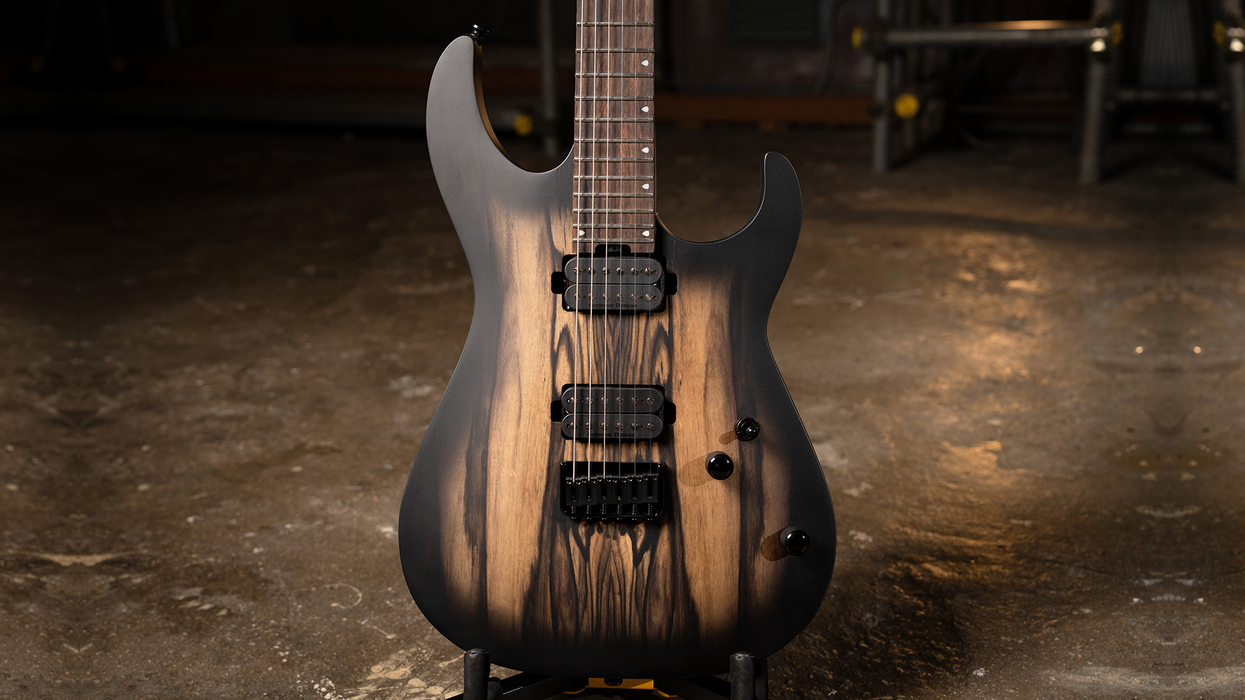
Cort Guitars announces the KX500 Pale Moon, an electric guitar designed for players who demand both uncompromising performance and standout style. Available worldwide through local and online retailers, the KX500 Pale Moon delivers aggressive tone, surgical precision, and a visually striking Pale Moon ebony top that ensures players stand out both sonically and on stage.
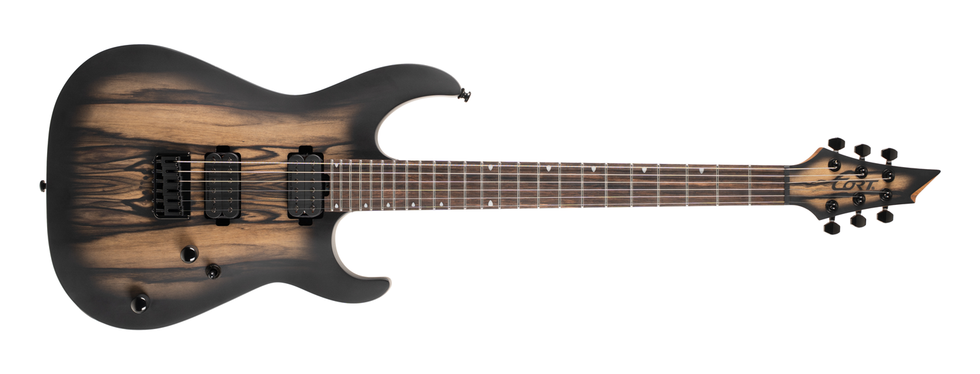
The KX500 Pale Moon features a mahogany body producing warm, rich tones with strong midrange and low-end response. Its Pale Moon ebony top adds a dramatic and unique aesthetic, while the matte open-pore Natural Black Burst finish highlights the natural beauty of the wood. A bolt-on, 5-piece roasted maple and walnut neck improves resonance and durability, paired with a comfortable D-shaped profile measuring 19.5mm at the first fret and 21.5mm at the twelfth. The 25.5-inch scale length neck is topped with a Macassar ebony fingerboard featuring 24 jumbo stainless-steel frets, a 15.75-inch radius, luminous, glow-in-the-dark side dots, and teardrop inlays. A Graph Tech® Black TUSQ® nut (43mm) and two-way truss rod with spoke nut enhance performance, comfort, tuning stability, and sustain.
Loaded with a Seymour Duncan® Sentient and Nazgul humbucker set, the KX500 Pale Moon excels in both high-gain aggression and expressive dynamics. The Nazgul bridge pickup delivers crushing low-end response, sharp attack, and saturated tone, while the Sentient neck pickup provides smooth, articulate cleans and fluid leads. Electronics are kept intuitive with a 1-volume, 1-tone control layout and a 3-way selector switch.
The guitar’s hardware includes Cort® locking tuners for fast, precise tuning and stability, while the new Cort® hardtail bridge with string-through-body construction enhances sustain and resonance. The instrument comes factory-fitted with D’Addario® EXL110 strings, rounding out a feature set designed to meet the demands of modern players.
For more information about the new Cort KX500 Pale Moon and other Cort Guitars instruments, please visit www.cortguitars.com.
Street $929.99 USD
Don’t hold your breath for a Deep Purple reunion with Steve Morse: “A couple of guys in the band were really glad for me to be gone”

He may be Deep Purple’s longest serving guitarist, but Steve Morse isn’t expecting – or pushing for – a reunion with the band any time soon.
Morse joined Deep Purple in 1994, stepping into an unenviable role after Ritchie Blackmore’s departure, and went on to record eight studio albums with the band over a 28-year run. But since stepping away in 2022 to care for his late wife Janine, the guitarist has been candid about where he stands, and where Deep Purple are headed without him.
In a recent chat with Guitar Interactive, Morse was asked about the possibility of reuniting with the Deep Purple for one-off shows, to which the guitarist replies [via Blabbermouth]: “I think if the band felt differently, I would feel differently.”
“But I think that there’s a couple of guys in the band that were really glad for me to be gone, because they were sort of heading back to their roots and wanted just to be a rock band, and ‘don’t give me any of that fancy crap.’ And when you look at me as a writer, I definitely give you that fancy crap. I can’t help it. [Laughs]”
Which is why he doesn’t believe a reunion would make sense for either side.
“So I think the band’s happier the way they are, and it would be kind of a step back for them to wanna do something like that… Anyway, they’re happier and better off. And I think same here.”
Elsewhere, Morse has also opened up about the resistance he faced from some Deep Purple fans after replacing Blackmore. Speaking to Prog magazine about that period, he said that “For acceptance from a percentage of them, it took the first album and our first tour. But I never won over the whole audience. You can’t!”
That hostility sometimes turned physical too: “It sure as hell happened in the form of things whizzing by my face,” Morse recalled. “One of the bottles one time hit Jon [Lord, keyboardist] right in the head, nearly knocked him out.”
The post Don’t hold your breath for a Deep Purple reunion with Steve Morse: “A couple of guys in the band were really glad for me to be gone” appeared first on Guitar.com | All Things Guitar.
Paul McCartney calls Höfner’s bankruptcy “very sad” as the legendary violin bass maker faces uncertain future

Paul McCartney has spoken out following news that Höfner – the famed German instrument maker behind his iconic violin bass – has filed for bankruptcy, describing the situation as “very sad”.
Earlier this week, filings in the Fürth District Court in Bavaria revealed that Höfner has entered insolvency proceedings in Germany. Founded in 1887, the company has become synonymous with McCartney’s early Beatles-era sound and remains one of the most recognisable names in electric bass history.
Now, McCartney himself has weighed in on the brand’s uncertain future. In a new Instagram post, the former Beatle reflects on his longstanding relationship with Höfner and the instrument that helped shape his playing.
“It is very sad to see Höfner go out of business,” McCartney begins. “They have been making instruments for over 100 years, and I bought my first Höfner bass in the sixties. I have loved it ever since. It’s a wonderful instrument to play: lightweight, and it encourages me to play quite freely. It also offers pleasing variations in tone that I enjoy.”
“So commiserations to everyone at Höfner, and thank you for all your help over the years.”
Despite the news, Höfner has also issued a statement reassuring customers and fans that the situation is not yet final.
While an insolvency administrator has been appointed, the company says day-to-day operations will continue for the time being: “Some of you may have already heard: our company has been going through a difficult period – especially since the introduction of the US tariffs – and filed for insolvency on Thursday, 11 December 2025.”
The firm also stresses that production and support remain unaffected during the initial phase of the process.
“We would like to clarify a few things: We are not discontinuing production, distribution or our media channels,” says Höfner “In Germany, there is a three-month period before the actual insolvency procedure is opened. This period offers the opportunity to consolidate the company and restructure it for a better future.”
“Within this period, we will continue to build and sell our instruments and the Höfner team is doing its best to provide you with the support, service and warranties you expect.”
The post Paul McCartney calls Höfner’s bankruptcy “very sad” as the legendary violin bass maker faces uncertain future appeared first on Guitar.com | All Things Guitar.
Nuno Bettencourt admits debuting his guitar brand at Black Sabbath’s farewell show “was probably a really f**ked-up thing to do”: “Washburn didn’t know I was leaving”

Nuno Bettencourt has admitted that unveiling his own guitar brand at Black Sabbath’s farewell show may not have been the smoothest exit strategy, especially considering how his longtime partner Washburn had no idea he was about to walk away.
Speaking about the launch of Nuno Guitars and his decision to end a 35-year relationship with Washburn, the Extreme guitarist reveals that the high-profile onstage debut of his Dark Horse model at Back to the Beginning earlier this year was, in fact, not part of a planned rollout.
“To be honest with you, it probably wasn’t a good idea to play that guitar at all,” Bettencourt tells Premier Guitar. “I’d been thinking about this for a long time, and Washburn didn’t know I was leaving. So for them to see not only a guitar they’d never seen, but then to see not their name on the headstock – to see mine – was probably a really fucked up thing to do. [laughs]”
That said, the guitarist explains that his long-standing arrangement with Washburn was never bound by a formal contract.
“I didn’t really have a contract with them. It was more of a gentleman’s agreement that had been up for so long,” he says. “After a while, especially after [Extreme’s last album] Six came out, I just felt nothing from them. Guitars were back ordered, no press, nothing.”
“But the reason I pulled the guitar out that day is because when I got it, I played it and was like, this feels like the best N4 I’ve ever played. I was super excited. I just wanted to play it onstage. It wasn’t marketing or teasing. I was just authentically excited. I was blown away by how the neck felt. It just felt right.”
Bettencourt also shares that starting his own guitar company was something he’d “always wanted to do”.
“Without sounding like a hippie, it was time. Everything was happening organically – the Six album, the attention with Rise, that solo, the Back to the Beginning concert – all these dominoes were tipping,” he says. “I felt like the universe was saying, ‘Here are a few opportunities for you. You’ve worked your ass off, you’ve hustled for 40 years. This is it.’”
The post Nuno Bettencourt admits debuting his guitar brand at Black Sabbath’s farewell show “was probably a really f**ked-up thing to do”: “Washburn didn’t know I was leaving” appeared first on Guitar.com | All Things Guitar.
Pages
