
Music is the universal language
“Glory to God in the highest heaven, and on earth peace to those on whom his favor rests.” - Luke 2:14
Norse Guitar Feeds
Totally Guitars Weekly Update October 3, 2025
October 3, 2025 Somehow this has turned into a Beatles week for me. It may have started with campers at IGC playing Drive My Car late one evening. It made me wonder if I had a lesson on it, and was surprised to find we did not have one. Then I got a couple requests […]
The post Totally Guitars Weekly Update October 3, 2025 appeared first on On The Beat with Totally Guitars.
Podcast 520: Ben Garnett
Guitarist Ben Garnett joins us this week to talk about the making of his new acoustic album, Kite’s Keep.
Garnett’s journey as a musician is one-of-a-kind. This former tuba player became infatuated with the guitar thanks to his uncle, Andy Timmons. He then discovered the Punch Brothers, immersed himself in bluegrass, and now has actual Punch Brothers on his new album.
Give it a listen and then go check out Kite’s Keep on all the streaming platforms.
Our new, 57th issue of the Fretboard Journal is now mailing. Subscribe here to get it.
Our next Fretboard Summit takes place August 20-22, 2026, at the Old Town School of Folk Music in Chicago. https://fretboardsummit.org
Mike & Mike’s Guitar Bar: https://mmguitarbar.com
Peghead Nation: https://www.pegheadnation.com (Get your first month free or $20 off any annual subscription with the promo code FRETBOARD at checkout).
Photo: Natia Cinco


The post Podcast 520: Ben Garnett first appeared on Fretboard Journal.
Meet the Brands Powering the DIY Guitar Revolution
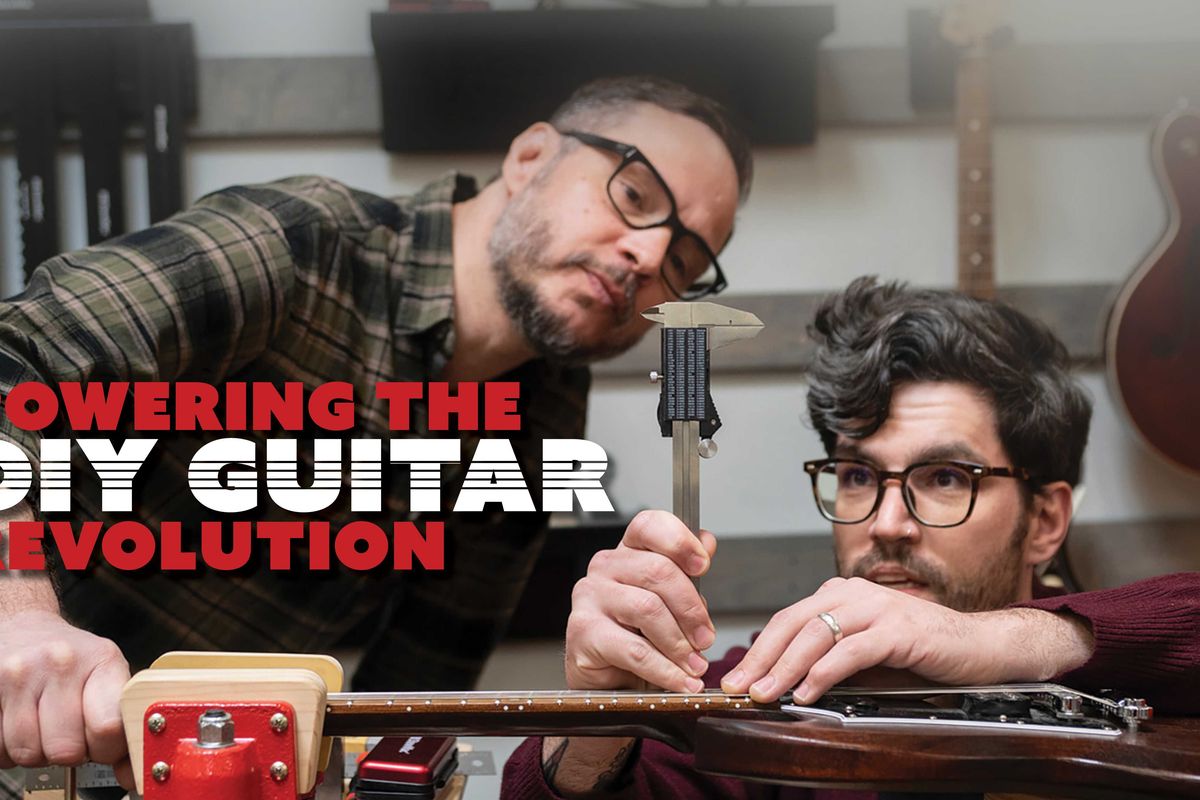
If you like to make, mod, or mess with your instrument, chances are you’re familiar with StewMac and Allparts. Here, their people tell us how they became the go-to suppliers for DIYers around the world.
It’s easy to forget, but it takes all manner of materials, tools, and know-how to make and maintain a well-loved guitar that’s built to last and plays exactly the way you like it. Pickups, tone knobs, toggle switches, and input jacks. Neck plates, bridges, tailpieces, and saddles. Strap buttons, truss rods, pickguards, string retainers, tuning keys, fret wire, ferrules. Capacitors and circuitry, nuts, and washers, screws and springs. Not to mention the tonewoods and specialized luthier tools used to fashion the body, neck, headstock, and fretboard.
These days, it’s not hard to find the parts and tools that guitarists need to make, repair, or upgrade their instrument. But decades ago, it wasn’t so simple. Before the days of online forums and same-day shipping, guitarists, luthiers, repair techs, and shopkeepers often had to scour the earth for the specific part they were looking for, or make do with an imperfect replacement.
Into that flawed and frustrating market stepped a few enterprising enthusiasts determined to streamline that search for the perfect part. The idea was simple: What if we just sold all of it? Every knick-knack and doodad, all in one place?
In the process, StewMac and Allparts emerged as the leading suppliers of guitar parts and tools, making it possible for nearly anyone to pursue their own quest for the perfect tone.
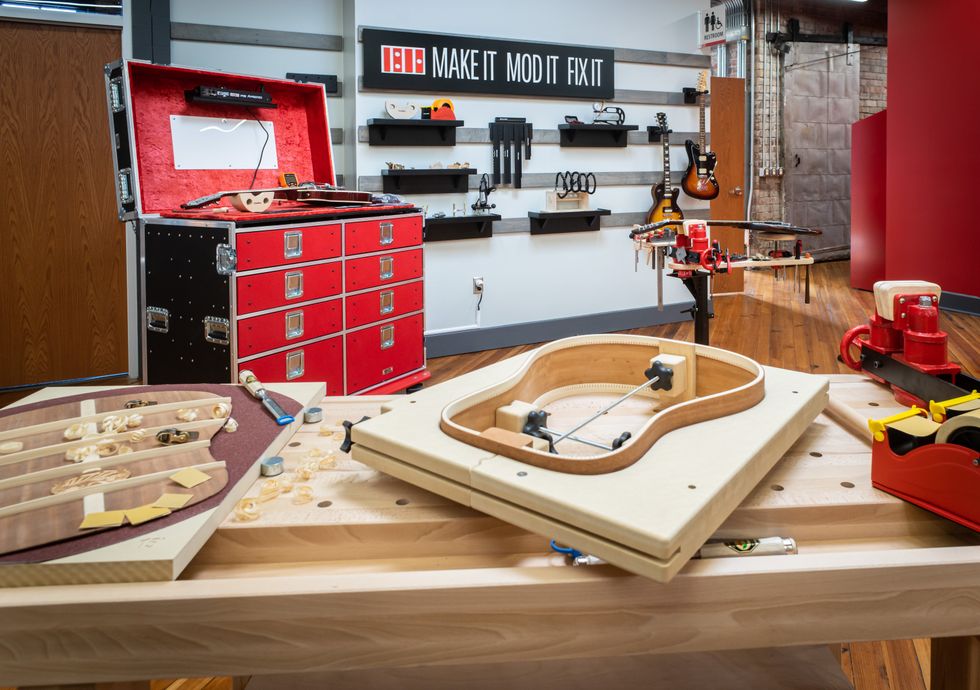
Leading a Community of Luthiers
StewMac’s motto is “making guitars better.” But in the beginning, the brand had almost nothing to do with guitars.
In 1968, Kix Stewart walked into a music store in Athens, Ohio, to repair his banjo. He became friends with the owner, Bill MacDonald, and the two started building their own banjos. Not satisfied with the banjo heads available on the market, they developed their own. Soon, they realized they were making more money selling the individual parts than they were from the banjos themselves. So, Stewart and MacDonald focused on the parts, expanding their business with banjo assembly kits and mandolin components.
The biggest evolution yet came in 1986 with the addition of Dan Erlewine, now one of the most well-known names in lutherie and guitar repair. The company began not only selling guitar parts, but also developing their own specialty tools. Today, the company now known as StewMac is one of the world’s foremost suppliers of tools, parts, and woods for stringed instruments.
Still headquartered in Athens, a small city about 75 miles southeast of Columbus, the company employs just over 100 people at its four-story, 60,000-square-foot warehouse, which houses an inventory of more than 7,000 different products. About 15 percent of that is made, assembled, or modified at StewMac’s facility, while the rest is sourced from third-party suppliers. Elsewhere, StewMac runs their European distribution through the Spanish luthier company Madiner, which carries StewMac products and sources many of the tonewoods they sell.
On the average day, StewMac will ship out at least 800 orders, and during especially busy times—the holiday season, for instance—they can see up to 2,000 orders each day. A team of two dozen pickers works on the warehouse floor, shipping out orders within hours of when they’re received.
“Everybody that works here plays guitar, repairs guitars, builds guitars. It’s not so much a job as it is a calling.”—Brock Poling
As Brock Poling, StewMac’s vice president of marketing, explains, the company has succeeded largely because of its passion for the craft. Poling is a luthier himself, and he was a StewMac customer before he joined the team in the early 2000s.
“We’re not just a company that’s selling you stuff,” says Poling. “Everybody that works here plays guitar, repairs guitars, builds guitars. It’s not so much a job as it is a calling.”
There are several reasons why StewMac has managed to grow from a two-man operation into an international enterprise that’s been in the business for 57 years.
One important factor is their focus on specialty tools. Some of the company’s bestselling products include fretting tools and bending machines that were developed in-house by expert luthiers. This year, two of the hottest products have been the J Edwards Fractal Fret Press, handcrafted by Texas-based luthier Jerame Edwards, and a new acoustic guitar side bending system, designed in-house with input from Charles Fox, the original inventor of the universal side bender.

Among StewMac’s other bestsellers are all-in-one kits that come with everything a beginner needs to complete their own project. The company introduced its acoustic and electric guitar kits in 2017, and a few years later expanded to offer a line of pedal kits, including the highly popular Ghost Drive, a do-it-yourself clone of the Klon Centaur.
“We’ll have people sending pictures of amp kits they’re working on, asking, ‘Where did I go wrong?’ And we’ll help troubleshoot.”—Ally Campbell
But what has really made the difference in the company’s business model, Poling says, is its strategic focus on how-to guides and video tutorials. StewMac has nearly half a million subscribers to its YouTube channel, which offers more than 500 videos about building, repairing, and maintaining guitars.
“This opens a new avenue to give someone a new idea, a new project, a new thing to pursue,” says Poling. “I’ve built our pedal kits. That is a new thing for me. I’ve never really built anything like that before. It’s fun, because not only is it a new project, it’s also a new set of skills.”
In essence, StewMac has fostered a community of users who are regularly looking for ideas for their next project—and conveniently, StewMac has all the parts and tools to bring those projects to life.
“We’ve really tried to look at this as if we are YouTubers first and a brand second,” says Poling. “We don’t sell, we don’t pitch. We want to provide value to the people that are watching these videos. The tools and materials that are in our videos are just cast members in the story.”
Poling says that while a small percentage of the company’s customers are professional builders, the majority are hobbyists. In 2020, when Covid pandemic forced most people to stay at home, StewMac saw an “enormous lift” in sales, Poling says.
There are about 30,000 subscribers to the StewMAX membership, which offers free shipping and returns, discounts, and monthly offers. And if anyone runs into problems, StewMac has plenty of people around to help.
“We don’t just have customer support reps to help with orders—we also have a team of guitar techs who can walk you through projects,” says Ally Campbell, StewMac’s social media manager. “We’ll have people sending pictures of amp kits they’re working on, asking, ‘Where did I go wrong?’ And we’ll help troubleshoot.”
StewMac has tapped into a community constantly on the lookout for the next invention to make guitar work faster, easier, better—or all of the above. That’s also where Allparts shines.
“Recession-Proof”: The Timeless Appeal of DIY
While StewMac was still in its early years peddling banjos, the manager of a music store in Houston had his own idea for a company that would sell the guitar parts he had always had such a hard time finding.
In 1982, Steve Wark started Allparts in his garage, working several part-time jobs to take care of his new family while he cold-called music stores across the country to sell his catalog of 115 hard-to-find products he had sourced from a single Japanese supplier.
“You can’t necessarily count on another Eddie Van Halen and Floyd Rose combination coming along. So, we have to think as players: What would be interesting?”—Dean Herman
Throughout the ’80s, Allparts benefitted from strong sales of metal parts, particularly a bestselling tremolo that was marketed as an alternative to the Floyd Rose, just as that product exploded in popularity thanks to shredders like Eddie Van Halen, Joe Satriani, and Steve Vai.
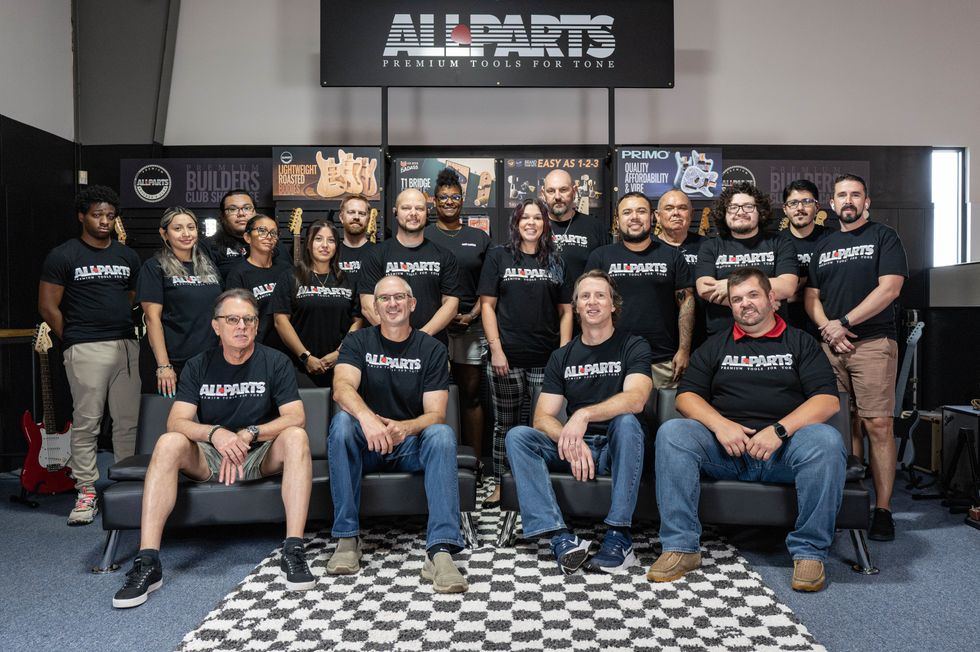
Nowadays, Allparts sells more than 3,500 items from suppliers in 18 countries, and it fulfills thousands of orders per month. Far removed from Wark’s garage operation, Allparts employs roughly two dozen people at its 13,000-square-foot facility in Houston.
“The company has always been fairly lean. “Everybody here wears a couple of hats,” says Allparts president Dean Herman. “We’re very capable of being able to adapt to whatever the business calls for.”
By 2020, Wark had sold Allparts to the private equity firm Ambina Partners and was planning his retirement. Herman joined the company after 25 years at Fender, where he had worked his way up from junior rep to sales director. First hired as Allparts’ vice president of sales and marketing before being promoted to president a few years later, he was tasked right away with modernizing the company’s e-commerce site, sales and inventory system, and order fulfillment.
Five years later, he reports that results have been positive across the board: a boost in sales, improved logistical efficiency, and a superior customer experience. The company now keeps pricing and inventory more accurate, ships most web orders the same day, and has strengthened its product descriptions to help customers understand each piece of gear and why it could be the right fit for their rig.
Allparts receives a lot of high-volume, lower-priced orders for small, highly specific parts with “evergreen demand,” like jacks, switches, pots, and knobs. But their real bestsellers are the premium, player-oriented aftermarket upgrades, like Leo Quan’s Badass bridges and tuning keys, and the relatively new Certano T-Bender bridge for Telecasters.
Herman is particularly proud of the T-Bender, which was designed by the French craftsman David Certano and further developed in partnership with Allparts. The bridge serves as a simplified alternative to B-Bender and G-Bender bridges, offering players the ability to bend their B or G string up to a full step to get those classic pedal steel sounds. But unlike its predecessors, it doesn’t require any extra drilling or routing to install, and is fully reversible. That makes it way more accessible to players curious to try it out, but who don’t necessarily want to spend hundreds of dollars and permanently retrofit their guitars in the process, Herman says.
“I don't have illusions that [the Certano T-Bender is] ever going to take the place of a Glaser Bender or anything,” he says. “But we just thought an elegant, more-DIY friendly solution would offer players a fun way to dip their toes into that arena, and to take their playing in a different direction without having to modify their instruments.”
That’s exactly the type of new product that Allparts is training its sights on. Herman says he’s excited about the prospect of working with new collaborators who have great ideas that satisfy a niche market—something that’s more challenging today than in previous decades.
“It’s always a good time to be in the parts business.”—Dean Herman
“In the past, it might have been a little easier,” he says. “There was a predominant style of music that you could attach yourself to, and you could come up with an item that catered to a specific crowd. Nowadays, there's a zillion different kinds of players listening to a zillion different kinds of music. So we’re looking for interesting little niches, and that next thing to get excited about. You can’t necessarily count on another Eddie Van Halen and Floyd Rose combination coming along. So, we have to think as players: What would be interesting? What would people find compelling?”
It’s that type of thinking that gave Allparts a leg up in the market when Wark was still getting the company off the ground in the ’80s, and it’s what continues to push the company forward more than 40 years later. To be sure, Herman says, “We have lots of other fun ideas in the works.”
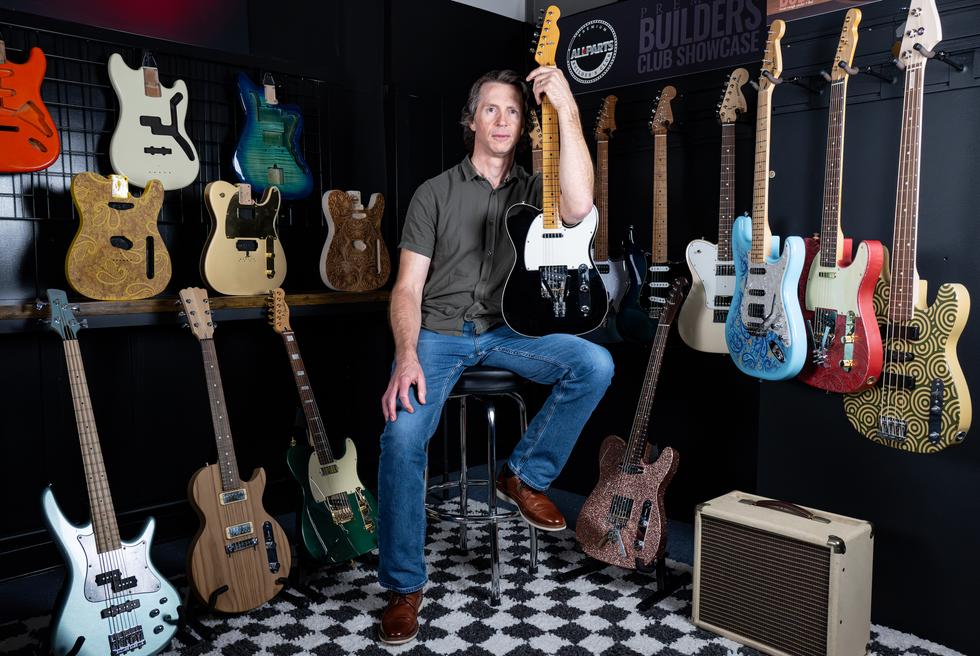
Throughout the years, Allparts—much like StewMac—has weathered economic shifts well, relatively speaking. While many American businesses have grappled with the effects of the Trump administration’s new tariffs, both Allparts and StewMac are navigating the situation carefully, and neither reports seeing much of an effect. Similarly to how Brock Poling of StewMac referred to a sizable share of the company’s product line as “recession-proof,” Herman sees opportunities for Allparts to thrive in virtually any economic situation.
“If the economy is great, people are buying guitars and basses, and builders need cool, differentiated parts that offer their customers something new they haven’t seen before,” he says. “But if the economy’s not great, the repair side of the business does better. So in our view, it’s always a good time to be in the parts business. It’s always a good time to be thinking about cool, innovative upgrades for musicians.”
Stompboxtober 2025: Lehle

Today’s spotlight pedal (okay, box) is the LEHLE P‑ISO TRS XLR Stereo — your secret weapon against hum and noise. Enter now to WIN this passive isolator/DI box that converts stereo TRS to balanced XLR while lifting the ground to banish unwanted loops. Don’t forget — new giveaways drop every day this October!
Stompboxtober 2025 - Win Pedals All Month Long!
LEHLE P-ISO TRS XLR STEREO
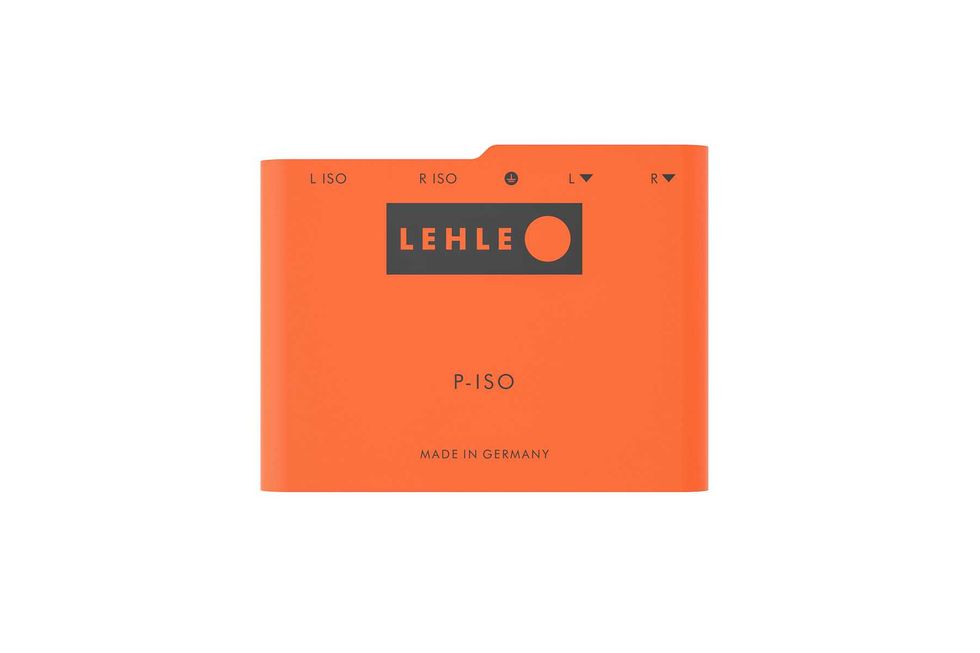
he LEHLE P-ISO TRS XLR STEREO brings you closer to the main mixing system. It converts your stereo audio signal not only to balanced XLR but lifts the ground so there’s no chance of unwanted noise or humming loops. Perfect for your pedal board, modeler and amp simulation in studios, clubs, bars or stadiums – all fitted into a handy size.
The combination of passive isolation with highest possible signal fidelity is only realisable thanks to its core, existing of two LEHLE TRANSFORMER HZ, which galvanically isolate the signals.
While being designed especially for high impedance signals, they process low impedance signals with the same uncompromising sound quality as well. The high coupling and flat frequency response won’t let you miss any detail in the signal.
The classic application for the LEHLE P-ISO TRS XLR STEREO is the connecting link in between your stereo device and the professional world of mixers, FOH and DAW recording systems.
It lifts the ground in between those worlds, so the devices are galvanically isolated - any hum or noise caused by a ground loop becomes a thing of the past. Offering balanced audio signals at the two male XLR sockets by Neutrik gets you protected even closer to the mixer while using simple standard XLR cables.
Not only for stereo effects, digital modeler and amp simulation devices - even keyboards, synths, playback systems or audio interfaces are in safe hands of the LEHLE P-ISO TRS XLR STEREO.
You won’t find a power connection as you get all the performance of that compact box passively, without the need for a power supply.
And due to its optimised size and low weight, it fits easily below your pedalboard or in any pocket - always installed or as flexible tool to share.
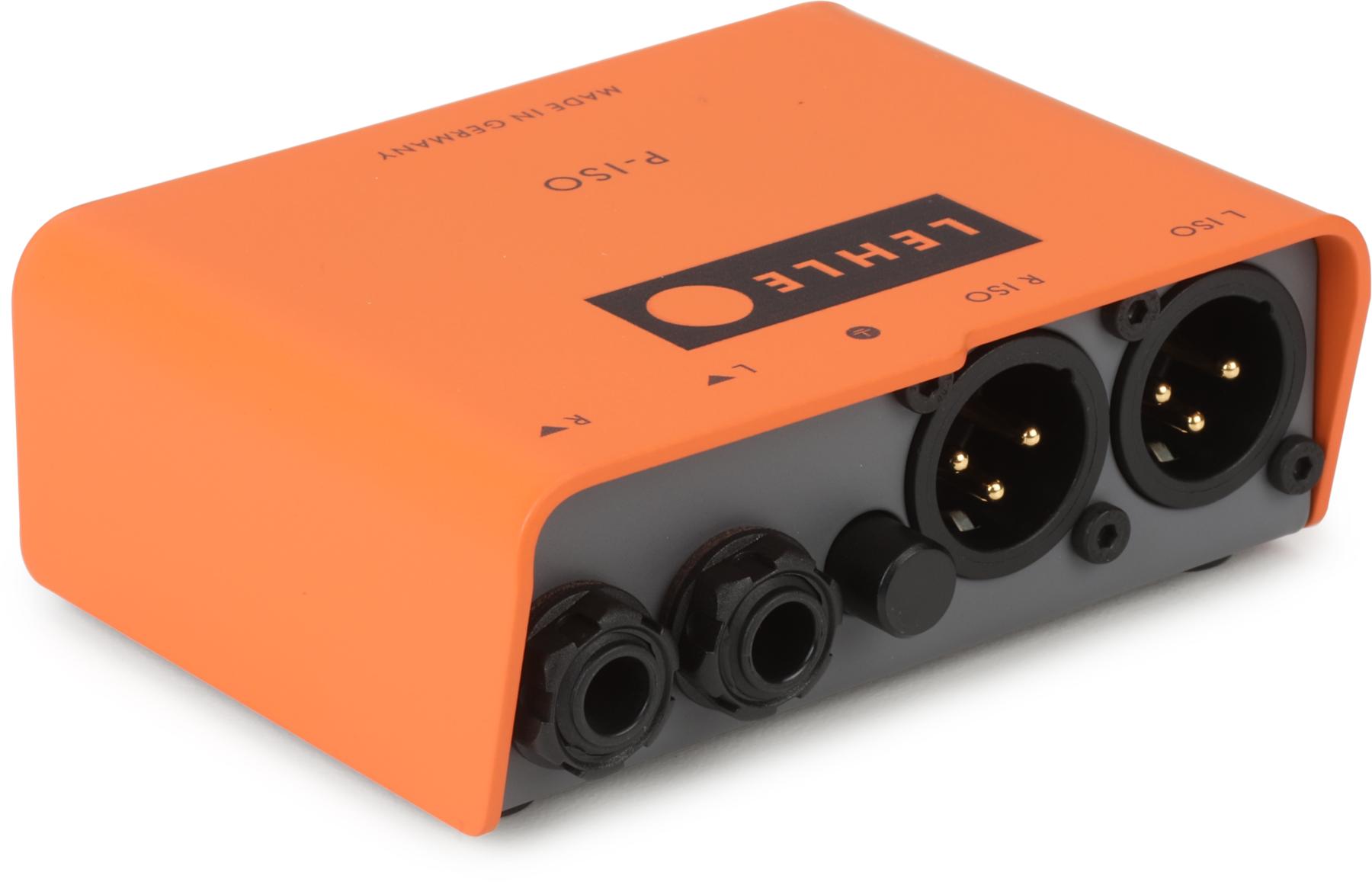
Lehle P-ISO TRS XLR Stereo Isolator and DI Box
Question of the Month: To DIY or Not to DIY

Question: What have you DIYed in your rig?
Karla Chubb (SPRINTS) - Guest Picker
A: Besides my entire playing style and mess of a pedalboard? I’d say my Jagstang, which is my main touring guitar. It’s starting to become a bit of a Frankenstein's monster purely due to use (and destruction) on the road. Originally I just modified the bridge, replacing the standard one with a Fender American Pro Mustang bridge. This was supposed to help the strings stop slipping out of tune when I struck them too hard playing live. I have since lost the original tremolo bar (and the screws) so I can’t attach a new one. Instead, I duct-tape whatever Jazzmaster/Jaguar/Mustang one we have lying around on at every show because I’m too lazy to get it fixed. I should really get around to that…
Obsession: My current obsession at the moment is terrible (and rarely not-so-terrible) true-crime documentaries on Disney+/Starz. If what they say about smart people loving reality TV is true, then I must be a genius. From The Secrets of Hillsong to Mr. & Mrs. Murder, there is nothing that helps calm my brain or shut it down more than a terrible whodunnit. I love you, true crime. Never change.
Randall Brown - Reader of the Month
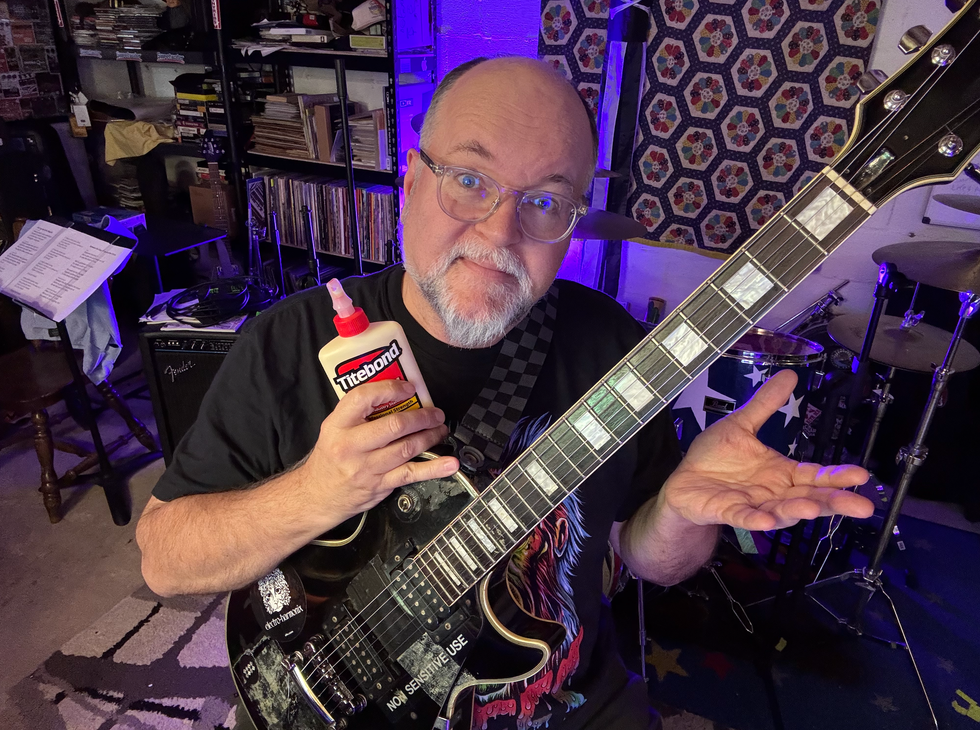
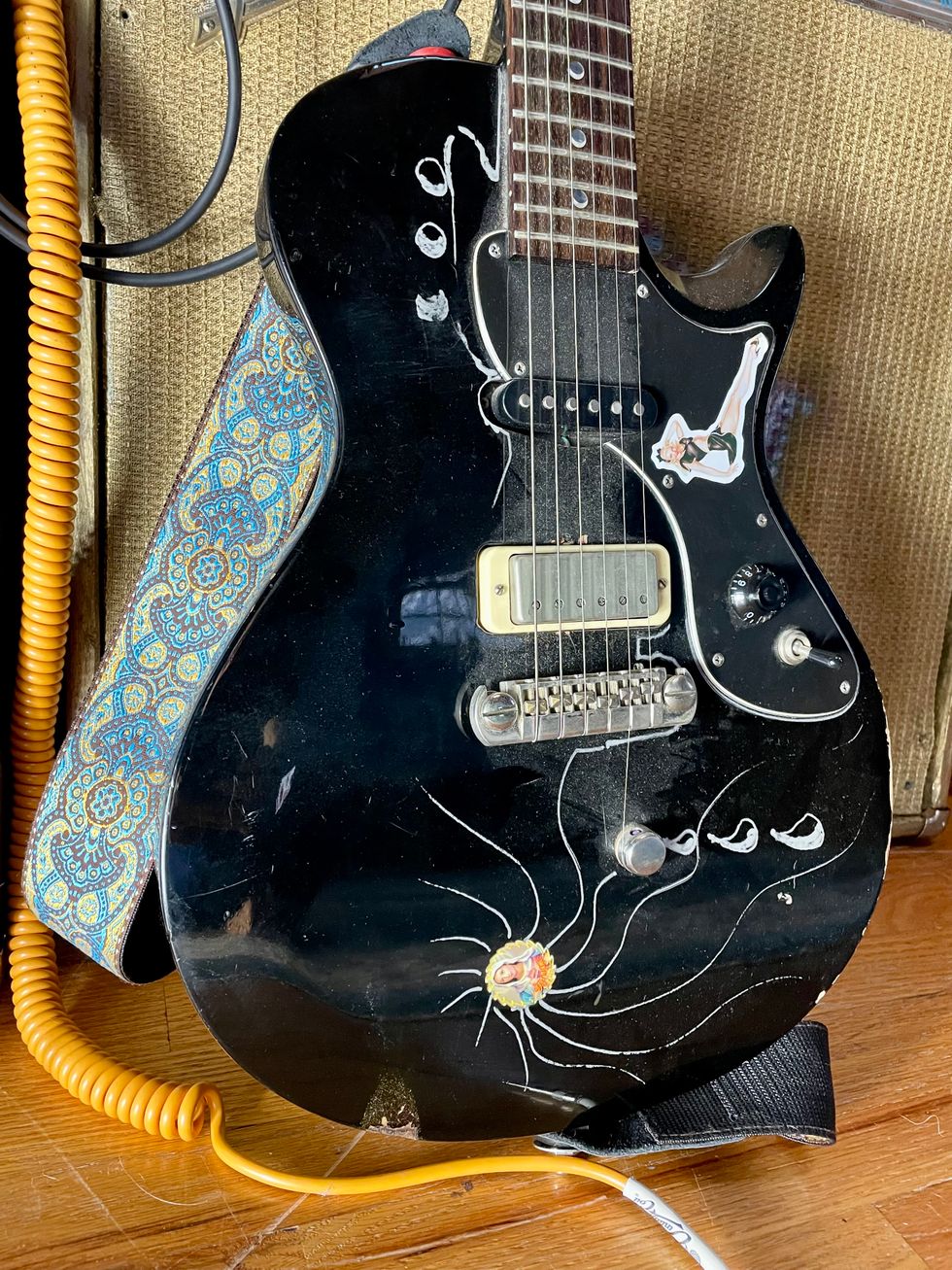
A: My most in-depth DIY so far is a sad tale! I tried to upgrade my very old and beaten-up—but still very playable—Memphis Les Paul copy with new tuners, bridge, and tailpiece. While working the posts in for the new tailpiece, I heard a wooden creak and a snap. My attempt to firmly plant the poles had caused the laminate top to politely separate halfway off the body. I bought wood glue and clamps to do more serious repairs, but I haven’t trusted my (lack of) skills to actually start. If I can’t find just the right YouTube tutorial, I might have to seek professional help.
Obsession: P-90 pickups and the music of Osees. I bought a Rivolta Zenyata earlier this year, and its neck-position P-90 has won my tone-heart. I love full-on humbuckers, but when I commence repairs on the old Memphis again, I want to replace its ancient no-name HBs with P-90s. Coincidentally, I’ve been obsessing over John Dwyer’s guitar wildness with Osees, and he gets amazing sounds out of his P-90-packed Les Paul Junior.
John Bohlinger - Nashville Correspondent
A: DIY is part of the guitar’s DNA. From its humble lute origin over 1,000 years ago, players have been altering the instrument ever since to create the sounds in our heads. Les Paul and Van Halen are prime examples of players who reshaped the instrument, and in doing so, reshaped music. I’ve tweaked every instrument I’ve owned, swapping pickups, sanding bodies, adding Bigsbys, adjusting setups, or hiring luthiers to add B-benders. Honestly, many of these DIY tangents have ended in expensive, frustrating, lateral trades. That’s the thing about obsessions: They do not call reason into question.
Obsession: Of late, it’s working flatted or raised 5ths into solos. It’s fun to shoehorn in the devil’s interval, with its foreboding dissonance, and try to resolve into something sweet.
Luke Ottenhof - Associate Editor
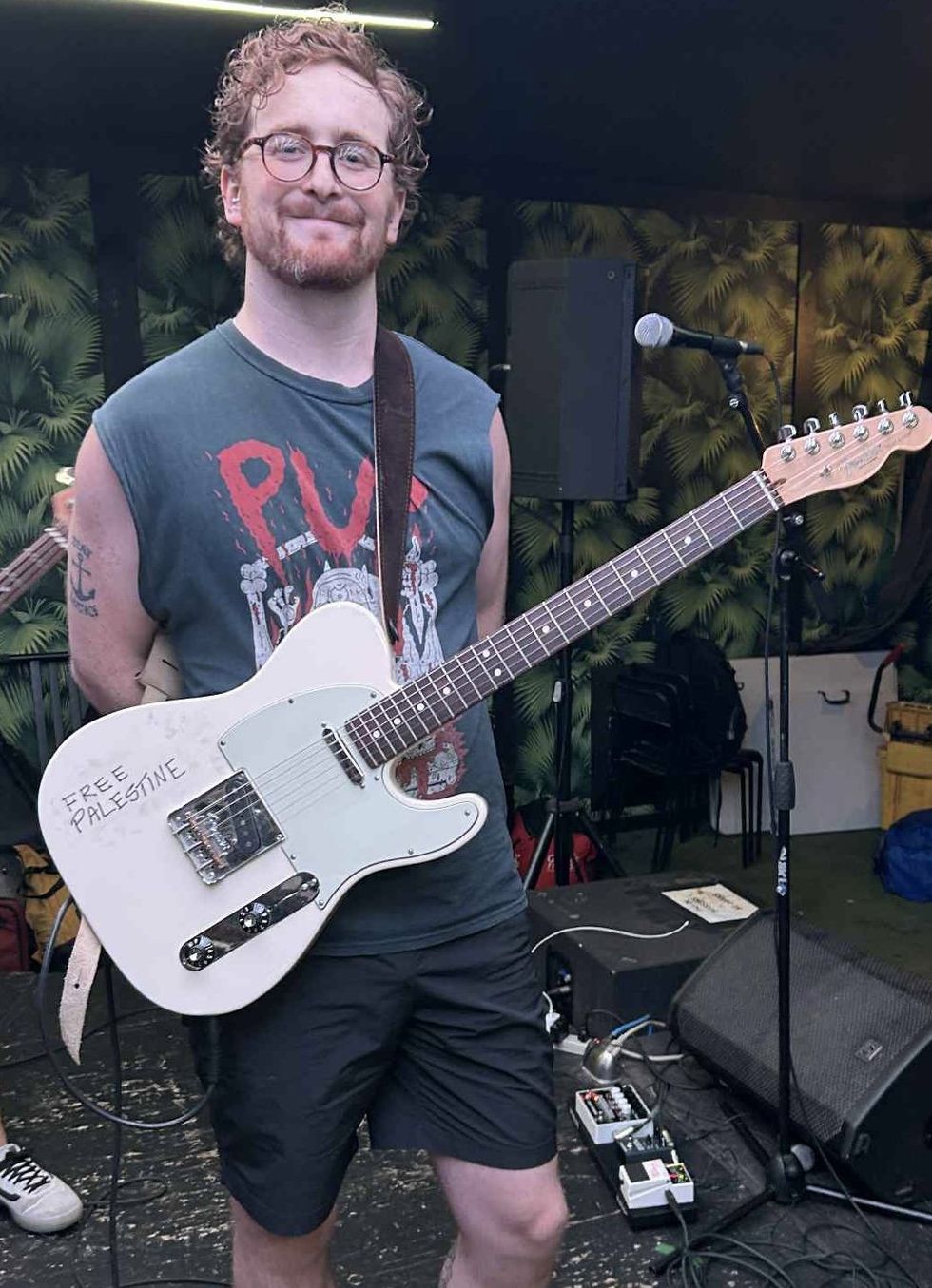
A: I love DIYing stuff in my rig, even though I have little to no idea what I’m doing a lot of the time. Last year, I used an ill-equipped dremel to clumsily carve out space under a small aluminum pedalboard for my power supply, then superglued some rubber feet onto the board for more clearance underneath. A smarter person might have simply bought a board that could accommodate the power unit without mods, but where’s the fun in that?
Obsession: The new Alien: Earth series on FX. The major plot device is so original but totally believable, and the atmosphere is delightful: ’80s sci-fi aesthetics mixed with contemporary special effects and some bizarre, unsettling new creatures. Plus, the awesome needle drops at the end of each episode, featuring classic metal songs. TV can and should be this fun—while also still being very good.

Samantha Fish on the top blues players right now, and why one of them is “an alien”

She might regularly appear in ‘best blues guitarist’ polls, but Samantha Fish doesn’t believe you can really rank musicians. “I feel like being a guitar player is all about self-expression,” she says in conversation with Guitar World. “So when you’re ranking guitar players, it’s tough for me, because I don’t think there’s one better way to do it.”
- READ MORE: Christone “Kingfish” Ingram picks his six most influential blues guitar albums of all time
But everyone has their own personal favourites, and during the interview the Kansas City guitarist name-drops a few. “I just got off the road with [Christone] Kingfish [Ingram], and he’s pretty amazing” she exclaims, before going on to list the other greats in her mind.
“I think Derek Trucks is one of the greatest there is, not just in blues playing but any playing. He’s an alien. I like Gary Clark Jr. – he’s very tasteful, and he’s got a great tone. Eric Gales is incredible. He just blows everybody away. Luther Dickinson is one of my favourite contemporaries, too. He’s awesome.”
UItimately, what matters to Samantha is having a distinctive sound, which she describes to Blues Blast back in October 2024, “I love anybody with a personality…so you can just turn (a song) on and you know exactly who is holding that guitar because they have that personality. I think Keith Richards has that personality. I think (of), obviously, B.B. King. I think Derek Trucks has that personality. Freddie King has that personality. I think Angus Young (of AC/DC), and I think of Jimmy Page.”
Samantha was lucky enough to play with her hero Keith Richards as opener for The Rolling Stones’ on their Hackney Diamonds US tour, which she found “humbling and mind-boggling”.
Slash also asked her to play at his own blues festival, the charity fundraiser S.E.R.P.E.N.T., alongside other giants like Warren Haynes, Keb’ Mo’ and Larkin Poe. She told Louder Sound that she was initially sceptical about the invite, “But then it actually came through and I thought, it’s a cool concept and such a cool lineup. All the acts are really incredible performers and it’s a really great thing to get to be a part of. I was stoked.”
The post Samantha Fish on the top blues players right now, and why one of them is “an alien” appeared first on Guitar.com | All Things Guitar.
Steel: Travis Toy
On Episode 14 of Steel, we meet Travis Toy, one of Nashville’s deepest pedal steel players. Travis has shared the stage and studio with some of modern country’s biggest acts, including Luke Bryan, Rascal Flatts, Luke Combs, Steve Wariner and Patty Loveless.
Travis is one of the deepest technical practitioners of pedal steel. He’s just as comfortable playing a honky tonk gig as he is shredding jazz funk fusion on E9. We discuss his fascinating musical upbringing in Kentucky, his obsession with ’90s country and GRP records, how he tries to play things that matter in the studio, and lots more.
Read more about Travis here:
http://www.travistoytutorials.com/
https://open.spotify.com/playlist/3WdOaE9fKZThXhFWU9dsfe?si=78e43673760841d4
Steel is brought to you by the Fretboard Journal magazine and is mixed by Armen Bazarian.

The post Steel: Travis Toy first appeared on Fretboard Journal.
Alex Lifeson reveals the challenges of bringing Rush back for their reunion tour

Following Neil Peart’s retirement in 2015 and sad passing in 2020, it looked like Rush would never play again. But in recent months, Alex Lifeson has given plenty of hints that things might not be over for him and bassist Geddy Lee.
That said, few anticipated the shock news this week that Lifeson and Lee would be reuniting for a seven-city tour in 2026 including US, Canada and Mexico dates.
While playing without Peart might be tricky to navigate, what Alex Lifeson is really concerned with is relearning Rush’s old material. “50-something years” into his service as guitarist, Lifeson admits in a Rock and Roll Hall of Fame interview that their songs are still difficult to play: “When you do it every day, it’s not a big deal, really.”
“You’re used to it. But when you’re away from it, and you are a little more objective about the intense complexity of the music and the feel and the new nuances and all the things that go into making a Rush song and performance”.
Despite this, Lifeson enthuses that: “to be challenged with that again was really, really exciting. And the more we started rehearsing and playing, the more I just fell in love with the idea of playing again.”
A Rush reunion wasn’t always so clearly on the cards, as losing Peart initially made the idea of reuniting difficult. As Geddy Lee admits in the same interview: “First of all, because [of] what it entails in terms of work, but also what had transpired, you know, losing a member like Neil is devastating.”
“It was a very sad time, and it took time for us to even contemplate. This is a relatively recent decision, and I would say it was kind of out of the question for the longest time because of those circumstances – and how do you replace someone who’s irreplaceable?”
Their final decision was endorsed by both Peart’s daughter Olivia Peart and his wife Carrie Nuttall, who shared in a press statement: “We are thrilled to support the Fifty Something tour, celebrating a band whose music has resonated and inspired fans for generations, and to honor Neil’s extraordinary legacy as both a drummer and lyricist.”
“As the band enters this new chapter, it promises to be truly unforgettable. We are excited to see how their new vision unfolds, and to hear this legendary music played live once again.”
German drummer and composer Anika Nilles is now taking over from Peart’s duties, expressing in an Instagram post how “overwhelmed” she is after being thrust into the spotlight by fans of the band.
The post Alex Lifeson reveals the challenges of bringing Rush back for their reunion tour appeared first on Guitar.com | All Things Guitar.
Slash confirms that he didn’t like this iconic Guns N’ Roses song: “I have to admit I did have a thing with it”

Musicians often become sick of their own hits – Robert Plant even claimed he’d “break out in hives” if he’d have to sing Stairway To Heaven at every show.
Guns N’ Roses’ Slash is a little different however, admitting to Guitar World interview that he didn’t like Sweet Child O’ Mine even before it was a hit. Before its writing, Slash considered Guns N’ Roses a “Motörhead-type hard rock band”. But in hindsight, he thinks this ballad helped them to reach fame, being their only US number one single in 1988.
Some of Slash’s distaste for the track might boil down to how challenging the song’s solo is to play. Particularly live – and drunk – as he reminisces: “We played it one time opening for Ted Nugent, and when it was time to play the song, I was like ‘Oh fuck’. And of course, I had to remember how to play the riff accurately by myself in front of everybody every time.”
These days, Slash feels more neutral about its inclusion, saying “it’s become one of the big tentpole songs in the set. So it is what it is.”
When it comes to writing solos, Slash finds this more of a stream of consciousness flow rather than something he sets out to do. “All the solos were very spontaneous and at-the-moment the song was written. You figure out what the chord changes are going to be and then just do what you feel.”
Sweet Child O’ Mine was written in this exact way: “it was just a riff I came up with, and I didn’t know what I was going to do with it. I wasn’t really thinking about it at the time, but it inspired the whole song.” Their 1991 release November Rain’s solo also came about the same way: “It sounds so structured to me now, [but it] was just what happened in the moment.”
This isn’t the first time that Slash has felt at odds with the band’s creative output. He told Yahoo in 2022 that November Rain’s wedding concept music video went against his values as a “stripped down rock guy”, but being his diplomatic self does think “it came out pretty awesome”. At the end of the day, he “always knew it was a really great song”.
The post Slash confirms that he didn’t like this iconic Guns N’ Roses song: “I have to admit I did have a thing with it” appeared first on Guitar.com | All Things Guitar.
Lemonheads guitarist claims he doesn’t regret decades of hard drug use: “I think some people were supposed to take drugs”

Lemonheads guitarist Evan Dando is no stranger to rock star excess. From the alt-rock heyday of the early 90s to periods of public absence (and misadventures), the Boston band’s frontman has long earned a reputation for living life on the edge.
In a new interview with The Guardian, the 58-year-old opens up about his past substance use, his current approach to sobriety, and the creative process behind Love Chant, the band’s first album of original material in nearly twenty years.
These days, Dando considers himself “clean”, though his version of the word might surprise some: “I’ll take acid occasionally, maybe mushrooms and I’ll smoke pot.”
For the musician, being clean is about leaving heroin behind, which he claims he hasn’t used in nearly three years. The decision followed a disastrous gig at Hollywood Forever Cemetery in 2021, where he struggled to play through the set.
“I thought: ‘This is not good. The legacy will not bear this type of behaviour,’” says Dando.
He credits Laura Teixeira for helping him quit but stresses he has no regrets about his past: “I think some people were supposed to take drugs and one of them was me.”
Stepping back from substances (mostly) has also brought a new focus to his music.
“When you’re on smack, you’re all: ‘Oh fuck that, and that, and that,” he says. Now, Dando is finally releasing Love Chant, an album that revisits the lyrical and melodic strengths that propelled Lemonheads to indie stardom.
Formed in 1986, Lemonheads earned acclaim for their blend of punk energy and folk-pop melodies, scoring mainstream hits with songs like Into Your Arms and It’s a Shame About Ray. Despite lineup changes and long periods of inactivity, Dando has remained the band’s creative core, carrying its signature songwriting voice through the years.
“I’ve never really heard of this sort of dormancy period [between albums],” he admits. “This is some Rip Van Winkle shit. I do have integrity about what I put out. I wasn’t ready to do anything new until I was ready, and [now] I am.”
Love Chant will arrive on 24 October via Fire Records. Check out the latest single In The Margin below.
The post Lemonheads guitarist claims he doesn’t regret decades of hard drug use: “I think some people were supposed to take drugs” appeared first on Guitar.com | All Things Guitar.
Letter from the Managing Editor | Happy Camper

Wilco’s Jeff Tweedy teams up with Martin on two signature acoustics – the all-new, fun-sized 000 Jr E and the returning 00DB

Martin has teamed up with Wilco frontman Jeff Tweedy on two new signature acoustic models, the reissued 00DB Jeff Tweedy and the all-new 000 Jr E Jeff Tweedy
Both guitars bring Tweedy’s preferred features to players — from deep, resonant bodies and long-scale necks to FSC-certified tonewoods and the signature Tweedy Burst finish.
The 00DB Jeff Tweedy, first introduced in 2012, makes its return with the same “warm, balanced voice” that made it a fan favourite, alongside modern refinements like a certified ebony fingerboard and bridge. Crafted from FSC-certified solid mahogany with scalloped European spruce X-bracing, the model retains its deep 00 body design, long 25.4” scale, and signature Tweedy Burst finish. The guitar also comes detailed with faux tortoise binding and Foden-style inlays.
“The thing I love about my guitar, the deep-body element of it, is that it has a warmth for a smaller body guitar,” says Tweedy. “It’s somewhere between a Dreadnought and an 0-style guitar.”
Joining it is the 000 Jr E Jeff Tweedy, a new, more compact signature designed to bring Tweedy’s tone and feel to a broader range of players. Crafted from FSC-certified sapele with the same satin Tweedy Burst finish, it features a 000 Junior body, full 24.9” scale length, Martin E1 electronics with a built-in tuner, and a Performing Artist neck for greater playability.
“The idea that we could do this again, and then also offer a guitar that may be a little bit more affordable to people starting out, and maybe a little smaller for smaller hands starting out – that’s a thrill to me,” says the guitarist.
Both models trace their inspiration back to the vintage Martin 0-18 Tweedy purchased in the late 90s. It was that guitar that Tweedy used to write the celebrated Mermaid Avenue album with Billy Bragg, setting Woody Guthrie’s then-unheard lyrics to music. That instrument, he says, “became basically part of my writing voice… it’s the main acoustic I’ve had my whole life.”
“Well-made guitars, like the Martin guitars that you make, inspire creativity because they don’t present an obstacle to creativity,” Tweedy adds. “Someone buys a guitar with my name on it and takes it home – I hope it becomes a part of their daily habit of making some music.”
Priced at $3,599 and $1,149 respectively, the 00DB Jeff Tweedy and 000 Jr E Jeff Tweedy are now available through authorised Martin dealers worldwide and on Martin’s website.
Learn more at Martin Guitars.
The post Wilco’s Jeff Tweedy teams up with Martin on two signature acoustics – the all-new, fun-sized 000 Jr E and the returning 00DB appeared first on Guitar.com | All Things Guitar.
Warm Audio unveils the Tube Squealer and Throne of Tone – two pedals that capture the soul of legendary overdrives

Warm Audio has unveiled the Throne of Tone and Tube Squealer, two new pedals that pay homage to some of the most iconic overdrive circuits in guitar history.
True to the brand’s reputation, both pedals promise faithful analogue recreations built with premium components, while adding smart, modern touches for today’s players.
“These are two of the most popular styles of overdrive in guitar history, and we’re excited to add them to the Warm lineup,” says Warm Audio founder and president Bryce Young. “We maintained the Warm formula of vintage-accurate tone and premium components, but we went a step further to combine some of the greatest iterations of these tones along with feature-rich functionality into each.”
- READ MORE: Fender expands its Hammertone pedal line with two new offerings: the Breakup Drive and Boost
To start, we’ve got the Tube Squealer, Warm Audio’s spin on one of the most celebrated overdrives ever made — the Tube Screamer. Built with 100% analogue circuitry and loaded with modern, rig-ready features, the pedal offers three selectable voicings that each nail a different era of the original’s tone. 808 delivers the earliest iteration of the classic overdrive, the TS9 captures the most produced and widely recognised version, and the TS10 revives an underrated circuit that’s found new life with modern players.
Beyond the traditional controls, the Tube Squealer adds a Mix knob that lets players blend their clean signal back in with the overdrive, a pickup-voicing selector to optimise the pedal for single-coil or humbucker guitars, as well as an external voltage booster for expanded headroom.
Inside, it’s packed with high-quality JRC4558 op-amps, discrete transistors, diodes, premium JFETs, and asymmetrical clipping for that unmistakable smooth, tube-like breakup.
Next is the Throne of Tone, a dual-sided overdrive inspired by the Marshall Bluesbreaker and the boutique pedals that followed in its wake. Designed for ultimate flexibility, this pedal offers two classic voicings, each with low and high gain levels and three drive modes: boost, overdrive, and distortion.
According to Warm Audio, the Throne of Tone excels at British-style breakup thanks to a symmetrical clipping circuit that captures the feel of classic tube amps cranked beyond their clean limits.
Tone shaping is highly flexible too: each side of the Throne of Tone comes with an independent Presence control (adjustable from 500Hz to 2.3kHz) alongside the standard tone knob. There’s also a rear-panel send/return loop for inserting other pedals between the two sides, plus a voltage doubler that runs internally at 9V or 18V for extra headroom and definition. The pedal also features true-bypass switching.
Under the hood, 24 diodes and premium JRC4580 and TL072 op-amps power two fully analogue circuits, delivering uncompromising tone in a versatile, performance-ready package.
“For the Throne of Tone, we decided to honour the 3-knob vintage pedal that inspired a whole wave of boutique recreations, and added a second side plus alternative voicing to deliver the most unobtainable boutique blues OD,” Young explains. “With these unique voicing options, plus added features for presence, gain structure, and gain amount, you can create dozens of combinations previously unavailable in addition to getting the authentic sound of the originals – all in one stomp box!”
The Tube Squealer is priced at $149/€159/£139 (inc. VAT), and is available exclusively at Guitar Center in the US and authorised retailers worldwide. Meanwhile, the Throne of Tone retails for $229/€249/£219 (inc. VAT) and is available at all authorised Warm Audio retailers.
Learn more at Warm Audio.
The post Warm Audio unveils the Tube Squealer and Throne of Tone – two pedals that capture the soul of legendary overdrives appeared first on Guitar.com | All Things Guitar.
Wolfgang Van Halen admits he finds it “bittersweet” to play his father’s iconic Frankenstein guitar
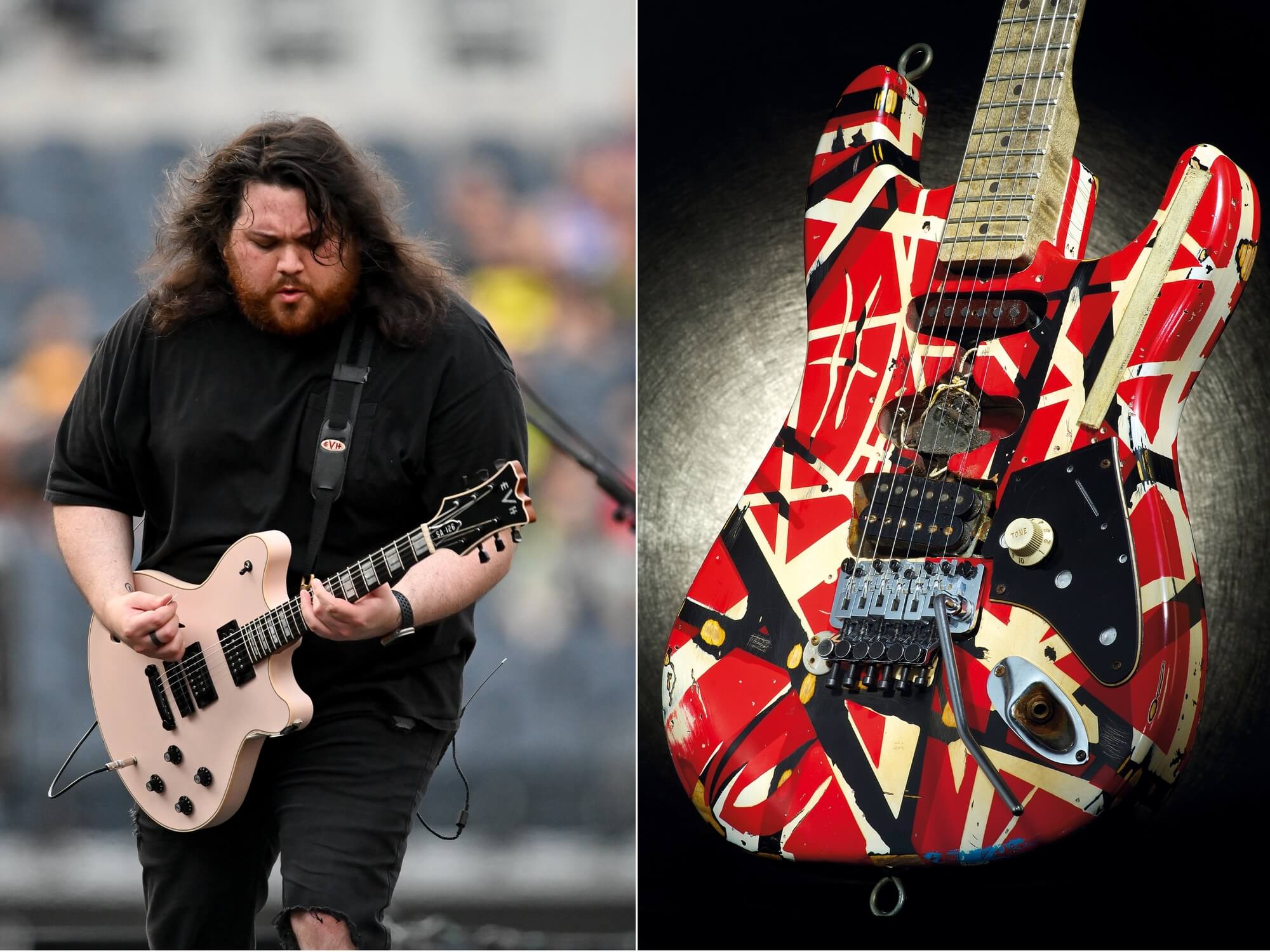
For Wolfgang Van Halen, few instruments carry more emotional weight than his father’s Frankenstein guitar – the iconic red-black-and-white Strat that rewrote the rules of rock.
Built and modded by Eddie Van Halen himself in the late ‘70s, Frankenstein is one of the most recognisable guitars in music history. And decades later, it’s still shaping the sound and story of Van Halen’s legacy, now through Wolfgang’s hands.
Speaking to Guitar World about Mammoth’s upcoming album The End, Wolfgang explains that every time he brings out the guitar, he feels the full gravity of what it represents.
“Any moment I have it in my hands… just being able to hold something that my dad had such a history with is nice, since my dad’s not around anymore,” says Wolfgang. “It’s a little bittersweet, but it’s a nice thing to have on the record with me. I think that’s why I try to bring it out on every record.”
Recording at the famed 5150 studio, he adds, only amplifies that feeling.
“I mean, just the fact I’m recording in 5150 is enough,” says the guitarist. “But because Frankenstein is arguably one of the most famous instruments in music history, let alone guitars… the emotional and historical weight of it all is a lot to handle. You almost have to push it to the side and just enjoy the moment.”
While the Frankenstein makes its presence felt across The End, Wolfgang says the backbone of the album comes from his own signature EVH SA-126 – a guitar he developed alongside Matt Bruck, Eddie’s longtime guitar tech, and EVH masterbuilder Chip Ellis.
“I have a burst – I believe it was the second prototype of the 126 – and that was the backbone of Mammoth II,” he says. “Pretty much everything recorded on The End was the goldtop 126 I have now, other than the Frankenstein guitar parts. It’s just been so fun to have this instrument that Matt Bruck, Chip Ellis and I put together become the defining sound of what Mammoth has become.”
Amp-wise, he’s kept things simple, sticking to what he knows best. “It’s pretty straightforward, and it’s what we’ve been using on tour,” Wolfgang notes. “I have the EVH 5150 III 6L6, and the specific one I have in the studio is the one I used for the Taylor Hawkins tribute shows [in 2022]. The cabinet, too.”
The post Wolfgang Van Halen admits he finds it “bittersweet” to play his father’s iconic Frankenstein guitar appeared first on Guitar.com | All Things Guitar.
Fender Mark Speer Stratocaster review: “a 70s Strat that everyone can enjoy?”

$1,499/£1,399, fender.com
Part of the extraordinary success and enduring appeal of the Fender Stratocaster is its malleability. Perhaps more than any other golden era electric guitar design, the Strat’s basic recipe has a receptiveness to tinkering and evolution that has enabled it to be used in every genre imaginable.
I’ve owned quite a few off-the-shelf Strats myself over the years, and there hasn’t been one that I haven’t tweaked in some way – whether that involves changing the pickups, swapping the bridge, or upgrading the tuners.
All this means that we’re often quite inured to leftfield Strat variants – a Strat is a Strat, right? And yet, this latest Fender signature guitar for Khruangbin guitarist Mark Speer is a very different flavour of Strat to the norm – indeed, it’s one of the most personalised Strats Fender has put out in a while.
 Image: Adam Gasson
Fender Mark Speer Stratocaster – what is it?
This signature model (which arrives alongside a signature bass from bandmate Laura Lee) is heavily modelled on the Strat that Speer has used almost exclusively in his time with Khruangbin – which has been tweaked and modded extensively over that time.
The original guitar is a 2001 Fender Classic Series ’70s Stratocaster, and the spec sheet pulls in a lot of the biggest hits from that much-maligned original era of guitars. So you’ve got the vintage fretboard radius, you’ve got the big 70s headstock, a natural finish and in this case it even comes fitted with flatwound strings.
You probably have your opinions on all of that – I certainly do. As someone who prefers his Strats to have none of the above, you might even describe this as my own personal Fender nightmare, but there is one notorious design feature here that I will forgive it all for.
The Micro-Tilt neck with its three-bolt assembly is often held up as an example of everything wrong with the CBS era, but many of the changes implemented to the core design in this period actually came from Leo Fender himself, who stuck around in a consultancy role for a while before moving on to Music Man in 1979.
The Micro-Tilt is one such innovation; allowing you to tweak the angle of the guitar’s neck in relation to the instrument body via a small hex key hole in the neck plate. It enables extra control over fine-tuning the guitar’s setup as a result. This innovation also led to the introduction of the bullet truss rod and the moving of the adjustment to the top of the neck instead of the bottom. Both of these are genuinely good things for the playability and ease of maintenance of a Strat, no matter what vintage guitar aficionados tell you.
That’s all present and correct on the Speer Strat, and so it’s a big tick from me in that regard, but from there things get a bit more freaky. You’ll notice, for example, the presence of white Graph Tech saddles, which are designed to improve tuning stability by reducing friction on the break angle. These may be a visually jarring appointment but are borne of real-world experience.
 Image: Adam Gasson
“A lot of those adjustments were made from a pragmatic standpoint,” Mark explains. “The Graph Tech saddles were there because I just don’t want strings to break that often. When you’re a struggling working musician, buying strings all the time is not something you like doing.” Fair point.
The graphite additions extend to not one, but two string trees, which not only provide the steeper break angle over the nut but, in the case of the G string, prevents that pesky harmonic that sometimes rings out when not required.
Other breaks from the norm include a pair of DiMarzio Pro Track single-coil-sized rail humbuckers in the bridge and neck. These were chosen mainly because Mark dislikes the hum from single coils – but you can certainly hear their strident tones in Khruangbin’s music.
The original 2001 guitar had an ash body, and so it is here – that in itself is notable because it’s quite rare to see on a production Fender guitar in 2025, with a few Player II chambered Strat and Tele variations proving welcome exceptions on the affordable front. Sadly, the devastating toll that various pests have had on the global ash tree population has made what was once a hugely prevalent wood harder to find, and so the brand began phasing out ash-bodied production guitars in 2020. Clearly, they are back on the scene, though in select model runs. And the transparent nature of the original guitar’s finish meant that ash was the only choice to replicate it properly.
 Image: Adam Gasson
Fender Mark Speer Stratocaster – build and playability
I must admit, the mere sight of an ash body causes my back to spasm, such has been the weight of ash-bodied guitars I’ve owned in the past. However, clearly I’ve just been choosing my guitars unwisely, as pulling the Speer out of its suitably 70s brown-tolex hard case reveals it to be not just light – but 7lbs light. Highly unusual for a Strat in 2025.
I must admit I’ve never loved the natural finish on guitars of this era – they just look thick and sticky, and a bad reminder of when Fender switched to polyurethane finishes. Again, to give it a thin nitro sheen would be deviating from the original guitar, and Speer clearly feels that it’s served him well thus far.
The neck carve has been created in conjunction with Speer and it’s best described as a typical modern ‘C’ shape and very comfortable. The jumbo fretwork is nicely done, and the height gives me some reassurance that the vintage 7.25” radius won’t be too impactful upon playability and the ability to bend.
All in all, it feels a solid, well put together guitar – the sort of thing you’ve come to expect from Fender’s Ensenada-made signature models in recent years.
 Image: Adam Gasson
Fender Mark Speer Stratocaster – sounds
Plugged into my Fender ’64 Deluxe Reverb with the reverb in full effect, emulating Speer’s tone is a cinch. The Dimarzio Protrack bridge pickup is based on a vintage PAF and unsurprisingly doesn’t provide typical single-coil chime, but it sounds quite warm whilst not unpleasantly driving the amp in the manner we expect from rail-style pickups.
My chordal work still has an underlying twang, which isn’t often prominent in bridge humbuckers, and we are thankfully bereft of the often-scathing brightness of a single coil in the bridge position.
Iconic Strat sounds are actually found in position three (middle pickup) via a Fender single coil ‘vintage voiced 70s’ pickup. I find myself spending quite a lot of time here, as it’s a lot fuller-sounding than most middle pickups, and possesses a warmth I wouldn’t normally associate with a middle pickup.
Position two (bridge and middle pickups in phase) provides plenty of quack, and impressively, the volume doesn’t dip dramatically, as can often be the case. The same can’t be said for position four, which is wired with the middle and neck pickups out of phase. The thin hollow tone has its appeal with many famous players but the volume drop is dramatic and the amp’s volume control needs increasing somewhat to compensate.
A signature guitar can’t just be about emulating the sound of its creator, however – the best ones can work in a variety of settings. With that in mind, I load up my Mesa/Boogie Mark IV and dial in a strident lead tone.
I genuinely expected the flatwound strings to sound dull and lifeless with a higher gain setting, but pleasingly this isn’t the case at all. Heavy riffs are still heavy and switching to the neck pickup gives us some wonderful creamy vintage rock tones. What emerges is a versatile and interesting guitar with plenty of sonic real estate to occupy beyond the world of Texan-fried psychedelica.
 Image: Adam Gasson
Fender Mark Speer Stratocaster – should I buy one?
On paper, the Speer Strat is everything I don’t really want in a Strat – the vintage specs, the 70s looks, it’s everything that I tend to struggle with. And yet in practice this is a guitar with a huge palette of onboard sounds contained within that five-way selector. It’s a guitar that can provide a workable tone for practically any genre thrown at it.
Even as someone who spends most of his time at the shreddier end of the guitar pool, I found the playability surprisingly great too. I was expecting the vintage radius and slinky action to lead to choking out bends, but those tall frets make it a much more accommodating experience.
Speer is an unusual and pretty unique guitar player in the modern era, and this is a guitar that befits that traditional-meets-eclectic vibe that he has brought to Khruangbin. A 70s Strat that everyone can enjoy? Try one and tell me I’m wrong…
Fender Mark Speer Stratocaster – alternatives
Another S-type guitar that offers a bunch of handy pro-ready fixes and evolutions is Yamaha’s reimagined Pacifica Standard Plus ($1,349/£1,249). Another S-type guitar with rail-type humbuckers is PRS’s hugely impressive SE NF3 ($799/£799) – it’s one of the finest sub-$1,000 guitars around. Fender also offers a modded take on the Strat in its own line-up, of course, and the Player II Modified HSS Strat ($1,079.99/£999) is a very impressive example.
The post Fender Mark Speer Stratocaster review: “a 70s Strat that everyone can enjoy?” appeared first on Guitar.com | All Things Guitar.
Win Kurt Cobain's Guitar Pick
Stompboxtober 2025: Rock N Roll Relics

Pedal lovers, today’s your chance! Enter now to WIN the Stinger Overdrive from Rock N Roll Relics — vintage mojo meets modern feel, with NOS components and smooth gain control that can take you from soft grit to fiery leads. Don’t miss it — and be sure to stop back tomorrow for another killer giveaway!
Stompboxtober 2025 - Win Pedals All Month Long!
Stinger Overdrive
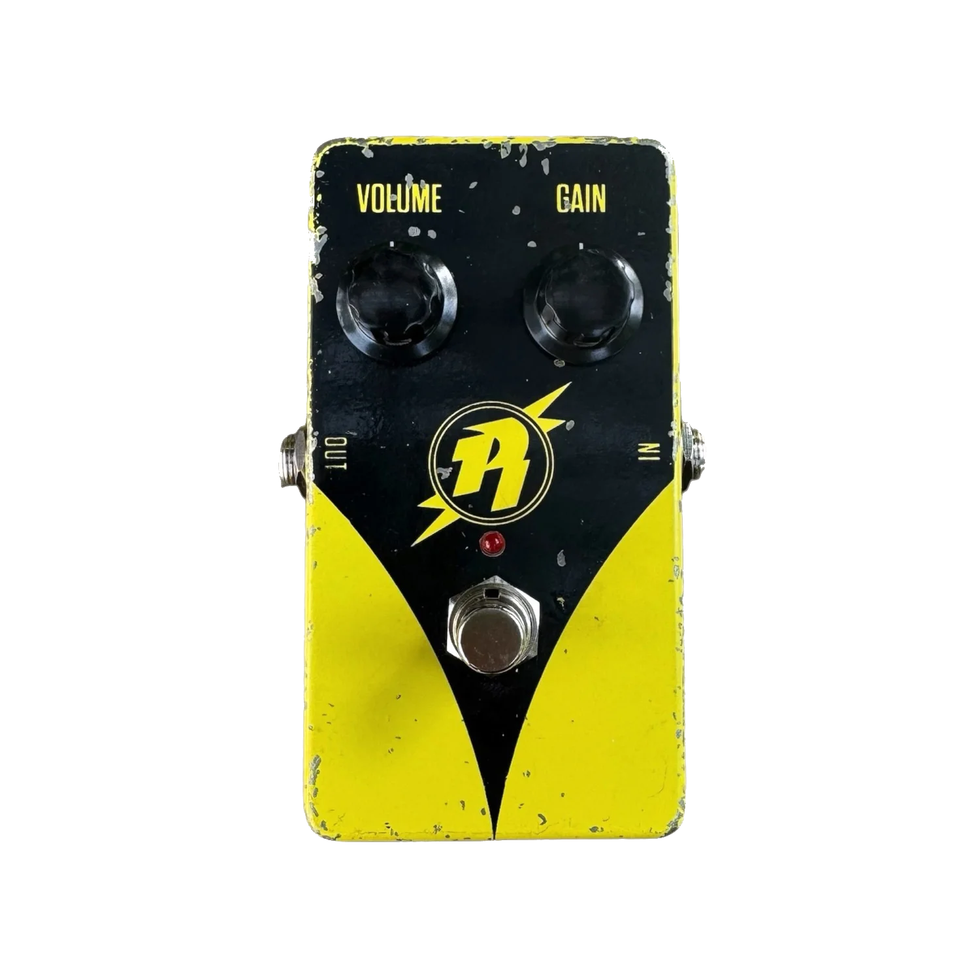
The Rock N Roll Relics Stinger overdrive has all the mojo of classic yellow drive pedals, but with tonal refinements to bring it to the modern age. We use NOS construction as you’ll come to expect with the Stinger Series, which gives it that authentic, ear-pleasing tone we all want. $289 Street
Revv Launches a MK2 Update of their Groundbreaking D20 Amplifier 6 Years in the Making
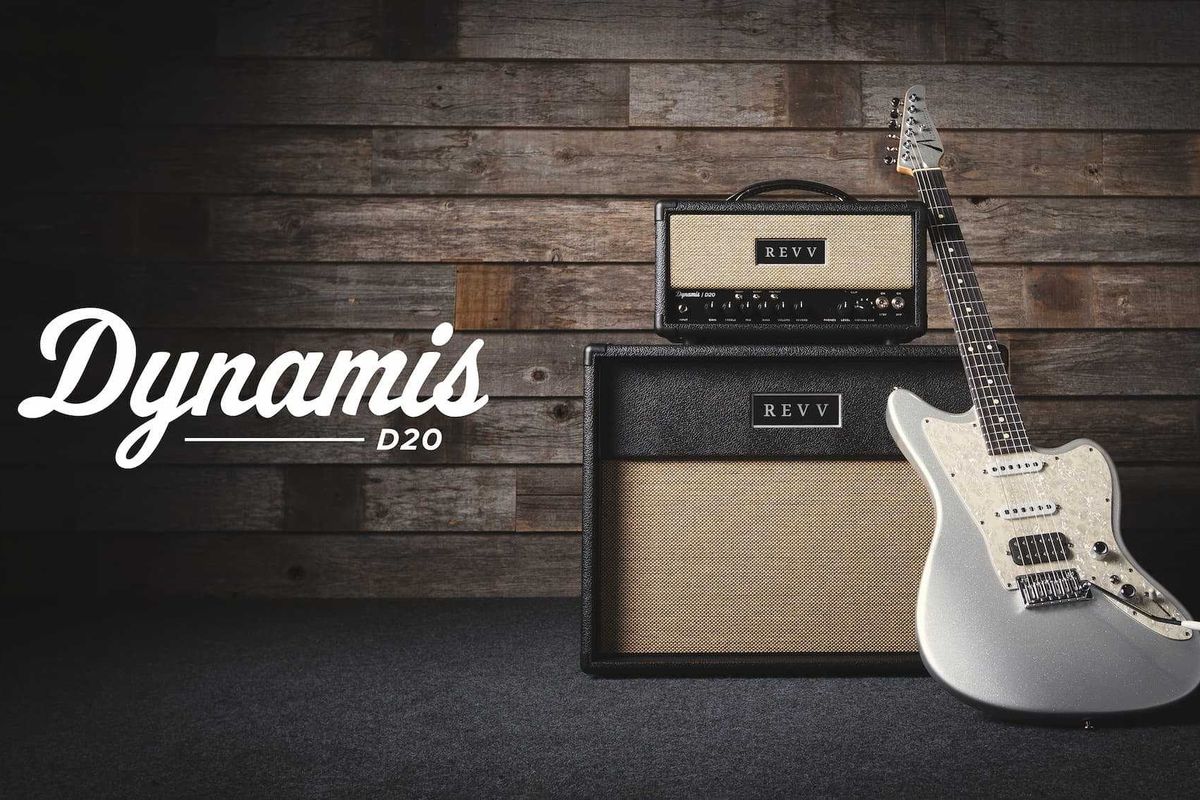
Revv Amplification set the standard for clean lunchbox amplifiers in 2019 with the release of the D20: a portable all-tube amplifier & the world’s first with Two notes Torpedo-embedded direct XLR for zero-compromise tone & feel without a cabinet. 6 years later, Revv saw fit to raise the standard with the D20 MK2, featuring a host of tonal and functional upgrades based on feedback from some of the most respected recording & touring guitarists in the world. Even better - Joey Landreth is once again lending his ears to a Joey Landreth D20JL, promising the same MK2 improvements with additional headroom & top end on tap (not to mention the exclusive JL colorway); similar to the fan-favorite D25JL released earlier this year. Both heads now come standard in a new tolex lunchbox enclosure for an ideal combination of looks & weight reduction. Complete with onboard reverb & an included 2-button footswitch, the D20 MK2 & D20JL are ideal for any player looking for a single-channel clean/edge-of-breakup amp with a touch-sensitive feel & record-ready tone.
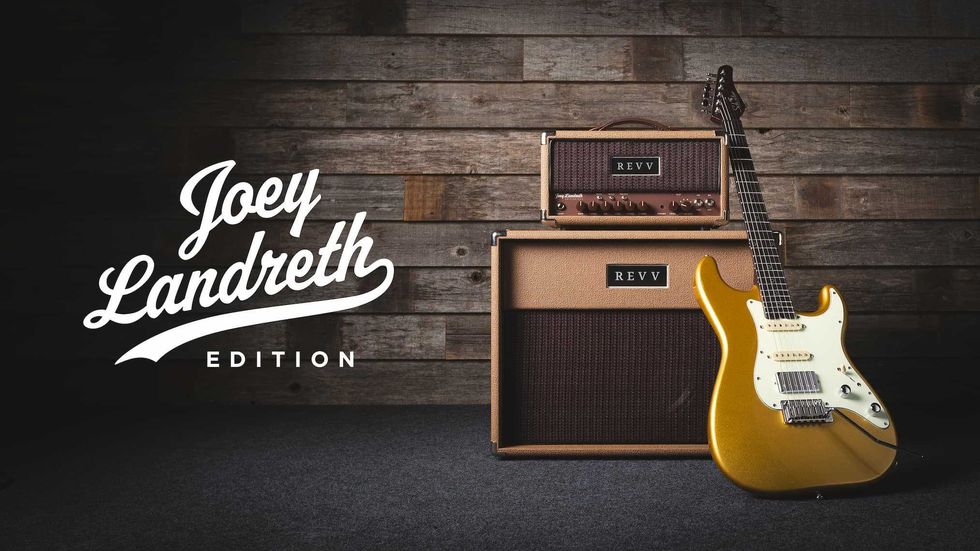
“These new D20s feel like a step towards the next generation of Revv. Getting to introduce these to the world all over again with 6 years of tone tweaks & workflow improvements is a dream come true & getting to work with Joey is always super fun. I really look forward to seeing what guitarists do with these.” - Dan Trudeau, President & Designer Revv Amplification Inc.
The D20 MK2 features:
- The award-winning D20 platform w/ new switching, reverb, & tonal updates 6 years in the making.
- All-tube design w/ 2x 12AX7 preamp + 2x 6V6 power tubes. Switchable from 20w to 4w operation.
- Gain, Treble, Middle, Bass, Volume, Reverb, & Level controls + Treble & Gain Boost switches.
- Perfect for clean & edge of breakup tones w/ an organic, touch-sensitive feel ideal for pedals.
- Pristine digital reverb, transparent buffered effects loop, MIDI control, & more.
- Two notes Torpedo-embedded reactive load & impulse response XLR out for direct performance & recording.
- Special Joey Landreth Edition D20JL features tone tweaks & exclusive aesthetics inspired by the D25JL.
- New standard tolex lunchbox design. 10” x 14.75” x 8.75” - 15.5lbs.
- Manufactured in Canada to rigorous quality standards w/ 2 year limited warranty & included 2-button footswitch.
The street price for Revv’s D20 MK2 is $1349US, & $1499 for the D20JL. Both can be ordered immediately through many fine dealers worldwide or directly at www.revvamplification.com.
Epiphone Launches Joe Bonamassa '59 Les Paul Custom
Epiphone is proud to continue its decades-long signature relationship with blues-rock legend Joe Bonamassa. Today, Epiphone has released an attainable version of Bonamassa’s pristine and rare, vintage 1959 Black Beauty Les Paul™ Custom, bringing this remarkable instrument—offering vintage tone, elegant craftsmanship, and the unmistakable spirit of Bonamassa in a guitar built to inspire—to a wider audience. The Epiphone Joe Bonamassa ’59 Les Paul Custom is a limited-edition model now available worldwide at authorized dealers, Gibson Garage locations, and on www.epiphone.com.
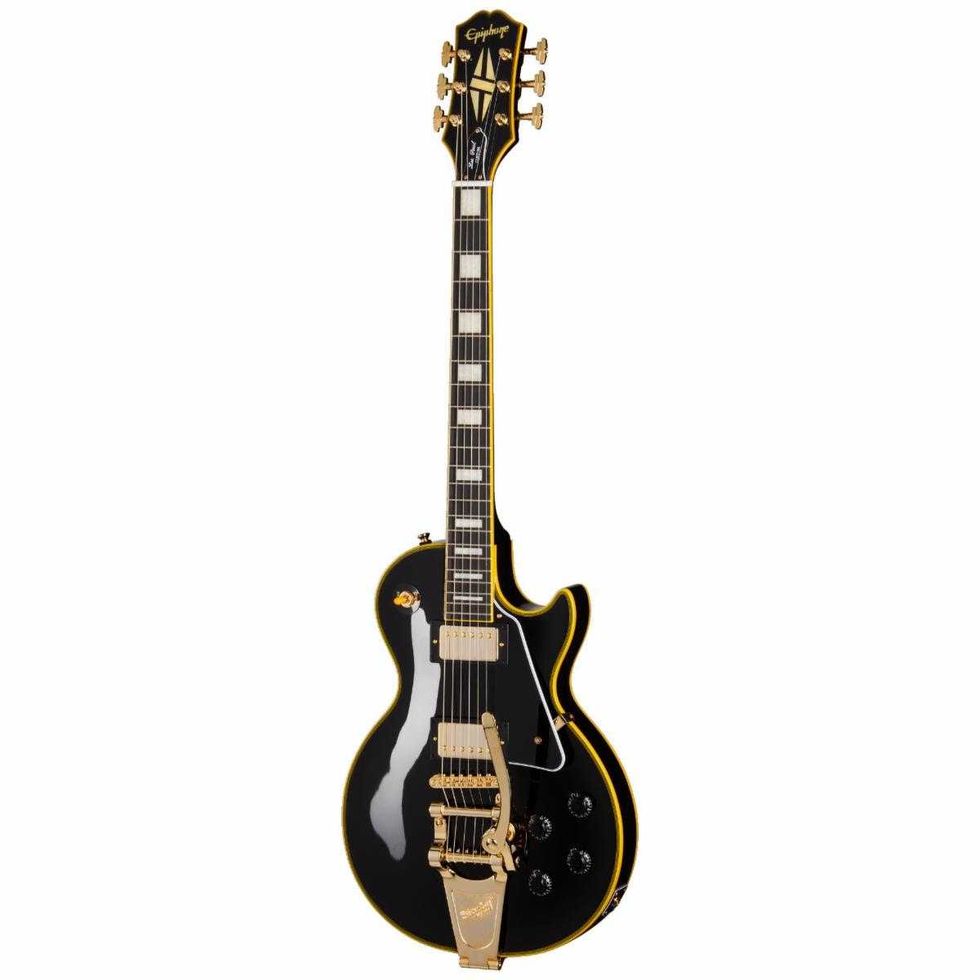
Joe Bonamassa is widely renowned for his guitar-playing prowess and as a world-class guitar collector. One prized gem in his collection is his 1959 Gibson Les Paul Custom. The original Les Paul Custom became known as the “Black Beauty,” and examples from the late 50s are highly sought after, but this particular guitar is quite unique. Joe’s guitar is a rare custom order with two pickups instead of the standard three-pickup configuration. Adding to its allure, it also sports Grover® Imperial™ tuners and a Bigsby® vibrato tailpiece.
Designed to be both faithful and accessible, the Epiphone Joe Bonamassa ’59 Les Paul Custom features an Antique Ebony finish over a solid mahogany body, accented by aged multi-ply binding on the top and back. The mahogany neck sports a 1959 Rounded Medium C profile and is topped with a bound ebony fretboard, complete with 22 medium jumbo frets and dressed up with pearloid block inlays. The multi-ply bound 60s Kalamazoo-style headstock features the Epiphone logo and the iconic Custom Split Diamond inlay in mother-of-pearl and is outfitted with a low-friction Graph Tech® nut for excellent tuning stability.
The Joe Bonamassa ’59 Les Paul Custom is powered by a pair of punchy-sounding Epiphone ProBucker™ Custom pickups, which are wired to individual volume and tone controls using high-quality CTS® potentiometers for outstanding tonal versatility and reliability. As is fitting for a Les Paul Custom, the hardware is gold, including a LockTone™ Tune-O-Matic™ bridge, the Grover tuners, and the Bigsby B70 vibrato tailpiece. The combination of these elements creates an instrument that is not only visually stunning but also remarkably versatile in its sound. The Epiphone Joe Bonamassa ’59 Les Paul Custom comes with a certificate of authenticity and a hardshell case with “Nerdville” graphics. This limited-edition Epiphone Joe Bonamassa ’59 Les Paul Custom is a tribute to a legendary guitarist and an iconic guitar. It represents both a lasting investment and excellence in musical instrument craftsmanship. This release will be available in a limited quantity of 1,000 exclusively through Epiphone, the Gibson Garage, and authorized Epiphone dealers. In addition, a limited run of 300, with an exclusive custom inlay on the fretboard, will be available via the Joe Bonamassa webstore.
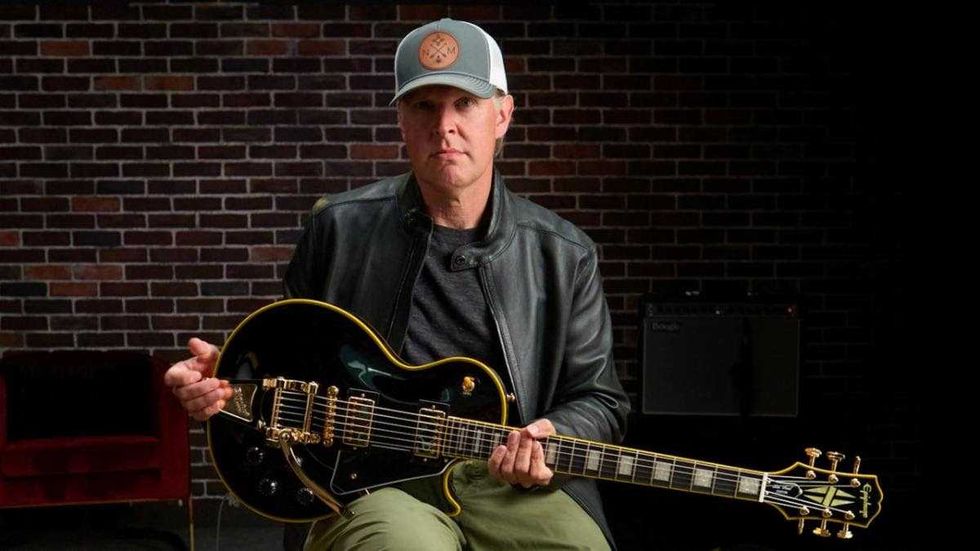
Blues-rock superstar Joe Bonamassa is one of the most celebrated performing musicians of today. As a 4X GRAMMY®-nominated artist and 15x Blues Music Award Nominee (4X winner), he recently notched his 29th No. 1 album on the Billboard Blues Chart with his latest studio release, Breakthrough, hailed as his most adventurous and genre-defying album to date. Live at the Hollywood Bowl With Orchestra became his 28th No. 1. Bonamassa has become a living legend with an astounding multi-genre catalog, releasing more than 50 albums, including studio and live recordings, as well as collaborative projects like Black Country Communion and Rock Candy Funk Party.
Recently, Bonamassa released Blues Summit 100 — a massive 32-track project featuring multiple artists paying tribute to B.B. King; listen HERE. Bonamassa returns to the road this fall and will continue through his spring 2026 tour, dates below and HERE.
Catch Joe Bonamassa on tour in the following cities:
U.S. FALL TOUR 2025
November 3 – Columbus, OH – Palace Theatre
November 5 – Toronto, ON – The Theatre at Great Canadian Toronto
November 7 – Detroit, MI – Fox Theatre
November 8 – Fort Wayne, IN – Embassy Theatre
November 10 – Rockford, IL – Coronado Theatre
November 11 – Kansas City, MO – The Midland Theatre
November 14 – Durant, OK – Choctaw Grand Theater
November 15 – Houston, TX – Hobby Center
November 18 – Corpus Christi, TX – American Bank Center Selena Auditorium
November 19 – Abilene, TX – Abilene Auditorium
November 21 – Midland, TX – Wagner Noël Performing Arts Center
November 22 – Austin, TX – ACL Live at The Moody Theater
November 23 – Shreveport, LA – Shreveport Municipal Auditorium
November 25 – Fayetteville, AR – Walton Arts Center
November 26 – St. Louis, MO – Stifel Theatre
November 29 – New Orleans, LA – Saenger Theatre
November 30 – Montgomery, AL – Montgomery Performing Arts Centre
December 2 – Savannah, GA – Johnny Mercer Theatre
December 3 – Sarasota, FL – Van Wezel Performing Arts Hall
December 5 – Estero, FL – Hertz Arena
December 6 – Hollywood, FL – Hard Rock Live
U.S. SPRING TOUR 2026
February 21 – South Bend, IN – The Morris Performing Arts Center
February 23 – Cedar Rapids, IA – Paramount Theatre
February 25 – Madison, WI – Overture Center for the Arts
February 27 – Peoria, IL – Prairie Home Alliance Theater
February 28 – Cincinnati, OH – Taft Theatre
March 2 – Wilkes-Barre, PA – F.M. Kirby Center for the Performing Arts
March 4 – Springfield, MA – Springfield Symphony Hall
March 6 – Westbury, NY – Flagstar at Westbury Music Fair
March 7 – Pittsburgh, PA – Benedum Center
March 8 – Red Bank, NJ – Count Basie Center for the Arts
March 10 – Reading, PA – Santander Performing Arts Center
March 11 – Virginia Beach, VA – Sandler Center
March 13 – Durham, NC – DPAC
March 14 – Greenville, SC – Bon Secours Wellness Arena
March 17 – Knoxville, TN – Knoxville Civic Auditorium
March 19 – Huntsville, AL – VBC Mark C. Smith Concert Hall
March 20 – Macon, GA – Atrium Health Amphitheater
March 21 – Clearwater, FL – The BayCare Sound
March 25-29, 2026 – Miami, FL – Keeping The Blues Alive at Sea XI +
April 10-12, 2026 - Miramar Beach, FL - Sound Wave Beach Weekend +
+Sold Out
EU TOUR 2026
April 22 - Hamburg, DE - Barclays Arena
April 24 - Rotterdam, NL - Rotterdam Rtm Stage
April 25 - Paris, FR - La Seine Musicale
April 27 - Esch-sur-Alzette, LU - Luxembourg Rockhal
April 29 - Mannheim, DE - SAP Arena
May 1 - Chemnitz, DE - Stadthalle Chemnitz
May 2 - Nürnberg, DE - Psd Bank Nürnberg Arena
May 3 - Zürich, CH - Hallenstadion
May 6 - London, UK - Royal Albert Hall
May 7 - London, UK - Royal Albert Hall
October 21 - Helsinki, FL - Veikkaus Arena
October 23 - Stockholm, SE - Stockholm Avicii Arena
October 24 - Oslo, NO - Oslo Spektrum
October 25 - Gothenburg, SE - Göteborg Partille Arena
October 27 - Copenhagen, DK - K.B. Hallen København
October 29 - Rostock, DE - Stadthalle Rostock
October 30 - Berlin, DE - Uber Arena
October 31 - Dortmund, DE - Westfalenhalle
November 4 - Milan, IT - Unipol Forum
November 6 - Toulouse, FR - Zénith Toulouse Métropole
November 7 - Barcelona, ES - Barcelona Sant Jordi Club
Vernon Reid Signature Guitar Giveaway From Reverend Guitars!

Win the stunning Reverend Vernon Reid Signature “Totem” Guitar—a bold fusion of art, tone, and attitude designed with Living Colour’s trailblazing guitarist. Featuring custom Jung- and Basquiat-inspired graphics, Railhammer pickups, a Korina body, and a Floyd Rose 1000 Pro tremolo, this instrument is built for players who demand expression and power in equal measure. Enter now for your chance to own this limited masterpiece—giveaway ends November 9!
Vernon Reid Signature Guitar Giveaway From Reverend Guitars
Vernon Reid Signature Guitar
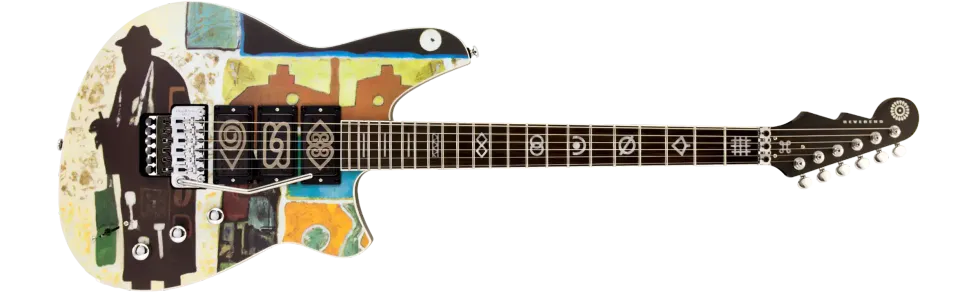
From the vivid imagination of Vernon Reid comes the Totem Series of Reverend Vernon Reid guitars. A sleek body features graphics inspired by Carl Jung’s Collective Unconscious Theory, Joseph Campbell’s The Hero’s Journey, and artists Jean-Michel Basquiat and Romare Beardon. West African Adinkra symbols adorn the pickups and headstock, while American Hobo symbols grace the fretboard. Africana and Americana symbolism meld with profound graphics, conjuring vivid images that speak to humankind’s perilous, yet necessary journeys.
While visually stunning, these instruments are also refined tools of the trade. The recipe of Korina, ebony, and Railhammer Pickups, coupled with the sheer metallic mass of the Floyd Rose, serves up a tone best described as punchy! Harmonics pop, single notes sing, and chords ring with tasty overtones – delivering that knockout punch whether you’re playing clean funk or heavy rock. Now’s your chance to own a genuinely collectible art piece that sounds and plays as amazing as it looks!
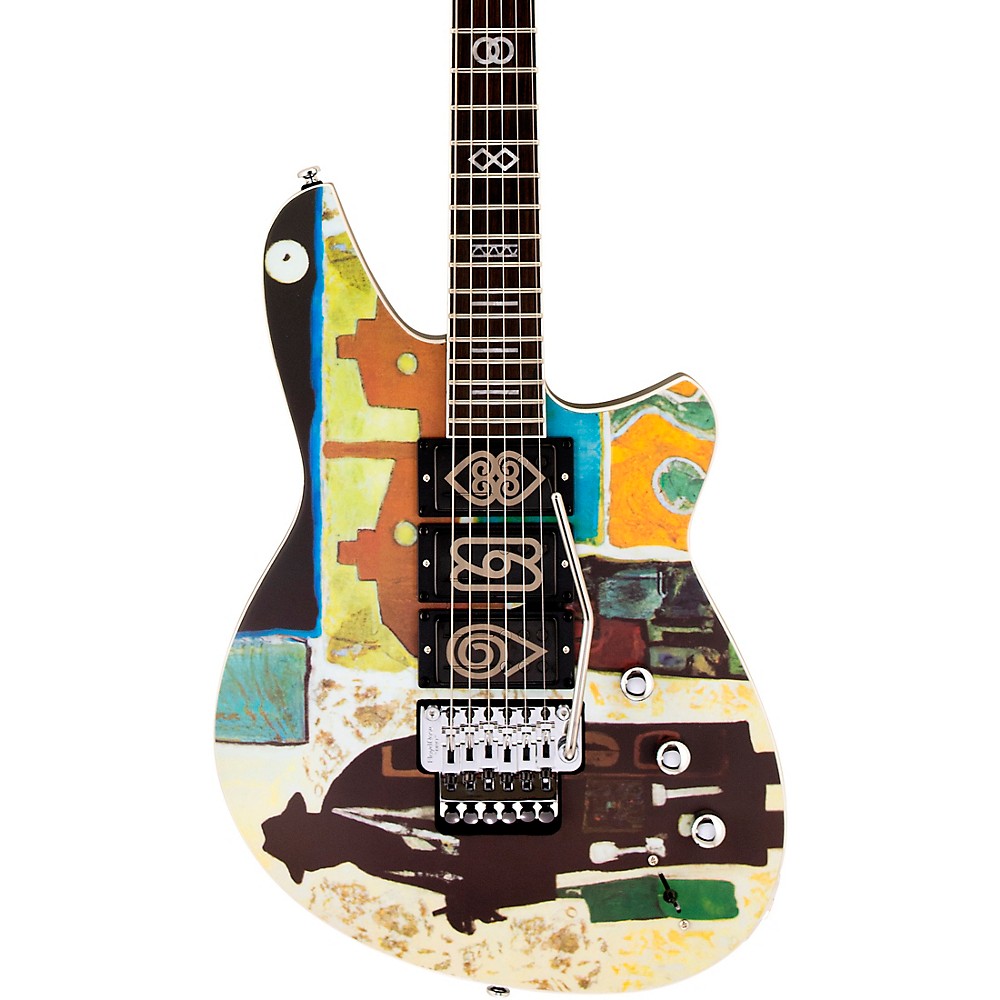
Reverend Vernon Reid Totem Electric Guitar Mystery Tramp
Pages
