
Music is the universal language
“Glory to God in the highest heaven, and on earth peace to those on whom his favor rests.” - Luke 2:14
Norse Guitar Feeds
Martin Guitar Reissues the 00DB Jeff Tweedy and Introduces the 000 Jr E Jeff Tweedy
C. F. Martin & Co.® is proud to announce the return of a fan favorite and the launch of an exciting new model: the 00DB Jeff Tweedy and the all-new 000 Jr E Jeff Tweedy. Both signature guitars were designed in collaboration with GRAMMY® Award-winning artist, songwriter, and Wilco frontman Jeff Tweedy, whose influence as a songwriter has inspired generations of musicians.

The 00DB Jeff Tweedy, first introduced in 2012, quickly became a favorite among players for its warm, balanced voice and its pioneering use of FSC®-certified tonewoods. Today, the mahogany-bodied model returns with all the features that made it iconic: a deeper 00 body for added resonance, scalloped European spruce X-bracing, a long 25.4" scale for clarity and punch, and a striking custom Tweedy Burst finish. Updates include a certified ebony fingerboard and bridge, underscoring Martin’s and Jeff’s shared commitment to sustainability.
“The thing I love about my guitar, the deep-body element of it, is that it has a warmth for a smaller body guitar,” Jeff explains. “It’s somewhere between a Dreadnought and an 0-style guitar.”
Joining the Martin lineup for the first time is the 000 Jr E Jeff Tweedy, a signature model designed to be more compact and accessible while capturing the spirit of his 00DB. Crafted from FSC®-certified sapele with the custom satin Tweedy Burst finish, it features a 000 Junior body with a full 24.9" scale length, Martin E1 electronics with a built-in tuner, and a Performing Artist neck for easy playability.
“The idea that we could do this again, and then also offer a guitar that may be a little bit more affordable to people starting out, and maybe a little smaller for smaller hands starting out—that's a thrill to me,” says Jeff.
Both models trace their inspiration back to the vintage Martin 0-18 Jeff purchased in the late 1990s, the guitar he used to write the celebrated Mermaid Avenue album with Billy Bragg, setting Woody Guthrie’s unheard lyrics to music. That instrument, he says, “became basically part of my writing voice… it’s the main acoustic I’ve had my whole life.”
For Jeff, guitars have always been tools for expression and creativity—not status symbols. “Well-made guitars, like the Martin guitars that you make, inspire creativity because they don’t present an obstacle to creativity,” he says. “Someone buys a guitar with my name on it and takes it home—I hope it becomes a part of their daily habit of making some music.”
The 00DB Jeff Tweedy and 000 Jr E Jeff Tweedy are now available through authorized Martin dealers worldwide and martinguitar.com.
These Fender Japan x Godzilla guitars might be the coolest we’ve seen this year – and possibly ever

Fender Japan has unveiled three Godzilla-themed Stratocaster guitars, and one of them even roars with the push of a button.
The lineup has been launched in honour of Godzilla’s 70th anniversary, and consists of three models: a Limited Edition Masterbuilt Godzilla Stratocaster, crafted by Fender Custom Shop Master Builder Andy Hicks (with only units five available), plus two made-in-Japan models – the Godzilla Stratocaster Blue and Godzilla Stratocaster Black.
- READ MORE: Harness the raw tone of ‘50s tweed amps and the mid-’60s cleans with Fender’s new Super 62 combo
These guitars are seriously cool, with the Limited Edition model offering a unique button that plays out Godzilla’s famous roar, marking the first time a button like this has ever been incorporated into a Fender guitar. Hicks designed the model in collaboration with illustrator Tom Neely, and it was unveiled at a special event at Fender’s flagship Tokyo store.
Speaking to Guitar World, Neely explains of its design: “For the front of the guitar, we featured a black-and-white Godzilla with a blue blast to complement the neck inlay, capturing the spirit of the Heisei-era films. For the back, to celebrate Godzilla’s 70th anniversary, we created a montage of seven Godzillas – from the 1954 original to Godzilla Minus One – and added neon paint that glows under black light for a dynamic effect.”
Of course, the most important element of this guitar is its visual design, so its other features are fairly simple, including a single humbucker that is said to be a tweaked version of Hicks’ favoured Sonic Pickups Cult Leader, and a single volume control.
As for the made-in-Japan models, though they are both slightly less pricey, they are not without their flashy appointments. Godzilla is outlined on the pickguard on these models, and players can press the Tone 2 knob to engage a brand new and patent-pending circuit known as G.L.O, or Gain-Linked Optics. This magical onboard distortion circuit illuminates Godzilla’s dorsal fin, and its brightness changes in response to gain levels.
The Blue and Black models are exclusive to Japan, and are each fitted with a Custom Godzilla humbucker that promises a unique, heavy tone. They’re priced at ¥495,000 each (approx $3,250), while the Masterbuilt Strat is a whopping ¥5,500,000 ($36,000). But that’s not all, as a Godzilla-themed distortion pedal will also be made available exclusively in Japan.
Find out more via Fender Japan.
The post These Fender Japan x Godzilla guitars might be the coolest we’ve seen this year – and possibly ever appeared first on Guitar.com | All Things Guitar.
“I don’t subscribe to the idea that all vintage instruments are great”: Chris Buck on why cheap guitars can be just as effective as expensive ones

Does the fact a guitar is old and worn-in make it better? It’s a debate which continues to rage in the guitar community, particularly among lovers of vintage instruments.
While there are vintage guitar aficionados aplenty, many high-profile players tout the benefits of newer – and importantly, cheaper – instruments, and how they can often beat their vintage counterparts.
Take former Steely Dan guitarist Jeff “Skunk” Baxter, for example, who recently told the story of how he opted for a $140 Squier Telecaster over its 1958 vintage counterpart. “I compared the two, and the $140 Squier Telecaster, to me, sounded better,” he said.
Now, guitarist Chris Buck has added his voice to the same side of the debate, telling Guitar World in a new interview that older doesn’t always mean better.
“I don’t subscribe to the idea that all vintage instruments are great,” he explains, “because I’ve definitely played some dogs. Some of my favourite guitars were made after 2020, and some were made in the ‘60s.
“There’s a synergy between you and a great instrument. That could be a $300 Squier or a $5,000 Gibson. It doesn’t matter. If it speaks to you, it’s the one.”
Of course, Chris Buck isn’t saying cheaper guitars always outcompete their vintage counterparts, and has a lot of love for some of the many vintage six-strings he’s had across his lap in his time.
They include the late Bernie Marsden’s ‘59 Gibson Les Paul Standard Burst – “The Beast” – a ‘62 Strat which forms part of his own personal collection, and a ‘62 Gibson ES-335.
“The moment I strummed it, I thought, ‘This is alive,’” he explains, recounting the first time he played the ES-335.
“The guitar’s a mess, but I fell in love with it. It’s got original PAFs and original electronics. It’s been resprayed. The headstock has had a catastrophic break – but it’s just such an amazing instrument.”
The post “I don’t subscribe to the idea that all vintage instruments are great”: Chris Buck on why cheap guitars can be just as effective as expensive ones appeared first on Guitar.com | All Things Guitar.
Graham Nash dismisses talk that he might retire from music: “As long as my voice lasts, and so far it’s brilliant, I will be doing this into my 90s”

Graham Nash doesn’t plan to retire from music anytime soon, if ever, as he confirms that he’ll continue performing music for as long as he possibly can.
Nash, now in his eighties, is out on the road this October for his More Evenings of Songs and Stories tour across the UK and Europe. The shows do quite literally what is said on the tin – provide an evening of both music and the stories behind the songs that make up Nash’s long and successful career from across the decades.
In a new interview, Nash says he’s not planning to step down from the stage, just as long as he can keep attendees at his gigs happy. He tells Devon Live, “I just want the audience to be completely satisfied. The truth is, as long as my voice lasts, and so far it’s brilliant, I will be doing this into my 90s. There are a lot of people that want to hear it.”
Elsewhere in the interview, Nash also confirms that he’s recently been working his way through forgotten material, including unreleased Crosby, Stills, Nash & Young songs: “I’ve been involved in a lot of the stuff that me and David, Stephen, and Neil made that has never been heard before.”
According to the outlet, he’s been working on this material with Joel Bernstein, a guitar tech who’s worked for Neil Young and Prince. Nash adds, “He and I are putting together 33 songs of Crosby, Stills & Nash that have never been heard. I’ll maybe do them on the tour between those six or seven songs I know people want to hear.”
Tickets are still available for Graham Nash’s Songs and Stories tour – find out more via his official website.
The post Graham Nash dismisses talk that he might retire from music: “As long as my voice lasts, and so far it’s brilliant, I will be doing this into my 90s” appeared first on Guitar.com | All Things Guitar.
“It happens. Especially to those of us horrible drivers”: Gene Simmons recovering at home after Malibu car crash

Kiss’s Gene Simmons is reportedly recovering at home after being involved in a car crash in Malibu, California.
According to NBC 4 Los Angeles, the incident took place on Tuesday (7 October) around 1PM local time. The bassist has apparently told authorities that he had passed out while driving. Simmons’ wife Shannon Tweed added that the car passed through several lanes of traffic before crashing into a parked car.
Per reports, Simmons was briefly hospitalised, before being sent home to finish his recovery.
Following the accident, Simmons took to social media to reassure fans: “Thanks, everybody, for the kind wishes. I’m completely fine. I had a slight fender bender. It happens. Especially to those of us [who are] horrible drivers. And that’s me. All is well.”
Thanks, everybody, for the kind wishes. I’m completely fine. I had a slight fender bender. It happens. Especially to those of us were horrible drivers. And that’s me. All is well.
— Gene Simmons (@genesimmons) October 8, 2025
The 76 year old has had numerous health issues in recent years, including when he suffered dehydration during a Kiss show in Manaus, Brazil in 2023, causing the band to have to pause the show.
Simmons has also reportedly been suffering with a heart condition called atrial fibrillation (AFib) since the 2000s.
“I had never heard of the term AFib, but about 10 years ago, we were on tour someplace, and [on] stage the temperature goes up about a hundred, with all the stage lights and my heart [starts pounding really quickly],” he told The Doctors in a 2016 interview [via Blabbermouth].
“I started to get dizzy and perspire and [get] short of breath. So I called a doctor and he showed up and said, ‘Okay, here’s what’s going on. There’s something called AFib,’ and he went down the list. And it was a lot to take in.”
Kiss played their final show at Madison Square Garden in 2023, and announced the band would live on as digital avatars, with Las Vegas shows due to start in 2027.
The post “It happens. Especially to those of us horrible drivers”: Gene Simmons recovering at home after Malibu car crash appeared first on Guitar.com | All Things Guitar.
How to get better Google Search results: add Guitar.com as a Preferred Source on Google

Have you been browsing your search results of late and wishing they could be a little bit more, well, guitar-y? Well, thanks to a new feature introduced by Google, you can now ensure that Google knows that Guitar.com is your top source for all the latest guitar news, reviews and features.
Available currently only to US- and India-based users, the new Preferred Sources feature lets you tailor your top news stories on Google based on your favourite media outlets – and you can do it in just a few clicks.
By adding Guitar.com to your Preferred Sources, you’ll be kept up to date with all the most important news from the guitar world, as well as our trusted expert reviews, in-depth artist interviews, and handy buyer’s guides. You won’t miss a thing, we’ll have you covered.
If you’re in the US or India, adding Guitar.com to your Preferred Sources is as simple as just clicking on this link right here, and ticking the box next to ‘Guitar.com’ – easy!
 Image: Guitar.com
Alternatively, you can also do this directly from the Google homepage by following these simple steps:
- Visit the Google homepage and search for any news story
- Hit the icon next to ‘Top Stories’ that looks like a box with a star in it
- Type ‘Guitar.com’ in the search box that then appears
- When you see Guitar.com show up, check the box to the right
- Hit the ‘reload results’ button and enjoy more Guitar.com in your searching!
 Image: Guitar.com
You can add as many other sources as you like, and can remove them at any time via the same method – though why you’d ever want less of Guitar.com in your life we simply cannot imagine.
And rest assured that you won’t only see Guitar.com news in your search results from then on – you’ll still get results from a variety of sources, this is just your way of telling Google that you like what we do and you want to see more of it when it’s appropriate.
As Google itself said in a statement: “When you select your preferred sources, you’ll start to see more of their articles prominently displayed within Top Stories, when those sources have published fresh and relevant content for your search.”
 Image: Guitar.com
In practice, that means Guitar.com will appear more frequently in the “Top stories” and “From your sources” sections on Google – and what a lovely idea that is.
If you’re not in the US or India, don’t fret – Google is planning to roll this out to other countries in the coming months, so keep an eye out for it. In the meantime you can ensure more Guitar.com in your news feed by following us on Google News – simply click this link and then hit the ‘Follow’ button on the top right.
The post How to get better Google Search results: add Guitar.com as a Preferred Source on Google appeared first on Guitar.com | All Things Guitar.
“You ain’t gonna hear nothing”: Buddy Guy admits that when he first saw Jimi Hendrix play live he thought he was “too loud” – but the Brits were next level

While the British Invasion saw the arrival of The Beatles, The Rolling Stones and The Kinks to American shores, it also forced the US to crank up the volume – and Blues legend Buddy Guy didn’t take too kindly to it.
In the latest issue of Guitar World, Guy notes that he even considered Jimi Hendrix too loud prior to the British takeover. “You’ll laugh, but I thought he used to play too loud…” he jokes. “But when the British guys started playing, they had stacks of Marshalls!”
Guy goes on to admit he used to leave early Hendrix gigs with sore ears, but the Brits were next level. The spike in volume was a shock for the old-school blues star. “When I first came up, Muddy Waters and those guys had two little speakers at each corner of the blues club, and it was a clean sound,” he recalls.
After forming a bond with Hendrix, Guy would even joke about the loutish punch of noise the Brits had to offer. “After I got to know Jimi, I’d go see him and say, ‘Before you go in there, you ain’t gonna hear nothing,’” he says. “That type of sound just took over.”
“That clean sound went away because, with the amplifiers, it was a dogfight,” he continues. “It was just a rat race. And then all the special effects came in, and Jimi, I think he was one of the greatest that ever took advantage of the special effects, because a lot of people used them after him.”
However, regardless of how loud the British guitarists may have sounded, Guy notes that they could never quite replicate the intricacy of his own introspective, more quiet tone. “All the super British guitar players, like Jeff Beck and Jimmy Page… they all looked at me and said ‘Man, I didn’t know that kind of guitar could play the blues,’” he remembers.
“The British guys all say I had something,” he adds. “People used to look at me and ask what [guitar] I had. I’d say ‘I didn’t make it, Leo Fender made it. It’s just a tone.’ That tone is so clear, and I never really paid attention to it. I just turn on the amplifier and play my guitar.”
The post “You ain’t gonna hear nothing”: Buddy Guy admits that when he first saw Jimi Hendrix play live he thought he was “too loud” – but the Brits were next level appeared first on Guitar.com | All Things Guitar.
Mystifying riffs, not knowing your own songs and pining for Fiesta Red Strats: inside the chaotic brilliance of Militarie Gun

If you ever find yourself in a room with Militarie Gun, brace yourself for impact. Weaned on the blood, sweat and tears of the American punk scene, the hardcore ethos of visceral, in-your-face catharsis is rooted in the band’s genetic code. Throughout every vulnerable acoustic number, synth-heavy anthem and soaring alt-rock riff, the magic of Militarie Gun lies in that heart-on-sleeve hardcore authenticity.
Even today, the raucous quintet are gearing up to play to 50 people in a venue the size of a living room – the prime setting for a sweaty punk show. Just days ago, they also performed in the tiny Hazheart storefront in Los Angeles. If size matters, the smaller the better; a sweaty, intimate venue is where Militarie Gun thrive in, utterly befitting of their face-kicking, gut-wrenching flavour of alt-rock. “The Hazheart show was crazy,” guitarist Kevin Kiley grins. “There were some technical difficulties, because there was nowhere to stand but on top of my pedalboard.”
The slew of tiny shows are the perfect way to amp up excitement for the band’s sophomore release, God Save The Gun. And the response so far has been electric – Kick’s hilarious wails of “If I kicked you in the face, I’m sorry…” have been lapped up, while the rabble-rousing B A D I D E A has quickly become a new favourite, earning itself two spots on the setlist to close off on a chaotic high. The record amplifies Militarie Gun’s visceral alt-rock bite, both sonically and lyrically; not only does it see frontman Ian Shelton baring his soul, opening with a pained admission that “honestly, things have not been great”, but the instrumental carnage is second-to-none.
Heart Ripper
So how does one piece together a riff that rips your heart out, all before unleashing a string of chords that make your blood pressure spike? Well, according to long-standing guitarist William Acuña, ignorance is bliss. “I don’t know how to play guitar,” he shrugs, nonchalant as ever.
We pause, waiting for the punchline, but Acuña doubles down. “I mean, I know scales and stuff, and I can figure out what sounds good,” he continues. “But I don’t know any songs… I probably don’t even know every Militarie Gun song.”
In a way, the approach yet again falls in line with the hardcore, DIY roots of the project. Acuña’s self-taught approach is homegrown, resulting in a style that relies on pure emotion, instinct and a sound that is uniquely his own. “There’s all types of guitarists or songwriters that have talked about not wanting to ‘learn music’ because they don’t want to fuck up what they’ve got going for them,” he explains. “It’s the same with piano. I can play piano, but I also don’t know a single song.”
As his guitar comrade Kiley backs his claims up (“I’ve heard it, his piano sounds great!”), the pair point to one of the finest drummers of all time: The Who’s Keith Moon. “He was self-taught but he sounded incredible,” Kiley notes. “Most good drummers are people who approach a drum set as a kid and they just had a natural rhythm. And that can often be the same with guitarists.”
Of course, musical literacy isn’t a necessity to carve out a solid sound. “A good riff is catchy, it gets stuck in your head, and it works with the vocal melody,” Acuña says. “And I love a riff with a bend in it… but, yeah, we pretty much nailed all the riffs on this record.”
“What makes a good riff is so mystifying,” Kiley chimes in. “It doesn’t really matter how ‘good’ you are at guitar. It just comes to you, you can’t really plan it out…”
 Image: Nolan Knight
Extra Levels
Having joined just last year, Kiley’s involvement in the band has added an extra level of guitar literacy to the project; “I feel like I am a pretty fluent guitar player,” he laughs. However, Kiley’s initial interest in Militarie Gun was rooted in the band’s overly ambitious, near-impossible riffs. “Before being in the band, I heard the Ain’t No Flowers lead riff and loved how stupid it sounded – and I mean that in the very best way,” he says. “It had that wild feeling that a lot of 80s punk stuff had – you could tell it was kids just getting all their feelings out there, learning as they went along.”
It’s a sentiment that doesn’t insult Acuña, who has served as the band’s rhythm guitarist from day one. “The way we play Militarie Gun songs can sound pretty fucked up because some tracks are written by someone who doesn’t play guitar all that great,” he admits. “I love when Ian writes a riff, because it’s written to convey an emotion, then we have to work out how to play it.”
“With Ain’t No Flowers, I used to stretch my fingers across the neck because there are the near-impossible notes that Ian wrote,” he explains. “Then Kevin came along, and he plays it completely differently because he knows an easier way to do it.”
Keep It Simple
While Militarie Gun may be overly ambitious with some of their riffs, their rig set up is pretty minimal. “A Strat, a RAT and a Twin Reverb,” Acuña lists. “That’s it.”
Even when digging into dream gear, both Acuña and Kiley are reserved with their choices. Militarie Gun were named one of Fender’s Next Class bands of 2024, and they’re more than happy to keep waving the flag for the humble Strat. “I just enjoy a Strat, because it’s light and easy to play,” Acuña shrugs. “For me, it’s always about how it feels to play, how the neck feels, because the sound all goes through a RAT distortion pedal anyway.”
There’s also the worry about durability when you’re known to have particularly chaotic shows. “A Strat is also very sturdy, so you don’t have to worry about the neck snapping or the headstock cracking,” Acuña notes.
“I also prefer a Strat – I’ve played a Strat my whole life,” Kiley says. “In the studio I’ll use a Gibson for leads; I have this Gibson with a certain humbucker on it, and it sounds huge. But, when it comes to a live show, nothing stays in tune as well as my Strat. It’s just reliable.”
With the addition of Kiley’s “fluent” guitar knowledge and a thirst for experimentation, God Save The Gun pushes Militarie Gun’s sound into an entirely new realm. Cuts like Maybe I’ll Burn My Life Down serves up a bold new way of capturing a gritty electric tone, utilising blown-out acoustic in lieu of standard electric guitar. “We played so much acoustic with blown out distortion, so you’d think it was an electric,” he explains. “That track is entirely acoustic guitar.”
“The last song, God Save The Gun, has a lot of blown out acoustic but we did put some electric in there,” he adds. “But originally, the demo was just distorted as fuck acoustic with a tremolo over it.”
 Image: Nolan Knight
Mello Yellow
Sonically, the record is bursting with unique textures. “With God Owes Me Money, the demo was all synths,” Kiley explains. “I wondered if it would become a guitar lead, but nothing sounded as good as the synths on there. It felt right. We don’t shy away from anything, because we never want to put ourselves in a box. If the song would be bigger and benefit from synths, then we do it. If it’s keys, strings… even Mellotron! We used Mellotron all over the record.”
Every sonic decision serves as a way of hammering home Shelton’s candid lyrical journey. “We always let Shelton tell his story,” Kiley says. “The entire tracklist is very intentional; it goes on a journey and it gets pretty deep, dark and poignant. A few people contacted Ian asking if he was okay after listening through the record, actually. But there’s an arc to it…”
Emotionally, I Won’t Murder Your Friend comes in as one of the most powerful of the bunch. It features a sample of David Choe mourning the loss of Anthony Bourdain, who committed suicide in 2018. “We were really throwing everything at the end of that song,” Kiley explains. “Lyrically, I think it is the heaviest on the record.”
 Image: Nolan Knight
Slap Back
After an onslaught of introspection, the pivotal point of God Save The Gun comes in the form of an interlude featuring Isaac Brock of Modest Mouse. “Isaac’s Song is one of my favourite moments on the record,” Kiley explains. “Ian keeps describing the track as a moment where Isaac kind of ‘picks you up, dusts you off and tells you it’s going to be okay’. He just picks you up, slaps you around.”
Acuña quickly pipes up, lightening the mood: “He actually did slap me, once. We were getting really drunk at his studio and I was falling asleep, and he just slapped me to wake me up. He felt bad about it, so he had me slap him, but I slapped him too hard for his liking, so he slapped me again, and then I slapped him back. And then we just started dancing. It’s an honour to be slapped by your musical idol.”
While Kiley has only joined the ranks recently, his history runs pretty parallel to Militarie Gun; his previous band, Lurk, even supported Militarie Gun on their first ever tour. “The first time I met these guys, my band was playing with them in smaller venues, like downstairs in Subterranean in Chicago,” Kiley reminisces. “It was so small all the gear had to go in the kitchen.”
Since joining, he’s been thrown in the deep end. Militarie Gun has become somewhat of a behemoth as of late, falling in line with the recent spike in popularity that Californian punk and alt-rock has mustered. “My first show with the band was at the Daytona Speedway for Welcome To Rockville festival last year,” he explains. “I’ve played in bands my whole life, and that was the biggest show I’ve ever played to date. It was kind of crazy to go from basements to that.”
So, what do the pair of guitarists want from God Save The Gun? “I want a Fiesta Red Strat with a Fiesta Red headstock,” Acuña states, deadly serious. “That’s the Will Acuña Custom Fender, when they’re ready.”
They also hope that Killing Joke like the sample they used on the “apologetic stage-diving” tune Kick. “They approved it, but they didn’t say a word about it,” Kiley admits. “But I guess, if they don’t, it’s their own fault for saying yes…”
The post Mystifying riffs, not knowing your own songs and pining for Fiesta Red Strats: inside the chaotic brilliance of Militarie Gun appeared first on Guitar.com | All Things Guitar.
Stompboxtober 2025: Radial Engineering

Today’s Stompboxtober prize is the powerhouse Radial Twin‑City amp switcher — route your guitar to two amps (or toggle between them) cleanly, noiselessly, and in phase. Enter now for your shot to win today’s gear, then keep coming back all month for new pedal giveaways!
Stompboxtober 2025 - Win Pedals All Month Long!
Twin-CityActive Amp Switcher
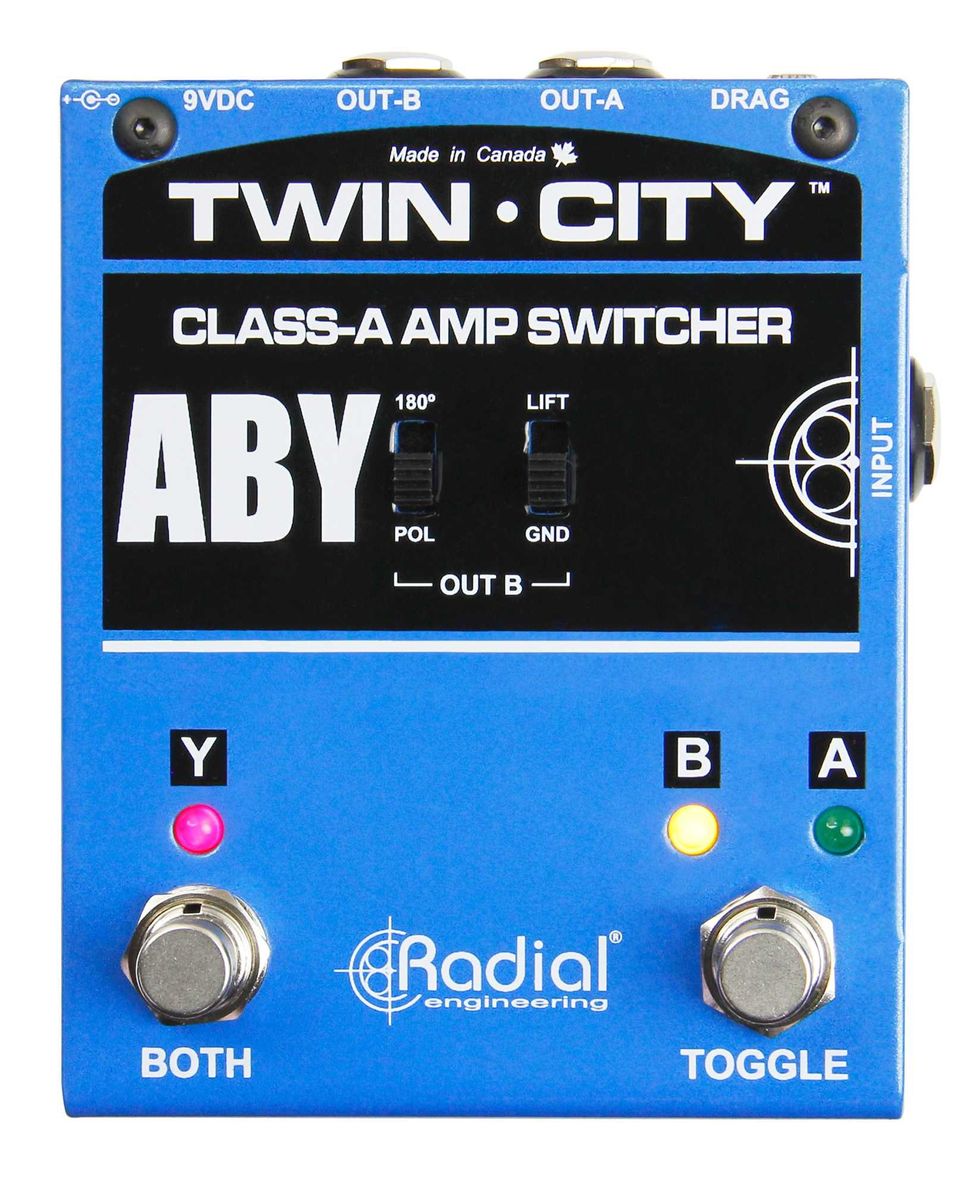
The Twin-City is an active amp selector that lets you connect any two guitar amps and switch between them or drive them both simultaneously without noise, loss of gain, or any degradation to your natural guitar tone.

Radial Twin-City ABY Amp Switcher Pedal
Joe Bonamassa’s legendary 1959 “Black Beauty” Les Paul Custom is now available as a sub-$1,000 Epiphone model

Joe Bonamassa’s gear collection is quite something; it even warrants two museum locations – Nerdville East and West – in Nashville and Los Angeles, respectively.
One highlight of his collection – of which there are obviously many – is his 1959 Gibson “Black Beauty” Les Paul Custom. As the story goes, the guitar is one of only a “handful” made – “maybe 20 or less in existence,” Bonamassa says.
“My one came from a little old lady in Pennsylvania,” he says. “The family didn’t realise it was a very special, rare variant.”
JoBo’s “Black Beauty” Les Paul Custom was rare at the time of production for its two-humbucker configuration and Bigsby vibrato, and now it’s been recreated as an Epiphone signature model.
Designed to be “both faithful and accessible”, the Epiphone Joe Bonamassa ‘59 Les Paul Custom sports a solid mahogany body with an Antique Ebony finish, accented by aged multi-ply binding on the top and back.
Its mahogany neck features a 1959 Rounded Medium C profile, and is topped with a bound 22-fret ebony fingerboard and pearloid block inlays.
Elsewhere, the guitar features a multi-ply bound ‘60s Kalamazoo-style headstock with the Epiphone logo and the classic Custom Split Diamond inlay in mother-of-pearl, while there’s also a low-friction Graph Tech nut for tuning stability.
True to the Black Beauty, the Epiphone recreation also features a Bigsby tailpiece. The run of 1959 Gibson Les Paul Customs featured some with Bigsbys and some with Stop Bar tailpieces.
“Bigsbys are great because they have their own unique sound. They’re not like Floyd Roses or Fender trems,” Bonamassa says. “They’re a little brighter; it’s a little more hi-fi, but it will rock.”
The guitar also boasts Grover Imperial tuners – the same that decorate JoBo’s original Black Beauty Les Paul. “The Grover Imperial tuners came stock on my guitar, so they come stock on yours as well,” he explains. “So it gives it a fancier look.”
 Credit: Epiphone
In terms of electronics, the Joe Bonamassa ‘59 Les Paul Custom features a pair of Epiphone ProBucker Custom pickups, wired to individual volume and tone controls using high-quality CTS potentiometers for “outstanding tonal versatility and reliability”.
Completing the faithful look is a run of gold hardware, including the guitar’s Tune-O-Matic bridge, Grover tuners and Bigsby B70 tailpiece.
Each Joe Bonamassa ‘59 Les Paul Custom comes with both a certificate of authenticity and a hardshell case with “Nerdville” graphics.
The guitar is limited in an initial run to 1,000 units – available via Epiphone, the Gibson Garage and authorised Epiphone dealers. A run of 300 with an exclusive custom fretboard inlay will also be available via Joe Bonamassa’s webstore.
The Joe Bonamassa ‘59 Les Paul Custom is priced at £949 / $999. For more info, head to Epiphone.
The post Joe Bonamassa’s legendary 1959 “Black Beauty” Les Paul Custom is now available as a sub-$1,000 Epiphone model appeared first on Guitar.com | All Things Guitar.
CIOKS Unveils Retro Series: A Nostalgic Nod to the 80s with Cutting-Edge Power Solutions
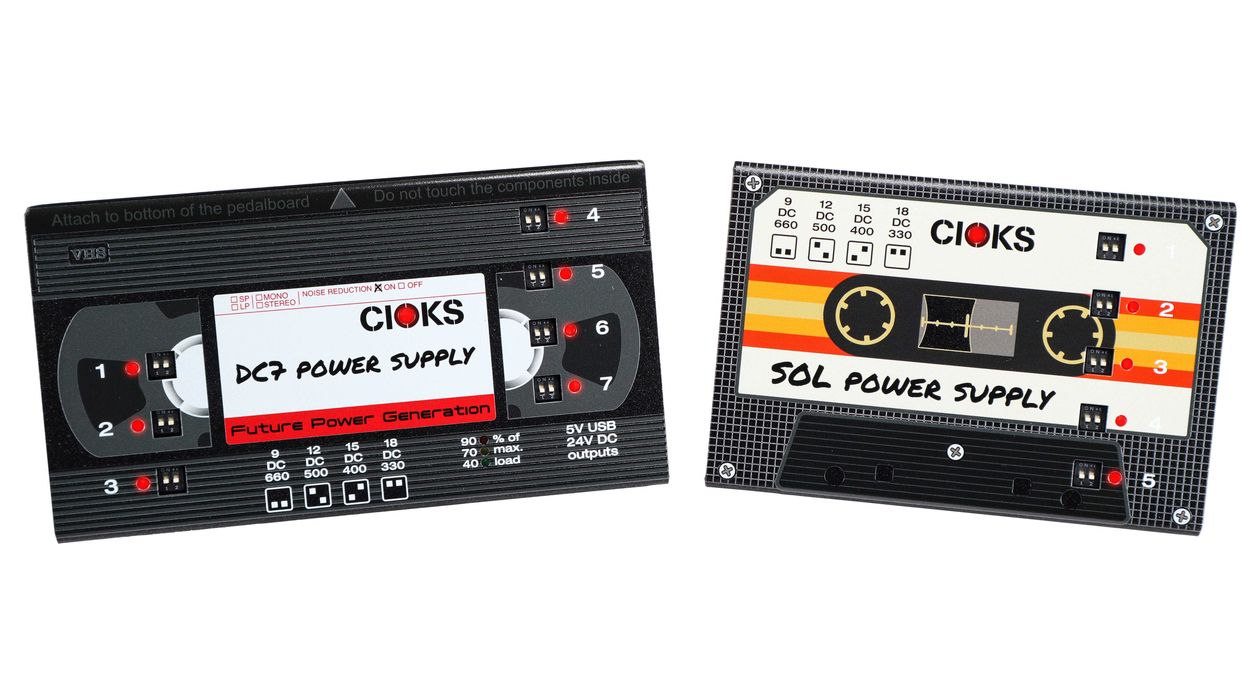
Power supply innovator CIOKS has introduced its Retro Series pedalboard power supplies, blending vintage aesthetics with state-of-the-art technology. Inspired by the iconic designs of the 1980s, the Retro Series introduces two limited-edition products: the CIOKS DC-7 VHS Tape and the CIOKS SOL Cassette Tape.
The Retro Series pays homage to two beloved 80s mainstays—the VHS tape and the cassette tape—while delivering CIOKS’ reliable, high-performance power.
CIOKS DC-7 VHS Tape
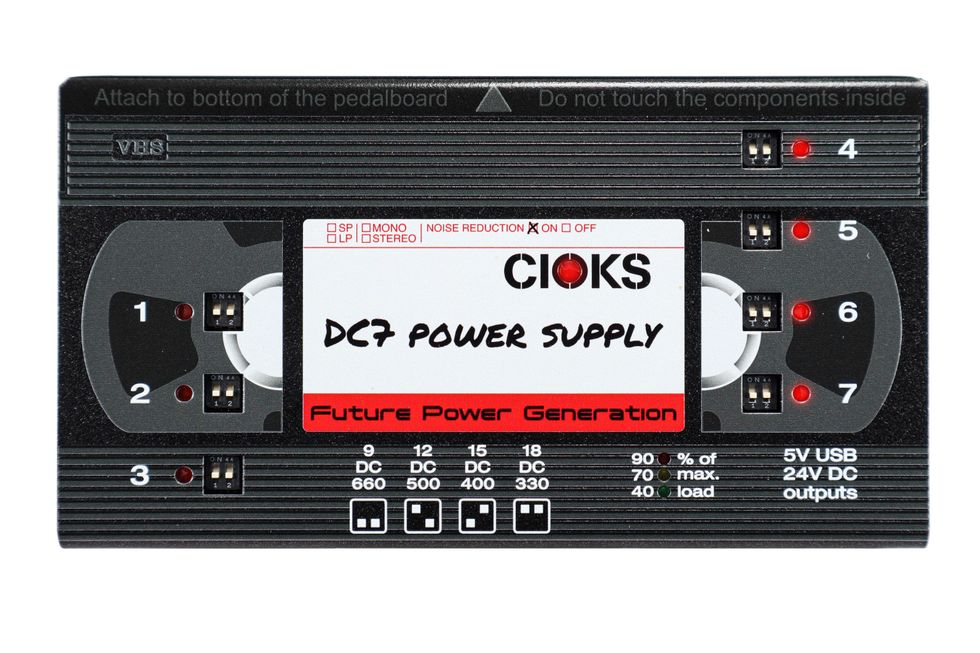
Featuring a meticulously crafted graphic of a classic VHS tape, the DC-7 combines nostalgic charm with cutting-edge functionality. This powerhouse delivers clean, stable power for modern pedalboards, ensuring optimal performance for musicians. It features 7 isolated DC-outlets for effect pedals each with four selectable voltages. Each of the outlets can put out 6W which corresponds to 660mA of current at 9V. Additionally the DC7 has also a 5V USB outlet and an auxiliary 24V outlet.
CIOKS SOL Cassette Tape
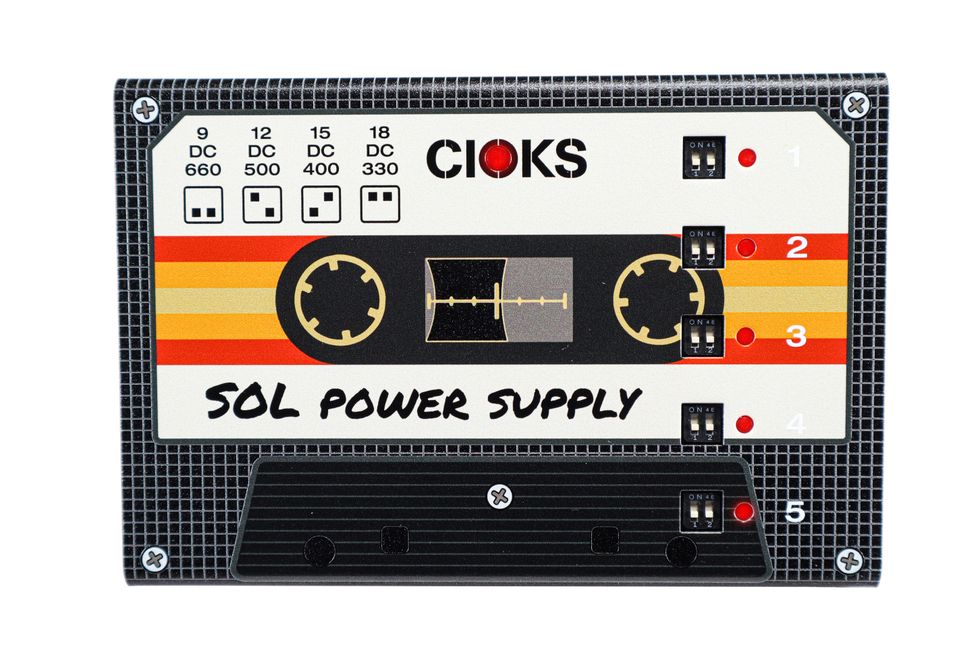
Inspired by the iconic audio cassette, the SOL offers a retro-cool design paired with advanced power distribution, perfect for compact setups and vintage enthusiasts alike. Featuring the same 660mA at 9V DC per outlet and four switchable voltages on each outlet as its bigger brother CIOKS DC7, SOL is the most powerful small form-factor power supply available today with a total of 30 watts of DC power available.
The Retro Series is available for a limited time exclusively through authorized CIOKS dealers. Street pricing for the DC-7 VHS is $294.00 and pricing for the SOL Cassette is $219.00. For more information visit cioks.com.
Daniel Donato Rig Rundown
The cosmic-country cowboy touts a rig inspired by the greats and powered by a mix of vintage and modern-day gear.
Hot on the heels of his new record, Horizons, Daniel Donato took PG’s John Bohlinger on a trip through his live setup, which spans more than 70 years of electric-guitar history.
Brought to you by D’Addario
Time Machine
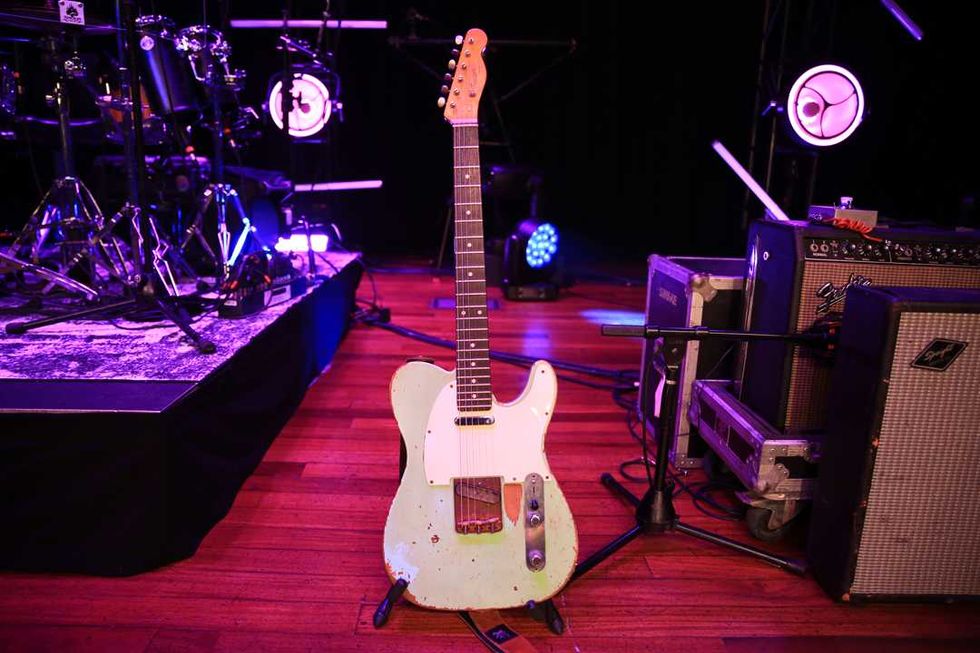
This Fender Custom Shop 1963 Telecaster has “everything that a great traditional Telecaster needs,” says Donato.
Jack of All Trades
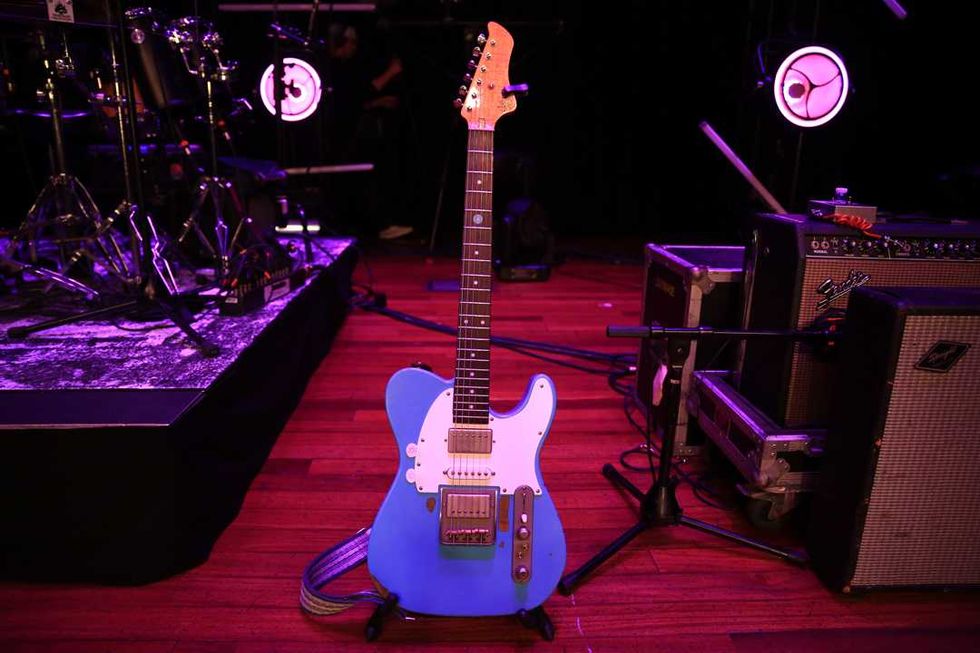
This DGN Custom Guitars T-style, built by Dan Neafsey, is dubbed the Epoch. Donato wanted a Tele that he could play all night without tiring of the tones, so Neafsey assembled this do-it-all electric. Its body is an eighth of an inch smaller than a traditional Tele’s, and its flame-maple neck sports a compound radius. Neafsey wound the PAF-style pickups, which can be configured as overwound single-coils via a coil-tap function. The steel ashtray bridge was cut to fit a humbucker.
Donato plays Dunlop Jazz III picks, and loads his guitars with a .010–.052 set of Ernie Ball Slinky strings.
Pro Tip
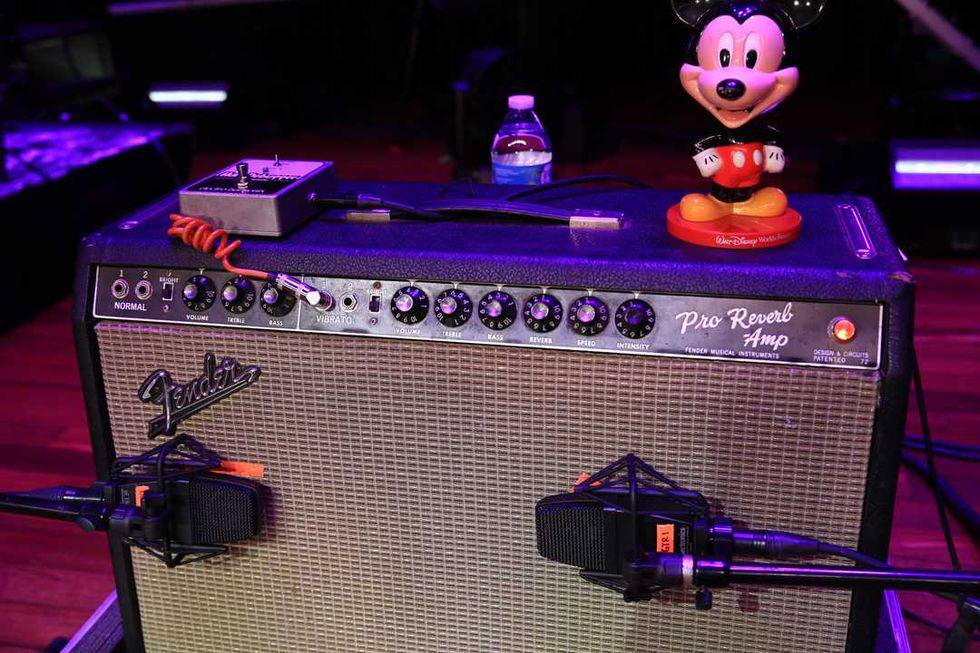
This 1966 Fender Pro Reverb is the first black-panel amp Donato ever purchased. It’s been converted to a 2x12 configuration in place of the usual 1x15, and it’s loaded with Weber 12F150 speakers.
Daniel Donato’s Pedalboard
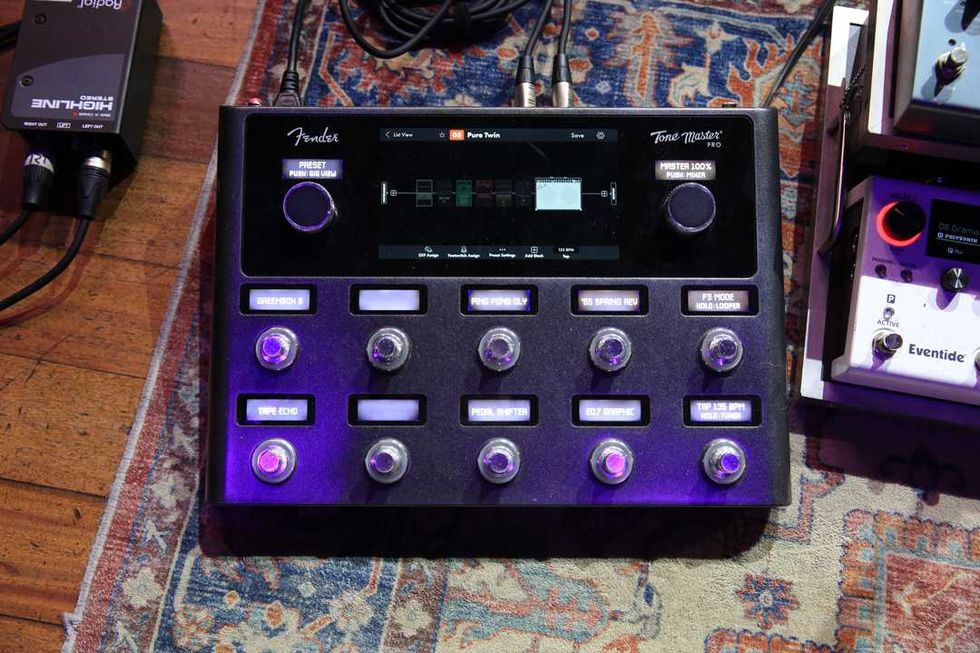
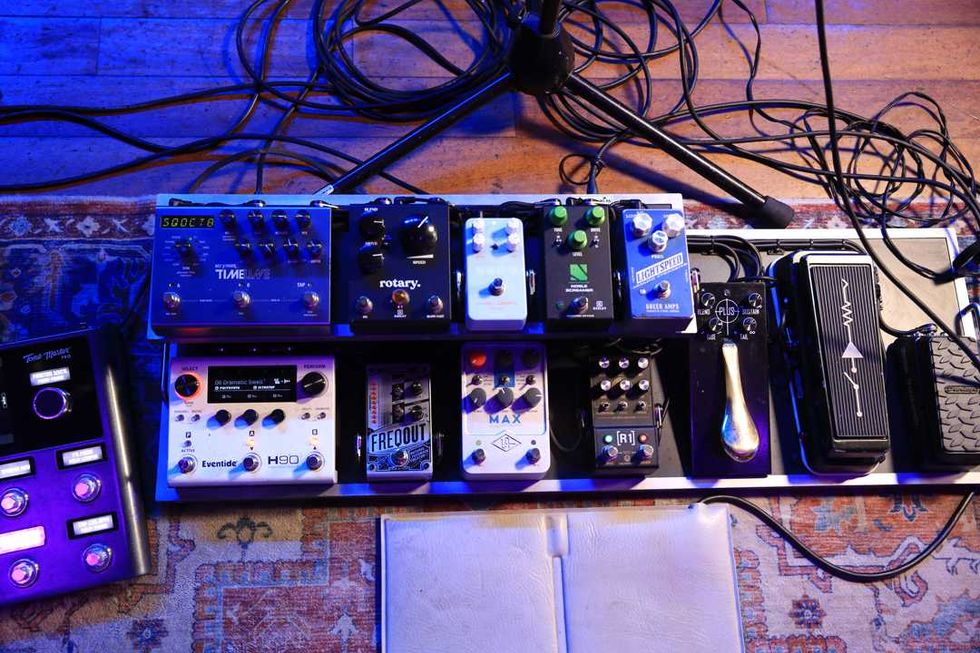
Donato says that while the Pro Reverb is the steak, the Fender Tonemaster Pro is the best thing to season it with. His effects run into this floor unit, which is set to a black-panel Twin Reverb program, through a Radial Highline, and out to the front of house at a clean, crisp level. Donato uses some of the Tonemaster Pro’s onboard effects, too, like a graphic EQ and tape echo.
The rest of the board, designed by XAct Tone Solutions, carries a Dunlop X Volume Mini and CAE Wah, Gamechanger Audio Plus, Greer Lightspeed, a Keeley Noble Screamer, Cosmic Country Phaser, and Rotary, a Strymon TimeLine, Walrus R1, Universal Audio Max, DigiTech FreqOut, and Eventide H90.
An EHX Hum Debugger, always on, rests on top of his amp to keep his Teles in line.

Gamechanger Audio Plus Sustain Pedal
Ernie Ball Regular Slinkies Strings
PRS launches the SE Chleo – a cut-price version of Herman Li’s radical signature model

When DragonForce’s Herman Li launched the Chleo – his signature guitar developed in partnership with PRS – earlier this year, the radical and groundbreaking design set pulses in the guitar community racing. Only trouble was, it came with a near-$7,000 price tag.
So if you’re in the camp that was enamoured with the guitar – but without the budget to nab one for yourself – you might be pleased to know PRS has just launched an affordable SE version.
- READ MORE: Harness the raw tone of ‘50s tweed amps and the mid-’60s cleans with Fender’s new Super 62 combo
Like the limited-edition Chleo model that preceded it, the SE Chleo features a spec sheet radically different from what you might traditionally find on a PRS guitar, like a thinner and more lightweight body, and contours including a revised scoop to allow for uninhibited upper fret access.
 Credit: PRS
The SE Chleo – like the Limited Edition Chleo – also sports Eclipse Dragon fretboard inlays, repurposing PRS’s signature bird inlays for the DragonForce shred machine that is Herman Li.
Similar specs also include a mahogany body with a maple top, a carbon fibre-reinforced bolt-on maple neck and 20”-radius ebony fingerboard, and the same Fishman Fluence Signature Series Omniforce Herman Li pickup set, which offers three built-in voices.
These pickups feature copper-free layered PCBs (Printed Circuit Boards) for “consistency and no-hum tones”. The pickups’ three voices and versatile switching system offers up to 13 unique tone combinations.
“With the PRS SE Chleo, we set out to create the best affordable guitar that delivers a unique combination of effortless playability, outstanding craftsmanship, and versatile tonal range,” says Herman Li.
“It combines modern innovations with classic style, giving players the tools they need to create everything from classic tones to cutting edge new sounds. The SE Chleo proves that a world-class instrument doesn’t have to break the bank – it’s a guitar that brings high-end performance within reach for everyone.”
Adding to the existing Charcoal Purple Burst and Orchid Dusk colourways the original Limited Edition Chleo came in, the SE version introduces a third colour, Mantis Burst.
While PRS’s SE guitars represent the firm’s more affordable offerings, with a $1,999 price tag, the SE Chleo sits at the pricier end of the series.
For more information, head to PRS.
The post PRS launches the SE Chleo – a cut-price version of Herman Li’s radical signature model appeared first on Guitar.com | All Things Guitar.
“I hate Axl’s voice and I don’t like Slash’s playing”: Metal guitarist calls this Guns N’ Roses classic “terrible” – but also admits it’s his “main inspiration”

Guns N’ Roses‘ Sweet Child O’ Mine is a certified classic – but does it live up to the hype? Well, Lorna Shore’s Adam De Micco doesn’t seem to think so.
In a new interview with Guitar World, the deathcore guitarist puts the iconic 1987 track on blast. “I was at the gym once and heard Guns N’ Roses,” he recalls. “Sweet Child O’ Mine is a terrible song – I hate Axl’s voice and don’t even like Slash’s playing. But it stands the test of time.”
Despite his feelings, he notes that the hit still receives praise to this very day – and that’s what intrigues him about it. “Nowadays music comes and goes in less than a year, yet there are bands from 30, 40 years ago, and people are still excited to hear it, and I’m like, ‘How?’” he muses.
Rather than outright denying the impact of the track, the Lorna Shore riffer has instead made it his mission to pen a song that feels just as timeless. At least, that was his approach while melding the likes of death, symphonic and prog metal on the band’s latest offering, I Feel The Everblack Festering Within Me.
Rather than hunting for the most complex sounds, Guns N’ Roses made him remember that there’s a beauty in simplicity. “After touring Pain Remains, riffs or ideas I thought were cool didn’t land when we played them live,” he reflects. “You realise a part is too complicated, or isn’t musical or digestible.”
Just as Ozzy Osbourne’s Crazy Train inspired a young De Micco and rhythm guitarist Andrew O’Connor, De Micco wanted to capture a “digestible” sound that was equally as bold and confident. Those are the tracks that get stuck in your mind – and they lend well to being learnt by budding riffers, amplifying their significance.
“[Sweet Child O’ Mine] became my main inspiration – writing something timeless,” he explains. “I wanted to write a guitar lick that some kid wanted to learn.”
Elsewhere on the record, Lorna Shore of course knock out their usual mix of “very technical and over the top” riffs for Prison of Flesh, while also “completely dialling back” for cuts like Unbreakable.
I Feel The Everblack Festering Within Me is out now.
The post “I hate Axl’s voice and I don’t like Slash’s playing”: Metal guitarist calls this Guns N’ Roses classic “terrible” – but also admits it’s his “main inspiration” appeared first on Guitar.com | All Things Guitar.
Warm Audio Unleashes Dual Overdrive Powerhouses: Throne of Tone & Tube Squealer
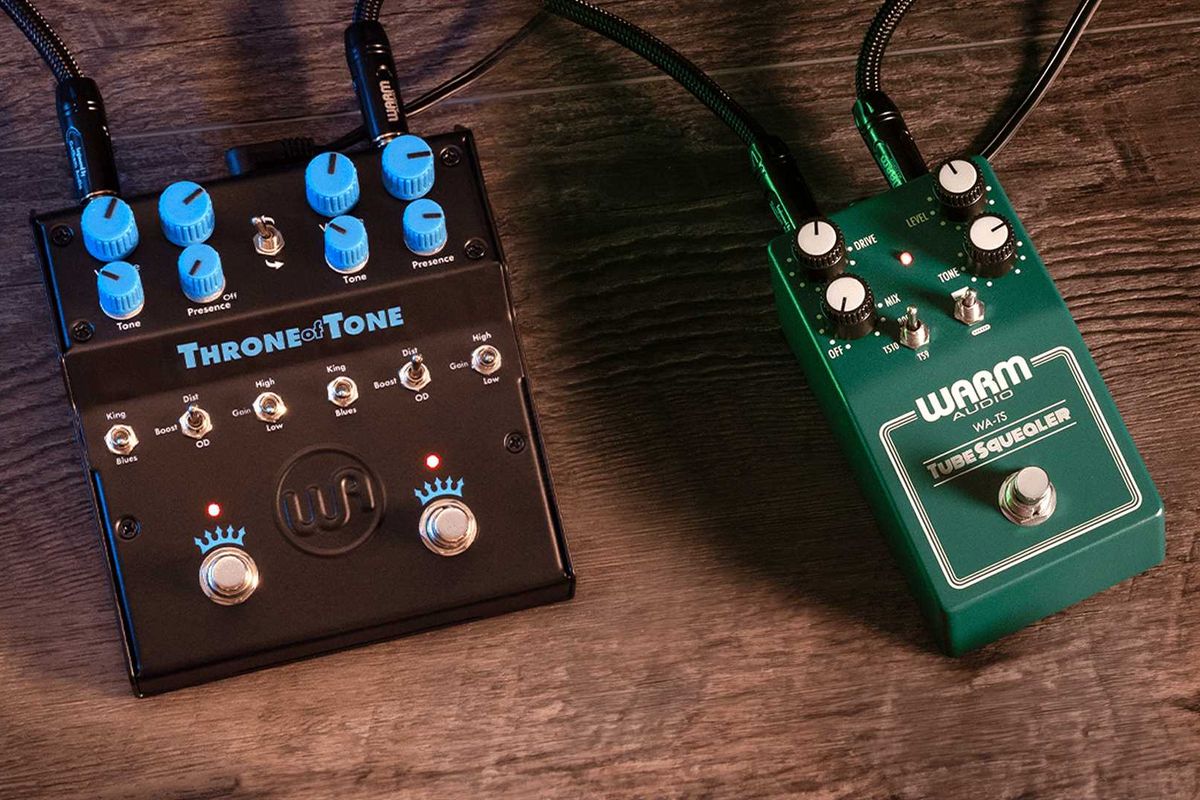
Warm Audio pays tribute to two of the most legendary overdrive sound profiles of all time, delivering multiple sought-after vintage-accurate tones from each pedal and robust functionality to meet the demands of modern players and pedalboards.
Warm Audio, the leading manufacturer of faithful recreations of legendary recording gear and guitar pedals, today announces the release of two new effects pedals. Introducing the Tube Squealer, a faithful recreation of not one, not two, but three of the most celebrated mid-gain overdrives known for driving tube amps into blissful tonal saturation. Select between authentic 808, TS9, and TS10 circuits, each capturing the legendary Japanese designs that shaped decades of guitar tone. Additionally, Warm Audio is releasing the Throne of Tone, a dual-sided overdrive that combines two of the greatest British amp-inspired blues circuits of all time in one pedal. Designed for ultimate flexibility, Throne of Tone offers two classic voicings, low/high gain settings, and three drive modes, including boost, overdrive, and distortion, per side. The Tube Squealer (MSRP $149 | 159 € inc. VAT | 139 £ inc. VAT) is available exclusively at Guitar Center in the US and authorized retailers worldwide. Throne of Tone (MSRP $229 | € 249 inc.VAT | 219 £ inc. VAT) is available at all authorized Warm Audio retailers worldwide.
“These are two of the most popular styles of overdrive in guitar history, and we’re excited to add them to the Warm lineup. We maintained the Warm formula of vintage-accurate tone and premium components, but we went a step further to combine some of the greatest iterations of these tones along with feature-rich functionality into each,” said Bryce Young, founder & president of Warm Audio. “For Tube Squealer, we couldn’t limit ourselves to just one of the classic pedal tones so we built the most legendary three into one pedal. Then we added critical controls to make it a must-have on any pedalboard.”
Young continues, “For the Throne of Tone, we decided to honor the 3-knob vintage pedal that inspired a whole wave of boutique recreations, and added a second side plus alternative voicing to deliver the most unobtainable boutique blues OD. With these unique voicing options, plus added features for presence, gain structure, and gain amount, you can create dozens of combinations previously unavailable in addition to getting the authentic sound of the originals - all in one stomp box!”
Tube Squealer
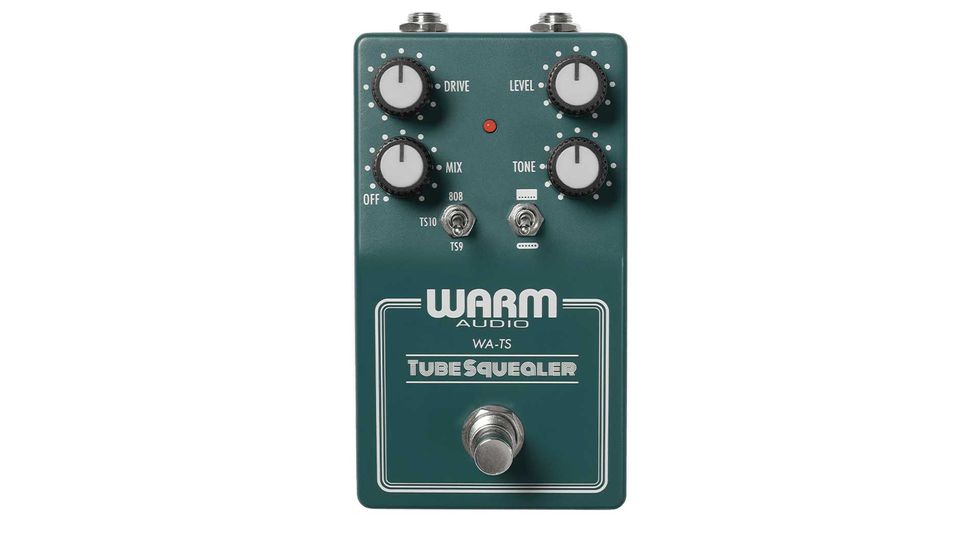
The Tube Squealer is a faithful recreation of three legendary, tube-driving overdrives built with premium, 100% analog circuitry and loaded with modern, rig-ready features. Its three selectable voicings—808, TS9, and TS10—switch the circuitry to authentically recreate the revered Japanese designs that shaped guitar tones from the late ’70s through the late ’80s. The 808 delivers the earliest iteration of the classic overdrive, the TS9 captures the most produced and widely recognized version, and the TS10 revives an underrated circuit that continues to gain respect among tone chasers. These circuits, faithfully recreated in the Tube Squealer, have powered some of the most iconic sounds in history, heard on countless records and stages worldwide.
Taking the mid-gain, tube-amp-driving concept even further, the Tube Squealer adds modern flexibility to suit any setup. A mix knob lets players blend clean and driven signals for precise tone shaping, while a pickup-voicing selector optimizes response for single-coils or humbuckers. An external voltage booster instantly increases headroom for more dynamic tones before saturation kicks in. Inside, the Tube Squealer features JRC4558 op-amps, discrete transistors and diodes, and premium JFETs; components chosen to preserve the character and response of the originals. With asymmetrical clipping true to the first-of-its-kind topology, the Tube Squealer delivers three iconic overdrives in one pedal, making it a versatile, high-value overdrive that never needs to leave your board.
Throne of Tone
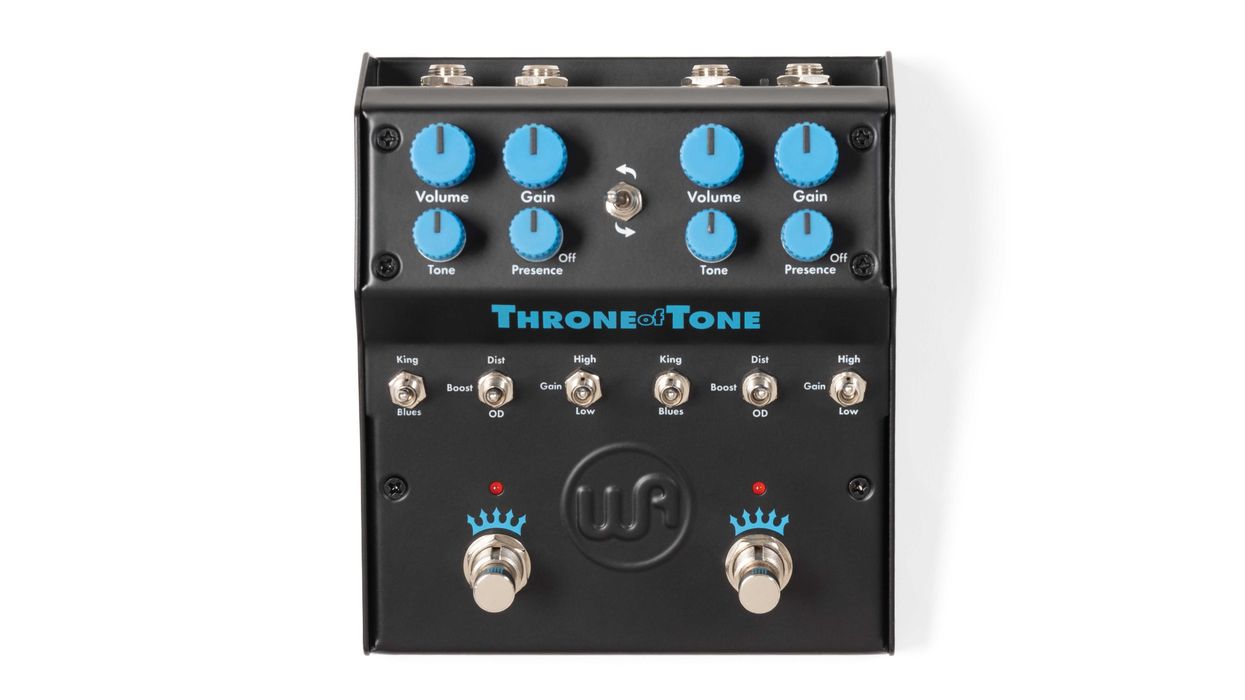
The Throne of Tone pays tribute to the greatest British Blues sonic profiles in all of guitar history, delivering the signature mid-gain amp “breaking” tone found on the most celebrated vintage amps and boutique pedal recreations. This dual-sided pedal offers two classic voicings, each with low and high gain levels and three drive modes: boost, overdrive, and distortion, making it easy to move from subtle breakup to saturated lead tones without ever diving through menus. Like the original amps and the pedals they inspired, the Throne of Tone excels at British-style breakup, with symmetrical clipping that captures the feel of classic tube amps pushed beyond their clean limits.
For even greater tone-shaping, each side of the Throne of Tone features an independent presence control (500Hz–2.3kHz) alongside the standard tone knob. A rear-mounted external voltage doubler (9V–18V) adds extra headroom on demand, while its 100% true bypass switching, including the send/return jacks, enables the ability to add a pedal in between the circuits. Every feature is externally adjustable for quick changes on the fly, with no need to open the enclosure. Inside, 24 diodes and premium JRC4580 and TL072 op-amps power two fully analog circuits, delivering uncompromising tone in a versatile, performance-ready package.
Like all Warm Audio gear, every single Tube Squealer and Throne of Tone are meticulously hand-tested and inspected by trained technicians with a passion for making music in Austin, TX.
Availability & Pricing:
- Tube Squealer: MSRP $149 | 159 € inc. VAT | 139 £ inc. VAT
- US: Guitar Center Exclusie
- Worldwide: All authorized Warm Audio retailers
- Throne of Tone: MSRP $229 | € 249 inc.VAT | 219 £ inc. VAT
- US & Worldwide: All authorized Warm Audio retailers
For more information, visit www.warmaudio.com/Tube-squealer & www.warmaudio.com/throne-of-tone.
“When I’m Sixty-Four”—Learn a Fun, Hybrid-Picked Arrangement of This Time-Honored Beatles Tune

“I’m not that fast on the guitar, but I don’t want to be”: David Gilmour explains why speedy solos never interested him

Can’t shred? No problem. Plenty of top-tier guitarists prefer to take things slow, and Pink Floyd’s David Gilmour is one of them.
In a new chat with NPR, Gilmour explains why speedy chops have never interested him. “I’m not that fast on the guitar, but I don’t want to be,” he says. “Even if I could, [my style] is what I love. It’s what I’ve spent my whole life doing.”
- READ MORE: Save big on Prime Day guitar deals at Positive Grid, Sweetwater and Thomann – here are our top picks
While people often inquire as to why he prefers a slower style, the Pink Floyd legend insists its something he “doesn’t really think about”, personally. “I don’t pre-think things very often,” he explains. “I’m not trying to work out what would be new and exciting or different. I’m just hunting for an emotion, in the moment.”
“I started out playing music in bands when I was 16 or 17, and I’ve never stopped…” he continues. “[Musically], I just follow where I’m led.”
Last November, Gilmour also explained his slower, more “tuneful” approach in an interview with YouTuber Rick Beato. While slower solos come easily, Gilmour admits that he struggles to feel inspired when the pace kicks up a notch.
“I wasn’t gifted with enormous speed on the guitar,” he told Beato at the time. “There were years when I was younger were I thought I could get that if I practiced enough. But it just wasn’t ever really going to happen.”
Gilmour isn’t the only artist to reflect on the struggles of attaining high-speeds on the fretboard. In fact, in his later years, Eddie Van Halen even told Guitar Player journalist Jas Obrecht that he’d grown tired of whiplash-fast playing. “Sure, that’s fine and dandy when you’re young… playing as fast as you can doesn’t really hold much water for me now,” he said in 1991.
The Van Halen icon even admitted that quick playing can sometimes even detract from a song, as its more of an “ego” boost to showcase your skills than to make a track better. “To me, a solo is to highlight song – it’s not to show off,” he concluded.
Later this month, Gilmour is set to release a live album, The Luck and Strange Concerts. The 17 October release will be full of live versions of tracks from his 2024 solo record, Luck and Strange.
Gilmour is also in the midst of releasing teaser tracks for the 50 year anniversary of Pink Floyd’s 1975 album, Wish You Were Here. A deluxe boxset is due to drop this December, which will include plenty of demos and live recordings from the era.
The post “I’m not that fast on the guitar, but I don’t want to be”: David Gilmour explains why speedy solos never interested him appeared first on Guitar.com | All Things Guitar.
Harness the raw tone of ‘50s tweed amps and the mid-’60s cleans with Fender’s new Super 62 combo

After recently giving its Tone Master FR-12 cab a vintage Tweed makeover, Fender is continuing to expand its amp offerings with the new Super 62, the latest addition to its American Vintage Amplifier series.
Harnessing both the raw tone of ‘50s-era tweed amps and the classic clean tone of the mid-’60s, the Super 62 offers a “warm and woody clean sound alongside a sweet overdrive when cranked”.
- READ MORE: Save big on Prime Day guitar deals at Positive Grid, Sweetwater and Thomann – here are our top picks
The Super 62 is powered by a pair of 6L6 tubes, driving 40 watts into dual 10” Celestion Custom Design speakers, while a phase-shifting harmonic tremolo offers a “rich dimension to any sound”. The amp also features six 12AX7 preamp tubes, as well as one 5AR4 rectifier tube.
With a single-button footswitch included, the Super 62 has two channels, both with Volume, Treble and Bass controls, while Channel 2 also has Speed and Intensity controls, and there’s a master Presence control, too.
Last week, Fender gave its Tone Master FR-12 full-range, flat-response cab a Tweed reskin, offering lovers of both amp modellers and vintage-aesthetic amplifiers what might be the perfect cab solution.
The Super 62 is priced at $2499.99 / £2,439.
For more information, head to Fender.
 Credit: Fender
The post Harness the raw tone of ‘50s tweed amps and the mid-’60s cleans with Fender’s new Super 62 combo appeared first on Guitar.com | All Things Guitar.
Save big on Prime Day guitar deals at Positive Grid, Sweetwater and Thomann – here are our top picks

October 7-8 marks Amazon’s second Prime Day of the year. But while Prime Day deals are generally geared towards consumer electronics and other mainstream-type items, some of the biggest online music retailers are also slashing prices on gear.
So here at Guitar.com towers, we’ve hunted down some of the best deals from the likes of Positive Grid, Sweetwater, Thomann and Reverb, and collated them right here so you can see if there’s anything that takes your fancy…
First up, over at Positive Grid, you can get the brand’s groundbreaking Spark 2 smart amp – which we gave 9/10 in our review – for just $296.65, down from $349. That’s over $50 off a decked out practice amp with AI features, a built-in looper, Bluetooth and loads more.
Or why not grab the smaller 10-watt Spark MINI – with onboard Bluetooth and smart app integration – for just over $200, down from $249? You can check out all the latest Positive Grid deals by clicking the button below:
[deals ids=”6nBL9El8aFSkJtYyxtQlNW”]
Meanwhile, over at Sweetwater, we’ve spotted a massive $600 off this Gibson Les Paul Standard ‘60s in Sparkling Burgundy, taking its price tag down to just $1,999. You can also grab the SE Silver Sky – the affordable version of PRS’s collaboration with John Mayer – for a cool $170 off, meaning you pay just $679. Check out all the latest guitar deals at Sweetwater below:
[deals ids=”3w4XBqog7Diuq1qrbLCJ0r”]
Thomann’s also hosting some excellent deals you can take advantage of, like this B-stock Sterling By Music Man St. Vincent Goldie, discounted by over 30%, meaning you pay just £735 instead of over £1,000. If you’re a St. Vincent fan, this deal might be a no brainer…
Or if you’re more shred-inclined, this B-stock Charvel PM PLUS SRS SC1 HH HT is £839 down from £899 – a cool £60 saving ready to be snapped up. View all of Thomann’s latest hot deals below:
[deals ids=”3O2kkaA5bAtS7hUrLouKOW”]
And finally, we’ve searched the second-hand market over at Reverb, and found the following sweet deals on guitar gear. Check out this 2002 ESP LTD EX-351D Diamond Plate Explorer, with a 20% price drop, taking its usual £800 price tag down to just £645.
Or try this PRS SE Silver Sky in Moon White, now priced at just £599 down from £895 – almost £300 off! View all the best bargains at Reverb by clicking the button below:
[deals ids=”4kley1OT4Hbr7KXcEhGQk”]
The post Save big on Prime Day guitar deals at Positive Grid, Sweetwater and Thomann – here are our top picks appeared first on Guitar.com | All Things Guitar.
Blackstar Polar GO mobile audio interface review: “I was amazed at the sensitivity of the mics”

$129/£79, blackstaramps.com
Whether you’re preserving ideas from a writing session or recording a breakthrough EP like Steve Lacy’s Demo, a smartphone is the most immediate device most of us have for capturing sound.
But despite the improvement in phone mics over the last decade, getting something to truly sound good without some pricey external hardware in the mix has proved stubbornly elusive… at least until now.
- READ MORE: EarthQuaker Devices Easy Listening review – can an amp simulator this simple actually sound good?
The Polar GO from Blackstar is the most compact iteration of its impressive Polar family of audio interfaces. But what’s really exciting about it is the combination of size, features and price it offers. This promises to be an affordable interface that will make your audio sound better… and you won’t even need a mic to do it.
 Image: Press
Blackstar Polar GO – what is it?
Blackstar describes the GO as not an audio interface but a “complete, pocket-sized studio designed for the modern creator” – and while that seems like the sort of marketing hyperbole you’d normally treat with an eye-roll, when you take a closer look, you can see what the British company means.
So, yes, it’s an audio interface, but it’s one that’s absolutely tiny (it comfortably fits in the palm of your hand), complete with a rechargeable built-in battery, a combined ¼-inch/XLR input with 48V phantom power, a USB-C out for plugging into your phone/laptop and a 3.5mm headphone jack for live monitoring.
Most excitingly, however, it also comes with Blackstar’s ProCapture Stereo Mics – a pair of onboard microphones to offer quality stereo recordings to elevate what you’re doing without the need for any kind of bulky traditional mic. This is plug-in-and-play recording – but with less plugging in.
That’s further enhanced by the GO’s onboard DSP engine that applies the onboard reverb, compression, EQ and noise control (editable via the Polar GO app) to make what you’re capturing sound pro-ready before it even hits your stream or recording software. You’re able to save one setting at a time to the hardware to use independently from the app.
Effectively, in goes your vocal or instrument signal; out comes a tailored sound to record in GarageBand, BandLab or whathaveyou, or stream/upload to YouTube, TikTok or Twitch.
In addition to the simple onboard controls (input and output) you also get the Polar GO App, which supports iOS and Android (even my gracefully ageing Pixel) and allows you to tailor your sound by tweaking the EQ, compression, reverb and the like to taste. It also allows you to record video directly while you’re playing, and comes with a bunch of presets designed to enhance various input sources.
 Polar GO App. Image: Press
Blackstar Polar GO – build quality
The striking thing about the Polar GO as a physical device is how compact and light it seems – even with that in-built battery that promises about four hours of recording time, it still only weighs 136g, or less than five ounces in old money.
Despite that it manages to squeeze all its various essential inputs and outputs into its case without it feeling cramped – the power and data USB-C ports are on one side along with the headphone out, while the combi XLR/jack input and buttons for power and phantom power are on the other, leaving the top clear for the input and output knobs, status LEDS and the mics themselves.
It all serves to keep the cabling and tangling of said cables to an absolute minimum. The light weight means you can easily pull it off a desk/bench/knee if you’re not careful. But it feels rugged enough, and if you’re really worried about such things, the Polar GO’s base is magnetic, so you can attach it to a mic stand or similar with any Magsafe or similar mobile phone mount.
 Polar GO with XLR. Image: Press
Blackstar Polar GO – in use
While the Polar GO’s knobs, connections and mics are all impressive in themselves, what really matters is how they interact with your smartphone.
For me, an Android user, it proved incredibly simple to feed a signal from the interface to mobile apps like Fender Studio and my phone camera app’s video function, by connecting the interface to the phone via USB-C. With sound achieved with minimal fuss, it was time to open the app and play around with the settings on Blackstar’s Polar GO App.
Here you’ll find a good range of presets for different types of input, including mic’d acoustic guitar or vocals, bass guitar and external vocal mic, plus reverb (‘space’) settings with preset ‘Hall’, ‘Cave’, ‘Room’, ‘Plate’ and ‘Vocal’ parameters.
One slightly disappointing thing is that there are no bespoke electric guitar presets, which struck me as odd given Blackstar’s pedigree with digital guitar sounds. The upshot is that you’ll either want to add effects and the like to your guitar signal before it hits the GO – via an amp modeller or pedalboard, for example – or at the other end with an amp and effects plugin. This is no biggie given the ubiquity of such options nowadays, but it’s a small drawback for electric guitar players.
 Image: Press
You have the option to multi-track (or simultaneously record) via the mic and line inputs, which is a big plus for singer-songwriters. For a full-band live recording, you’d need an interface with more channels, and you’d probably be recording onto a computer, anyway.
The headline item is definitely those ProCapture Stereo Mics, however – they are a huge upgrade on what you’d normally get from a smartphone mic. I was amazed at the sensitivity of the mics when monitoring with headphones. The mics captured all the fine, textural detail of acoustic playing, as well as background noises in the room.
It’s easy to see why Blackstar is pitching the GO as much to, podcasters and ASMR content creators as musicians – they’ll certainly capture all the detailed nuances of a sound. In fact, they pick up so much more than a smartphone mic, you’ll need to be mindful of movement during recording – it’s easy enough for a stray chair creak or rustle of clothing to be picked up.
One other thing to be aware of is that the Polar GO App is smartphone-only, so while you can plug the interface into a Mac or Windows laptop, its full functionality is only available to mobile users.
 Polar GO with headphones. Image: Press
Should I buy the Blackstar Polar GO?
Obviously, something this portable isn’t going to offer the features and functionality of a full-size audio interface, but what’s impressive is how few compromises you actually have to make with the Polar GO.
The onboard mics are what make this a true game-changer, however; significantly reducing the amount of kit you need to take with you to be able to record excellent-sounding audio on the go. With a keen price and sensible sound-enhancing on-board features aimed at those who just want to sound good without hassle, this is one of the best smartphone audio interfaces out there.
Blackstar Polar GO – alternatives
Building microphones into the actual audio interface is a USP that sets the Polar GO apart, but there are plenty of more traditional mobile recording interfaces out there should you not need them. IK Multimedia’s iRig Pro I/O ($169.99) offers similar combi input flexibility to the GO, and even adds MIDI if you should need such a thing, while the more compact TC Helicon’s GO Guitar Pro ($79/£69) is a solid budget option.
The post Blackstar Polar GO mobile audio interface review: “I was amazed at the sensitivity of the mics” appeared first on Guitar.com | All Things Guitar.
Pages
