
Music is the universal language
“Glory to God in the highest heaven, and on earth peace to those on whom his favor rests.” - Luke 2:14
Premier Guitar


Collision Devices Unveils New Snack Series Pedals
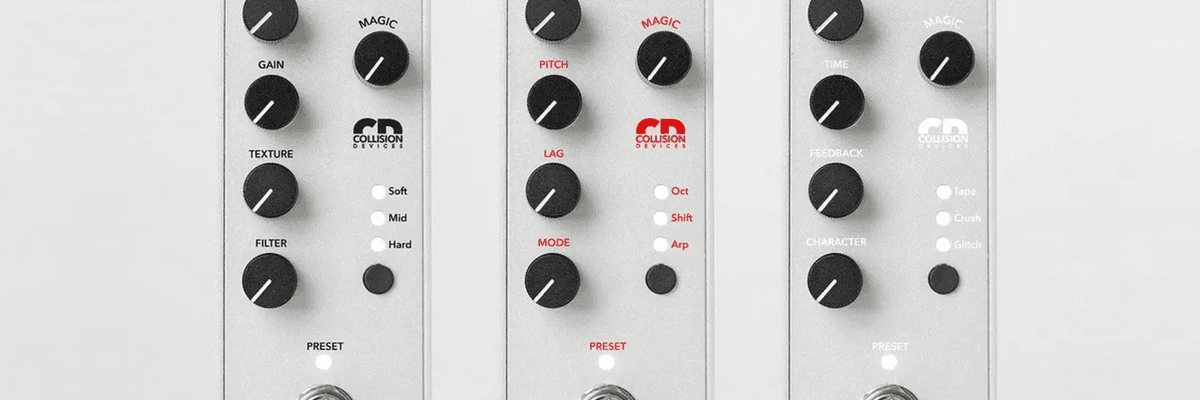
Collision Devices has introduced a new line of pedals designed to be fun, tiny and useful while also being accessible: the Snack Series Fuzz, Pitcher and Delay are the first three effects in the new collection.
Snack Series is connected to the Collision Devices’ story which started with the Black Hole Symmetry first. This story of a space travel kept going with the following devices like Nocturnal, TARS DLX and Crushturnal. Now, Snack Series pedals are seen as little snacks people can take from their pockets when doing space travels. Each one has been designed with a specific purpose, Snack Fuzz as an energy boost. Snack Delay to reduce the effect of time while travelling, and Snack Pitcher to get through huge space distances.
Each Snack Series pedal has the following features:
- A new original enclosure designed to fit any pedalboard (130mm x 50mm x 60mm)
- Three presets to make it easy to save and load your preferences
- Expression pedal you can assign to any control
- A “magic” knob introducing some variations and glitches in the audio effects
The Snack Fuzz comes with these three presets :
- SOFT (analog style distortion)
- MID (dephased parallel fuzz)
- HARD (bit fuzzer)
- The Snack Delay comes with these three presets :
- TAPE (tape modulated delay)
- CRUSH (digital delay with bit crusher)
- GLITCH (glitched delay with pitch shifted feedback)
The Snack Pitcher comes with these three presets :
- OCT (octave pitch shifter)
- SHIFT (pitch drifter)
- ARP (pitch sequencer)
Each of the three Collision Devices Snack Series pedals carries a $190 street price and all three are available at collisiondevices.com.
Cort Guitars Unveils the KX600 Infinite
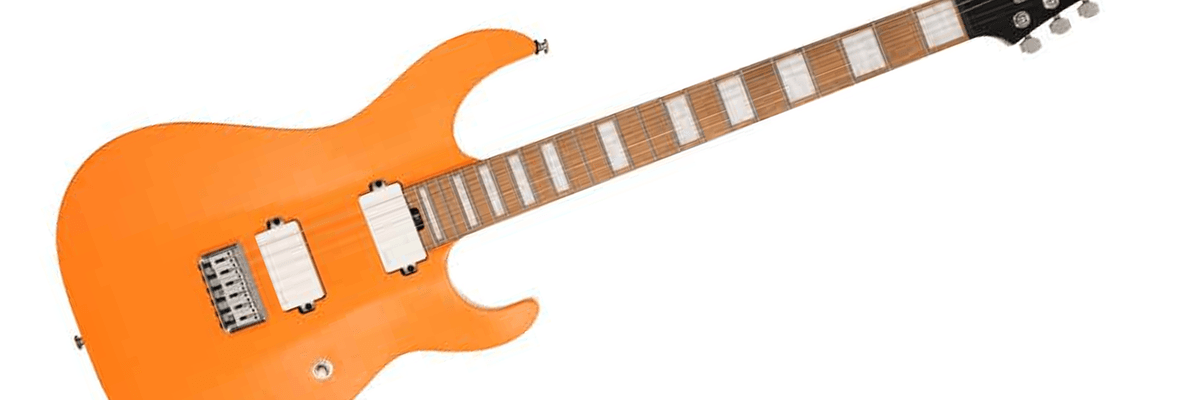
Cort Guitars announces the release of the KX600 Infinite, a new addition to its acclaimed KX Series of modern electric guitars. Built for players who demand exceptional sustain, modern tone, and uncompromising performance, the KX600 Infinite combines advanced tonewood construction with premium components to deliver a boutique feel in a production instrument. Available now worldwide through authorized Cort dealers and online retailers, the KX600 Infinite is designed for the stage, the studio, and beyond.
The KX600 Infinite features neck-thru-body construction for superior sustain and tone, with a basswood body that provides a balanced foundation and a smooth, resonant midrange response. Its 5-piece roasted maple and walnut neck ensures enhanced stability and resonance, while the roasted maple improves both feel and durability. The neck’s sculpted profile and 25.5” (648mm) scale length provide a fast, comfortable playing experience. The guitar is equipped with stainless steel jumbo frets on a precisely radiused fingerboard for effortless technical playability and long-lasting performance. Added refinements include Graph Tech® Black TUSQ nut (43mm width) for improved sustain and harmonic richness, and two striking finishes, Orange Crush Satin (OCS) and Black Satin (BKS), offering players a choice between bold and understated aesthetics.
For electronics, the KX600 Infinite is armed with a set of Fishman® Fluence Modern pickups, delivering innovative tonal versatility with clarity and punch suited for today’s players. The control layout is simple yet powerful, featuring a single volume knob with push-pull functionality and a 3-way selector switch, allowing seamless access to a wide tonal palette for both rhythm and lead work.
Hardware appointments include Cort Locking Tuners for quick, precise, and stable tuning, and a Cort Hardtail bridge that also enhances sustain and tuning reliability. Combined with the durable stainless-steel frets and the Graph Tech® nut, the KX600 Infinite is engineered for precision under demanding live and studio conditions.
The new KX600 Infinite is the next evolution of the KX Series — a perfect balance of sustain, power, and precision.
For full specifications and availability, visit www.cortguitars.com.
Or visit us at NAMM in Booth #6810
Street Price: $1399.99 USD
The Good Stuff: The Reliable Roland Chorus Echo
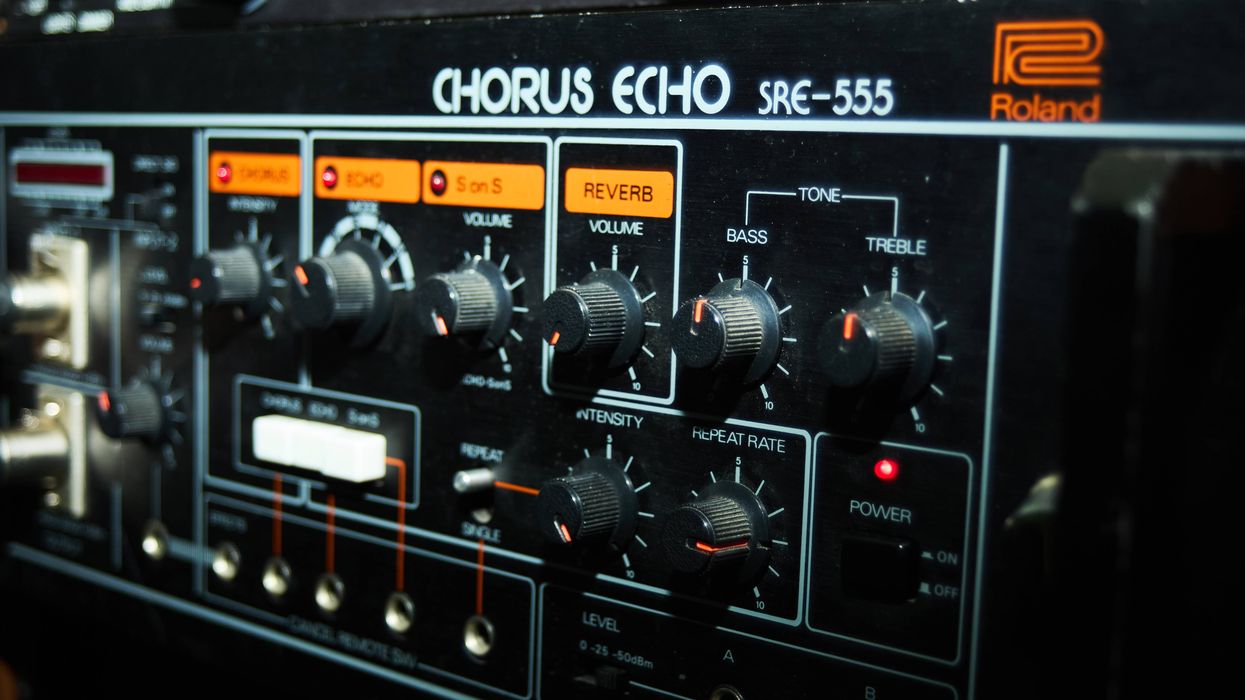
When people say things like, “They don’t make ’em like that anymore,” I think of two production runs that began in 1974: the Volvo 200 series, which lasted until 1993, and the Roland Space Echo, which saw its final unit manufactured in 1990.
One afternoon 15 years ago, I packed up my VW Golf and was on my way to record a trio gig somewhere in the hills of Los Angeles. I pulled up behind a Volvo station wagon and Nels Cline got out. He opened the giant semi-rectangular trunk and took out his amp, guitar, and pedals. I was visibly amazed at the space inside. “The Swedish pickup truck!” Nels proclaimed as he slammed the metal door shut and we loaded in for the afternoon.
A while later, I bought my own 1989 Volvo 245 wagon (the four-door sedan model was the 240). One benefit of a 19-year production run was that you could drive to a local pick-a-part and take whatever you needed from a junker unit, and it just worked. Need a new rear-tail-lamp assembly? Ten dollars and a screwdriver will solve that problem. Missing the plastic cover over the emergency brake between the front seats? There are plenty out there to choose from. My old mechanic Russell (who also worked on Josh Freese’s Volvo 240) told me that he loved working on them because after 20 years, parts were still easy to find and he could easily move around inside the engine compartment.
One summer workday, my Isuzu box truck broke down and I loaded more than a dozen produce orders into the back of my 245 wagon. I left the South Bay and drove into the Valley. I finished the route, and by the time I was heading down Ventura Boulevard toward the freeway, there was smoke coming from under the hood. I jumped on the 405 South and kept an eye on my hovering temperature gauge. After a Sorcerer-like two hours in the slow lane, I was back home. The Swedish pickup never overheated or died on me. A day later, Russell told me there was a quarter-sized hole in the engine compartment, and then he repaired it.
“There are few sounds that could not be improved by adding a little tape echo, chorus, and/or spring reverb.”
Similarly, a Space Echo might not work perfectly, but it will still get the job done. Worn-out tape? Unscrew the top plate and replace it yourself. Echoes not self-oscillating? Try adjusting the trim pots. No high end on the echo? Get some 90% isopropyl alcohol and Q-tips on those tape heads! Broken spring reverb? Open it up and throw a new tank in there. Plenty of room to move around.
Like the Volvo 200 series, the Roland Space Echo came in a few simple variations: the classic three-head RE-201; the stripped-down RE-101 and 150, which omitted the spring reverb, EQ, and a tape head; the RE-301, which added a chorus circuit; and, finally, the RE-501/SRE-555. I have owned all of them, and the one I’ve used the most is my beloved SRE-555 rackmount unit.
I’ll tell you why:
I am one of those people who thinks there are few sounds that could not be improved by adding a little tape echo, chorus, and/or spring reverb. Once, when recording electric guitar overdubs on singer-songwriter Eamon Fogarty’s song “Utopia In Blue,” I set up a mic on the amp and a mic in the lobby of the studio, and I sent that distant microphone into the Chorus Echo. The result was a beautiful triangulation: the immediate amp guitar panned just off center, the distant mic panned left, and the tape echo’d distant mic panned hard right. For every strum, I was rewarded with three distinct sounds. For my purposes, the balanced XLR ins and outs of the 501 and 555 facilitate ease of use. I always have them operating at line level on an auxiliary send from a mixer or console, and it’s always “Aux 1.”
Sometimes a tool is so well made that even the routine feels inspired. The Volvo 245 wagon was outfitted with an optional rear-facing third row seat. I can’t tell you how fun it is to take a road trip with kids who are looking into the eyes of the driver behind you. Likewise, the Roland Chorus Echo invites you to experiment with combinations of sound. During a session for Cherry Glazerr’s cover of Leonard Cohen's “I’m Your Man,” I solo’d the drums and used the repeat rate to sync the Chorus Echo to the song’s tempo. Then, I took the echo off the drums and put it on Clem [frontwoman Clementine Creevy]’s electric guitar. She loved the sound and it transformed the guitar part. I printed the echo and went back to use a short slap on her lead vocal, which you can hear in the final mix (if you can find it).In this digital age, I will be the first to admit, “If it sounds good, it is good.” That said, there are a few pieces of analog outboard gear that I find irreplaceable. My Volvo 245 has long since retired from the road, and yet, the Roland Chorus Echo SRE-555 carries on.
How Touring Guitar Rigs Are Designed
We travel to the southwest Chicago suburbs to visit Best-Tronics to see how they design, build, and assure premium quality for their pedalboards, pro audio racks, input splitters, cables, big-rig setups, and all things tone. Join along as John Bohlinger gets the full breakdown of everything they do at BTPA.
Peavey® Unveils New MegaBass™ 410 and 115 Speaker Cabinets
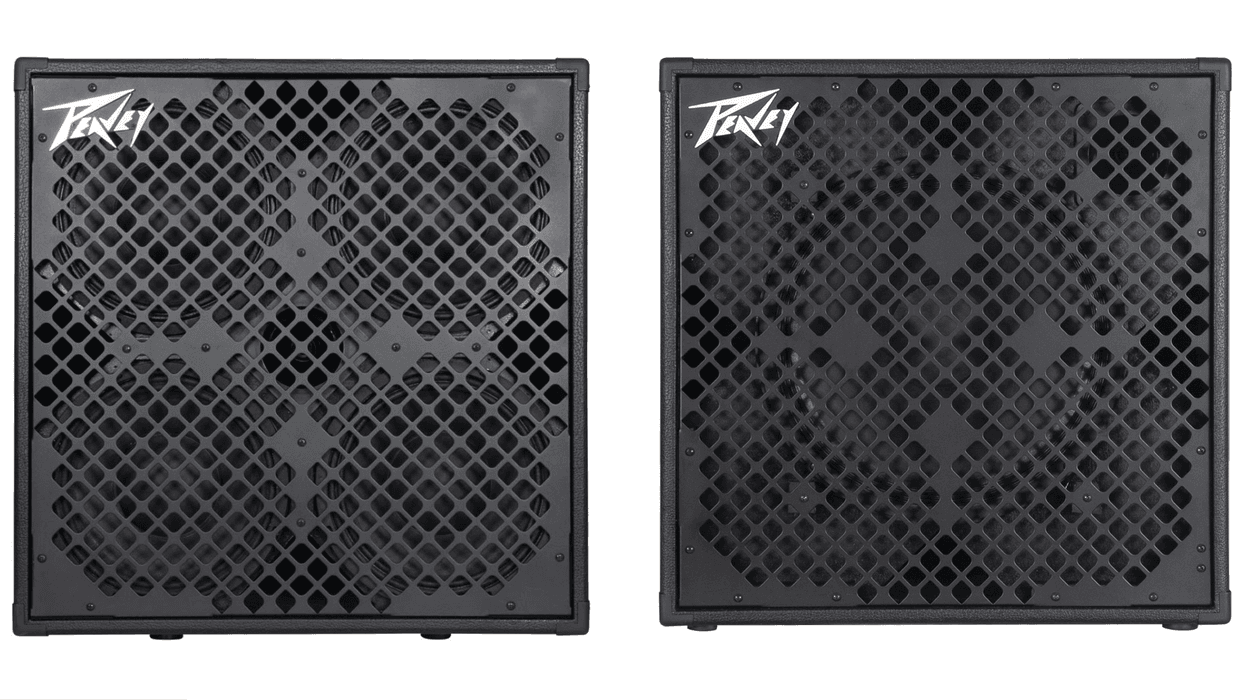
Peavey Electronics® is always thinking about the customer and this time, they’ve made touring life a whole lot easier with their new MegaBass 410 and 115 speaker cabinets. With reduced weight, more durable construction, and pop-out casters included, these new cabinets are compatible with any bass head and deliver bass the way it is supposed to be…felt. Not stale through a digital modeler or direct to the board.
The long standing miniMEGA™ series of bass amplifiers from Peavey® have always been a staple of bass rigs worldwide for a number of years. These new cabinets are an extension of that design philosophy and bring new building techniques for a more convenient experience. Four heavy-duty 10” neodymium woofers deliver that nice tight, bottom end at a nominal impedance of 8 ohms and a power handling of 1200 watts program and 2400 watts peak. A 1” diaphragm compression driver, horn-loaded tweeter with adjustable level control delivers full range bass performance.
The MegaBass 115 houses a 15” BW speaker and includes a 1” diaphragm compression driver, horn-loaded tweeter with adjustable level control to allow the cabinet to be used as a standalone unit or in combination with the MegaBass 410. To deliver the gut punching low end, the MegaBass 115 also runs at a nominal impedance of 8 ohms and a power handling of 1200 watts program and 2400 watts peak.
The ultra-light weight ported cabinet design uses a reinforced plywood construction to keep weight down and long-lasting performance up. Black vinyl covering, heavy-duty steel hardware, and an eye-catching power coated metal grille will keep these cabinets performing night after night for years on the road. And with recessed, spring-loaded handles and pop-out casters included, load-in and load-out is a breeze. Two twist-lock combo inputs ensure solid signal performance every time.
For more information booth 210A at NAMM, or online at www.Peavey.com
Street Price:
MegaBass 410 $999.99 USD
MegaBass 115 $799.99 USD
Keeley Oaxa Review
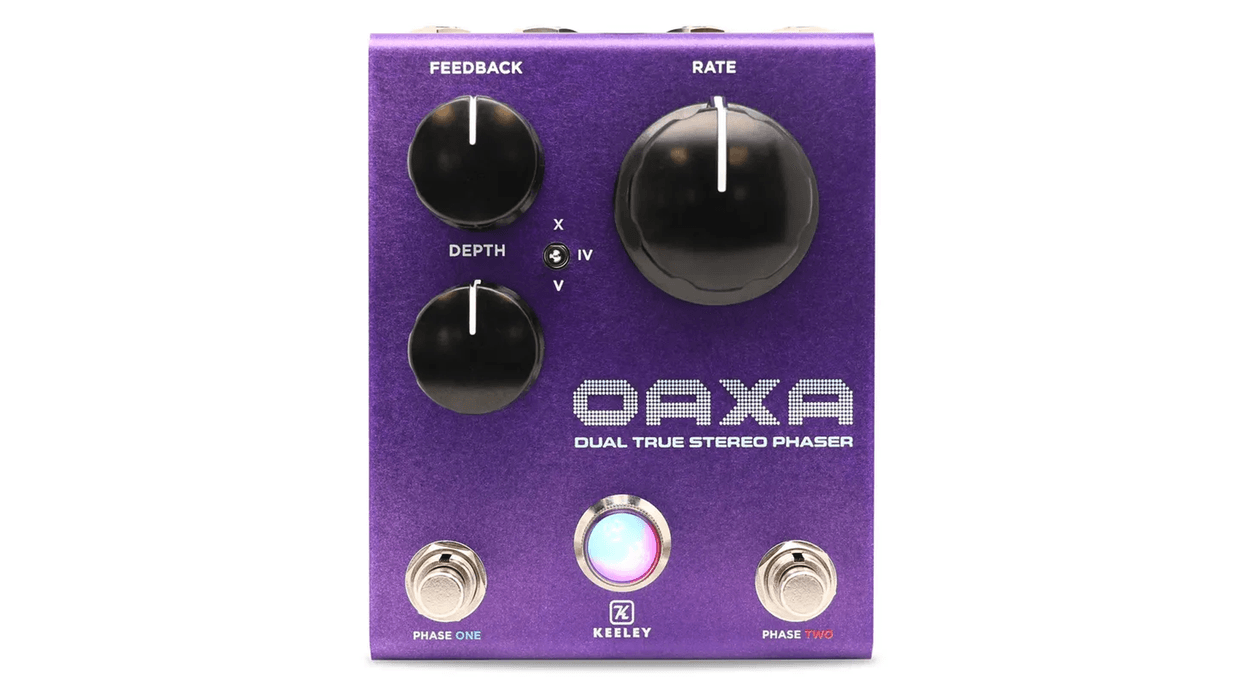
Running two effects of the same kind concurrently can yield amazing results. Stacked fuzzes or RATs? I’m in heaven. Other effects work less reliably well in pairs. Two reverbs, for instance, can sound killer but can turn an otherwise carefully crafted signal to smog. Twin phasers, in my experience, can be counted among the effects that are delicious together. It takes just two simple one-knob phasers to get very weird. Build two phasers into one, though, and add a few extra tone shaping controls, and the weird gets weirder fast.
Keeley’s new U.S.-made, digital Oaxa twin phaser can feel nearly as simple and straight ahead as two Small Stones running side by side, and honors the elegance and ease of that solution in many ways. There’s just three knobs—for rate, feedback, and depth. A small 3-position toggle switches between 10-stage phase, 4-stage phase, and a Uni-Vibe-style mode. Two footswitches select between the individual phaser or a combination of the two. If you want to keep things simple, you can dive in no further than that and have a great time. But Oaxa bears many secrets for deeper diggers.
Working the Waves
The phase effect is fun to use intuitively. And adding it in and out can be low stakes. Feeling that a riff sounds lifeless? Add a phaser and twist the rate. Maybe it’ll be exactly what a song needs. Maybe it will sit like rotten mayonnaise. But it won’t have taken much effort to try, and you’ll probably have fun along the way. The Oaxa is deeply satisfying in this manner.
The brilliant, big rate knob can be adjusted with precision using just a toe (provided you have the right shoes). And while the depth and feedback controls might be an affront to Phase 90 and Small Stone users, Oaxa’s controls open up useful phase possibilities without leaving you feeling doomed to get lost in the weeds. The depth control, for instance, has so much range it can render the phaser all but subliminal—making it a killer always-on sweetener that can be nudged in and out of prominence via the depth knob. Those just-barely-there depth settings can also be subtly re-shaped by the similarly rangey feedback control, which acts like a filter, adding wah-like focus at mild depth. At more intense depths, the feedback adds appreciably more vowelly “wow” tonalities that give Oaxa more than a hint of a Mu-Tron’s beautiful vintage essence. This variation—and interactivity—among depth and feedback colors alone makes Oaxa a great production, arrangement, and guitar layering tool, particularly in spacious arrangements.
Bear in mind that all the phase phenomena I’ve described here were observed in the 4-stage phaser voice—my most natural and familiar phase space. But the 3-way toggle can also be configured for 10-stage voicing or as a Uni-Vibe-style phase effect. The 10-stage voice is a little more binary than the 4-stage, and can obscure some overtone nuance in the wash. At extreme depth settings it can even sound almost tremolo-like. For a lot of players, the more focused modulation waves in the 10-stage voice will be a perfect fit for rhythmic delays or staccato passages begging for a little extra wobble and a more interesting tail. The Uni-Vibe style setting, meanwhile, is a pretty authentic version of the effect and delivers a recognizable take on the drippy “whoop”-like phase created by a Uni-Vibe’s optical circuit. Like the real deal, it sounds fantastic with fuzz.Multiplied by Two ... and More
When both phasers are on, Oaxa’s jewel lamp flashes blue and red, and the visual suggestion of a party is apt. There are deep and crazy sounds here that can take you deep into the wee hours. But not all combinations are magic. Certain pairings of modulation rate and harmonic peaks can obscure details that might make a single phase voice pleasing. But the option to run the two phasers in parallel or series enables more or less detailed versions of a compound phaser voice, respectively. And just-right phase-rate relationships combined with contrasting voices, depth, and feedback can yield fantastic results. Fast-throbbing U-Vibe style modulations combined with slow, deep 4-stage phases are extra dimensional—as are just about any two high-contrast rates. Nailing these combinations and hearing them via stereo—the other great force multiplier on Oaxa—can pull you deeper still into the pedal’s capacities.
The Verdict
Do you remember what I said at the top about the Oaxa being simple? It’s true. It’s just that Oaxa’s elegant design also has a lot in store for troublemakers willing to dig a bit. And if the stereo and dual-phase settings aren’t trouble enough, you can use the footswitches and knobs to introduce compression or extra filtering, or reconfigure the toggle to include 2- and 6-stage phaser voices. I’d venture that using the most basic functions will make the $199 price well worth it over time. But you’ll likely celebrate the day you stumble across one of Oaxa’s more complex finds. I suspect such days will be many in number, too.
Under the Microscope: How Vintage Verified Is Revolutionizing Guitar Authentication
We don’t often talk about Renaissance high art and ’50s rock ’n’ roll guitars in the same breath, unless we’re forming a new rockabilly-prog band called Hot-Rod Maximus. (You’re welcome.) But in the modern world of art and guitar collecting, items reputed to be the work of either Leonardo Da Vinci or Leo Fender are subject to much the same scrutiny from experts in the field, are known for fetching vast prices from discriminating buyers, and, given the millions of dollars potentially involved in even a single sale, are likewise expected to stand up to the most rigorous high-tech scientific analysis. Right?
Well, almost. While the worlds of high art, medicine, astronomy, police forensics, and environmentalism have all taken that last cue to heart by making data-driven determinations with the latest tools of chemical analysis, the vintage guitar market—and its many rightfully respected authorities—has generally proven resistant to sharing the process of authentication with the likes of spectrometers, microscopes, and 3D imaging, tools that have long proven their worth in identifying the material composition of everything from planets to polyps to paint thinners. Black lights on the backs of headstocks have typically been about the latest “tech” in the room.
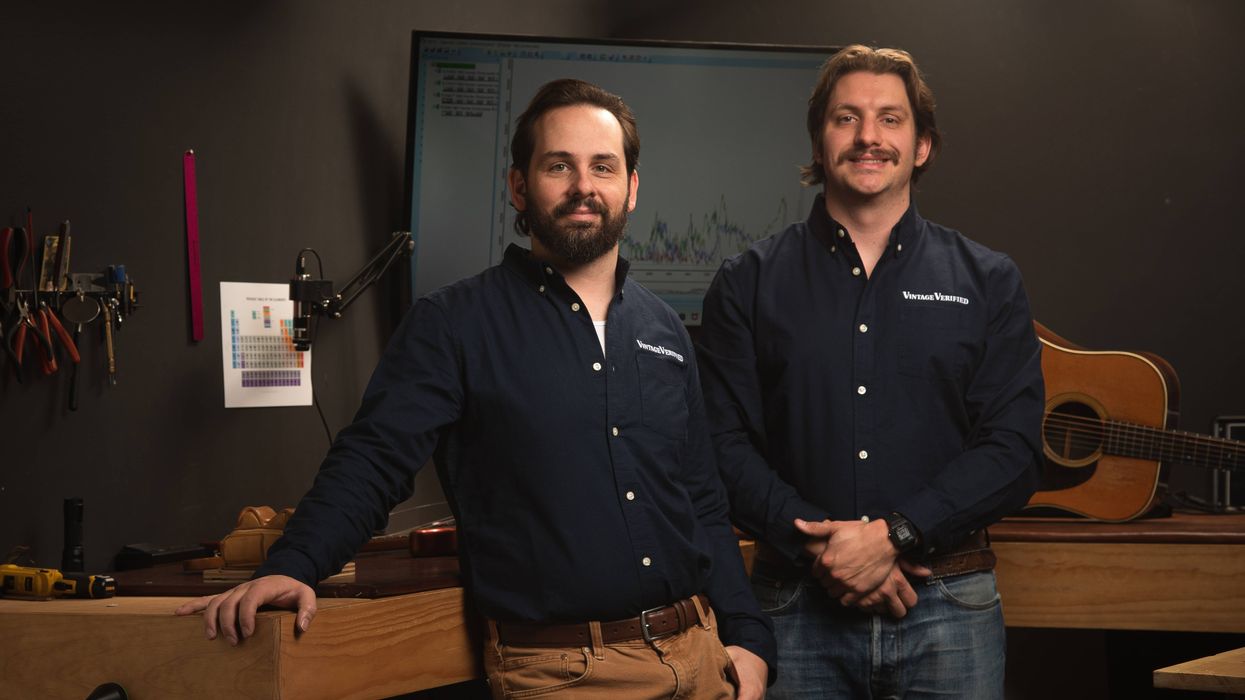
Until now. In a story that feels ripped from The Da Vinci Code or Cold Case Files, two remarkably down-to-earth—if undeniably intrepid—guitar-shop guys from Nashville, Jon Roncolato and Zach Riemer, have quietly upended the vintage-guitar market in a matter of months. Fueled by rotating batches of fresh-ground coffee, an abundance of nerve, and stomachs for study, they’ve tapped some of the most advanced and expensive analytical machines available to capture, catalog, and compare hundreds of thousands of data points from countless vintage and modern instruments—their lacquers, pigments, pots, pegs, pickups, and parts—building the largest dataset for guitar-component and finish comparison in existence.
In the process, they’ve issued a gentle challenge to dealers, appraisers, and collectors—and yes, they’ve even shifted the status of some long-held vintage “treasures.” Although they no longer appraise or sell instruments themselves, they’ve still managed to ruffle a few feathers and attract more than a few legal threats. At the same time, they’ve leveraged their diligence and strong reputations to assemble a trusted advisory team made up of some of the most respected minds in guitars, art, and hard science: icons like George Gruhn, repair guru Joe Glaser, cultural-heritage scientist Dr. Tom Tague (who authenticated Da Vinci’s “lost masterpiece” Salvator Mundi), Music City session legend Tom Bukovac, pickup mastermind Ron Ellis, and analytical chemist Dr. Gene Hall, among others.
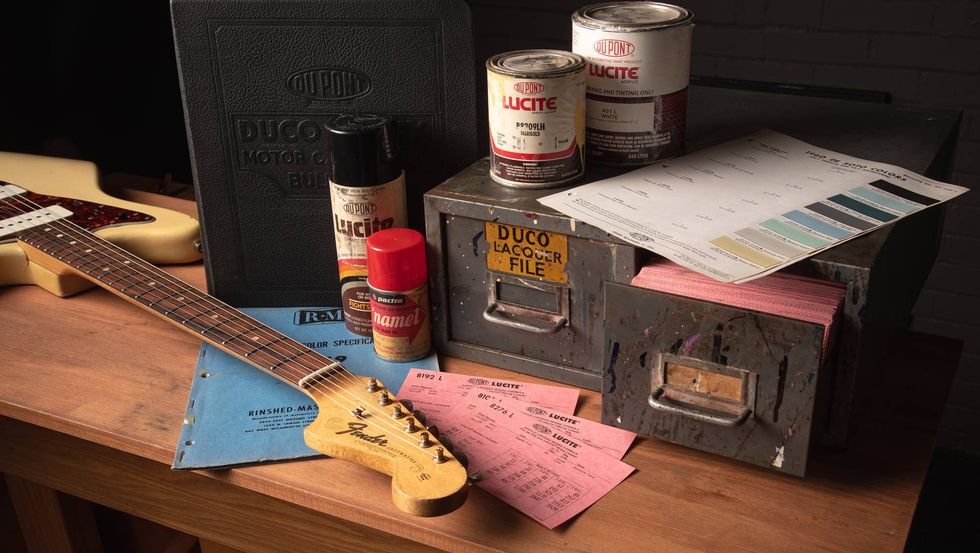
Jon and Zach are guarded about the technology, as you might expect. They don’t post selfies, they don’t have a podcast, and they won’t be starting one. As Riemer puts it, they’d much rather “keep our heads down and keep hammering away” with laser-based spectrometers, plumb the deepest secrets of Fullerton Red Strats, and compare the chemical makeup of Duco paints (ironically, both Pollock and Fender’s mutual go-to.) In their scrupulously clean Nashville HQ—which will expand to offices in L.A. and N.Y.C. in 2026—they seem pretty resigned to their current controversial status, and remain motivated primarily by going after, y’know, the truth.
Okay, that and a good cup of coffee.
What was the genesis of this idea to apply these types of cultural heritage sciences to vintage guitars? Is the problem with inaccuracies, refinishes, and forgeries really that widespread?
Jon Roncolato: We met while I was the GM at Carter’s Vintage Guitars, later North American Guitars, here in Nashville. I was photographing and cataloging the instruments for our online store, among other things. Zach’s originally from California but had come over to Carter’s after learning the ropes at Joe Glaser’s legendary repair shop in Berry Hill. At some point, it was decided that rather than us owning most of the guitars we’d sell, the business should follow more of a consignment approach, which meant hitting the road [and going to] dozens of guitar shows, bringing hundreds of instruments back from other dealers to consign.
And, look, there were instances at the store even with good-faith experts making the calls where we’d catch a refinish being passed off as an original color. But at the guitar shows, we really began to see how wild west this all was: $8,000 guitars passed off as original that literally had the wrong headstock glued on them. Things like that.
Zach Riemer: Everybody misses now and again. Most dealers are trying their absolute hardest with their experience, eye, and gut to tell an original from a fake or a refin. There’s simply some things you just can’t know unless you look at them with the kinds of tools that we’re bringing to the table. And it shouldn’t be that controversial: after all, literally every other collectible industry has a third party unassociated service like ours. The most obvious one is PSA with collectible sports cards. PSA is a little different than it used to be, but everybody still sees a sports card and a PSA box and if it says, “PSA 9,” for instance, you know you’re in good shape.
“In the art world, scientific validation has long been standard practice—pigment analysis, canvas fiber studies, dimensional scans. Sometimes it changes the story. That’s not an attack on tradition. It’s the pursuit of truth.” —George Gruhn, Gruhn Guitars

Jon Roncolato: In the art world, if you can’t scientifically confirm the authenticity of a piece, then you can’t certify that it’s attributed to a given artist. In the world of dealing guitars, though, even if you’re not 100 percent sure, you have to absolutely stake all your credibility on a guitar, even if there’s some doubt. You’re not going to sell a $250,000 custom color Fender if you come out and say, “Well, I think it's a custom color. It looks good to me.” So that’s just been the structure of the industry. Being in the underbelly of the whole thing, as we were, we realized what a big problem this was.
There must have been a ridiculous learning curve. You guys are guitar dudes, not scientists. Takes a bit of brass to bite off something like that, no?
Jon Roncolato: We have a framed picture in the kitchen, a quote from Wilbur Wright: “There are two ways of learning to ride a fractious horse: One is to get on him and learn by actual practice how each motion and trick may be best met. The other is to sit on a fence and watch the beast awhile, and then retire to the house.” That said, we spent the first year-and-a-half not offering any services at all, just studying the science, including week-long training seminars where everybody but us had a doctorate attached to their name, consulting with the top experts in the cultural heritage field.
Zach Riemer: I can't even express how difficult it was to make heads or tails of any of this at first. John and I were not chemists, and basically what we do now is largely analytical chemistry. So the learning curve on that was incredibly steep. We always joked that we were smart enough to have the idea but dumb enough to think we could do it. And while this process exists in other industries, the finished-instrument industry is totally unique. The instruments are so modular, and you have finishes, plastics, hardware, pickups, so you have to have an answer for all that information.
Jon Roncolato: That’s right. The process is designed to have an answer for anything and everything on the instrument. The headstock decals, the finish, the hardware, the fret wire, the fingerboard inlays—we have a data-driven answer for everything. That was really critical, because we didn’t want to give incomplete information. Another absolutely critical principle for us was that anything we put in one of these reports has to be defensible in court. If we get subpoenaed to go to court, which inevitably we will, we need to know that Zach or I can show up and we can defend this and prove this. Our other guiding principle is that we remain completely independent, and not touch the buying and selling of the instruments.“Vintage Verified is doing what we couldn’t do 20 years ago. They’re bringing in real tools—from forensics, from art conversation, from aerospace—and applying them to guitars. And it’s not about replacing experience. It’s about supporting it.” —Joe Glaser, Glaser Guitars
Fair enough. So, what’s the most difficult or highly sensitive area of your analysis?
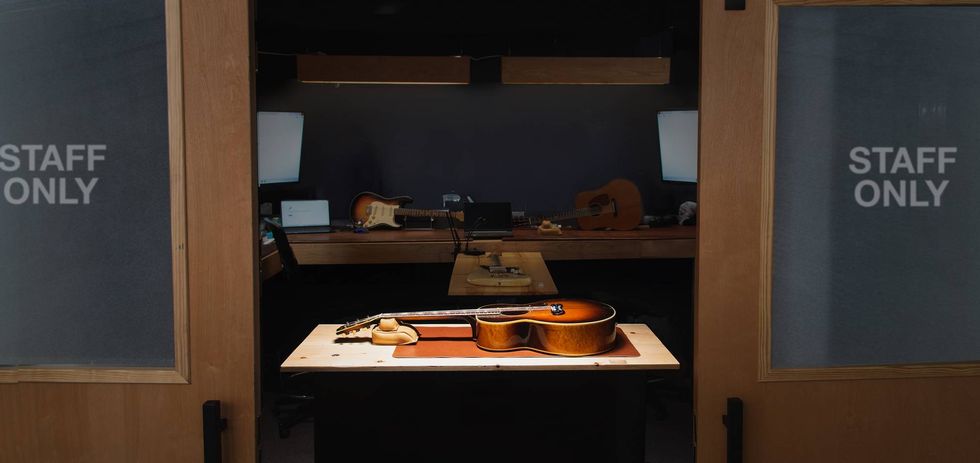
Jon Roncolato: Finish is easily the most complicated part of what we do—an absolute maze of information, and it’s also where you see the biggest value swings. Traditionally, if a guitar’s been refinished, even if it’s just a standard guitar (not a custom color) refinished, the rule of thumb is that it cuts the value in half. Nowadays, it probably cuts the value by 40 percent. But if you start talking about custom colors, like a Fender sherwood green Strat, or the fullerton red we have in our lab right now—this Strat here is probably a $250,000 Strat, assuming the finish is original. If the finish is, in fact, not legitimate, then potentially you’re looking at a $20,000 Strat.
And to determine this, you don’t just need that guitar’s own fingerprint, if you will, but you need to be able to conduct comparative analysis against a bulwark of trustworthy data. Where does that come from?
Jon Roncolato: We’ve been very fortunate to have guys like Joe Glaser and George Gruhn in our corner, who put their own cred on the line to help us scan and analyze literally thousands of vintage guitars, plus Dr. Gene Hall, whose work decoding Jackson Pollock paintings means he has the largest collection and database of Duco paints on the planet, the same paints Fender used in their golden era. That’s just the tip of the iceberg. We now have millions of data points across several different machines, a good $300,000 worth of spectrometers and other analyzers. We spent eight hours a day collecting data as much as we possibly could.
So is it very much a one-to-one comparison? “This finish’s chemical composition is true to the year this guitar purports to be, so we’re good”? Or is it more complex than that?
Zach Riemer: A little of both. Sure, the data that I just grabbed matches this certified sample pretty well, so therefore we can say with certainty that’s period-correct. But what really blew the doors open for us was when we got past that level, and started to have a fundamental understanding of these lacquer formulations, how various formulations over time were interacting with each other, and how the different components in a lacquer formulation—plasticizers, pigments, etc—all interact and evolve. How did those components morph over time?
If the industry set regulations, what was the regulation attached to? If you look at a piece of data on a lacquer, you’ll have hundreds of chemical compounds—a ton of information in there. What we had to do was figure out which chemical compounds were going to be chief identifiers of who was using what, and when. Building out this timeline for the major manufacturers was the bulk of our work, just as much as developing an understanding of the complexity of the materials. In other words, you have to understand your data as much as you need to own the data, right?
You’ve gotten some backlash, and some dealers who ended up being supporters eventually even got their lawyers on the phone early on. What’s your message to dealers, appraisers, collectors, working players, and the business as a whole?
Jon Roncolato: If something like this does not happen in this industry, the industry will go away at a certain point, and that’s already happening. For instance, right now you have literal billionaires who won’t buy custom color Fenders, and won’t buy Explorers and Flying Vs. Won’t touch them. Because they’re under the impression that they’re all fake. This is the top of your market, and they won’t touch this guitar unless we look at it. So, already we’ve seen that many of these people who previously were not buying custom colors are now joining that market again because they have the trust that these are authentic.
Zach Riemer: Our mission is to make sure that the data and the information we provide is absolutely correct. That’s our lane. We’re not the guitar police. We are not policing transactions, and we do not appraise or assign values to any instrument, ever. We’re hoping that we can help dealers begin to understand that this is designed to be an asset. It’s designed to help you protect yourself. And look, as soon as we print out a report, and I hand it to you, you can throw it in the garbage if you want. But it’s an option for you. Ultimately, it’s something that we believe helps give people the confidence to buy that rare instrument, and know exactly what they’re getting.Andertons and CME Launch the Fender Player II Lavender Haze Collection
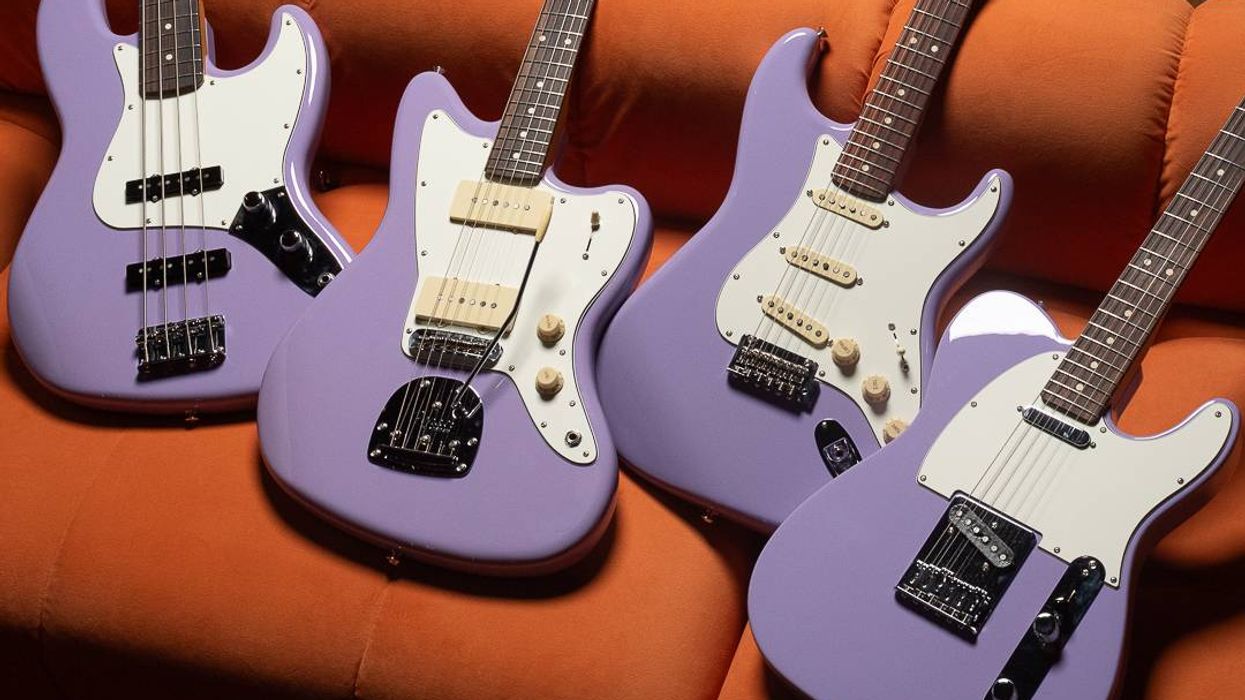
Andertons Music Co. and Chicago Music Exchange have teamed up with Fender to introduce an exclusive new range: the Andertons x Chicago Music Exchange Fender Player II RW Lavender Haze Collection. The lineup features four classic shapes – the Jazzmaster®, Stratocaster®, Telecaster®, and Jazz Bass® – each finished in a striking, never-before-seen Lavender Haze colourway and equipped with CME’s all-new proprietary Fender “Full Dip” pickups.
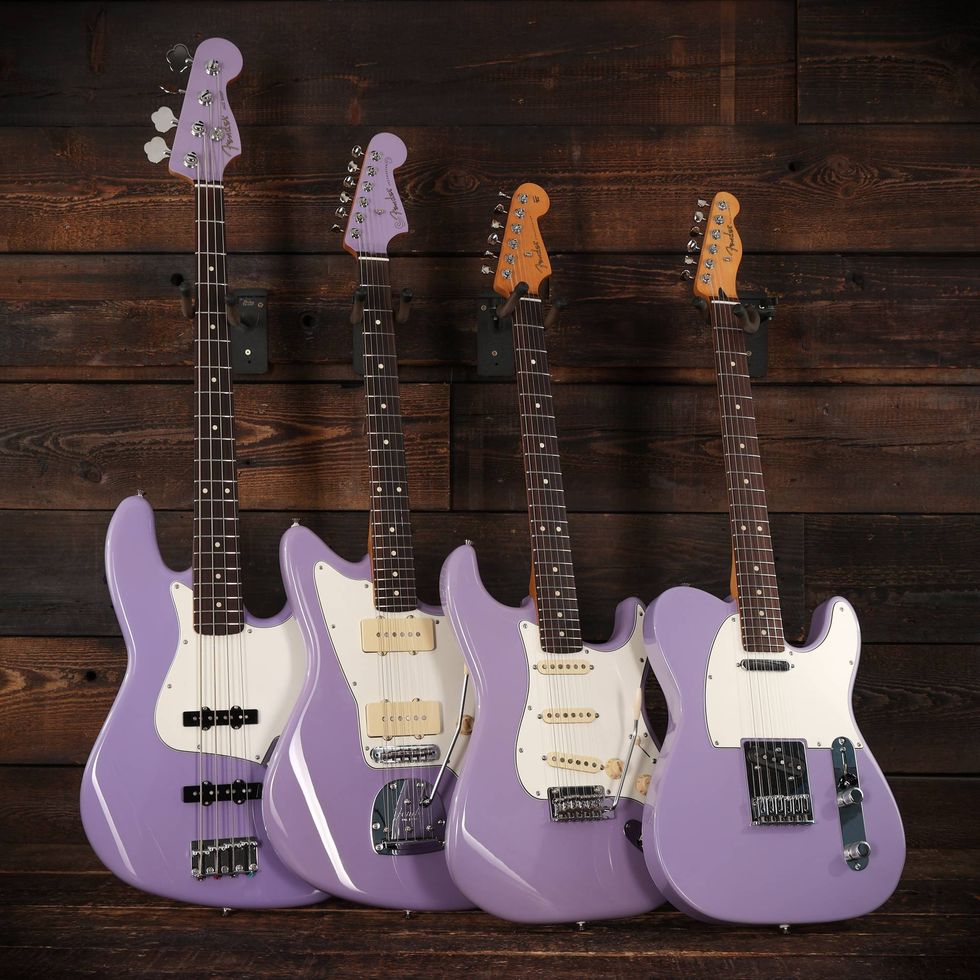
Lavender Haze is a could-have-been-but-never-was finish, inspired by mid-century appliances, classic cars, and the golden era of electric guitars. Matching painted heads on the Jazz Bass® and Jazzmaster® select models complete the look, giving the series a cohesive and unmistakable visual identity.
At the heart of the Lavender Haze collection is Chicago Music Exchange’s proprietary “Full Dip” pickups, developed in collaboration with Fender and informed by decades of vintage expertise and player feedback. Built on Fender’s Vintera II pickup recipe, “Full Dip” introduces two key refinements: AlNiCo 2 magnets to smooth harsh frequencies and allow notes to bloom naturally, and 5% overwound coils to deliver added punch and grit. Each model also features unique circuit enhancements that unlock tonal options not available with standard wiring, expanding the range of these Player II instruments.
“The Player II already delivers exceptional tone, feel, and reliability, and this collaboration takes it even further. Pair that with CME’s new “Full Dip” pickups, which have real warmth and musicality, and you’ve got guitars and basses that don’t just look incredible, they inspire you to play. We’re thrilled to bring them to Andertons customers!” said Lee Anderton, Managing Partner of Andertons Music Co.
“I love to romanticize the golden years at Fender and imagine what could have been, but simply wasn’t - Lavender Haze is exactly that. Anyone desiring something comfortable and familiar, but overtly distinctive both aesthetically and sonically should look no further.” said Daniel Bordonaro, Product Director at Chicago Music Exchange.
The Andertons x Chicago Music Exchange Fender Player II RW Lavender Haze Collection is available now in limited quantities. For more information, visit Andertons Music Co. and Chicago Music Exchange.
Model Line-Up & Key Features
Player II Jazzmaster® RW – Lavender Haze
- Lavender Haze colorway with matching painted headcap
- CME “Full Dip” Jazzmaster pickups (AlNiCo 2 magnets, Non-Beveled .472, Flat Pole, +5% Turns)
- 4-way series/parallel blade selector switch
- Body pre-routed for traditional rhythm circuit installation
Player II Stratocaster® RW – Lavender Haze
- Lavender Haze colorway
- CME “Full Dip” Strat pickups (AlNiCo 2 magnets, Non-Beveled, Vintage Stagger, +5% turns)
- Strat “Blender Mod” electronics circuit for added pickup combinations
Player II Telecaster® RW – Lavender Haze
- Lavender Haze colorway
- CME “Full Dip” Tele pickups (AlNiCo 2 magnets, Non-Beveled +5% turns)
- 4-way series/parallel blade selector switch
Player II Jazz Bass® RW – Lavender Haze
- Lavender Haze colorway with matching painted headcap
- CME “Full Dip” Jazz Bass pickups with hybrid magnet design:
- Bass: AlNiCo 5 Beveled .781, Flat Pole, +5% Turns
- Treble: AlNiCo 2 Beveled, .781, Flat Pole, +5% Turns
The Lavender Haze Player II Telecaster and Stratocaster each carry a $949.99 street price. The Lavender Haze Player II Jazzmaster and Jazz Bass carry a street price of $979.99 each. For more information visit chicagomusicexchange.com.
Andertons and CME Launch the Fender Player II Lavender Haze Collection
Andertons Music Co. and Chicago Music Exchange have teamed up with Fender to introduce an exclusive new range: the Andertons x Chicago Music Exchange Fender Player II RW Lavender Haze Collection. The lineup features four classic shapes – the Jazzmaster®, Stratocaster®, Telecaster®, and Jazz Bass® – each finished in a striking, never-before-seen Lavender Haze colourway and equipped with CME’s all-new proprietary Fender “Full Dip” pickups.
Lavender Haze is a could-have-been-but-never-was finish, inspired by mid-century appliances, classic cars, and the golden era of electric guitars. Matching painted heads on the Jazz Bass® and Jazzmaster® select models complete the look, giving the series a cohesive and unmistakable visual identity.
At the heart of the Lavender Haze collection is Chicago Music Exchange’s proprietary “Full Dip” pickups, developed in collaboration with Fender and informed by decades of vintage expertise and player feedback. Built on Fender’s Vintera II pickup recipe, “Full Dip” introduces two key refinements: AlNiCo 2 magnets to smooth harsh frequencies and allow notes to bloom naturally, and 5% overwound coils to deliver added punch and grit. Each model also features unique circuit enhancements that unlock tonal options not available with standard wiring, expanding the range of these Player II instruments.
“The Player II already delivers exceptional tone, feel, and reliability, and this collaboration takes it even further. Pair that with CME’s new “Full Dip” pickups, which have real warmth and musicality, and you’ve got guitars and basses that don’t just look incredible, they inspire you to play. We’re thrilled to bring them to Andertons customers!” said Lee Anderton, Managing Partner of Andertons Music Co.
“I love to romanticize the golden years at Fender and imagine what could have been, but simply wasn’t - Lavender Haze is exactly that. Anyone desiring something comfortable and familiar, but overtly distinctive both aesthetically and sonically should look no further.” said Daniel Bordonaro, Product Director at Chicago Music Exchange.
The Andertons x Chicago Music Exchange Fender Player II RW Lavender Haze Collection is available now in limited quantities. For more information, visit Andertons Music Co. and Chicago Music Exchange.
Model Line-Up & Key Features
Player II Jazzmaster® RW – Lavender Haze
- Lavender Haze colorway with matching painted headcap
- CME “Full Dip” Jazzmaster pickups (AlNiCo 2 magnets, Non-Beveled .472, Flat Pole, +5% Turns)
- 4-way series/parallel blade selector switch
- Body pre-routed for traditional rhythm circuit installation
Player II Stratocaster® RW – Lavender Haze
- Lavender Haze colorway
- CME “Full Dip” Strat pickups (AlNiCo 2 magnets, Non-Beveled, Vintage Stagger, +5% turns)
- Strat “Blender Mod” electronics circuit for added pickup combinations
Player II Telecaster® RW – Lavender Haze
- Lavender Haze colorway
- CME “Full Dip” Tele pickups (AlNiCo 2 magnets, Non-Beveled +5% turns)
- 4-way series/parallel blade selector switch
Player II Jazz Bass® RW – Lavender Haze
- Lavender Haze colorway with matching painted headcap
- CME “Full Dip” Jazz Bass pickups with hybrid magnet design:
- Bass: AlNiCo 5 Beveled .781, Flat Pole, +5% Turns
- Treble: AlNiCo 2 Beveled, .781, Flat Pole, +5% Turns
The Lavender Haze Player II Telecaster and Stratocaster each carry a $949.99 street price. The Lavender Haze Player II Jazzmaster and Jazz Bass carry a street price of $979.99 each. For more information visit chicagomusicexchange.com.
"Captain" Kirk Douglas: The Roots, Ozzy, Tonight Show, Gibson SGs & More
“Captain” Kirk Douglas joins the Axe Lords for a wide-ranging conversation about how guitars shape a life—musically, culturally, and sometimes, literally. The longtime guitarist for The Roots (who also serve as the house band on the Tonight Show) traces his path from growing up with reggae, church music, metal, and soul to finding a musical voice that incorporates them all.
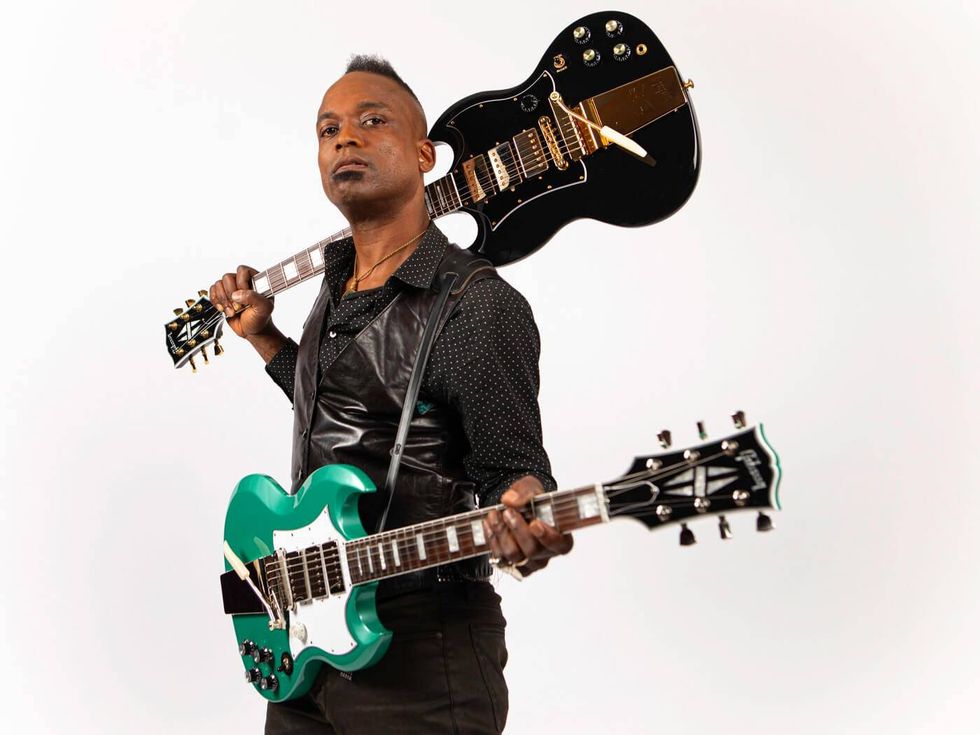
Along the way, he reflects on the profound effect that Ozzy Osbourne had on his young psyche, how the music that we consume in our youth has an impact that never really fades, real amps versus modeling rigs, and the many wonders of Gibson SG. As an excruciating bonus, the episode also includes the unbelievable story of the vintage Epiphone Crestwood Prince borrowed from him for a live performance on the Tonight Show—and then proceeded to destroy right in front of Douglas’ eyes in an astonishing display of music royalty privilege run amok. Beam us up!
Axe Lords is presented in partnership with Premier Guitar. Hosted by Dave Hill, Cindy Hulej and Tom Beaujour. Produced by Studio Kairos. Executive Producer is Kirsten Cluthe. Edited by Justin Thomas (Revoice Media). Engineered by Patrick Samaha. Recorded at Kensaltown East. Artwork by Mark Dowd. Theme music by Valley Lodge. Follow @axelordspod for updates, news, and cool stuff.
Follow Captain Kirk @kirklloyd
Follow @axelordspod for news, updates, and cool stuff
EarthQuaker Devices & Dr. Z Amplification Announce the ZEQD-Pre Tube Pre Amp
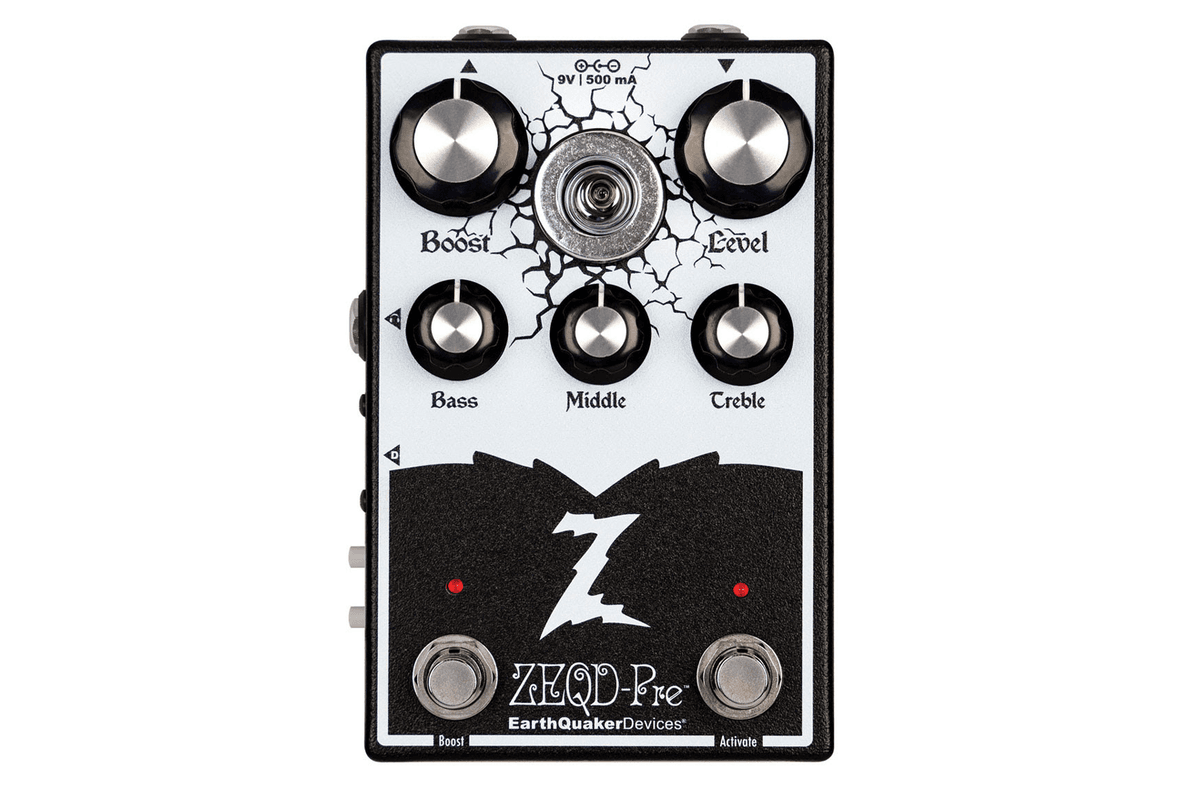
When it comes topedals aimed at replicating the sound, feel, and response of an all analog tube amplifier, the only options at a guitarist’s disposal are typically limited to digital approximations or boutique offerings that sound great, but are financially out of reach for many musicians.
It’s a predicament that’s prompted two of Northeast Ohio’s most renowned sonic engineering firms–EarthQuaker Devices of Akron and Dr. Z Amplification of Cleveland–to join forces to formulate a compact, affordable, all-analog thirst quencher for parched tone purists who have spent years wandering through the digital desert.
“Dr. Z, having been an amp manufacturer for nearly 40 years, really has an ear for these kinds of circuits and recognizes the impact digital modeling amps is having on tube amp sales,” President and Founder of EarthQuaker Devices Jamie Stillman explained. “The digital modelers do a pretty good approximation of emulating an amp, but they always lack a certain depth and warmth, so I was quick to embrace the idea of developing a product with Dr. Z that would reintroduce some tube-like sound into a signal chain–even when used in front of a modeling amplifier.”
Designed to live at the end of a signal chain, the ZEQD-Pre adds classic tube character to everything upstream. Its passive Three-Band EQ provides precise tonal control enabling users to fine-tune their amp's voice, push its preamp into rich harmonic overdrive, or breathe dimension and life into their modeling setup.
The pedal is a simple, modern tool devised to give you all the organic sonic character and dynamic response of a tube amp in a compact and convenient form factor. There are no menus to dive through. No IR loading. No firmware updates. No 0s, 1s, or any other pesky digital artifacts to get in the way of a player and their tone.
The ZEQD-Pre features a built-in analog cabinet simulation for realistic amp feel during quiet practice sessions to deliver full tube character without disturbing the neighbors. This feature is handily disengaged via the Cab Bypass switch enabling users to send a pure signal to their preferred IR loader or modeling software and making it perfect for direct recording, backline-free gigs, or hybrid rigs with multiple signal paths.
When the Boost footswitch is engaged the Three-Band EQ drops out completely. This function unlocks Dr. Z’s initial design for the circuit, and provides a full-range boost with its own dedicated level control.
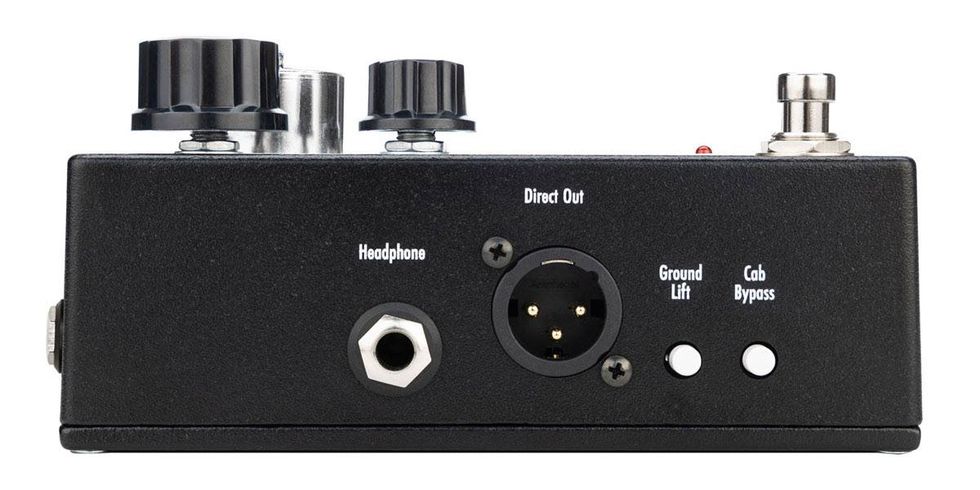
At the heart of the ZEQD-Pre is the EF86 pentode—the same tube that gives many Dr. Z amplifiers their pristine HiFi tone and makes them such responsive pedal platforms. For the player, this means dynamic and nuanced touch sensitivity, full frequency clarity, and a balanced signal that is both predictable and highly responsive.
“You hit this pedal on and your amp becomes huge,” Mike “Dr. Z” Zaite, Owner and Founder of Dr.Z Amplification explained. “And it's not just distorted and clipped, it's just this big, big sound that is produced with this [EF86] tube."
There are a few characteristics inherent in the ZEQD-Pre that Stillman says customers should consider when purchasing the pedal.
"Part of what makes the ZEQD-Pre interesting is its simplicity. Stillman explains. “People shouldn’t get it thinking they’re going to be able to do all the stuff they can do when using a tube amp. They won’t be able to make it break up into a crunchy overdrive like a classic British tube amp for example, but they should get it knowing that it’s a really good HiFi clean platform to run pedals into.”
He says users should also know that the ZEQD-Pre requires a supply of 500 milliamps (mA) of power in order to function as advertised and that the direct signal from the onboard balanced XLR output is very hot and best used with a pad engaged on the user’s interface or mixing console.
Though designed with guitarists in mind, the ZEQD-Pre’s broad range of EQ voices and tube warmth can enrich the sonic color and harmonic content of just about any instrument a musician could dream of plugging into it, including, but not limited to, bass, synthesizers, electric pianos and keyboards, and microphones.
Ultimately, Stillman hopes the pedal will be adapted by younger players who haven’t had the opportunity to ever own a tube amplifier.
“It’s starting to bother me that there is a whole generation of kids that have never plugged a guitar into a tube amplifier in their life because they're expensive and they have a free one on their laptop,” Stillman said. “And I hope a pedal like this could be a turning point for players and make them realize that there is something special about analog technology that they’ve been missing. It just thickens up the signal in a way that just feels a little more organic to the player and familiar to the listener.”
Each ZEQD-Pre is built by one sophisticated droid and many kind-hearted flesh and blood artisans in the tropical metropolis of Akron, Ohio USA.
Features:
- Three Band EQ
- Boost
- Balanced XLR Direct Out (With Ground Lift)
- All Analog Cabinet Simulator (With Bypass Switch)
- Headphone Out (TRS ¼”)
- True Bypass Switching
- Lifetime Warranty
- Input Impedance: 10 MΩ
- Output Impedance: Variable
- Headphone Out Impedance: 39Ω
- Direct Out Impedance: 100Ω
- Current Draw: 500mA
- Retail Price: $399.00
Drunk Beaver Launches Two New Pedals On NotPedals.com
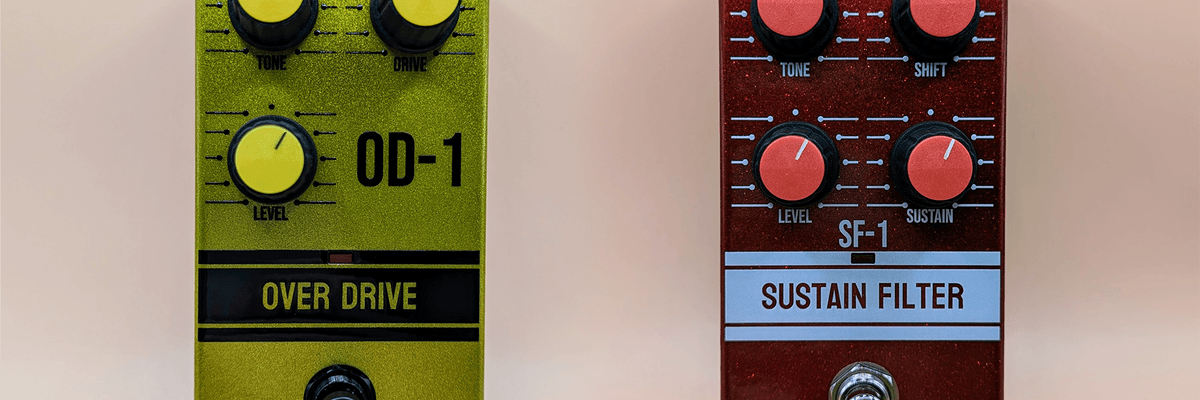
NotPedals.com has announced the listing of two new pedals from Drunk Beaver Pedals, a cult-favorite Ukrainian builder currently based in Poland.
The newly listed pedals – the Drunk Beaver XR Series OD-1 and the XR Series SF-1 Sustain Filter – represent Drunk Beaver at their best: highly flexible, meticulously built, and unapologetically adventurous.
Both XR Series pedals feature extensive clipping options, vintage-inspired components, and striking custom enclosures, offering players everything from familiar tones to wildly expressive textures, all within a single unit.
The XR Series OD-1 delivers a broad spectrum of overdrive voices, from tight and articulate to saturated and aggressive, while the XR Series SF-1 Sustain Filter explores sustain, filtering, and texture in ways that reward experimentation and hands-on tweaking. Both pedals run on a standard 9V DC external power supply (no battery compartment) and feature true bypass switching.
Built in Drunk Beaver’s workshop in Wysoka, Poland, the pedals are the product of Ukrainian transplants with a reputation for taking classic circuits and pushing them right to the edge - and sometimes beyond.
Drunk Beaver joins a growing roster of independent builders from around the world featured on NotPedals.com; a curated marketplace built to make discovering boutique gear easier for players, and global sales more accessible for small makers.
“At NotPedals.com, Drunk Beaver represent a perfect example of the kind of small builder we want to tell everyone about,” said Alex Bray, Founder of NotPedals.com. “High-quality, handmade gear, exciting new ideas, and stunning design. I want people to know this brand, and all the other independent builders we platform, exist, because this is where some of the most interesting sounds in modern guitar are coming from.”
Drunk Beaver’s XR Series OD-1 and the XR Series SF-1 Sustain Filter pedals are available now via NotPedals.com for a street price of $90 USD, with worldwide shipping. For more information visit NotPedals.com.
Rig Rundown: John 5 [2026]
John 5, the Tele-slinging guitarist, known for his solo work as well as time spent with Rob Zombie and Marilyn Manson, put out his latest record, Ghost, last year. On tour behind it, he stopped at Memphis’ Minglewood Hall, where PG’s John Bohlinger caught up with him for this new Rig Rundown. Check out the highlights below, and watch the whole Rundown for much more, including a custom mandolin!
Brought to you by D’Addario.
I Ain’t Afraid of No Ghost
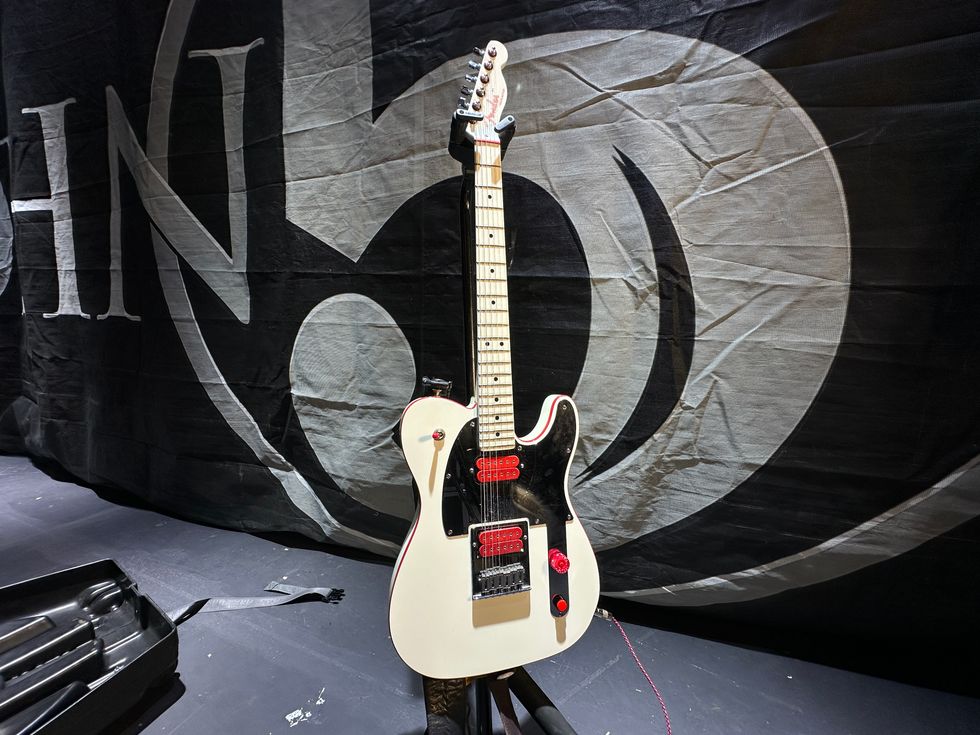
John 5’s obsession with Telecasters dates back to his days watching Hee Haw, seeing Buck Owens and Don Rich playing the classic Fender 6-strings. Influenced by aesthetics from Buckethead and Supreme, 5 created his signature John 5 Ghost Telecaster, with DiMarzio D Activator and Super Distortion pickups in the neck and bridge, respectively.
Meyers’ Monsters
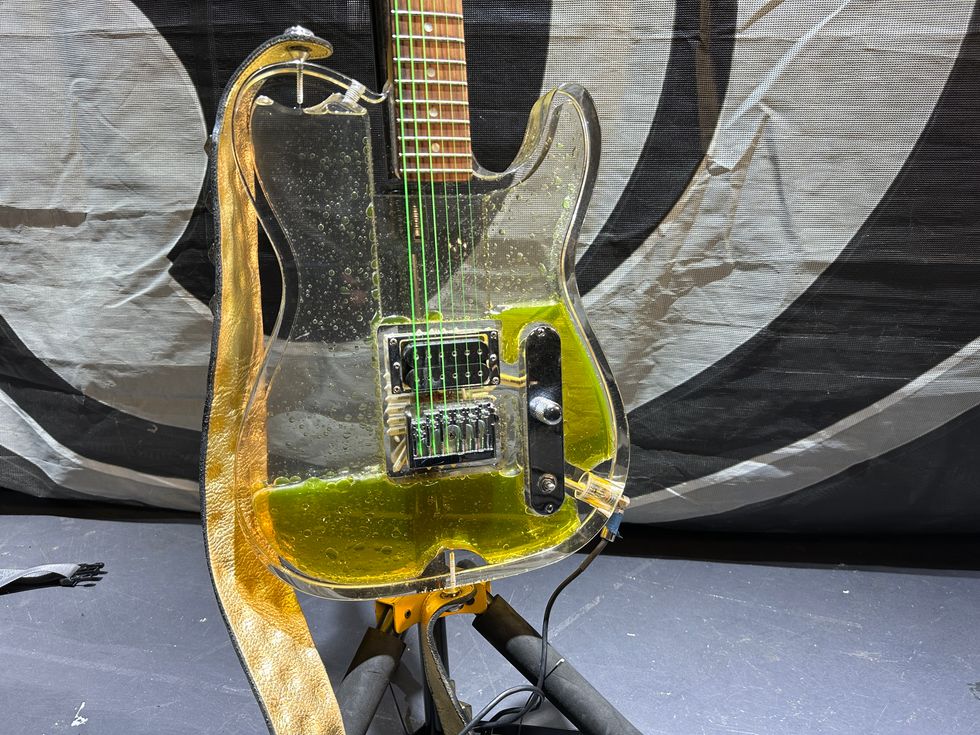
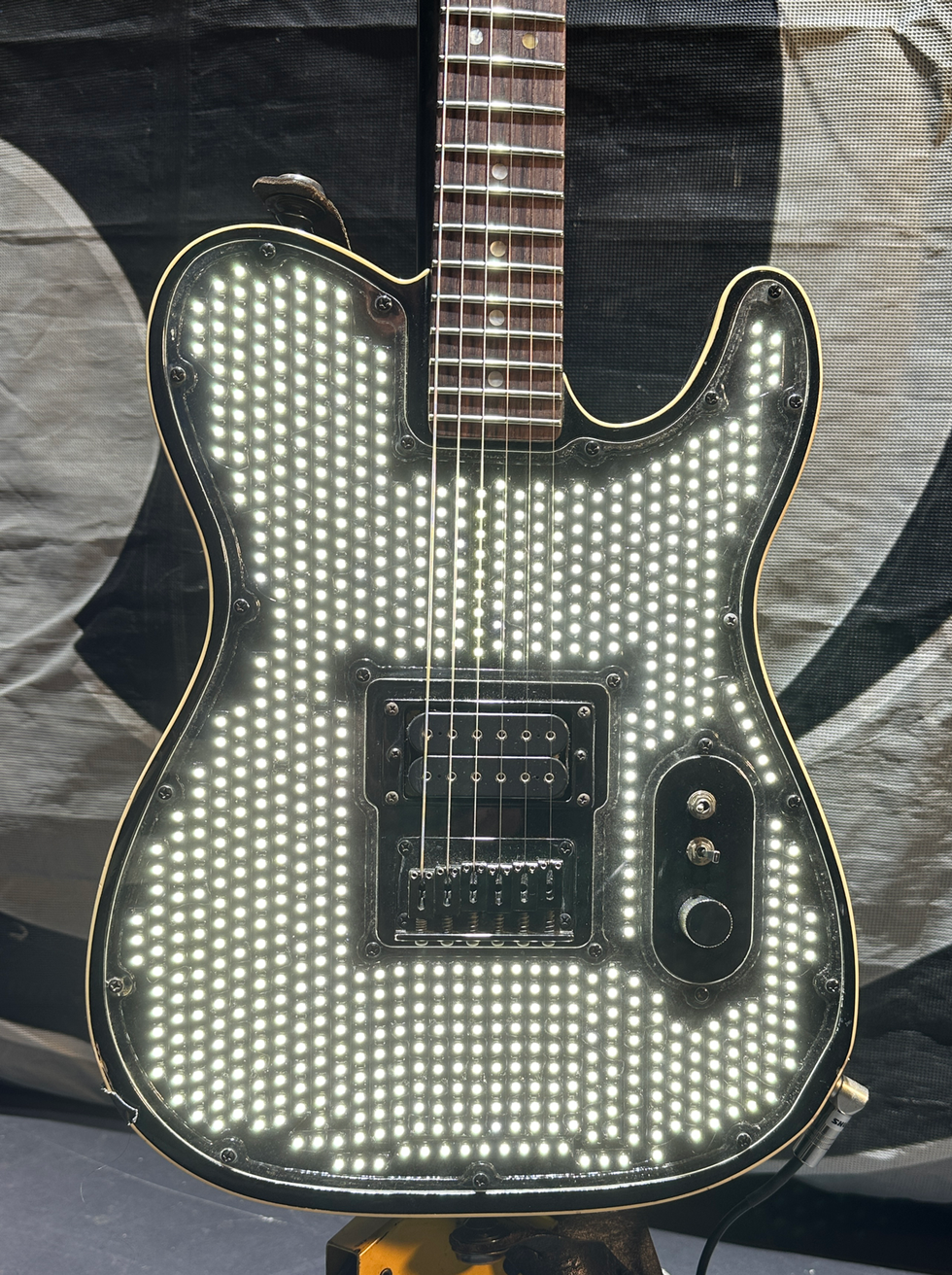
Ken Meyers created these oddball instruments for John 5 after running into the guitarist at NAMM and offering to build a guitar for him. 5 requested a light-up guitar, and Meyers delivered, then outdid himself with the queasy-green “Lava” T-style. After a below-zero mishap with a previous model, this one’s been filled with antifreeze.
5’s 5150
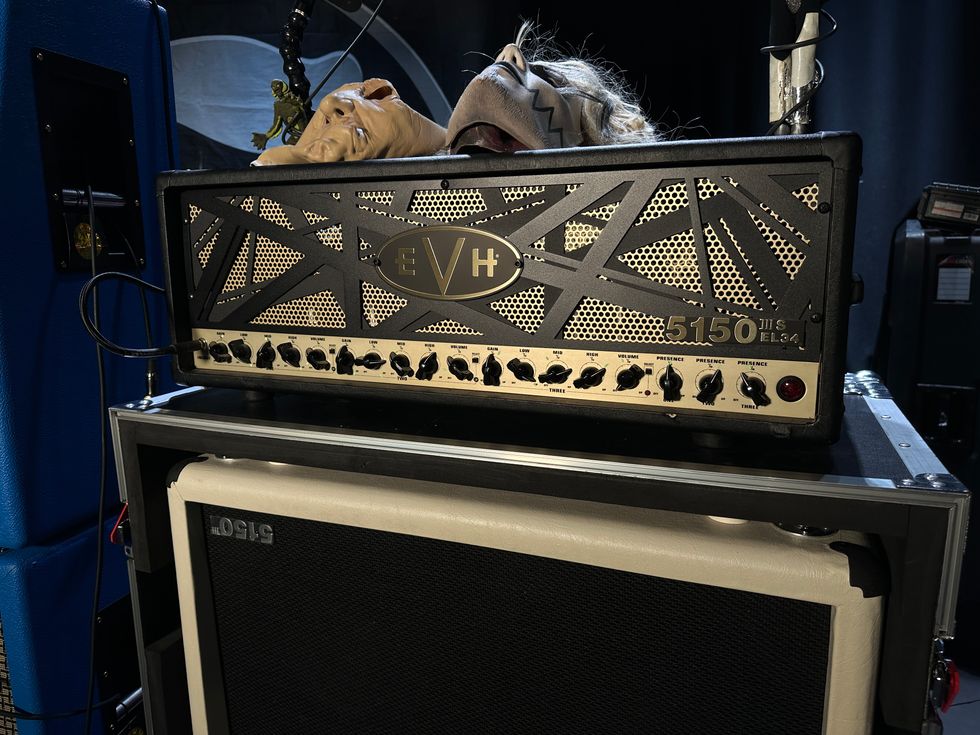
Eddie Van Halen himself gifted John 5 one of the first 5150s. He still has it to this day, but on the road he plays this EVH 5150 III S EL34 with a matching cab.
John 5’s Pedalboard
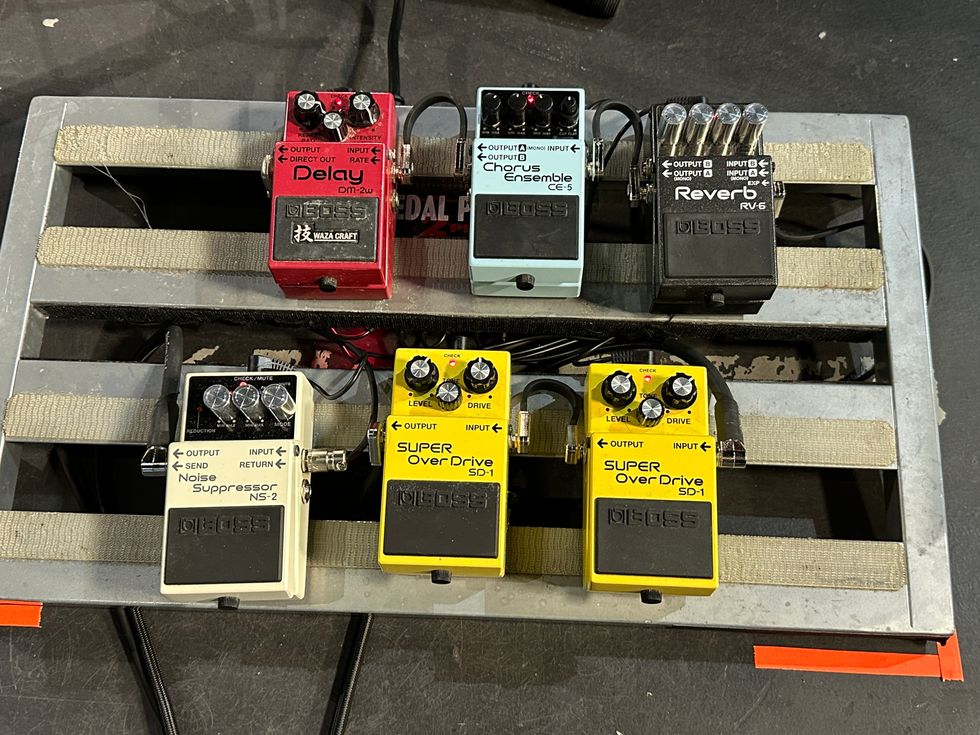
John 5 likes to run with gear that he can replace at a moment’s notice from any local music store, so on his all-Boss board, he runs a pair of SD-1s, an NS-2, RV-6, CE-5, and a DM-2w.
Cleartone Introduces Power Series Electric Guitar Strings
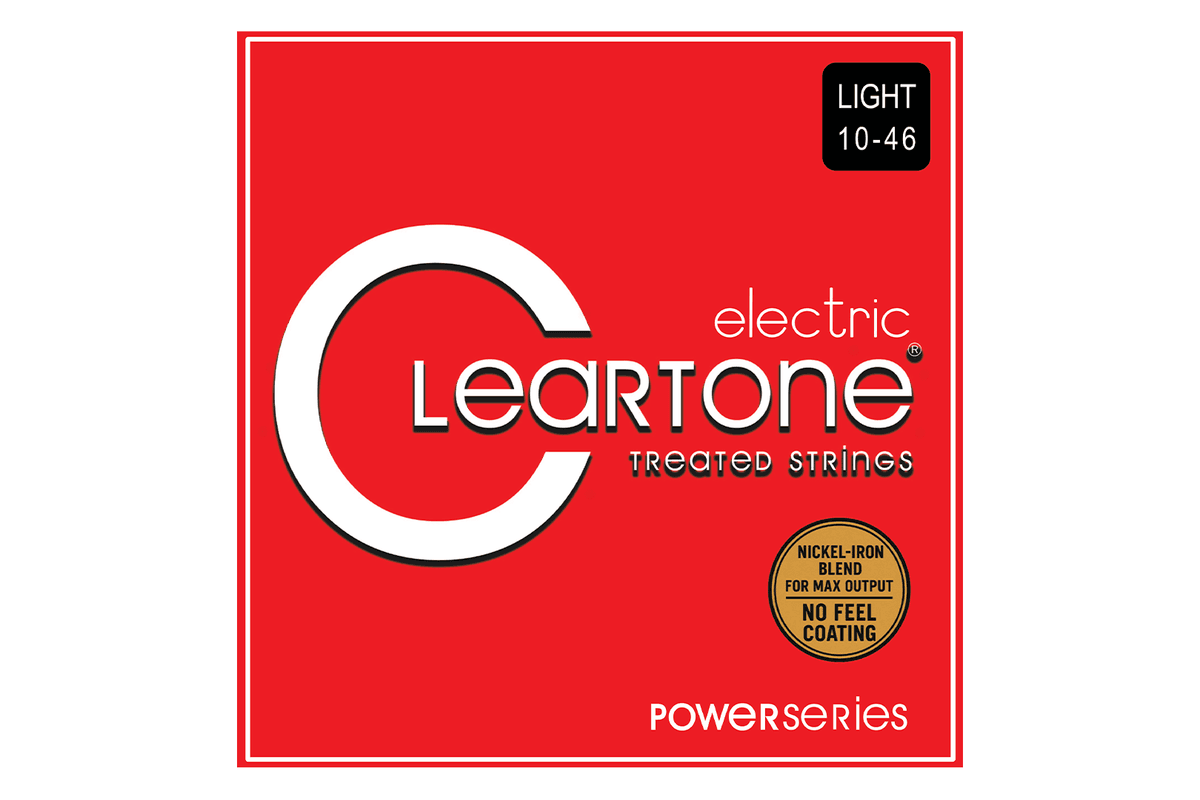
Cleartone Strings has introduced the all-new Power Series string sets, engineered for players who are seeking more power, clarity, and endurance from their strings.
Built on a reformulated nickel-iron blend, the Power Series is Cleartone’s longest-lasting string ever, designed to deliver a natural “clean boost” directly from your guitar—no pedals required.
The higher magnetic response of the nickel-iron alloy increases pickup sensitivity, tightening the lows and adding presence and articulation without altering your amp settings. It’s not distortion or EQ—it’s pure, natural gain and frequency enhancement, giving your tone that alive, dynamic feel you get from a transparent boost pedal.
The launch marks the culmination of a long, intensive development process: after a year of testing and fine-tuning countless alloy variations, Cleartone’s engineers have now finalized the Power Series formulation that they feel offers the best balance between power and clarity. Each set includes Cleartone’s twice patented “No-Feel” coating for extended life and consistent tone.
Cleartone’s Power Series string sets are available in gauges 9-42, 9-46, 10-46, 10-52, and 11-48. The sets carry a $19.99 street price. For more information visit cleartonestrings.com.
Last Call: How Record Labels Survived the Digital Apocalypse
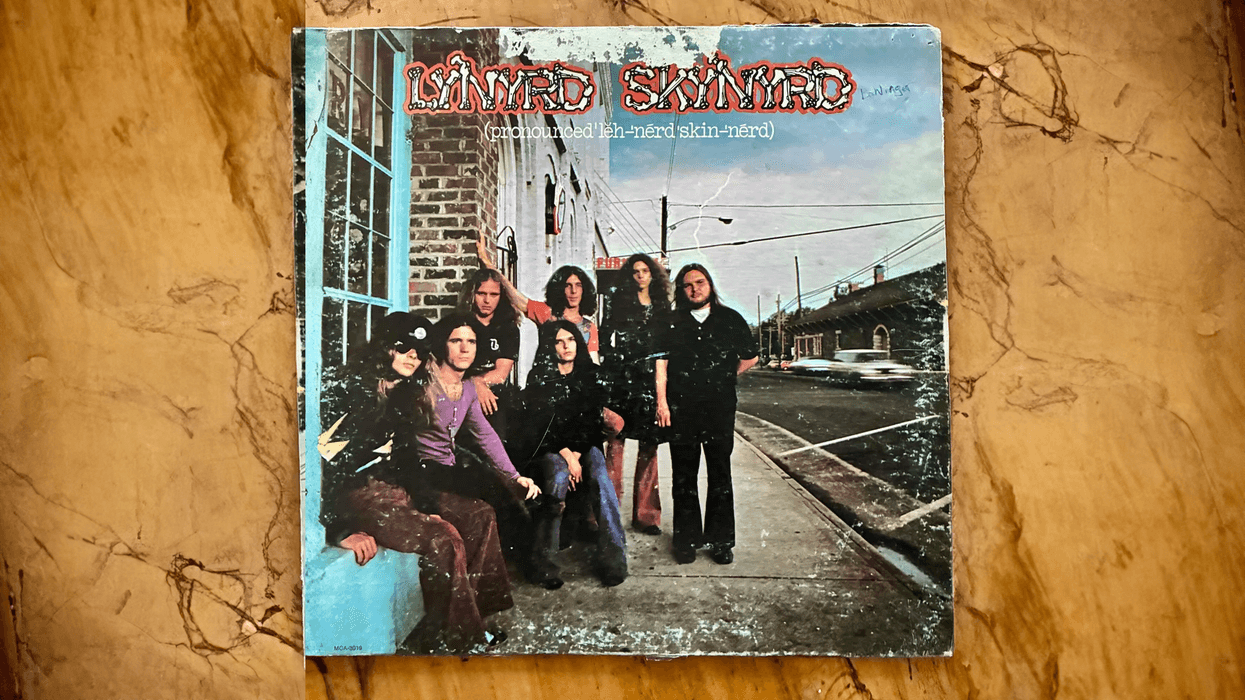
As we gather ’round the fire and stare at the ashes of what used to be the record business, I’m reminded of Nick Hornby’s 1995 novel (and later, movie) High Fidelity. In one iconic speech straight from the book, John Cusack says: “But the most important thing is … what you like, not what you’re like. Books, records, films—these things matter. Call me shallow, it’s the fuckin’ truth.”
Commercial record stores first appeared in the 1920s, but mass marketing did not kick in until 1948, when Columbia invented the 33 1/3 rpm long-playing (LP) record, and 1949, when RCA countered with the 45 rpm single.
In the mid 1950s, rock ’n’ roll exploded with Elvis, Chuck Berry, and Little Richard, and records were everywhere. By the time I came along in the ’60s and ’70s, even in remote Montana, our grocery store, pharmacy, and gas station all had a record section. There were also several dedicated record stores around town where you could hang out, listen to music, and occasionally buy records, black light posters, rock ’n’ roll t-shirts, and even a bong, if you wanted. By 1999, global recorded-music revenue crested at roughly $40 billion, with CDs costing a stiff 18 bucks. We were buying the same albums we already owned on vinyl, just shinier. From the first commercial phonograph cylinders in the early 1900s to the absolute peak in 1999, the whole glorious scam ran 100 years; shorter than the Ottoman Empire, longer than MySpace. But not by much.
Then two things happened almost simultaneously: Shawn Fanning gave every dorm-room genius the power to copy anything, and Steve Jobs sold us the radical idea that maybe we didn’t need “Smells Like Teen Spirit” permanently welded to 12 other tracks. Napster lit the fuse; iTunes handed us the à la carte menu.
But the big bad record labels didn’t die. Rather, they molted. They stopped selling plastic and started renting you the same songs forever, ten bucks a month, please and thank you. Today, streaming constitutes 84 percent of U.S. recorded-music revenue. Your Spotify subscription gets carved up like a pizza: the platform keeps about 30 percent for servers and the like, the rights holders split the remaining 70 percent, and the label—owner of the master recording—walks away with roughly 55 percent of the total pool before the artist sees a dime. Same old middlemen, new religion.
Labels began to diversify like a hedge fund. Sync licensing is the golden ticket now—one 30-second needle-drop in a Netflix trailer can out-earn a billion streams. Performance royalties still trickle in every time your song plays in an Applebee’s. Weirdly, vinyl in 2024 finally outsold CDs in units. Labels press lavender-swirl limited editions for $300 a pop and the superfans line up like it’s 1973. The game isn’t dead; it just learned to stop relying on a single point of failure.
“One 30-second needle-drop in a Netflix trailer can out-earn a billion streams.”
Record labels today operate like venture capitalists: professional gamblers who bet other people’s money on startups that usually have no revenue, no profits, and a 70–90 percent chance of going to zero. The job is to find the one or two out of 100 that become Airbnb, Uber, or Jelly Roll. Write and record your songs, work social media, put money and time into promotion to get on playlists, play gigs, and, if you’re talented and lucky enough to stand out amongst the crowd of wannabes, a label will message you on Insta and maybe roll the dice on your project.
Will the major label disappear? Please. Labels survived Napster, survived the CD crash, survived having to pretend they like mumble rap, shoegaze, and Hillbilly Vanilli. They’ll just keep evolving into something that looks less like a record company and more like a private-equity firm. The next decade will be about superfans and algorithms. Exclusive fan clubs, direct-to-consumer box sets, virtual meet-and-greets where you pay 50 bucks to watch an artist unmute himself on Zoom—labels will own that if the indies don’t get there first. And AI? It’s already picking singles, buying ads, and probably writing half the choruses you hate but can’t stop humming.
Meanwhile the indies will keep carving out the weird corners—hyper-specific genres, local scenes, anything too prickly for the algorithmic blender. The pie is bigger, the slices are thinner, and nobody’s starving unless they’re lazy.
So yeah, the era of walking into Tower Records with a crumpled 20-dollar bill and walking out with physical proof you love something is deader than disco. But the labels? They just changed their wardrobe and learned to live on micro-transactions and attention.
For artists wanting to be stars, the music industry, like the rest of the world, has the mega rich, the struggling poor, and not a lot in the middle. But if you have talent and an instrument, you can always find a way to monetize it. You might survive by busking or living from a tip jar in a bar, but you will survive. Personally, if I have music and my basic needs met, I’m cool.
Fender Musical Instruments Corporation Appoints New Chief Executive Officer
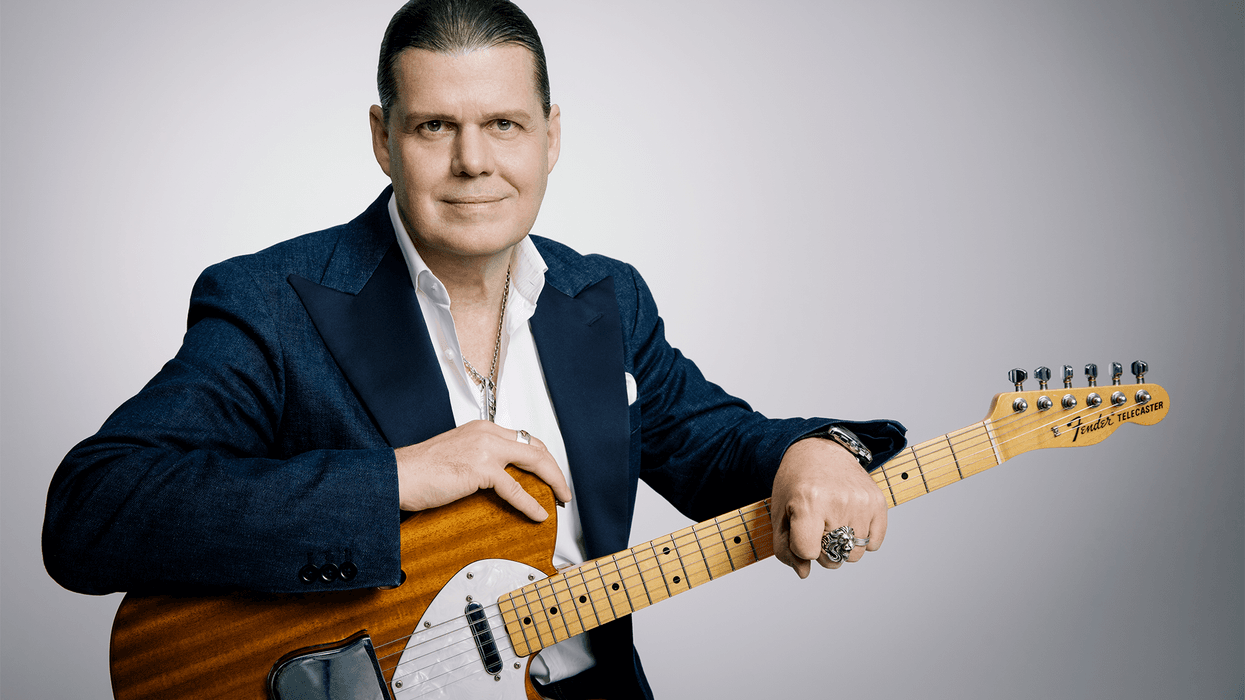
Fender Musical Instruments Corporation (FMIC) today announced that its Board of Directors has appointed Edward “Bud” Cole as Chief Executive Officer and member of the FMIC Board of Directors. Cole will serve as CEO-Designate effective January 19, 2026, and will officially assume the CEO role on February 16, 2026. He succeeds Andy Mooney, who will retire from the company following a decade of transformative growth and innovation.
Cole currently serves as President of Fender Asia Pacific (APAC) and brings a multi-decade global career across consumer, lifestyle, luxury, and FMCG brands to the role. During his decade-long tenure at FMIC, Cole has shaped some of the company’s most significant growth initiatives, leading the expansion of Fender’s business across 14 countries in the APAC region.A bilingual English/Japanese speaker and seasoned global operator, Cole has played a pivotal role in strengthening Fender’s presence worldwide, including launching Fender’s APAC headquarters in Tokyo and establishing full regional commercial and operational capabilities; building robust direct-to-dealer operations in Australia, resulting in a significant increase in efficiency, brand control, and distribution performance; and expanding Fender into mainland China and Korea, including developing direct-to-consumer (DTC) capability through e-commerce and driving long-term growth strategies across the region.
He also spearheaded the creation of the world’s first Fender Flagship retail experience in Harajuku, Tokyo, redefining Fender’s brick-and-mortar retail presence and consumer immersion, and developed a robust artist ecosystem across the APAC region, driving successful product innovation, including multiple Made-in-Japan launches that became standout global performers and strengthened Fender’s cultural influence and credibility throughout the region.
Before joining FMIC, Cole held senior leadership roles across several global lifestyle, luxury, and consumer brands — including Pernod Ricard, LVMH, QVC, and Ralph Lauren — where he led commercial expansion, brand development, and regional strategy across international markets. A visionary, who has conducted business in more than 60 countries, Cole’s global perspective has been shaped by a multi-decade career building and managing world-class brands at scale.
“Bud has been one of the most impactful leaders within our organization,” Mark Fukunaga, Executive Chairman of the FMIC Board. “He has a deep understanding of the Fender brand, our global players, and the commercial and operational foundation required to propel us into the future. His track record of building teams, expanding markets, and elevating Fender’s presence around the world makes him uniquely qualified to lead the next chapter of growth. On behalf of the Board, I also want to thank Andy Mooney for his leadership over the past decade and for the significant contributions he has made to the company.”
Since joining Fender in 2015, CEO Andy Mooney has more than doubled the size of the company and extended Fender’s worldwide leadership in the Musical Instruments category. Mooney championed product and marketing innovation at Fender and led the company's successful entry into subscription based digital software.
“Leading Fender has been a highlight of my career,” said Andy Mooney. “I'm deeply grateful for the creativity and commitment of the Fender teams around the world and proud of what we’ve accomplished. I’m excited to pass the baton on to Bud and confident that under his leadership, Fender will continue to inspire players for generations to come.”
A lifelong musician, Cole bought his first electric guitar — a Fender Made-in-Japan 1969 Thinline® Telecaster® reissue — as a teenager and still plays it today. His personal connection to Fender’s legacy and to the player community continues to shape his approach to leadership.
“To lead Fender is the honor of a lifetime,” said Edward “Bud” Cole. “This brand has been a part of my life since childhood, and I’m committed to ensuring Fender continues to empower players everywhere, from beginners picking up their first guitar to the artists shaping the sound of today and tomorrow. Together with our global teams, partners, and loyal community of players, we will write the next era of Fender’s history.”
Cole’s appointment marks the beginning of a new chapter for Fender as the company continues to expand its global footprint, deepen its commitment to players, and shape the future of music worldwide.
BzzzzKill Launches New Players Series
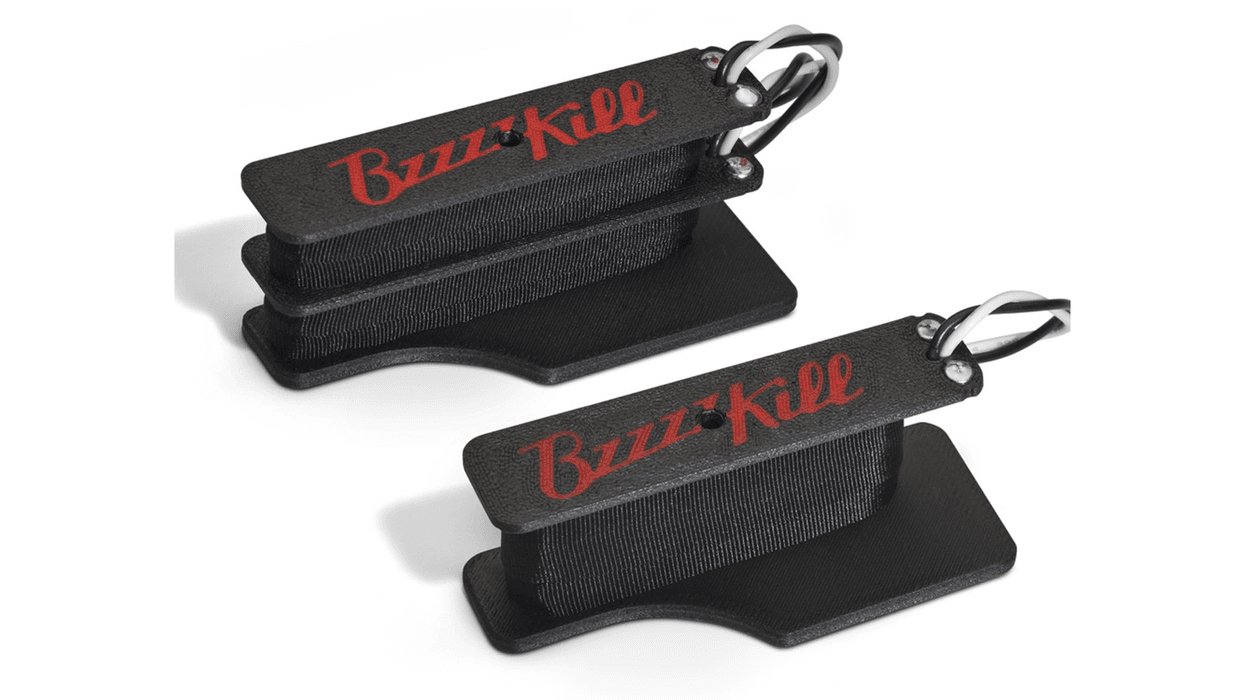
BzzzzKill has announced the launch of the Players Series, a new streamlined version of its innovative hum-reduction device engineered for Stratocaster-style guitars. Built around the same Smart Noise Reduction Coil™ architecture introduced in the company's debut product, the Players Series brings buzz-free single-coil performance to a wider audience with a modern, cost-efficient construction.
At $99 USD, the Players Series sells for approximately half the cost of the original BzzzzKill model. The Players Series virtually eliminates 60-cycle hum (50Hz in UK/EU) across all pickup positions while preserving the natural dynamics and clarity that define Strat-style tone. Like the original model released in 2025, installation is non-invasive, requires no power source, and leaves the guitar’s value intact. Installation remains fully reversible – no routing, active electronics, or pickup replacement needed.
Alongside the new Players Series, BzzzzKill is officially naming its original model the Custom Series. Built with hand-assembled vulcanized fibre flatwork, steel rods, and vintage-consistent cloth pullback wiring, the Custom Series remains the preferred choice for performing musicians, recording artists, and
custom builders, including Fender Custom Shop co-founder John Page, who is now integrating Custom Series BzzzzKills into his latest Artist Series Stratocasters.
BzzzzKill’s Players Series offers the same noise-reducing purpose in a modern, streamlined build featuring a precision-formed PETG structure and durable rubber-jacket wiring. Both series maintain compatibility with existing effects chains and operate passively in all pickup positions.
“We designed the Players Series to broaden access without compromising what makes BzzzzKill so special,” says inventor and co-founder Richard Moreton. “My greatest hope when I developed the original BzzzzKill was to bring it to every Strat player,” says Moreton. “I'm happy to see the Players Series taking us closer to that goal.”
With strong demand from guitarists worldwide, BzzzzKill is now preparing Players Series versions for Telecaster and other popular single-coil formats. As with current models, installation will remain fully reversible and will not require rerouting, active electronics, or pickup replacement.
The BzzzzKill Player Series carries a street price of $99. For more information visit www.bzzzzkill.com.
Chuck Berry: The Original Rock 'n' Roller with Jason Sinay
Singer-songwriter Jason Sinay, maybe best known for his work alongside Mike Campbell in Dirty Knobs, joins us to talk about the most foundational rock ’n’ roll guitarist of them all, the man who started the ball rolling, Chuck Berry. When it comes to his guitar playing, his influence can be heard across all styles. Without his licks, his songs, his vocal phrasing, who knows what path the electric guitar would have taken!
While we’re at it, we get some cool Keith Richards and Neil Young stories from Jason, and we dream about what it would be like to have those guys step onto our own stage.
Thanks to our sponsor!
 This Episode Brought to You By: www.premierguitar.com
gibson.com
Nuclear Audio Introduces Fission Drive
Boutique effects company Nuclear Audio has introduced their debut pedal: the Fission Drive is two drives in one pedal, each acting on different parts of your guitar or bass signal.
With the Fission Drive you can split your signal into highs and lows at a frequency you select, then drive them each separately – from subtle breakup to thick distortion. Apply separate outboard effects to each channel using the independent effects loops. Use the recombined signal from the output jack or just use the send jacks from the effects loops to drive separate rigs – or use all three.
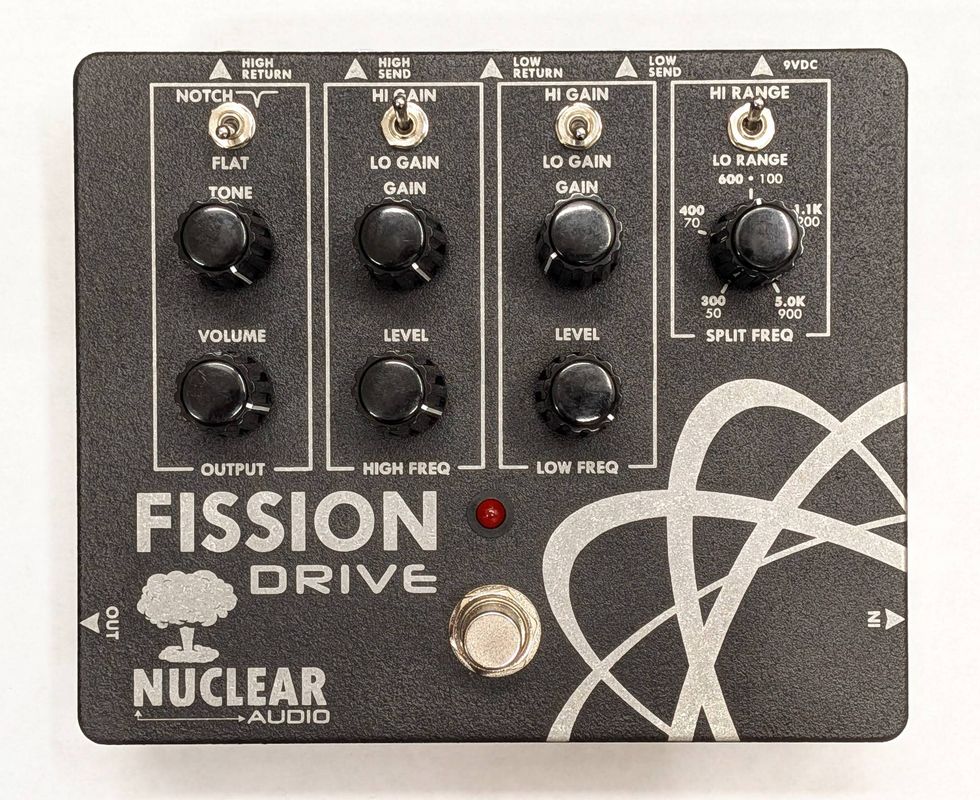
Nuclear Audio’s unique approach to clipping, not based on any previous circuits, smoothly and dynamically transitions between clean, soft clipping, and hard clipping, providing unparalleled responsiveness and dynamics while maintaining exceptional clarity.
Fission Drive highlights include:
- Separate drives for highs and lows, each with their own gain and level controls
- High/Low gain switch on each drive channel
- Control the frequency where the high and low channels are divided
- Post-drive effects loop send/return jacks for each channel
- Notch switch enables an aggressive scoop at the selected split frequency
- True bypass on/off stomp switch
The Nuclear Audio Fission Drive is available now for $300 street price from www.nuclear-audio.com and select retailers.
Set the World Afire: Dave Mustaine on Megadeth's Final Album and a Lifetime of Riffs
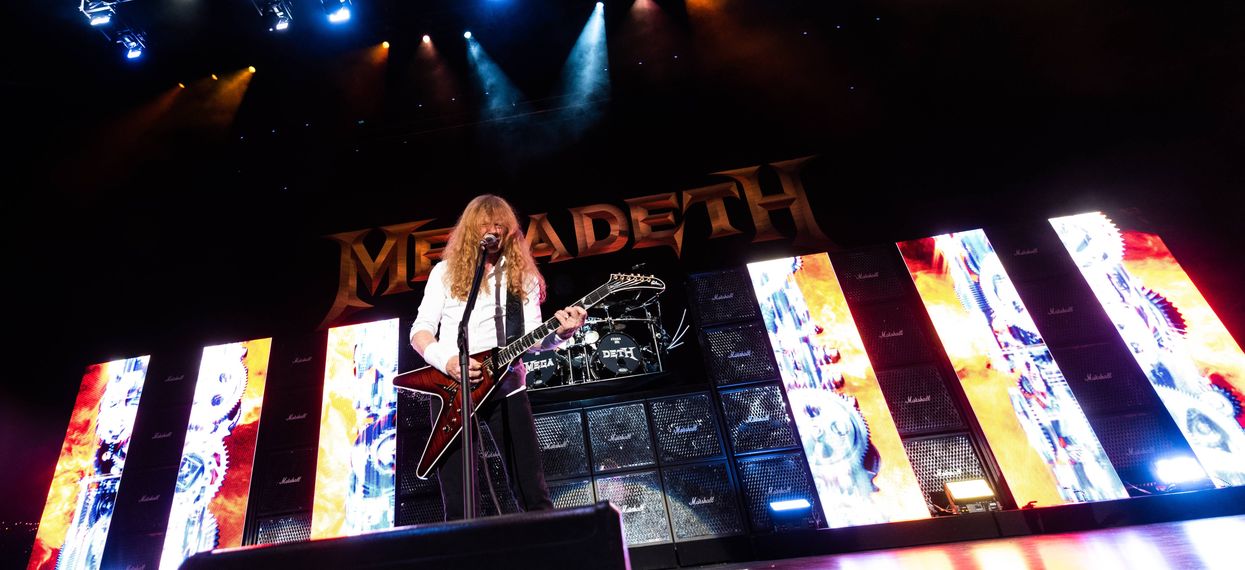
Dave Mustaine didn’t think he’d make it this far. Not the 40 years, not the 17 albums, certainly not the moment he’d be sitting down to talk about Megadeth’s final studio record. But here we are, more than four decades removed from that first gig at Ruthie’s Inn in Berkeley, California (February 17, 1984, to be exact), where the ceiling was so low “you could touch it from the stage,” and Mustaine was still figuring out if he even wanted to be a singer.
Could he have imagined that, in 2025, Megadeth would still be his band? “I didn’t think I was gonna live this long, honestly,” Mustaine admits during a video call, his voice still recovering from a bout of bronchitis that plagued him throughout a recent tour of Europe and the U.K. with Disturbed. Now 64, he’s dealing with health challenges that would have sidelined most musicians years ago—throat cancer, a “fused” neck, radial nerve damage in his arm. But he’s still here, still playing, still shredding. And that first Megadeth show is etched in his memory with remarkable clarity. “The history of that band was, we liked to party,” he recalls. “Ruthie’s was also a jazz club, so we had that temptation running through the band.” They played with drummer Lee Rausch—“I don’t know what happened to Lee, he was a good kid”—that night, and the lineup was still in flux. On guitar alongside Mustaine was Kerry King, on loan from Slayer, and Mustaine hadn’t even fully committed to singing yet. That decision didn’t come until bassist Dave Ellefson asked him why he wasn’t handling vocals. “I said, ‘Because I don’t want to—and that should be good enough for you,’” Mustaine recalls with a laugh. “But I also didn’t wanna hurt the guy’s feelings, ’cause Dave was younger and looked up to me. So I said, ‘Okay, I’ll try it.’ In a weird way, I have David Ellefson to thank for my singing career.”
Fast forward through the decades—through 1986’s Peace Sells... But Who’s Buying?, through 1990’s Rust In Peace, through 12 Grammy nominations and one win, through lineup changes and personal demons conquered—and Mustaine finds himself at an unexpected crossroads. The band’s latest album, simply titled Megadeth, will mark their 17th and final studio effort.
The decision wasn’t made lightly, and it wasn’t made in a single moment. “I would still keep going if I was not battling these things,” Mustaine explains, referring to his ongoing health struggles. “But I just don’t want to go out onstage when I’m not my best. There were many nights on the Disturbed tour where I was in full-blown bronchitis, hopped up on antibiotics and steroids to get rid of the inflammation. That doesn’t feel good. I’m not a guy that likes being sick.”
“I didn’t think I was gonna live this long, honestly.”
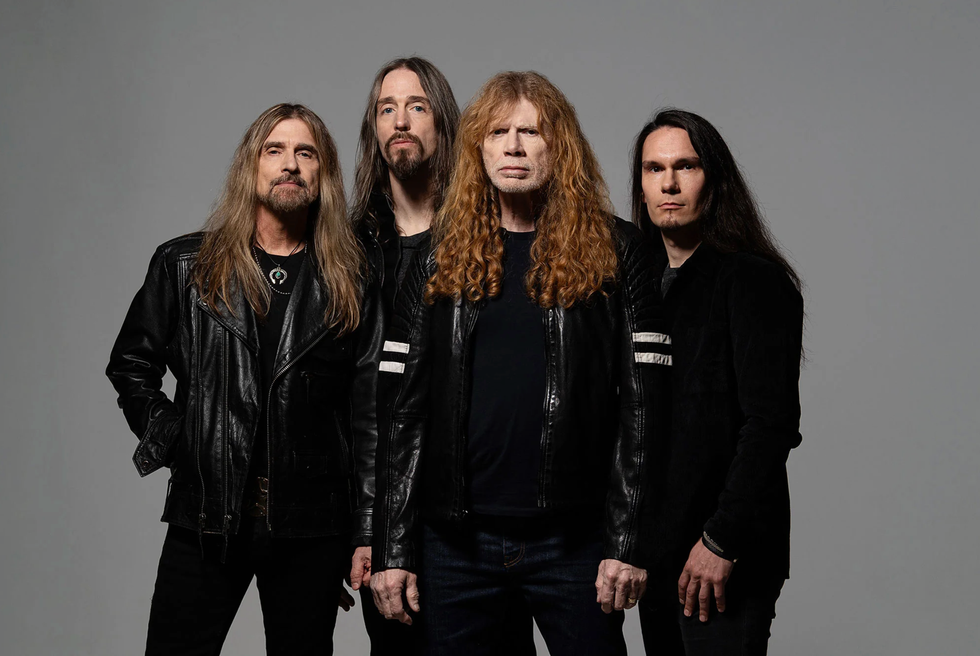
The recording process itself proved physically grueling. Working with producer Chris Rakestraw at various points throughout 2024, Mustaine and his current lineup—virtuosic Finnish guitarist Teemu Mäntysaari, Belgian drummer Dirk Verbeuren, and bassist James LoMenzo—did sessions in marathon stretches. “We did about four weeks straight, 12-hour days,” Mustaine recalls. “And I told my management, ‘I don’t know how much longer I can do this.’ My hands were throbbing and my back was hurting from sitting up for that long. What I remember during some of those sessions was torture, when they make people sit for long periods of time.”
Yet despite the physical toll—and the weightiness of knowing this would be Megadeth’s final statement—there was an openness and fluidity to the sessions. The songs were numbered rather than titled during recording—“Tipping Point,” the album’s explosive opener, was “song number nine”—because Mustaine changed titles so many times. “Going into the studio, I don’t really ever have a plan,” he says. “I have songs and we go in to record them, but I think open-mindedness going into the studio has been really good for us. A lot of times you’ll be working on a song and you’ll get an idea, and then you’ll have a completely different song come out of it.”
STUDIO GEAR
Guitars
- Gibson Dave Mustaine Flying V EXP
- Gibson Flying V with Evertune bridge
Amps
- Marshall JVM410HJS Joe Satriani Edition
- Marshall 1960DM Dave Mustaine 4x12 cabinet
- Mesa Boogie 4x12 cabinet
- Neve Brent Averill 1272 preamp (no EQ, no FX)
Effects
- TWA Chemical Z overdrive
- MXR Phase 90
- MXR Flanger
- Fortin ZUUL+ noise gate
- Source Audio EQ2
- Peterson StroboStomp HD tuner
- Peterson StroboRack tuner
- Korg DTR-1 rackmount tuner
Picks & Strings
- Dunlop medium picks
- Gibson Dave Mustaine strings, signature gauge (.010-.052)
That openness extended to his bandmates. “Dirk wrote music. James wrote music. Teemu wrote music,” Mustaine notes. “Even our producer chimed in a couple times. Good producers are supposed to do that.” The democratic approach reflects both his confidence in his current lineup and his recognition that fresh perspectives keep the music vital. “I believe with James and Dirk and Teemu’s ideas, this record had a lot of really fresh ideas. Obviously I have my fingerprints on it, but we’re a band.”
The album’s 11 tracks find Megadeth operating with deadly precision—economical, direct, savage. “Tipping Point” kicks off with a blistering guitar solo that gives way to Mustaine’s unmistakable snarl. “I Don’t Care” channels punk fury into defiant aggression. “Let There Be Shred” celebrates guitar virtuosity with mythic, apocalyptic imagery about thrash metal’s birth—a “Mount Olympus kind of thing,” as Mustaine puts it—while cuts like “I Am War” and “Made to Kill” deliver the technical thrash assault the band has honed across four decades.
For Mustaine, the division of labor between himself and Mäntysaari came down to serving the song. “If the rhythm’s really difficult, I’ll usually play the rhythm and let my guitarist do the solo,” he explains. “And if the rhythm’s really easy, I’ll let them do the rhythm and me solo. A lot of that is because these guys are all virtuosos and I’m self-taught, so there’s a limit to what I know how to do. A lot of what my soloing is, is just statements. We could be listening to a really beautiful solo, and then I’m gonna come and stomp through your gardens with combat boots.”
He points to the solo in “Let There Be Shred” as an example. “It’s kind of a hippie solo,” he says. “Teemu’s shredding, and then you go into this kind of slow-motion riff in the middle of the song. And I felt that having a burning solo over that part would be wrong because the rhythm was a really cool rhythm. A lot of times when people play solos, they think the solo’s more important than the song.”
It’s a philosophy Mustaine has carried throughout his career, one rooted in his identity as what he calls “a guitarist that sings” rather than a rhythm player or lead guitarist. “The term ‘rhythm guitar player’ seems a little diminishing for me,” he says. “I love the riff.”
And how committed is he to that principle? When asked what he sees as Megadeth’s main contribution to metal over the decades, he doesn’t hesitate: “Riffs.” It’s the riff—more than the solos, more than the hooks, more than even his distinctive snarl of a voice—that defines the band’s legacy in his mind.
“Sometimes you just want to hear something that makes you wanna kick trash cans over.”
That riff-centric approach announced itself the very first time Mustaine plugged in with his pre-Megadeth band, Metallica. “When I went to Norwalk [California] the day that I met James Hetfield and [original Metallica bassist] Ron McGovney, I didn’t know what was gonna happen,” he reflects. “Nobody did. But I had my style, and it was based around the riff.”
That style made an immediate impression. “I went in there and I didn’t have any Marshalls yet because I was just starting to get serious. I had these Risson amps—they were tan, so from the moment I set up my stack, I was different. I plugged in my guitar and I started warming up, and I kept warming up and warming up. And I finally said, ‘Where the fuck are these guys?’ I set my guitar down and switched my amp to standby. And then I went out there and I said, ‘Man, where’s my audition?’ They said, ‘You got the gig.’ So I got my job just by warming up.”
That period of time proved to be the crucible when thrash metal’s DNA was forged. When Hetfield picked up a guitar at a subsequent rehearsal—they’d been working with a second guitarist who showed up to a gig at the Whisky a Go Go, “in Def-Leppard-circa-’86 clothes, with a giant feather in his ear”—Mustaine was floored. “It blew my mind because he was so good. I kind of thought, where were you when we were auditioning a second guitar player? He was as good as he is today. James is a masterful guitarist.”
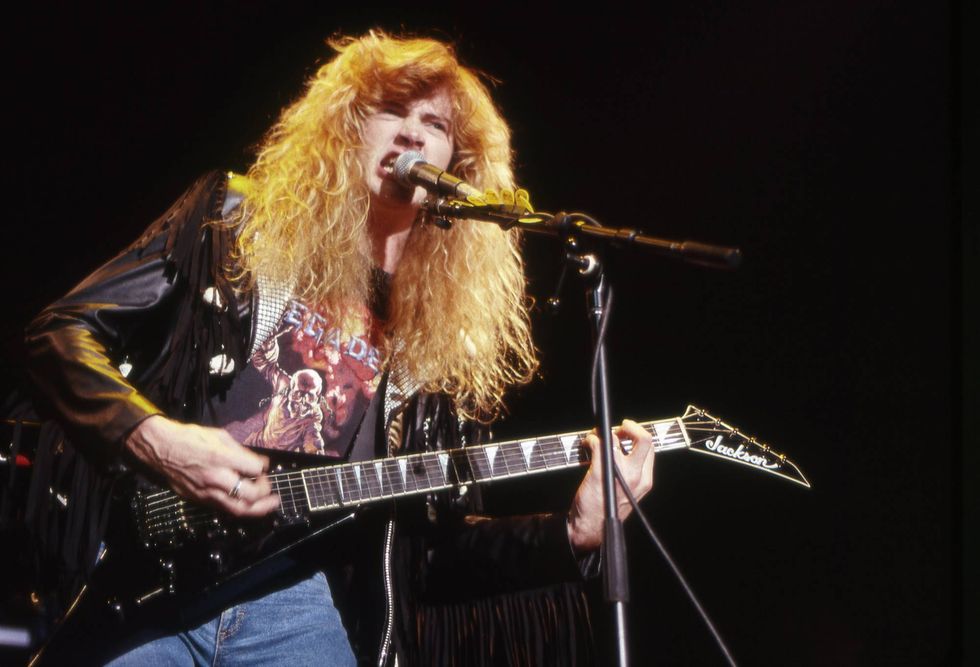
The fact that two musicians who would essentially define thrash guitar—the palm-muted down-picking fury, the intricate riffing, the speed and precision—were sitting in the same room together as teenagers remains remarkable. “I hear influences on everything,” Mustaine says. “I’ll be listening to a TV show and somebody will be playing the soundtrack, and it’s either copying a lick from me or from Metallica. I just take it all in stride. I feel very honored to have been able to make a name for myself.”
That history—and Mustaine’s complex, decades-long relationship with Metallica following his dismissal in April 1983—informs one of Megadeth’s most surprising inclusions: a version of Metallica’s “Ride the Lightning,” which Mustaine co-wrote with Hetfield, Metallica drummer Lars Ulrich, and late Metallica bassist Cliff Burton.
“As I come full circle on the career of a lifetime, the decision to include ‘Ride the Lightning,’ a song I co-wrote with James, Lars, and Cliff, was to pay my respects to where my career first started,” Mustaine explains. “It showcases the spider riffing and the grunting fretting—you fret a G flat power chord and you slide up into the G—technique that I brought [to the band]. I thought it was just a great way to pay my respects to James and Lars and to close the circle.”
Does he consider his take on “Lightning” a cover version? “No, because I wrote the song too. I think other people will say that, but if you’re asking me, I don’t think it’s a cover song. When we played it for people who are fans of that band and that song, the consensus has been that we did a fitting homage. I think we did it at least as good.” He pauses. “It’s a little faster.”
The album closes with “The Last Note,” perhaps Mustaine’s most introspective song—a reflection on career’s end that acknowledges both the cost and the glory. “They gave me gold, they gave me a name / But every deal was signed in blood and flames,” he sings, before delivering a final testament: “I came, I ruled, now I disappear.” Yet Mustaine insists he’s not dwelling on endings. “I’m at a place in my life right now where I’ve been reflective, but not too much,” he says. “I do have days full of satisfaction, a lot of contentment with everything that’s going on.”
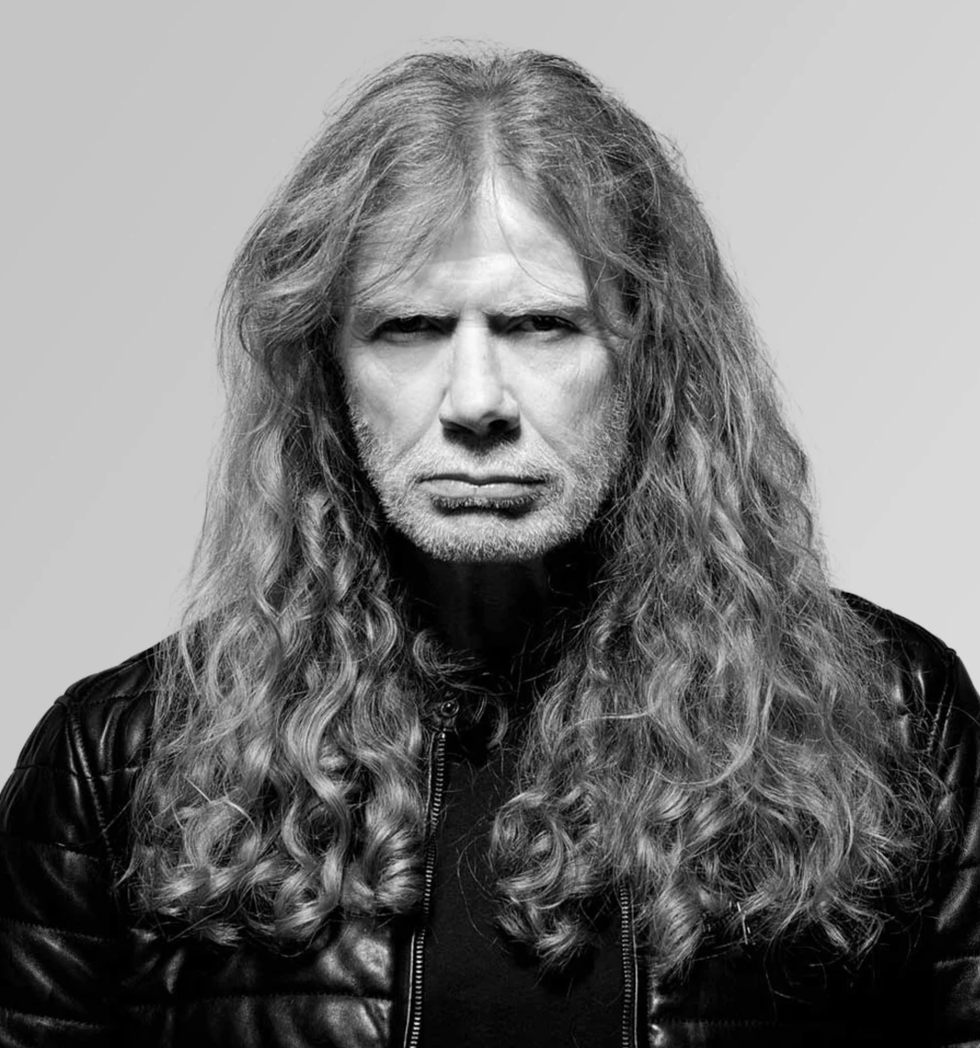
As for the tools that helped forge this final statement, Mustaine has come full circle. After years playing various Flying Vs, he’s now a Gibson ambassador, wielding a signature model that he describes with genuine reverence. The collaboration, he says, enabled him to dial in exactly what he desired—the right pickup configuration, the electrical schematic for his knob placement, a neck that’s very different from the standard Gibson Flying V. “Flying Vs are the most popular guitar in music,” he notes. “When people think of rock bands, they always draw one guy with a Flying V. I grew up loving the V, and to be [Gibson’s] number-one guy right now with it—the guitar is a monster.”
That monster will get plenty of use in the years ahead. Megadeth’s farewell tour will extend well into the future—Mustaine estimates three to five years of dates to properly close out Megadeth’s legacy, including runs supporting Iron Maiden and headlining with Anthrax and Exodus in support. “[Exodus guitarist] Gary Holt and I are like this,” Mustaine says, holding up crossed fingers. “Blood. He’s actually my oldest friend in the music business besides the guys in Metallica.”
“The term ‘rhythm guitar player’ seems a little diminishing for me. I love the riff.”
But he’s already gaming out how to handle that final show. “I was joking around and I said to my management, you should book the tour and then have a couple fake shows listed at the end. So I’ll do the last show thinking there’s still a few more to go, and then you’ll tell me that was it. And I’ll punch you in the face instead of breaking down and sobbing on stage.”
End it in anger instead of sadness? “Yeah,” he says with a laugh. “It’s more ‘Dave.’”
It’s quintessential Mustaine, wrapping emotion in, to use his words, a combat boot. From that first show at Ruthie’s Inn (where Mustaine wielded a pretty killer natural-finish BC Rich Bich that was later stolen) through countless tours and lineup changes, through personal and professional battles, he’s persevered. Does he wonder if younger musicians understand his place in metal history, the role he played in shaping thrash? “I don’t really know how much modern musicians know,” he admits. “If they’re influenced by a band that was influenced by a band that was influenced by me or Metallica, do they know the story? But I’m okay with myself, so I don’t feel the necessity to have people sing my praises. I’m really comfortable with who I am.” He laughs. “A freckle-faced redhead. You don’t think I was picked on growing up?”
For now, though, Mustaine is very much still here, and still vital. The hands may throb and the voice may rasp, but the fire that drove a red-haired kid to pick up a guitar and create a sound no one had heard before still burns. Megadeth delivers on that fire. “Sometimes you just want to hear something that makes you wanna fuck or fight, you know?” he says with a laugh. “Something that just makes you wanna kick trash cans over.”
As for that final show, whenever it arrives, Mustaine will walk offstage knowing he gave everything he had. And whether or not his management actually pulls off those fake extra gigs he joked about, there likely won’t be anger or tears—just gratitude for what was. “I’m really blessed,” he says. “And I’ve loved every moment of this.”