
Music is the universal language
“Glory to God in the highest heaven, and on earth peace to those on whom his favor rests.” - Luke 2:14
Premier Guitar


Lita Ford: Inside the Warlock, the Double-Neck & Her Signature Tone | Axe Lords
Season 2 of Axe Lords kicks off with a legend: Lita Ford joins Dave, Cindy, and Tom for one of the heaviest, wildest, most guitar-nerd–satisfying episodes we’ve ever done. Lita talks about reinventing herself after The Runaways, why she insisted on a three-piece band to prove her guitar chops, and how she developed a voice on the instrument that producers once criticized—until legends like Billy Gibbons co-signed her sound.

And yes: Lita plugs in, cranks a Boss Katana, and rips a live performance that might be the most rock-and-roll ending to an Axe Lords episode yet.
Axe Lords is hosted by Dave Hill, Cindy Hulej, and Tom Beaujour. Produced by Studio Kairos. Presented in partnership with Premier Guitar. Artwork by Mark Dowd. Theme Music by Valley Lodge. Follow and subscribe to Axe Lords @axelordspod.
Subscribe to Premier Guitar for more episodes of Axe Lords and get notified when the next Axe Lords episode drops.
Learning to Be a Better Musician Starts With Your Ear
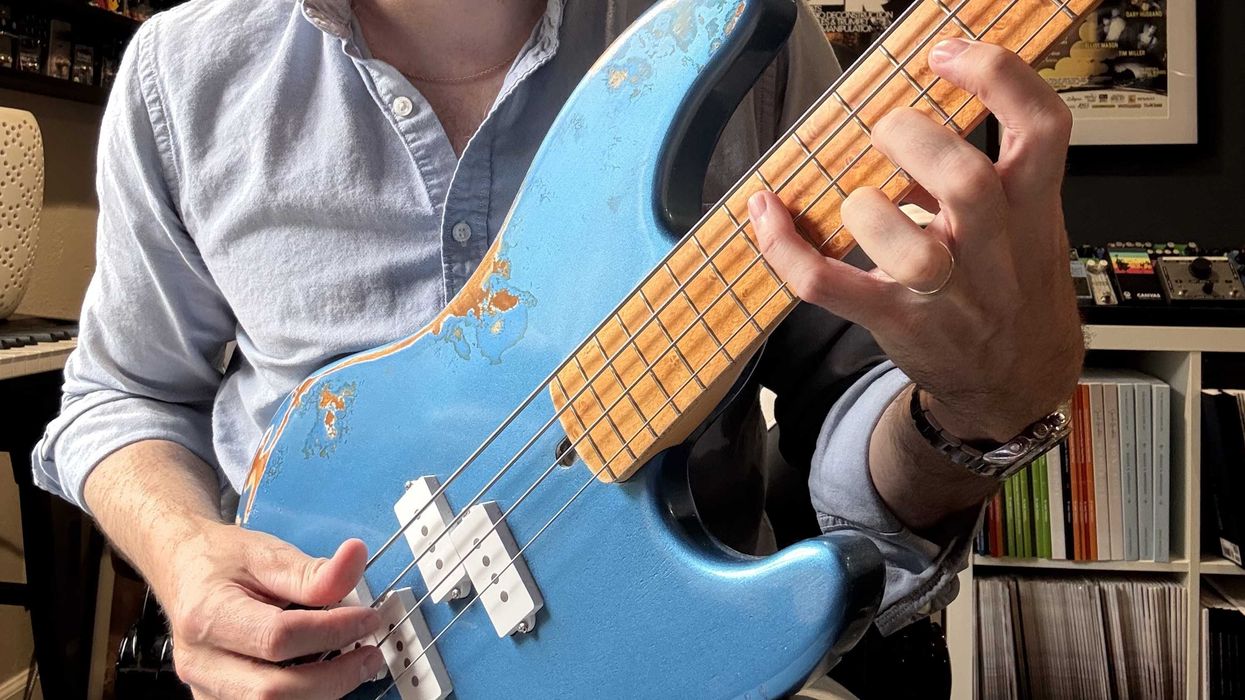
The speed and accuracy with which you react to what’s happening around you musically is definitely not a competition, but I believe it’s the single most important element of any musical performance, and your ears play a pivotal role.
Through some brutally honest self-inventory of my own abilities over the past month, I’ve discovered a few things about my playing that are far from flattering.
Here are a few key takeaways.
I want to get better: I’ll be the first to admit that my abilities—although well-developed after 35 years of practice—can still be improved significantly. Whether it’s recognizing the exact notes in a chord someone is using over my bass line, or hearing a song once and playing it back immediately, there’s plenty of room to grow. As bass players, we get to hang out in the low end and “listen up” the harmony vertically. It’s a great place to be, and the nature of our fundamental role in the band to hold things down often gives us a little more space and time to use our ears. It’s good to be aware of that and make the most of that extra time to absorb more information.
Repetition of listening has never been more important: Depending on the time frame I have from an artist—or my own personal goals—I want to spend as much time as possible listening away from my instrument. I’m making drastic changes to how I allocate my practice time, and the results have been huge. My playing is already sounding more natural because I’m focusing more on my ear than on my chops.
Recording shows religiously: I’ve always had some kind of recording device running during live gigs and practice sessions. Lately, I’ve been leaning much more heavily on this process. The more honest I am with myself about a performance or a practice session, the better I can plan future practice time to fix weaknesses and accelerate growth—even after 35 years!
“No matter where you’re at, creating a positive feedback loop—recording everything we do, listening back, and being self-critical when needed—has enormous potential to make us better musicians right away.”
I think it’s essential to remember that we’re all at different stages of the journey and want different things from our playing and our music. But no matter where you’re at, creating a positive feedback loop—recording everything we do, listening back, and being self-critical when needed—has enormous potential to make us better musicians right away.
I’ve been comparing learning to hear “faster” and more accurately to how a successful athlete approaches their sport. In tennis, for instance, you need multiple specialized skills to become a top player: speed, agility, hand-eye coordination, physical endurance for long matches, and mental toughness to outthink your opponent under pressure.
Similarly, a musician needs great time, great tone, a fantastic ear, solid memory, social skills for working with others, and technical command to execute ideas. It’s no small list of requirements.
But I think the most striking similarity is the mental toughness and focus required to handle the pressure of being onstage or in the studio. The best musicians feel no pressure at all. As a result, their ideas flow freely, they absorb everything happening around them, and their ears catch every detail. That’s where I’m looking to improve: Feel no pressure, and take in as much as I can.
Listening faster has become somewhat of an obsession, and I suspect it will stay at the top of my priority list for life. In just a few weeks, I’ve become more relaxed onstage, uncovered dozens of new things to practice by reviewing old recordings, and started to feel what a great athlete must feel when they step onto the court knowing they’re in complete control.
Distractions are fading, focus and intent are way up, and I feel like I’m playing better than I have in years. I thought I would never get back to the feeling I had when I first picked up a bass in my early teens, but the past month or so has surprised me greatly.
It has actually been quite emotional at times because the past decade has had its fair share of self-doubt, including hitting several plateaus where progress felt nonexistent. But now I can confidently say there’s no end in sight when it comes to new challenges to tackle. The improvements may not come in leaps and bounds, but they’re coming—and that’s what matters.
VOX Introduces the Micro Superbeetle Guitar Amp
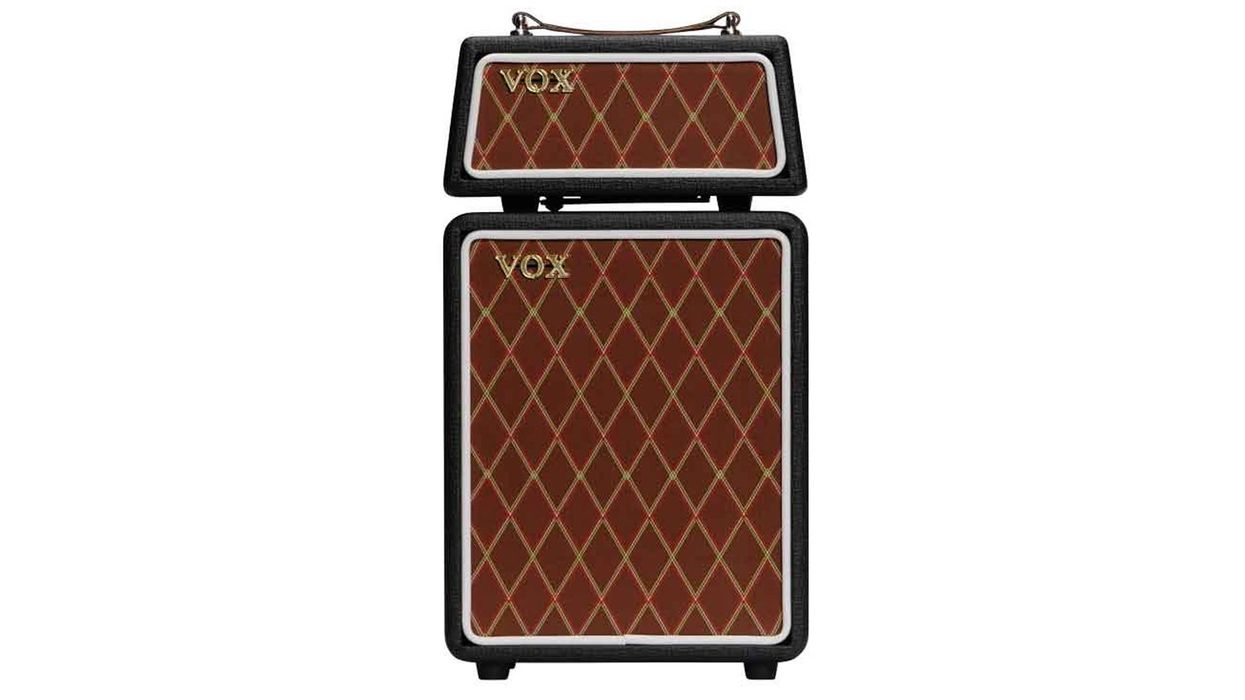
VOX® announces the debut of the Micro Superbeetle Guitar, a compact guitar amplifier that brings together the unmistakable VOX aesthetic with a bold reimagining of portable amplification. Inspired by the classic Super Beatle stacks of the 1960s, this new model delivers authentic VOX tone in a modern format—complete with an innovative two-way speaker system and a detachable, battery-powered amp head.
Designed for players who want true VOX character without the bulk of a traditional rig, the Micro Superbeetle Guitar offers expressive tone, room-filling clarity, and the freedom to play anywhere.
At the heart of the system is an innovative two-way design, pairing a 4" cabinet woofer with a 1.5" tweeter housed inside the detachable amp head. When stacked, it delivers a full 20 watts of articulate, harmonically rich sound—far beyond what its compact footprint suggests. Detached, the head becomes a fully self-contained 5-watt portable amp with a full-range driver and built-in rechargeable battery, ready for songwriting sessions, rehearsals, or outdoor jams.
“The Micro Superbeetle Guitar captures everything that makes VOX special—its look, its tone, and its spirit—while introducing a level of portability and flexibility that today’s players demand. It’s an exciting new step for the VOX family.” - John Stippell, Director of Marketing & Product Planning.
The Micro Superbeetle Guitar features three versatile amp voices—Clean, Drive, and High Gain—each crafted to reflect VOX’s signature tonal character, from shimmering chime to expressive crunch. With Bluetooth connectivity, players can stream backing tracks or music directly from their devices, making practice and performance seamless across any environment.
Compact, bold, and stylish, the Micro Superbeetle Guitar delivers the perfect balance of vintage charm and modern performance.
Available now through authorized VOX dealers and at www.voxamps.com
Street Price: $399.99 USD
Gibson Pickup Shop 1959 Humbucker Collector’s Edition Series 3
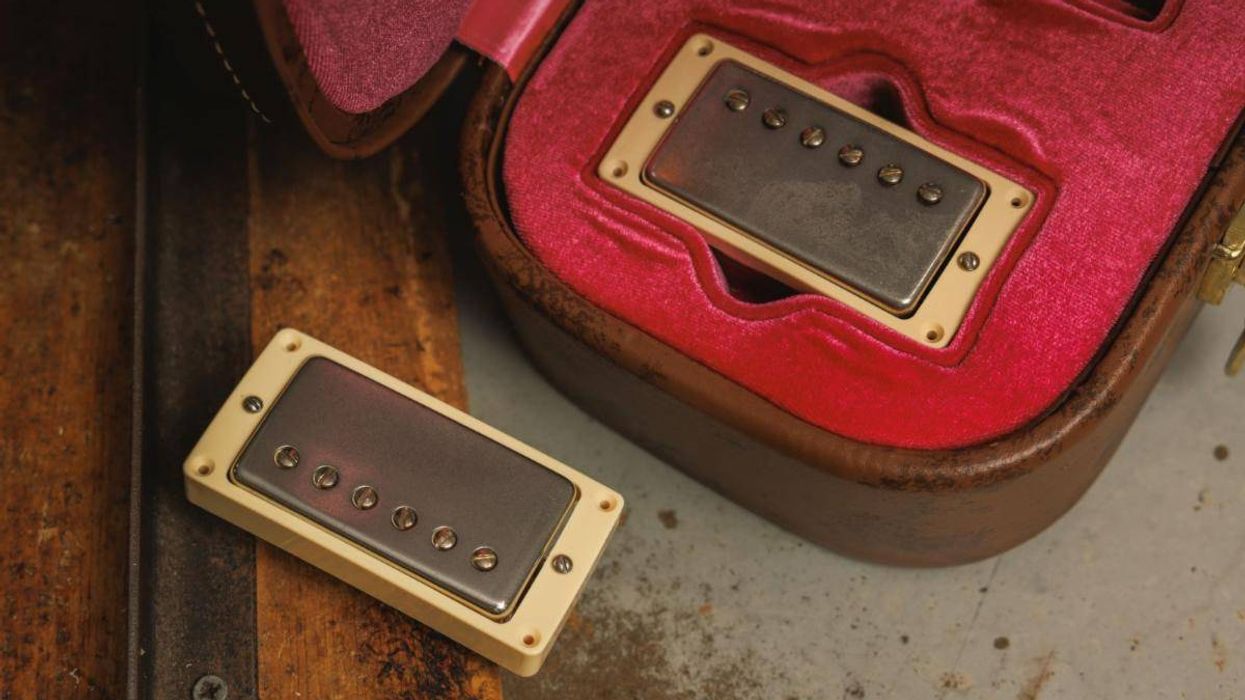
Gibson, the iconic instrument brand, has shaped sound across generations and genres of music, becoming one of the most relevant, played, and loved guitar brands worldwide. As a true pioneer of the electric guitar and pickup design, Gibson’s nearly 90 years of research and manufacturing have defined the sound of countless musicians and music lovers. Since 1935, Gibson has been the source of the world’s finest pickups—standard-setting components wound in its own factories, though not widely known to the public. Gibson’s original “Patent Applied For” humbuckers™ from the 1950s are considered the holy grail of humbucking tone, highly influential and often imitated, and every modern Gibson pickup continues that tradition of superior construction, crafted in Nashville, Tennessee, from premium materials using time-tested methods.
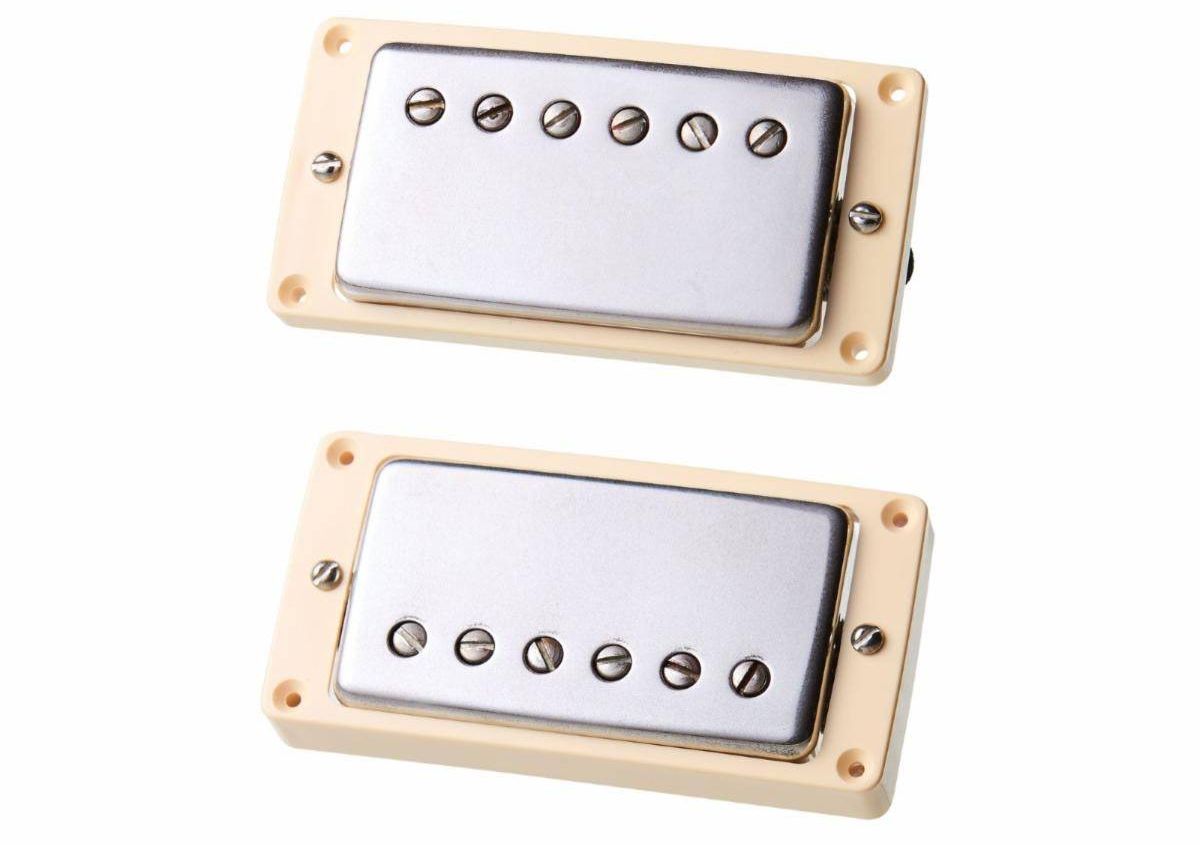
Today, the Gibson Pickup Shop proudly introduces the 1959 Humbucker Collector’s Edition Series 3, limited to only 1,000 sets and available at authorized Gibson dealers, Gibson Garage locations in Nashville and London, and online at Gibson.com.
“With the 1959 Humbucker Collector’s Edition Series 3, we’ve pushed the boundaries of historical accuracy and tonal integrity even further,” says Jared Brandon, Pickup Product Manager. “Every detail—from the Double Vintage White butyrate bobbins to the Alnico 3 roughcast magnets—was chosen to honor the spirit and sonic magic of the original ‘Patent Applied For’ pickups. This set is not just a tribute; it’s a time capsule for tone purists and collectors alike.”
Explore your sound with the 1959 Humbucker Collector’s Edition Series 3 HERE, and view the full Gibson Pickup Shop Collection, HERE.
Revered by players and collectors alike, Gibson’s legendary “Patent Applied For” humbucking pickups have inspired countless replicas over the decades. The originals featured a range of Alnico magnet types—including Alnico 2, Alnico 3, and Alnico 4—and remain among the most sought-after vintage components in existence, especially when the rare opportunity arises to acquire a set.
Through a meticulous process involving 3D scanning, scientific analysis, reverse engineering of late-1950s examples, and reference to archival Gibson specifications, the Gibson Pickup Shop has crafted its most precise reproductions to date. This Collector’s Edition Series 3 set comes housed in a premium Lifton™ case and showcases Double Vintage White butyrate bobbins, Alnico 3 roughcast long magnets, historically accurate nickel covers, and aged Cream M69 mounting rings. Every metal component—from the silver-nickel covers and baseplates to the screws and springs—has been expertly aged by the Murphy Lab team. Only 1,000 sets will be produced, each serialized with 1959-style numbering.
Electro-Harmonix Launches the Pico Atomic Cluster
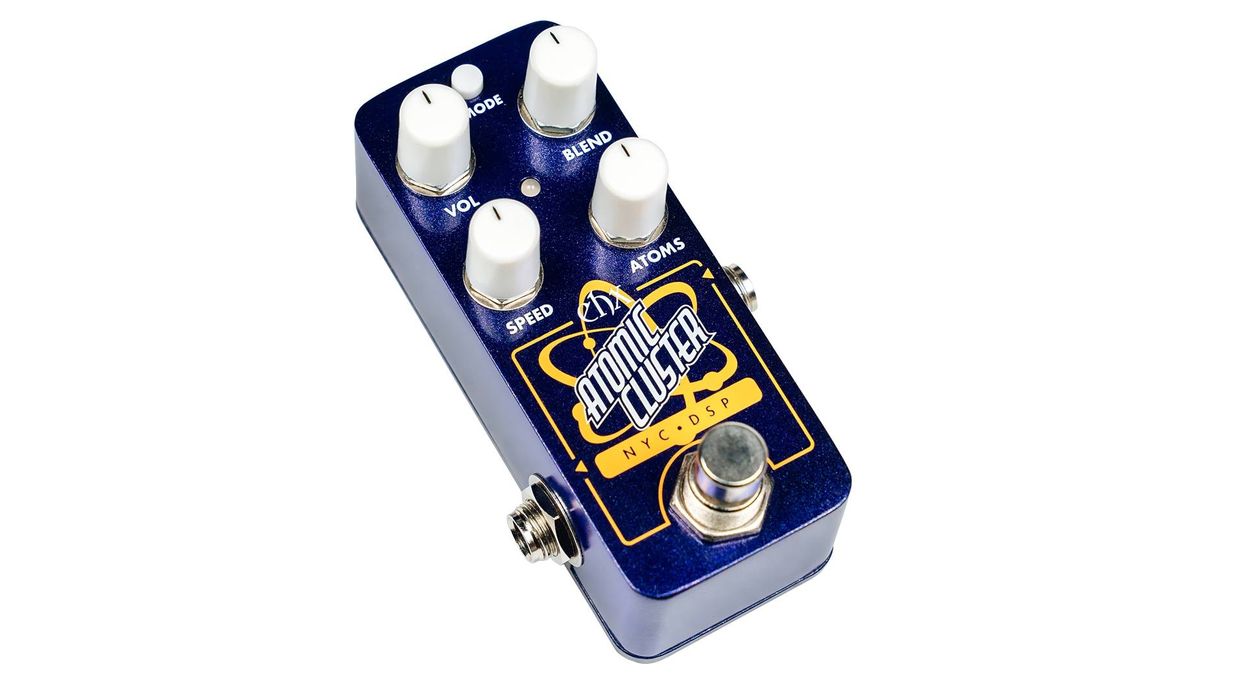
Dipping their toe into the digital bath of glitch synthesis pedals, Electro-Harmonix introduces the Pico-sized Atomic Cluster Spectral Decomposer. Unlike any other EHX pedal before, the Atomic Cluster uses a unique algorithm to reduce the frequency resolution of your instrument and create a wide range of effects from rhythmic lo-fi glitch and auto-arpeggio tones to ambient synth pads and more.
Housed in EHX’s Pico-sized chassis, the Atomic Cluster main controls for sound manipulation are ATOMS and SPEED. ATOMS controls the number of simultaneous resonant oscillations produced at a time, creating more pixelated, glitchier sound as oscillations are reduced. SPEED adjusts the oscillation refresh rate, ranging from more rhythmic effects to complete random chaos. This rate can also be set by tap tempo. Additional VOL and BLEND controls adjust overall output level and wet/dry mix respectively. A MODE button selects between oscillation transition envelope shapes. SHARP creates instant, choppy effects, while SMOOTH can be used to build more lush, ambient sounds.
This compact sound twister ships with standard EHX 9 Volt power supply, is available now and has a U.S. Street Price of $129.00.
Rig Rundown: Orianthi
The Australian shredder keeps things simple with signature PRS, Orange, and Gibson gear.
Australian guitarist Orianthi, known for her blistering solo work in addition to her collaborations with superstars like Carlos Santana, Alice Cooper, and Carrie Underwood, stopped through Nashville on her current tour. PG’s John Bohlinger joined Orianthi to get a look at her rig, and it turns out she doesn’t need too many tools to get the job done.
Brought to you by D’Addario.
Flower Power
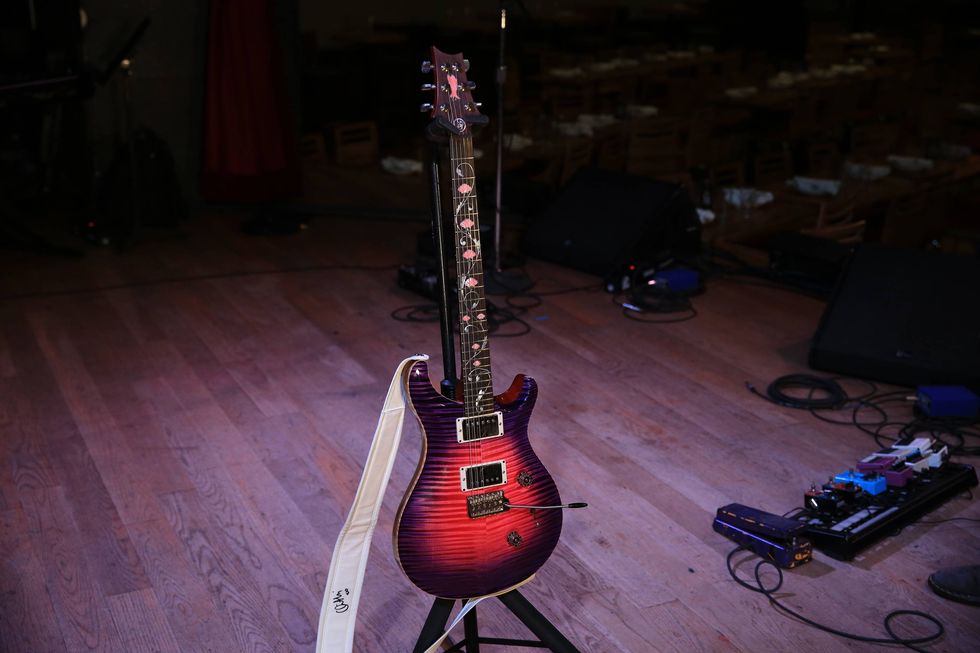
Orianthi’s signature PRS, based on the Custom 24 and made of Brazilian rosewood, honors the color of her very first Hendrix t-shirt, finished in blooming lotus glow. It’s got custom pickups created by Paul Reed Smith himself, and it’s strung with Ernie Ball .009-gauge strings.
Cherry Bomb
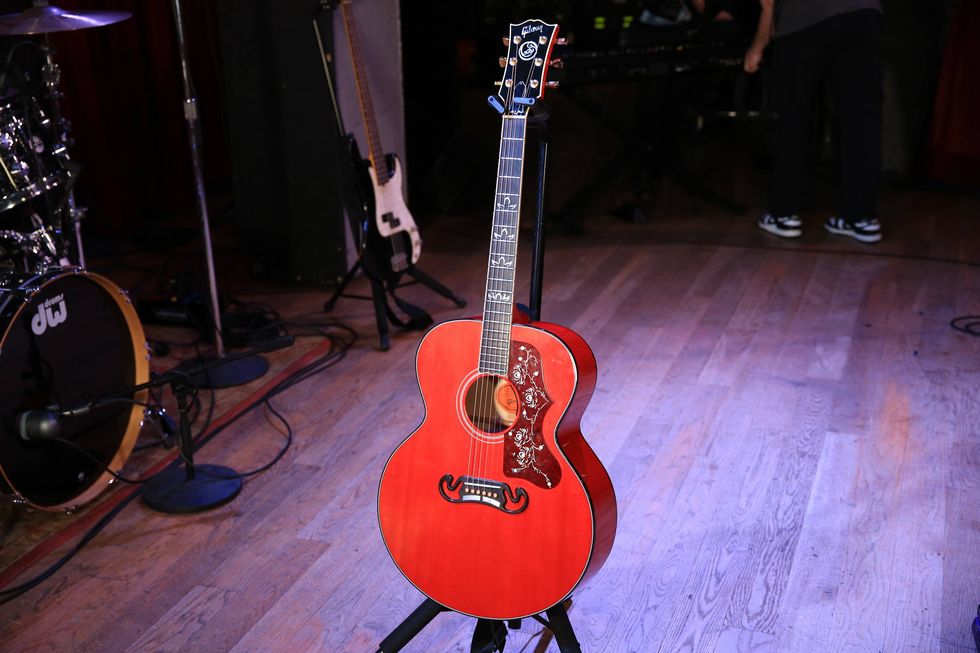
This is Orianthi’s signature, cherry-finish Gibson SJ-200, which she helped create in Montana with her friends Rae Vinton and Robi Johns. They built it with a thinner, ES-345-style neck, and modded the pickup with L.R. Baggs over Zoom.
Orange-ianthi
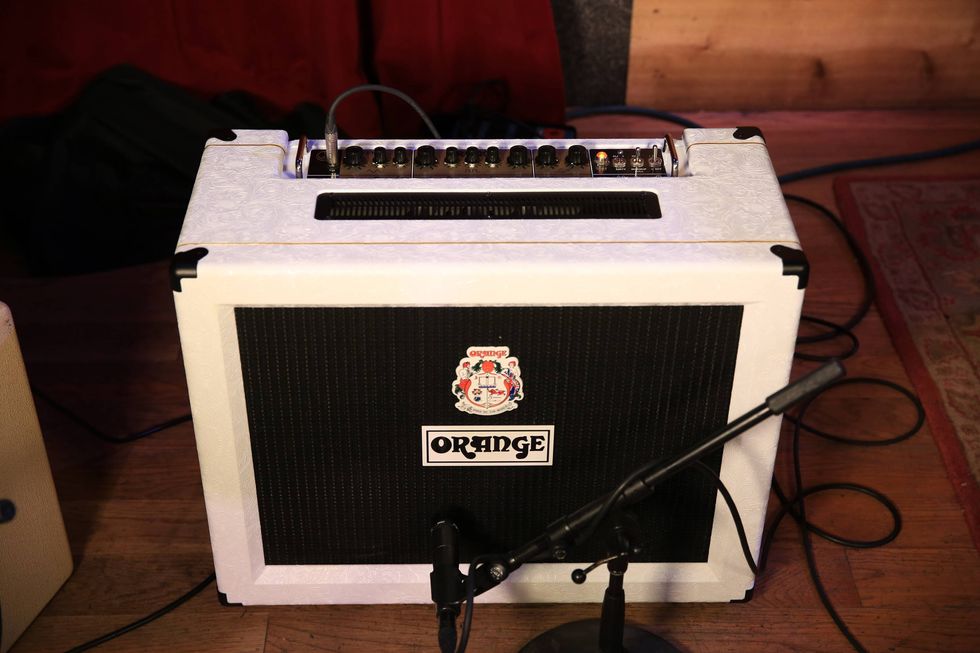
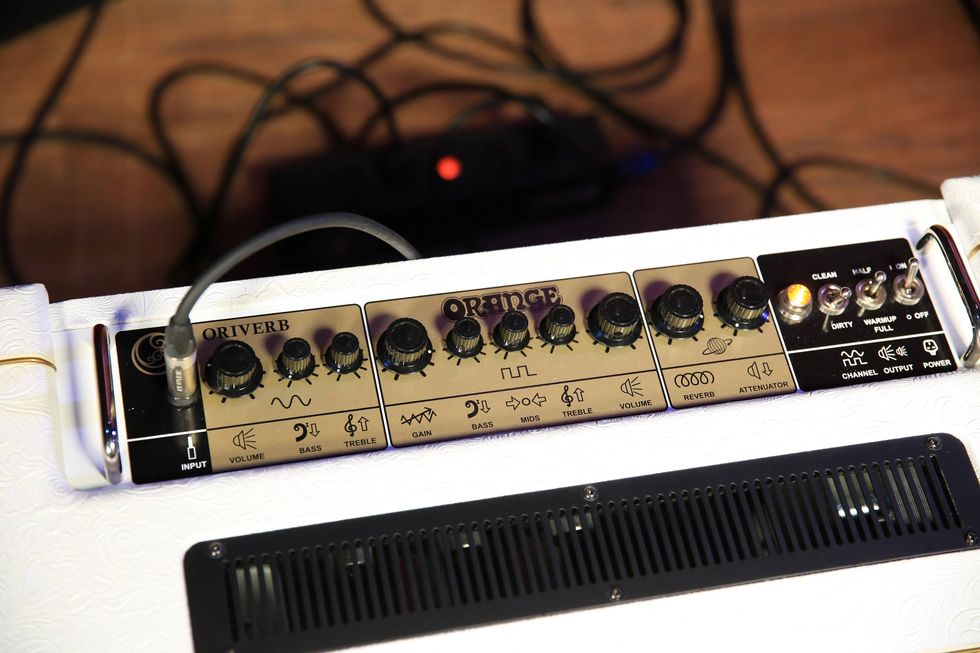
Orianthi’s signature 50-watt Orange Oriverb was put together with the late designer Pat Foley, a close friend. The main trick is that it’s loaded with plenty of reverb, a taste Orianthi developed early on thanks to her father’s Fender Twins and Music Man amps.
Orianthi’s Pedalboard
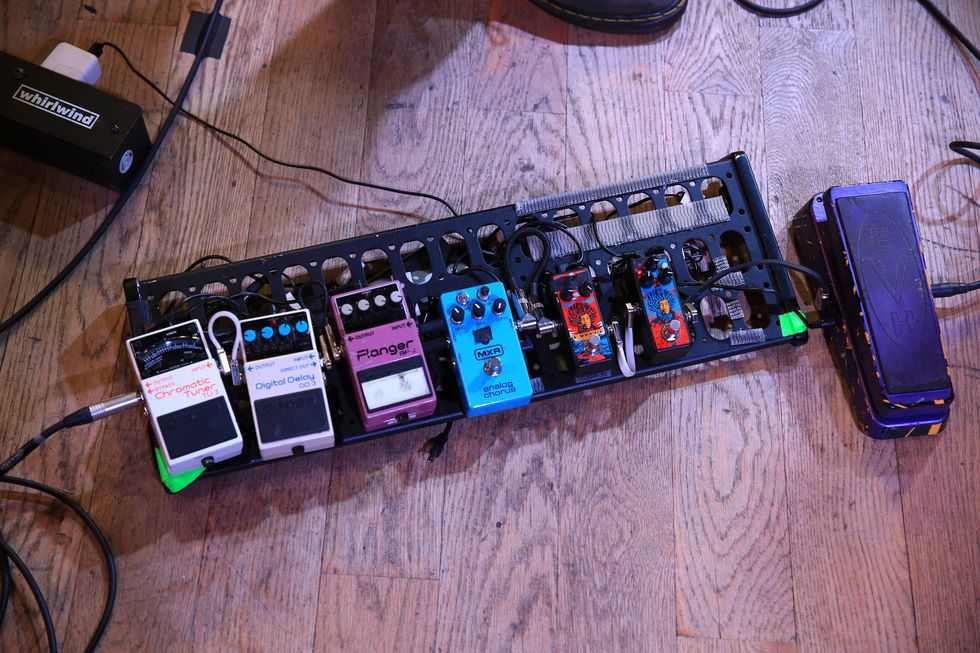
Orianthi’s playing does most of the heavy lifting, but this humble board contributes some muscle. There’s a Dunlop Cry Baby EVH wah, Dunlop Authentic Hendrix ’68 Shrine Series Octavio, Dunlop Authentic Hendrix ’68 Shrine Series Uni-Vibe, MXR Analog Chorus, Boss BF-2, Boss DD-3, and a Boss TU-3.

The Trey Anastasio Takeover Continues!

Phish’s Trey Anastasio is back again on this week’s extra-special episode of Wong Notes. The expansive conversation goes from the mundane to the massive: Trey shares the meaningful gift he bought himself for his 60th birthday, reflects on his most meaningful song, dissects boredom and nostalgia in the streaming era, and names the young bands impressing him most these days.
Then, Trey and Cory dig deep into the songwriting process, and Trey reflects on how his songwriting has (and hasn’t) changed over his length career: “Maybe it’s some kind of human nature, that you’re kind of fighting against who you actually, really are,” he offers. He then opens up the files and plays a few unreleased (and vintage) demos! At this stage in his career, what is Trey Anastasio hoping to accomplish, and has his approach to making music changed? Tune in to find out.
Gibson Launches Les Paul Junior Double Cut & Les Paul Special Double Cut
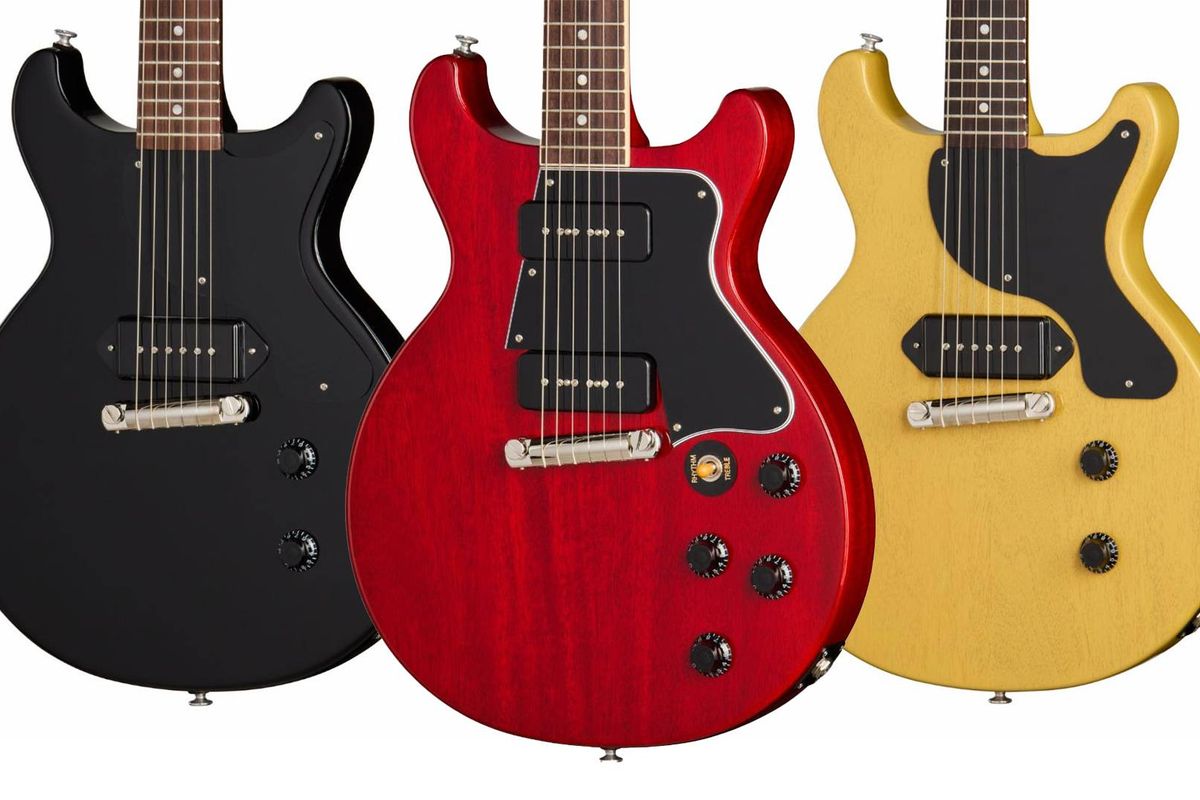
Gibson is proud to announce the launch of two legendary models returning to the spotlight: the Les Paul™ Junior Double Cut, available worldwide at Gibson Garage locations in Nashville and London, and on Gibson.com, and the Les Paul™ Special Double Cut, available in the USA exclusively at Guitar Center and through authorized dealers across the rest of the world. These iconic instruments, each with its own rich history and enduring influence, embody Gibson’s commitment to craftsmanship, tone, and playability. With the Junior celebrated for its stripped‑down simplicity and surprising versatility, and the Special revered for its expanded tonal range and double‑cutaway design, both guitars continue to shape sound across generations and genres of music.
Gibson Les Paul Junior Double Cut (L-R) in Ebony, TV Yellow and Vintage Cherry.
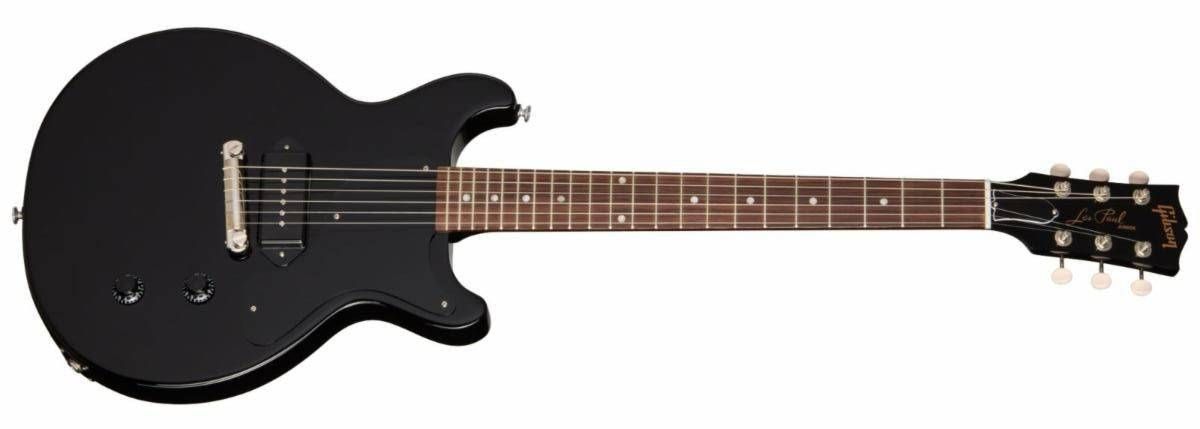
The Les Paul™ Junior Double Cut is a guitar known for being nearly perfect in its simplicity, with everything you need to rock and no frills to get in your way. However, some players underestimate this legendary guitar’s versatility. While this single-pickup solidbody electric guitar was designed initially as a student model, the number of different tones that are available simply by adjusting the position of the volume and tone knobs and the position of your picking hand is nearly unlimited. It has resulted in the enthusiastic embrace of the model by countless professional musicians across genres and generations. The Les Paul Junior Double Cut’s double cutaway body also offers unimpeded access to the entire length of the fretboard, including the upper frets, making it an excellent choice for lead guitarists, too.
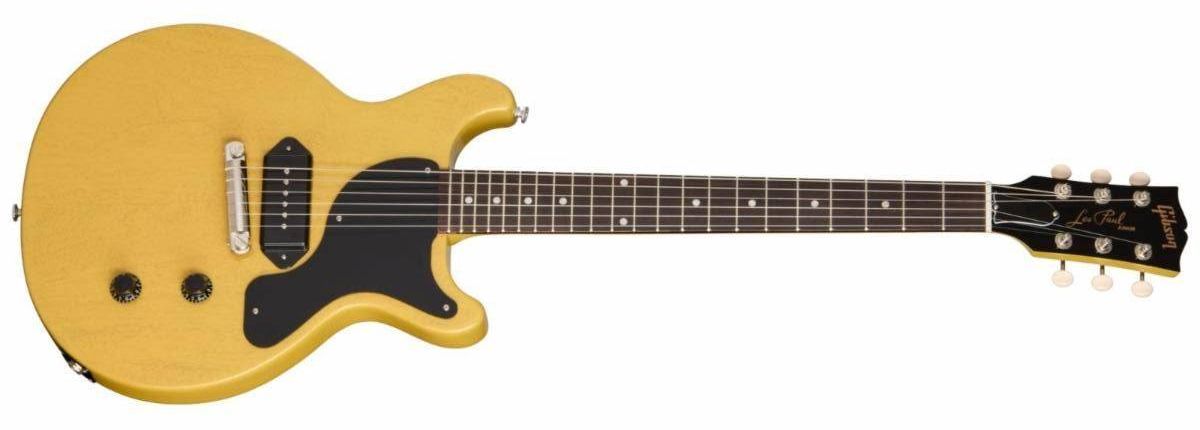
The Les Paul Junior Double Cut features a slab, double-cutaway mahogany body, a mahogany neck with a fast-playing SlimTaper™ profile that is topped with a rosewood fretboard with 22 medium jumbo frets and adorned with simple acrylic dot inlays. The wraparound bridge bolts straight into the body for exceptional sustain, while the Graph Tech® nut and Vintage Deluxe tuners with white buttons ensure rock-solid tuning stability. The single Dogear P-90 pickup in the bridge position is renowned for its ability to go from sweet and clean to aggressive and dirty with a twist of the master volume control. A single tone control with an Orange Drop® capacitor provides further tonal flexibility.
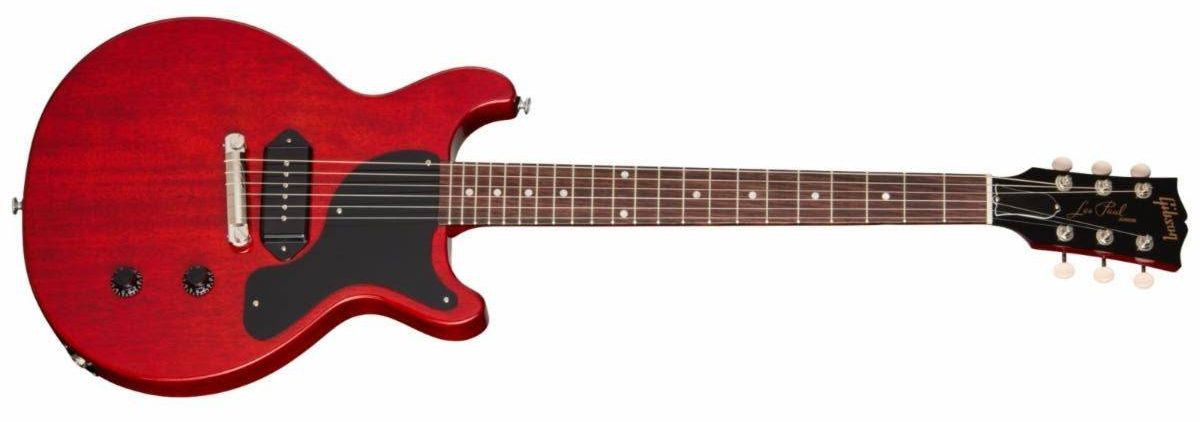
Discover the perfect simplicity and surprising versatility of the Les Paul Junior Double Cut today and experience the fun and tonal magic of this legendary guitar. A Gibson hardshell guitar case is also included to help keep your investment safe and secure when you’re not playing it and when you’re traveling to your next gig, whether that’s your first gig at a local club or the next stop on your latest world tour.
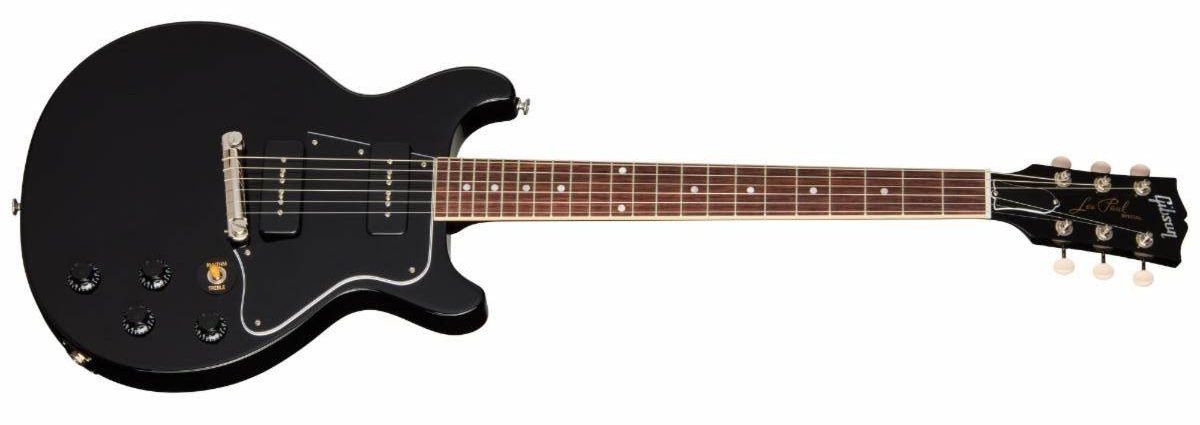
The Gibson Les Paul™ Special was first introduced in 1955 as an upgraded version of the Les Paul Junior, a somewhat stripped-down yet high-quality solidbody electric guitar initially intended as a student model and first released the previous year, in 1954. Like those early Juniors, the Les Paul Special originally featured a slab, single-cutaway mahogany body. The Les Paul Special also added a second pickup and additional controls for it, along with a pickup selector switch, binding for the fretboard, and a fancier mother-of-pearl headstock logo. While a bit more ornate and feature-rich, it retained the Les Paul Junior’s simple wraparound bridge and tailpiece and no-nonsense attitude while expanding its wide tonal range even further. It was quickly embraced not only by students but also by numerous professional musicians. In 1958, the Les Paul Special transitioned to a double-cutaway body, offering improved access to the upper frets. The model really hit its stride in 1960 when Gibson repositioned the neck pickup slightly further from the neck, allowing for a more stable neck-to-body joint, and a new SlimTaper™ neck profile made it faster and easier to play than ever before.
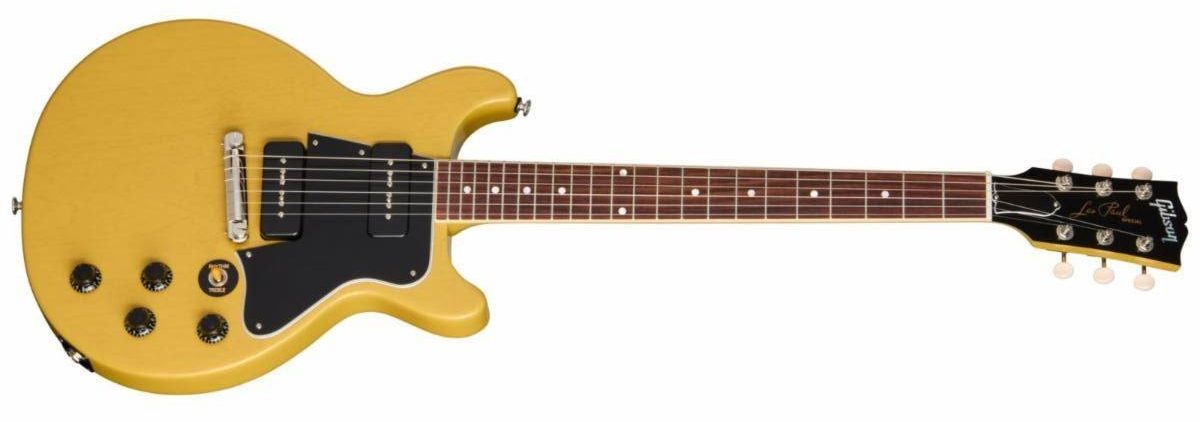
Now, Gibson is proud to bring the Les Paul Special Double Cut back to the core Gibson product lineup. It returns to the classic design that made it relevant, played, and loved—shaping sound across generations and genres of music. It features a double-cutaway mahogany body with exceptional balance when worn on a strap and easy access to the entire length of the fretboard. The mahogany neck features a comfortable SlimTaper profile and is capped with a bound rosewood fretboard, adorned with acrylic dot inlays, and outfitted with 22 medium jumbo frets. You’ll find smooth turning and precise Gibson Vintage Deluxe tuners with white buttons on the headstock, which also includes the Gibson logo inlaid in mother-of-pearl. The tuners, along with the Graph Tech® nut, ensure solid tuning stability. The other ends of the strings pass over and anchor to a simple wraparound bridge/tailpiece that is fitted with two intonation adjustment screws and bolted directly into the mahogany body, contributing to the excellent tone and sustain that the Les Paul Special Double Cut is famous for.
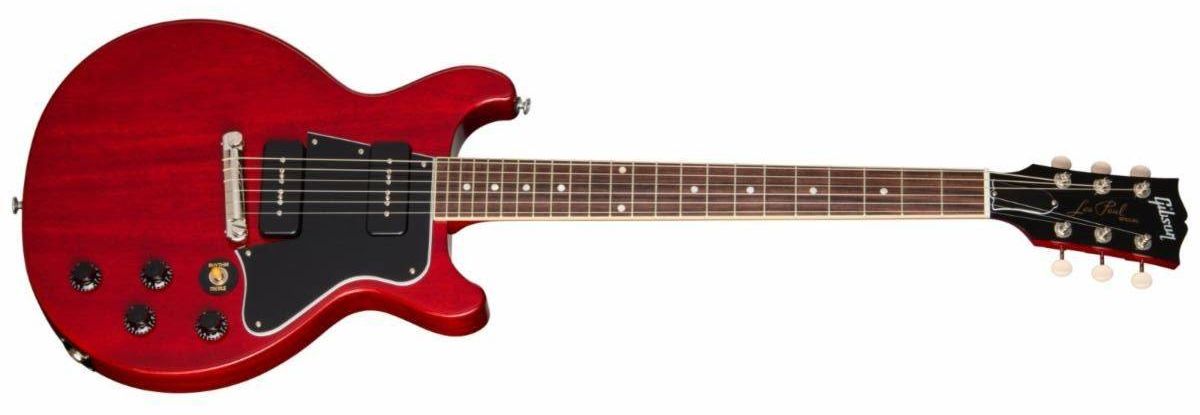
A pair of Gibson’s acclaimed P-90 Soapbar pickups, each hand-wired to individual volume and tone controls, power the Les Paul Special Double Cut. The tone circuits use high-quality Orange Drop® capacitors. The Les Paul Special Double Cut is available in three classic colors—Ebony, Vintage Cherry, and TV Yellow. A hardshell case is also included to help keep it safe when you’re on your way to your next gig. Isn’t it time you played something Special? Here it is. Order one today and see for yourself why so many people sing the praises of this legendary guitar.
Taylor Guitars Introduces Two New Special Edition Models Supporting Guitars 4 Vets
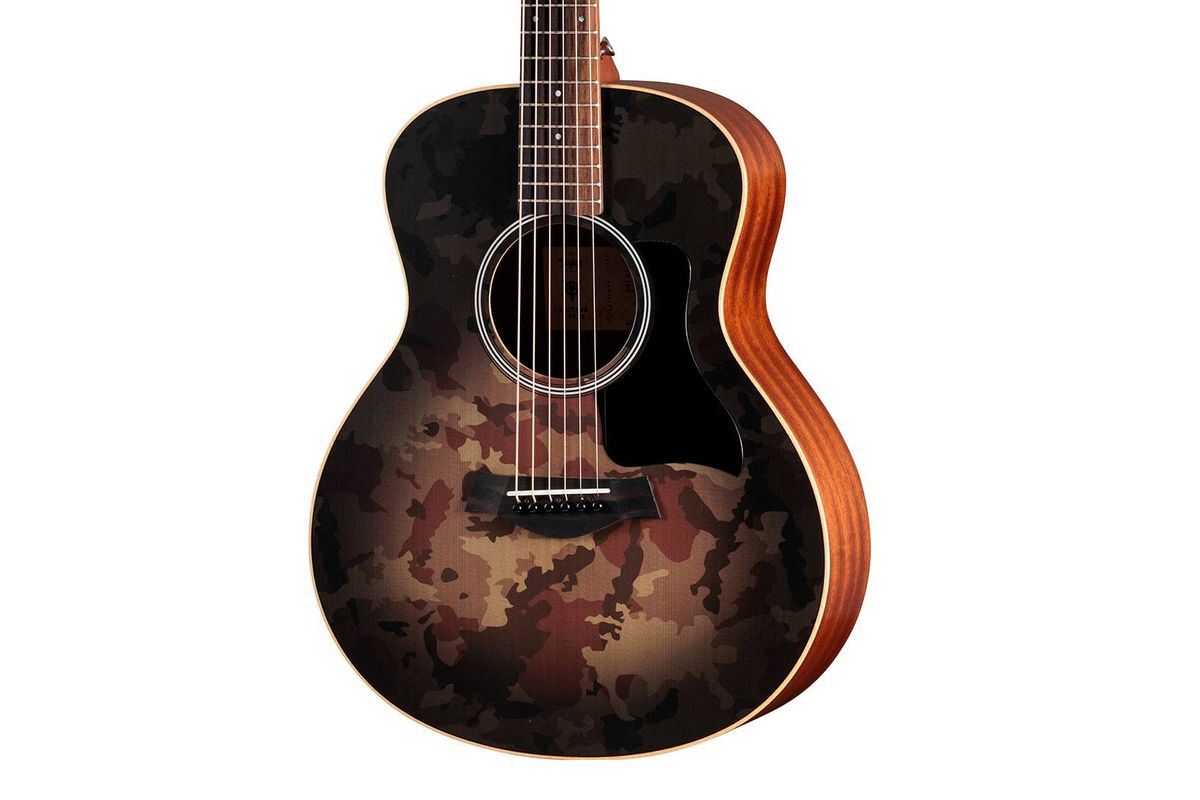
Taylor Guitars, the leading global builder of premium acoustic guitars, today announces two new special edition acoustic guitars developed in partnership with Guitars 4 Vets (G4V), a nonprofit organization that helps U.S. veterans affected by PTSD and other service-related trauma to heal through the power of music. The Guitars 4 Vets 814ce Special Edition Blacktop and Guitars 4 Vets GS Mini Camo Special Edition celebrate the nation's veterans and pay tribute to their service with distinctive patriotic design elements. For every guitar purchased through authorized Taylor dealers, Taylor will donate to G4V's nationwide program. The new models follow the September release of the Guitars 4 Vets GS Mini Americana Special Edition, continuing Taylor's commitment to supporting veterans through music.
"At Taylor, we believe in the power of music to uplift, heal and connect," says Andy Powers, President and Chief Guitar Designer at Taylor Guitars. "We make easy-to-play guitars that help people bring more music into the world because we've seen how transformative guitars and music can be in people's lives. When we learned about the work Guitars for Vets is doing—using music to help veterans heal—it was a natural fit. We're honored to support their mission with these special edition models."
HOW G4V'S GUITAR INSTRUCTION PROGRAM WORKS
Guitars for Vets provides qualifying veterans with a free 10-week, one-on-one guitar instruction program taught by volunteer instructors. After completing the sessions, graduates are given their own guitar and accessory kit to keep, empowering them to continue their musical journey. By combining instruction with the healing power of music, G4V helps veterans build confidence, find connection with others, and experience the proven mental health benefits of learning to play guitar. The program operates through 300 locations nationwide and via video conference in areas that do not yet have a physical location.
"Support like this great partnership with Taylor helps fund our program and raises awareness about the positive impact we can have on veterans' lives," says Nigel Fischer, Director of Advancement for Guitars for Vets. "Customers who buy these guitars aren't just getting beautiful instruments; they're helping put guitars in the hands of veterans in need, where music can truly make a difference."
GUITARS 4 VETS 814CE SPECIAL EDITION BLACKTOP
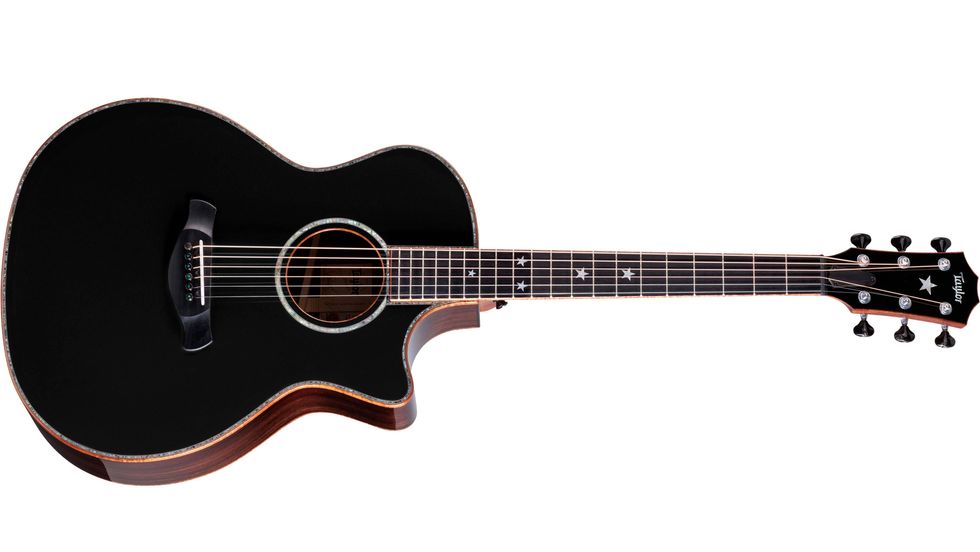
Boasting premium tonewoods, appointments and visual details, this special edition cutaway Grand Auditorium delivers incredible playing comfort and all-purpose musical versatility. Figured AA-grade Indian rosewood back and sides paired with Sitka spruce top yield dynamic tonal character with warm lows, pristine trebles and a slightly scooped midrange. Internal V-Class bracing produces louder volume, longer sustain and improved harmonic agreement between notes.
A bold blacktop soundboard commands attention, its dramatic finish beautifully framed by green abalone edge trim and Hawaiian koa binding around the body, soundhole, fretboard and peghead. Five-Star fretboard inlays and a Faceted Star peghead inlay—inspired by the stars of the U.S. flag—are rendered in mother-of-pearl. The appointment package also includes a figured koa backstrip and heel cap, a green abalone peghead logo, an ebony backstrap, dark-stained bone bridge pins with Australian opal green dots and Gotoh 510 antique chrome tuners with black buttons. A special interior label indicates this model's special-edition status.
Key Specifications:
- Back/Side Wood: Figured AA-Grade Indian Rosewood
- Top Wood: Sitka Spruce
- Neck: Mahogany
- Fretboard: West African Ebony
- Nut Width: 1-3/4"
- Scale Length: 25-1/2"
- Bracing: V-Class
- Electronics: Claria
GUITARS 4 VETS GS MINI CAMO SPECIAL EDITION
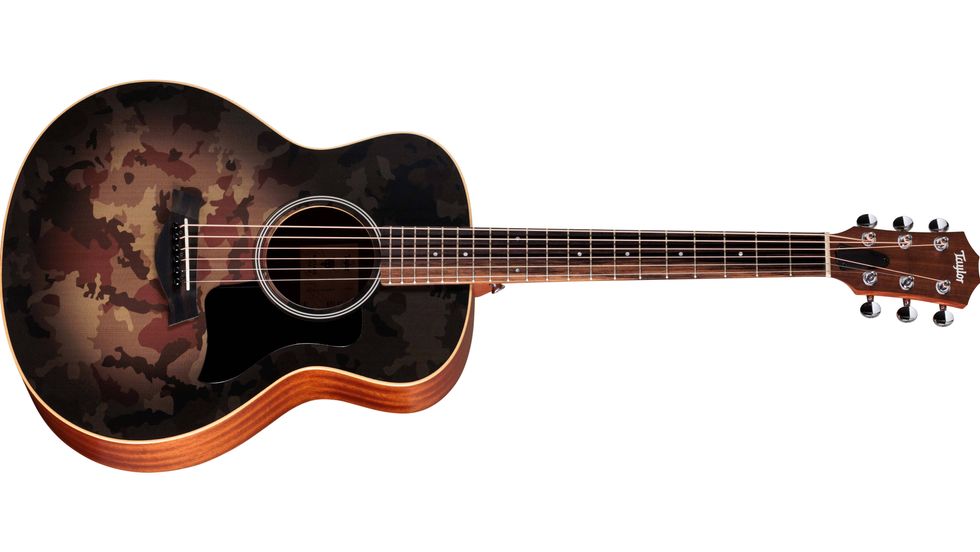
This special edition GS Mini features custom camouflage artwork with a shaded edgeburst on its soundboard. Designed to be the ultimate musical companion, the easy-playing GS Mini is a great choice for on-the-go musicians and players who enjoy the comfort of a smaller guitar. A torrefied spruce top and layered sapele back and sides deliver rich, bold acoustic tone with played-in sonic character. Appointments include a matte-finish body and neck, Italian acrylic 4mm dot fretboard inlays and chrome tuners.
Key Specifications:
- Back/Side Wood: Layered Sapele
- Top Wood: Torrefied Spruce
- Neck: Mahogany
- Fretboard: West African Ebony
- Nut Width: 1-11/16"
- Scale Length: 23-½"
- Bracing: X-Brace
- Electronics: None
AVAILABILITY
The Guitars 4 Vets 814ce Special Edition Blacktop and Guitars 4 Vets GS Mini Camo Special Edition are available now at authorized Taylor Guitars dealers. Limited availability in Q4 2025, with additional quantities arriving in Q1 2026.
For more information about the new Guitars 4 Vets models, please visit taylorguitars.com.
ABOUT GUITARS FOR VETS
Guitars for Vets is a nonprofit organization dedicated to helping U.S. veterans affected by PTSD and other service-related trauma to heal through the power of music. Through free guitar lessons and support, G4V provides veterans with a positive outlet for expression and connection.
Win a Koch Amps Jupiter 45 from Guitars.net!

Looking to expand your tonal options? We've got the Koch Jupiter 45 on deck for our latest giveaway from Guitars.net. This 45-watt combo is designed as a true player's amp, blending vintage aesthetics with modern flexibility. Enter before December 10, 2025 for your chance to WIN!
Koch Amps Jupiter Combo Giveaway
Koch Jupiter 45 combo
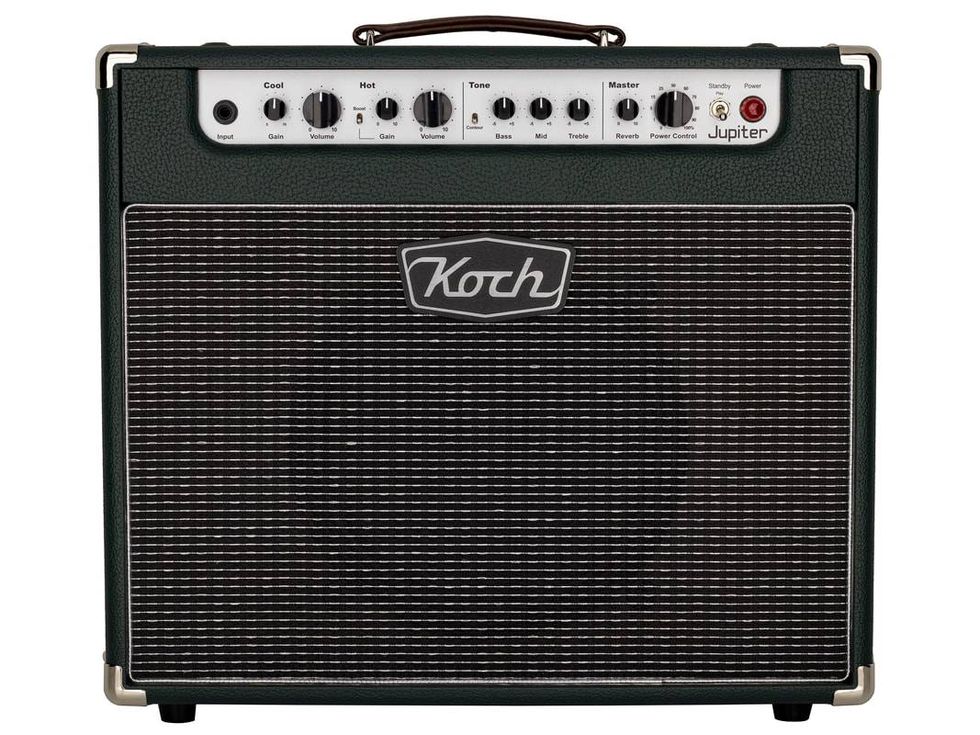
The Koch Jupiter is a 45 Watt boutique, vintage style combo amp, that is equally at home in live, recording or rehearsal sessions. This unique tone classic features independent volume and gain controls for both the Clean (Cool) and overdrive (Hot) channels. The overdrive (hot) features a Boost which gives the Jupiter three channels. The shared EQ section (Bass, Middle, Treble) can be further sculpted with the Contour Switch, allowing either a warm, mid-rich vintage tone, or a scooped, more modern and open sound.
The Koch Jupiter combo comes with a two button footswitch with another unique feature. The left button switches between the Cool and Hot Channel, and the right button can be set to turn either the Channel 2 Boost on/off, or the Reverb on/off, allowing you full control over your sound…right at your feet!
Further features of the Jupiter include the Dimmer Control which acts as an attenuator to allow you real tube saturated tube tone at any volume, front mounted Reverb control, 4/8/16 Ohm Speaker Outputs and Speaker Emulated Direct Output with Passive Filtering. Finally, there is a buffered effects loop to allow the addition of your favorite pedals or effects units.
The Jupiter was designed as a player’s amp, with as much tonal control and flexibility as possible in a compact, lightweight combo. From the bell-like clean tones to the punchy, yet dynamic overdrive channels, the Jupiter delivers pure vintage tone.
.rbm-pick-card { --rbm-border: ; --rbm-accent: ; border: 2px solid var(--rbm-border, #e53e3e); border-radius: 10px; padding: 16px; background: #fff; font-family: inherit; position: relative; } .rbm-pick-badge { position: absolute; top: -10px; left: 12px; background: var(--rbm-accent, #e53e3e); color: #fff; font-size: 12px; line-height: 1; padding: 6px 10px; border-radius: 6px; font-weight: 700; } .rbm-pick-wrap { display: grid; grid-template-columns: 110px 1fr; gap: 16px; align-items: start; } .rbm-pick-img { aspect-ratio: 1 / 1; /* forces square crop */ overflow: hidden; border-radius: 6px; background: #f3f4f6; /* subtle placeholder */ } .rbm-pick-img img { width: 100%; height: 100%; object-fit: cover; /* crops without distortion */ display: block; } .rbm-pick-title { margin: 0 0 4px; font-size: 20px; font-weight: 800; color: #111; } .rbm-pick-sub { margin: 0 0 12px; font-size: 14px; font-weight: 700; color: #334155; } .rbm-pick-btns { display: grid; gap: 10px; max-width: 560px; } .rbm-pick-btns a { display: block; text-align: center; background: #000; color: #fff !important; text-decoration: none; padding: 12px 14px; border-radius: 8px; font-weight: 800; letter-spacing: .3px; } .rbm-pick-btns a span.price { text-transform: none; } .rbm-pick-btns a span.label { text-transform: uppercase; } /* Responsive */ @media (max-width: 560px) { .rbm-pick-wrap { grid-template-columns: 80px 1fr; } .rbm-pick-title { font-size: 18px; } }
Koch Amps Jupiter 45 Combo
Bad Cat Amplifiers Unleashes the Burmese Drive And Siamese Drive Pedals
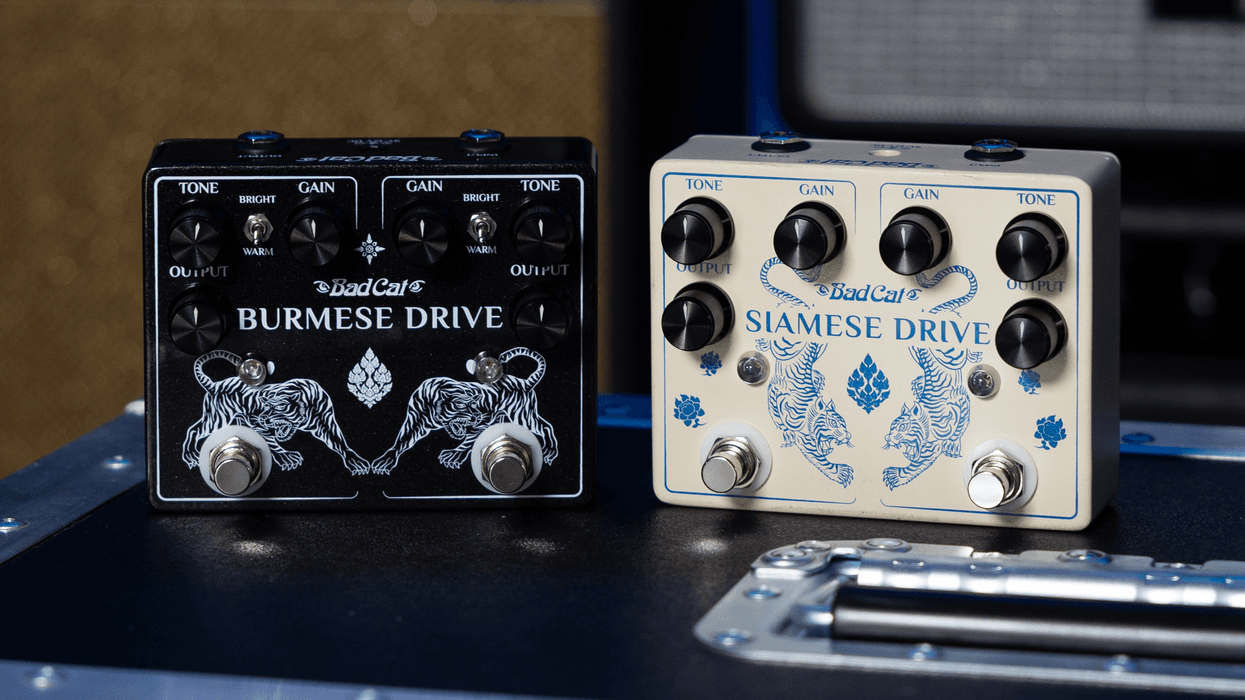
Bad Cat Amplifiers has released a pair of dual-overdrive pedals: the Burmese Drive and Siamese Drive are both hand-crafted in Southern California and feature two independent, identical overdrive circuits.
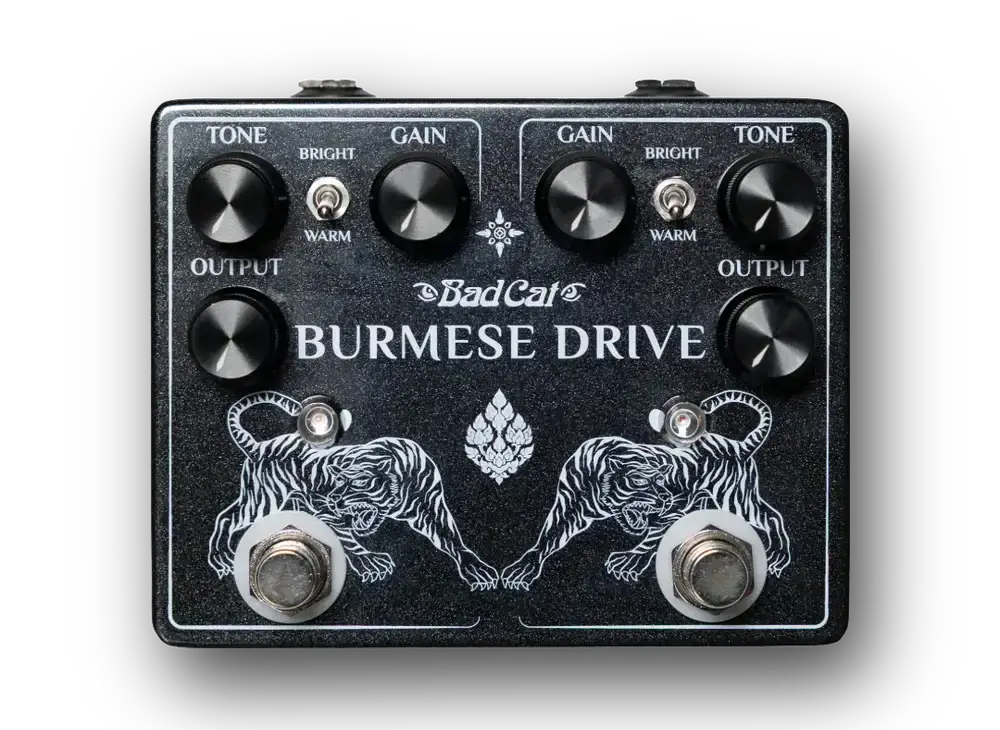
Merging vintage soul with modern versatility, the Burmese Drive is rooted in the legendary BB-style overdrive circuit and takes that classic transparent grit and injects it with Bad Cat’s unmistakable growl and harmonic depth. Each channel features its own Gain, Tone, and Output controls, plus a Bright/Warm toggle to tailor the feel and response for rhythm or lead tones. Players can run the channels separately or stack them for lush, saturated drive and increased harmonic complexity.
“We wanted to build a pedal that’s more than just another drive box—it’s two musical personalities that can be subtle, gritty, or feral depending on how you stack them,” said John Thompson, Owner of Bad Cat Amplifiers. “The Burmese Drive gives players that old-school warmth and openness with the precision and build quality we’re known for.”
Housed in a rugged black sparkle powder-coated chassis with custom Bad Cat tiger print graphics, the Burmese Drive delivers transparent response, articulate gain structure, and wide tonal sweep, making it equally at home pushing a clean amp, shaping rhythm tones, or stacking into lead saturation.
Burmese Drive features include:
- Dual overdrive circuits in one enclosure
- Based on the iconic BB-style circuit
- Independent Gain, Tone, Output, and Bright/Warm controls per channel
- True bypass operation
- 9V–12V DC center-negative power
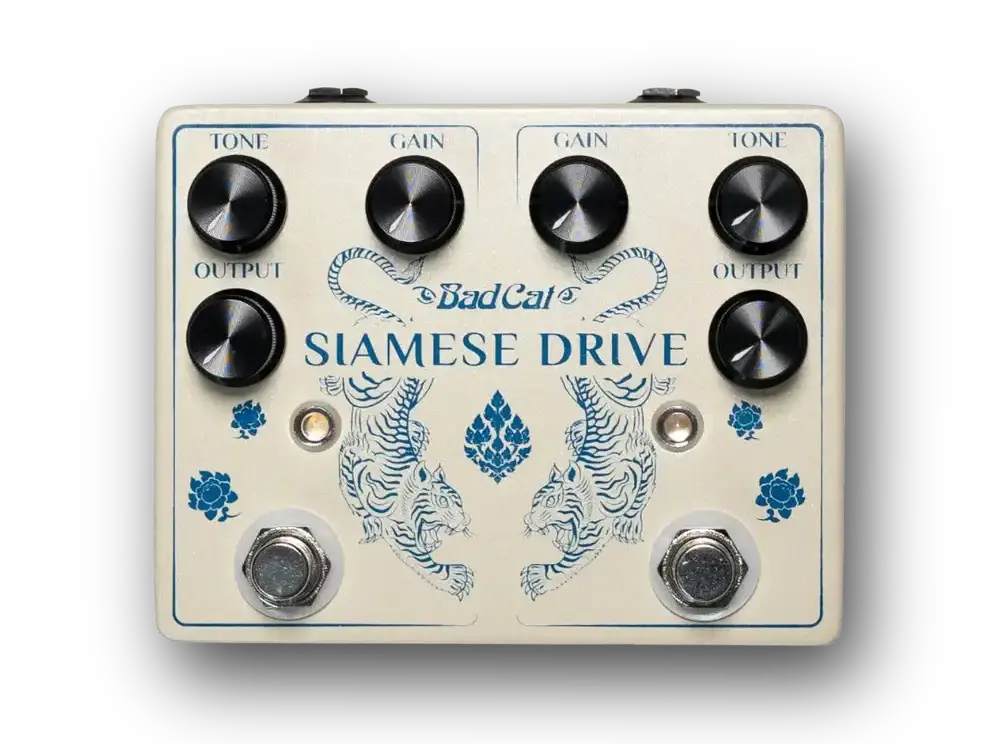
The Siamese Drive brings the legendary tone and feel of the K-style circuit into a flexible format. Designed for players who demand musical precision, touch sensitivity, and harmonic complexity, the Siamese Drive delivers pure inspiration—times two.
At its heart, the Siamese Drive captures the unmistakable mid-forward punch, clarity, and bloom that made the original K-style circuit a modern classic. Each channel features its own Gain, Tone, and Output controls, allowing players to dial in rhythm and lead tones independently or stack both channels for rich, cascading overdrive textures. The result is tone that feels alive under your fingers—organic, articulate, and deeply responsive.
“The Siamese Drive is all about control and connection,” said John Thompson, Owner of Bad Cat Amplifiers. “We took one of the most musically revered overdrive circuits ever made and expanded it into a dual-channel format that gives players the freedom to blend, shape, and stack their sound in entirely new ways.”
The Siamese Drive is housed in a durable pearl white powder-coated enclosure with royal blue silk-screened graphics and Bad Cat’s signature tiger print design. Each pedal is designed to deliver tour-grade reliability, musical transparency, and a tactile feel that responds to every nuance of the player’s technique.
Key Siamese Drive features include:
- Dual K-style overdrive circuits
- Independent Gain, Tone, and Output per channel
- Stackable or standalone operation
- True bypass switching
- 9V–12V DC center-negative power
The Bad Cat Burmese Drive and Siamese Drive each carry a $269.99 street price and are available now through authorized Bad Cat dealers and at www.badcatamps.com.
TWA Source Code: Tamura Solves The Tube Screamer Again?
PG contributor @TomButwin dives into the latest evolution of the green-box legacy: the TWA Source Code SC‑01 Overdrive. Designed by the legendary Susumu Tamura (yes—the original mind behind the TS808), this pedal combines vintage tone and handmade USA craftsmanship with serious modern enhancements: internal 18v voltage-boosting circuitry for extra headroom, a multi-transistor input buffer to preserve your guitar’s core tone, and a unique “Bite” control for dialing in even-order harmonics and amp-style saturation.
Shop the SC-01 at Godlyke: https://godlyke.com/products/sc-01-so...
Taylor Guitars Expands Jacob Collier Offerings With Two New 5-String Models

Taylor Guitars, the leading global builder of premium acoustic guitars, today announces the expansion of its collaboration with Jacob Collier with two new 5-string models designed to make the acclaimed artist's innovative DAEAD tuning accessible to a broader range of players.
Following the success of the October 2024 launch of the Jacob Collier Signature Model 5-String, featuring a Grand Concert body crafted with solid, Select-grade Hawaiian koa, Taylor is now introducing the Jacob Collier Academy 22e 5-String and the Jacob Collier GS Mini 5-String. Both new models feature Jacob's preferred DAEAD tuning along with fresh aesthetics and are designed within Taylor's Academy Series and GS Mini frameworks, giving players more accessibly priced options to explore Collier's unique musical approach.
The unveiling of these new models follows the October 10 release of Collier's critically acclaimed album, The Light For Days, which recently earned him his 16th GRAMMY® nomination in the Best Arrangement, Instruments & Vocals category for his reimagining of the Beach Boys classic “Keep An Eye On Summer” — fittingly arranged for his bespoke 5-string guitars.
"These new 5-string models are a total dream come true for me," says Jacob. "Each is so distinct in their own right. For them to be accessible to more people, while maintaining the same spirit that inspired the original designs, is a wonder. I'm so looking forward to more folks having the opportunity to discover this 5-string world and make their own magic with it."
The collaboration began when Collier approached Taylor about creating a custom 5-string acoustic guitar featuring his preferred DAEAD tuning — where the lower strings are tuned by fourths while the higher strings are tuned by fifths. That custom instrument, built by Andy Powers, Taylor's Chief Guitar Designer, President and CEO, became a staple of Collier's performances. The tuning makes common chord shapes easier for beginners to form with their fingers, while for experienced players, it unlocks a new tonal landscape ripe for musical exploration.
JACOB COLLIER ACADEMY 22E 5-STRING
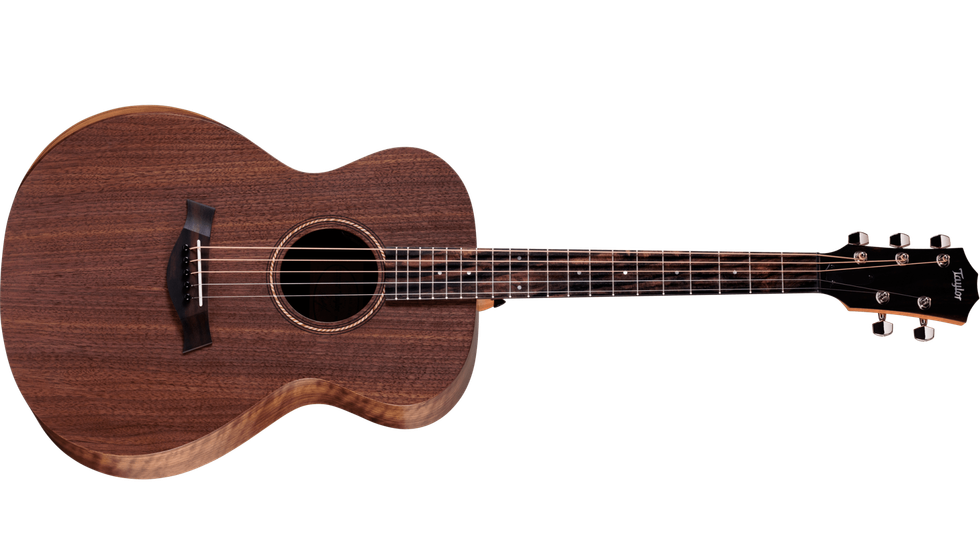
Great for new and experienced players alike, Taylor's Academy Series guitars deliver rich acoustic tone and an accessible, comfort-enhanced playing experience. The Jacob Collier Academy 22e 5-String features a solid walnut top paired with layered walnut back and sides in a Grand Concert body, producing crisp highs, a warm midrange and satisfying low-end depth.
A built-in walnut beveled armrest softens the contact point on the strumming arm, reducing pressure and allowing for more fluid motion. Incorporating visual details selected for the original Jacob Collier model, this guitar features a smoked eucalyptus fretboard and bridge. The model includes a slender, easy-playing Taylor neck, matte-finish body, understated 4mm Dot fretboard inlays, standard chrome tuners, and Fishman Presys VT electronics.
Key Specifications:
- Back/Side Wood: Layered Walnut
- Top Wood: Solid Walnut
- Neck: Mahogany or Maple
- Fretboard: Smoked Eucalyptus
- Nut Width: 1-11/16"
- Scale Length: 24-7/8"
- Bracing: Academy Series Bracing
- Electronics: Fishman Presys VT
JACOB COLLIER GS MINI 5-STRING
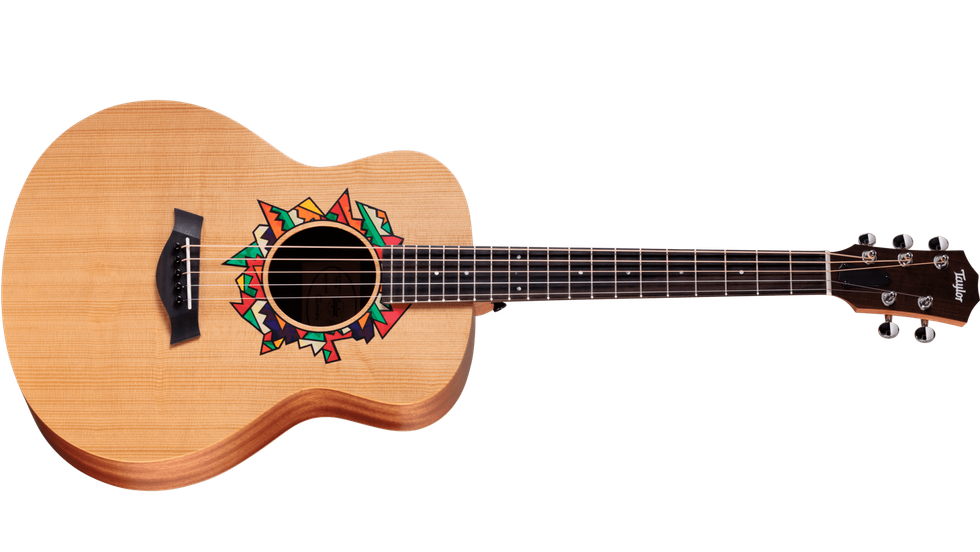
Inspired by the GS Mini's bold voice, fun-size proportions and up-for-anything personality, Jacob put his signature aesthetic spin on Taylor's popular compact model. Jacob worked with Taylor designers to create a custom asymmetric rosette design marked by vibrant colors and geometric abstraction — a visual flourish that makes this guitar pop on any wall.
The guitar features a torrefied Sitka spruce top paired with layered sapele back and sides, producing a clear, balanced acoustic voice with played-in character. Perfect for travel, writing sessions, and intimate performances, the GS Mini 5-String maintains the tonal clarity essential to Collier's musical approach in a portable format. Known for creating music everywhere from green rooms to hotel rooms during his extensive touring schedule, Collier collaborated closely on this model to ensure it could capture musical ideas anywhere inspiration strikes.
Key Specifications:
- Back/Side Wood: Layered Sapele
- Top Wood: Torrefied Sitka Spruce
- Neck: Mahogany
- Fretboard: West African Ebony
- Nut Width: 1-11/16"
- Scale Length: 23-1/2"
- Bracing: X Bracing
- Electronics: None
JACOB COLLIER SIGNATURE MODEL 5-STRING [ORIGINAL MODEL]
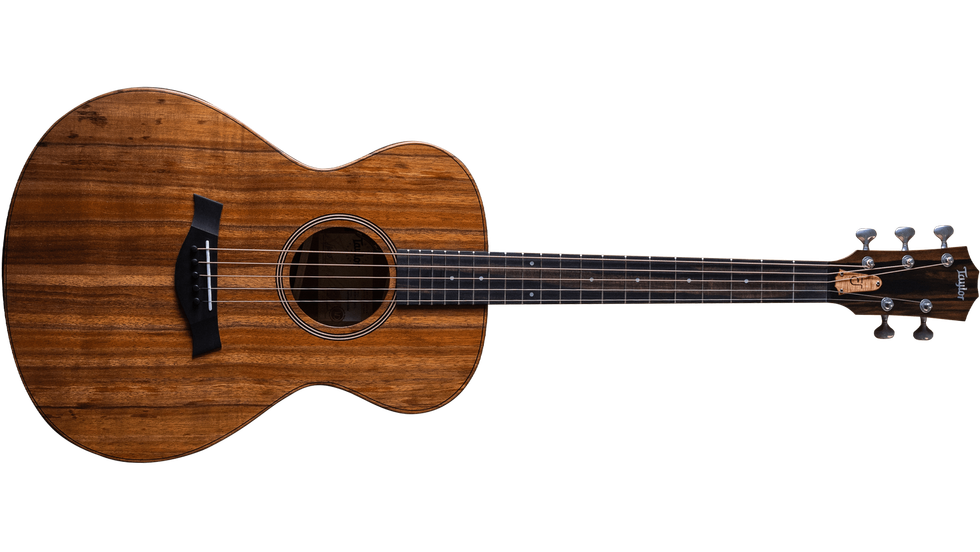
Jacob Collier's original 5-string signature Taylor guitar is a Taylor Grand Concert body style featuring a natural, wood-centric aesthetic with richly variegated Select-grade koa and marbled West African ebony, giving each instrument a unique visual personality. Signature details include a customized Hawaiian koa truss rod cover with Jacob's laser-etched logo, a custom interior label, a branded guitar strap, antique chrome Gotoh 510 tuners, and onboard LR Baggs Element VTC electronics with soundhole-mounted controls, all shipping in a Taylor AeroCase.
Key Specifications:
- Top, Back & Sides: Solid, Select-grade Hawaiian Koa
- Neck: Mahogany
- Fretboard & Bridge: West African Ebony
- Nut Width: 1-11/16" (4.28 cm)
- Scale: 24-⅞" (63.18 cm)
- Bracing: Taylor V-Class® Bracing
- Tuning Machines: Gotoh 510 with Antique Chrome Buttons
- Electronics: LR Baggs Element VTC
"Jacob is so gifted — a one-of-a-kind musician," says Andy Powers. "After hearing him write and perform music on these instruments since their creation, we're excited to expand this collaboration with models that make the acoustic guitar accessible for entry-level players while offering an inspiring new sonic palette for experienced players to explore."
AVAILABILITY
For US customers, a limited number are available now to arrive before Christmas. UK and Europe customers can order now and guitars will ship early next year. Customers outside the US, UK and Europe can join the waitlist for future availability. The new models will be coming to authorized Taylor dealers in late 2025. Check THIS LINK for availability in your area.
For Taylor Guitars media inquiries, please contact Alex Jessup (alex.jessup@jessuppr.com) at JESSUP PR. For Jacob Collier media inquiries, please contact Chris Taillie (ctaillie@shorefire.com) or Greg Jakubik (gjakubik@shorefire.com) at Shore Fire Media. Follow Taylor Guitars on Instagram, Facebook, YouTube and TikTok. Follow Jacob Collier on Facebook, Instagram, X, YouTube, Apple Music and Spotify.
Win a Chase Bliss Brothers AM Pedal!

Two channels. Six gain circuits. Endless combinations. Enter for your chance to win Brothers AM—the analog boost, overdrive, and fuzz machine built for stacking, blending, and sonic exploration.
Chase Bliss Brothers AM Giveaway
Chase Bliss Brothers AM
Made in collaboration with Analog Man himself, Brothers AM is a tribute to the legendary King of Tone overdrive.
It takes that coveted circuit, gives you advanced control, and tosses in a couple exciting bonuses – but it doesn’t mess with what made it so good in the first place.
A stack of sunny saturation that always manages to sound just right.
Journey Announces Epic Final Frontier Tour

After more than five decades of electrifying performances, chart-topping hits, and timeless anthems, the iconic rock band JOURNEY is saying goodbye the only way they know how — with a thunderous, full-throttle Final Frontier Tour spanning cities across North America.
The Rock & Roll Hall of Famers will be touring an all new stage production across North America with their catalog of global chart-topping hits, including "Don't Stop Believin”, "Any Way You Want It", "Faithfully", "Lights" and more in a celebration of legacy, love and the fans who made it all possible. All dates will be A Special Evening With.
Presented by AEG Presents, Journey’s final tour launches February 28, 2026 at Giant Center in Hershey, PA and will span 60 cities across North America including stops in Austin, Atlantic City, Montreal, Vancouver and more before wrapping up the first leg in Laredo, TX. See all dates below.
JOURNEY features founder Neal Schon (lead guitarist), Jonathan Cain (keyboards, backing vocals), Arnel Pineda (lead vocals) Jason Derlatka (keyboards, vocals), Deen Castronovo (drums, vocals) and Todd Jensen (bass). Neal Schon is a 3x Hall of Fame inductee, having been inducted to the Oklahoma Hall of Fame, Rock & Roll Hall of Fame and the Grammy Hall of Fame. Jon Cain is a recipient of two BMI songwriter awards and was inducted into the Rock & Roll Hall of Fame as a member of Journey.
“This tour is our heartfelt thank you to the fans who’ve been with us every step of the way — through every song, every era, every high and low,” said Journey founder Neal Schon. “We’re pulling out all the stops with a brand-new production — the hits, the deep cuts, the energy, the spectacle. It’s a full-circle celebration of the music that’s brought us all together.”
“As its founding member, I carry the Journey torch to this day, wherever I go. The sentiment and spirit of the band will always remain,” Schon added. “While this marks a farewell to one powerful chapter of the Journey we’ve shared, I want everyone to know I’m not done. Music is still burning strong inside me, and there are new creative horizons ahead. This tour is both a thank you and the beginning of what’s next.”
“It’s been an incredible ride,” added Jonathan Cain, “We’ve shared our music with millions and this tour is about gratitude, connection and one last chance to feel that magic together. We wouldn’t want it any other way.”
“I’m honored to be part of this legacy and I’m grateful for having been welcomed with such open arms,” says Arnel Pineda. “Every night on stage has been a dream come true.”
Citi is the official card of the tour and cardmembers will have access to presale tickets in the U.S. beginning Tuesday, November 11 at 10 AM Local time through the Citi Entertainment program (for complete presale details visit www.citientertainment.com). The general public on sale is Friday, November 14 at 10 AM Local time.
A limited number of exclusive VIP Packages will be available offering premium reserved tickets, custom merchandise and much more.
Whether you’ve followed them since the vinyl days or just discovered their sound, this is your moment to be part of rock history. Don’t miss the final curtain call.
Tickets and more information can be found at https://journeymusic.com/.

2026 TOUR DATES
Feb 28 - Hershey, PA - GIANT Center
Mar 02 - Pittsburgh, PA - PPG Paints Arena
Mar 04 - Washington, D.C. - Capital One Arena
Mar 05 - Trenton, NJ - CURE Insurance Arena
Mar 07 - Ottawa, ON - Canadian Tire Centre
Mar 09 - Hamilton, ON - TD Coliseum
Mar 11 - Montreal, QC - Bell Centre
Mar 12 - Quebec City, QC - Vidéotron Centre
Mar 14 - Hartford, CT - PeoplesBank Arena
Mar 16 - Columbus, OH - Nationwide Arena
Mar 17 - Indianapolis, IN - Gainbridge Fieldhouse
Mar 19 - Milwaukee, WI - Fiserv Forum
Mar 21 - Memphis, TN - FedExForum
Mar 22 - Lexington, KY - Rupp Arena
Mar 25 - N. Little Rock, AR - Simmons Bank Arena
Mar 26 - Kansas City, MO - T-Mobile Center
Mar 28 - New Orleans, LA - Smoothie King Center
Mar 29 - Bossier City, LA - Brookshire Grocery Arena
Mar 31 - Austin, TX - Moody Center
Apr 03 - Oklahoma City, OK - Paycom Center
Apr 04 - Wichita, KS - INTRUST Bank Arena
Apr 06 - Sioux Falls, SD - Denny Sanford PREMIER Center
Apr 08 - Des Moines, IA - CASEY’S CENTER
Apr 09 - Lincoln, NE - Pinnacle Bank Arena
Apr 12 - Salt Lake City, UT - Delta Center
Apr 14 - Boise, ID - ExtraMile Arena
Apr 15 - Spokane, WA - Spokane Arena
Apr 17 - Vancouver, BC - Pacific Coliseum
Apr 19 - Eugene, OR - MATTHEW KNIGHT ARENA
Apr 21 - Sacramento, CA - Golden 1 Center
Apr 22 - Bakersfield, CA - Dignity Health Arena
Apr 24 - Fresno, CA - Save Mart Center at Fresno State
May 15 - Tampa, FL - Benchmark International Arena
May 16 - Jacksonville, FL - VyStar Veterans Memorial Arena
May 18 - Columbia, SC - Colonial Life Arena
May 20 - Charlotte, NC - Spectrum Center
May 21 - Greensboro, NC - First Horizon Coliseum
May 23 - Atlantic City, NJ - Jim Whelan Boardwalk Hall
May 27 - State College, PA - Bryce Jordan Center
May 28 - Charlottesville, VA - John Paul Jones Arena
May 30 - Knoxville, TN - Food City Center
May 31 - Savannah, GA - Enmarket Arena
Jun 03 - Hampton, VA - Hampton Coliseum
Jun 04 - Roanoke, VA - Berglund Center Coliseum
Jun 06 - Worcester, MA - DCU Center
Jun 07 - Manchester, NH - SNHU Arena
Jun 10 - Buffalo, NY - KeyBank Center
Jun 11 - Allentown, PA - PPL Center
Jun 13 - Cincinnati, OH - Heritage Bank Center
Jun 14 - Grand Rapids, MI - Van Andel Arena
Jun 17 - Evansville, IN - Ford Center
Jun 18 - Fort Wayne, IN - Allen County War Memorial Coliseum
Jun 20 - Champaign, IL - State Farm Center
Jun 21 - Green Bay, WI - Resch Center
Jun 24 - Moline, IL - Vibrant Arena at the MARK
Jun 25 - Springfield, MO - Great Southern Bank Arena
Jun 27 - Tupelo, MS - Cadence Bank Arena
Jun 28 - Lafayette, LA - CAJUNDOME
Jul 01 - Corpus Christi, TX - Hilliard Center
Jul 02 - Laredo, TX - Sames Auto Arena
TWA Introduces Source Code Overdrive
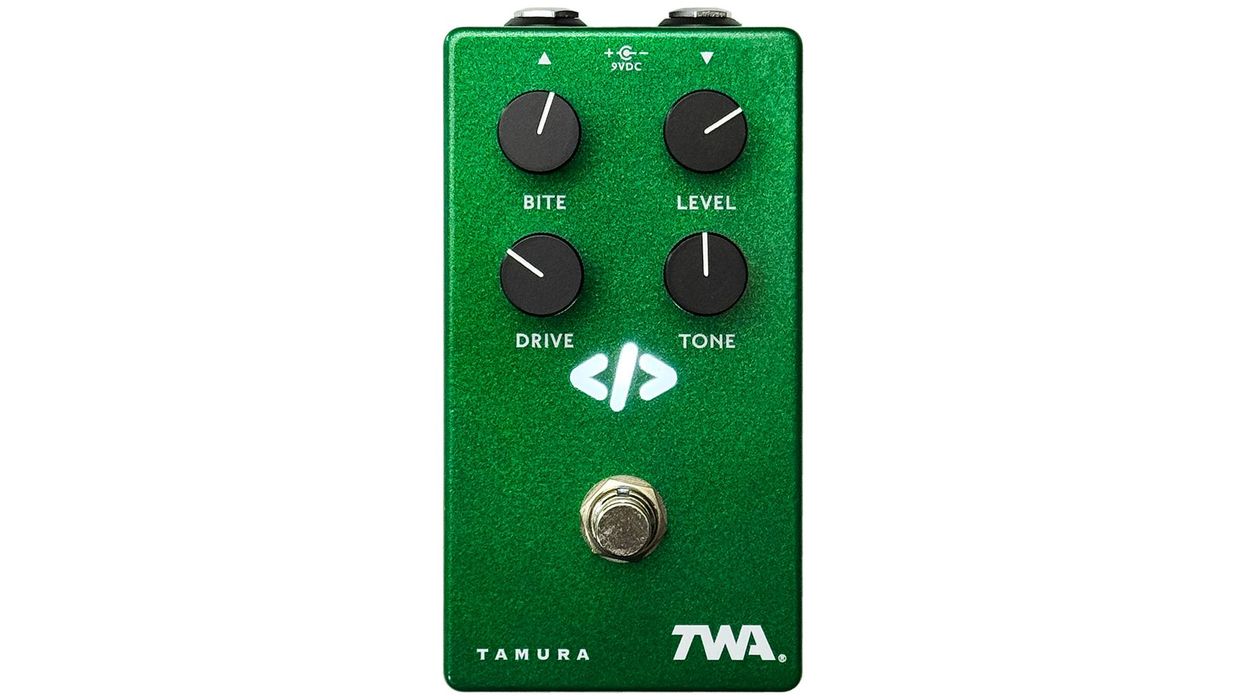
Totally Wycked Audio (TWA) has released the Source Code™ next-gen soft-clip overdrive. The TWA Source Code is the ultimate evolution of the iconic Tube Screamer and was designed by Susumu Tamura, the creator of the legendary TS808 circuit.
Drawing upon Tamura’s 50+ years of experience in the field of overdrive design, TWA’s Source Code reimagines the classic TS circuit that so many guitarists love (and some love to hate!) and launches it into the future. Since 2021, Tamura has been carefully analyzing every aspect of his enduring soft-clip circuit to optimize its performance. His newest creation builds upon the strengths of the classic “green box” while offering improvements that enhance the original circuit and expand its capabilities.
In addition to traditional Drive, Tone and Level controls, the US-made Source Code pedal includes a new “Bite” control knob for adjusting the amount of even-order harmonics present in the output signal.
The SC-01 Source Code overdrive features include:
- Next -generation 808-style overdrive designed by Tube Screamer creator Susumu Tamura
- All-new multi-transistor input buffer circuit to preserve original guitar tone accurately
- “Magic IC” OpAmp for increased harmonic content and more amp-like feel
- All-new “Bite” control adjusts amount of even-order harmonics present in the output signal.
- +6 dB boost circuit for increased output level without altering tone
- Drive, Tone & Level controls
- External 9VDC or 9V battery operation
- 18V operation via internal voltage inverter for improved operation & increased headroom
- Top-mounted jacks for easier implementation on pedalboards
- Mechanical True Bypass switching
- Handmade in USA
The TWA Source Code pedal carries a $299 street price. For more information visit www.godlyke.com
.
Homes For Our Troops announces its 9th Annual Veterans Day Celebrity Auction

Homes For Our Troops (HFOT) announces its 9th Annual Veterans DayCelebrity Auction, an exciting campaign to raise funds for severely injured post-9/11 Veterans. Thisyear’s event features an incredible lineup of celebrities, musicians, authors, and sports figures led byaward winning journalist, CNN anchor and HFOT National Board Ambassador Jake Tapper, Grammy-winning singer/songwriter and fellow National Board Ambassador Wynonna Judd, and acclaimed actorand filmmaker George Clooney.
“Homes For Our Troops is doing extraordinary work by providing life-changing, adapted homes to severely injured Veterans, helping them reclaim their independence and rebuild their lives,” adds George Clooney. “I’m truly honored to support this amazing cause and to headline this auction as it marks its ninth year.”
Participants can make an impact by bidding on personal Zoom experiences, luxury items, and autographed memorabilia to help Homes For Our Troops continue its critical work of restoring freedom and independence for our nation's most severely injured post-9/11 Veterans.
“For the ninth consecutive year, I’m honored to host the Veterans Day Celebrity Auction for Homes For Our Troops. As a proud National Ambassador, it’s a privilege to help raise vital funds to provide severely injured post-9/11 Veterans with the specially adapted custom homes they need and deeply deserve," says Jake Tapper.
Event Details:
Who: Homes For Our Troops, hosted by Jake Tapper, Wynonna Judd and George Clooney
What: 9th Annual Veterans Day Celebrity Auction to benefit post-9/11 severely injured Veterans
Where: Online at eBay.com/hfot
When: Hosted on eBay, bidding for this special online 10-day event begins on Nov. 11, 2025 at 4pm PST / 7pm EST, and ends on Nov. 21, 2025 at 4pm PST / 7pm EST, at eBay.com/hfot.
This year’s auction features over 100 exclusive items and experiences. A few of the celebrities, comedians, sports teams, authors, and musicians participating include: Ben Stiller, Chris Evans, Dave Matthews Band, Elizabeth Banks, Harlan Coben, Henry Winkler, Jake Gyllenhaal, Jason Bateman, Jennifer Aniston, Jon Bon Jovi, Kristen Bell, Paul Rudd, Sarah Silverman, Will Ferrell, Boston Bruins, Philadelphia Eagles, San Francisco 49ers, Texas Rangers, plus many more!
"I am privileged to serve as a National Ambassador for Homes For Our Troops and to return as a headliner for the Celebrity Auction. This extraordinary mission plays a vital role in restoring freedom and independence to the injured Veterans who have bravely served our nation. It is both an honor and a responsibility for us as Americans to stand behind them and show our unwavering support,” says Wynonna Judd.
"We are proud to mark the ninth annual Veterans Day Celebrity Auction, led by HFOT National Board Ambassador Jake Tapper. This event represents not only an opportunity to raise critical funds, but also to bring heightened awareness to our mission of supporting severely injured post-9/11 Veterans,” says HFOT President/CEO Brigadier General, USA (Ret) Tom Landwermeyer. “We are sincerely grateful to the many celebrities and public figures who lend their voices and influence, helping us shine a national spotlight on the importance of restoring freedom and independence to those who have sacrificed in service to our country."
Talkin’ John Scofield with Adam Levy
John Scofield is undeniably one of the preeminent forces in contemporary jazz guitar. Along with a few of his peers—see Pat Metheny, Bill Frisell, Mike Stern—he modernized the sound of our instrument and the genre. But there’s much more to Scofield than just jazz.
To break down the deepest of Scofield’s records and talk about the intricacies of his playing, we called up another great, Adam Levy. There’s a great chance you’ve heard Levy alongside artists such as Tracy Chapman or Norah Jones, and his solo discography is deep! Adam has a host of Scofield know-how, so we get right to it.
Thanks to our Sponsor
Electro-Harmonix Swello Attack Envelope Review
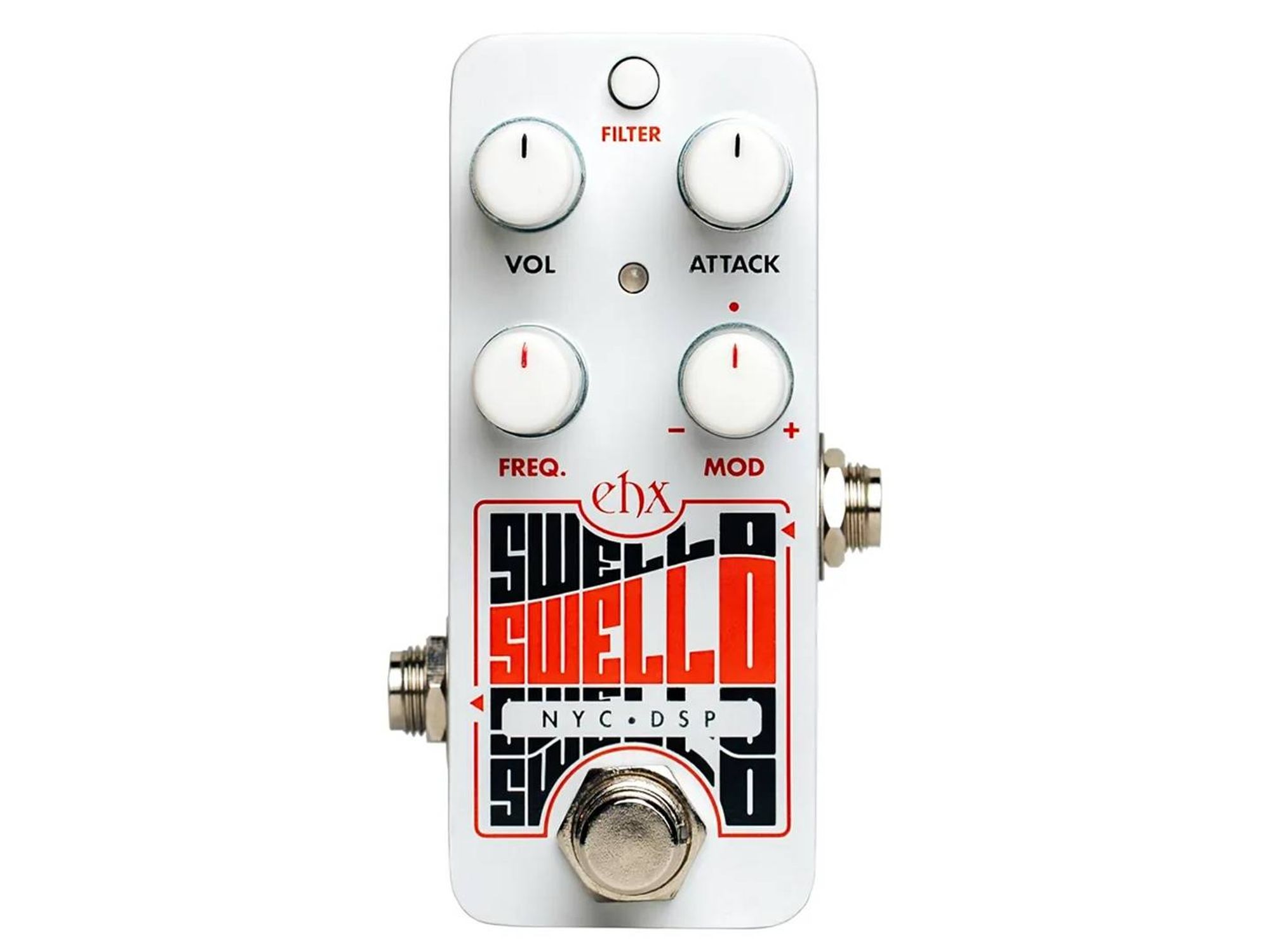
Attack—essentially the rate and intensity with which a note rises in volume from its point of creation—is one of the coolest musical expressions you can mess with. If you play an instrument from the violin family it’s a fundamental part of your vocabulary. It’s used frequently in synthesis to conjure spooky, low-gravity atmospherics, and it’s an essential tool for taking the front end off some psychotic Moog sound that might otherwise explode like a foghorn six inches from your ear.
Guitar players know the potential of this effect well too. Volume swells can drastically recast a guitar line—evoking reverse tape, pedal steel, and deep space. But doing it well is not easy. Even on guitars like the Stratocaster that lend themselves to volume swells by design, it takes technique, practice, and usually a very flexible pinky finger to make it work right. Electro-Harmonix’s Swello, which has origins in the attack filter section of the POG2, can do a lot of that work for you. But it’s capable of more than simple swells, with the ability to generate envelope filter- and wah-like sounds, big synth-style pads that are ripe for looping, and much stranger fare.
Swing in Smoothly
Though they can be mellowing, soft attack and volume swell effects aren’t always subtle. For many players that prize precise, immediate attack, they are anathema. Swello—especially in the sans-filter “green” mode—is great at backgrounding the effect and making it more subliminal. At the lowest attack levels, you can use Swello in a capacity similar to a compressor to soften picking irregularities. At slightly higher but still subtle settings, it imparts a beautiful legato quality to melodic lines—especially enchanting in understated or deeply ambient delay and reverb contexts. At much slower attack rates, it evokes lush pedal steel tones and remarkably natural volume pedal or cello-like effects. There’s a lot of range to explore in the attack control alone.
"Swello ’s capable of more than simple swells, with the ability to generate envelope filter- and wah-like sounds, big synth-style pads that are ripe for looping, and much stranger fare."
While the Swello’s control set is minimal, players without experience in synthesis or in using filters and envelopes with guitar may find them less than intuitive. This isn’t a shortcoming of the EHX design—it’s simply inherent to the complex interplay between filter and attack effects. If you start twisting knobs casually and with no particular intent you can end up with filter and attack combinations that make a guitar sound 30 feet underwater—if not altogether absent. So, it pays to move slowly though these controls, observe the sensitivities in their interactions and pay attention to how very small, incremental changes—as well as where you play on the fretboard—can alter the response and output. Though getting to your destination can be tricky and require patience, there are many surprises to find along the way.
Overtone Organizer
As a player that uses volume swells as both an expressive tool and crutch, I loved Swello’s very natural volume pedal and cello-like effects. But I also own a POG2 and treasure that pedal’s capacity to add -2-octave content to an upswelling tone. That can be a preposterously big sound with reverb (the low synth parts in Vangelis’ Blade Runner opening sequence and the Golden Gate Bridge foghorn at the distance of a couple miles are a couple handy points of reference). And there’s plenty of it here when you get a deep resonant peak, slow attack, and filter modulation working in sync, and hang out on the low strings.
As with the POG2, boosting the high frequencies can make the pedal sound less organic—and at times even a bit cloying. Some settings also introduce digital artifacts, most noticeable in the quackier, mid-forward envelope filter-style tones. These sounds can be fun, but they’re not the Swello’s strong suit (and may disappoint players that demand vintage Mu-Tron authenticity from envelope filters). That said, there are plenty of ways to use high-frequency emphasis for pleasant coloration and to shape the attack, and at many such settings the output is largely free of digital aftertaste.
The Verdict
Swello, as the name suggests, specializes in very cello-like volume swells that sound organic, and enable you to keep your fingers on the strings and your feet away from expression pedals. At less than $150, it’s a great value for the slow-attack effects alone. However, players who explore its compression-like dynamics and the vast, unconventional tones found at atypical filter frequency and modulation settings will discover that the Swello is far more than it appears—truly greater than the sum of its parts.
Tighten Up! Optimize Your Guitar’s Tone
Our world of guitars is peppered with cliches and theories about what physical attributes make an instrument special. I’ve always gravitated towards electric guitars whose sound not only blooms and holds on to a note or chord, but also leaps from your touch. This can be described as having great dynamic range and punchy transients as well as sustain. Whether we admit it or not, beyond the subjective matter of “good” tone, that’s the thing that we’re all looking for. You might describe it differently—such as calling it liveliness, or resonance, or something else, but it’s what makes a guitar seem “alive.” But how can you build that into a guitar?
Some point to the actual materials used in an instrument’s construction, others say the pickups do the heavy lifting needed to make this happen. I believe that it’s a combination of small details that conspire to either raise the game of a guitar or crush it into mediocrity. Here are a few things that I’ve found that need to be right in order to achieve the spunkiness that you seek—whether you’re building, assembling, or just modifying/accessorizing your guitar.
Builders like Tom Anderson and the late Rick Turner have endorsed the “unplugged test”—if the guitar is loud, balanced, and resonant acoustically, it will usually sound better when amplified. This is fine if you are starting from scratch, but how can you achieve this when you already have a finished guitar?
Get Tight
A snug, vibration-friendly neck pocket (or a carefully designed set neck) can make a guitar feel more like one piece of wood rather than two separate parts. Over the years, builders of bolt-on neck instruments like John Suhr and Grover Jackson have emphasized the neck joint fit itself because the way the neck and body vibrate together matters more than most players realize. I tend to agree. The more you can transfer resonance throughout the entire guitar, the more lively it will be. In a bolt-on guitar, you can remove finish within the joint and glue shim material to tighten the fit. This essentially puts wood to wood so that the entire instrument becomes one—and don’t forget to tighten those screws down tight. This is also a good time to check that the string alignment is correct relative to the edges of the fretboard, which helps playing feel. If you are building a set neck instrument, my opinion is that the larger and tighter the union is the better it will sound.
Mind the Nut
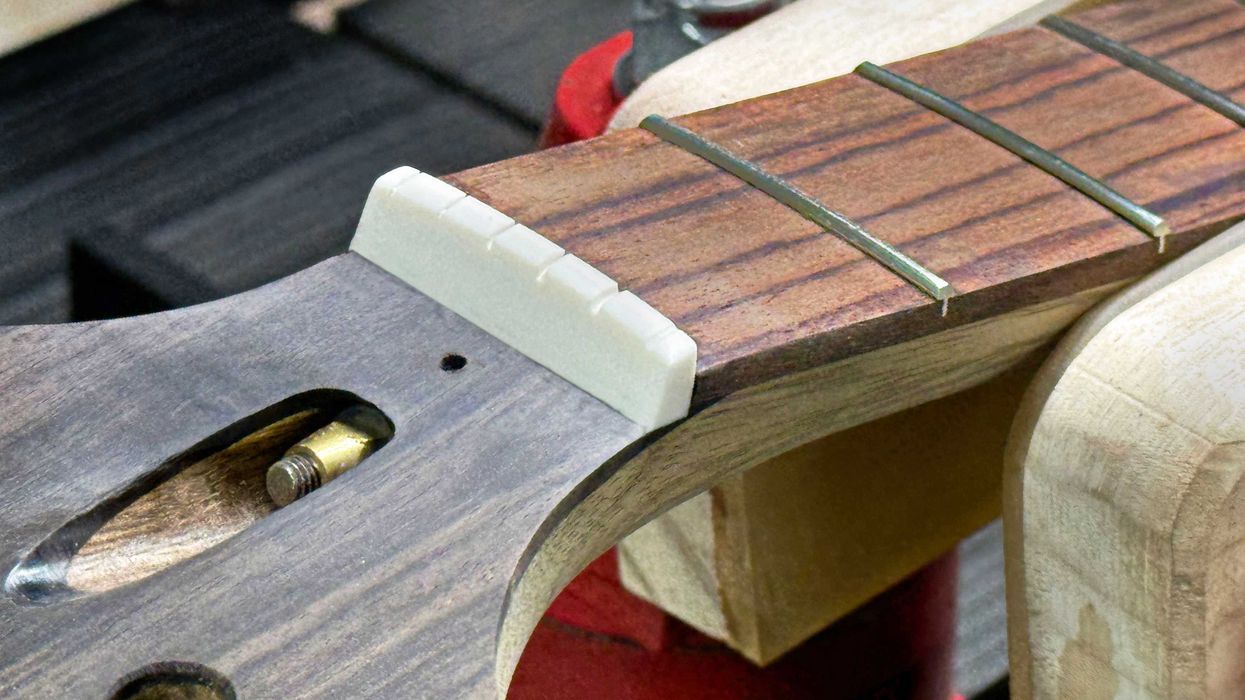
Most players think of the nut as little more than a spacer for strings, but it’s really an important gatekeeper of resonance. Sure, the slot depth and spacing matter, but a critical thing is how solidly that nut is bonded to the neck. If there’s glue slop under there, you’re leaking tone before the note even leaves the station. I always make sure the mating surfaces are smooth, flat, and fully seated—wood and nut material acting as one. When cutting slots, I file a gentle curve so the string leaves the nut as if it’s flowing downhill towards the tuners for maximum contact without snags. I stop my file exactly at the angle where the string will meet the tuner post—this way the string’s path is straight, clean, and free to slide.
“Sure, the slot depth and spacing matter, but a critical thing is how solidly that nut is bonded to the neck. If there’s glue slop under there, you’re leaking tone before the note even leaves the station.”
Batten Down the Hatches
No matter what kind of bridge you employ, make certain that all of the contact points—both to strings and body—have the maximum amount of contact. On wraparounds, Tune-o-matics, and Stoptails, be sure anchors are tightly set into the body. When installing them I always drill to the exact depth so the anchor presses firmly against the bottom of the hole. The name of the game is stability and vibration transfer.
Balance Tone, Not Output
I know there’s a lot of fine tuning that can be done with pickup to string distance, but the way I do it isn’t for volume balance as much as for tonal variety. On a guitar with two pickups, I always adjust by ear in the middle position, looking for a certain chime that I like. I’ve found that this position is often overlooked in favor of getting more gain from one pickup or the other, but if you get that middle sound right the rest usually takes care of itself, and your guitar will be more versatile as a result.
Because the way a guitar performs is a sum of all the parts, this way of looking at individual areas can eliminate potential weak links in your sound. In the search for a guitar that is alive in your hands and delivers a resonant sound, these small attentions are what can separate a dead plank from a singing instrument. Oh yeah—don’t forget to crank those tuning machines tight, too. That headstock does a lot more than host the logo.