
Music is the universal language
“Glory to God in the highest heaven, and on earth peace to those on whom his favor rests.” - Luke 2:14
Premier Guitar


KMA Machines Launches New Models to Utility Line
Affordable, expertly built in Berlin, mechanically noise-free and with our signature eye catching looks, our Utility Series of little helpful boxes have graced thousands of rigs the world over.
Consistent Connectivity Part II
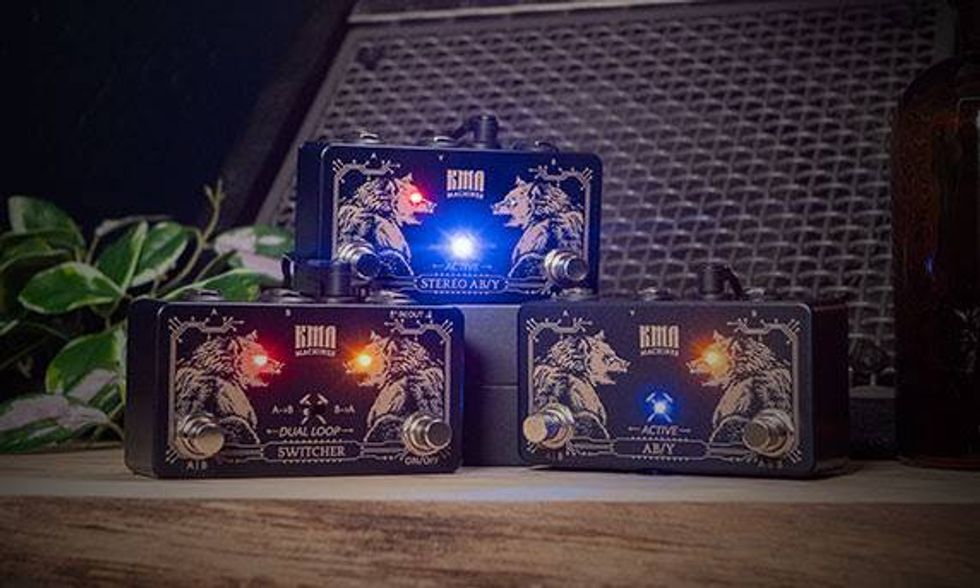
Complementing our existing range of useful Utility pedals, KMA Machines bring you the all-new DUAL LOOP SWITCHER pedal. This diminutive mini sized pedal allows for dead simple switching between two distinct loops of Mono or Dual Mono/Stereo signal chains, to help you easily avoid tap dancing on your pedal boards. It can even combine signals and change the loop order in Mono or Stereo, making super creative flexibility a breeze.
In addition, we are introducing fully Active versions of our Passive AB/Y and STEREO AB/Y pedals to our line-up. The Active AB/Y and Active STEREO AB/Y also incorporate Phase and Y Direction switches and as they are buffered, are ideal for those who like to use the splitting or combining functions with some signals that don’t always play nicely together. So, whether you want the choice of Passive or Active models, even more musos can now have the choice of how they want to split, combine or simply switch between audio devices with ease, no matter your setup or signal demands.
All three new Berlin made devices retain our Silent Soft Switching, which heavily reduces mechanical noise and pops on stage, plus feature KMA’s high quality buffered bypass circuit, to maintain your tone on even the lengthiest of cable runs.
DUAL LOOP SWITCHER
EUR: 139 € ERP - USD: $159.99 MAP - GBP: £119 ERP
Active ABY:
EUR: 89 € ERPUSD: $99.99 MAP
GBP: £79 ERP
Active STEREO ABY :
EUR: 139 € ERPUSD: $159.99 MAP
GBP: £119 ERP
Doug Gillard and the Les Paul That Lived | Axe Lords
Guitarist Doug Gillard breaks down his iconic black Les Paul, his tone secrets, early Cleveland punk roots, composed solos, and the gear behind “I Am a Tree.”
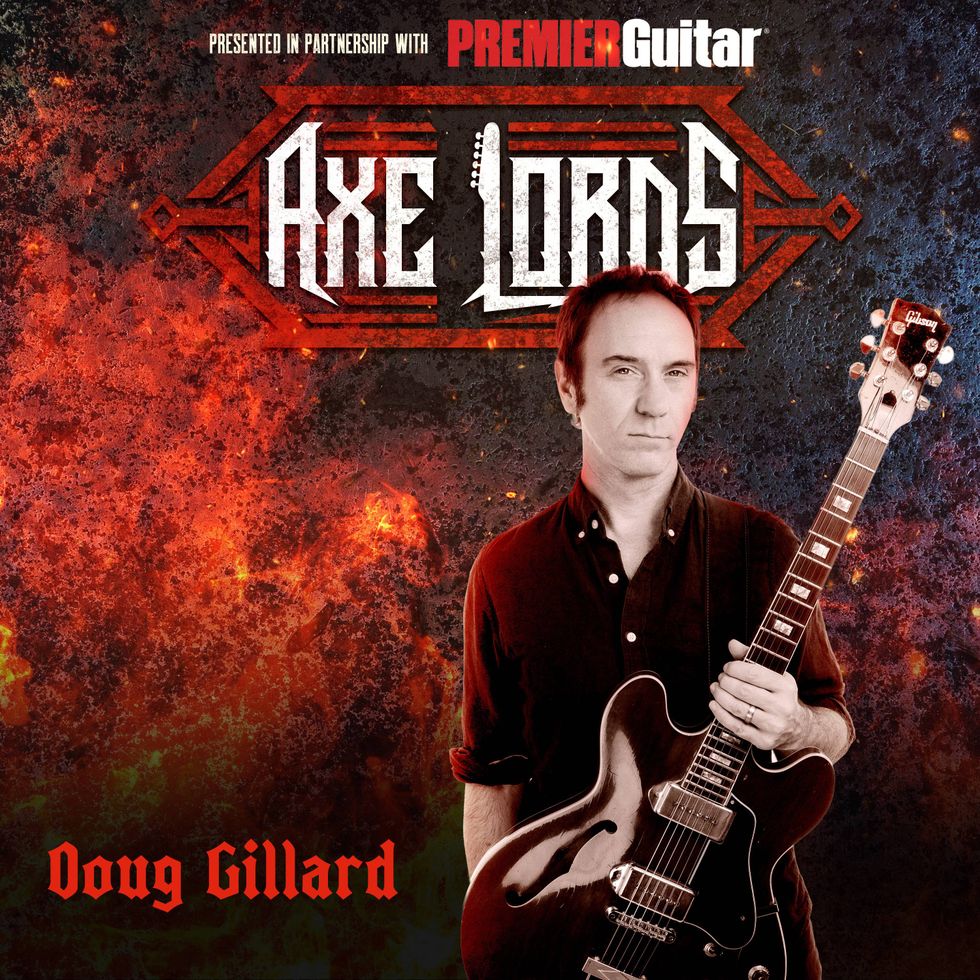
Doug Gillard (Guided by Voices, Nada Surf) joins the Axe Lords to dissect his signature sound , explain why why he’s one of the few “indie rock guys” running a Mesa Dual Rectifier and—bonus!-gives the A-Lords a guided tour of his battle-worn ’76 Les Paul Custom.
Doug — who also played bass in Dave’s Band Valley Lodge — breaks down his approach to composed solos, the harmony and capo tricks behind “I Am a Tree,” and how Cleveland punk, college radio, glam, and right-hand tapping shaped his style. Along the way: how annoying Tom is to work with in the studio, early guitars from Sears and Gibson, Cleveland-scene lore, surviving GBV’s marathon shows, and the most intense comedy monologue since Andy Kaufman shuffled off this mortal coil.
Axe Lords is presented in partnership with Premier Guitar. Hosted by Dave Hill, Cindy Hulej and Tom Beaujour. Produced by Studio Kairos. Executive Producer is Kirsten Cluthe. Edited by Justin Thomas at Revoice Media. Engineered by Patrick Samaha. Recorded at Kensaltown East. Artwork by Mark Dowd. Theme music by Valley Lodge.
Anygig Guitar Releases A Beast Of A Travel Guitar
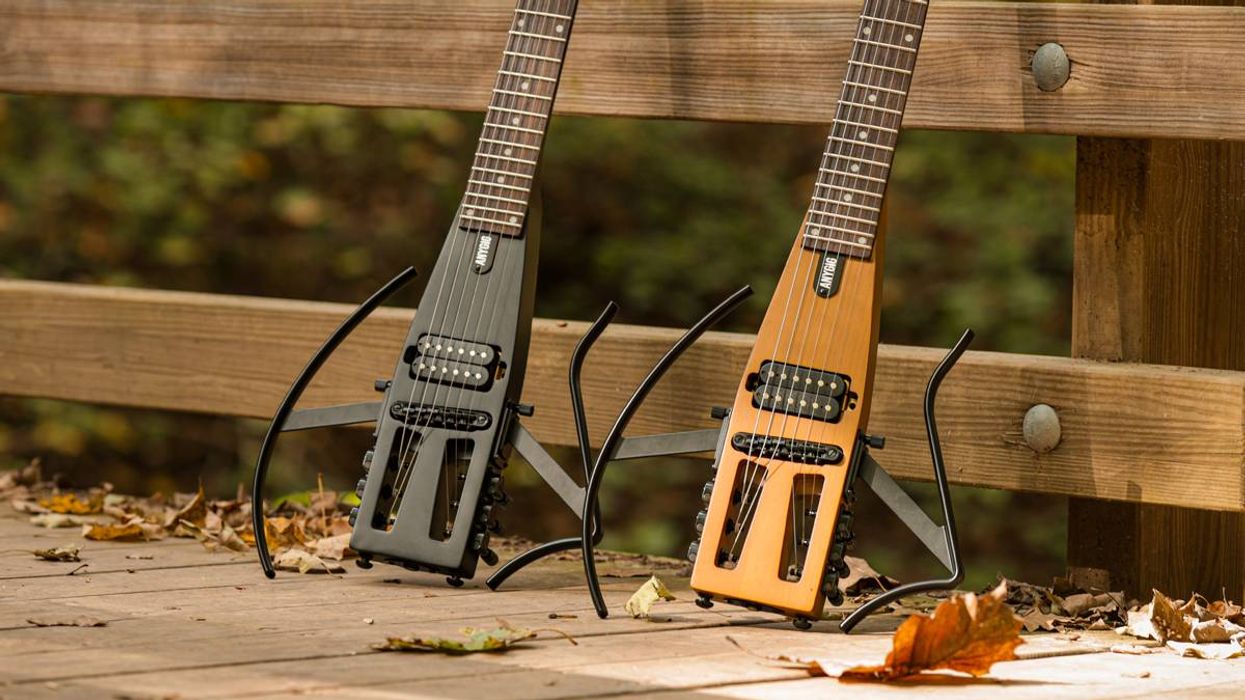
Anygig has unveiled the AGE TE Travel Guitar, a compact, full-scale electric guitar that redefines portability and performance. Priced at an exceptional $249.99 USD, the AGE TE embodies Anygig’s mission to deliver a design focused purely on playability, aesthetics, and compactness — free of unnecessary or ambiguous features. Its lightweight, headless design makes it the perfect companion for musicians on the move.
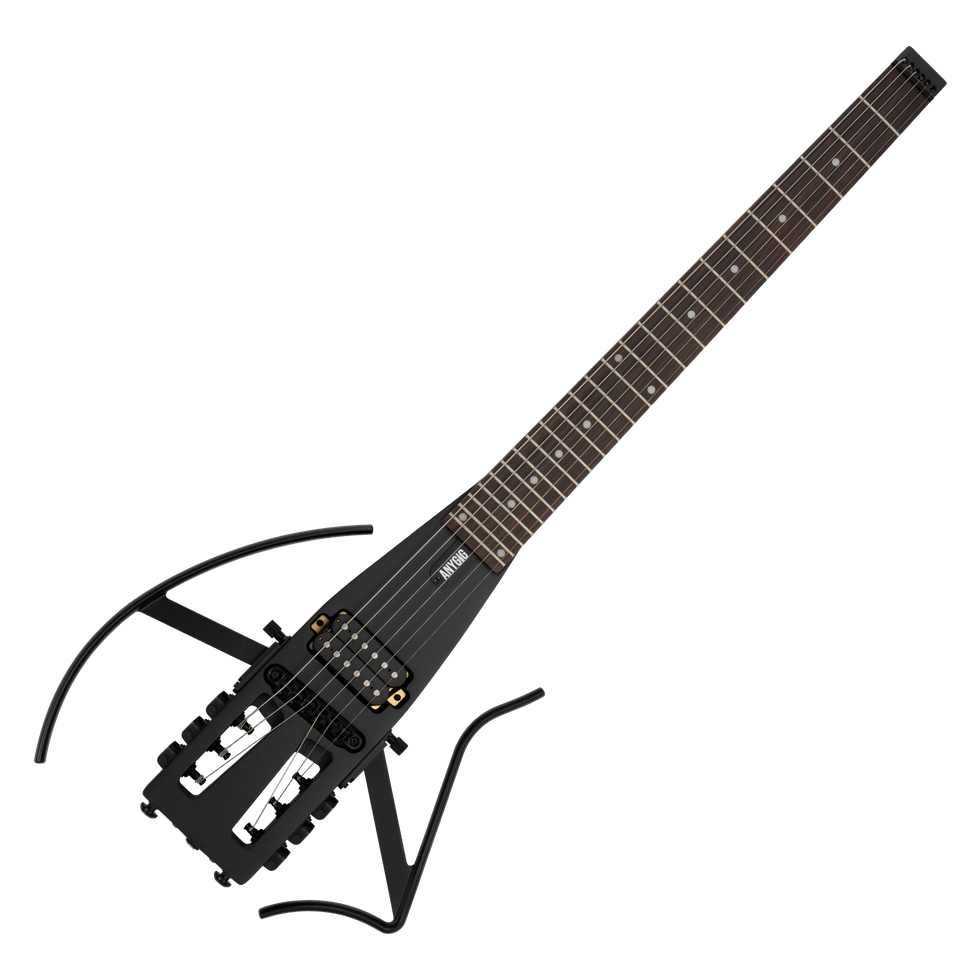
Unlike typical travel guitars derived from modified full-sized models, the AGE TE features a stylish, original design conceived entirely by Anygig. Its comfortable neck shape and smooth fret access stem from years of guitar-making experience, ensuring a natural feel and ease of playability. Despite its portable dimensions, the guitar boasts a 25.5” standard scale, delivering the same response and tension as a traditional instrument — which is ideal for players who demand full-scale performance wherever they go.
The latest Anygig model's adaptive design includes the new attachable ‘Flow’ Arm and Leg rests for improved playing posture, bridging the gap between compact design and ergonomic comfort. Fully compatible with the growing range of modern headphone amps, it gives players the freedom to practice and perform anytime, anywhere. Each AGE TE Travel Guitar ships with a travel-size gig bag, fret protector sleeve, Flow leg and arm rest, guitar scale booklet, pick, strap, digital tuner, and Allen key, providing everything needed for an immersive, portable playing experience. .
Features include:
- Frets/ Scales: 24 Frets / 25.5”(=648mm) scale
- Nut: 42mm Graphite
- Truss Rod: 2-way truss rod
- Neck & Body wood: Hard maple 3pcs
- Neck: C shape (1F: 20mm/ 12F: 21mm)
- Fingerboard radius: 16”(=400mm)
- Fingerboard: Rosewood
- Fingerboard inlay: Dot inlay
- Bridge: Tune-O-Matic bridge
- Tuner: Anygig M-11
- Pickup: Anygig Glow Humbucker
- Output Jack: EG-2P
- Strings: 010-046
- Dimension of Gigbag, Included Guitar & All Accessories : 91cm x 18cm x 10cm ● Net Weight: Fully assembled around 2.1 KG / 4lbs
The Anygig travel guitar is built around a minimalist, ergonomic design that emphasizes portability without sacrificing comfort or control. Whether you're practicing at home or touring across the globe, its slim profile fits wherever you need it to go. Available from $249.99usd on our Website www.anygigguitar.com , Amazon and Reverb.
Lamb of God Announce 2026 North American Tour
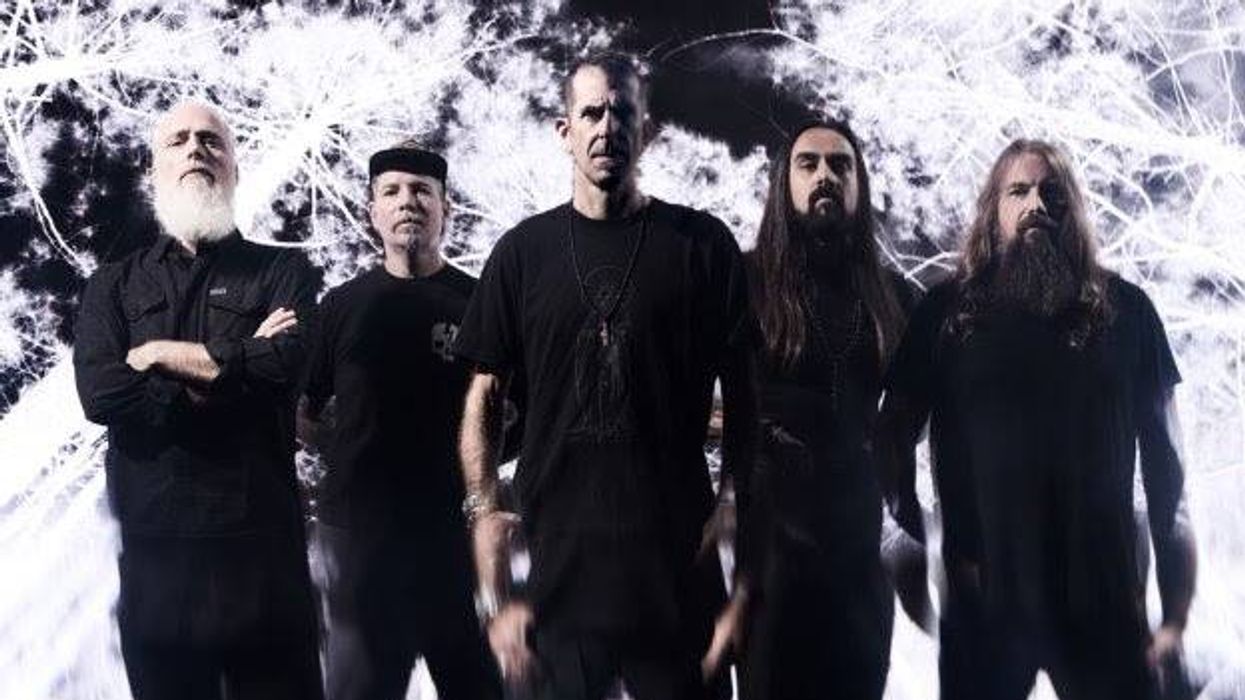
Lamb of God return to the road this March for what promises to be the heaviest tour of 2026, with the North American trek, produced by Live Nation, featuring support from Kublai Khan TX, Fit For An Autopsy, and Sanguisugabogg.
Tickets for all shows are on-sale this Friday, Nov. 21 at 10 a.m. local time. An artist pre-sale launches today at 12 noon eastern. Tickets and VIP packages will be available at Lamb-of-god.com/tour.
“We are beyond thrilled to announce the loudest, proudest, floor shakin’-est, earth quakin’-est, ear-splittin’-est, mosh pittin’-est, undiluted, undisputed HEAVIEST tour of the whole damn year,” Mark Morton declares. “Is this the largest collection of RIFFS ever assembled under one roof? It would seem so. Lamb of God, Kublai Khan TX, Fit For An Autopsy, and Sanguisugabogg. Do not miss this shit.”
The tour news follows the recent release of “Sepsis,” the band’s first new original song since 2022’s Omens, and now the #1 song on the U.S. metal radio charts. Produced by longtime collaborator Josh Wilbur, the track celebrates the Richmond underground and the bands Lamb of God performed alongside during their early years. The band also shared a live video for “Sepsis,” capturing the electrifying live debut of the song at Aftershock Festival.
Consequence named the three-and-a-half minute track its “heavy song of the week,” describing the single as “crushing” while Revolver spotlighted “Sepsis,” calling it a “rock-solid addition to their ever-crushing canon.”
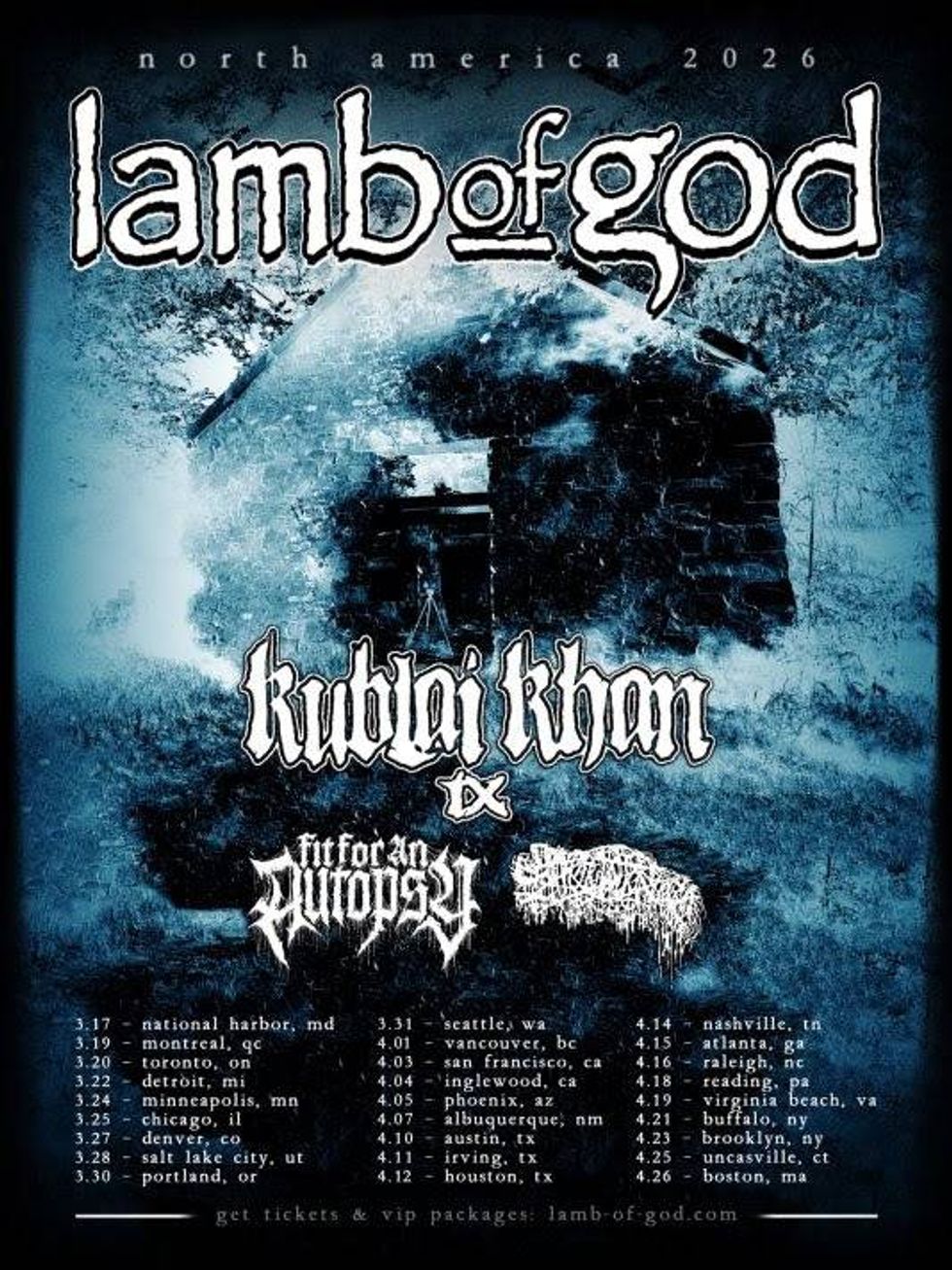
Lamb of God tour dates:
March 17 National Harbor, MD The Theater MGM National Harbor
March 19 Montreal, QC Bell Centre
March 20 Toronto, ON GCT Theatre
March 22 Detroit, MI Fox Theatre
March 24 Minneapolis, MN Armory
March 25 Chicago, IL Byline Bank Aragon Ballroom
March 27 Denver, CO Fillmore Auditorium
March 28 Salt Lake City, UT The Union Event Center
March 30 Portland, OR Theater of the Clouds
March 31 Seattle, WA WAMU Theater
April 1 Vancouver, BC PNE Forum
April 3 San Francisco, CA The Masonic
April 4 Inglewood, CA YouTube Theater
April 5 Phoenix, AZ Arizona Financial Theatre
April 7 Albuquerque, NM Revel Entertainment Center
April 10 Austin, TX Moody Amphitheater
April 11 Irving, TX The Pavilion at Toyota Music Factory
April 12 Houston, TX 713 Music Hall
April 14 Nashville, TN War Memorial Auditorium
April 15 Atlanta, GA Coca-Cola Roxy Theatre
April 16 Raleigh, NC Red Hat Amphitheater
April 18 Reading, PA Santander Arena *
April 19 Virginia Beach, VA The Dome
April 21 Buffalo, NY Buffalo RiverWorks
April 23 Brooklyn, NY Brooklyn Paramount
April 25 Uncasville, CT Mohegan Sun Arena *
April 26 Boston, MA MGM Music Hall at Fenway
*-Not a Live Nation show
2026 Festival Performances
May 14 – 17 Columbus, OH Sonic Temple Art & Music Festival
July 24 – 27 Plovdiv, BG Hills of Rock
July 27 – 31 Râşnov, RO Rockstadt Extreme Fest
August 1 Wacken, DE Wacken Open Air
August 5 – 9 Lisbon, PT Vagos Open Air
August 6 – 9 Kortrijk, BE Alcatraz Open Air
August 7 Walton-on-Trent, UK Bloodstock Open Air
August 12 – 16 Dinkelsbühl, DE Summer Breeze
August 13 – 15 Sulingen, DE Reload Festival
August 14 – 16 Eindhoven, NL Dynamo Metalfest
October 30 – November 3 Miami, FL Headbangers Boat
Tickets to the band’s previously announced dates, including the 2026 edition of their annual Headbangers Boat cruise, are on-sale now via their website.
Levy’s Expands Amped Leather Collection with New Matte and Extra-Long Straps
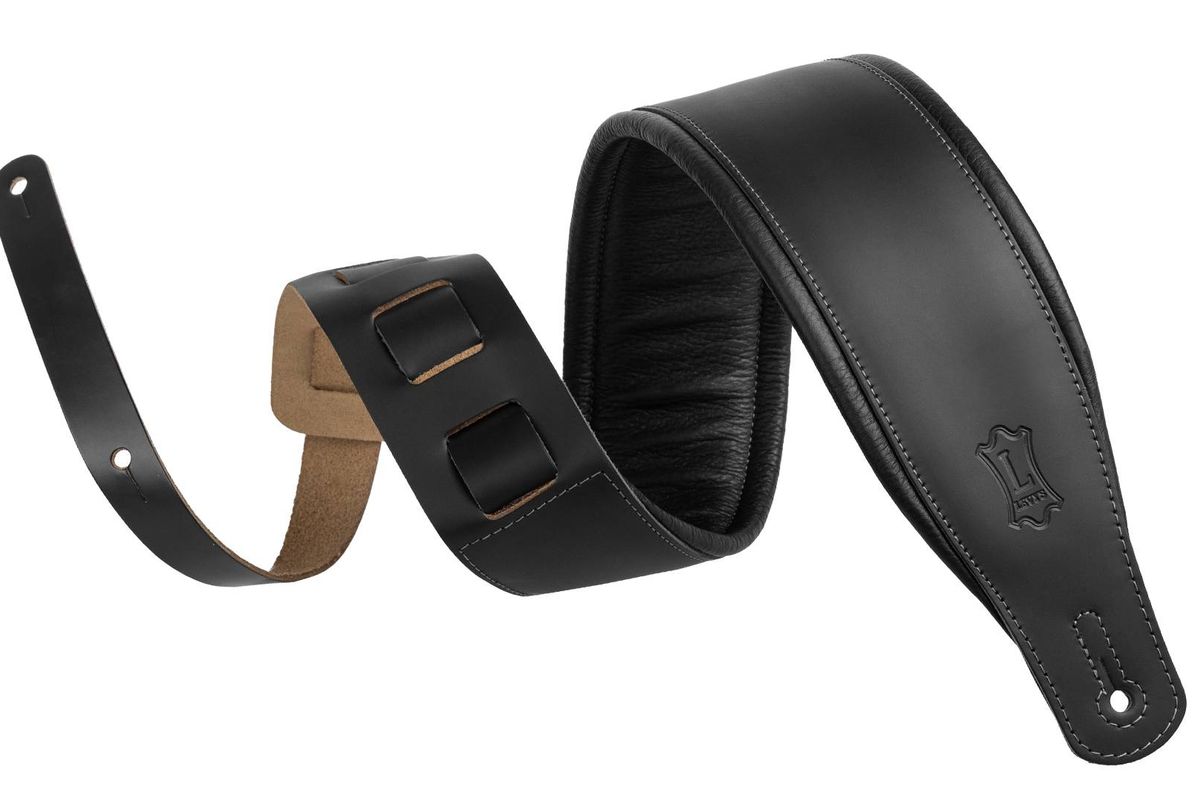
Levy’s Music has introduced two new additions to its popular Amped Leather Series, expanding one of the brand’s most recognized strap collections.
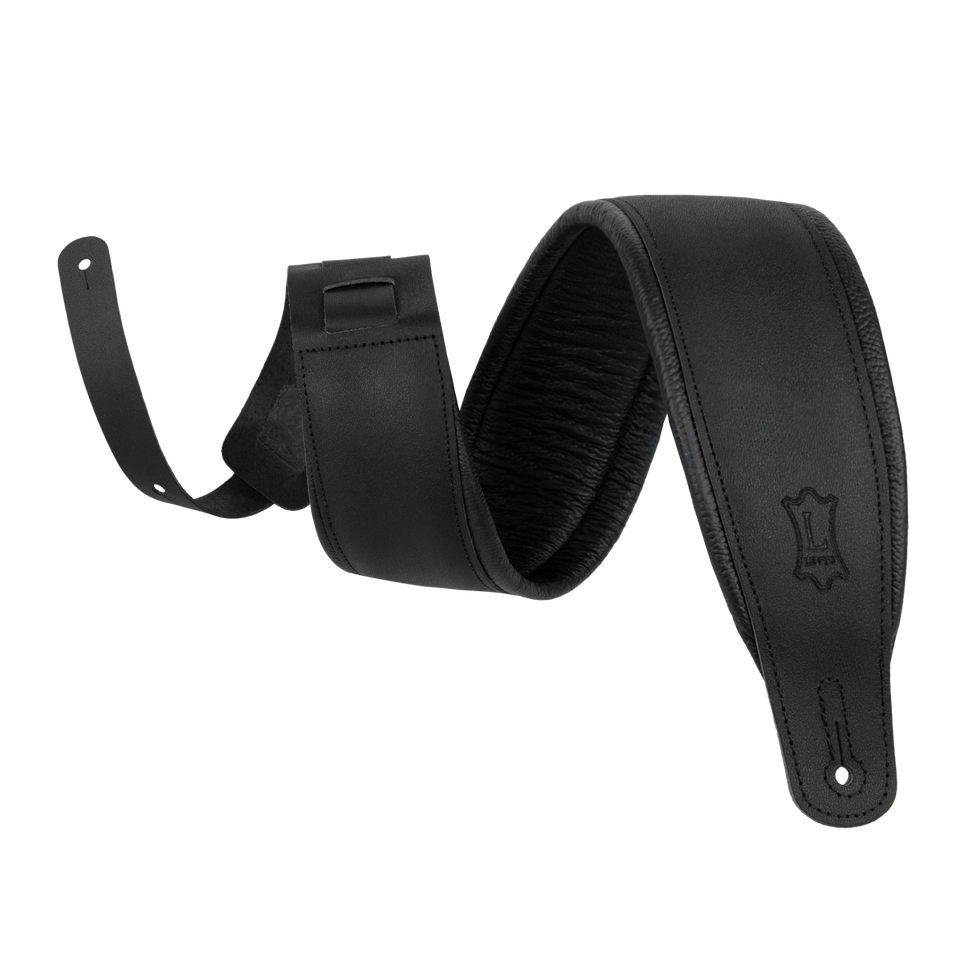
The M26PD-BLK-MAT brings a sleek matte black finish for players drawn to a rugged, understated look. The strap is adjustable from 43”–51" in length and its no-gloss finish highlights the natural texture of the leather. It carries a street price of $32.99.
The M26PD-BLK-XL extends the series’ best-selling black leather strap to suit taller musicians and lower playing preferences. Adjustable from 55.5"–63" in length, it provides an enhanced fit and added comfort for a variety of playing styles and carries a street price of $34.99.
Handcrafted in Nova Scotia from genuine top-grain leather, the Amped Leather Series is known for its 3-inch-wide design and soft ¼-inch foam padding wrapped in garment leather for long-lasting comfort.
Both new models carry forward the craftsmanship and comfort that define the Amped Leather Series, reinforcing its status as a go-to choice for musicians seeking reliability and style in equal measure. Each strap is proudly handcrafted in Nova Scotia, Canada.
To learn more about Levy’s guitar straps and music accessories, please visit levysleathers.com.
Rig Rundown: Jeff Tweedy
The Wilco frontman’s ’90s pawn shop raids are paying off decades later.
Back in September, Wilco’s Jeff Tweedy released his fifth solo album, Twilight Override. The triple album, recorded at the band’s Chicago studio, the Loft, features 30 tracks total. Tweedy set out across the U.S. this fall to celebrate the monumental release.
On October 29, he performed at the Caverns in Grundy County, Tennessee, and welcomed PG’s Nashville correspondent John Bohlinger to the bat cave to check out a ripping collection of pawn-shop specials.
Brought to you by D’Addario.
Pawn Shop Prize
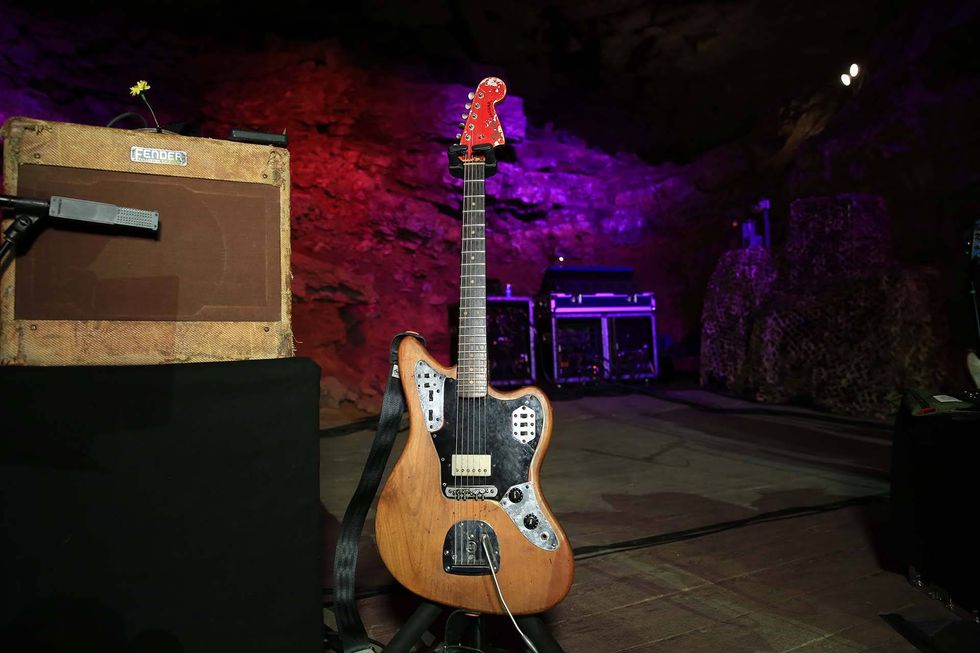
Tweedy has had this heavily modded Jaguar for a very long time—he bought it at a pawn shop when they were still cheap. He guesses it’s a 1964, and it’s been modded to run only on its Seymour Duncan Antiquity bridge humbucker.
Root of All Evil
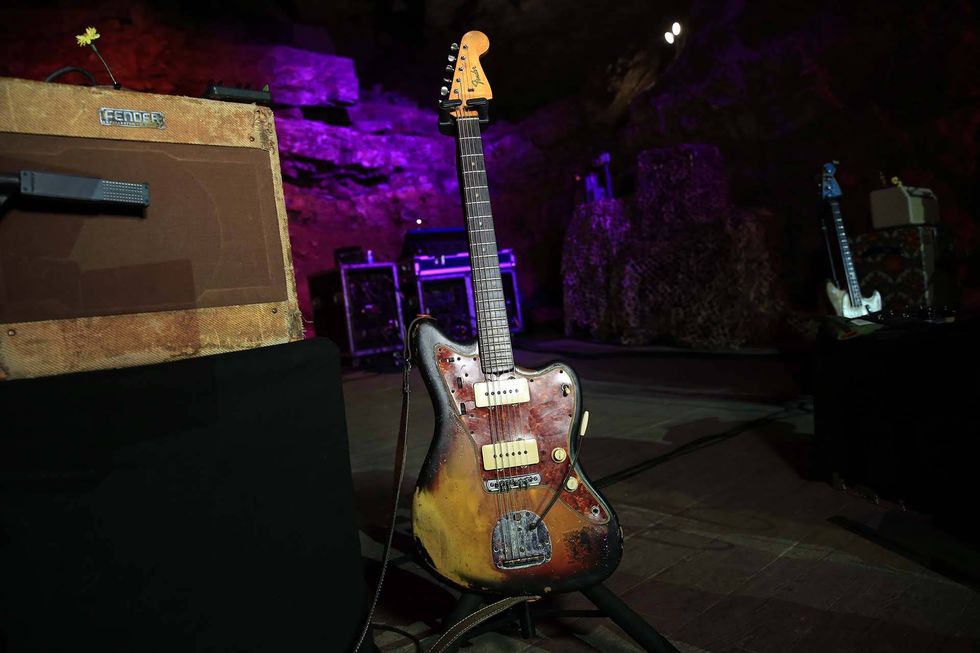
Tweedy got this Fender Jazzmaster at a pawn shop in Chicago for around $500. With its Mastery bridge, he tunes it with bass strings for some of Wilco’s heavier, lower-tuned material like “Dawned On Me.”
Half Moon Fun
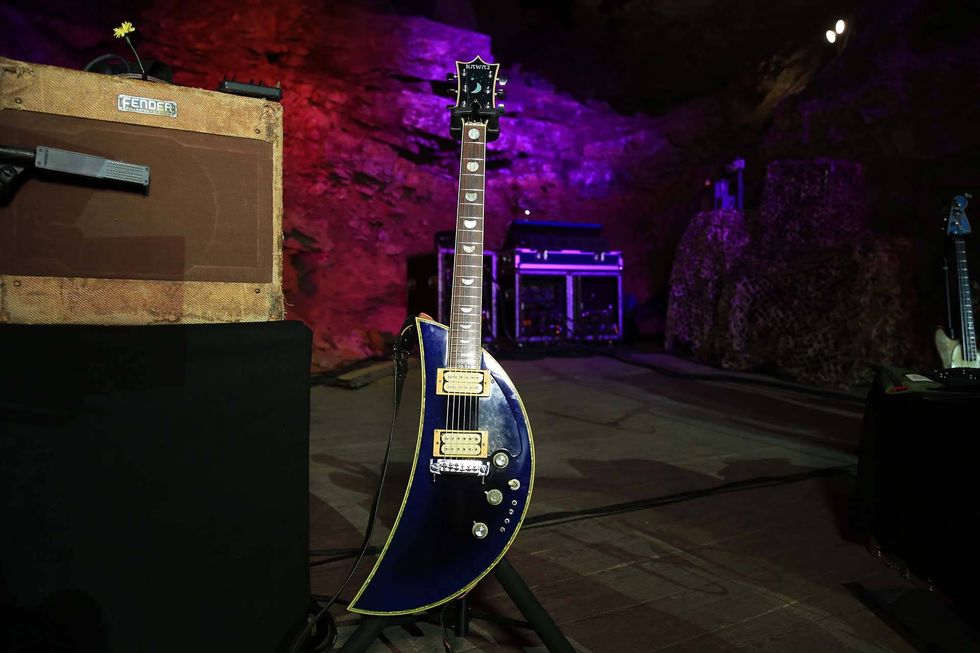
Ric Ocasek is one of the few other well-known guitarists to play one of these Kawai MoonSaults, a Japan-made guitar from the 1980s with a scorching-hot preamp wired into it. Tweedy has a soft spot for them, and has collected six or seven of the oddities. He strings this one with flatwounds.
Everyman’s SG
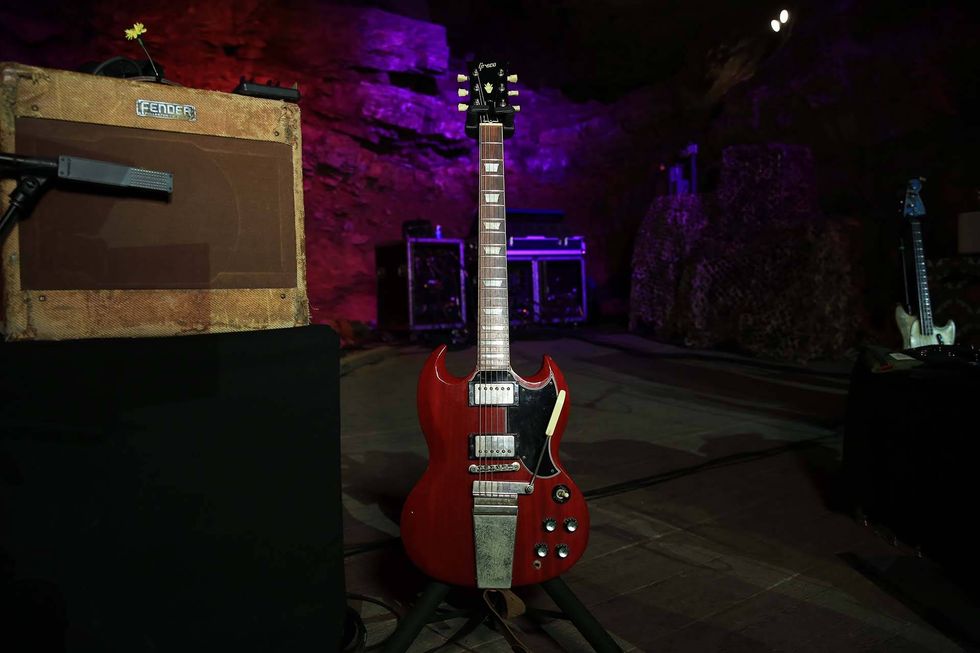
Tweedy didn’t like the feeling of being handed his $20,000 Gibson SG onstage. He wanted to model some more reasonably priced instruments to his fans, so he started bringing out this early-’80s-built Greco SG copy. It features PAF-style Maxon Dry Z pickups.
Tele: Fully Loaded
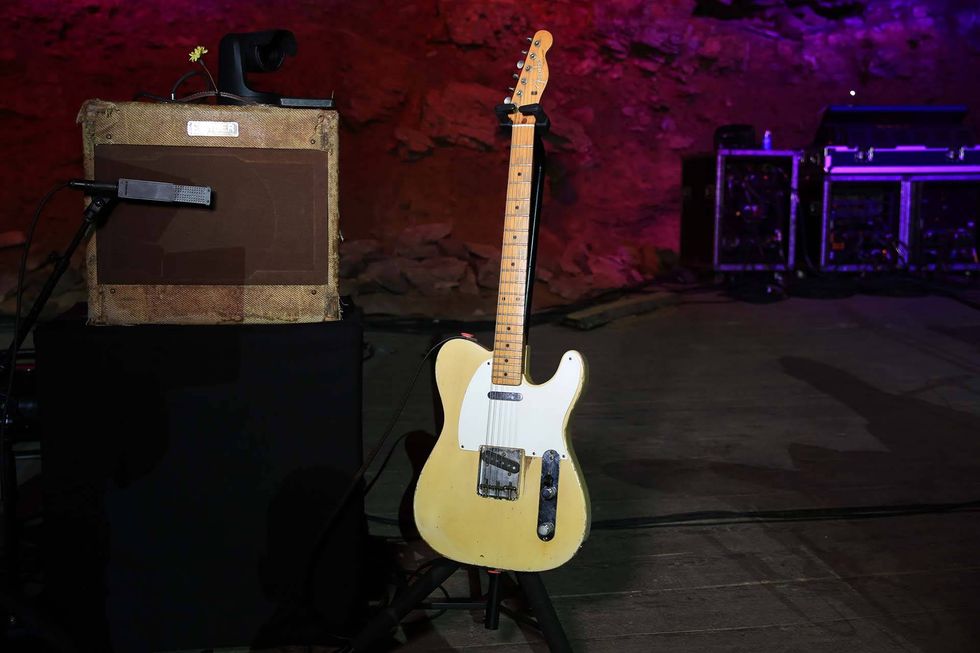
Fender didn’t make many of these Telecasters with top-loaded strings, and Tweedy loves the sound of this one’s snarl into his Fender Deluxe. It was purchased at New York’s RetroFret Vintage Guitars and lives in open-G tuning.
Tweedy’s Tweed
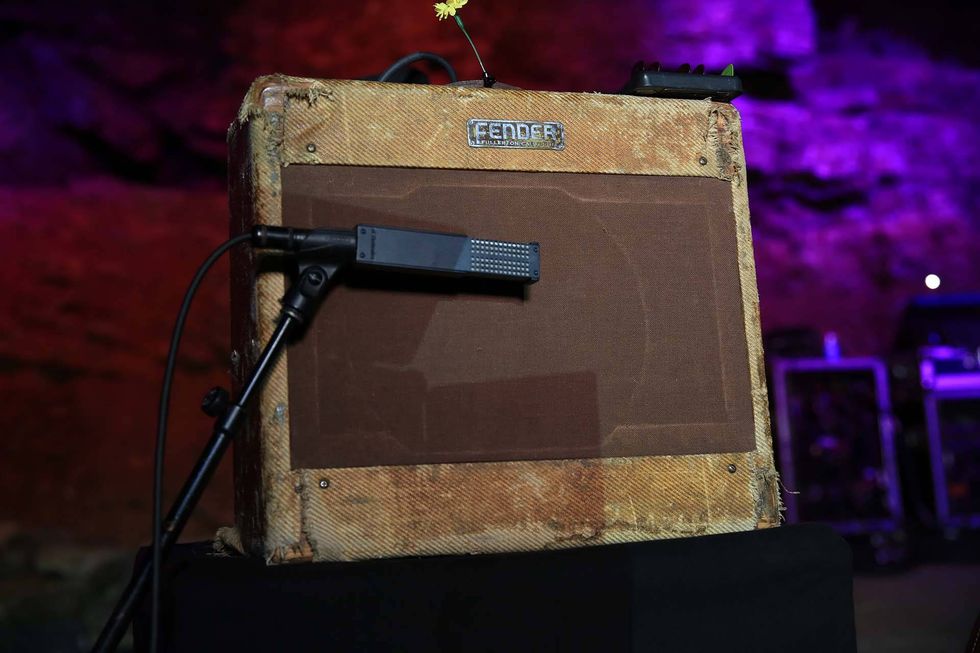
Tweedy bought this 1954 Fender Deluxe in 1994 for just a couple hundred bucks. This wide-panel, 10-watt 5D3 model still has its original speaker and transformer.
Jeff Tweedy’s Pedalboards
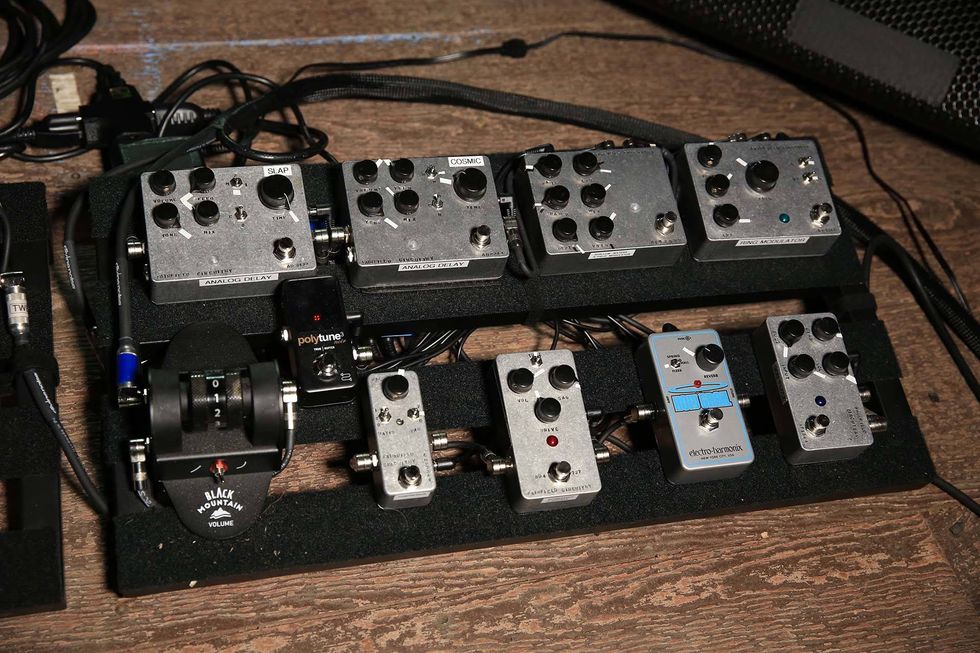
One of Tweedy’s boards is dedicated almost entirely to pedals by Fairfield Circuitry, based in Hull, Quebec. In addition to a TC Electronic Polytune 3 Noir, Electro-Harmonix Holy Grail, and Black Mountain volume pedal, there are seven Fairfield units: the Accountant compressor, Barbershop overdrive, ~900 fuzz, Randy’s Revenge ring modulator, Shallow Water k-field modulator, and two Meet Maude analog delays.
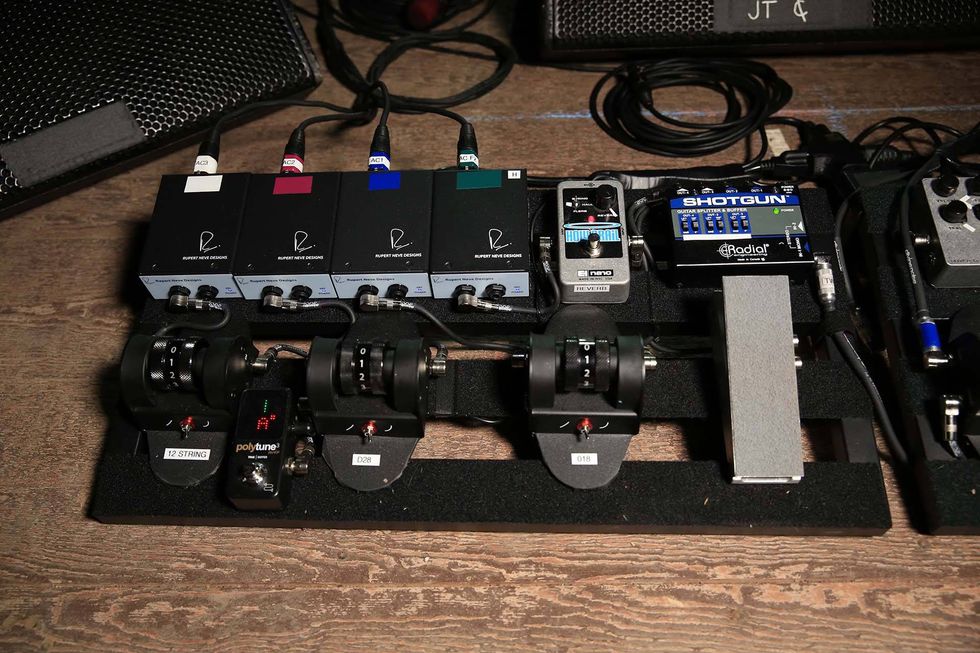
On a second board for his acoustics, Tweedy runs another Holy Grail, Polytune 3 Noir, and three more Black Mountain volume pedals, plus a Radial Shotgun splitter and buffer and three Rupert Neve RNDI-M direct interface boxes.
PRS Guitars Announces the Fiore HH
PRS Guitars today announced the PRS Fiore HH, a dual-humbucker version of GRAMMY® Award-winning guitarist, composer, producer Mark Lettieri’s signature model. An addition to the Fiore family, the Fiore HH offers a new configuration, changing from the original’s single-single-hum, to hum only. It is available in both gloss and satin finishes.
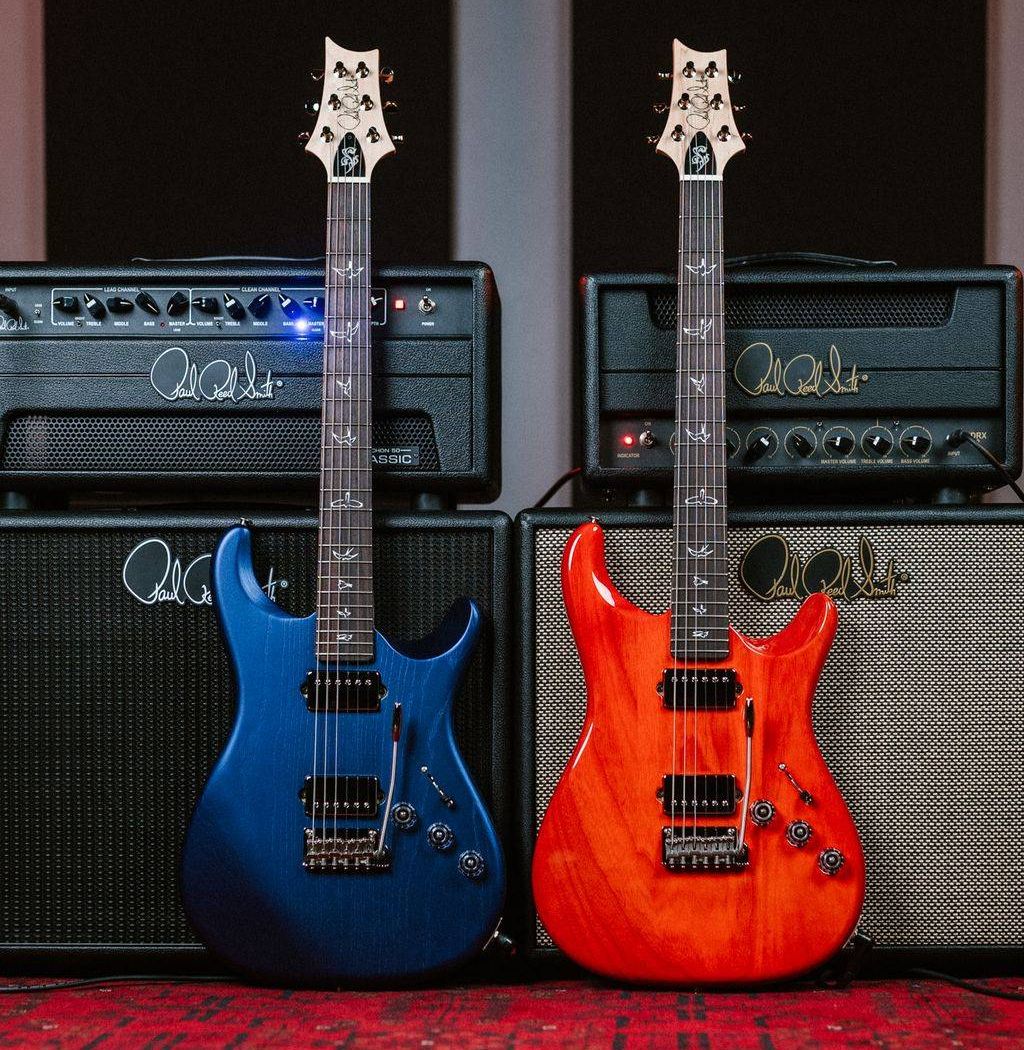
“For players who love the specifications and versatility of the original Fiore but whose sound revolves more around humbuckers, this is the guitar for you,” said Mark Lettieri.
With a swamp ash body, 25.5” scale length maple neck, 22-fret maple fretboard, and two-point steel tremolo, the Fiore HH offers another tonal platform for those searching for vibrancy, dynamics, balance, and clarity.
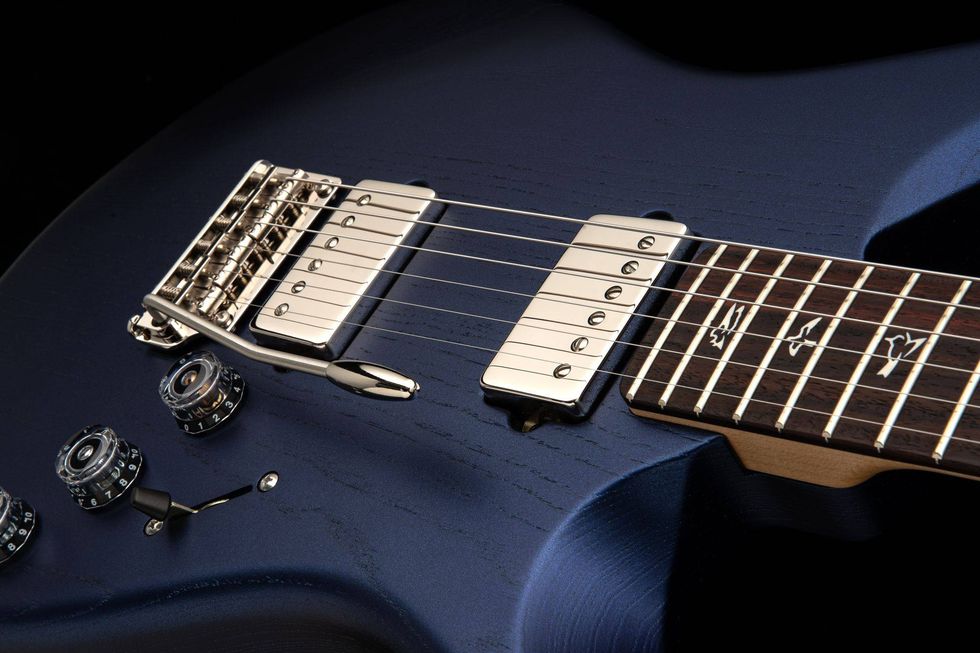
The Fiore-H humbuckers have enough power and punch for high-gain lead tones but with a smooth top end that allows the pickup to be played clean, even with the volume knob wide open. By pairing these pickups with a master volume, two push/pull tone knobs, and 3-way blade switch, the Fiore HH brings exciting voicing options to players. Each tone control acts as an individual series/parallel selector for each pickup. When in series, the pickups offer the full humbucker sound - warm full lows and mids and an articulate top end. When in parallel, the pickups take on more of a single-coil sparkle with a slightly scooped feel and more brilliance. In all, players can explore eight tonal combinations.
The original Fiore is still in the PRS Bolt-On Series catalog as well, in all of its single-single-hum glory.
For all of the latest news, click www.prsguitars.com/40 and follow @prsguitars on Instagram, Tik Tok, Facebook, X, and YouTube.
Taylor Partners with Trey Hensley on First Gold Label Artist Model
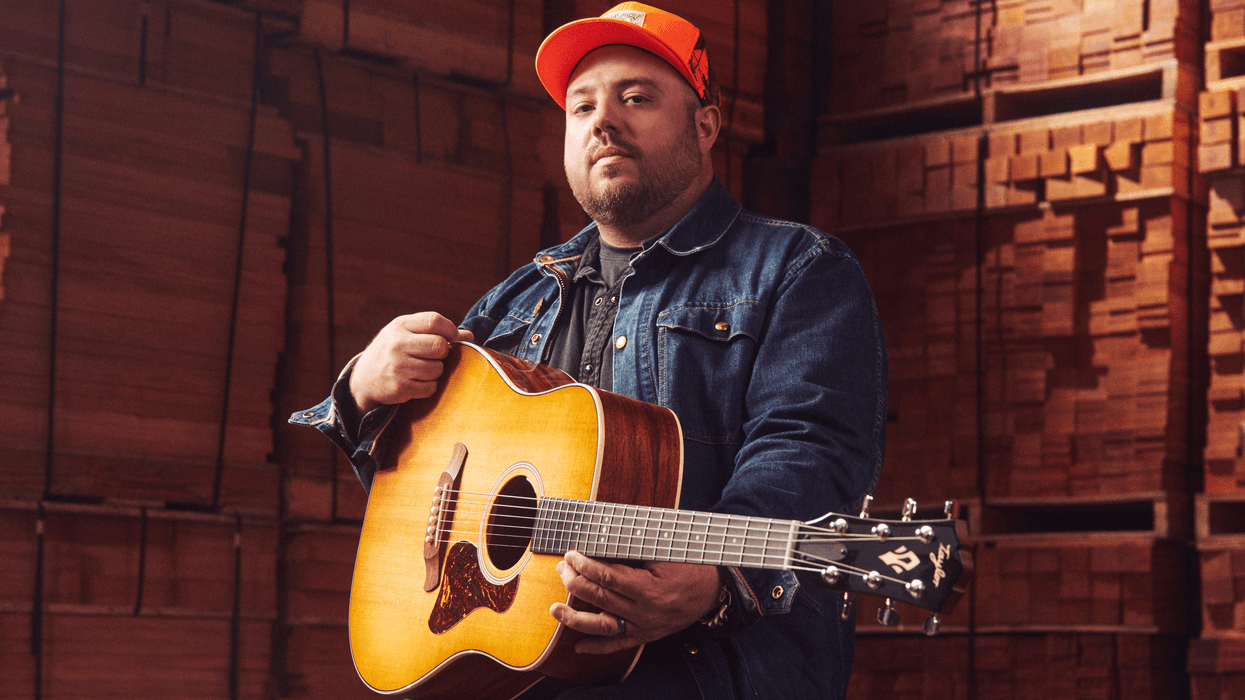
Over the past year, Taylor Guitars has worked in tandem with talented artists across multiple genres to create instruments that reflect their unique musical styles — including GRAMMY winners Jacob Collier and Zedd.
As Taylor expands its acclaimed Gold Label series — first introduced in January 2025 — it’s only natural that the company has partnered with a beloved member of the Taylor family: Trey Hensley.
The powerhouse new Gold Label 510e dreadnought, Taylor’s first collaborative Gold Label guitar, channels Hensley’s signature style. The Nashville virtuoso, a longtime Taylor player who has wowed audiences and industry peers alike, is known for his fiery flatpicking and thoughtful songwriting.
The collaboration comes as both Taylor and Hensley are hitting new highs in their respective journeys. Named Guitar Player of the Year at the 2025 IBMA Bluegrass Music Awards (his second win after 2023), Hensley also won a GRAMMY for Best Traditional Blues Album in 2025 as part of the Taj Mahal Sextet. His 2015 album with Rob Ickes, Before the Sun Goes Down, earned a GRAMMY nomination, and he has collaborated with legends including Johnny Cash, June Carter Cash, Dolly Parton and Earl Scruggs.
A Guitar as Unique as Its Signature Artist
Hensley’s artistic fervor is matched by his enthusiasm for his new dreadnought. "I’m beyond honored to have my name associated with what I believe to be a perfect guitar,” says Hensley. “I’ve been a fan of the Gold Label Taylors since the inception, and to be able to work with Taylor on the introduction of a square-shoulder dreadnought into the Gold Label lineup is insanely cool!”
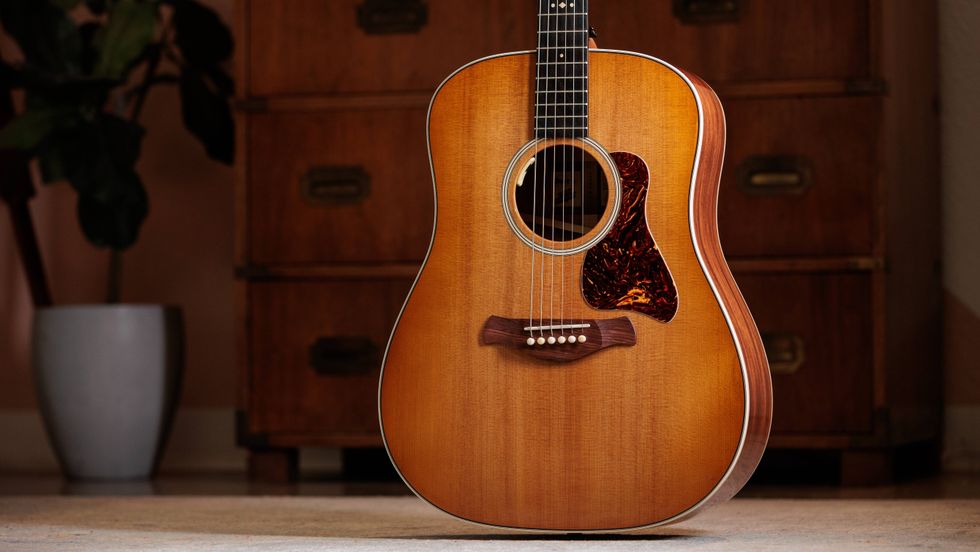
The new Trey Hensley Gold Label 510e celebrates Hensley’s artistry with aunique set of features, starting with a deeper version of Taylor’s classic square-shoulderDreadnought body shape. This model is crafted with back and sides of solid mahoganypaired with a torrefied Sitka spruce top. Fanned V-Class bracing delivers a warm, woodymidrange with outstanding power and sustain, especially in the low end. The long-tenonAction Control Neck offers enhanced resonance and allows fast, easy adjustability todial in the ideal string height for any scenario or playing style. Hensley helped fine-tune theguitar’s response, opting for medium-gauge D’Addario Nickel Bronze strings.
An Acoustic Voice Suited to a Broad Range of Players
The Gold Label 510e is designed around Hensley’s playing style like a well-fitted glove, but its inviting shape and classic sound possesses a broader appeal. “I believe every player at every skill level within every style will love this guitar as much as I do,” says Hensley. “It’ll excel at anything and everything. I’ve never played a better guitar than this new 510 Gold Label…thank you, Taylor, for knocking this out of the park!"
A key element to the model’s wide-ranging tonal allure: the guitar is outfitted with Hensley’s preferred pickup system for performance — the Baggs Anthem SL — combining an Element under-saddle piezo pickup with a TRU·MIC condenser microphone and an endpin preamp. The system includes a soundhole-mounted volume control for ease and simplicity. The result? A guitar ideally suited for the concert stage, with a natural, organic sound and user-friendly electronics.
Instilling Beauty in Every Detail
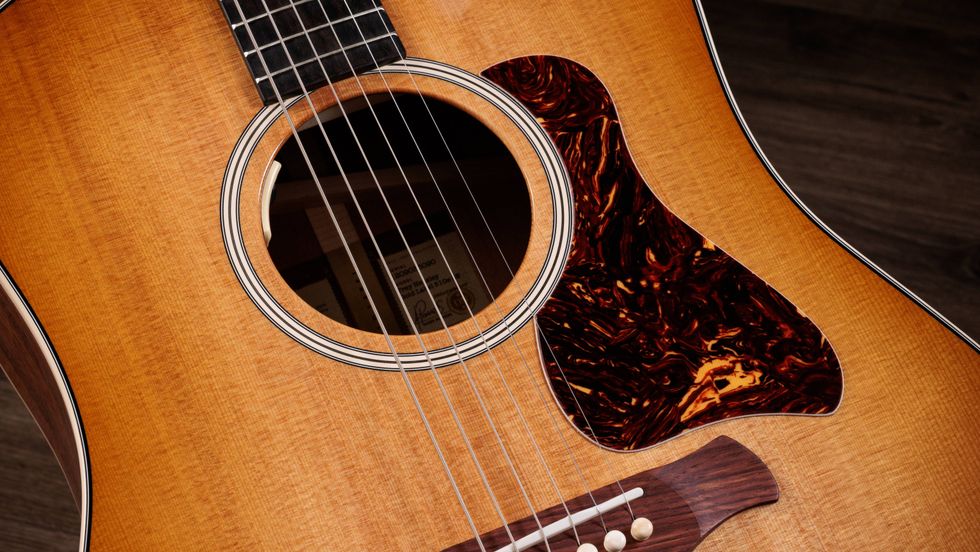
Blending Gold Label’s distinctive heritage-flavored aesthetic with understated elegance, this model features an Antique Blond torrefied spruce top that glows with warm, golden-brown hues. Other details include a Honduran rosewood Curve Wing bridge with bone pins, cream binding with black/white purfling, a matching rosette, and Crest inlays in cream. A double-layer pickguard (ivoroid and faux tortoise) and a Trey Hensley Gold Label interior label complete the look. And each guitar ships in a deluxe hardshell case with a British Cocoa exterior.
Together, Hensley and Taylor have meticulously crafted an instrument that delivers a fully satisfying experience in just about every way: feel, looks and tone. If you’re looking for a stage-ready workhorse to inspire your next live performance, or if you simply want to bond with a sumptuous guitar in your living room, you’ll find it in the Trey Hensley Gold Label 510e by Taylor.
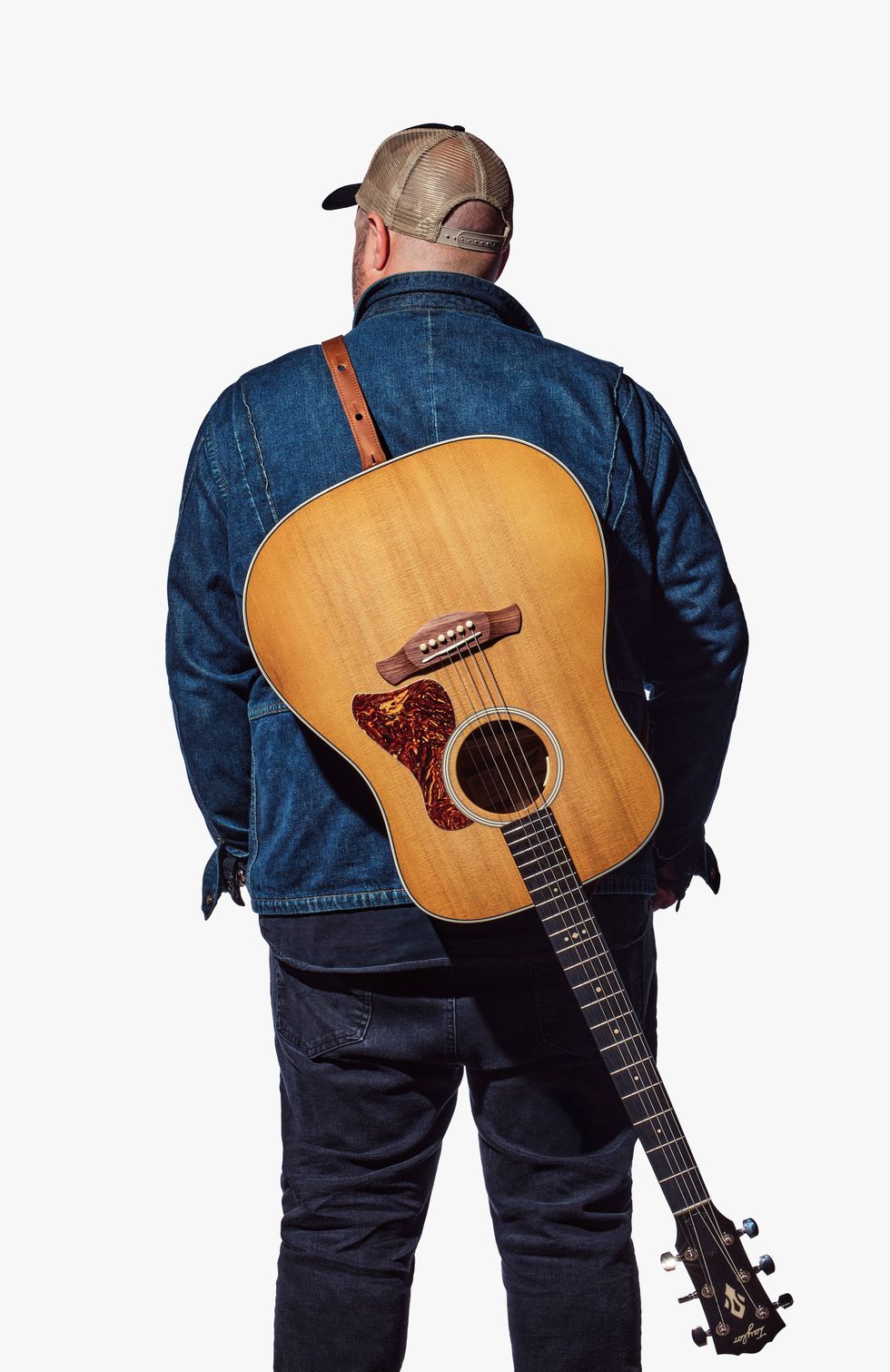
The first 100 guitars will be offered as Special Edition models that include a certificate of authenticity hand-signed by Hensley.
For more information visit https://www.taylorguitars.com/guitars/acoustic/trey-hensley-gold-label-510e-se .
Spector Introduces Limited Euro LX Series
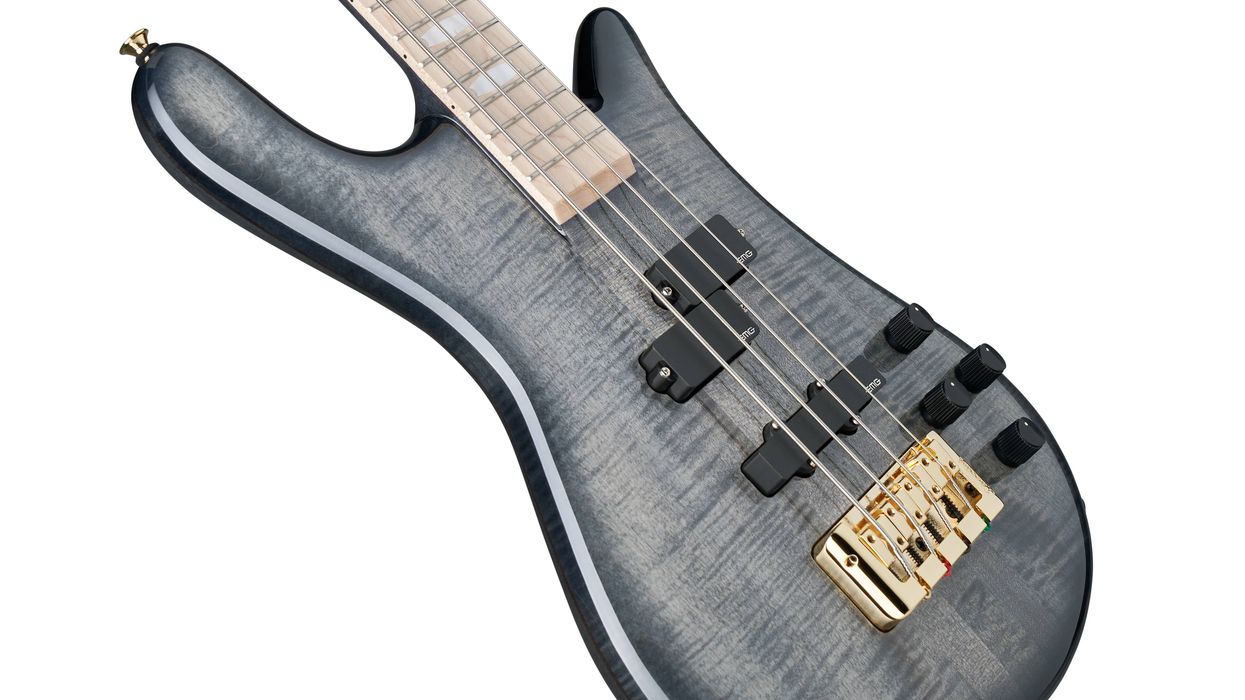
Spector unveils the Limited Euro LX Series, a striking new take on the beloved Euro LX bass formula. Drawing inspiration from the Spector Custom Shop, each bass features a maple fingerboard, adding brightness and that signature maple “pop”, a rarity for the Euro line. Other standout features include a matching figured maple headstock and three stunning gloss finishes.
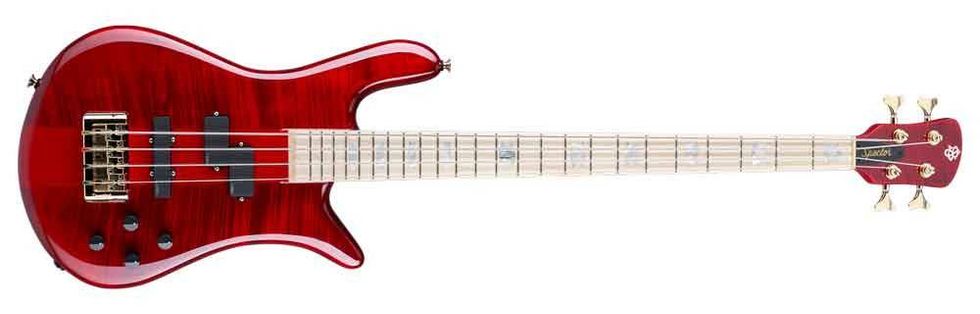
Crafted with precision, these limited models boast a fully curved figured maple top with European alder back, paired with a neck-thru 3-piece North American maple neck and fingerboard, adorned with Spector’s signature Mother of Pearl Crown Inlays.
“This Limited Euro LX series is a celebration of our legacy and a bold step forward,” said John Stippell at Spector. “These basses combine the craftsmanship our players expect with fresh design elements that make a statement on stage and in the studio.”
At the heart of this bass is the Spector Legacy preamp, developed in collaboration with Darkglass Electronics. This preamp, paired with EMG pickups, captures the legendary “Spector growl” heard on countless iconic recordings, while offering modern tonal flexibility.
Available in four (34”) and five-string (35”) configurations, with three eye-catching gloss finishes – Black Cherry, Ultra Violet, and Black Stain – topped off with a matching headstock for a cohesive, high-end look. Gold hardware adds a touch of elegance, staying true to the classic Spector aesthetic.
The Black Cherry and Ultra Violet Limited Euro LX basses are available now at select authorized Spector dealers. The Black Stain basses are available exclusively at Sweetwater.
Experience a new take on a classic with the Limited Euro LX basses from Spector.
To learn more, please visit www.spectorbass.com
Street price:
$3,779.99 USD for 4-string models
$3,899.99 USD for 5-string models
Win Tone Essentials from Best Damn Cable Co. & Goldbird
10 Packs of Strings from Goldbird + 2 of the best damn cables you’ll ever use. Enter before December 2, 2025.
Best Damn Cables Company Giveaway
The Prize Package
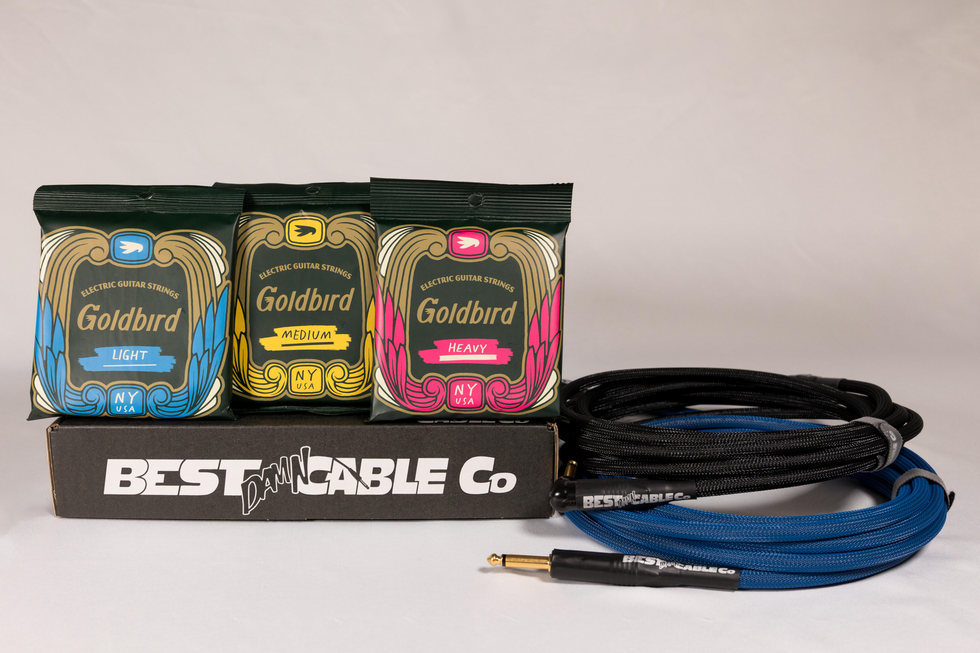
One winner will receive 10 sets of strings form Goldbird and 2 cables of your choice from Best Damn Cable Co.
The Best Damn Instrument Cable
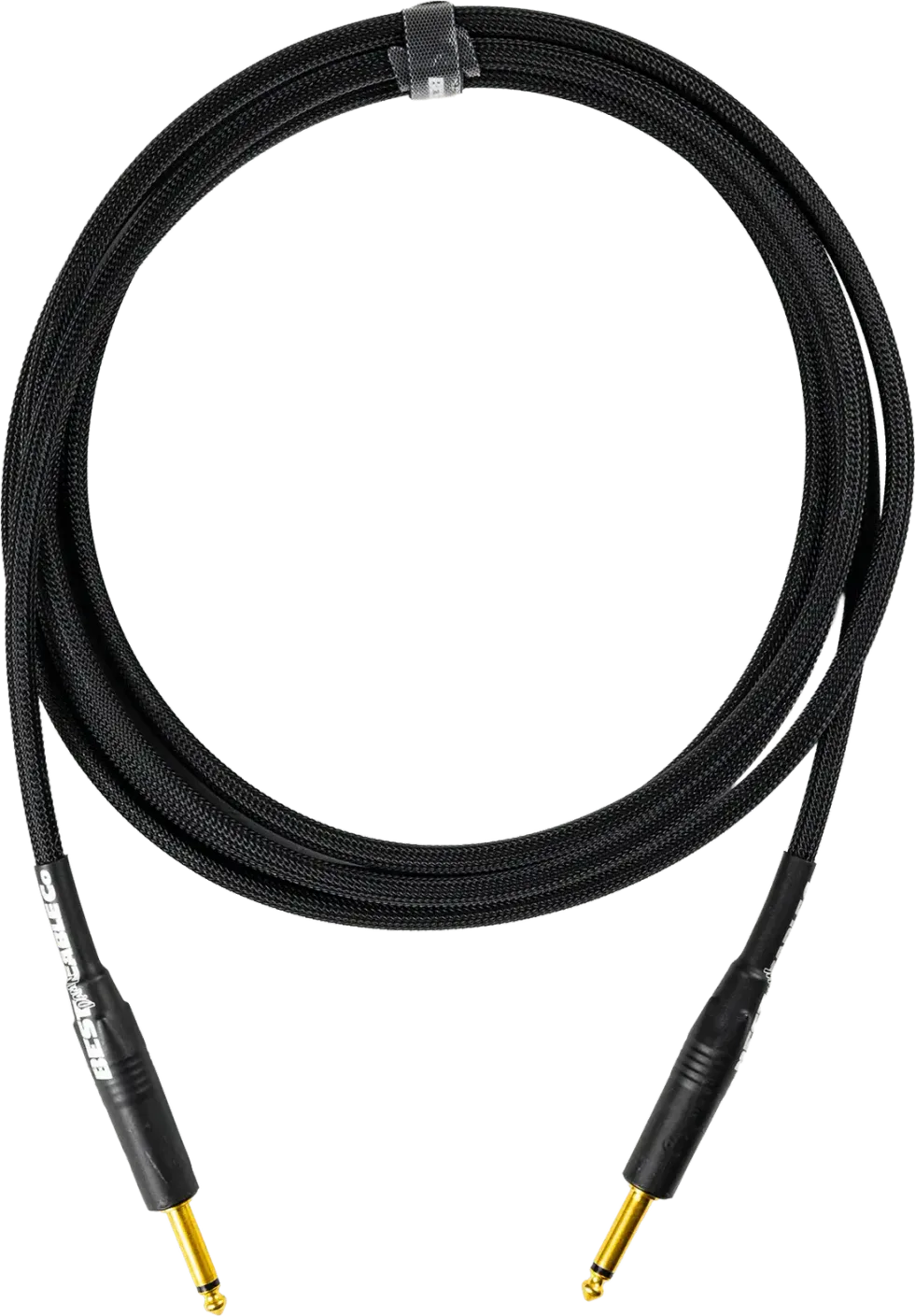
Durable as all hell and guaranteed to have people looking. Available in multiple different sleeving options with either straight or right-angled Neutrik connectors, the Best Damn Cable Co. is the industry standard when it comes to reliability.
Goldbird Electric Guitar Strings
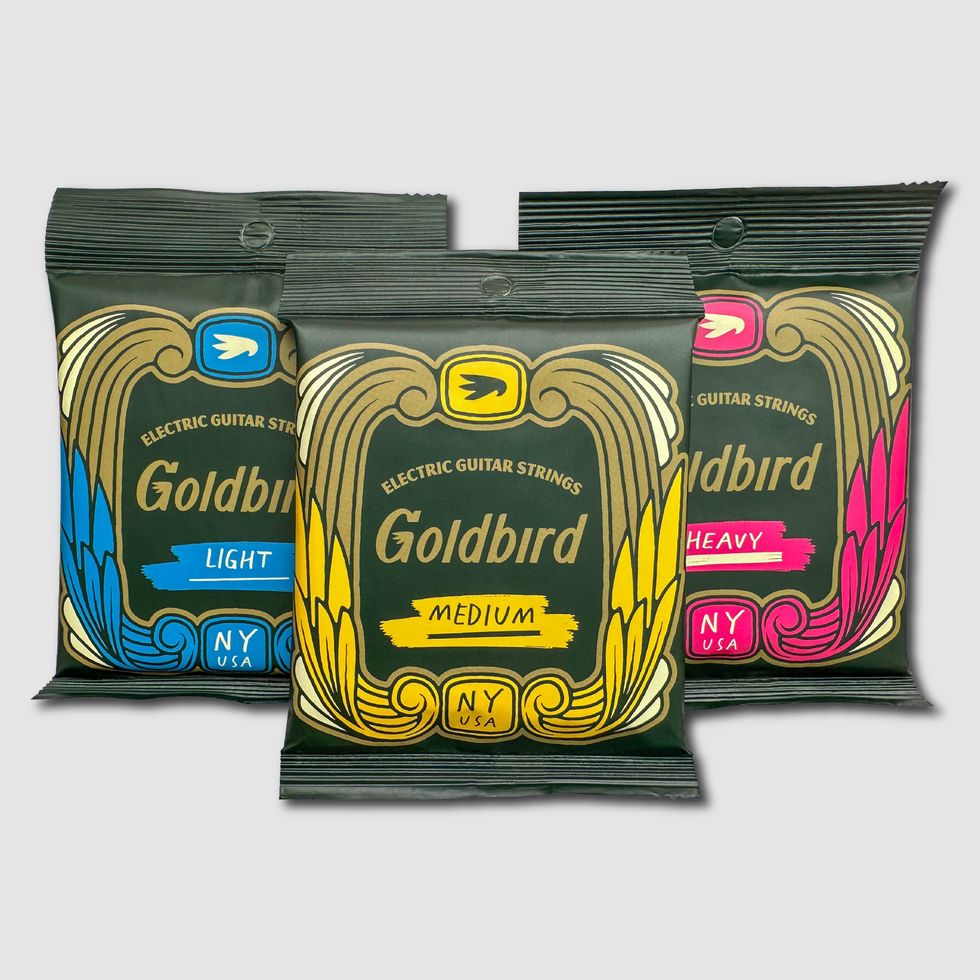
Goldbird electric guitar strings are crafted from premium nickel-plated steel, giving guitarists a balanced tone with clear highs, punchy mids, and tight low end. Designed for durability and tuning stability, these strings hold up for dozens of hours of playing. That means more time making music and less time changing strings.
Epiphone Unveils the Mike Dirnt Grabber G-3 Bass
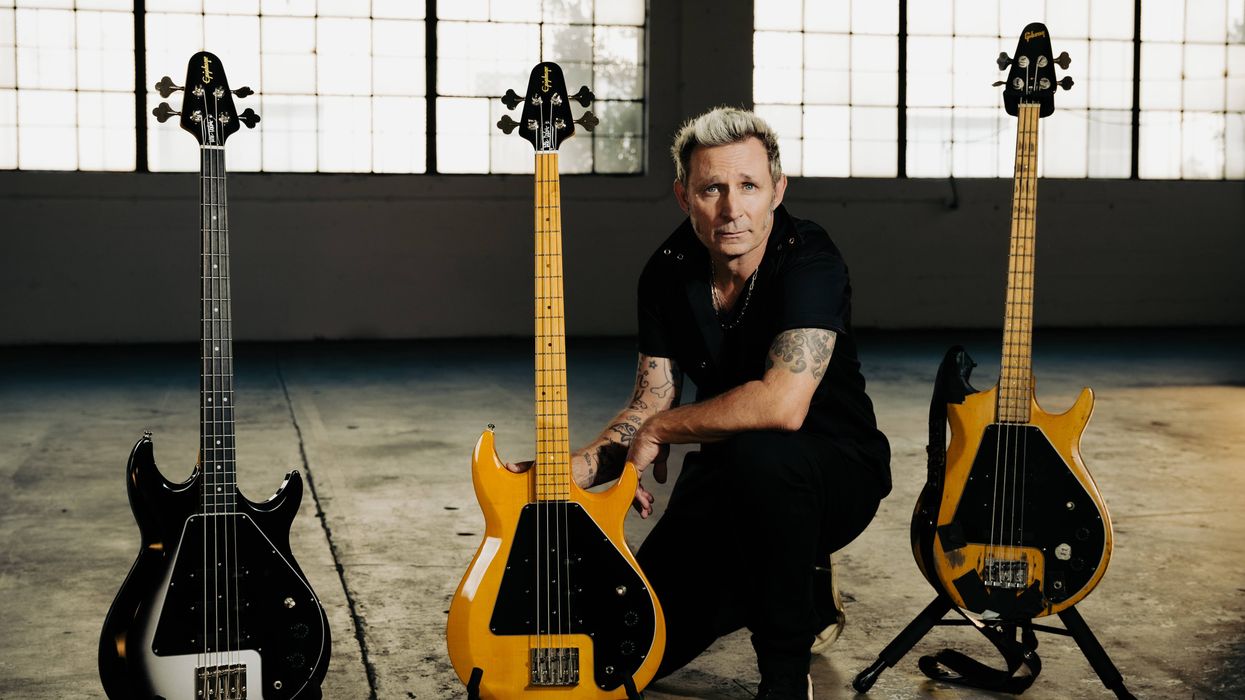
Epiphone has launched the Mike Dirnt Grabber G-3, a signature bass created in collaboration with legendary Green Day co-founder and bassist Mike Dirnt. This modern revival of the legendary Gibson Grabber G-3 pays homage to the instrument that helped shape the sound of punk rock’s explosion from the underground—including its iconic role in Green Day’s landmark 1994 album, Dookie, which recently celebrated its 30th anniversary.
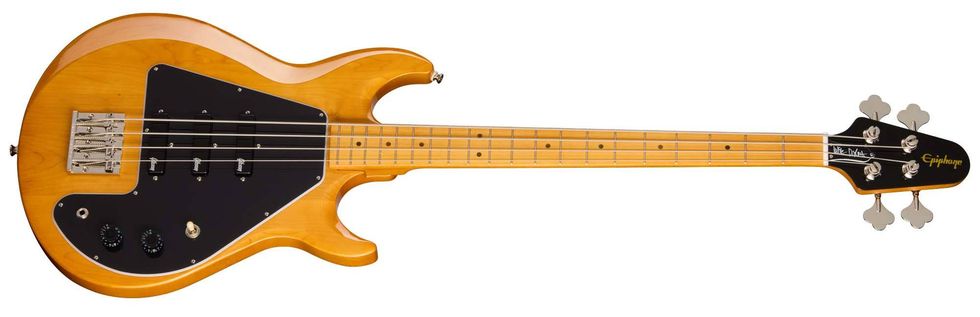
Mike Dirnt continues to perform with his favorite, beloved bass, most recently on Green Day’s The Saviors World Tour in front of millions of fans.
The Epiphone Mike Dirnt Grabber G-3 is available worldwide in Silverburst finish at authorized Epiphone dealers, Gibson Garage locations in London and Nashville, and online at Epiphone.com. A Natural finish is also available globally, exclusively through the Gibson Garage, and online at Epiphone.com.
Known for his punchy bass lines, dynamic vocals, and electrifying stage presence, Dirnt has been a driving force behind one of music’s most influential and long-running bands. The new Grabber G-3 reflects his legacy with a design that blends classic construction and modern performance features.
Crafted with a double-cutaway maple body and a 34-inch scale three-piece maple neck, the Grabber G-3 offers smooth playability and solid resonance. Depending on the finish—available in Silverburst or Natural—players can choose between an ebony or maple fretboard, each adorned with black abalone dot inlays and 20 medium jumbo frets.

The headstock features the classic Grabber “V™” shape, paired with open-gear bass tuners and historic clover buttons. A bone nut enhances resonance, while the Leo Quan® Badass II™ bridge delivers powerful attack, sustain, and full adjustability. Strings run through the body and are anchored with ferrules on the back, contributing to the bass’s rich tone and lasting sustain.
At the heart of the Grabber G-3 are three Gibson G-3 pickups, handcrafted in Nashville, TN, at the Gibson Pickup Shop. Wired in a unique “buck-and-a-half” configuration, the pickups offer versatile humbucking combinations via a three-way toggle switch—neck and middle, all three engaged, or middle and bridge—alongside master volume and tone controls for a wide palette of noise-free tones.
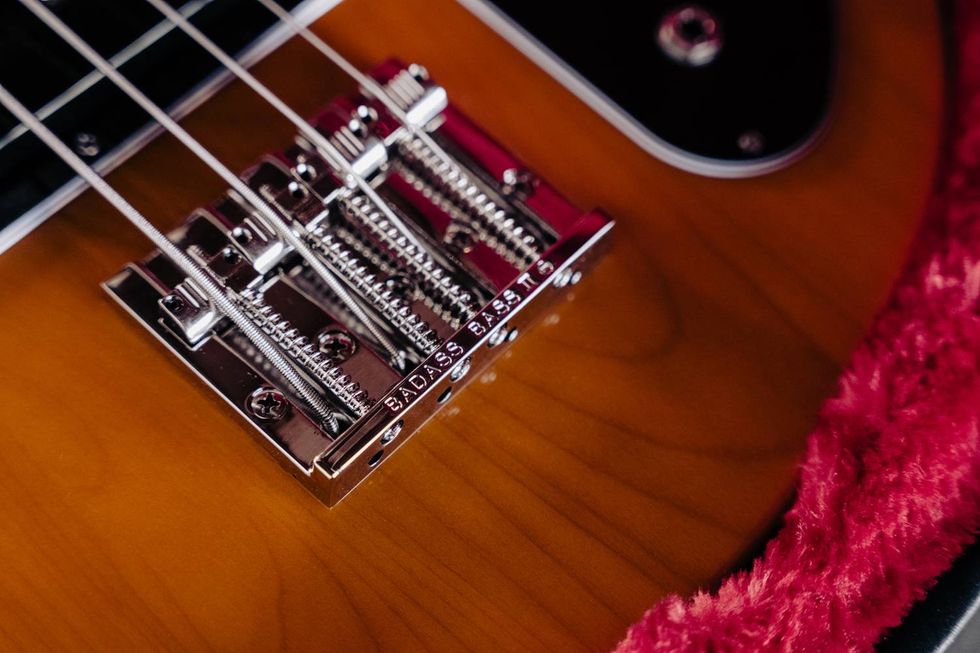
The Epiphone Mike Dirnt Grabber G-3 bass arrives with a hardshell case, making it road-ready for studio sessions or global tours. Whether you’re a die-hard Green Day fan or a bassist seeking a bold, versatile instrument, the Grabber G-3 delivers the punch, style, and legacy of a punk rock legend.
The Epiphone Mike Dirnt Grabber G-3 bass carries a street price of $1299.00. The Silverburst finish mode is available worldwide. The Natural finish is available only through Gibson Garages and Epiphone.com.
Mystery Stocking 2025 Is Here!
Grab a Mystery Stocking starting on November 24, 2025 at 10 AM Central.
For best results, open this form in a new tab! (Click Here)
About Mystery Stocking
Each year, Premier Guitar puts out these mystery boxes as a part of bringing some fun to the holiday season. Each box contains guitar goodies ranging from picks, strings, and straps to pedals, guitars, and amps! Remember, this is supposed to be a fun holiday treat! If the contents of this box will ruin your holiday, deplete the last of your bank account, or end your ability to see the good in humanity, it may not be for you.
- This year's Mystery Stocking will cost $44.95. ($39.95 + $5 Flat shipping)
- Each box will be guaranteed to contain $40 or more MSRP.
- US only. (Sorry World.)
- Make sure your shipping address is correct.
- Have your credit card ready to go before you refresh the page. Paypal is not available. Autofill may not fill in your information.
- There will be NO REFUNDS given.
- There has been a huge demand for these in the past. When they are gone, they are gone.
- One per household, one per person.
Q: What's in the Mystery Stocking?
A: It wouldn't be much of a surprise if we told you, now would it?
Q: Will I definitely get my money worth?
A: Yep.
Q: Can I return it if I don't like it?
A: Nope. All sales final.
Q: What if I live outside the US?
A: Sorry, US only.
Q. How much is it?
A. $39.95 Plus $5 shipping
Q. When will it ship?
A. On or before December 5, 2025.
Q. What form of payment do you accept?
A. Credit cards only. Sorry, no Paypal for this.
Q. Can I ship to a different location than my billing address?
A. Yes
Q. I tried last year and didn't get one. Will I get one this year?
A. There is an overwhelming demand for Mystery Stocking. Be sure you have a fast internet connection and be ready when they go on sale.
Q. I want to buy 5. How can I buy 5?
A. You can't. This year, we're limiting to one per household, one per person, so more people can get in on the fun!
Joe Walsh To Auction More Than 800 Items From His Personal Collection
Julien’s Auctions, the industry-leading pop culture memorabilia auction house, announces their event with one of the most fabled, beloved and respected rock icons in the world, JOE WALSH. The “Life’s Been Good” collection features an extraordinary array of unique guitars, cars, amps, ham radios, stage wardrobe, and historic rock and roll ephemera. Bidding begins today at JuliensAuctions.com.
In advance of the upcoming auction, “Life’s Been Good: Joe Walsh” set for December 16th and 17th in West Hollywood at the historic music venue the Troubadour, Julien’s is proud to announce that a selection of highlights from the collection will be on view to the public for a very special event in New York City. Beginning on November 12th, at Hard Rock® Cafe in Times Square, New York, the exhibit will continue through December 3rd.
A portion of the proceeds from the sale will be donated to VetsAid, a non-profit 501(c)(3) charity which, since 2017, has directly supported a variety of national and regional veterans-based charities. Now in its ninth year, the annual VetsAid music event will take place in Walsh’s birthplace, Wichita, Kansas on November 15th and stream live via VEEPS. As always, Walsh will perform with a star-studded lineup including Vince Gill, Nathaniel Rateliff, Susan Tedeschi & Derek Trucks and Ryan Bingham and the Texas Gentlemen. To date, VetsAid has disbursed over four million dollars in grants (go to www.VetsAid.org for more information).
“One thing you find about human nature is we collect things and I have acquired too much stuff. I wanted people to have a chance to get a guitar or get something of mine that they may think is valuable. So, it's my way of giving back. And this will help veterans as a portion of the proceeds from the auction will go to VetsAid." And then Joe added with his trademark humor, "And now I will have more room in my warehouse so I can go get more stuff!”
“We’re thrilled to announce that bidding is now open for ‘Life’s Been Good: Joe Walsh,’” said Martin Nolan, Executive Director & Co-Founder of Julien’s Auctions. “It’s an honor to present these extraordinary pieces celebrating Joe Walsh’s life and career to fans and collectors worldwide and to support VetsAid through this historic auction.”
One of the many incredible highlights of the sale and a true monumental artifact of music history is the Record Plant and Design FX Location Truck Recording Console. The soundboard stands as a symbol of an era when live performance and studio innovation forever merged. Originally housed in one of The Record Plant’s legendary mobile trucks—renowned for capturing the energy of rock’s greatest moments—this console played a pivotal role in recording live sets and broadcasts that defined generations. From The Rolling Stones, Eagles, and Elton John to Metallica, Neil Young, and Michael Jackson’s iconic 1993 Super Bowl Halftime Show, its faders preserved some of the most electrifying performances in modern music. Beyond the stage, it was employed to mix historic broadcasts including the Academy Awards, Grammy Awards, and VH1 Storytellers sessions for artists such as Tom Petty and Sarah McLachlan. Owned and used by Joe Walsh, this storied console is more than recording equipment—it is a living chronicle of rock and pop’s most unforgettable moments, representing the unparalleled legacy of The Record Plant’s engineering excellence and creative daring which exemplified its pioneering role in music production.
Highlights from “Life’s Been Good: Joe Walsh” include:
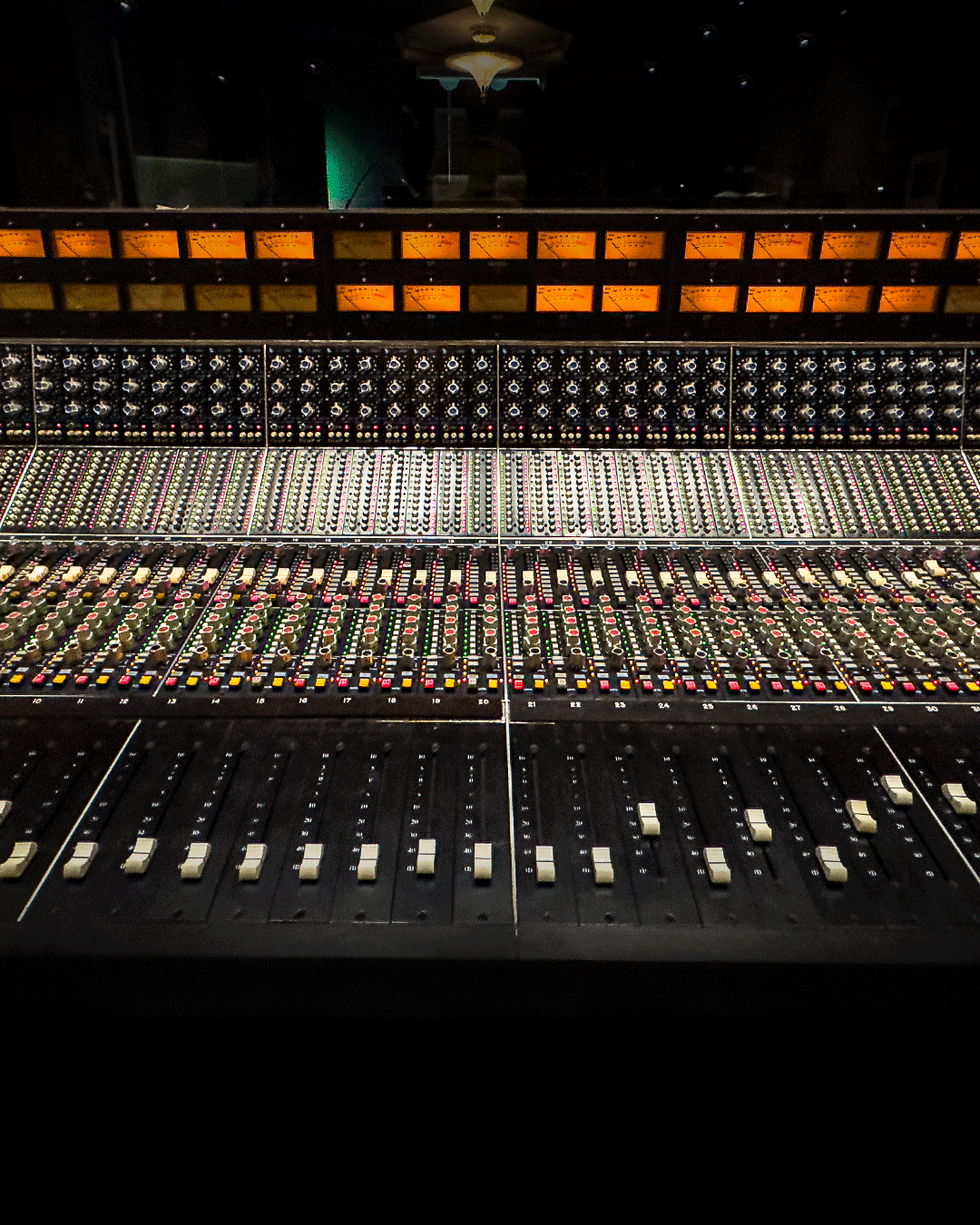
Record Plant and Design FX Location Truck API Recording Console
An API recording and mixing console, formerly installed in one of The Record Plant’s mobile recording trucks, with the number 2395 inscribed on one side. This particular console –– along with its associated rack mounted equipment –– has recorded many live performances by world-famous artists including Eagles, Blues Traveler, Bonnie Raitt, Elton John, The Rolling Stones, Metallica, Neil Young, Willie Nelson, Green Day, Michael Jackson’s 1993 Super Bowl Halftime performance. This console was also used to record for broadcast including The 1992-1995 Academy Awards, The 1993 Grammy Awards, VH1 Storytellers for Tom Petty, Tom Waits, and Sarah McLachlan.
Estimate: $250,000–$500,000
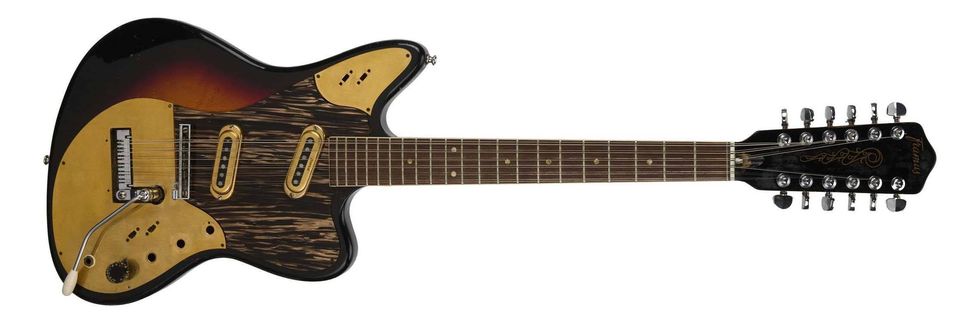
Joe Walsh | Barnstorm Debut Album - 1966 Framus Strato Gold De Luxe 12-String Electric Guitar, Sunburst
A 1966 Framus Strato Gold De Luxe 12-string electric guitar, serial #7638 66B, in sunburst finish. According to Walsh, this guitar was heavily used on Barnstorm’s debut solo album.
Made in February of 1966, this Framus Strato Gold De Luxe features a 24.5 inch scale length plywood neck with a bound 21 fret rosewood fretboard, a zero fret, pearloid dot inlays, and 12 aftermarket chrome Grover tuners. The two piece birdseye maple body is finished in sunburst and decorated with large gold control plates and a striped brown, black, and pearl celluloid pickguard, all of which takes up the majority of the available space on the body. It wears a chrome bridge and vibrato tailpiece, the mechanism hidden beneath a gold plated body plate, two original gold plated Framus pickups, and simplified electronics featuring a single volume control and pickup on-off switches. The guitar includes a black hardshell case with “Barnstorm Joe Walsh” stenciled on the lid, with a light blue-grey interior and bridge and tailpiece covers in the storage compartment.
Estimate: $15,000–$20,000
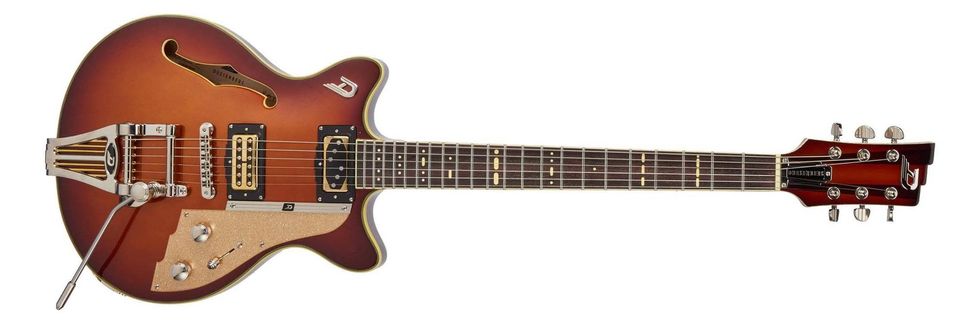
Joe Walsh | Stage Played Duesenberg Joe Walsh Signature Guitar, Gold Burst with Image
A 2014 Duesenberg Joe Walsh Signature semi-hollowbody electric guitar, serial #142361, in Walsh Gold Burst finish. Stage played by Joe Walsh on tour in 2014-2015, including at Kenny Chesney's The Big Revival 2015 Tour kick-off on March 26th, 2015 at the Bridgestone Arena in Nashville, TN. A 25.5 inch scale length set maple neck with a bound 22 fret rosewood fretboard, Morse code inlays that spell "Joe Walsh", and locking Duesenberg tuners. The body has a laminate spruce top finished in gold burst, laminated maple back and sides finished in transparent brown, and multi-ply binding throughout. A mix of hardware plating on this model with gold plated pickup covers and nickel for the Tune-O-Matic style bridge, Duesenberg vibrato, knobs, and pickguard accent strip. A Duesenberg HSC Single Twin pickup in the neck position and a Little Toaster in the bridge position. Unlike most production versions, this one does not have the Tibetan knot design placed between the pickups, which makes it easy to identify in photographs and concert footage (click here). Includes original black Duesenberg hardshell case with black interior, string package sleeve, a Duesenberg first aid kit, extra neck pickup, strap, and an image of Joe with the guitar.
Estimate: $4,000–$6,000
This landmark sale from a true titan of Rock and Roll promises to electrify music fans and collectors around the globe. Visit JuliensAuctions.com to register for this historic event on December 16th–17th, live in West Hollywood at the famed Troubadour and online.
“Life’s Been Good: Joe Walsh” EXHIBITION
Wednesday, November 12th - December 3rd
New York: Hard Rock® Cafe New York 1501 Broadway-Times Square New York 10036
Free to the Public: Daily: 11:00 a.m. – 11:00 p.m. Eastern Time
LIVE AND ONLINE AUCTION
“Life’s Been Good: Joe Walsh”
December 16th-17th
Troubadour, West Hollywood
9081 N Santa Monica Blvd, West Hollywood, CA 90069
10am PT/1pm ET
REGISTERING TO BID
Registration is required to bid in this auction and can be done in person on the day of the auction, or online before the sale at Julien's Auctions.
For inquiries, please email info@juliensauctions.com or call 310-836-1818.
Placing Bids
There are four ways to bid in Live Auctions:
1. Bid with Julien's Auctions online.
2. Bid over the telephone through an auction house representative.
3. Bid in person in the room at our auction events.
4. Bid in advance by absentee bid. Absentee bid forms are available by calling 310-836-1818
Julien’s Auctions accepts payments with cryptocurrencies including Bitcoin, Bitcoin Cash, DAI, Ethereum, Litecoin, Dogecoin and USD Coin.
Fender American Ultra Luxe ’50s Telecaster and ’60s HSS Stratocaster Review
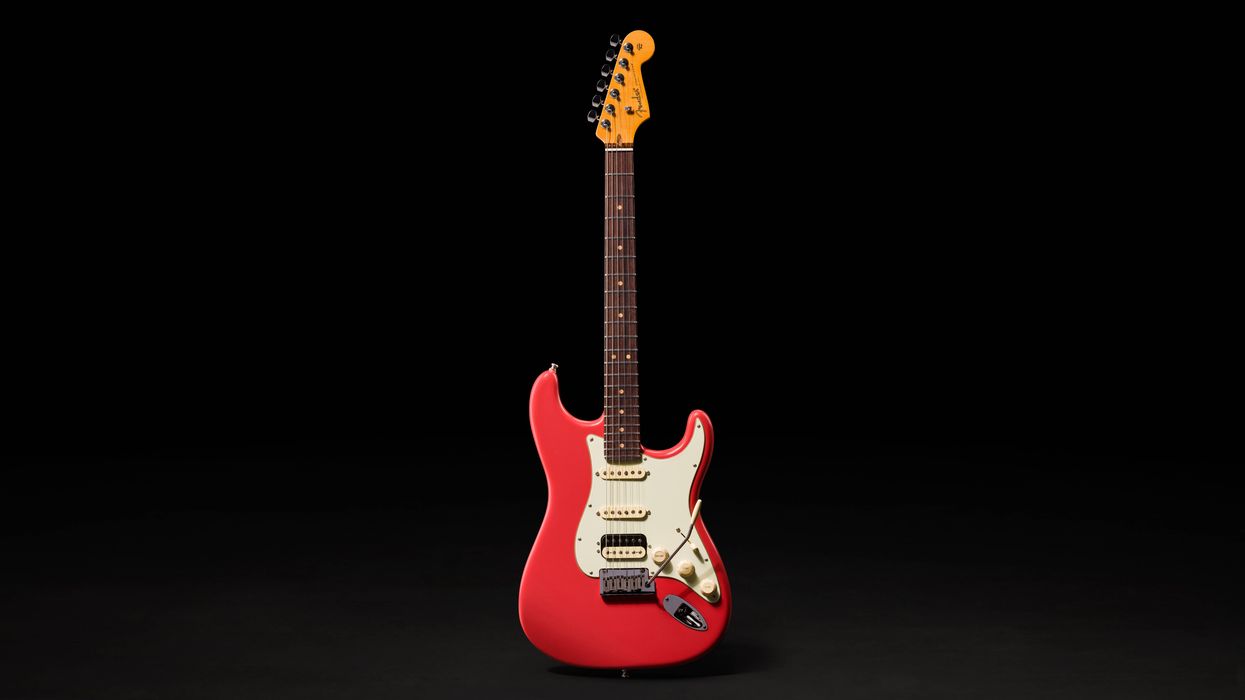
Fender’s new American Ultra Luxe Telecaster and Stratocaster have an intriguing mission: Retain the essence of two platforms so iconic that some see them as the guitar equivalent of Coke and Levi’s and win over players tempted by modernized variations on the Strat and Tele themes.
The American Ultra Luxe Vintage Stratocaster and Telecaster each appear in ’50s- and ’60s-inspired versions. I did not get to play the bound ’60s Custom Telecaster or the maple-fretboard ’50s Stratocaster. But I tested the $2,899 Vintage ’50s Telecaster and the $2,899 ’60s Stratocaster HSS with a vintage Ampeg Gemini II and a modified Fender Vibro-Champ with an extra gain stage and a tone-bypass for tweed gain levels.
Both instruments feature quartersawn maple necks with 10"-14" compound radius fretboard, 22 stainless-steel jumbo frets, and what Fender calls a modern D profile. Other modern touches include low-profile neck joints, lacquer finish, locking tuners, and advanced switching and controls. Each guitar comes with a deluxe hard case.
Ultra Luxe Vintage ’50s Telecaster
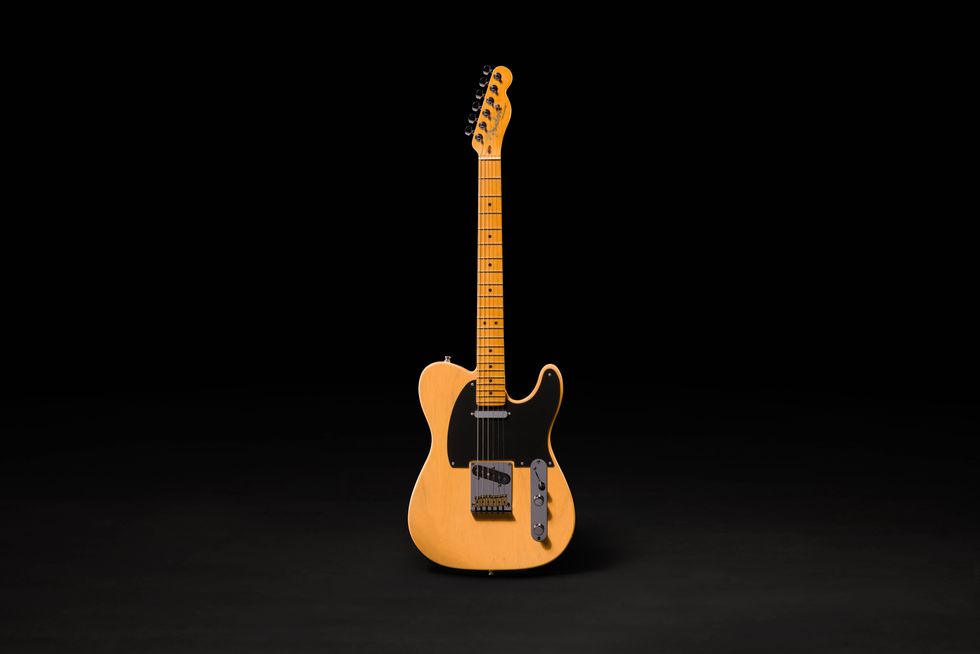
Effects of the American Ultra Luxe Vintage makeover are most obvious on the ’50s Telecaster. There’s the contoured body (something Strats have had since day one), an angled pickup-selector switch, and individual string saddles for more precise intonation than on a three-saddle Tele bridge. There’s plenty of vintage flavor, though. The ash body looks great and the butterscotch finish really pops the grain. The weight, on the test guitar at least, is neither especially hefty nor light—a little heavier than my own 1974, though that guitar has had its finish stripped off for decades.
The vintage-ness extends to the playability too—it has a broken-in feel right out of the case. I’m used to compound radius fretboards, so I did not have to adjust to the 10-14" shift (versus the 10-16" I’m used to) and it will probably feel more natural to players new to compound radii. Upper fret access was effortless. The build is super tight, giving the guitar a strong unplugged sound that offers the pickups lots of resonance to work with.
I admit, I was initially resistant to the angled switch. Somehow, as a guy who’s wrestled with a traditional straight switch angle for decades, I think of it like driving a manual. Once you learn it, you love it—until you’re in heavy traffic. But like a high-performance automatic with paddle shifters, the angled switch is a blessing that gets you in gear faster. If you play a Strat, the angle will be very familiar. The three-position blade switch gives you the traditional Tele combo of neck, bridge and both in parallel. A subtle push/push S-1 switch mounted in the volume knob bypasses the switch settings to give you the two pickups in series for some extra oomph—way easier than four-way blade switches wired to accomplish the same goal. In real world performance situations, the combined switching system is a godsend, especially if you want to kick in the series setting for leads.
Strength in Series
Overall, the Pure Vintage single-coil pickups deliver the Tele spank you’d expect. I’ve always thought the traditional Tele neck pickup underrated and Fender nailed it here. Through the clean Ampeg, the guitar delivered twang and detail. I was able to go from country to jazz tonalities without adjusting the amplifier, and I especially like the way that rolling back the volume doesn’t come at the expense of detail.
- YouTube
“Telecasters are so good at that specific combination of detail mixed with grit—those singing overtones that are so hard to find in other designs. Not all Teles get there. This one does.”
Those qualities were even more apparent with the Vibro-Champ, which took the Tele from clean to scream. The neck pickup was clear but not overly thin; the middle-setting offered that classic Tele jangle. I was impressed by how much body the bridge pickup delivered on its own. It cut but it wasn’t strident or papery, which some Tele bridge pickups can be. Telecasters are so good at that specific combination of detail mixed with grit—those singing overtones that are so hard to find in other designs. Not all Teles get there. This one does.
Activating the series mode takes the guitar a step farther—it’s hotter and fatter than the lead pickup on its own but doesn’t sound dark or humbucker-like. And thanks to the balance between the pickups, the series mode isn’t an extreme step up in volume from all the other settings.
While the playable neck and great tone might get the headlines, it’s worth noting the contours, which made this guitar way more comfortable to play than a standard blocky Tele, especially sitting. The finish is way cooler up close than it is in the pictures, with vintage-style checking giving the lacquer a broken-in look to go with the broken-in feel.
American Ultra Luxe Vintage ’60s Stratocaster HSS
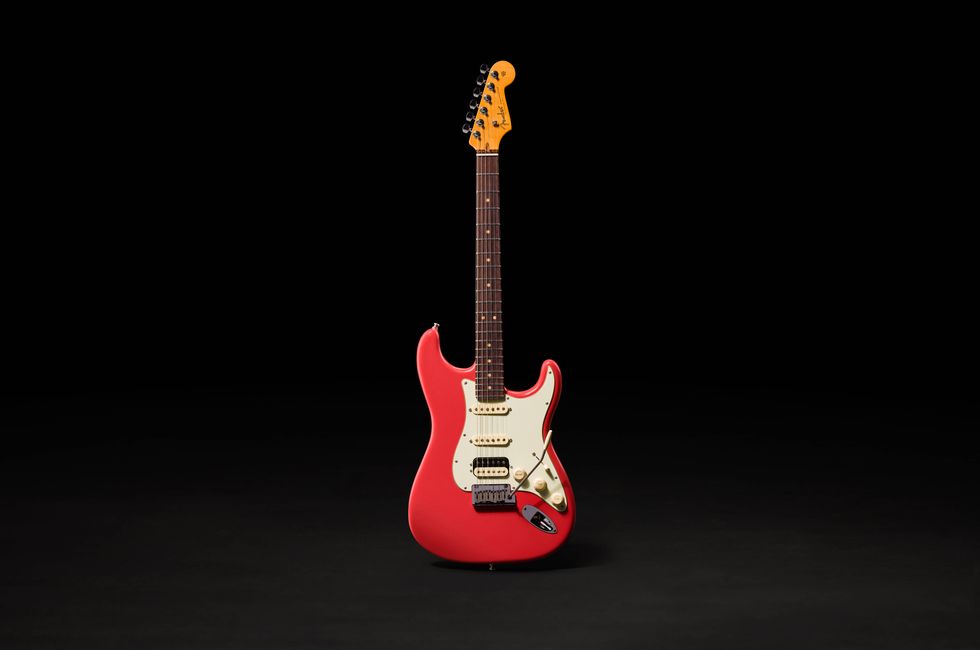
Like the Telecaster, the American Ultra Luxe Vintage ’60s Stratocaster HSS combines vintage cues and modern features. The most obvious non-vintage addition is the Haymaker humbucker, but this guitar also features a two-post vibrato bridge with a pop-in arm (as opposed to the six-screw vintage design), and shares the Luxe Vintage Telecaster’s 22-fret, compound-radius fretboard and contoured neck joint.
Like the Tele, the Strat feels broken in from the start. The neck’s smooth satin finish made for easy movement. Access to the 22nd fret was easy, and the rosewood fretboard looks great and contributes a lot to the guitar’s authentic ’60s-era look.
Multitude of Tones
I was especially impressed with the pickups. The single-coils had that sought-after bell-like quality, and while humbucker-equipped Strats can sound imbalanced, the pickups here work well together. The S-1 switch on the Stratocaster splits the humbucker into single-coil mode, and it actually sounds good on its own that way. Moreover, it gives you a couple of nice variations with the middle/bridge combo. Single/single for “Wind Cries Mary”-style chime; single/bucker for a Clapton-esque lead tone.
“A Strat begs for a great vibrato system and the action on this unit feels smooth and light.”
Through the Ampeg, the single-coils’ detail reigned—think the rhythm guitar on Steve Miller’s “Take the Money and Run” with its carved out middle, punchy bass, and crisp top. Clean, the humbucker sounded fine, but I found myself liking the combined pickup position with it more than on its own. Through the Champ, however, the humbucker comes into its own as a lead pickup. It’s rich but not dark, and drives the amp considerably more than the single-coils. As with the Telecaster, the tone controls worked well. Sensibly, the neck and middle pickups mate to the front tone pot, and the bridge pickup to the second. When the middle/humbucker are engaged, the front pot is in control.
A Strat begs for a great vibrato system and the action on this unit feels smooth and light. I really like the pop-in arm, which offers a nice direct feeling of control with no extra play, and the locking tuners keep the guitar in tune when you cut loose.
Overall, the Ultra Luxe Vintage ’60s Stratocaster HSS has a luxury-workhorse vibe—like a Porsche SUV that can pop the radar gun on the freeway but also hit the trail from time to time. As cool as the hidden coil-split switch was, I would have loved a second one to activate the neck or bridge pickup in any position. That would add two more combinations—neck-plus-bridge and a combination of all three. It’s one of my favorite Strat mods because the neck-plus-bridge mix adds a hint of Tele flavor, and with split humbuckers, those two extra options would really expand the tonal palette. That’s much less traditional, but then again, so is having a humbucker in the bridge, and none of the genuine improvements here detract from how beautifully ’60s this guitar looks.
The Belle Epoch + is Here!
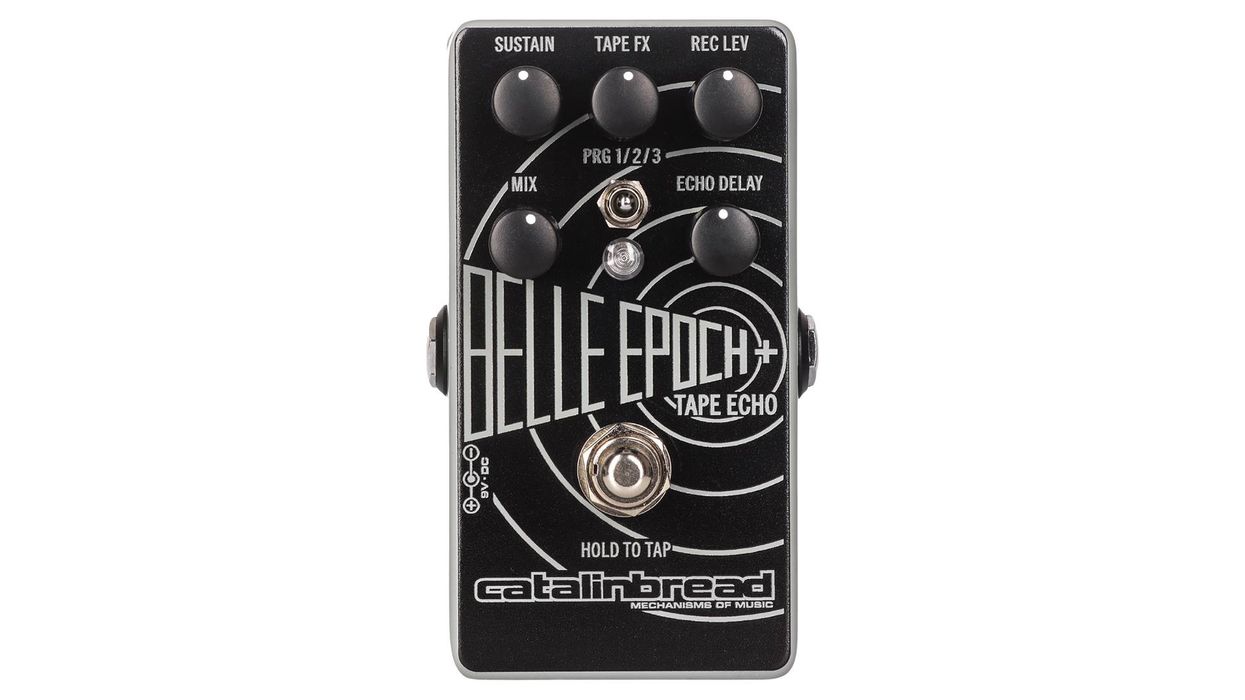
We are extremely pleased to announce the launch of the Belle Epoch +, our first compact delay with full tap tempo capabilities and a slew of other upgrades to our flagship tape echo simulator.
Much R&D was implemented to make the Belle Epoch + the best version of itself that it could possibly be. Tapping in a beat couldn’t be easier; simply hold the footswitch to enter tap mode and hold it again to enter tap bypass mode. Apart from the tap tempo circuit, the Belle Epoch + just gives you more, more headroom, a redesigned Mix control, improved buffered bypass, a touch of noise gating and better impedance specs for rig integration. The preamp has been tweaked to provide a higher dynamic range with the same feel and response of the original Echoplex pre, giving you a more hi-fi sparkling tone that you’ve come to expect from the classic circuit. We’ve also expanded the feature set by offering three modes that correspond to wear on the virtual tape, from a pristine “fresh off the line” Echoplex to a dusty unit that’s been sitting in an attic for 40 years. Step into (and onto) the next generation of our classic echo unit!
Learn more at catalinbread.com/products/belle-epoch-plus
Heather Brown Electronicals Introduces Darlene Compression
Heather Brown Electronicals has unveiled its latest creation, the Darlene Compression, an ultra-quiet analog compressor built for players who want their dynamics to breathe and their sound to stay pure.
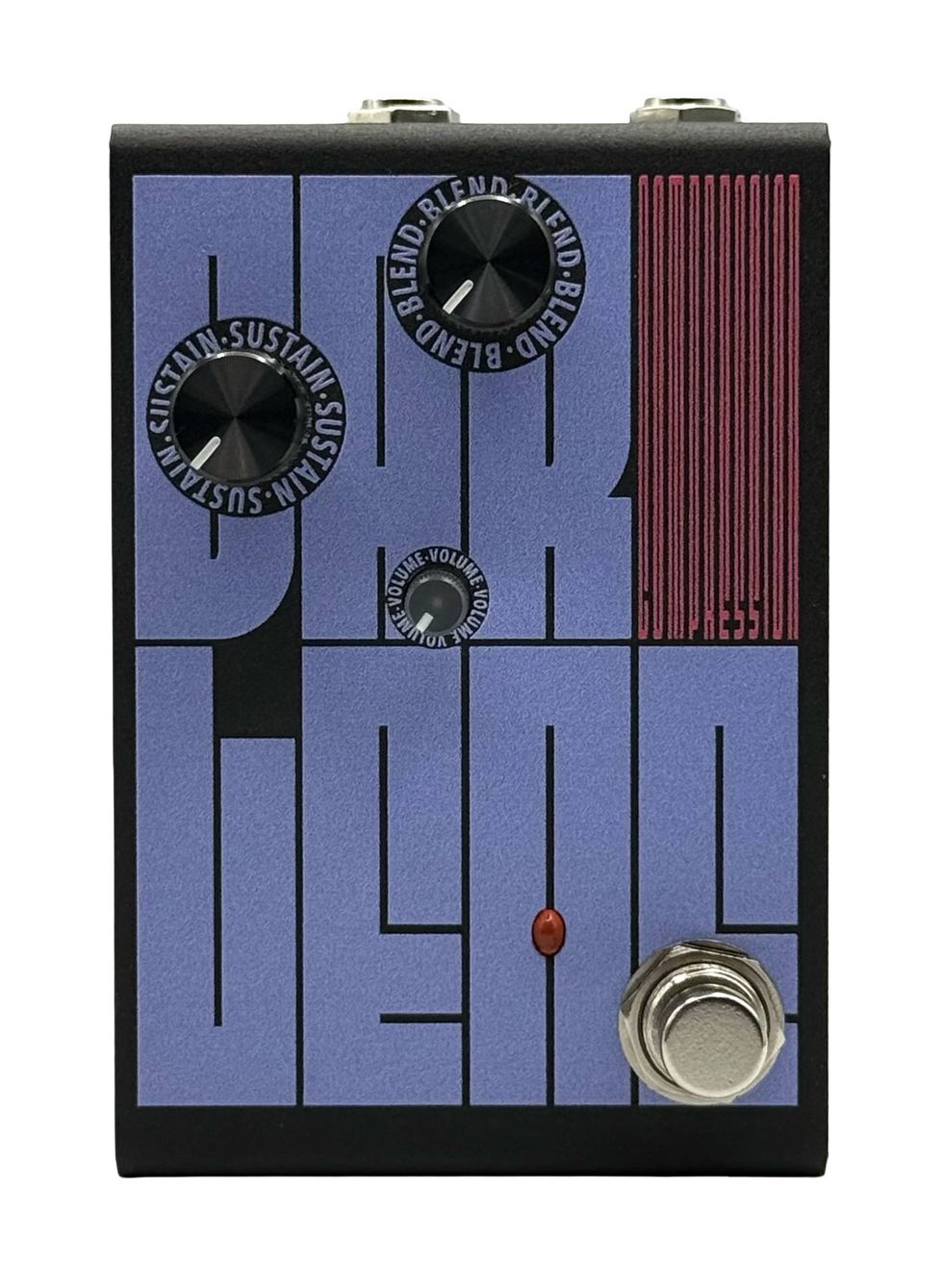
Darlene’s high-quality analog circuitry provides consistent touch and clarity across the board, preserving the nuance and character of your playing. Darlene avoids problems that occur with some other compressors that flatten tone, choke dynamics, or add unwanted noise. Instead, Dalrene delivers smooth, responsive compression that feels intuitive with your playing and provides each note with natural, effortless sustain.
The pedal’s control set is refreshingly straightforward. Three knobs (Sustain, Blend, and Volume) let you blend in your dry signal for lively dynamics and punchy attack, or lean into sustain for that smooth, elastic feel. The neutral voicing ensures your guitar’s natural tone remains untouched.
Inside, Darlene runs a 100% analog signal path with premium components and a noise floor so low it practically disappears. Players can choose between true or buffered bypass, paired with silent soft-touch switching for seamless performance on stage or in the studio. In addition to standard 9V DC operation the pedal offers optional 18V operation, adding extra headroom for those who like a little more snap.
Whether you use it as an always-on polish, a transparent clean boost, or a thickening texture after your drives, Darlene quietly makes everything feel more dialed in.
Features include:
- Three control knobs: Sustain, Blend, and Volume
- 100% analog signal path
- Exceptionally low-noise floor
- Selectable true/buffered bypass
- Silent soft-touch footswitch
- Runs on +9V or +18V DC
Heather Brown Electronicals’ Darlene Compression carries a $218 street price and is available now at select dealers and godsmom.com.
Bob Weir’s Rhythm Guitar Trip
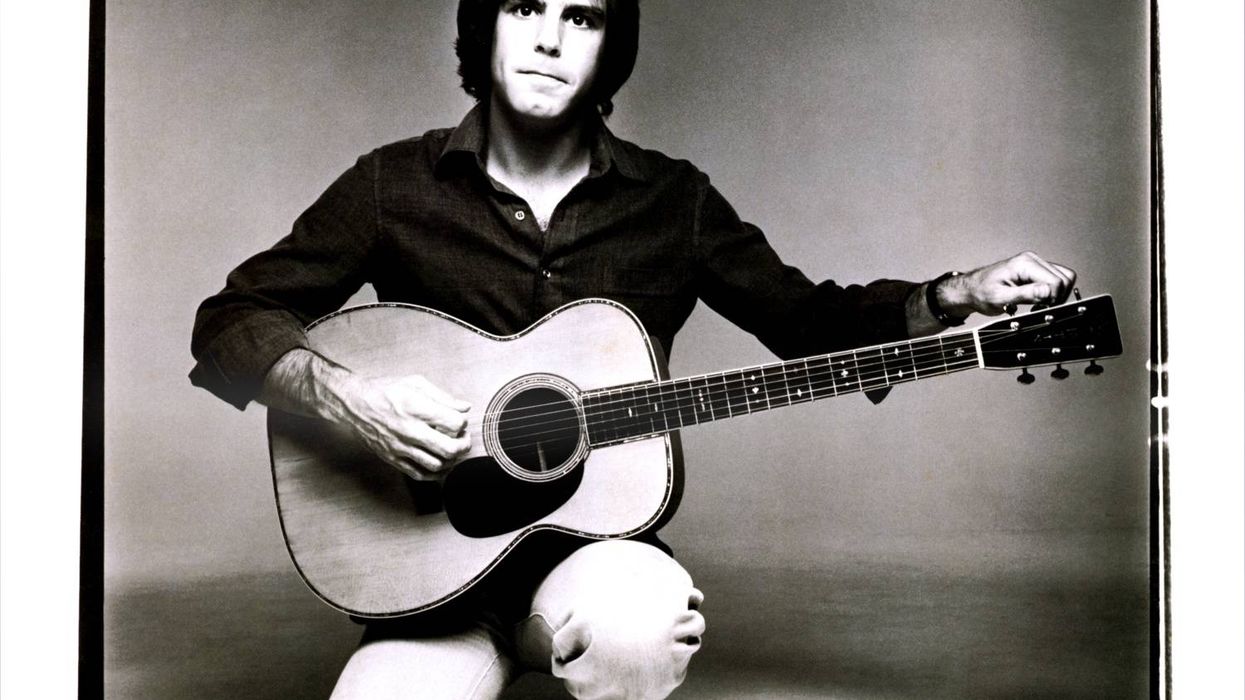
For well over 50 years, Bob Weir has been mystifying and delighting fans around the globe with seemingly endless musical ideas, helping to define the sound of the Grateful Dead. Weir has always taken a truly individual approach to rhythm guitar, centered around his affinity for melodic accompaniment. More than just strumming rhythmic patterns, he creates melodies that surround a given chord, adding texture and harmonic depth to the music. The following are examples of the way Weir adds color and rhythmic variety in harmonic patterns and illustrate his artistry as an improviser.
Ex. 1
Ex. 1 shows a contrast in rhythmic activity, where the first two measures are much busier compared to measures three and four. Harmonically, notice the suspended 4th that resolves and leads to the next chord in measure two. Measure two highlights a wide interval of a major 6th and also the 9th, adding color to the triad. Also, in harmonic contrast to the first two measures, measure three and four end the phrase with 3rd-less triads. This is a good example of a compositional quality in Weir’s playing.
Ex. 2
Triadic playing is certainly a component of Weir’s improvisational playing. In Ex. 2, you can see how he breaks up triads by articulating single notes and double-stops with the chord shape. You can see the three D chord shapes in measures one and two starting with a power chord and then sliding into the 3rd (F#) and the next chord shape, grabbing the 1st inversion D triad followed by a root position version of the same chord. Also notable, the use of long and short rhythms adds very musical syncopation. In measure five, note the F#m played completely, then breaking it up with the root followed by double-stop 3rd and 5th of the chord. The next chord, G, is arpeggiated, again in short and long rhythm. That rhythmic idea continues in the last two measures.
Ex. 3
Ex. 3 is another example of breaking up triads, but at a faster tempo. Notice the open E string doubling the 5th of the chord. That’s a nice touch and can be used on other chords as well, adding or doubling any chord tone. In measure three, the A/E chord held for two-and-a-half beats helps to break up the two-beat feel, as does the D/F# in measure four.
Ex. 4
The Dm sequence in Ex. 4 illustrates a Weir-like approach to melodic accompaniment and also a reference to the relative major, F. Beat 3 of measure one and beat 1 of measure two can be seen as using the relative F major, outlined in the diagram in parentheses. Notice the Dm and D5 played in a broken fashion followed by color notes on beat 3 of measure three, sliding double-stops down from D and F to C and E, the 7th and 9th of the Dm chord. The phrase resolves with descending Dm groupings, and a double-stop on the upbeat of 2 that could be thought of as C5, C/D or the 7th and 11th of Dm. Either way, you’re adding color and dimension to static harmony.
Ex. 5
Bending a string within a double-stop is pretty common in Weir’s playing, and you see this in Ex. 5 on beat 4 of measure one. The D# is pre-bent up a half-step to E and released in time down to D#, then pulled off to C#, all while holding on to the G# on the 3rd string. Rhythmic and melodic themes are apparent in Weir’s playing. In measures three and four, you can see variations of a rhythmic idea from measures two. All three measures have a version of a dotted quarter and eighth note rhythm, but end in a slightly different way.
Martin Guitar Launches Project 91: A Numbered Legacy
C. F. Martin & Co.® proudly announces the launch of Project 91, an extraordinary new collection that brings to life 91 unique guitars, each a direct descendant of an original pre-war D-45—among the most coveted acoustic guitars ever made. Crafted with Brazilian rosewood backs and sides, every Project 91 instrument is individually linked to its historical counterpart by serial number, honoring the spirit, craftsmanship, and tone of Martin’s golden era.
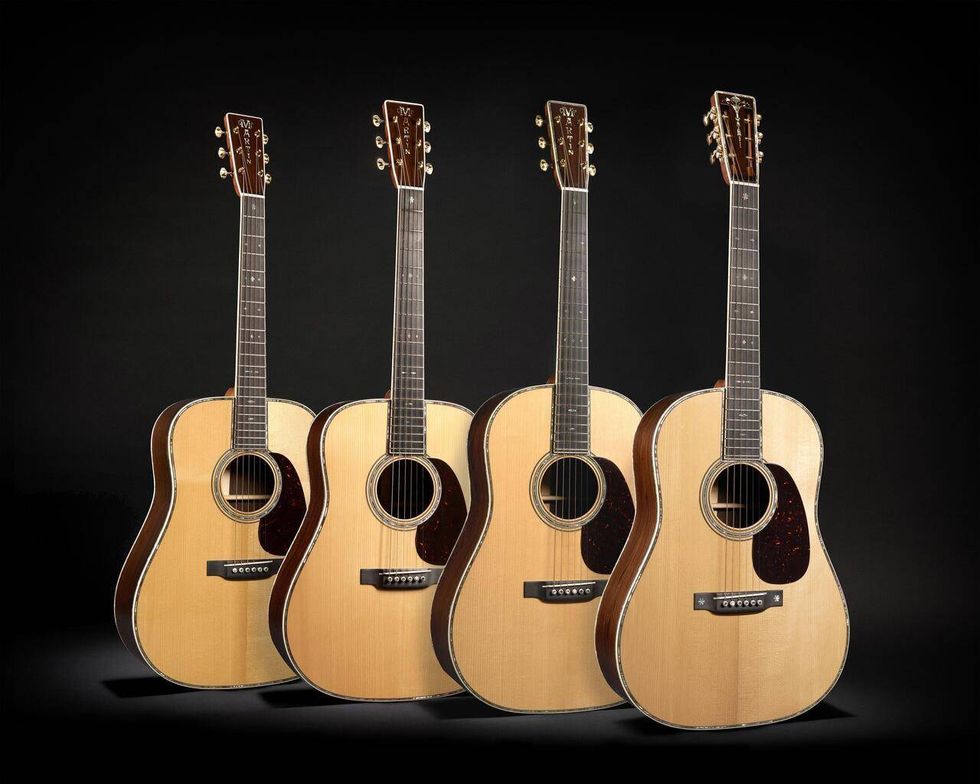
The first four models in this numbered legacy are now complete:
- D-45 1933 Project 91-1 – 12-fret body, slotted headstock bordered in pearl, torch headplate inlay, Style 45 snowflake fingerboard inlay, scalloped X-bracing.
- D-45 1934 Project 91-2 – 12-fret body, solid headstock bordered in pearl, C. F. Martin headplate inlay, Style 45 snowflake fingerboard inlay, scalloped X-bracing.
- D-45S 1936 Project 91-3 – 14-fret “special” wide body, Style 45 snowflake fingerboard inlay, forward-shifted scalloped X-bracing.
- D-45S 1936 Project 91-4 – 14-fret “special” wide body, Style 45 snowflake fingerboard inlay, forward-shifted scalloped X-bracing.
Each Project 91 guitar is accompanied by a certificate of authenticity in the case pocket, and a commemorative framed poster depicting its original reference instrument—available to those who register their guitar.
A Tribute Nearly a Century in the Making
Between 1933 and 1942, Martin built just 91 original D-45s. Today, fewer than that remain in circulation, each representing a priceless piece of music history.
“We’re getting close to 100 years since the first D-45 was introduced,” says Jason Ahner, museum and archives manager. “Project 91 is about recreating 91 of the greatest guitars ever built. We’re doing our best to replicate how they would have been built back in the 1930s and early 1940s.”
Continuing a Golden Era
The D-45 has long represented the pinnacle of Martin craftsmanship. “The 45 has always been the culmination of our best work,” says Chris Martin IV, chairman of the board. “During my career, we’ve done D-50s, D-100s, D-200s—but there’s something about the 45. The fact that we made the 91 during what people consider one of our golden eras—I would like to say today is another one—this is really exciting for me.”
Each Project 91 guitar captures the tone and detail that defined that era, from forward- and rear-shifted bracing and vintage neck profiles to Brazilian rosewood backs and sides—while some of the 91 models will feature unique touches like thinner nut widths, a shaded top, a left-handed build, and even one with two pickguards.
“The D-45 represents the absolute top of the line for Martin guitars,” adds Dick Boak, former museum and archives director. “The amount of work, the amount of detail in inlaying not only the top, sides, back, neck, and headstock, but also around the edges of the neck and endpiece—it just sets them apart.”
Owning a Piece of Martin History
Every Project 91 guitar connects its owner directly to a specific original D-45. “You have a unique serial number that ties back to its predecessor,” explains Tim Teel, instrument design manager. “When you register your guitar, you’ll receive a framed poster showing that connection—your guitar’s lineage to Martin’s history.”
Availability
The first four Project 91 guitars are now complete and available through select Martin dealers. The remaining models will be built and released in sequence over the coming years, each meticulously recreating its pre-war counterpart in sound, feel, and detail. For more information on Project 91, visit martinguitar.com.
Third Man Hardware And Jhs Pedals Join Forces to Create the Troika Delay
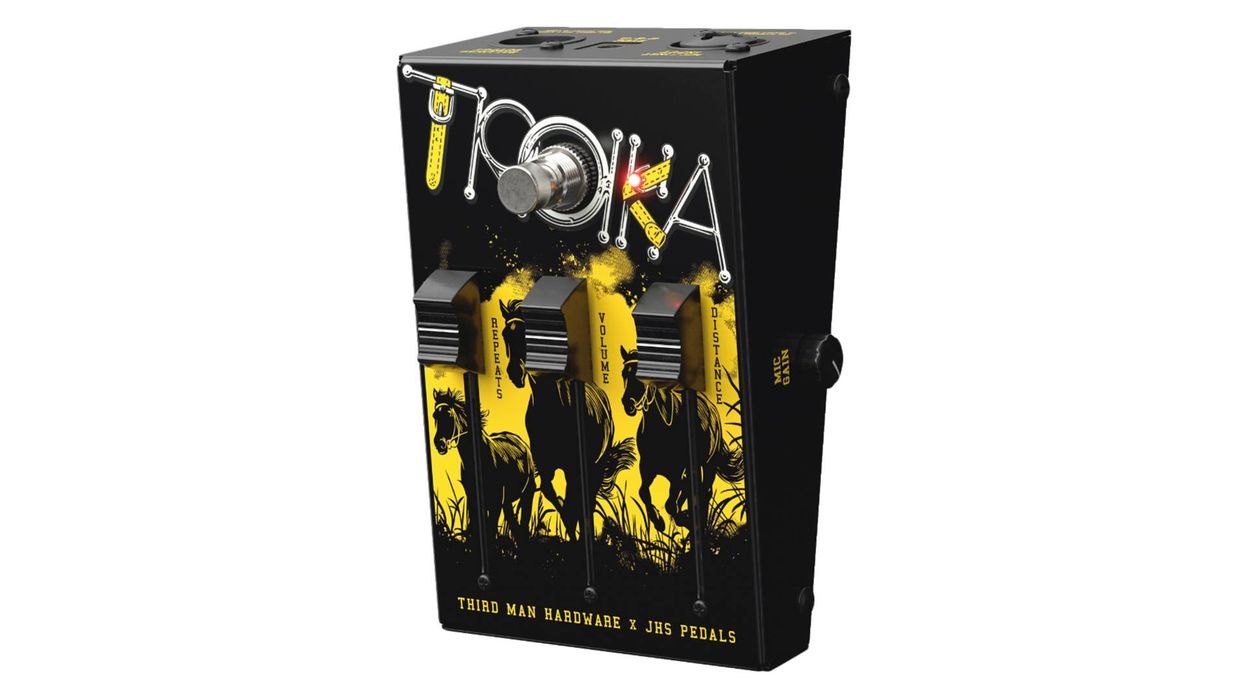
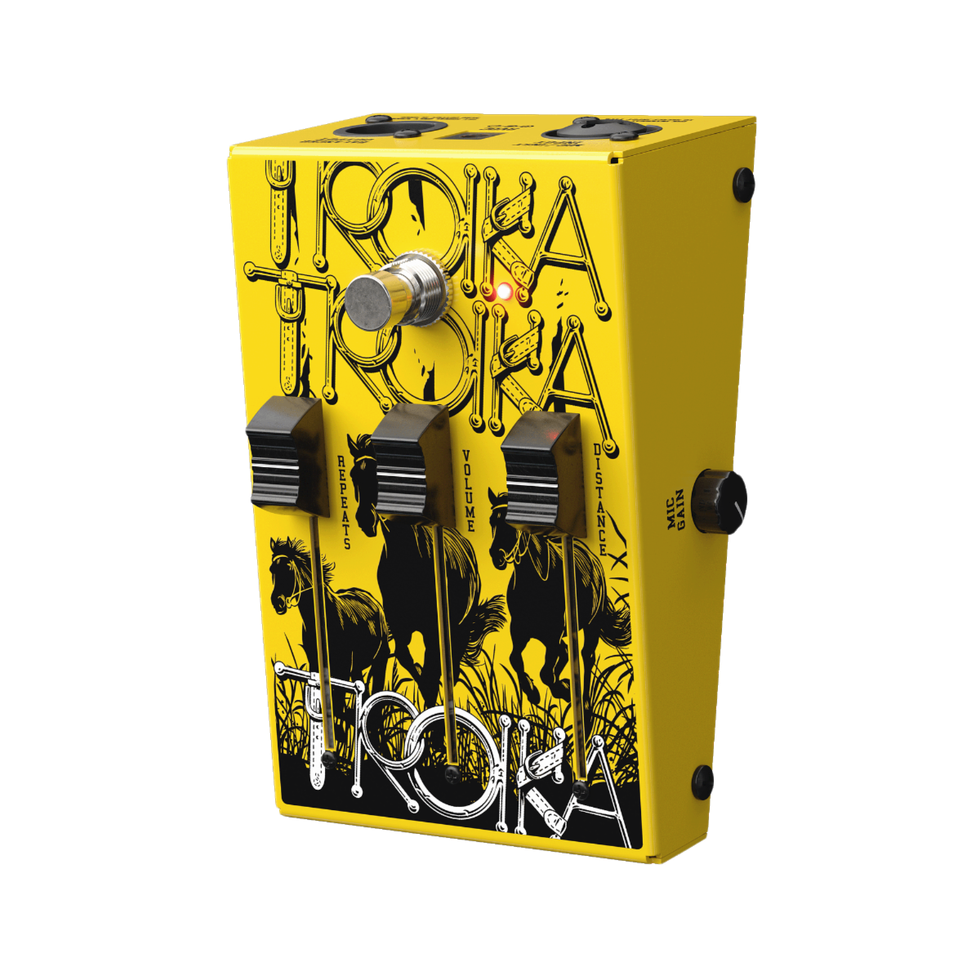
Third Man Hardware has joined forces with Kansas City, MO’s JHS Pedals to create The Troika Delay, a horse-powered instrument and microphone delay product unlike anything else on the market. More than simply a pedal, The Troika is a multi-purpose, pro-audio, studio-grade delay device designed to work with microphones, guitars, or any instrument. Equipped with both XLR and ¼” inputs and outputs, The Troika utilizes a hi-grade Lundahl transformer on the mic input, and a secondary output transformer, enabling it to work well with other effects and is perfect for desktop and professional recording studios as well as on stage. The Troika Delay is available now in standard black ($349) at thirdmanhardware.com. A limited-edition yellow model ($369) is also available, exclusively via reverb.com/shop/third-man-hardware. For more about JHS Pedals, please visit jhspedals.info.
Third Man Hardware introduced itself to the gear community with its first collaboration in 2014, the Bumble Buzz. They couldn’t stop there. With a vision to bring innovative, introspective, creative sounds to everyone in the gear community, Third Man Hardware has collaborated with over ten different companies that it respects in the gear community in order to produce its current gear line.
Third Man Records was originally founded by Jack White in Detroit, MI in 2001. In March of 2009, a physical location was established in Nashville, TN. Third Man Records, in its current state, comprises a record store, record label offices, a photo studio, a darkroom, and a live venue with an analog recording booth. TMR now has three locations, with its latest addition in London. Almost all of our records are recorded, printed, and pressed in Detroit, MI, and produced by Jack White. In this fashion, TMR strives to bring a spontaneous and tangible aesthetic back into the record business.
JHS Pedals is a USA effects company based in the Kansas Cit metro area known for blending classic analog tone with creative modern design. Since 2007, JHS has become one of the most influential names in guitar effects pedals— developing original circuits, reimagining vintage classics, and collaborating with artists and brands across the globe. With a catalog spanning everything from overdrives to delays to preamps, JHS combines quality craftsmanship with large-scale production expertise. The company also produces popular content on YouTube, where founder Josh Scott explores guitar-related devices, the stories, and the sounds that shape music history.
About Reverb:
Reverb is the largest online marketplace dedicated to music gear. Since launching in 2013, Reverb has helped millions of music makers find the perfect piece of gear from its trusted community of music shops, top brands, and other music makers around the world. Built by musicians and gear lovers, Reverb combines one of the largest selections of musical instruments with tools to help music makers find music gear that inspires them and a passionate musical community to connect with. Sales on Reverb help support Reverb Gives, which provides youth music programs with musical instruments.
Warm Audio Throne of Tone Review
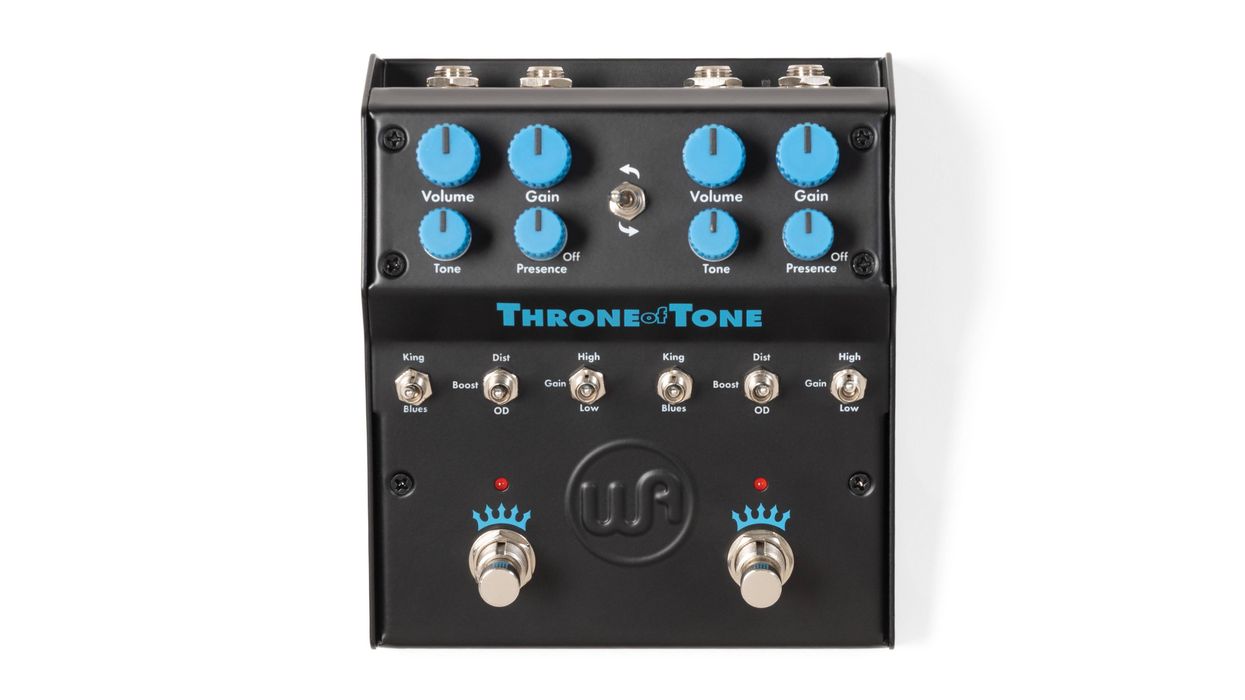
Though the business of cloning pedals is competitive (and endless fodder for frothing Reddit denizens), I appreciate when a pedal company offers a useful twist on an established formula. Warm Audio accomplishes this with the Throne of Tone. It is clearly inspired by the Analog Man King of Tone. But it is also very obviously a nod to the Marshall Bluesbreaker, the pedal that Mike Piera used as a departure point for his KOT design. The Throne of Tone, though, might mark the point at which the snake bites its tail. It cross-pollinates the circuits in a dual overdrive that opens up many, many tone-coloring avenues and options.
Split Personality
Mike Piera ripped up a friend’s Bluesbreaker to build the first King of Tone. But by the time he rewired it, it was a different pedal altogether. To the extent that the KOT and Bluesbreaker sections are accurate in the Throne of Tone, the differences between the original Bluesbreaker and King of Tone are easy to hear. It’s hard to accurately assess the accuracy of the Throne of Tone’s two circuits without a real-deal King of Tone or Bluesbreaker at hand. But I’ve played through both as well as excellent clones, and in both sound and feel, both Throne of Tone circuits are in the ballpark and better.
In very general terms, that means the “king” side is a bit less aggressive, darker, and more dynamically responsive to changes in pick intensity—especially when you want to go from gnarly to truly clean. The “blues” side is a bit more dynamite, revved up, and lively in the midrange. It’s more immediate and a bit harder to keep on a leash for dynamic purposes. But the Throne of Tone is a great multiplier—and mixer—of these qualities, because you can experience each basic voice through the lens of high gain and low gain settings, a boost, an overdrive or a distortion. Additionally, output from each side can be modified with a presence control which appears on neither pedal in its original form. Add up the possible tone permutations and, well, you’ll probably be less occupied with the accuracy of the circuits, and more excited about harnessing the copious killer tones here.
Pick A Door
Of the three modes, the boost is the most user friendly and easy to apply to a base tone that just needs heft and body. It’s also great for demonstrating the basic duality in the king and blues voices—which align along a Marshall/Fender divide. The blues, or Marshall-like side feels considerably more compressed as a boost, but it positively rings in the high-mid zone. If you want a guitar to be boss in a mix it dishes the goods. But it’s agreeable too, and flattered PAFs, Telecaster single-coils, Wide-Range humbuckers, and a Rickenbacker 12-string—lending all of them an infectious, excited edge. Matched with an EL84 amp it can feel a touch redundant, but with 6L6 amps it shines. The king, or more Fendery side, sounds comparatively scooped. It feels much less hyperactive, and it excels in the clean, low-gain range, but it also gets squishy when you dig in.
These same qualities are very apparent in the overdrive mode. Each voice sounds more compressed than the boost mode. But the higher reaches of the gain controls yield treasure. Here again, the blues side was explosive—sounding at many settings like Malcolm and Angus Young after consuming a bag of firecrackers. Angry but fun. The king’s OD side, at high gain range, sounds much more like a mid- to late-’60s Bassman at high volume: crunchy, but softer around the edges. Each of these voices can be nudged into more savage extremes by the high-gain toggle, which depending on your amp and guitar, can be surprisingly airy to downright sizzly.
The distortion mode kicks the high-midrange in the pants, but retains much of the overdrive mode’s basic coloration. It’s an especially cool match for 6L6 amps—especially on the king side. But the way the distortion modes remain responsive to dynamic input like volume and touch variation is impressive. Distortions can often sound quite binary—either raging or gobbling up midrange oxygen. Both distortions in the Throne of Tone give you gray area to work with that can range down to chiming clean tones.
The Verdict
The original King of Tone and Bluesbreaker pedals are revered for good reason. And if Warm Audio’s take on the two circuits represents even 80 percent of those pedals’ prime tonality, you’ll still hear and feel what makes them special. As a whole, the Throne of Tone is adaptive and versatile. The kind of pedal that could save your hide and solve problems in a studio. But it could work the same magic in a live situation, especially one with a backline surprise in store. In performance, the vertically oriented mini toggles, which are situated perilously close to the bypass switches, could be a liability. I accidentally switched the gain and mode switches with my toe more than once. That’s a shame, because they make experimentation so much easier than when DIP switches are in the mix. It’s hardly a dealbreaker, though. For $229, the Throne of Tone offers a very big bucketful of tone options that can span civilized and rabid.